戦国の世、一派は第二の主家に仕えた。小田原の後北条氏である。その庇護のもと綱広系は打刀の時代の皆焼を鍛え続け、1590年の落城とともに新刀の時代へ散った。
 NihontoWatchNihontoWatch
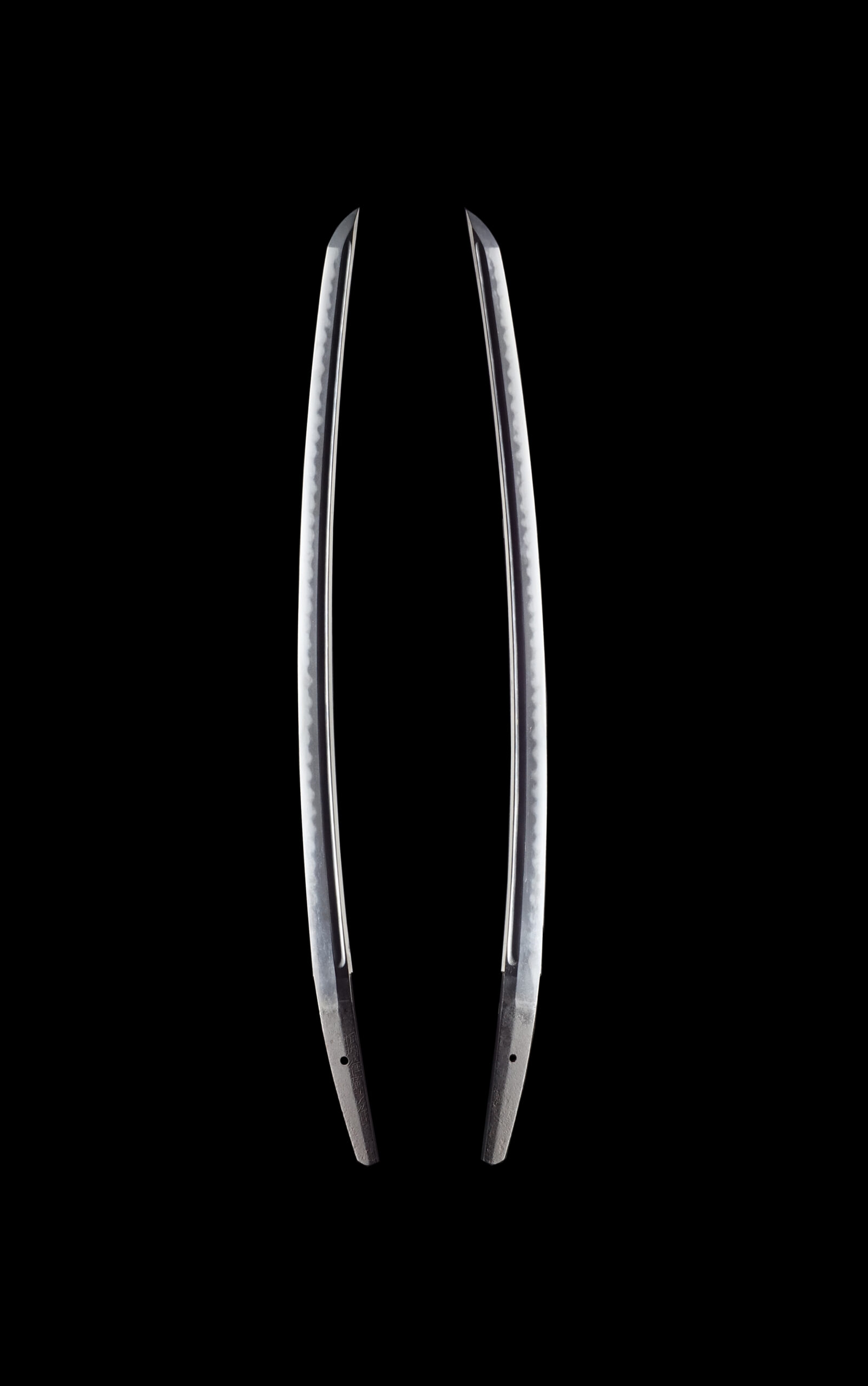
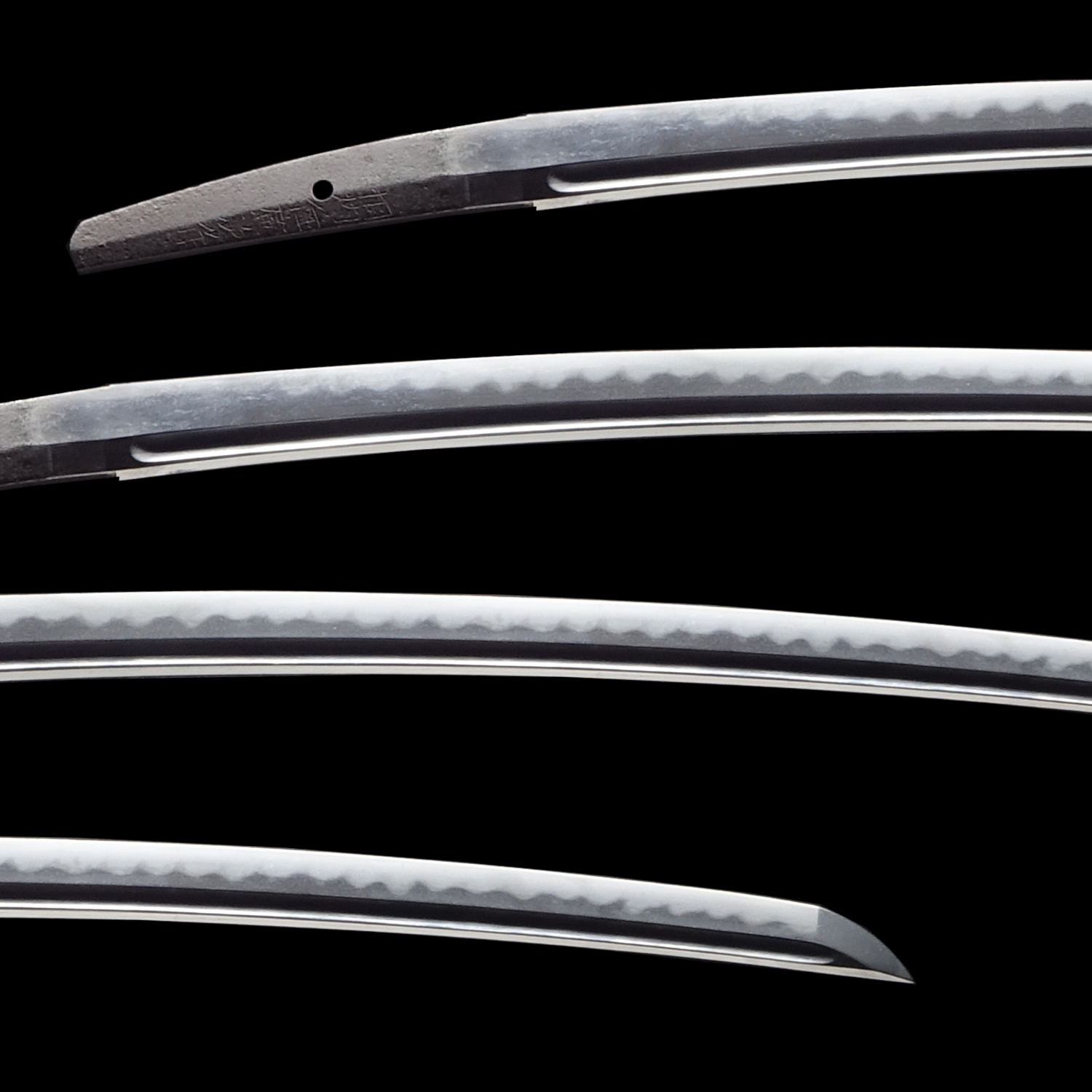
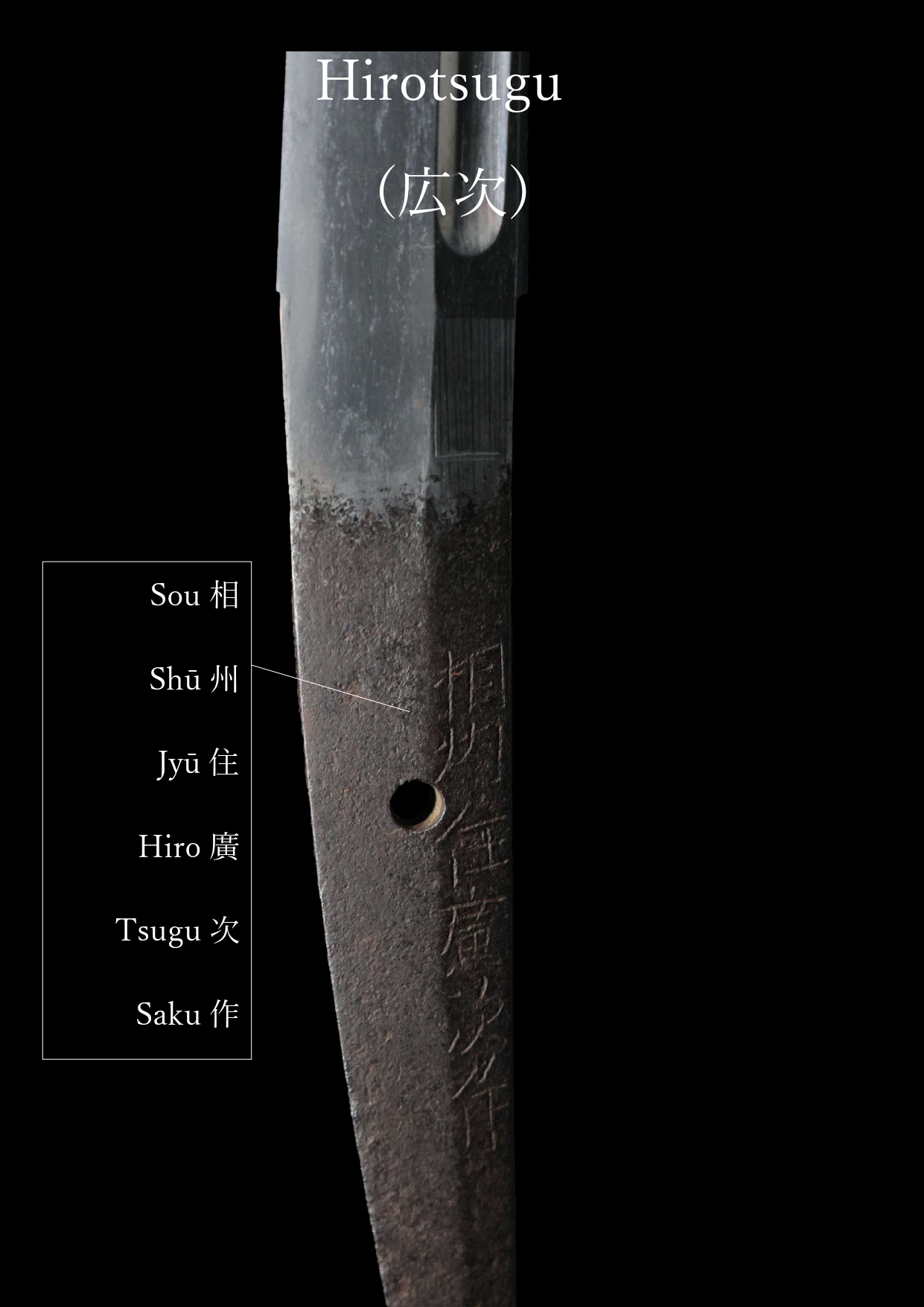
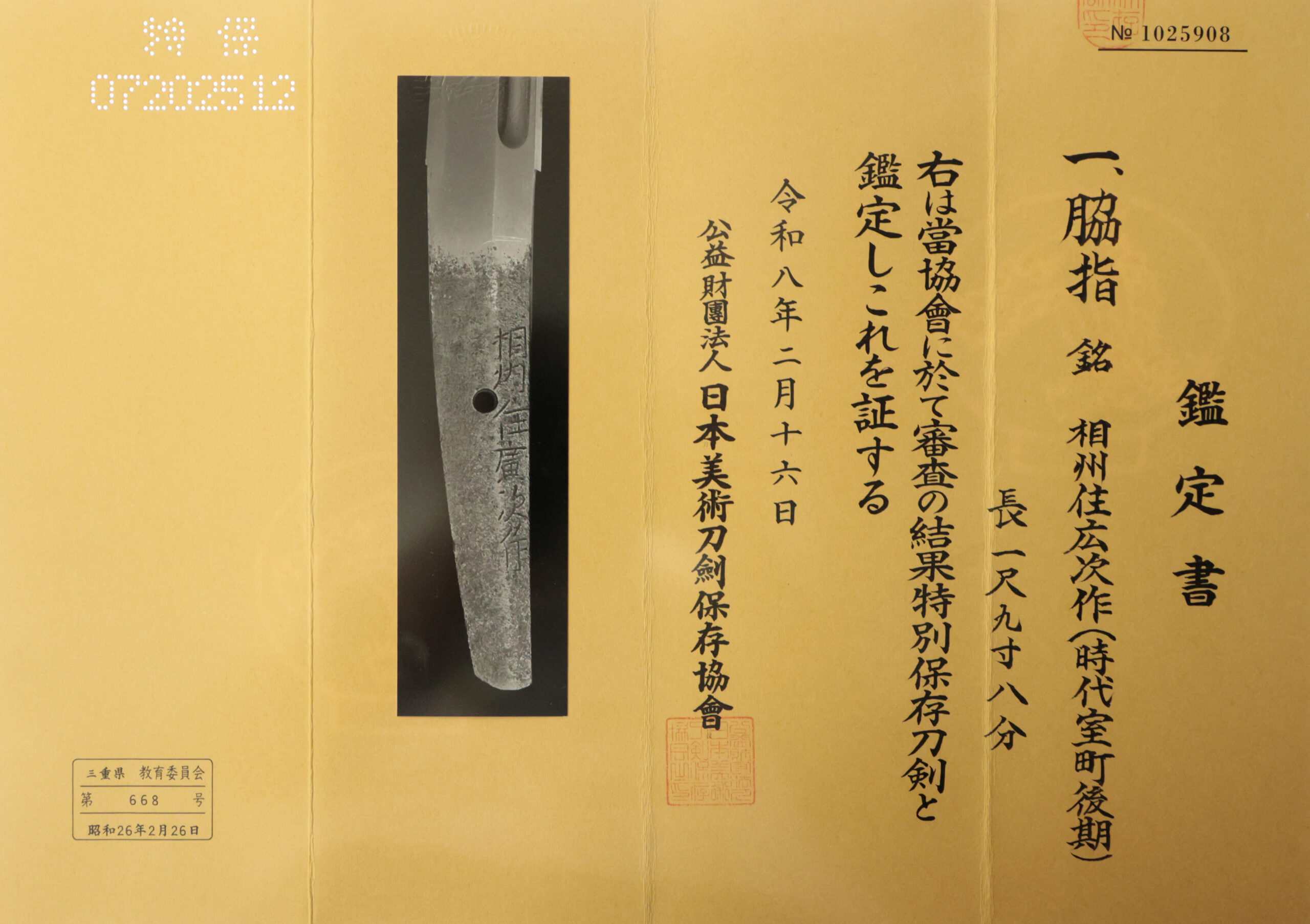
Summary This blade was signed by Sōshū Jū Hirotsugu (相州住広次) during the late Muromachi period. The name Hirotsugu was used by a line of swordsmiths active in Sagami Province (present-day Kanagawa Prefecture) from the Nanbokuchō period through the Muromachi period. These smiths belonged to the Sōshū tradition, one of the most celebrated schools of Japanese sword-making, whose lineage traces back to the legendary master Masamune. The Sōshū school is renowned for its sophisticated forging techniques and exceptional craftsmanship. The Hirotsugu lineage began during the Nanbokuchō period and continued through several generations into the Muromachi and Sengoku periods. According to the authentication paper issued by the NBTHK (Nihon Bijutsu Tōken Hozon Kyōkai), this blade dates to the late Muromachi period. Based on this attribution, it is believed to be a late-gen Hirotsugu, who was active during the late Muromachi period. Works by Sōshū smiths are highly prized today. As the Tōkai region became a major battleground during the Sengoku period, many swords were lost or destroyed through constant warfare and use. Consequently, surviving examples by Sōshū swordsmiths are relatively scarce, making this blade a particularly valuable example of the tradition. Soshu Den Swordsmiths residing in Soshu province (Today’s Kanagawa prefecture) used a particular sword-forging tradition called Soshu Den. And, Shimada school also used this tradition to forge blades. Shoshu Den was born in the middle of the Kamakura period (mid 13th century). Back then, the Yamato and Yamashiro traditions were highly developed, and there were a few renowned swordsmiths from those regions. However, the sword-forging practice was in its infancy in the Kanto area, where the Soshu region was located. At the beginning of the Kamakura government, which was established in 1185, the first Shogun, Minamoto Yoritomo, prioritized making a lot of rules to have its political stability. And he couldn’t afford to hire swordsmiths within the same region or train them. Therefore, the Kamakura government originally ordered weapons to the swordsmiths in the other areas, such as Yamato and Yamashiro. But, since the government was established, the demand for weapons increased exponentially in the government, and they had to figure out how to meet those demands from Samurai who served Kamakura shogunate. Then, the 5th head of the Shogun, Hojo Tokiyori, invited two renowned swordsmiths from other parts of Japan. They were Awataguchi Kunitsuna from Yamashiro province and Bizen Saburo Kunimune from Bizen province. And the 7th-gen Shogun Koreyasu Shino also invited Fukuoka Ichimonji Sukezane from Bizen province. It is said that those three swordsmiths played an essential role in creating the Soshu Den and making the foundation of the Soshu Den. Also another famous figure in the Soshu den is Intou Kunimitsu, an adopted son of Awataguchi Knitsuna. And Kunimitsu passed his excellent craftsmanship to Yukimitsu, his apprentice. And Masamune, one of the most famous swordsmiths in Japanese history, was an apprentice of Yukimitsu. And Masamune was the one that brought Shoshuden to nationwide fame. The tradition Masamune completed became an example of other swordsmiths who learned Soshu Den. Also, Soshu Den influenced many renowned swordsmiths during the Koto- Shinto era. One of examples is Inoue Shinkai from Osaka and Suishinshi Masahide from Edo. It is appraised as a Tokubetsu Hozon Token (特別保存刀剣) issued by NBTHK (Nihon Bijutsu Touken Hozon Kyokai: 日本美術刀剣保存協会). *Please keep in mind that there are a a couple of Kitae Kizu on this blade. Authentication Paper They authenticated the blade on February 16th in the 8th year of Reiwa (2026). They appraised it as Tokubetsu Hozon Touken, the blade especially worth preserving for Japanese society.

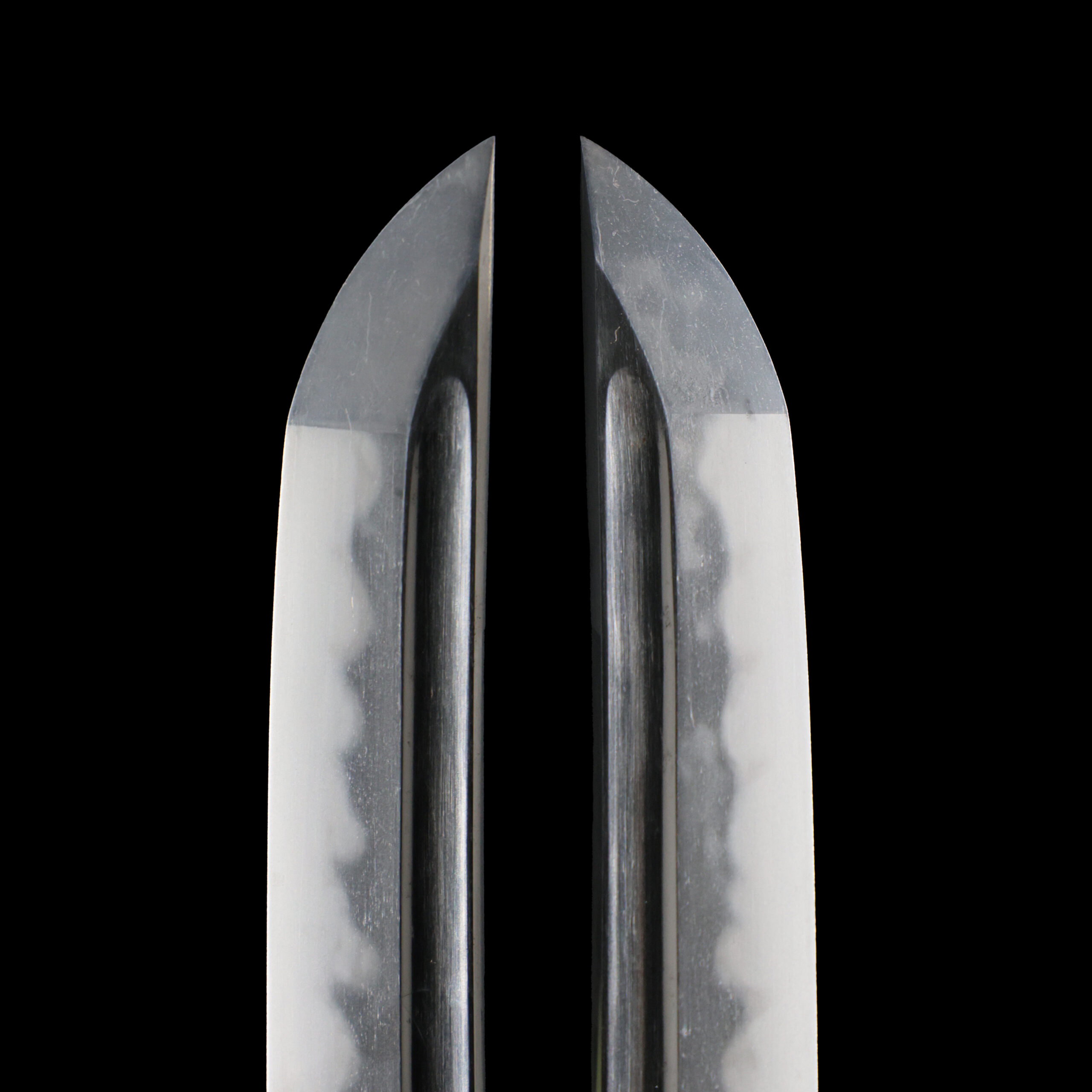
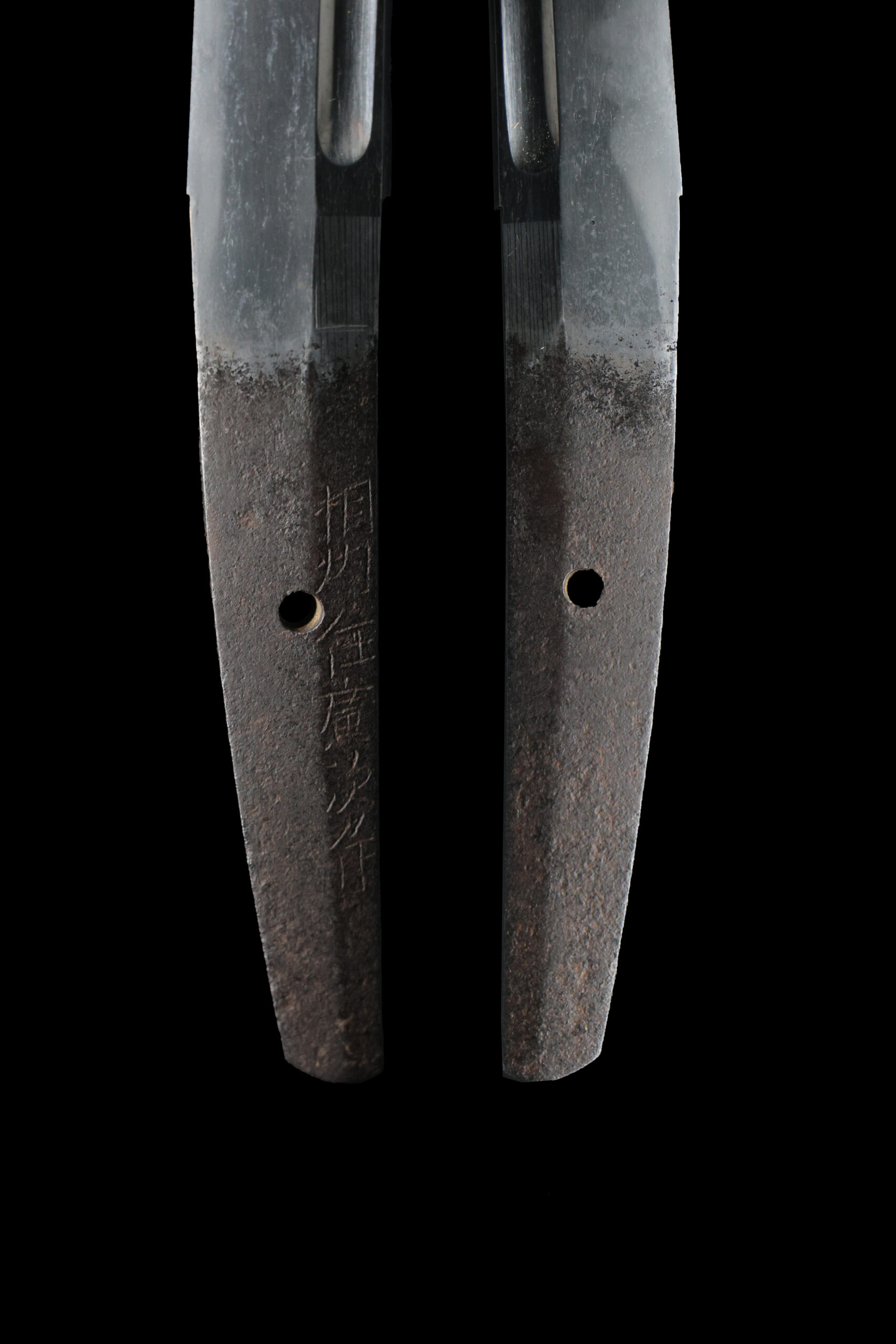
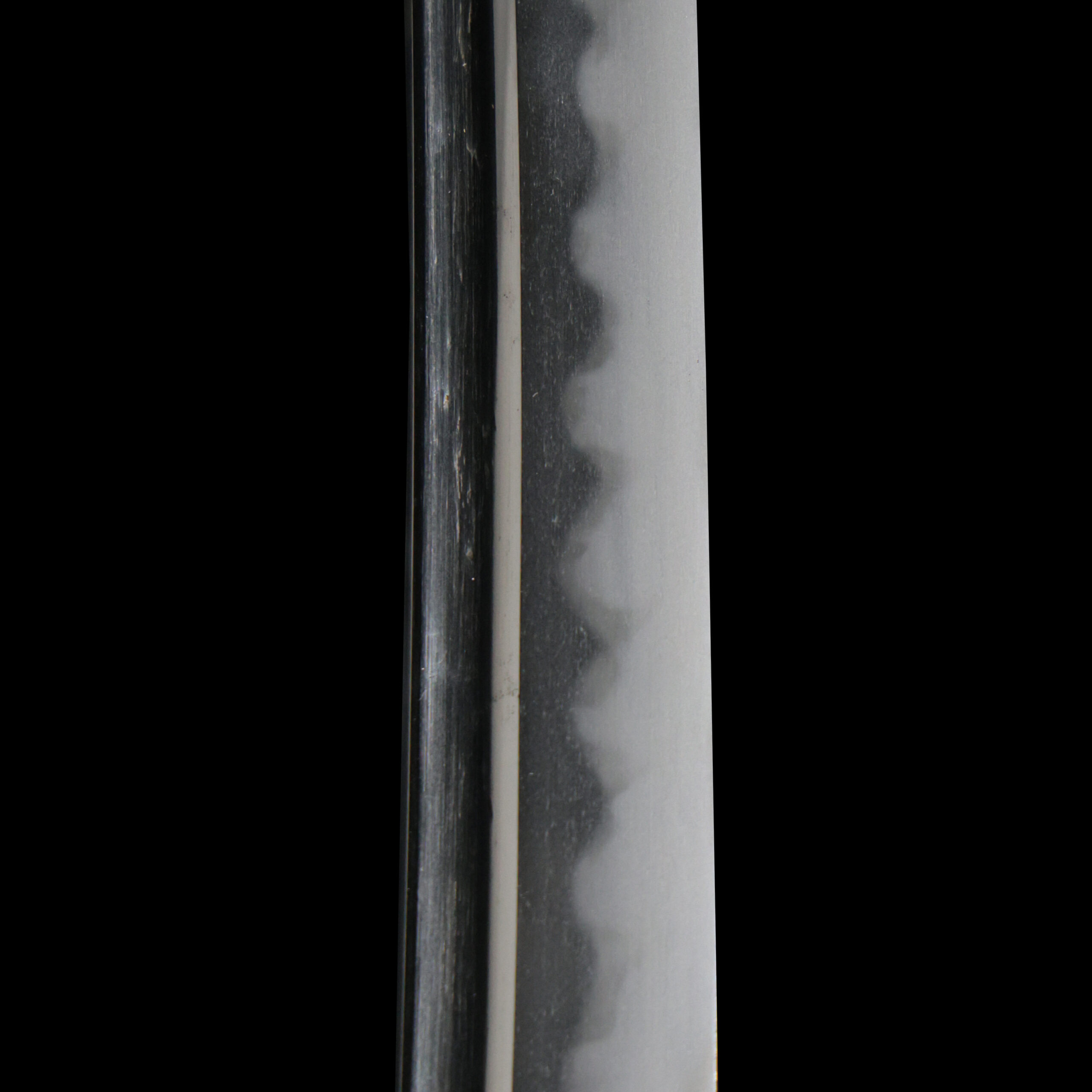
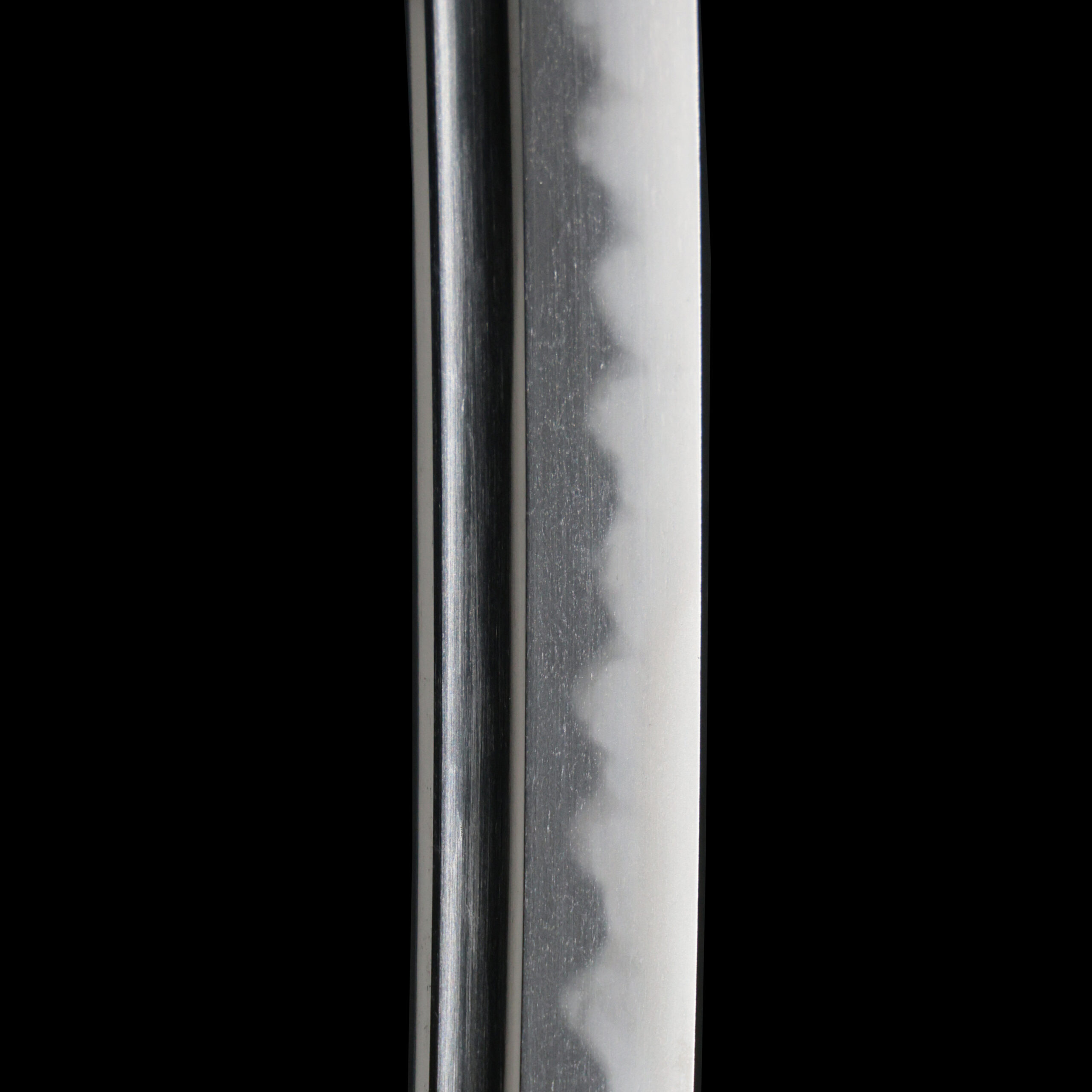
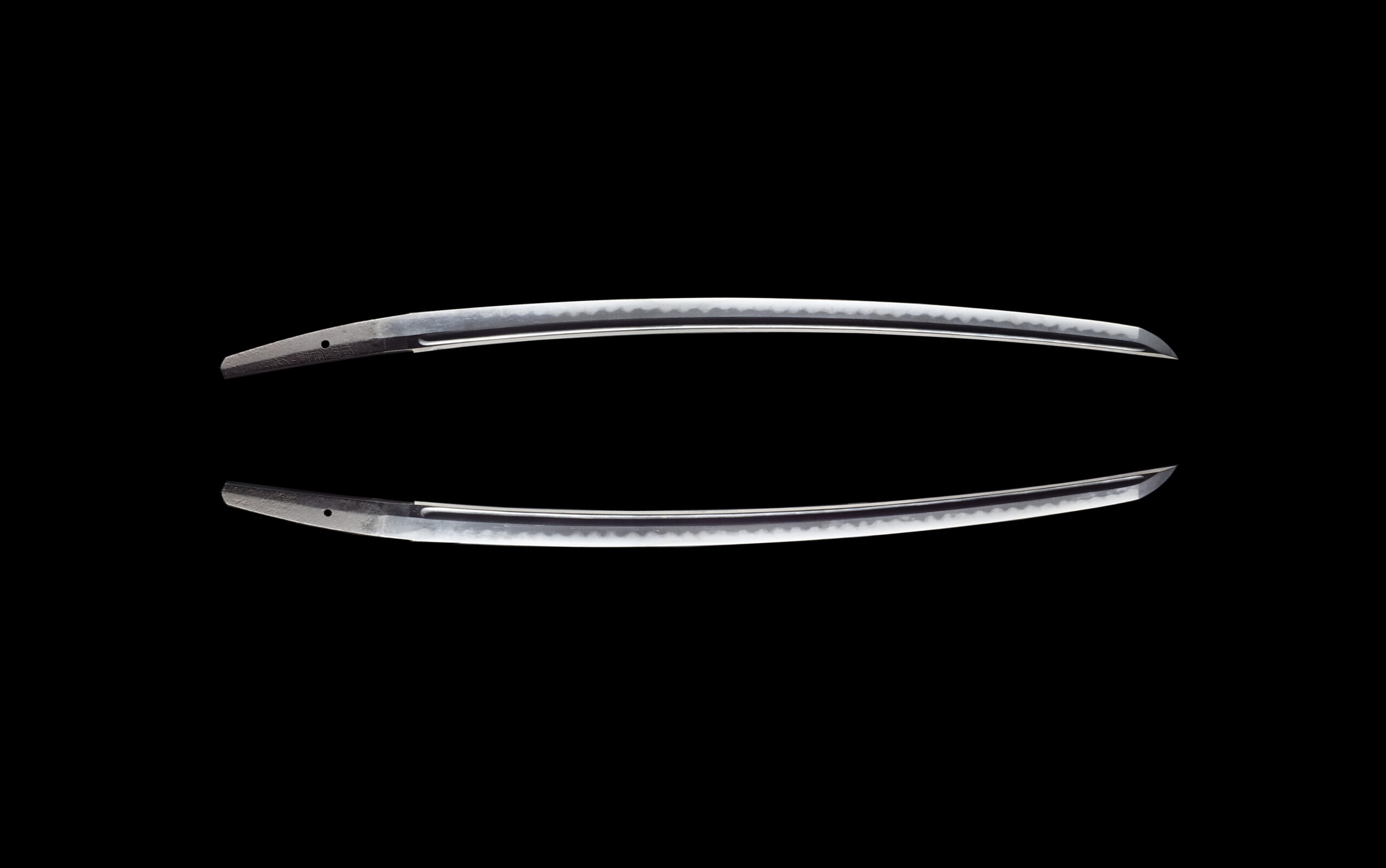
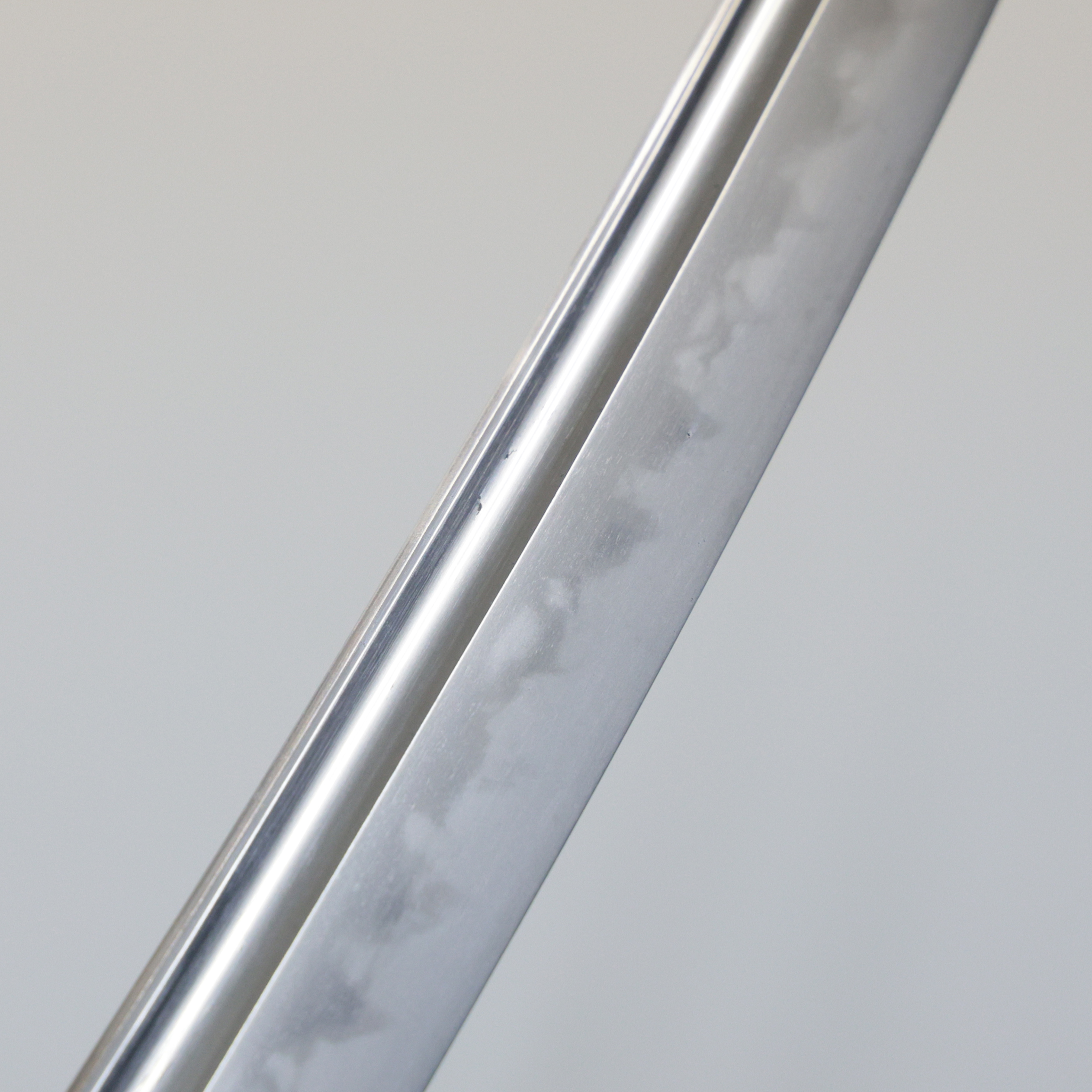
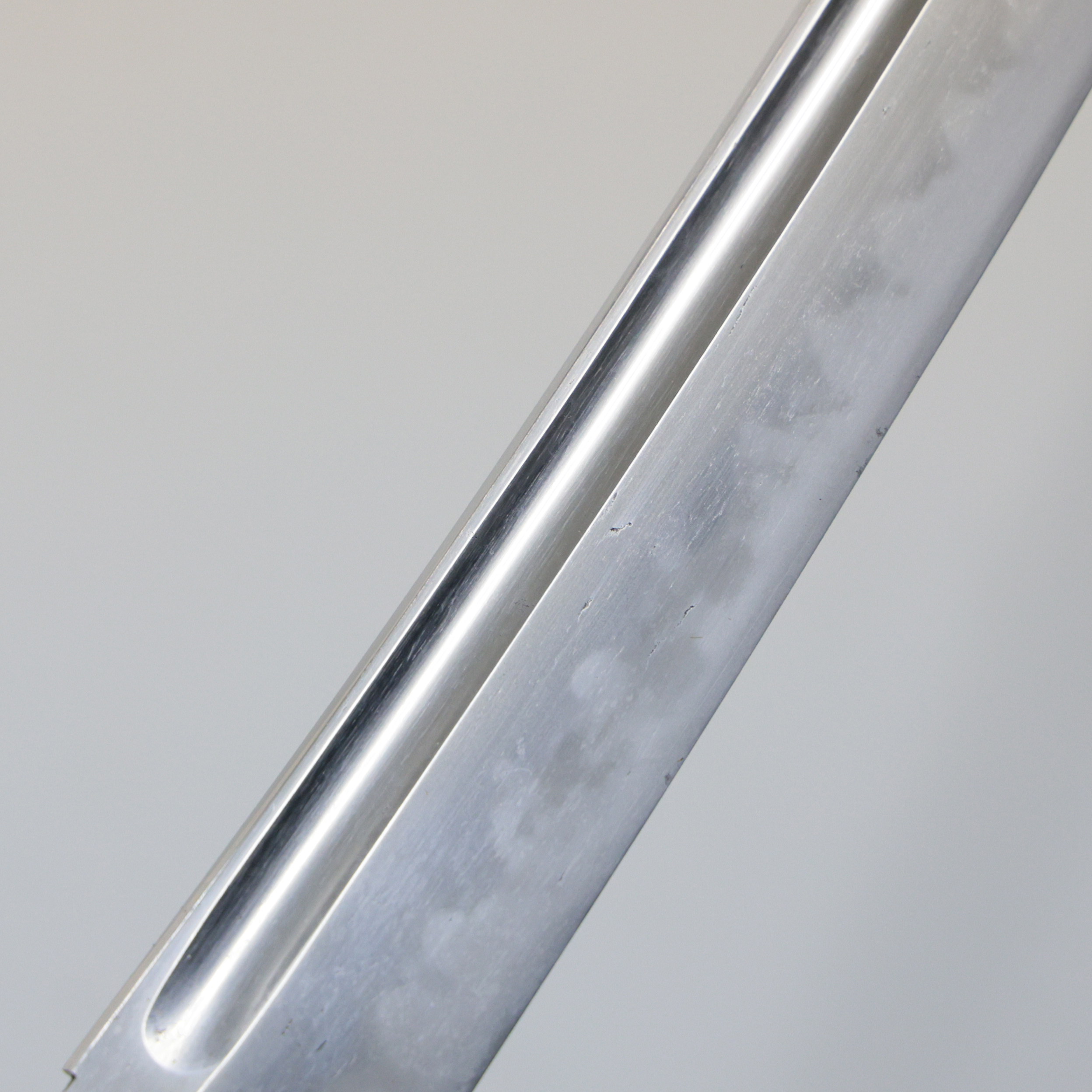
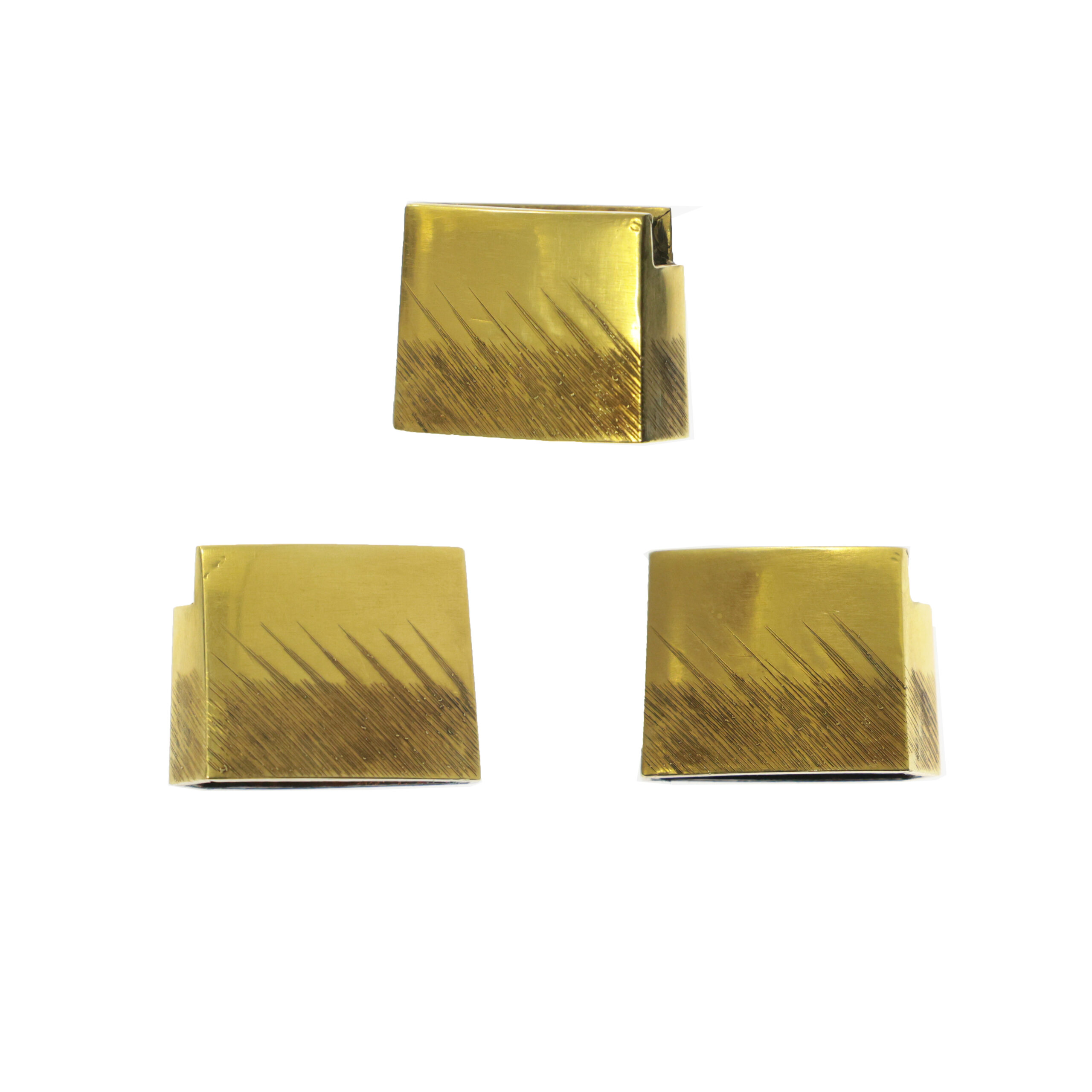
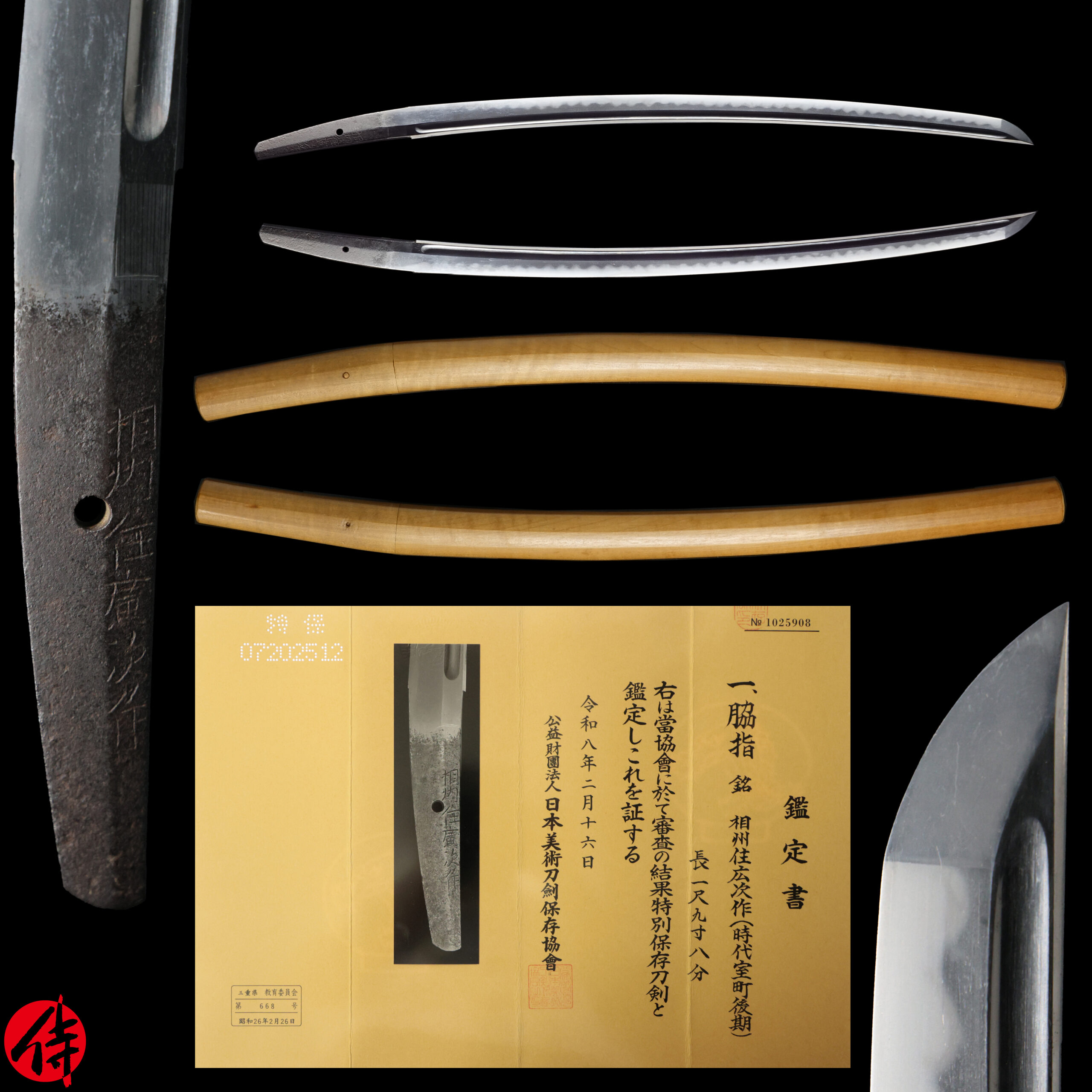
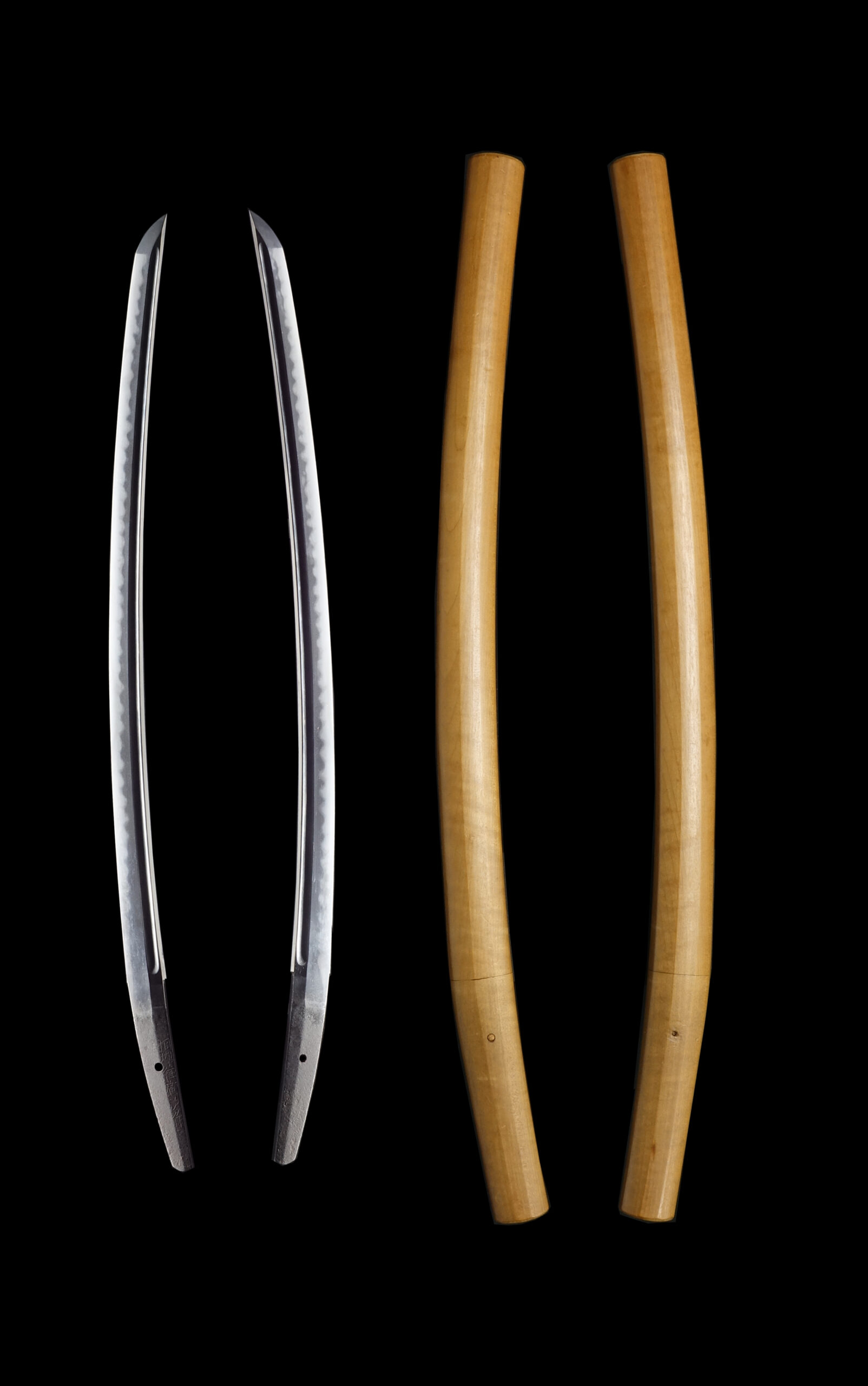
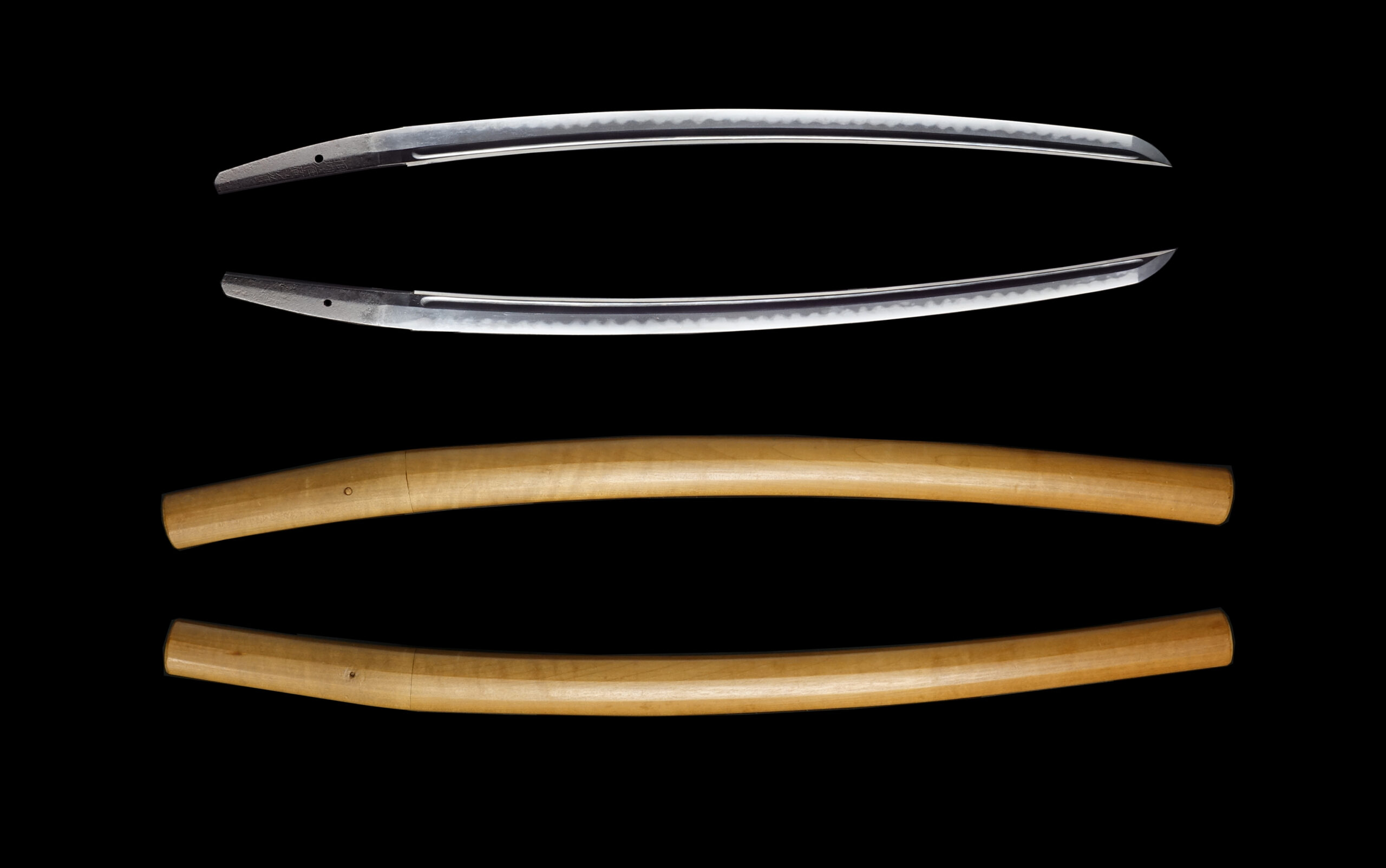
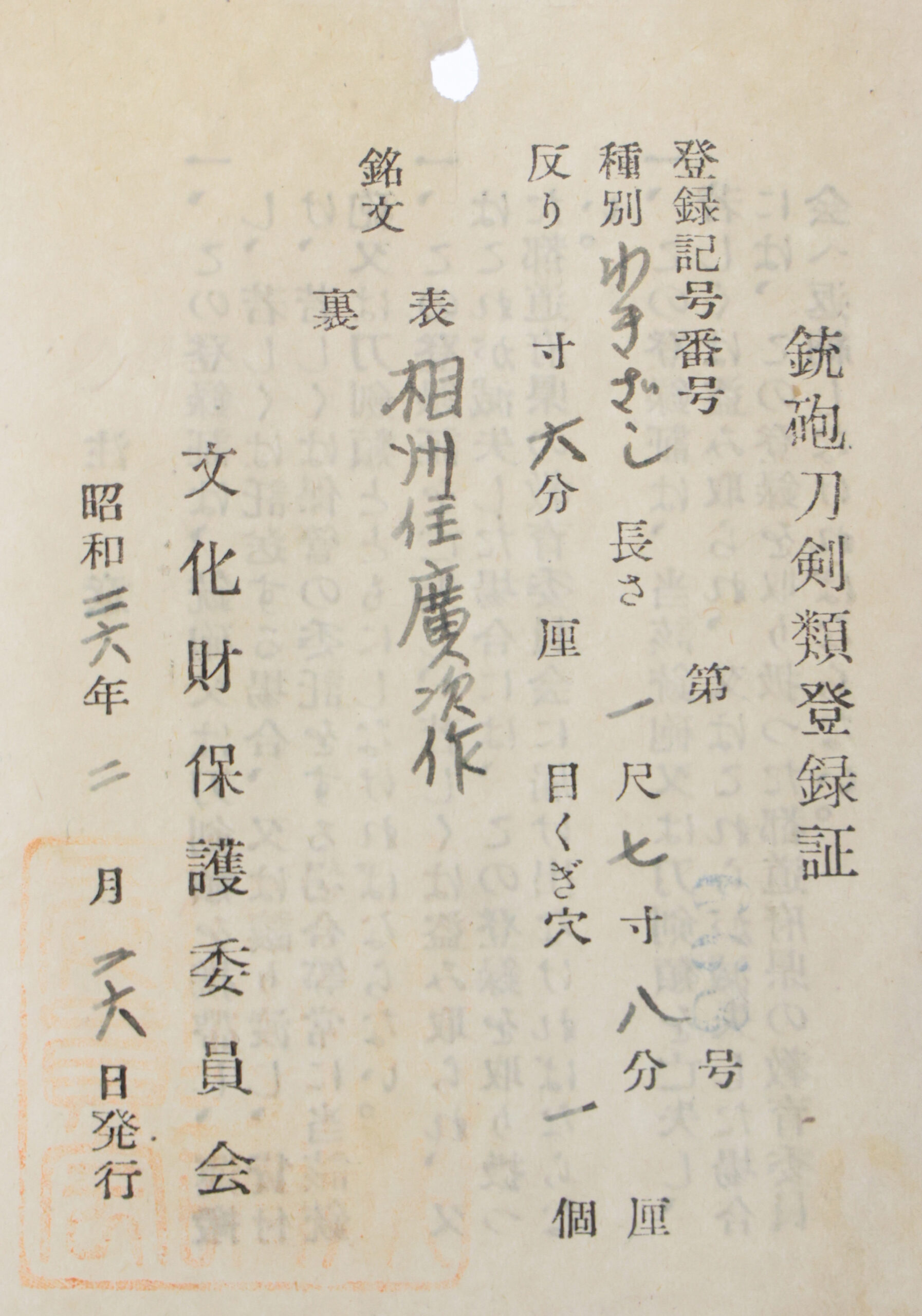
販売店の記載のまま
相州伝 · 相模 · 1492-1501頃
藤代 上作 · 刀剣大鑑 上位37%
現在4点販売中
相州鎌倉の広次は、指定を受けた四口によって知られ、うち三口は明応年間、十五世紀末の作とされ、一口は室町末期の作と鑑せられる。最も古い拠り所は本間による御物台帳に所載の脇指で、「相州住広次作」と銘し、明応九年の年紀を有する。説明は「広次は相州鎌倉に住した刀工で、銘鑑にはその初代を建武としているが、現存するものでは室町時代中期を遡るものはなく室町時代後期を代表する相州鍛冶といえる」[[c:2]]と記す。台帳は、経眼したものでは明応年紀のものが一番古く、天文年紀のものに駿州島田住と銘するものがあり相州同人という、と付け加える。
重要刀剣の刀のうち二口は銘の形を異にする。昭和四十六年指定の一口は、目釘孔の横に細鏨で「広次」と二字銘を切る。鍛えは小板目肌に地沸つき地景入り、刃文は互の目乱れに丁子ごころの刃交じり、下半は焼巾やや狭く、中程より上は焼巾を増し飛焼交じり華やかに乱れ、足・葉入り、砂流しかかり、匂い深い。表に草倶利迦羅、裏に梵字・護摩箸・蓮台を彫る。説明は「地刃の出来が優れ、彫物も見事で、室町時代の相州物の典型である」[[c:3]]と評する。
平成二十七年指定のもう一口は六字銘を有し、「その銘振りや作風からおよそ明応年間の作と推されるものである」[[c:4]]とされる。反り深く先反りつき、重ね厚い。鍛えは板目に杢・流れ肌交じり、地沸厚くつき、地景入り、淡く映り立つ。刃文は鎬にかかるほど焼高く、互の目に丁子・尖り刃等交じり、金筋・砂流し頻りにかかり、焼頭に沿い打のけかかる。説明は「匂口は締まりごころに明るく冴えるなど、出色の出来映えを示している」[[c:5]]と結ぶ。
御物台帳所載の脇指は、板目肌やや立ち白けごころの地鉄に互の目乱れに砂流しかかる刃文、掃きかけた帽子、棒樋に添樋と梵字・蓮台の彫物をみせる。明応の諸作に共通するのは、砂流しを伴う互の目の刃文、相州物らしい彫物、そしてその年代である。
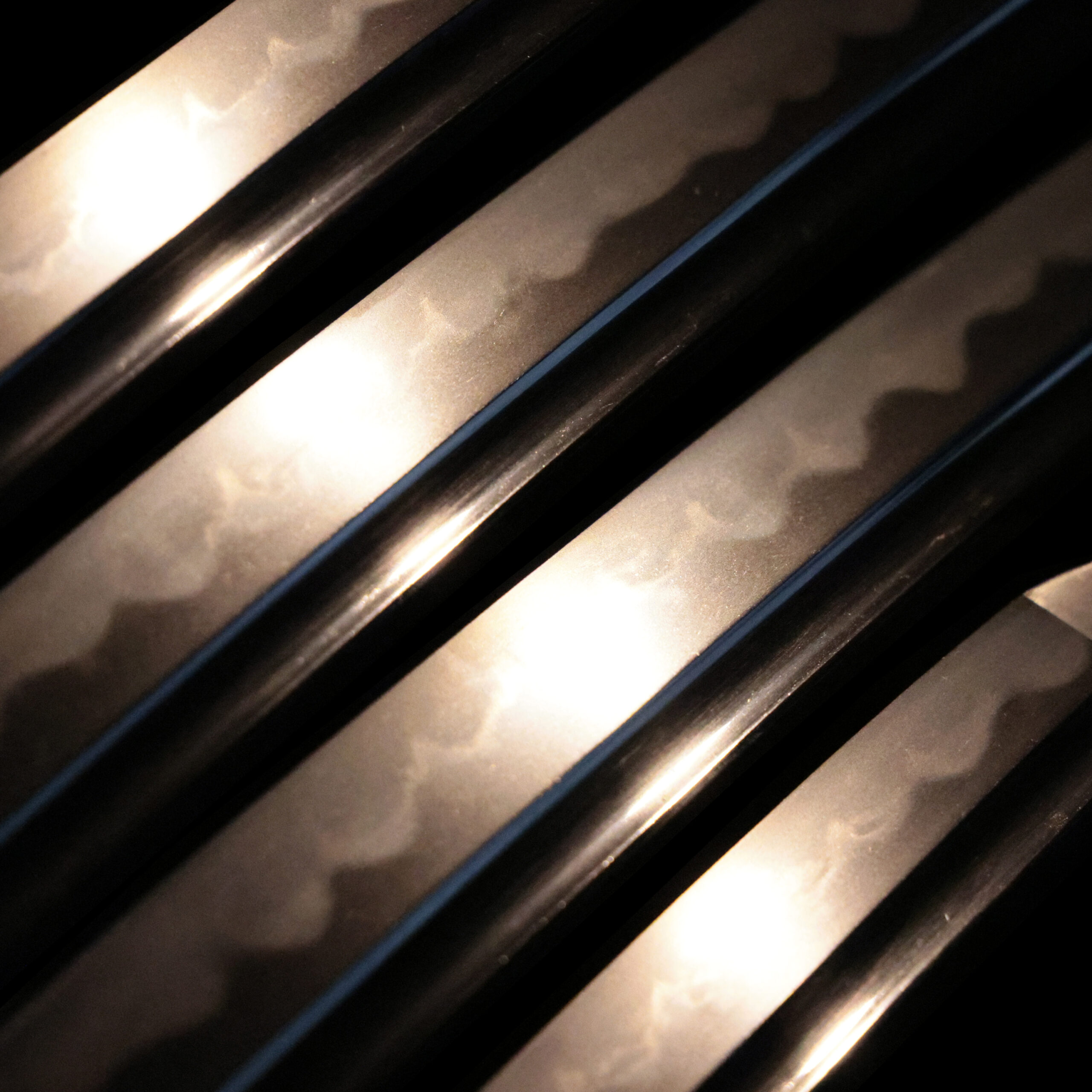
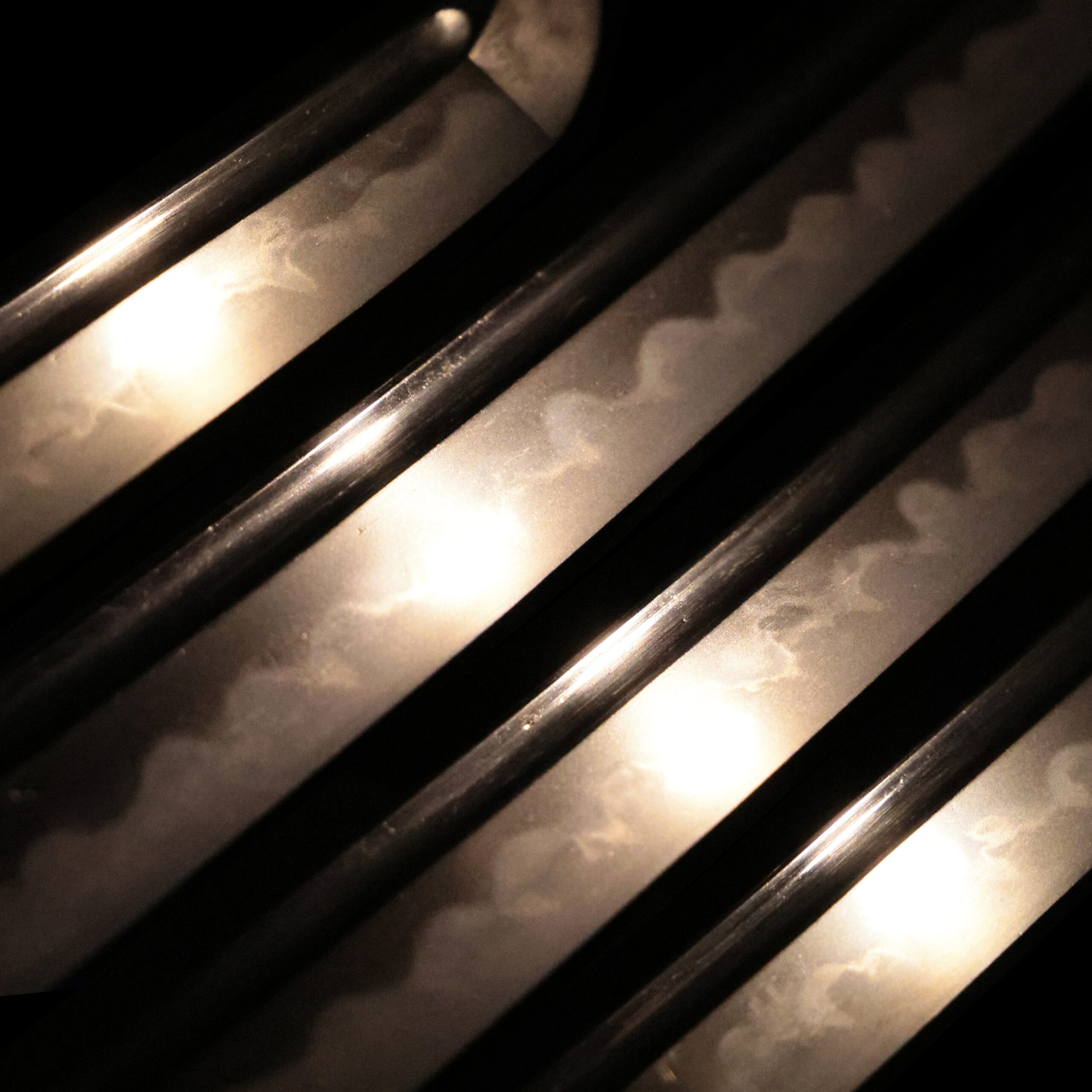
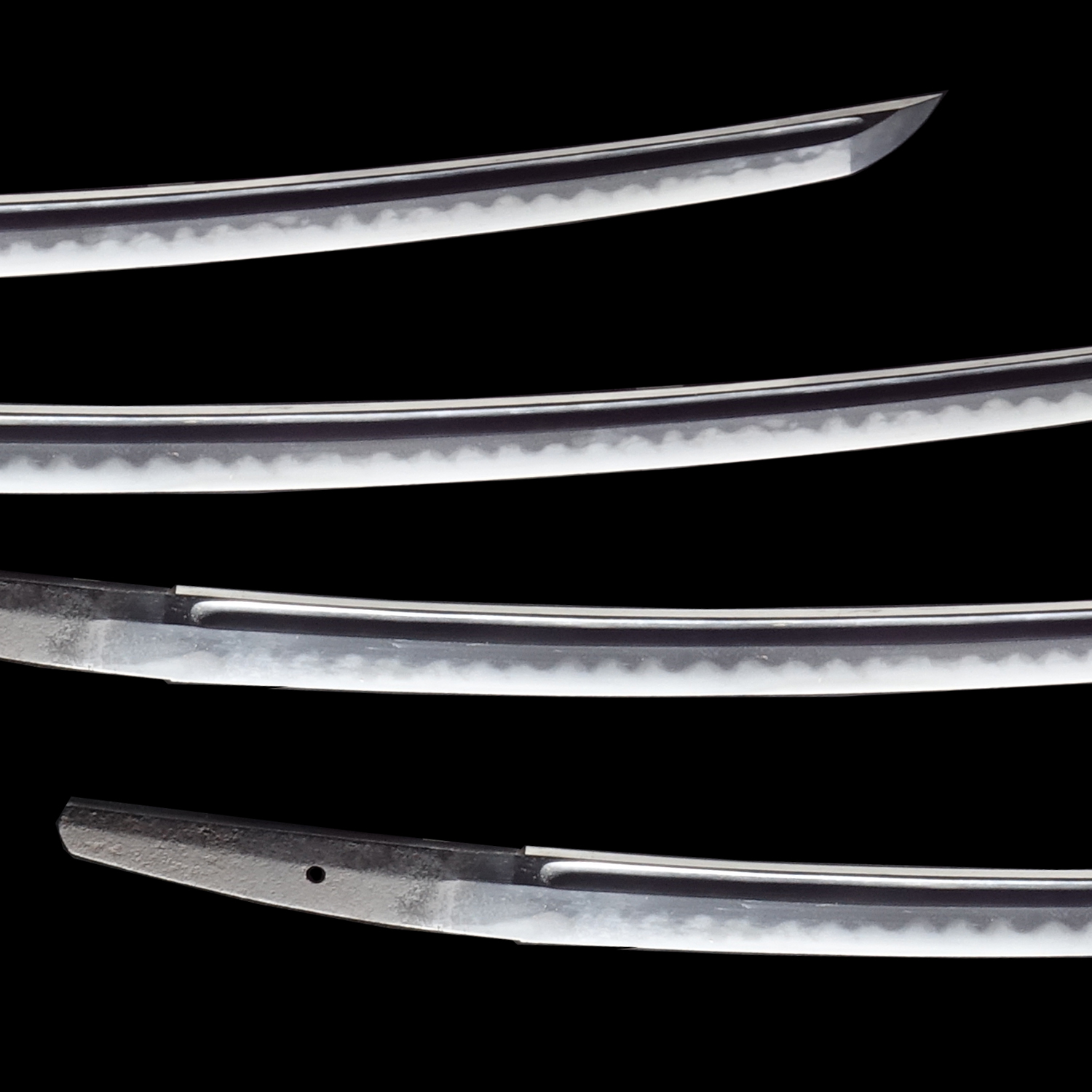
令和三年指定の四口目の刀は、「本作は銘振り・体配よりそれよりもやや降った、室町末期の広次の作と鑑せられるものである」[[c:6]]とされ、明応・天文頃の技術の高い広次よりやや降る。身幅広く鋒の延びた豪壮な造込みで、地鉄は板目肌に杢目が交じり総体に肌立ちごころとなり、地沸厚くつき、地景頻りに入る。刃文は総じて焼高く、のたれに互の目・丁子・尖り刃・矢筈形の刃等が交じり、飛焼・棟焼を交えて皆焼となり、匂口明るく沸厚くつき、金筋・砂流し頻りにかかる。説明は「一見南北朝時代の長谷部派を思わせる沸の強い迫力ある皆焼」[[c:1]]を焼くとし、この広次の高い技術が窺い知られるとする。
廣次の位置づけを、日本刀全体および伝法・時代・時期ごとに示します。各区分(随一・屈指・有数・著名)は、NBTHK および文化庁による指定に加え、三作や名物帳などの歴史的栄誉を加味したものです。
各項目を選ぶと評価方法が表示されます。
在銘年紀作が示す、確実に活動していた年代
相州伝 · 相模
時期区分: 末相州· 1356–1868
現在20点販売中
末相州は、南北朝の広光・秋広の代を承け、室町期に入って相模で営まれた相州伝の継続である。現存遺品に即せば、室町中期を遡るものはなく、室町後期から戦国期にかけてが本区分の中心をなす。その軸となる工が綱広で、銘鑑には初代を建武とする伝もあるが、確かな在銘は天文年紀のものが最も古く、通説はこれを初代として、二代を天正、三代を慶長、四代を寛永、五代を万治頃と伝える。綱広は広正の子孫で、初め名跡を継いだが、後北条家の氏綱に召されて小田原に居を移し、綱の一字を賜って改銘したと伝え、その名跡は新々刀期にまで連なった。鎌倉にはこの綱広らが住し、これと別に小田原には康春・康国・総宗・景総らが在住して、これらを小田原相州と称する。広次もまた相州鎌倉に住して明応・天文の頃に活躍し、室町後期を代表する相州鍛冶の一人に数えられる。後北条氏の庇護のもと、正宗・貞宗を生んだ南北朝の盛時を遠く望みつつ、皆焼の系譜を保持して相州伝を伝えたのが、この区分の刀工たちであった。 作風の核は、広光・秋広が完成させた皆焼を継ぐ点にある。鍛えは板目に杢や流れ肌を交えてやや肌立ち、地沸がつき、地景が入る。刃文はのたれ・互の目に丁子・矢筈風の刃・尖り刃などを交え、飛焼・棟焼を盛んに交えて皆焼となり、沸がよくつき、金筋・砂流しがかかる。綱広は玉状ないし三日月状の飛焼を見せる皆焼を得意とし、広次に至っては焼高く、沸の強い迫力ある皆焼を焼いて、一見すると南北朝の長谷部派を思わせるほどに到る。古典相州の頂点と分かつのは、この皆焼の扱いに見える。正宗・貞宗の代では、のたれ基調の地刃に沸が深く澄んで明るく冴え、地にこぼれた沸が湯走りをなして自在に働いたのに対し、末相州の皆焼は飛焼・棟焼を全面に散らす構成そのものを看どころとして前に押し出す傾きを帯び、地鉄もやや肌立って、鎌倉期の鉄の冴えからは一段隔たる。小田原相州はこの大筋において綱広らと大差ないが、小振りの刀姿があること、濃厚緻密な彫刻を多く備えることに特色があり、殊に総宗の倶利迦羅や八幡大菩薩・梵字の彫は巧緻と評される。 鑑定にあっては、まずやや肌立つ板目に地沸・地景が働き、飛焼・棟焼を交えた皆焼に金筋・砂流しがかかる地刃を相州の継続と読み、次に古典との隔たりを沸の深さと鉄の冴えの差、そして皆焼を誇示的に焼き出す傾きに求めて末相州と分かつ。区分内では、綱広を皆焼と玉状の飛焼に、広次を長谷部風を思わせる強い沸の皆焼に、総宗ら小田原相州を小振りの姿と緻密な彫刻に見分ける。主要工は綱広・広次・総宗で、康春・康国・景総がこれに連なる。伝来の面では、綱広に後北条家の重臣桜井大学の所持銘を有する一口があり、本区分が後北条氏の小田原を地盤として営まれた事実を裏づけている。 詳しく見る →
室町時代の相州
戦国の世、一派は第二の主家に仕えた。小田原の後北条氏である。その庇護のもと綱広系は打刀の時代の皆焼を鍛え続け、1590年の落城とともに新刀の時代へ散った。
保存刀剣のうち、出来が一層優れ、保存状態も良好と認められたものです。再刃や、室町・江戸期の多くの無銘作は対象外となり、保存刀剣より高い基準が課されます。
日本美術刀剣保存協会(NBTHK)は、1948年に設立され、文化庁の監督を受ける公益財団法人で、東京・刀剣博物館に本部を置きます。専門の審査員が出品作を直接審査し、美術的・歴史的価値に応じた鑑定書を発行します。NBTHKの鑑定書は、日本刀および刀装具の真正性を示す最も広く認知された基準です。
NBTHK公式サイトReturns/exchanges limited to defects caused by shipping (except willful misconduct or gross negligence by the company); customers must contact within 72 hours of receiving the product.