NihontoWatch MonNihontoWatch
MarketAuctionsEncyclopedia
NihontoWatch Mon

NihontoWatch

MarketAuctions
Encyclopedia
Overview·Honors·Historical importance·Designations·Catalogue·Kantei·Dated Works·Provenance·Blade Forms·Signatures·Lineage·School
OverviewHonorsHistorical importanceDesignationsCatalogueKanteiDated WorksProvenanceBlade FormsSignaturesLineageSchool
  1. Schools
  2. Soshu
  3. Sōshū
  4. Norishige

Soshu Norishige

則重

Tokujū
Vol. 16, No. 13 · Katana

Soshu Norishige

則重

131 ranked works

Leading smith
享保名物帳正宗十哲
ProvinceEtchuEraEnkei (1308–1311)PeriodKamakuraSchoolSoshuTraditionSoshu-denTeacherKunimitsuFujishiroSai-jo saku(Supreme Work)Toko Taikan2,000(top 2%)TypeSwordsmithCodeNOR312
1Kokuhō
7Jūyō Bunkazai
9Jūyō Bijutsuhin
30Tokubetsu Jūyō84Jūyō Tōken

Overview

Norishige worked in at the end of , a pupil of Kunimitsu and a brother-student of Yukimitsu and Masamune, with whom he carried the tradition to its maturity. Older texts such as the Kokon Zukushi list him among Masamune's ten disciples, but the dated blades that survive, in the Shōwa, Engen and years, and the form of his and , lead the published sources to read him by the -era account as a pupil of Kunimitsu and a brother-student of Masamune, perhaps a little the earlier of the two.

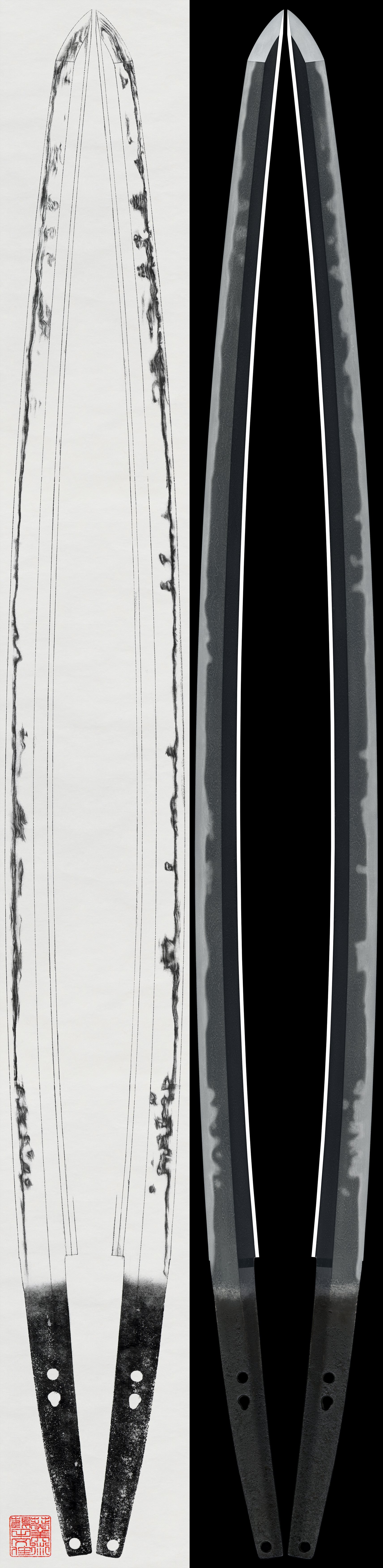
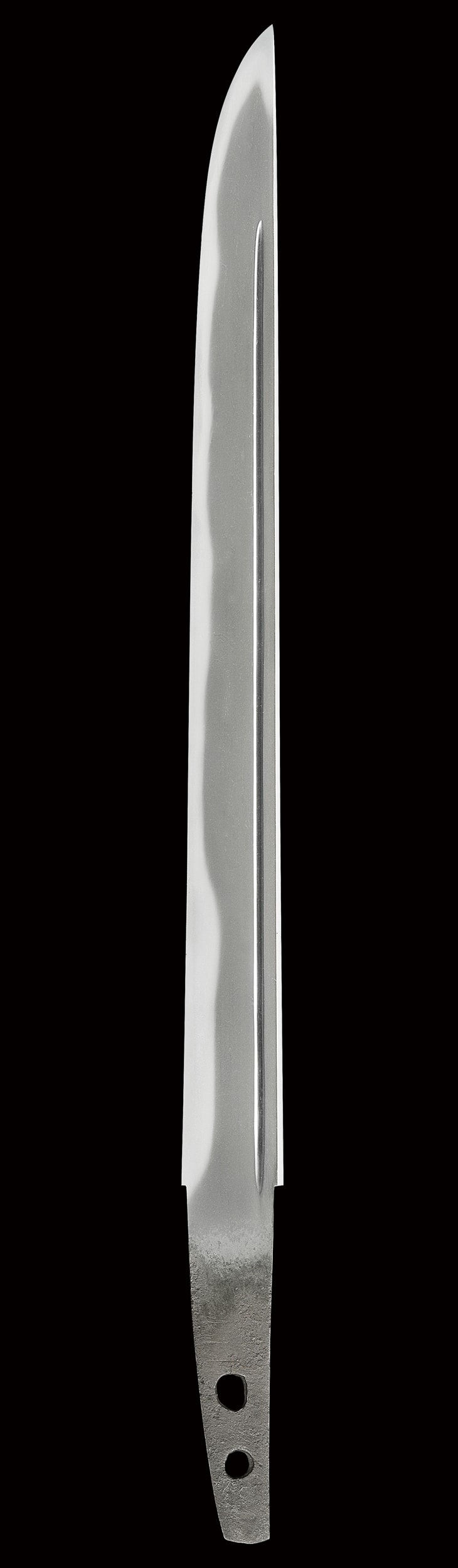
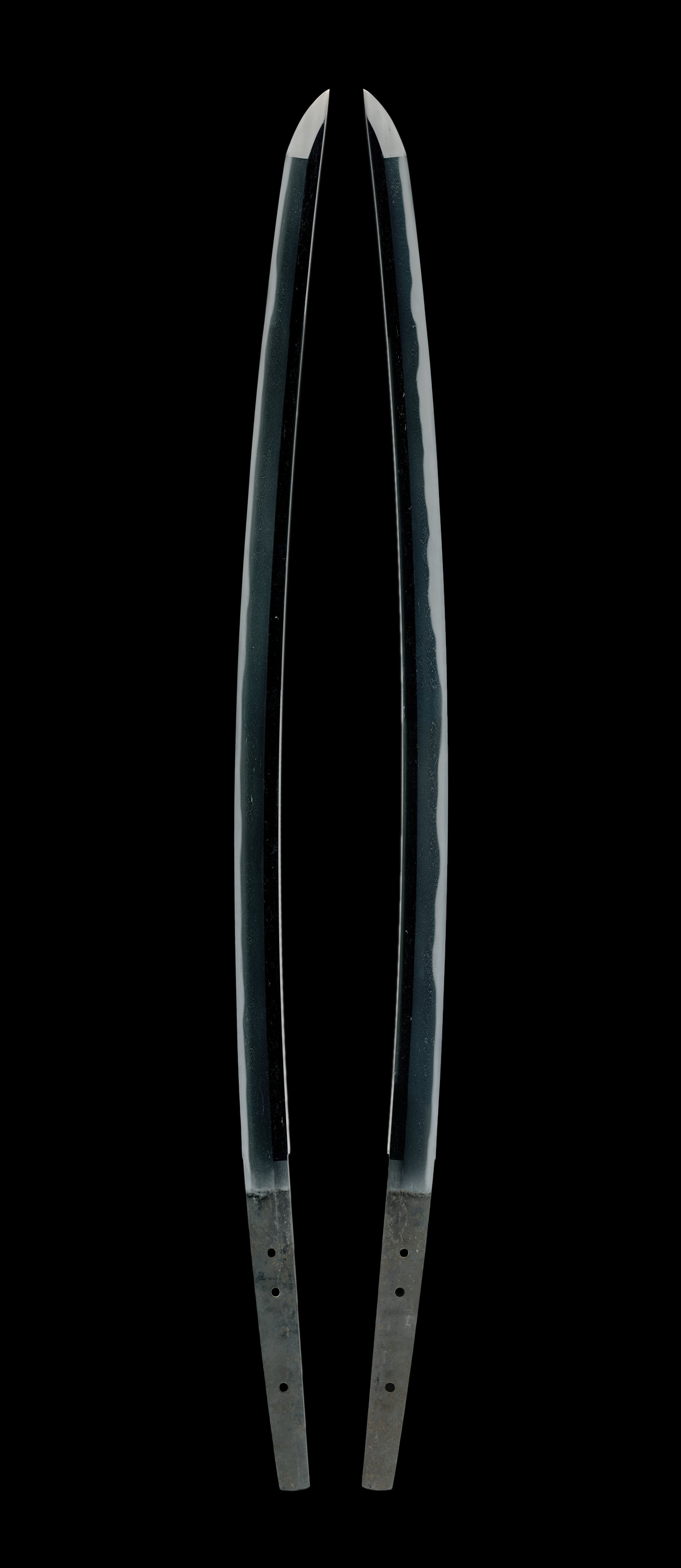
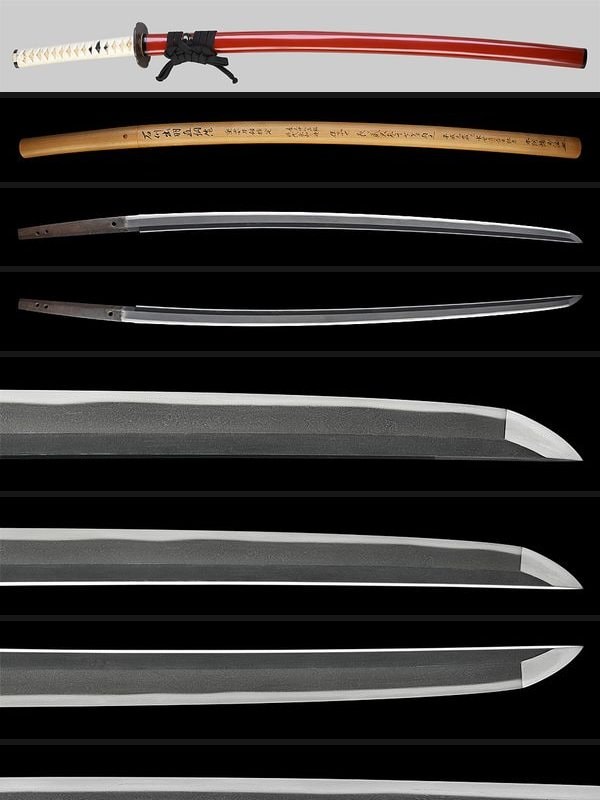
The common manner, and the one that bears his name, is (松皮肌). His stands boldly, often in a large pattern mixed with , and through it thick enter abundantly until the surface reads like the bark of a pine; the steel is dark, the thick. The published sources place him closest of the great hands to Masamune, yet note that he expresses the changes of even more openly than Masamune, so that the and the together show what they call the ten-thousand changes of . The bold standing grain laced with thick is the mechanism behind the pine-bark, and it runs through the great majority of his work.

Over that runs a mixed with in deep , the subdued and sunken, the opposite of bright , alive with abundant and , with and drifting . The is a point the older profiles got wrong: it does not merely turn back in a small round, it sweeps out strongly in into a , at times pointed or burned through in , the brushed of the tip continuous with the restless below. The sunken and that swept, -broken are as much his signature as the bark itself.

There is a second manner, and it is the refined one the connoisseur prizes. On his rare signed and his early dated signed the does not stand as much as usual; the forging tightens to a calmer fine , the and both quieter, the steel brighter and more clearly lit, the and more restrained. A representative signed is marked as calmer in and than his usual work, its small- temper sunk over the swirling Norishige grain still legible beneath; an early signed of Shōwa 3 is read as standing less, brighter, and connecting to Kunimitsu and Yukimitsu, his earlier hand. This fine, bright forging is not a lapse from the but a distinct and highly regarded facet of him.

For recognition the two manners share the core: thick dark , a subdued sunken , and running busily, and the swept . The subdued parts him from the bright of ; the openly varied and the heavier standing grain part him from Masamune, whose runs through a tighter, quieter . Where the bark is absent, on the fine signed pieces, the and the sunken carry the attribution. Fujishiro grades him Sai-jō , and among all swordsmiths his count stands near the very top.

His signed work is itself a rarity: it is mostly , and signed are so few that an earlier appraisal could count only two; the designated corpus today holds four — two Important Cultural Properties and two — the rest of his work and . The named blades carry the histories of the great houses: a signed passed from Toyotomi Hideyoshi's circle and through Tokugawa Tsunayoshi, who bestowed it at the Yanagisawa residence, into the Yanagisawa family, while others descended through the Shimazu, the Maeda, the Hosokawa and the Ii. A few of his own works look back to and Ko-Hōki for an archaic flavor. His pine-bark forging did not die with him; his pupil Tametsugu carried it west, where it became the mark of the later smiths.

Honors

享保名物帳Kyōhō Meibutsu Chō (Catalog of Celebrated Blades)

Recorded, 1 blade

The family's catalog of celebrated blades (名物) presented to shogun Tokugawa Yoshimune in Kyōhō 4 (1719). Records ~274 blades of – manufacture (168 extant + ~80 burned + ~26 later additions), grouped by smith with valuations and provenance. This honor tags smiths whose work is recorded in the catalog; the detail field carries per-smith counts where the published tally is exact, or 所載 + named blades where only inclusion is verified.

正宗十哲Masamune Juttetsu (Ten Brilliant Students of Masamune)

Counted among the Ten; in fact a fellow student under Shintōgo Kunimitsu

The Ten Brilliant Students of Masamune — an -period construct first attested in the Shōsan (刀剣正纂, 1862), which itself already disclaims the grouping as later conjecture. Several members cannot have been actual students on chronology (Kanemitsu, Chōgi, Kinjū, Naotsuna), and Norishige is now considered a fellow student under Kunimitsu — yet invoke the roster constantly, and it remains core collector vocabulary. Roster variants exist (Sadamune in place of Naotsuna; Kongōbyōe Moritaka swapped in for Kunitsugu or Naotsuna); this honor tags the standard ten.

Historical importance

Where Norishige stands among comparable artisans: across all of nihontō, and within tradition, era, and period. The tiers (Foremost · Leading · Major · Notable) weigh official designations from the NBTHK and Japan's Agency for Cultural Affairs, together with historical honors of lasting repute such as the Sansaku and Meibutsu-chō.

随一
Foremost
屈指
Leading
有数
Major
著名
Notable

Select a lens to see how it's measured.

Designations

Kokuhō1
Jūyō Bunkazai7
Jūyō Bijutsuhin9
Gyobutsu—
Tokubetsu Jūyō30
Jūyō Tōken84

Elite Standing

Published Works

Tokujū — Vol. 16, No. 13 · katana

Catalogue enriched by Hoshi
Feb 2026

Kantei

Dated Works

Provenance

Blade Forms

Distribution across 131 ranked works

Signatures

Signature types across 131 ranked works

Currently Available

Lineage

TeacherKunimitsu
Norishige
Students (5)
  1. 1.Masamune正宗84designated
  2. 2.Hankei繁慶3 for sale51designated
  3. 3.Tametsugu爲繼2 for sale76designated
  4. 4.Sanekage真景3 for sale47designated
  5. 5.Kunifusa國房17designated

Soshu School

Other artisans of the Soshu school

  1. 1.Masamune正宗84designated
  2. 2.Sadamune貞宗86designated
  3. 3.Go Yoshihiro義弘1 for sale54designated
  4. 4.Akihiro秋廣27designated
  5. 5.Kunimitsu國光4 for sale69designated
  6. 6.Hiromitsu廣光1 for sale44designated
  7. 7.Yukimitsu行光4 for sale149designated
  8. 8.Takagi Sadamune高木貞宗1 for sale40designated
  9. 9.Tametsugu爲繼2 for sale76designated
  10. 10.Kunihiro國廣1 for sale15designated
  11. 11.Daishinbo大進房3designated
  12. 12.Yoshihiro吉廣1designated

Norishige

Norishige(則重) was a Japanese swordsmith of the Soshu school in Etchu province, active during the Enkei (1308-1311) period.

The work follows the Soshu-den tradition.

Designated works by Norishige include 1 Kokuhō (National Treasure), 7 Jūyō Bunkazai (Important Cultural Property), 30 Tokubetsu Jūyō, 84 Jūyō.