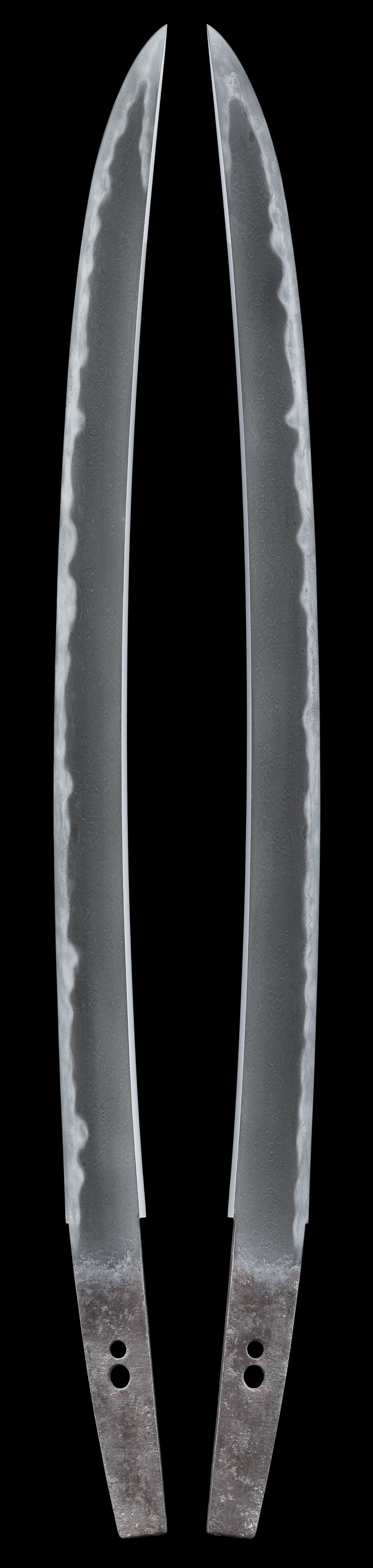
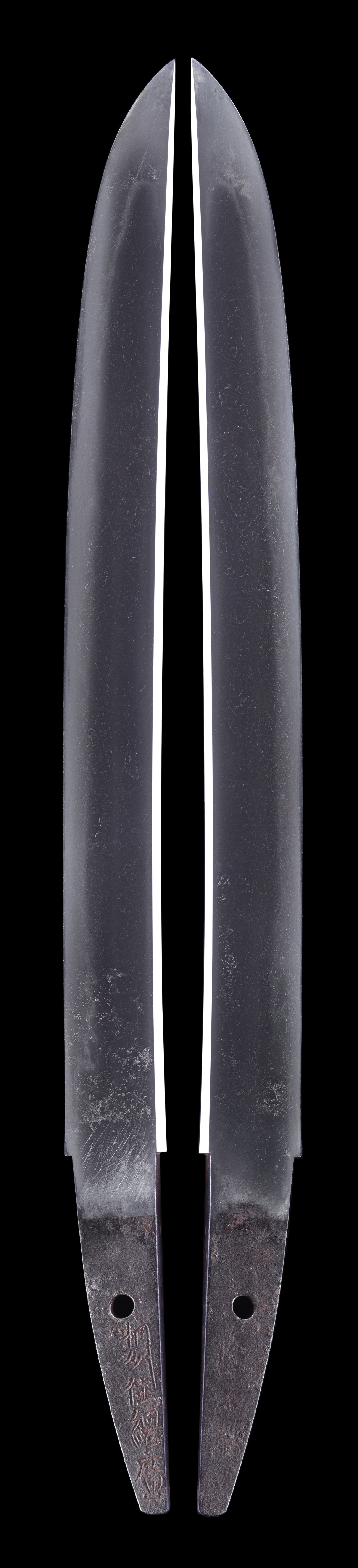
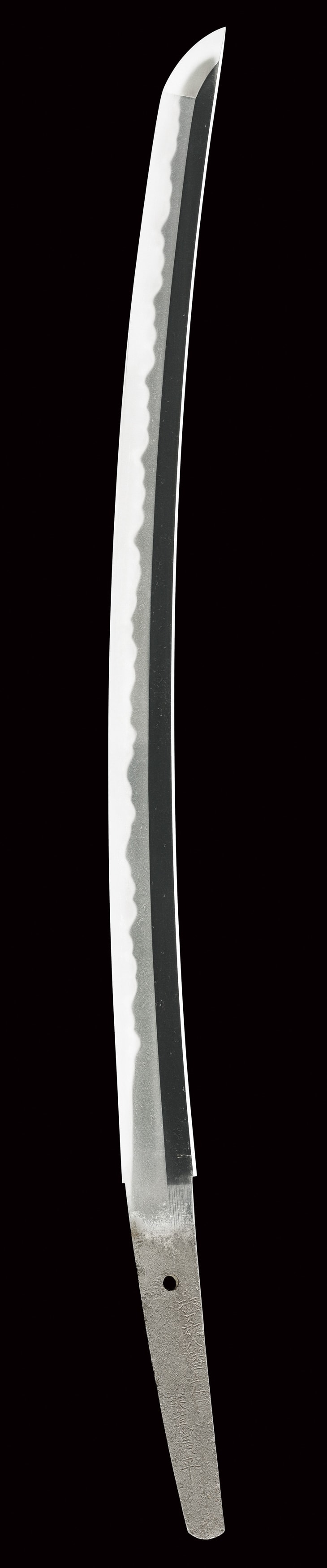
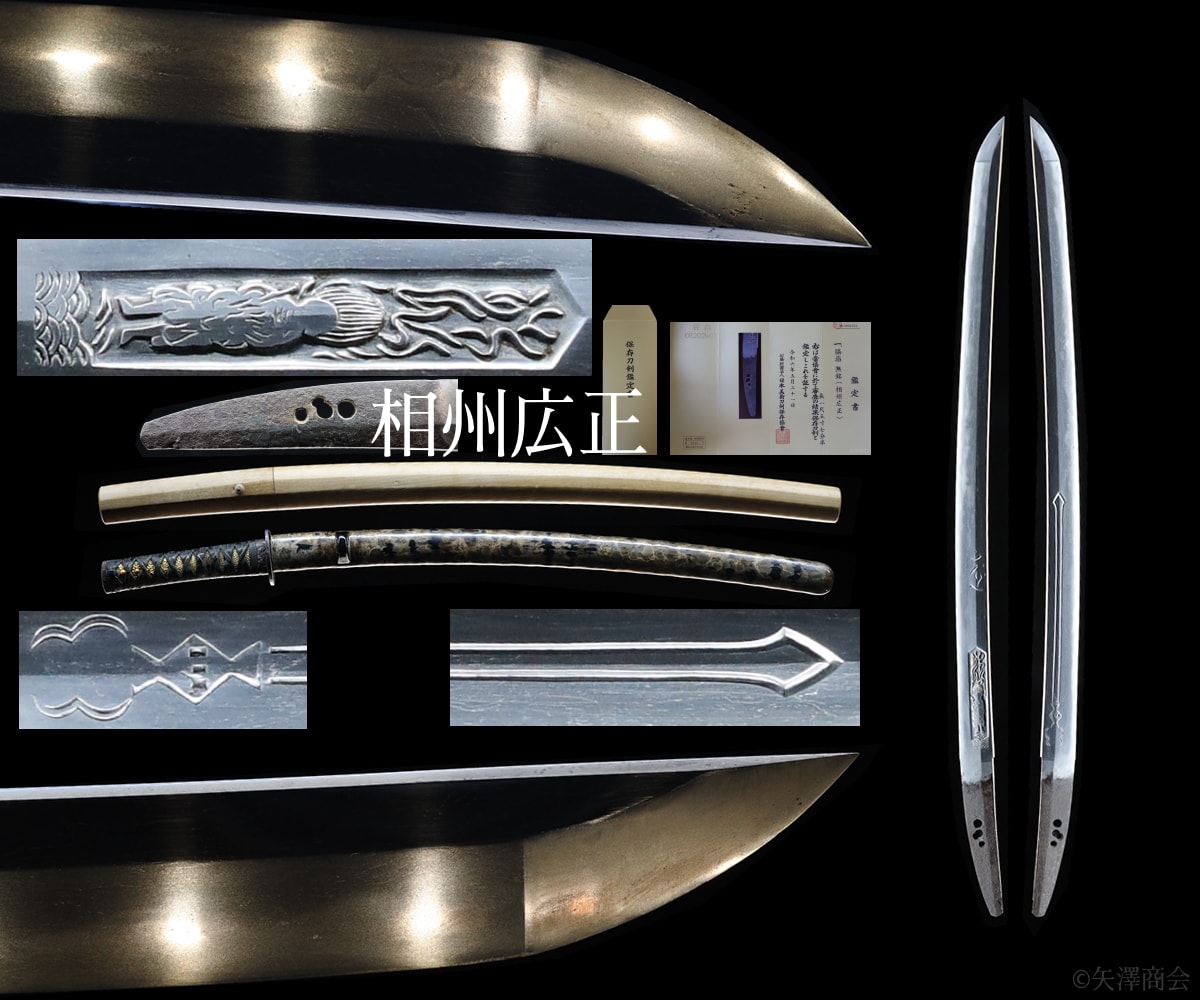
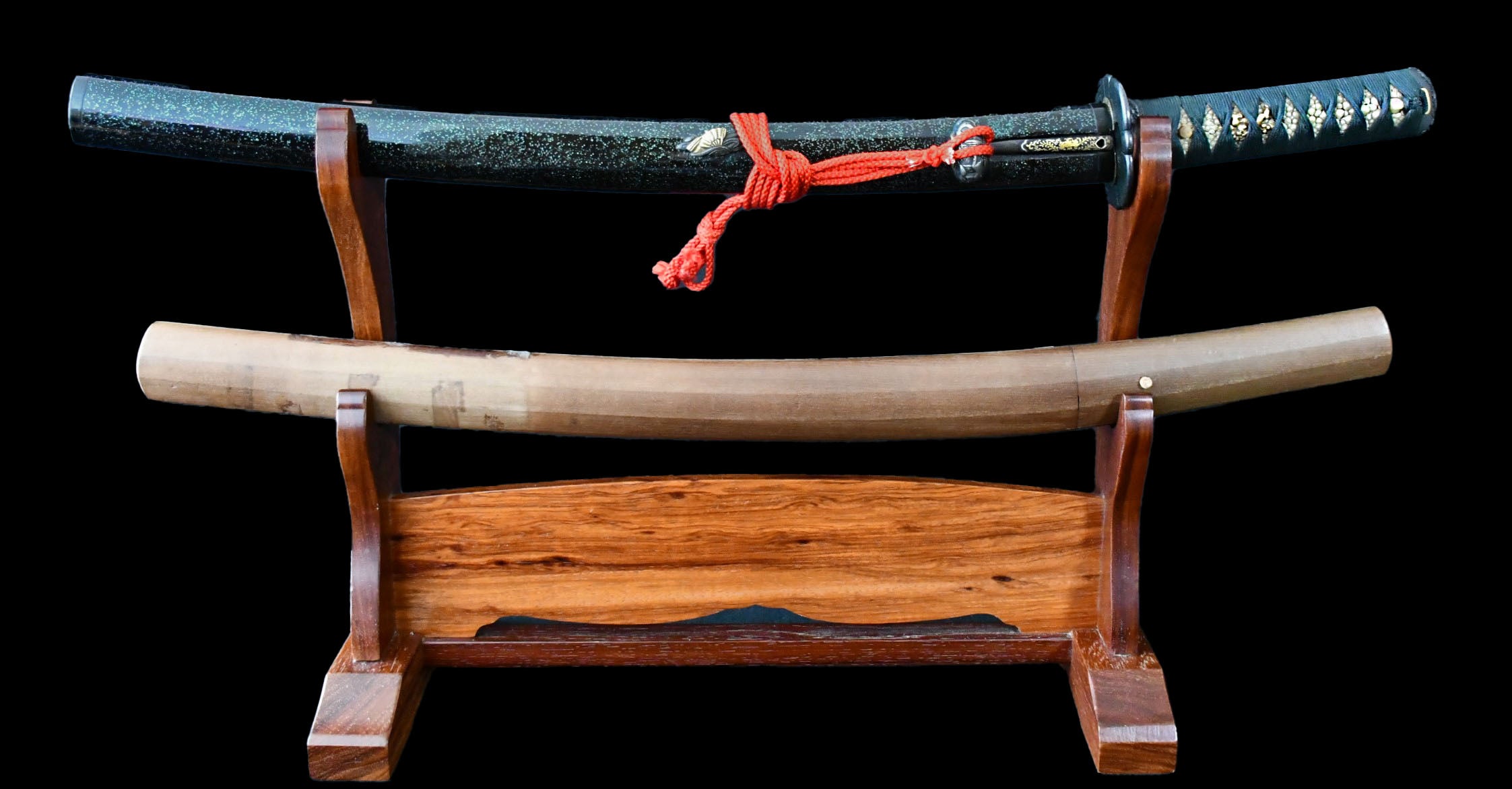
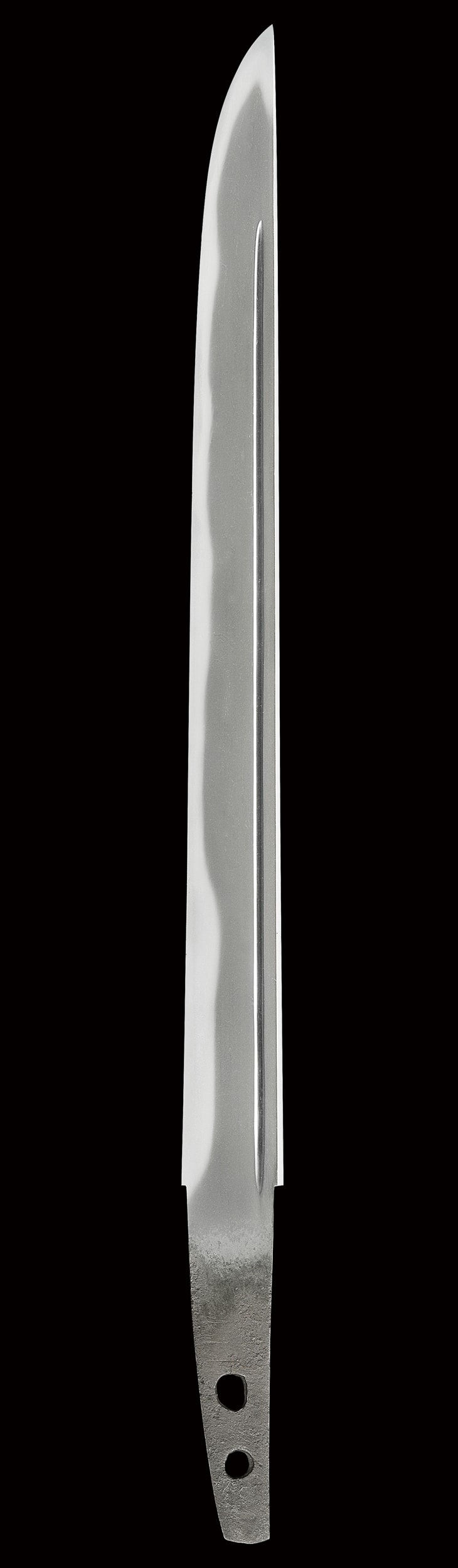
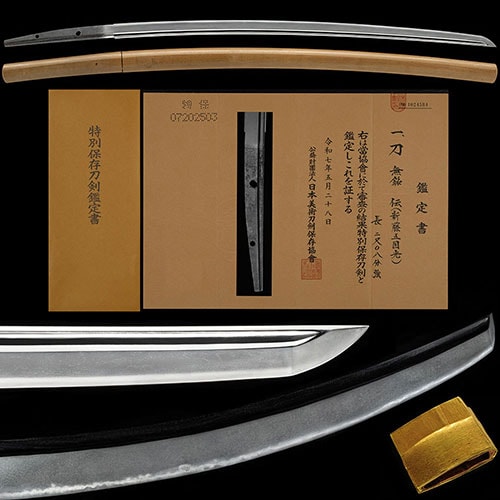
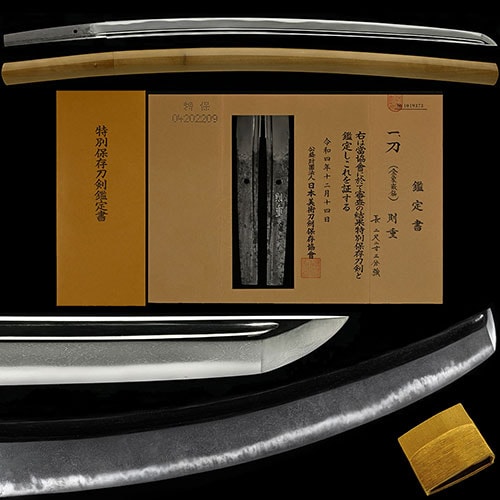
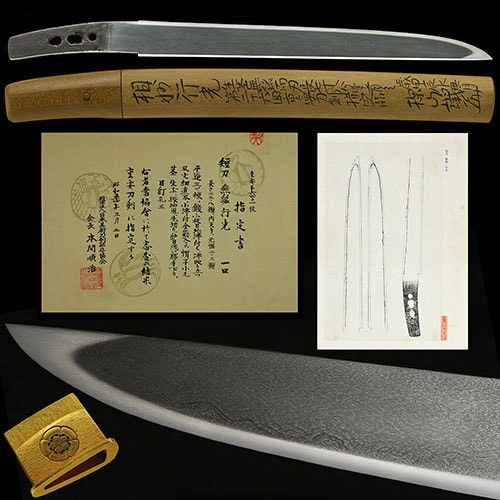
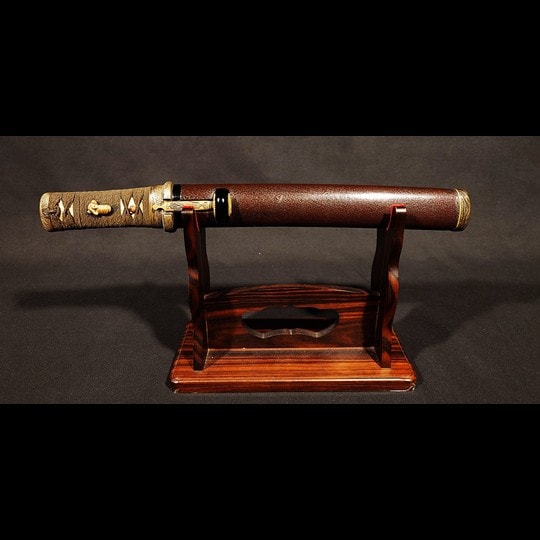
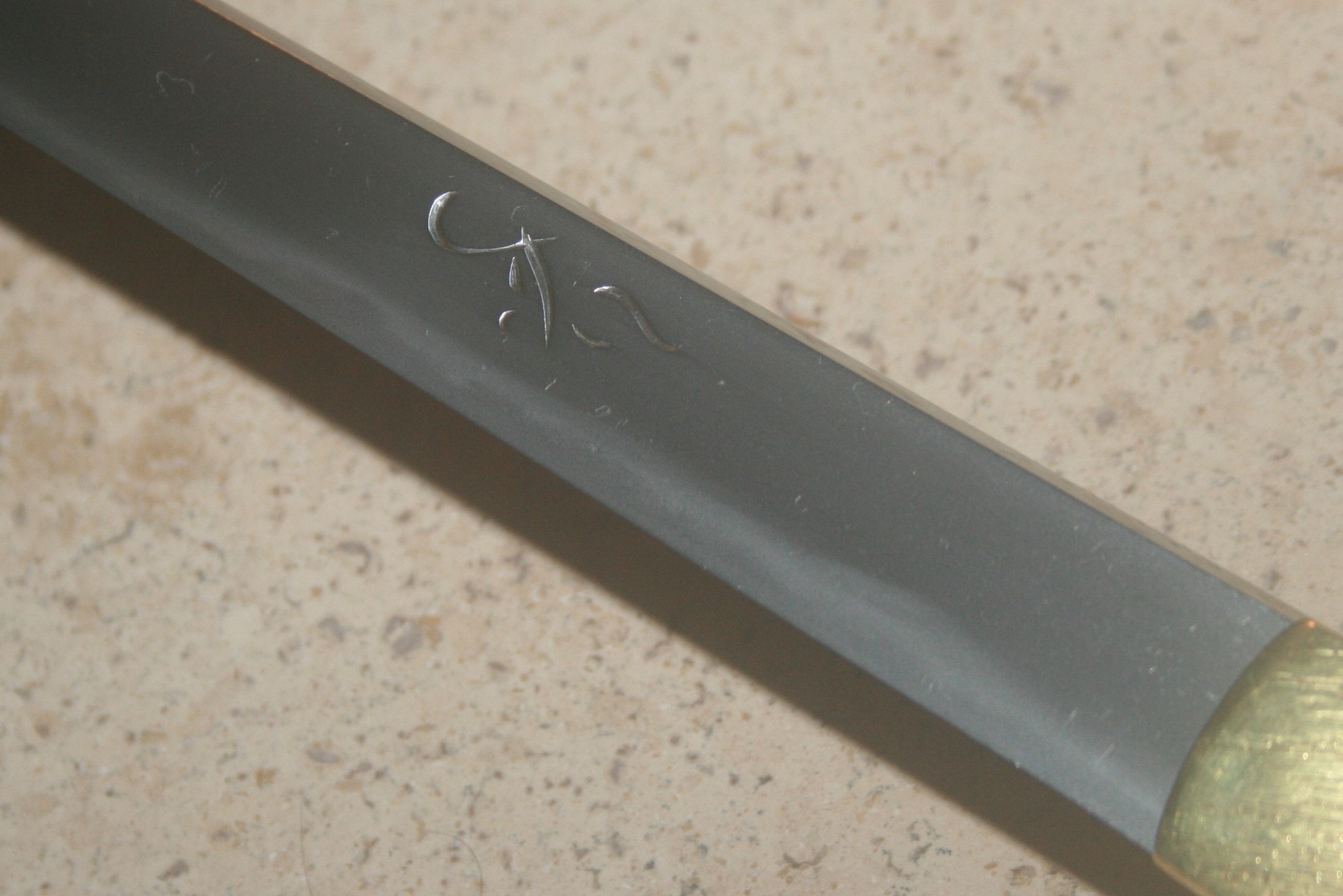
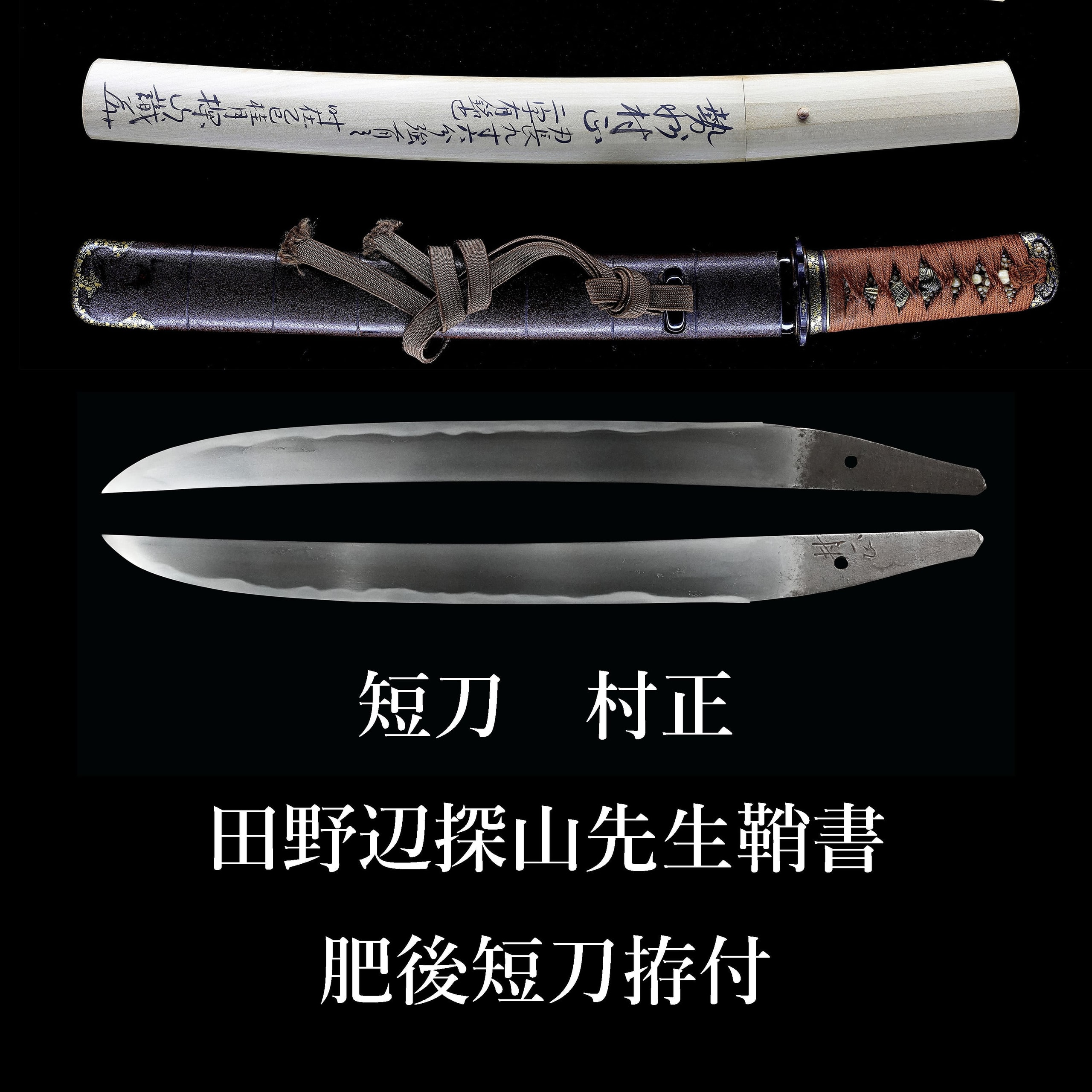
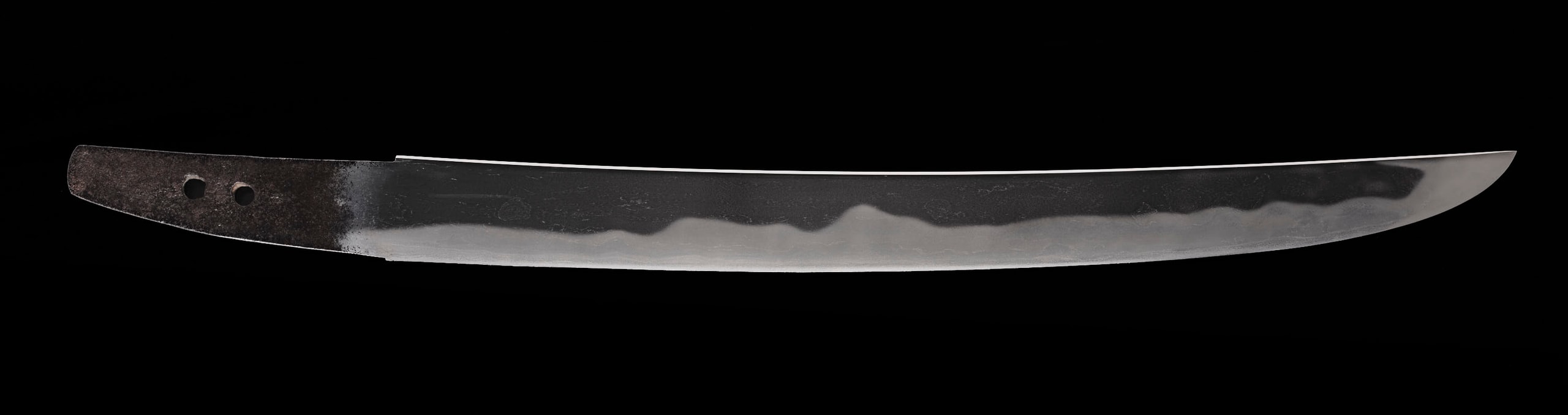
Tsunaie served as a retained smith of the Hojo house of Odawara in Province and is regarded, together with Tsunahiro, as among the more skilled makers of the late tradition. His period of activity is placed around the Tenbun era (1532-1555). Many of his works bear a five-character signature reading "-ju Tsunaie," though two- and three-character signatures are also encountered, the latter cut in bold strokes toward the side of the tang.
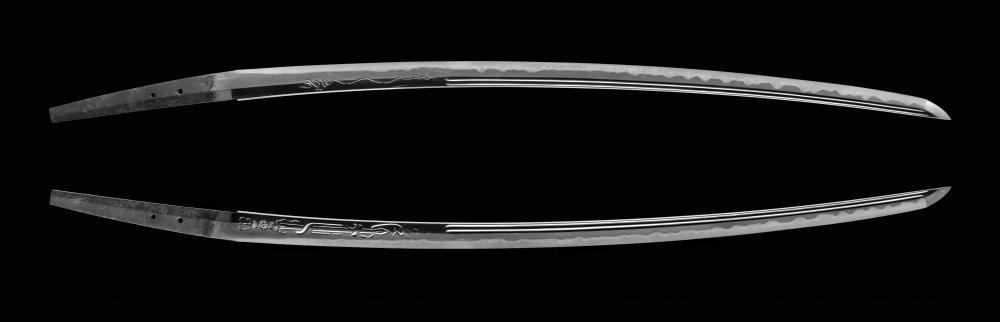
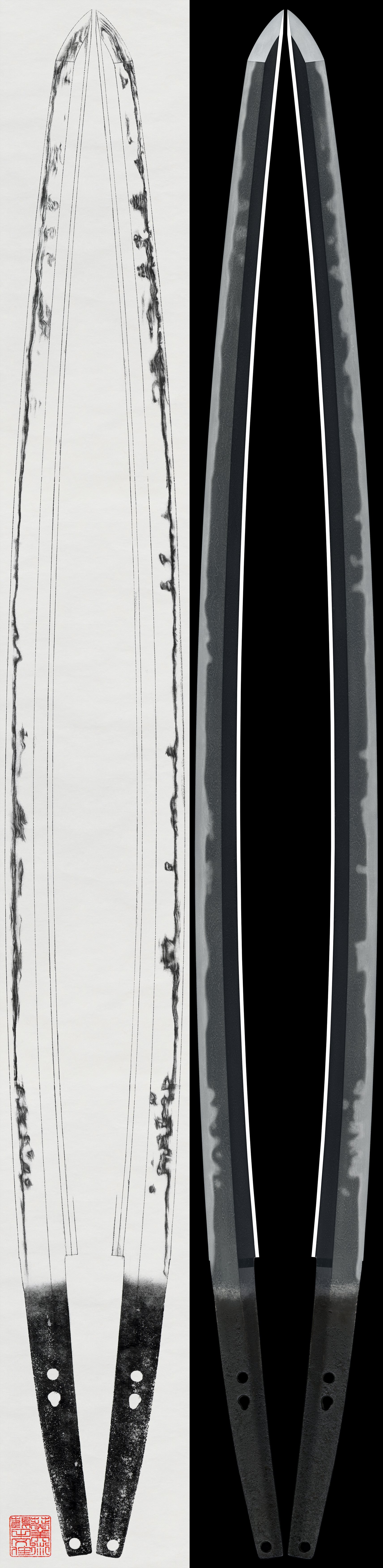
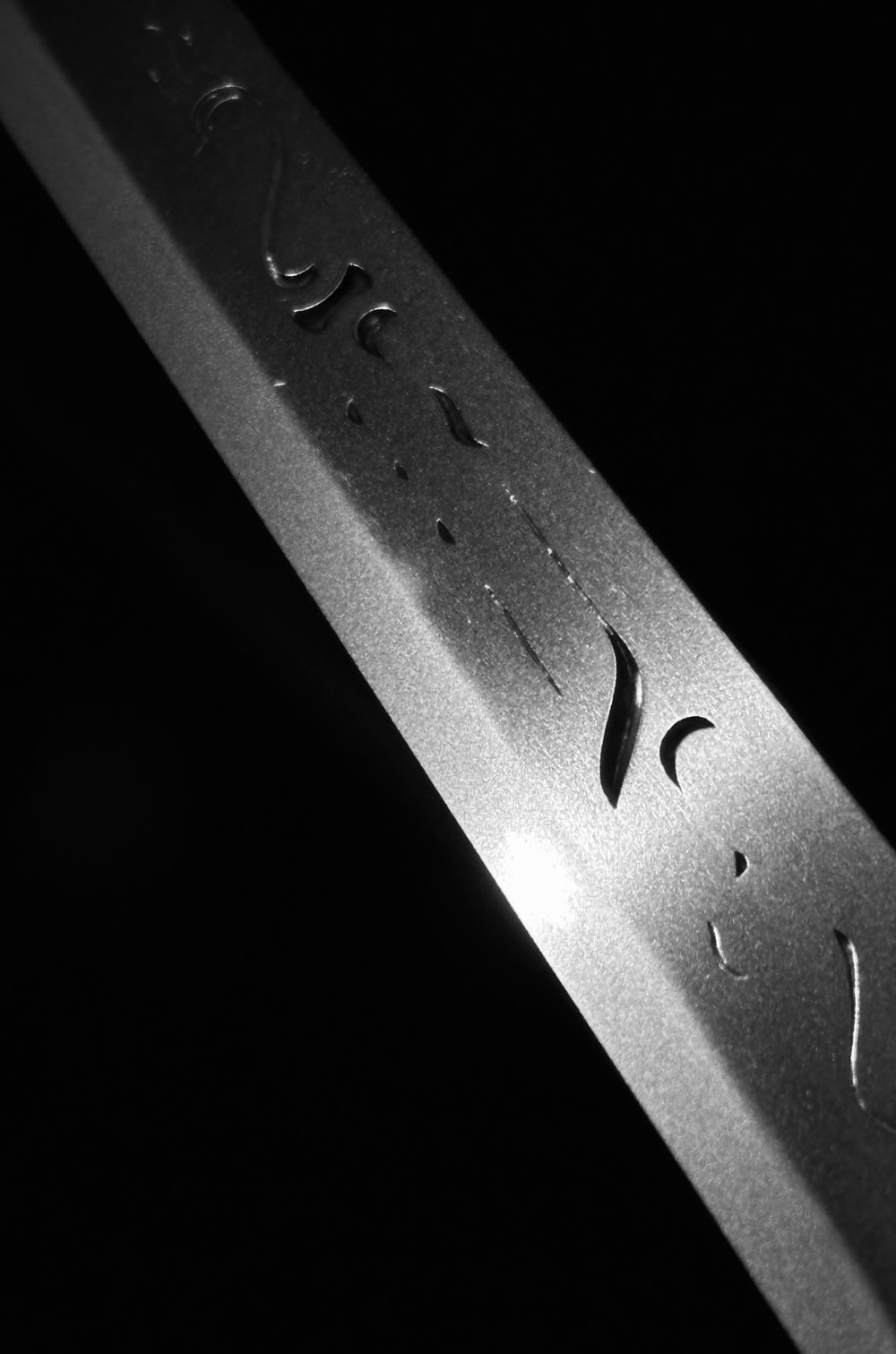
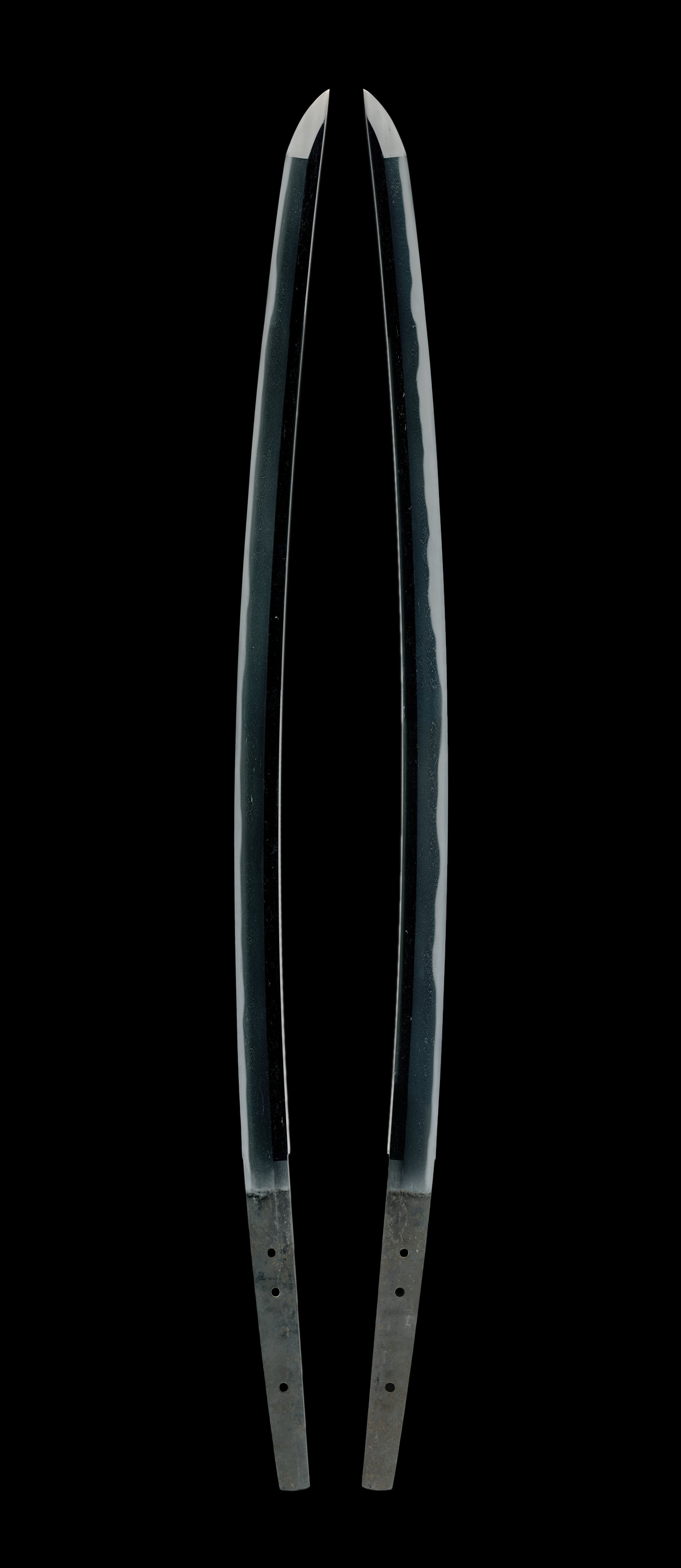
Tsunaie's workmanship is closely similar in style to that of Tsunahiro, and like his contemporary he specialized in fully tempered . A representative displays large mixed with small , with , , and producing a vigorous effect, while abundant appear in a closely forged with and . His show a wide with mixed with , the turning in with a long carrying that continues as down to the base. The across his productions is a dense with well-adhering . Tsunaie's are likewise executed with considerable skill -- , , in layered carving, carved kaki-nagashi -- adding a decorative dimension that complements the bold temperwork.
The has designated both and by Tsunaie as fine works, with individual pieces judged a or among his extant productions. His surviving corpus, though modest in number, demonstrates a consistent command of the late idiom in forms ranging from compact with to of wide and shallow .