NihontoWatch MonNihontoWatch
MarketEncyclopediaKantei
NihontoWatch MonNihontoWatch
Market
Encyclopedia
Kantei
Overview·Historical importance·Designations·Kantei·Blade Forms·Signatures·School
OverviewHistorical importanceDesignationsKanteiBlade FormsSignaturesSchool
  1. Schools
  2. Soshu
  3. Sue-Sōshū
  4. Fusamune

Sue-Soshu Fusamune

總宗

Jūyō
Vol. 40, No. 47 · Wakizashi

Sue-Soshu Fusamune

總宗

5 ranked works

Major smith
ProvinceSagamiEraEisho (1504–1521)PeriodMuromachiSchoolSoshu>Sue-SoshuTraditionSoshu-denGeneration2ndToko Taikan500(top 26%)TypeSwordsmithCodeFUS54
5Jūyō Tōken

Overview

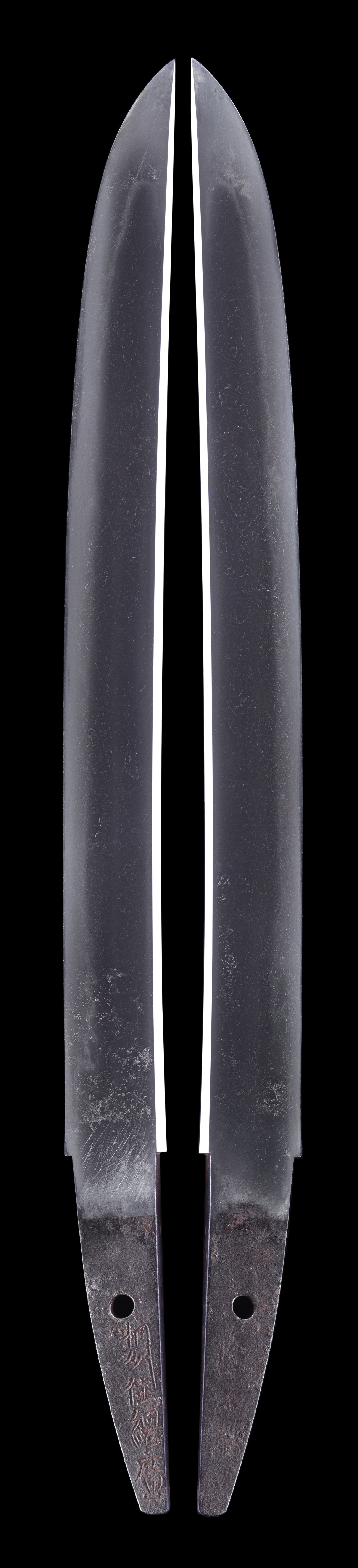
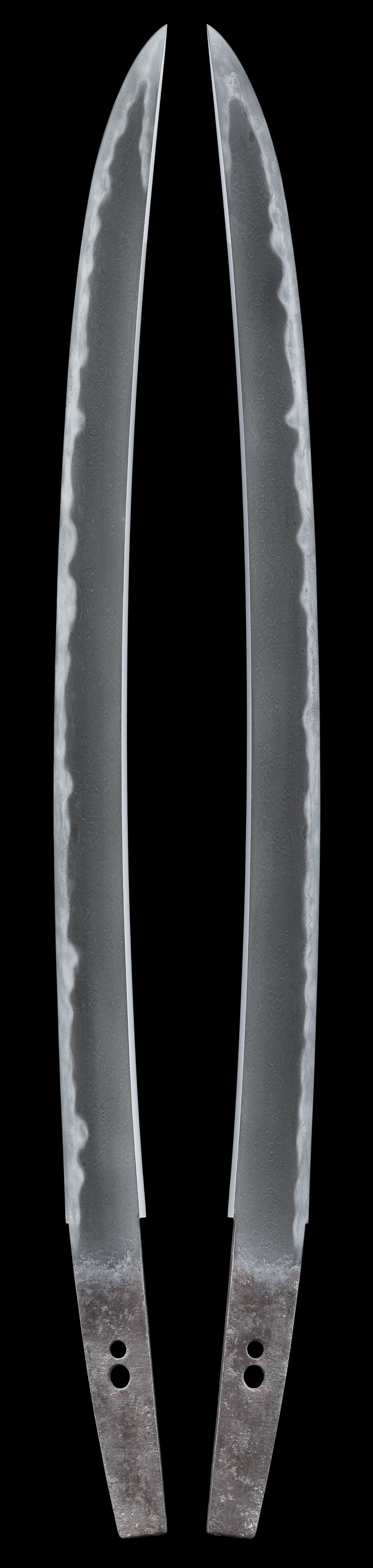
Fusamune was a swordsmith working at Odawara in the early sixteenth century, in the Eishō era of the late period, and the published record places him by name beside Yasuharu and Yasukuni. The published sources draw a clear distinction within the late tradition: alongside Tsunahiro and the others who remained at , a separate body of smiths lived at Odawara under the Hōjō, and these are collectively called the Odawara . Their workmanship, the sources note, does not differ greatly in its fundamentals from the Tsunahiro line, but it is set apart by two things, a tendency toward somewhat small and compact blade forms, and a fondness for dense, meticulous carving on the blade. Within that group it is Fusamune above all whose carries a long reputation, and the published sources return to it on blade after blade, recording of one that 「殊に総宗の彫は巧緻であると評されており」, that his carving in particular is praised as exceptionally refined, and noting that it is customary for his works to bear such carving, 「巧緻な刀身彫刻を有するものが常である」.

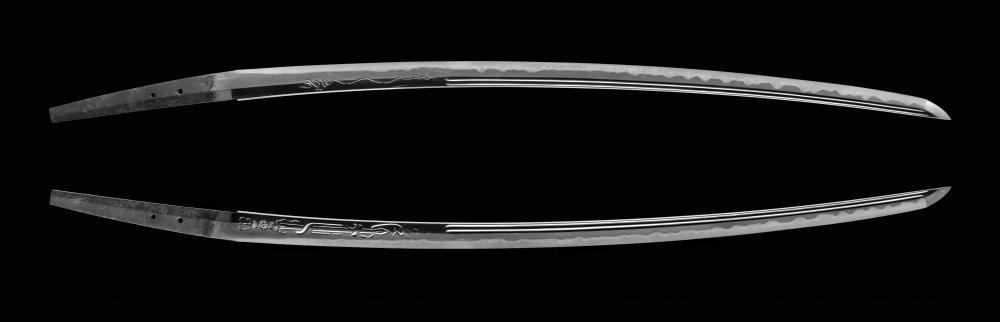
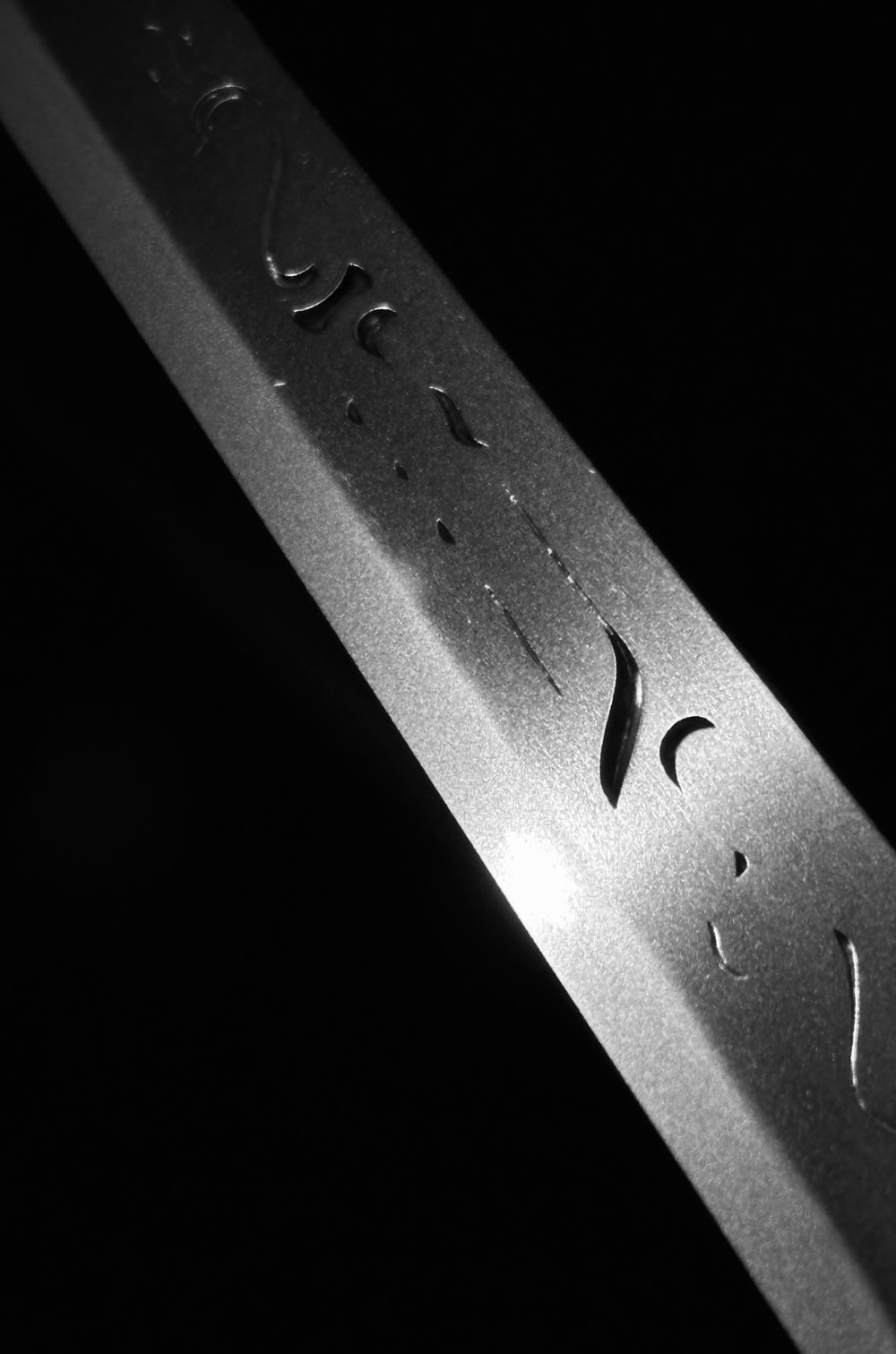
That carving is the first thing to name in his work, because the published sources name it first. Within the grooves and recesses of his he cut , the dragon entwining a sword, in raised relief, together with , a -hilted , a , , and on one blade an incised invocation reading . The sources call this dense relief within the and the a particular forte of his, and on his most accomplished pieces they describe carving of a layout they regard as proper to late , recording a 「末相州独特の構図の倶利伽羅」, a of a composition distinctive to the late manner. The temper that accompanies it is an angular-leaning , the structure the sources say is often seen in Odawara work. Into it he mixes gunome-chōji, and pointed elements, the heads in places breaking into a compound, doubled pattern and a , waist-opened structure, and in places sloping reversely against the cutting edge. and enter, the is tight and -dominant with along it, and is carried into the . The turns in , pointed with a deep return on some blades and finishing in on others.

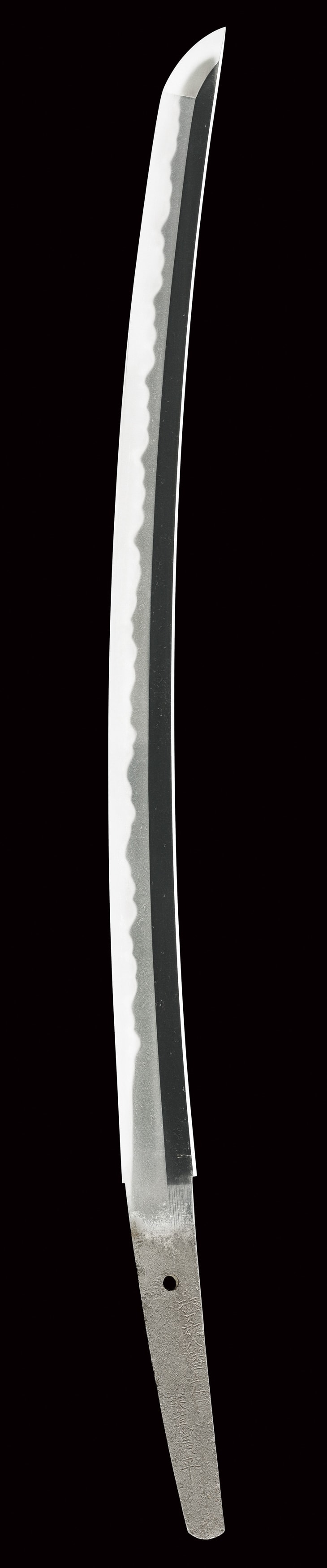
The beneath this temper is a controlled steel rather than an openly standing grain. He forges an mixed with , comparatively tight and well packed, and on his finer blades a closely gathered ; adheres across it and enter throughout. It is the standing, tightened of Odawara, and the published sources read its soundness as part of his quality, judging more than one blade sound in both and . The sits with this : a or with , the thick, the wide or of standard width with appearing in the upper half, the proportions short and compact in the way the sources note is often seen in works by Fusamune and his circle. Across the recorded blades the temper widens and contracts within this one idiom, from a mainly base into which and a feeling are mixed, to a fuller with the compound and waist-opened heads, the published sources reading each as the characteristic style of the smith.

At the bright end of his range the temper opens fully into , and the sources treat this as the late- manner shown at its most flamboyant. On one the takes in and arrow-nock-like elements, the spreads, appears along the back, and the whole becomes a thickly tempered with abundant , the deeply tempered and finishing in . The published sources read this piece, with standing out conspicuously within its and a of the late- layout on its , as 「総宗としても華やかな出来映えの一口」, a brilliant and flamboyant example even within Fusamune's own work, and find in it the traits of late strongly manifested. The record also preserves the other side of his standing within the group, the jointly signed by Kagesō and himself, 「景総と総宗の合作の脇指である」, a collaborative work by two of the representative makers of Odawara . Kagesō cut his signature on the and Fusamune on the , and from that placement the sources infer that Kagesō held the senior position, while noting that the nature of their relationship is not clearly known.

That collaboration also fixes Fusamune's place in the line, for the published sources note that works by Kagesō are exceedingly rare whereas Fusamune's survive in greater numbers, so that within the Odawara circle it is largely through his own signed that the group's hand is read today. He worked the idiom as his Odawara contemporaries, the angular with its compound and structure on a tight, -dominant , but the sources single him out from them on the carving and on the quality of his and temper, which they read as showing the smith's distinctive traits to outstanding effect. His is the Odawara face of late rather than the face of Tsunahiro: not the openly standing steel of the older masters but a tightened -, and a that leans angular and compound rather than into broad , carried always with the dense relief carving the published sources repeat is 「殊に総宗の彫りは巧緻であるとの定評がある」, of long-standing repute.

Fusamune's recognized work survives on a small number of Important Sword designations, from the twenty-eighth session of 1981 through the fifty-sixth of 2010, all of them signed , cut in a bare two-character or in the fuller -jū Fusamune form, one the joint blade with Kagesō. He has no National Treasure or Important Cultural Property on record, nor any , so the population a collector may encounter is this group of and whatever signed blades of his stand below them, held in long-private hands and coming to notice only from time to time. None of the recorded blades carries a documented or temple provenance; what gives them their standing is the carving and the soundness of steel the published sources praise on each, and the rarity of a signed Odawara blade good enough to reach the level. A signed Fusamune, its dense intact and its angular or full sound in and , is among the better ways to hold the late- Odawara manner in a single blade, a smith more readily met than the great names yet seldom seen, and a deliberate acquisition rather than a chance one.

Historical importance

Where Fusamune stands among comparable artisans: across all of nihontō, and within tradition, era, and period. The tiers (Foremost · Leading · Major · Notable) weigh official designations from the NBTHK and Japan's Agency for Cultural Affairs, together with historical honors of lasting repute such as the Sansaku and Meibutsu-chō.

随一
Foremost
屈指
Leading
有数
Major
著名
Notable

Select a lens to see how it's measured.

Designations

Kokuhō—
Jūyō Bunkazai—
Jūyō Bijutsuhin—
Gyobutsu—
Tokubetsu Jūyō—
Jūyō Tōken5

Elite Standing

Kantei

Blade Forms

Distribution across 5 ranked works

Signatures

Signature types across 5 ranked works

Currently Available

Sue-Soshu School

Other artisans of the Sue-Soshu school

  1. 1.Tsunahiro綱廣3 for sale12designated
  2. 2.Hiromasa廣正1 for sale4designated
  3. 3.Tsunaie綱家3designated
  4. 4.Kiyohira清平1 for sale4designated
  5. 5.Hiromasa廣正1 for sale2designated
  6. 6.Hirotsugu廣次2 for sale3designated
  7. 7.Hirotsugu廣次2 for sale2designated
  8. 8.Hirotsugu廣次1designated
  9. 9.Kunitsugu國次1designated
  10. 10.Masahiro正廣1 for sale8designated
  11. 11.Tsunahiro綱廣2 for sale2designated
  12. 12.Tsunahiro綱廣1 for sale2designated

More from the Sue-Soshu school

View all →
World Seiyudo
Tokuho
Wakizashi - Tokuho - by Sue-Soshu Masahiro - Mumei Soshu Masahiro with NBTHK Tokubetsu Hozon Token and Tosogu CertificatesWakizashi - Tokuho - by Sue-Soshu Masahiro - Mumei Soshu Masahiro with NBTHK Tokubetsu Hozon Token and Tosogu Certificates

Wakizashi

BySue-Soshu Masahiro
¥2,500,000
Choshuya
Tokuho
Katana - Tokuho - by Sue-Soshu Tsunahiro - Soshu ju Tsunahiro (The founder)Katana - Tokuho - by Sue-Soshu Tsunahiro - Soshu ju Tsunahiro (The founder)

Katana

BySue-Soshu Tsunahiro
Ask
Touken Komachi
Tokuho
Wakizashi - Tokuho - by Sue-Soshu Tsunahiro - Soshu Tsunahiro in ShirasayaWakizashi - Tokuho - by Sue-Soshu Tsunahiro - Soshu Tsunahiro in Shirasaya

Wakizashi

BySue-Soshu Tsunahiro
¥400,000
Choshuya
Tokuho
Wakizashi - Tokuho - by Sue-Soshu Hirotsugu - Hira-zukuri Wakizashi: Signed HirotsuguWakizashi - Tokuho - by Sue-Soshu Hirotsugu - Hira-zukuri Wakizashi: Signed Hirotsugu

Wakizashi

BySue-Soshu Hirotsugu
Ask
Shoubudou
Tokuho
Tachi - Tokuho - by Sue-Soshu Hirotsugu - Hirotsugu sakuTachi - Tokuho - by Sue-Soshu Hirotsugu - Hirotsugu saku

Tachi

BySue-Soshu Hirotsugu
¥2,400,000
Samurai Nippon
Tokubetsu Kichō
Wakizashi - Tokubetsu Kichō - by Sue-Soshu Kiyohira - Soshu Hachimanyamaju Fujiwara no Kiyohira (4th son of 1st Gen. Kanewaka)Wakizashi - Tokubetsu Kichō - by Sue-Soshu Kiyohira - Soshu Hachimanyamaju Fujiwara no Kiyohira (4th son of 1st Gen. Kanewaka)

Wakizashi

BySue-Soshu Kiyohira
¥1,100,000
Yazawa Shokai
Hozon
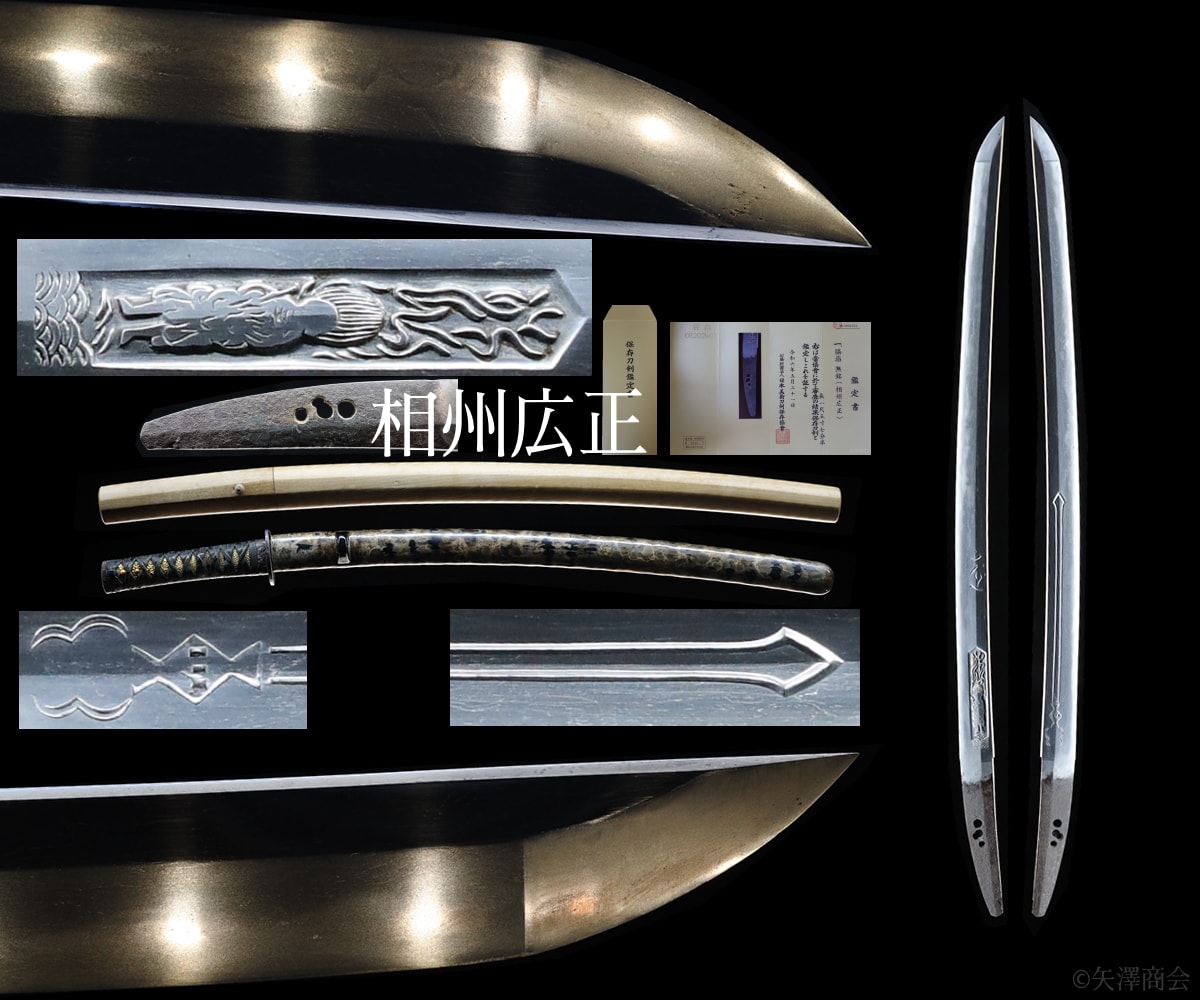
Wakizashi - Hozon - by Sue-Soshu School - Koto Jō-saku Swordsmith Soshu Hiromasa - Blade Length 47.7cm - Old Polish - With Koshirae (Gold, Silver, Black Varied Lacquer, Gold Samegawa Tsuka-maki)Wakizashi - Hozon - by Sue-Soshu School - Koto Jō-saku Swordsmith Soshu Hiromasa - Blade Length 47.7cm - Old Polish - With Koshirae (Gold, Silver, Black Varied Lacquer, Gold Samegawa Tsuka-maki)

Wakizashi

BySue-Soshu School
¥500,000
Toyuukai
Hozon
Wakizashi - Hozon - by Sue-Soshu Tsunahiro - Wakizashi by Sousyu-sumi Tsunahiro with NBTHK Hozon CertificateWakizashi - Hozon - by Sue-Soshu Tsunahiro - Wakizashi by Sousyu-sumi Tsunahiro with NBTHK Hozon Certificate

Wakizashi

BySue-Soshu Tsunahiro
¥400,000

More from the Soshu school

View all →
Aoi Art
Tokuho
Katana - Tokuho - by Gō Yoshihiro - Mumei (Unsigned) Den Go YoshihiroKatana - Tokuho - by Gō Yoshihiro - Mumei (Unsigned) Den Go Yoshihiro

Katana

ByGō Yoshihiro
¥35,000,000
Tsuruginoya
Tokujū
Katana - Tokuju - by Soshu Yukimitsu - Soshu YukimitsuKatana - Tokuju - by Soshu Yukimitsu - Soshu Yukimitsu

Katana

BySoshu Yukimitsu
Ask
Samurai Nippon
Jūyō
Tanto - Jūyō - by Soshu Yukimitsu - Soshu Yukimitsu (Ubu Mumei)Tanto - Jūyō - by Soshu Yukimitsu - Soshu Yukimitsu (Ubu Mumei)

Tantō

BySoshu Yukimitsu
¥6,700,000
Mandarin Mansion
Jūyō
Tachi - Jūyō - by Soshu Yukimitsu - Juyo Soshu Yukimitsu TachiTachi - Jūyō - by Soshu Yukimitsu - Juyo Soshu Yukimitsu Tachi

Tachi

BySoshu Yukimitsu
Ask
Eirakudo
Tokuho
Katana - Tokuho - by Shintogo Kunimitsu - Shintogo Kunimitsu - Tokubetsu Hozon TokenKatana - Tokuho - by Shintogo Kunimitsu - Shintogo Kunimitsu - Tokubetsu Hozon Token

Katana

ByShintogo Kunimitsu
¥7,500,000
Choshuya
Jūyō
Tanto - Jūyō - by Soshu Norishige - Unsigned (Ubu-nakago) NorishigeTanto - Jūyō - by Soshu Norishige - Unsigned (Ubu-nakago) Norishige

Tantō

BySoshu Norishige
¥6,500,000
Eirakudo
Tokuho
Katana - Tokuho - by Soshu Norishige - Norishige - Tokubetsu Hozon TokenKatana - Tokuho - by Soshu Norishige - Norishige - Tokubetsu Hozon Token

Katana

BySoshu Norishige
¥6,500,000
Eirakudo
Jūyō
Tanto - Jūyō - by Soshu Yukimitsu - Sosyu Yukimitsu Tanto Juyo TokenTanto - Jūyō - by Soshu Yukimitsu - Sosyu Yukimitsu Tanto Juyo Token

Tantō

BySoshu Yukimitsu
Ask

More from the Sōshū tradition

View all →
Katanahanbai
Tokuho
Tanto - Tokuho - by Shimada Yoshisuke - Shimada GisukeTanto - Tokuho - by Shimada Yoshisuke - Shimada Gisuke

Tantō

ByShimada Yoshisuke
¥750,000
Token Hasegawa
Hozon
Tanto - Hozon - by Wakasa Fuyuhiro - Koto Tanto: Mumei Fuyuhiro - NBTHK Hozon Token, with Koshirae (20.2cm)Tanto - Hozon - by Wakasa Fuyuhiro - Koto Tanto: Mumei Fuyuhiro - NBTHK Hozon Token, with Koshirae (20.2cm)

Tantō

ByWakasa Fuyuhiro
¥253,000
Toukentakarado
Tokuho
Katana - Tokuho - by Soshu Tametsugu - Mumei Attributed to TametsuguKatana - Tokuho - by Soshu Tametsugu - Mumei Attributed to Tametsugu

Katana

BySoshu Tametsugu
¥1,200,000
Choshuya
Tokuho
Katana - Tokuho - by Soshu Norishige - Unsigned (O-suriage) NorishigeKatana - Tokuho - by Soshu Norishige - Unsigned (O-suriage) Norishige

Katana

BySoshu Norishige
Ask
Onihonto
Tokuho
Tanto - Tokuho - by Sa Yasuyoshi - YasuyoshiTanto - Tokuho - by Sa Yasuyoshi - Yasuyoshi

Tantō

BySa Yasuyoshi
¥16,000
Ayakashi
Hozon
Tanto - Hozon - by Muramasa - MuramasaTanto - Hozon - by Muramasa - Muramasa

Tantō

ByMuramasa
¥7,500,000
Mandarin Mansion
Jūyō
Wakizashi - Jūyō - by Hasebe School - Juyo Den Hasebe Sunnobi TantoWakizashi - Jūyō - by Hasebe School - Juyo Den Hasebe Sunnobi Tanto

Wakizashi

ByHasebe School
¥30,000
Katana Yamadaiya
Tokuho
Katana - Tokuho - by Sa Kunihiro - Tokubetsu Hozon Token: Mumei (Attributed to Sakon Kunihiro)Katana - Tokuho - by Sa Kunihiro - Tokubetsu Hozon Token: Mumei (Attributed to Sakon Kunihiro)

Katana

BySa Kunihiro
¥1,650,000

Fusamune

Fusamune(總宗) was a Japanese swordsmith of the Sue-Soshu school in Sagami province, active during the Eisho (1504-1521) period.

The work follows the Soshu-den tradition.

Designated works by Fusamune include 5 Jūyō.