NihontoWatch MonNihontoWatch
MarketAuctionsEncyclopedia
NihontoWatch Mon

NihontoWatch

MarketAuctions
Encyclopedia
Overview·Honors·Historical importance·Designations·Kantei·Provenance·Blade Forms·Signatures·Lineage·School
OverviewHonorsHistorical importanceDesignationsKanteiProvenanceBlade FormsSignaturesLineageSchool
  1. Schools
  2. Soshu
  3. Sōshū
  4. Go Yoshihiro

Gō Yoshihiro

義弘

Tokujū
Vol. 25, No. 21 · Katana

Gō Yoshihiro

義弘

54 ranked works

Foremost smith
享保名物帳正宗十哲三作
ProvinceEtchuEraShoan (1299–1302)PeriodKamakuraSchoolSoshuTraditionSoshu-denTeacherMasamuneFujishiroSai-jo saku(Supreme Work)Toko Taikan1,500(top 5%)TypeSwordsmithCodeYOS1434
2Kokuhō
6Jūyō Bunkazai
5Jūyō Bijutsuhin
14Tokubetsu Jūyō27Jūyō Tōken

Overview

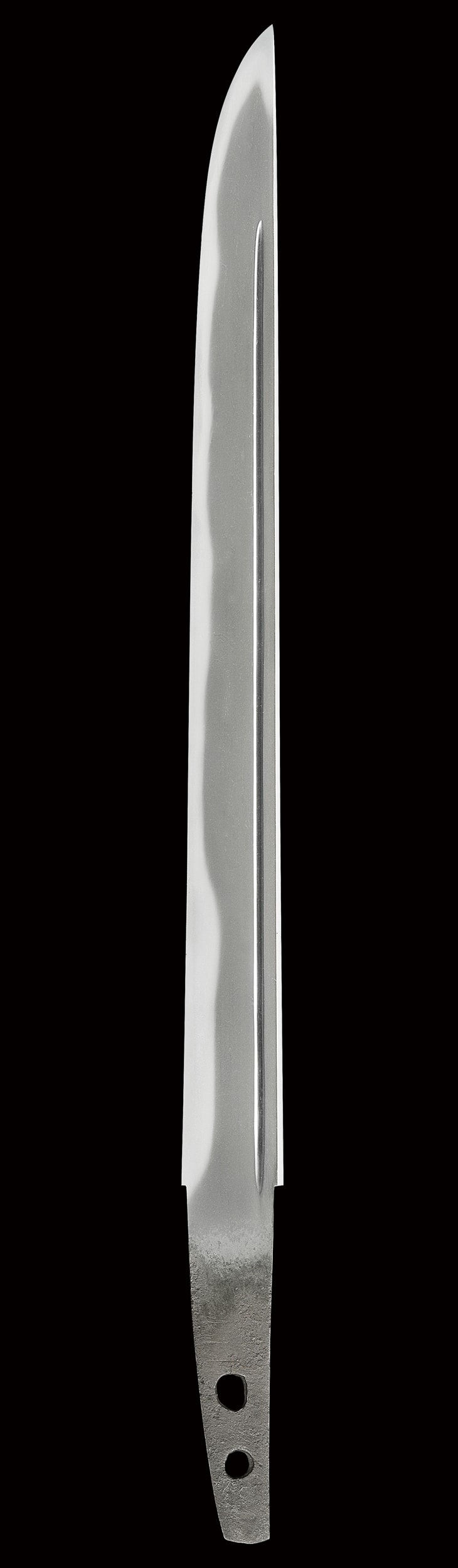
Go is the name by which Yoshihiro of Matsukura-gō in is known, and the published sources place him among the ten disciples of Masamune, one of the supreme names in the whole study of the sword. Like Sadamune he left no genuine signed work; every blade that carries his name is and , an attribution resting on the judgment of the and the later appraisers, so the smith survives only through his manner and through the great houses that kept him. He stands at the very end of the period and the opening of the , when the tradition that Masamune had brought to completion was carried west into .

The is the first thing the published sources reach for. It is an , often mixed with and with a flowing that stands up a little, and in places it inclines strongly to ; over it the lies microscopically fine and thick, and enter frequently, so the steel reads bright and clear. The appraisers make a point of the worked into the (柾ごころ), one of the tells they list for his hand, and they single out that the and together come up a degree brighter and clearer than his fellows.

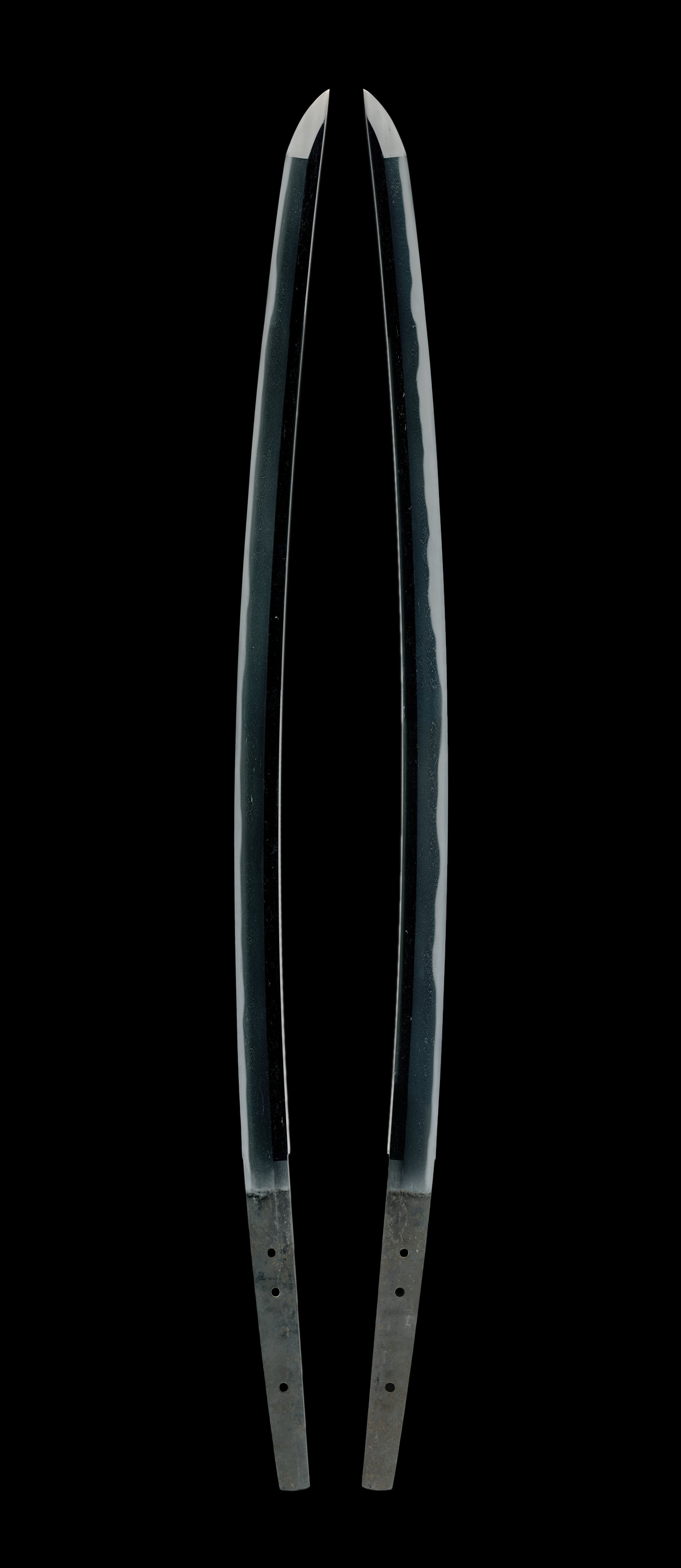
The is built on a , broad and gentle, with and mixed in and the temper height tending to broaden from the base toward the . and enter, the is deep, and the lies thick and even, breaking in places into with standing ; through the run abundant and , with occasional spilling into the . Set beside Masamune and Norishige, the published sources call his and the calmer (穏やか), yet they note the working busily within the and the whole coming up brighter, which is exactly where they locate him.

The is where Go is most distinctly himself, and it is the feature the published record names outright as a major characteristic of his hand: the point is tempered deep, sweeping with (掃きかけ) and breaking into a so that it becomes an -style , the whole tip hardened nearly solid. A representative records it precisely, the burned deep into a single sheet, collapsing in and brushing out in . Where it does turn back it settles into a quiet , the return sometimes running long; but the deep, swept, single-sheet point is the signature, and a profile that gives him only a calm has misread the smith.

For the collector the recognition runs in this order: a clear with thick fine and frequent , creeping into the , a deep- carrying and , and the deep -swept above it, the entire and lit a degree brighter than the surrounding masters. That brightness and clarity is the discriminator the appraisers use to part him from Masamune himself and from Norishige, whose stands up more and whose is the heavier. Fujishiro places him at Sai-jō , the highest rank, and among all hands his is reckoned at the summit.

Because nothing of his is signed and so little survives, Go is among the least attainable of all names. Of the work on record a few sit as National Treasures and Important Cultural Properties that can never trade, and the named carry the histories of the great : the Ōkubo Gō (大久保江), which bears a gold-inlay attribution and descended to the Ōkubo of Odawara, and the Kabutokiri Gō (兜切り江), once of the Mizuno family. Others pass through the Uwajima Date family, one of them bestowed by Tokugawa Hidetada on the first lord of Uwajima and kept thereafter as a house treasure, while further blades descended through the Maeda. To meet a Gō at all is to meet a blade the appraisers judged worthy of the very first names, held for centuries by the houses that could command it.

Honors

享保名物帳Kyōhō Meibutsu Chō (Catalog of Celebrated Blades)

Catalog 11 · burned 11 · addenda 1 (23 total)

The family's catalog of celebrated blades (名物) presented to shogun Tokugawa Yoshimune in Kyōhō 4 (1719). Records ~274 blades of – manufacture (168 extant + ~80 burned + ~26 later additions), grouped by smith with valuations and provenance. This honor tags smiths whose work is recorded in the catalog; the detail field carries per-smith counts where the published tally is exact, or 所載 + named blades where only inclusion is verified.

正宗十哲Masamune Juttetsu (Ten Brilliant Students of Masamune)

Famed as one of the Ten

The Ten Brilliant Students of Masamune — an -period construct first attested in the Shōsan (刀剣正纂, 1862), which itself already disclaims the grouping as later conjecture. Several members cannot have been actual students on chronology (Kanemitsu, Chōgi, Kinjū, Naotsuna), and Norishige is now considered a fellow student under Kunimitsu — yet invoke the roster constantly, and it remains core collector vocabulary. Roster variants exist (Sadamune in place of Naotsuna; Kongōbyōe Moritaka swapped in for Kunitsugu or Naotsuna); this honor tags the standard ten.

三作Sansaku (The Supreme Three)

One of the Supreme Three — Gō Yoshihiro, the Etchū master of the Masamune school

The "Supreme Three" of Japanese swordsmithing in the / standard reckoning: Masamune (正宗), Yoshimitsu (吉光), and Gō Yoshihiro (郷義弘). The highest traditional grouping of master smiths, regarded as the pinnacle of the craft.

Historical importance

Where Go Yoshihiro stands among comparable artisans: across all of nihontō, and within tradition, era, and period. The tiers (Foremost · Leading · Major · Notable) weigh official designations from the NBTHK and Japan's Agency for Cultural Affairs, together with historical honors of lasting repute such as the Sansaku and Meibutsu-chō.

随一
Foremost
屈指
Leading
有数
Major
著名
Notable

Select a lens to see how it's measured.

Designations

Kokuhō2
Jūyō Bunkazai6
Jūyō Bijutsuhin5
Gyobutsu—
Tokubetsu Jūyō14
Jūyō Tōken27

Elite Standing

Kantei

Provenance

Blade Forms

Distribution across 54 ranked works

Signatures

Signature types across 54 ranked works

Currently Available

Lineage

TeacherMasamune
Go Yoshihiro
Student
  1. 1.Tametsugu爲繼2 for sale76designated

Soshu School

Other artisans of the Soshu school

  1. 1.Masamune正宗84designated
  2. 2.Sadamune貞宗86designated
  3. 3.Akihiro秋廣27designated
  4. 4.Kunimitsu國光4 for sale69designated
  5. 5.Hiromitsu廣光1 for sale44designated
  6. 6.Norishige則重8 for sale131designated
  7. 7.Yukimitsu行光4 for sale149designated
  8. 8.Takagi Sadamune高木貞宗1 for sale40designated
  9. 9.Tametsugu爲繼2 for sale76designated
  10. 10.Kunihiro國廣1 for sale15designated
  11. 11.Daishinbo大進房3designated
  12. 12.Yoshihiro吉廣1designated

Go Yoshihiro

Go Yoshihiro(義弘) was a Japanese swordsmith of the Soshu school in Etchu province, active during the Shoan (1299-1302) period.

The work follows the Soshu-den tradition.

Designated works by Go Yoshihiro include 2 Kokuhō (National Treasure), 6 Jūyō Bunkazai (Important Cultural Property), 14 Tokubetsu Jūyō, 27 Jūyō.