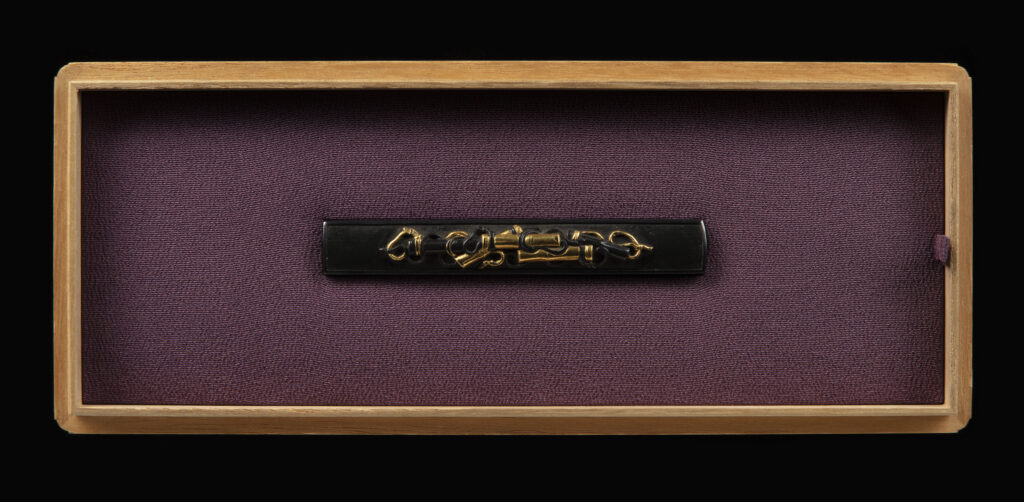
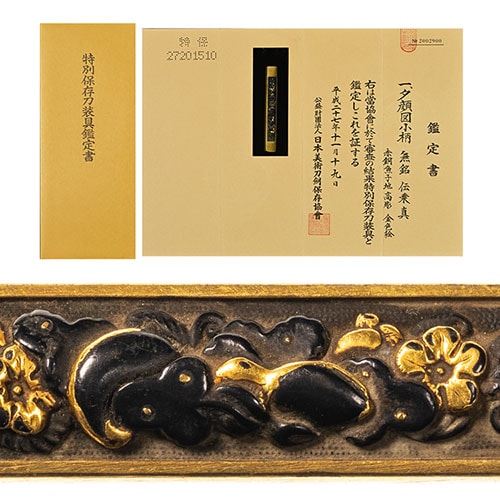
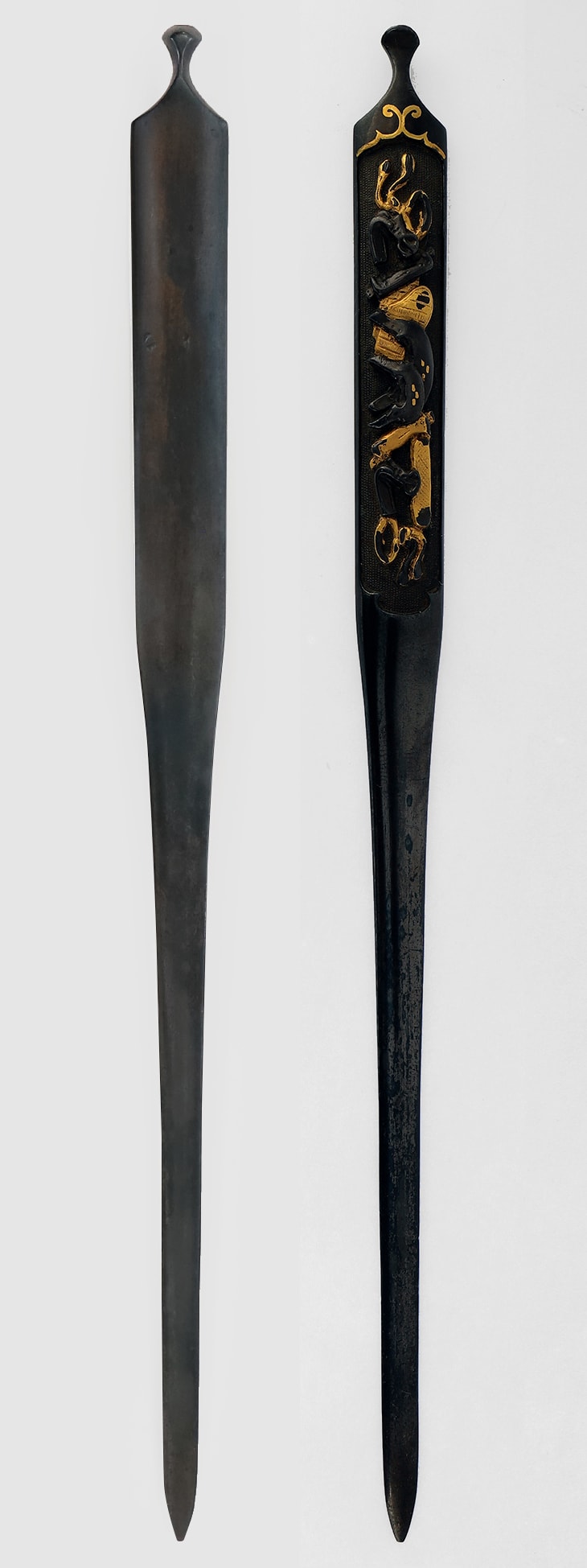
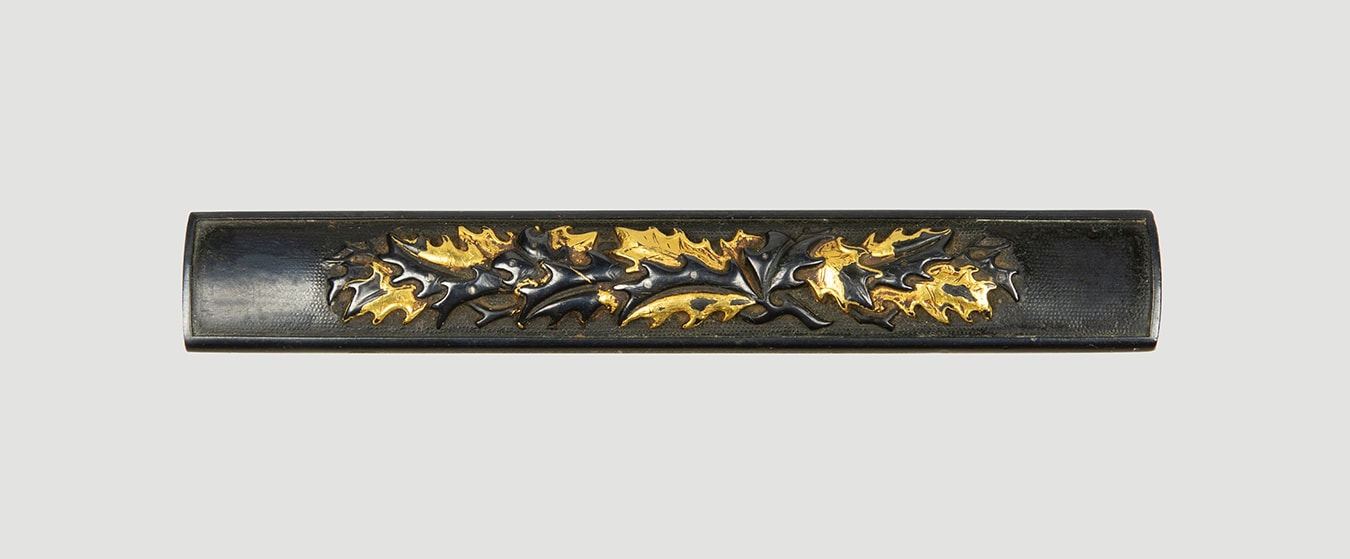
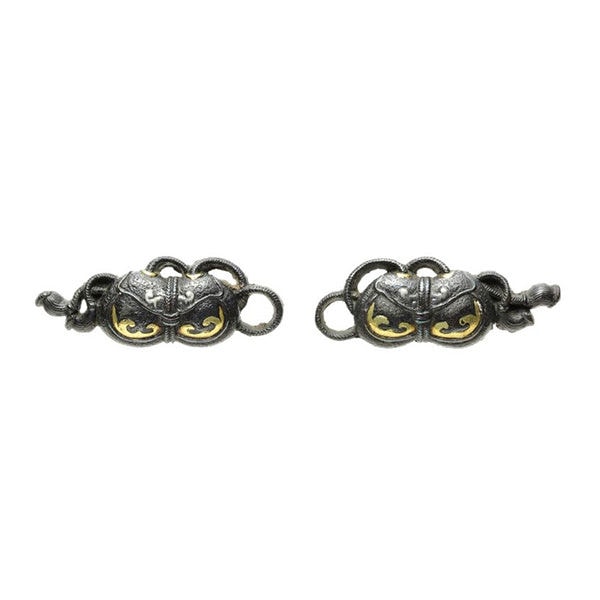
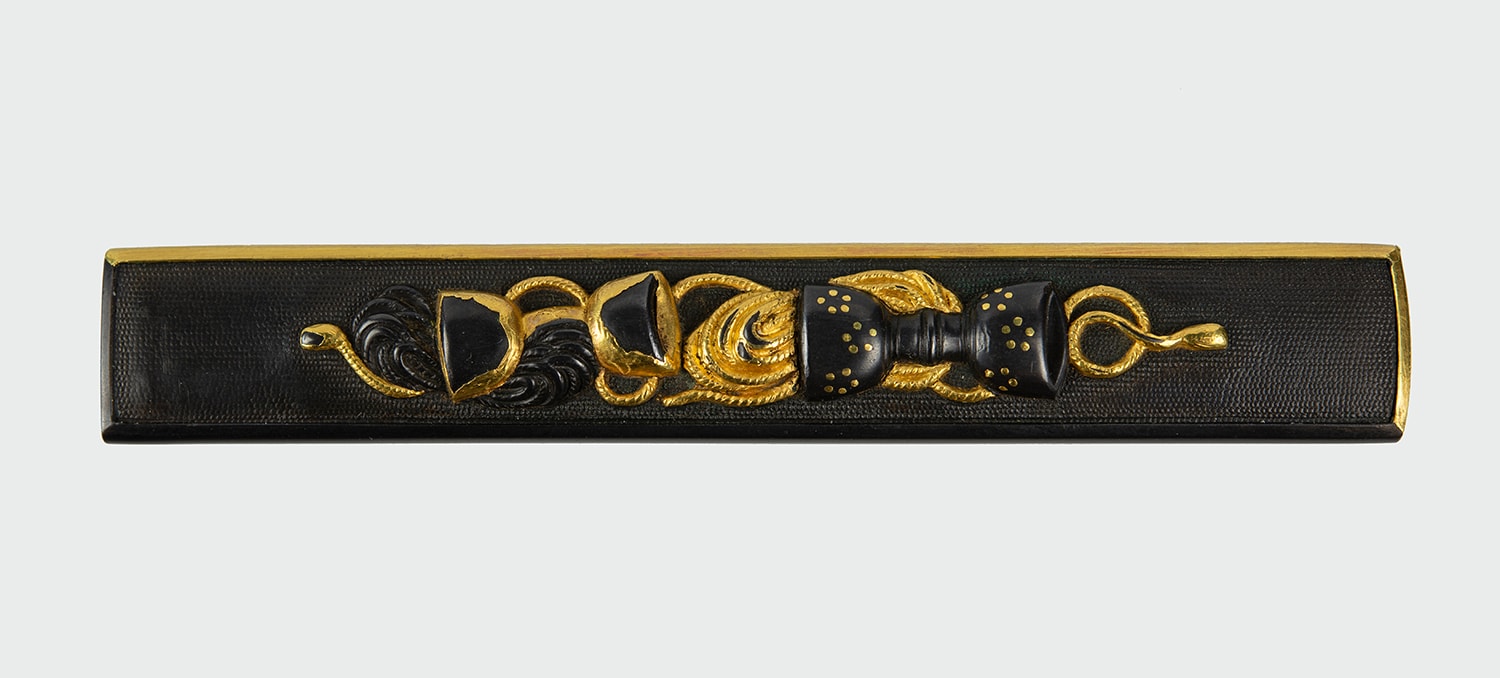
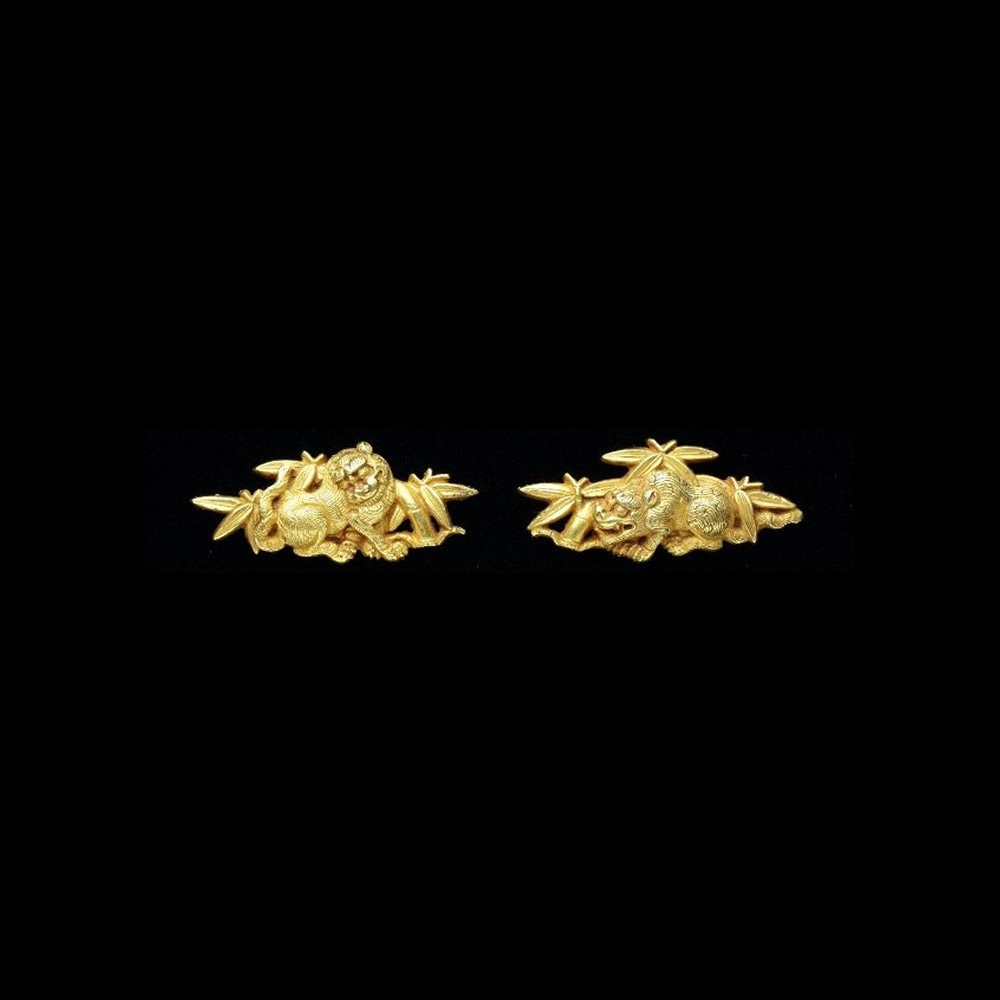
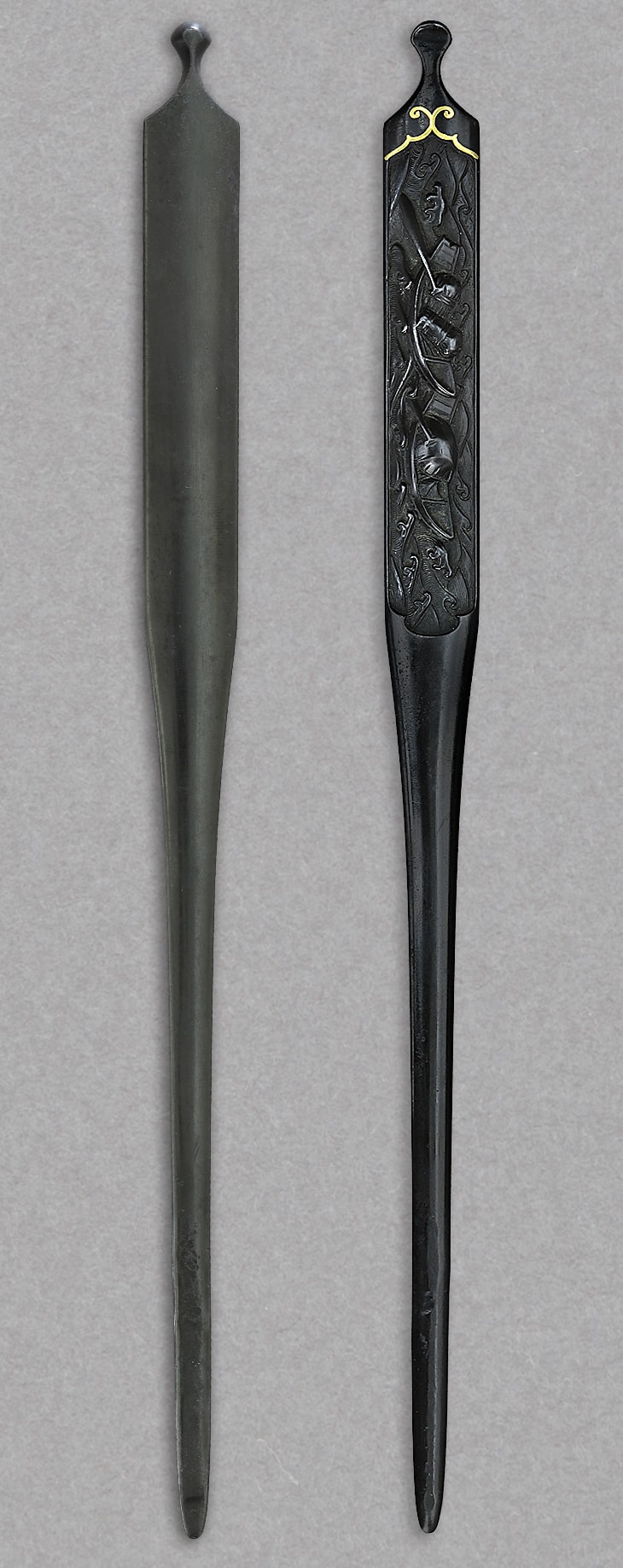
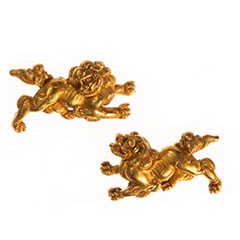
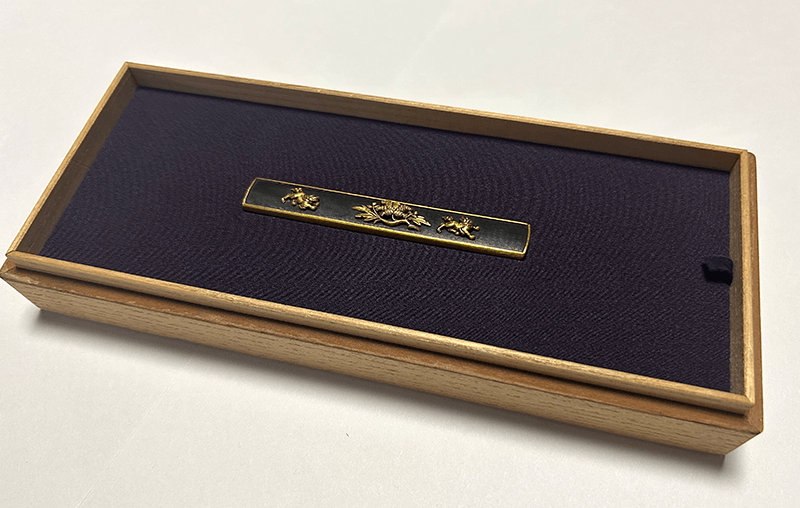
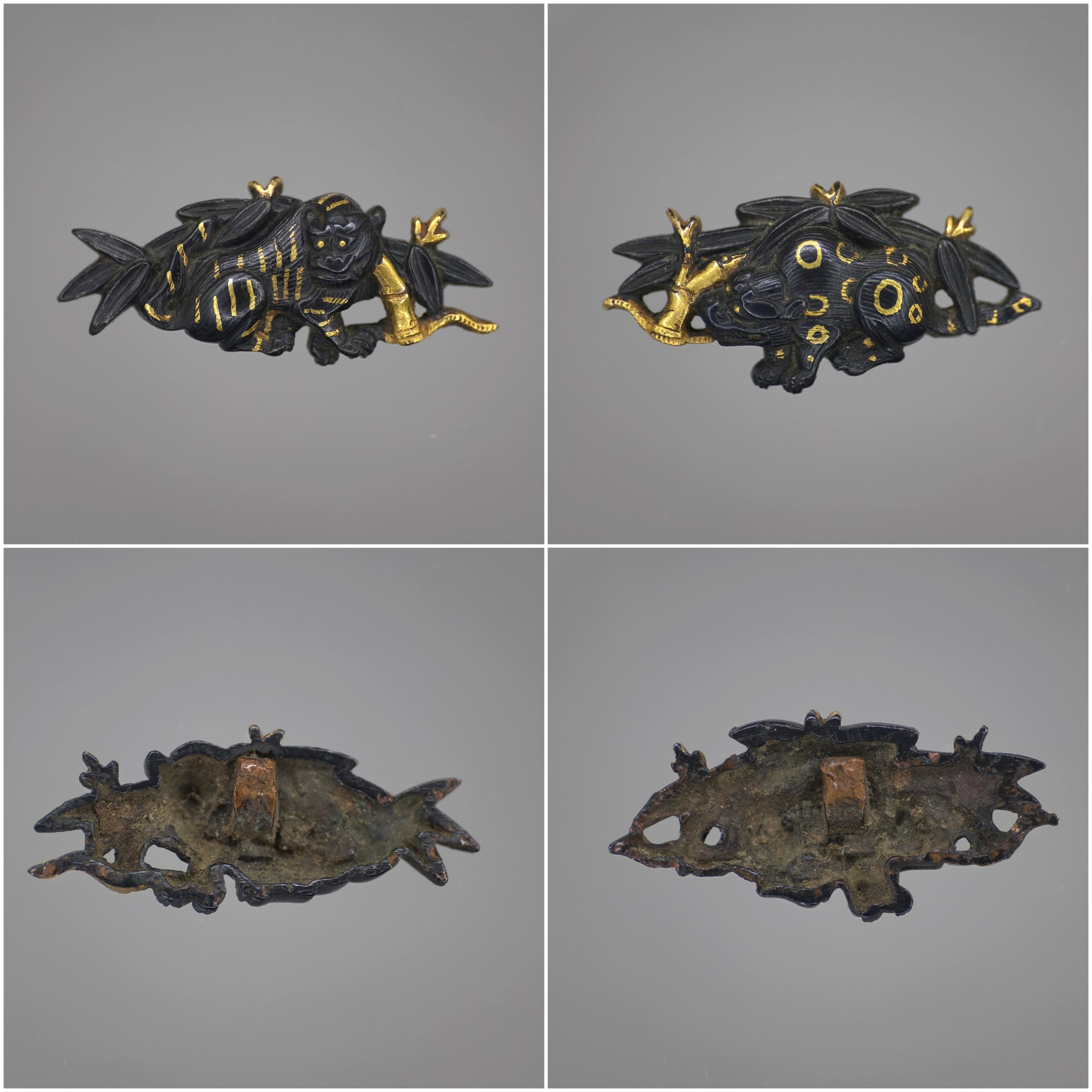
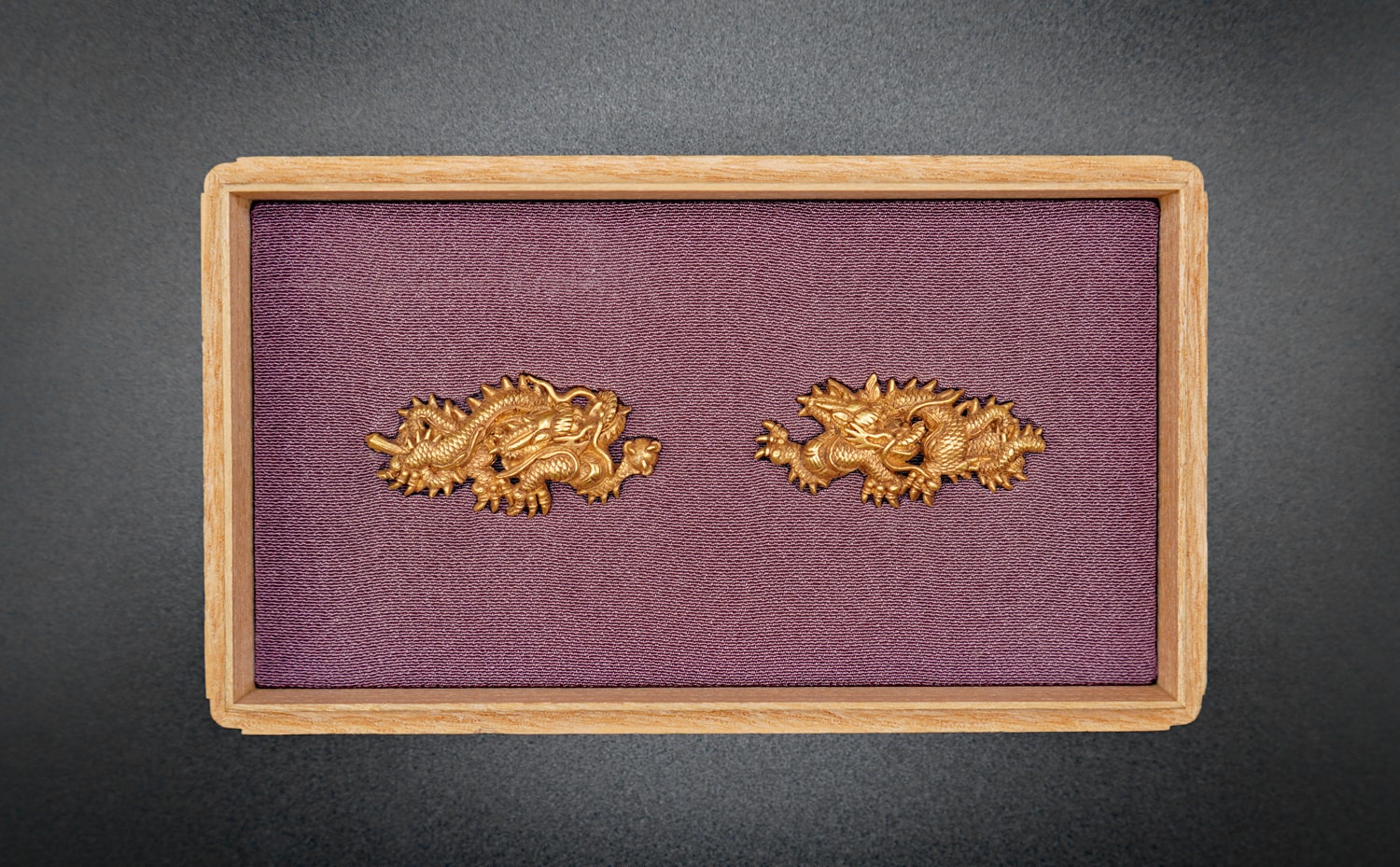
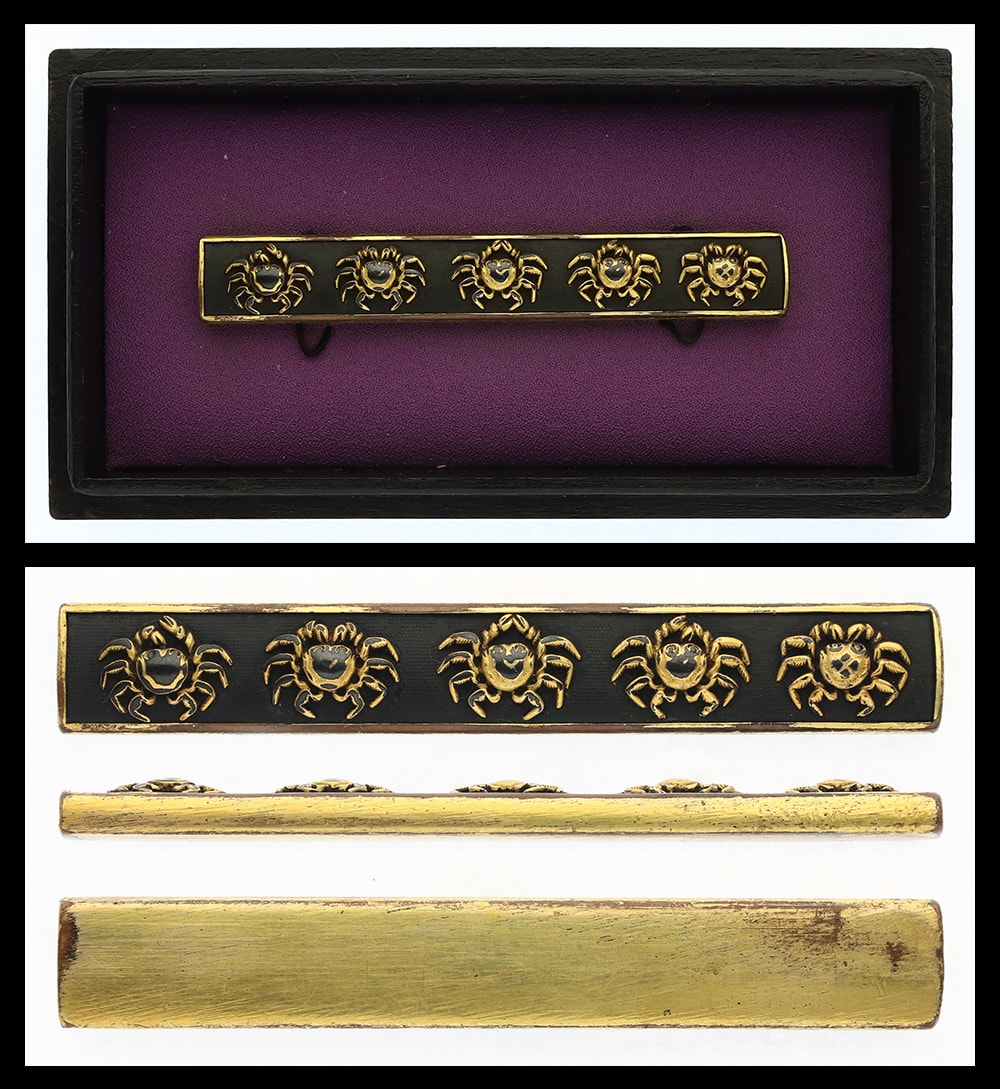
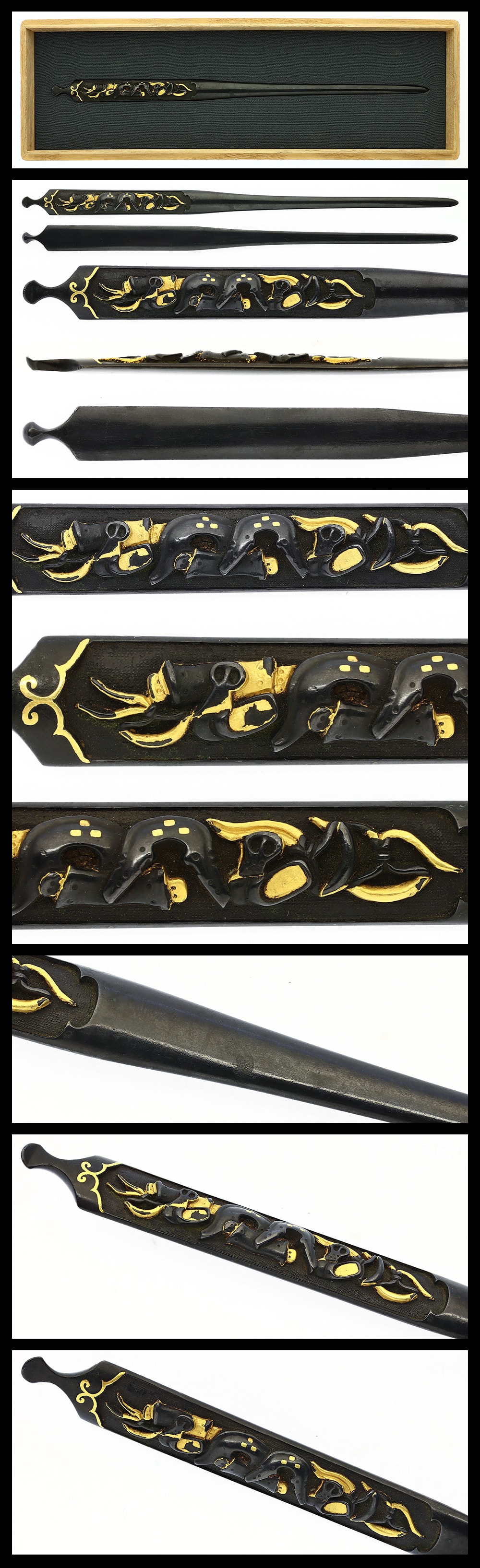
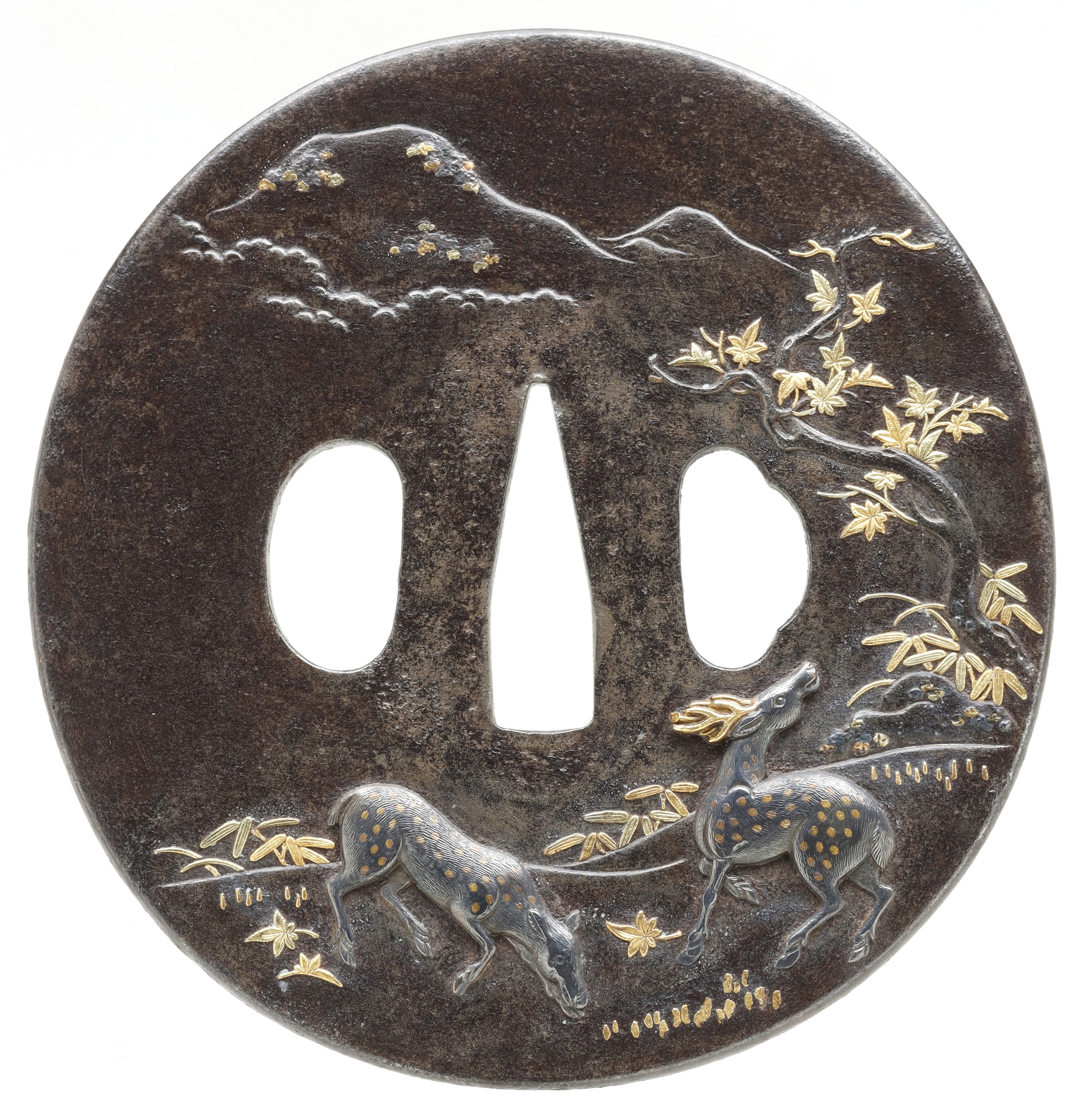
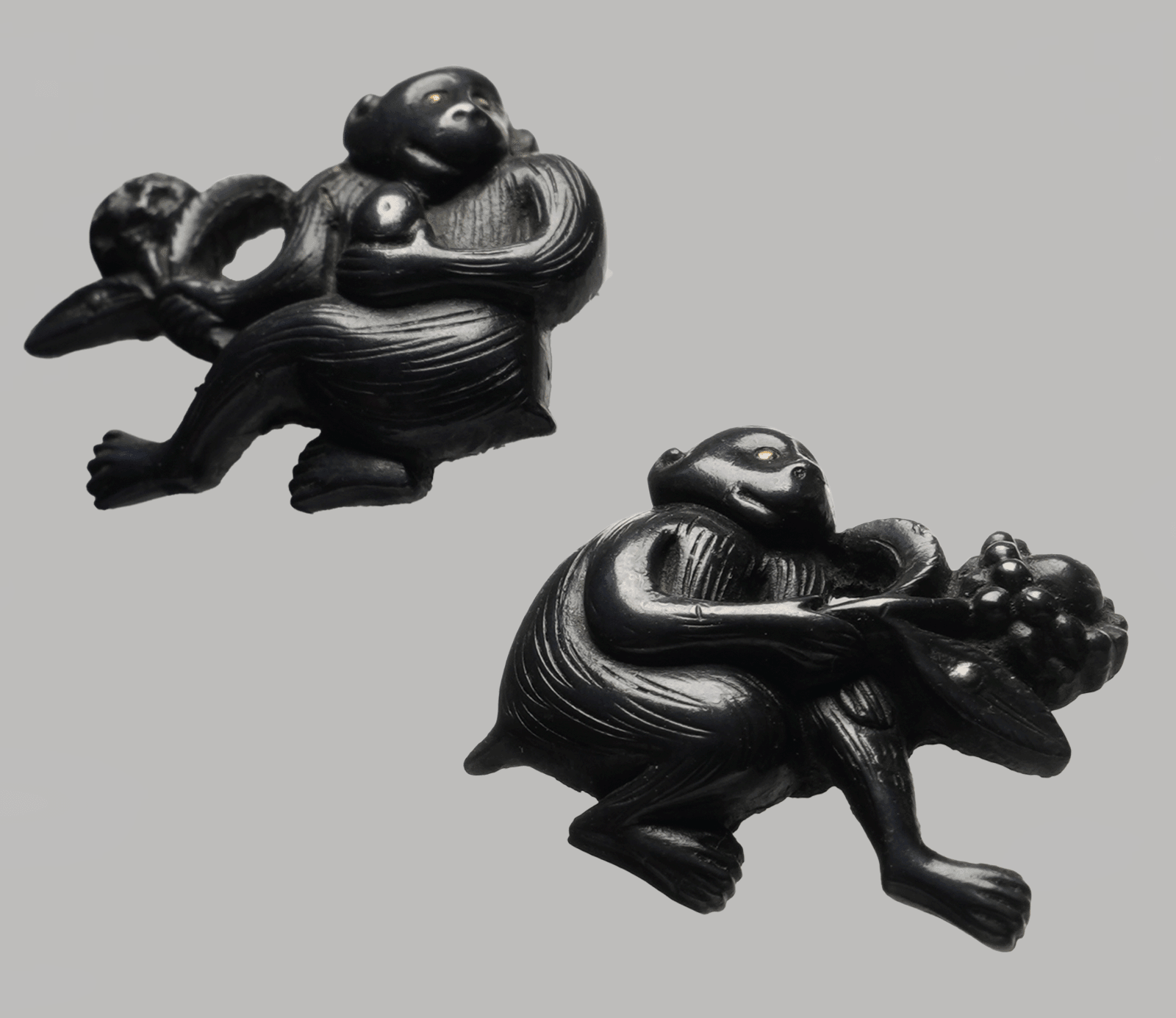
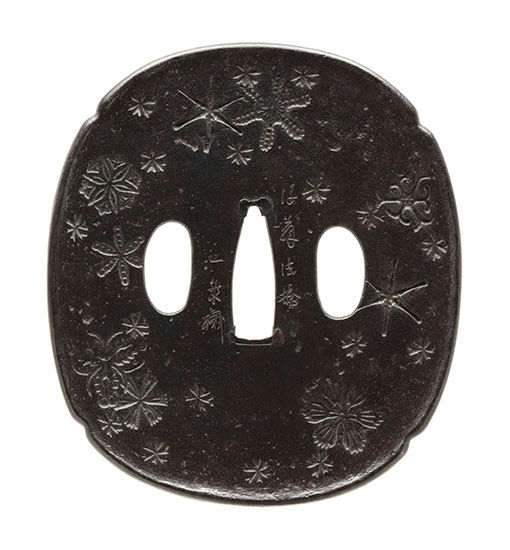
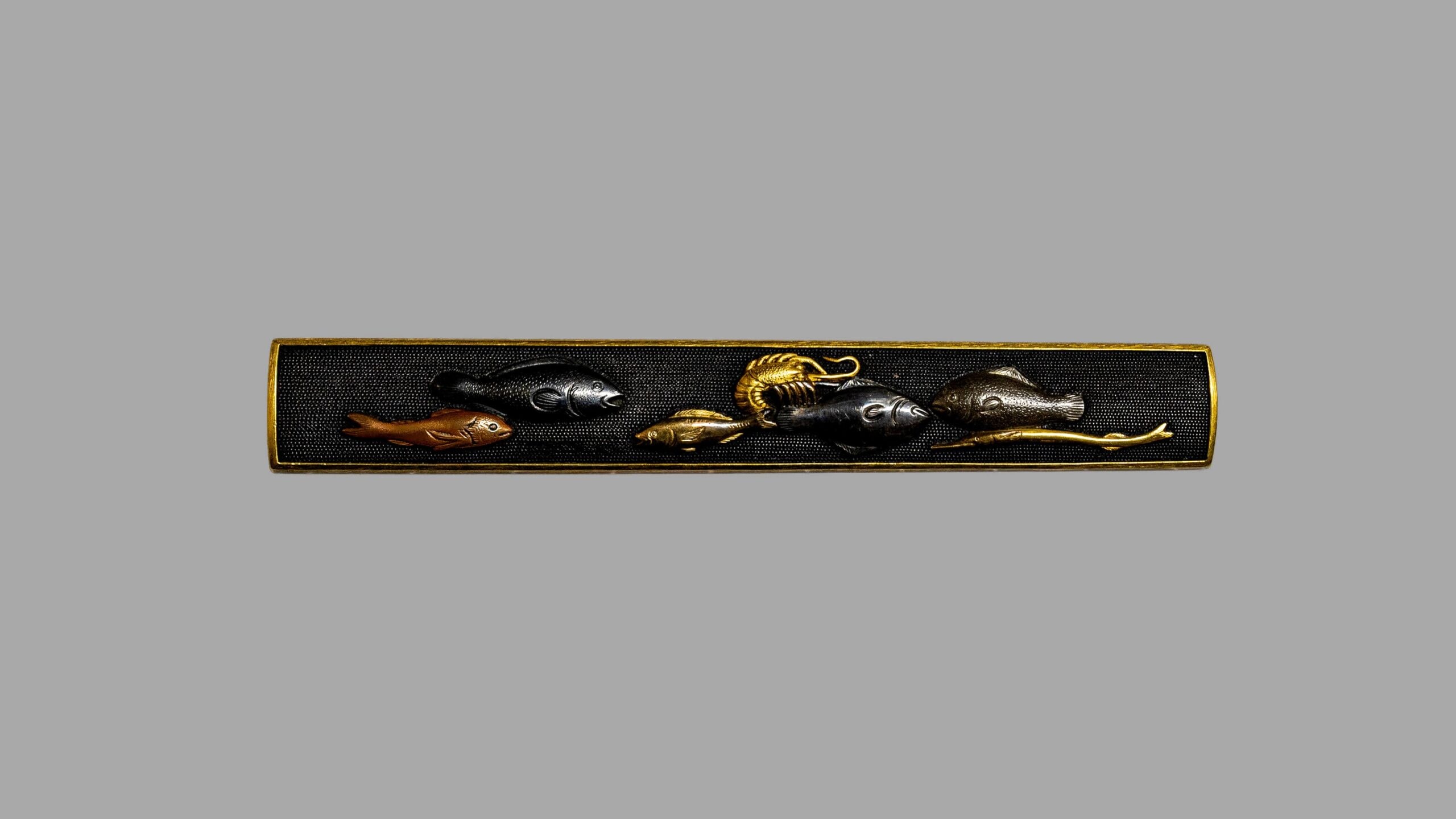
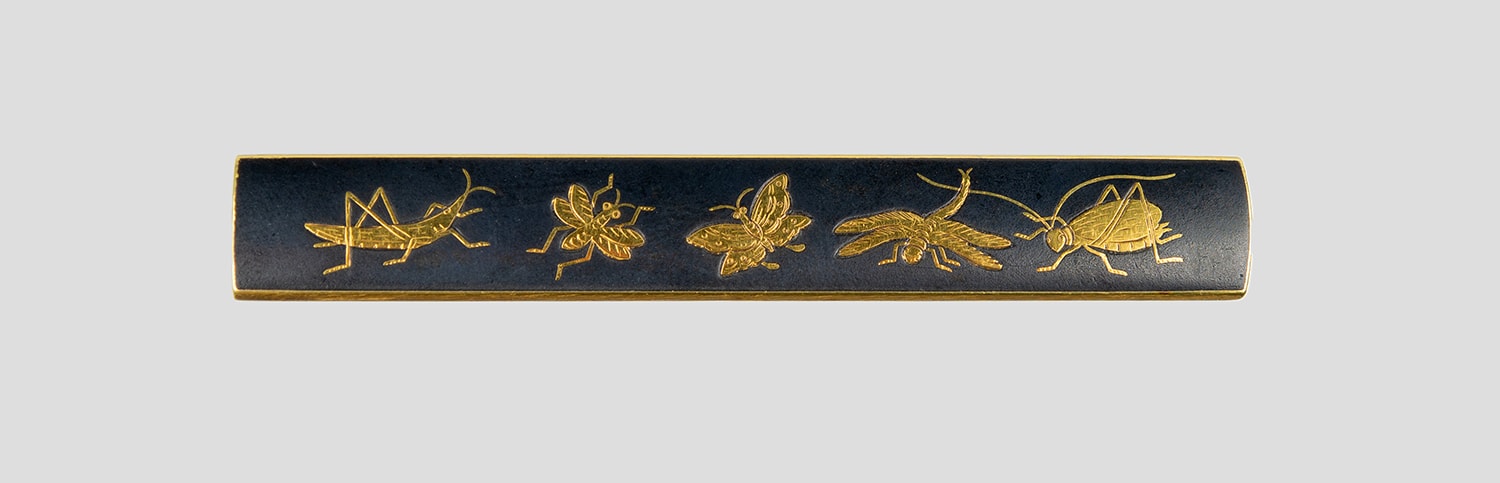
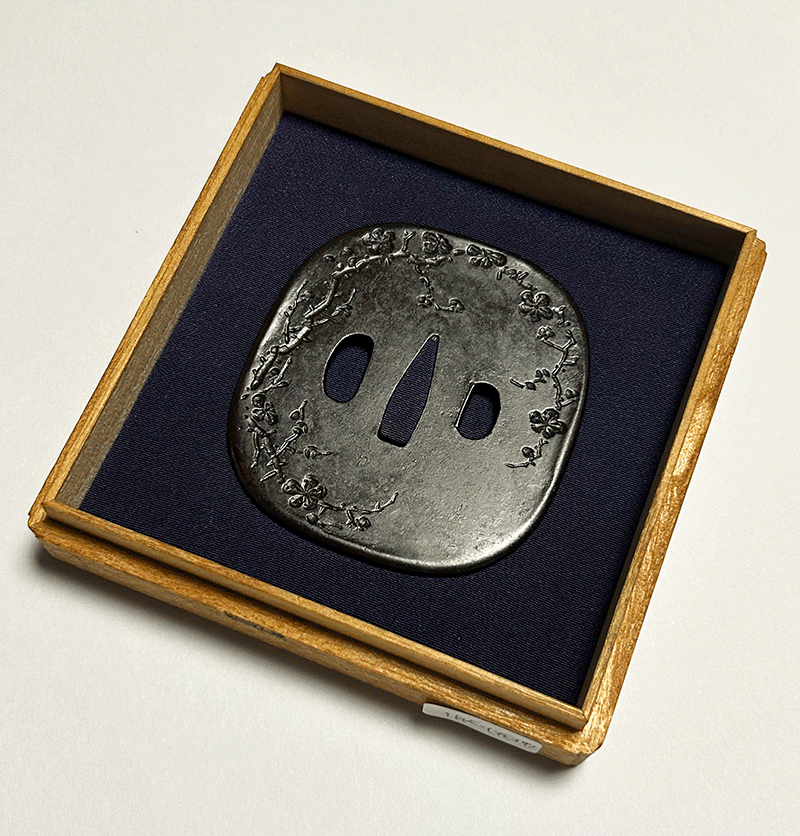
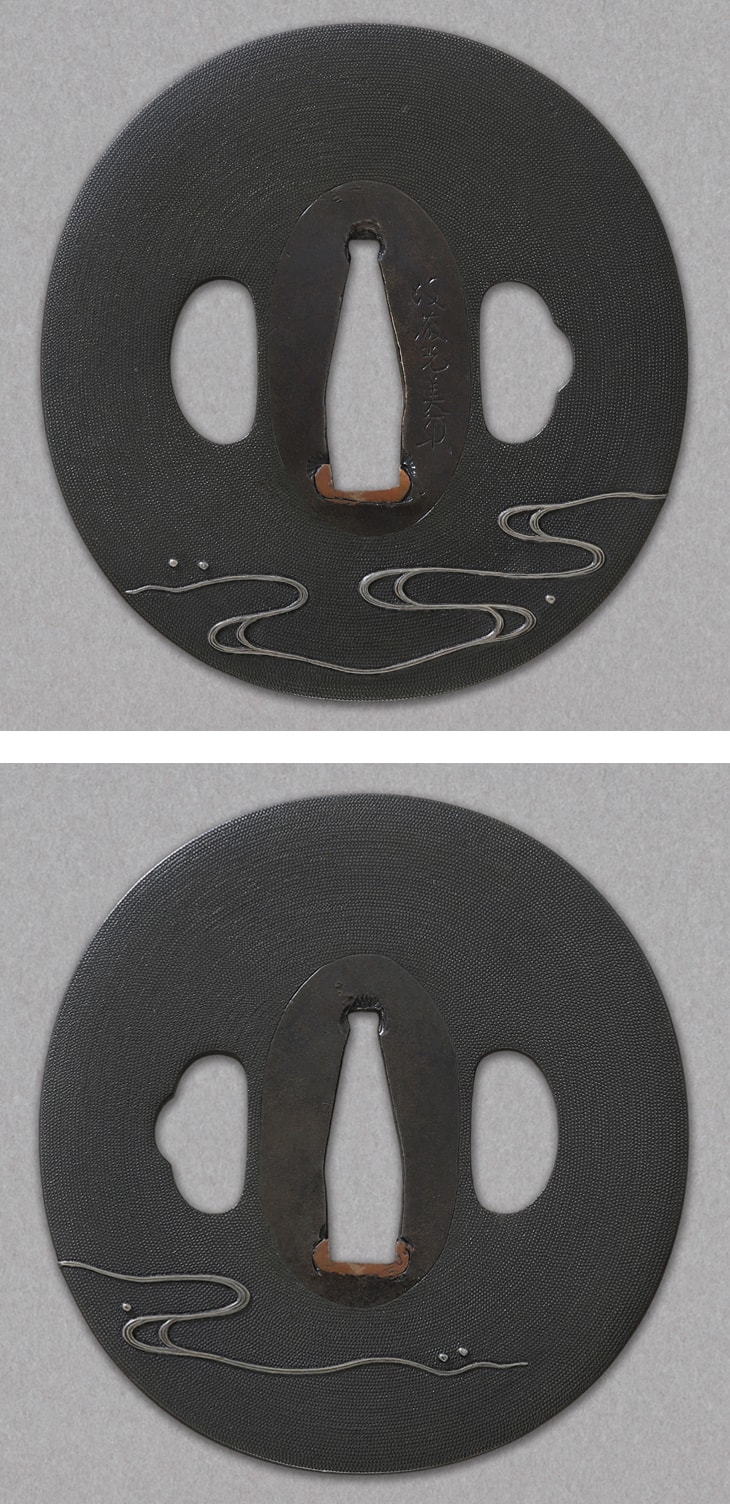
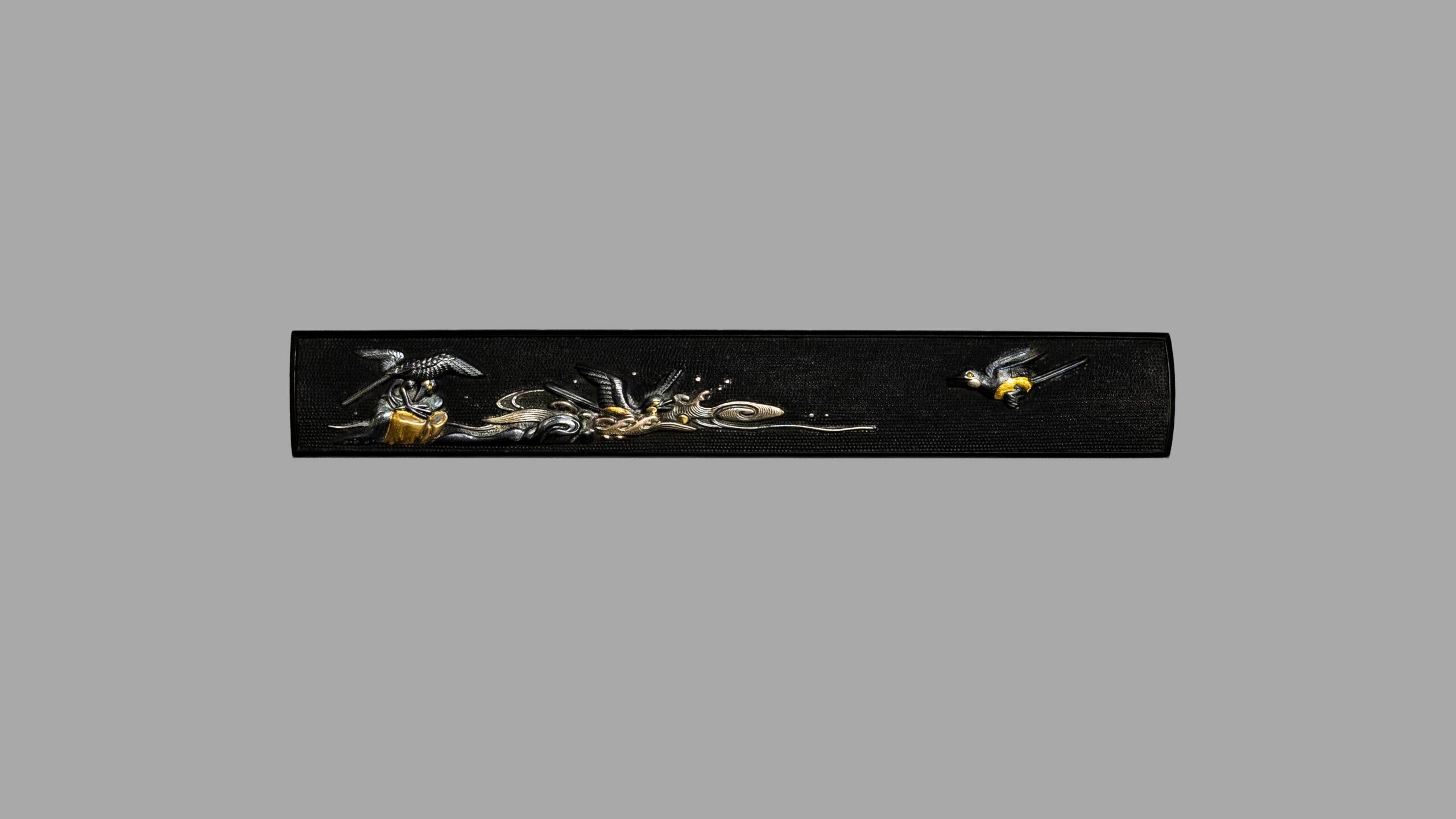
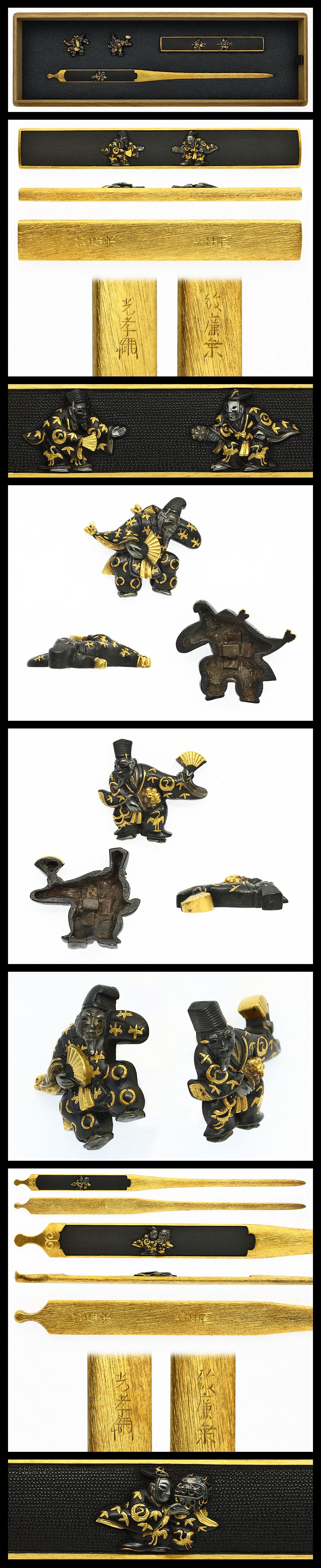
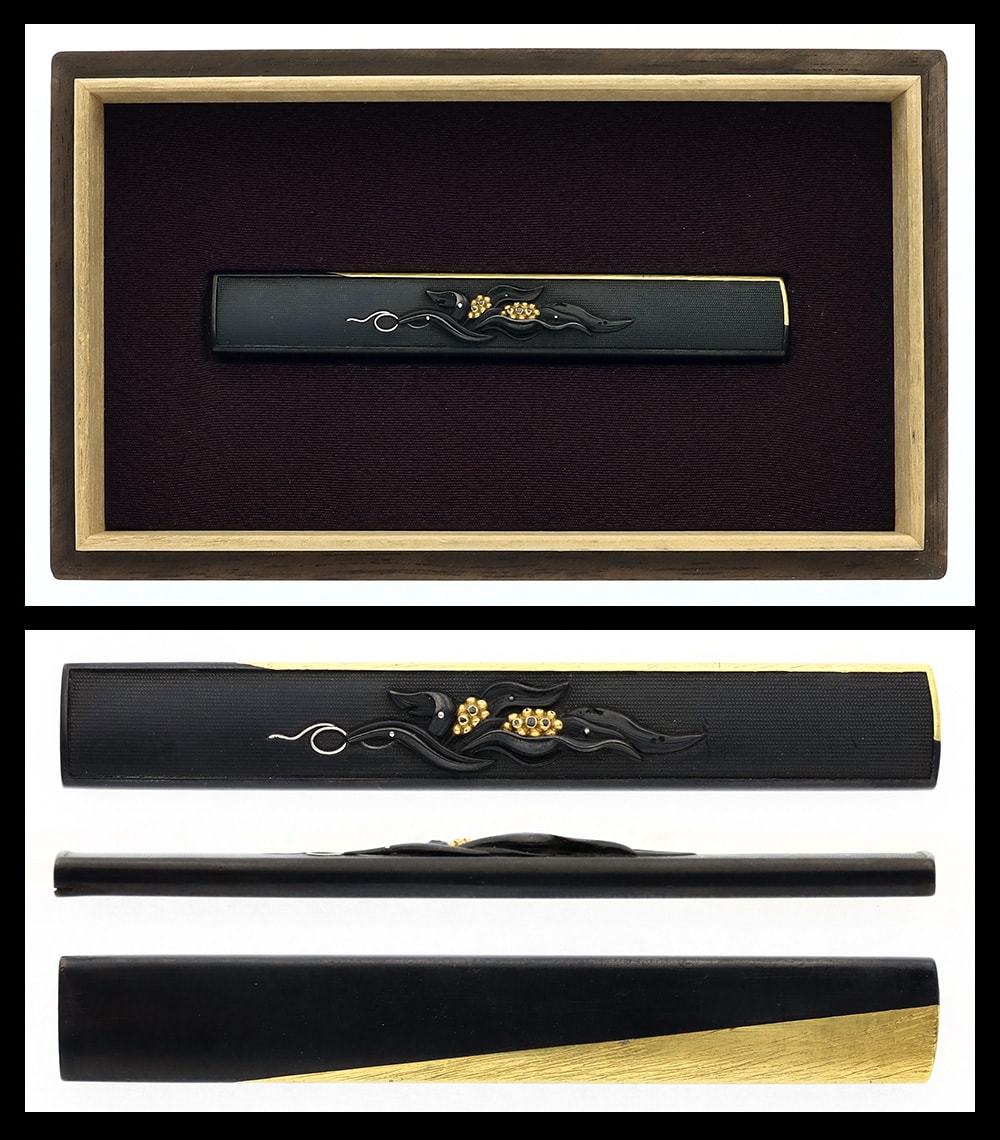
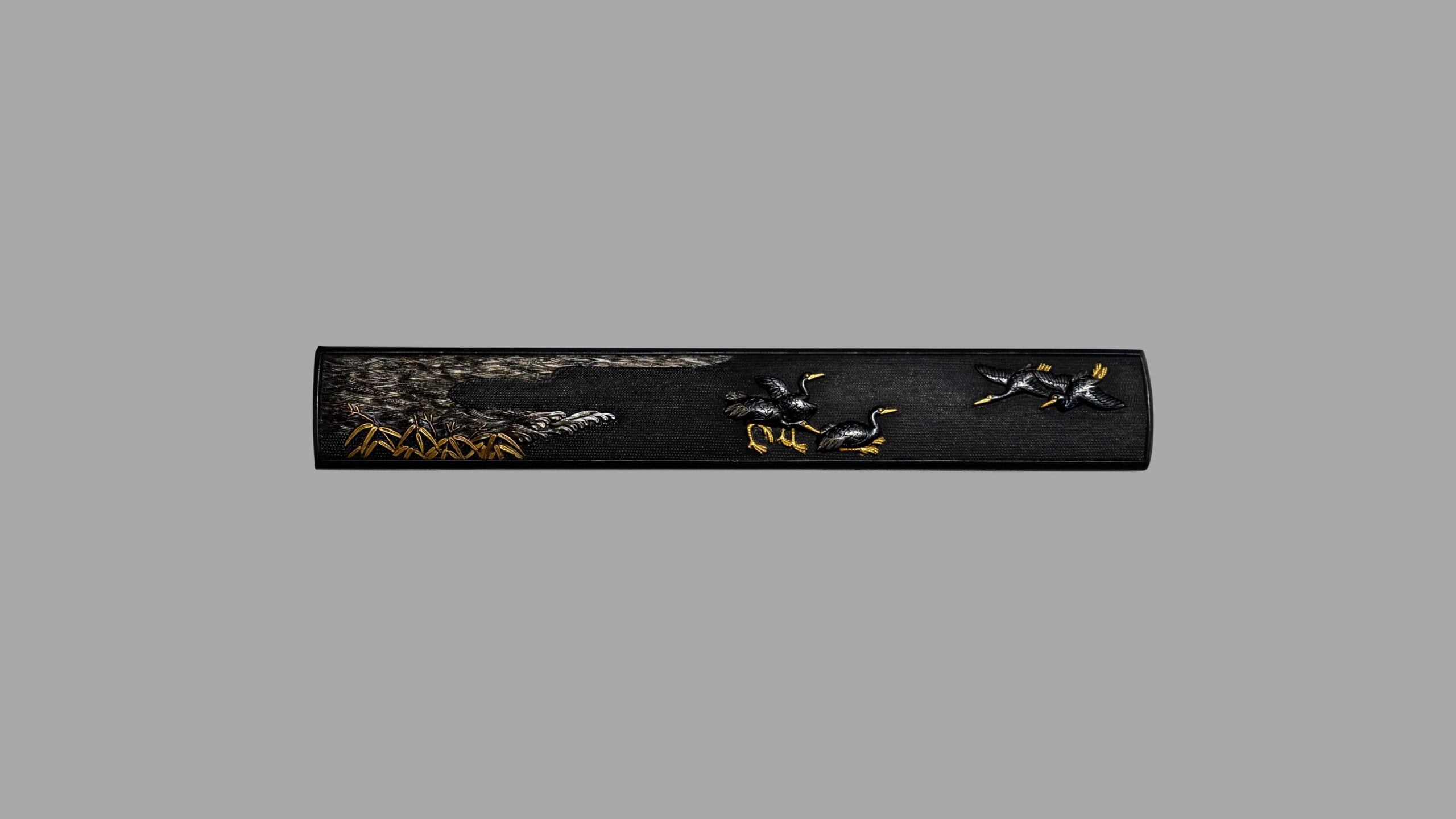
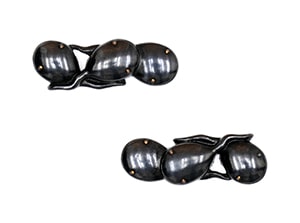
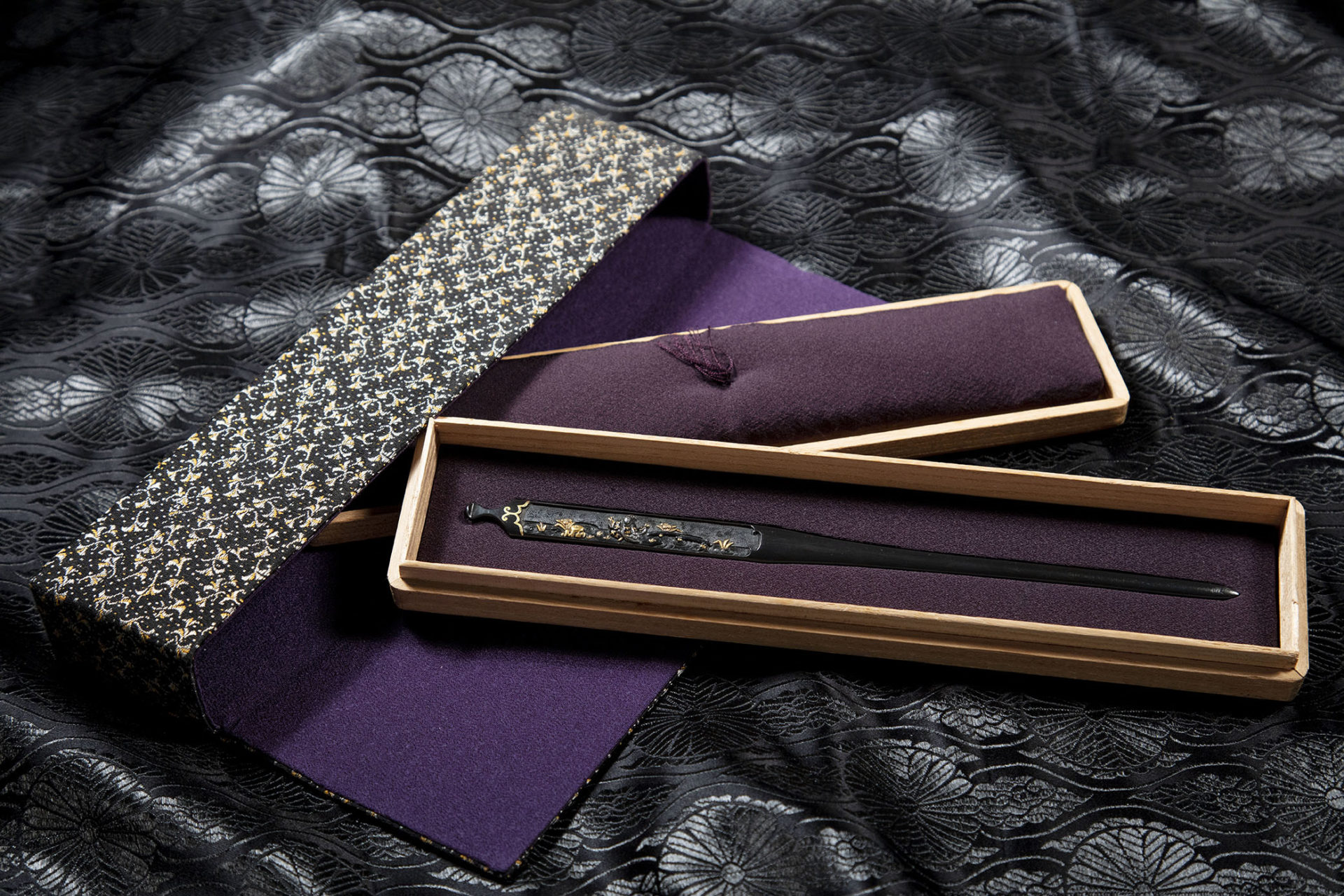
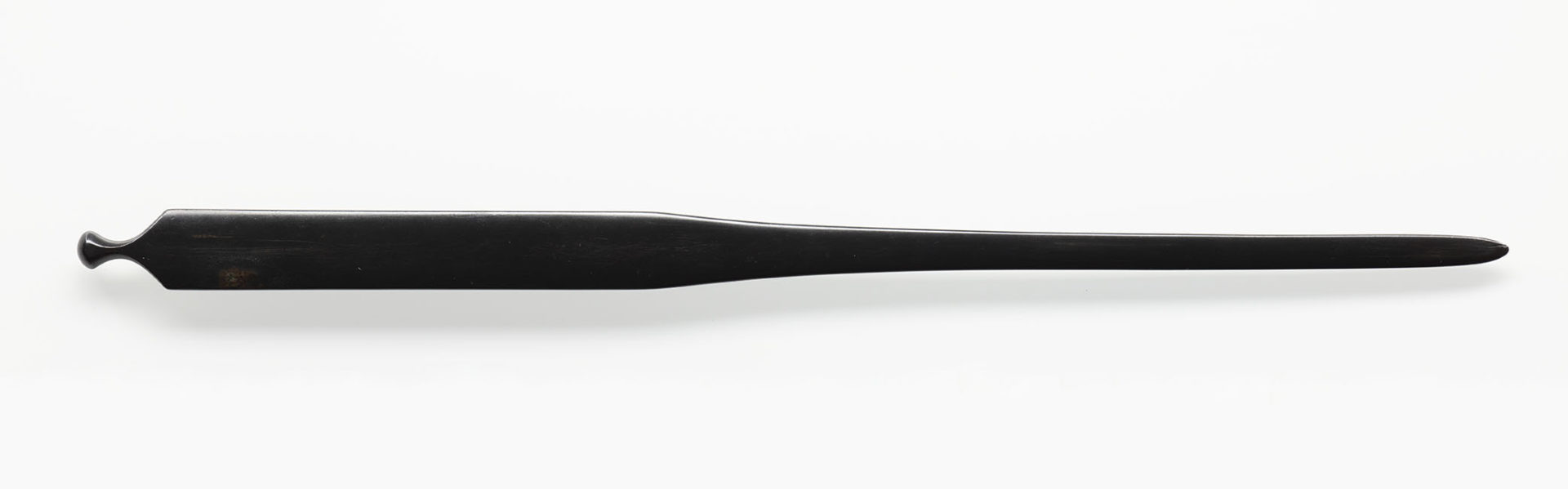
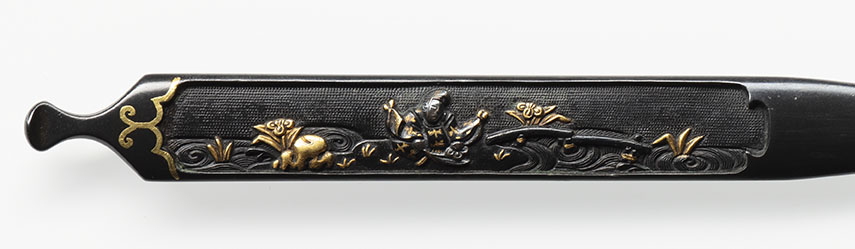
An Important and Rare Joint Work of Goto Joshin and Goto Kojo Third and Fourth Mainline Goto Masters Among the many schools of fittings makers throughout Japanese history, the Goto school dominant in their longevity and success. Sixteen generations of mainline masters descended from the first generation, Goto Yujo, who worked for Ashikaga Yoshimasa about one hundred fifty years before the unification of Japan under the Tokugawa Shogunate. Successive generations of Goto makers sustained and improved the quality and workmanship and became the foundation for other great artists. Fittings made by Goto masters were especially precious and sets such as Mitokoromono (kogai, kozuka, and menuki, en suite) were used as exchanges of gifts to and between Daimyo and those of lofty social classes. Those with the means sought to build an entire set consisting of items from each Goto generation, a practice which continues to this day by enthusiastic collectors. Truly, this was an early example of the phrase “collect the whole set”. Because they were court artisans, the first four generations of mainline Goto makers did not sign their works. The importance of owning specific works brought many owners of items to bring pieces to later generation Goto masters for authentication, and on many works one can see the testimony of later generation’s attribution of a particular piece to a particular master. Of the seventeen generations of mainline Goto masters from 1440 to 1879, the first three generations are known as “Ko-Goto” or “Old Goto”, and consisted of Yujo, Sojo, and Joshin. Joshin’s work was born in the fury of the “age of battles” when the provinces of Japan were at continuous war. Although he excelled in the designs that all Goto traditionally made such as Dragons and Shishi, he favored powerful symbolic subjects such as Tigers as well. Joshin was a Samurai Henri Joly wrote of him “well known as a doughty soldier”. Naturally as can be imagined from his turbulent surroundings, man
 NihontoWatch

後藤乗真
室町
無銘
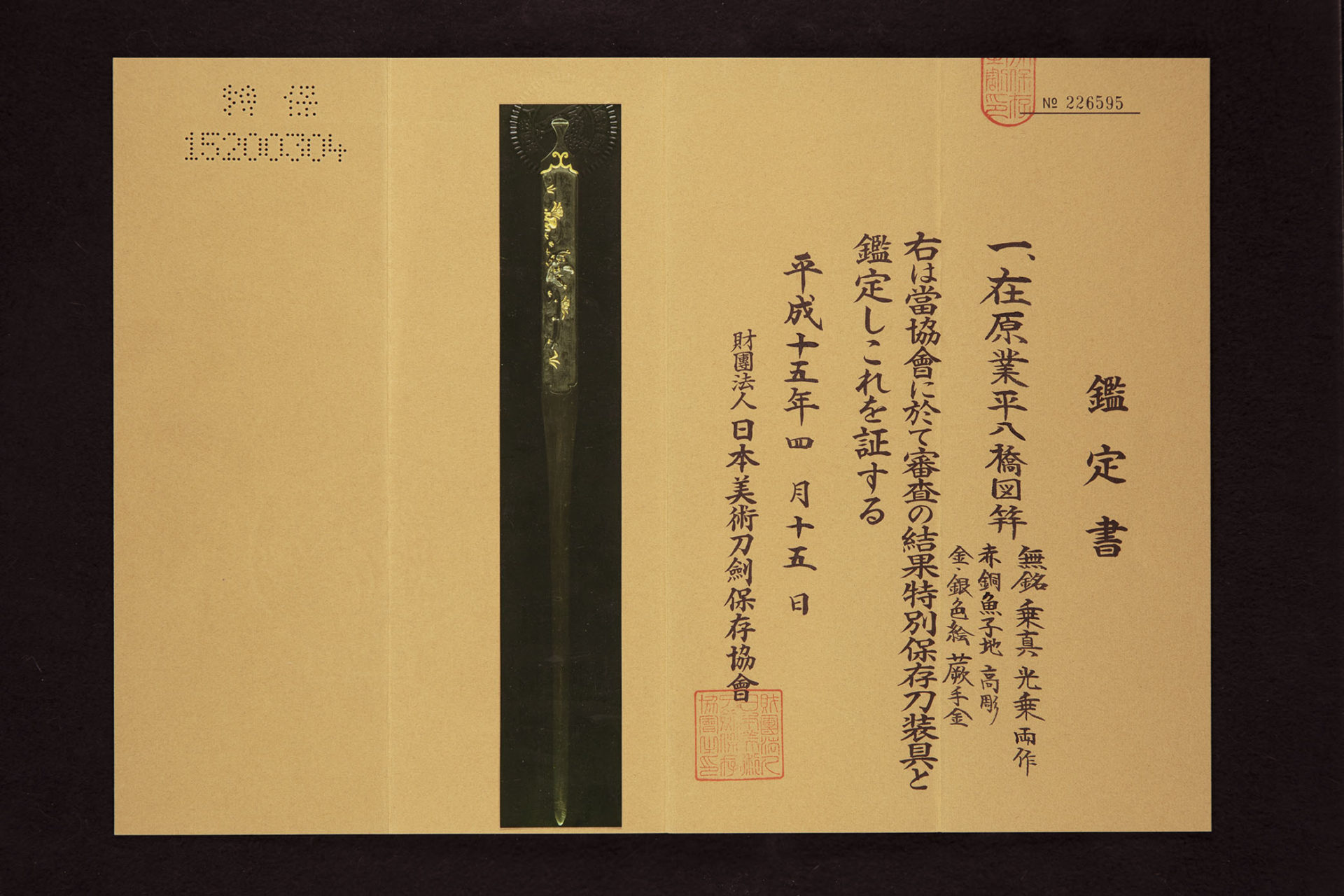
特別保存 (NBTHK)
家彫 · 山城 · 1512-1562頃
現在6点販売中
後藤乗真は、後藤家二代宗乗の嫡男で、俗名を二郎、諱を吉久、のち源四郎治光と称した。足利将軍家義晴・義輝の二公に仕え、近江国坂本に三百町の所領を有していた。永禄五年三月六日、北近江の浅井氏と確執があり、浅井亮政の襲撃を受けて戦死した。享年五十一歳。乗真は彫金工とは別に武将でもあったといわれ、剛勇の性格であったと伝えられている。
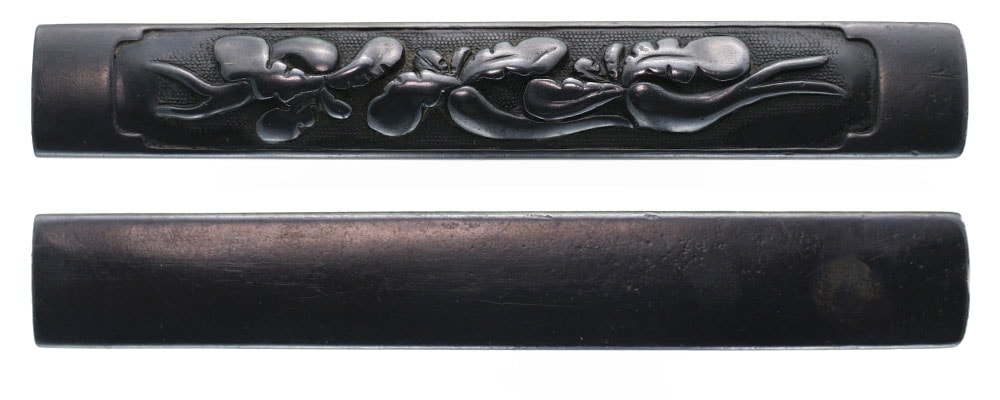
乗真の作風は、大振りで力強く、額面いっぱいに彫るのが特徴とされる。特に「山高く谷深く」と形容される雄渾な彫技が目を惹き、対象を高々と彫り上げ、横に拡張する画面構成と相まって雄大な空間を表現する。金紋を据えた作品も多く、その肉置は豊かで力が漲っている。また、赤銅魚子地を高彫とした作例が多く見られ、金、銀、色絵などを施した華やかな作風も存在する。倶利迦羅龍図や獅子文など、後藤家の掟物にも独自の作風を示し、龍の爪は大きく長く、爪先が開くという特色が顕著である。笄を小柄に仕立て直した作品も遺されており、その場合でも額面いっぱいに力強く彫り込まれている。
乗真の作品は、その力強い作風と量感豊かな彫技が高く評価されている。「大振りで力強く」、「額面いっぱいに彫る」[[c:1]]といった特徴は、説示において繰り返し言及される。また、「山高く谷深し」と評される彫りの深さ、抑揚のある肉置、手強い鏨運びなども、乗真作品の魅力として挙げられる。後藤家における重要な刀装具師として、その名跡は後代にも影響を与え、光孝や光守といった後藤家の刀工によって極められた作品も存在する。
後藤乗真の位置づけを、日本刀全体および伝統・時代・時期ごとに示します。各位(随一・屈指・有数・著名)は、NBTHK および文化庁による指定に加え、三作や名物帳などの歴史的栄誉を加味したものです。
各項目を選ぶと評価方法が表示されます。
家彫 · 山城
時期区分: 古後藤· 1440–1573
現在325点販売中
保存刀装具のうち、出来・保存状態が一層優れ、銘文や作風に資料的価値の高いものと認められたものです。
日本美術刀剣保存協会(NBTHK)は、1948年に設立され、文化庁の監督を受ける公益財団法人で、東京・刀剣博物館に本部を置きます。専門の審査員が出品作を直接審査し、美術的・歴史的価値に応じた鑑定書を発行します。NBTHKの鑑定書は、日本刀および刀装具の真正性を示す最も広く認知された基準です。
NBTHK公式サイトAn Important and Rare Joint Work of Goto Joshin and Goto Kojo Third and Fourth Mainline Goto Masters Among the many schools of fittings makers throughout Japanese history, the Goto school dominant in their longevity and success. Sixteen generations of mainline masters descended from the first generation, Goto Yujo, who worked for Ashikaga Yoshimasa about one hundred fifty years before the unification of Japan under the Tokugawa Shogunate. Successive generations of Goto makers sustained and improved the quality and workmanship and became the foundation for other great artists. Fittings made by Goto masters were especially precious and sets such as Mitokoromono (kogai, kozuka, and menuki, en suite) were used as exchanges of gifts to and between Daimyo and those of lofty social classes. Those with the means sought to build an entire set consisting of items from each Goto generation, a practice which continues to this day by enthusiastic collectors. Truly, this was an early example of the phrase “collect the whole set”. Because they were court artisans, the first four generations of mainline Goto makers did not sign their works. The importance of owning specific works brought many owners of items to bring pieces to later generation Goto masters for authentication, and on many works one can see the testimony of later generation’s attribution of a particular piece to a particular master. Of the seventeen generations of mainline Goto masters from 1440 to 1879, the first three generations are known as “Ko-Goto” or “Old Goto”, and consisted of Yujo, Sojo, and Joshin. Joshin’s work was born in the fury of the “age of battles” when the provinces of Japan were at continuous war. Although he excelled in the designs that all Goto traditionally made such as Dragons and Shishi, he favored powerful symbolic subjects such as Tigers as well. Joshin was a Samurai Henri Joly wrote of him “well known as a doughty soldier”. Naturally as can be imagined from his turbulent surroundings, man
NihontoWatch後藤乗真
室町
無銘
特別保存 (NBTHK)
家彫 · 山城 · 1512-1562頃
現在6点販売中
後藤乗真は、後藤家二代宗乗の嫡男で、俗名を二郎、諱を吉久、のち源四郎治光と称した。足利将軍家義晴・義輝の二公に仕え、近江国坂本に三百町の所領を有していた。永禄五年三月六日、北近江の浅井氏と確執があり、浅井亮政の襲撃を受けて戦死した。享年五十一歳。乗真は彫金工とは別に武将でもあったといわれ、剛勇の性格であったと伝えられている。
乗真の作風は、大振りで力強く、額面いっぱいに彫るのが特徴とされる。特に「山高く谷深く」と形容される雄渾な彫技が目を惹き、対象を高々と彫り上げ、横に拡張する画面構成と相まって雄大な空間を表現する。金紋を据えた作品も多く、その肉置は豊かで力が漲っている。また、赤銅魚子地を高彫とした作例が多く見られ、金、銀、色絵などを施した華やかな作風も存在する。倶利迦羅龍図や獅子文など、後藤家の掟物にも独自の作風を示し、龍の爪は大きく長く、爪先が開くという特色が顕著である。笄を小柄に仕立て直した作品も遺されており、その場合でも額面いっぱいに力強く彫り込まれている。
乗真の作品は、その力強い作風と量感豊かな彫技が高く評価されている。「大振りで力強く」、「額面いっぱいに彫る」[[c:1]]といった特徴は、説示において繰り返し言及される。また、「山高く谷深し」と評される彫りの深さ、抑揚のある肉置、手強い鏨運びなども、乗真作品の魅力として挙げられる。後藤家における重要な刀装具師として、その名跡は後代にも影響を与え、光孝や光守といった後藤家の刀工によって極められた作品も存在する。
後藤乗真の位置づけを、日本刀全体および伝統・時代・時期ごとに示します。各位(随一・屈指・有数・著名)は、NBTHK および文化庁による指定に加え、三作や名物帳などの歴史的栄誉を加味したものです。
各項目を選ぶと評価方法が表示されます。
家彫 · 山城
時期区分: 古後藤· 1440–1573
現在325点販売中
保存刀装具のうち、出来・保存状態が一層優れ、銘文や作風に資料的価値の高いものと認められたものです。
日本美術刀剣保存協会(NBTHK)は、1948年に設立され、文化庁の監督を受ける公益財団法人で、東京・刀剣博物館に本部を置きます。専門の審査員が出品作を直接審査し、美術的・歴史的価値に応じた鑑定書を発行します。NBTHKの鑑定書は、日本刀および刀装具の真正性を示す最も広く認知された基準です。
NBTHK公式サイト