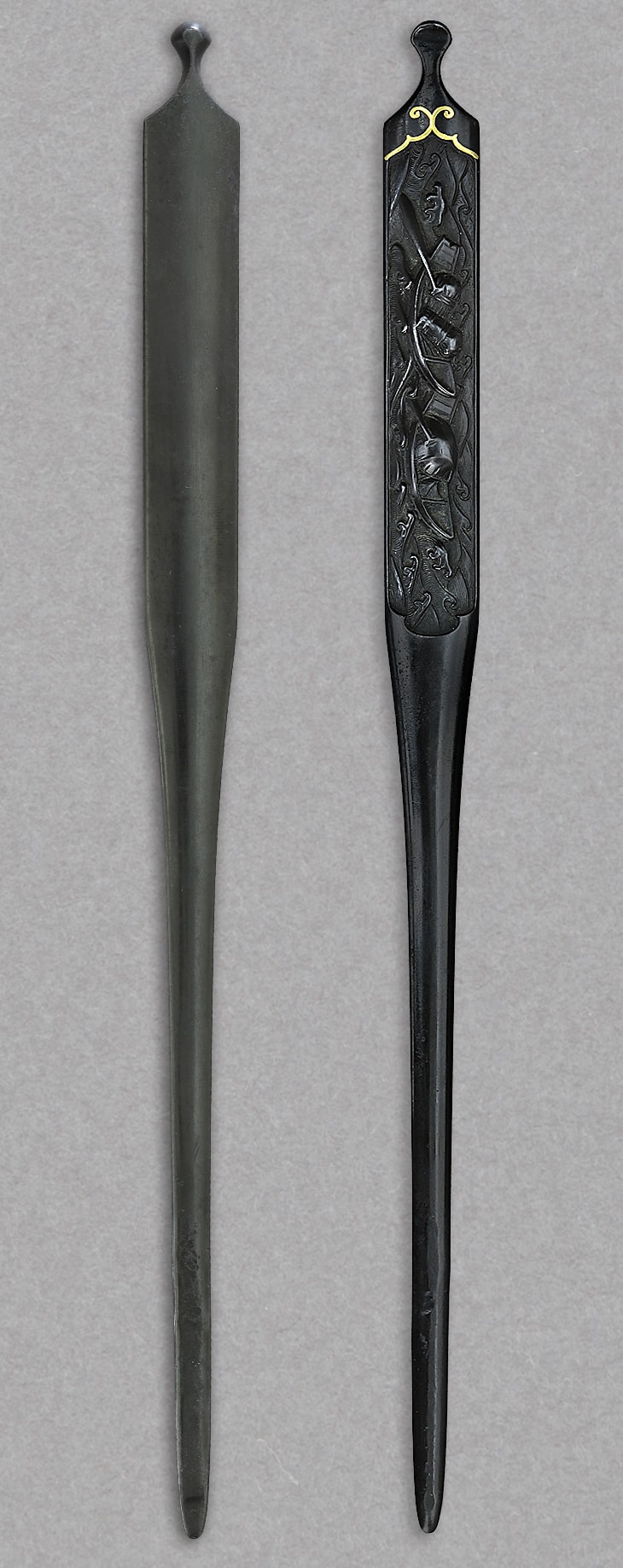
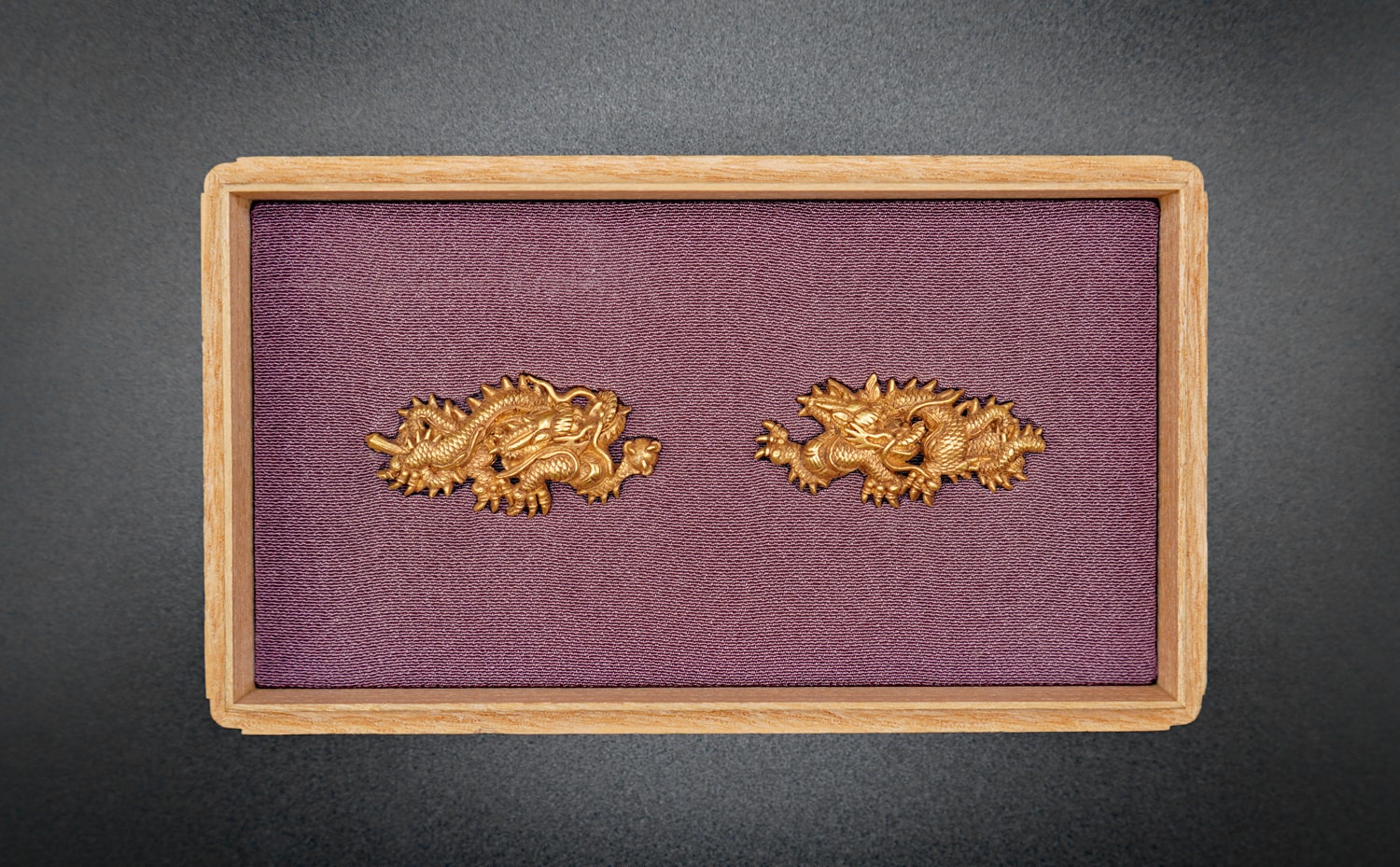
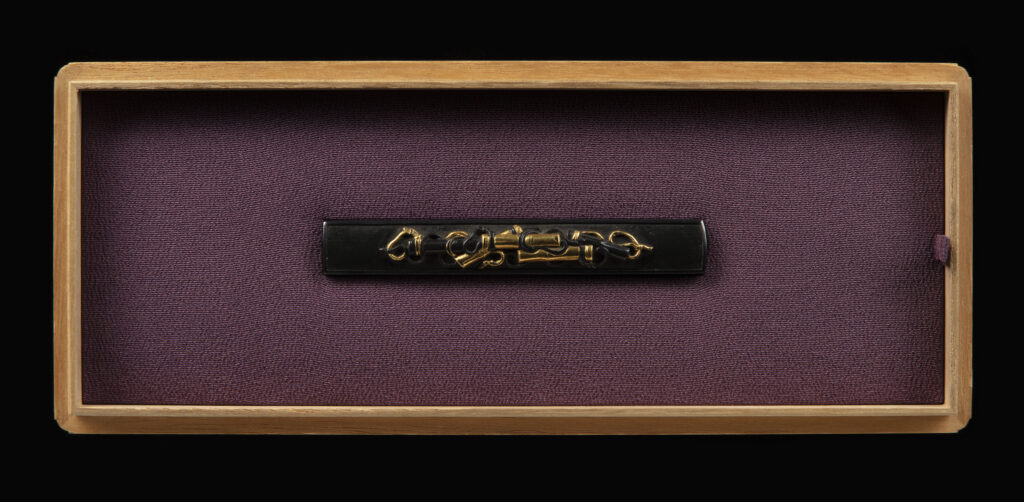
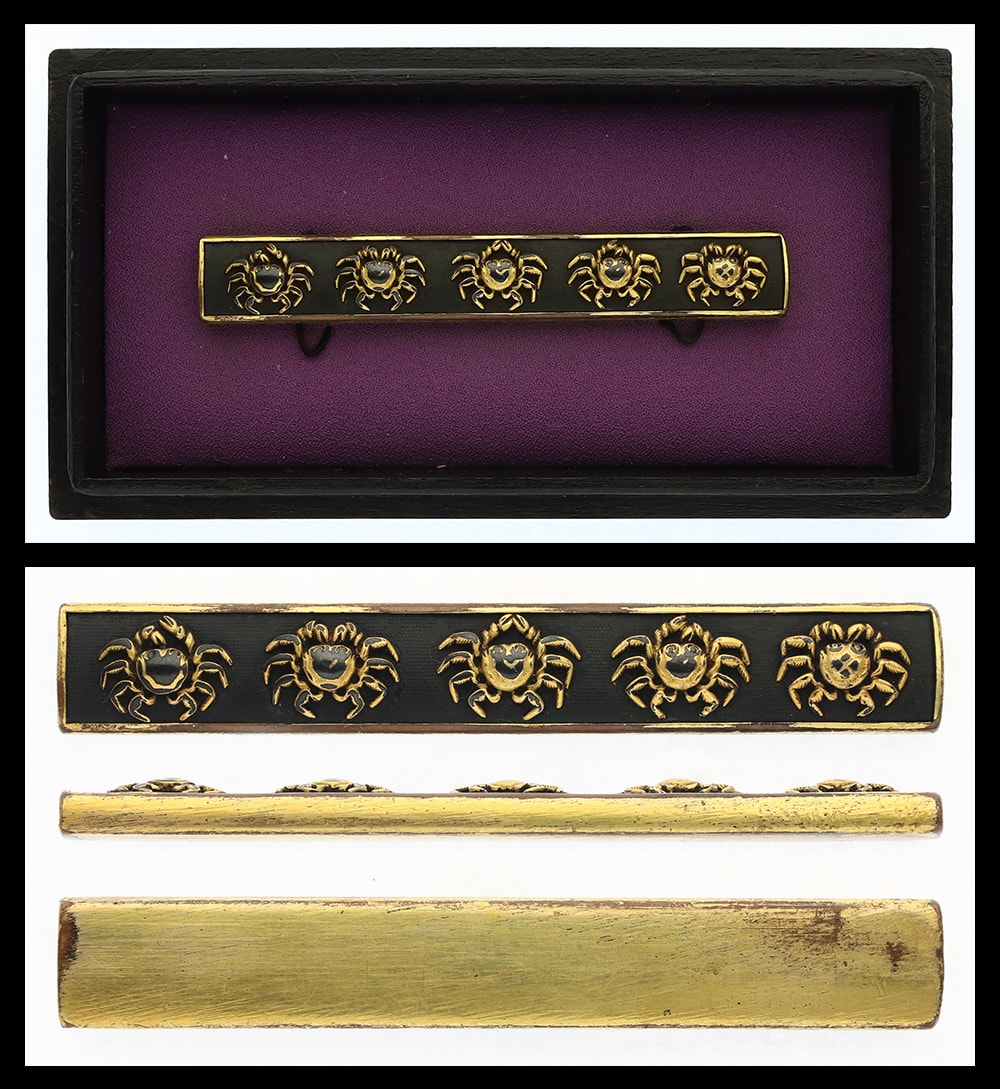
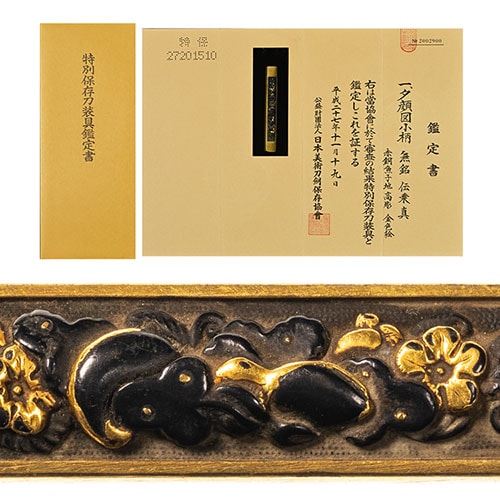
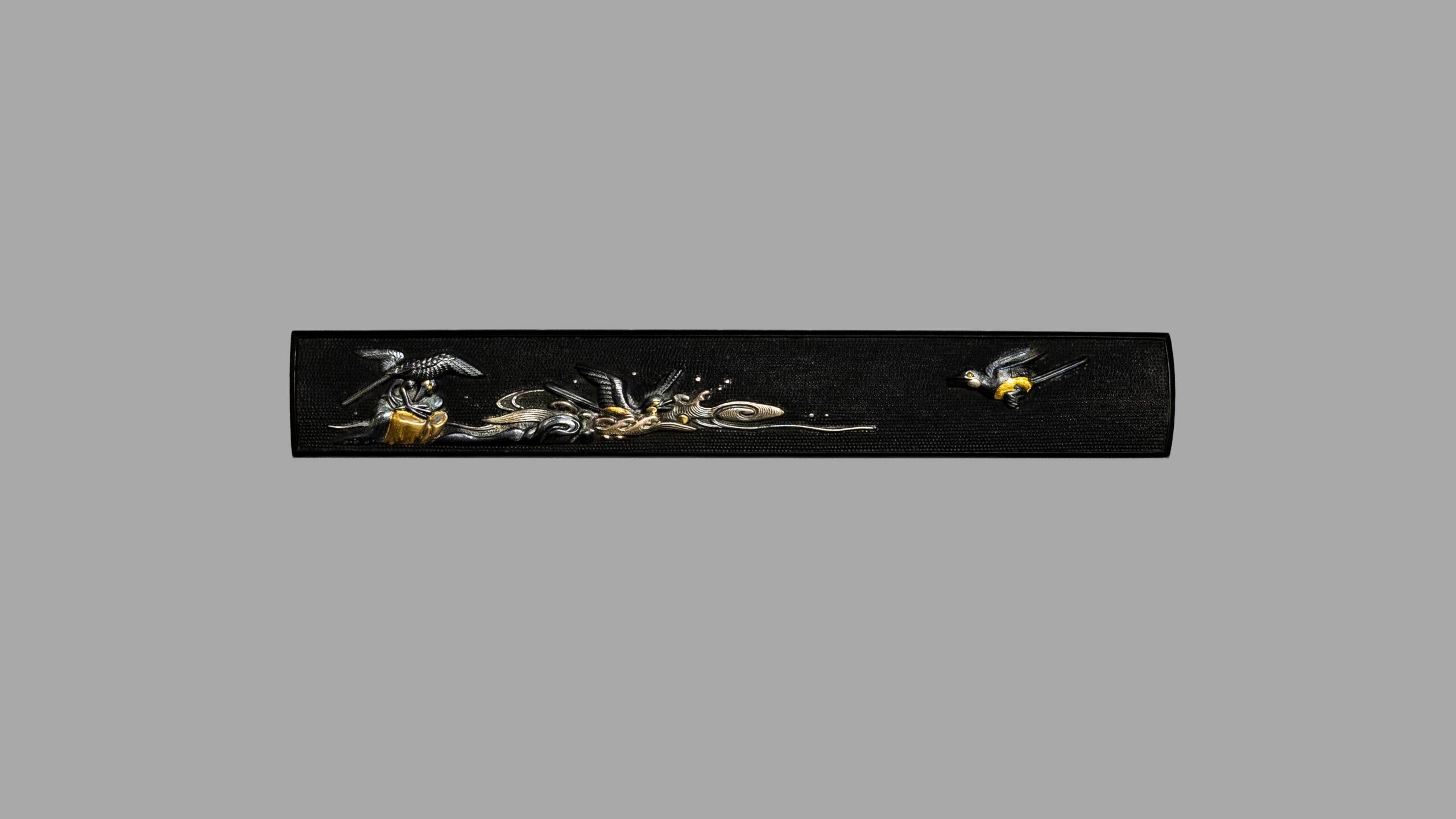
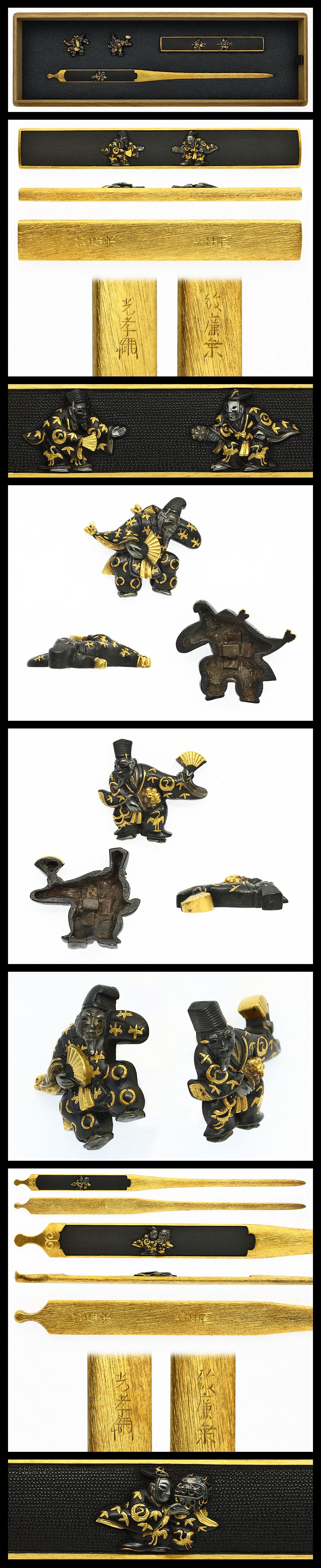
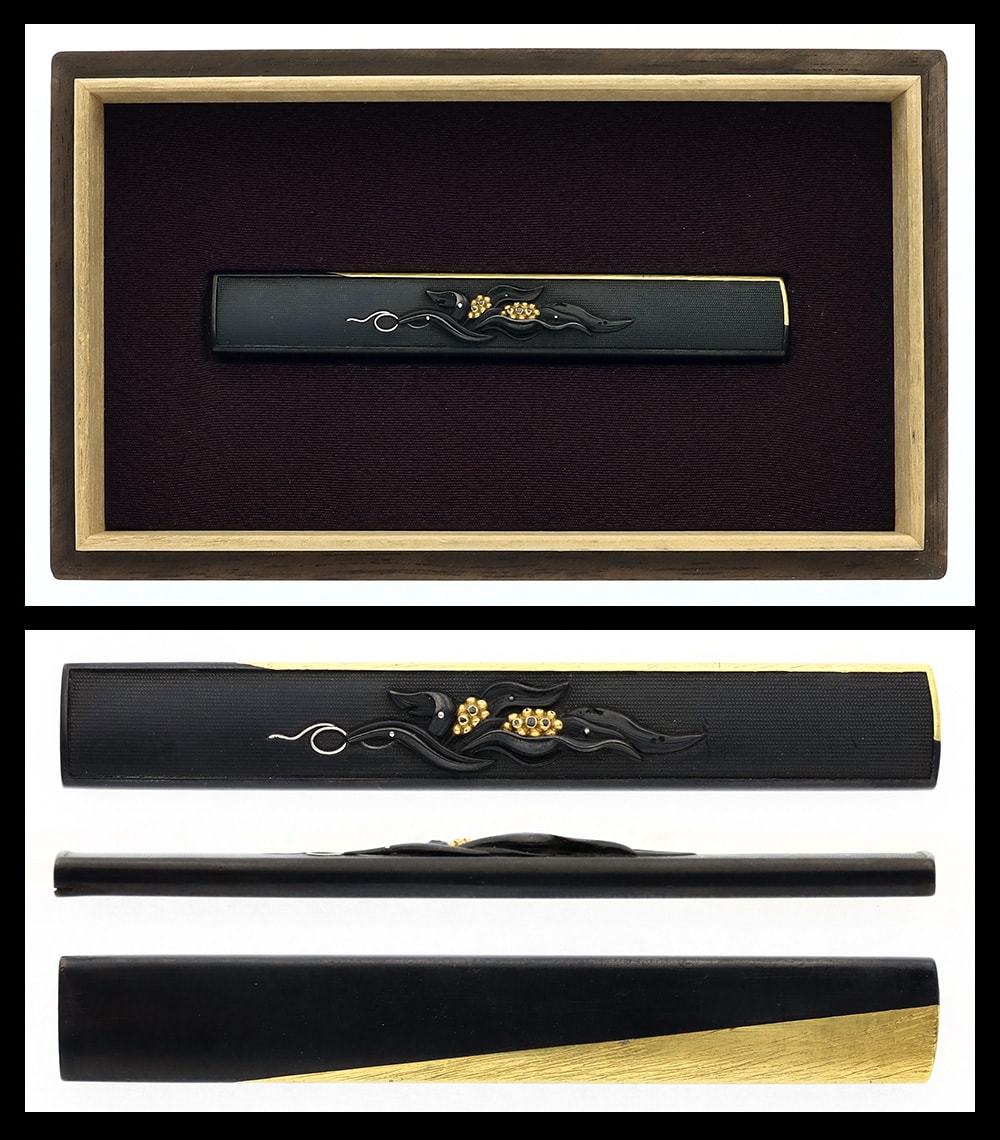
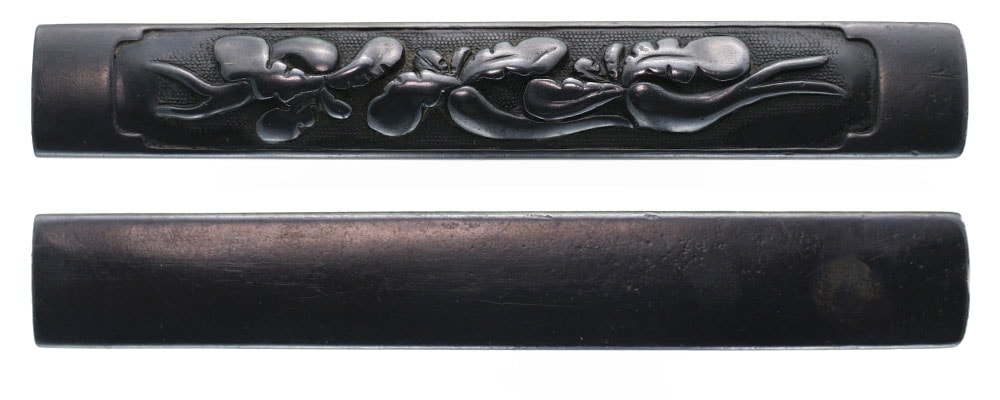
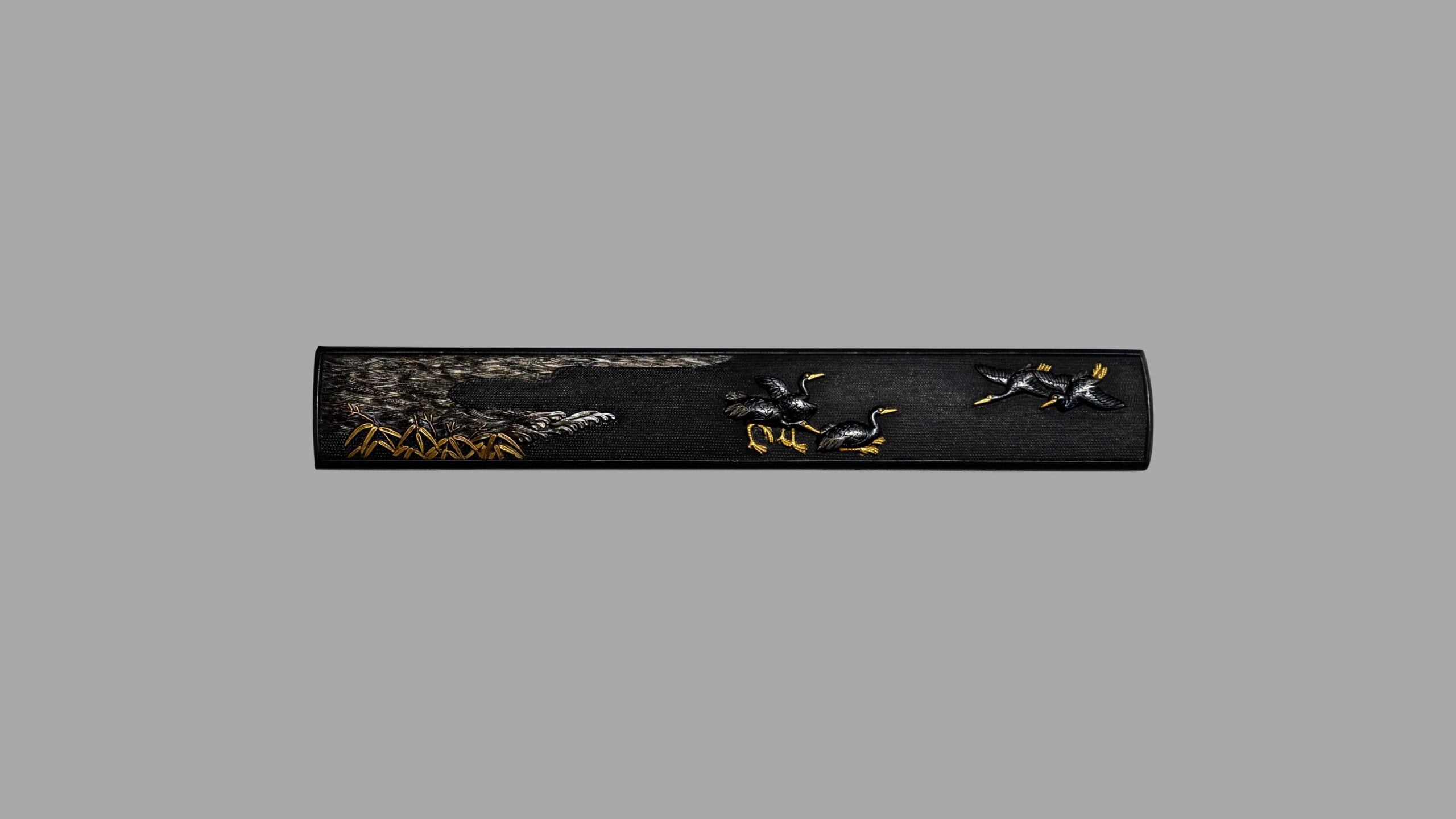
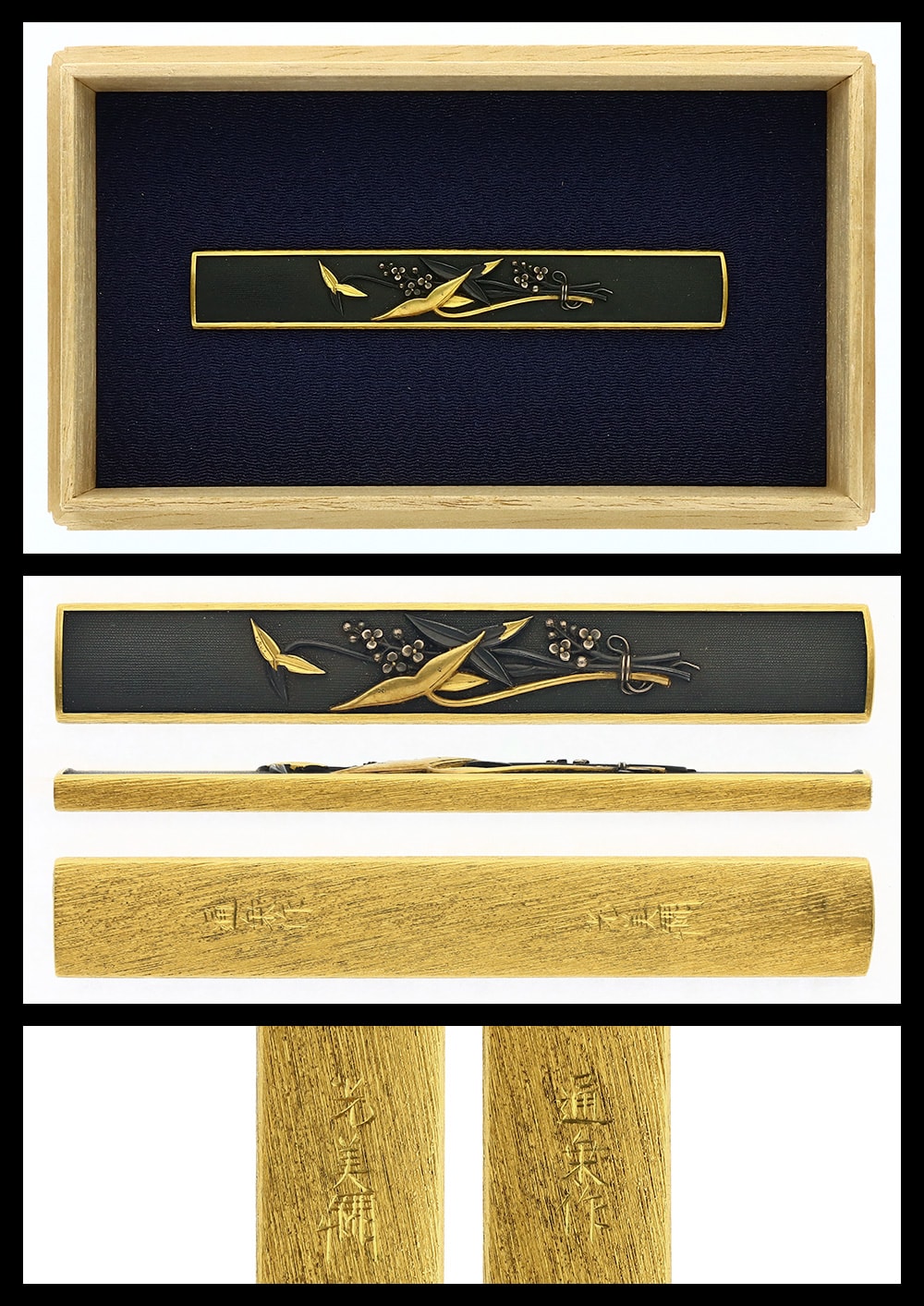
Goto Yujo is revered as the founding master of the Goto house and the originator of Japanese metal carving, praised across the designation records as "a chisel master without peer, past or present." Born in Eikyo 12 (1440), he entered the service of the shogun Ashikaga Yoshimasa and formed part of the artistic current of Higashiyama culture, contributing works that were incorporated among the famed Higashiyama treasures (Higashiyama gomotsu). Many of his pieces were treated as prestige objects of the Higashiyama collection, and the consistently note that "later generations of celebrated craftsmen took Yujo of the Goto house as their model." He died in Eisho 9 (1512) at the age of seventy-three, leaving a legacy that defined the formal vocabulary of the Goto mainline for the fifteen generations that followed. Authentication of his works was undertaken by successive heads of the house, including Kenjo (seventh generation), Mitsumasa (ninth), Tsujo (eleventh), Mitsusato (twelfth), and Mitsutaka (thirteenth), whose valuations frequently reach extraordinary figures such as senkan (one thousand ) and 1,200 , underscoring the esteem in which his work was held.
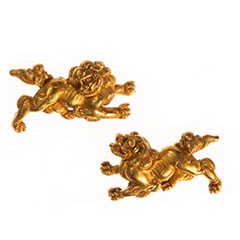
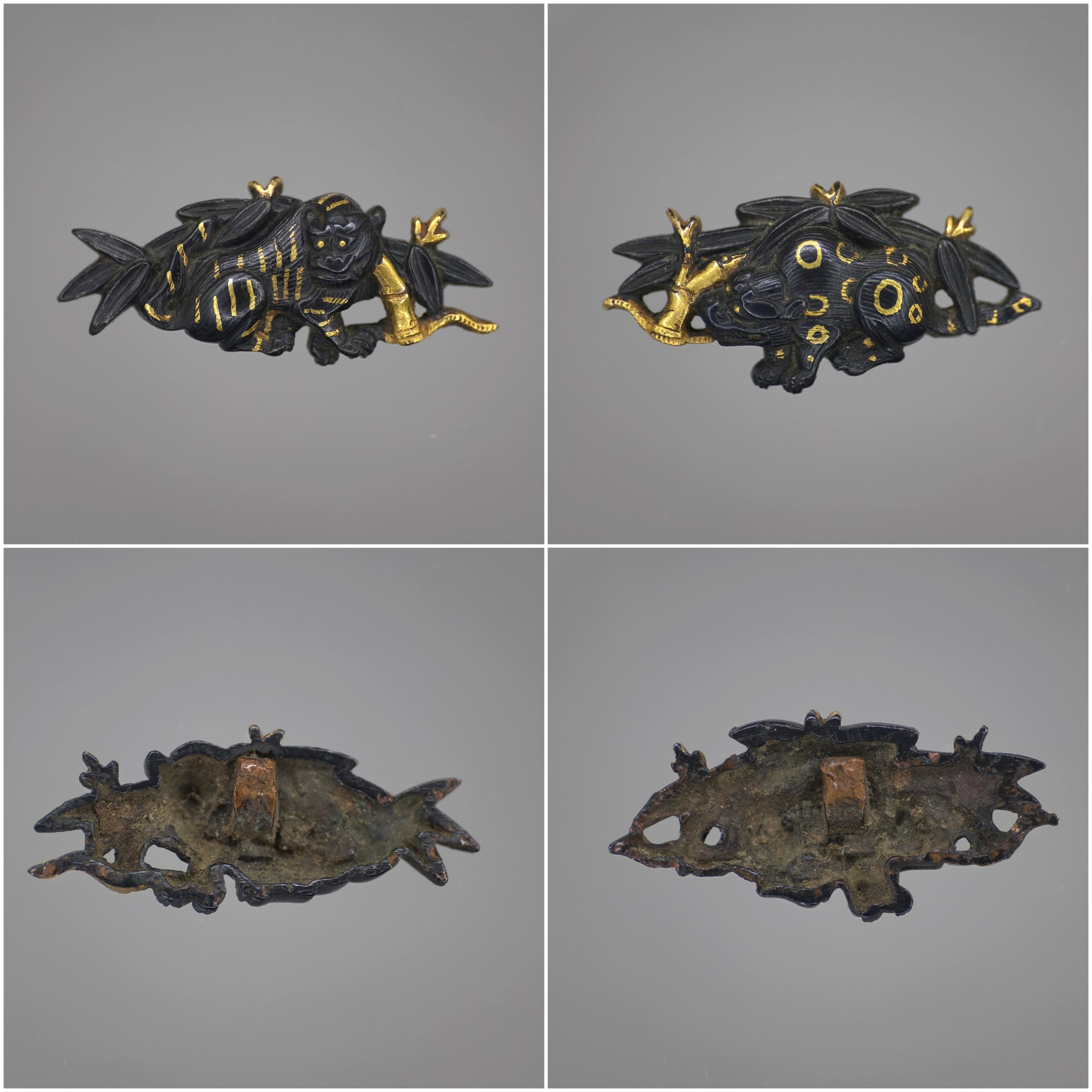
Yujo's surviving oeuvre centres on the canonical Goto subjects of the dragon and the shishi (lion), rendered in with gold crests or in solid gold (). His technique is characterised by (high-relief carving) and yobori (sculptural carving emphasising rounded volume), often combined with in'-kon modelling that imparts a profound interplay of light and shadow. The repeatedly identifies diagnostic features by which his hand may be recognised: the "figure-eight" (hachimonji) wrinkles on the forehead that connect at the tips; ears that lack the so-called kirikake- cuts; -bishi patterning of the scales; the distinctive raised swelling at the wrists and ankles with "five punched accents"; and the futatsu-ne ("two posts") reverse construction with in' paired roots, described as "a feature only rarely encountered in works from the mid period or earlier" and one that "within the Goto house, Yujo alone is known to possess." His chisel handling is consistently described as "bold and massive, conveying marked strength," producing a modelling manner of "high peaks and deep valleys" with "abundant, generous volume" and "ample placement of flesh" (). Even the reverse of his exhibits "modulation and expressive nuance, giving the work considerable depth of taste."
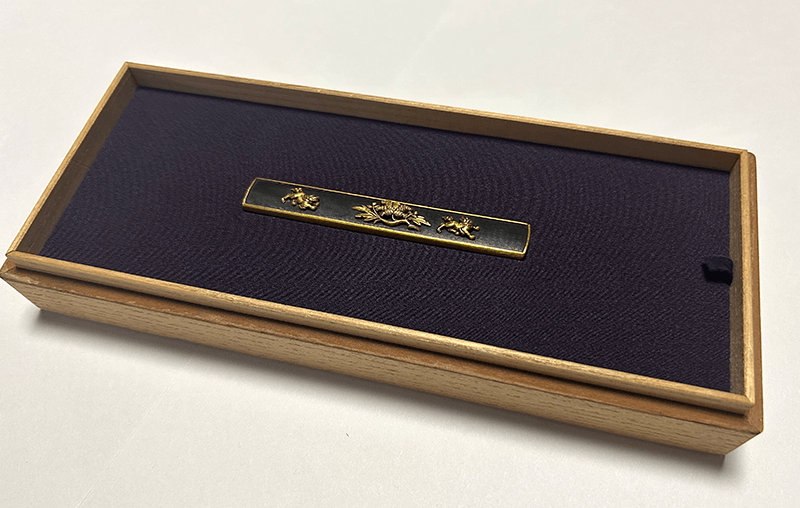
The designation records position Yujo not merely as a historical figure but as the foundational standard against which all subsequent Goto work is measured. His , , and — whether assembled into sets by later masters such as Renjo or preserved as individual pieces — are praised for their "stately, commanding presence," their "lofty dignity," and a quality in which "the work overflows with a feeling of life and dynamism." Several pieces are characterised as approaching "an austere, unadorned realm through the use of a single tone," a quality shared with celebrated masterworks such as the Marukibashi and the Nuregarasu . That works six centuries old can still be appraised as possessing a "sense of age" that "further confirms the true strength of this piece" speaks to an art that transcends mere craft. The 's repeated conclusion — that his works "reveal the very essence of the Goto house" — affirms Yujo's singular position as the wellspring from which the entire tradition flows.