NihontoWatch MonNihontoWatchBETA
MarketEncyclopedia
NihontoWatch Mon

NihontoWatchBETA

Market
Encyclopedia
Overview·Kantei·Designations·Provenance·Work Types·Signatures·Lineage·School
OverviewKanteiDesignationsProvenanceWork TypesSignaturesLineageSchool
  1. Schools
  2. Goto
  3. Waki-Goto
  4. Ichijo
  5. Goto Ichijo

Goto Ichijo

後藤一乗

Tokujū
Vol. 10, No. 40 · Mitokoromono

Goto Ichijo

後藤一乗

90 ranked works

ProvinceYamashiroEralate Edo–early Meiji (1791–1876)SchoolGoto>Waki-Goto>IchijoTraditionIeboriGeneration6th generation (Hachirobe line head)TeacherGoto Kamejo (亀乗, Hanzaemon line); studied iebori tradition under Goto Hojo (法乗, 16th mainline head)Specialtiesmitokoromono, menuki, kozuka, kogai, fuchi-kashira, tsubaTypeTosogu MakerCodeWGO042
2Jūyō Bunkazai
2Jūyō Bijutsuhin
7Tokubetsu Jūyō79Jūyō Tōken

Overview

Goto Ichijo was born in Kyoto in Kansei 3 (1791) as the son of Shigejo, fourth-generation head of the Shichiroemon house, a cadet branch of the Goto family. At the age of nine he was adopted by Hachirobei Kenjo of the Goto, and at eleven he studied metal carving under Hanzaemon Kamejo. Following the death of his adoptive father, he succeeded to the headship at fifteen. His elder brother was Korejo Mitsuhiro, and his younger brother was Hisajo. He initially used the name Mitsuka, then Mitsuyuki, and later Mitsuyo. In Bunsei 7 (1824), at the age of thirty-four, he produced sword fittings for Emperor Kokaku; in recognition of this achievement he was granted the rank of Hokyo and adopted the art name Ichijo. In Bunkyu 2 (1862) he produced fittings for an imperial for Emperor , and the following year he was promoted to Hogen. He died in Meiji 9 (1876) at the age of eighty-six. The consistently characterizes him as a master craftsman who "brought the Goto lineage to a brilliant culmination," and in one notable formulation, as the artist who "adorned the shaft-end" (-ojiri) of the Goto family line.

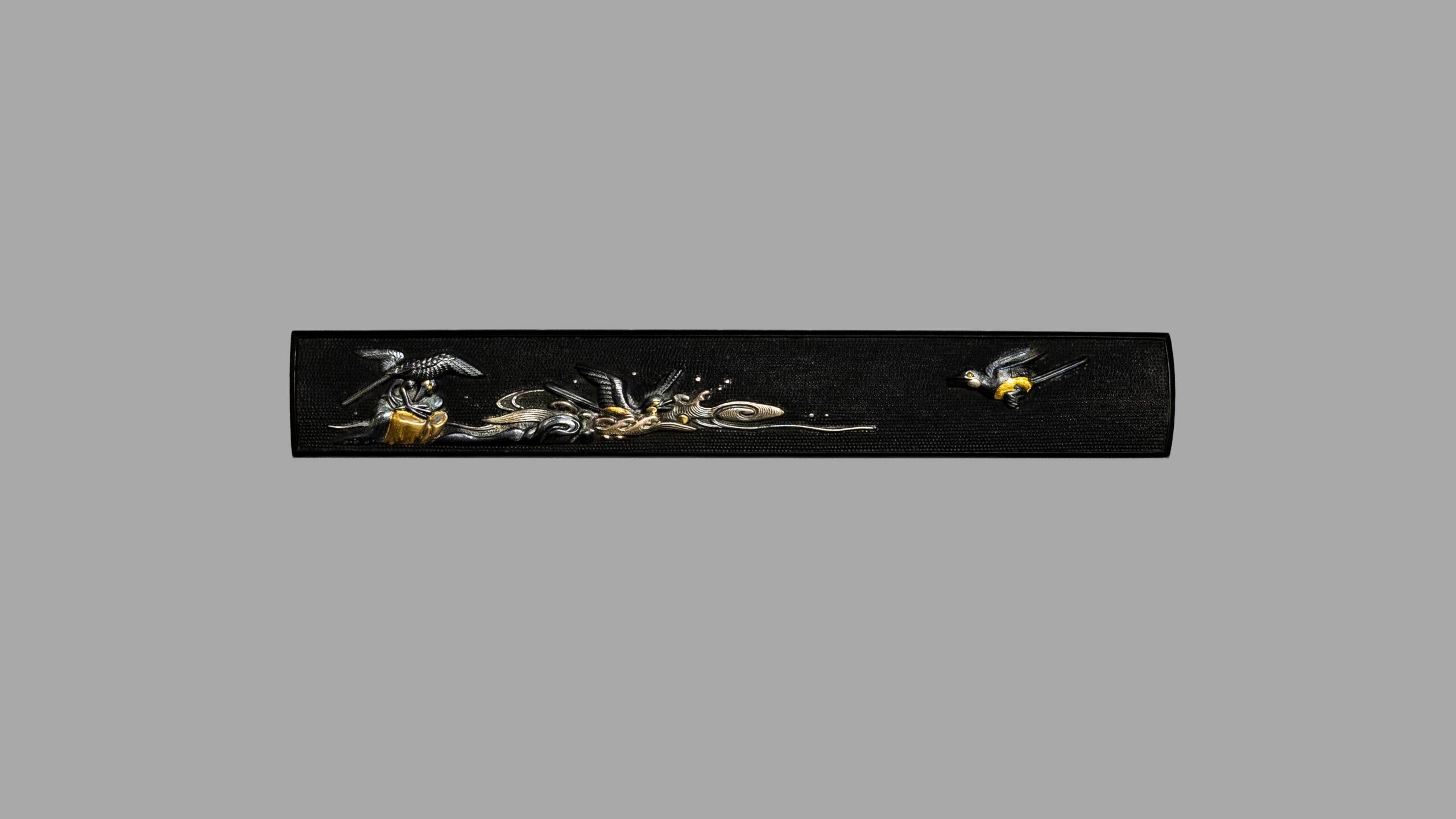
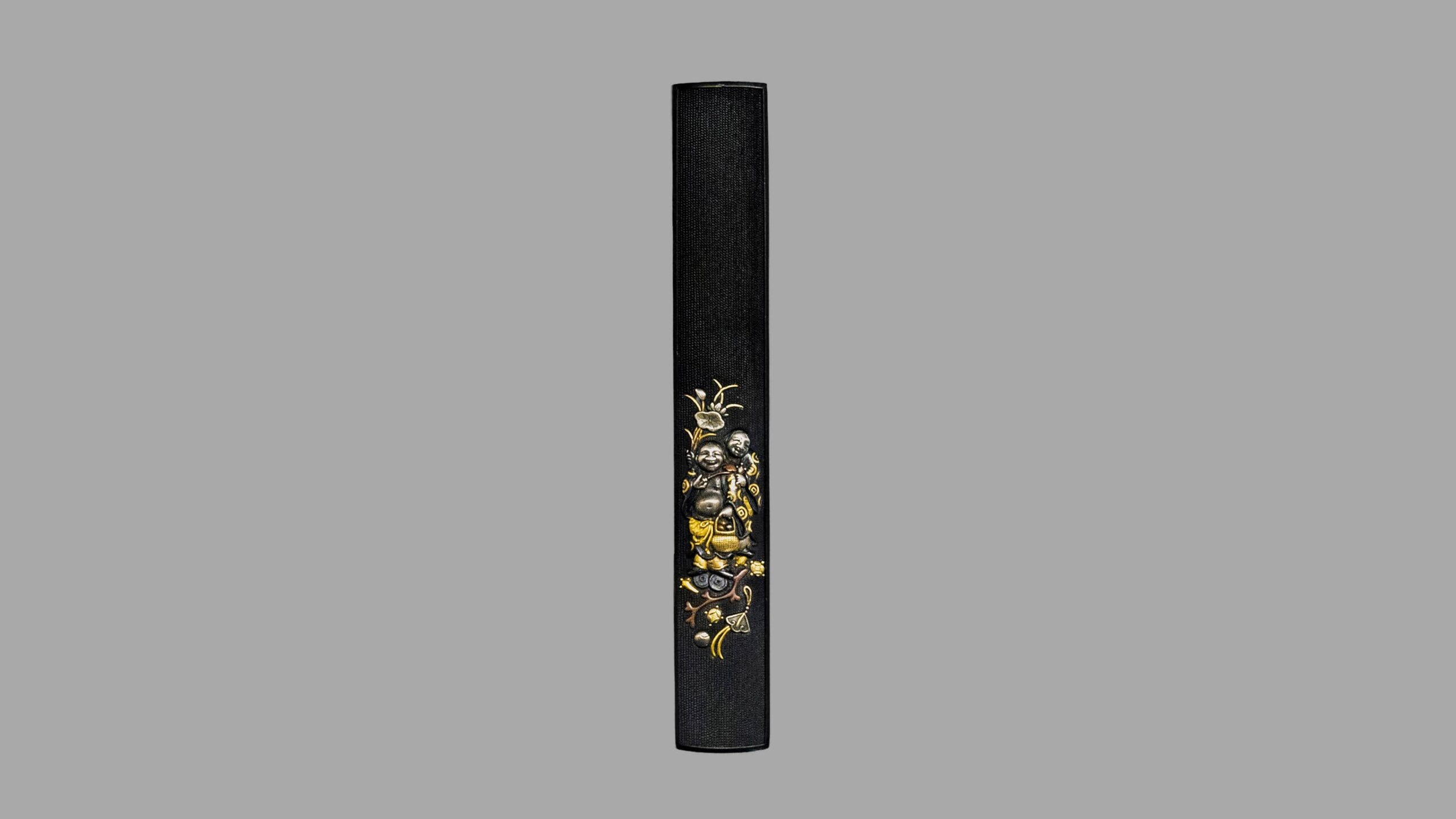
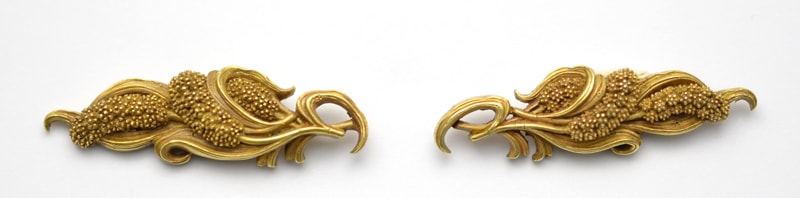
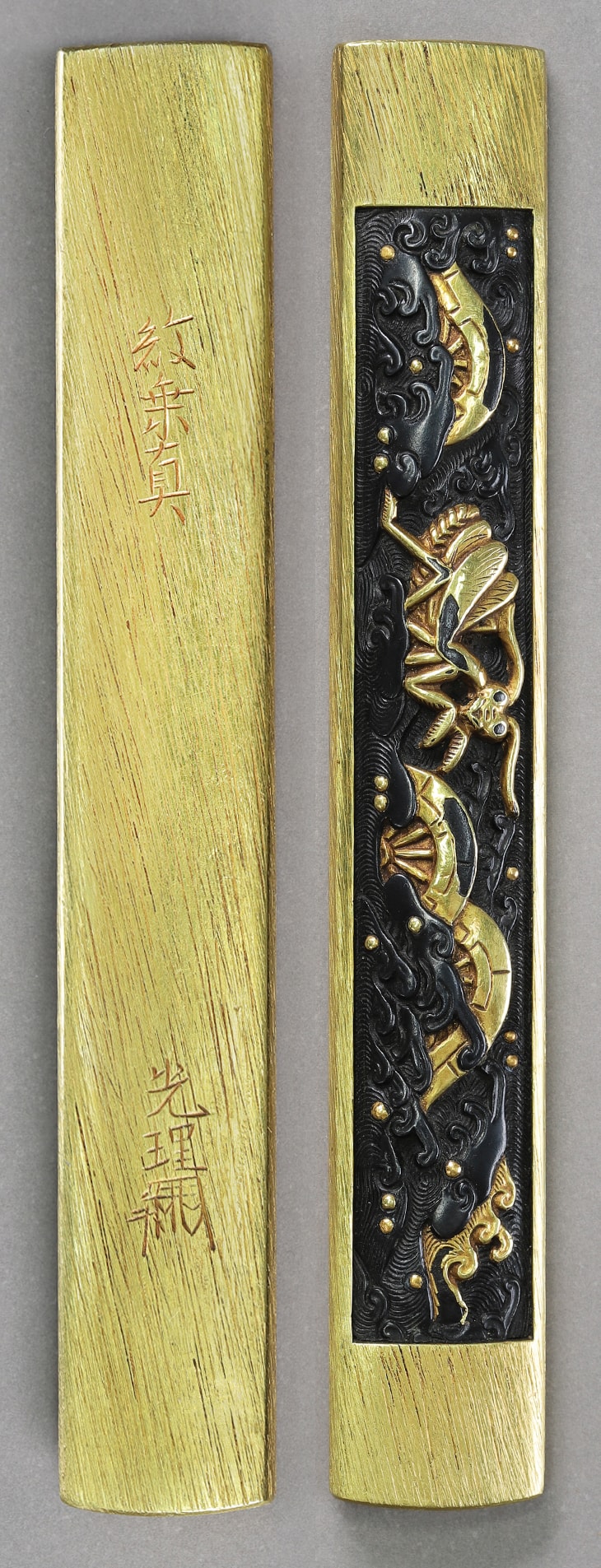
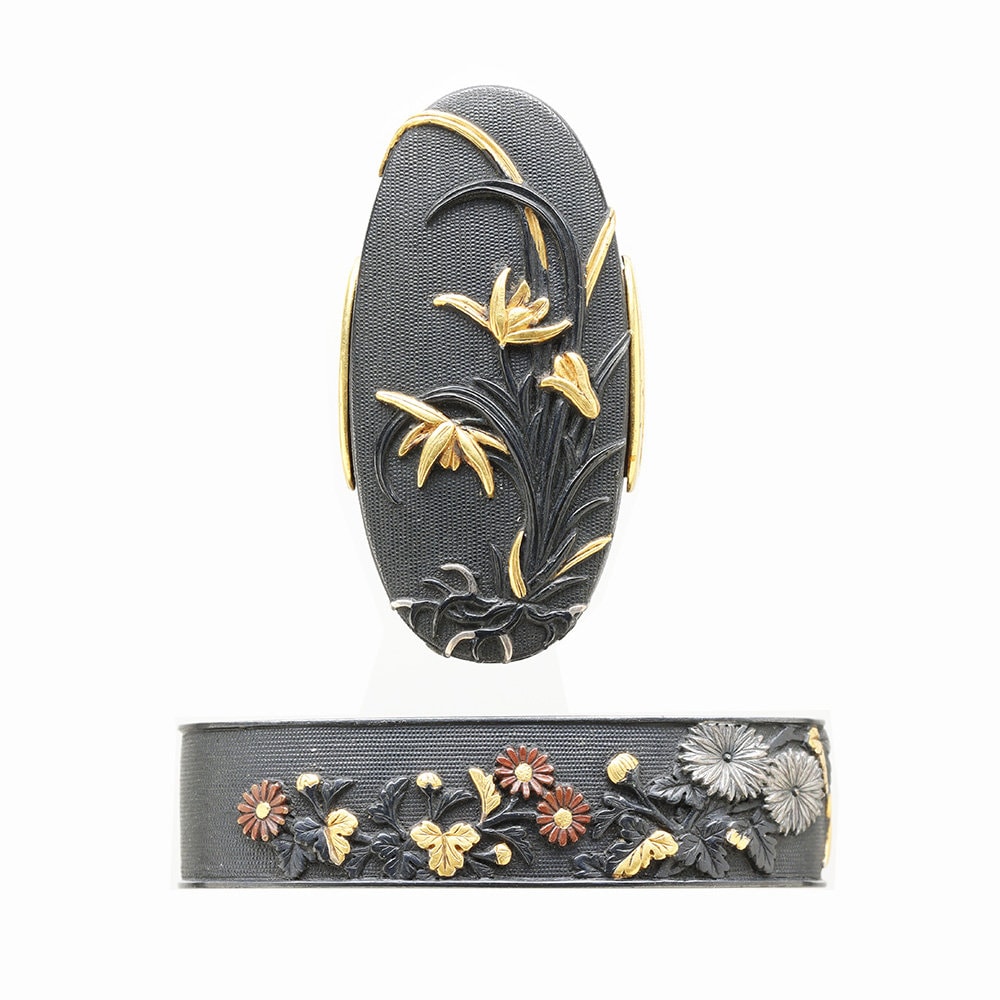
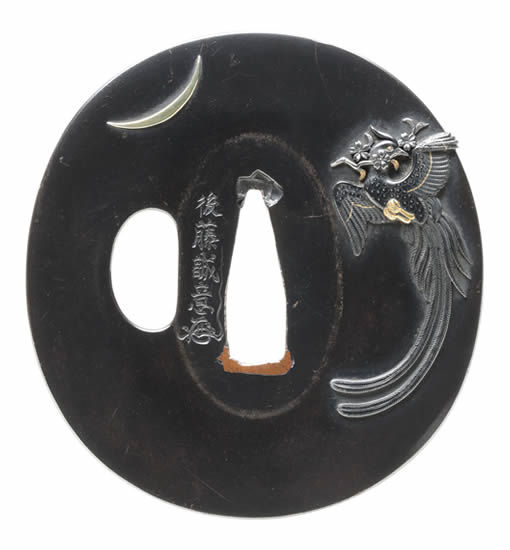
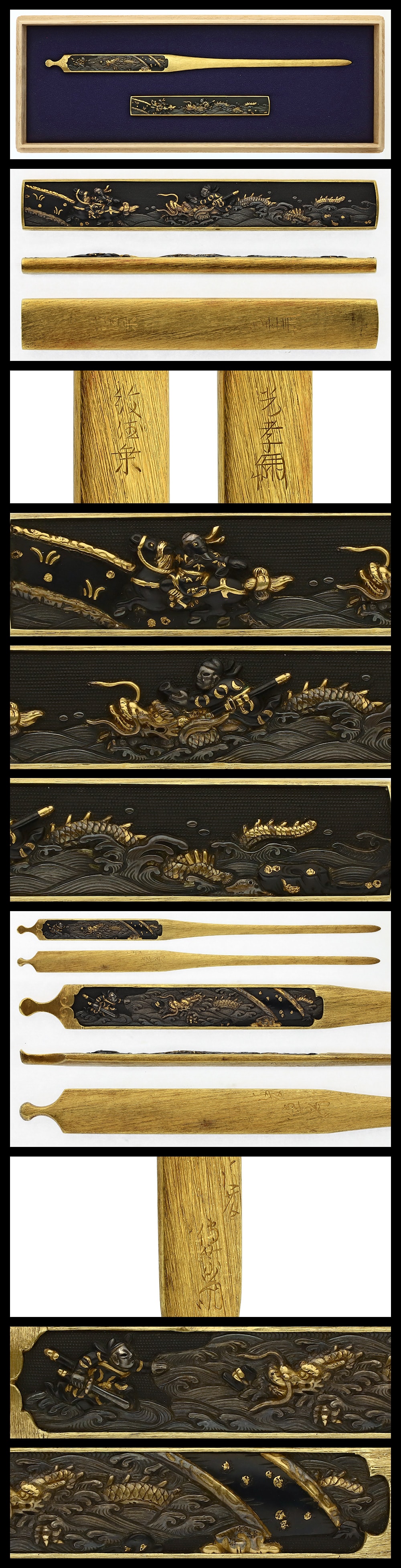
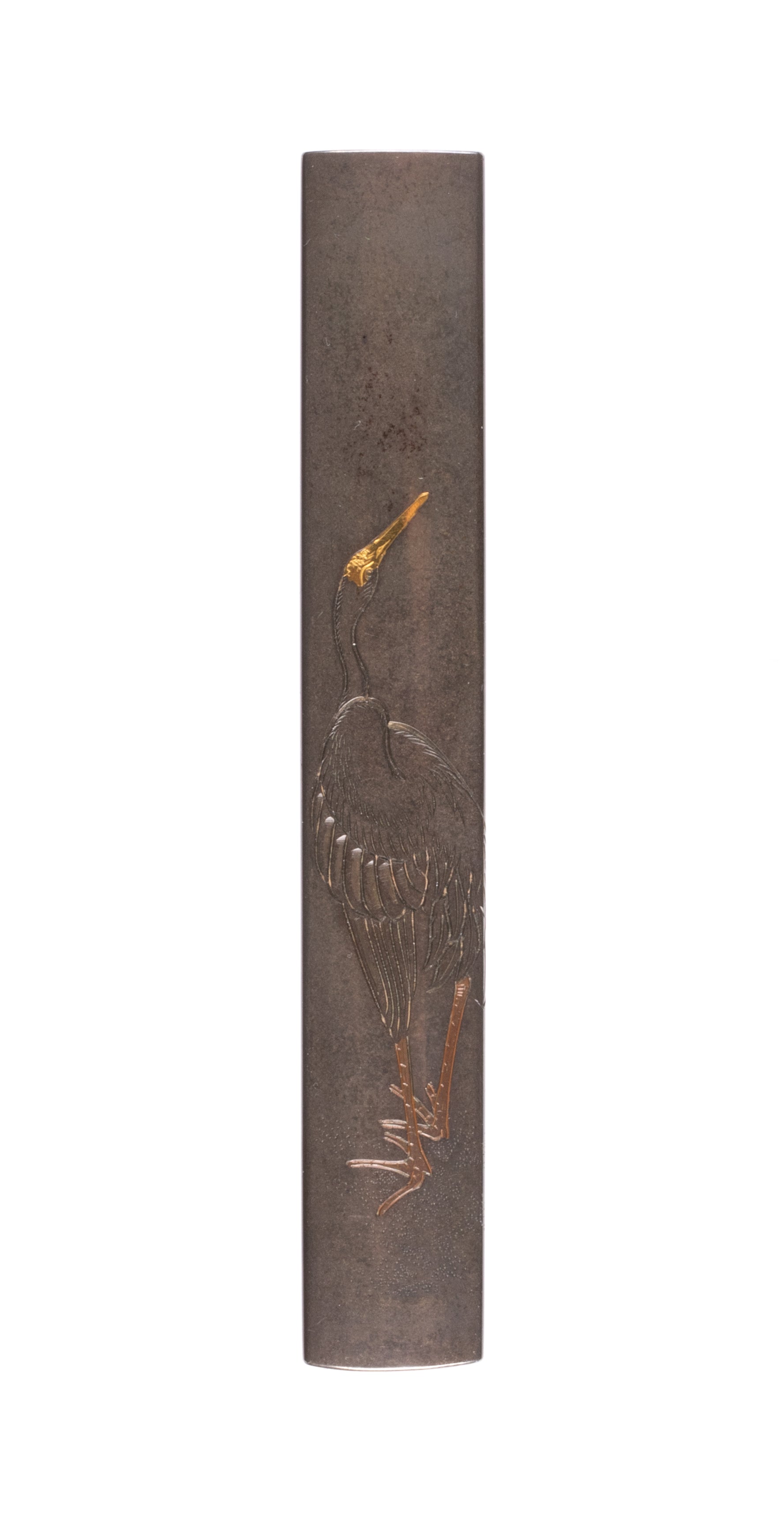
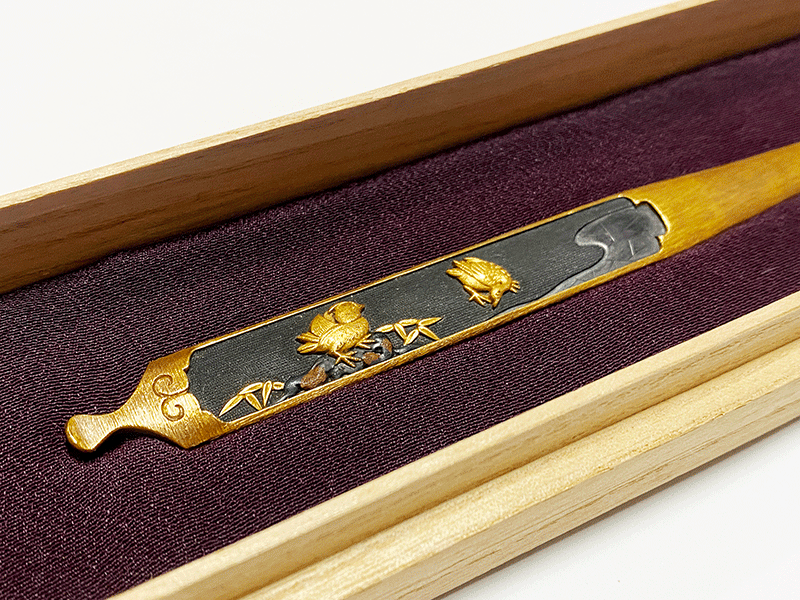
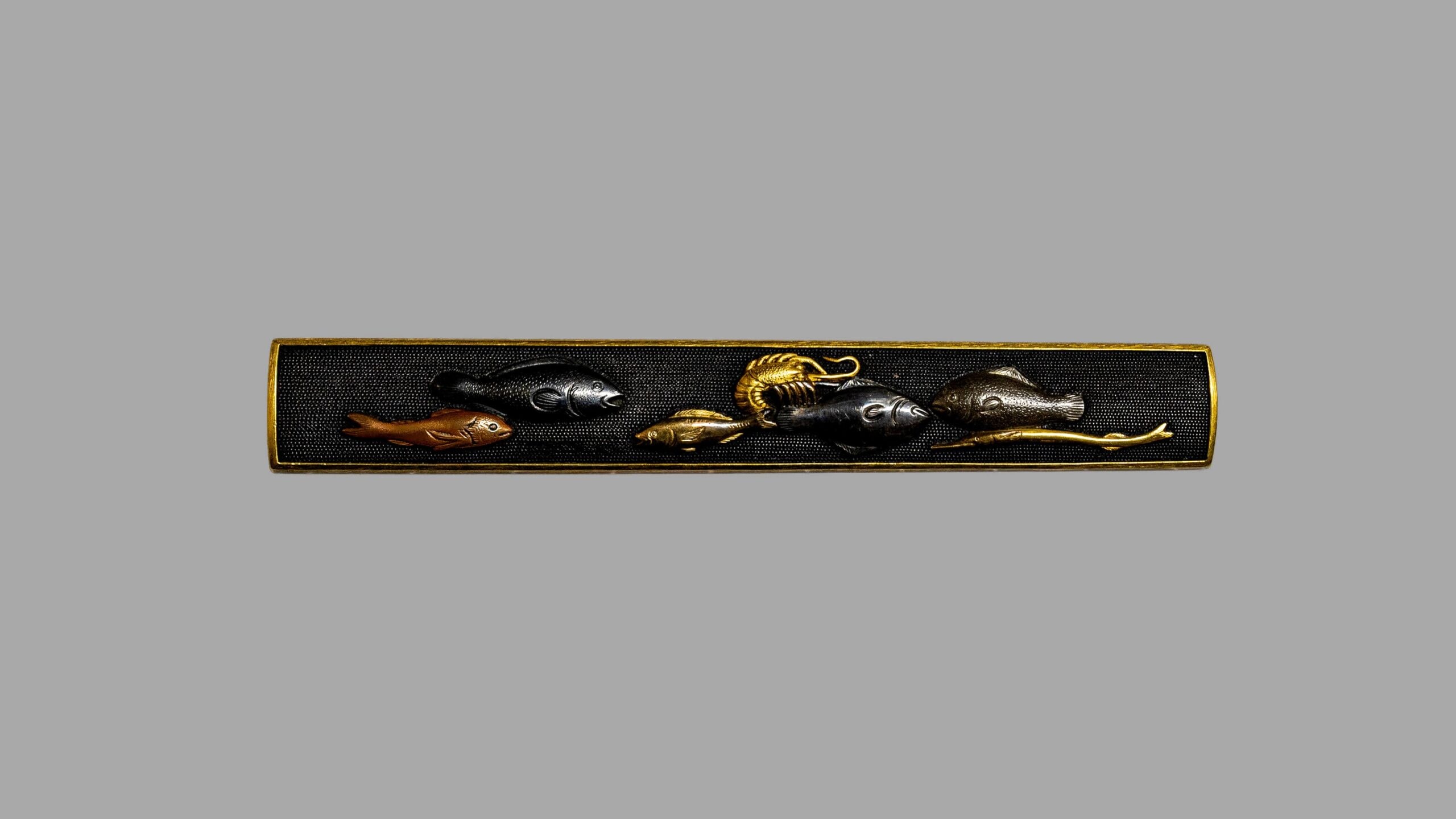
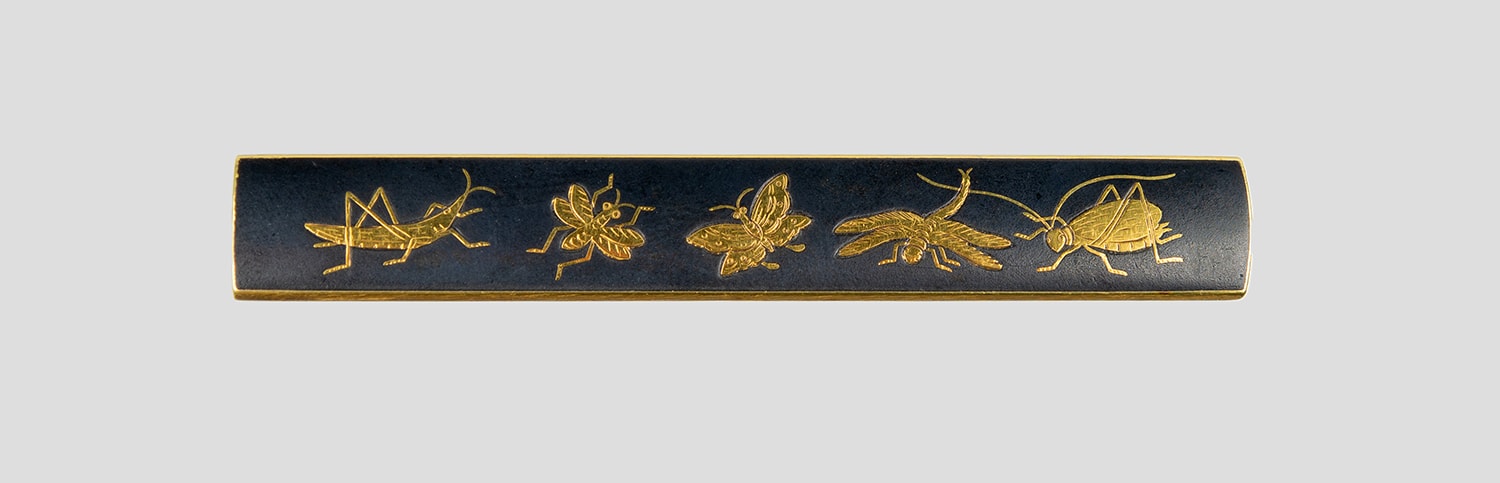
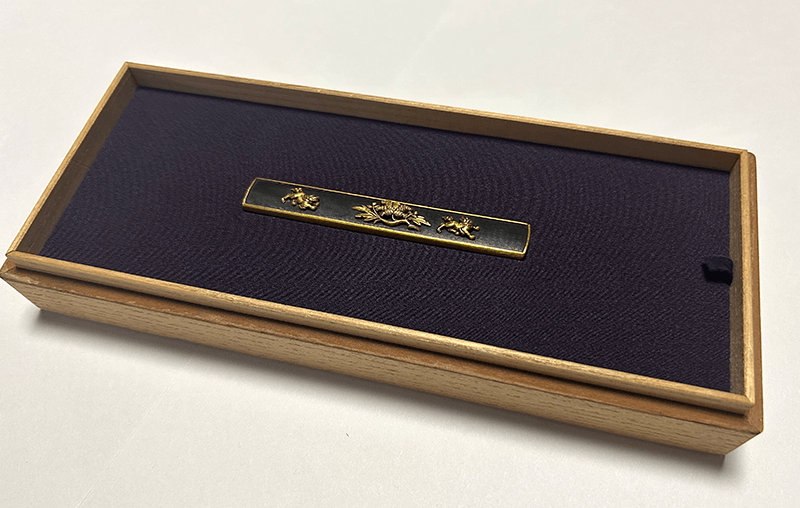
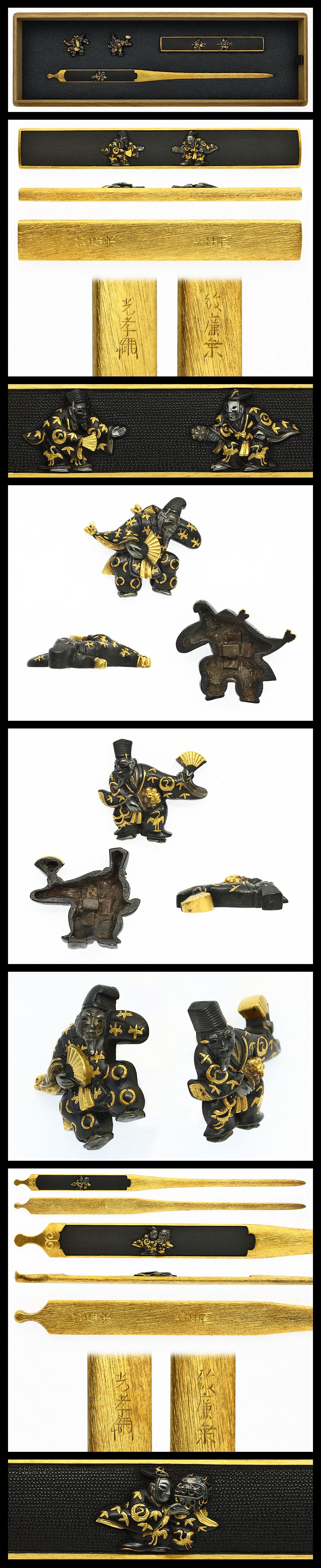
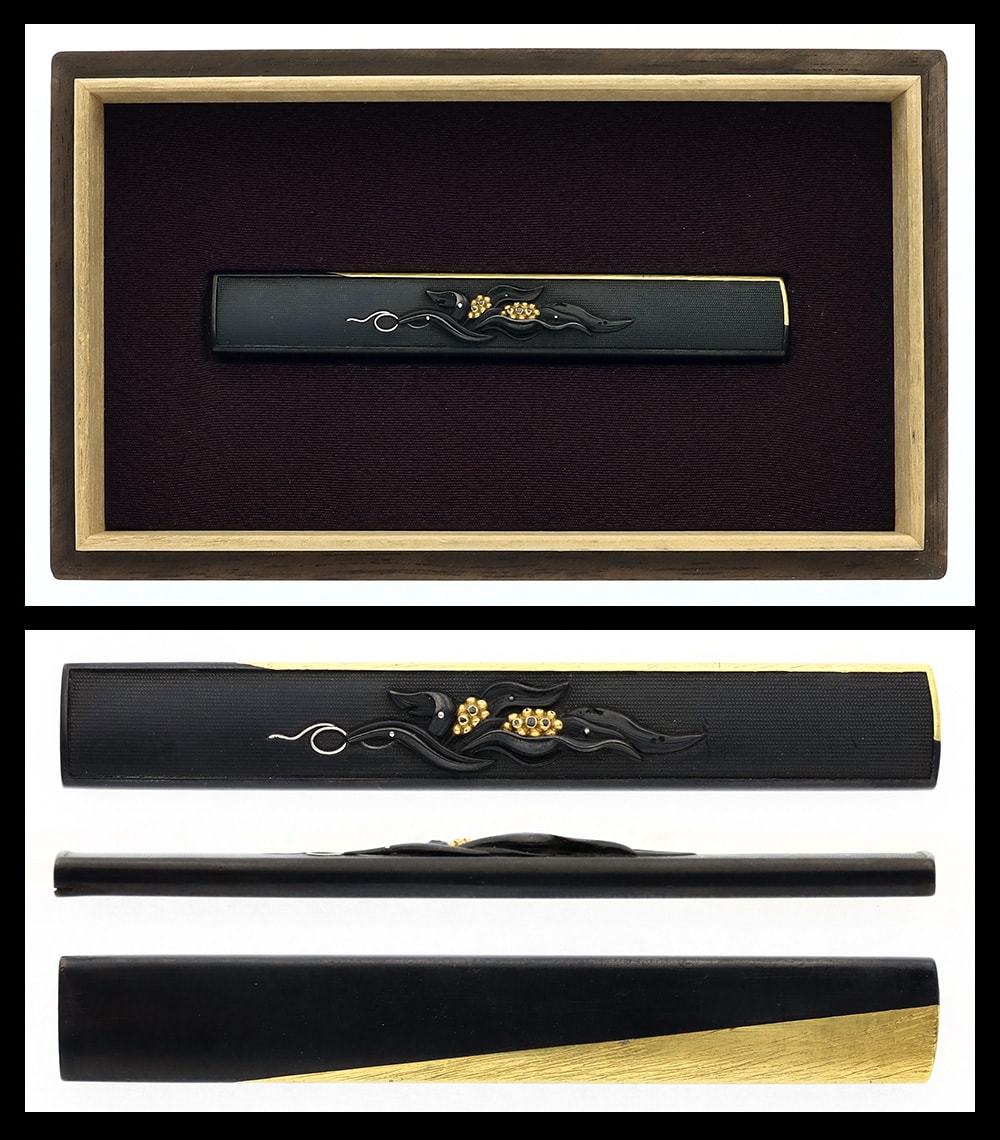
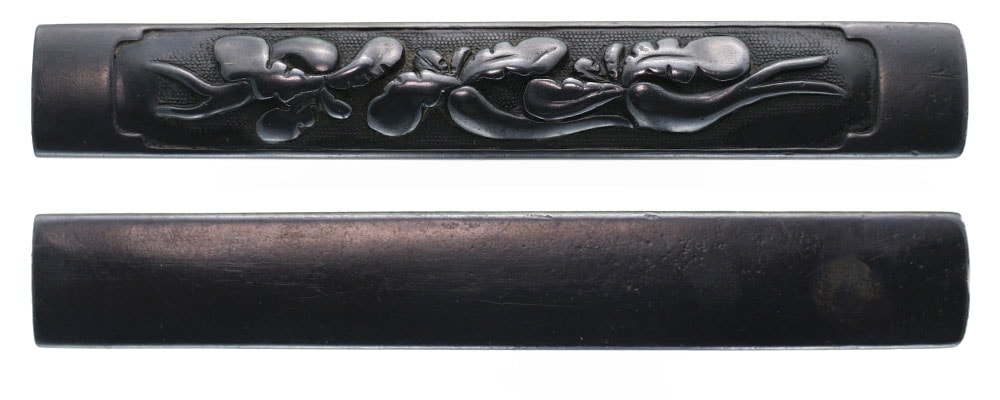
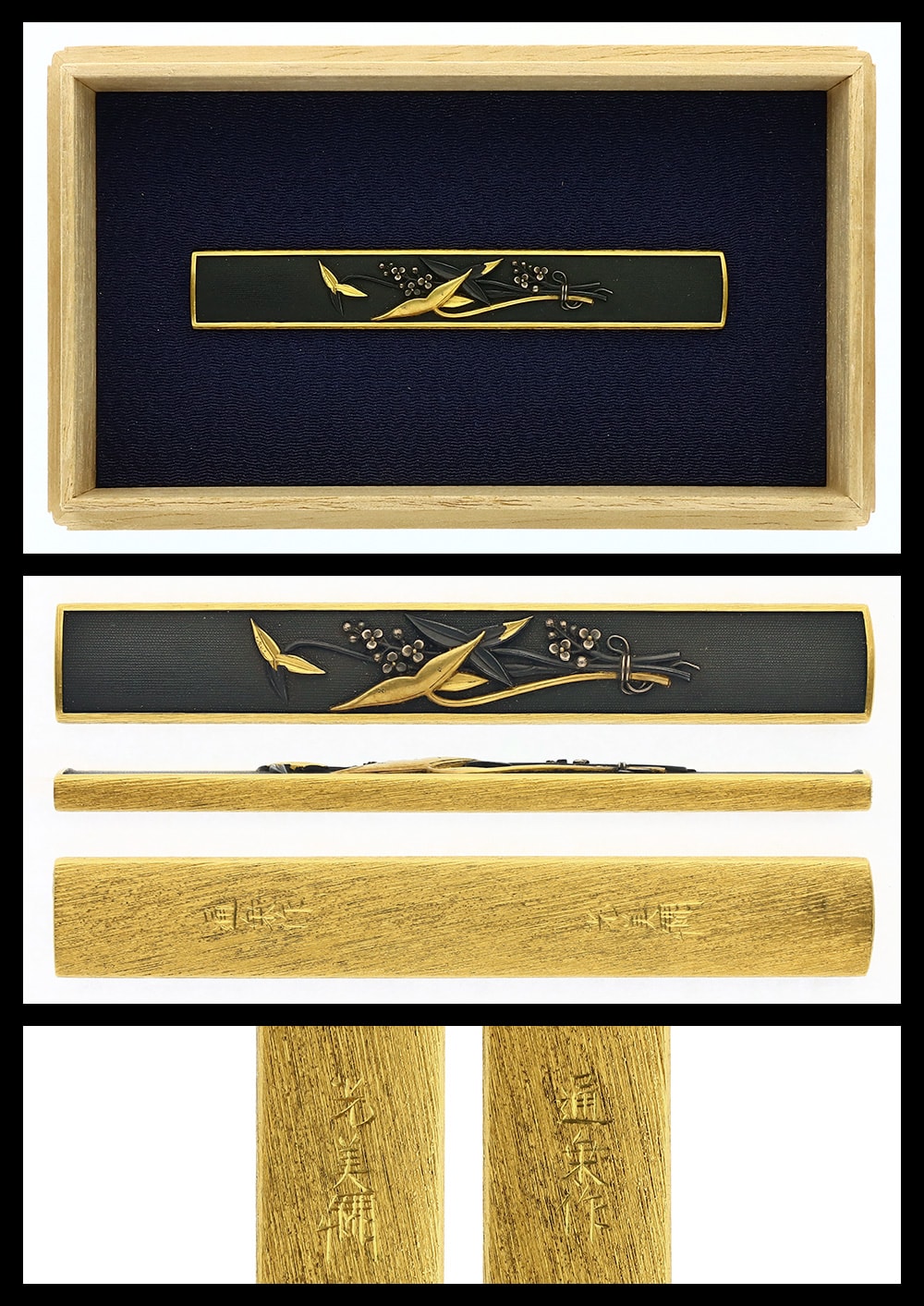
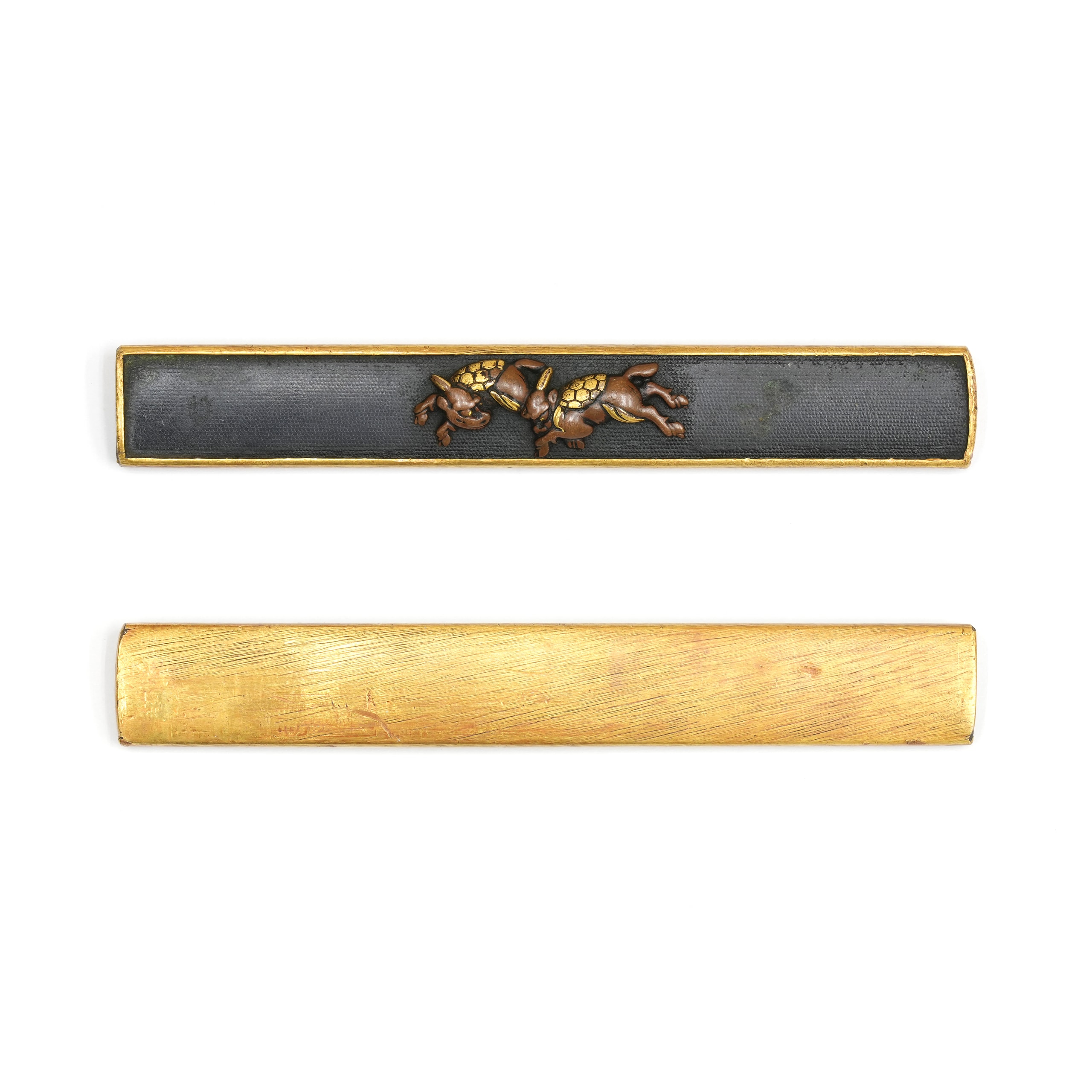
Ichijo's technical foundation rests upon the hereditary Goto manner of iebori -- canonical motifs such as dragons and lions carved in accordance with established conventions -- but "building upon this foundation, he shifted toward works centered on close observation (shasei), rendering grasses and flowers, insects, birds, landscapes, and related subjects with meticulous carving and a refined, dignified presence." His characteristic ground is of such surpassing fineness that the describes it as "minute and orderly, deep and limpid," deserving the appellation ("silk-textured "). Upon this ground he deploys that "combines strength with delicacy," enriched by polychrome in gold, silver, , , and . His favored form is the sumi-iri , and many works exhibit the chuya shitate ("day-and-night" construction) using contrasting alloys on obverse and reverse. Beyond , he commanded an exceptional range of materials: refined copper () for which he is renowned, high-quality approaching silver in tone, and iron grounds animated by his distinctive -sunago . He frequently engraved or Classical Chinese verses in on reverse plates, reinforcing the literati character of his themes. His characteristic and -style split signatures appear across , mitsudogu, and complete soroe sets, testifying to the comprehensive scope of his production.

The evaluations return repeatedly to the union of minute finish and elevated dignity as Ichijo's defining quality. Works from the Kaei era, when he was in his late fifties, "frequently display this combination of meticulousness and elevated tone," and the committee observes that "while it is often said that excessive minuteness can dilute artistic tone and dignity, Ichijo -- true to his stature -- achieves both minute finish and high dignity, permitting no rival." Even at seventy-seven, his capacity to produce work of the highest caliber was "worthy of deep admiration, attesting both to the height of his technique and to his vigor." His handling of the Goto iebori heritage is judged to have been "sublimated into a more modern sensibility," and the dignity of his finest pieces is said to lie "far beyond the reach of other craftsmen." In summation, Ichijo stands as the terminal master of the Goto tradition, an artist whose works embody what the calls "outstanding color sensibility" and whose command of the full repertoire of metalworking techniques -- , , kosuki-bori, , and polychrome -- sustained the ancestral standard across a career spanning more than seven decades.

Kantei

3 descriptive axes: material (grounds and metals) x technique (carving and inlay) x themes (orthodox ie-bori vs naturalist shasei registers); plus a documentary layer for the forbidden-iron Hakuo signature. No temporal phases: the two thematic registers coexist across his mature output.

Ichijo is the last great master of the Goto house, the metalwork artist who crowns its close. He works across two thematic registers: an orthodox ie-bori manner of dragons and lions on , faithful to the long Goto house style, and a naturalist shasei manner of grasses, insects, birds and figures he developed in maturity, drawing on subjects not seen in the earlier house repertoire. His distinguishing marks are not the universal Goto ground but the painterly katakiri-bori line foreign to house ie-bori, the day-and-night () -and- , and the introduction of drawing-from-life into Goto kinko itself. A rare documentary tell: when he worked the forbidden iron, house taboo barred him from his own name, so he signed Hakuo.

Diagnostic discriminators

drawing-from-life, absent from the inherited house repertoire (the setsumei say shasei not seen in the former Goto work); his defining contribution. A painter link to Kikuchi Yosai is recorded once and hedged.

the painterly katakiri-bori line is foreign to house ie-bori; it marks his painting-trained naturalist hand

unique vs the orthodox Goto house (focused on kozuka/kogai/menuki)

Material

His constant ground is worked in fine with gold iro-e, the orthodox Goto field shared with the whole house; are often solid gold (). For atmospheric naturalist work he reaches beyond the house palette to and , and pairs with in the day-and-night () ground. He even worked iron (), forbidden to the Goto, animating polished-iron grounds with -sunago gold-dust inlay; because the house barred its name from iron, those pieces are signed Hakuo, not Ichijo.

Technique

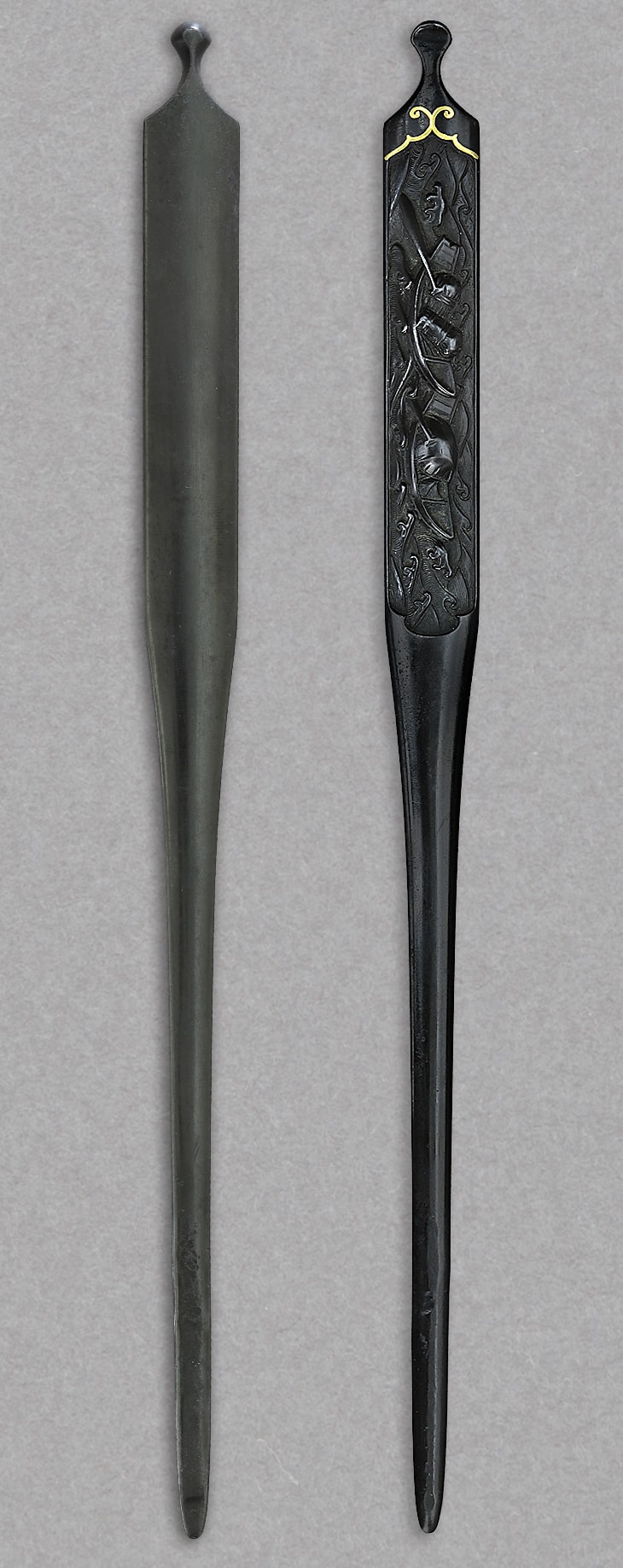
relief and solid-gold carry the orthodox work. In the naturalist manner the painterly katakiri-bori brush-line, ko-suki-bori scooping, applied and flush inlay enter, alongside fine and engraved verse on the reverse plate. The katakiri-bori line is the technical mark foreign to house ie-bori.

Themes

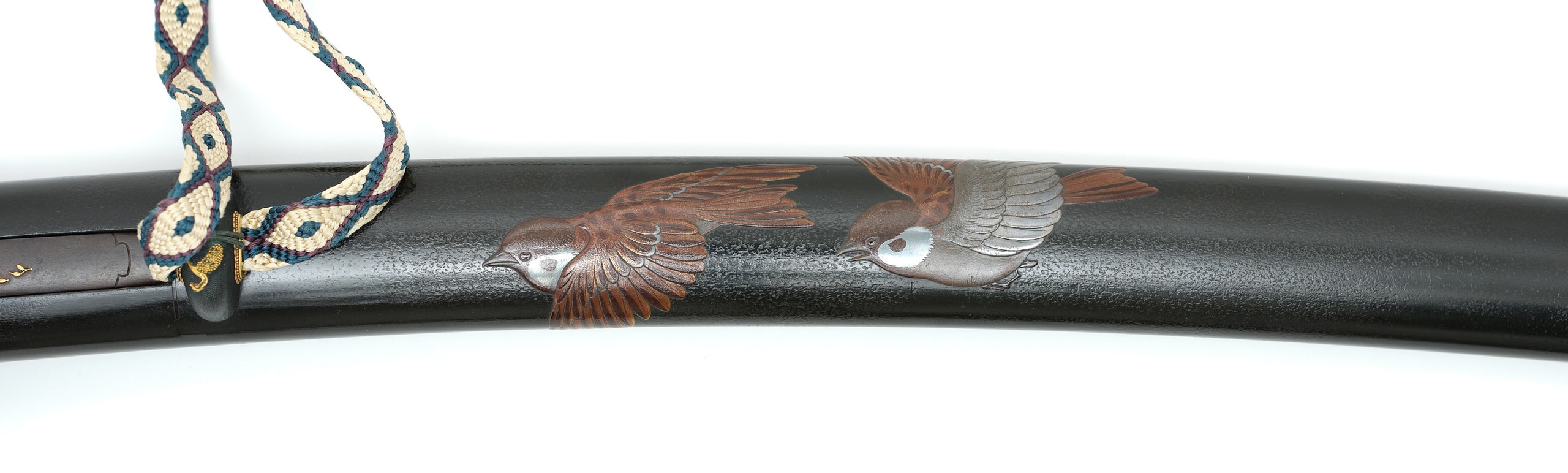
Two stylistic registers, not two periods: the orthodox okite-mono of dragons and lions prescribed by house rule, and the naturalist subjects (grasses, insects, birds, figures, landscape) he drew from life after study under Kikuchi Yosai. Both manners coexist across his mature commissions.

Orthodox ie-bori (okite-mono)

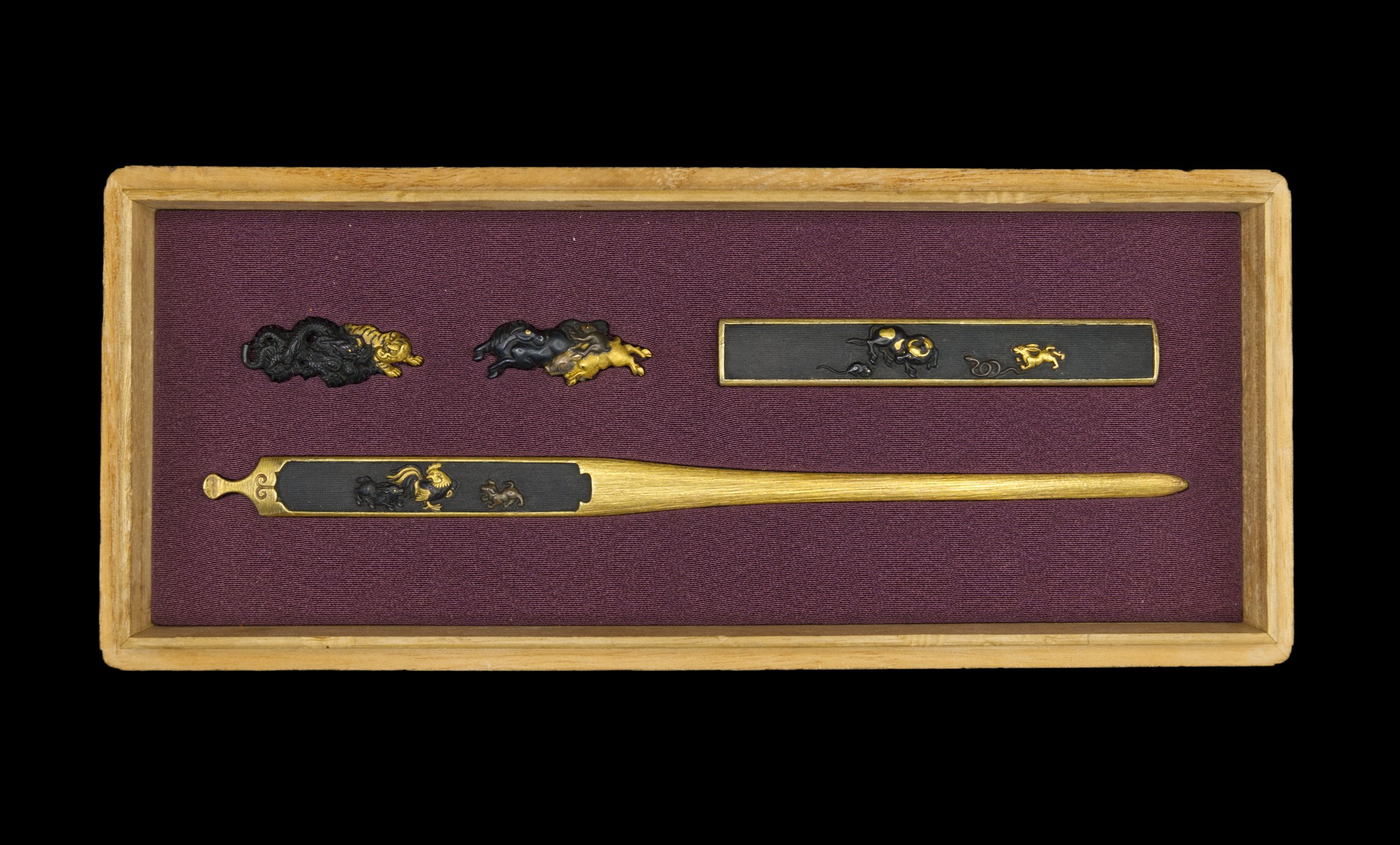
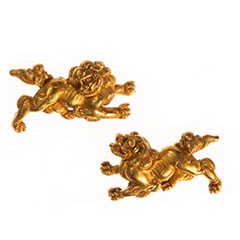
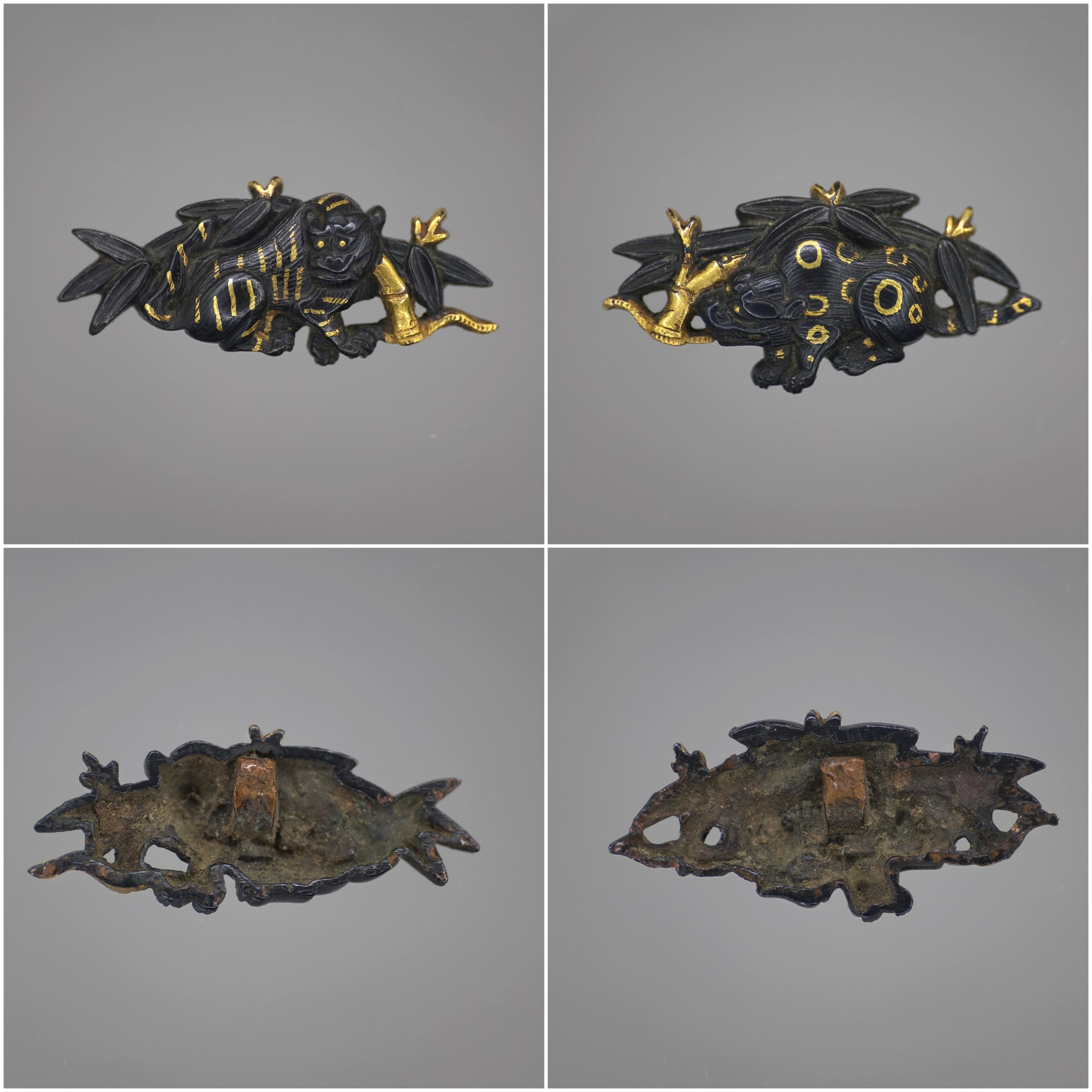
Dragons and lions in , with solid-gold , over , holding the house tradition. The judges these not inferior to the early- Goto masters.

Naturalist shasei

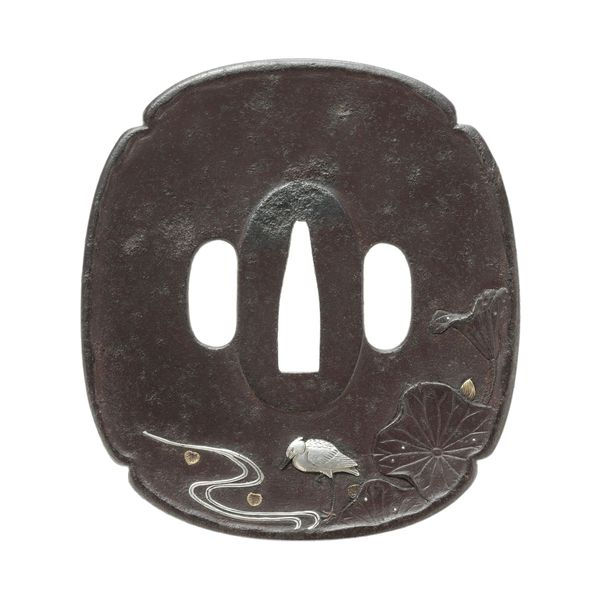
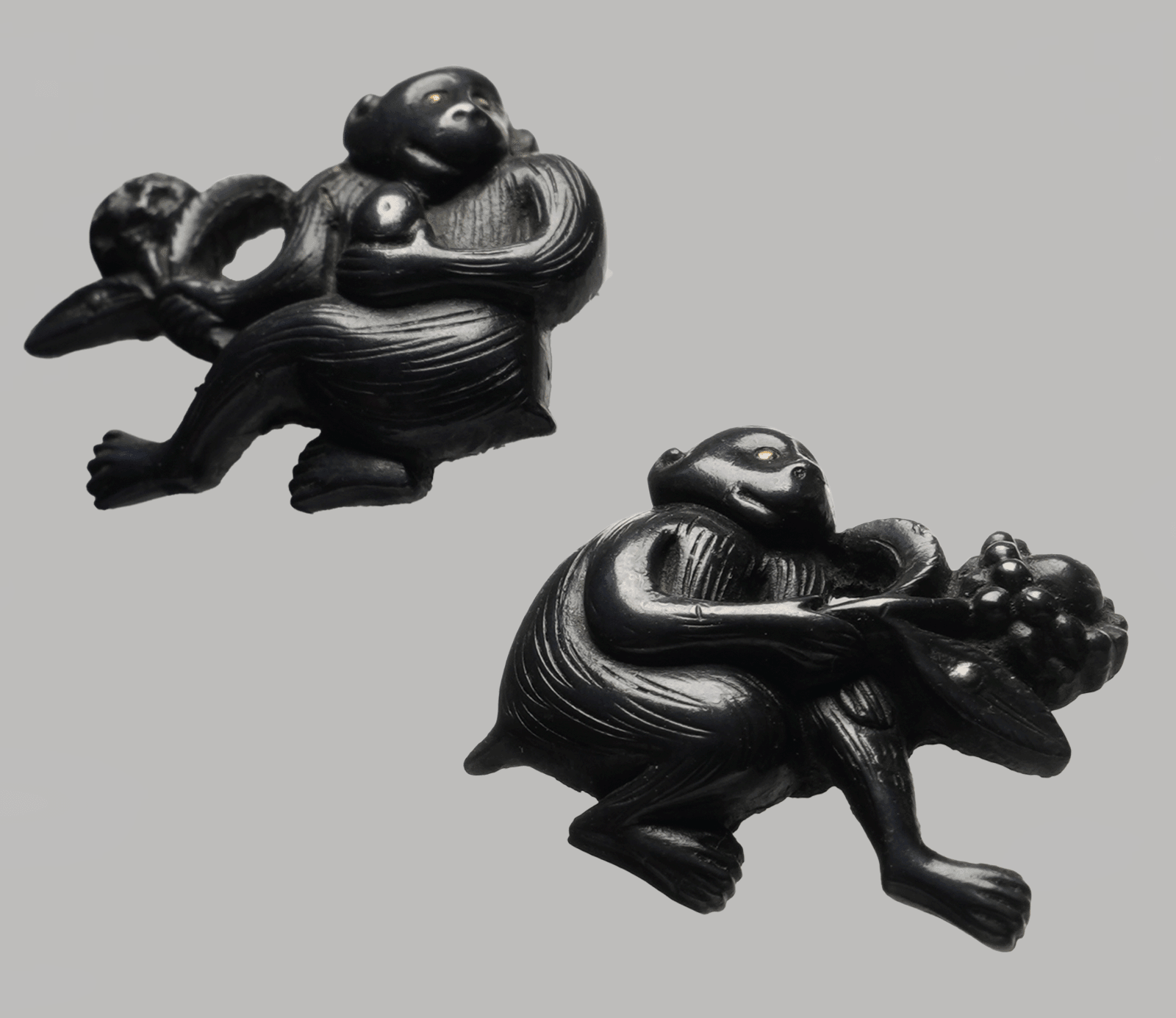
Grasses, insects, birds, plovers and landscape drawn from life with minute technique, the manner he developed in maturity from Kikuchi Yosai under-drawings and Matsumoto Kensai's painting training. This is his historic contribution: drawing-from-life carried into Goto kinko.

Full iconography

Signature chronology

Placement
Dated signatures
Recorded signatures

Documentary note

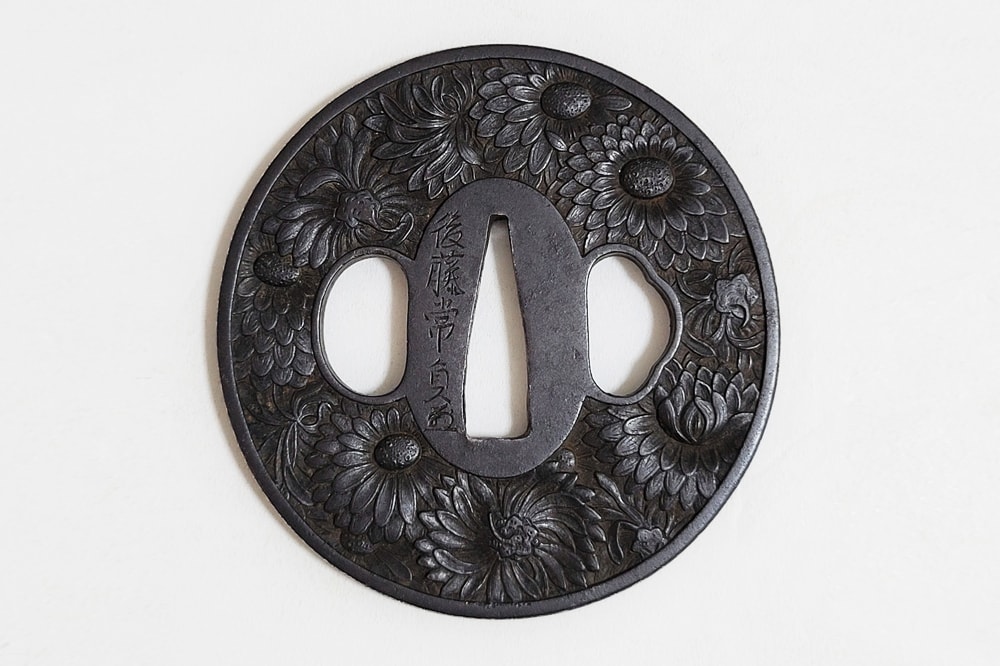
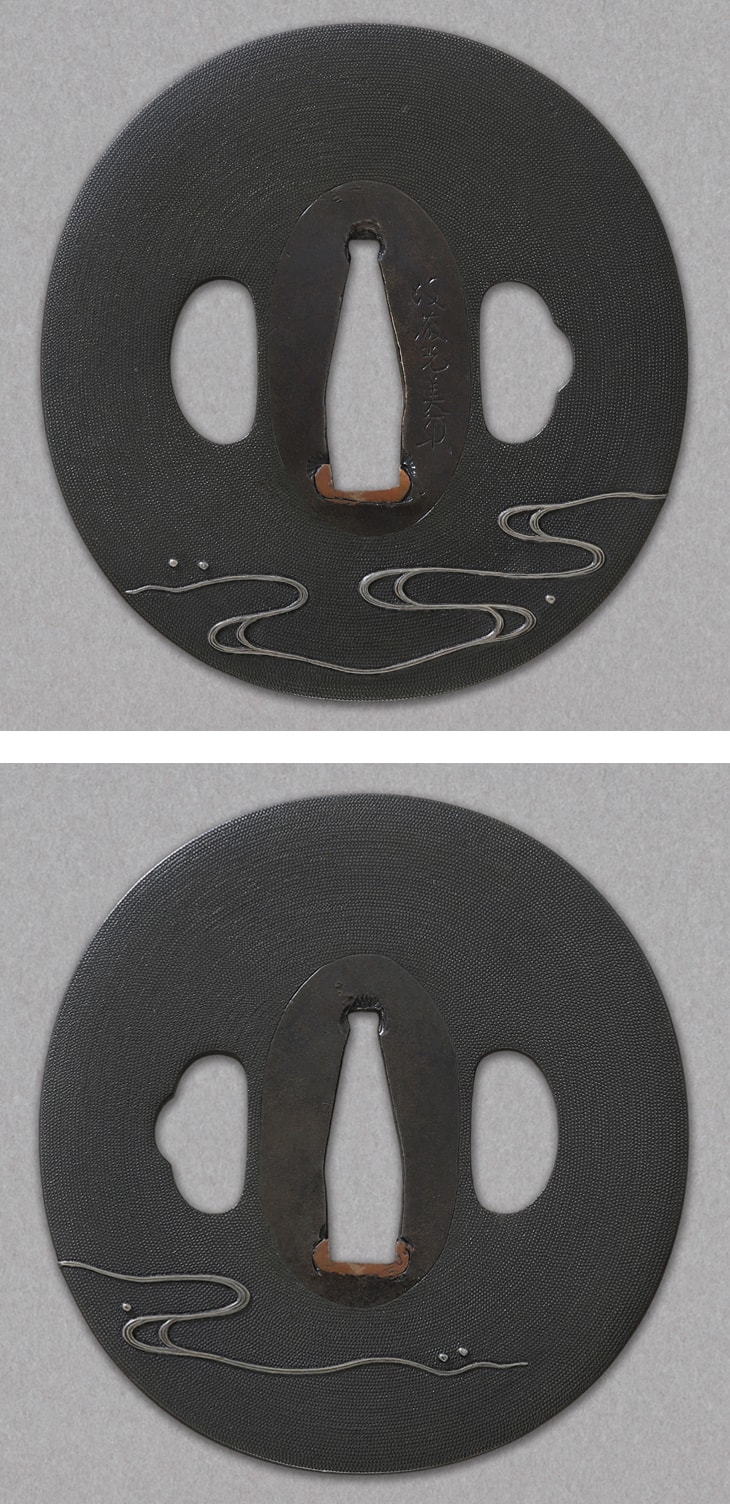
Goto house taboo barred working iron. When Ichijo nonetheless made iron in his naturalist manner, the convention forbade signing them with his Goto name, so he used the alternate art-name Hakuo (also Tetsuo-sanjin, an iron-old-man pun). An iron piece signed Hakuo, worked all in shasei manner unlike the inherited Goto work, is therefore an Ichijo attribution tell carried in the documentary record, not the metalwork.

Scholarship

For his figure subjects, a single setsumei (Juyo 30-203) traditionally holds (to tsutaeteiru) that he sought under-drawings from the revivalist Yamato-e painter Kikuchi Yosai and learned painting technique from Matsumoto Kensai. It is one hedged, single-source notice, not documented across the corpus.

Because Goto custom forbade iron, his iron tsuba bear the Hakuo name rather than his own, an attribution rule for his forbidden-material work.

Designations

Kokuhō—
Jūyō Bunkazai2
Jūyō Bijutsuhin2
Gyobutsu—
Tokubetsu Jūyō7
Jūyō Tōken79

Elite Standing

0.35 across 90 designated works

Top 3% among makers

Provenance

18 documented provenances across certified works by Goto Ichijo

Provenance Standing

8 works held in elite collections across 18 documented provenances

Top 2% among makers

Raw score: 2.65 / 10

Work Types

Distribution across 90 ranked works

Other
4652%
Tsuba
1618%
Mitokoromono
1517%
Kozuka
78%
Fuchi-Kashira
45%

Signatures

Signature types across 90 ranked works

Currently Available

Lineage

Goto Ichijo
Students (11)
  1. 1.Tomei東明5 for sale31designated
  2. 2.Nagatake永武13designated
  3. 3.Ikkin一琴1 for sale11designated
  4. 4.Issho一匠8designated
  5. 5.Isshin一真1 for sale7designated
  6. 6.Isshi一至8designated
  7. 7.Korai光来1designated
  8. 8.Mitsumasa光正1 for sale
  9. 9.Ichiju一寿1 for sale1designated
  10. 10.Ikken一拳1designated
  11. 11.Ikkei一啓1 for sale

Ichijo School

Other artisans of the Ichijo school

  1. 1.Tomei東明5 for sale31designated
  2. 2.Nagatake永武13designated
  3. 3.Ikkin一琴1 for sale11designated
  4. 4.Issho一匠8designated
  5. 5.Isshin一真1 for sale7designated
  6. 6.Yoshiteru義照2 for sale4designated
  7. 7.Koran光覧4designated
  8. 8.Isshi一至8designated
  9. 9.Kawashima Ichinyo川島一如1designated
  10. 10.Wada Isshin Masatatsu和田一真政竜1designated
  11. 11.Yoshinaga吉長1 for sale1designated
  12. 12.Ichiju一寿1 for sale1designated