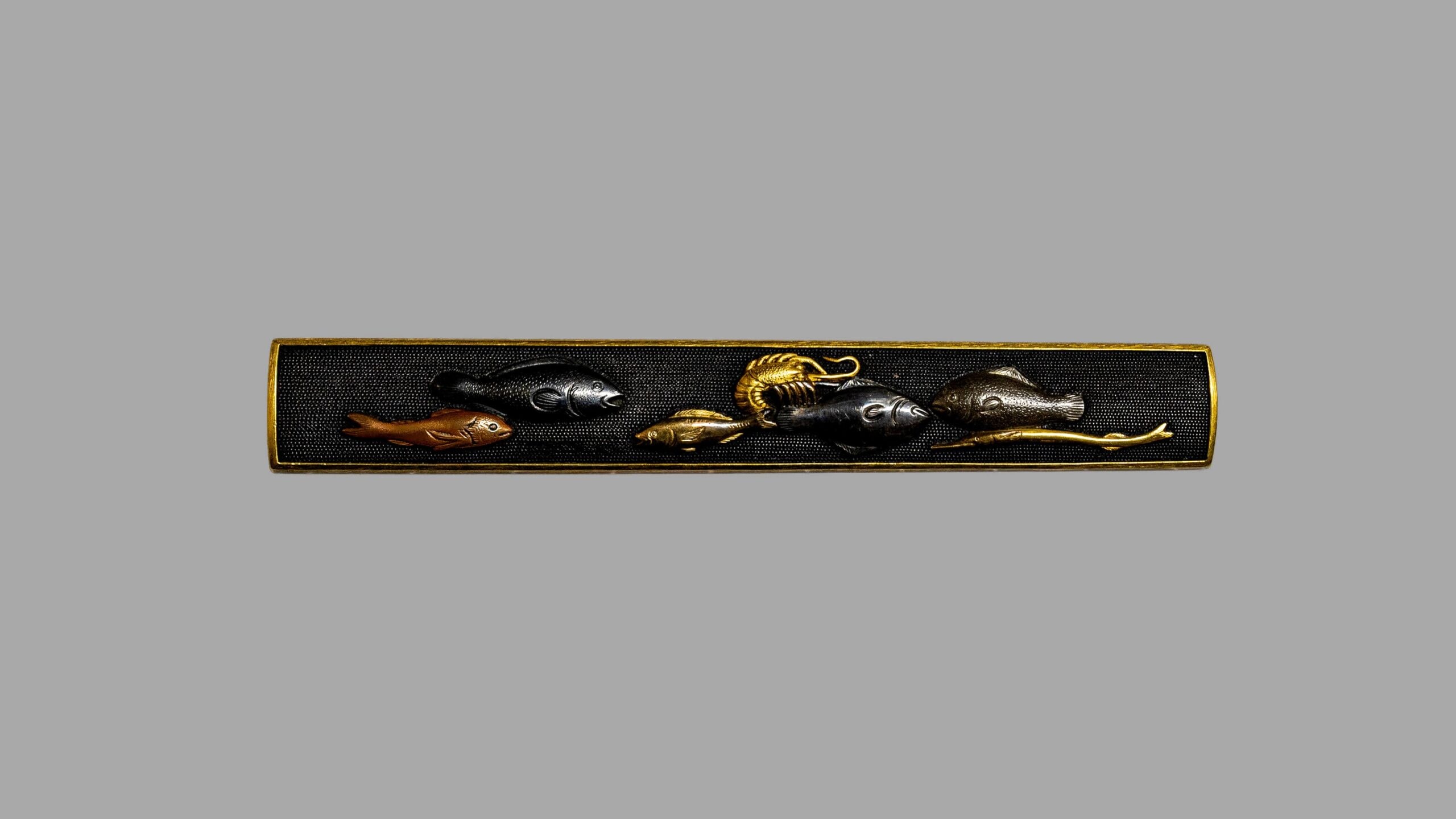
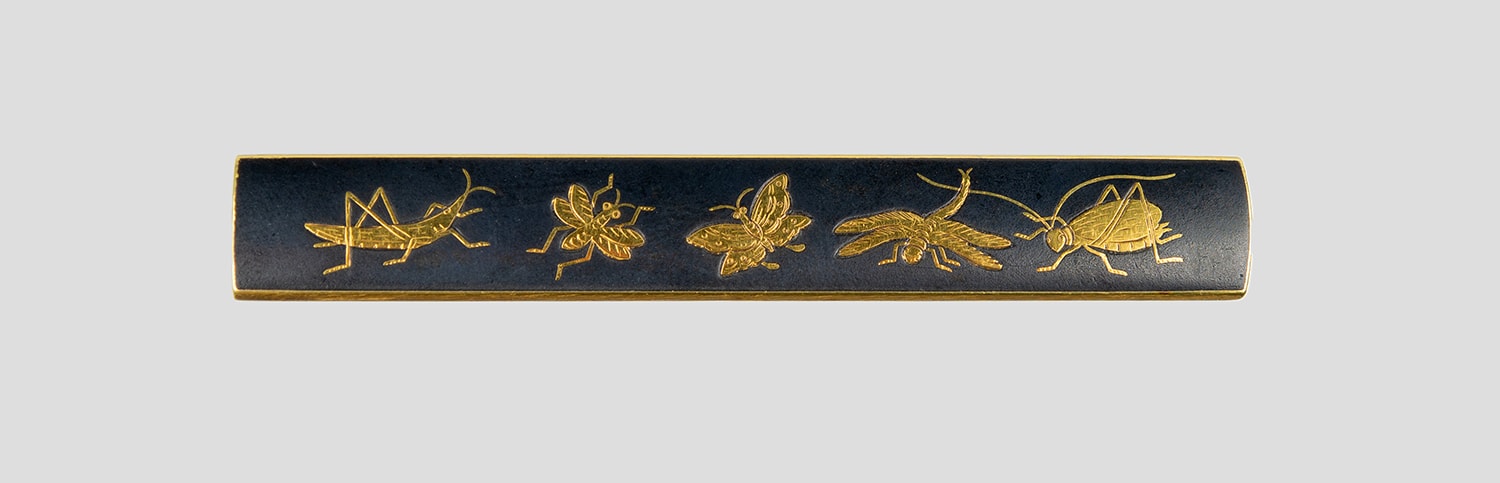
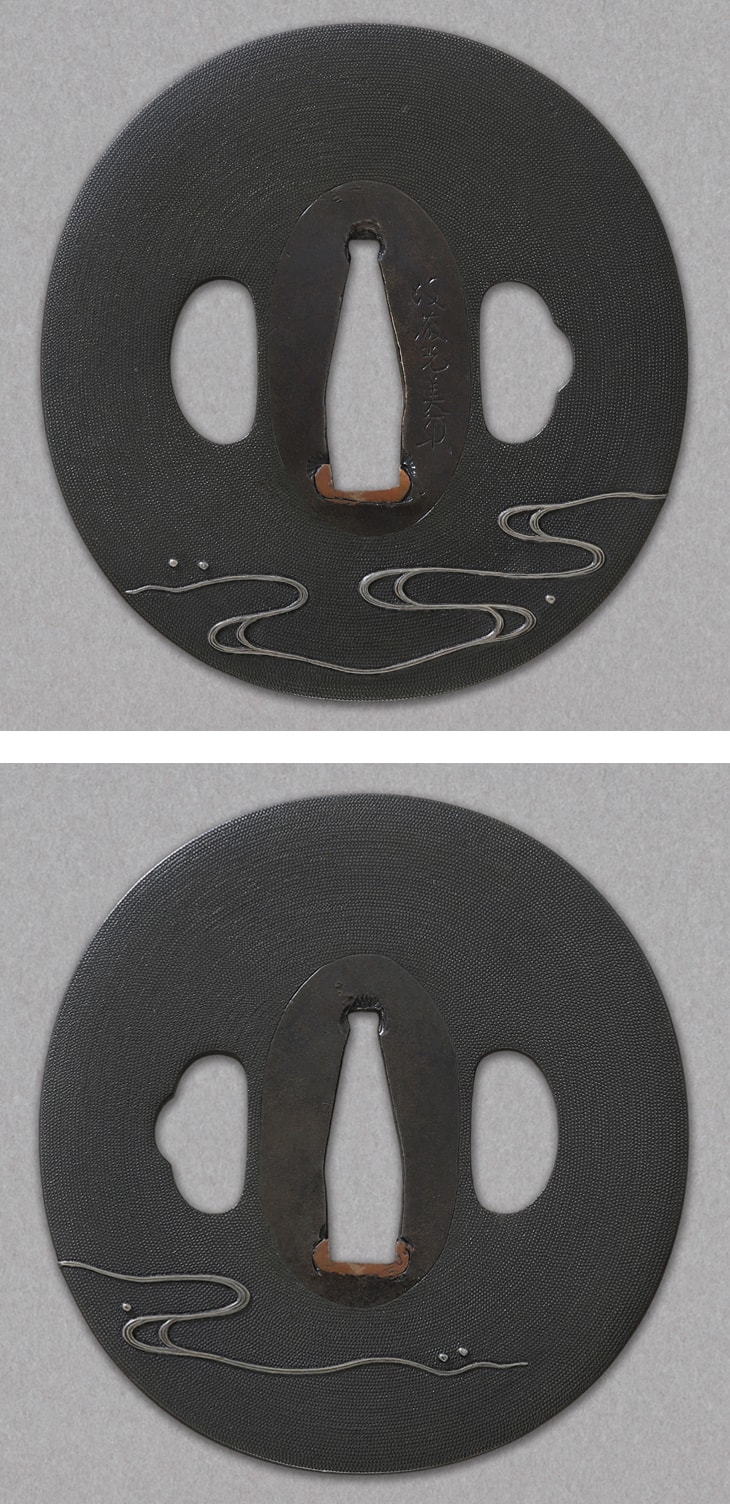
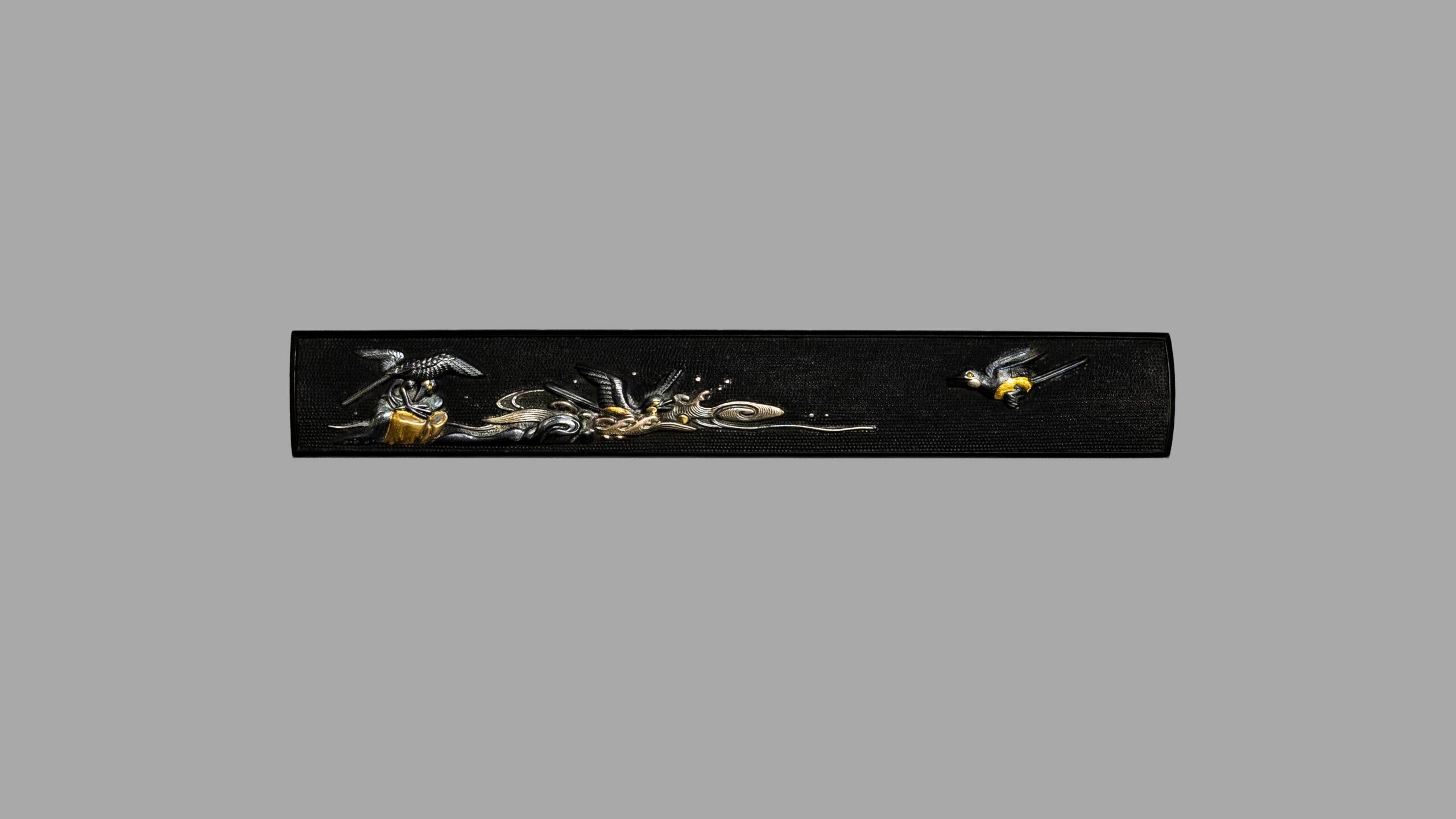
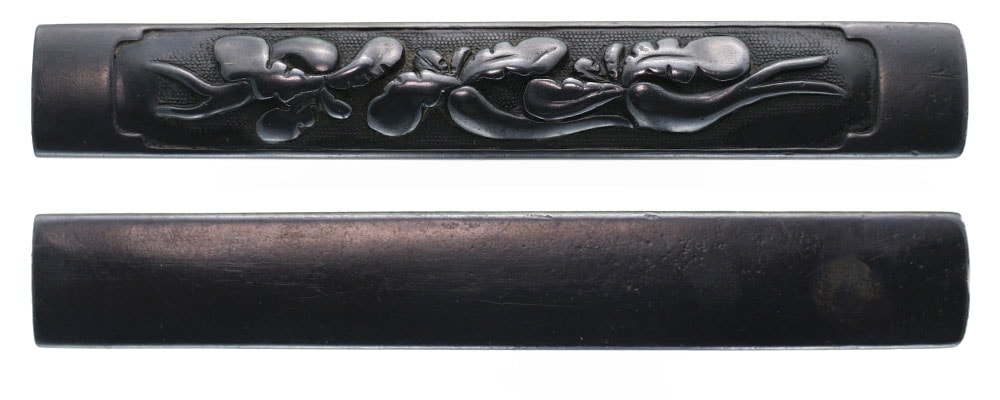
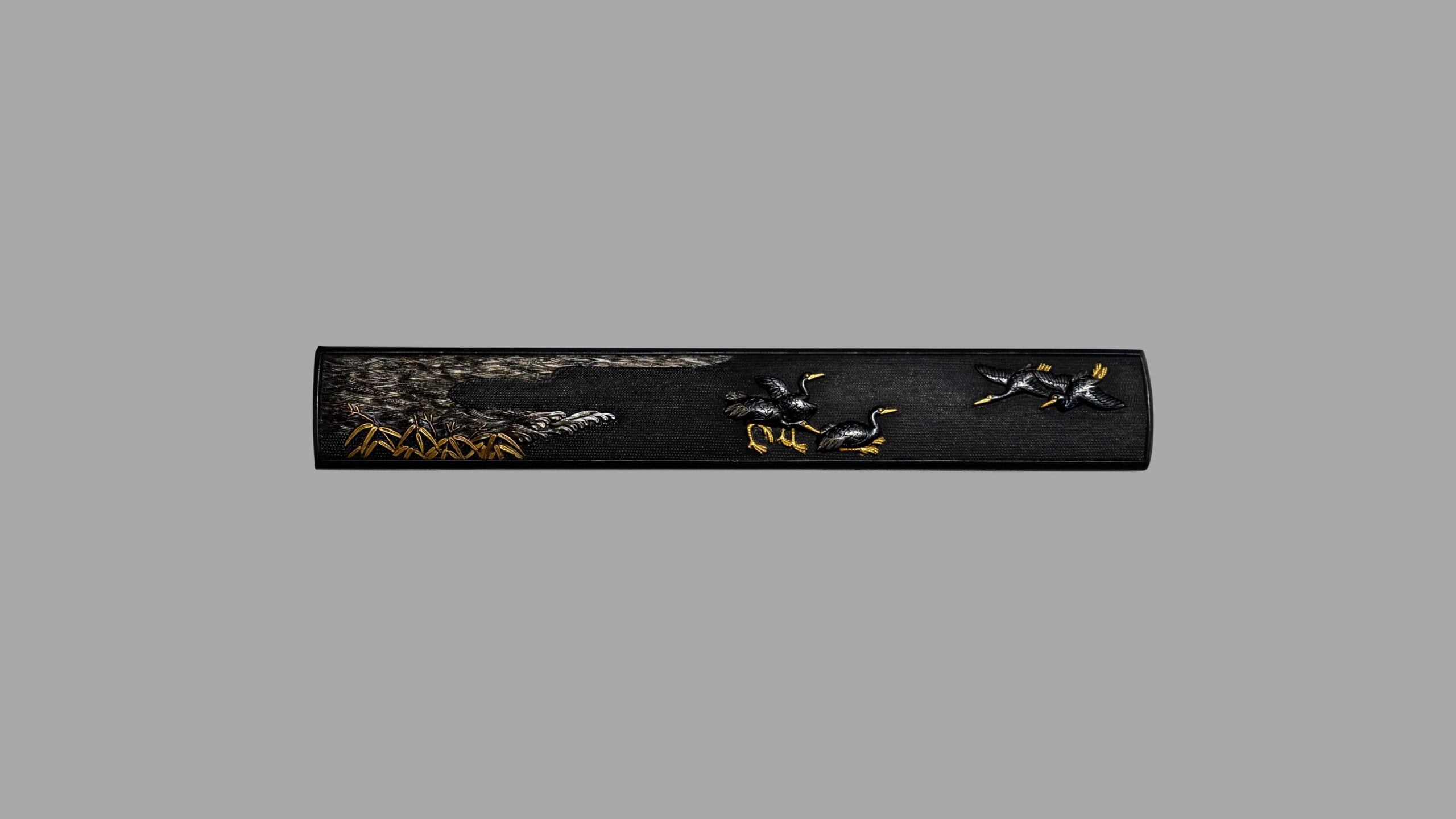
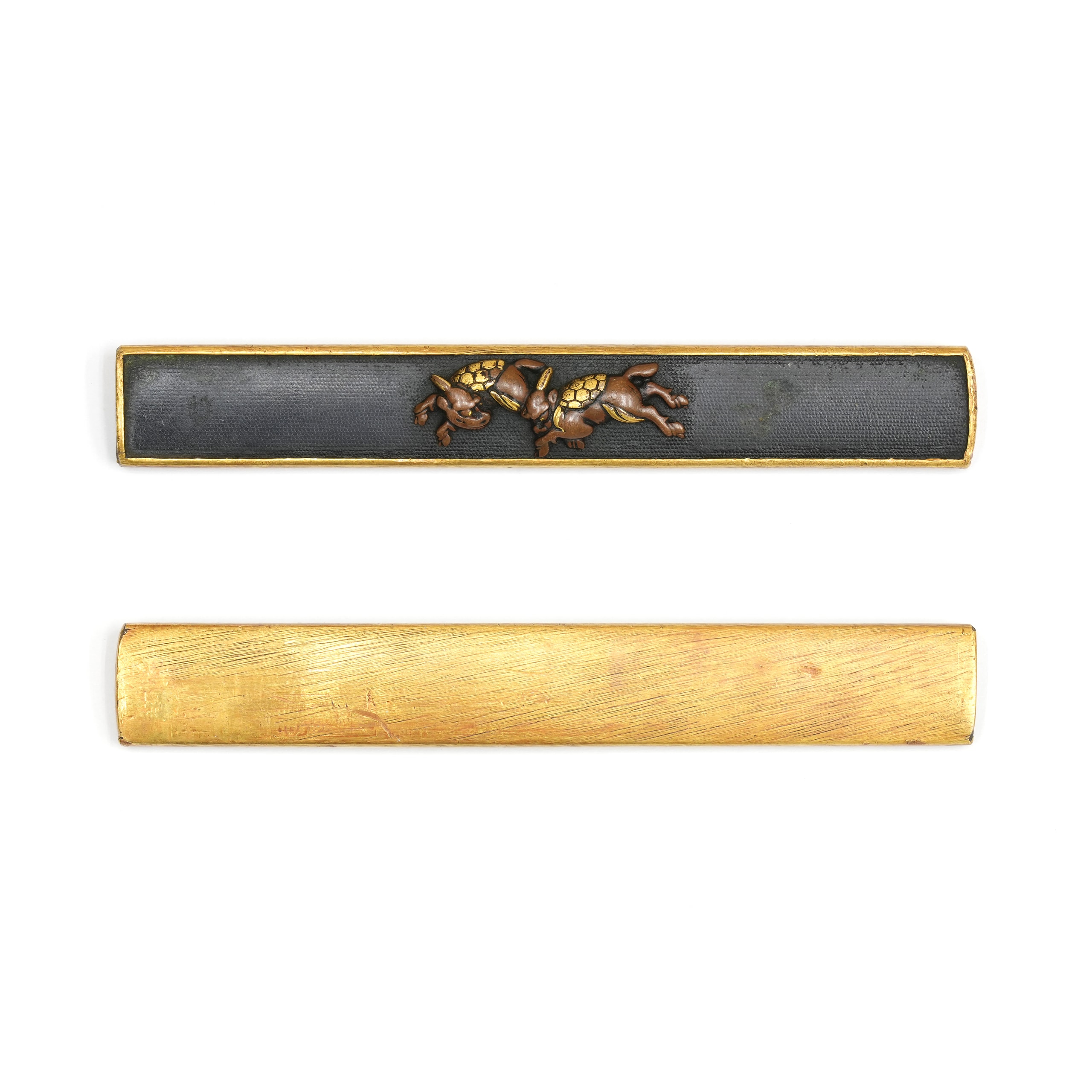
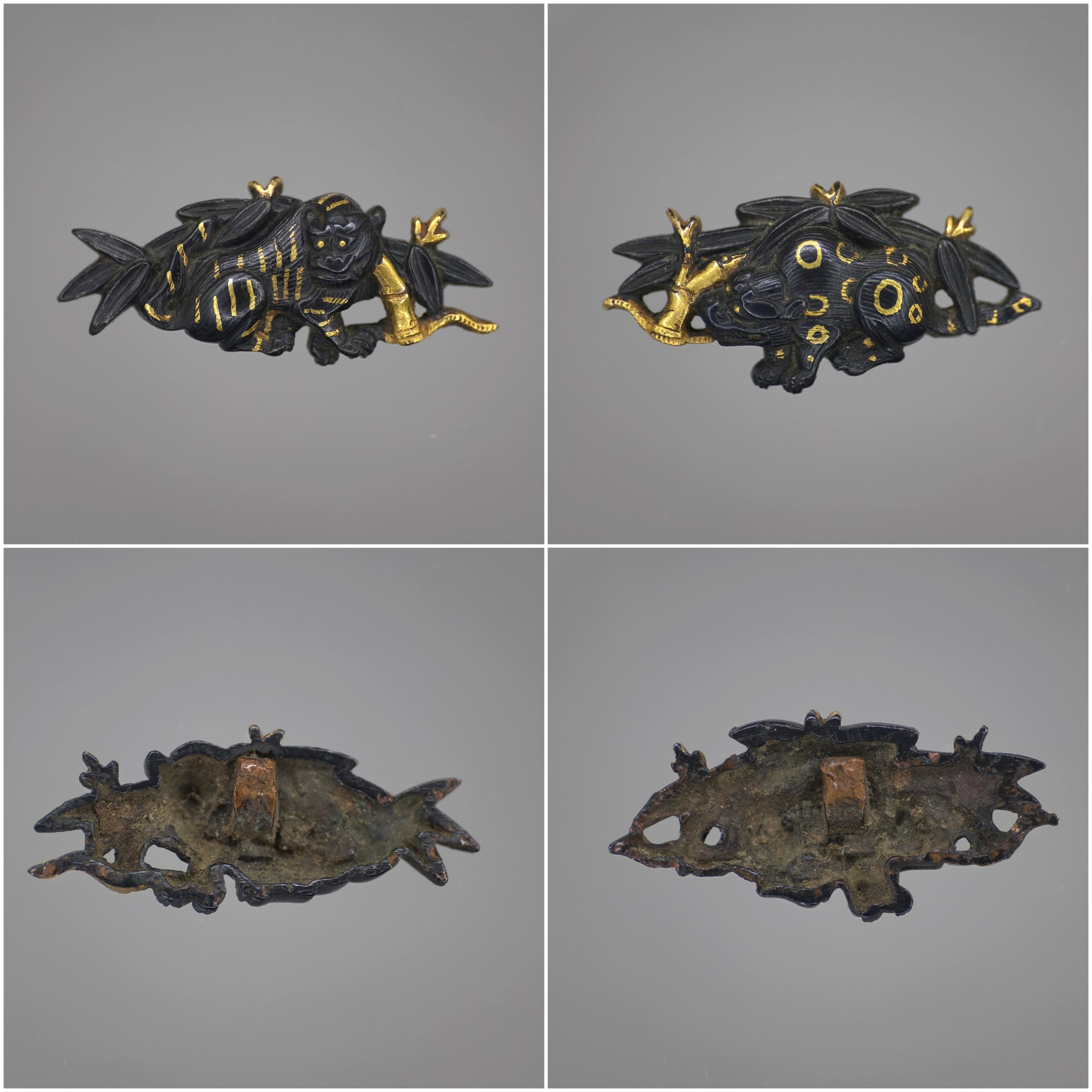
Goto Kenjo, the seventh-generation head of the Goto mainline (soke), was the third son of the fifth master Tokujo and was born in Tensho 14 (1586). His childhood name was Toraichi; his common name was Gen'ichiro; and his personal name (imina) was Mitsutsune. Upon reaching maturity he established a separate branch, founding the Rihei house, and changed his name to Rihei Masatsugu. In Genna 3 (1617), his elder brother Eijo, the sixth-generation head, died of illness. Although Eijo's second son Genshichiro (Mitsushige) had already reached the age of eighteen, Kenjo nonetheless succeeded as the seventh head of the main house, acting as guardian to Genshichiro and carrying out the duties of the family headship. Around 'ei 4--5 (1627--1628), Kenjo arranged for Mitsushige to succeed as the eighth master, Sokujo. Thereafter, Kenjo was invited by the Maeda lords of , and together with his cousin Kakujo he traveled to in alternating years, laying the foundations for the later flourishing of the -Goto tradition. Since olden times the finest exponents of the Goto house have been termed Yuko-, and among them Kenjo in particular has been praised as a restorer of the house's fortunes.
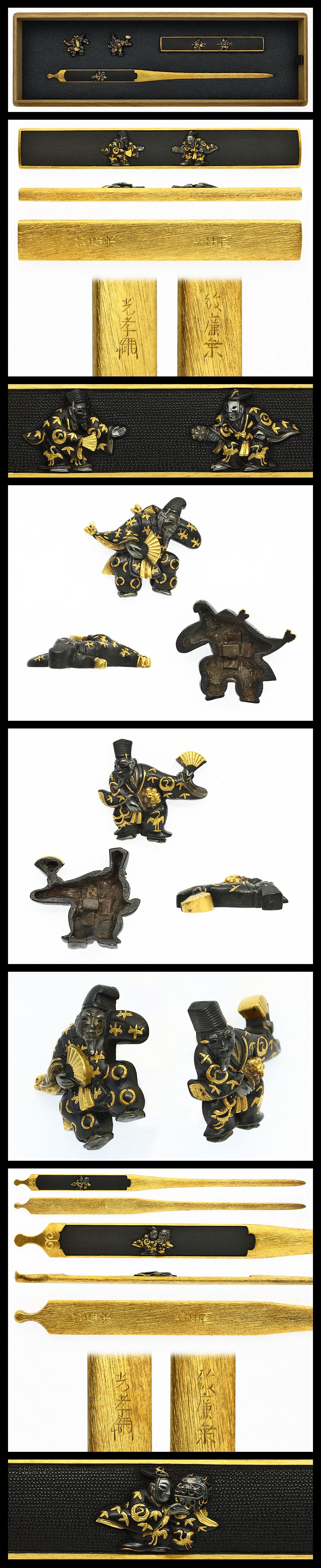
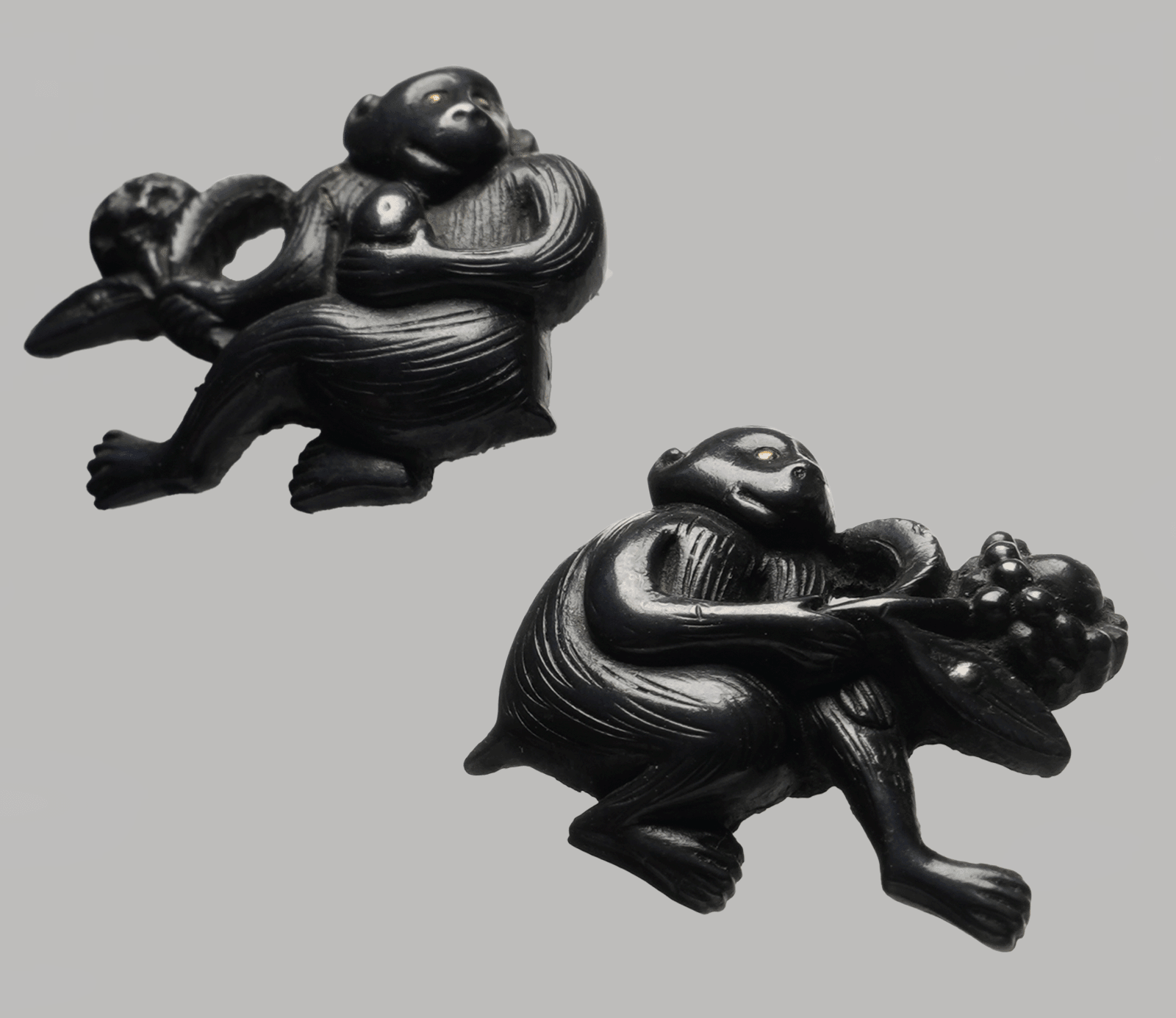
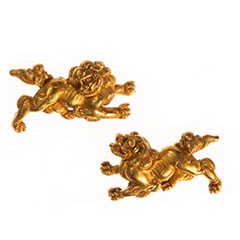
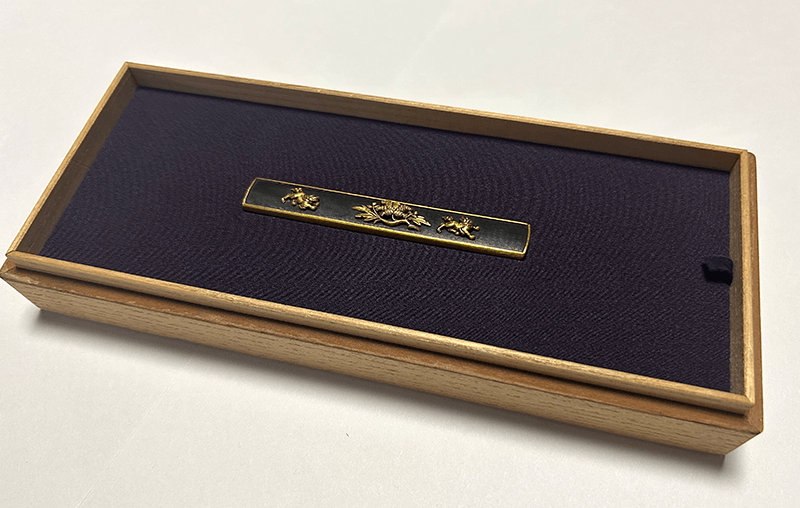
Kenjo's chisel work is described as both forceful and possessed of dignity, owing to his precise command of the . His preferred medium is with gold crests (), the canonical Goto ground treatment, though he also produced works of striking sumptuousness in solid gold (). His is characteristically deep and animated, conveying strong movement, while his employ rounded relief (yobori) with long tangs and chikaragane executed as four gold elements in accordance with house conventions. The repeatedly observes that his forms are taut and tightly composed, filled with power and communicating a palpable tension. In figural subjects -- dragons, lions, monkeys, cranes, tigers and leopards -- the modeling is compact yet ample, with each creature rendered in a distinct pose displaying superbly convincing movement. On employing or the distinctive korotsugi construction with gold joining, the note an especially sharp and sensitive atmosphere, while his use of inlay to render stripe and spot patterning on tigers and leopards is singled out for meticulous articulation. The overall spirit of his work is characterized as shosha -- austere and urbane -- giving off an elegant, tasteful quality that clearly distinguishes it from the manner of the first six generations of the Goto mainline.
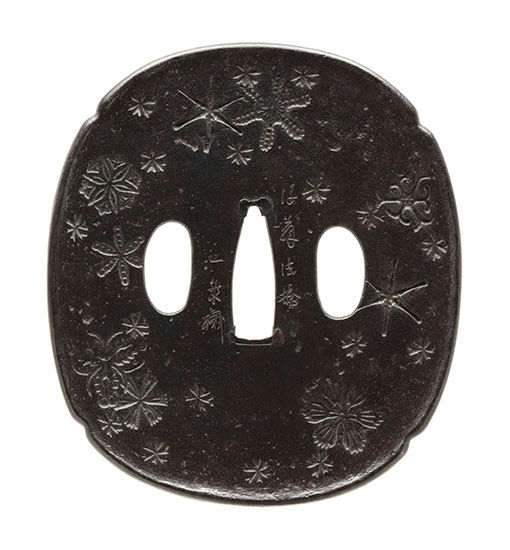
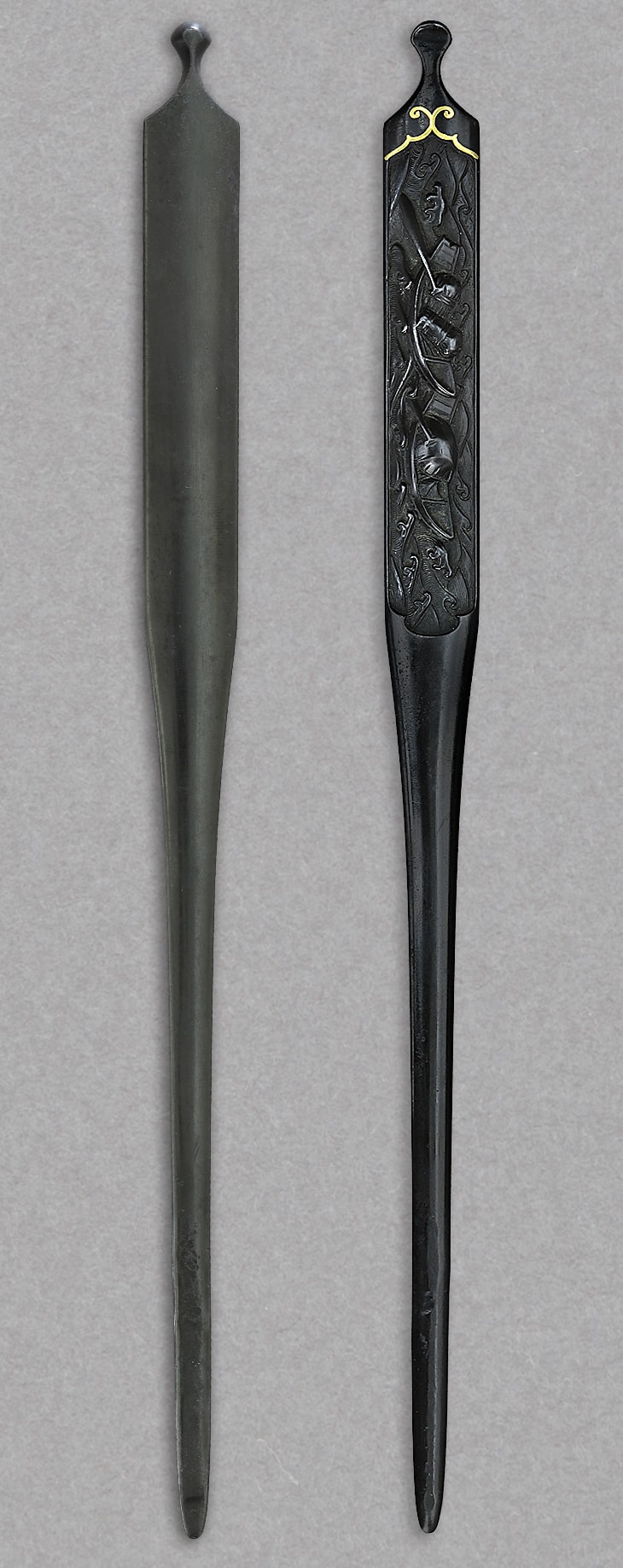
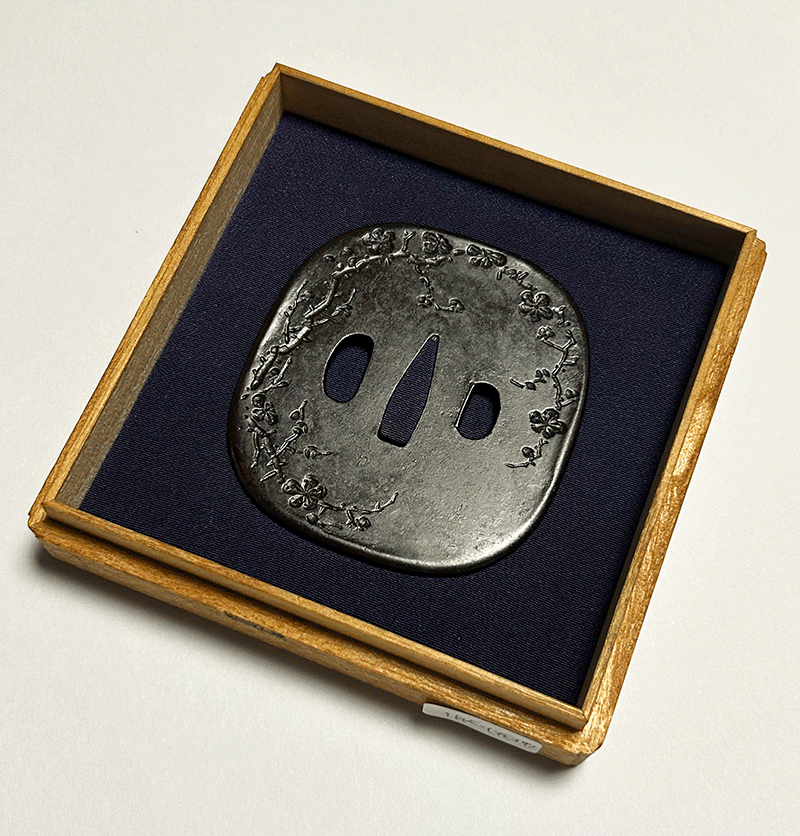
The has designated Kenjo's works across a broad range of subjects -- from the Goto house's prescribed okitemono motifs such as the dragon and shishi, to literary and Buddhist themes including Zen implements, Hotei, Idaten, and Ebisu and Daikoku -- and consistently finds in them an elevated dignity through which the traditional beauty of the Goto lineage is fully manifested. Works bearing Kenjo's own signature are few; the state that known examples of signed number fewer than five, rendering such pieces especially precious documentary references. Several of his surviving works carry authentication inscriptions () by his biological son Teijo or the eighth master Sokujo Mitsushige, conferring credibility equivalent to an autograph signature. That his solid-gold -- appraised at the extraordinary sum of 250 -- was produced by studying a masterpiece by the founding ancestor Yujo, yet expresses with elevated dignity the sumptuous beauty of the period, encapsulates the judgment that recurs throughout the designation records: Kenjo stands as a figure in whom the true strengths of the Goto house are fully manifested, a restorer whose work communicates at once the orthodox conventions of the lineage and a distinctive personal refinement.