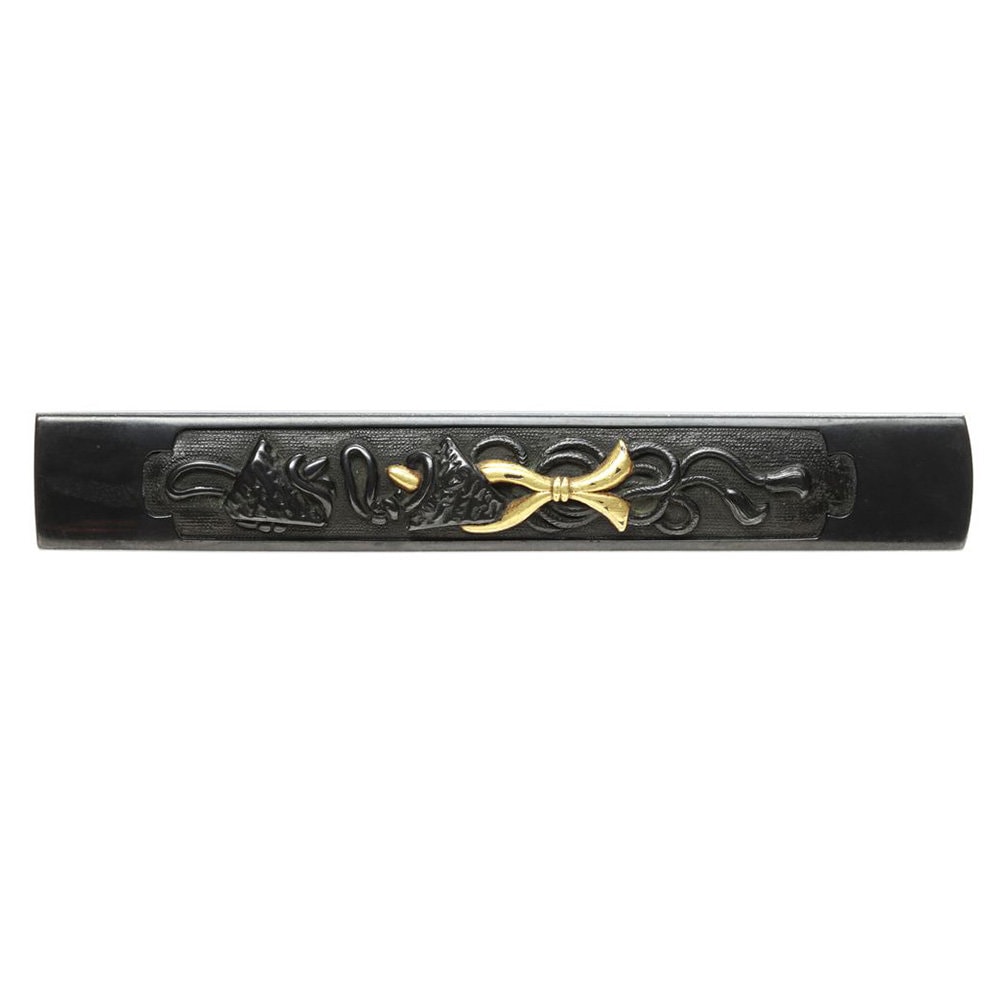
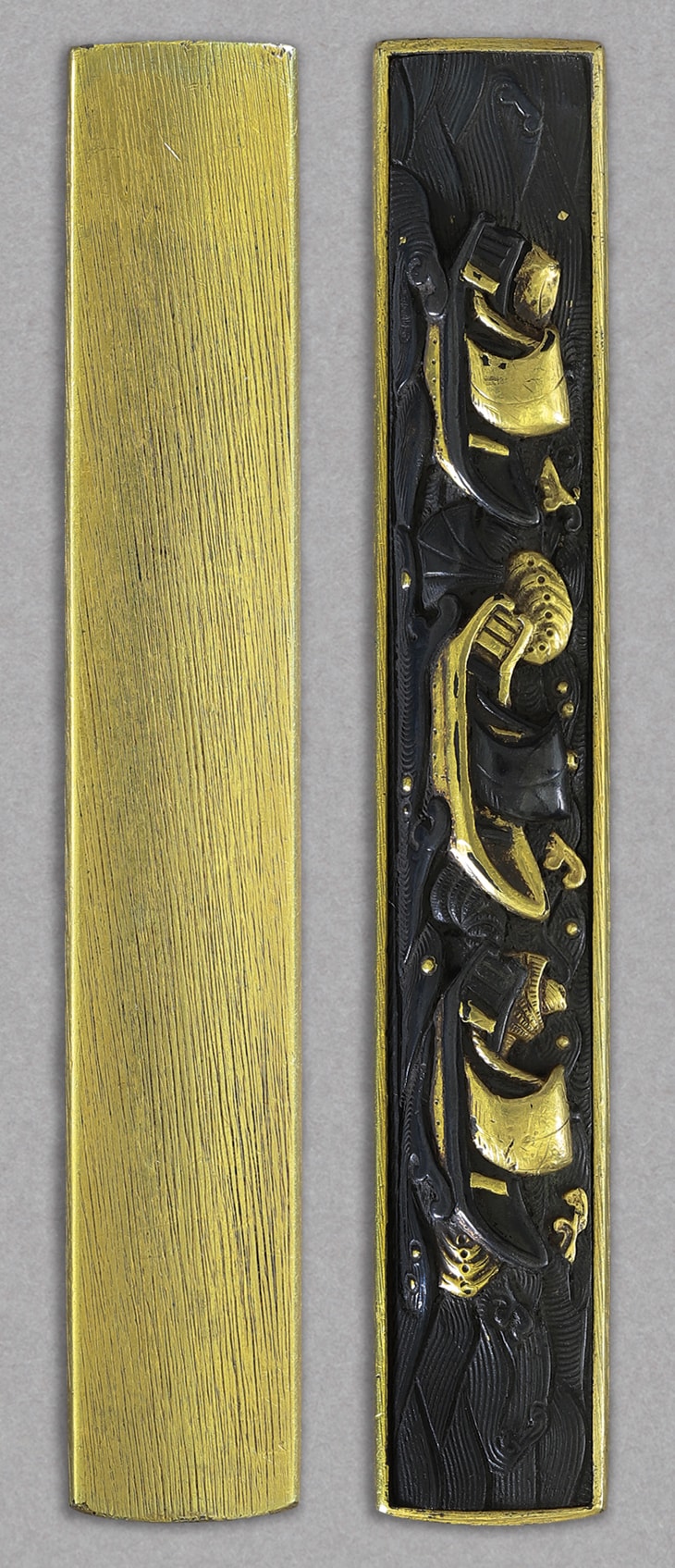
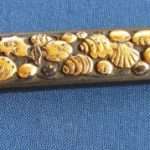
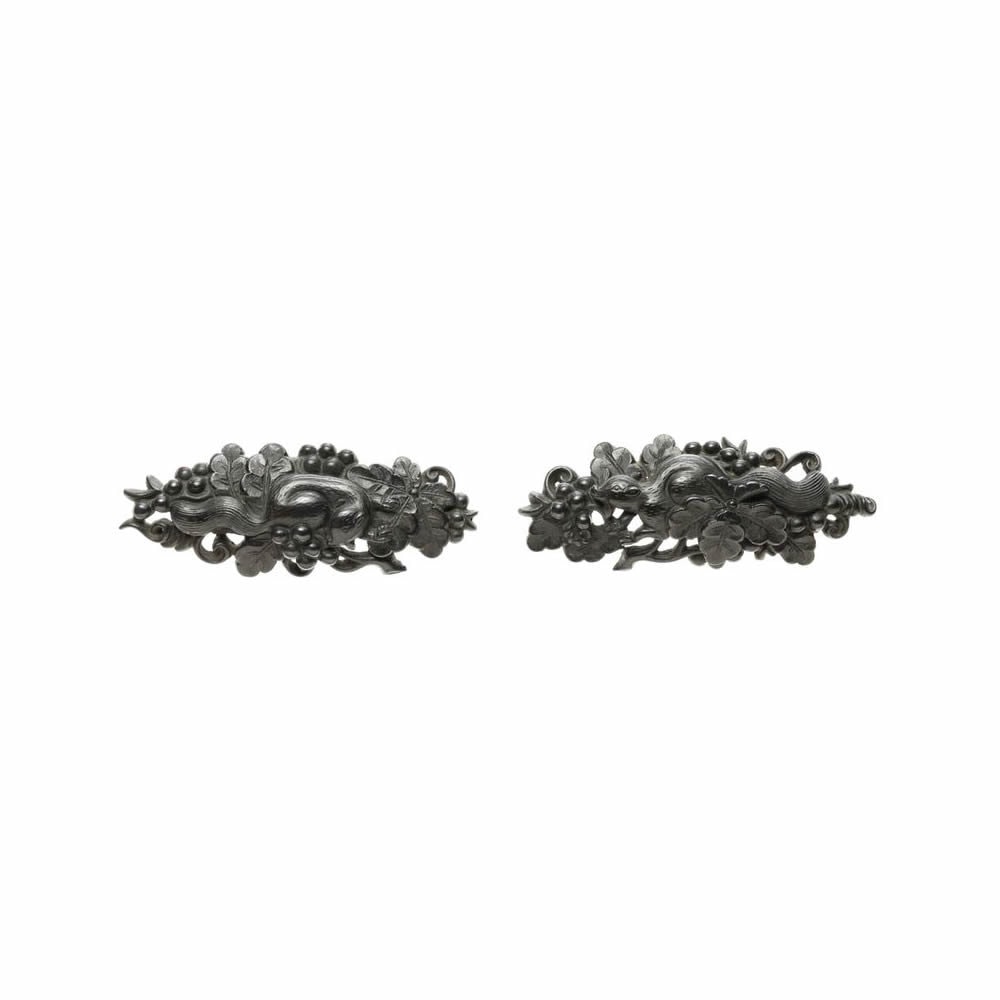
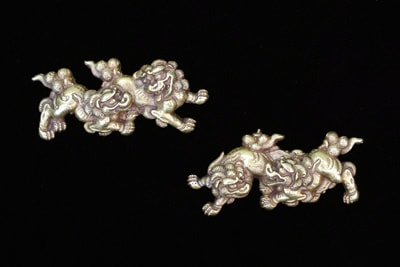
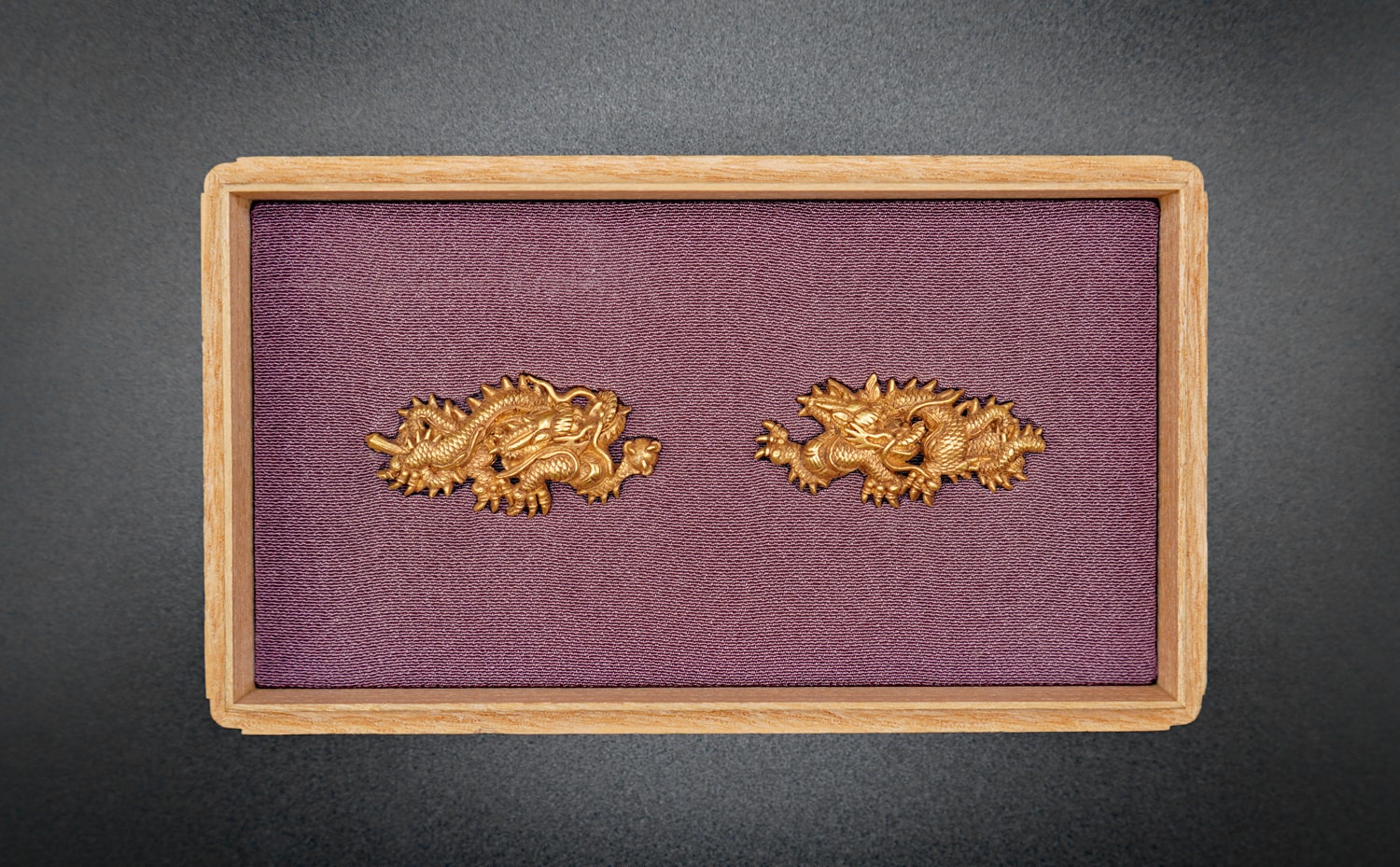
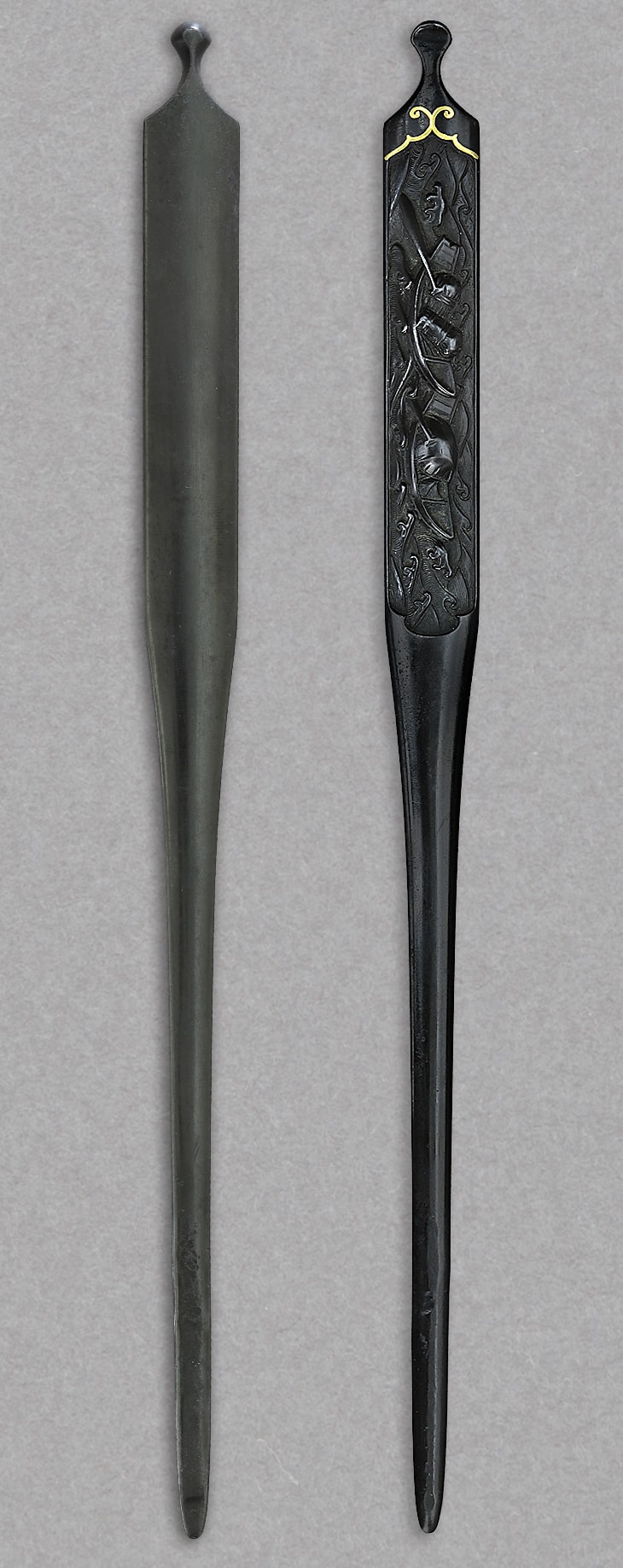
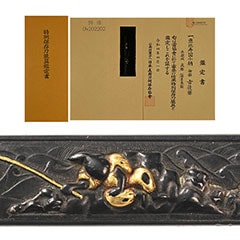
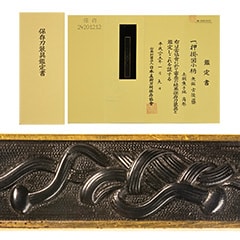
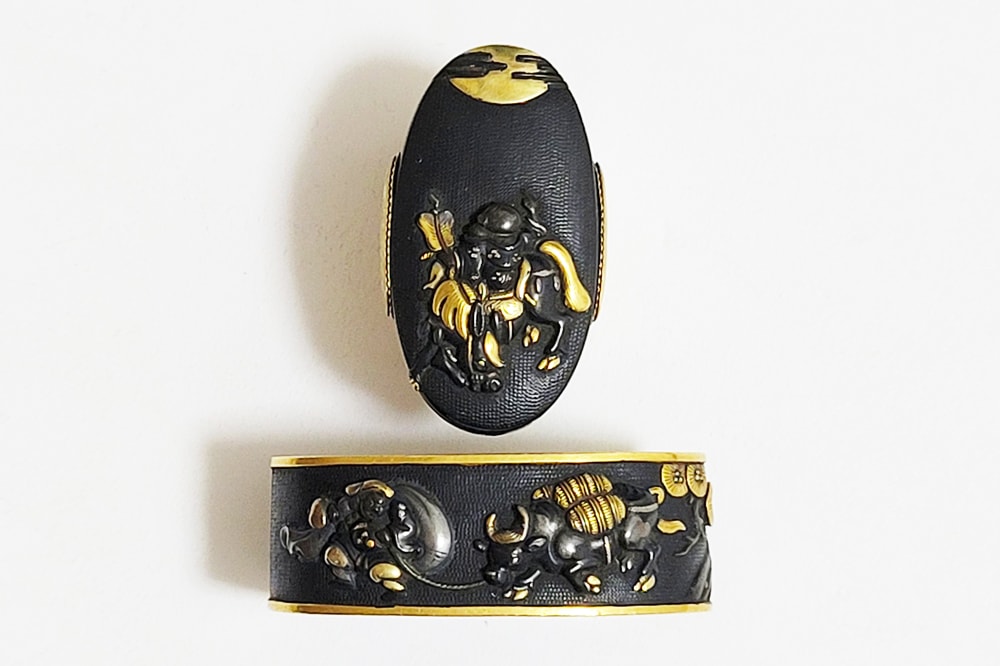
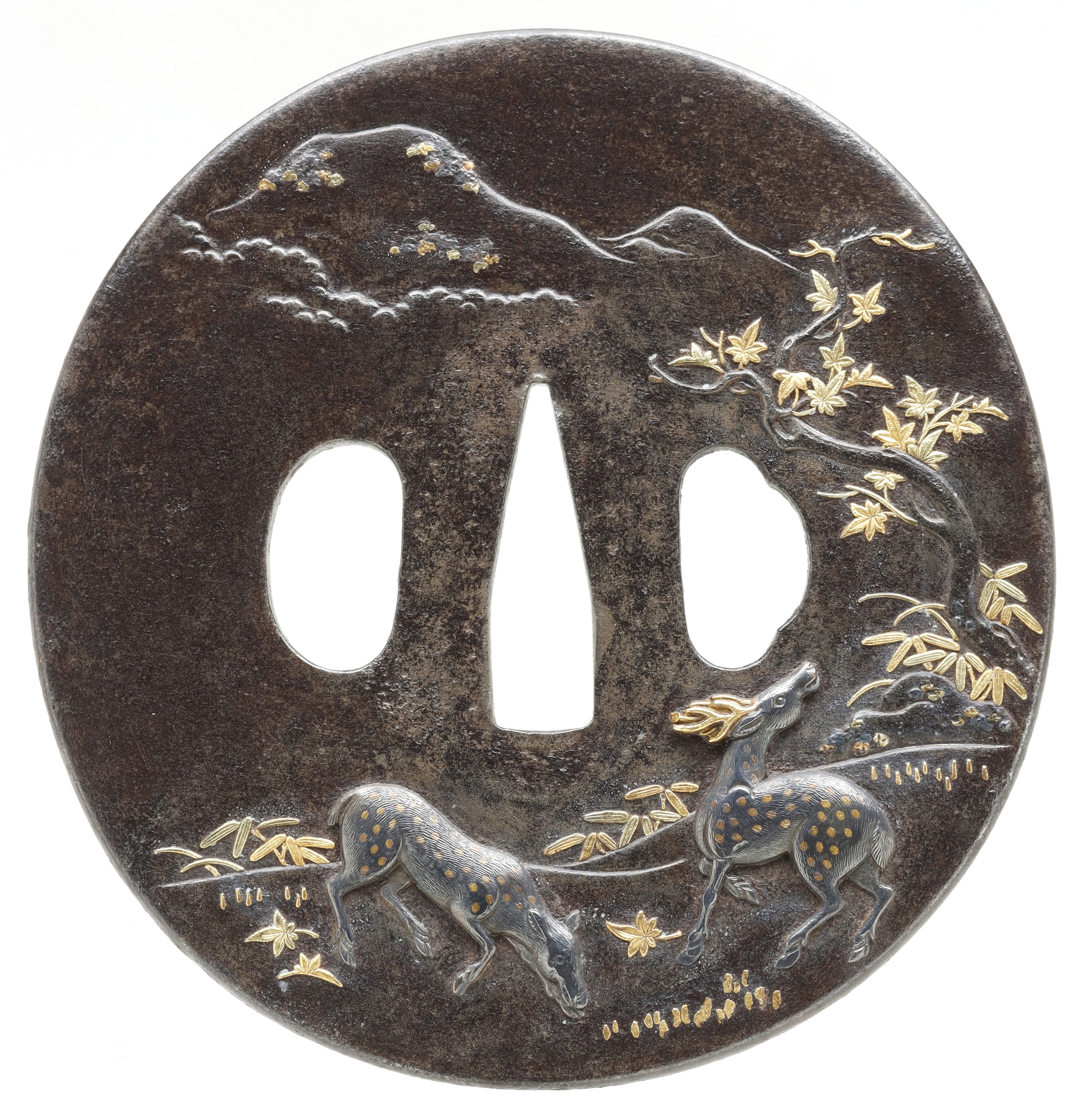
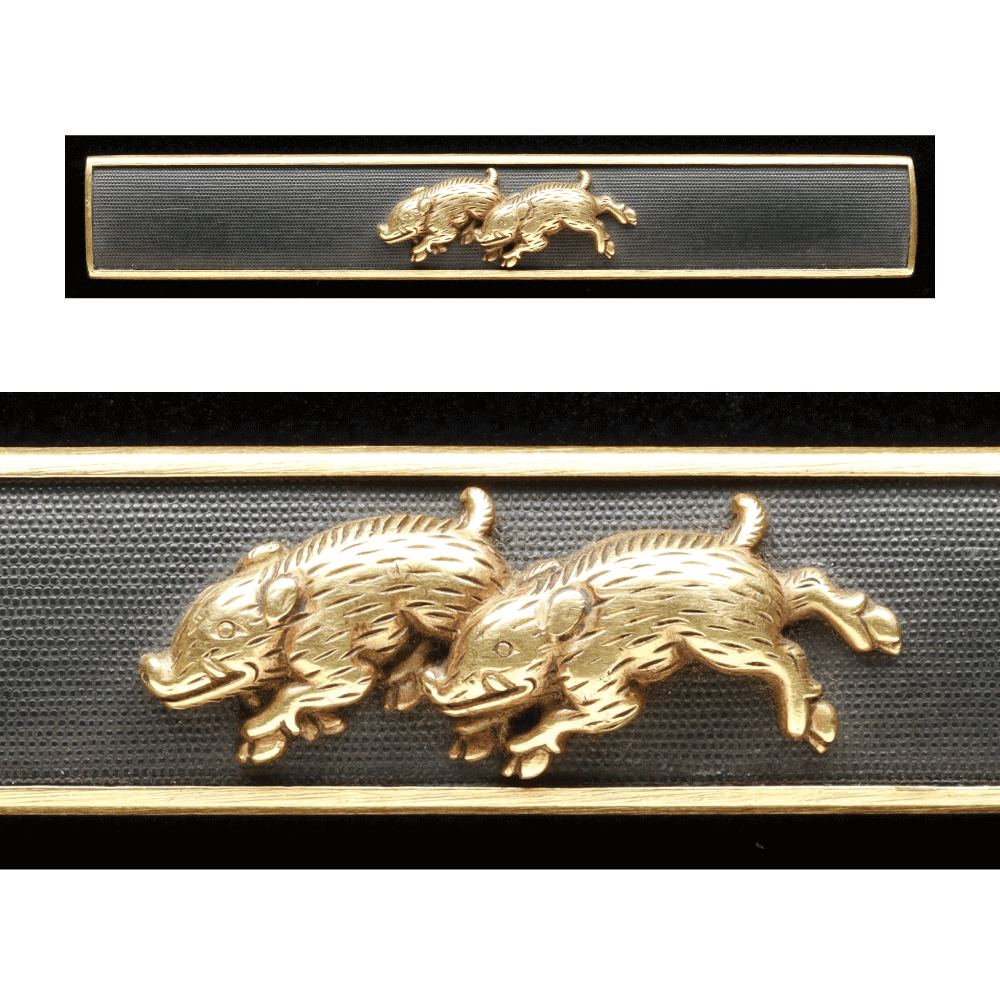
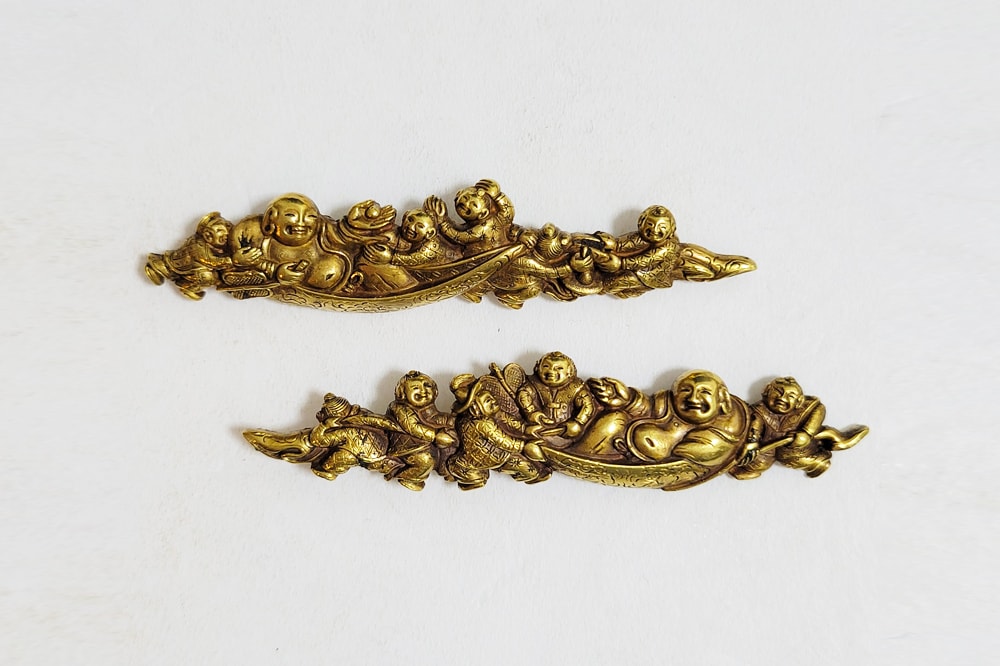
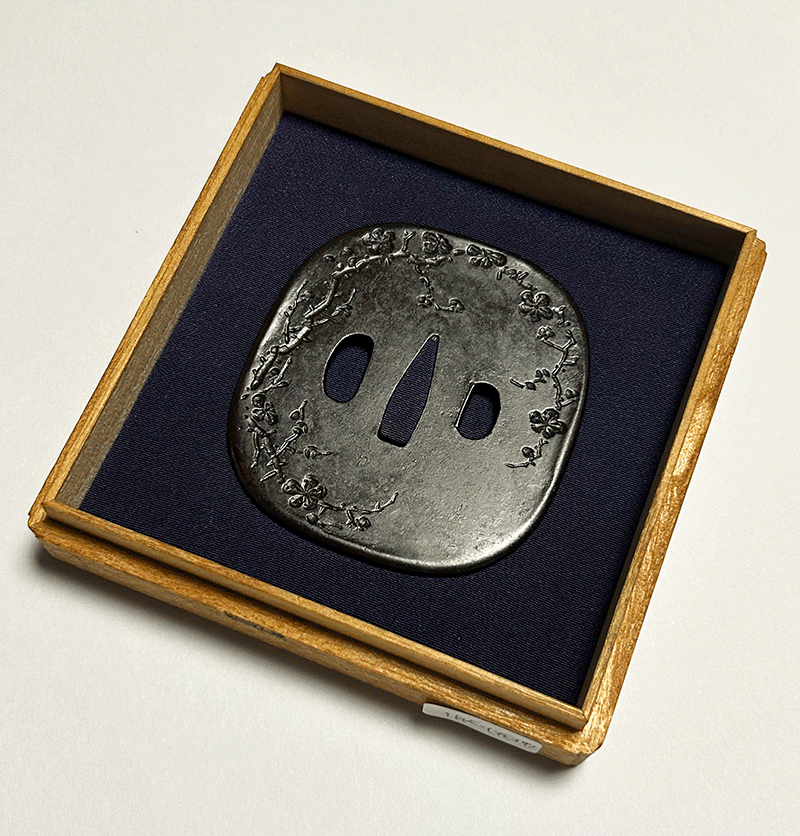
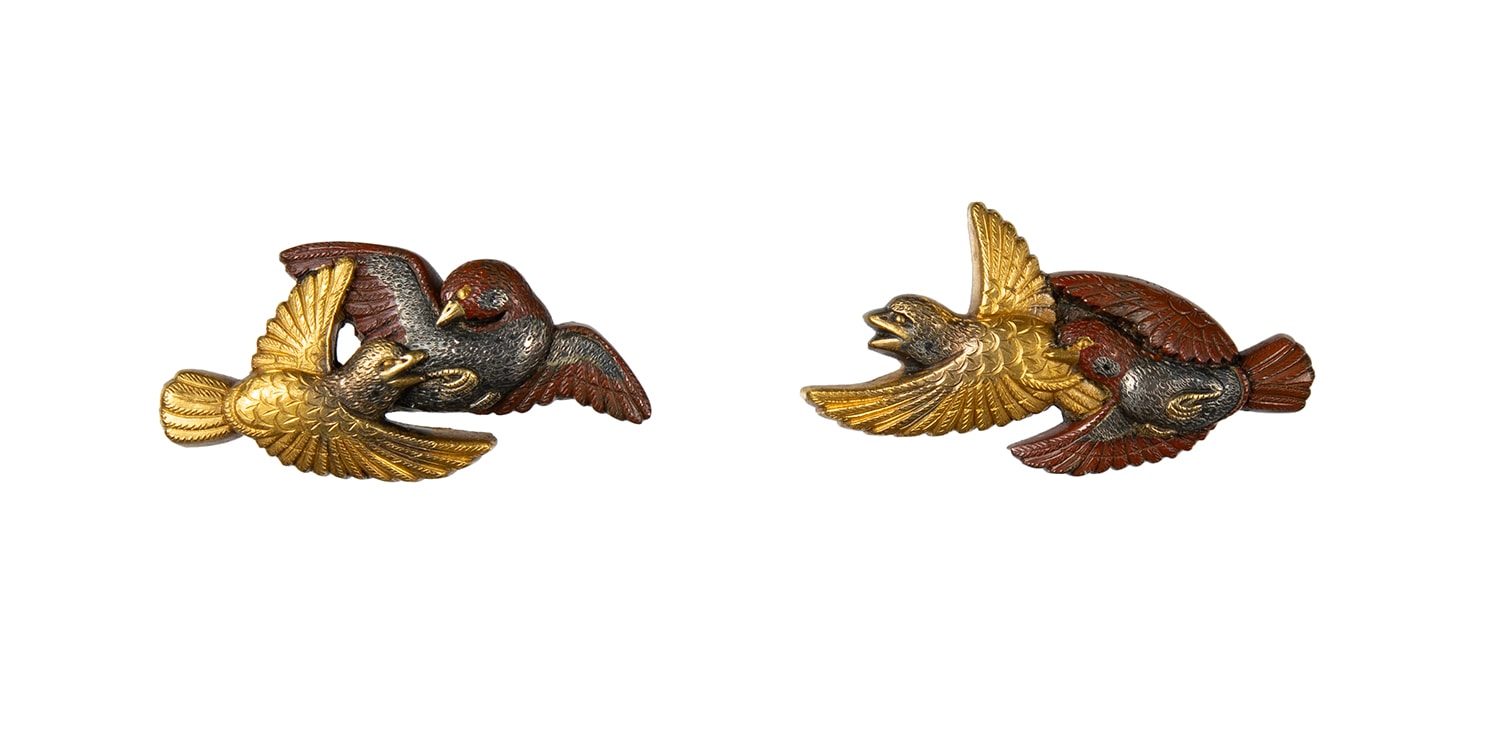
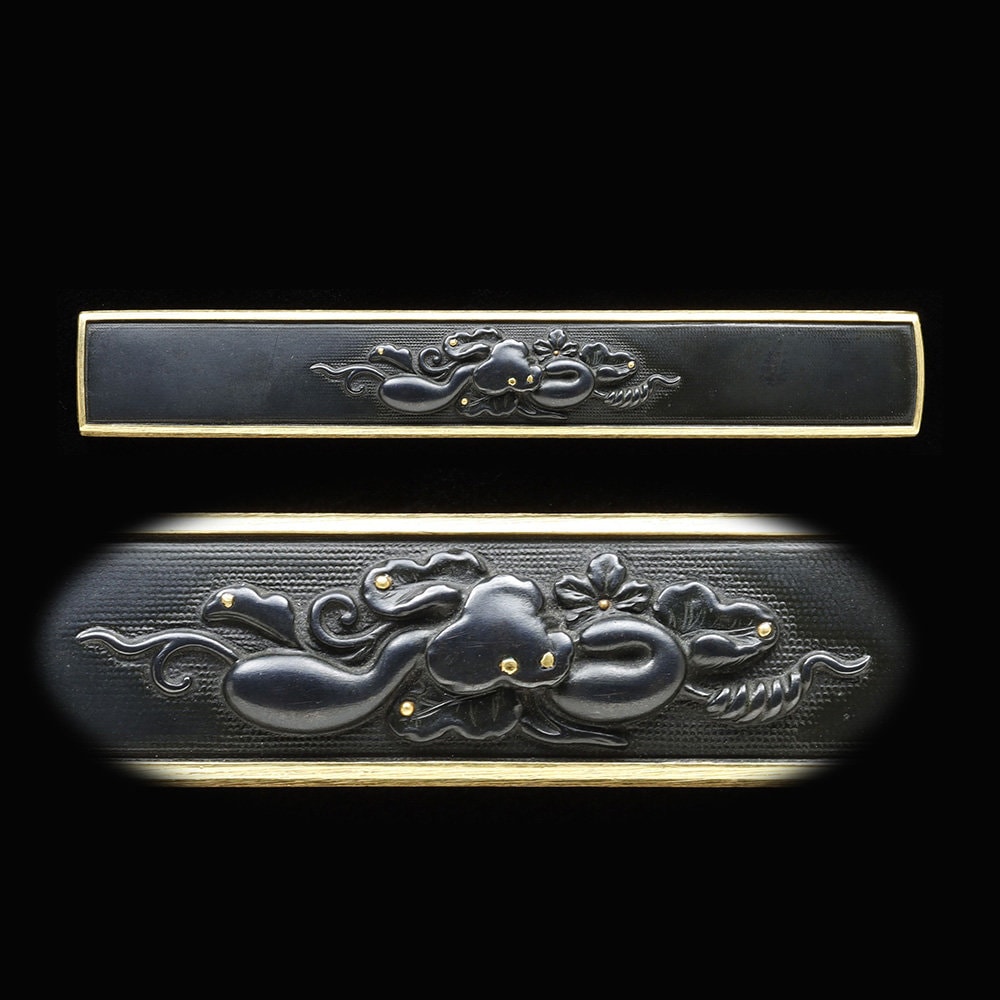
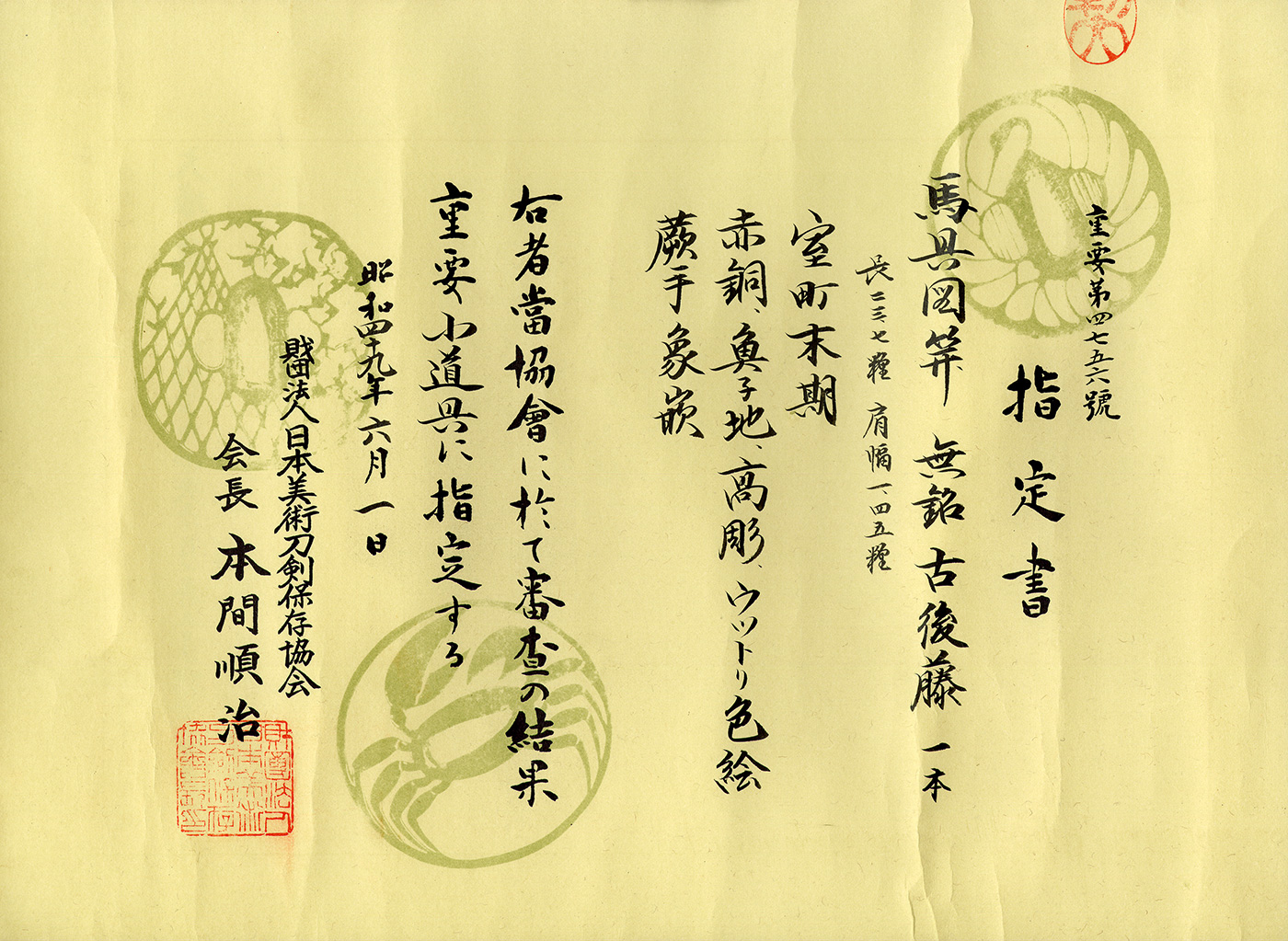
番号:F24700 笄:馬具図(第22回重要刀装具) 銘:無銘(古後藤) 長さ:23.7 cm × 1.45 cm 時代:室町時代末期 特徴: 赤銅魚子地に馬具の図を高彫とし、うっとり色絵、蕨手(わらびて)象嵌を施しています。 重要図譜の解説: 赤銅地に鞍、鐙(あぶみ)などの馬具を据紋風に高彫し、各所にうっとり色絵を施している。 大振りな造り込みで、赤銅の練れた地鉄に鮮やかな金の色絵が映え、誠に格調高い出来栄えである。 葵美術評価鑑定: 本作は江戸時代以前に制作された、極めて重厚な作域を示す逸品です。 「古後藤」と極められており、これは後藤家宗家の初代祐乗、二代宗乗、三代乗真のいずれかの作と目される、極めて格式高い名品であることを意味します。 第22回重要刀装具指定品 葵美術鑑定書 桐箱入 価格:1,450,000円(消費税、送料込) ご注文フォーム 関連商品: 三所物(小柄・笄・目貫):(第67回重要刀装具) 三所物(小柄・笄・目貫):無銘(廉乗)木津川図(第44回重要刀装具)折紙付 一作金具(鍔・小柄・縁頭・目貫・裏瓦・栗形):東明 粟図(第65回重要刀装具) 三所物(笄:無銘 廉乗 / 小柄・目貫:紋 廉乗光孝 花押)(第49回重要刀装具) 縁頭:後藤法橋一乗(花押)(保存刀装具) 二所物(笄・目貫):火縄銃図(第16回重要刀装具)
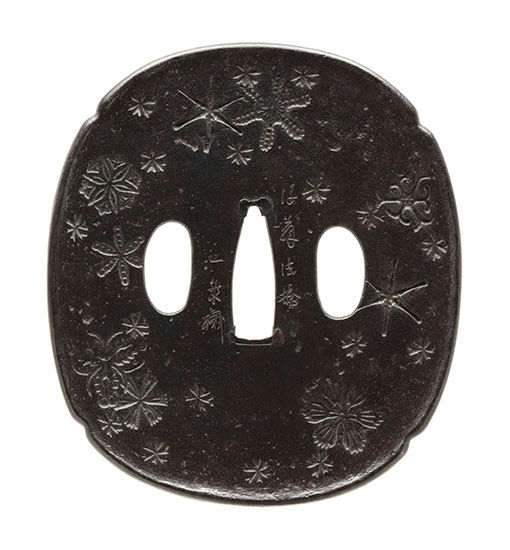
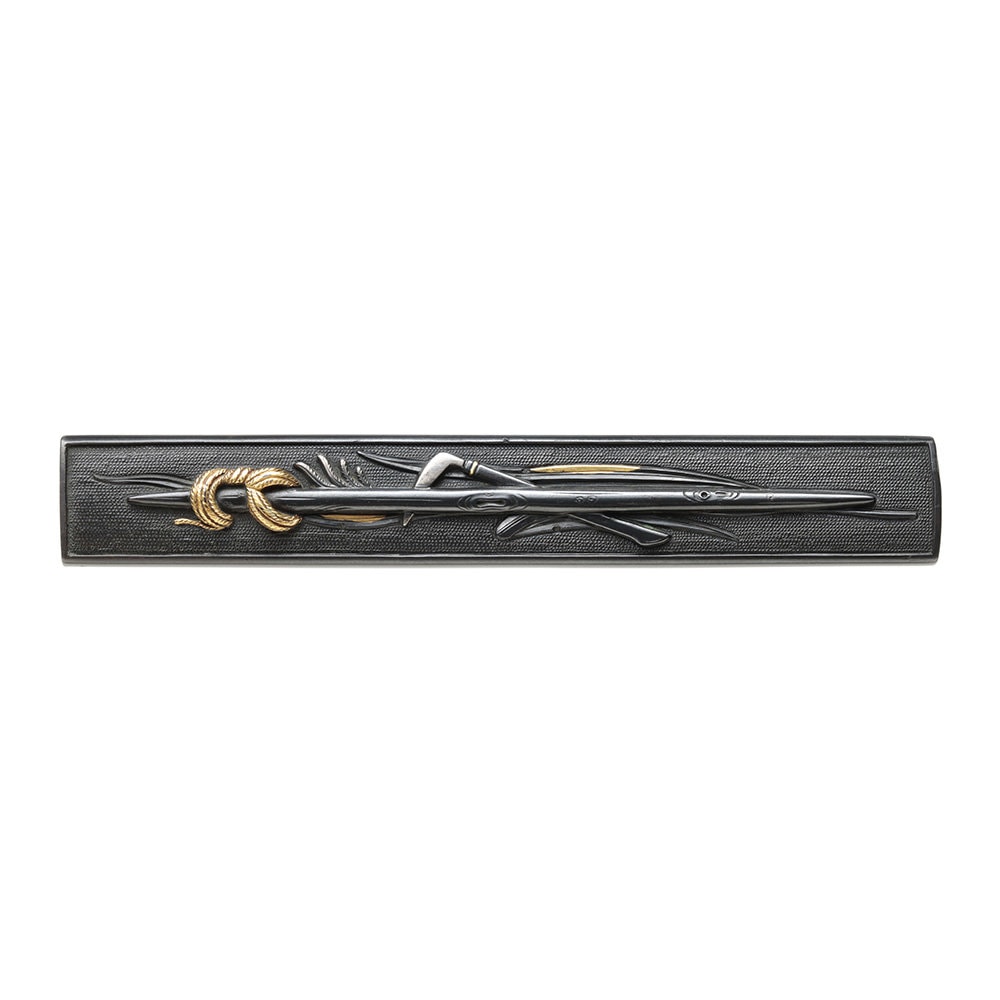
源平盛衰記や平家物語で知られた物語の一つである屋島合戦の弓流し図である。 文治二年二月、屋島合戦の時、戦のさなかに思わず弓を海中に落とした源氏の大将義経が苦労してその弓を拾い上げる様 子が描かれている。作者は後藤家十一代目の通乗光寿であり、同図は程乗にもあるが、 それに比してより細かな彫技に通 乗独得のものがある。戸尻銘は珍らしい。
Certificate reading — 無銘(古後藤)
 NihontoWatch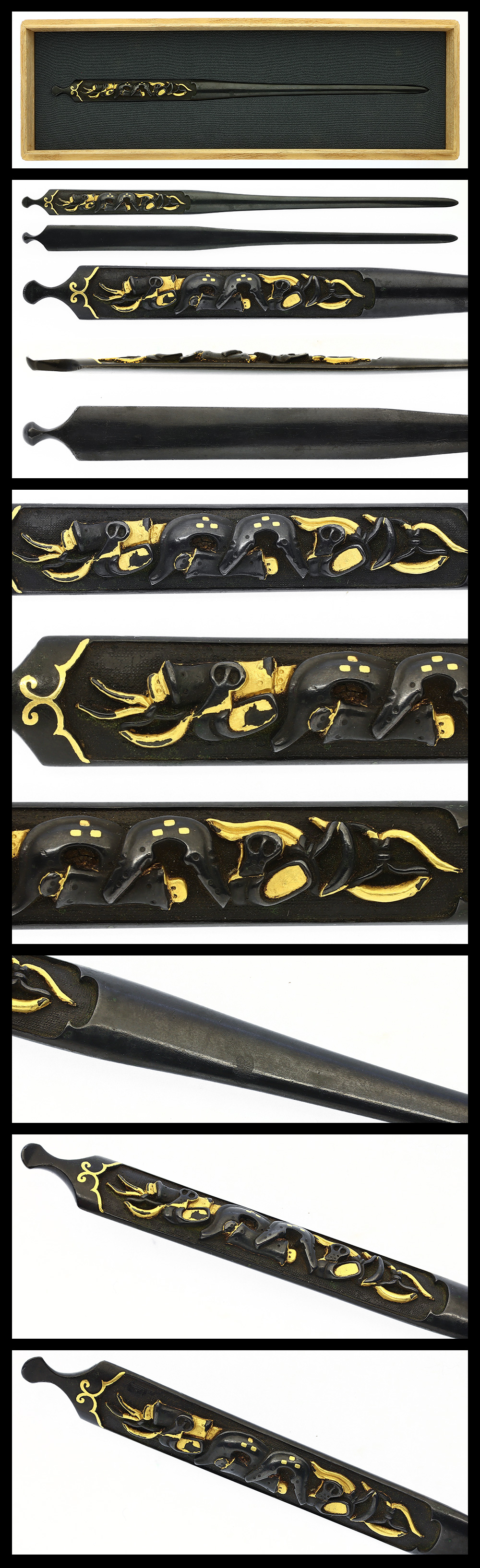
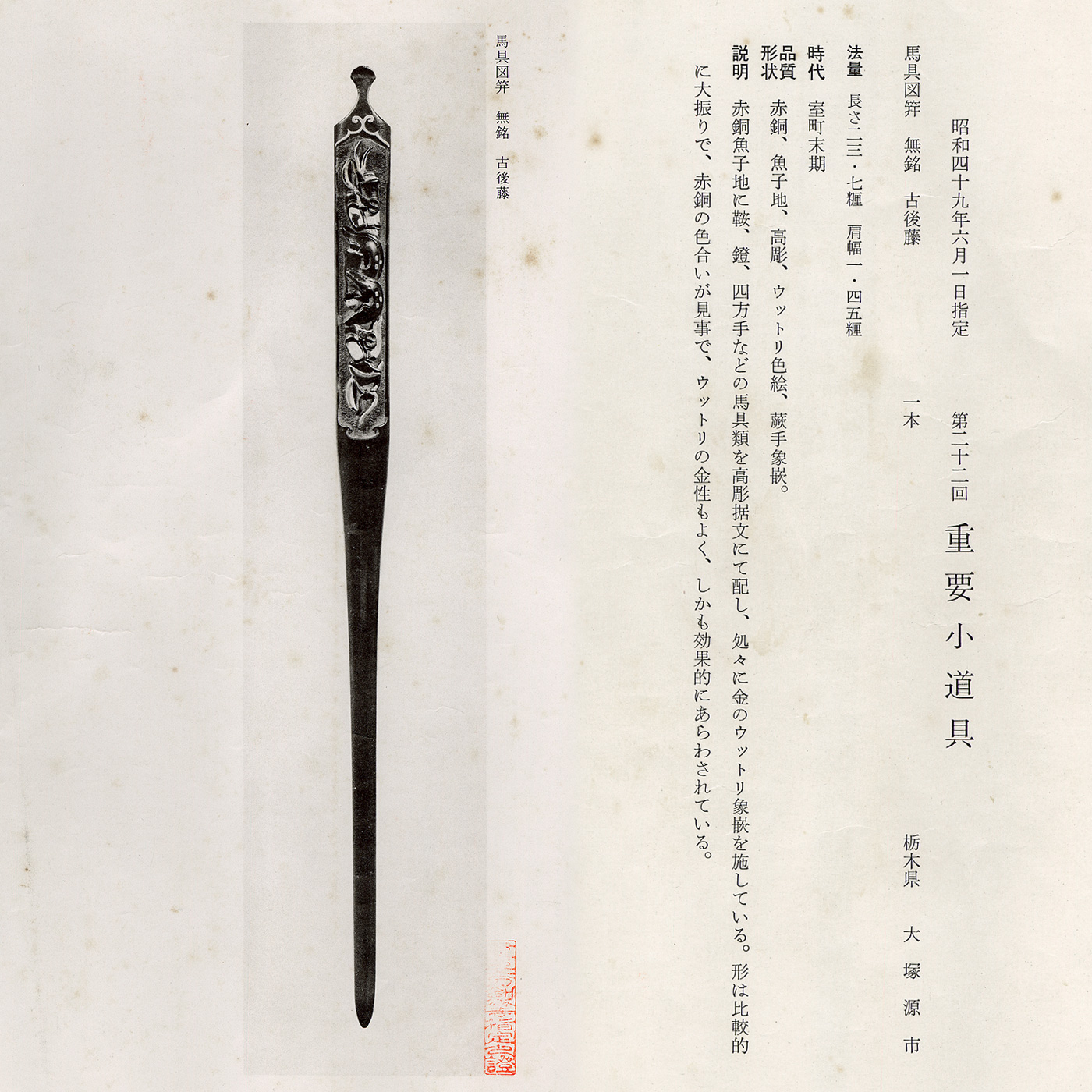
古後藤派
古刀
無銘
重要 #22 (NBTHK)
源平盛衰記や平家物語で知られた物語の一つである屋島合戦の弓流し図である。 文治二年二月、屋島合戦の時、戦のさなかに思わず弓を海中に落とした源氏の大将義経が苦労してその弓を拾い上げる様 子が描かれている。作者は後藤家十一代目の通乗光寿であり、同図は程乗にもあるが、 それに比してより細かな彫技に通 乗独得のものがある。戸尻銘は珍らしい。
家彫 · Kyoto
古後藤とは、室町時代の初代祐乗から桃山時代の五代徳乗に至るまでの後藤家作品のうち、個々の作者名を特定し得ないものを指す呼称である。後藤家は室町幕府御用を務めた金工の名家であり、祐乗以来、代々幕府の刀装具制作を独占した。古後藤の作品群は、後藤家確立期の様式的特徴を色濃く残しながらも、祐乗や宗乗、乗真といった歴代当主の個人様式とは微妙に異なる点を有するため、この呼称で区別される。古い時代における笄と目貫の揃いものや二所物は極めて少なく、古後藤極めの完存品は後藤家初期における制作実態を示す貴重な史料となっている。 技法的には赤銅魚子地を基調とし、高肉彫で意匠を豪快に立体的に表現する点に特色がある。金袋着色絵や金銀露象嵌、金うっとり色絵といった加飾技法を用いるが、後代の繊細な作風とは異なり、肉取が豊かで力強く、骨太な構成力を見せる。意匠は瓜、枇杷、柊、菊、鞭、馬具、双羊、韋駄天、瓢鮎図など多岐にわたり、文様風のものから絵画的表現まで幅広い。特に柊図や鯰図など厄除けや禅機画に由来する題材が目立ち、武家社会における象徴性と精神性を反映している。赤銅の漆黒の地色と金の色絵が時代を経て適度に剥落し、古色と雅味を湛えた独特の風情を生み出している。 古後藤の作品は、三代乗真の作風に近似するものが多いとされるが、耳掻きの首の立ち上がりや蕨手の処理、彫技の細部において微妙な差異が認められる。大振りで堂々とした姿や肉置の厚さは、主に室町期の打刀につけられた笄の特色であり、時代様式を如実に示している。保存状態の良好なものは、後藤家草創期における高い品格と確かな技術水準を今日に伝えており、後藤家が幕府御用として確立した様式の原点を知る上で欠くことのできない作品群である。竿の先が切られていない完全な形状を保つ笄は特に貴重とされ、後藤家伝来の掟物としての格式と伝統を窺わせる。 詳しく見る →
特別保存刀装具の中から、特に出来が優れ、美術工芸的価値が極めて高く、国認定の重要美術品に準ずると判断されたものです。
日本美術刀剣保存協会(NBTHK)は、1948年に設立され、文化庁の監督を受ける公益財団法人で、東京・刀剣博物館に本部を置きます。専門の審査員が出品作を直接審査し、美術的・歴史的価値に応じた鑑定書を発行します。NBTHKの鑑定書は、日本刀および刀装具の真正性を示す最も広く認知された基準です。
NBTHK公式サイト返品をご希望の場合、お客様が受領されてから3日以内にお知らせください。この期間を過ぎますとキャンセルはお受けできかねますので何卒ご了承ください。なお当社へのご返送は、5営業日以内の発送をお願いしております。なおキャンセルは販売した当時の状態がそのまま保持されている事が条件となりますのでお取り扱いには十分ご注意下さい。
¥1,450,000