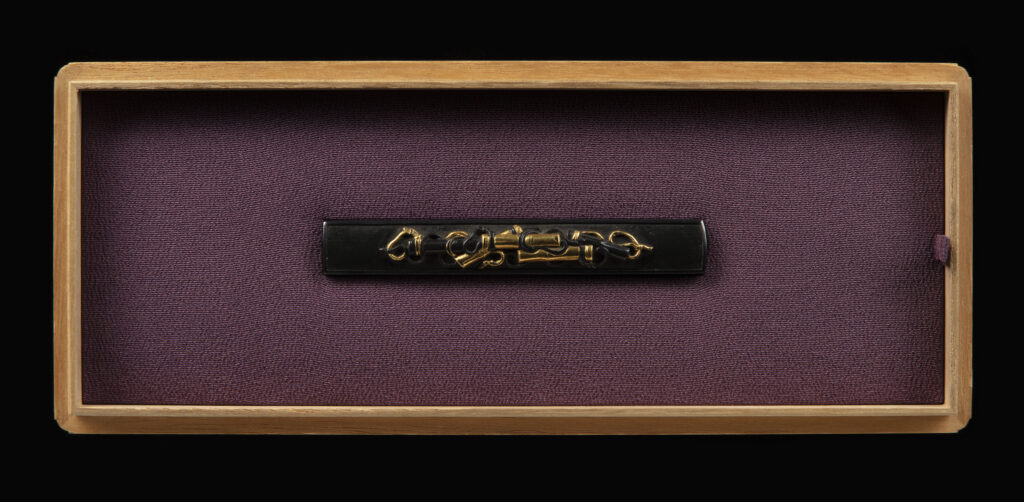
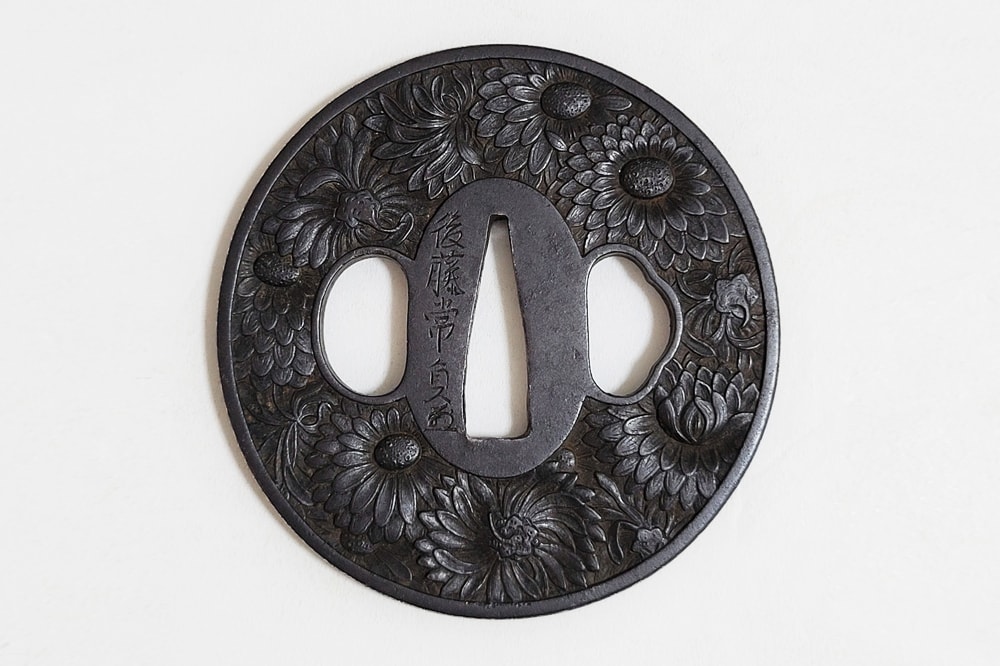
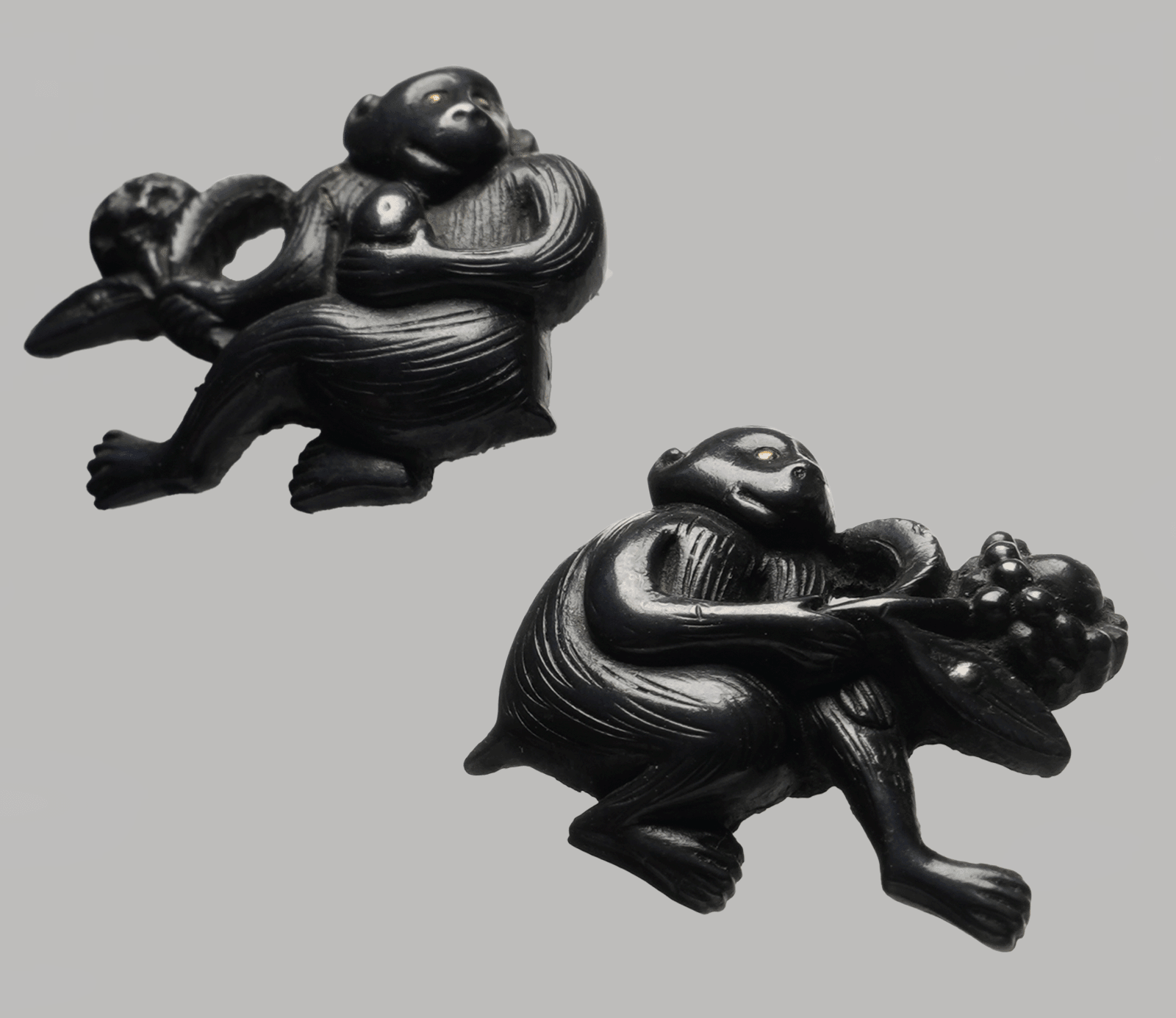
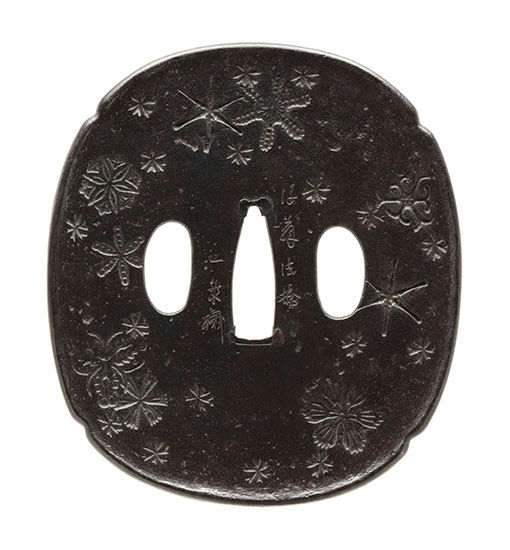
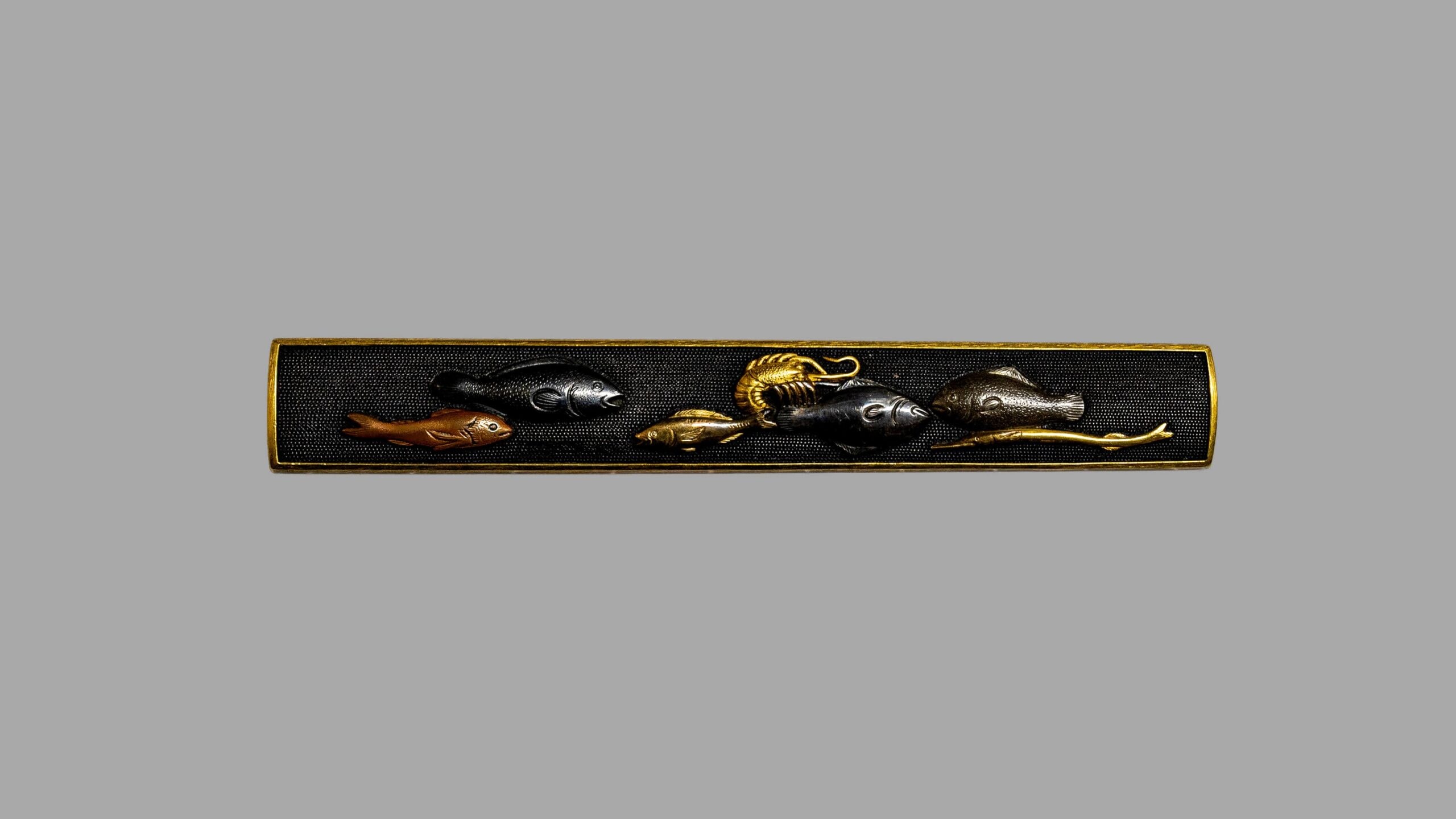
Goto Sojo, the second master of the Goto mainline, was the second son of the founder Goto Yujo. His common name was Jiro, and his personal name is said to have been Takemitsu. Succeeding his father Yujo, he served the Ashikaga shogunal house; at the age of forty he took the tonsure and adopted the name Sojo, and in later years he was granted the Buddhist honorary rank of hogen. According to the orthodox genealogy transmitted within the main Goto line, he was born in Chokyo 1 (1487) and died on the sixth day of the eighth month of Eiroku 7 (1564) at the age of seventy-eight. This revised chronology, contrary to the conventional view, would place his death in the period following the third master Joshin's death in battle, a point of genealogical significance for the succession of the early Goto house.
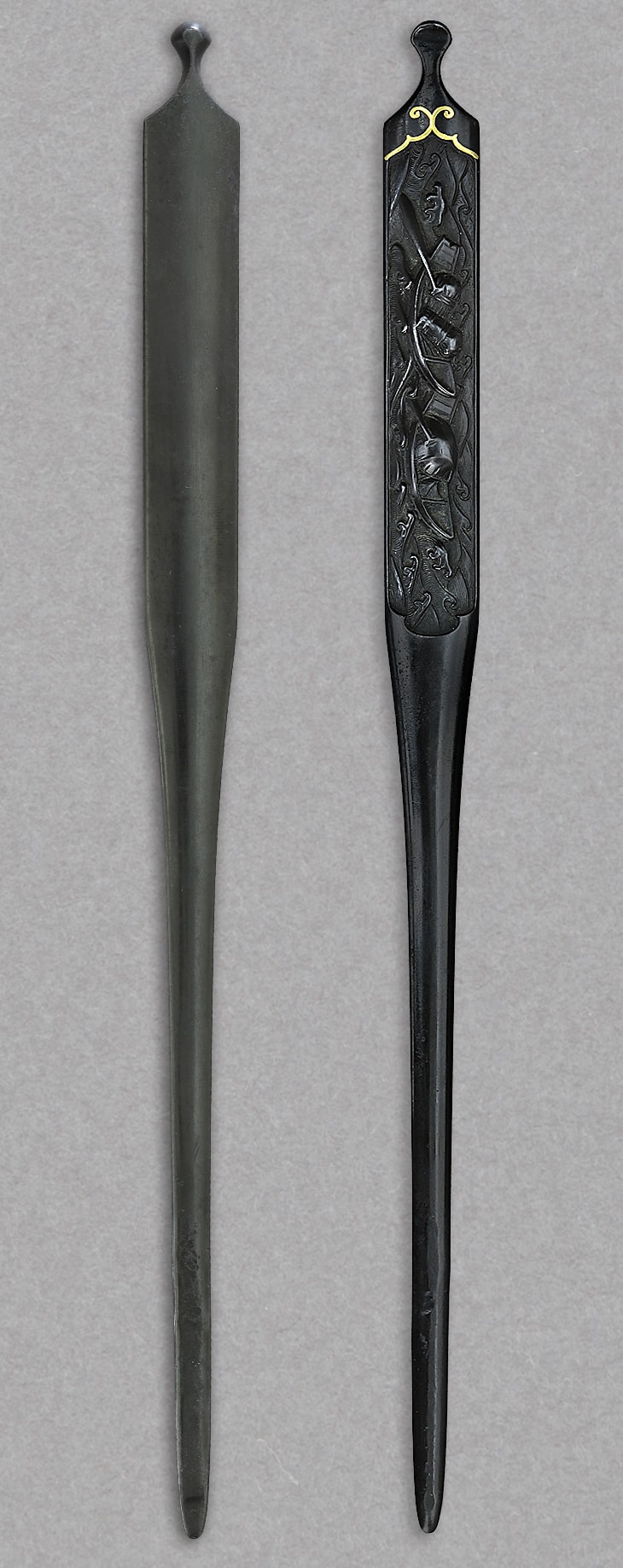
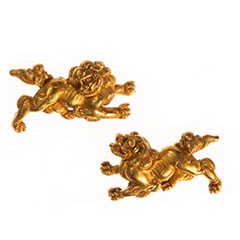
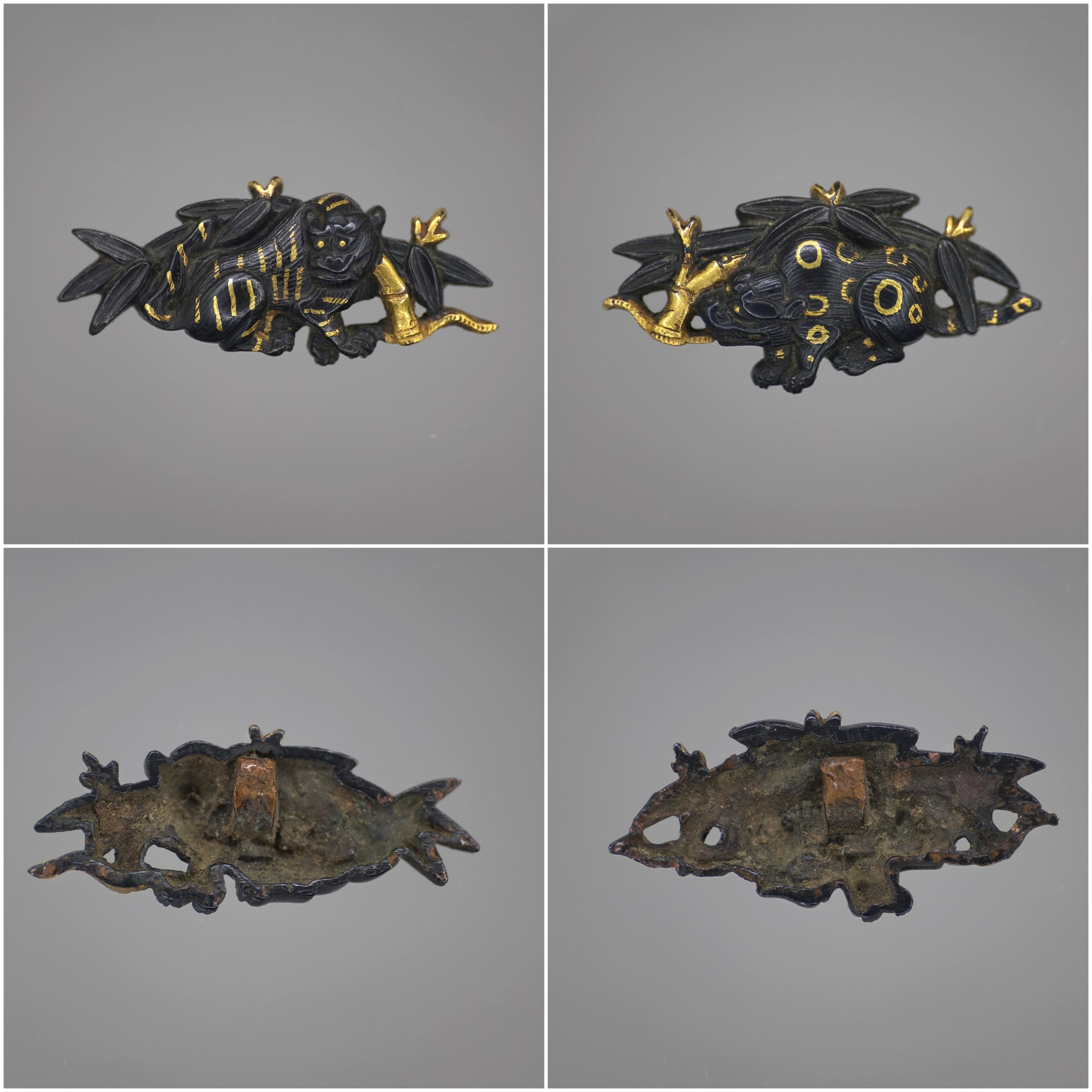
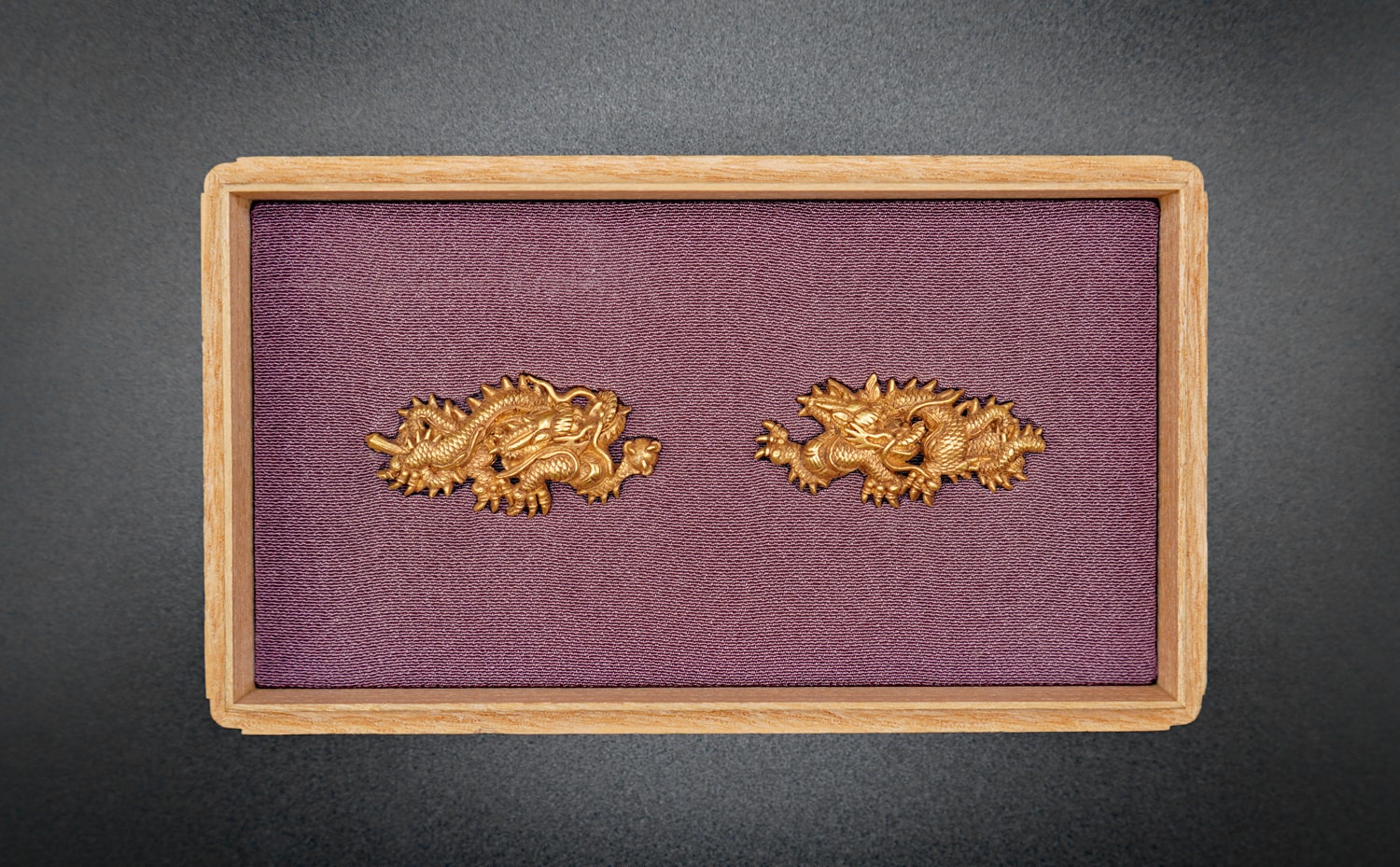
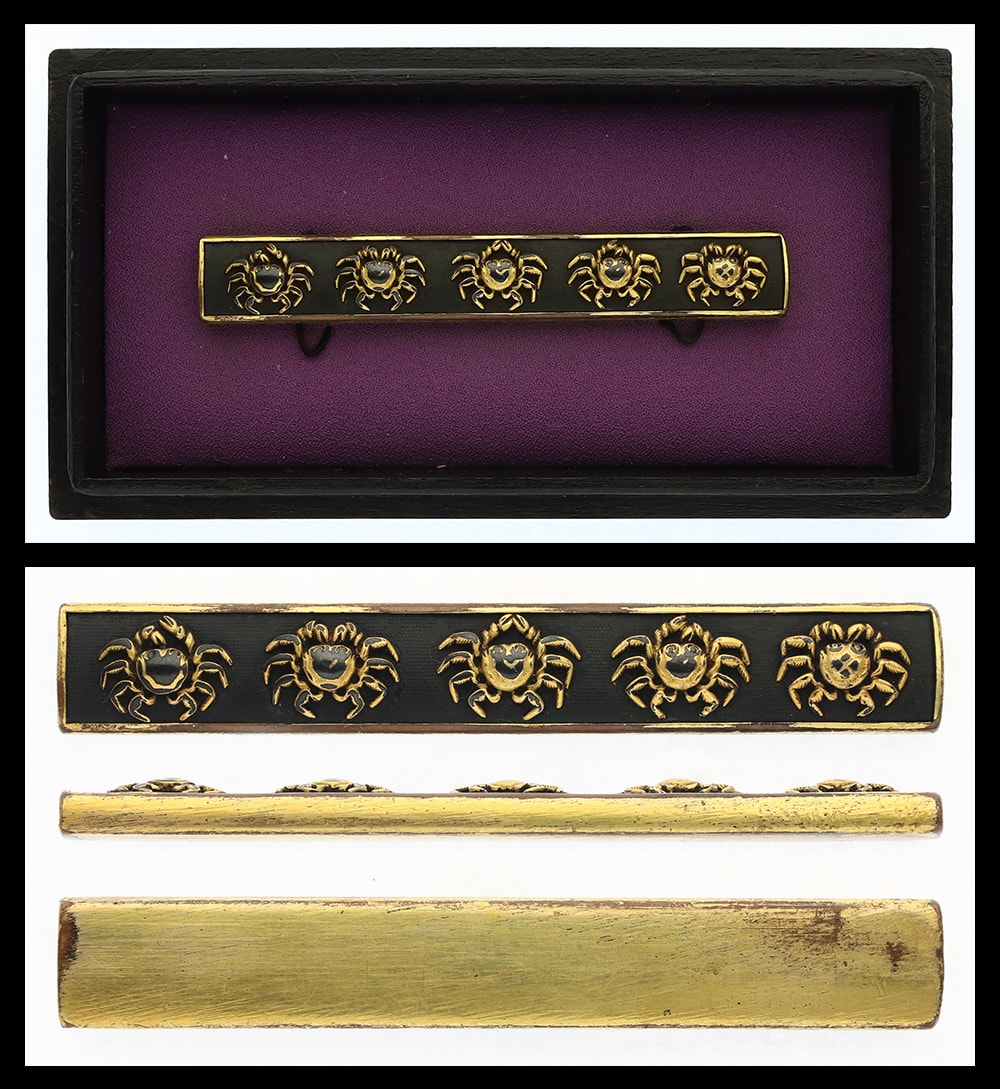
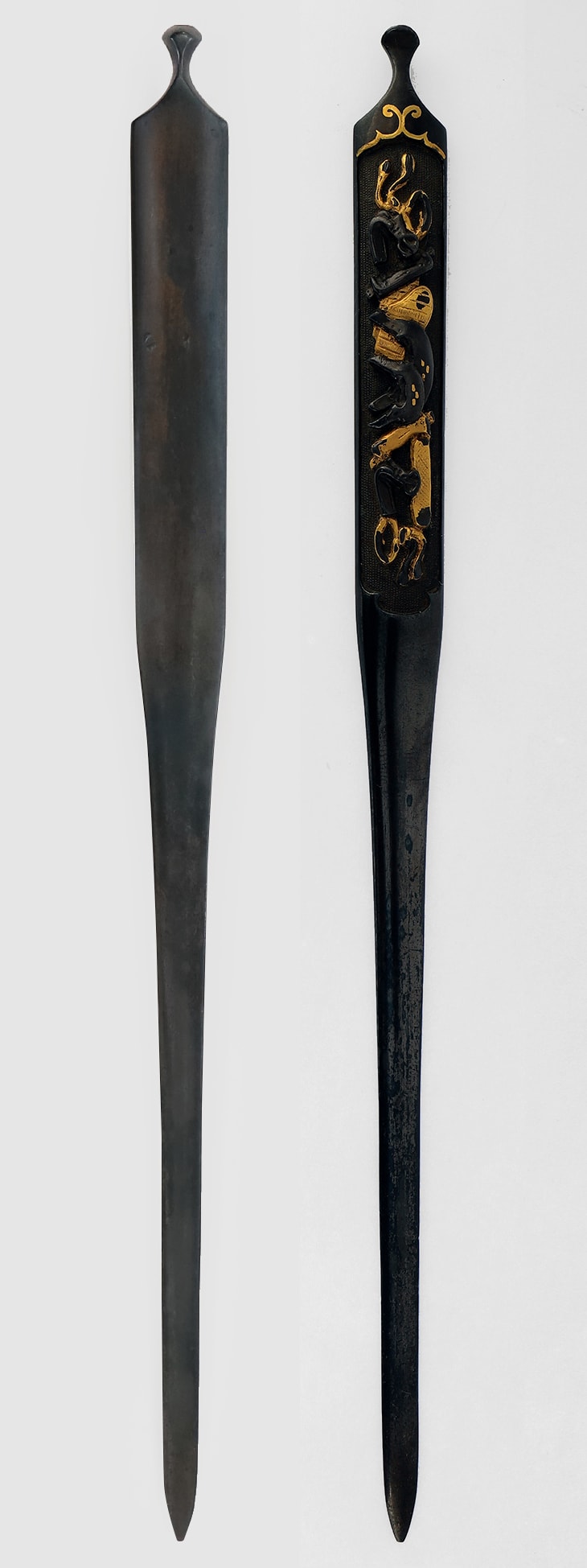
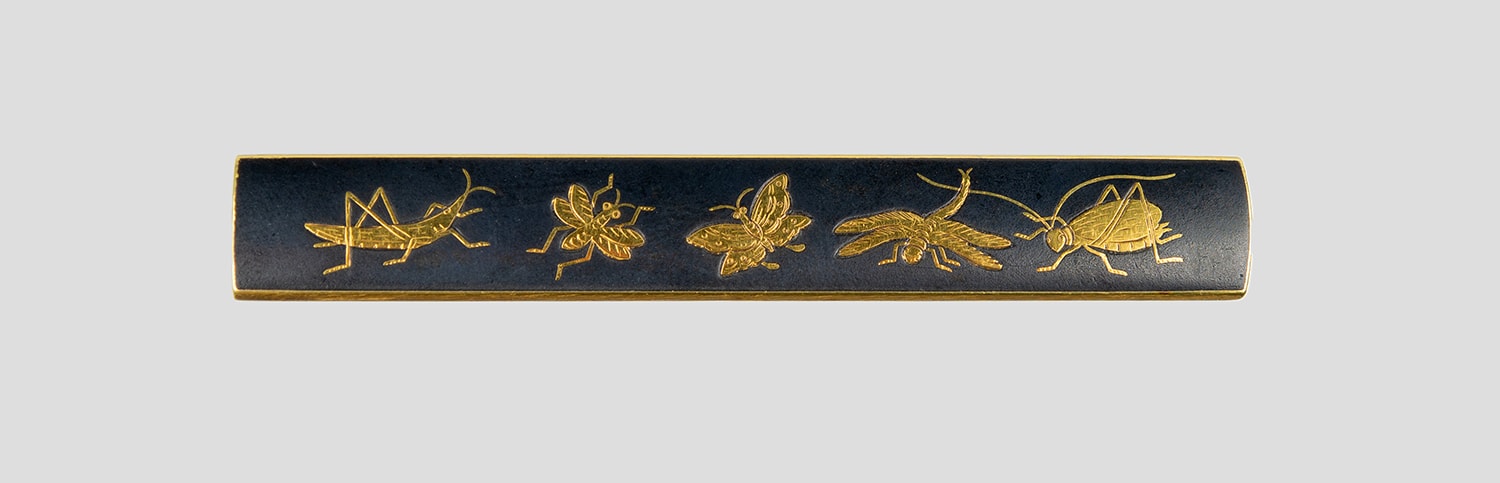
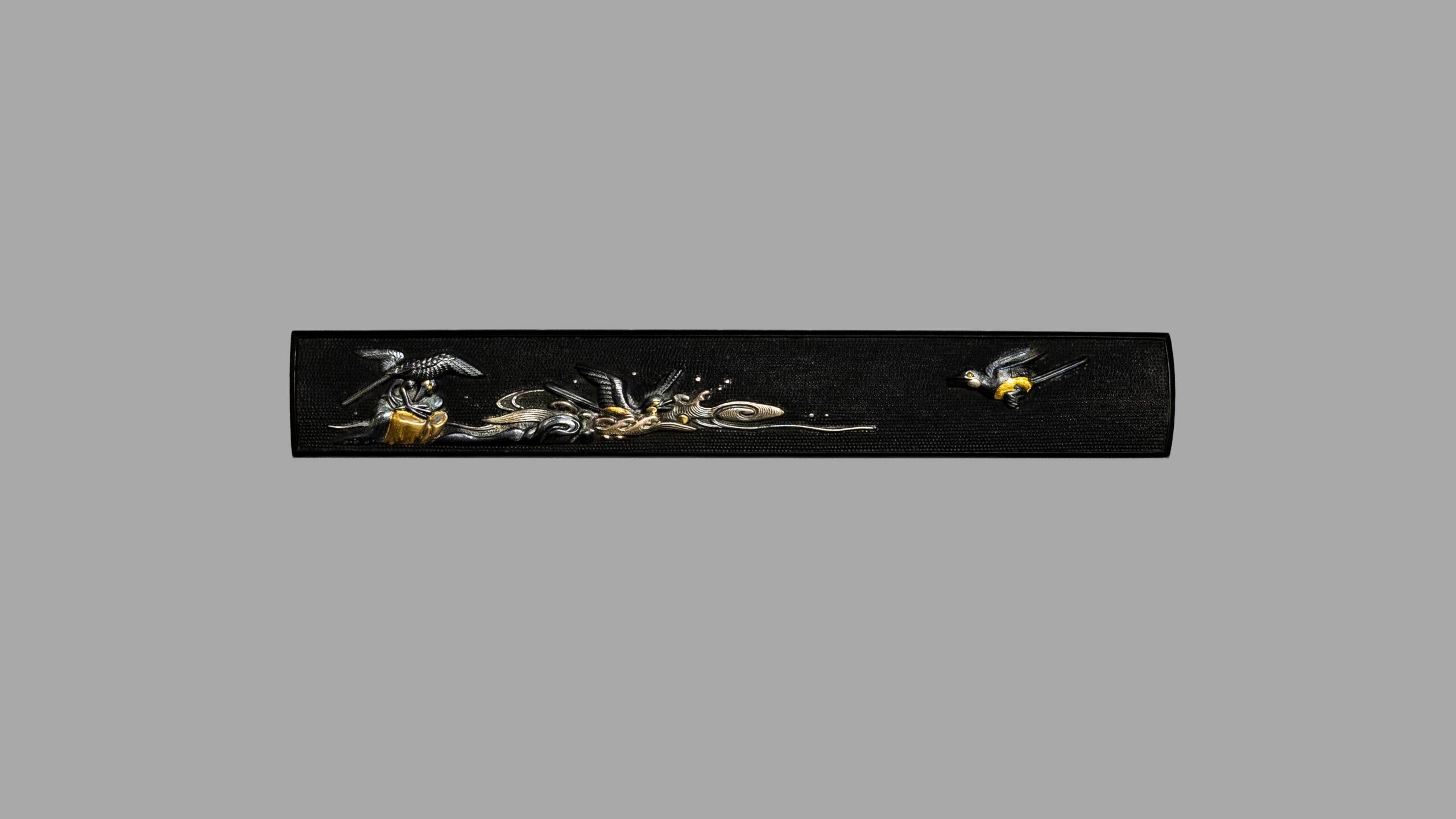
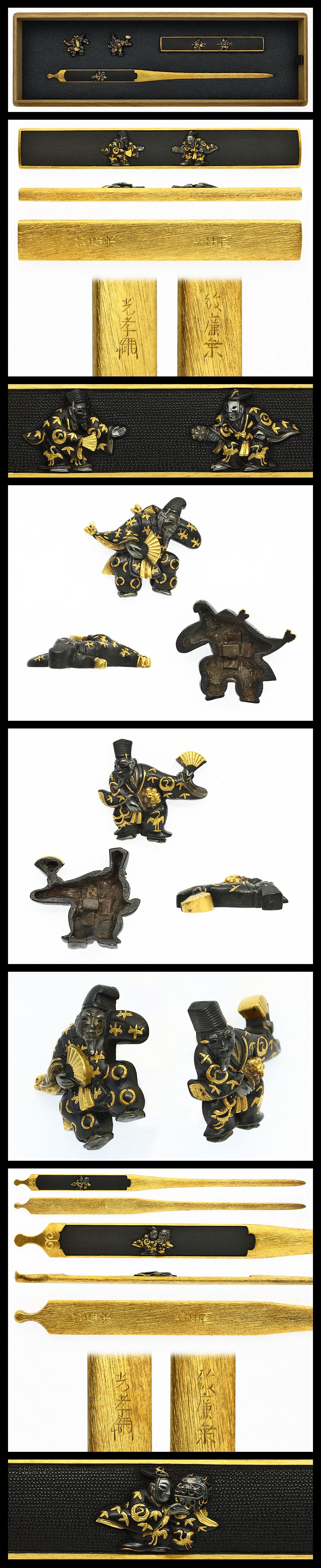
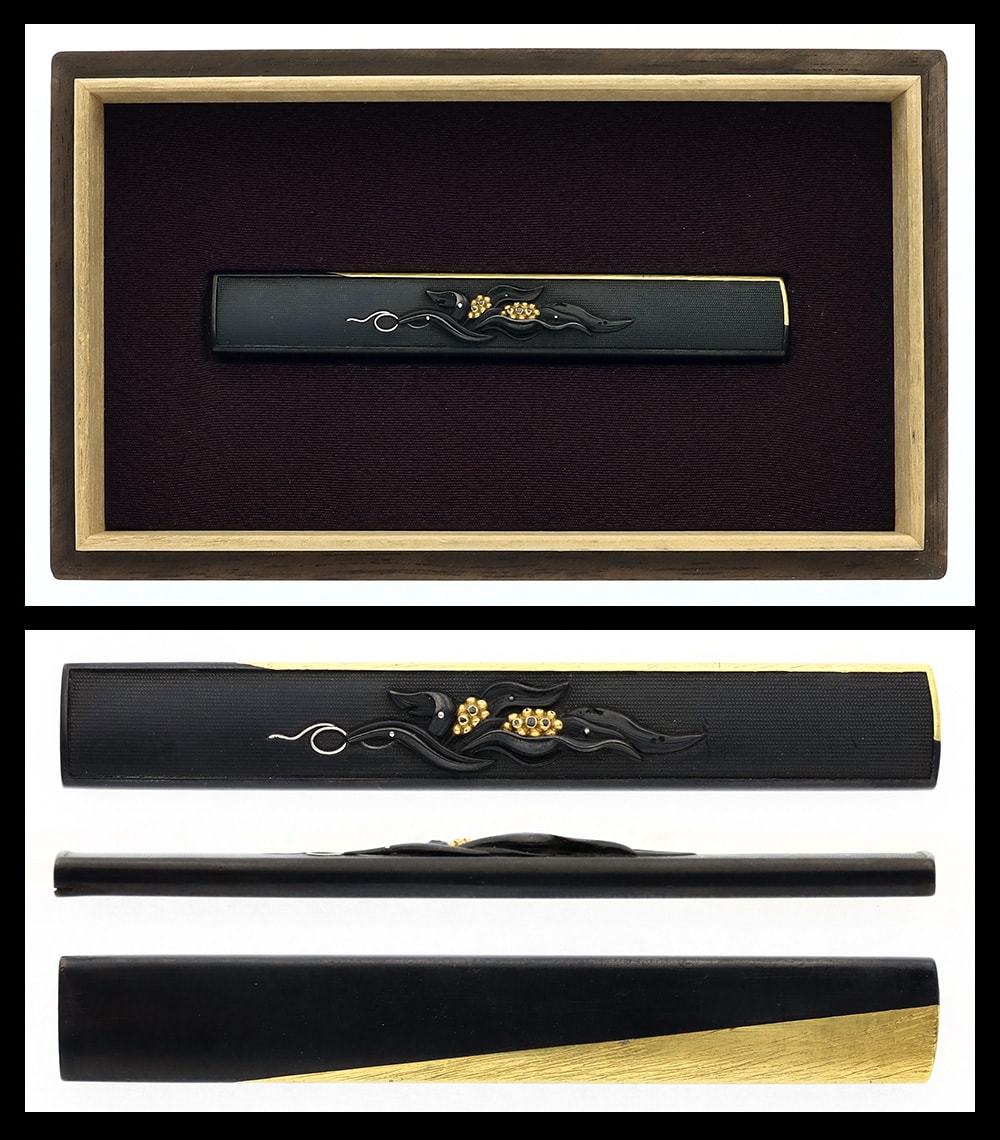
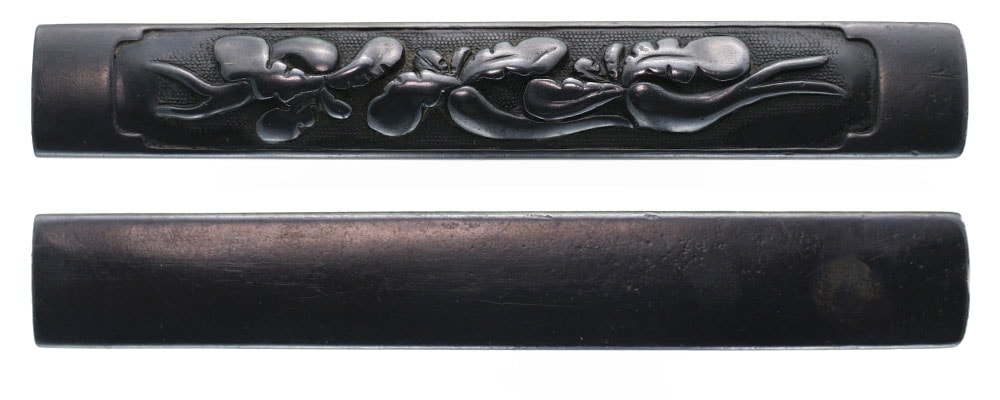
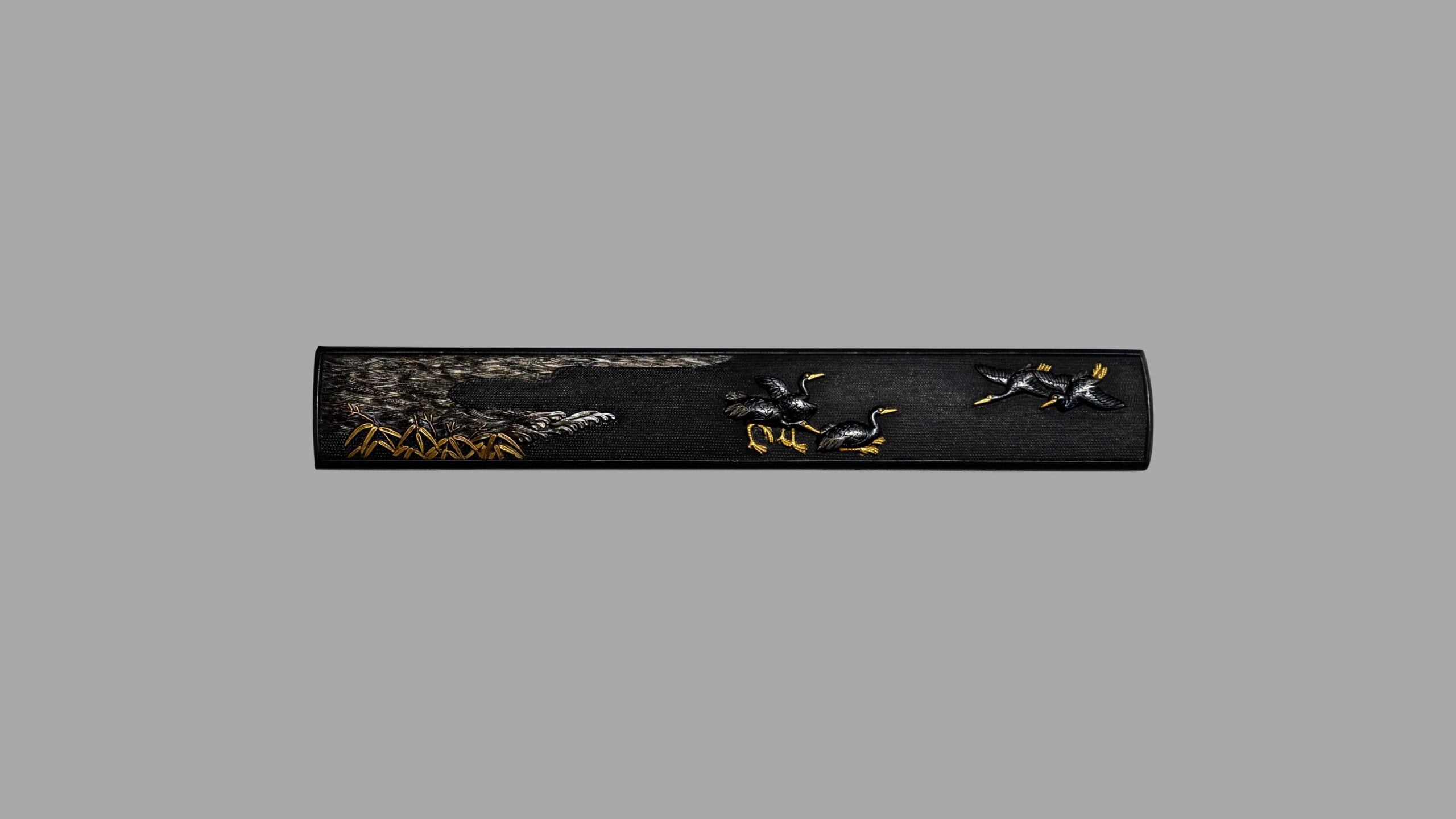
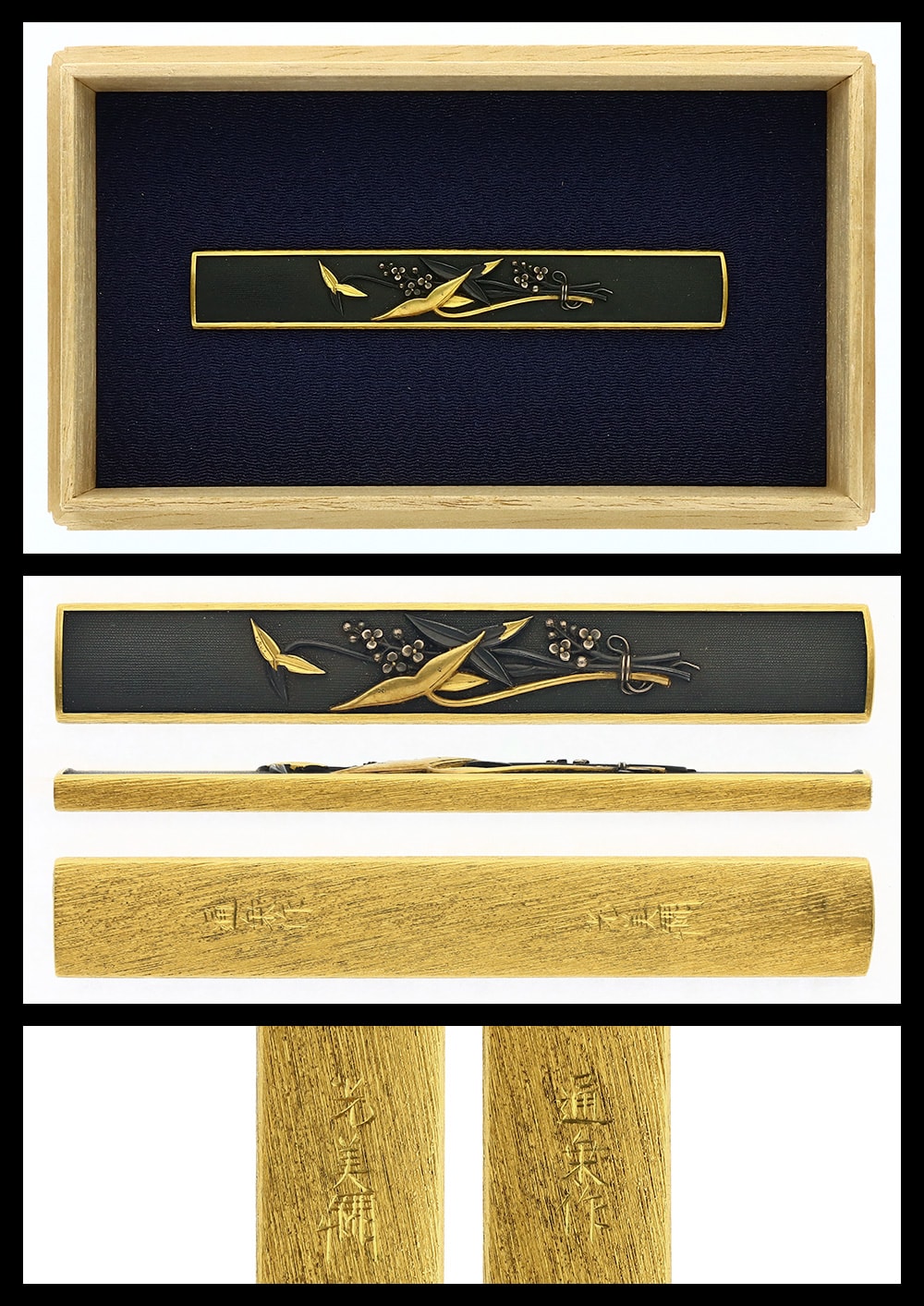
Sojo's oeuvre encompasses the full range of Goto-house fitting types -- , , , and complete sets -- executed principally in with grounds, solid gold (), and refined applications of and . His carving inherits Yujo's manner yet possesses a distinctive character: the abundant, rounded modeling -- described in appraisals as "mountains high and valleys deep" -- is controlled by a skillful tightening of forms, producing works that are at once powerful and elegant. His relief carving (yobori and ) fills subjects with surging vitality, whether rendering the Goto house's prescribed motifs (okite-mono) such as gold lions, crawling dragons, and paulownia crests, or treating narrative and auspicious themes including dragons, the Kumagai and Atsumori episode from the Heike Monogatari, lucky gods as sumo wrestlers, and ox-carts laden with rice bales. The reverse sides of his works display an archaic dignity, and the in'-kon terminals characteristic of his impart an unmistakable period character. Several pieces bear - crest-work and kezuritsugi construction combining gold and , demonstrating mastery across the full technical vocabulary of the Goto tradition.
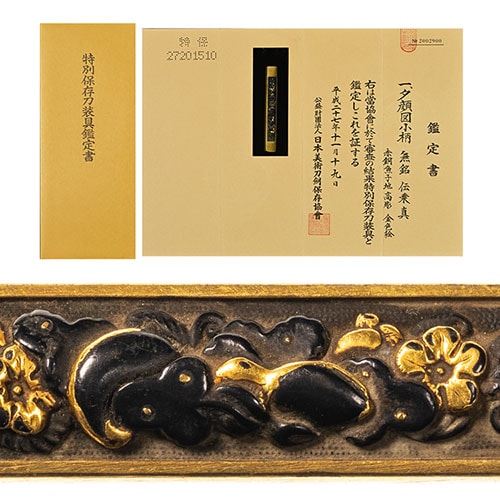
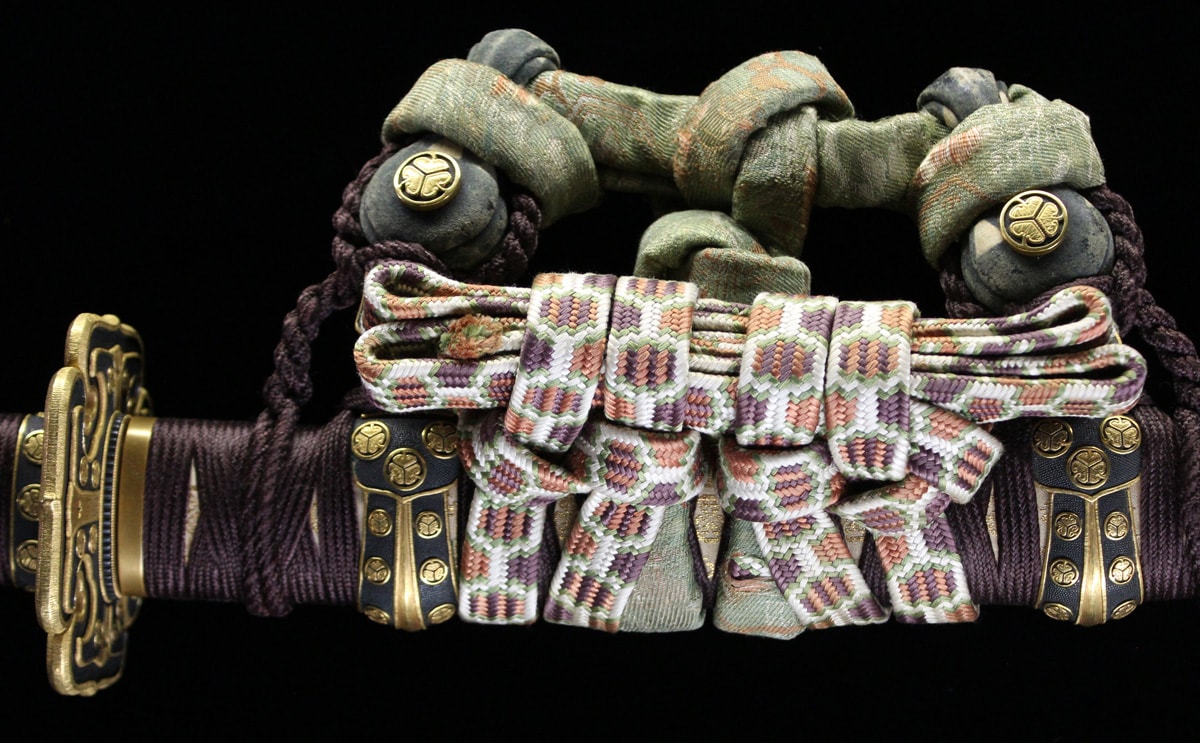
Sojo's works have been consistently authenticated by successive heads of the Goto mainline -- from the ninth master Norijo and the tenth master Renjo Koryo through to the thirteenth master Enjo Mitsutaka -- with valuations ranging up to 250 and of several . A notable concentration of his finest pieces is recorded as having been transmitted in the Konoike family, the celebrated wealthy Osaka merchants, while other works descend from the Great Tokugawa House itself, including fittings associated with the Kyoho-period known as "Samidare-go." That later masters of the Goto house, including Kenjo and Hojo, are documented as having carried out supplementary work on Sojo's pieces further attests to the esteem in which his art was held within the family's own workshop tradition. Together with his father Yujo, Sojo established the sculptural and aesthetic conventions that would define Goto metalwork for the succeeding generations, and his works remain among the most distinguished achievements of the mid- period.