戦国の世、一派は第二の主家に仕えた。小田原の後北条氏である。その庇護のもと綱広系は打刀の時代の皆焼を鍛え続け、1590年の落城とともに新刀の時代へ散った。
 NihontoWatchNihontoWatch
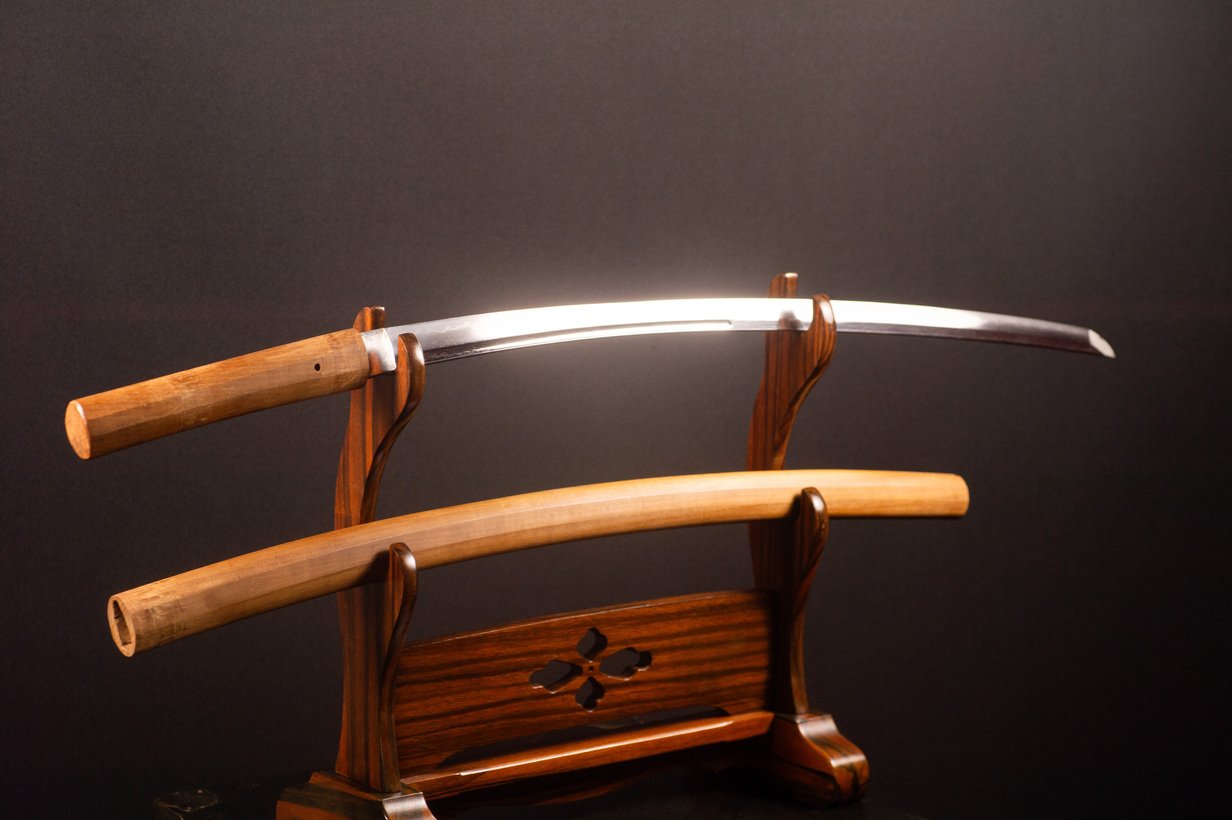
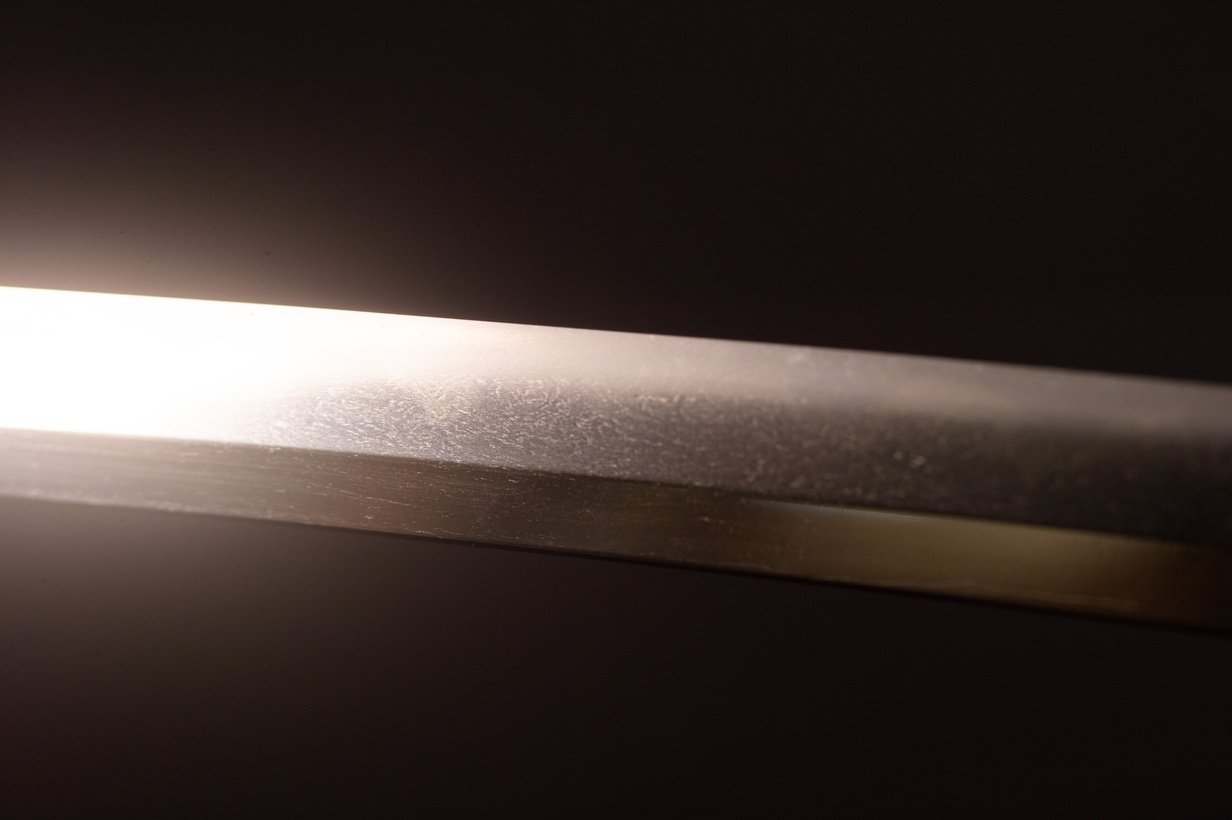
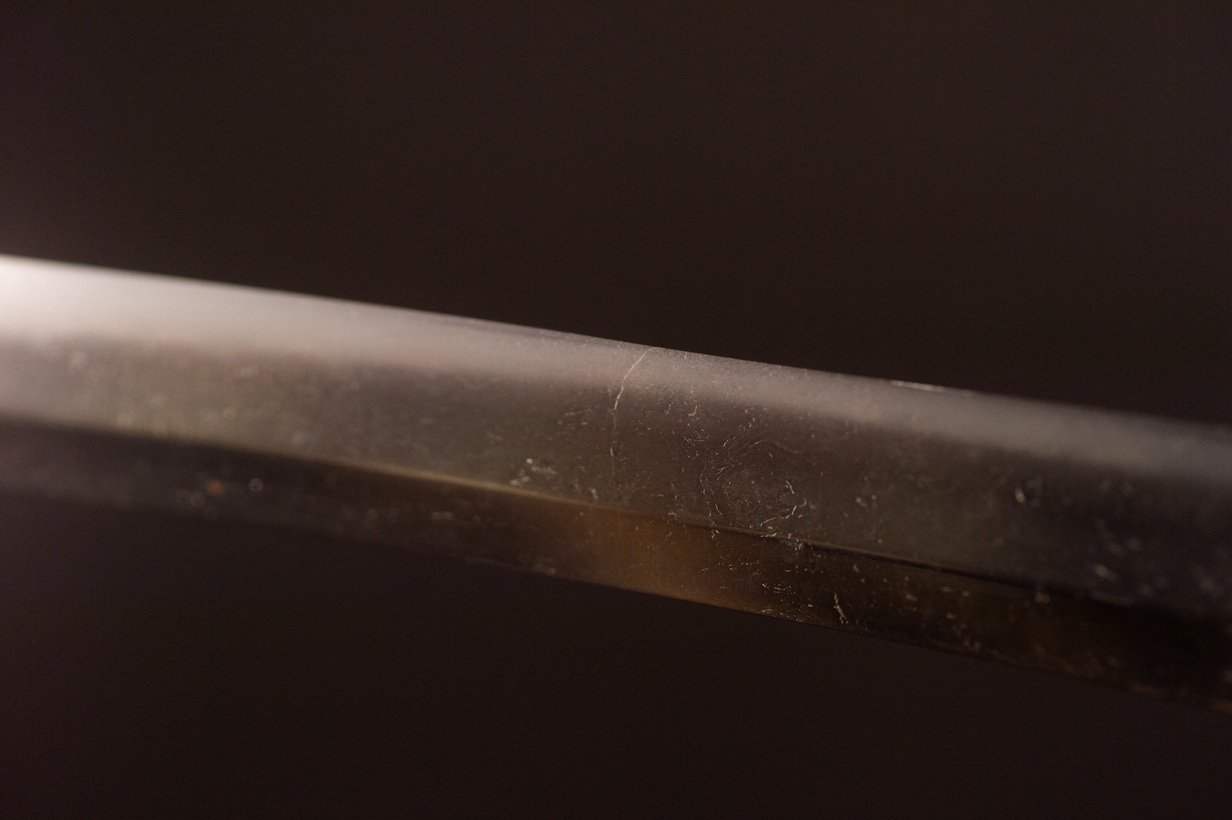
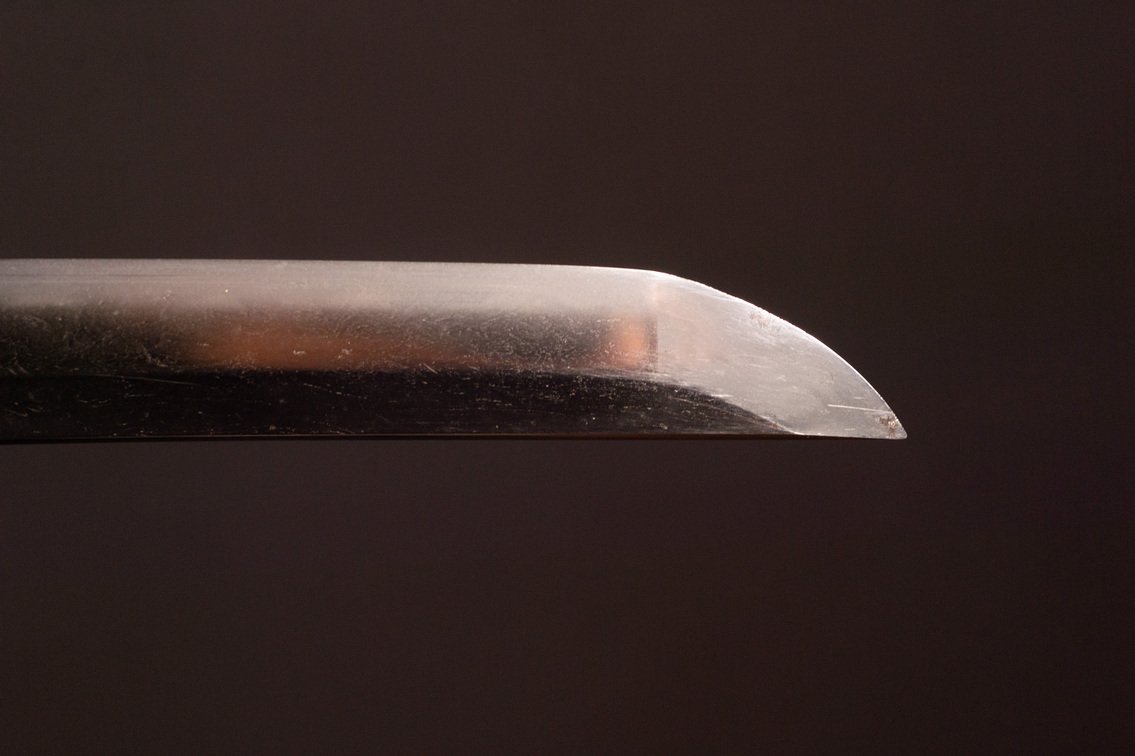
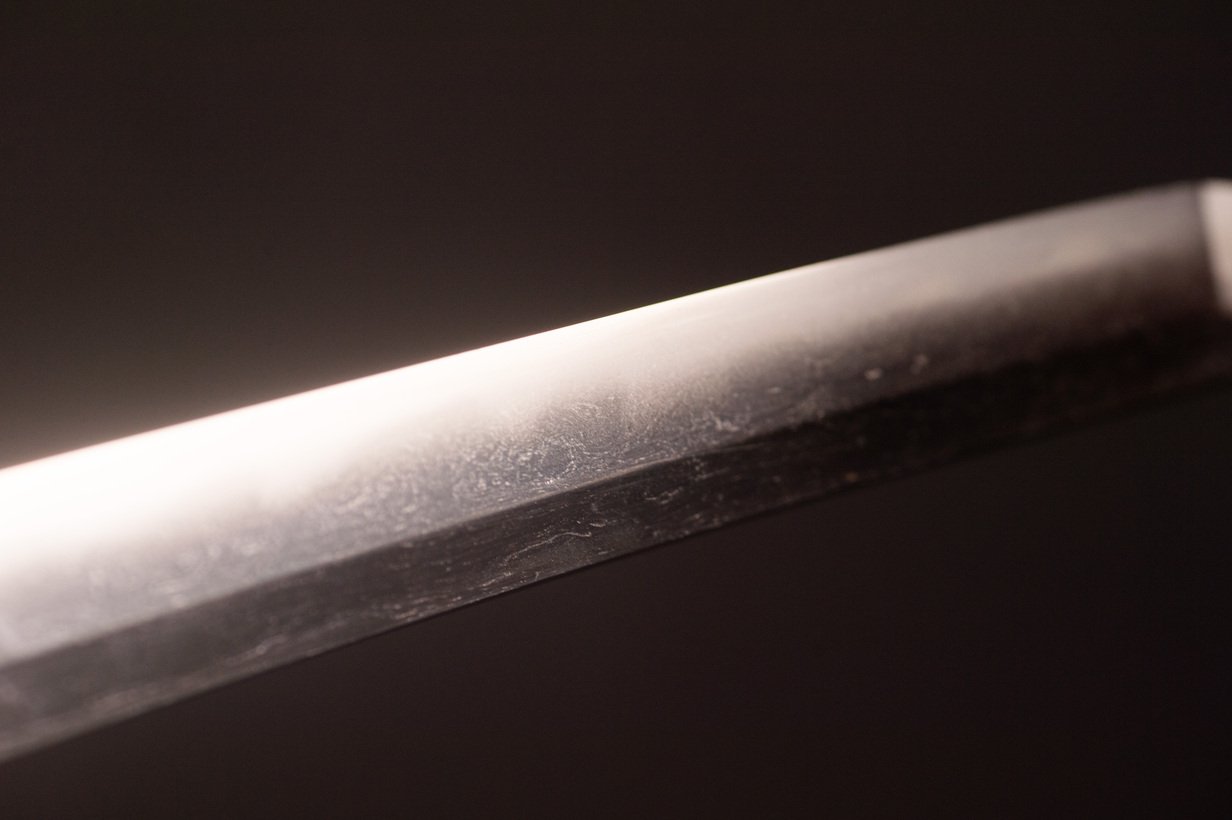
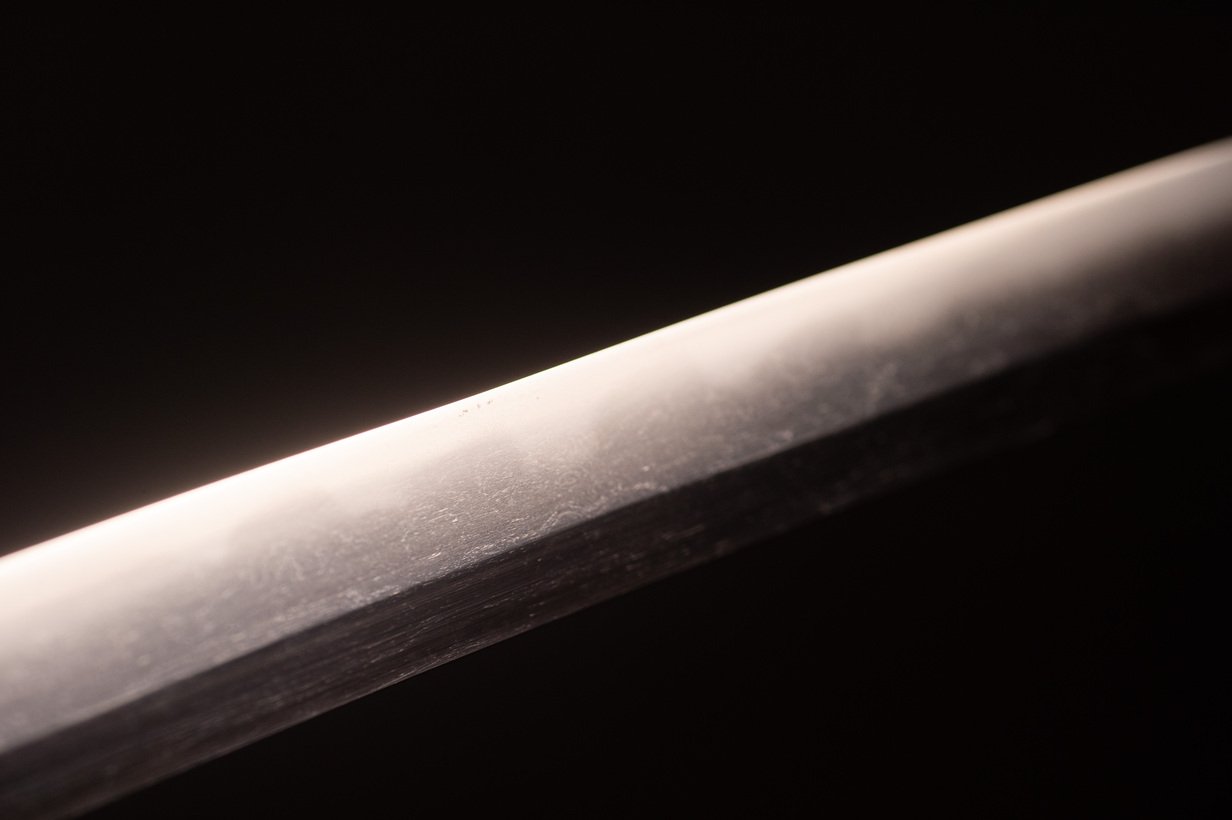
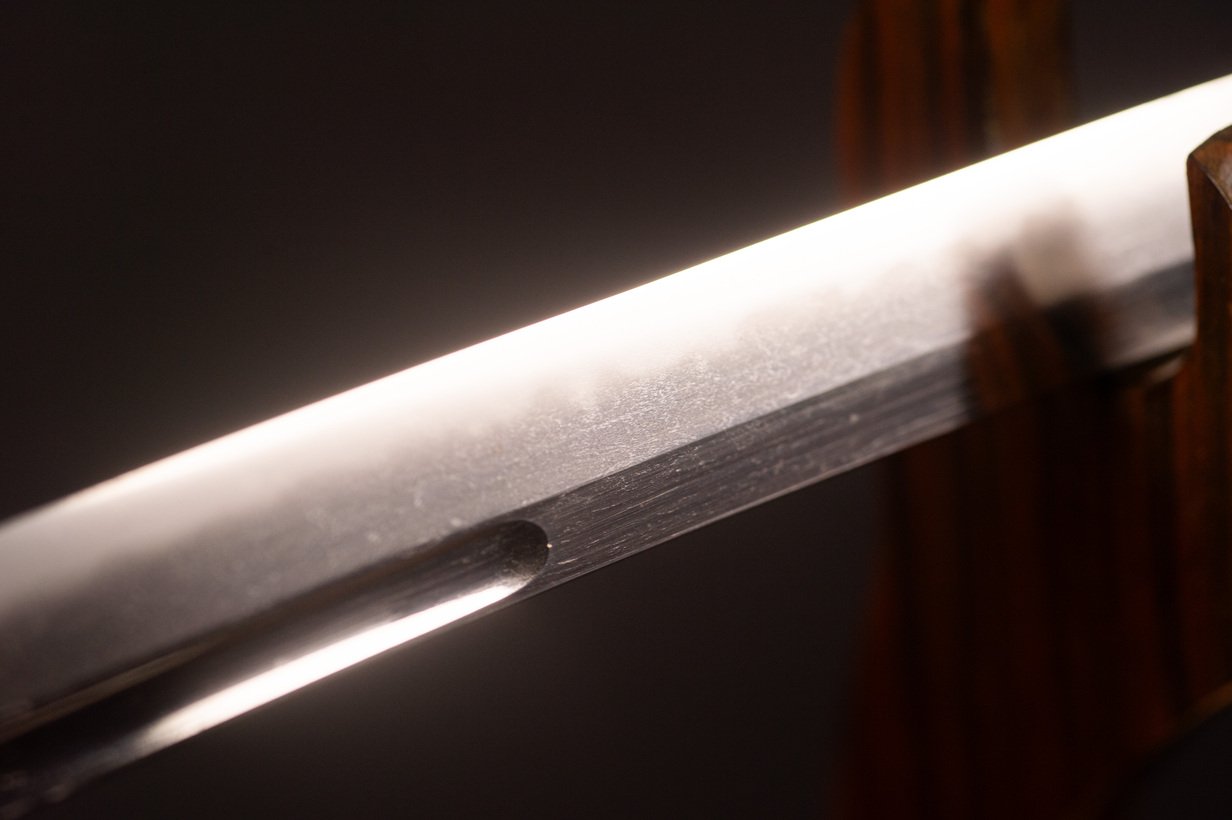
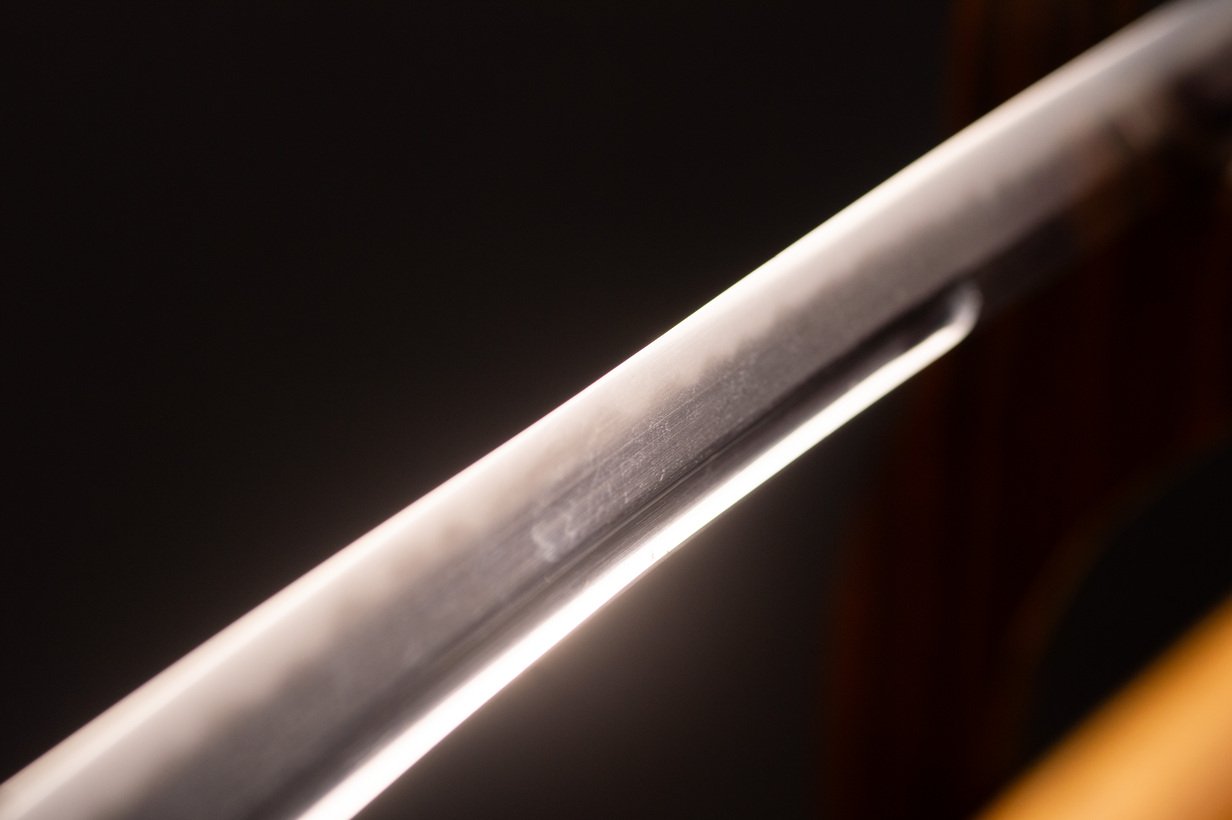
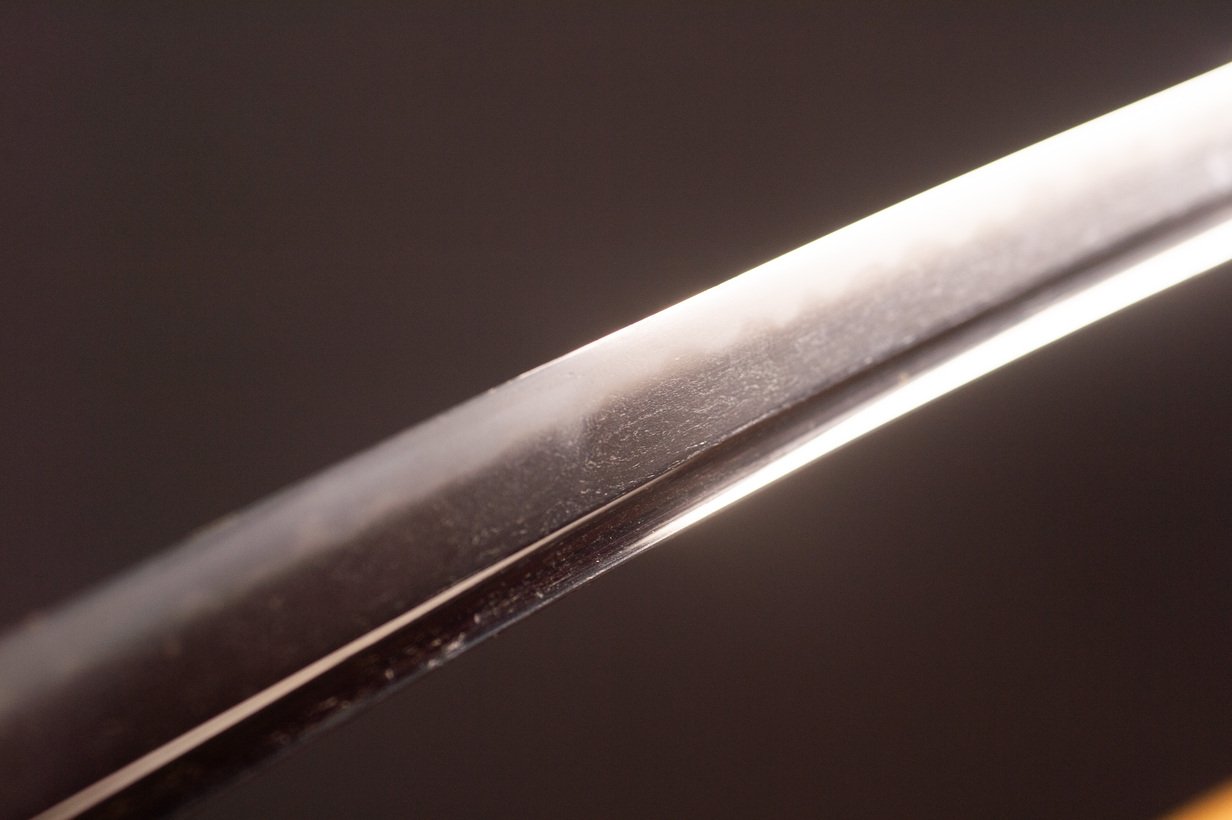
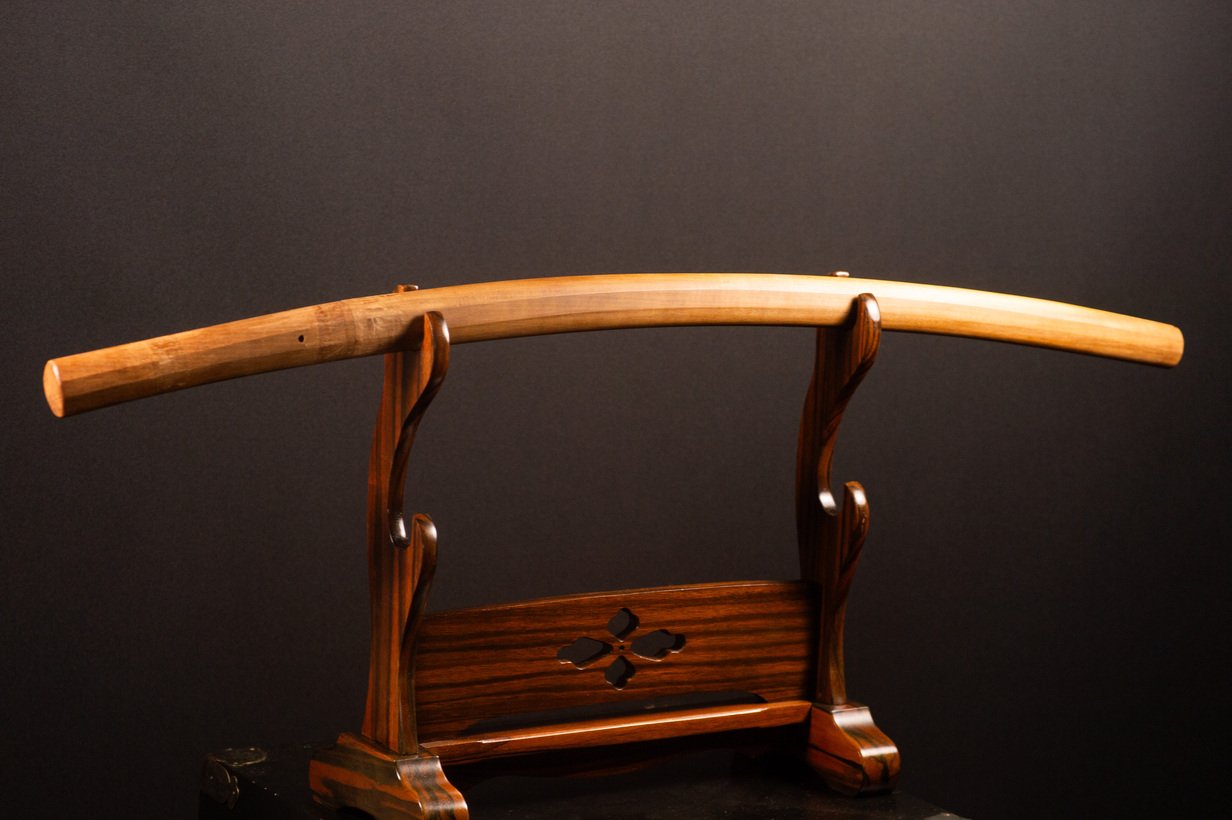
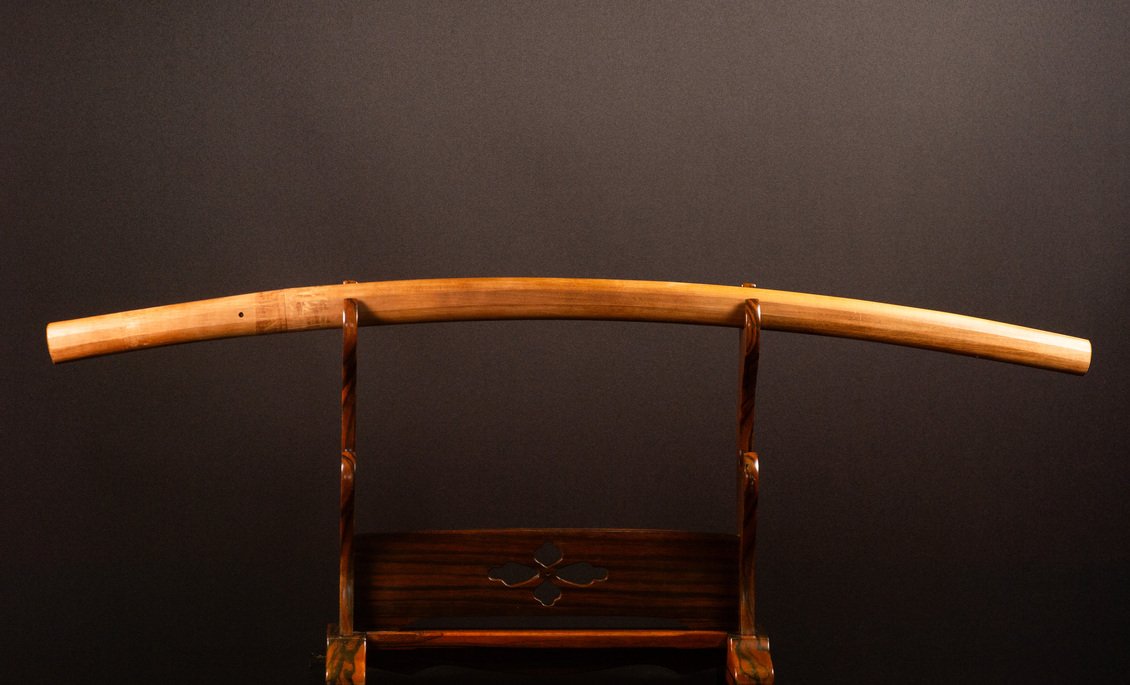
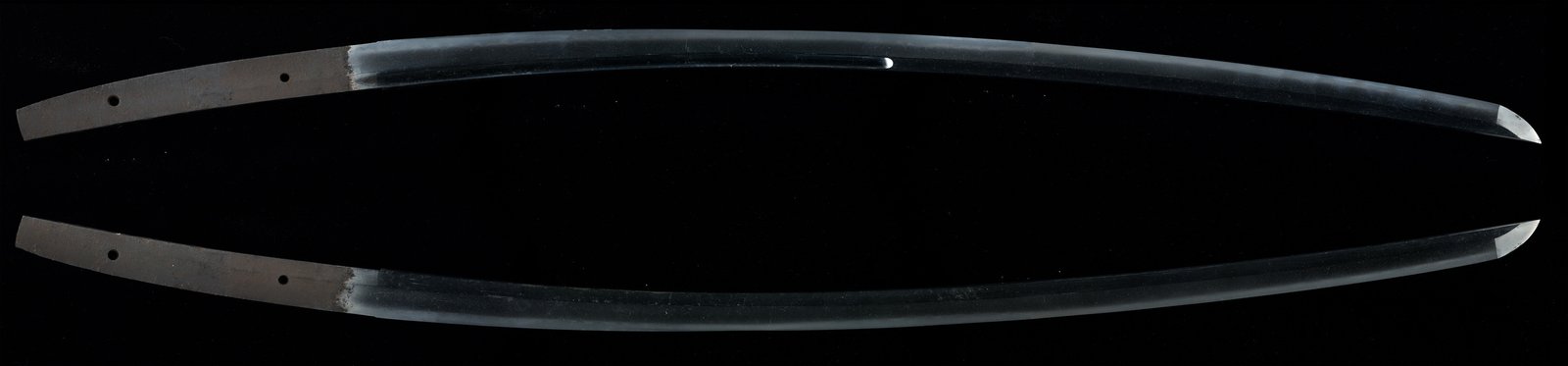
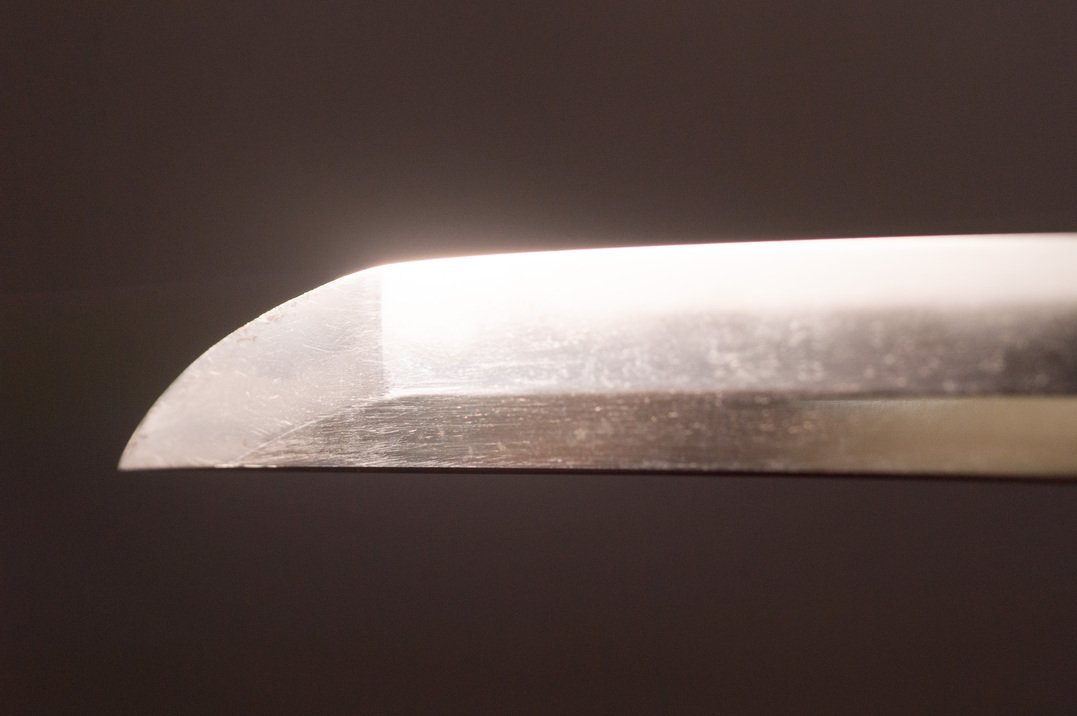
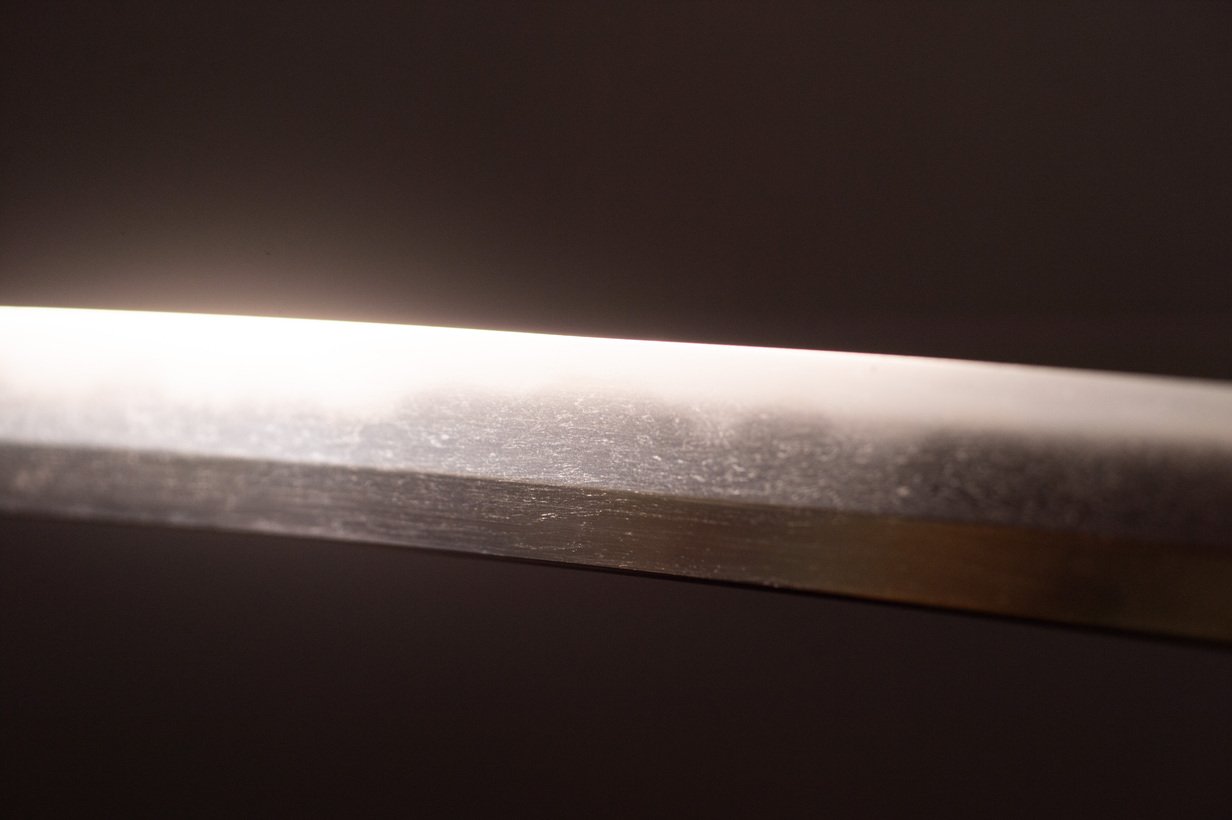
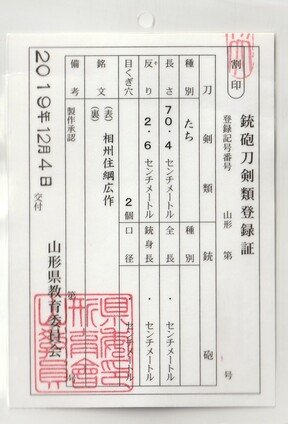
Late Muromachi Period · Sagami Tradition · Odawara-Sōshū School An authentic signed tachi by Sōshū-jū Tsunahiro (相州住綱広作), forged during the late Muromachi period. Distinguished by its elegant proportions and remarkable deep curvature, this blade represents one of the finest names of the Sue-Sōshū tradition. Preserved in its original shirasaya, the sword is accompanied by a copy of its original Japanese torokusho, the Supein Nihonto Certificate of Authenticity, and a protective cotton or kimono sword bag. The graceful silhouette, refined workmanship and historically significant signature make this tachi an outstanding example of the Odawara-Sōshū tradition. Closely associated with the powerful Hōjō clan of Odawara and the legacy of the legendary Masamune, it represents both the martial spirit of the Sengoku period and the refined craftsmanship for which the Sōshū school became world-renowned. The Smith (Sōshū-jū Tsunahiro) This blade bears the signature Sōshū-jū Tsunahiro saku (相州住綱広作), meaning “Made by Tsunahiro, resident of Sagami Province.” The name Tsunahiro occupies a distinguished place within the Sōshū tradition, one of the most celebrated schools of Japanese swordsmithing, founded by the legendary master Masamune during the Kamakura period. The Tsunahiro lineage emerged around the Tenbun era (1532–1555). According to historical tradition, the first master originally signed Masahiro (正広) before receiving the character “Tsuna” (綱) from Hōjō Ujitsuna (1486–1541), lord of Odawara Castle. In recognition of this honour, he adopted the name Tsunahiro. The family, whose surname was Yamamura (山村), proudly claimed descent from Masamune, counting Tsunahiro as the eighth generation after the great master. Working exclusively for the Go-Hōjō clan, the Tsunahiro smiths became the principal representatives of what is now known as the Odawara-Sōshū tradition. Their swords earned an excellent reputation for combining the powerful cutting ability expected by Sengoku warriors with the elegant forging techniques inherited from classical Sōshū workmanship. The prestige of the lineage extended well beyond the Muromachi period. Successive generations continued forging throughout the Shintō and Shinshintō eras, while the Yamamura family tradition survives today through the Masamune Kōgei workshop in Kamakura, making it one of the oldest continuously active swordsmithing lineages in Japan. Among the Sue-Sōshū smiths, Tsunahiro is widely regarded as the leading representative of the Odawara school, preserving the artistic legacy of Masamune while producing robust blades intended for the battlefield. Historical Context This tachi belongs to the closing years of the Muromachi period, one of the most turbulent eras in Japanese history. The country was engulfed in the Sengoku Jidai—the Age of Warring States—when powerful daimyō fought continuously for territorial control and political supremacy. The Hōjō clan ruled much of the Kantō region from the imposing Odawara Castle, one of the strongest fortifications of medieval Japan. Their military success relied heavily upon disciplined samurai forces equipped with practical, durable weapons capable of withstanding prolonged campaigns. The Tsunahiro school was established specifically to serve these military needs. Unlike many provincial smiths, the Odawara-Sōshū craftsmen inherited one of the most prestigious artistic traditions in Japanese sword history while producing blades intended for real combat rather than ceremonial display. Every sword signed Tsunahiro therefore evokes the atmosphere of sixteenth-century Odawara: the headquarters of the Hōjō clan, the constant military campaigns of the Sengoku period, and a direct artistic lineage tracing its origins back to Masamune himself. The Blade (Tōshin) The most striking feature of this sword is its magnificent sugata. Measuring 70.4 cm in nagasa with an impressive sori of 2.6 cm, the blade displays the deep sweeping curvature characteristic of classical tachi. Its elegant profile immediately recalls the cavalry swords carried by mounted samurai during Japan’s medieval period, combining grace with unmistakable authority. The hamon consists of a refined suguha flowing gently into soft notare, executed in bright nie. The temper line remains continuous and well balanced throughout the blade, terminating in a neat ko-maru boshi. Rather than dramatic flamboyance, the overall impression is one of quiet confidence and technical refinement, perfectly in keeping with the more restrained expression of the Sōshū tradition. The forged steel displays an attractive combination of itame and mokume grain enriched with visible ji-nie. The texture possesses the dark, vibrant appearance long associated with quality Sōshū workmanship, revealing careful forging and excellent material selection. The nakago has been suriage, having been shortened during its long history, yet importantly retains its original signature. Two mekugi-ana remain visible, while the deep black patina developed over centuries is entirely consistent with authentic late Muromachi kotō manufacture. The workmanship, proportions, signature and overall character of the sword form a harmonious whole that faithfully represents the traditions of the Odawara-Sōshū school. Shirasaya The sword is preserved in its shirasaya, the traditional plain white-wood mounting used in Japan for the long-term preservation of valuable blades. Unlike decorative mountings intended for wear, the shirasaya provides a stable environment that helps protect the polish and steel from unnecessary wear and humidity. Presented on its display stand, the elegant mounting allows the remarkable curvature of this tachi to be fully appreciated while ensuring appropriate long-term conservation. Documentation This tachi is accompanied by a copy of its original Japanese torokusho registration issued by Yamagata Prefecture, confirming its legal registration in Japan. The sword also includes the Supein Nihonto Certificate of Authenticity, prepared by our specialists, describing the principal characteristics, historical attribution and condition of the blade. A protective cotton or traditional kimono sword bag is included with the purchase. No modern NBTHK or NTHK appraisal paper accompanies this sword. It is offered as a signed (zaimei) work of Sōshū-jū Tsunahiro, supported by the retained signature, the workmanship, the blade’s sugata and the characteristic features of the Odawara-Sōshū tradition. Collector’s Value Signed swords by Tsunahiro have long been appreciated by collectors for their historical association with the prestigious Sōshū tradition and the powerful Hōjō clan of Odawara. As one of the principal representatives of the Sue-Sōshū school, Tsunahiro occupies a distinguished place in Japanese sword history, combining the artistic heritage of Masamune with the practical requirements of the Sengoku battlefield. This example is especially attractive for its graceful tachi proportions, exceptionally deep curvature and retained signature. Although the blade has been shortened during its long history, the preservation of the mei considerably enhances both its historical interest and collectability. Together with its elegant shirasaya, documented Japanese registration and carefully preserved condition, this sword represents an excellent opportunity to acquire an authentic Muromachi-period tachi by one of the most respected names of the Odawara-Sōshū tradition. Elegant, historically significant and unmistakably representative of the Sōshū tradition, this signed Sōshū-jū Tsunahiro tachi embodies the martial spirit of late Muromachi Japan. Combining an impressive sugata, refined workmanship, a retained signature and documented provenance, it is a distinguished collector’s sword that rewards both historical study and refined display.

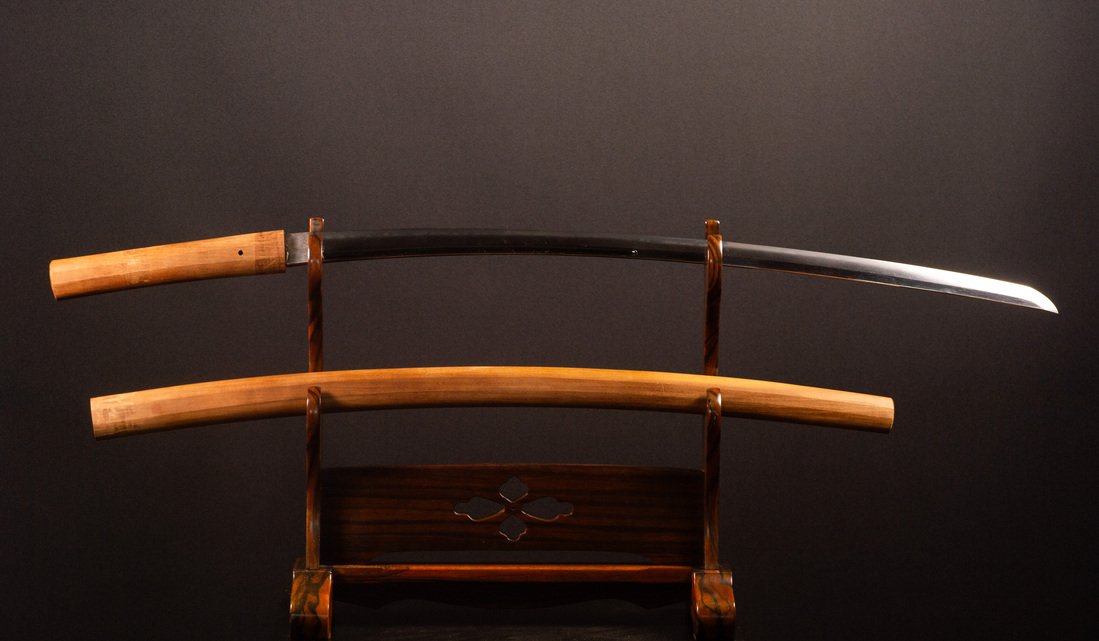
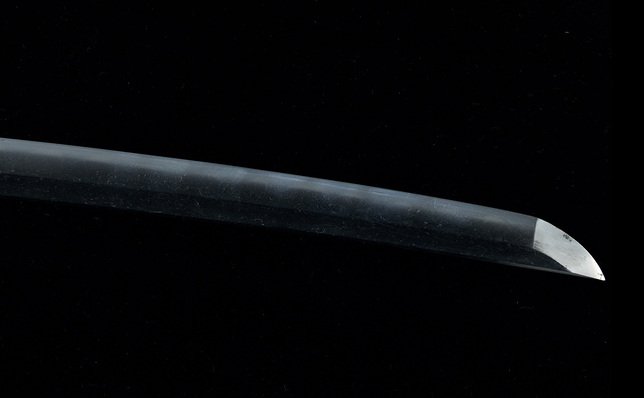
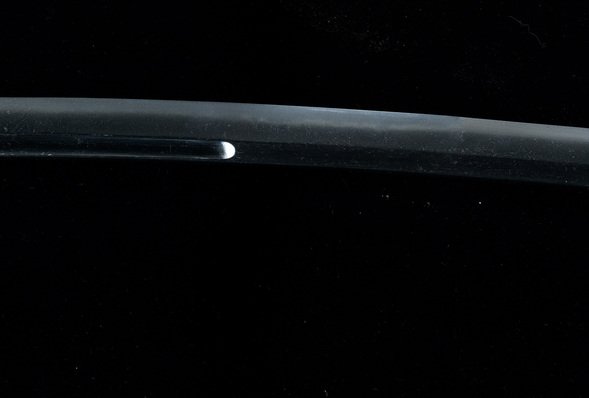
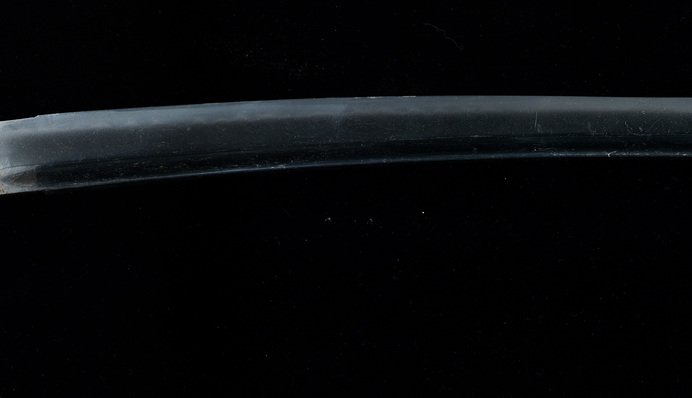
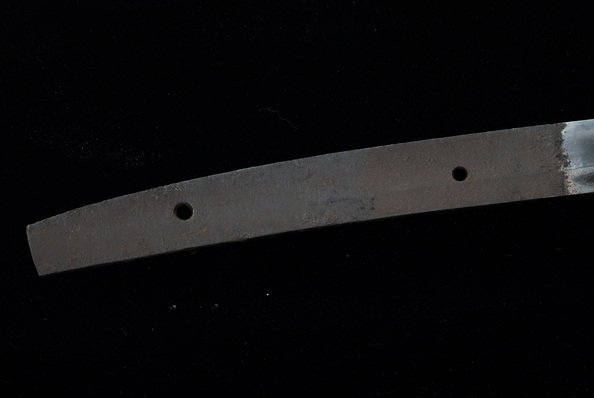

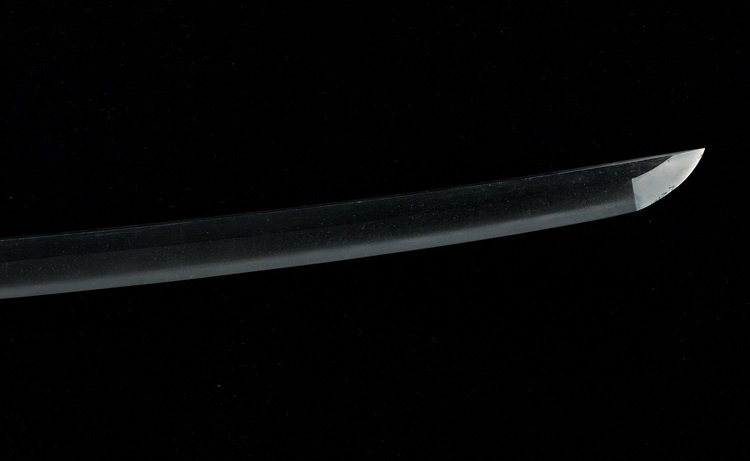
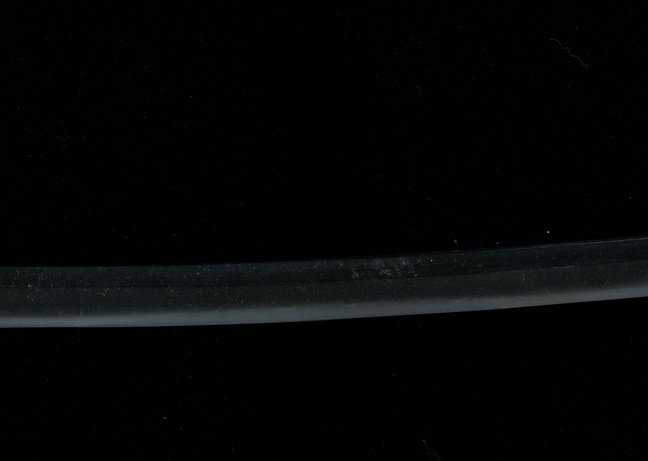
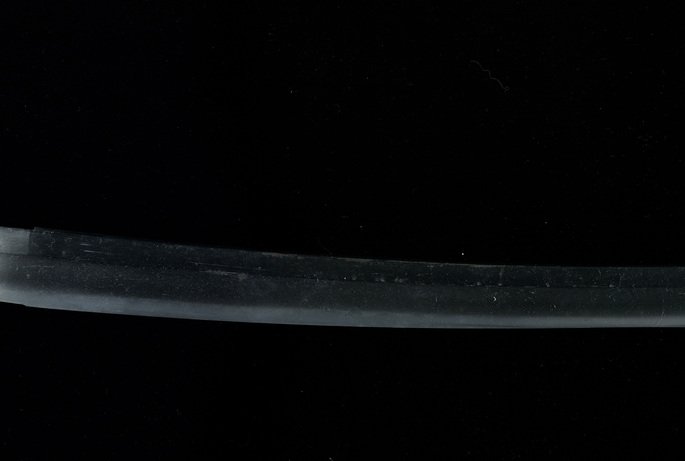
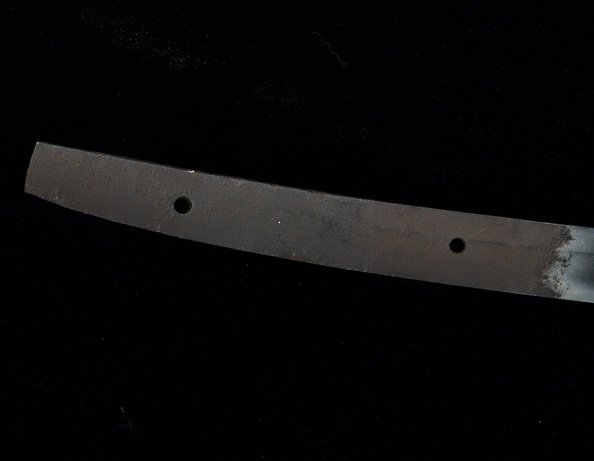

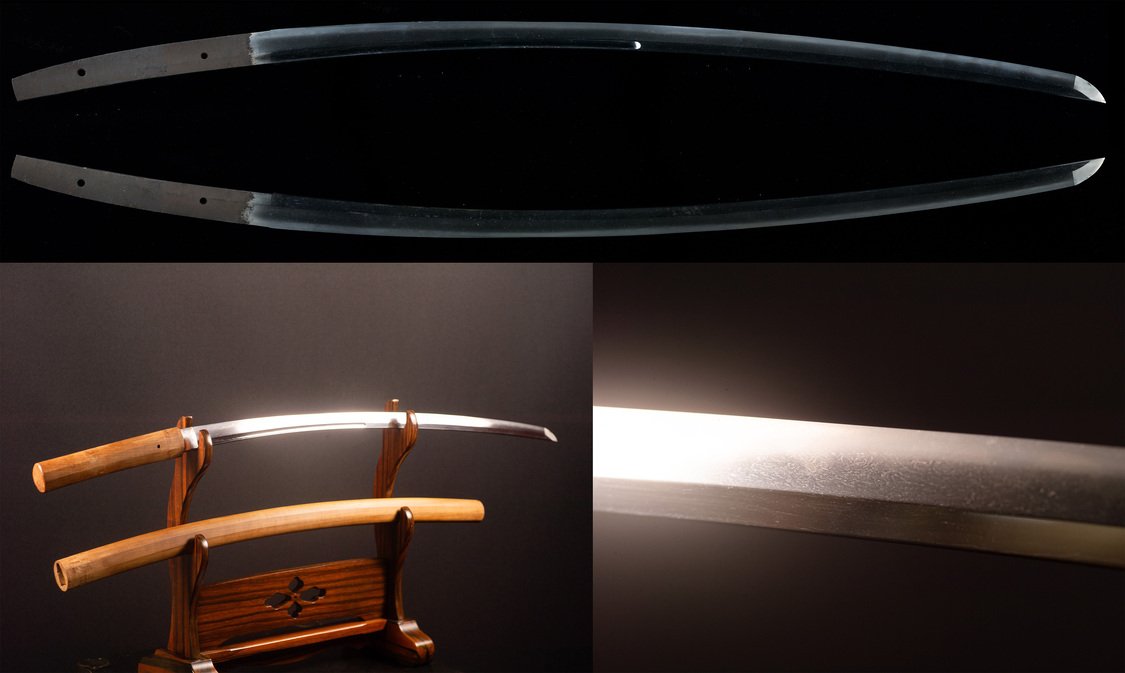
販売店の記載のまま
(翻訳なし) 店主の原文のまま表示しています。正確さの確認を通った翻訳のみを表示します。
末相州(小田原・相模) · 相模 · 1532-1555頃
藤代 上作 · 刀剣大鑑 上位37%
現在2点販売中
綱広は相州伝の掉尾を飾る刀工である。現存最古の年紀は天文(一五三二~五五)に遡り、説明書はその初代を室町時代の相州鍛冶の代表とし、「室町時代の相州鍛冶の代表は相州伝の作風を最もよく守り天文年間に最も活躍した初代綱広であった」[[c:1]]と記す。初代は広正の子孫と伝え、初銘を正広といい、北条氏綱に召されて小田原に居住し、綱の一字を賜って改名したという。以後その名は連綿たる名跡となり、二代を天正、三代を慶長、さらに寛永・万治へと及ぶから、「綱広」は単一の手ではなく後北条氏のもと小田原に代々続いた工房を指す。在銘・生ぶがほぼ全きで、五字銘「相州住綱広」を指表の棟寄りに低く切り、天文十七年(一五四八)の太刀と天文廿二年(一五五三)の脇指とが、後代の拠るべき初代を定める。
見どころとなる手は、皆焼へ向かう末相州の乱刃である。互の目乱れに丁子・矢筈の刃・尖り刃・小のたれを交え、先へ刃幅を増して焼くもので、沸よくつき砂流しを交え、飛焼・棟焼を地に及ぼして総体に皆焼となる。互の目に組まれて先へ向かう矢筈の刃は、典型作とする際に説明書が繰り返し挙げる刃文の見どころである。皆焼は説明書が同工の本領とする作域で、広光・秋広以来の手とされ、「広光・秋広以来の巧者で作風は彼等が創始したと伝える皆焼に見るべきものがある」[[c:2]]と記される。ある脇指の皆焼は三日月状の飛焼を見せ、説明書はこれを「皆焼刃に三日月状の飛焼を見せるなど同工の特色をよく示し」[[c:3]]と評する。
この皆焼を支える地鉄は刃と併せて読まれる。板目に杢・流れ肌を交えて肌立ち流れ、地肌は締まらず開き、地沸よくつき地景が入り、この開いた地鉄の上に飛焼・棟焼が散り集まって皆焼となる。肌立ちは自作の半数、流れ肌は三分の一強に明記され、末相州の地鉄そのものが見どころの一部をなして単なる下地ではない。帽子は乱れ込みに小丸または尖りごころで返り、しばしば掃きかけ、返り長く焼き下げる。彫物はさらに顕著な見どころで、真および草の倶利迦羅、蓮台に梵字、八幡大菩薩・南無妙法蓮華経などの陰刻文字があり、説明書はこれを末相州物の特色として繰り返し挙げ、同工の作では美事に施されるとする。
この華やかな本領に対し、記録された変り出来がある。天文十七年の太刀は皆焼の作域を離れて中直刃調に小互の目を交え足入り、匂口締りごころに小沸つくもので、説明書は同工には珍しい出来とし、短刀・脇指にも間々これがあるとする。代別はもう一つの軸である。説明書は通説の代別、初代を天文、二代を天正、三代を慶長、四代を寛永、五代を万治頃とする説を掲げ、年紀なき数口を体配によって鑑する。幅広・寸延びて先反りの強くつく脇指は元亀・天正頃とされ、数口の鎬造の刀は三代を降らないと読まれ、さらに詳しい代別は「今後の研究に俟ちたい」[[c:4]]と明記される。手は連続しており、肌立つ板目・杢に矢筈の互の目乱れを焼く同じ作域であるから、後代の作も作風の変化によってではなく襲名の作域によって綱広と認められる。
彼を分かつものは、他工を借りずに自らの確かな特色から読まれる。説明書はその皆焼を襲ぐ南北朝の名手と比較するが、その比較は両刃である。彼は広光・秋広の系譜に置かれながら、重要美術品の短刀においては「刃文は広光、秋広と形状を異にしている」[[c:5]]とされ、襲ぐべき名手その人とその手が区別される。彼自身の見どころは、互の目乱れに組まれて先へ広がり皆焼に覆われる矢筈の刃であり、肌立ち地景を交える板目であり、倶利迦羅と陰刻文字に密な彫物である。相州の系譜の最末に立ち、説明書のいう相州伝の掉尾を飾る工であって、天文の初代がその記録された起点となって後の工房全体が代別される。説明書は末相州のうちに彼を「綱広は末相州にあって知名度が高く技量も高く」[[c:6]]と記し、作刀も多く現存するとする。
綱広は藤代の極めで上作、刀工大鑑の評価は四百万にのぼる。その名を負う指定の重みは、稀少というより広いものである。国宝・重要文化財・特別重要刀剣はその作になく、地位はむしろ重要刀剣十口に、重要美術品の短刀一口と戦後初期の特別保存級の脇指一口を加えたものにある。この十口のうち説明書は皆焼の作を代表作とし、一口を「綱広の本領が発揮されており」[[c:7]]と評し、他の一口を室町時代の相州物の代表作とする。来歴は格別で確かである。天文廿二年紀の脇指は後北条家の重臣桜井大学の所持銘をもち、のち明治の愛刀家にして初代東京市長大久保一翁に伝わり、天文十七年の太刀は犬養木堂翁遺愛の皮包鉄造の拵を附し、ほかに三口が本間による御物台帳に所載される。説明が初代の作とする草倶利迦羅を彫った皆焼の刀、重ね厚い平造の脇指、そして上総国の秋元左衛門五郎藤原義秀の所持銘をもつ元亀四年(一五七三)紀の脇指で、説明はこれを「元亀の年号のあることが頗る参考となり」[[c:8]]とする。指定刀の多くは彼の作も含めて市に出ず保たれるが、鎌倉の名作のように手の届かぬものではない。在銘・生ぶの重要刀剣の綱広は、末相州を求める者のもとに時折、根気をもって現れ、相州伝の終焉が残し得た最も報いある作の一つである。
綱廣の位置づけを、日本刀全体および伝法・時代・時期ごとに示します。各区分(随一・屈指・有数・著名)は、日刀保および文化庁による指定に加え、三作や名物帳などの歴史的栄誉を加味したものです。
各項目を選ぶと評価方法が表示されます。
在銘年紀作が示す、確実に活動していた年代
相州伝 · 相模
時期区分: 末相州· 1356–1868
現在21点販売中
末相州は、南北朝の広光・秋広の代を承け、室町期に入って相模で営まれた相州伝の継続である。現存遺品に即せば、室町中期を遡るものはなく、室町後期から戦国期にかけてが本区分の中心をなす。その軸となる工が綱広で、銘鑑には初代を建武とする伝もあるが、確かな在銘は天文年紀のものが最も古く、通説はこれを初代として、二代を天正、三代を慶長、四代を寛永、五代を万治頃と伝える。綱広は広正の子孫で、初め名跡を継いだが、後北条家の氏綱に召されて小田原に居を移し、綱の一字を賜って改銘したと伝え、その名跡は新々刀期にまで連なった。鎌倉にはこの綱広らが住し、これと別に小田原には康春・康国・総宗・景総らが在住して、これらを小田原相州と称する。広次もまた相州鎌倉に住して明応・天文の頃に活躍し、室町後期を代表する相州鍛冶の一人に数えられる。後北条氏の庇護のもと、正宗・貞宗を生んだ南北朝の盛時を遠く望みつつ、皆焼の系譜を保持して相州伝を伝えたのが、この区分の刀工たちであった。 作風の核は、広光・秋広が完成させた皆焼を継ぐ点にある。鍛えは板目に杢や流れ肌を交えてやや肌立ち、地沸がつき、地景が入る。刃文はのたれ・互の目に丁子・矢筈風の刃・尖り刃などを交え、飛焼・棟焼を盛んに交えて皆焼となり、沸がよくつき、金筋・砂流しがかかる。綱広は玉状ないし三日月状の飛焼を見せる皆焼を得意とし、広次に至っては焼高く、沸の強い迫力ある皆焼を焼いて、一見すると南北朝の長谷部派を思わせるほどに到る。古典相州の頂点と分かつのは、この皆焼の扱いに見える。正宗・貞宗の代では、のたれ基調の地刃に沸が深く澄んで明るく冴え、地にこぼれた沸が湯走りをなして自在に働いたのに対し、末相州の皆焼は飛焼・棟焼を全面に散らす構成そのものを看どころとして前に押し出す傾きを帯び、地鉄もやや肌立って、鎌倉期の鉄の冴えからは一段隔たる。小田原相州はこの大筋において綱広らと大差ないが、小振りの刀姿があること、濃厚緻密な彫刻を多く備えることに特色があり、殊に総宗の倶利迦羅や八幡大菩薩・梵字の彫は巧緻と評される。 鑑定にあっては、まずやや肌立つ板目に地沸・地景が働き、飛焼・棟焼を交えた皆焼に金筋・砂流しがかかる地刃を相州の継続と読み、次に古典との隔たりを沸の深さと鉄の冴えの差、そして皆焼を誇示的に焼き出す傾きに求めて末相州と分かつ。区分内では、綱広を皆焼と玉状の飛焼に、広次を長谷部風を思わせる強い沸の皆焼に、総宗ら小田原相州を小振りの姿と緻密な彫刻に見分ける。主要工は綱広・広次・総宗で、康春・康国・景総がこれに連なる。伝来の面では、綱広に後北条家の重臣桜井大学の所持銘を有する一口があり、本区分が後北条氏の小田原を地盤として営まれた事実を裏づけている。 詳しく見る →
室町時代の相州
戦国の世、一派は第二の主家に仕えた。小田原の後北条氏である。その庇護のもと綱広系は打刀の時代の皆焼を鍛え続け、1590年の落城とともに新刀の時代へ散った。
14-day return if items arrive damaged or in unexpected condition; customer bears return shipping + insurance; items returned in original condition with all accessories; antique armour non-returnable; only regular priced items refundable; shipping costs non-refundable.