戦国の関は一つの産業であった。春日神社を氏神と仰ぐ鍛冶たちが、中部日本の軍勢を武装させた。孫六兼元の三本杉と之定の最上作は、量産の町に第一級の技が息づいていたことの証である。
 NihontoWatchNihontoWatch
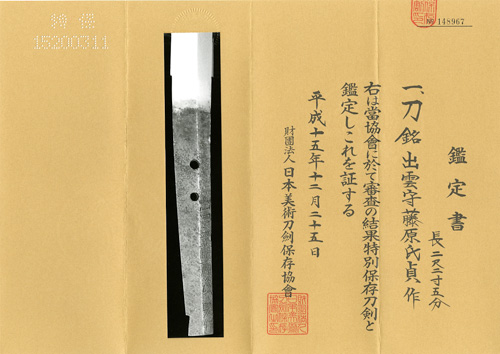
Blade construction: Shinogi-zukuri with an Iori-mune. The difference in width between the base and the tip is minimal, giving the blade a powerful appearance. It has a broad Shinogi-ji in comparison of Hira-ji with a high Shinogi ridge, ample Hira-niku and the Shinogi-ji has been slightly pared down to produce a particularly robust construction, heavy on hands. The blade terminates in an elongated Chū-kissaki. Forging: The Jihada consists primarily of Itame mixed with Mokume, standing out distinctly with areas of flowing grain. Sparkling thick Ji-nie covers the surface, accompanied by well-developed darkish Chikei. The Shinogi-ji displays a prominent Masame-hada. Hamon: A lively undulating Notare composed of Gunome and Chōji. The Nioiguchi is bright and well defined, while the interior of the temper is filled with Nie, with Gunome ashi and long Nie-suji activities. Bōshi:The temper continues into the point in a Jizo profile, sweeping (hakikake) and returning rather deeply. Nakago: The blade has been Machi-okuri and Suriage. The tang heel is horizopntal Kiri. A distinctive Gohei-shaped notch is cut into the Ha side. There are two Mekugi-ana with ō-sujikai file marks. Both of Ha and Mune surfaces of the tang are flat. Below the second Mekugi-ana, on the Ohinogi-ji, is a slightly small but relatively long signature reading "Izumo-no-Kami Fujiwara Ujisada-saku" 出雲守藤原氏貞作. UJISADA 氏貞 was the younger brother of Wakasa-no-kami UJIFUSA 若狭守氏房. He first signed KANESADA 兼貞, later changing his name to UJISADA 氏貞, and signed blades as "Nōshū Seki-ju UJISADA" 濃州関住氏貞. Around Tenshō 3 (1575), he received the court title of Gon-no-Shōshō 権少将 later Sakonoe Gon-no-Shōshō 左近衛権少将 and around Tenshō 5 (1577) was granted the honorary provincial title Izumo-no-Kami 出雲守. He moved from Seki in Mino Province to Gifu, and later settled in Nagoya, where he also signed blades with inscriptions such as "Bishū Nagoya-ju Gon-no-Shōshō UJISADA"尾州名古屋住権少将氏貞. Dated works by UJISADA 氏貞 are known from Eiroku 8 (1565) through Tenshō 17 (1589). Blades bearing only the two-character signature "Ujisada" are generally undated. It is said that he served in close attendance upon Oda Nobunaga 織田信長 alongside his elder brother, Wakasa no Kami Ujifusa 若狭守氏房. A sword bearing the signature “Gon Shōshō, Izumo no Kami Fujiwara Ujisada, an auspicious day in the second month of Tenshō 9 (1581)” 権少将出雲守藤原氏貞 天正九年二月吉日 has been handed down through the descendants of Niwa Nagahide 丹羽長秀. According to the family's records, Ujisada 氏貞 forged two swords with exceptional care, presenting one to Oda Nobunaga 織田信長 and the other to Niwa Nagahide 丹羽長秀. His elder brother, Wakasa-no-Kami UJIFUSA 若狭守氏房 on a retainer of Oda Nobunaga 織田信長, it is said that he entered Nobunaga's service after the latter occupied Gifu in Eiroku 10 (1567) and remained in his employ until the Honnō-ji Incident in Tenshō 10 (1582). A famous anecdote concerns Toyotomi Hideyoshi 豊臣秀吉(then known as Kinoshita Tōkichirō), who repeatedly sought to acquire a UJISADA 氏貞 sword owned by Tōdō Takatora 藤堂高虎. Hideyoshi is said to have pleaded to exchange it even for the entire Province of Ise, yet Takatora steadfastly refused. Owing to this story, the sword became celebrated under the name "Ikkoku Ujisada" 一国氏貞 ("Ujisada Worth a Province"). After the Meiji Restoration, that celebrated blade entered the collection of the noted collector Sudō Sōjirō 須藤宗次郎 and in 1942 it was designated an Important Art Object. Accompanied by a Black Roiro-nuri lacquered Saya Uchigatana Koshirae (Complete views of the koshirae: Omote (front) / Ura (reverse) / Detailed photographs of the sword fittings) Fuchi-kashira: Autumn grasses design; Shakudō Nanako ground, high-relief carving with gold iroe; unsigned, Owari school. Menuki: Autumn grasses design; Shakudō, sculptural carving (katabori) with gold iroe. Tsuba: Paulownia crests amid scrolling arabesque vines; round Iron ground, Ji-sukashi openwork; unsigned, Kyō-sukashi style. Tsuka: White Samegawa wrapping; Nando-iro silk braid in morotsumami-hishi-maki style. Gold foiled single layner Habaki, preserved in a plain wood mounting Shirasaya References Yoshiyuki Sugiura, Mino Tōkō Meikan Ribun Publishing, 2008 Takuo Suzuki & Yoshiyuki Sugiura, Muromachi-ki Mino-toko-no Kenkyu Ribun Publishing, 2006 Atou Iwata, Genealogy of Owari Swordsmiths Nagoya City Board of Education, 1984 Kunzan Honma & Masakuni Ishii, Nihontō Meikan Yūzankaku Publishing, 1975

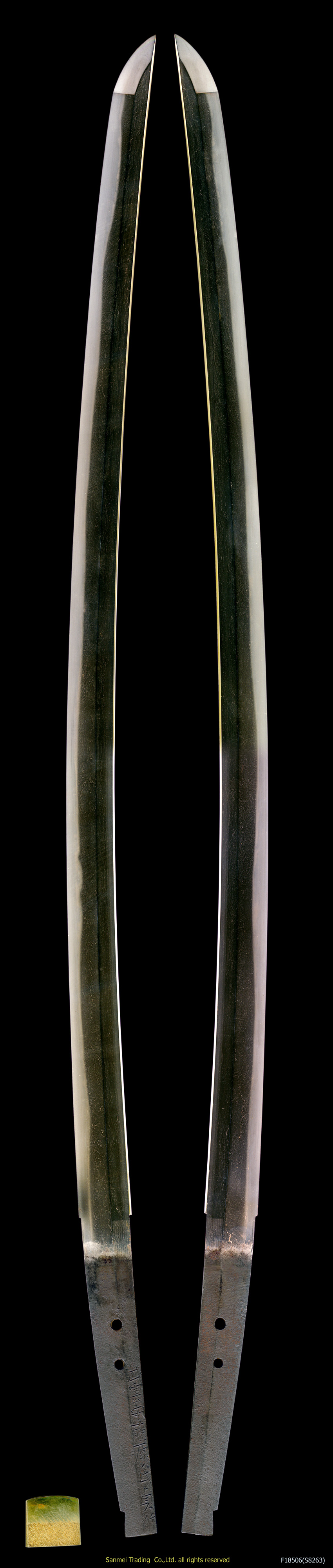
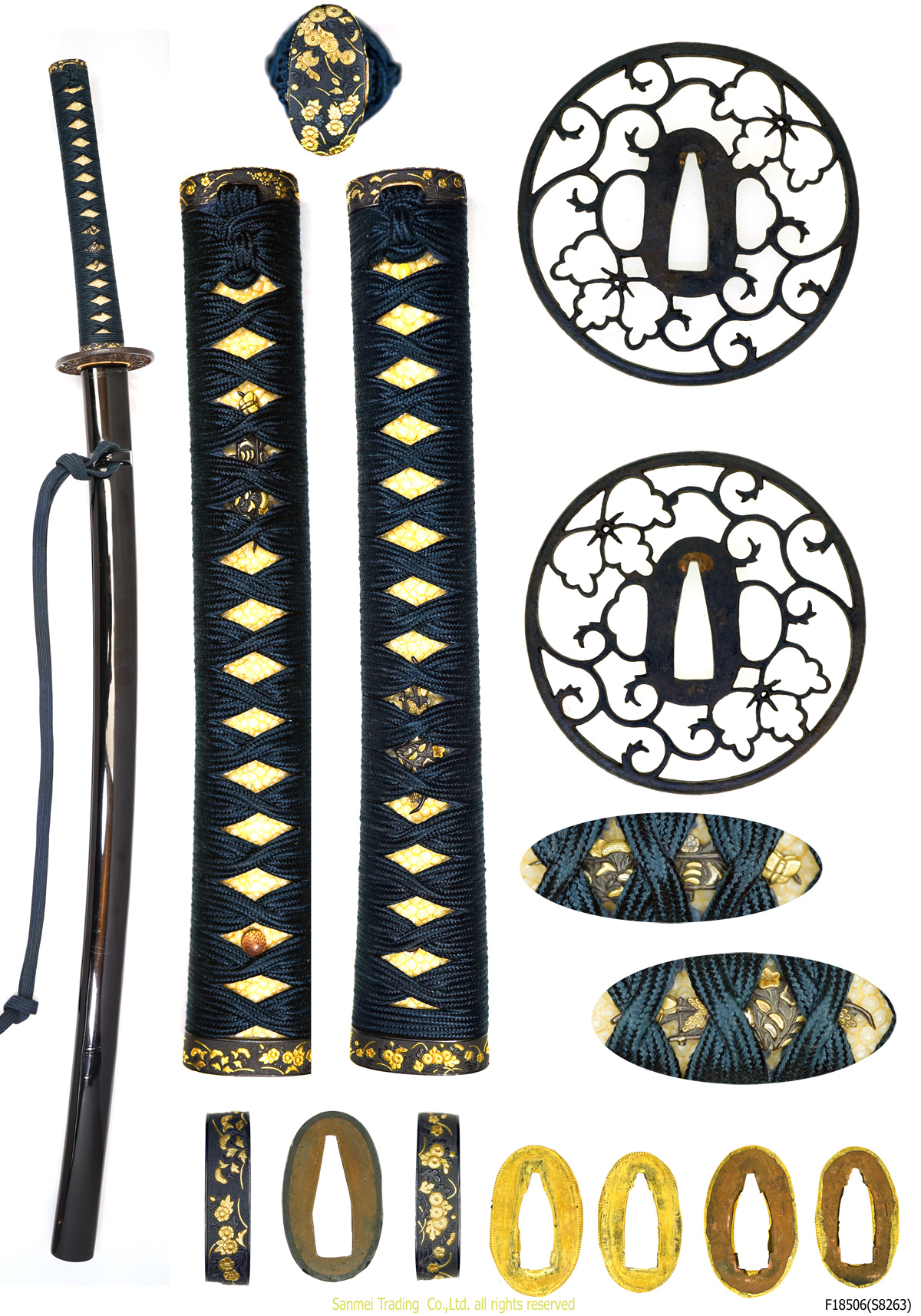
販売店の記載のまま
(翻訳なし)
美濃伝 · 美濃 · 1558-1592頃
藤代 中上作 · 刀剣大鑑 上位31%
現在4点販売中
氏貞は室町時代末期の関の刀工で、初代若狭守氏房の子で、二代若狭守氏房の弟と伝えられる。出雲守、左近少将、権少将を受領し銘に冠する。常の作風は、小板目に柾ごころの肌合が交じった鍛えを呈し、浅く大きくのたれた焼刃に箱がかった刃を交えるなど、末関中特に氏房系の特色をよく示したものが多い。
作風は、板目肌立ちごころに僅かに流れ肌交じり、板目に流れ柾交じり、あるいは小板目に流れて柾ごころの肌が交じるなど、鍛えに変化が見られる。刃文は浅く大きくのたれ、箱がかった刃や互の目、尖り刃などを交え、焼深く匂口締まるものや、のたれを主調に互の目、小互の目を交え、小足入り、砂流しかかり、匂深く小沸つき、匂口冴えるものなどがある。複式風の互の目・互の目丁子・尖り刃など交じり、足入り、処々葉を交え、匂口締まりごころとなり、匂勝ちとなる作もある。帽子は乱れ込み、先を焼詰め、あるいは小丸、掃きかけるなどが見られる。姿は、鎬造、庵棟、あるいは三つ棟で、身幅広く、先反りややつき、中鋒延びごころとなるものが多い。
氏貞の作は、地刃共に出来が良く、その出来栄えから「一国」の号があったとも伝えられる。重要刀剣の指定を受けている作は、末美濃物中で優れたものと評価され、年紀のあるものも貴重である。氏房系の特色をよく示し、地刃の出来が優れている点が評価されている。
氏貞の位置づけを、日本刀全体および伝法・時代・時期ごとに示します。各区分(随一・屈指・有数・著名)は、NBTHK および文化庁による指定に加え、三作や名物帳などの歴史的栄誉を加味したものです。
各項目を選ぶと評価方法が表示されます。
在銘年紀作が示す、確実に活動していた年代
美濃伝 · 尾張
現在16点販売中
氏房は尾張国に興った一門で、その作は桃山末から江戸初期、いわゆる新古境いの時代に位置づけられる。説示は若狭守氏房・飛騨守氏房を本流の手本として繰り返し挙げ、これに連なる工として、若狭守氏房の次男と伝える越後守氏恒、初代氏房の子と伝える出雲守氏貞らを記す。氏恒は河村平十郎、初銘を氏重とし、元和六年に越後守を受領、明暦二年に尾州名古屋にて歿したと美濃刀大鑑が伝える。氏貞は出雲守を受領し、左近少将あるいは権少将と銘した。一門は美濃を根として尾張に移り、徳川・尾張の地で代々その作風を継いだ。 作風は美濃伝を基調とする。鍛えは板目がつみ、杢や流れ肌を交え、地沸が微塵に厚くつき、地景が細かに入る。刃文は直ぐの焼出しごころを見せたうえ、下半は浅いのたれを基調に小互の目を連れて交え、上半は小のたれに大互の目や尖りごころの互の目を交える。のたれが角がかり、小足・葉が入り、沸がつき、処々荒めの沸を交えてむらづき、金筋・砂流しがかかり、随処に飛焼・棟焼を交えて匂口が幾分沈みごころとなる。帽子は焼深く、三品風に先が尖り、あるいは一枚風となって長く焼き下げ、掃きかける。短刀には平造に草の倶利迦羅や護摩箸に蓮台の彫物を加えるものがあり、師伝をよく踏襲する。大きくのたれた刃に大乱れを焼き、飛焼を交えて皆焼風となる一類もある。見分けは、のたれの角がかりと沸のむらづき、匂口の沈みごころ、そして三品風に先の尖る帽子に求められる。 伝来し指定された作には、越後守氏恒の幅広・大鋒で重ね厚く長寸の豪壮な刀、左近権少将氏貞の天正五年紀を切る彫物入りの短刀、氏貞の皆焼風を示す刀などがある。鑑定の要点は、若狭守及び飛騨守氏房の作柄を髣髴とさせる地刃の総体にあり、肉置き豊かな体配と大模様の刃文が相俟って迫力ある一作風を成す。寡作の工にあっても抜群の出来を示し、長大な姿にして破綻のないところに、この一門の力量がうかがわれる。 詳しく見る →
室町時代の美濃
戦国の関は一つの産業であった。春日神社を氏神と仰ぐ鍛冶たちが、中部日本の軍勢を武装させた。孫六兼元の三本杉と之定の最上作は、量産の町に第一級の技が息づいていたことの証である。
保存刀剣のうち、出来が一層優れ、保存状態も良好と認められたものです。再刃や、室町・江戸期の多くの無銘作は対象外となり、保存刀剣より高い基準が課されます。
日本美術刀剣保存協会(NBTHK)は、1948年に設立され、文化庁の監督を受ける公益財団法人で、東京・刀剣博物館に本部を置きます。専門の審査員が出品作を直接審査し、美術的・歴史的価値に応じた鑑定書を発行します。NBTHKの鑑定書は、日本刀および刀装具の真正性を示す最も広く認知された基準です。
NBTHK公式サイト返品は商品到着後7日以内に当社までご連絡ください。お客様のご指定による寸法などの仕様の変更を行った際はご返品を受けかねます。送料および振込み手数料はお客様のご負担とさせていただきます。
¥1,500,000
Certificate reading — 銘 出雲守藤原氏貞作