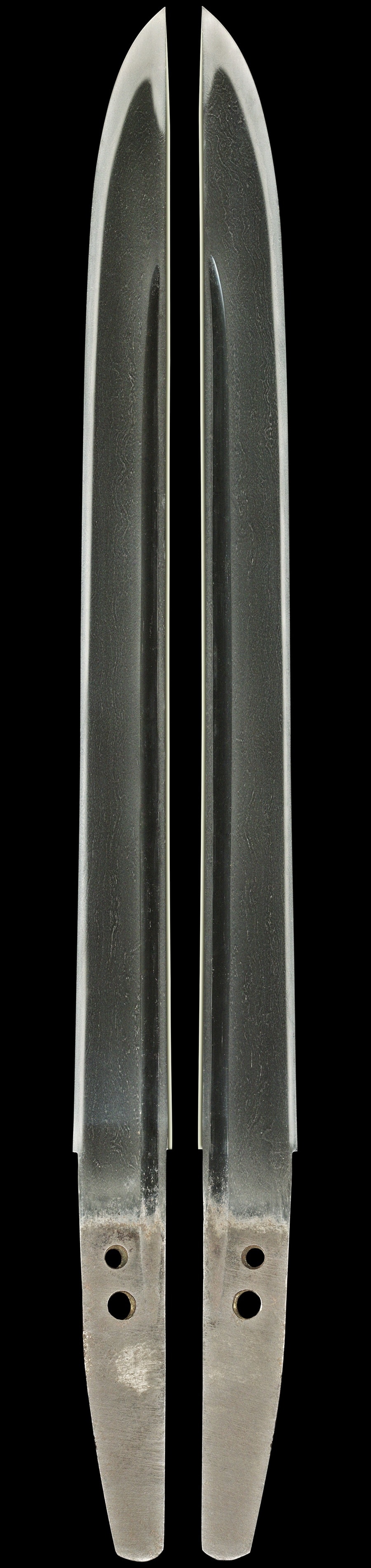
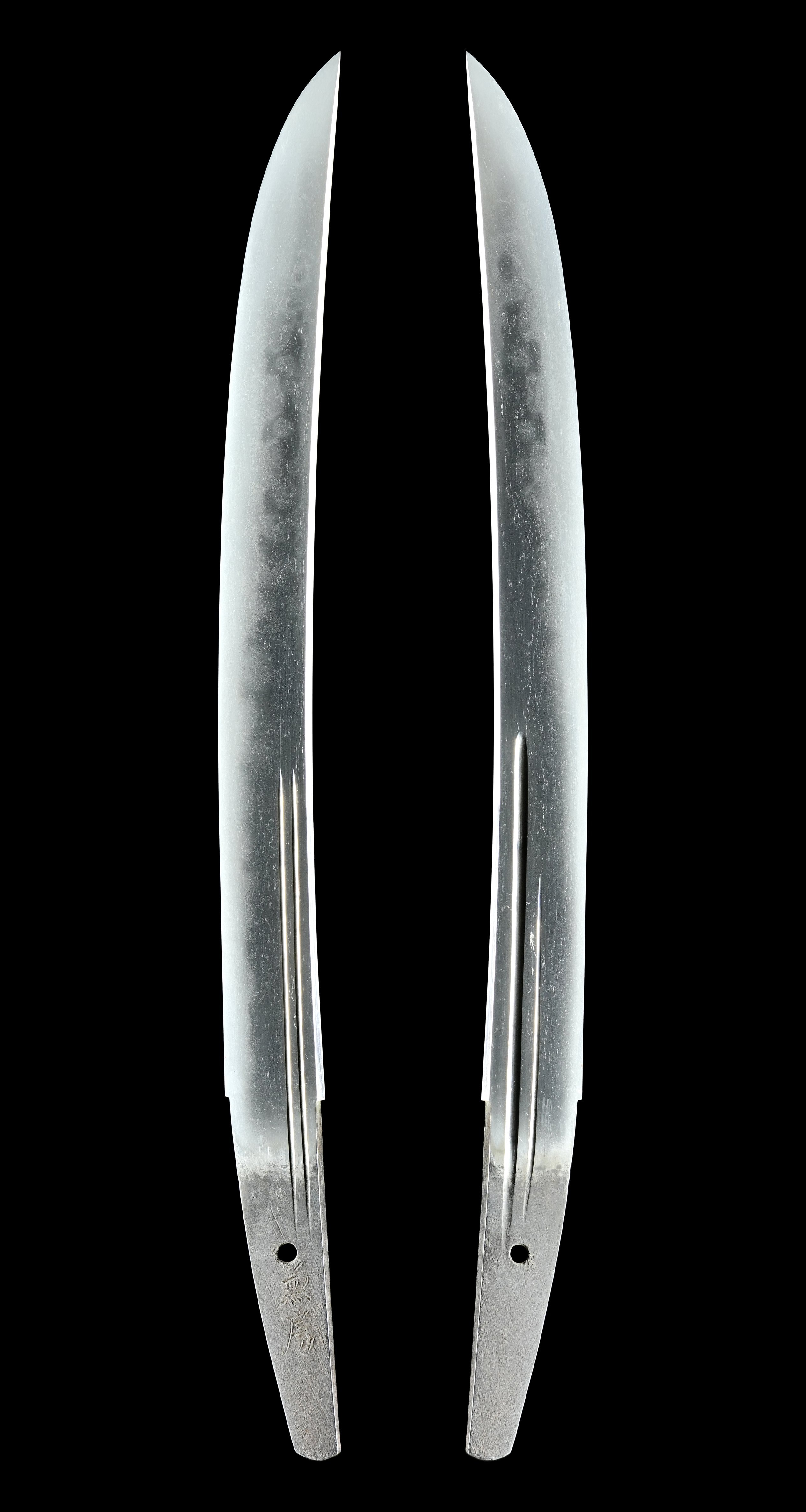
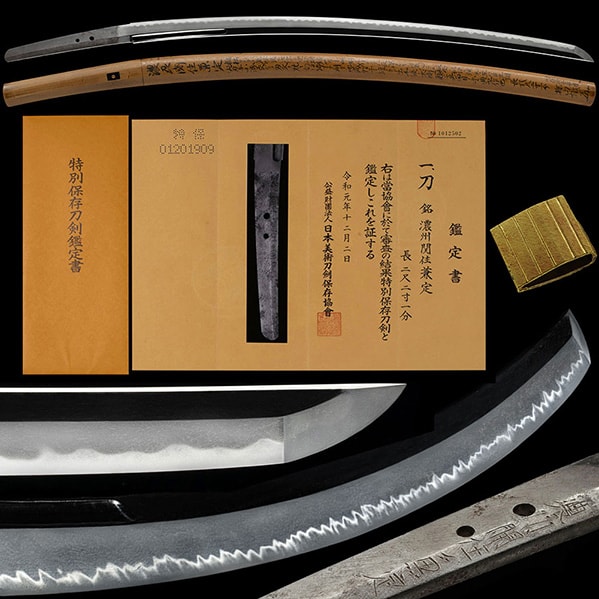
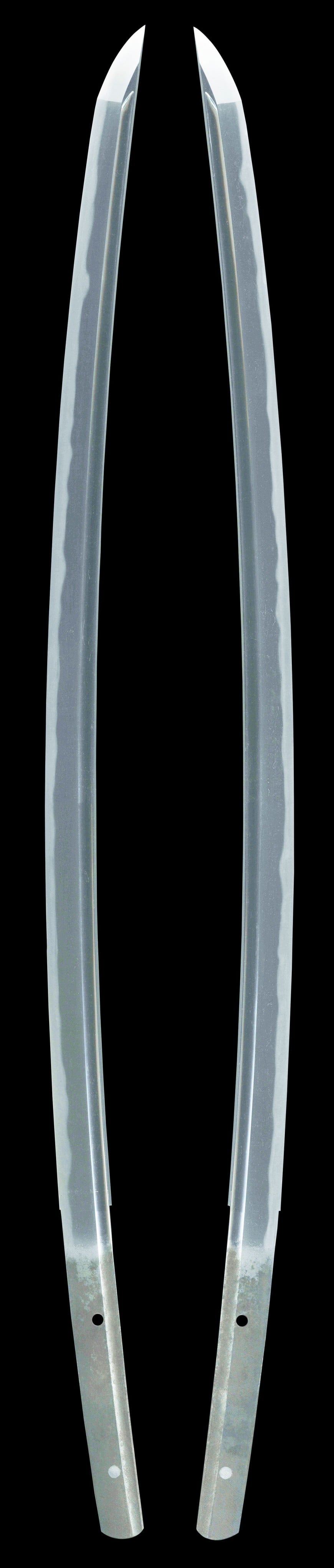
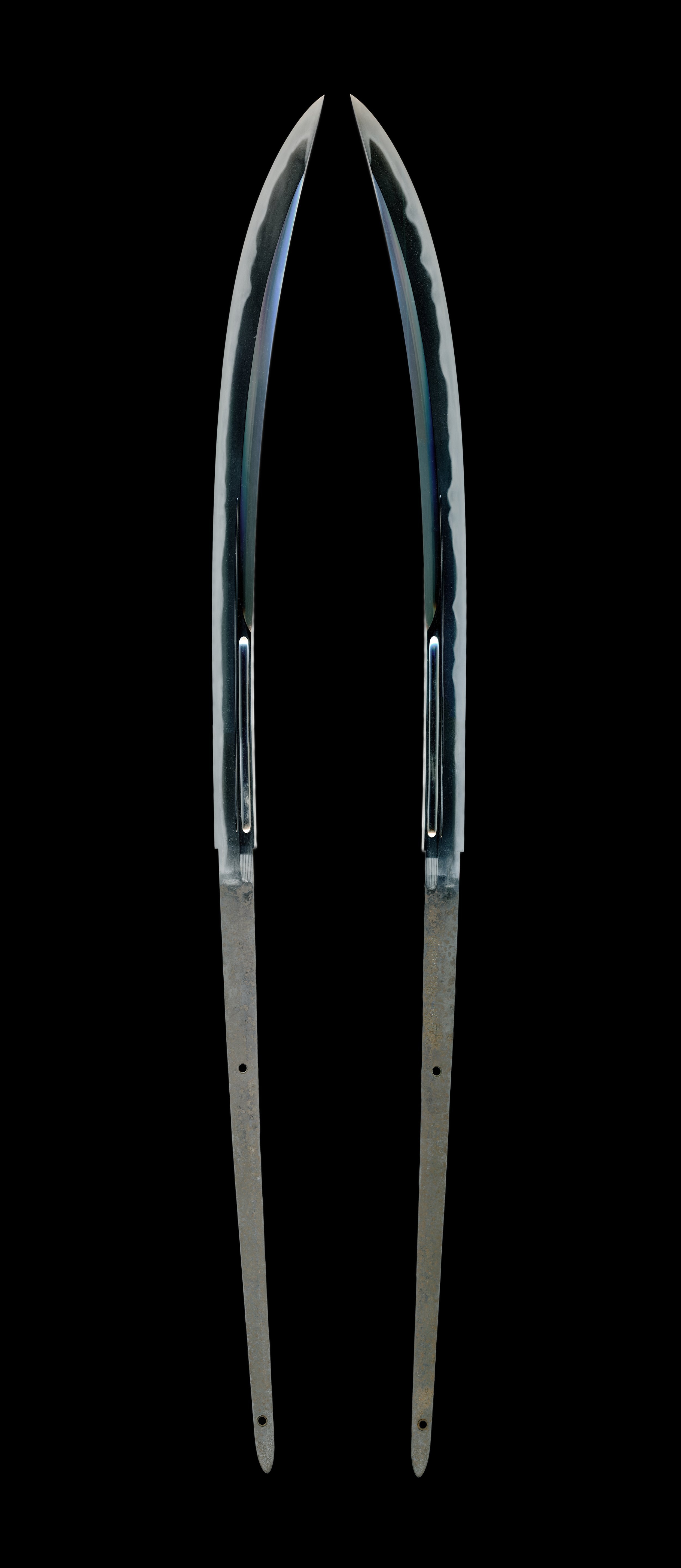
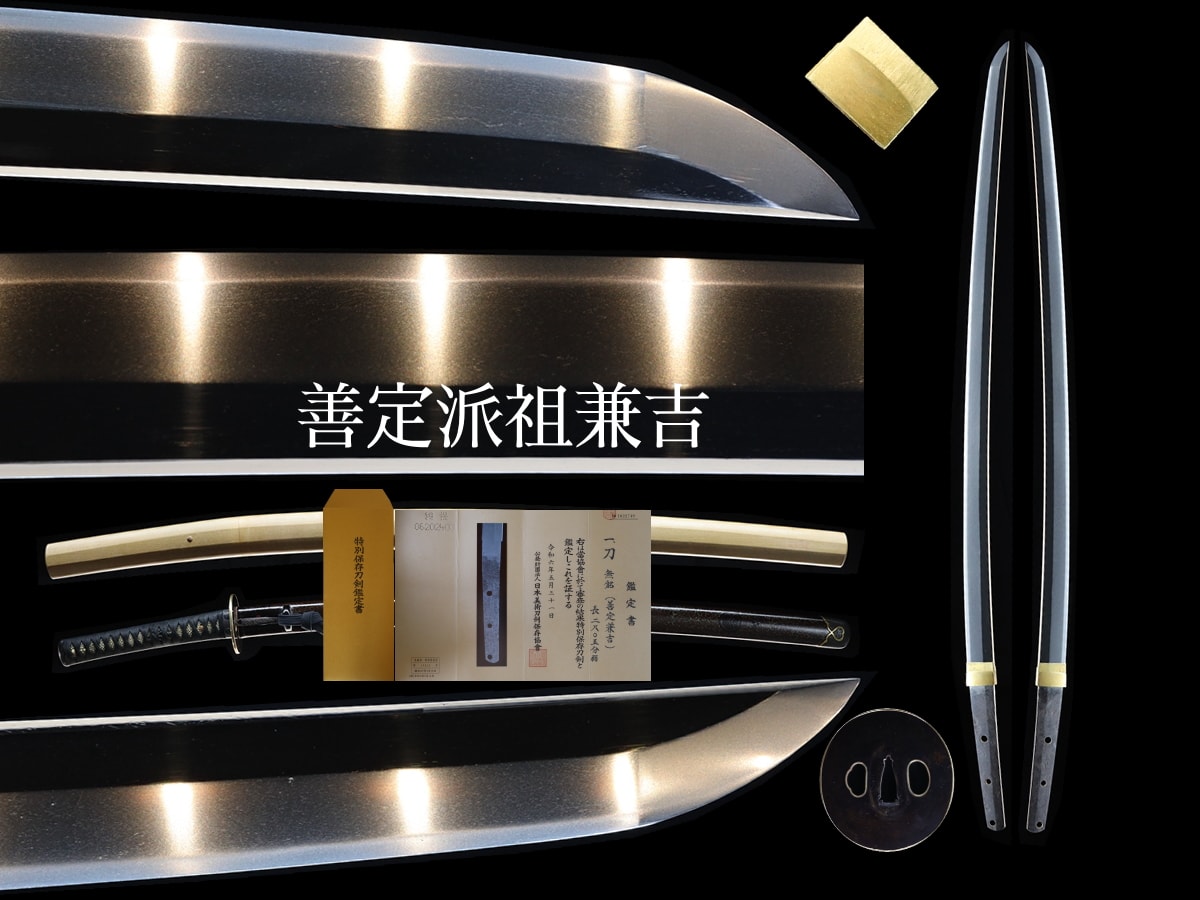
Among the smiths of the late period the published sources name Kanemoto, beside Kanesada, as one of the two representatives of the Seki tradition. The name was carried by several generations, but it is the second, the smith the world singles out as Magoroku Kanemoto, who is held the most technically accomplished, and whose bold two-character signed blades fix the . He worked at Akasaka in , where the family used Magoroku as its hereditary common name; the long signatures reading "Nōshū Akasaka-jū Kanemoto" with dates in the Meiō and Eishō years anchor the first generation, while the niji- pieces are read as this prized second hand. There are no examined two-character signed examples bearing a date, so the published commentary places his attribution on the manner of the signature and on the temper rather than on a year-mark, and frankly notes that distinguishing the generations is not yet settled.
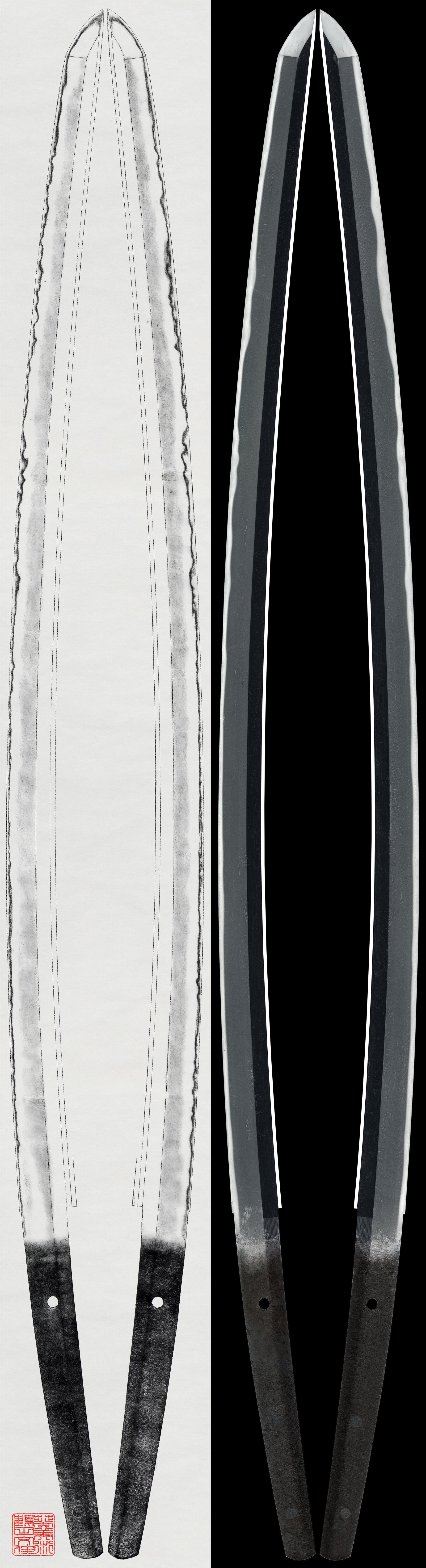
His hand is read first in the . The tell is , the (three-cedar) temper he is credited with originating, a run of pointed forged in linked clusters. What the judges return to, blade after blade, is that the second generation does not rule it into uniform threes: "the heads of the become rounded in places, showing change, and the hallmark is that the pattern is not standardized" (二代は互の目の頭が処々丸みをおびて変化を見せ、画一的でないのが特色である). The temper rises and falls in a cursive, gyōsō line, breaking from threes into the "twos, fours and fives" the commentary calls nihonsugi, yonhonsugi and gohonsugi (二本杉・四本杉・五本杉), where the later generations of the line grow sharp-angled and geometric. enter well, the is -dominant and bright, runs through, and on his finest blades , and gather; one published entry singles a out as "an especially cursive, freely irregular , the most among works of this hand" (同作中でも一段と行草に乱れた三本杉).
The is the constant beneath that temper. It is an mixed with , flowing and standing a little with a -leaning tendency, fine adhering and entering, over which rises the whitish of Seki steel, the misty reflection that marks a blade. The answers the edge: it runs in to a jizō-like small round, the return often leaning, with at the point. The is robust and practical, a sword made for use: of somewhat wide body with strong and an extended , and with and .
Not every blade keeps the . A small group leaves it for a quiet , which the commentary treats as proof of range rather than the norm; of one it remarks that "Kanemoto tempers a , rare for him" (兼元には稀な直刃を焼いている), and dates such as Daiei 7 and Kyōroku 2 on these pieces supply the scarce year-marks that documentation otherwise lacks. One is judged a -, an emulation of Kyoto work that "evokes Kaneyuki" (兼之を想わせる), elegant in shape and in and ; the published note adds that a tell of the smiths working in this manner is the leaning , which the blade shows. Carvings are uncommon in his work, and in particular are rare, recorded on a single .
What sets the second generation apart is therefore drawn from his own work, not from a borrowed comparison: the rounded, cursive that refuses to become a template, the bright over a Seki , and the leaning jizō . The published commentary repeatedly places him at the head of the smiths, calling individual blades typical yet outstanding work of Magoroku Kanemoto, and reading the geometric, ruled as the mark of the later generations he stands before. His blades are valued as much for their integrity as for their flamboyance; the steel is bright and clear, and the robust health of many surviving pieces is noted as a virtue in its own right.
Fujishiro grades him Jō-jō . None of his blades carries the highest cultural designations or the rank; his record on the rolls runs through the rank, twenty-seven blades in number, with one of his , the so-called Aoki Kanemoto said to have cut down Magara Masataka at the Battle of Anegawa, designated Jūyō Bijutsuhin, and a further two held in the Imperial collection. His provenance reads as a roll of warrior houses that prized a cutting blade: the Matsudaira, the Yagyū family, Tani Tateki, and Makishima Kenmotsu Akishige, whose ownership is recorded in the gold-inlaid inscription that gives one the name Sasatsuyu Kanemoto. Because almost nothing in this body of work sits in the locked tiers, a signed Magoroku Kanemoto is among the more attainable of the genuinely famous names, yet a fine, soundly preserved niji- example with documented provenance comes to market only from time to time, and is a notable thing for a collector to encounter when it does.