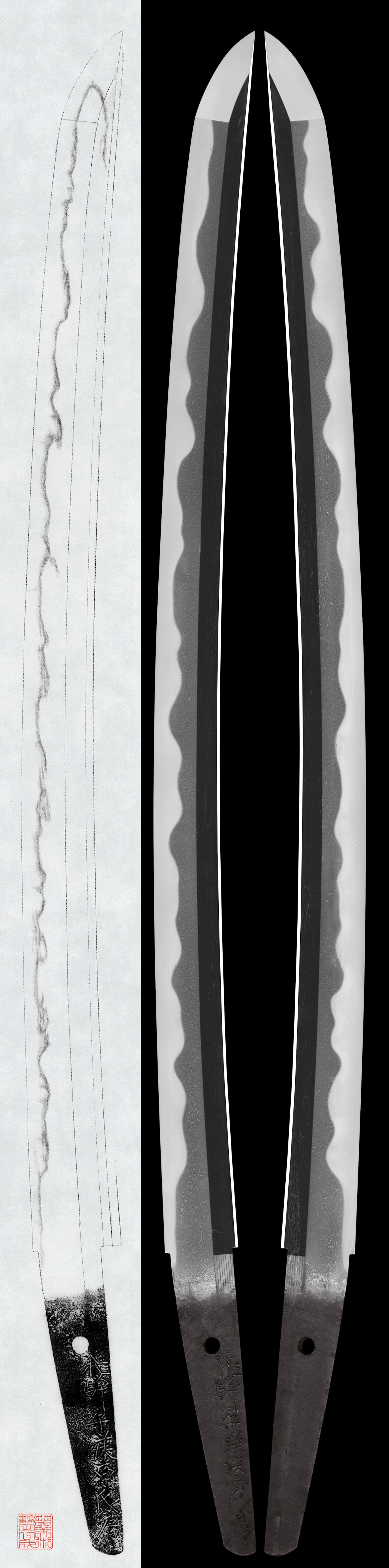
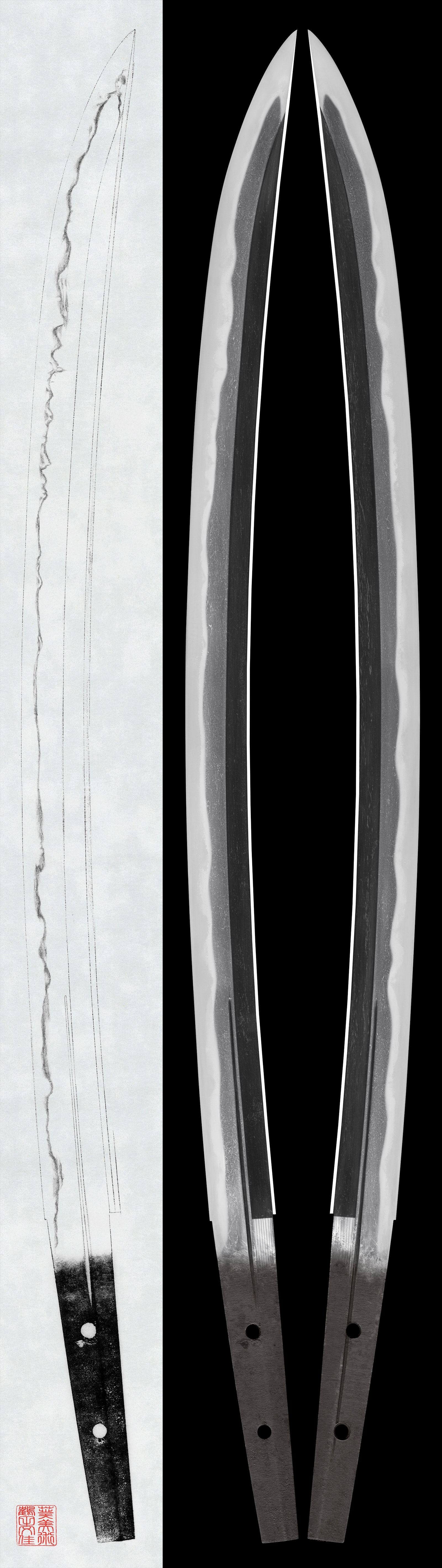
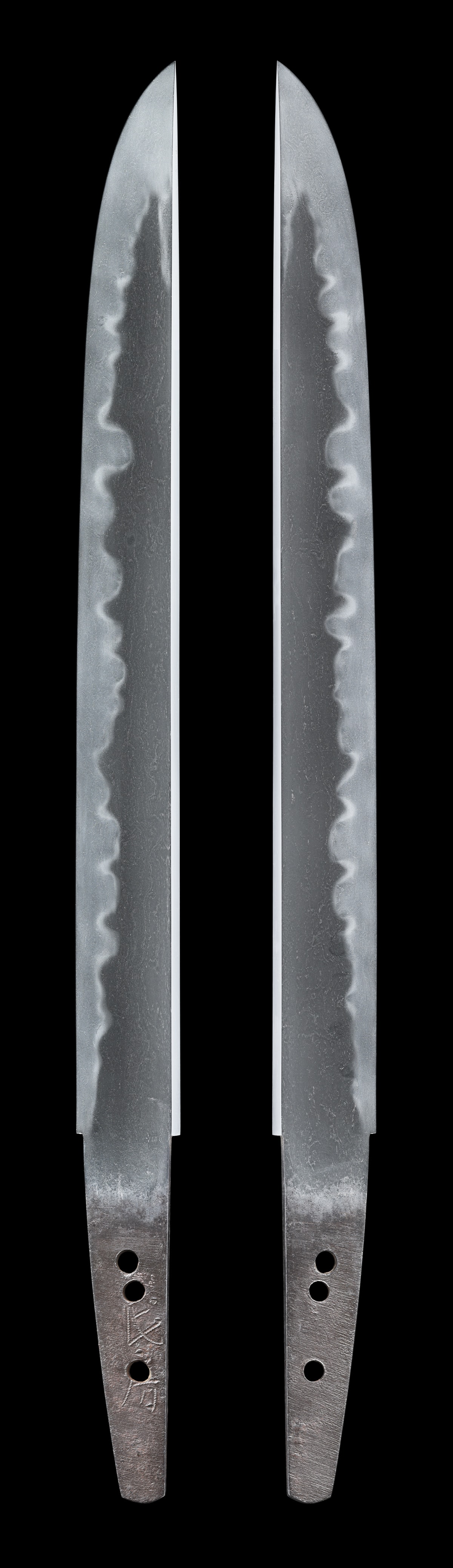
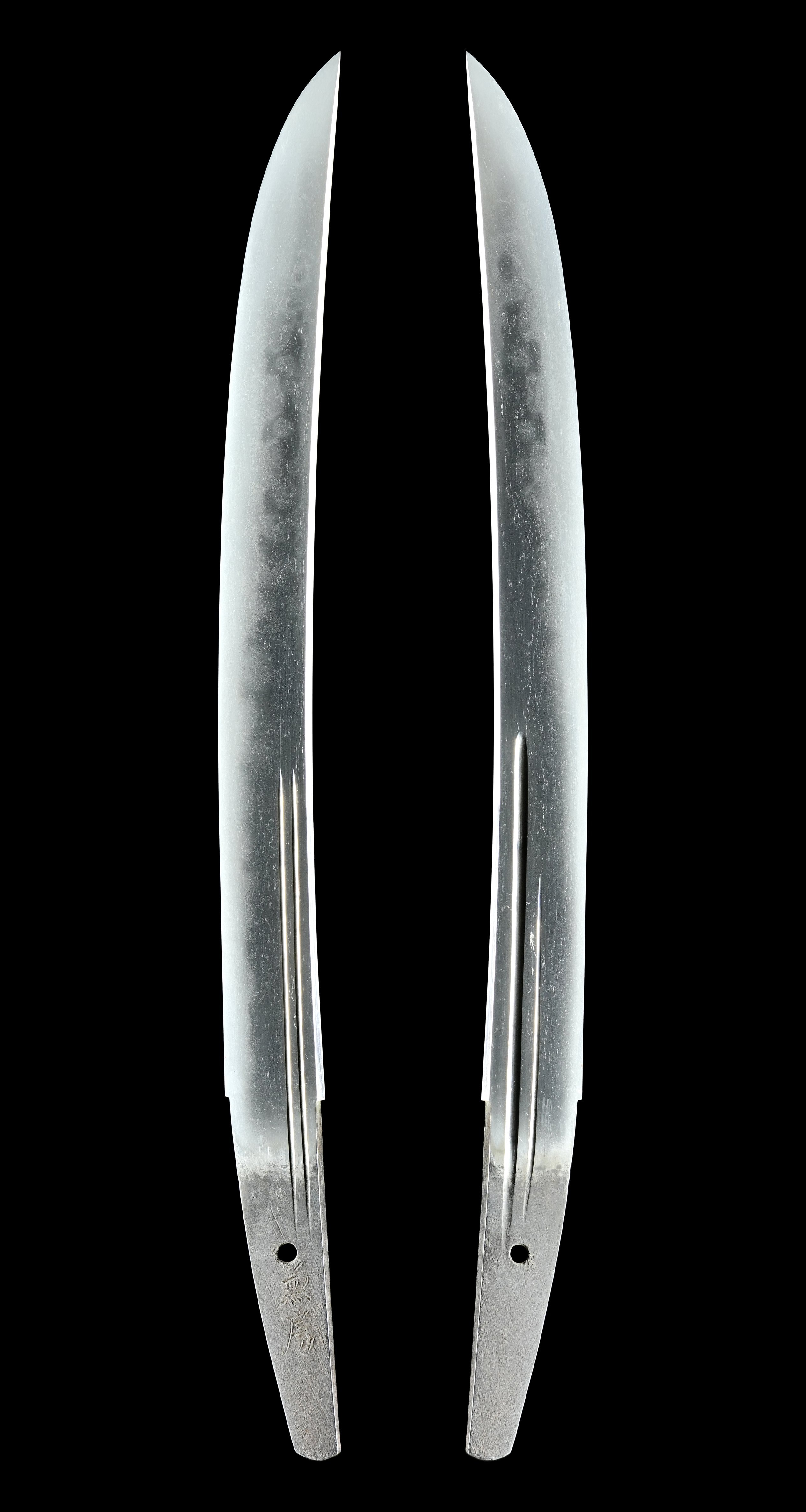
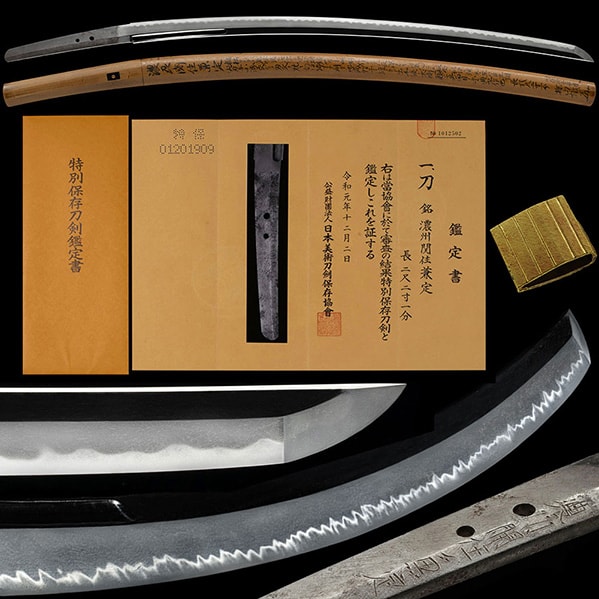
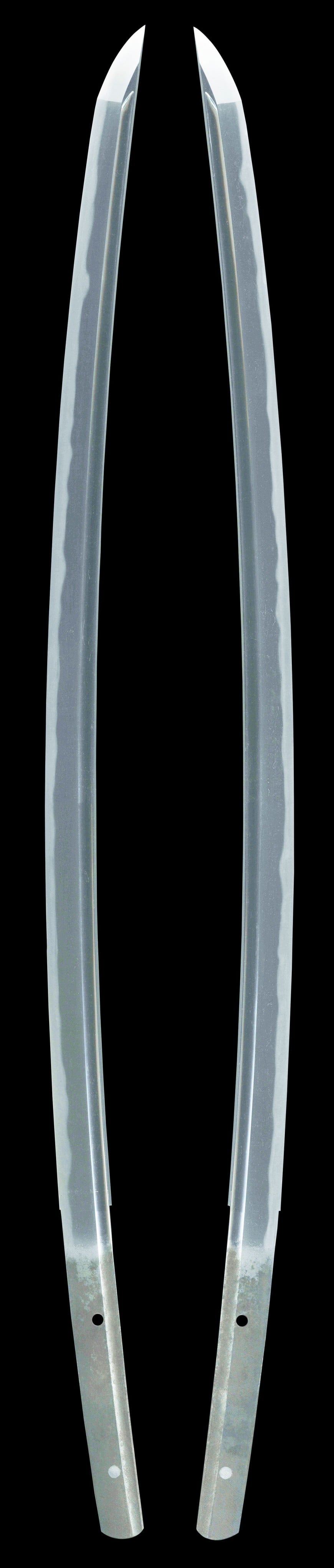
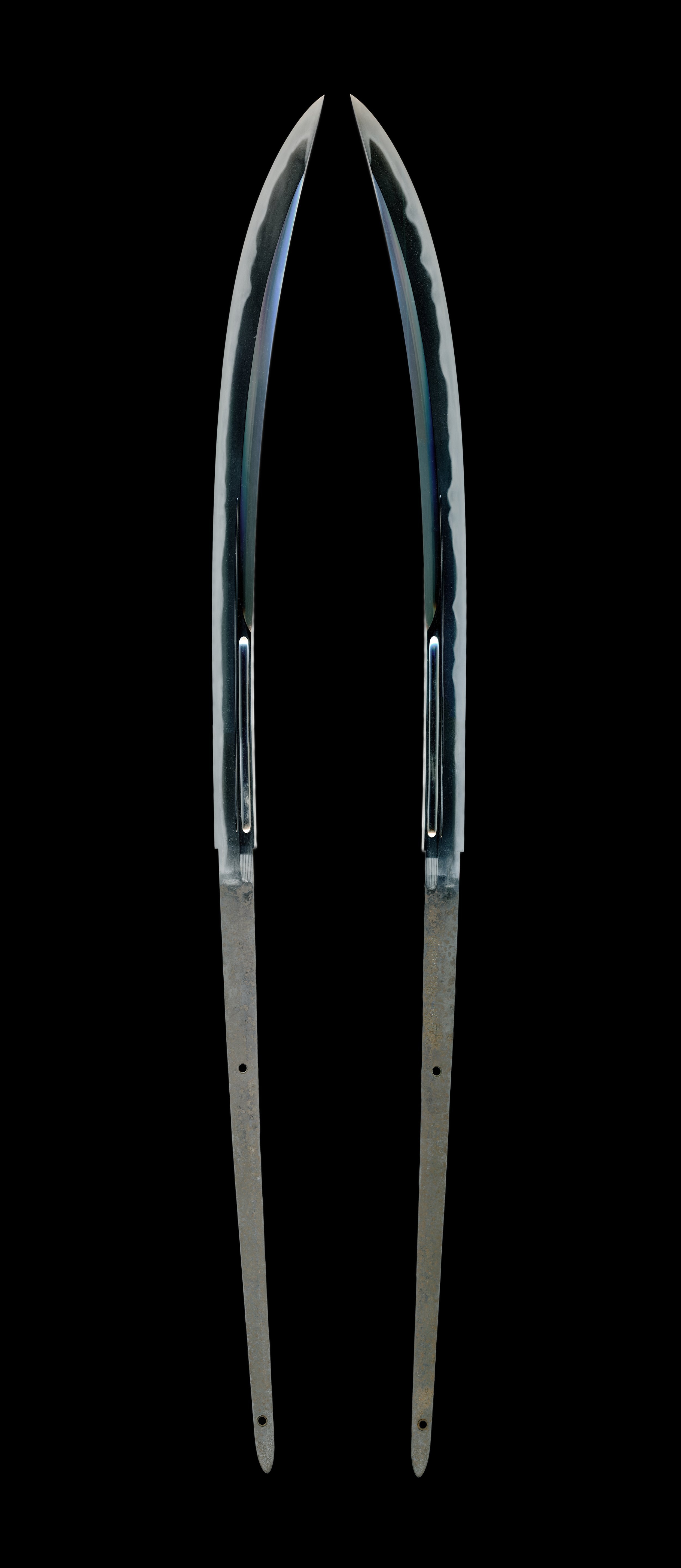
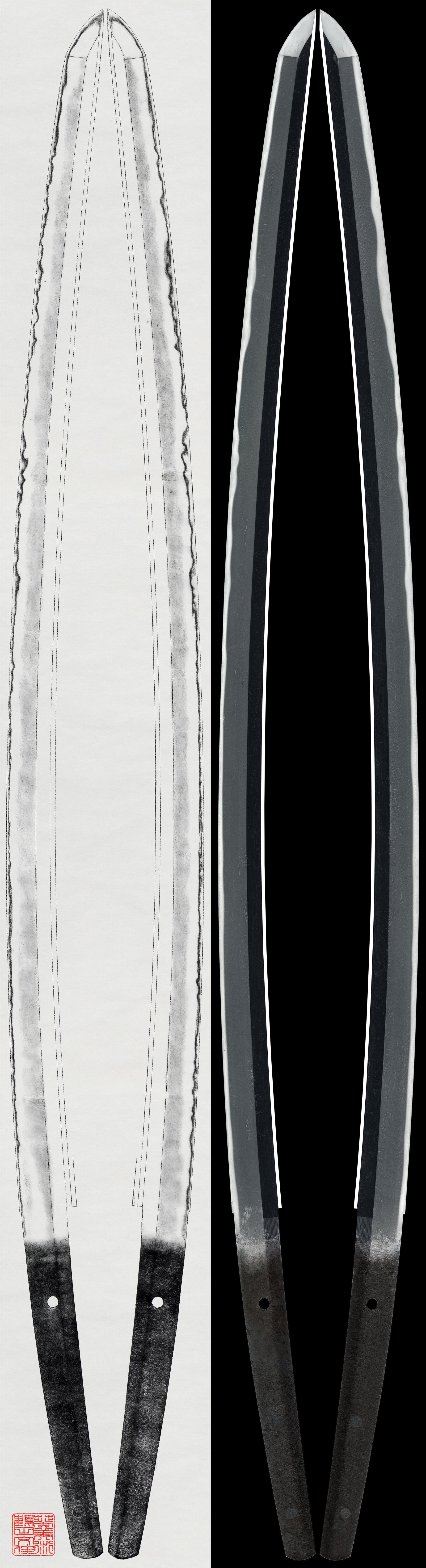
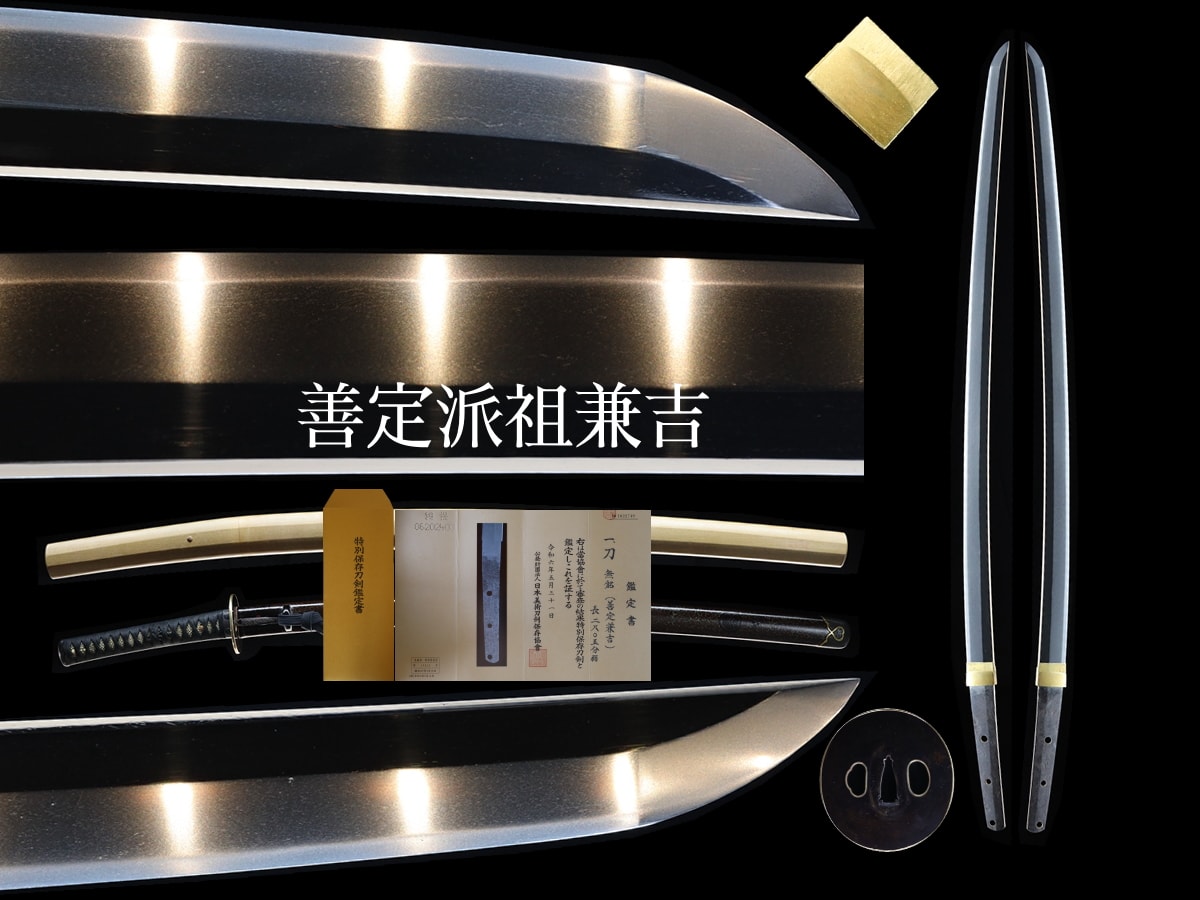
Ujisada is traditionally regarded as the son of the first-generation Wakasa no Kami Ujifusa of Seki in province, and as the younger brother of the second-generation Wakasa no Kami Ujifusa. Active during the closing decades of the period, with dated works spanning from Tensho 3 (1575) through Tensho 7 (1579), he occupied a distinguished position within the group. He received the court title Izumo no Kami and signed variously as Sakon Shosho, Sakon Gonshosho, and Gonshosho. The sobriquet "Ikoku Ujisada" is said to have been bestowed in praise of the superb quality of his workmanship, an appellation reportedly arising when a discerning warrior requested one of his blades in preference to a sword from another province.
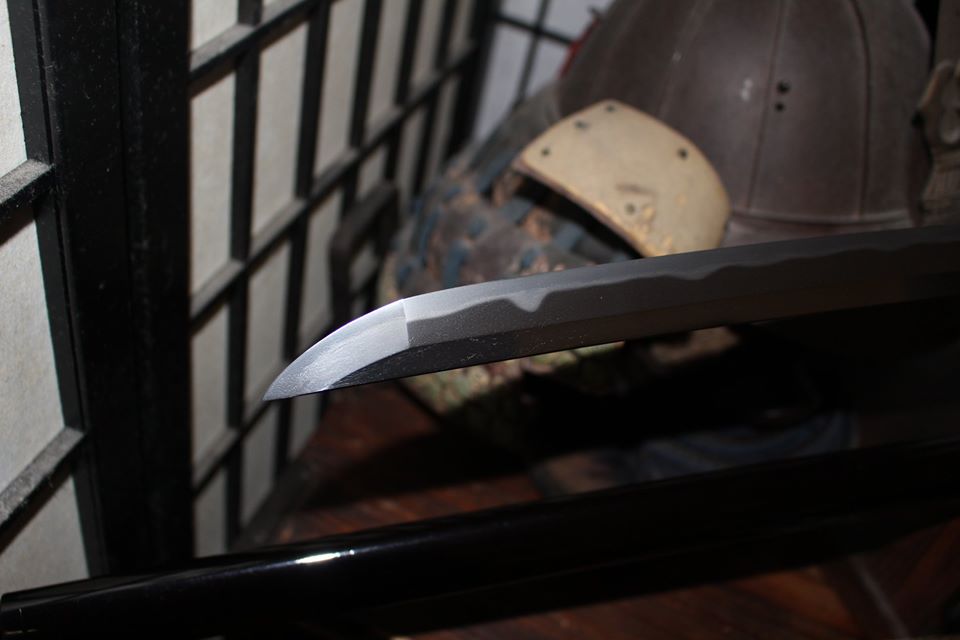
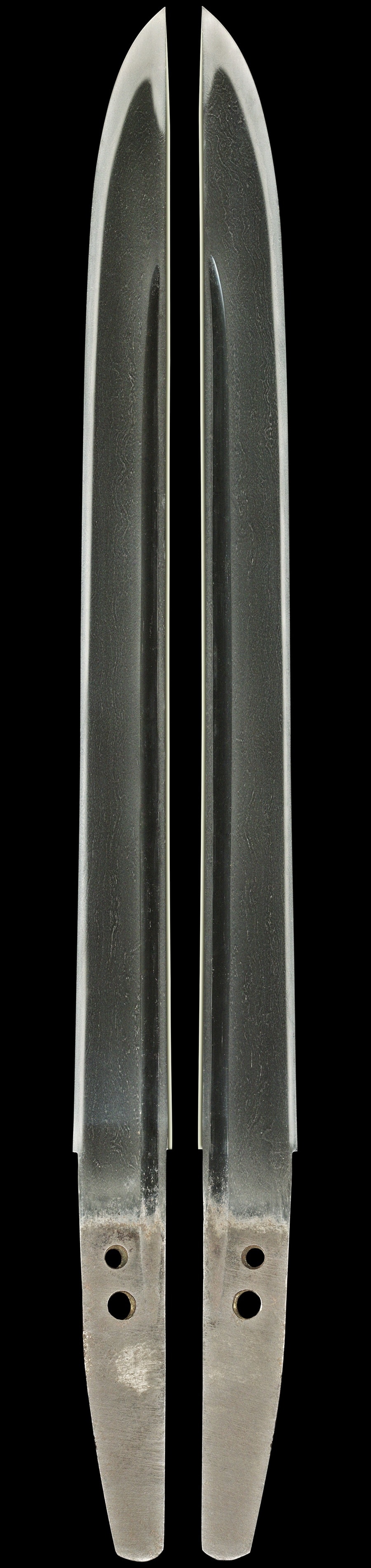
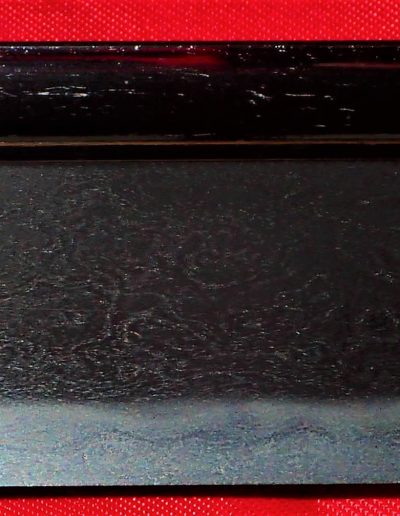
In the usual style of this smith, one finds a forging texture showing a combination of tight with a -inclined character, and a temper that forms a gently undulating, shallow and broad , into which -shaped elements are mixed -- features that well display the characteristics of the group and in particular of the Ujifusa line. His works range from exhibiting large that hardens into with assuming a -like character, to bearing mixed with in which slight and enter with a tightening , according well with the transmitted manner of his master. Among , many works bear skillfully executed carvings, placing "grass" or such as with -- a hallmark of the line.
Across the body of designated works, the repeatedly observes that Ujisada's blades "clearly display the characteristic features of this smith" and that the workmanship in both and is excellent. His finest pieces are distinguished by brightness and clarity in the steel -- both and temper described as -- to such a degree that one designated example is characterized as giving an impression that could be mistaken for a superior work by Kotetsu. The consistent presence of dated inscriptions among his surviving works adds documentary value to an oeuvre that stands as a representative achievement of late Seki craftsmanship.