NihontoWatch MonNihontoWatch
マーケット
事典
鑑定
NihontoWatch MonNihontoWatch
マーケット
事典
鑑定

説明

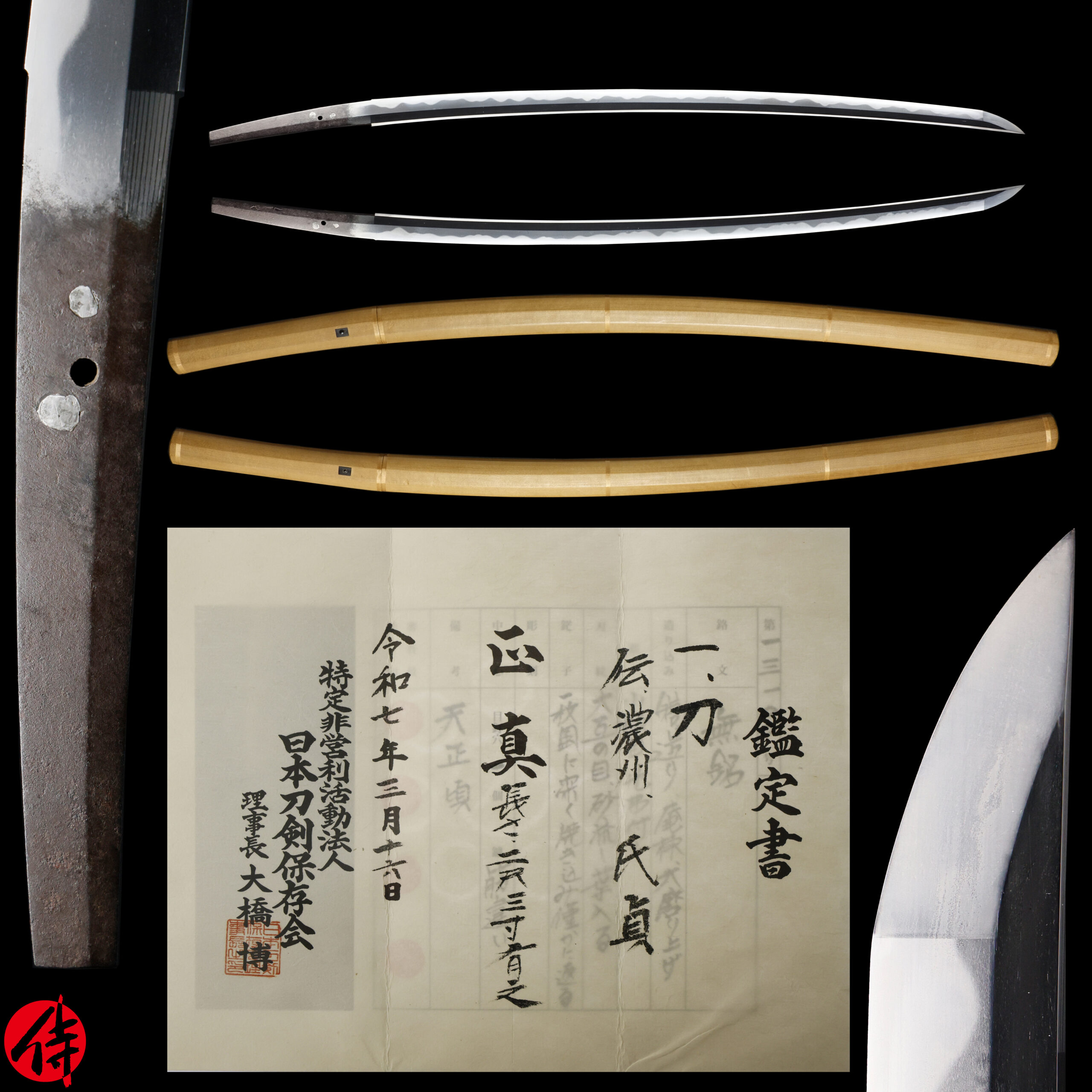
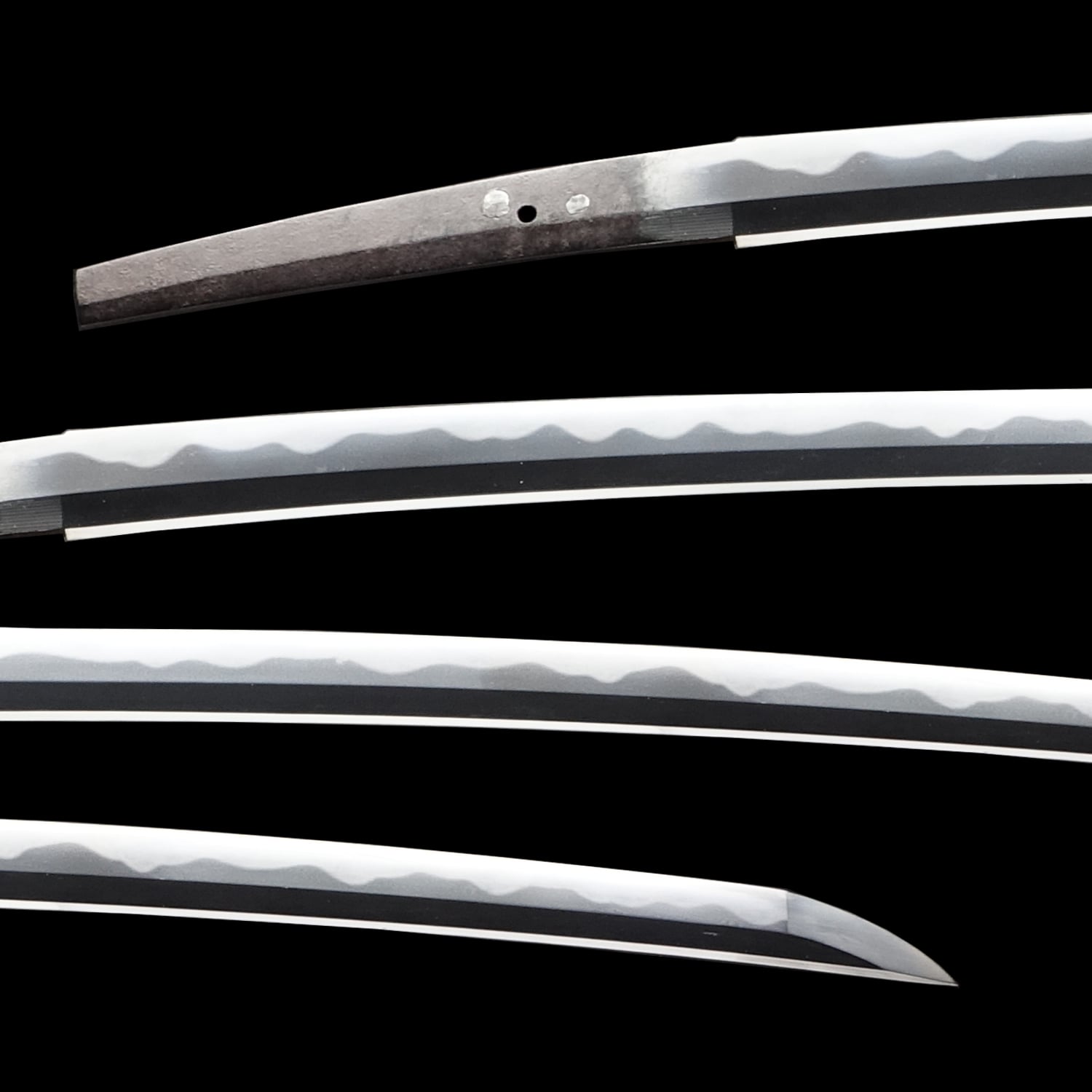
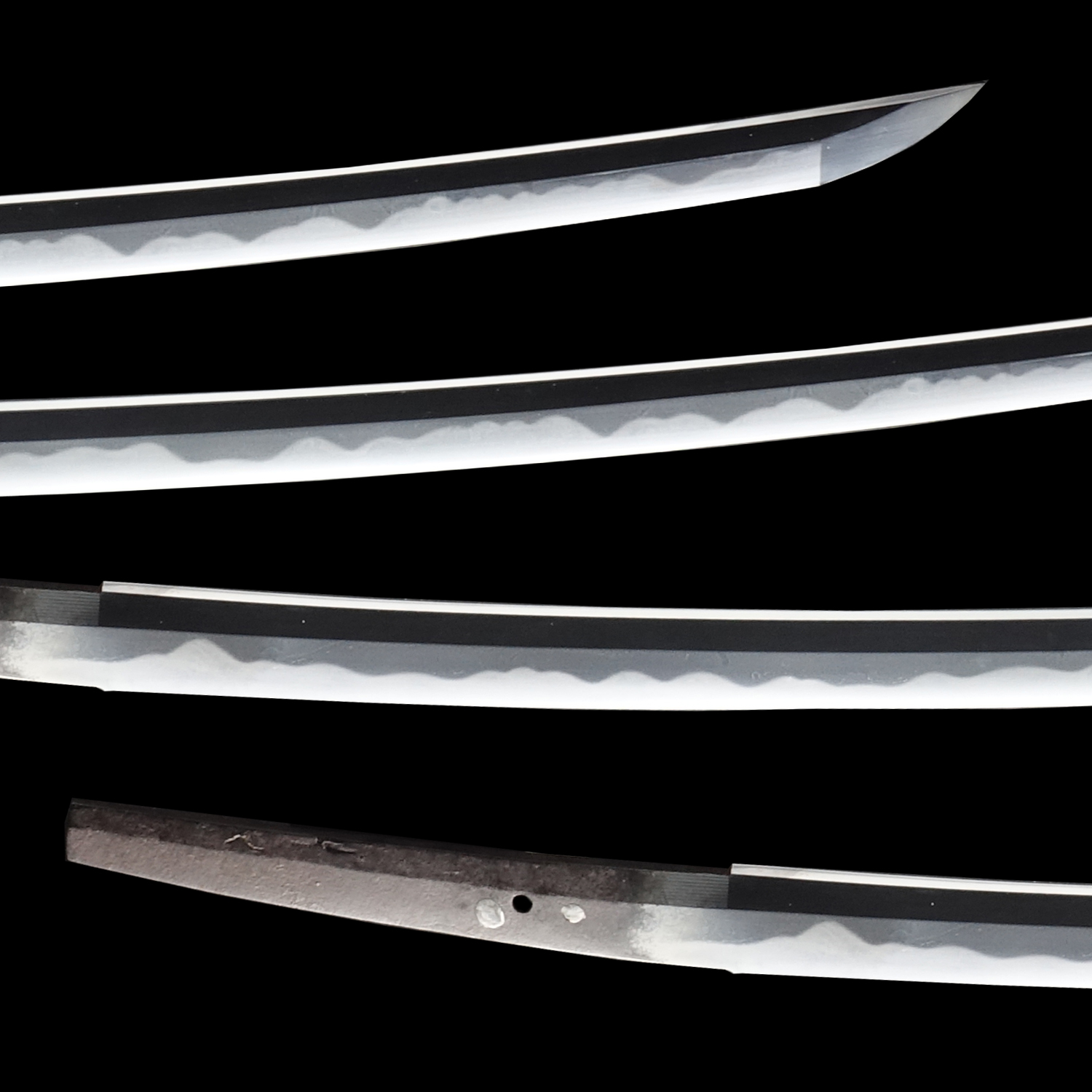
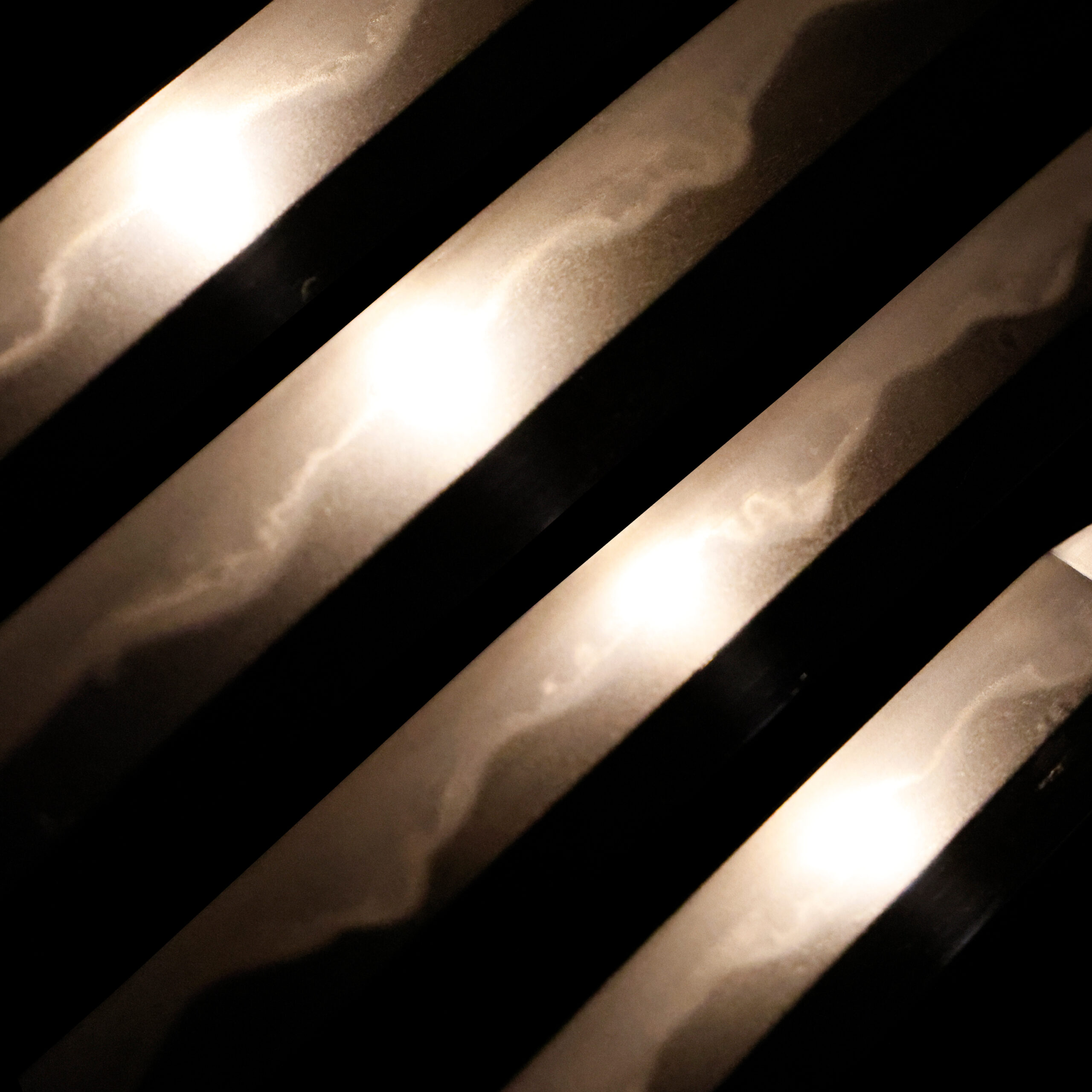
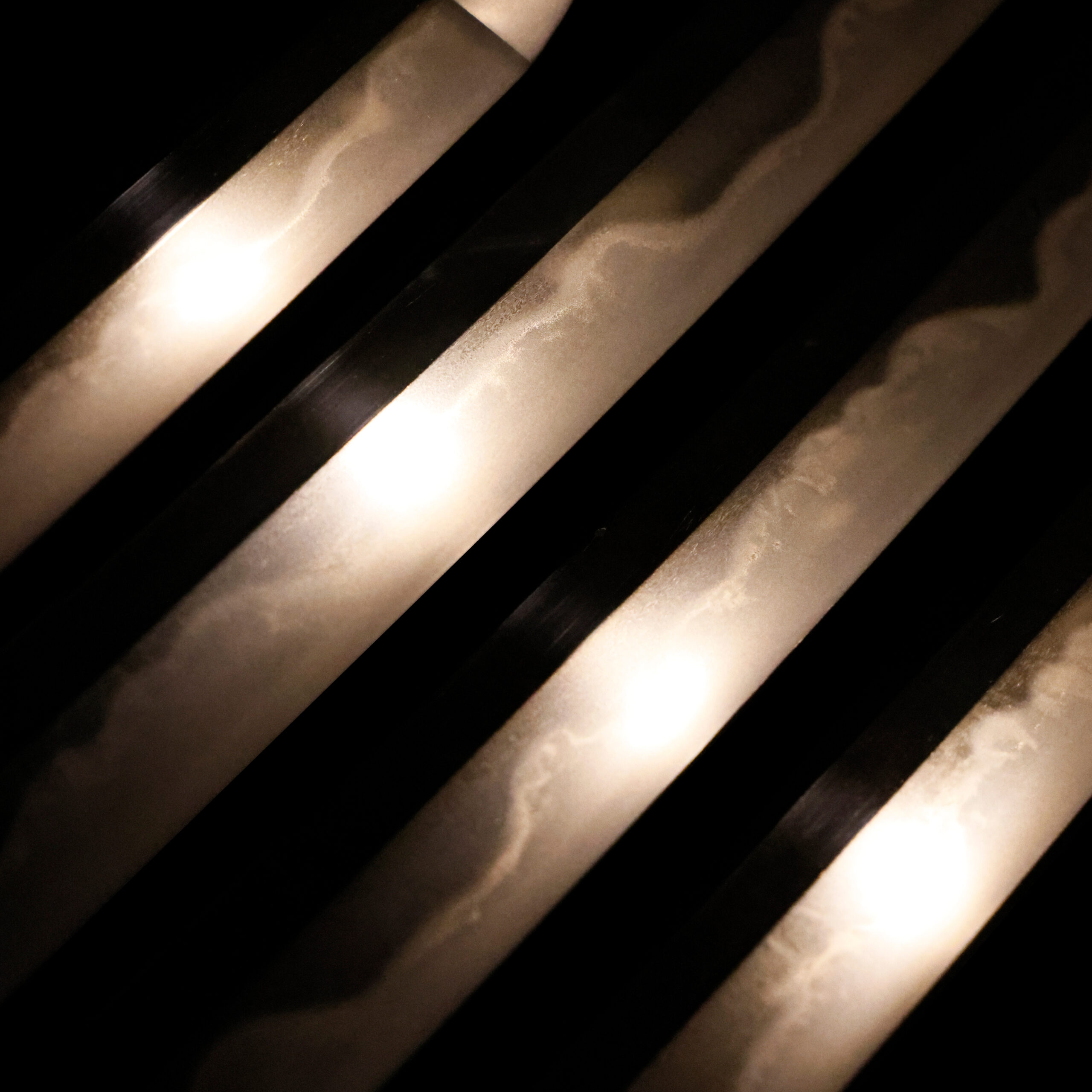
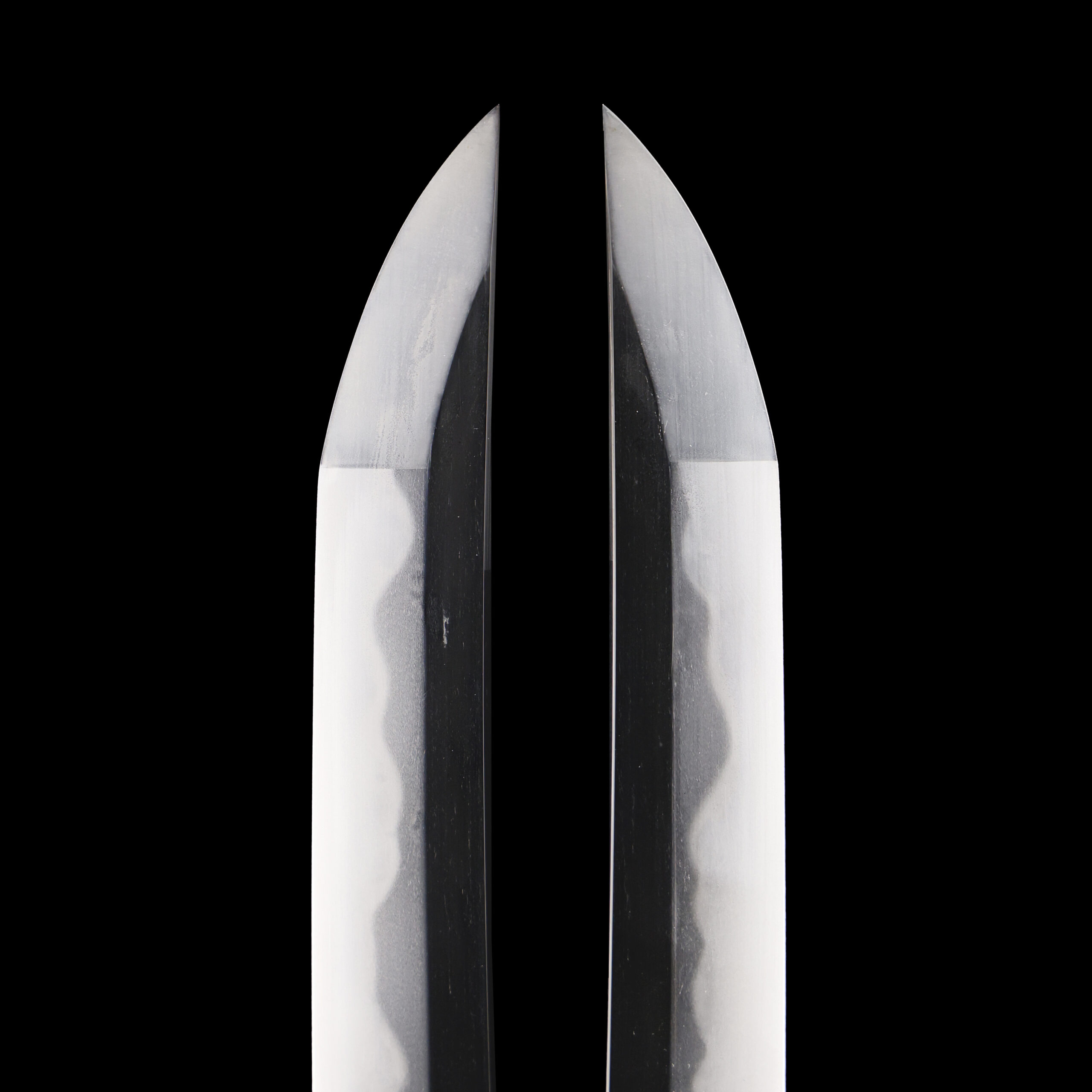
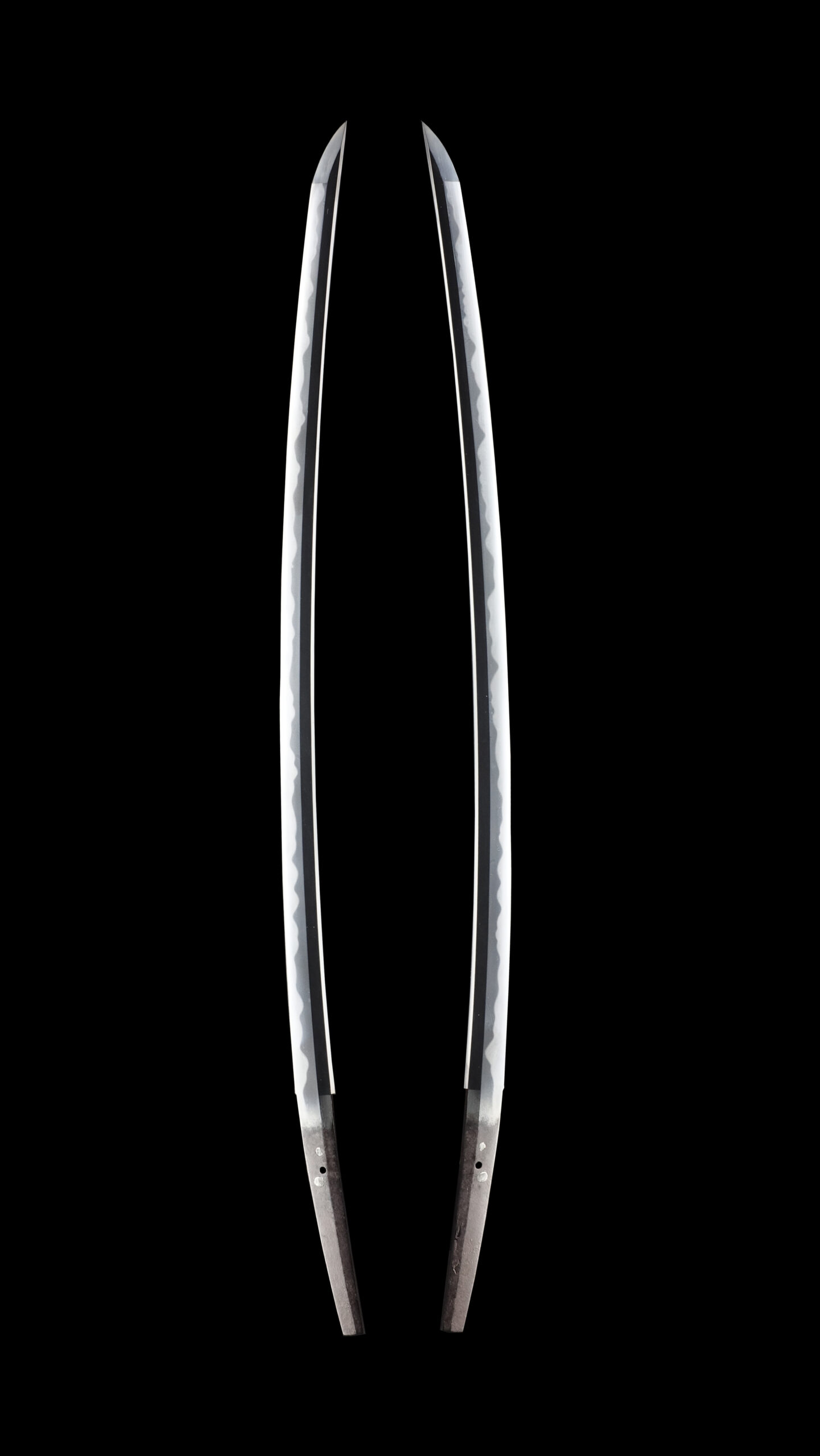
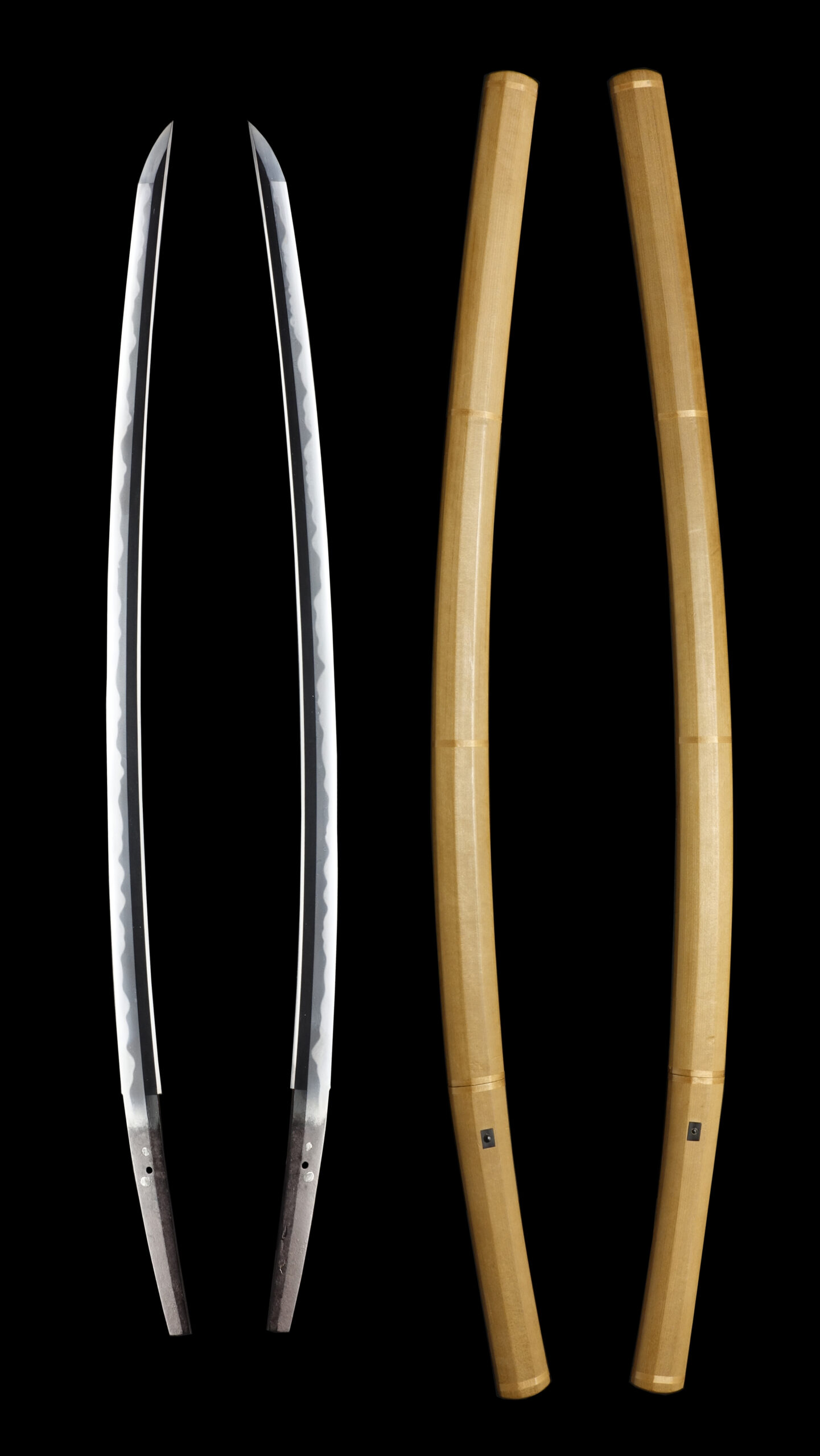
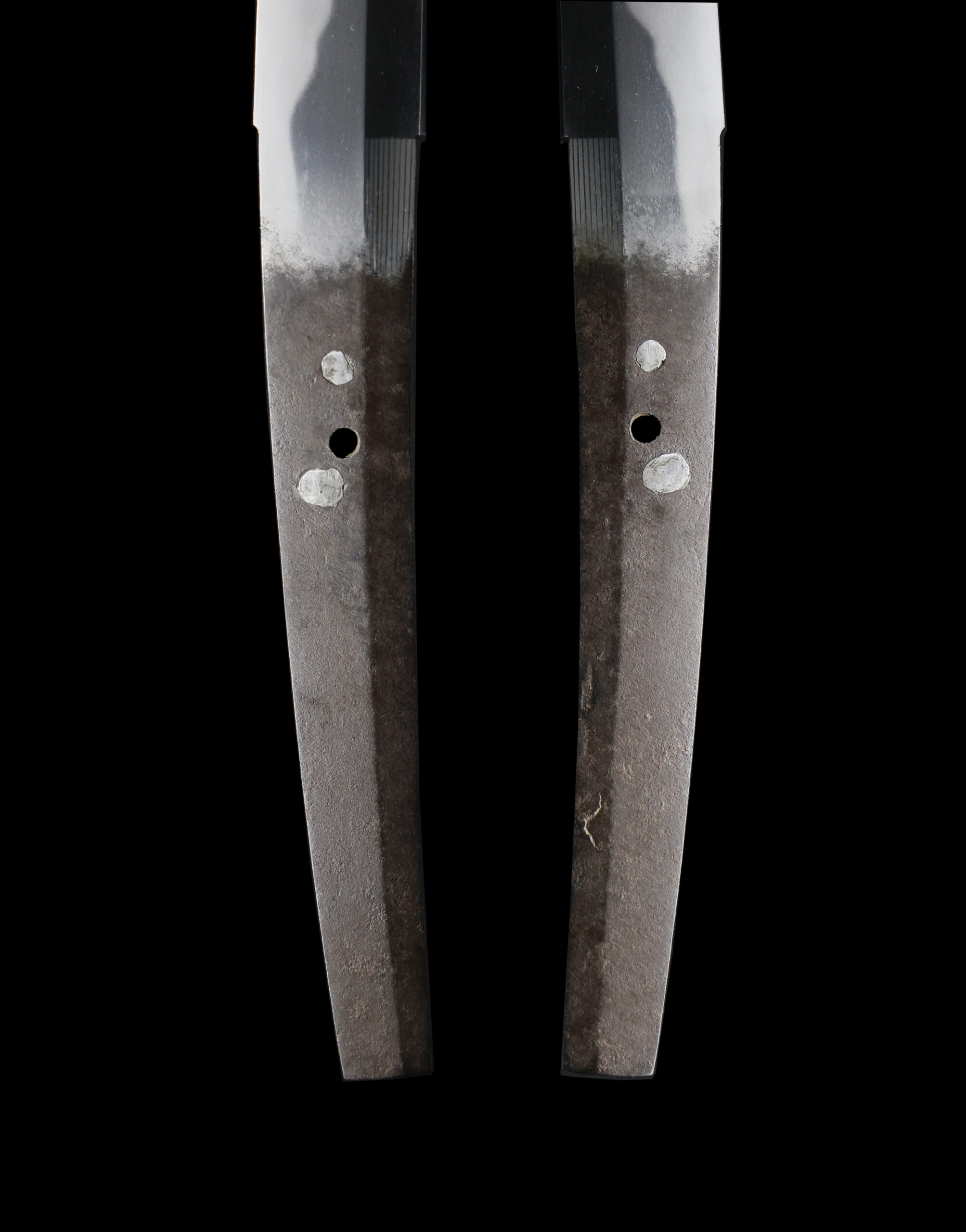
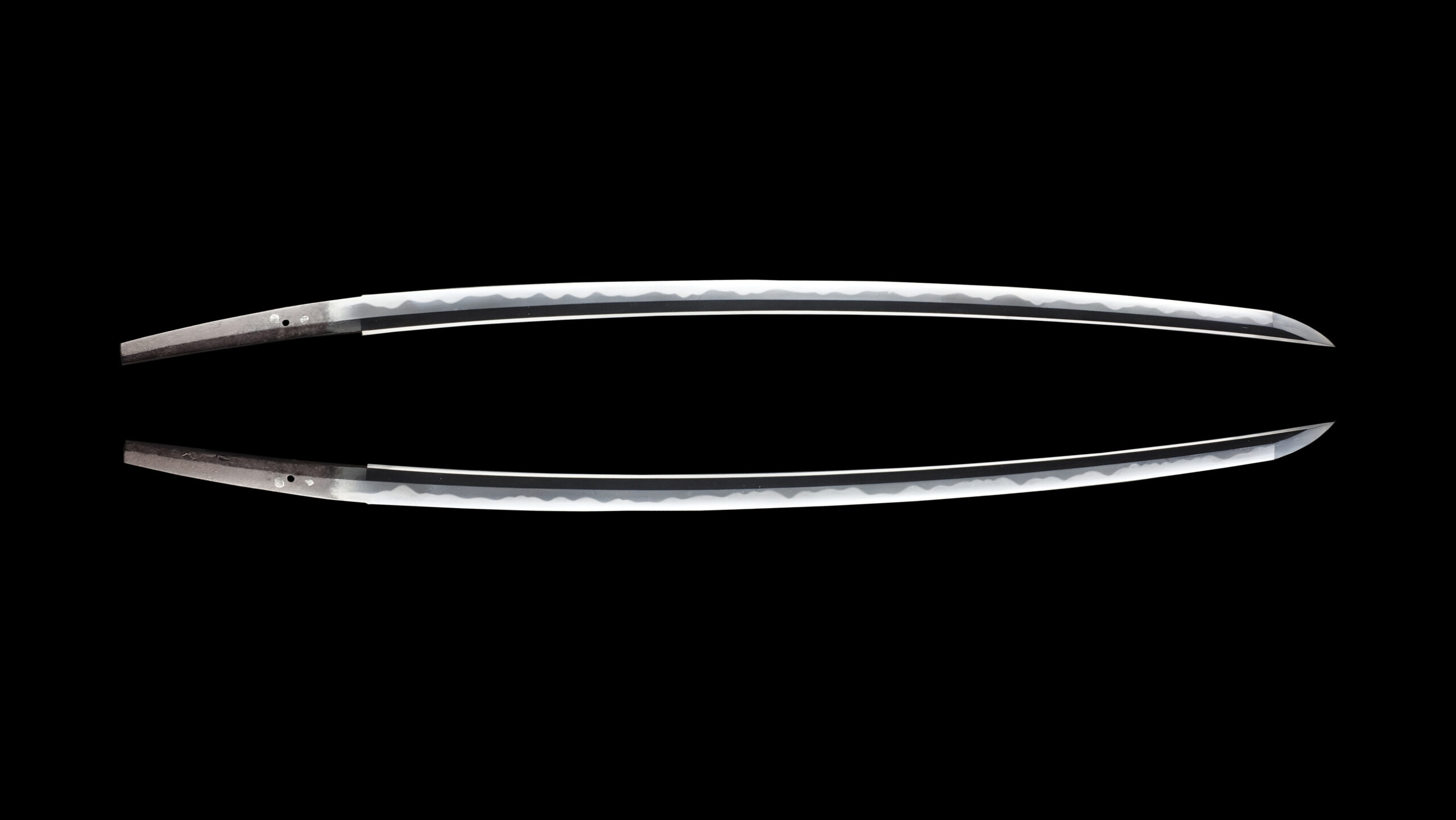
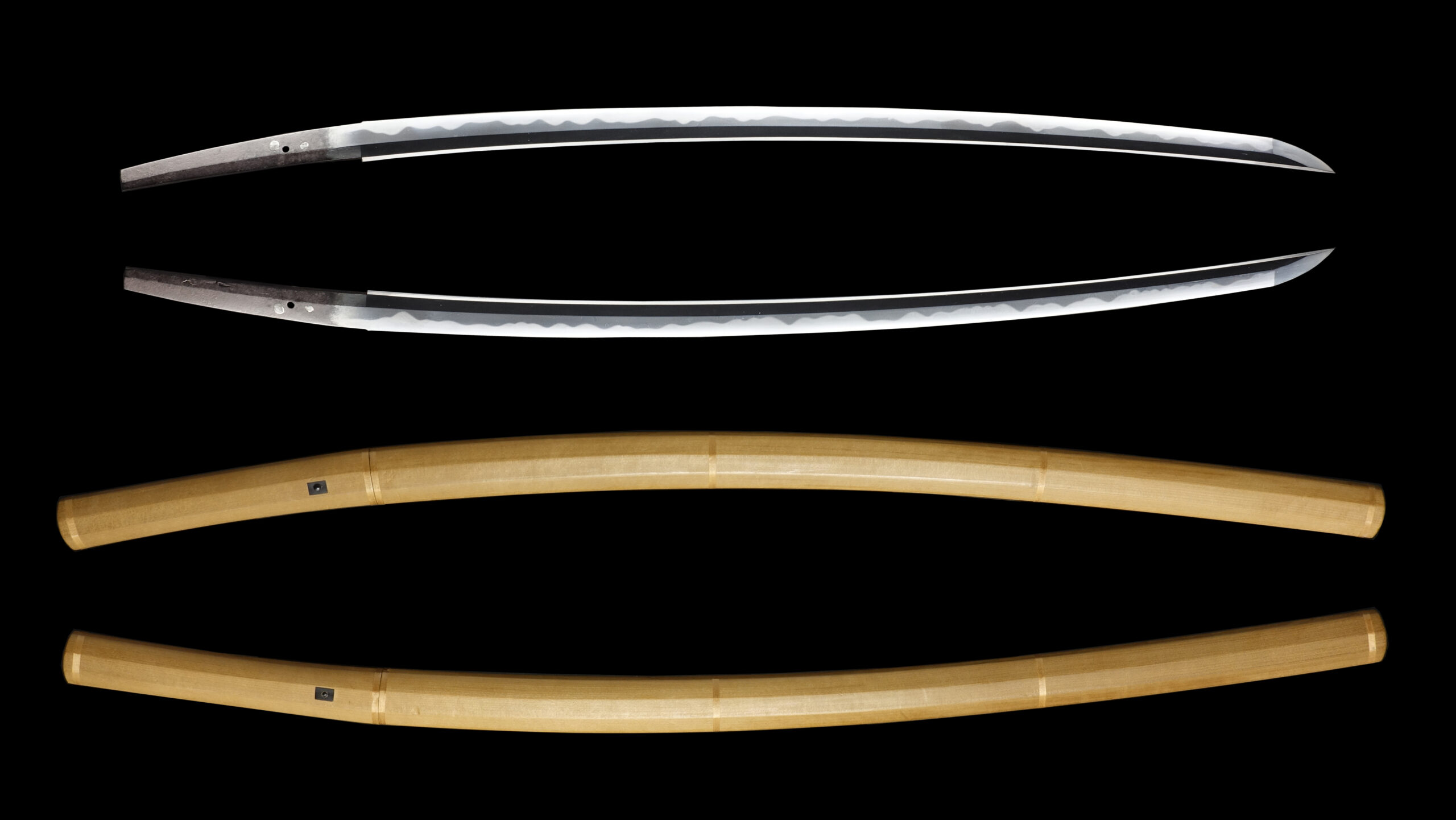
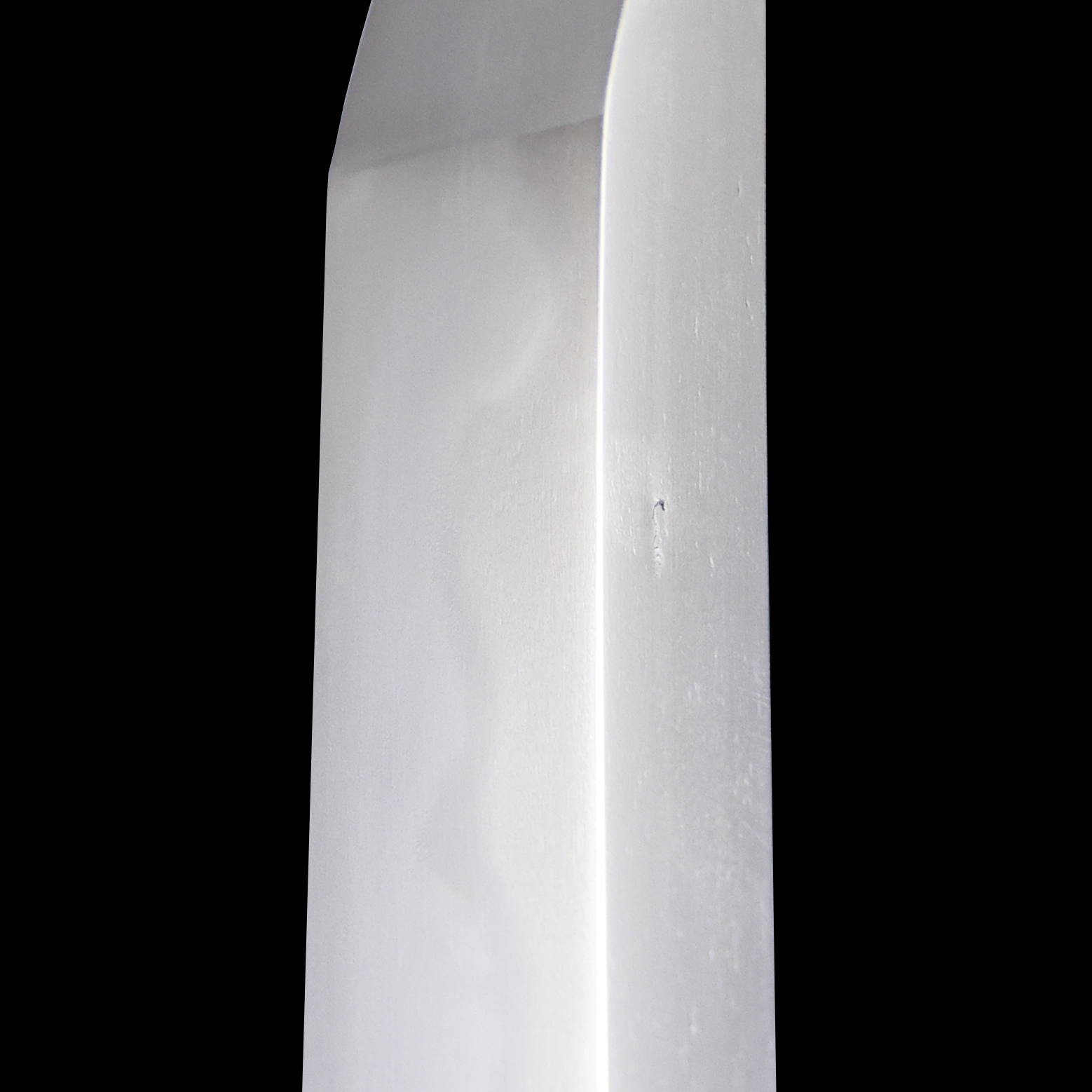
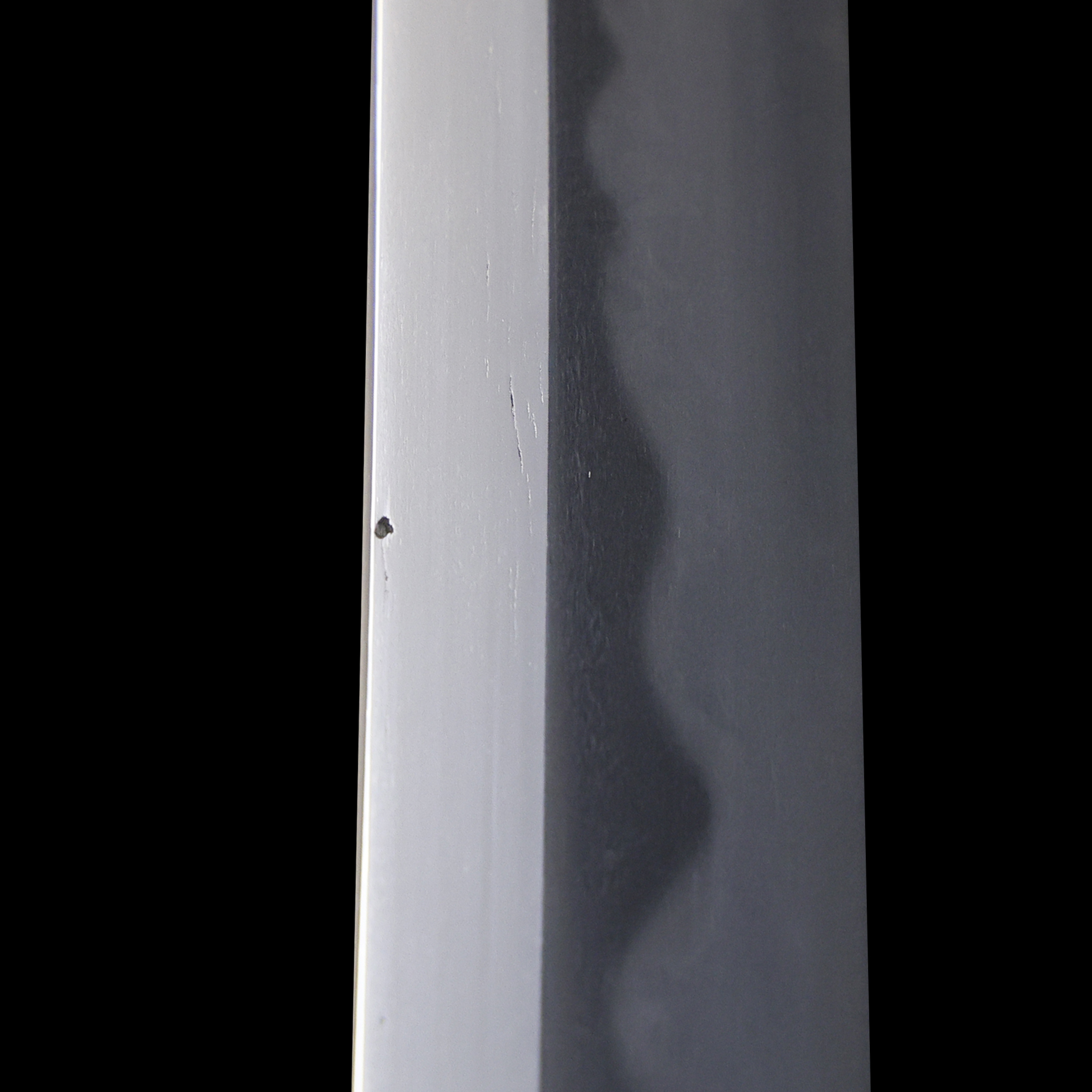
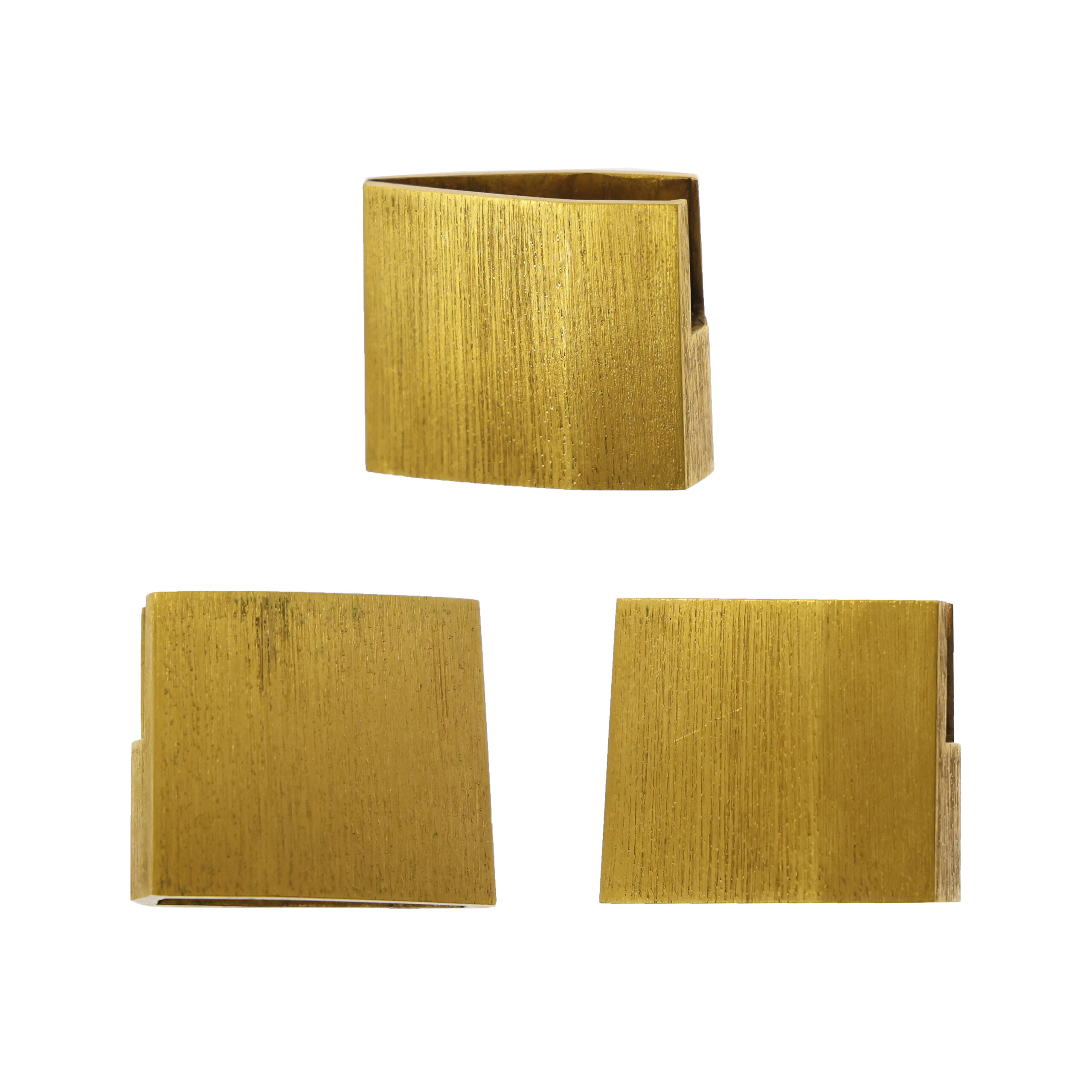
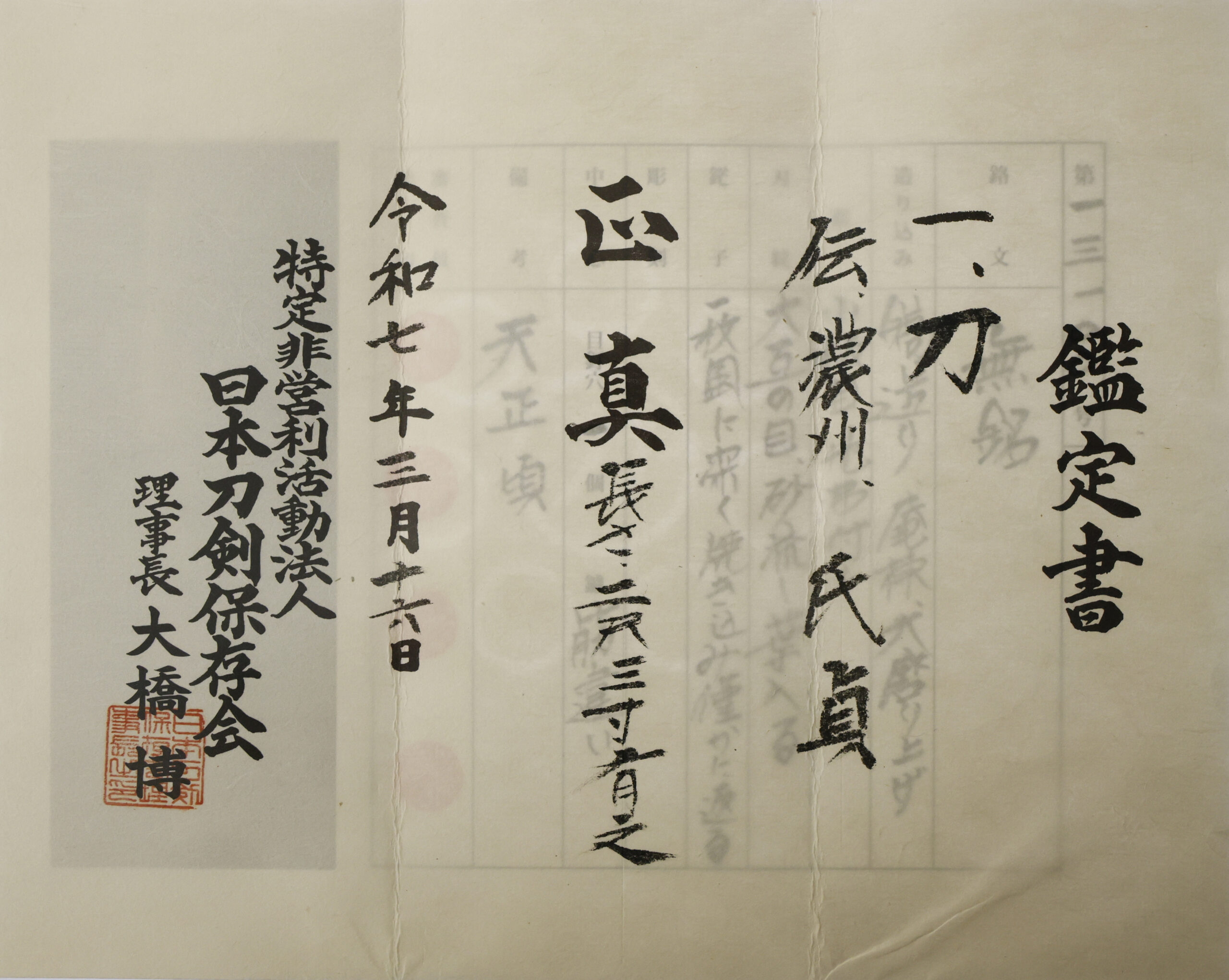
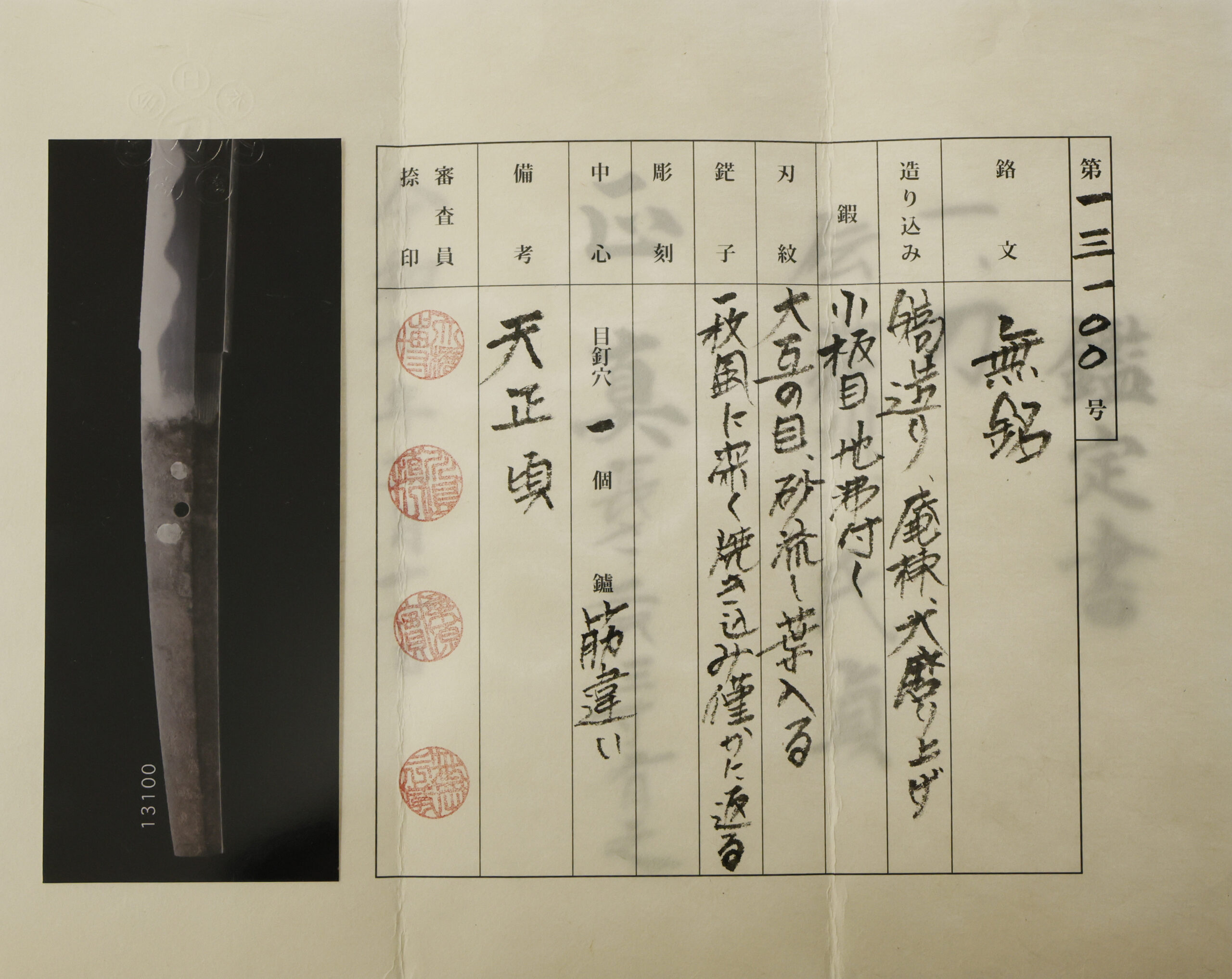
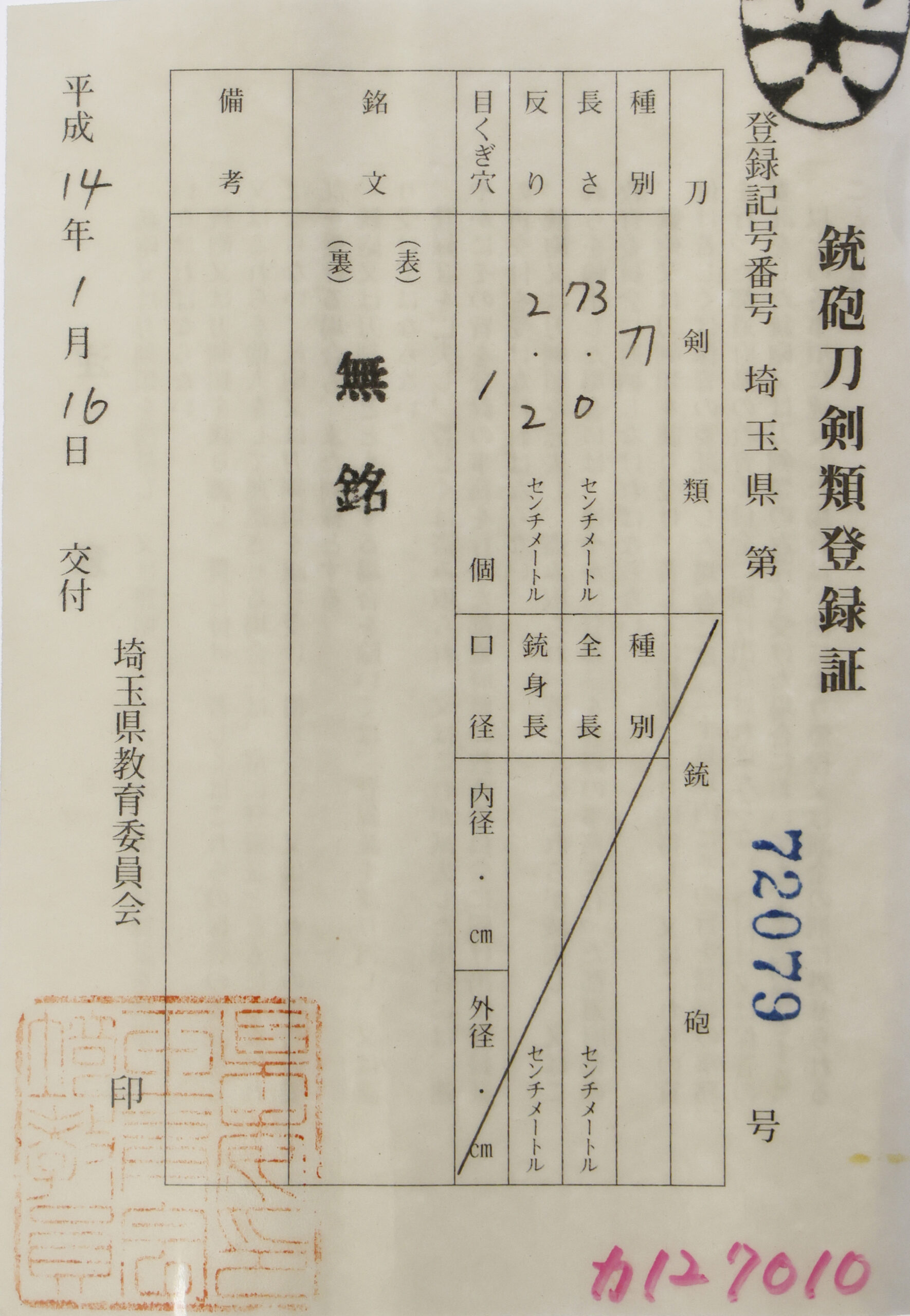
Antique Japanese Sword Katana attributed to Ujisada with NTHK Kanteisho Certificate 【Description】 Summary This blade is attributed to Ujisada (氏貞). Ujisada is also known as Izumo no Kami Ujisada (出雲守氏貞). He was active during the late Muromachi period ( 1570-1593 : Genki-Tensho era). According to available records, Ujisada received an honorable official title of Izumo no Kami after the fifth year of the Tensho era (1577) from the imperial court for his excellent craftsmanship. He originally signed Kanesada (兼貞) as his maker’s name and changed it to Ujisada. He was a student of the first-gen Ujifusa and an older brother of Wakasano Kami Ujifusa, who served Oda Nobunaga, one of the most famous Samurai in Japanese history. Ujisada initially forged swords in Mino province (today’s Gifu prefecture) but moved to Owari province (尾張: today’s Aichi prefecture) later in his life. His younger brother, Wakasano no Kami Ujifusa, also moved to Owari province (尾張) from Mino. Anecdote about Ujisada There is an interesting anecdote about Ujisada related to Toyotomi Hideyoshi, one of the three unifiers of Japan during the Sengoku period. When Hideyoshi wasn’t promoted to the high position yet, Kobayashi, one of his peers in the army, owned a great sword signed by Ujisada. Hideyoshi got very fond of the sword and asked Kobayashi if he could buy the sword. However, Kobayashi wouldn’t let it go. After Hideyoshi climbed the social ladder and became the head of 11 provinces, he asked Kobayashi again. He even offered a whole Ise province ( it was called Ise Koku (Country) back then) in exchange for the sword. But, Kobayashi declined Hideyoshi’s offer. This story became famous, and Ujisada became known as Ikkoku Ujisada. Ikkoku means a whole country (province in the old definition). This anecdote indicates that one sword made by Ujisada is worth more than one entire province. Mino Province The MINO swordsmiths style, also known as MINO-DEN, basically has the TOGARI(Pointed shapes protruding from the Hamon )in a classic straight line and random temper line with some white Utsuri. MINO-DEN had its origin from YAMATO-DEN in the late KAMAKURA period(1280-1330). It flourished in the MUROMACHI period(1333-1573) and continued until the EDO period(was1603-1868). Due to the high demand for weapons, MINO-DEN exceedingly prospered during Sengoku Jidai(Warring State period). And the location of Mino province beat others. Akechi Mitsuhide controlled Mino province, Nobunaga Oda ruled Owari province, and Tokugawa Ieyasu was the lord of Suruga (Neighboring areas). There was high demand from those powerful feudal lords and their retainers. Furthermore, many wars occurred between the Kanto region and the Kyoto area. Many feudal lords demanded swords forged in the Mino province. Mino is located in the middle, making feudal lords feel convenient to order swords from MINO-DEN. The blades forged in MINO provinces also had the reputation of their practical design and sharpness. *Please keep in mind that there are a few black rust spots on the blade. If you like to see the detailed condition, please feel free to contact us. 【Blade】 Cutting Edge Length (Nagasa) : 73.0 cm (28.7 inches) Curvature (Sori) : 2.2 cm (0.86 inches) Hamon : the crystalline structure which forms along the cutting edge of a blade as a result of the hardening process Jimon(Jihada) : visible steel surface pattern created by folding and hammering during forging process Kissaki : Kissaki is the tip of the Japanese sword. Nakago : Nakago is the tang of the Japanese sword. Japanese swordsmiths left the black rust on the tang because it prevents red rust while the tang is in its handle. And the discoloration of the tang was created over time, and it is a great indicator for a Japanese sword specialist to estimate when the sword was forged. Habaki : Habaki is the equipment to make the blade not touch its scabbard inside. It prevents the blade from getting rusty and chipped. Authentication Paper : NTHK Kanteisho

NihontoWatch MonNihontoWatch
MarketEncyclopediaKantei
刀剣›美濃伝›関›氏房›氏貞›Antique Japanese Sword Katana Attributed to Noshu Ujisada NTHK Kanteisho Certificate
刀
氏貞

Antique Japanese Sword Katana Attributed to Noshu Ujisada NTHK Kanteisho Certificate

無銘 · Mino · 室町 · 長さ 73cm · 反り 2.2cm

売却済
氏貞 · Mino · 室町販売中 4点 · 中央値 ¥800,000 →
刀
刀身だけで刀工を見抜けますか? 本日の鑑定 →
氏貞 — 1 of 17
氏貞 — 2 of 17
氏貞 — 3 of 17
氏貞 — 4 of 17
氏貞 — 5 of 17
氏貞 — 6 of 17
氏貞 — 7 of 17
氏貞 — 8 of 17
氏貞 — 9 of 17
氏貞 — 10 of 17
氏貞 — 11 of 17
氏貞 — 12 of 17
氏貞 — 13 of 17
氏貞 — 14 of 17
氏貞 — 15 of 17
氏貞 — 16 of 17
氏貞 — 17 of 17
1 / 17
1 / 17
氏貞 — 1 of 17氏貞 — 2 of 17氏貞 — 3 of 17氏貞 — 4 of 17氏貞 — 5 of 17氏貞 — 6 of 17氏貞 — 7 of 17氏貞 — 8 of 17氏貞 — 9 of 17氏貞 — 10 of 17氏貞 — 11 of 17氏貞 — 12 of 17氏貞 — 13 of 17氏貞 — 14 of 17氏貞 — 15 of 17氏貞 — 16 of 17氏貞 — 17 of 17
氏貞 · Mino · 室町販売中 4点 · 中央値 ¥800,000 →
刀
刀身だけで刀工を見抜けますか? 本日の鑑定 →
法量・詳細
刀工
氏貞
種別
刀
流派
Ujifusa
活動期
1558–1592年頃(Eiroku–Tenshō)
国
美濃
銘
無銘(在銘率 100%)
法量
長さ 73cm反り 2.2cm
説明

Antique Japanese Sword Katana attributed to Ujisada with NTHK Kanteisho Certificate 【Description】 Summary This blade is attributed to Ujisada (氏貞). Ujisada is also known as Izumo no Kami Ujisada (出雲守氏貞). He was active during the late Muromachi period ( 1570-1593 : Genki-Tensho era). According to available records, Ujisada received an honorable official title of Izumo no Kami after the fifth year of the Tensho era (1577) from the imperial court for his excellent craftsmanship. He originally signed Kanesada (兼貞) as his maker’s name and changed it to Ujisada. He was a student of the first-gen Ujifusa and an older brother of Wakasano Kami Ujifusa, who served Oda Nobunaga, one of the most famous Samurai in Japanese history. Ujisada initially forged swords in Mino province (today’s Gifu prefecture) but moved to Owari province (尾張: today’s Aichi prefecture) later in his life. His younger brother, Wakasano no Kami Ujifusa, also moved to Owari province (尾張) from Mino. Anecdote about Ujisada There is an interesting anecdote about Ujisada related to Toyotomi Hideyoshi, one of the three unifiers of Japan during the Sengoku period. When Hideyoshi wasn’t promoted to the high position yet, Kobayashi, one of his peers in the army, owned a great sword signed by Ujisada. Hideyoshi got very fond of the sword and asked Kobayashi if he could buy the sword. However, Kobayashi wouldn’t let it go. After Hideyoshi climbed the social ladder and became the head of 11 provinces, he asked Kobayashi again. He even offered a whole Ise province ( it was called Ise Koku (Country) back then) in exchange for the sword. But, Kobayashi declined Hideyoshi’s offer. This story became famous, and Ujisada became known as Ikkoku Ujisada. Ikkoku means a whole country (province in the old definition). This anecdote indicates that one sword made by Ujisada is worth more than one entire province. Mino Province The MINO swordsmiths style, also known as MINO-DEN, basically has the TOGARI(Pointed shapes protruding from the Hamon )in a classic straight line and random temper line with some white Utsuri. MINO-DEN had its origin from YAMATO-DEN in the late KAMAKURA period(1280-1330). It flourished in the MUROMACHI period(1333-1573) and continued until the EDO period(was1603-1868). Due to the high demand for weapons, MINO-DEN exceedingly prospered during Sengoku Jidai(Warring State period). And the location of Mino province beat others. Akechi Mitsuhide controlled Mino province, Nobunaga Oda ruled Owari province, and Tokugawa Ieyasu was the lord of Suruga (Neighboring areas). There was high demand from those powerful feudal lords and their retainers. Furthermore, many wars occurred between the Kanto region and the Kyoto area. Many feudal lords demanded swords forged in the Mino province. Mino is located in the middle, making feudal lords feel convenient to order swords from MINO-DEN. The blades forged in MINO provinces also had the reputation of their practical design and sharpness. *Please keep in mind that there are a few black rust spots on the blade. If you like to see the detailed condition, please feel free to contact us. 【Blade】 Cutting Edge Length (Nagasa) : 73.0 cm (28.7 inches) Curvature (Sori) : 2.2 cm (0.86 inches) Hamon : the crystalline structure which forms along the cutting edge of a blade as a result of the hardening process Jimon(Jihada) : visible steel surface pattern created by folding and hammering during forging process Kissaki : Kissaki is the tip of the Japanese sword. Nakago : Nakago is the tang of the Japanese sword. Japanese swordsmiths left the black rust on the tang because it prevents red rust while the tang is in its handle. And the discoloration of the tang was created over time, and it is a great indicator for a Japanese sword specialist to estimate when the sword was forged. Habaki : Habaki is the equipment to make the blade not touch its scabbard inside. It prevents the blade from getting rusty and chipped. Authentication Paper : NTHK Kanteisho

作者について

氏貞

美濃伝 · 美濃 · 1558-1592頃

藤代 Chu-jo saku · 刀剣大鑑 上位31%

現在4点販売中

›

氏貞は室町時代末期の関の刀工で、初代若狭守氏房の子で、二代若狭守氏房の弟と伝えられる。出雲守、左近少将、権少将を受領し銘に冠する。常の作風は、小板目に柾ごころの肌合が交じった鍛えを呈し、浅く大きくのたれた焼刃に箱がかった刃を交えるなど、末関中特に氏房系の特色をよく示したものが多い。

作風は、板目肌立ちごころに僅かに流れ肌交じり、板目に流れ柾交じり、あるいは小板目に流れて柾ごころの肌が交じるなど、鍛えに変化が見られる。刃文は浅く大きくのたれ、箱がかった刃や互の目、尖り刃などを交え、焼深く匂口締まるものや、のたれを主調に互の目、小互の目を交え、小足入り、砂流しかかり、匂深く小沸つき、匂口冴えるものなどがある。複式風の互の目・互の目丁子・尖り刃など交じり、足入り、処々葉を交え、匂口締まりごころとなり、匂勝ちとなる作もある。帽子は乱れ込み、先を焼詰め、あるいは小丸、掃きかけるなどが見られる。姿は、鎬造、庵棟、あるいは三つ棟で、身幅広く、先反りややつき、中鋒延びごころとなるものが多い。

氏貞の作は、地刃共に出来が良く、その出来栄えから「一国」の号があったとも伝えられる。重要刀剣の指定を受けている作は、末美濃物中で優れたものと評価され、年紀のあるものも貴重である。氏房系の特色をよく示し、地刃の出来が優れている点が評価されている。

歴史的重要度

氏貞の位置づけを、日本刀全体および伝統・時代・時期ごとに示します。各位(随一・屈指・有数・著名)は、NBTHK および文化庁による指定に加え、三作や名物帳などの歴史的栄誉を加味したものです。

随一
随一
屈指
屈指
有数
有数
著名
著名

各項目を選ぶと評価方法が表示されます。

指定の実績
指定7口
重要美術品
1
重要刀剣
6
氏貞の作 4点が現在販売中→
氏貞 — 詳細美濃伝派

年紀作

在銘年紀作が示す、確実に活動していた年代

活動期間
1575–1579推定期間:1558–1592
指定品5点のうち2点に年紀あり
1570
1580
1590

この作者について学ぶ →

流派について

氏房

美濃伝 · 尾張

現在18点販売中

›

氏房は尾張国に興った一門で、その作は桃山末から江戸初期、いわゆる新古境いの時代に位置づけられる。説示は若狭守氏房・飛騨守氏房を本流の手本として繰り返し挙げ、これに連なる工として、若狭守氏房の次男と伝える越後守氏恒、初代氏房の子と伝える出雲守氏貞らを記す。氏恒は河村平十郎、初銘を氏重とし、元和六年に越後守を受領、明暦二年に尾州名古屋にて歿したと美濃刀大鑑が伝える。氏貞は出雲守を受領し、左近少将あるいは権少将と銘した。一門は美濃を根として尾張に移り、徳川・尾張の地で代々その作風を継いだ。 作風は美濃伝を基調とする。鍛えは板目がつみ、杢や流れ肌を交え、地沸が微塵に厚くつき、地景が細かに入る。刃文は直ぐの焼出しごころを見せたうえ、下半は浅いのたれを基調に小互の目を連れて交え、上半は小のたれに大互の目や尖りごころの互の目を交える。のたれが角がかり、小足・葉が入り、沸がつき、処々荒めの沸を交えてむらづき、金筋・砂流しがかかり、随処に飛焼・棟焼を交えて匂口が幾分沈みごころとなる。帽子は焼深く、三品風に先が尖り、あるいは一枚風となって長く焼き下げ、掃きかける。短刀には平造に草の倶利迦羅や護摩箸に蓮台の彫物を加えるものがあり、師伝をよく踏襲する。大きくのたれた刃に大乱れを焼き、飛焼を交えて皆焼風となる一類もある。見分けは、のたれの角がかりと沸のむらづき、匂口の沈みごころ、そして三品風に先の尖る帽子に求められる。 伝来し指定された作には、越後守氏恒の幅広・大鋒で重ね厚く長寸の豪壮な刀、左近権少将氏貞の天正五年紀を切る彫物入りの短刀、氏貞の皆焼風を示す刀などがある。鑑定の要点は、若狭守及び飛騨守氏房の作柄を髣髴とさせる地刃の総体にあり、肉置き豊かな体配と大模様の刃文が相俟って迫力ある一作風を成す。寡作の工にあっても抜群の出来を示し、長大な姿にして破綻のないところに、この一門の力量がうかがわれる。 詳しく見る →

4名の刀工指定33口
主要刀工
刀工時代指定
氏房1596-161516
氏房1571-15929
氏恒1596-16151
氏貞1558-15927
氏房1624-16440
氏房流派を見る →

歴史的背景

室町時代の美濃

›

戦国の関は一つの産業であった。春日神社を氏神と仰ぐ鍛冶たちが、中部日本の軍勢を武装させた。孫六兼元の三本杉と之定の最上作は、量産の町に第一級の技が息づいていたことの証である。

室町時代の美濃 →

NTHK(日本刀剣保存会)鑑定
Kanteishō鑑定書
NTHK Appraisal Certificate
›

NTHKの中心的な鑑定書で、相応の出来を備えた作に発行されます。在銘作は銘の正真を、無銘作は審査員による刀工・流派の極めを示します。点数を記す詳細な審査表が付されます。

NTHKについて›

NTHK(日本刀剣保存会)は、NBTHK(1948年設立)に先立つ1910年に創立された、日本で最も古い刀剣鑑定団体です。長く会を率いた会長の没後、NTHKとNTHK-NPOの二つに分かれ、いずれも審査を続けています。NTHKの鑑定書は、点数と審査員の所見を併記する詳細な審査表が特徴で、特に無銘作の極めに定評があります。

販売店
サ
サムライミュージアム
🇯🇵日本から発送
›
✓認証販売店samuraimuseum.jp
✓海外発送可✓英語対応PayPalクレジットカード
返品ポリシー

Returns/exchanges limited to defects caused by shipping (except willful misconduct or gross negligence by the company); customers must contact within 72 hours of receiving the product.

サムライミュージアムの出品一覧を見る→販売店サイトでこの商品を見る→

氏貞の他の作

すべて見る →
Toyuukai
保存
Katana - Hozon - by Ujifusa Ujisada - 刀 無銘(権少将氏貞) 保存刀剣鑑定書 品番:KA066Katana - Hozon - by Ujifusa Ujisada - 刀 無銘(権少将氏貞) 保存刀剣鑑定書 品番:KA066

刀

作氏貞
64.2cm·室町
¥800,000
あさひ刀剣
特別保存
Tanto - Tokuho - by Ujifusa Ujisada - 短刀 出雲守藤原氏貞Tanto - Tokuho - by Ujifusa Ujisada - 短刀 出雲守藤原氏貞

短刀

作氏貞
26.4cm·室町
¥539,000
刀剣徳川
特別保存
Katana - Tokuho - by Ujifusa Ujisada - 刀 銘 出雲守藤原氏貞作Katana - Tokuho - by Ujifusa Ujisada - 刀 銘 出雲守藤原氏貞作

刀

作氏貞
68.5cm·室町
¥1,000,000
安東貿易
短刀写真非公開
Tanto - by Ujifusa Ujisada - 短刀 氏貞

短刀

作氏貞
19.3cm
お問い合わせ

氏貞の売約済み

すべて見る →
サムライミュージアム
保存
Wakizashi - Hozon - by Ujifusa Ujisada - 日本刀 脇差 伝氏貞 日本美術刀剣保存協会 保持審査合格(保存刀剣)鑑定書付Wakizashi - Hozon - by Ujifusa Ujisada - 日本刀 脇差 伝氏貞 日本美術刀剣保存協会 保持審査合格(保存刀剣)鑑定書付
売切れ

脇差

作氏貞
37.7cm·室町
売却済
サムライミュージアム
特別貴重
Katana - Tokubetsu Kichō - by Ujifusa Ujisada - 日本刀 刀 無銘(氏貞)特別貴重刀剣鑑定書付Katana - Tokubetsu Kichō - by Ujifusa Ujisada - 日本刀 刀 無銘(氏貞)特別貴重刀剣鑑定書付
売切れ

刀

作氏貞
73cm·室町
売却済

氏房派の作

すべて見る →
銀座長州屋
特別保存
Katana - Tokuho - by Ujifusa - 刀 銘 飛騨守藤原氏房Katana - Tokuho - by Ujifusa - 刀 銘 飛騨守藤原氏房

刀

作氏房
71.66cm·新刀
お問い合わせ
和敬堂
特別保存
Katana - Tokuho - by Ujifusa - 刀 若狭守藤原氏房作Katana - Tokuho - by Ujifusa - 刀 若狭守藤原氏房作

刀

作氏房
74.3cm·室町
¥2,800,000
葵美術
特別保存
Wakizashi - Tokuho - by Ujifusa - 脇差:飛騨守藤原氏房(日本美術刀剣保存協会 特別保存刀剣)Wakizashi - Tokuho - by Ujifusa - 脇差:飛騨守藤原氏房(日本美術刀剣保存協会 特別保存刀剣)

脇差

作氏房
49.2cm·Keicho (1596-1615)
¥500,000
Onihonto
特別保存
Katana - Tokuho - by Ujifusa - 飛騨守氏房 刀Katana - Tokuho - by Ujifusa - 飛騨守氏房 刀

刀

作氏房
68cm·Keicho (1596-1615)
¥24,000
刀剣徳川
特別保存
Katana - Tokuho - by Ujifusa - 刀 銘 備前守藤原氏房Katana - Tokuho - by Ujifusa - 刀 銘 備前守藤原氏房

刀

作氏房
75.7cm·Keicho (1596-1615)
¥1,350,000
葵美術
保存
Wakizashi - Hozon - by Ujifusa School - 脇差:無銘(氏房)日本美術刀剣保存協会 保持審査合格(保存刀剣)Wakizashi - Hozon - by Ujifusa School - 脇差:無銘(氏房)日本美術刀剣保存協会 保持審査合格(保存刀剣)

脇差

作氏房派
50.4cm·室町
¥450,000
葵美術
特別保存
Tanto - Tokuho - by Ujifusa - 短刀:飛騨守藤原氏房(日本美術刀剣保存協会 特別保存刀剣)Tanto - Tokuho - by Ujifusa - 短刀:飛騨守藤原氏房(日本美術刀剣保存協会 特別保存刀剣)

短刀

作氏房
27.1cm·Keicho (1596-1615)
¥800,000
Nihontocraft
特別保存
Tanto - Tokuho - by Ujifusa - 飛騨守氏房作Tanto - Tokuho - by Ujifusa - 飛騨守氏房作

短刀

作氏房
28.5cm·Keicho (1596-1615)
¥7,500

関派の作

すべて見る →
刀剣杉田
特別保存
Wakizashi - Tokuho - by Kanemoto - 兼元(美濃)(東山道) (二代孫六)Wakizashi - Tokuho - by Kanemoto - 兼元(美濃)(東山道) (二代孫六)

脇差

作兼元
38cm·室町
¥3,200,000
銀座誠友堂
保存
Tanto - Hozon - by Seki School - 短刀[氏房][日本美術刀剣保存協会]保存刀剣Tanto - Hozon - by Seki School - 短刀[氏房][日本美術刀剣保存協会]保存刀剣

短刀

作関派
27.4cm·桃山
¥1,300,000
銀座長州屋
保存
Yari - Hozon - by Seki Kanefusa - 両鎬直槍 銘 兼房Yari - Hozon - by Seki Kanefusa - 両鎬直槍 銘 兼房

槍

作兼房
34.4cm·室町
お問い合わせ
Connoisseur Arms
重要
Katana - Jūyō - by Kanemoto - 史実的銘刀 関の孫六兼元 本身刀Katana - Jūyō - by Kanemoto - 史実的銘刀 関の孫六兼元 本身刀

刀

作兼元
室町
お問い合わせ
サムライミュージアム
保存
Tachi - Hozon - by Seki School - 日本刀 銘 兼吉 太刀 NBTHK 保存刀剣鑑定書付Tachi - Hozon - by Seki School - 日本刀 銘 兼吉 太刀 NBTHK 保存刀剣鑑定書付

太刀

作関派
68.1cm·室町
¥4,685
葵美術
Katana - by Aizu Kanesada - 刀:和泉守藤原兼定(号外)Katana - by Aizu Kanesada - 刀:和泉守藤原兼定(号外)

刀

作兼定
70.6cm·新刀
開始価格¥420,000
刀心
特別保存
Wakizashi - Tokuho - by Seki Kanefusa - 兼房 3-916Wakizashi - Tokuho - by Seki Kanefusa - 兼房 3-916

脇差

作兼房
31cm·室町
¥3,300,000
Bushido Antique Japanese Swords
特別保存
Wakizashi - Tokuho - by Seki School - 古刀 美濃伝 兼常Wakizashi - Tokuho - by Seki School - 古刀 美濃伝 兼常

脇差

作関派
50cm·室町
¥4,000

美濃の伝統

すべて見る →
和敬堂
特別保存
Katana - Tokuho - by Naoe Shizu School - 刀 無銘 直江志津Katana - Tokuho - by Naoe Shizu School - 刀 無銘 直江志津

刀

作直江志津派
63.4cm·南北朝
¥1,500,000
葵美術
特別保存
Katana - Tokuho - by Naoe Shizu School - 刀:無銘(直江志津)(日本美術刀剣保存協会 特別保存刀剣)Katana - Tokuho - by Naoe Shizu School - 刀:無銘(直江志津)(日本美術刀剣保存協会 特別保存刀剣)

刀

作直江志津派
72.3cm·南北朝
¥2,200,000
銀座長州屋
特別保存
Katana - Tokuho - by Naoe Shizu School - 大磨上無銘伝直江志津Katana - Tokuho - by Naoe Shizu School - 大磨上無銘伝直江志津

刀

作直江志津派
69.39cm·南北朝
¥2,500,000
コレクション情報
重要
Katana - Jūyō - by Shizu Kaneuji - 刀 大和志津(無銘)Katana - Jūyō - by Shizu Kaneuji - 刀 大和志津(無銘)

刀

作兼氏
69.5cm·Geno (1319-1321)
¥9,500,000
宝刀堂
特別保存
Naginata - Tokuho - by Aki Teruhiro School - 播磨守藤原輝広 薙刀Naginata - Tokuho - by Aki Teruhiro School - 播磨守藤原輝広 薙刀

薙刀

作安芸輝広派
50cm·1596-1644
¥850,000
勝武堂
特別保存
Wakizashi - Tokuho - by Naoe Shizu School - 脇差 無銘(直江志津) / Wakizashi Mumei NaoeshizuWakizashi - Tokuho - by Naoe Shizu School - 脇差 無銘(直江志津) / Wakizashi Mumei Naoeshizu

脇差

作直江志津派
39cm·南北朝
¥1,200,000
葵美術
重要
Katana - Jūyō - by Yamato Shizu School - 刀:無銘(大和志津)(第16回重要刀剣)Katana - Jūyō - by Yamato Shizu School - 刀:無銘(大和志津)(第16回重要刀剣)

刀

作大和志津派
68cm·南北朝
¥2,700,000
刀剣徳川
特別保存
Katana - Tokuho - by Naoe Shizu School - 刀 無銘 直江志津伝Katana - Tokuho - by Naoe Shizu School - 刀 無銘 直江志津伝

刀

作直江志津派
63.7cm·南北朝
¥1,350,000

刀剣

  • 刀
  • 脇差
  • 短刀
  • 太刀
  • 薙刀
  • 槍
  • 日本刀の販売
  • サムライソード

刀装具

  • 鍔
  • 縁頭
  • 小柄
  • 目貫
  • 鍔(ソードガード)

甲冑武具

  • 兜
  • 甲冑
  • 甲冑・武具一覧

鑑定別

  • 特重
  • 重要
  • 特別保存
  • 保存

リソース

  • 刀剣商一覧
  • 刀工一覧
  • 誌上鑑定
  • すべて見る
Nihontowatch© 2026
利用規約プライバシーCookie運営者情報
売切れ

説明

Antique Japanese Sword Katana attributed to Ujisada with NTHK Kanteisho Certificate 【Description】 Summary This blade is attributed to Ujisada (氏貞). Ujisada is also known as Izumo no Kami Ujisada (出雲守氏貞). He was active during the late Muromachi period ( 1570-1593 : Genki-Tensho era). According to available records, Ujisada received an honorable official title of Izumo no Kami after the fifth year of the Tensho era (1577) from the imperial court for his excellent craftsmanship. He originally signed Kanesada (兼貞) as his maker’s name and changed it to Ujisada. He was a student of the first-gen Ujifusa and an older brother of Wakasano Kami Ujifusa, who served Oda Nobunaga, one of the most famous Samurai in Japanese history. Ujisada initially forged swords in Mino province (today’s Gifu prefecture) but moved to Owari province (尾張: today’s Aichi prefecture) later in his life. His younger brother, Wakasano no Kami Ujifusa, also moved to Owari province (尾張) from Mino. Anecdote about Ujisada There is an interesting anecdote about Ujisada related to Toyotomi Hideyoshi, one of the three unifiers of Japan during the Sengoku period. When Hideyoshi wasn’t promoted to the high position yet, Kobayashi, one of his peers in the army, owned a great sword signed by Ujisada. Hideyoshi got very fond of the sword and asked Kobayashi if he could buy the sword. However, Kobayashi wouldn’t let it go. After Hideyoshi climbed the social ladder and became the head of 11 provinces, he asked Kobayashi again. He even offered a whole Ise province ( it was called Ise Koku (Country) back then) in exchange for the sword. But, Kobayashi declined Hideyoshi’s offer. This story became famous, and Ujisada became known as Ikkoku Ujisada. Ikkoku means a whole country (province in the old definition). This anecdote indicates that one sword made by Ujisada is worth more than one entire province. Mino Province The MINO swordsmiths style, also known as MINO-DEN, basically has the TOGARI(Pointed shapes protruding from the Hamon )in a classic straight line and random temper line with some white Utsuri. MINO-DEN had its origin from YAMATO-DEN in the late KAMAKURA period(1280-1330). It flourished in the MUROMACHI period(1333-1573) and continued until the EDO period(was1603-1868). Due to the high demand for weapons, MINO-DEN exceedingly prospered during Sengoku Jidai(Warring State period). And the location of Mino province beat others. Akechi Mitsuhide controlled Mino province, Nobunaga Oda ruled Owari province, and Tokugawa Ieyasu was the lord of Suruga (Neighboring areas). There was high demand from those powerful feudal lords and their retainers. Furthermore, many wars occurred between the Kanto region and the Kyoto area. Many feudal lords demanded swords forged in the Mino province. Mino is located in the middle, making feudal lords feel convenient to order swords from MINO-DEN. The blades forged in MINO provinces also had the reputation of their practical design and sharpness. *Please keep in mind that there are a few black rust spots on the blade. If you like to see the detailed condition, please feel free to contact us. 【Blade】 Cutting Edge Length (Nagasa) : 73.0 cm (28.7 inches) Curvature (Sori) : 2.2 cm (0.86 inches) Hamon : the crystalline structure which forms along the cutting edge of a blade as a result of the hardening process Jimon(Jihada) : visible steel surface pattern created by folding and hammering during forging process Kissaki : Kissaki is the tip of the Japanese sword. Nakago : Nakago is the tang of the Japanese sword. Japanese swordsmiths left the black rust on the tang because it prevents red rust while the tang is in its handle. And the discoloration of the tang was created over time, and it is a great indicator for a Japanese sword specialist to estimate when the sword was forged. Habaki : Habaki is the equipment to make the blade not touch its scabbard inside. It prevents the blade from getting rusty and chipped. Authentication Paper : NTHK Kanteisho

NihontoWatch MonNihontoWatch
MarketEncyclopediaKantei
刀剣›美濃伝›関›氏房›氏貞›Antique Japanese Sword Katana Attributed to Noshu Ujisada NTHK Kanteisho Certificate
刀
氏貞

Antique Japanese Sword Katana Attributed to Noshu Ujisada NTHK Kanteisho Certificate

無銘 · Mino · 室町 · 長さ 73cm · 反り 2.2cm

売却済
氏貞 · Mino · 室町販売中 4点 · 中央値 ¥800,000 →
刀
刀身だけで刀工を見抜けますか? 本日の鑑定 →
氏貞 — 1 of 17
氏貞 — 2 of 17
氏貞 — 3 of 17
氏貞 — 4 of 17
氏貞 — 5 of 17
氏貞 — 6 of 17
氏貞 — 7 of 17
氏貞 — 8 of 17
氏貞 — 9 of 17
氏貞 — 10 of 17
氏貞 — 11 of 17
氏貞 — 12 of 17
氏貞 — 13 of 17
氏貞 — 14 of 17
氏貞 — 15 of 17
氏貞 — 16 of 17
氏貞 — 17 of 17
1 / 17
1 / 17
氏貞 — 1 of 17氏貞 — 2 of 17氏貞 — 3 of 17氏貞 — 4 of 17氏貞 — 5 of 17氏貞 — 6 of 17氏貞 — 7 of 17氏貞 — 8 of 17氏貞 — 9 of 17氏貞 — 10 of 17氏貞 — 11 of 17氏貞 — 12 of 17氏貞 — 13 of 17氏貞 — 14 of 17氏貞 — 15 of 17氏貞 — 16 of 17氏貞 — 17 of 17
氏貞 · Mino · 室町販売中 4点 · 中央値 ¥800,000 →
刀
刀身だけで刀工を見抜けますか? 本日の鑑定 →
法量・詳細
刀工
氏貞
種別
刀
流派
Ujifusa
活動期
1558–1592年頃(Eiroku–Tenshō)
国
美濃
銘
無銘(在銘率 100%)
法量
長さ 73cm反り 2.2cm
説明

Antique Japanese Sword Katana attributed to Ujisada with NTHK Kanteisho Certificate 【Description】 Summary This blade is attributed to Ujisada (氏貞). Ujisada is also known as Izumo no Kami Ujisada (出雲守氏貞). He was active during the late Muromachi period ( 1570-1593 : Genki-Tensho era). According to available records, Ujisada received an honorable official title of Izumo no Kami after the fifth year of the Tensho era (1577) from the imperial court for his excellent craftsmanship. He originally signed Kanesada (兼貞) as his maker’s name and changed it to Ujisada. He was a student of the first-gen Ujifusa and an older brother of Wakasano Kami Ujifusa, who served Oda Nobunaga, one of the most famous Samurai in Japanese history. Ujisada initially forged swords in Mino province (today’s Gifu prefecture) but moved to Owari province (尾張: today’s Aichi prefecture) later in his life. His younger brother, Wakasano no Kami Ujifusa, also moved to Owari province (尾張) from Mino. Anecdote about Ujisada There is an interesting anecdote about Ujisada related to Toyotomi Hideyoshi, one of the three unifiers of Japan during the Sengoku period. When Hideyoshi wasn’t promoted to the high position yet, Kobayashi, one of his peers in the army, owned a great sword signed by Ujisada. Hideyoshi got very fond of the sword and asked Kobayashi if he could buy the sword. However, Kobayashi wouldn’t let it go. After Hideyoshi climbed the social ladder and became the head of 11 provinces, he asked Kobayashi again. He even offered a whole Ise province ( it was called Ise Koku (Country) back then) in exchange for the sword. But, Kobayashi declined Hideyoshi’s offer. This story became famous, and Ujisada became known as Ikkoku Ujisada. Ikkoku means a whole country (province in the old definition). This anecdote indicates that one sword made by Ujisada is worth more than one entire province. Mino Province The MINO swordsmiths style, also known as MINO-DEN, basically has the TOGARI(Pointed shapes protruding from the Hamon )in a classic straight line and random temper line with some white Utsuri. MINO-DEN had its origin from YAMATO-DEN in the late KAMAKURA period(1280-1330). It flourished in the MUROMACHI period(1333-1573) and continued until the EDO period(was1603-1868). Due to the high demand for weapons, MINO-DEN exceedingly prospered during Sengoku Jidai(Warring State period). And the location of Mino province beat others. Akechi Mitsuhide controlled Mino province, Nobunaga Oda ruled Owari province, and Tokugawa Ieyasu was the lord of Suruga (Neighboring areas). There was high demand from those powerful feudal lords and their retainers. Furthermore, many wars occurred between the Kanto region and the Kyoto area. Many feudal lords demanded swords forged in the Mino province. Mino is located in the middle, making feudal lords feel convenient to order swords from MINO-DEN. The blades forged in MINO provinces also had the reputation of their practical design and sharpness. *Please keep in mind that there are a few black rust spots on the blade. If you like to see the detailed condition, please feel free to contact us. 【Blade】 Cutting Edge Length (Nagasa) : 73.0 cm (28.7 inches) Curvature (Sori) : 2.2 cm (0.86 inches) Hamon : the crystalline structure which forms along the cutting edge of a blade as a result of the hardening process Jimon(Jihada) : visible steel surface pattern created by folding and hammering during forging process Kissaki : Kissaki is the tip of the Japanese sword. Nakago : Nakago is the tang of the Japanese sword. Japanese swordsmiths left the black rust on the tang because it prevents red rust while the tang is in its handle. And the discoloration of the tang was created over time, and it is a great indicator for a Japanese sword specialist to estimate when the sword was forged. Habaki : Habaki is the equipment to make the blade not touch its scabbard inside. It prevents the blade from getting rusty and chipped. Authentication Paper : NTHK Kanteisho

作者について

氏貞

美濃伝 · 美濃 · 1558-1592頃

藤代 Chu-jo saku · 刀剣大鑑 上位31%

現在4点販売中

›

氏貞は室町時代末期の関の刀工で、初代若狭守氏房の子で、二代若狭守氏房の弟と伝えられる。出雲守、左近少将、権少将を受領し銘に冠する。常の作風は、小板目に柾ごころの肌合が交じった鍛えを呈し、浅く大きくのたれた焼刃に箱がかった刃を交えるなど、末関中特に氏房系の特色をよく示したものが多い。

作風は、板目肌立ちごころに僅かに流れ肌交じり、板目に流れ柾交じり、あるいは小板目に流れて柾ごころの肌が交じるなど、鍛えに変化が見られる。刃文は浅く大きくのたれ、箱がかった刃や互の目、尖り刃などを交え、焼深く匂口締まるものや、のたれを主調に互の目、小互の目を交え、小足入り、砂流しかかり、匂深く小沸つき、匂口冴えるものなどがある。複式風の互の目・互の目丁子・尖り刃など交じり、足入り、処々葉を交え、匂口締まりごころとなり、匂勝ちとなる作もある。帽子は乱れ込み、先を焼詰め、あるいは小丸、掃きかけるなどが見られる。姿は、鎬造、庵棟、あるいは三つ棟で、身幅広く、先反りややつき、中鋒延びごころとなるものが多い。

氏貞の作は、地刃共に出来が良く、その出来栄えから「一国」の号があったとも伝えられる。重要刀剣の指定を受けている作は、末美濃物中で優れたものと評価され、年紀のあるものも貴重である。氏房系の特色をよく示し、地刃の出来が優れている点が評価されている。

歴史的重要度

氏貞の位置づけを、日本刀全体および伝統・時代・時期ごとに示します。各位(随一・屈指・有数・著名)は、NBTHK および文化庁による指定に加え、三作や名物帳などの歴史的栄誉を加味したものです。

随一
随一
屈指
屈指
有数
有数
著名
著名

各項目を選ぶと評価方法が表示されます。

指定の実績
指定7口
重要美術品
1
重要刀剣
6
氏貞の作 4点が現在販売中→
氏貞 — 詳細美濃伝派

年紀作

在銘年紀作が示す、確実に活動していた年代

活動期間
1575–1579推定期間:1558–1592
指定品5点のうち2点に年紀あり
1570
1580
1590

この作者について学ぶ →

流派について

氏房

美濃伝 · 尾張

現在18点販売中

›

氏房は尾張国に興った一門で、その作は桃山末から江戸初期、いわゆる新古境いの時代に位置づけられる。説示は若狭守氏房・飛騨守氏房を本流の手本として繰り返し挙げ、これに連なる工として、若狭守氏房の次男と伝える越後守氏恒、初代氏房の子と伝える出雲守氏貞らを記す。氏恒は河村平十郎、初銘を氏重とし、元和六年に越後守を受領、明暦二年に尾州名古屋にて歿したと美濃刀大鑑が伝える。氏貞は出雲守を受領し、左近少将あるいは権少将と銘した。一門は美濃を根として尾張に移り、徳川・尾張の地で代々その作風を継いだ。 作風は美濃伝を基調とする。鍛えは板目がつみ、杢や流れ肌を交え、地沸が微塵に厚くつき、地景が細かに入る。刃文は直ぐの焼出しごころを見せたうえ、下半は浅いのたれを基調に小互の目を連れて交え、上半は小のたれに大互の目や尖りごころの互の目を交える。のたれが角がかり、小足・葉が入り、沸がつき、処々荒めの沸を交えてむらづき、金筋・砂流しがかかり、随処に飛焼・棟焼を交えて匂口が幾分沈みごころとなる。帽子は焼深く、三品風に先が尖り、あるいは一枚風となって長く焼き下げ、掃きかける。短刀には平造に草の倶利迦羅や護摩箸に蓮台の彫物を加えるものがあり、師伝をよく踏襲する。大きくのたれた刃に大乱れを焼き、飛焼を交えて皆焼風となる一類もある。見分けは、のたれの角がかりと沸のむらづき、匂口の沈みごころ、そして三品風に先の尖る帽子に求められる。 伝来し指定された作には、越後守氏恒の幅広・大鋒で重ね厚く長寸の豪壮な刀、左近権少将氏貞の天正五年紀を切る彫物入りの短刀、氏貞の皆焼風を示す刀などがある。鑑定の要点は、若狭守及び飛騨守氏房の作柄を髣髴とさせる地刃の総体にあり、肉置き豊かな体配と大模様の刃文が相俟って迫力ある一作風を成す。寡作の工にあっても抜群の出来を示し、長大な姿にして破綻のないところに、この一門の力量がうかがわれる。 詳しく見る →

4名の刀工指定33口
主要刀工
刀工時代指定
氏房1596-161516
氏房1571-15929
氏恒1596-16151
氏貞1558-15927
氏房1624-16440
氏房流派を見る →

歴史的背景

室町時代の美濃

›

戦国の関は一つの産業であった。春日神社を氏神と仰ぐ鍛冶たちが、中部日本の軍勢を武装させた。孫六兼元の三本杉と之定の最上作は、量産の町に第一級の技が息づいていたことの証である。

室町時代の美濃 →

NTHK(日本刀剣保存会)鑑定
Kanteishō鑑定書
NTHK Appraisal Certificate
›

NTHKの中心的な鑑定書で、相応の出来を備えた作に発行されます。在銘作は銘の正真を、無銘作は審査員による刀工・流派の極めを示します。点数を記す詳細な審査表が付されます。

NTHKについて›

NTHK(日本刀剣保存会)は、NBTHK(1948年設立)に先立つ1910年に創立された、日本で最も古い刀剣鑑定団体です。長く会を率いた会長の没後、NTHKとNTHK-NPOの二つに分かれ、いずれも審査を続けています。NTHKの鑑定書は、点数と審査員の所見を併記する詳細な審査表が特徴で、特に無銘作の極めに定評があります。

販売店
サ
サムライミュージアム
🇯🇵日本から発送
›
✓認証販売店samuraimuseum.jp
✓海外発送可✓英語対応PayPalクレジットカード
返品ポリシー

Returns/exchanges limited to defects caused by shipping (except willful misconduct or gross negligence by the company); customers must contact within 72 hours of receiving the product.

サムライミュージアムの出品一覧を見る→販売店サイトでこの商品を見る→

氏貞の他の作

すべて見る →
Toyuukai
保存
Katana - Hozon - by Ujifusa Ujisada - 刀 無銘(権少将氏貞) 保存刀剣鑑定書 品番:KA066Katana - Hozon - by Ujifusa Ujisada - 刀 無銘(権少将氏貞) 保存刀剣鑑定書 品番:KA066

刀

作氏貞
64.2cm·室町
¥800,000
あさひ刀剣
特別保存
Tanto - Tokuho - by Ujifusa Ujisada - 短刀 出雲守藤原氏貞Tanto - Tokuho - by Ujifusa Ujisada - 短刀 出雲守藤原氏貞

短刀

作氏貞
26.4cm·室町
¥539,000
刀剣徳川
特別保存
Katana - Tokuho - by Ujifusa Ujisada - 刀 銘 出雲守藤原氏貞作Katana - Tokuho - by Ujifusa Ujisada - 刀 銘 出雲守藤原氏貞作

刀

作氏貞
68.5cm·室町
¥1,000,000
安東貿易
短刀写真非公開
Tanto - by Ujifusa Ujisada - 短刀 氏貞

短刀

作氏貞
19.3cm
お問い合わせ

氏貞の売約済み

すべて見る →
サムライミュージアム
保存
Wakizashi - Hozon - by Ujifusa Ujisada - 日本刀 脇差 伝氏貞 日本美術刀剣保存協会 保持審査合格(保存刀剣)鑑定書付Wakizashi - Hozon - by Ujifusa Ujisada - 日本刀 脇差 伝氏貞 日本美術刀剣保存協会 保持審査合格(保存刀剣)鑑定書付
売切れ

脇差

作氏貞
37.7cm·室町
売却済
サムライミュージアム
特別貴重
Katana - Tokubetsu Kichō - by Ujifusa Ujisada - 日本刀 刀 無銘(氏貞)特別貴重刀剣鑑定書付Katana - Tokubetsu Kichō - by Ujifusa Ujisada - 日本刀 刀 無銘(氏貞)特別貴重刀剣鑑定書付
売切れ

刀

作氏貞
73cm·室町
売却済

氏房派の作

すべて見る →
銀座長州屋
特別保存
Katana - Tokuho - by Ujifusa - 刀 銘 飛騨守藤原氏房Katana - Tokuho - by Ujifusa - 刀 銘 飛騨守藤原氏房

刀

作氏房
71.66cm·新刀
お問い合わせ
和敬堂
特別保存
Katana - Tokuho - by Ujifusa - 刀 若狭守藤原氏房作Katana - Tokuho - by Ujifusa - 刀 若狭守藤原氏房作

刀

作氏房
74.3cm·室町
¥2,800,000
葵美術
特別保存
Wakizashi - Tokuho - by Ujifusa - 脇差:飛騨守藤原氏房(日本美術刀剣保存協会 特別保存刀剣)Wakizashi - Tokuho - by Ujifusa - 脇差:飛騨守藤原氏房(日本美術刀剣保存協会 特別保存刀剣)

脇差

作氏房
49.2cm·Keicho (1596-1615)
¥500,000
Onihonto
特別保存
Katana - Tokuho - by Ujifusa - 飛騨守氏房 刀Katana - Tokuho - by Ujifusa - 飛騨守氏房 刀

刀

作氏房
68cm·Keicho (1596-1615)
¥24,000
刀剣徳川
特別保存
Katana - Tokuho - by Ujifusa - 刀 銘 備前守藤原氏房Katana - Tokuho - by Ujifusa - 刀 銘 備前守藤原氏房

刀

作氏房
75.7cm·Keicho (1596-1615)
¥1,350,000
葵美術
保存
Wakizashi - Hozon - by Ujifusa School - 脇差:無銘(氏房)日本美術刀剣保存協会 保持審査合格(保存刀剣)Wakizashi - Hozon - by Ujifusa School - 脇差:無銘(氏房)日本美術刀剣保存協会 保持審査合格(保存刀剣)

脇差

作氏房派
50.4cm·室町
¥450,000
葵美術
特別保存
Tanto - Tokuho - by Ujifusa - 短刀:飛騨守藤原氏房(日本美術刀剣保存協会 特別保存刀剣)Tanto - Tokuho - by Ujifusa - 短刀:飛騨守藤原氏房(日本美術刀剣保存協会 特別保存刀剣)

短刀

作氏房
27.1cm·Keicho (1596-1615)
¥800,000
Nihontocraft
特別保存
Tanto - Tokuho - by Ujifusa - 飛騨守氏房作Tanto - Tokuho - by Ujifusa - 飛騨守氏房作

短刀

作氏房
28.5cm·Keicho (1596-1615)
¥7,500

関派の作

すべて見る →
刀剣杉田
特別保存
Wakizashi - Tokuho - by Kanemoto - 兼元(美濃)(東山道) (二代孫六)Wakizashi - Tokuho - by Kanemoto - 兼元(美濃)(東山道) (二代孫六)

脇差

作兼元
38cm·室町
¥3,200,000
銀座誠友堂
保存
Tanto - Hozon - by Seki School - 短刀[氏房][日本美術刀剣保存協会]保存刀剣Tanto - Hozon - by Seki School - 短刀[氏房][日本美術刀剣保存協会]保存刀剣

短刀

作関派
27.4cm·桃山
¥1,300,000
銀座長州屋
保存
Yari - Hozon - by Seki Kanefusa - 両鎬直槍 銘 兼房Yari - Hozon - by Seki Kanefusa - 両鎬直槍 銘 兼房

槍

作兼房
34.4cm·室町
お問い合わせ
Connoisseur Arms
重要
Katana - Jūyō - by Kanemoto - 史実的銘刀 関の孫六兼元 本身刀Katana - Jūyō - by Kanemoto - 史実的銘刀 関の孫六兼元 本身刀

刀

作兼元
室町
お問い合わせ
サムライミュージアム
保存
Tachi - Hozon - by Seki School - 日本刀 銘 兼吉 太刀 NBTHK 保存刀剣鑑定書付Tachi - Hozon - by Seki School - 日本刀 銘 兼吉 太刀 NBTHK 保存刀剣鑑定書付

太刀

作関派
68.1cm·室町
¥4,685
葵美術
Katana - by Aizu Kanesada - 刀:和泉守藤原兼定(号外)Katana - by Aizu Kanesada - 刀:和泉守藤原兼定(号外)

刀

作兼定
70.6cm·新刀
開始価格¥420,000
刀心
特別保存
Wakizashi - Tokuho - by Seki Kanefusa - 兼房 3-916Wakizashi - Tokuho - by Seki Kanefusa - 兼房 3-916

脇差

作兼房
31cm·室町
¥3,300,000
Bushido Antique Japanese Swords
特別保存
Wakizashi - Tokuho - by Seki School - 古刀 美濃伝 兼常Wakizashi - Tokuho - by Seki School - 古刀 美濃伝 兼常

脇差

作関派
50cm·室町
¥4,000

美濃の伝統

すべて見る →
和敬堂
特別保存
Katana - Tokuho - by Naoe Shizu School - 刀 無銘 直江志津Katana - Tokuho - by Naoe Shizu School - 刀 無銘 直江志津

刀

作直江志津派
63.4cm·南北朝
¥1,500,000
葵美術
特別保存
Katana - Tokuho - by Naoe Shizu School - 刀:無銘(直江志津)(日本美術刀剣保存協会 特別保存刀剣)Katana - Tokuho - by Naoe Shizu School - 刀:無銘(直江志津)(日本美術刀剣保存協会 特別保存刀剣)

刀

作直江志津派
72.3cm·南北朝
¥2,200,000
銀座長州屋
特別保存
Katana - Tokuho - by Naoe Shizu School - 大磨上無銘伝直江志津Katana - Tokuho - by Naoe Shizu School - 大磨上無銘伝直江志津

刀

作直江志津派
69.39cm·南北朝
¥2,500,000
コレクション情報
重要
Katana - Jūyō - by Shizu Kaneuji - 刀 大和志津(無銘)Katana - Jūyō - by Shizu Kaneuji - 刀 大和志津(無銘)

刀

作兼氏
69.5cm·Geno (1319-1321)
¥9,500,000
宝刀堂
特別保存
Naginata - Tokuho - by Aki Teruhiro School - 播磨守藤原輝広 薙刀Naginata - Tokuho - by Aki Teruhiro School - 播磨守藤原輝広 薙刀

薙刀

作安芸輝広派
50cm·1596-1644
¥850,000
勝武堂
特別保存
Wakizashi - Tokuho - by Naoe Shizu School - 脇差 無銘(直江志津) / Wakizashi Mumei NaoeshizuWakizashi - Tokuho - by Naoe Shizu School - 脇差 無銘(直江志津) / Wakizashi Mumei Naoeshizu

脇差

作直江志津派
39cm·南北朝
¥1,200,000
葵美術
重要
Katana - Jūyō - by Yamato Shizu School - 刀:無銘(大和志津)(第16回重要刀剣)Katana - Jūyō - by Yamato Shizu School - 刀:無銘(大和志津)(第16回重要刀剣)

刀

作大和志津派
68cm·南北朝
¥2,700,000
刀剣徳川
特別保存
Katana - Tokuho - by Naoe Shizu School - 刀 無銘 直江志津伝Katana - Tokuho - by Naoe Shizu School - 刀 無銘 直江志津伝

刀

作直江志津派
63.7cm·南北朝
¥1,350,000

刀剣

  • 刀
  • 脇差
  • 短刀
  • 太刀
  • 薙刀
  • 槍
  • 日本刀の販売
  • サムライソード

刀装具

  • 鍔
  • 縁頭
  • 小柄
  • 目貫
  • 鍔(ソードガード)

甲冑武具

  • 兜
  • 甲冑
  • 甲冑・武具一覧

鑑定別

  • 特重
  • 重要
  • 特別保存
  • 保存

リソース

  • 刀剣商一覧
  • 刀工一覧
  • 誌上鑑定
  • すべて見る
Nihontowatch© 2026
利用規約プライバシーCookie運営者情報
売切れ
NihontoWatch MonNihontoWatch
マーケット
事典
鑑定
NihontoWatch MonNihontoWatch
マーケット
事典
鑑定