美濃伝は、伝えによれば移住者が開いた。大和手掻系の出と伝えられる兼氏が志津に住し、新しい相州風で鍛えて、後世の鑑定家にその最上作は誰よりも正宗に近いと言わしめている。
 NihontoWatchNihontoWatch
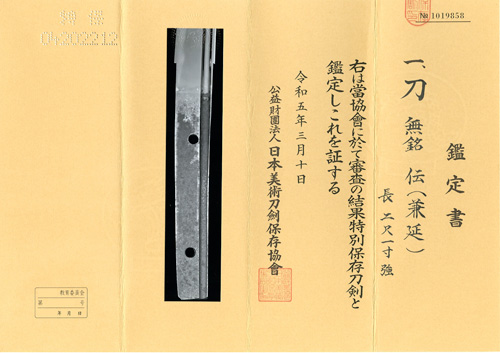
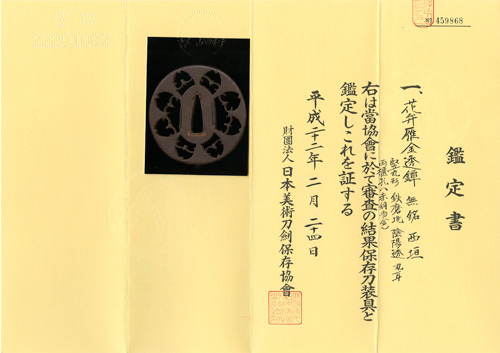
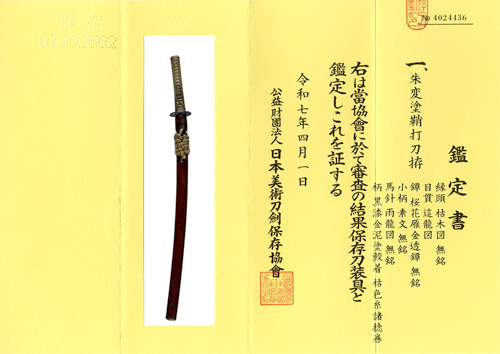
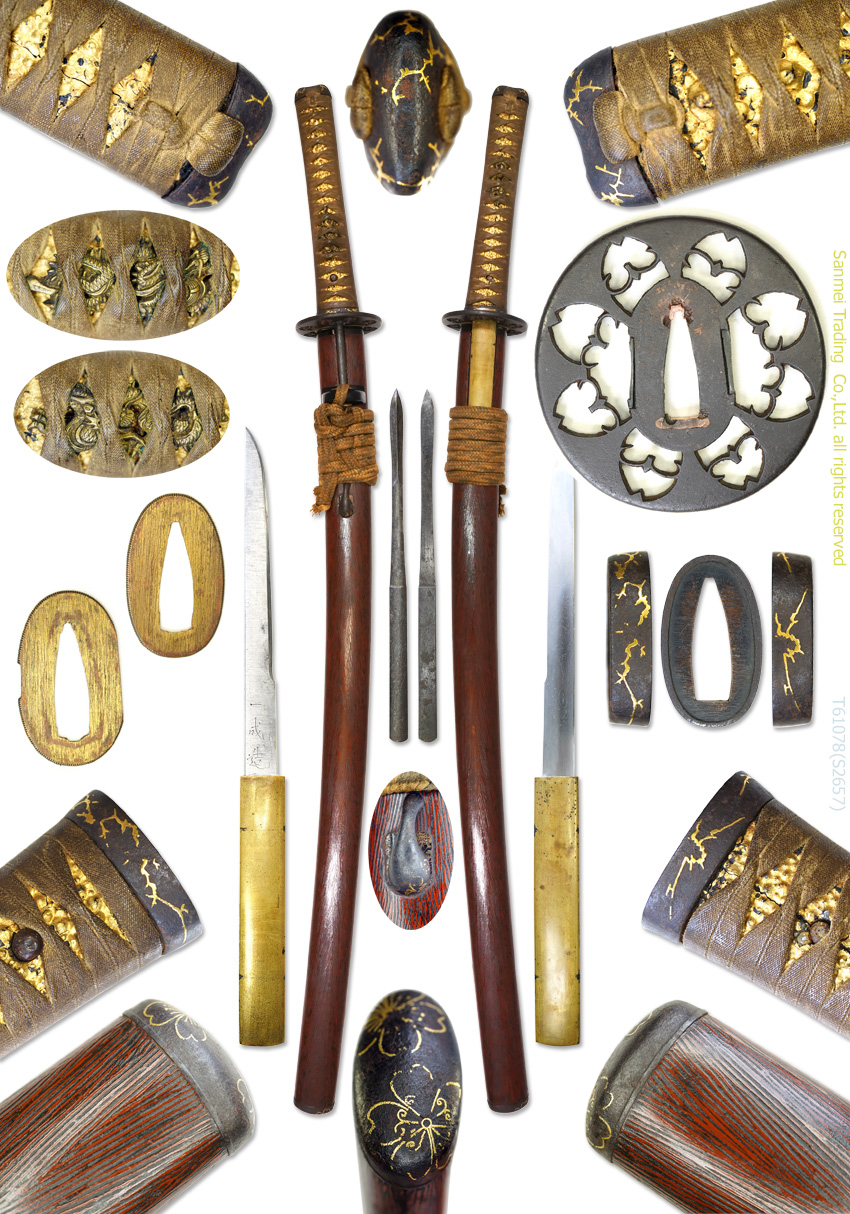
Blade construction: Shinogi-zukuri, Iori-mune, substantially shortened "O-suriage" to be unsigned. Wide ratio of Hira-ji to Shinogi-ji, thick in Kasane and less volume of Hira-niku. There is less degree of tapering from base to an elongated O-kissaki, which is the major trends in the prime of Nanbokucho period.. Carving (Horimono):There is Bo-hi groove on both sides which is chiselled away to Nakago. Forging(Hada): Forging is conspicuous Itame-hada with streaming ware of Masame hada. Crystallized granule of Ji-nie generates on surface sparkling reflection. Darkish thick lines of Nie so called "CHIKEI" activity appears from fine steel. Temper(Hamon): Hamon is based on "Nie" hard steel crystallized, Wide Notare undulating wave mixed with Gunome boundary and Togari outline. The quenching activities such as "Sunagashi" long lines of Nie "Kinsuji" or "Inazuma" thick curved lines run along hardening boundary area. Temper of tip(Boshi): Temper of boshi forms undulating irregular lines and medium circle turns back indication. Tang(Nakago): Nakago is substantially shortened "O-suriage" to be unsigned and slightly curved. Yasurime is KIRI horizontal and it's heel is Horizontal KIRI cut off. Two mekugi-ana holes. Here is a heroic katana of KANENOBU 兼延 (or pronounced KANENOBE) in Naoe-shizu school from Nanbokucho period in 14th C. KANEUJI 兼氏 in Yamato domain, who was one of the leading 10 genius disciples of the famed smith MASAMUNE 正宗,. He moved to Shizu town in Mino domain from Yamato end Kamakura period. His sons and disciples such as Kanetomo 兼友、Kanetoshi 兼俊、Kanenobe 兼延 established a foothold Naoe-shizu school in Naoe town (now Naoe, Youro-cho, Yoro-gun, Gifu) and flourished to meet with sharp rise in demand for the Nanbokucho period while the two courts fought for fifty years. According to Nihontomeikan, the first gen. KANENOBU 兼延 who was a second son of KANEUJI 兼氏 or younger brother of legitimate KANETOSHI 兼俊, was active in Ouan era (1368-) and 2nd gen. was in Meitoku era (1390-). In the prime of Nanbokucho period, Naoe-shizu makers accomplished their own workmanship in the style which Soushu and Yamato both techniques were integrated into Mino technique. This majestic katana is judged Tokubetsu Hozon class especially nominated as a work of KANENOBU 兼延 that belongs to Naoe-shizu school from Nanbokucho period. Although it has been substantially shortened, it reminds us of the ancient magnificent shape. The Katana is solidly heavy on both hands holding massive volume in Hiraniku. The boundary line from hardening crystallized Nie granule sparkles impressively vividly bright under regular light. This Katana clearly indicates an authentic Soshu tradition from Nanbokucho period with 650 years history and comes with an authentic Higo-style traditional mount of Koshirae. with) Brushing traces-surface burgundylacquered scabbard Higo Uchikatana Koshirae Fuchi/Kashira: Withered branch design,Iron ground, polish surface, Gold inlay, unsigned Menuki : Dragon design, Yamagane copper ground, Katabori carving, Gold plated Tsuba: Karigane goose/Sakura flower petal openwork unsigned attributed to a work of NISHIGAKI 西垣 in Higo domain (NBTHK Hozon) Bashin : Iron ground Ama-ryu Dragon design, silver inlay unsigned Kozuka : Brass-work, polish surface unsgined Kogatana signed Kazunari-zou 一成造 (note below) Tsuka : Gold lacquered layskin, Brown silk cord Morohineri-style lozenge warp Double layer Habaki collar (lower layer SEIKAIHA "shallow wave" is copper ground gold plated and the upper layer HATO "billow" is solid silver. preserved in a Shira-saya plain wood mounting Recent good polish/Condition scale: excellent (using a scale of mint-excellent-very good-good-fair-poor) reference data : Honma Kunzan/Ishii Masakuni, Nihontomeikan, Yuzanaku, 1975 (note) : Mr. Naruki Kazunari 成木一成(rean name Kazuhiko 一彦) was born on September 10, 1931, in Nakatsugawa City, Gifu Prefecture. Around 1960, he began his research and experimentation with sword guards (tsuba) and studied under Mr. Takahashi Kaisu. Mr.Naruki Kazunari had been devoted to the restoration of iron tsuba from antient Owari, Akasaka, and Kanayama, collecting sand iron materials from various parts of the country and working on reproducing the refined local iron through his own charcoal-based iron smelting process. He also attempted to revive the traditional technique of "yakite-fusarakashi" for surface treatment of iron, and developed his own unique world of iron steel. Residing near the Hōzan Prefectural Nature Park, he uses the artistic name "Hōzan." On July 16, 1981, he was designated as an intangible cultural heritage holder of Nakatsugawa City. In 1986, he was awarded the Medal of Honor with Yellow Ribbon. In 2009, he was recognized as a certified master craftsman MUKANSA by the Japanese Sword Preservation Society (NBTHK)


販売店の記載のまま
(翻訳なし) 店主の原文のまま表示しています。正確さの確認を通った翻訳のみを表示します。
美濃伝 · 美濃
現在13点販売中
美濃国直江の地に興った一門で、その名は移住に由来する。元来、志津は美濃の地名であり、ここに大和より正宗の門人たる兼氏が来住して鍛えたことから、地名をとって志津三郎兼氏と呼ばれた。正宗十哲の一に数えられる兼氏は、相州伝を基調としつつ大和手掻の血を負い、尖りごころの互の目に走る乱調をもって美濃伝のいま一つの根をなした工である。その門人たち、兼友・兼信・兼次らは、はじめ志津に作り、後に同国直江に移って鍛えたため、この一門を直江志津と総称する。年代は南北朝の延文・貞治より応安頃に及び、本流は兼氏に発する志津の血を一代を隔てて承けた工の群である。同時代に越中呉服郷の江則重の流れを北陸道より美濃に運んだ為継のごとき手も加わって、相州伝が内陸へ運ばれ美濃の地鉄に根を下ろした姿を、この一門は最もよく伝える。 直江志津を貫くのは、工の差を越えて繰り返される共通の語法である。地鉄は板目に杢を交え、処々流れて柾がかり、肌立ちごころとなって地沸厚くつき、地景がよく入って鉄を縫い、北国の趣濃く黒みをおびる。その地に立つ刃文は、相州伝の影響を負った浅いのたれ・小のたれに、美濃の尖り刃を交えた互の目を連ね、沸は強く深く、砂流しが頻りにかかって長く金筋を伴う。匂口は深く、優品では明るく冴え、激しめの作では迫力を、穏やかな作では穏雅な作位を示す。帽子は乱れ込んで掃きかけ、小丸に返るか焼詰め風となる。同じ型のうちに各工の手が読み分けられ、為継は則重風の湿ったのたれに美濃の鋭い尖りを与えて黒く沸豊かな地に焼き、兼友は頭の丸い互の目を連れて小沸出来に穏やかに焼き、兼次は逆がかった小のたれ調の互の目を匂深く焼く。大和・相州・美濃を融合したこの地刃が一門の背骨であり、師たる兼氏その人と比べれば、より穏やかで実直に、また地肌の冴えにおいて控えめに収まる点が、門流の手を分かつ。 鑑定にあっては、まず黒ずむ板目に地沸厚く沸出来で匂口の沈む地刃をもって直江志津と読み、本流に直刃がないことを否定の見どころとする。次に、より大きく揺れるのたれ乱れと頭の丸い互の目の連れる態をもって、これを志津・金重の手から、また下る末関の同名工から分かつ。主要工の格は説明書の評にそのまま現れ、為継は江則重に直結する黒い沸の手として藤代の上工に列し、兼友は鍛えの質によって上々作に位置づけられて、いずれも国宝・重要文化財を持たぬ南北朝の名である。現存の大半は作風から極められた大磨上無銘の刀であり、在銘・年紀作は極めて稀で、説明書はこれを頗る貴重とし、無銘極めにこそよい出来が多いと率直に評する。為継には応安年紀の作、兼友・兼次には在銘の短刀が伝承の拠り所として立つ。所伝は乏しいながら確かで、熱田神宮に伝わる作や、戦前の蒐集を経て今に伝わる短刀が記録される。極められた無銘の一刀が市に現れるのは折にふれ、忍耐をもってのことであって、在銘・年紀の作はそれとは別格の、名を定める証として遇される。 詳しく見る →
南北朝時代の美濃
美濃伝は、伝えによれば移住者が開いた。大和手掻系の出と伝えられる兼氏が志津に住し、新しい相州風で鍛えて、後世の鑑定家にその最上作は誰よりも正宗に近いと言わしめている。
保存刀剣のうち、出来が一層優れ、保存状態も良好と認められたものです。再刃や、室町・江戸期の多くの無銘作は対象外となり、保存刀剣より高い基準が課されます。
日本美術刀剣保存協会(日刀保)は、1948年に設立され、文化庁の監督を受ける公益財団法人で、東京・刀剣博物館に本部を置きます。専門の審査員が出品作を直接審査し、美術的・歴史的価値に応じた鑑定書を発行します。日刀保の鑑定書は、日本刀および刀装具の真正性を示す最も広く認知された基準です。
日刀保公式サイト返品は商品到着後7日以内に当社までご連絡ください。お客様のご指定による寸法などの仕様の変更を行った際はご返品を受けかねます。送料および振込み手数料はお客様のご負担とさせていただきます。
価格はお問い合わせ
Certificate reading — 無銘(兼延)