鎌倉時代は備前の頂点である。伝えでは一文字派の工が後鳥羽上皇の御番鍛冶に列し、世紀の半ばには光忠が長船派を興して、注文は公家からも武家政権からも流れ込んだ。国宝刀剣の数で備前に並ぶ国はない。
 NihontoWatchNihontoWatch
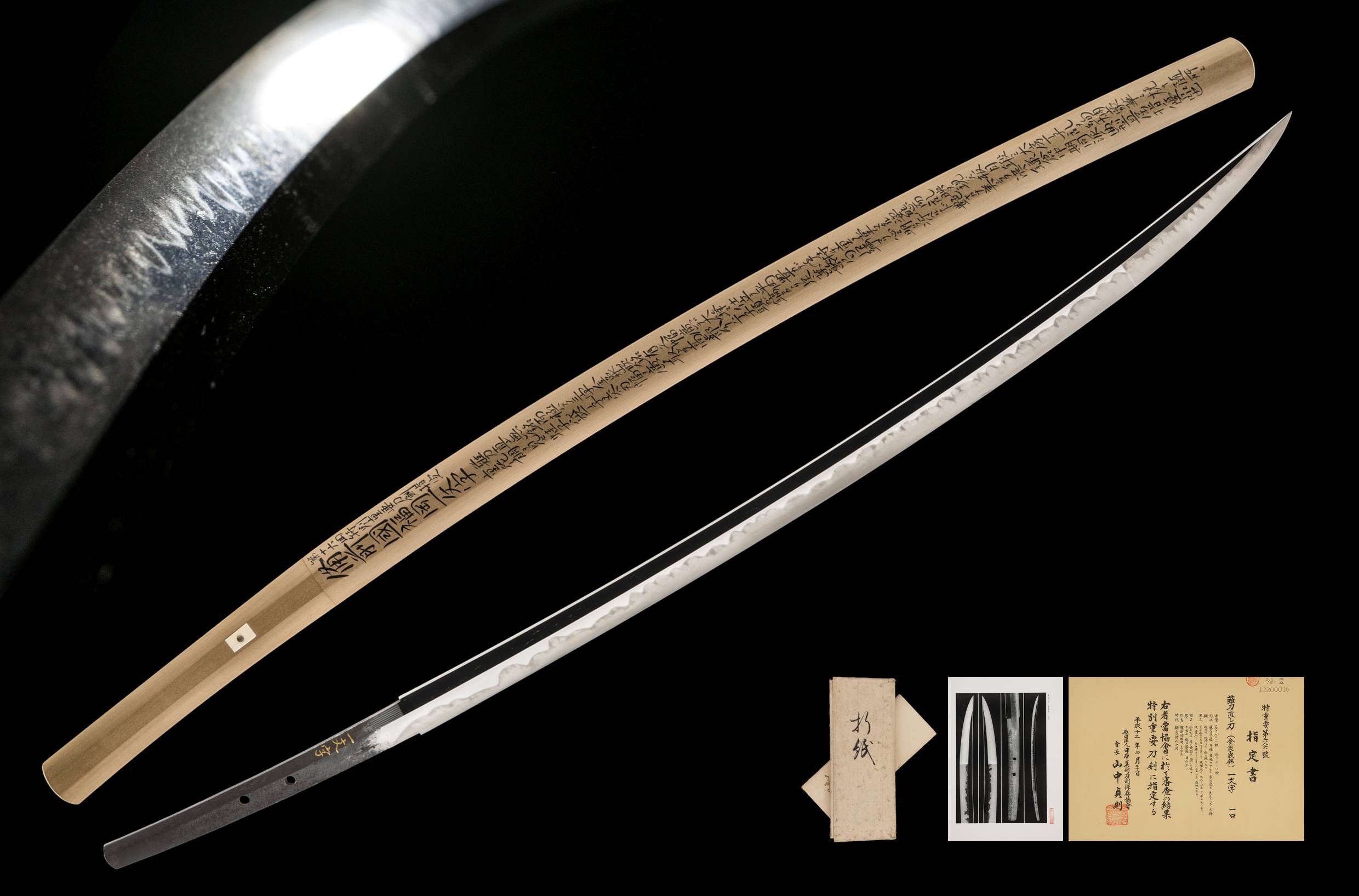
The Fukuoka-Ichimonji group produced some of the most visually spectacular blades of the mid-Kamakura period, and this naginata-naoshi stands as a superb example of why that reputation endures. Originally forged as a naginata – the pole weapon favoured by samurai and warrior monks throughout the 12th and 14th centuries – the blade was subsequently reshaped into a katana, a conversion known as naginata-naoshi. The transformation has done nothing to diminish its presence. At 70.1 cm with a dramatic 2.0 cm sori and a sweeping ô-kissaki measuring 14.7 cm in length, this is a blade that commands attention from across a room. The jihada is a rich itame with ji-nie, and the characteristic midare-utsuri of the Bizen tradition is clearly visible. The hamon is the defining feature: a wide, explosive chôji-midare heavily mixed with ôbusa-chôji – the engulfed clove-bud formations with their noticeably large tassels that are the hallmark of the Fukuoka-Ichimonji group at their peak. Parts of the hamon reach the shinogi, and the ha displays overall noticeable undulations that give the blade an almost restless energy. The bôshi is midare-komi with almost no turnback. The spine is mitsu-mune – three surfaces, flat on top – a relatively rare construction associated with Bizen and Yamashiro schools of the Kotô period. The ô-suriage nakago retains a gold-inlaid attribution to Ichimonji (一文字), a kinzôgan-mei applied in the late Edo period based on the characteristic style visible in the hamon. A Hon’ami origami dating to Shôtoku 6 (1714) – signed by Hon’ami Kôchû – authenticates the blade and values it at 500 kan. The sword was designated NBTHK Tokubetsu Jûyô Tôken at the 16th shinsa, held in April 2000, one of the most stringent endorsements the preservation society awards. It comes housed in a shirasaya with a gold ni-ju habaki with crisp file marks.
販売店の記載のまま
備前伝 · 備前
現在6点販売中
福岡一文字派は、備前国福岡の地に興った刀工の一群で、茎に「一」の一字を切ることをその標とする。一派の祖は則宗であり、鎌倉時代初頭、後鳥羽院の御番鍛冶に列せられた一人として、院に月番で仕えた。延房もまた同じ番鍛冶に数えられ、両工はこの一派の最初期の世代をなす。則宗・延房・眞利・爲清・助吉らが鍛えた最初期の手は、後年の華やかさに先立つ古一文字と呼ばれ、その姿恰好および地刃には先行する古備前物の趣が色濃く遺存し、両者を分かちがたいほどである。一派はこの古調の根から起こり、鎌倉中期にかけて福岡の地で大いに開花し、やがて吉岡・片山・岩戸の諸派へと分かれて南北朝期にまで繁栄を続けた。爲遠の「備前国唐河住」、長則の「備前国福岡住」のごとく、銘文に住地を明記する作は、この一派の地理を裏づける資料的な要をなす。 一派を貫く地鉄は、よくつんだ小板目または杢を交えた板目に地沸つき地景の入る鍛えで、その上に明るい乱れ映りが鮮明に立つことを常とする。この乱れ映りこそ、映りの淡い古一文字や、より素朴な古備前の工から本派を分かつ最も確かな標であり、ほとんど全ての在銘・極めの作に繰り返し現れる。刃文はこの地の上に二様に展開する。盛期を代表する吉房・助真・吉平・則包・吉宗らの手は、焼幅広く高低のある華やかな大丁子乱れで、大房の大丁子・重花丁子に蛙頭の蛙子丁子、竪長の袋丁子を交え、足・葉さかんに入り、匂深く小沸つき、金筋・砂流しがかかる。吉房の袋丁子、助真の刃中に強くつく沸と尖りて掃きかける帽子は、それぞれの工を本流の中で分かつ標である。助包は焼の高い丁子主調の華やかさを保ち、彫物に梵字・三鈷柄剣を伴う。これに対し、吉用・長則・爲遠・吉用らは静かな手を担い、直刃調に小丁子・小互の目を交えて焼を低く保ち、抑制をもって明るい映りの地を生かす。長則は同派唯一の「福岡住」を切り「小竜長則」と俗称され、その細直刃調の作は長船景光・近景に通じる。鎌倉後期には逆ごころに傾く好尚も加わる。茎に「一」の一字のみを切る作は工を特定しがたく、極めは時代と一派と銘振りに拠る。 これらの工の作が収集家に希求されるのは、その地刃そのものに鑑識の勘所が宿るためである。鑑定は、明るい乱れ映りと匂深の丁子を細身腰高の初期の姿の上に読むことで、静かな古備前や後年の素朴な備前と分かつ。在銘の作が無銘を測る尺度となり、本阿弥らの極めもこの作風の連続を拠りどころとした。一派の格は高く、則宗を源流とし、吉房は全刀工中屈指の国宝数を負い、助真は徳川家康の愛刀「日光助真」を遺して相州伝の先駆ともされる。その代表作は東照宮日光助真、矢の目吉房、岡田切などに及び、伝来は織田・豊臣・徳川の天下人をはじめ、上杉・島津・毛利・前田・池田ら諸大名家を貫き、皇室の旧蔵にも及んで、社寺の宝としても伝えられてきた。則宗・助包の在銘作のごとく、最も著名なものは取引の財ではなく文化財として守られ、世に現れることは稀である。盛期の華やかな大丁子乱れは、後の一文字諸派および長船の工が己を測る規範となり、備前伝の一つの頂点として後世に長く影響を及ぼした。 詳しく見る →
鎌倉時代の備前
鎌倉時代は備前の頂点である。伝えでは一文字派の工が後鳥羽上皇の御番鍛冶に列し、世紀の半ばには光忠が長船派を興して、注文は公家からも武家政権からも流れ込んだ。国宝刀剣の数で備前に並ぶ国はない。
重要刀剣の中でも出来が際立ち、資料的価値が極めて高く、国指定の重要文化財に準ずると判断された、NBTHK鑑定の最高位です。
最高峰であり、特別重要刀剣に到達した刀剣はわずか1,211口、登録刀剣の約2,064口に1口にすぎません。
日本美術刀剣保存協会(NBTHK)は、1948年に設立され、文化庁の監督を受ける公益財団法人で、東京・刀剣博物館に本部を置きます。専門の審査員が出品作を直接審査し、美術的・歴史的価値に応じた鑑定書を発行します。NBTHKの鑑定書は、日本刀および刀装具の真正性を示す最も広く認知された基準です。
NBTHK公式サイトAll swords come with a three-day inspection period beginning from the date of delivery. If not satisfied, the sword may be returned within this period for a full refund of the purchase price. Outside of this period, all sales are final. Swords purchased on a layaway payment plan are not eligible for the three-day inspection period.
](/_next/image?url=https%3A%2F%2Fitbhfhyptogxcjbjfzwx.supabase.co%2Fstorage%2Fv1%2Fobject%2Fpublic%2Flisting-images%2Fchoshuya%2FL230688%2F00.jpg&w=2560&q=90)