NihontoWatch MonNihontoWatchBETA
MarketEncyclopedia
NihontoWatch Mon

NihontoWatchBETA

Market
Encyclopedia
Overview·Kantei·Designations·Provenance·Blade Forms·Signatures·Lineage·School
OverviewKanteiDesignationsProvenanceBlade FormsSignaturesLineageSchool
  1. Schools
  2. Ukai
  3. Unsho

Ukai Unsho

雲生

Tokujū
Vol. 12, No. 31 · Tachi

Ukai Unsho

雲生

74 ranked works

ProvinceBizenEraKagen (1303–1306)PeriodKamakuraSchoolUkaiTraditionBizen-denGeneration1stTeacherUnjoFujishiroJo sakuToko Taikan1,000(top 8%)TypeSwordsmithCodeUNJ12
6Jūyō Bunkazai
9Jūyō Bijutsuhin
2Gyobutsu
3Tokubetsu Jūyō54Jūyō Tōken

Overview

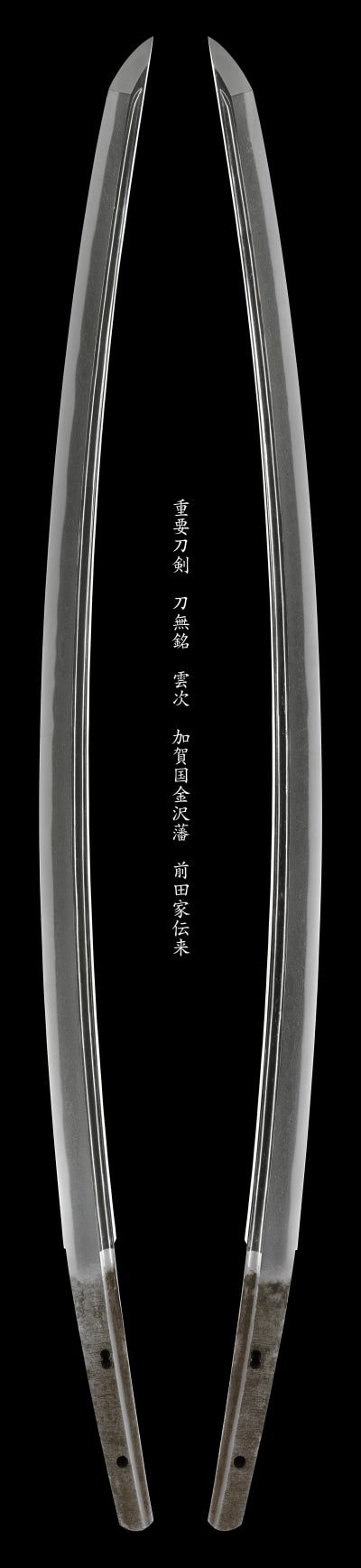
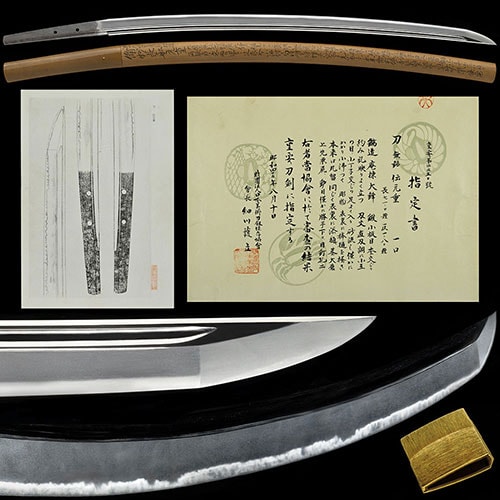
From the end of the period into the , the swordsmiths Unsho, Unji and Unshige worked at Ukan-no-sho in Province, a place name later also written Ukai. From their residence the line is called the Ukan or Ukai school; because every smith set the character , the cloud, at the head of his name, the published sources also know them as the Unrui. Unsho is named outright the school's "de facto founder" (事実上の祖). No dated work of his survives; the registers place the first generation around Kengen and Kagen (1302 to 1306), and his years are fixed through the dated blades of Unji in Showa, Bunpo and Kenmu. Tradition holds that he went up to the capital with Unji, learned forging from the Yamashiro smiths, and served the Emperor Go-Daigo as duty smith (後醍醐天皇の御番鍛冶); Honma notes the rare blades with a sixteen-petal chrysanthemum crest (十六葉の菊花紋) below the that lend the tradition weight. In the school's work "Yamashiro-style elements are intermingled within the tradition" (備前伝の中に山城風が混在), with no small influence from the school of neighboring besides, so that the line is called "a distinctive presence among works" (備前物中異色の存在). Fujishiro grades Unsho Jo .

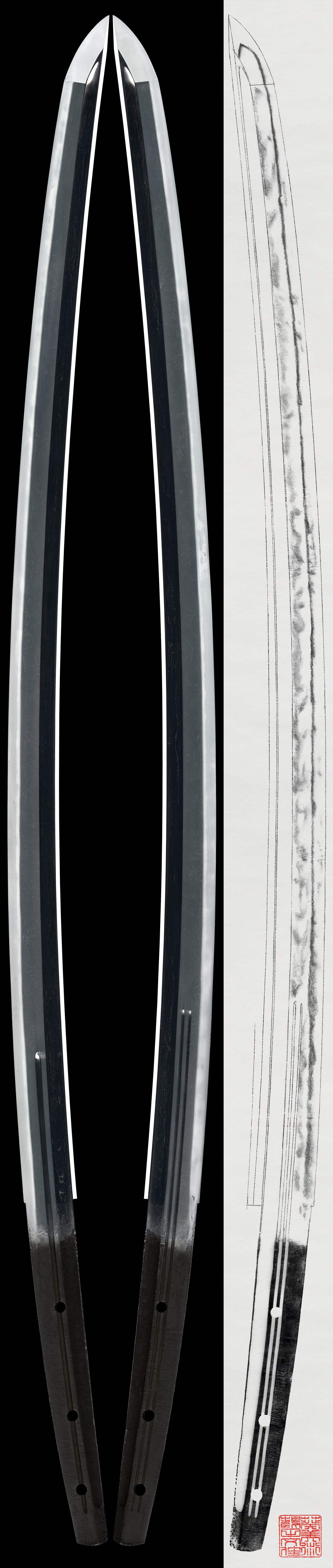
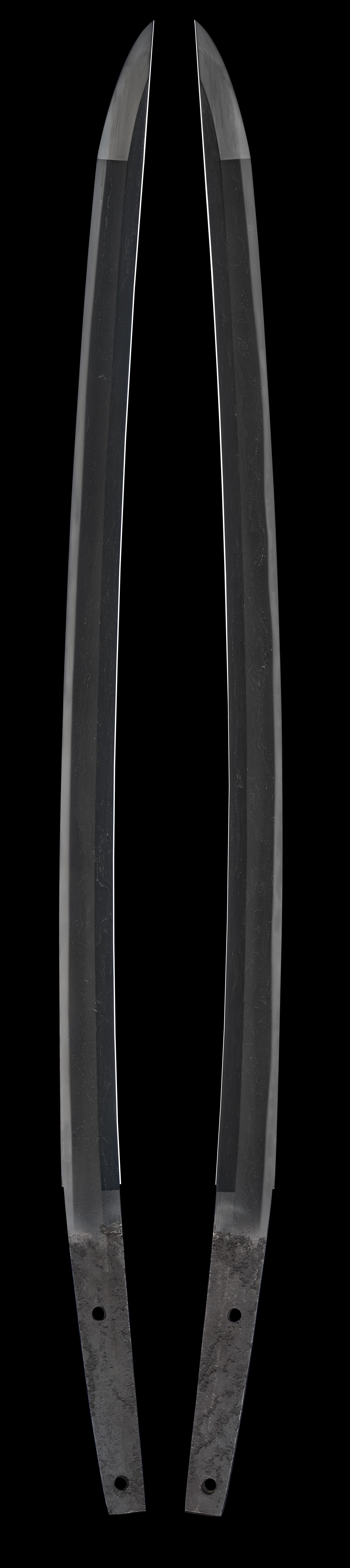
The trait the judges name first is the curvature: a slender with at the base and a small point, arching evenly in a high wa-zori, the curve. The published sources observe that "whereas the work of the period is , it presents wa-zori" (同時代の長船物が腰反りであるのに対して輪反りを呈している). He excelled in , narrow to medium, mixed with , and shallow . The slant in reverse in the manner, and here and there wedge-shaped shadowy enter. The tightens, carries and at times sinks subdued; and fine run along the edge. Now and then the temper falls away slightly at the , and the published sources note that "the at the base may be called Unsho's individuality" (元の焼落しは雲生の個性). The turns back round, or tending larger; even of a blade steeped in character the published record observes that his particularity shows exactly where "the does not point" (帽子が尖らず). The two-character sits toward the above the , the character Sho set right of , his habit of hand; Honma takes the comparatively large of this type for the first generation.

The is , in places knit to or mixed with , with and fine , and a stands. Characteristically it is what the published sources describe as "the black peculiar to the Unrui, as if pressed in with the pad of a finger" (指の腹で押したような雲類独特の黒い地斑映り), and the steel color besides tends somewhat blackish. Honma counts it a point of interest that these late blades carry in both and , at times with "an even more vivid than in work" (まま極めて長船物以上に鮮明な映り).

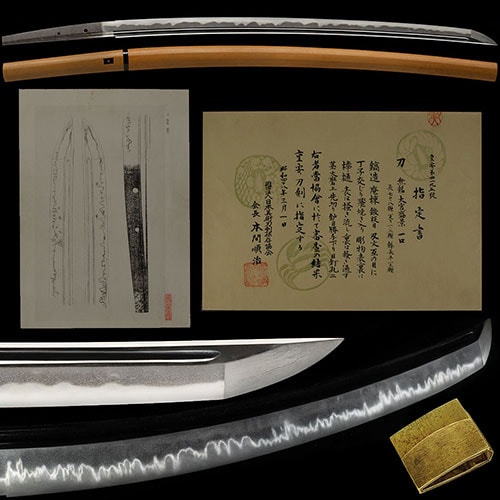
The published sources state his range in one sentence: "his representative manners are two" (代表的作風は二様あって). In one, standing with , in the with a reverse tendency, and ; in the other, closely knit , the especially distinct, the tight. The of session 7 belongs to the former, with an old-toned as if pressed in with a finger (指で押した様な古調な映り). Beyond the pair lies a stronger vein. "Unsho's manner is mostly low in temper and somewhat lonely in its activity" (雲生の作風は焼きの低いやや働きの寂しいものが多く), yet other works are known with a somewhat wider , conspicuous and and strongly attached , a make that connects to Unji; the folded-signature of session 21 is read exactly so, his work at full power. At least two generations are recognized, the second placed around Bunpo or Kenmu; the registers transmit the first Unji as his son, or by another account his younger brother. Long signatures are exceptional: the signed no Unsho (備前国雲生) is called a signature almost without parallel (他に類例が殆ど無く).

His position within is the published sources' own formula: the work of the line, beginning with its curvature, is reckoned "the closest to Kyoto work" (最も京物に近い) among products, and individual blades can be confounded with the school or with neighboring . His holds the Kyoto level while his run in the way. Yet the clearly defined keeps the flavor of his native tradition strongly present, and where the make breathes , the round remains his own. The judges divide the by the temper: his mostly low and quiet in its activity, that of Unji wider and strongly -laden, with and standing out. The more powerful of his own blades are read as approaching his successor; the line continues through Unshige.

Seventy-four designated works stand on record. Six are Important Cultural Properties, held as cultural patrimony, and nine more were designated Bijutsuhin before the war, among them a counted one of the thirty-five blades hand-picked by Uesugi Kagekatsu (上杉景勝御手選び三十五腰), the of Iwasaki Koyata, now in the Seikado Bunko Art Museum, and the passed from Tokugawa Iesato to the Sano Art Museum. Fifty-seven blades stand in the and tiers. Signed works are comparatively numerous for so early a smith, thirty-eight signed against thirty-four unsigned here, nearly all the two-character . Ten blades carry recorded provenance: the of session 12 descends in the Uda Mori, a cadet line of the Nagato Mori; an Asano house carries a Kocho of 1676 valuing it at ten gold pieces; others passed through the Okochi house and the Imperial Family. The Important Cultural Properties and the museum holdings will not move. What a collector may realistically encounter is a blade, an attributed on the wa-zori, the dark and the -laced , or one of the signed ; a signed comes to open hands only rarely, and is an event in the field when it does.

Kantei

one classic manner with the two grounds the papers state outright (the tightly forged, vivid-utsuri type and the standing, nie-laden type), plus a stronger minority register the judges read toward his successor Unji

Unsho is the de facto founder of the Ukai school of Ukan-no-sho, the smiths who all carry the character in their names and so are called the Unrui. His work is the anomaly of : a Kyoto cast, above all of the school, mingled with the manner of neighboring . He forges a slender, small-pointed of wa-zori, the evenly arched curvature, where the of his day are ; the carries the school's peculiar black , as if pressed in with the pad of a finger, and the steel color tends dark; the is a base with small and small , the slanting in the way, the tight and at times subdued, with an occasional at the that the papers call his individuality; the turns back round, never pointed. Signed with a two-character toward the , the character Sho cut shifted to the right of , his habit of hand.

Diagnostic discriminators

unique vs the Osafune masters (Nagamitsu, Kagemitsu)

19% of his works · 9.5× vs Osafune Kagemitsu

39% of his works · 13.0× vs Osafune Nagamitsu

unique vs Rai Kunitoshi, Nagamitsu and Kagemitsu together

Observation by phase

The classic Ukai manner (his signature)

A slender with and a small point, the curvature a high, evenly arched wa-zori where contemporary work is . The is , in places or , with and fine ; a stands, characteristically the black the papers call peculiar to the Unrui, as if pressed in with the pad of a finger, and the steel color tends dark. The is a base, narrow to medium, with small , small and shallow , the and slanting , here and there the wedge-like shadow ; the is tight, often -led with , at times sinking subdued, with and fine , and now and then a slight at the . The runs and turns back round, or larger, often lightly swept, and never pointed.

Sugata 姿
Jigane 地鉄
Hamon 刃文
Bōshi 帽子
The tight ground: ko-itame well forged, the utsuri standing especially distinct, the suguha nioiguchi tight— the second of the two representative manners the papers state; blades of this type are called the cleanest jigane among his work
The standing ground: itame standing, ko-midare in the suguha, a saka tendency, nie and sunagashi— the first of the two representative manners the papers state; the Tokubetsu Juyo tachi of session 7 belongs to it, with the old-fashioned utsuri as if pressed in with a finger

The powerful register, read toward Unji

less firmly establishedthe judges' separation of the kin: the low, quiet yakiba is Unsho's norm; the wide, nie-strong yakiba with prominent ashi and yo is the manner connecting to Unji, and the folded-over signed katana of Tokubetsu Juyo session 21 is read exactly so

A minority of blades departs from his usual low, quiet : the widens to , and stand out, comes on strongly with and , and a long, intermittent can form. The papers state the formula that separates the : Unsho's work is mostly low in temper and somewhat lonely in activity, while blades with a wider , prominent and and strong also pass to him and are said to connect to Unji. The judges read such pieces as his work at full power, resembling his successor.

Hamon 刃文
Scholarship

No dated work survives; the registers set the first generation around Kengen (1302-03) and a second around Bunpo or Kenmu, and his activity is dated through the dated blades of Unji.

At least two generations are recognized; Honma judges the comparatively large two-character mei to be the first generation, and the papers note one signed tachi as the oldest looking of the name.

The two-character mei is cut toward the mune above the mekugi-ana, and the character Sho is cut shifted to the right of Un, the habit of his hand and a main point in judging his signature.

Long signatures are rare; one tachi reads Bizen no kuni ju Unsho, and the tanto signed Bizen no kuni Unsho is called a signature with almost no parallel, of high documentary value.

Designations

Kokuhō—
Jūyō Bunkazai6
Jūyō Bijutsuhin9
Gyobutsu2
Tokubetsu Jūyō3
Jūyō Tōken54

Elite Standing

0.64 across 74 designated works

Top 4% among smiths

Provenance

14 documented provenances across certified works by Unsho

Provenance Standing

6 works held in elite collections across 14 documented provenances

Top 11% among smiths

Raw score: 2.48 / 10

Blade Forms

Distribution across 74 ranked works

Signatures

Signature types across 74 ranked works

Currently Available

Lineage

TeacherUnjo
Unsho
Students (4)
  1. 1.Unji雲次3 for sale138designated
  2. 2.Unju雲重1 for sale60designated
  3. 3.Unsho雲生
  4. 4.Unjo雲上

Ukai School

Other artisans of the Ukai school

  1. 1.Unji雲次3 for sale138designated
  2. 2.Unju雲重1 for sale60designated
  3. 3.Toshinaga利長1designated
  4. 4.Moritsugu守次1designated
  5. 5.Moritsugu守次2designated