NihontoWatch MonNihontoWatchBETA
MarketEncyclopedia
NihontoWatch Mon

NihontoWatchBETA

Market
Encyclopedia
Overview·Kantei·Honors·Designations·Provenance·Blade Forms·Signatures·Lineage·School
OverviewKanteiHonorsDesignationsProvenanceBlade FormsSignaturesLineageSchool
  1. Schools
  2. Osafune
  3. Sōden-Bizen
  4. Kanemitsu

Osafune Kanemitsu

兼光

Tokujū
Vol. 20, No. 22 · Katana

Osafune Kanemitsu

兼光

237 ranked works

享保名物帳正宗十哲
ProvinceBizenEraShohei (1346–1370)PeriodNanbokuchōSchoolOsafuneTraditionBizen-denGeneration2ndTeacherKagemitsuFujishiroSai-jo saku(Supreme Work)TypeSwordsmithCodeKAN1436
13Jūyō Bunkazai
16Jūyō Bijutsuhin
6Gyobutsu
40Tokubetsu Jūyō162Jūyō Tōken

Overview

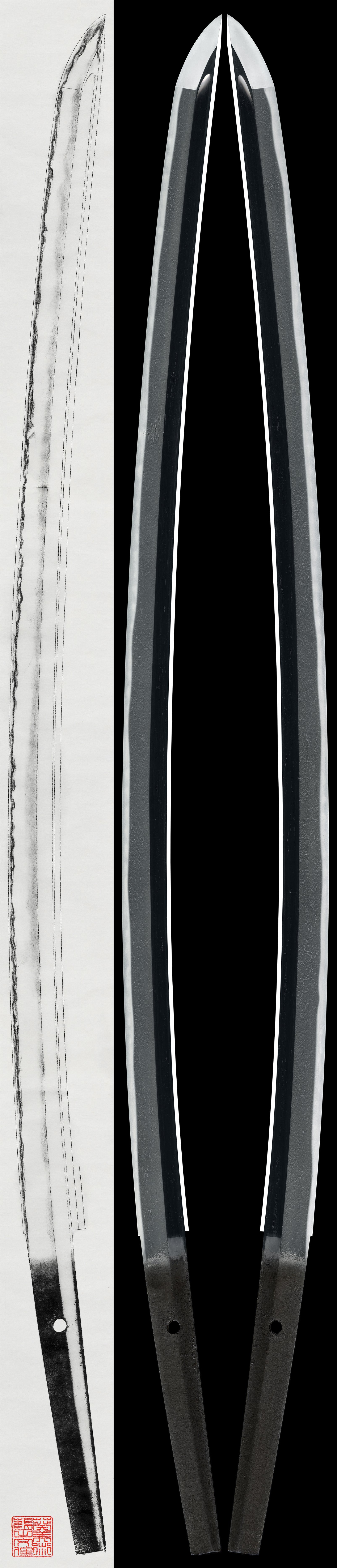
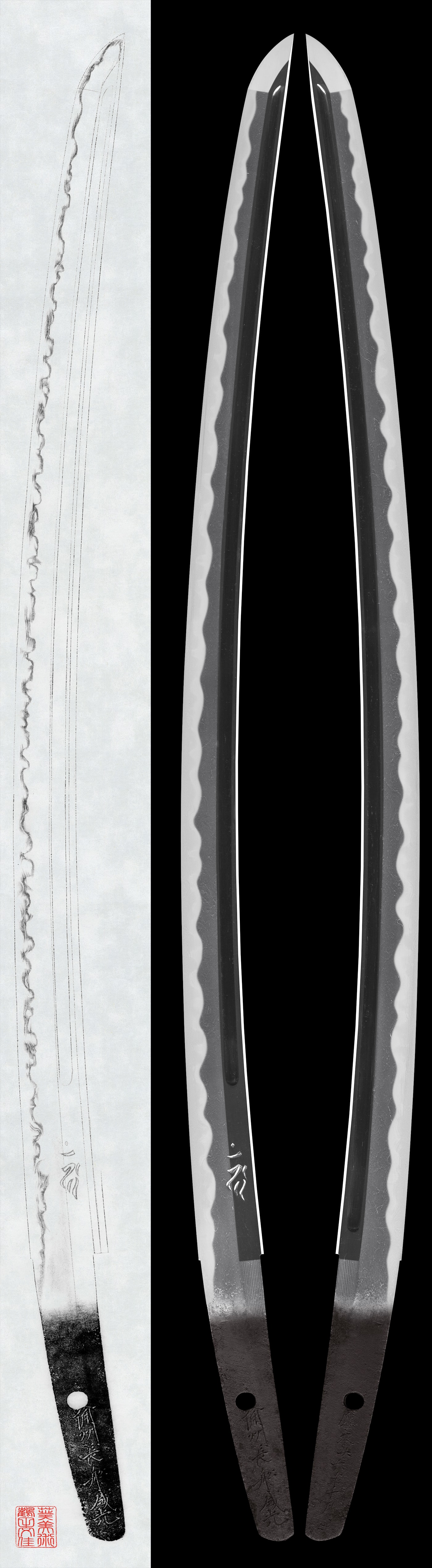
The published sources open their account of Kanemitsu with one fixed sentence: he is "the mainline heir of the school, following Kagemitsu" (景光に続く長船派の嫡流である). Son of Kagemitsu and fourth master of the line that runs from Mitsutada through Nagamitsu and Kagemitsu, he stands as the leading smith of the period. His dated works span what the calls an unusually long period, roughly forty-five years from Genko 1 (1321) at the close of the period through the Joji era (1362-1368), and some designations carry the span to and read it as fully fifty years. So long a working life raises, in the sources' own framing, the question of a first and a second generation, with no settled view as to where the division should fall; the later master is known to the record as "Enbun Kanemitsu" (延文兼光).

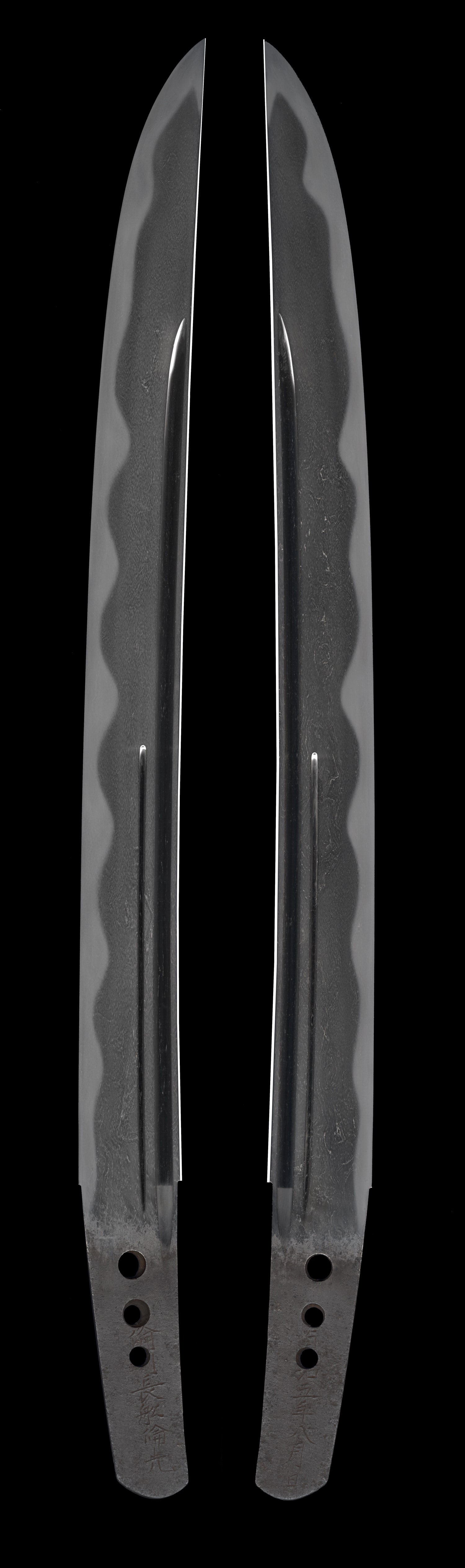
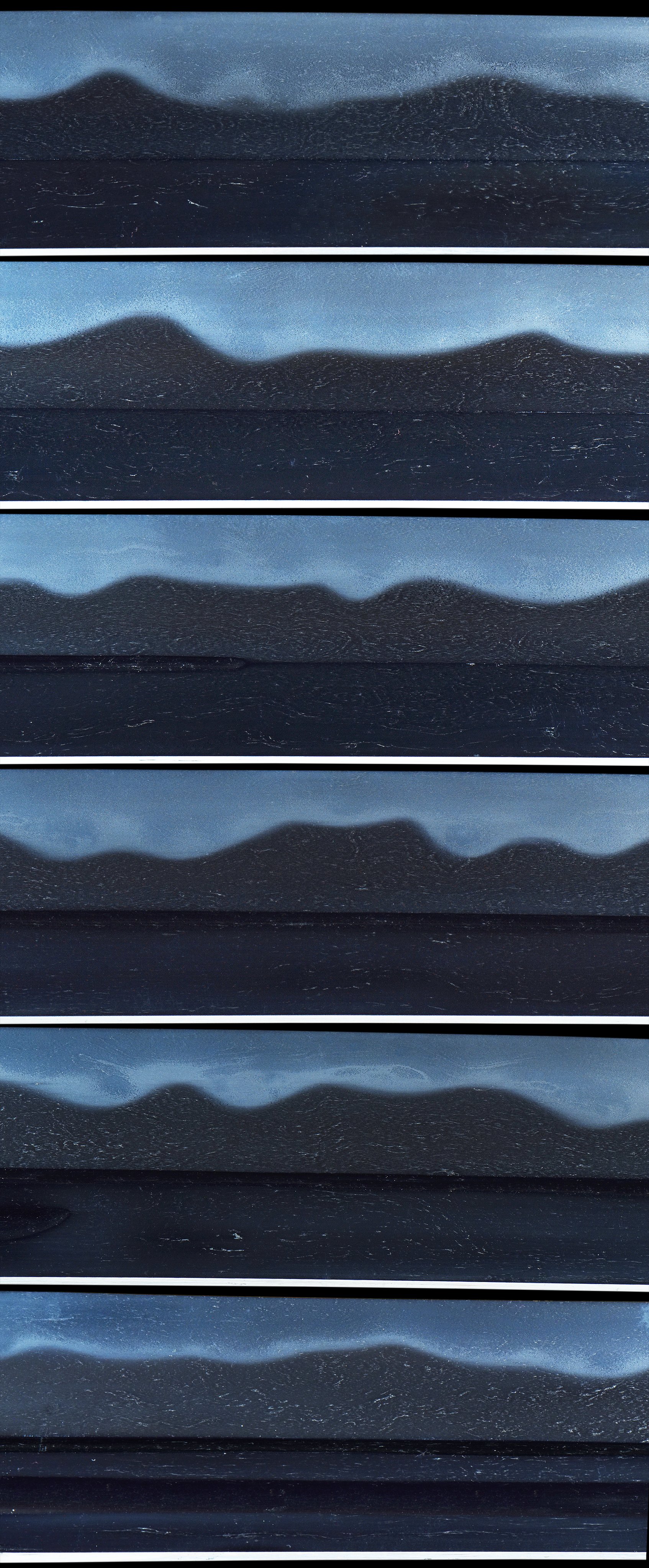
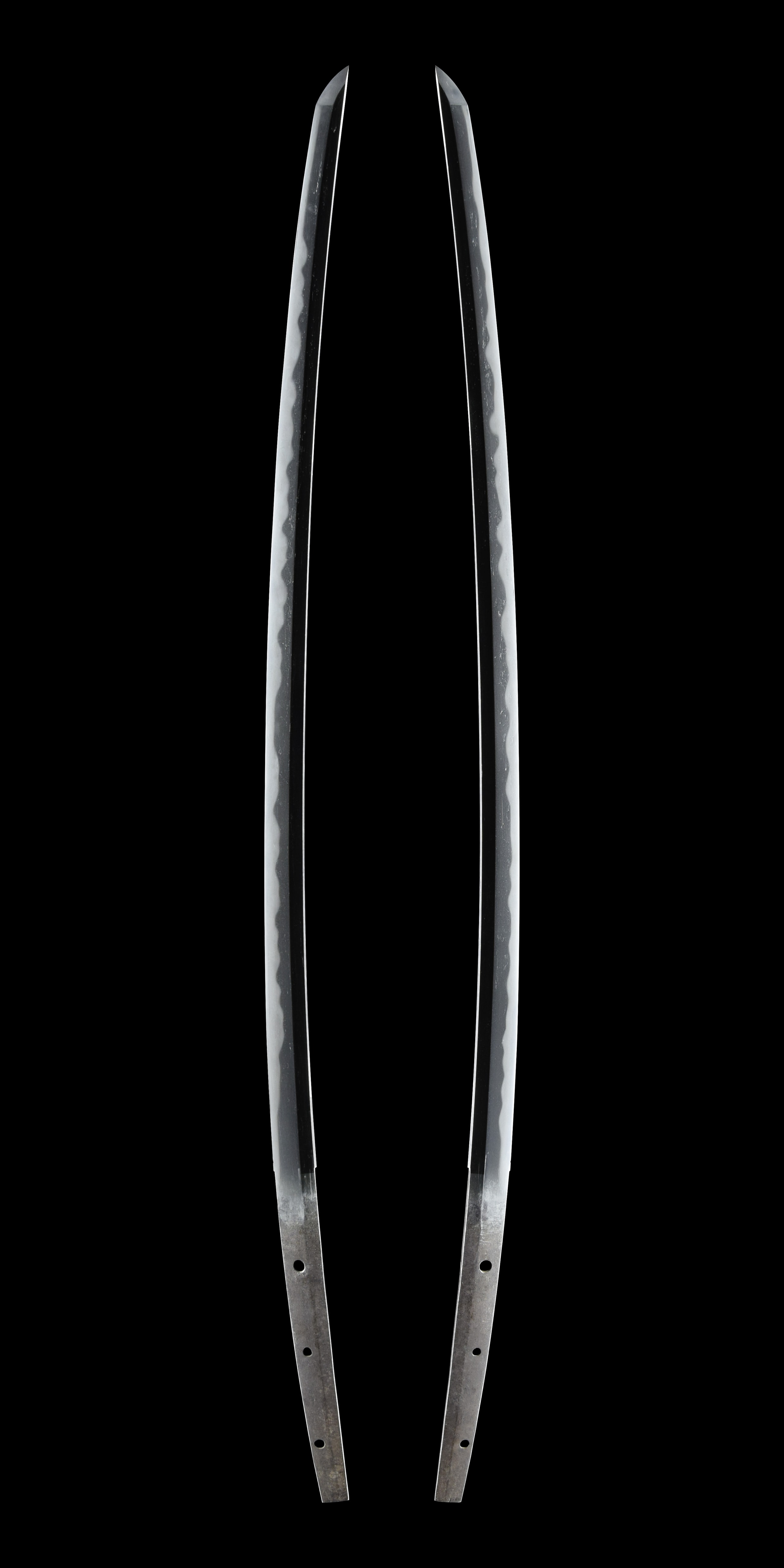
His hand divides at a watershed the published sources place in the Jowa and 'o eras (1345-1352). Until around Koei both and keep standard proportions, tempered either in a tone mixed with or in the he inherited from his father, work that in the recurring judgment of the designations "wholly follows the father Kagemitsu's manner" (総じて父景光風を踏襲した感). From Jowa and 'o the build turns grand, and the sentence nearly every later designation repeats takes over: "a -dominant that had not existed before appears, and is met most often around Bunna and Enbun" (それまでになかったのたれ主調の刃文が出現し、文和・延文頃にこれが多く見られる). The broad, unhurried and the angular are alike singled out as "what Kanemitsu excelled in" (兼光の得意とするところ), and one description calls the angular "the construction he favored from first to last" (兼光が終始得意とした構成). Against the rounder returns of the earlier mainline, his runs in , often thrusting up before a pointed tip.

Even at the grand scale the forging holds. The is mixed with , and the remarks of one that it shows not the slightest loosening or coarseness of the surface pattern from base through tip. Fine adheres thickly, fine enter, and a stands out, often called vivid, the steel bright; on the early -signed pieces the reflection is rather a or over a tight . The temper is for the most part -dominant with . and gather toward the , small and -like effects appear in places, and and enter freely. To this he adds a distinctive program of carving: , and , and above all the cursive grass-style (草の倶利伽羅), a composition the sources note recurs on works of Kanemitsu and Tomomitsu, and at times Chikakage.

Most of what survives from the late phase is the of the Enbun-Joji build: wide in with little taper from base to tip, the large, the shallow or moderately deep. Beside it stand the and , broad and thin with shallow , and the long blades signed on the , made as from the outset, of which the Uesugi "Suijin-giri" (水神切) is the recorded example. Signed work is plentiful for so heavily shortened an oeuvre, one hundred ten signed against ninety-eight unsigned among the blades gathered here, the long signatures reading no -ju Kanemitsu (備前国長船住兼光) or Bishu -ju Kanemitsu (備州長船住兼光), many with dates. The strengthened of the late manner the sources read with their own hedge, "possibly under the influence of the tradition" (相州伝の影響を受けてか), adding that "since the also is emphasized, the work is known in the world as Soden-" (沸も強調していることから、世に相伝備前と称されている). The older designations go further only as a question: one note finds in the turn to notare "the relation to Masamune, together with the succession of a first and second generation" (相州正宗との関係と、初・二代の交替が考えられる), the Masamune-pupil tradition held open, never asserted. The many shortened blades carry attributions of the Honami line, Kotoku and Koson among them, which the in case after case upholds.

Within his place is fixed by what he carried and what he introduced. The descends to him through Kagemitsu alone within the school's mainline, and the is his own addition, the broad, unforced that, in the words of one description, this smith pioneered among craftsmen. His grand manner passes into late through his circle: the published sources read related blades as work of the sphere surrounding Kanemitsu, and the cursive he favored recurs in Tomomitsu.

Fujishiro grades him Sai-jo , and two hundred thirty-seven designated works stand on record. No National Treasure is among them, but thirteen blades hold the rank of Important Cultural Property, and the named swords cluster there: the O-Kanemitsu (大兼光) and the of Uesugi Kagekatsu's hand-picked thirty-five, both cited in the record as Important Cultural Properties, and the Nami-oyogi Kanemitsu (波游兼光), whose gold inlay records the ownership of Hashiba Okayama Chunagon Hideakira, identified as Kobayakawa Hideaki. Forty of his blades hold the rank, the most of any swordsmith, and with the blades the two tiers carry two hundred two. The provenance roll is deep, sixty-nine blades with recorded histories: Ashikaga Takauji, Uesugi Kenshin and Uesugi Kagekatsu, Toyotomi Hideyoshi, Todo Takatora, and the Kuroda, Date, Hosokawa, Maeda and Owari Tokugawa houses; one went to Tokugawa Iemitsu as the bequest of Sugihara Hoki no Kami Shigenaga, and another descended in the Masuda family, hereditary elders of the Choshu domain. The Important Cultural Property and Bijutsuhin pieces rest as patrimony in shrines, museums and long-held collections, the Tokugawa Art Museum, the Sano Art Museum and Eisei Bunko among recorded holders. For the collector the field is less closed than with most names of this rank: blades of the and tiers, many of recorded private whereabouts, appear from time to time. Yet most are held rather than traded, and a signed and dated piece of either phase is a landmark when it comes.

Kantei

2 temporal phases split at Jowa-Kan'o (early = father Kagemitsu's manner -> late = notare-dominant 'Enbun Kanemitsu' / Soden-Bizen) x form (o-suriage mumei katana / sunnobi tanto)

Kanemitsu, Kagemitsu's son and fourth master of the mainline, is the leading smith of the . Dated work spans some 45 to 50 years, Genko (1321) into Joji and , raising a two-generation question. Until Koei he works wholly in his father's manner: standard-built and with -toned or . From Jowa-'o the build turns grand (broad , ) and a -dominant new to the line appears, strengthened, the 'Enbun Kanemitsu' manner the sources call Soden-. The runs in and points at the tip.

Diagnostic discriminators

48% of his works · 3.4× vs his father Kagemitsu

52% of his works · 3.7× vs Kagemitsu

11% of his works

22% of his works · 13.6× vs Nagamitsu

Observation by phase

Early, in his father Kagemitsu's manner (to Koei, c. 1345)

tachi and signed ubu work (suguha 57% on tachi vs 19% overall; sugu-utsuri 25% on ubu pieces vs 1% on mumei)

and of standard proportions; a -toned with , or a -style , partly slanting, with - or and a tighter, round-returning . The published sources put it flatly: until Koei the work 'wholly follows the father Kagemitsu's manner'.

Sugata 姿
Jigane 地鉄
Hamon 刃文
Bōshi 帽子

Late, the notare manner: 'Enbun Kanemitsu' (Soden-Bizen)

o-suriage mumei katana of grand build (o-kissaki on 66% of mumei blades vs 3% of ubu; notare about half)

From Jowa-'o (1345-52) the build grows large; a -dominant that had not existed before appears and peaks in Bunna-Enbun (1352-61), emphasized, which the sources read as a possible -tradition influence and call Soden-. Angular and small keep the oodoka line varied, and gather at the , stands, and the runs in , often thrusting up, the tip pointed.

Sugata 姿
Jigane 地鉄
Hamon 刃文
Bōshi 帽子
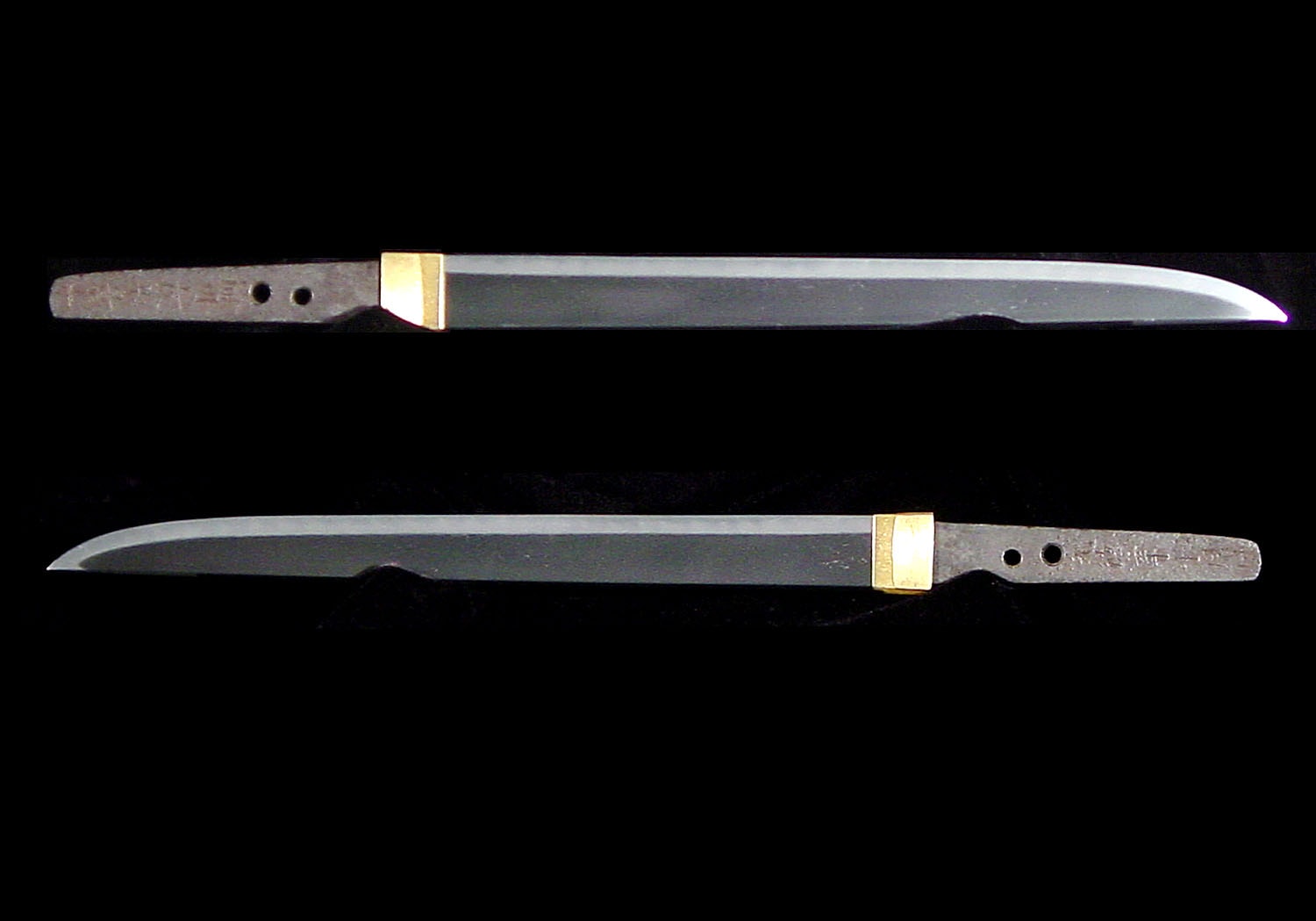
Sunnobi tanto and ko-wakizashi, broad and thin
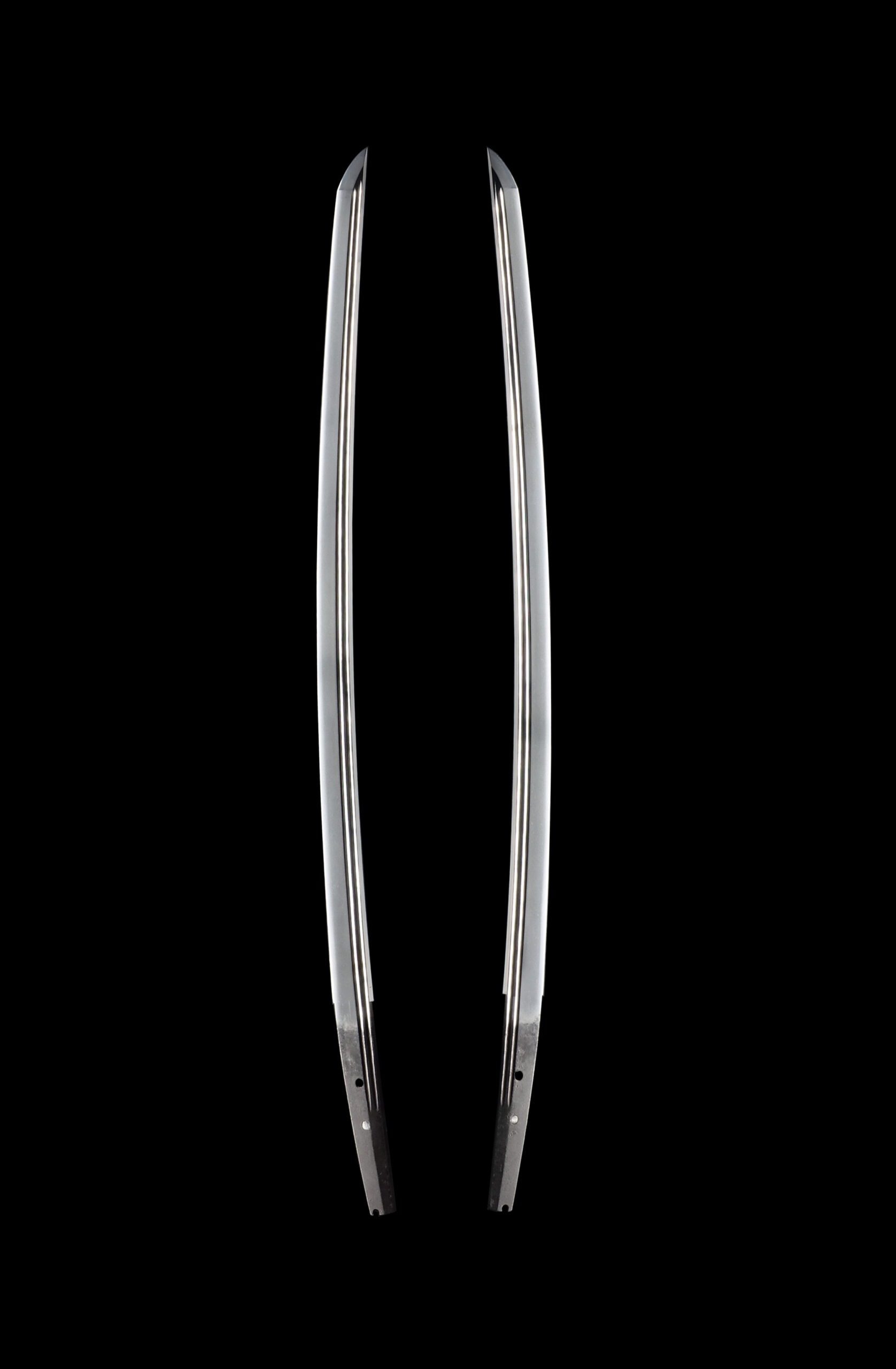
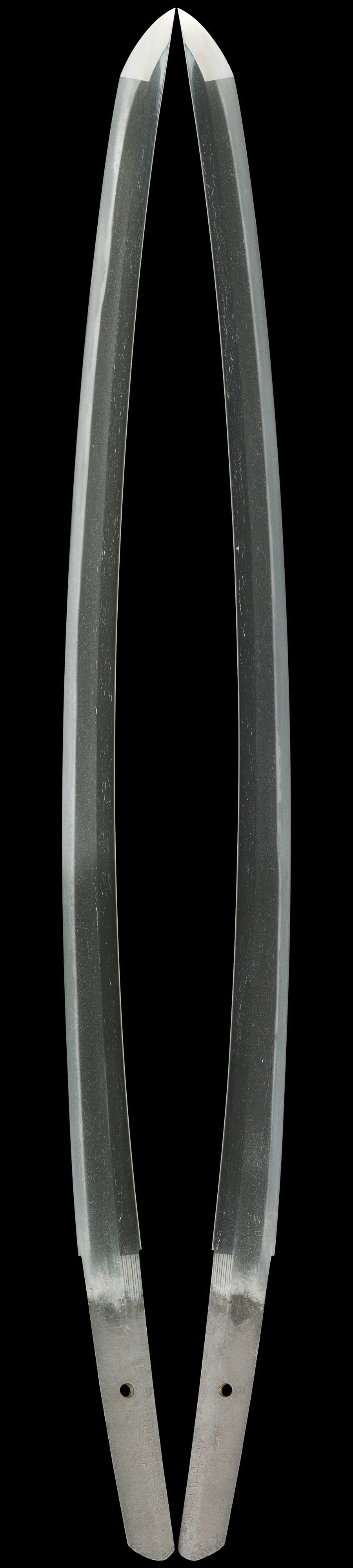
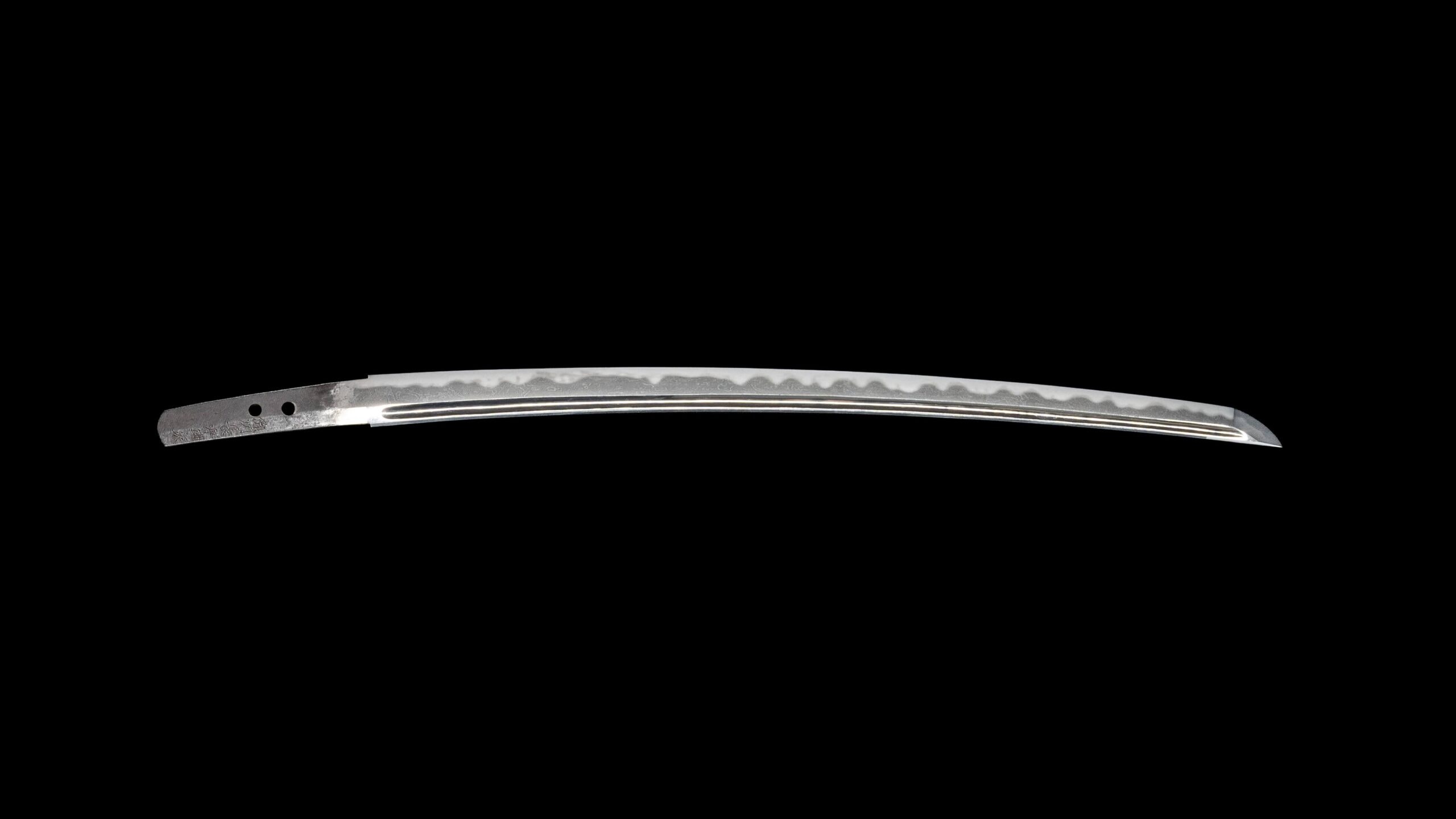
O-suriage mumei katana, the grand Enbun-Joji build
Scholarship

Dated work spans about 45 to 50 years, from Genko into Joji and Oan, hence a long-standing first/second-generation question; the later master is known as 'Enbun Kanemitsu'.

Older setsumei tie the turn to notare and nie to 'the relation to Soshu Masamune', the Masamune-pupil legend, raised as a question together with the generational change, never asserted as fact.

Most survivors are o-suriage mumei katana; the Honami line (Kotoku, Kojo, Mitsutada) supplied kinzogan attributions, many of which the NBTHK upholds.

Honors

享保名物帳Kyōhō Meibutsu Chō (Catalog of Celebrated Blades)

Catalog 6 · addenda 1 (7 total)

The family's catalog of celebrated blades (名物) presented to shogun Tokugawa Yoshimune in Kyōhō 4 (1719). Records ~274 blades of – manufacture (168 extant + ~80 burned + ~26 later additions), grouped by smith with valuations and provenance. This honor tags smiths whose work is recorded in the catalog; the detail field carries per-smith counts where the published tally is exact, or 所載 + named blades where only inclusion is verified.

正宗十哲Masamune Juttetsu (Ten Brilliant Students of Masamune)

On the traditional roster (Sōden-Bizen)

The Ten Brilliant Students of Masamune — an -period construct first attested in the Shōsan (刀剣正纂, 1862), which itself already disclaims the grouping as later conjecture. Several members cannot have been actual students on chronology (Kanemitsu, Chōgi, Kinjū, Naotsuna), and Norishige is now considered a fellow student under Kunimitsu — yet invoke the roster constantly, and it remains core collector vocabulary. Roster variants exist (Sadamune in place of Naotsuna; Kongōbyōe Moritaka swapped in for Kunitsugu or Naotsuna); this honor tags the standard ten.

Designations

Kokuhō—
Jūyō Bunkazai13
Jūyō Bijutsuhin16
Gyobutsu6
Tokubetsu Jūyō40
Jūyō Tōken162

Elite Standing

0.88 across 237 designated works

Top 3% among smiths

Provenance

100 documented provenances across certified works by Kanemitsu

Provenance Standing

56 works held in elite collections across 100 documented provenances

Top 1% among smiths

Raw score: 4.71 / 10

Blade Forms

Distribution across 237 ranked works

Signatures

Signature types across 237 ranked works

Currently Available

Lineage

TeacherKagemitsu
Kanemitsu
Students (15)
  1. 1.Tomomitsu倫光1 for sale64designated
  2. 2.Yasumitsu康光1 for sale55designated
  3. 3.Nagashige長重16designated
  4. 4.Masamitsu政光4 for sale84designated
  5. 5.Motomitsu基光3 for sale41designated
  6. 6.Yoshimitsu義光35designated
  7. 7.Hidemitsu秀光19designated
  8. 8.Iemori家守15designated
  9. 9.Hidemitsu秀光1designated
  10. 10.Kanemitsu兼光
  11. 11.Kanemitsu兼光
  12. 12.Kanemitsu兼光
  13. 13.Kanemitsu兼光
  14. 14.Motochika基近1designated
  15. 15.Nobumori信守

Osafune School

Other artisans of the Osafune school

  1. 1.Mitsutada光忠61designated
  2. 2.Nagamitsu長光2 for sale253designated
  3. 3.Kagemitsu景光1 for sale146designated
  4. 4.Sanenaga眞長64designated
  5. 5.Chikakage近景4 for sale86designated
  6. 6.Tomomitsu倫光1 for sale64designated
  7. 7.Kagemasa景政2 for sale22designated
  8. 8.Masamitsu政光4 for sale84designated
  9. 9.Motomitsu基光3 for sale41designated
  10. 10.Kagehide景秀23designated
  11. 11.Yoshimitsu義光35designated
  12. 12.Shigezane重眞1 for sale45designated