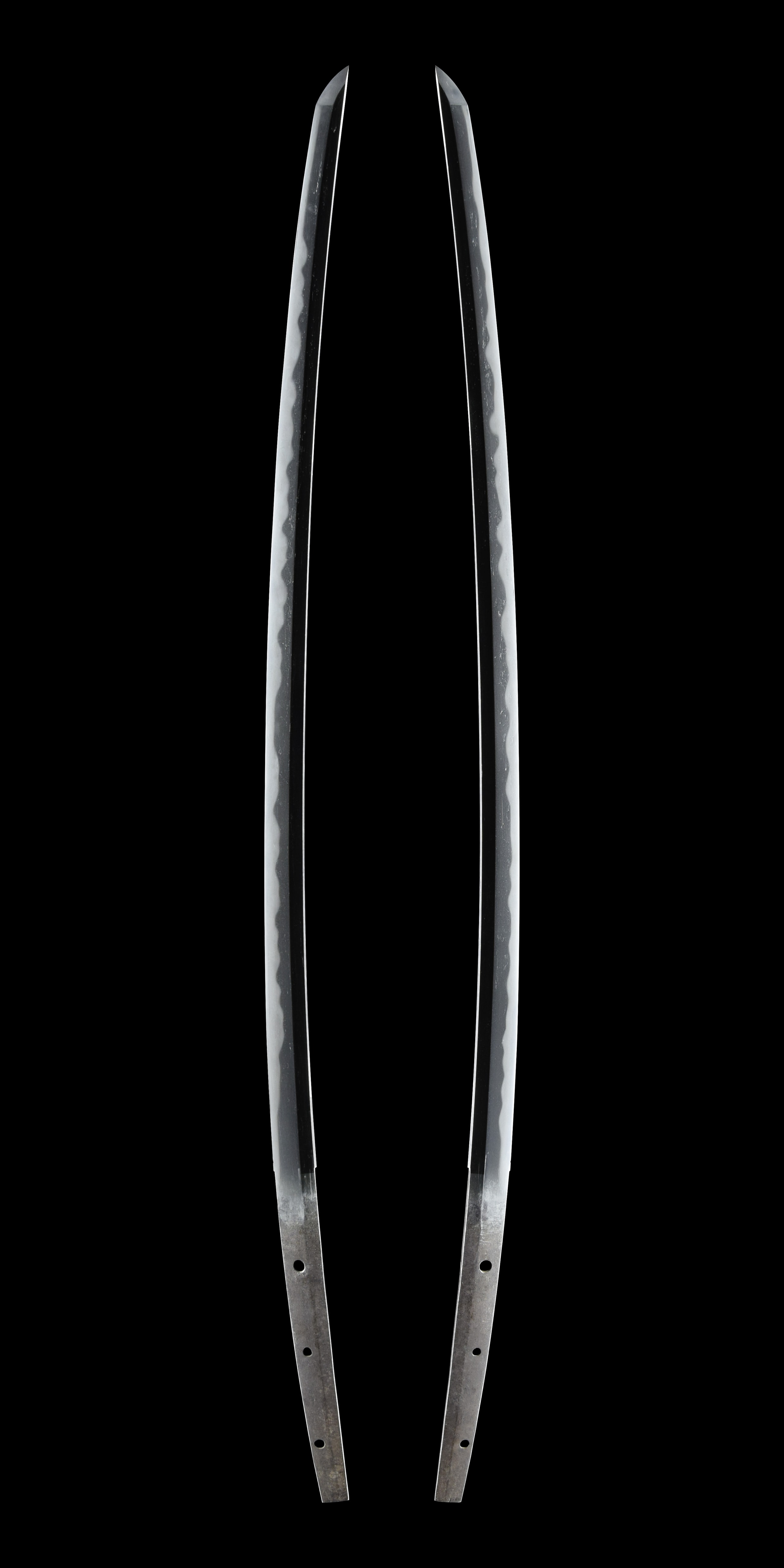
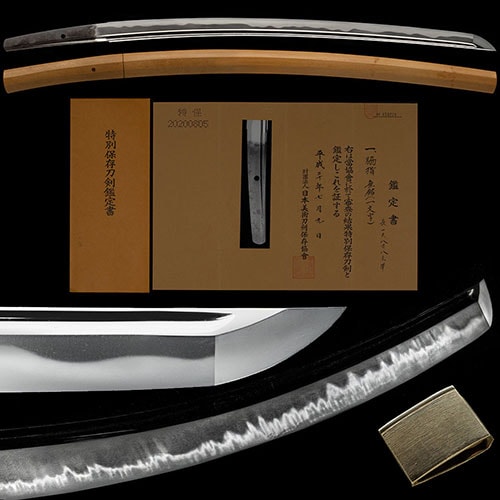
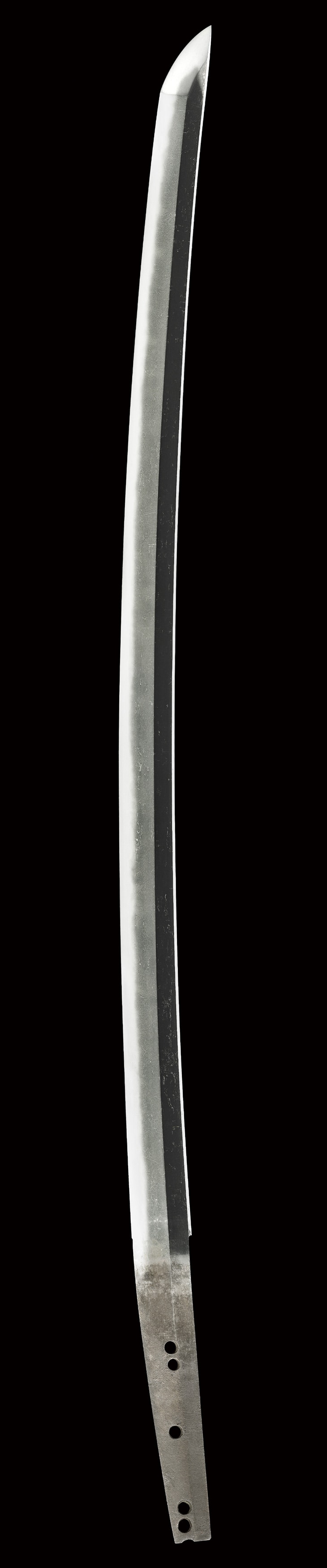
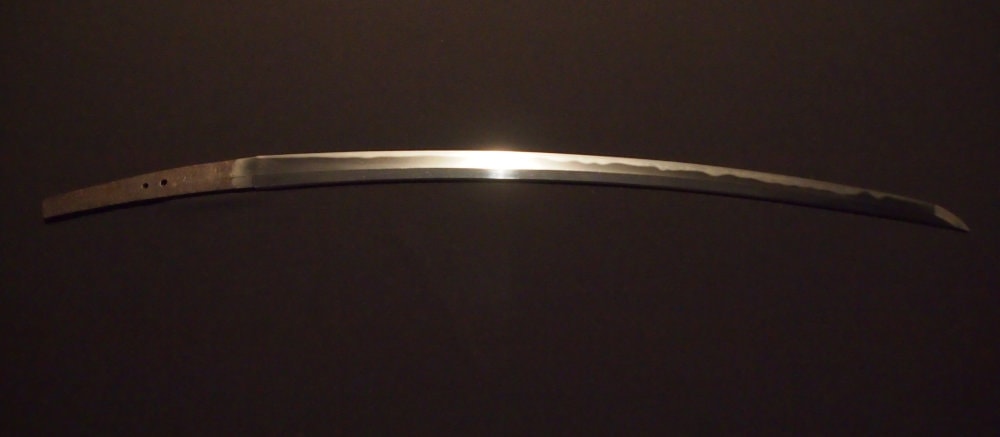
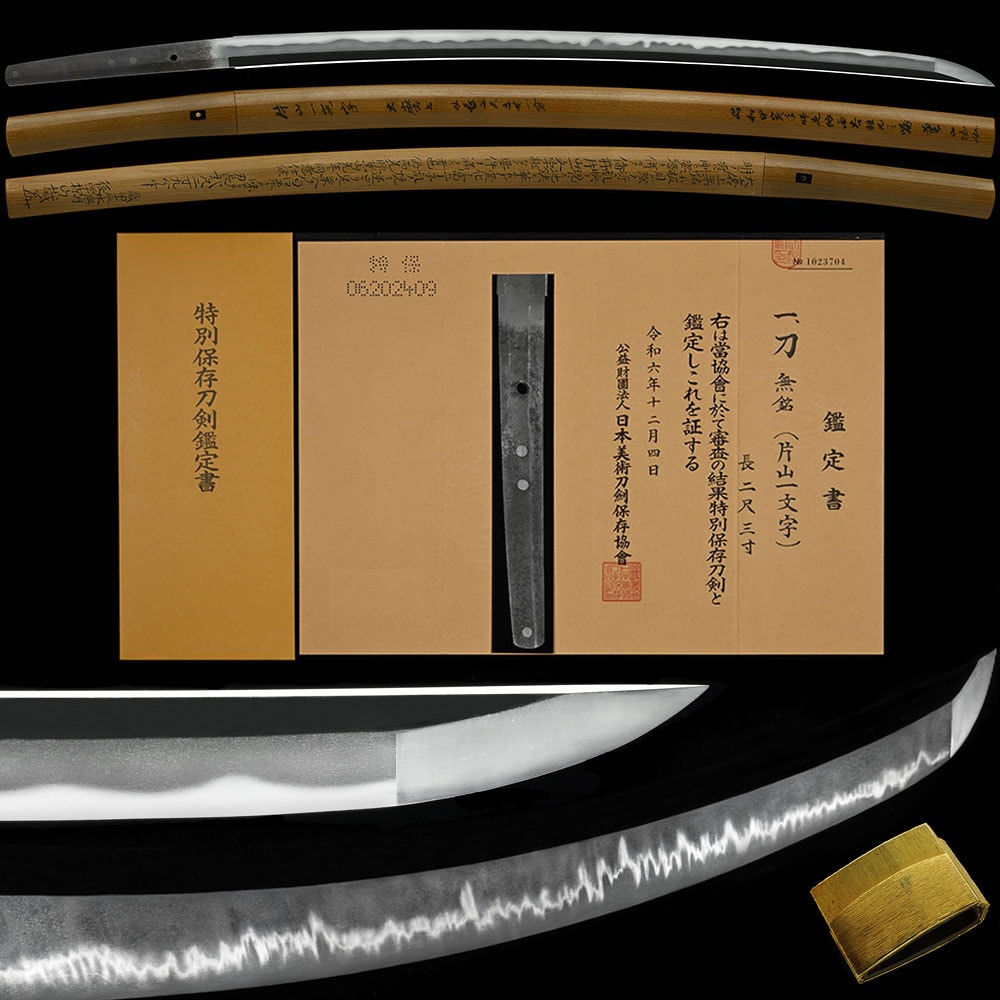
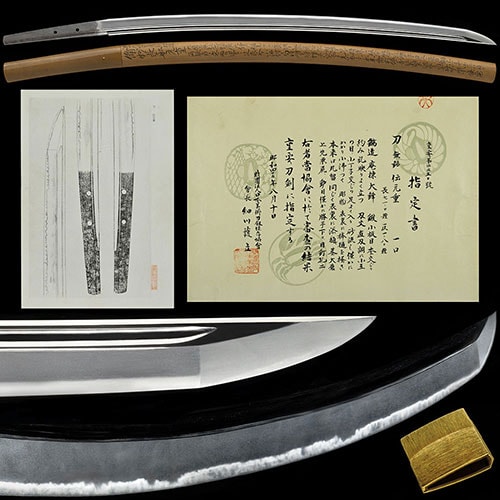
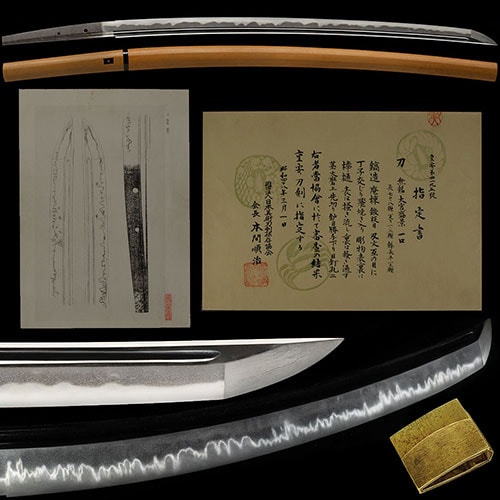
In the mid- period the swordsmiths of the Fukuoka school of collectively developed a style of splendid, sumptuous large-pattern -, and within that company the published sources single out Yoshifusa, together with Sukezane and Norifusa, as the smith who "forged especially large-patterned " and stands as "a leading master representing the school". The measures his standing by the designations themselves, writing that, as his National Treasures attest, "his technical ability is especially outstanding". Six of his blades are National Treasures today, a count exceeded by only one smith in the entire record, with three Important Cultural Properties beside them, and Fujishiro grades him Jo-jo .
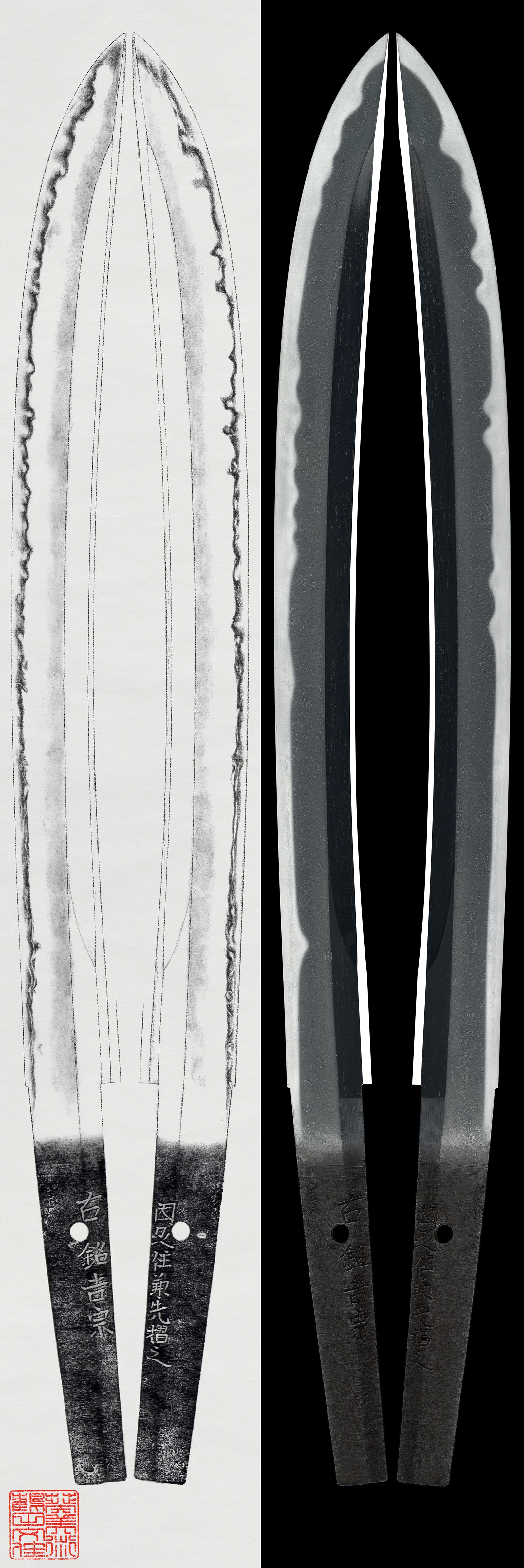
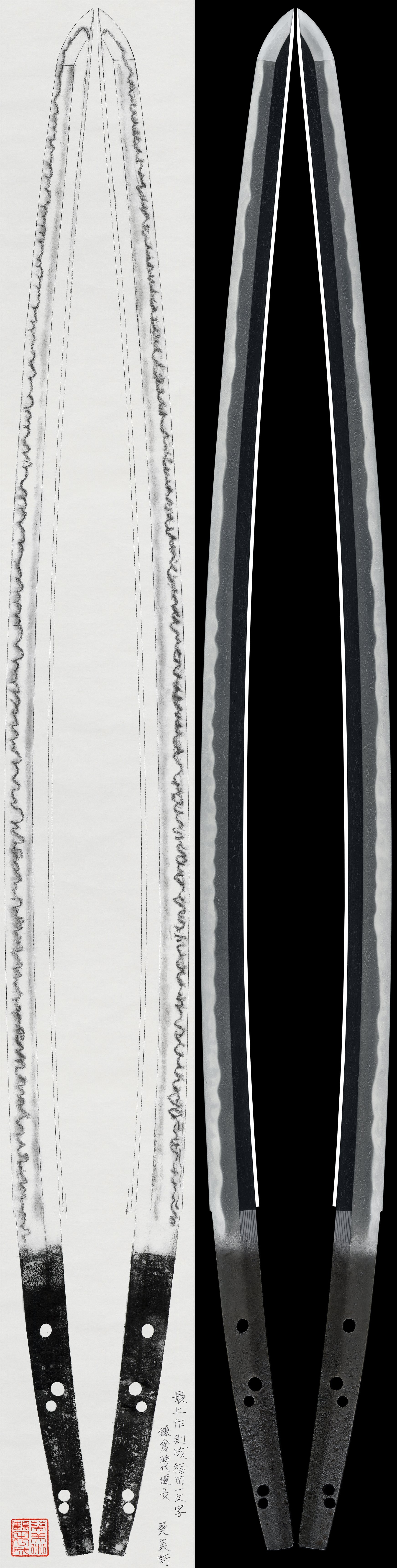
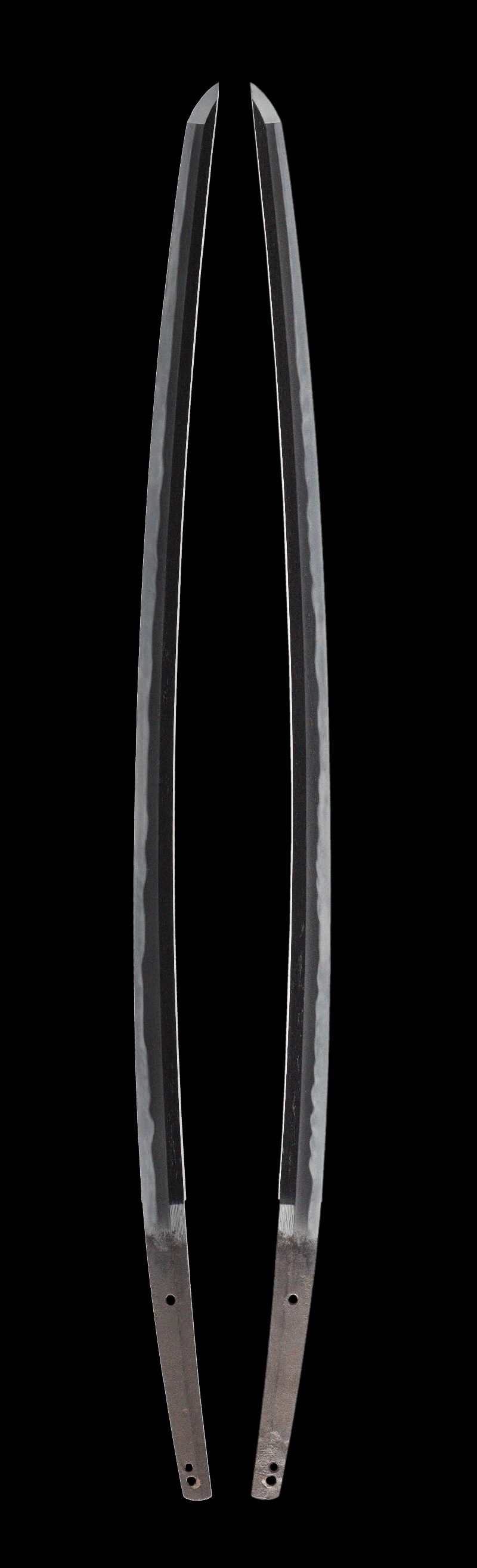
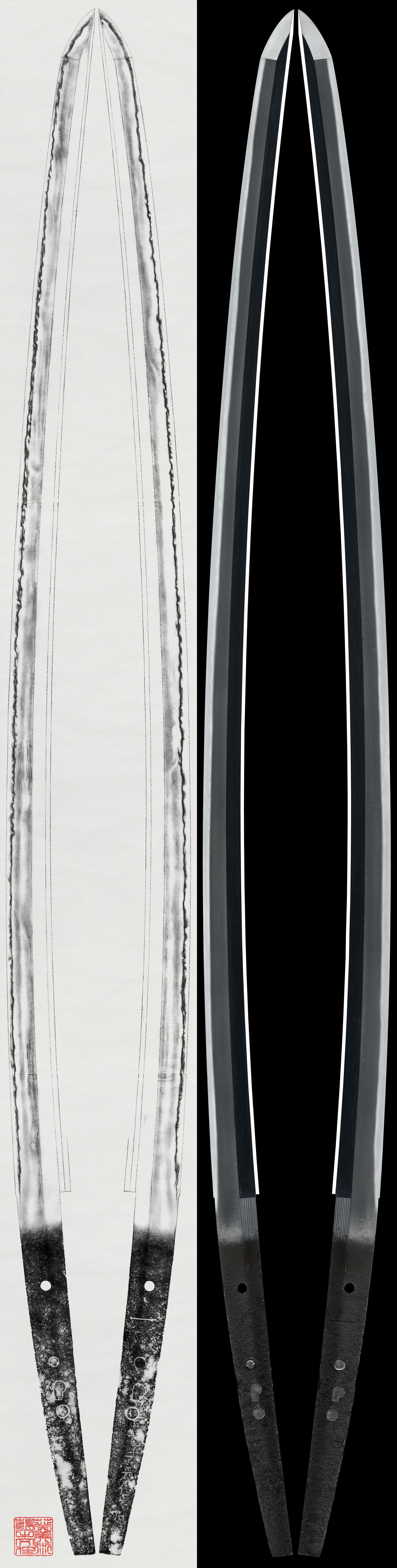
The hand the published record assigns to him is the apogee of the manner. "Yoshifusa is characteristically distinguished," one designation text states, "by a of large showing variation in the height of the hardening, into which - and are intermingled". The -, a vertically elongated and slightly angular cluster, is named his specialty, and the sources find his character plainly declared wherever it appears. Across the blade the large clusters rise and fall in a flamboyant , set somewhat lower around the and near the base. and enter vigorously, the temper is -dominant with , and and run through the , with in places. Again and again the descriptions close on a that is "bright and clear".
Beneath that temper lies an mixed with , recorded in nearly every blade and in places taking on a standing-grain tendency. adheres, frequently in a minute, dust-fine layer, and fine are woven through it. Above all the published sources record the , present in the great majority of his work; on his finest pieces it "stands vividly". The keeps no single habit: it runs , at times with a pointed tendency, or holds straight and turns back in , the point often swept with .
That flamboyance is the center of a wider range. The published sources note repeatedly that his workmanship runs from the brilliant hand to calmer constructions in a -toned manner mixing and , and they judge one such restrained close to the work of Nagamitsu. Another blade, a small-pattern with thick , is finished in an archaic style that "at first glance evokes the manner of ". A third, kept to a low over , is said to "call to mind, in a continuous vein, Ko-", and stands near the National Treasure Yanome Yoshifusa of the Shimazu family in both workmanship and signature. One blade carries coarse thick enough that the commentary calls it "a strength that may be described as ". Signed works survive in comparative abundance, forty-one signed against five unsigned in the present record, almost all in a two-character cut with a thick chisel, and a dozen keep their . The signatures fall into several distinct manners, and from that breadth of and of style the sources allow that "there is also a theory proposing the existence of multiple smiths using the name".
His place in the school is drawn in those terms. At the head of the great manner the record sets Yoshifusa, Sukezane and Norifusa, and of the three it is Yoshifusa whose name the commentaries bind to the - and to the marked rise and fall of the . A bright, -dominant over a vivid is the image of the Fukuoka at its peak, and his rendering of it became the model against which later and smiths were measured. The calmer register, judged close to Nagamitsu, shows how short the step was from this manner to the mainline that followed it.
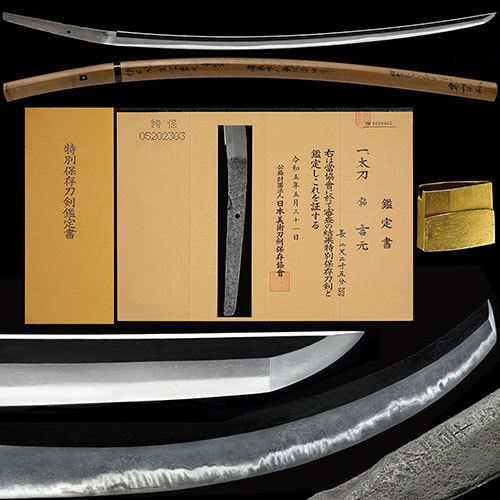
Sixty-two works are recorded under his name. The six National Treasures and three Important Cultural Properties are patrimony preserved beyond the market, and the published record names among the former the Yanome Yoshifusa transmitted in the Shimazu family, the celebrated Okadakiri, and the handed down in the Matsudaira family of Saijo in Iyo. Nineteen blades carry a recorded history, and the roll of former owners runs through the first houses of the country: Oda Nobunaga and Oda Nobukatsu, the Tokugawa shogunal house and Tokugawa Ietsuna, the Hitotsubashi Tokugawa, the Mori of Chofu, the Satake of Akita, with one blade treasured by Togo Heihachiro and others passing to the Imperial Family in the era of Emperor Taisho. Of recorded whereabouts his blades rest with the Tokyo National Museum, the Tokugawa Art Museum, the Seikado Bunko, the Hayashibara Museum of Art, Meiji Jingu, Jingu and Nikko Toshogu. The field a private collector may realistically encounter is the thirty blades of the and tiers, and most of these are held rather than traded; a signed Yoshifusa comes to the market only rarely, and is a landmark when it does.