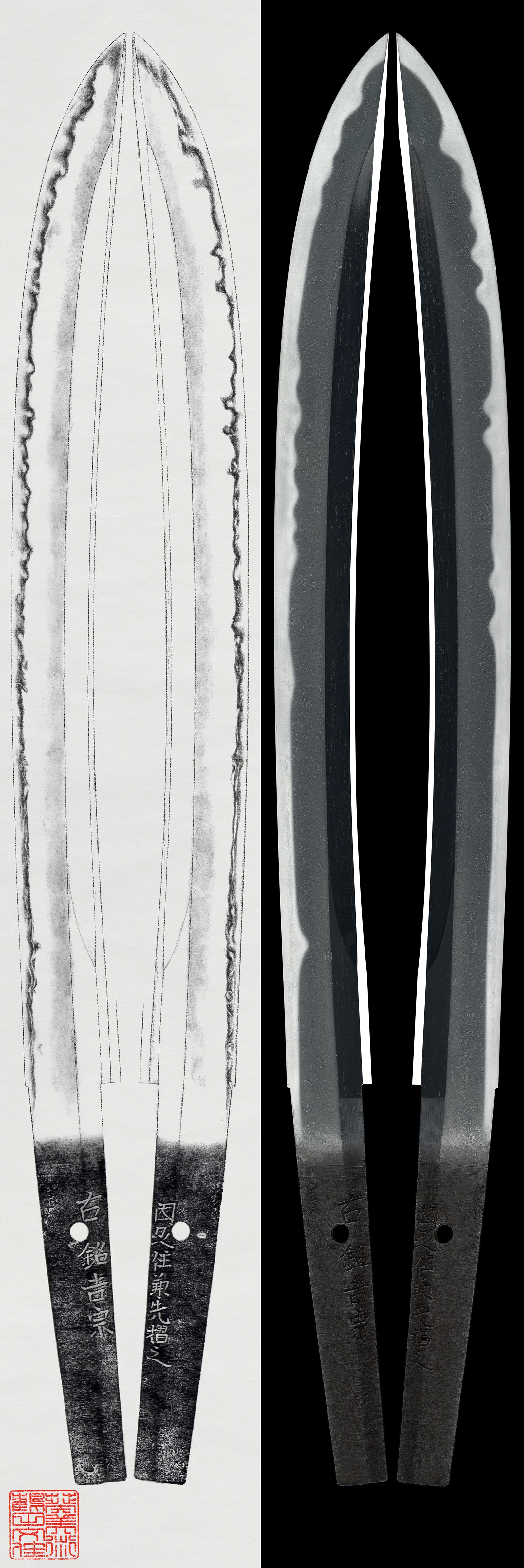
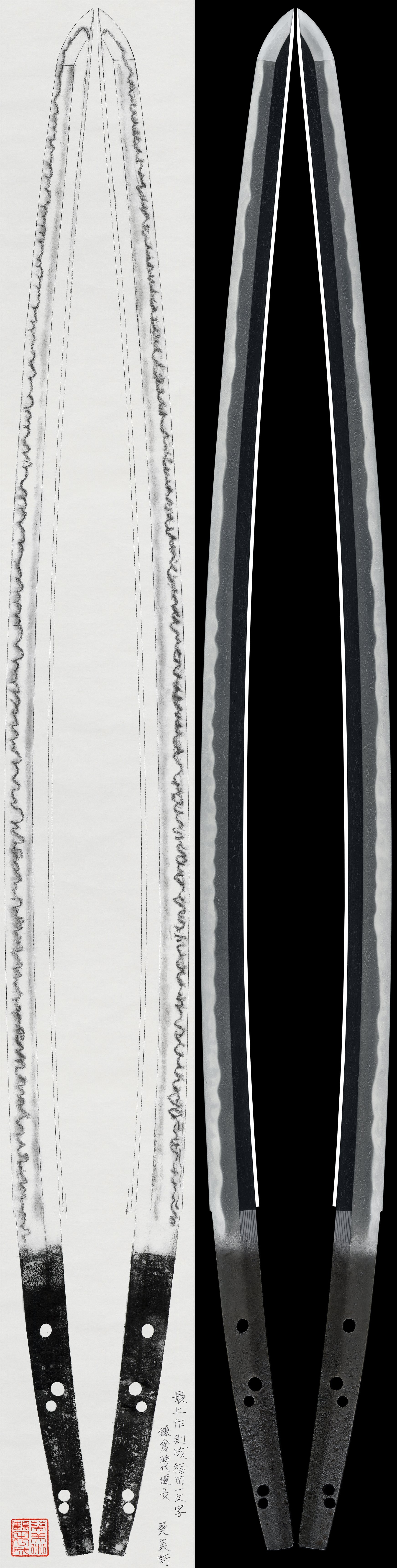
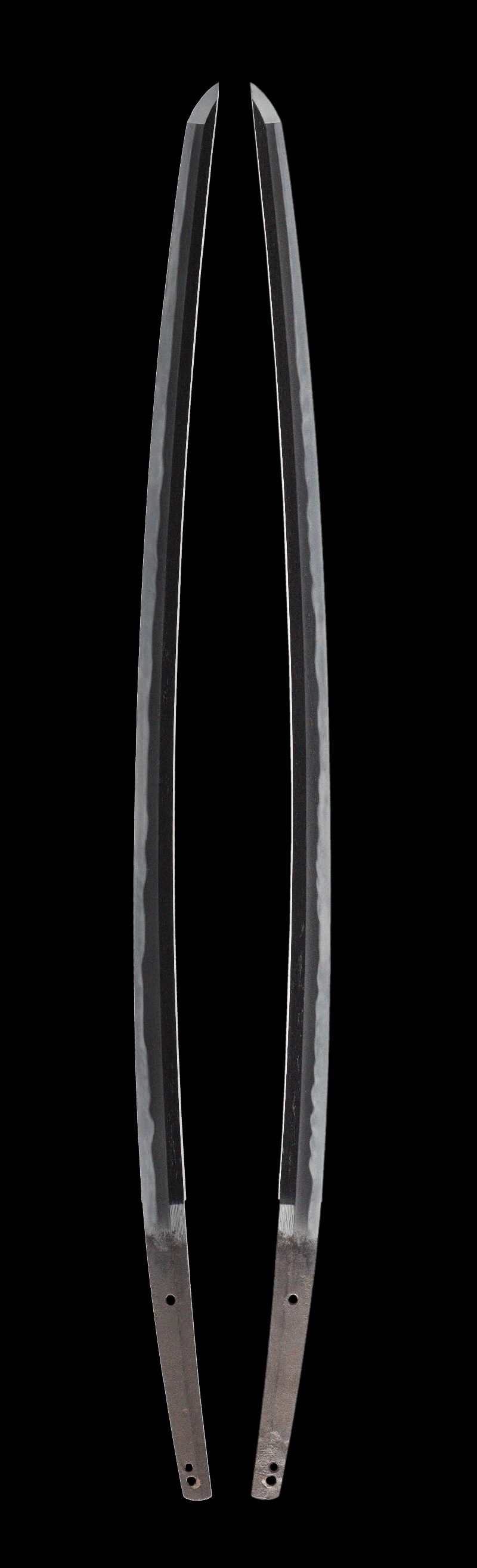
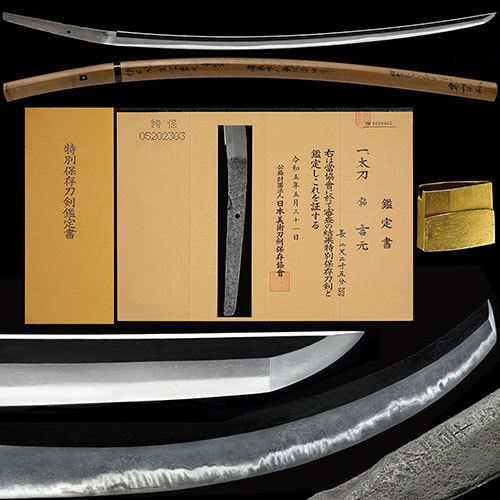
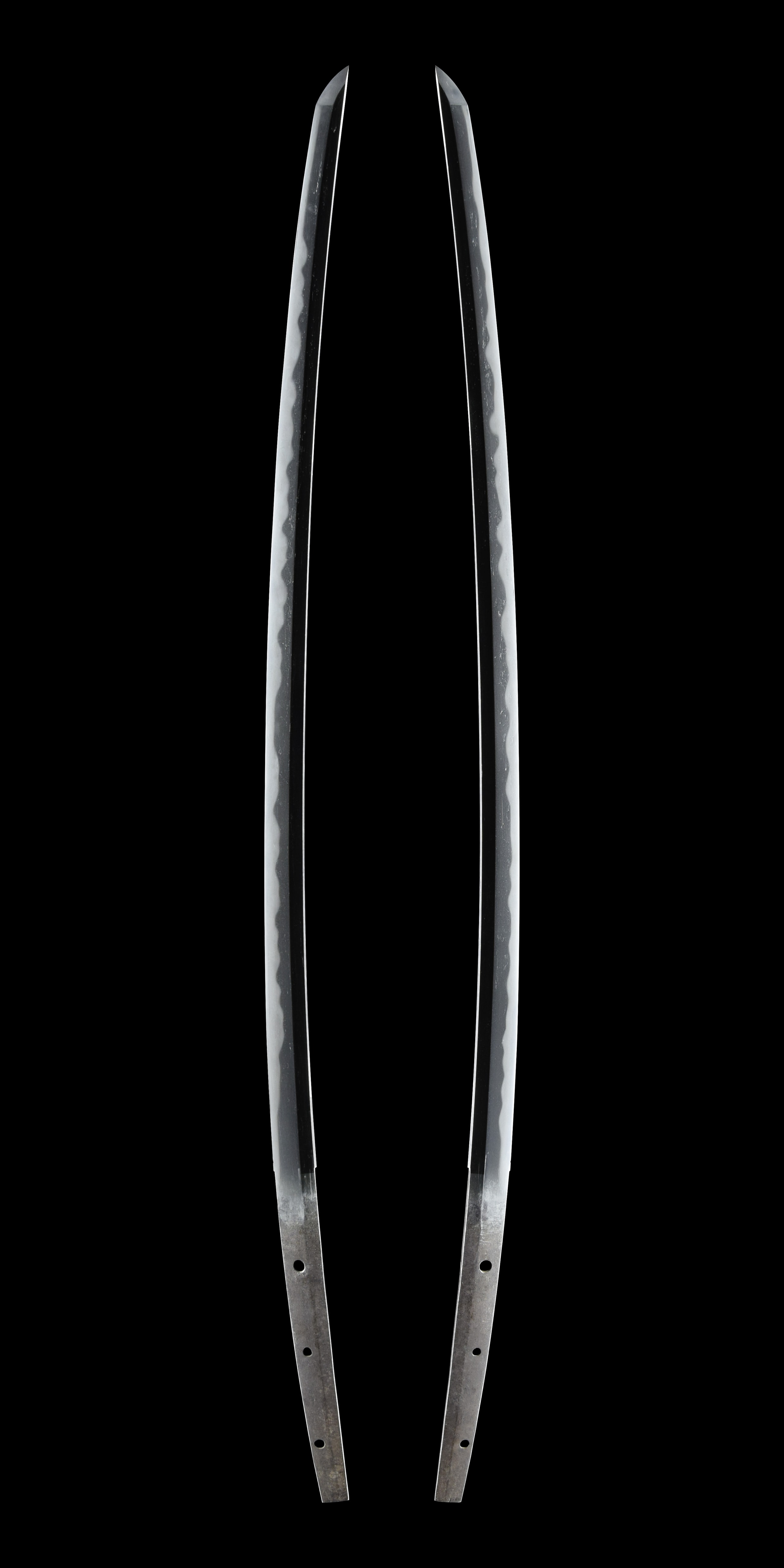
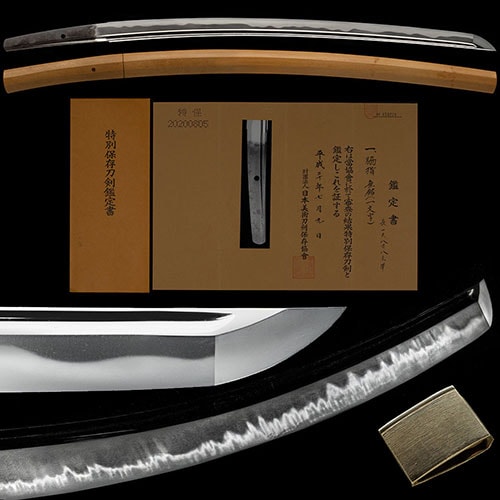
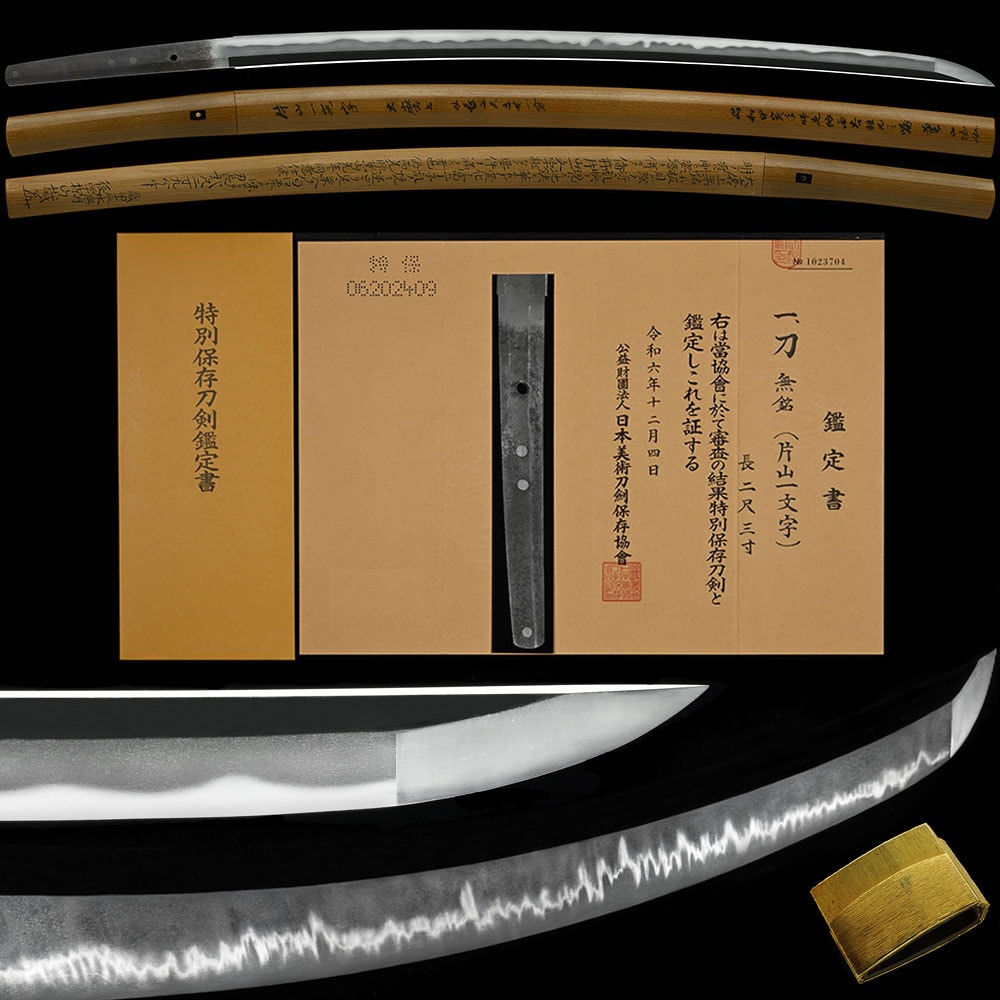
Norimune of the Fukuoka school in is named by the published sources as the founder of that line, and one of the , the smiths summoned in rotation to the forge of the retired Emperor Go-Toba in the early period. The published commentary states the matter of him plainly: that he is "renowned as the founder of the Fukuoka lineage, and extant signed works by him are extremely few." Because so little signed work survives, the standard against which he is known is set by a small number of , signed , and the published sources rank such a piece as a representative record of the master himself. He stands at the head of the tradition before its later flamboyance, and at the very threshold of , his work showing almost no difference from it.
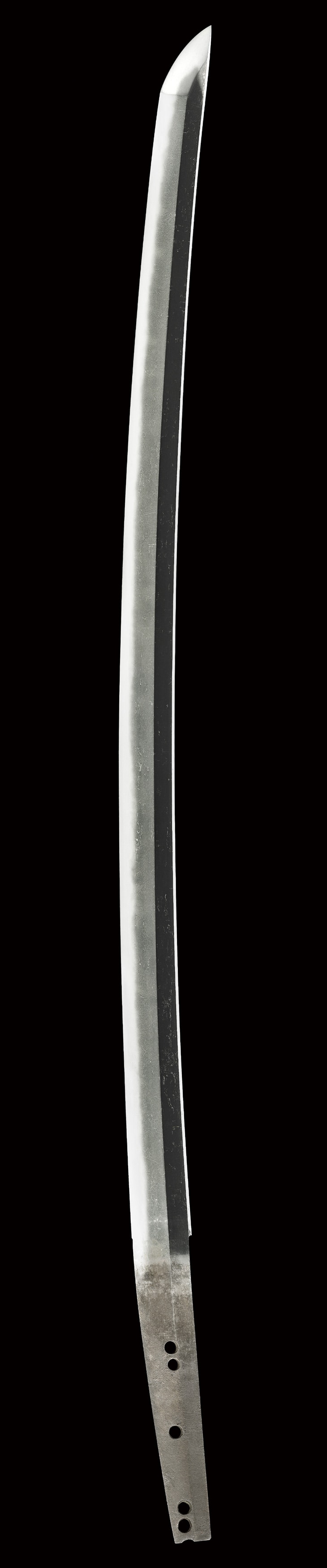
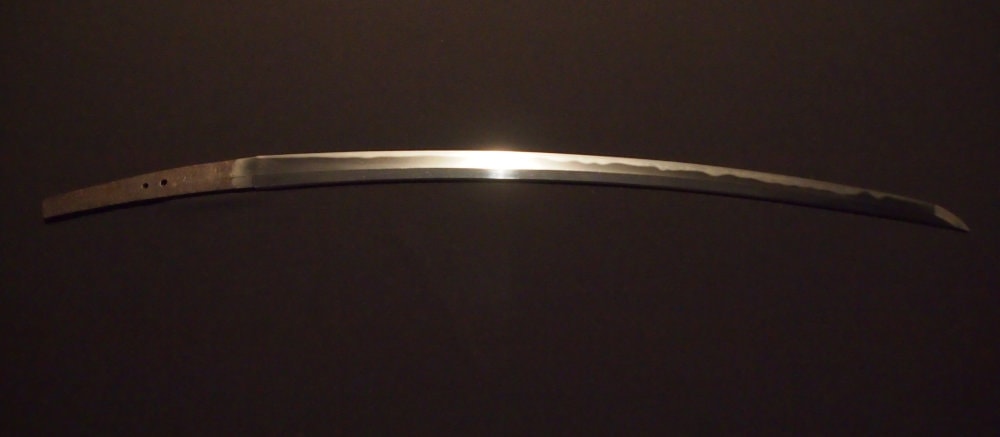
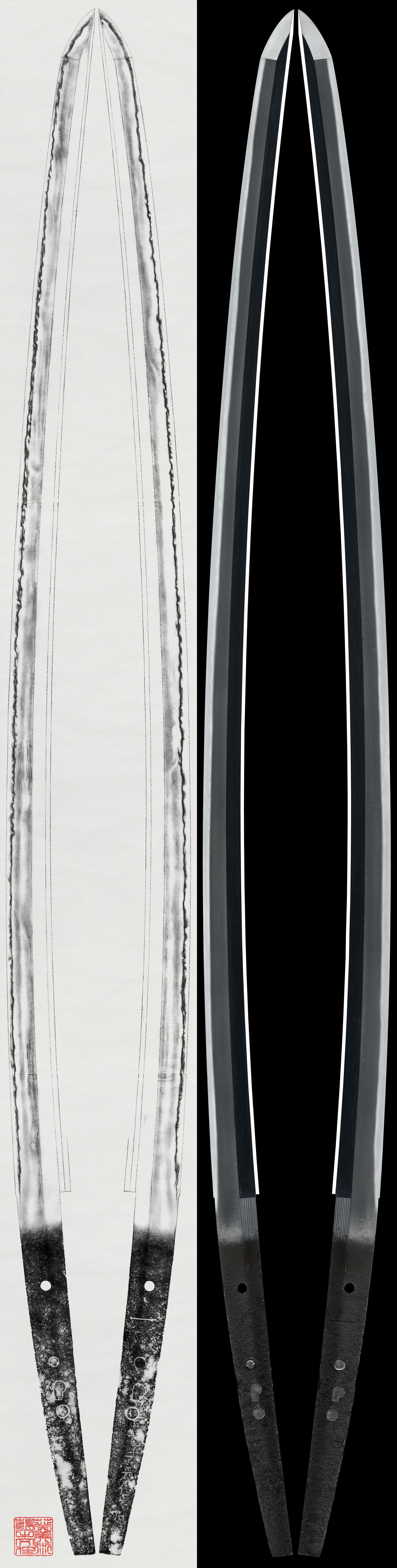
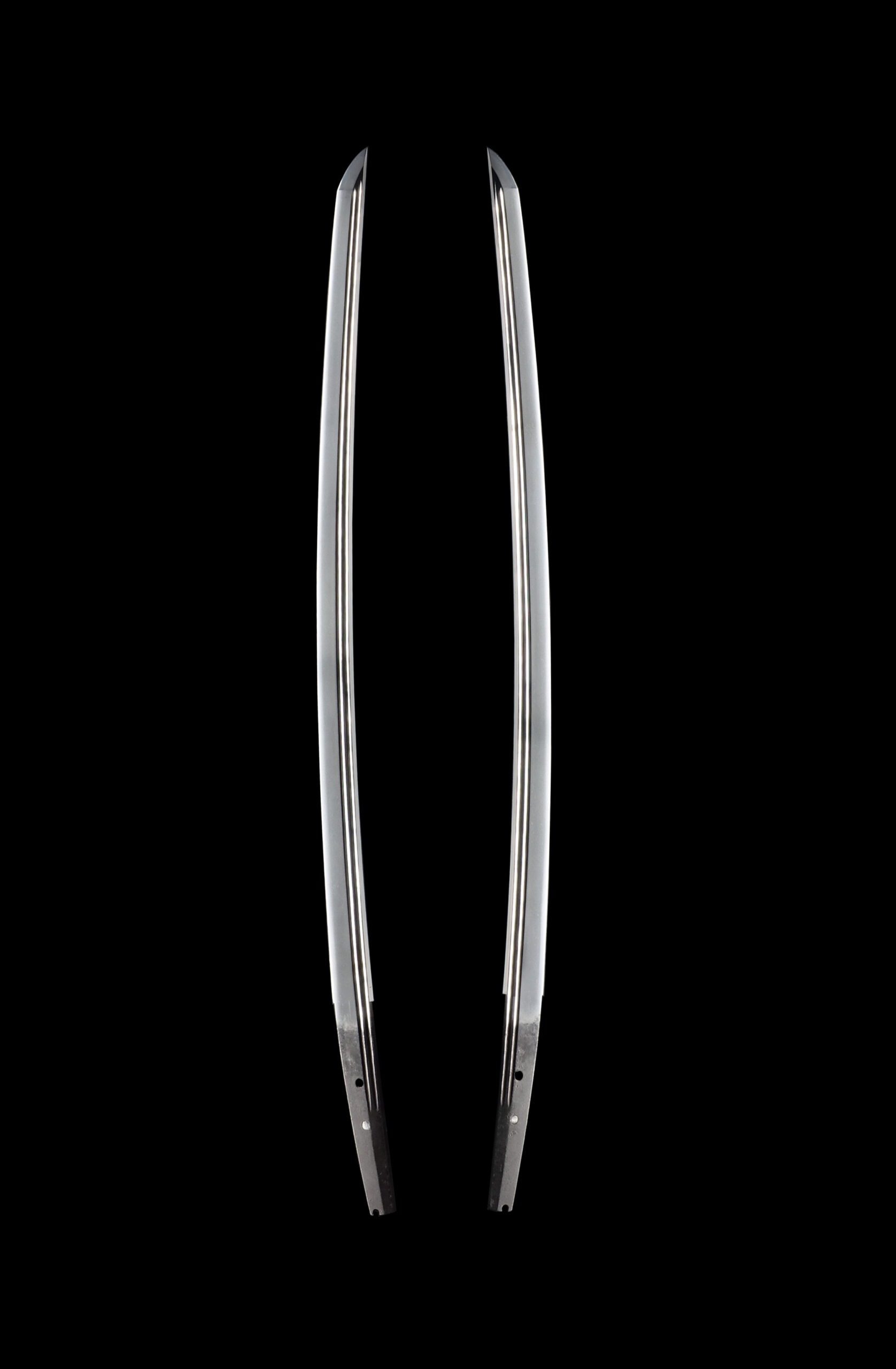
The characteristic hand is restrained and archaic. The is slender with high and clear , the a compact , the whole, in the words of the published sources, "an unmistakably graceful silhouette." Over a well-packed , the temper is built on a base into which and are mixed, with and entering well and along the . This is the calm root of the school, the quiet manner that precedes the exuberant of the Fukuoka mainline. The published sources call the result the archetypal style of the early masters and return to it as the type by which the school's beginning is read.
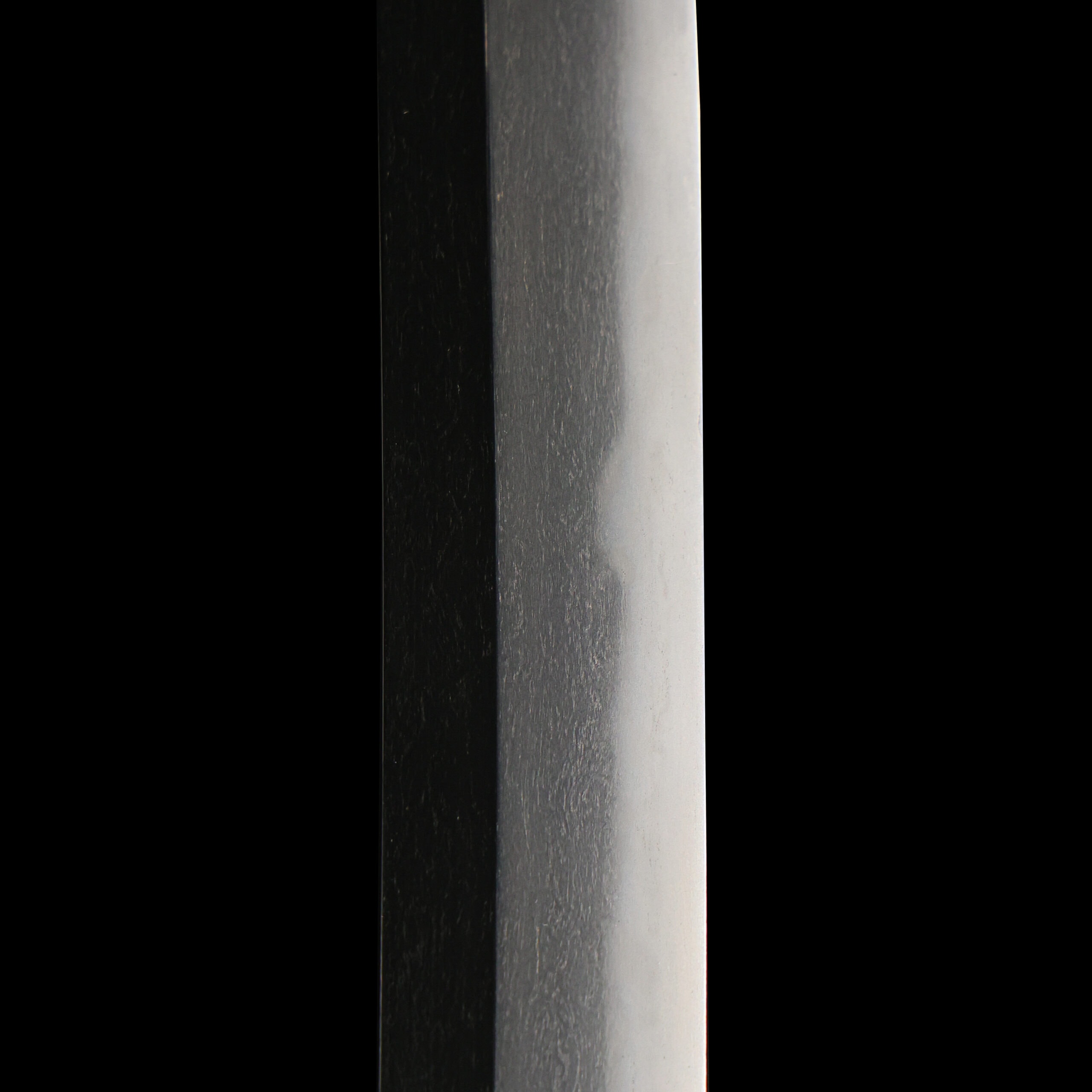
The is tightly forged, carrying fine , and across it a stands out clearly, the bright reflection of old steel that distinguishes his from the -less Ko- hand. The tends slightly , subdued rather than brilliant, and a runs in the lower-middle of the blade. The runs with only a faint disturbance and turns back in a small . Taken together the published sources judge the and a typical example of early (Ko-) , so close to work that the two are difficult to tell apart.
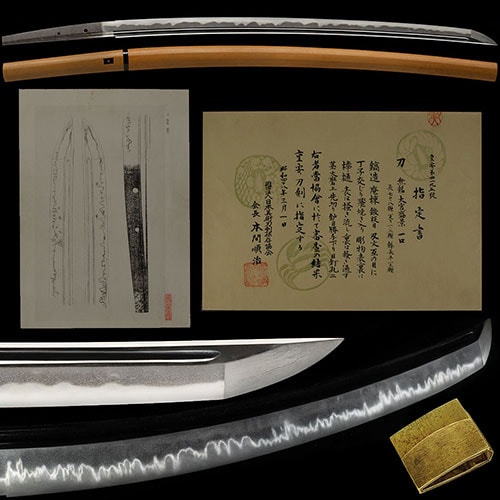
The surviving record is narrow, and it turns on a single point the published sources stress more than once: signed work is scarce. The principal piece is an , two-character signed "Norimune," raised to the first session of the and earlier to the eighth session as records of one and the physical blade. The is with and , the signature cut high on the near the . Of it the published sources write that "among extant signed works by Norimune, examples executed to such a high level are exceedingly rare." A second entry, a attributed () to Norimune, survives only as an old Bijutsuhin certification whose physical particulars the editors could no longer confirm, a reminder of how thin the documentary trail for so early a master has become.
His place in the school is fixed at its source. From his restrained founding manner descend the brilliant Fukuoka of Yoshifusa and the wider line, while the quieter, -less side is carried by the Ko- hand of Sadazane; against both, Norimune's combination of a clear and a -based temper marks the calm beginning from which the two diverge. That he sits at the threshold of , his work all but indistinguishable from it, places him precisely at the moment one tradition becomes another, which is why the published sources reach for him as the type-specimen of early rather than as one master among many.
In Fujishiro's grading he is Sai-jo , and the Toko Taikan values his work near the very top of the field. The designation record that carries his name in our catalogue is led by a single , the signed Takahashi of the first session, together with three works at the Important Cultural Property () level. The blades that bear his attribution have passed through the hands of those who held the country, recorded against the Tokugawa, the Shimazu, the Ashikaga, the Asano and Mori houses, and the Imperial Family, with Emperor Meiji among the names of record; the few of recorded whereabouts are held by shrines and museums, among them Atago Shrine, the Tokugawa Art Museum, the Sano Art Museum, the Mitsui Memorial Museum and the Okayama Prefectural Museum. The published sources record that the most famous signed examples of his hand are held as designated cultural property and as an Imperial possession, so that the scarce signed pieces are heritage rather than property in trade. A signed, Norimune coming into private hands is among the rarest things a collector of early could encounter, a landmark when it appears and a landmark only rarely.