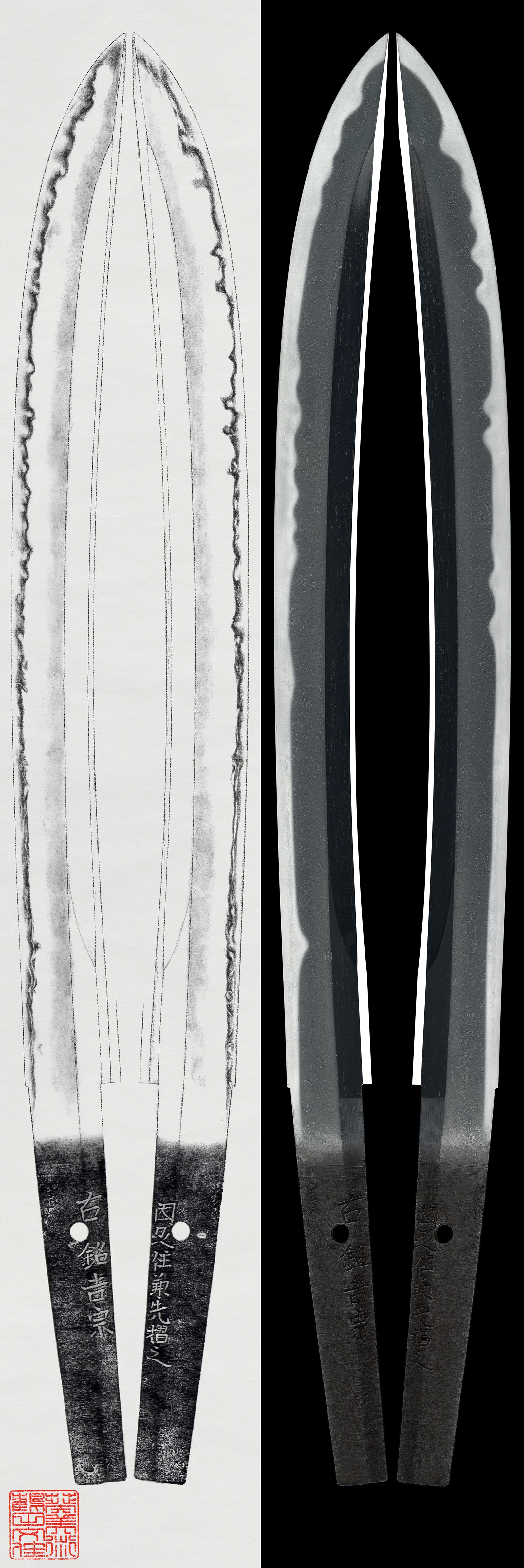
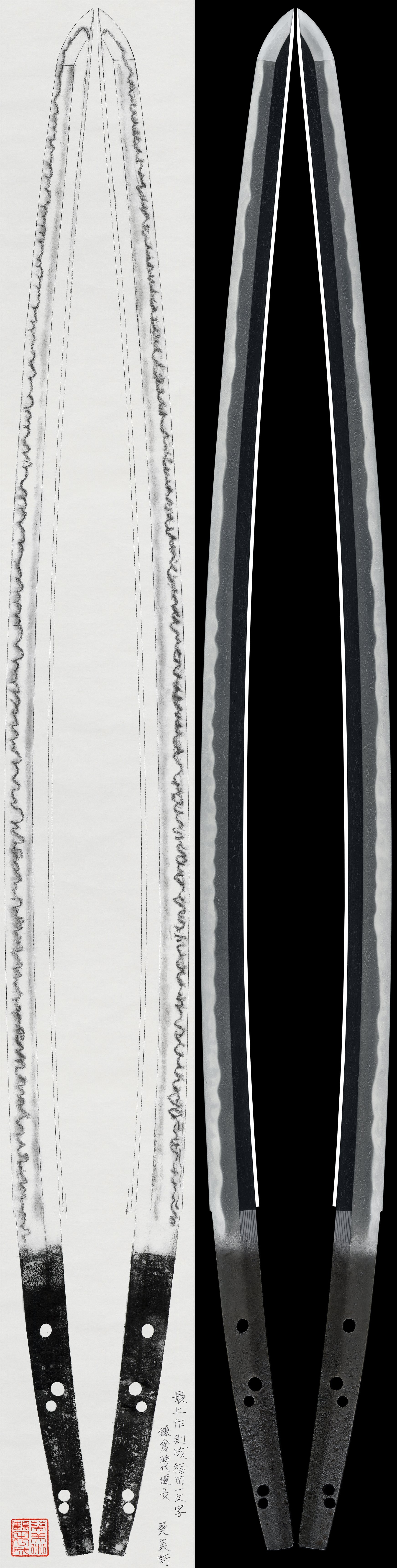
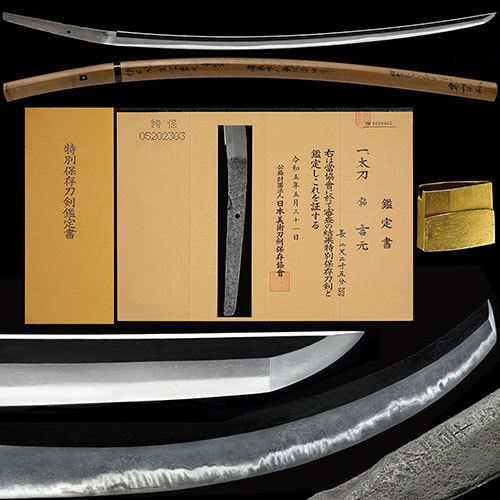
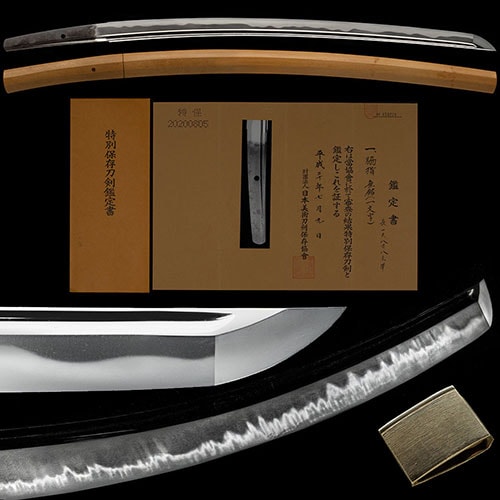
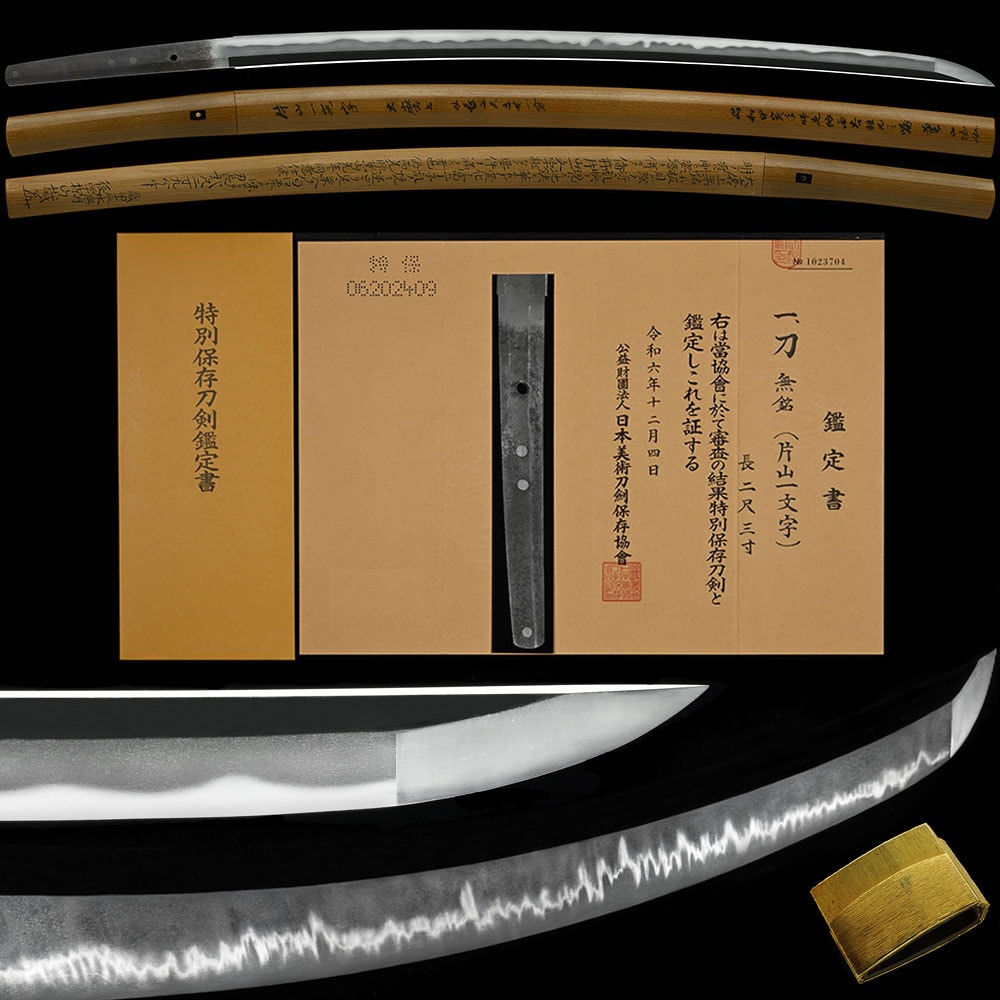
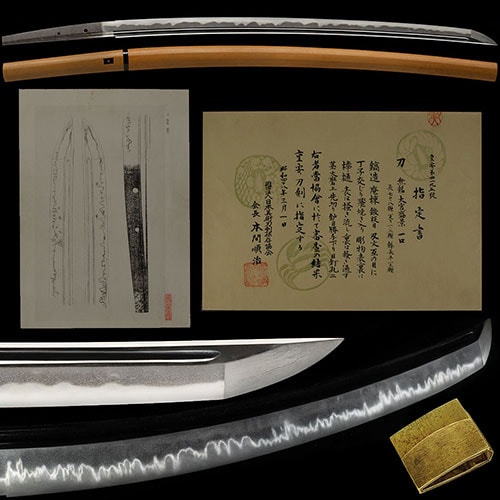
Sukekane of province is a name the published sources approach as one of the school's standing problems, and the surviving record that anchors him is the signed, unaltered designated in 2024, a blade preserved in the form it had at manufacture. He worked in the middle period within Fukuoka , the school descending from Norimune. The difficulty the published sources keep returning to is the name itself: the records a Sukekane under both , dated about the Genryaku era, and , dated about the Jōei era, and one account holds the signature comes in as many as five distinct patterns. Most surviving signatures are the two characters 助包; only a very small number of long inscriptions reading " no Sukekane " are confirmed. The conventional view assigns the small-character hand to and the large-character hand to , "the small signature taken as and the large hand as ", but the sources state that this division "is not necessarily easy from the calligraphy and the manner of the signature, and requires careful scrutiny", since a separate small- Sukekane, transmitted in the Inshū Ikeda family, is itself judged and carries the national-treasure designation (国宝) the sources cite.
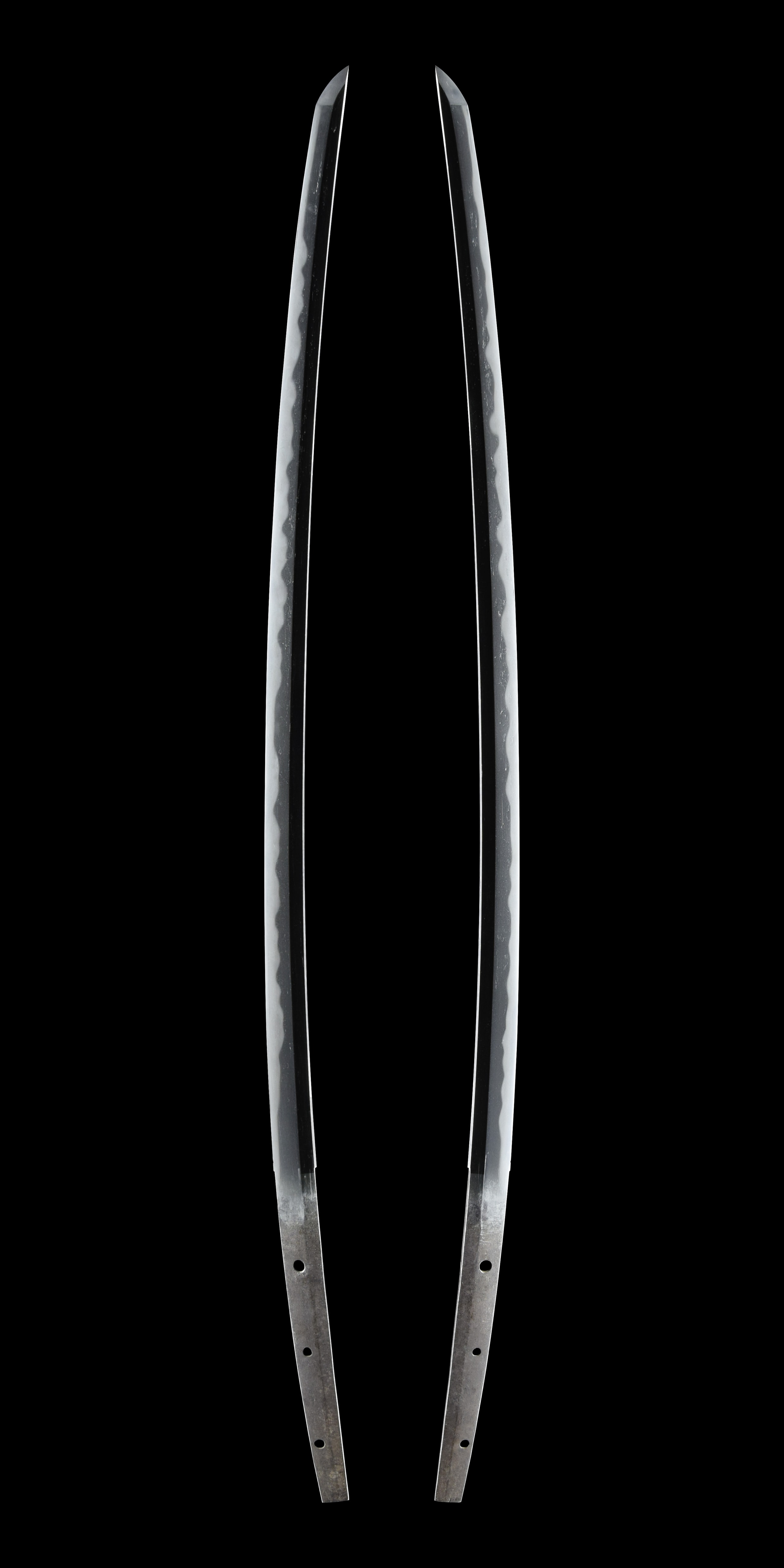
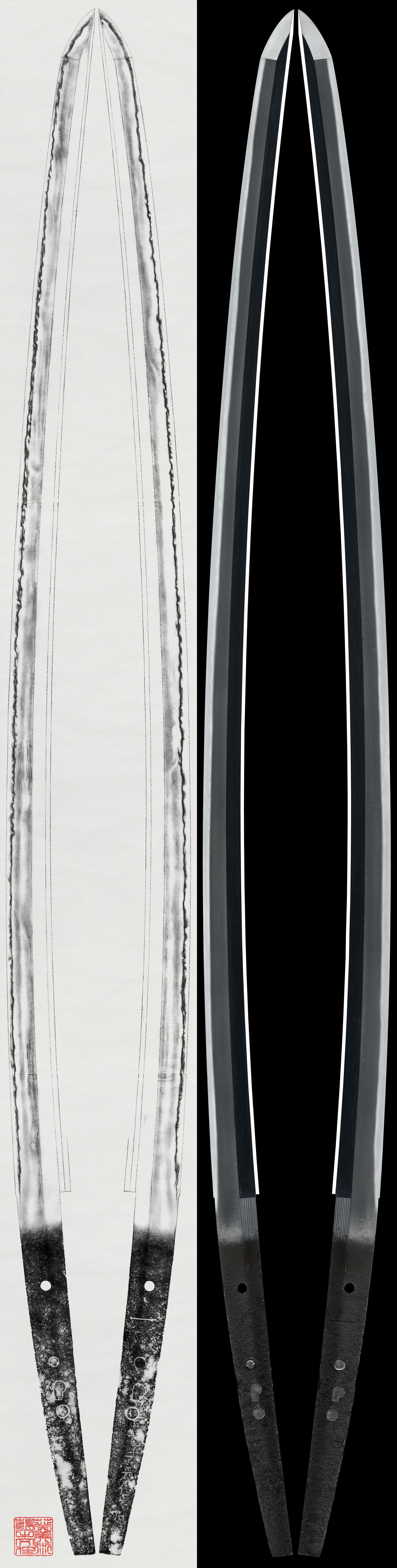
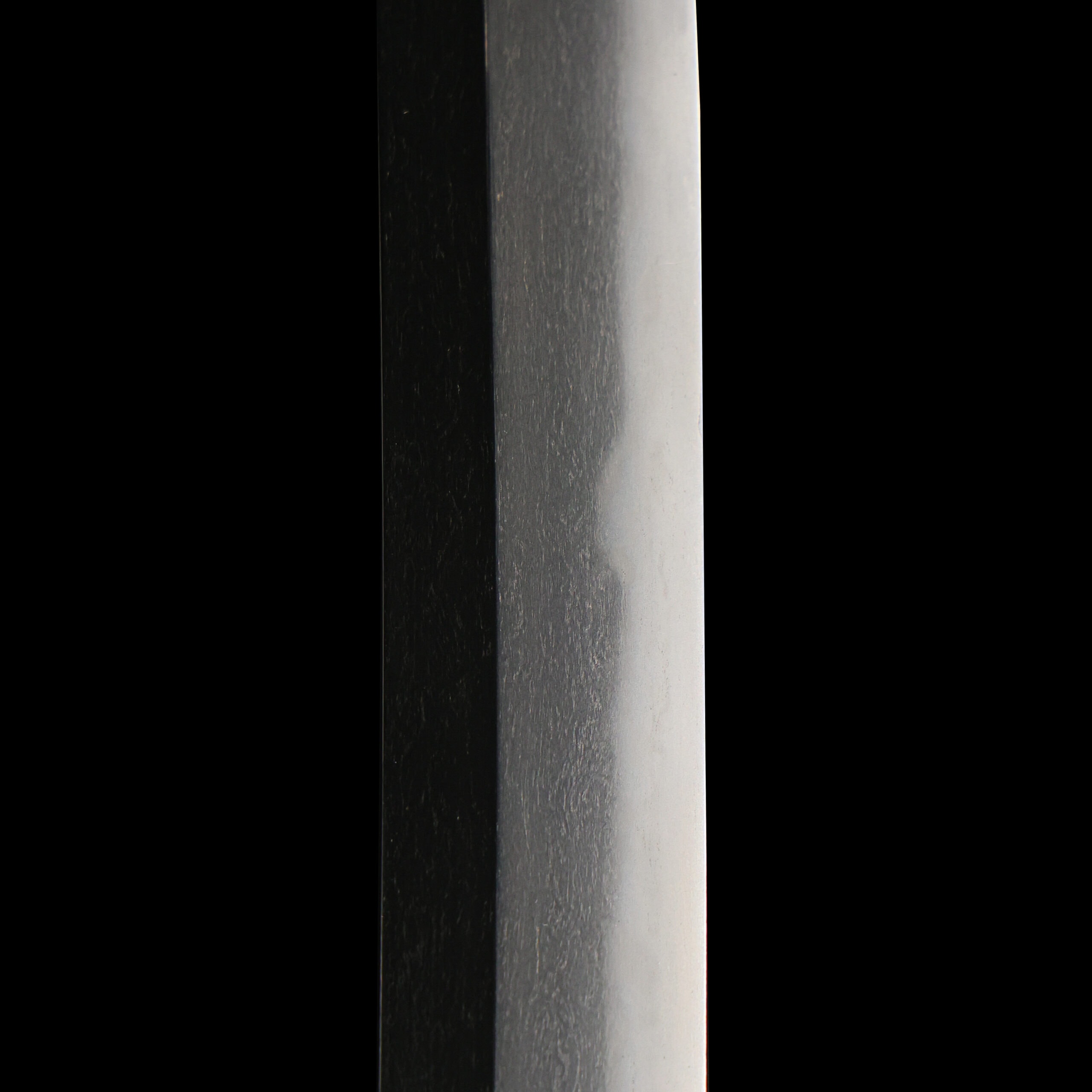
The hand the sources single out as quintessentially his belongs to those signed , and it is a flamboyant one. Over a well-packed he sets a temper that runs high from base to tip, the principal tone, mixed with , and pointed , the and entering well. The published commentary on the writes that what especially draws the eye is its high, "flamboyant " reaching from the base through the , the composition richly varied through clusters of differing size. The is laid with gathering unevenly, and around the and a -like effect runs in the edge. The sources place this flamboyance beside the small- Sukekane judged 国宝 and say it "expresses to the fullest the essential appeal of ". It is the showy Fukuoka manner held at full height, the opposite pole from his schoolmate Yoshimochi, whose hand the published record treats as the deliberately quiet one.
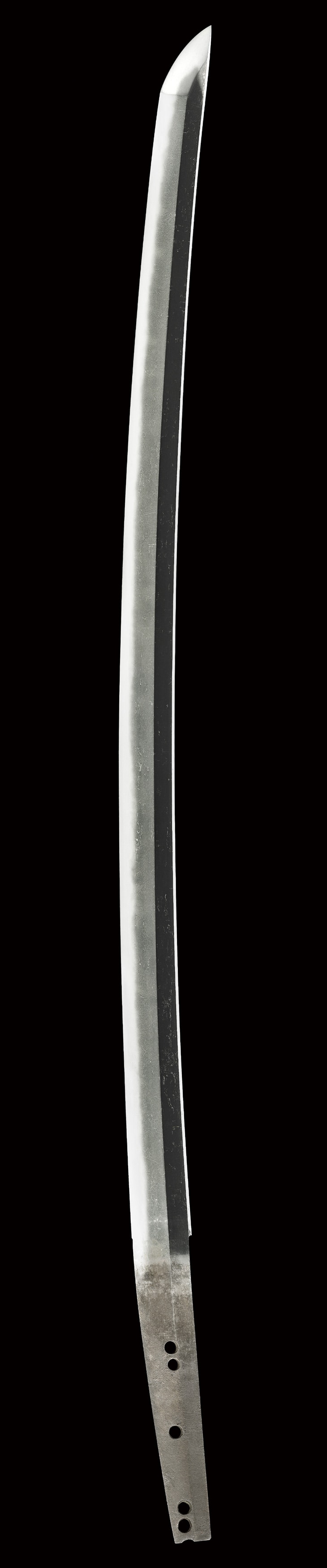
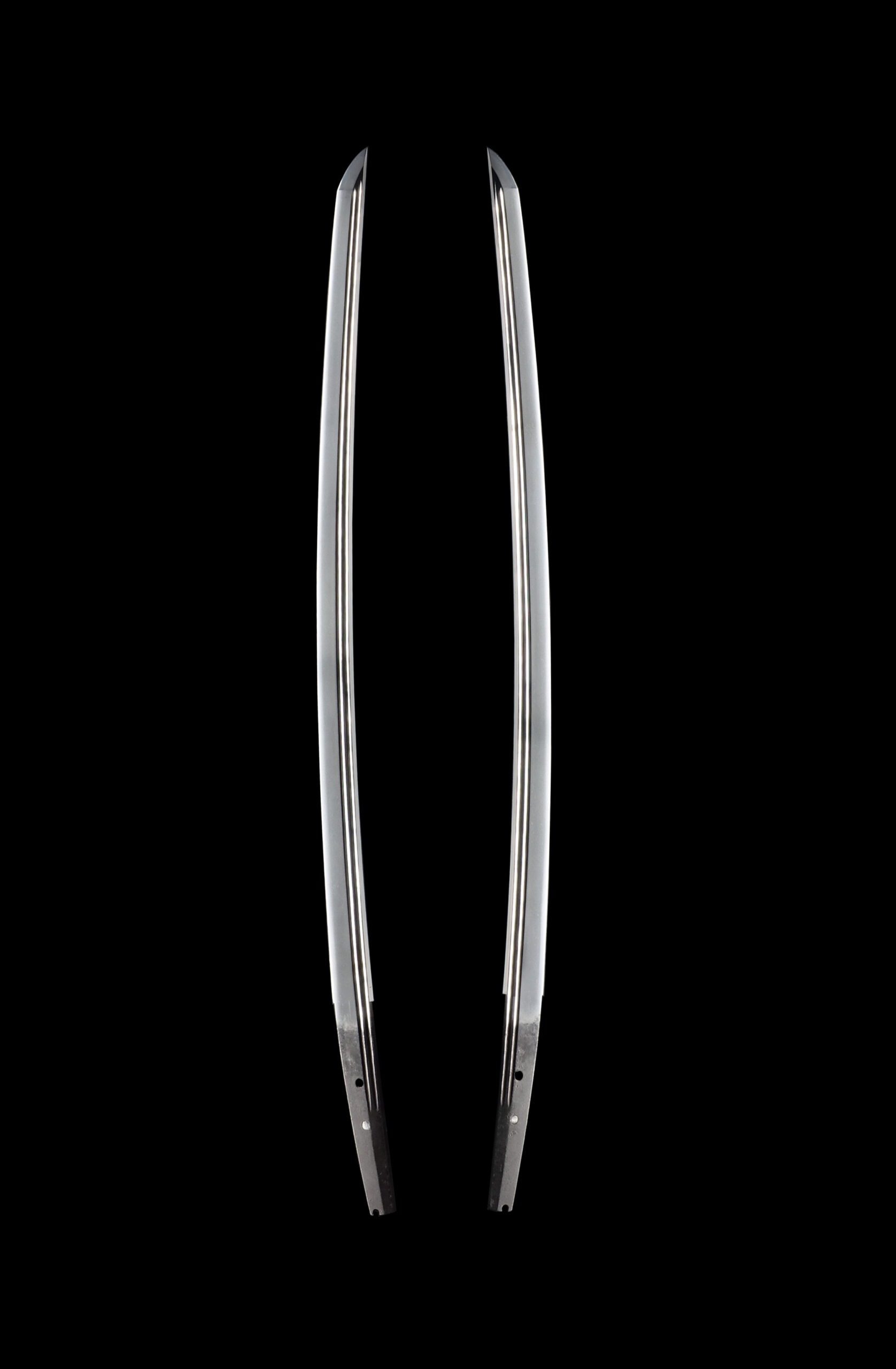
The beneath that temper is as much a part of his recognition as the . The forging on the signed is a refined , densely packed, with applied, and from the a rises; above it patches of dark band become , settling into a clear . This rich is the one trait that crosses every part of his record, standing as plainly on the as on the signed , and the published sources note it on blade after blade. On the slender, shortened held in the Mōri and Tokugawa houses the is a well-packed with and , the Fukuoka in a quieter register. The of the prime is deeply tempered, almost a single sweep, running straight to a -toned point with and a long turnback, which the sources read as further evidence that it keeps nearly its original form. At the he carves with a sankō-tsuka-ken on one face and with on the other; the published commentary calls these later additions that nonetheless do not detract from the appearance and rather set off the blade.
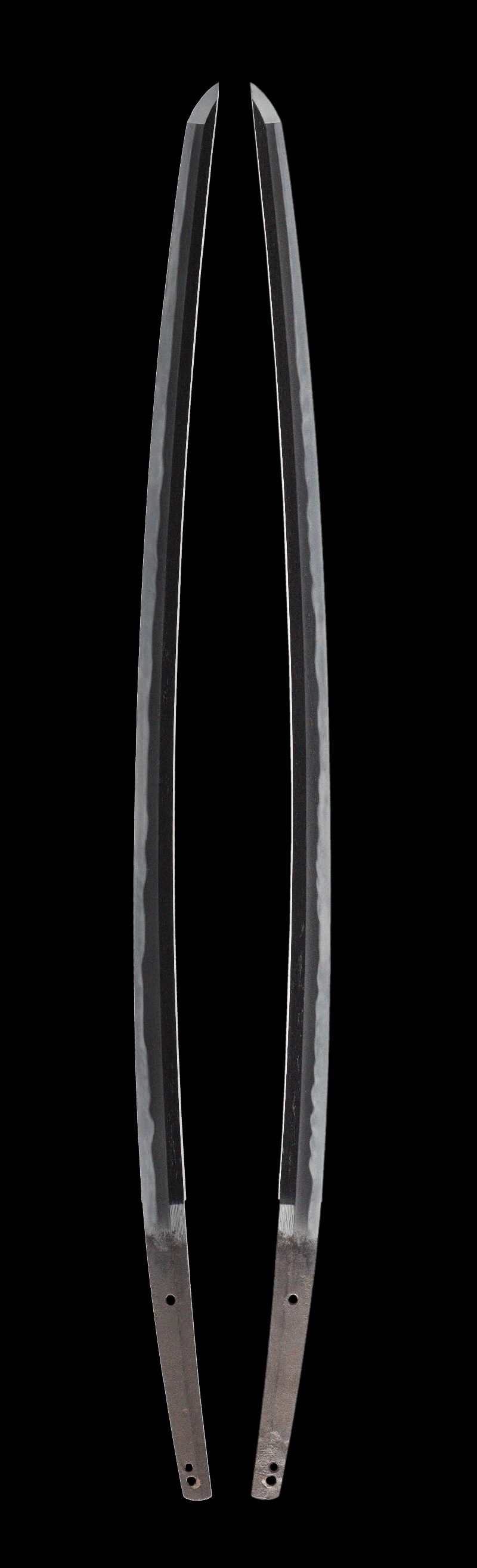
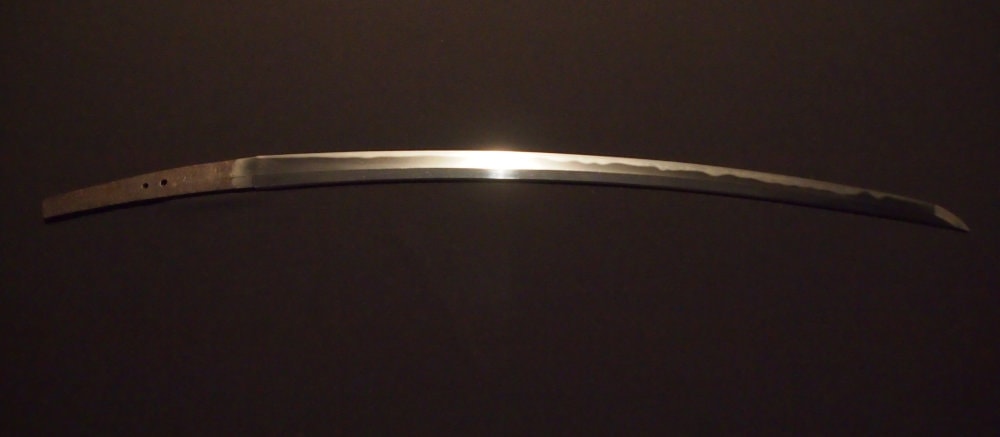
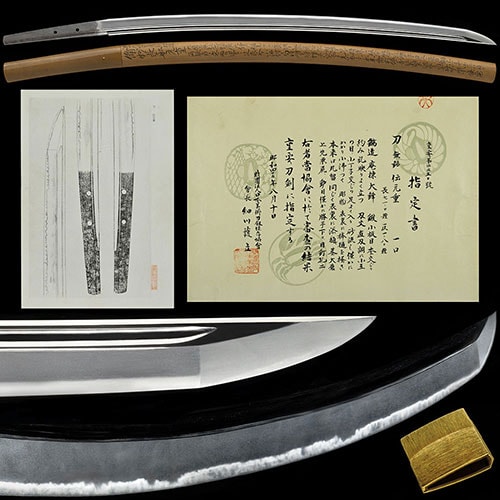
His record divides cleanly into two faces. The first is the , two-character signed just described, standard in width with the taper slight, high with curvature added toward the point, a : the recognized prime, of which only a few survive, several papered to the and ranks and to the prewar Jūyō Bijutsuhin. The second is the attributed to him as mainstream Fukuoka . These run wider in body, one taking an -leaning , over a standing that flows in places, with and the ; the temper is a mixed with and pointed-, and entering, forming, and fine frequent, the straight to a small round over a . The published sources affirm these from every point as mid- work, dignified in shape and excellent in and , while granting that the attribution rests on era and school rather than a personal hallmark.
That candor is itself part of how the sources place him. On one of the the commentary states that "there is no decisive feature that compels the name Sukekane" and no point prominent enough to single out as his alone, yet that "there is no dispute it is a fine sword". What sets the signed apart from the rest of Fukuoka is read through his own traits rather than by contrast: the high, -dominant flamboyance, the bright with its and , and the devotional , sankō-tsuka-ken and carving that the attributions, showing only a , do not carry. Among the school's named hands the sources rank the showy of Sukezane, Yoshifusa and Norimune; Sukekane keeps that flamboyant manner while Yoshimochi turns quiet, and so the published record affirms his pieces from the period and the school.
Fujishiro grades him Jō-jo , a high rank among the smiths, and the weight of designation behind his name is concentrated rather than vast: two of his blades hold the prewar Jūyō Bijutsuhin, the Important Art Object designation, and two more are , while the separate small- Sukekane the sources cite stands at 国宝. The provenance recorded against his runs through houses of consequence, the Mōri by way of Mōri Motomichi, the Tokugawa line through Tokugawa Iesato, and the Asano family. His finest signed work is held now in the Tokyo National Museum and at Shinonome Jinja, kept as patrimony rather than anything that trades. Genuine signed Sukekane survive in only a handful, and an , signed example in its original form is among the rarer things a collector could hope to encounter. Of his recorded whereabouts almost nothing can ever come to market, and the one tier that might, very occasionally, is the or attribution, a landmark when it appears.