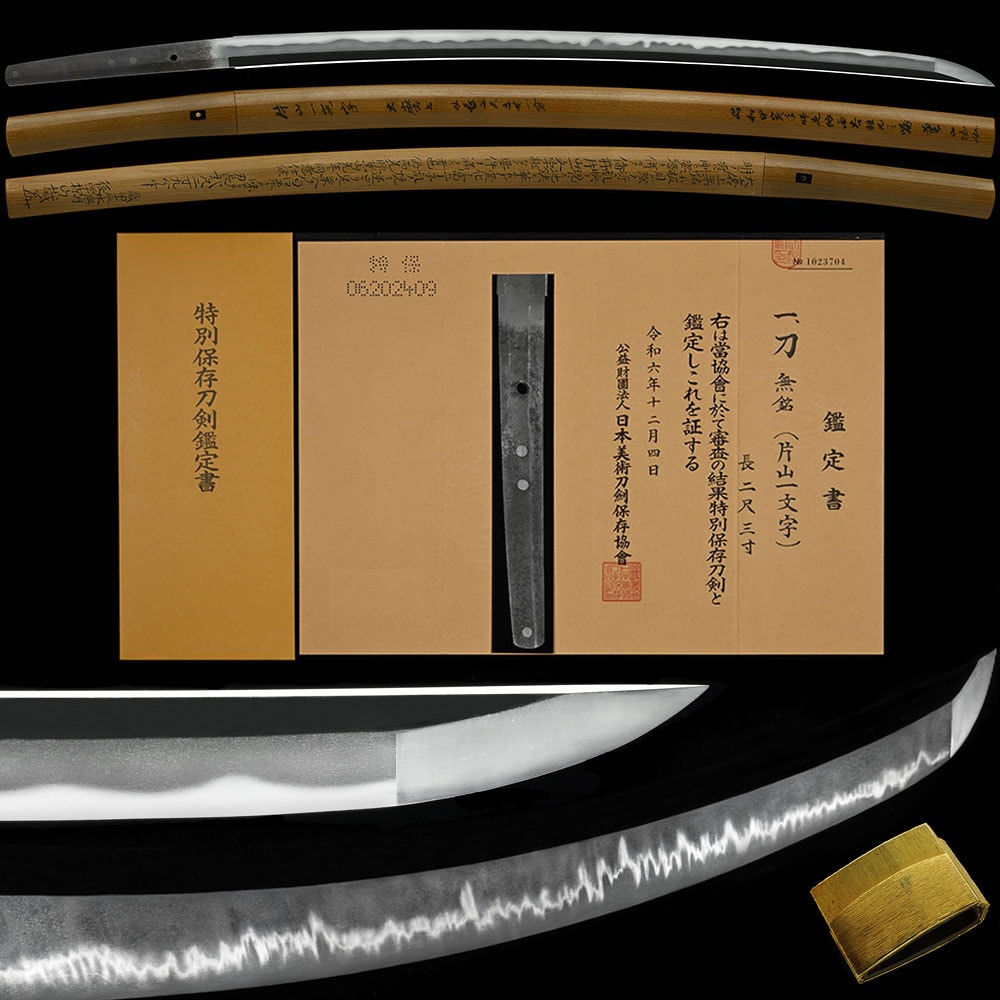
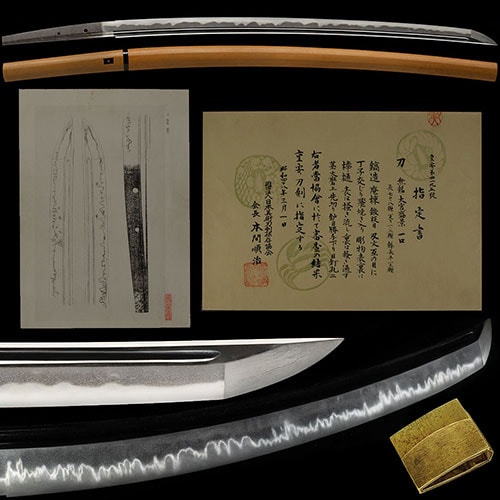
The published sources name Sukezane of the Fukuoka school as one of the smiths who represent the peak flourishing of that school in the mid period, and they place him beside the celebrated National Treasure "Nikkō Sukezane", the favored sword of Tokugawa Ieyasu, as the archetype of his hand. Tradition holds, the descriptions record, that he later moved to in at the order of the shogunate, together with Saburō Kunimune and Kunitsuna of Yamashiro; his name appears in the -smith genealogy of the Kanchiin-bon Meizukushi, and from old times the appellation " " has been applied to this line. One of the published descriptions goes further and calls him a forerunner of the smiths, so that he stands at the point where turns toward .
The characterization the sources return to, blade after blade, sets him within a trio and then apart from it. When one names the representative makers of this era, the published descriptions write, one names Yoshifusa, Norifusa, and this Sukezane; all of them develop a flamboyant . Sukezane, however, shows a and that are, in the recurring formula, distinctly stronger than those of the other smiths, so that even amid their brilliance his work overflows with a sense of power. The mark the sources single out as his own is the of the hardened edge: especially in the , they write, fine adheres well, revealing a manner unique to this smith.
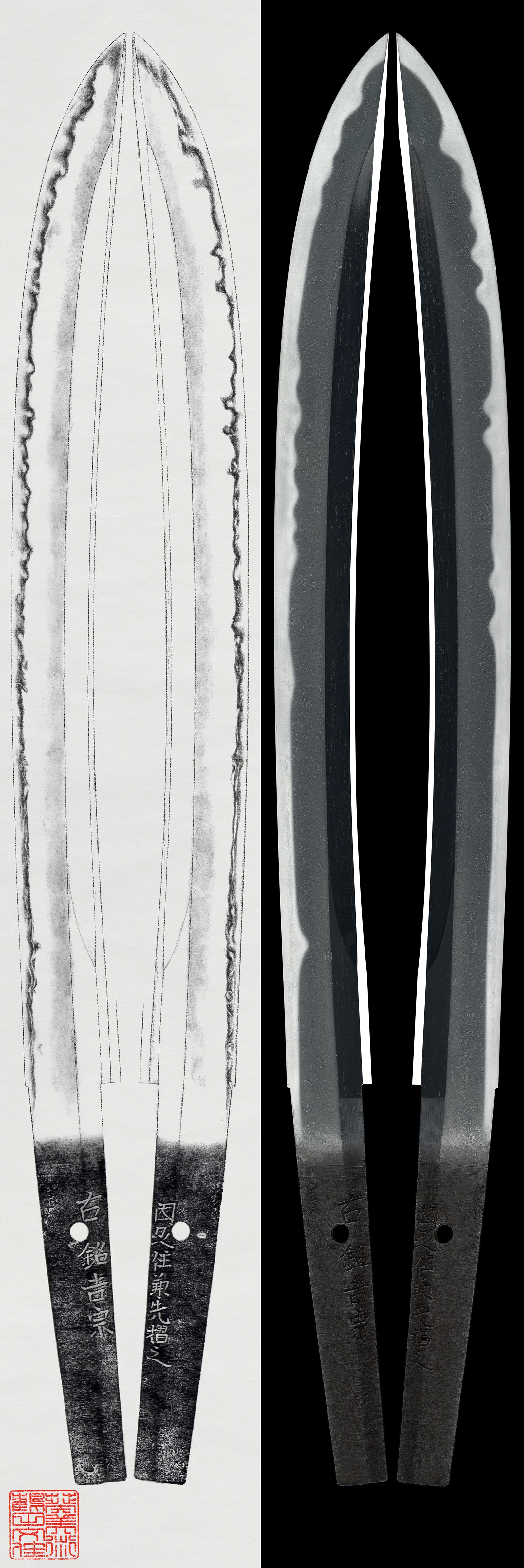
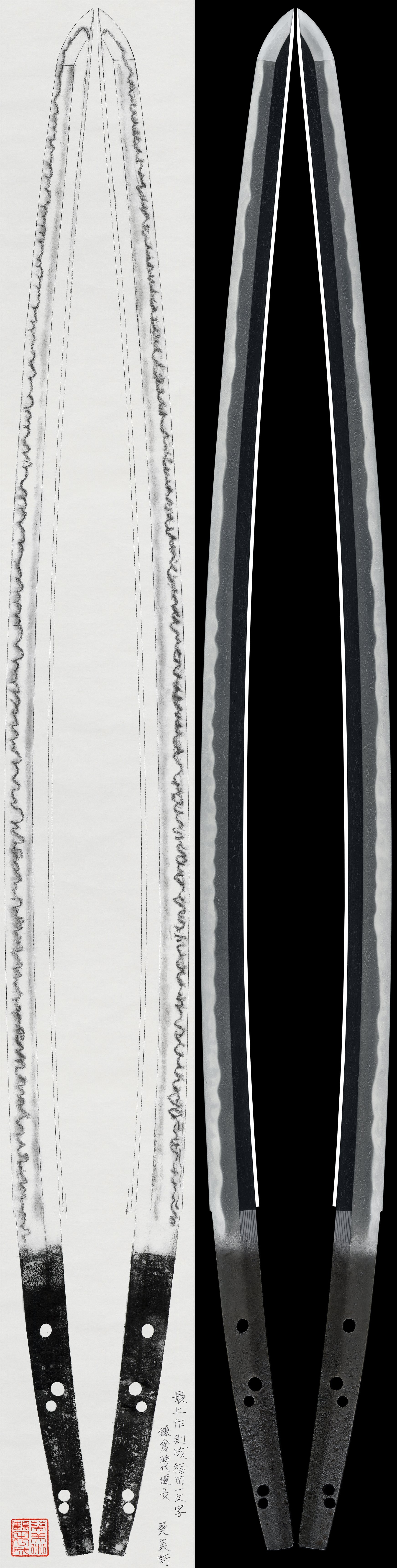
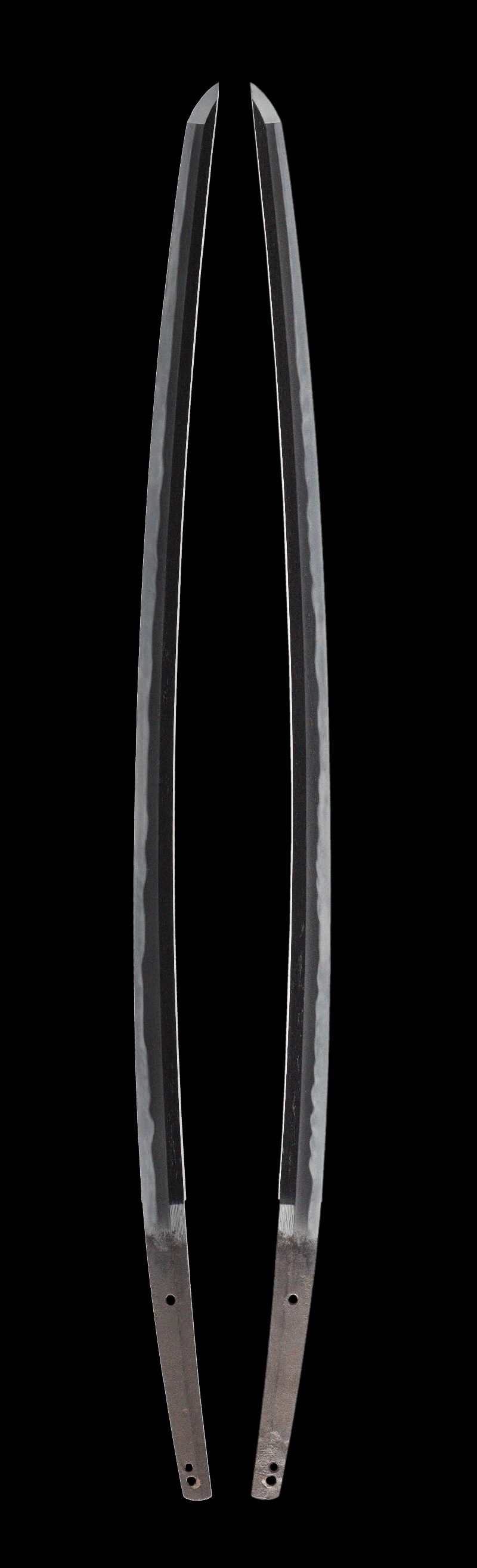
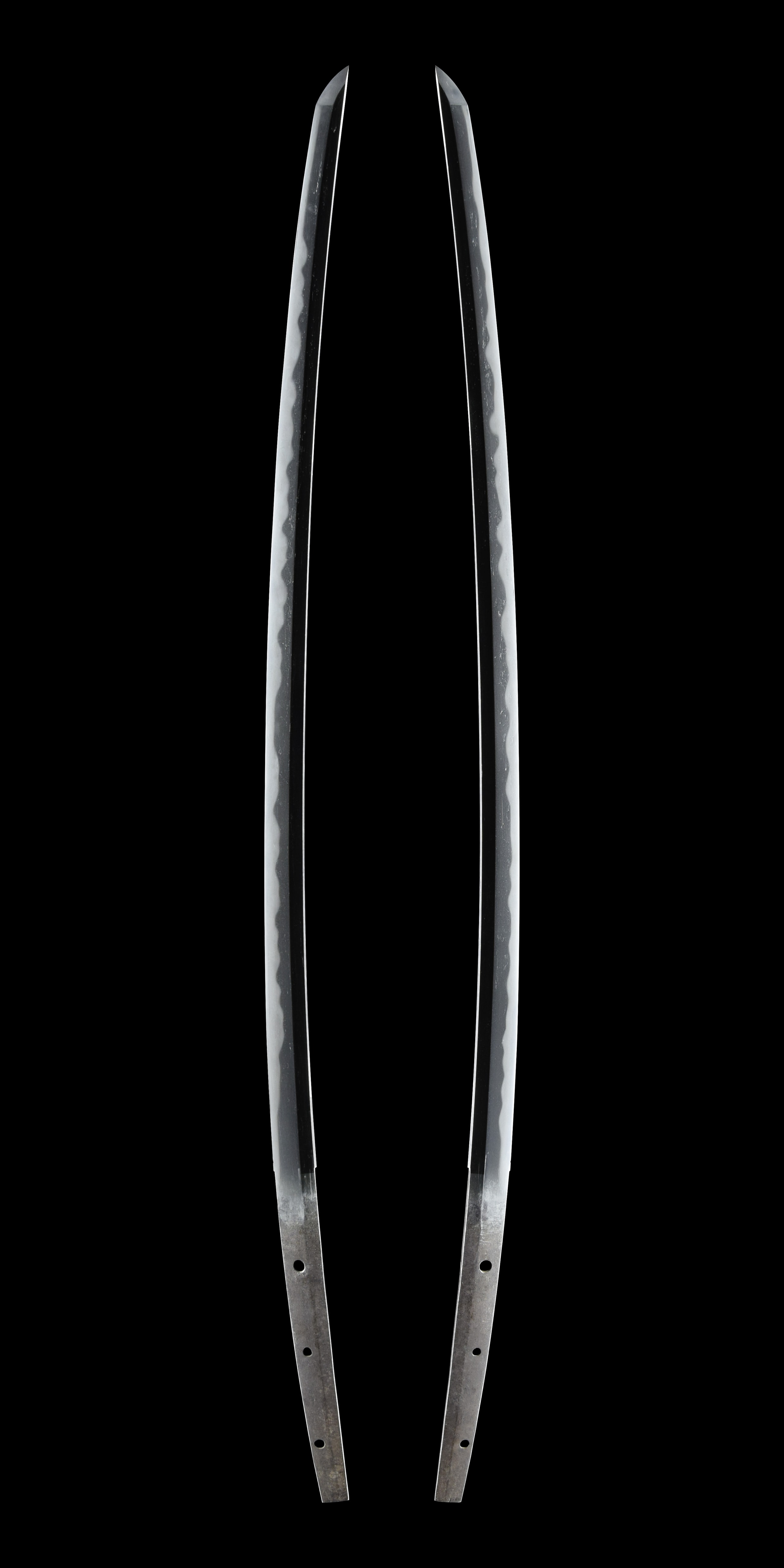
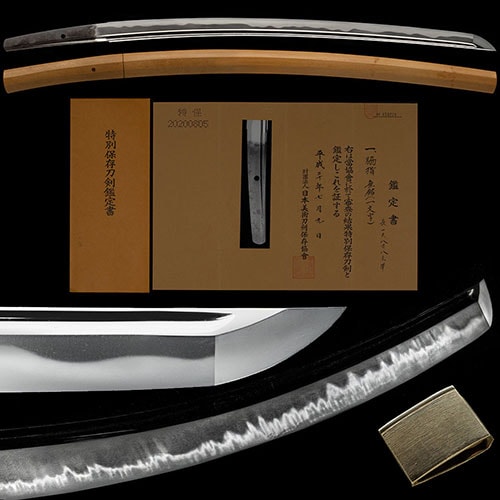
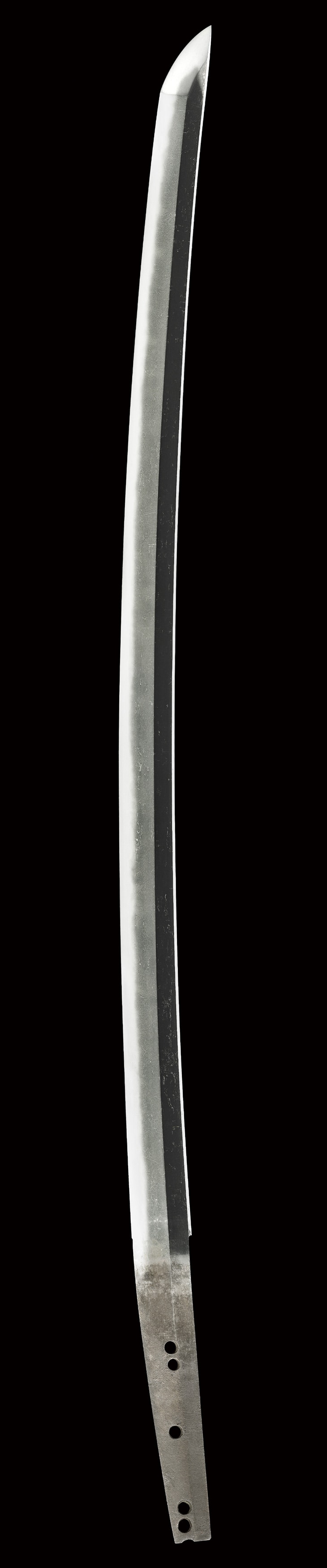
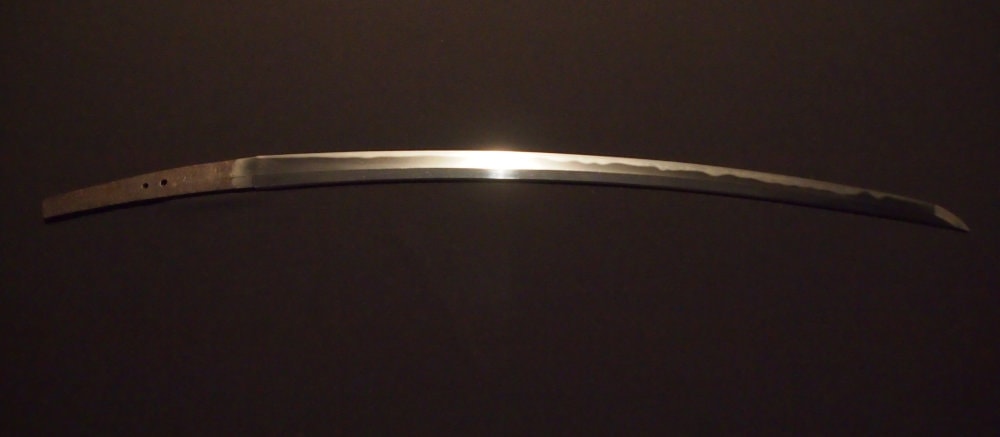
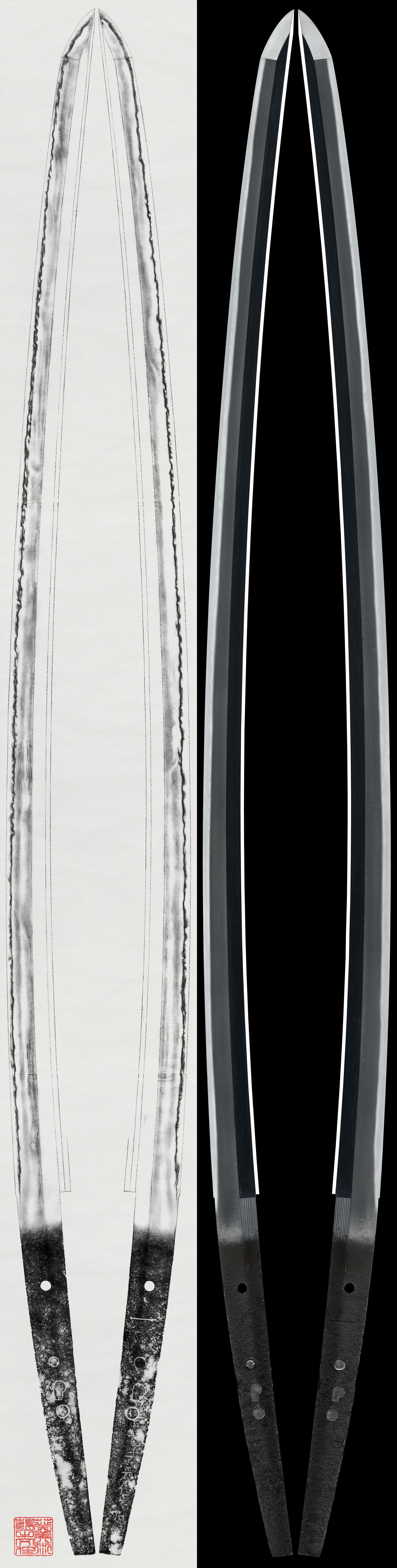
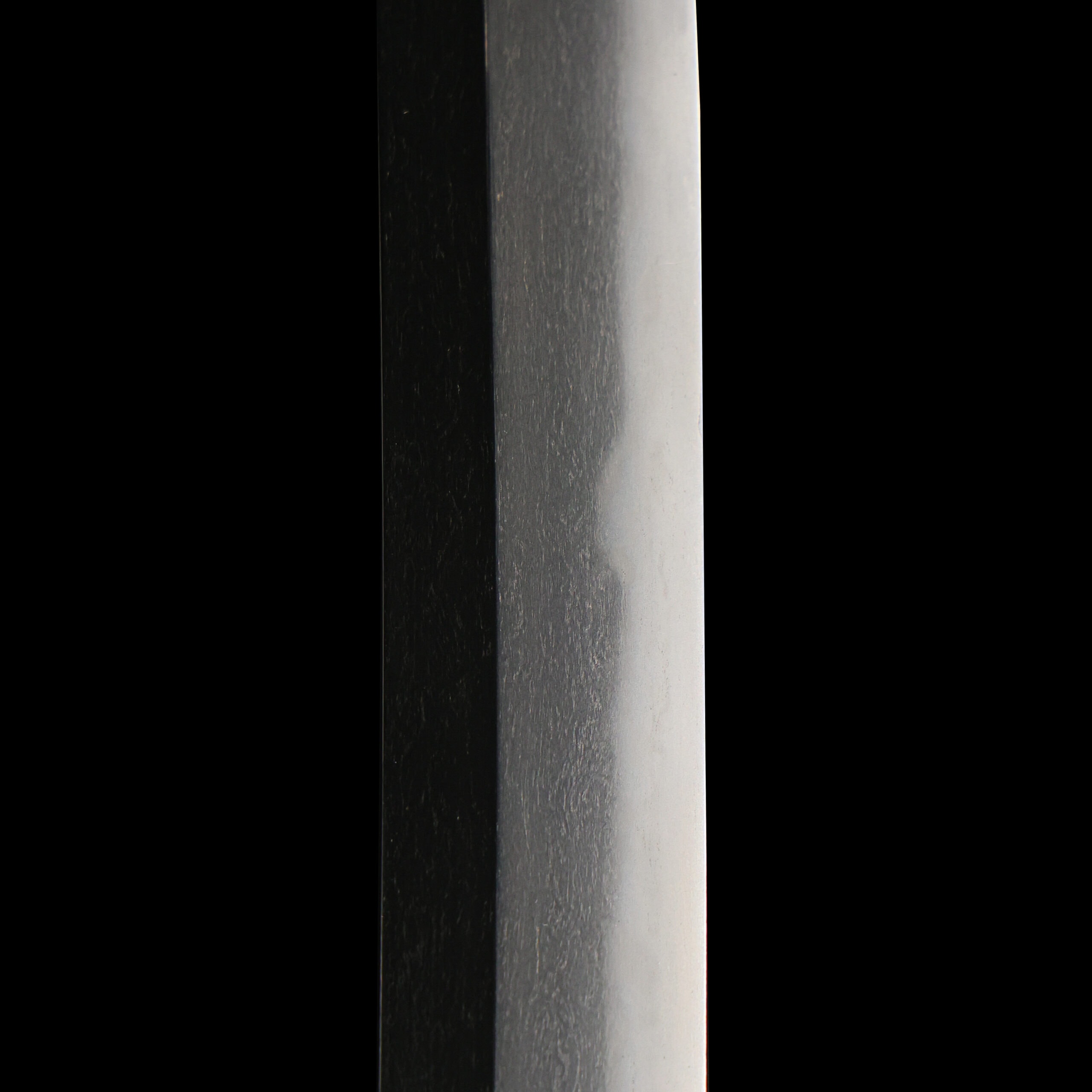
The forging the descriptions assign to him is an mixed with , the grain standing in places (), with thickly applied and entering, over which a rises vividly. On that he tempers an exuberant mixed with , carrying large-cluster ōbusa-chōji, , and the tadpole-headed , the -height rising and falling so that the temper is flamboyantly animated; and enter freely, the is deep, and adheres. What the sources record as the consistent measure of his hand is the activity that fills the edge: and run vigorously, with mixed in, and the runs , often turning to a point or to , at times taking on a flame-like form. Where it does not point it settles to a quiet , the two readings of one restless hand.
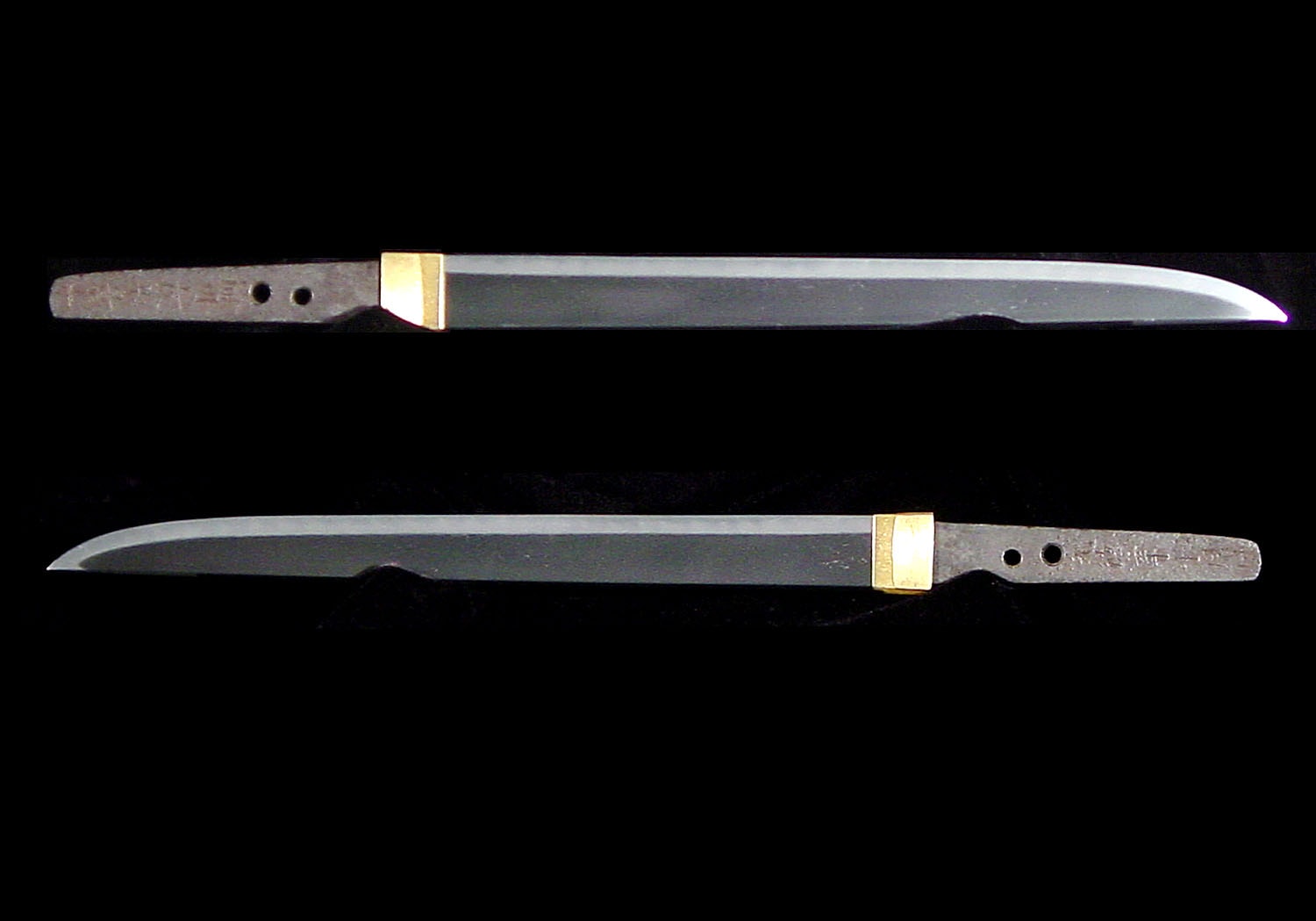
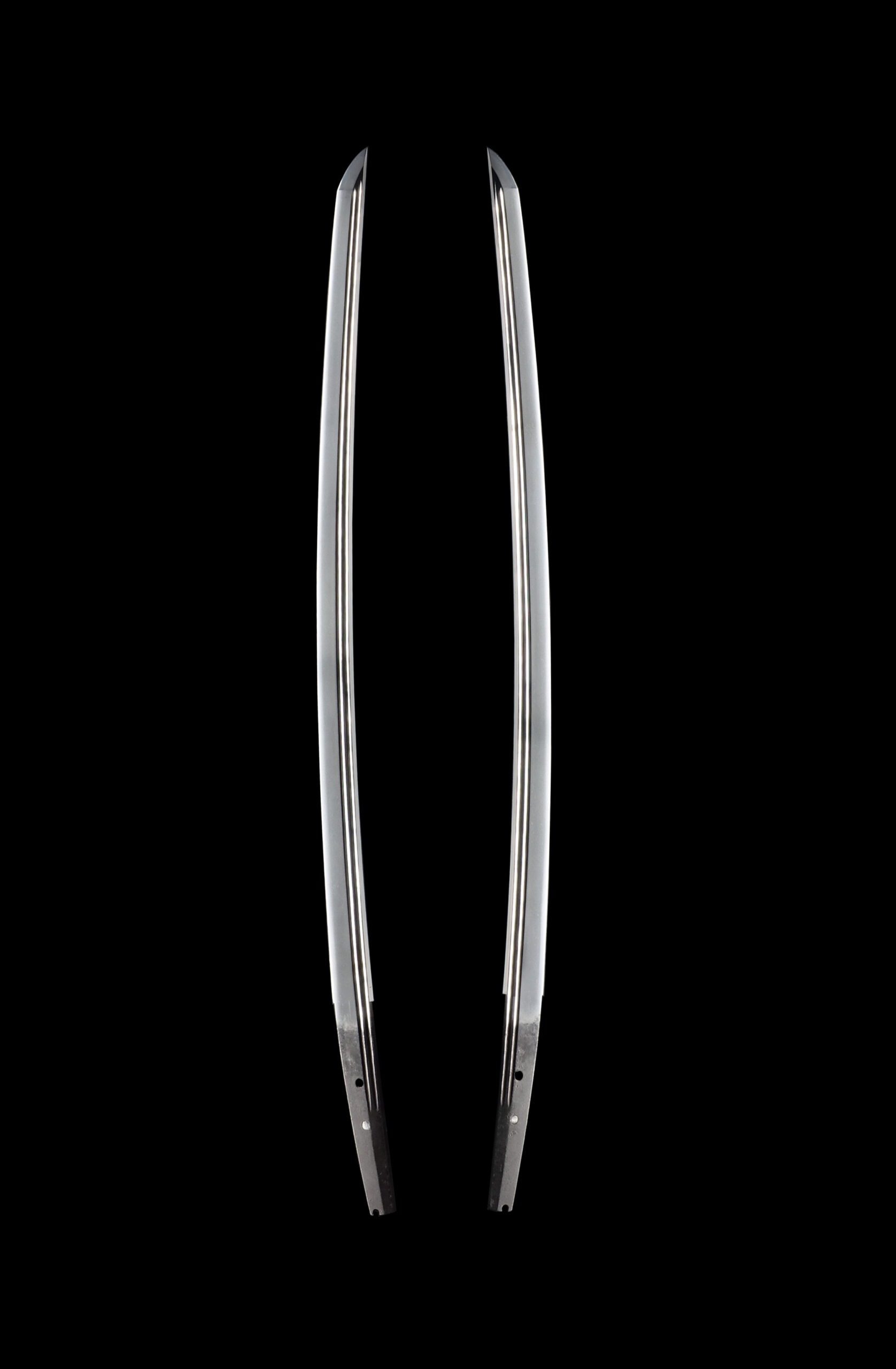
The descriptions divide his work into two registers, read from the and the together. Blades whose signature is cut high and toward the with a slightly finer, sharper chisel tend, they write, to a wide and a large-pattern with conspicuous rises and falls and deep , and are the most quintessentially Sukezane in manner; blades whose signature is cut lower and toward the center with a thicker, rounded chisel run to a standard or slightly slender, gentle form with the worked smaller. The sources note an outlier to both: a slender, elegant , -based with , , and , vigorous and frequent , which differs from his usual flamboyant and, at a glance, recalls the school. They prize it as documentary material for the breadth of his range. Most of his surviving great blades are and , attributed by the and at times carrying their gold-inlay appraisals; where he signed, it is the two-character 助真.
From the rest of the Fukuoka the sources tell him by the deeper, more active , by the and that thread the edge, and by the pointed, . Toward they read the forcefulness forward: one of the published descriptions, weighing a blade thick in and rich in and , finds in it a Sōshū-den coloration and says it convincingly explains why the term " " came into use. It is by his base and the bright , which the work to come would lose, that he remains an master even as his power points beyond the school.
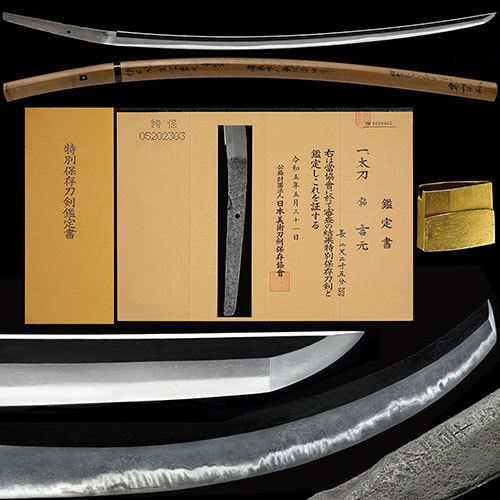
He is Sai-jō in Fujishiro's grading, and the weight of designation behind his name is heavy: two of his blades are National Treasures and eight are Important Cultural Properties, with twelve and fourteen beneath them, some twenty-six blades standing in the and tiers together. Almost all that survives is attribution accepted as his work; signed pieces run to roughly half the corpus, and every reliable is the two characters the sources make a point of recognition. The provenance recorded against his blades runs through the men who held the country: Taikō Hideyoshi, Katō Kiyomasa, Tokugawa Ieyasu, and Tokugawa Tsunayoshi the fifth shogun, with the Owari Tokugawa Family, the Kishū Tokugawa Family, the Uesugi Family, the Chōfu Mōri Family, the Ikeda Family, the Ōkubo Family lords of Odawara, the Okudaira Family, and Hachisuka Tadataka. His finest are kept now in the Tokyo National Museum, the Tokugawa Art Museum, the Mitsui Memorial Museum, the Hayashibara Museum of Art, and Itsukushima Jinja, and only a small number can ever trade; but because some twenty-six blades stand across the and tiers, a Sukezane does, with patience, come within reach of the serious collector, the most powerful of the hands.