二世紀半の泰平のあいだ、刀は武器である以上に武士の身分の標章であった。江戸の実証と大坂の華やぎのように都市ごとの作風が育ち、時代の末には需要も細っていく。
 NihontoWatchNihontoWatch
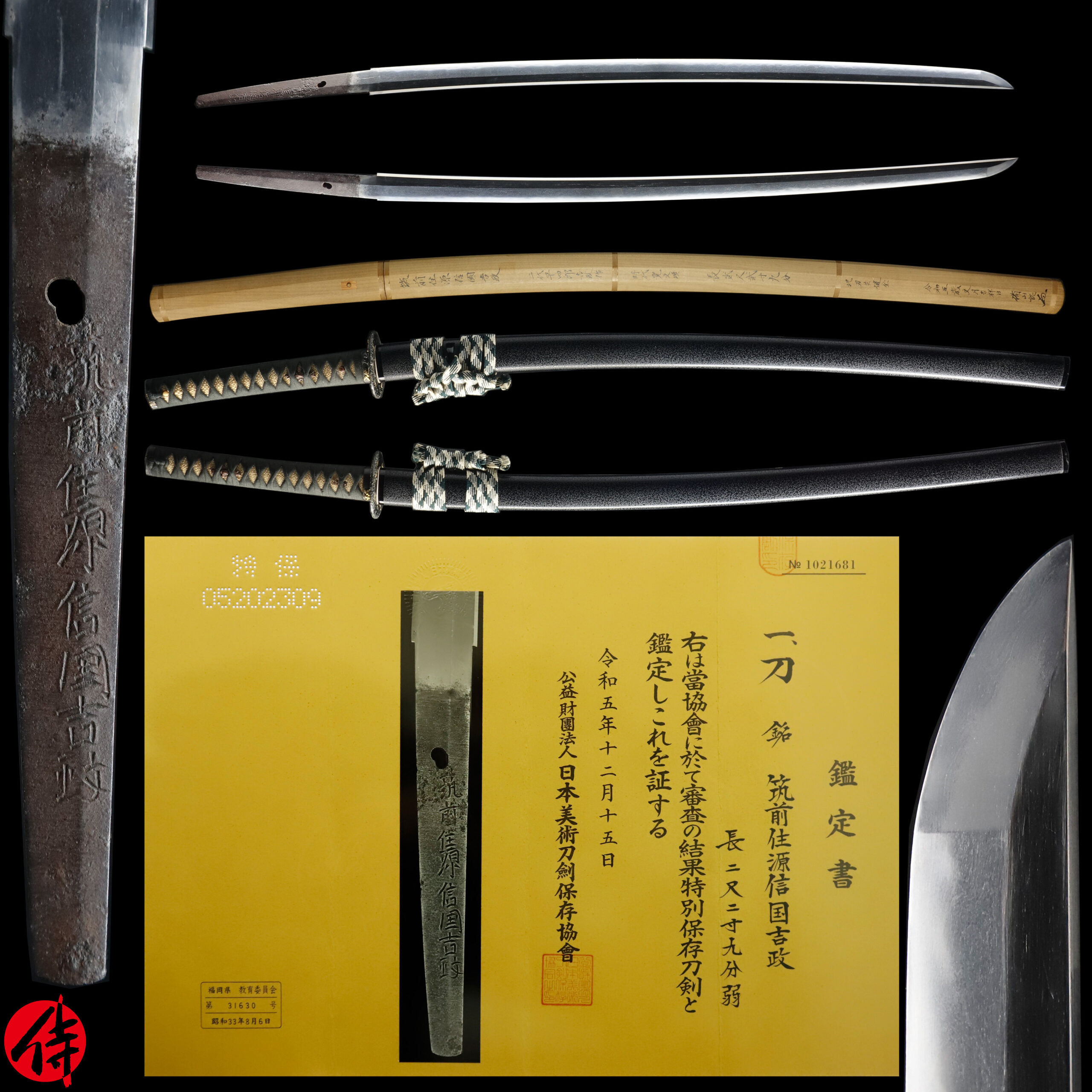
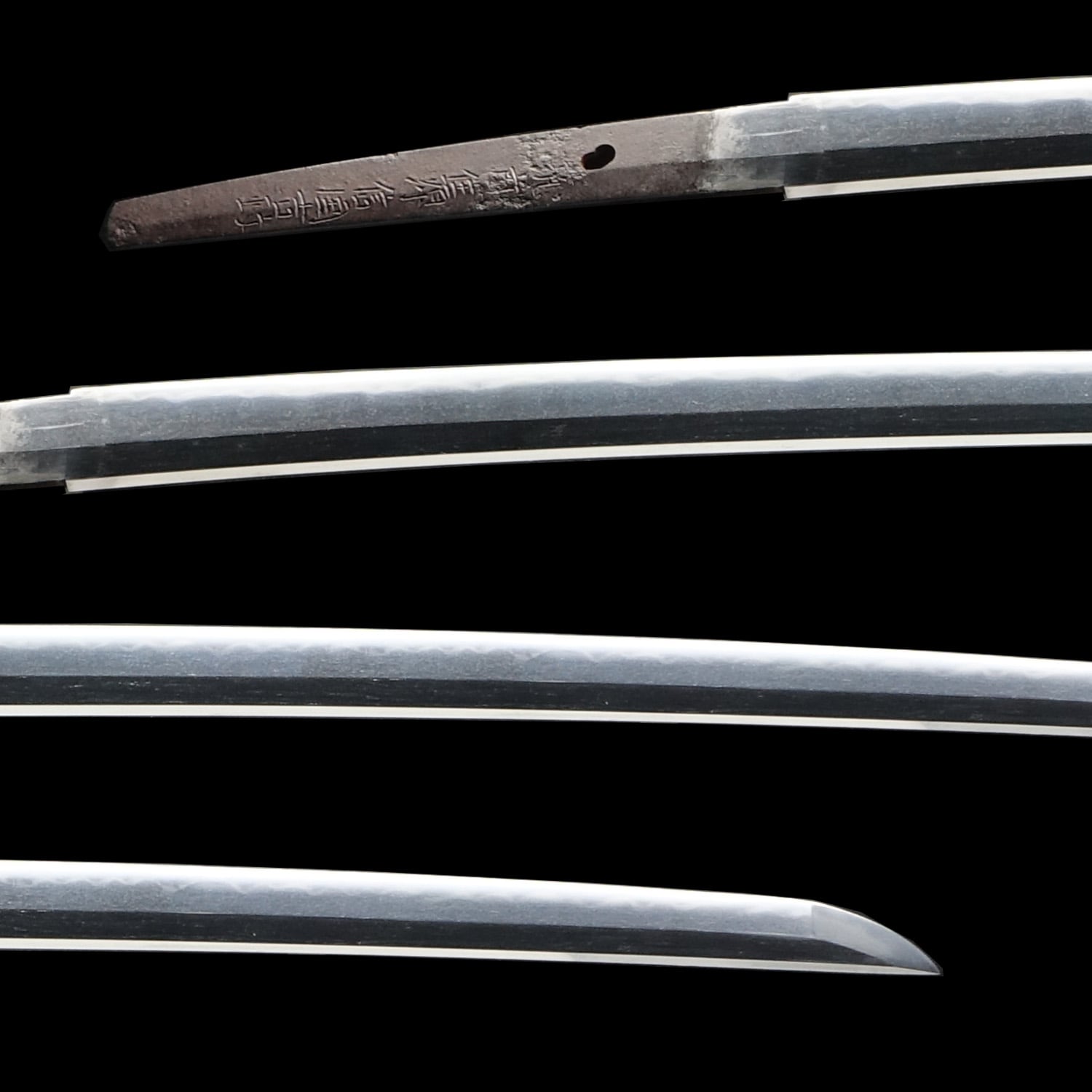
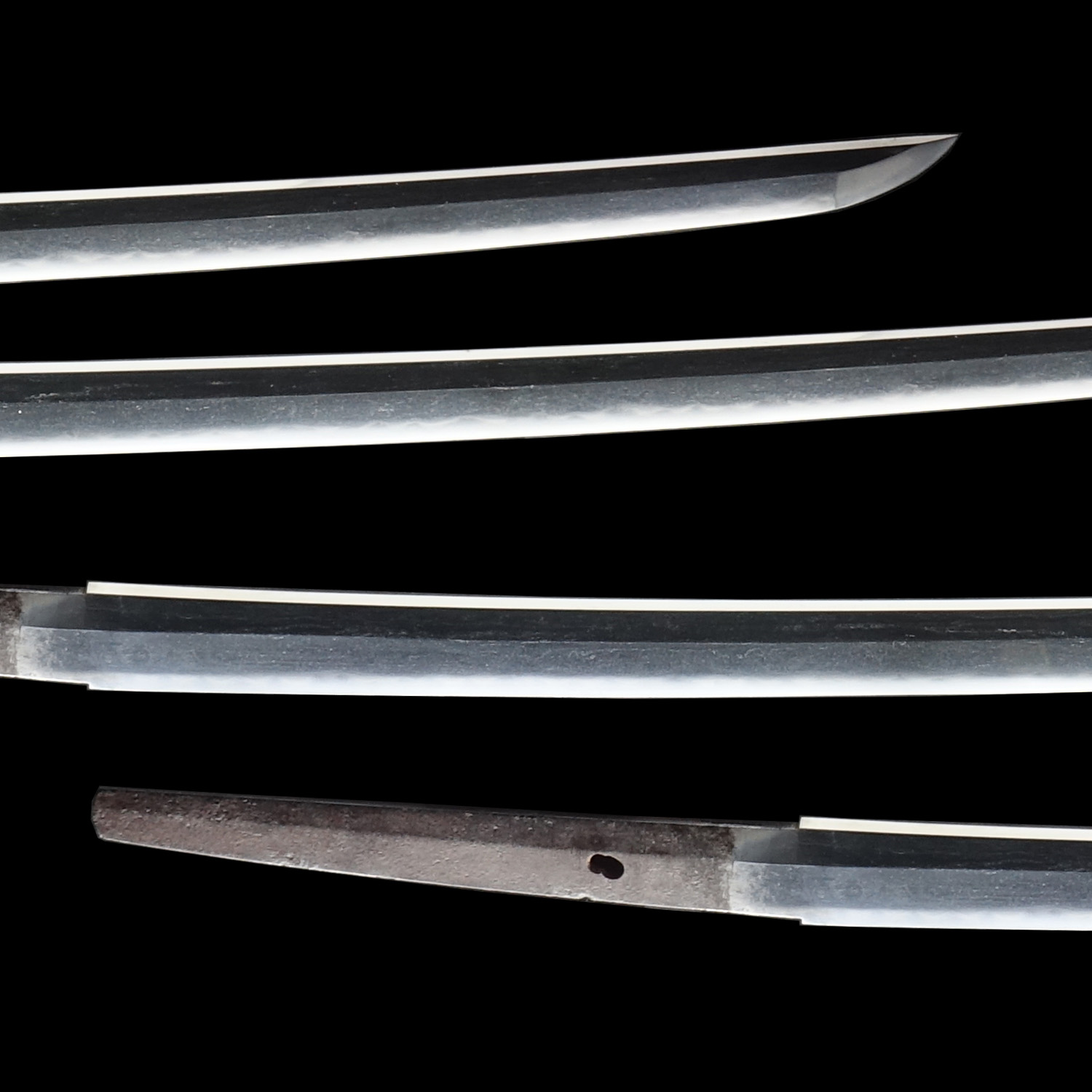
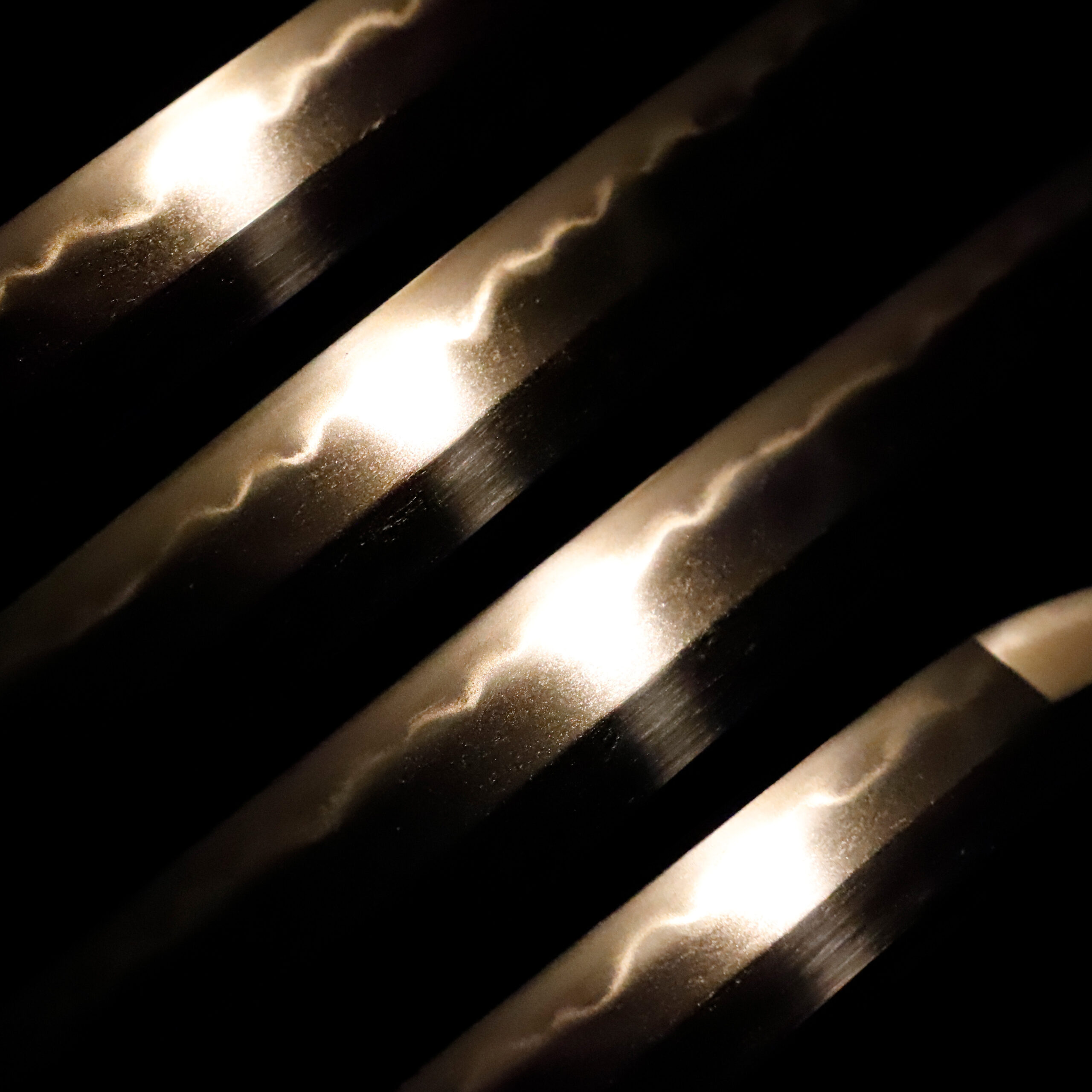
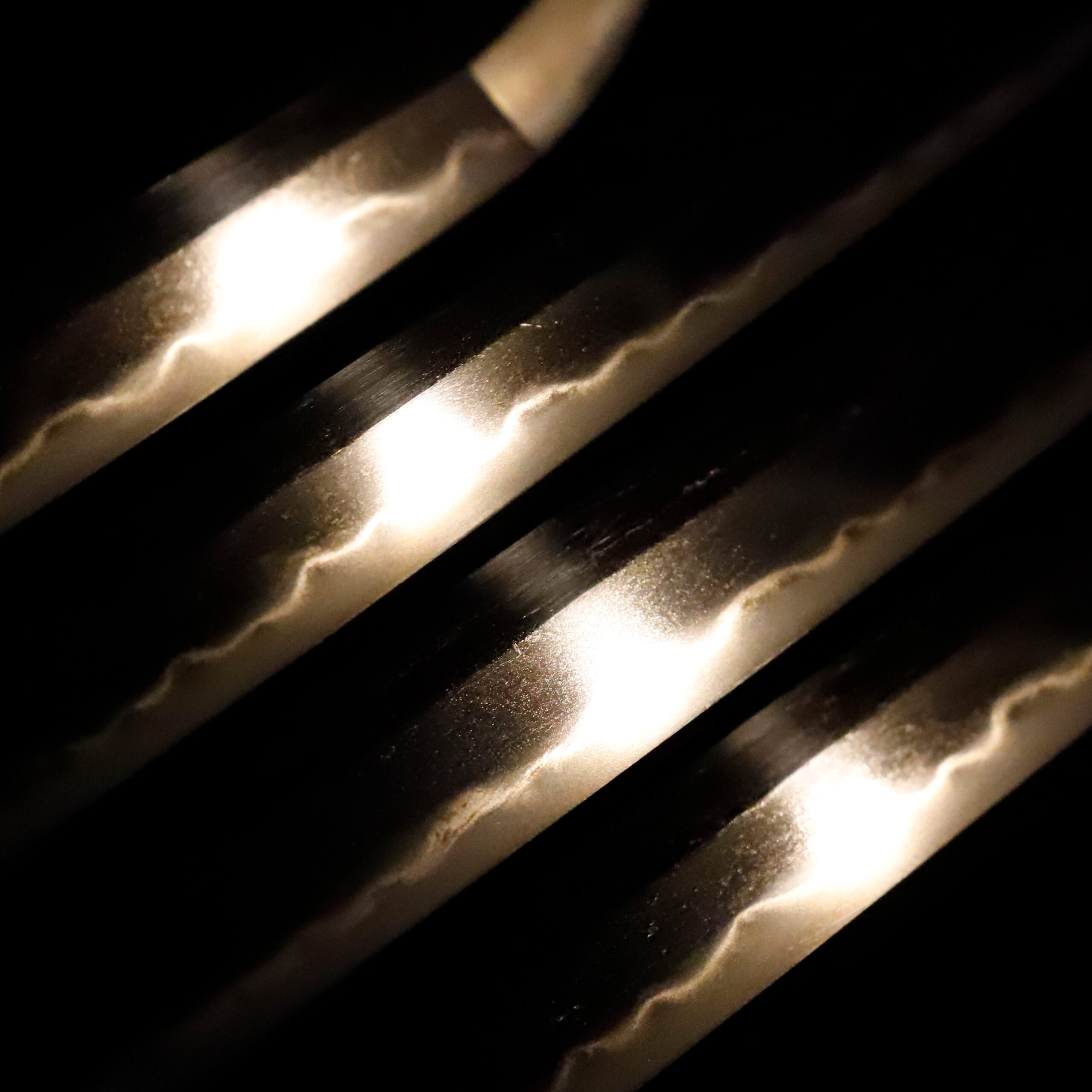
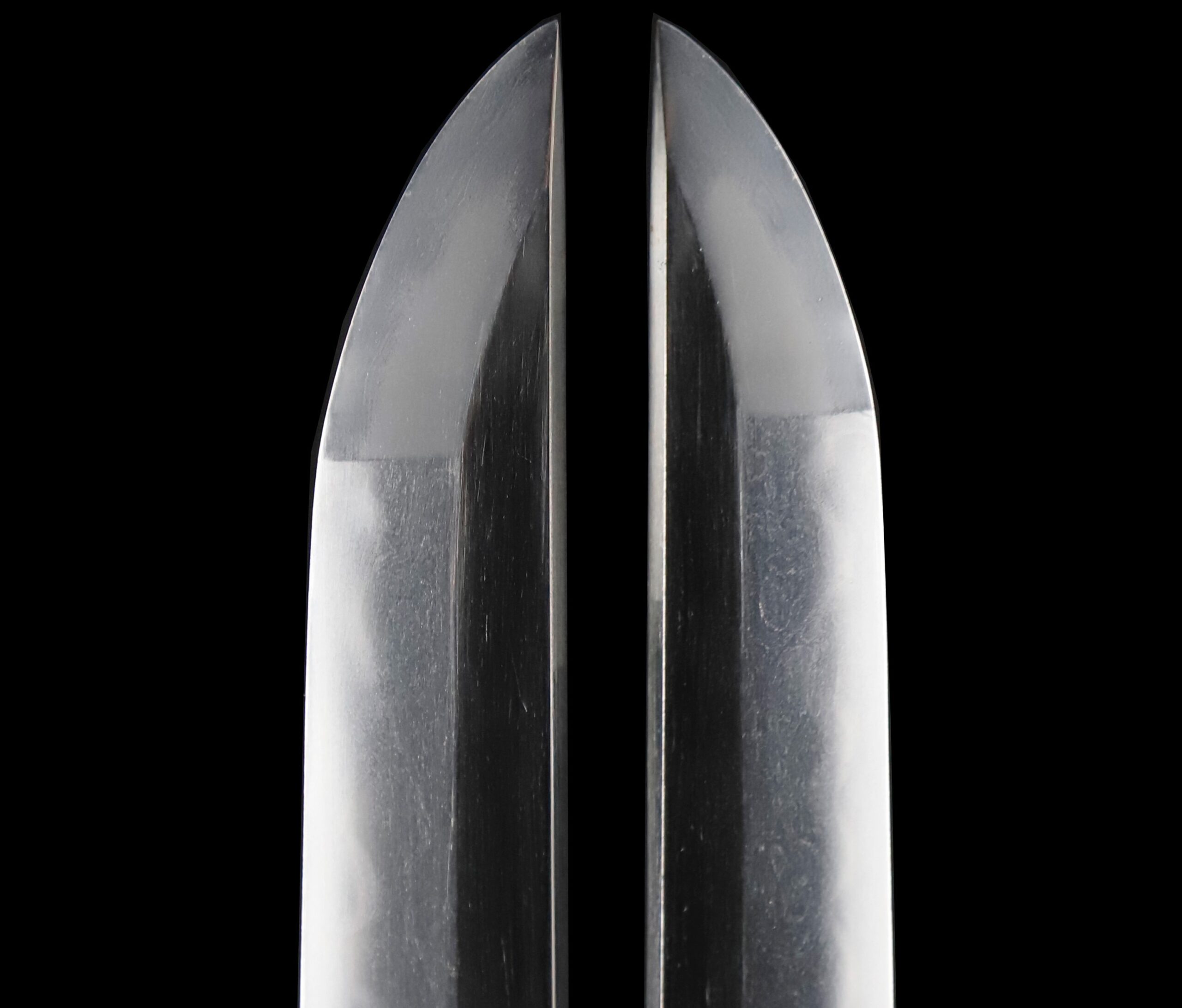
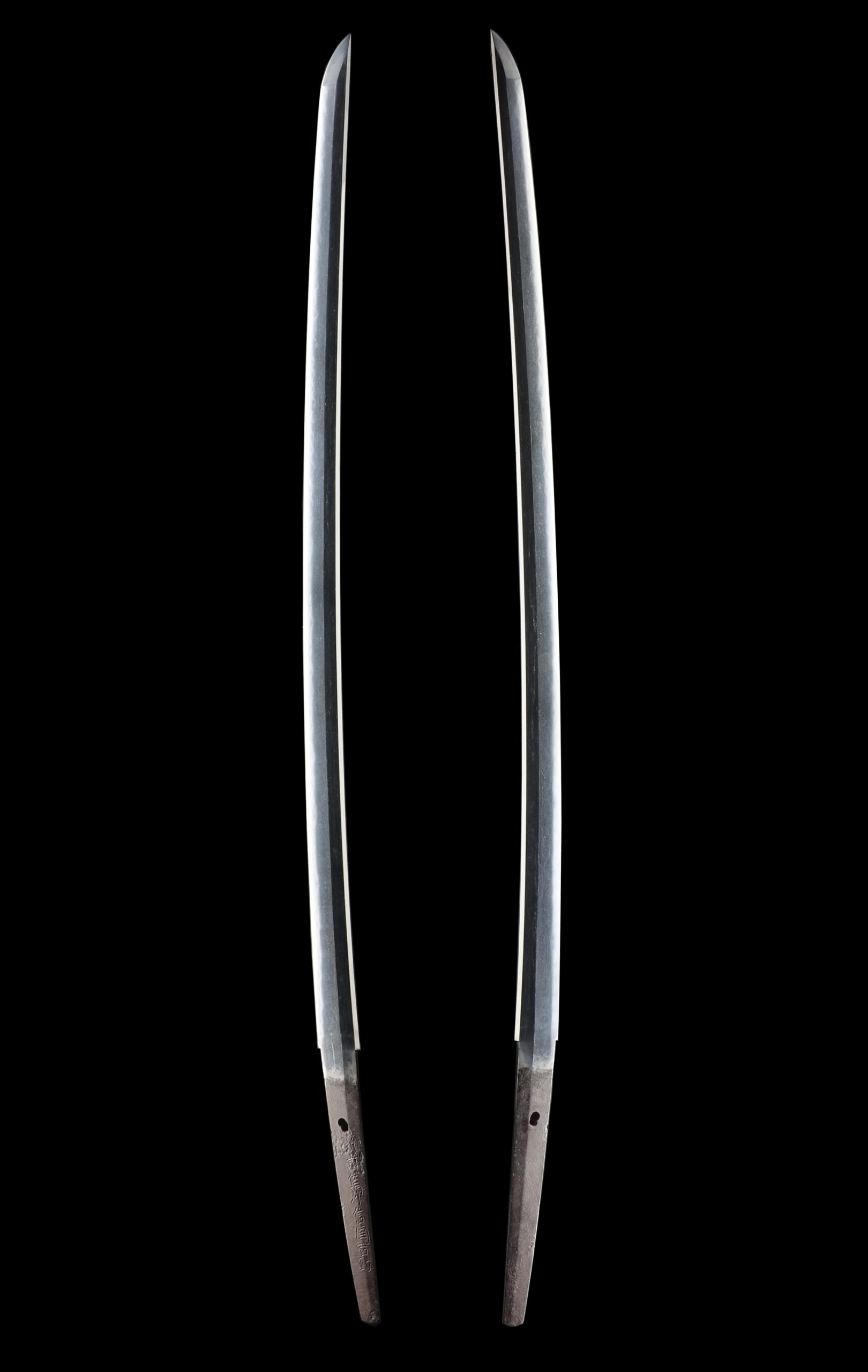
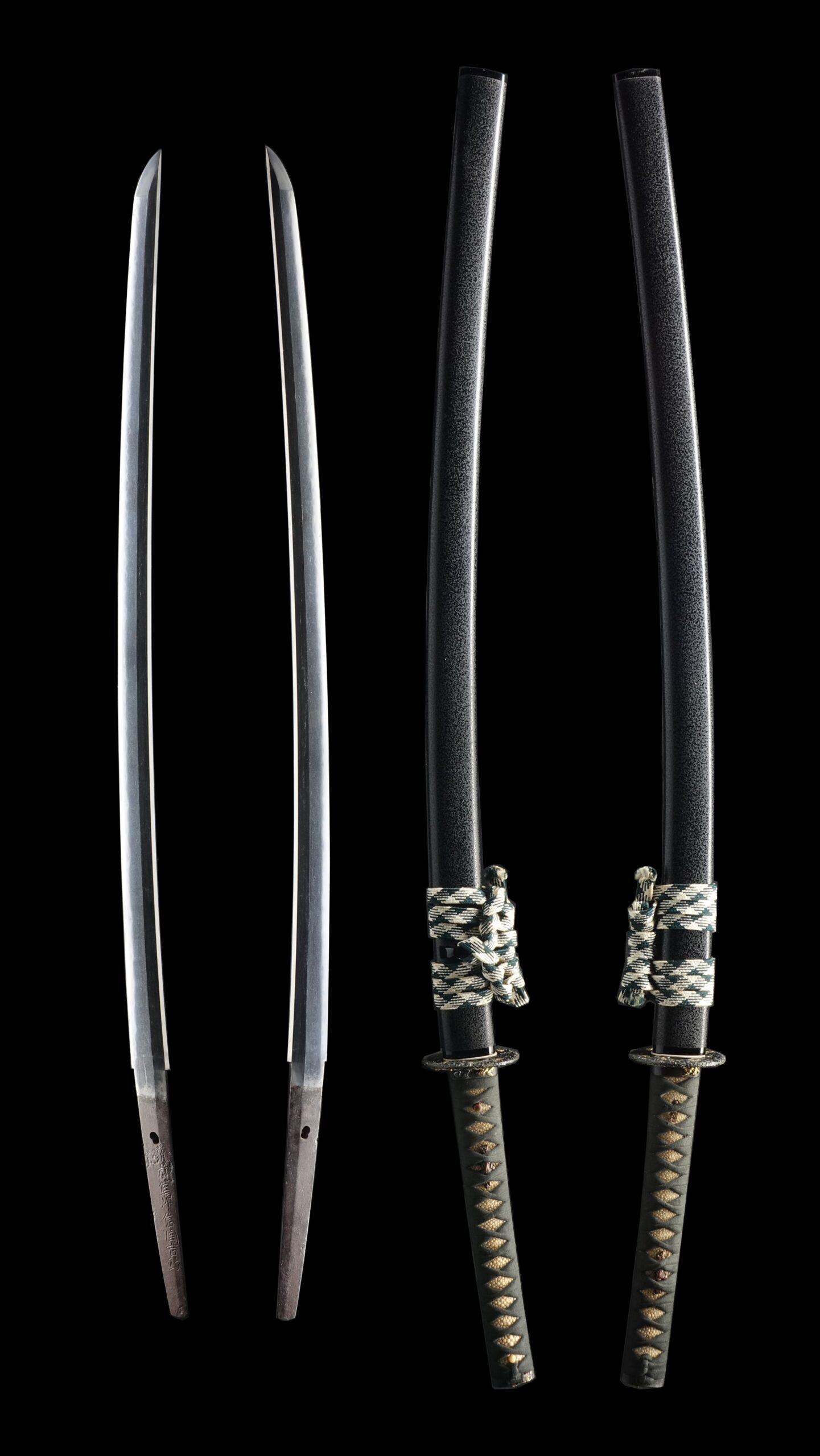
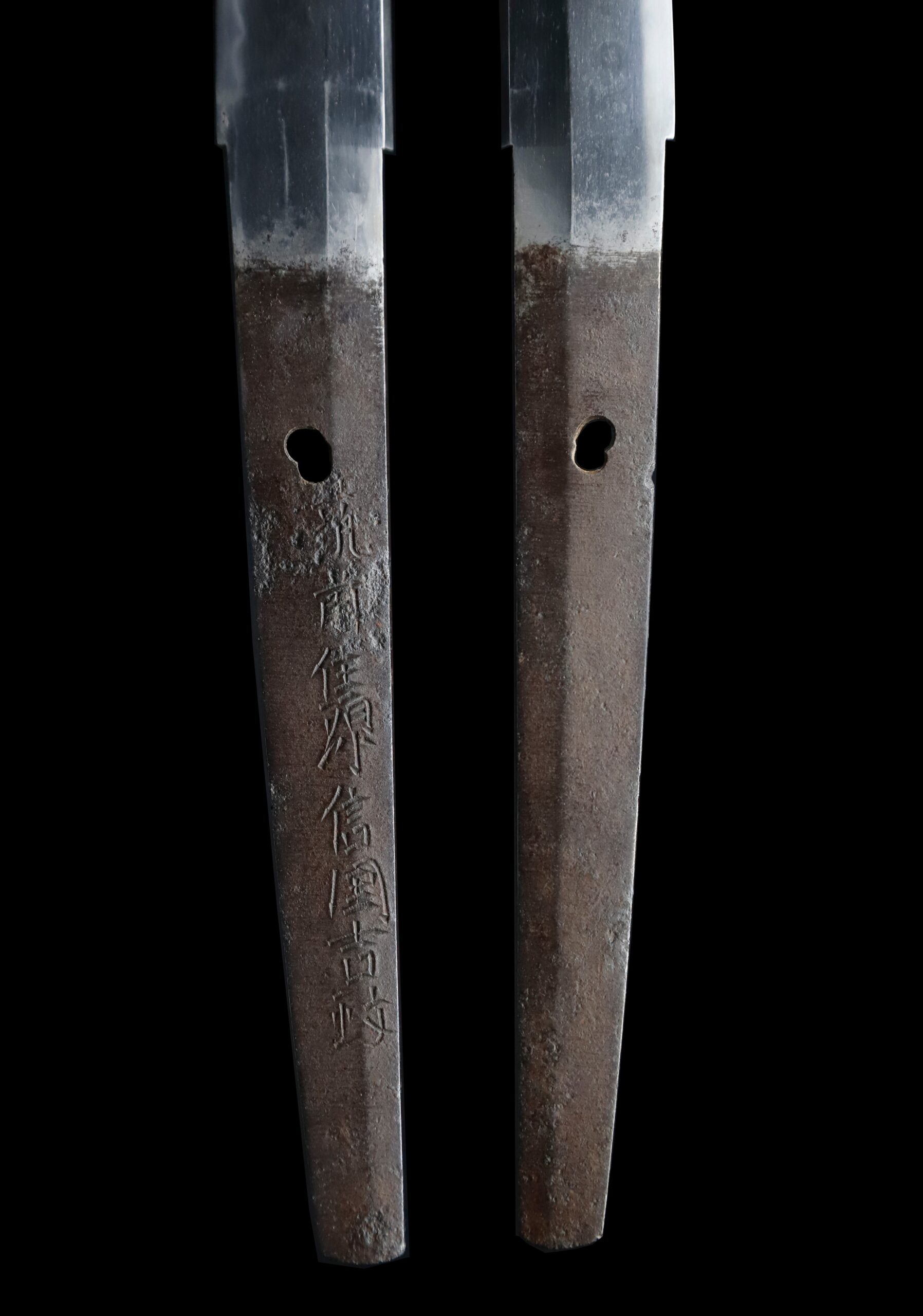
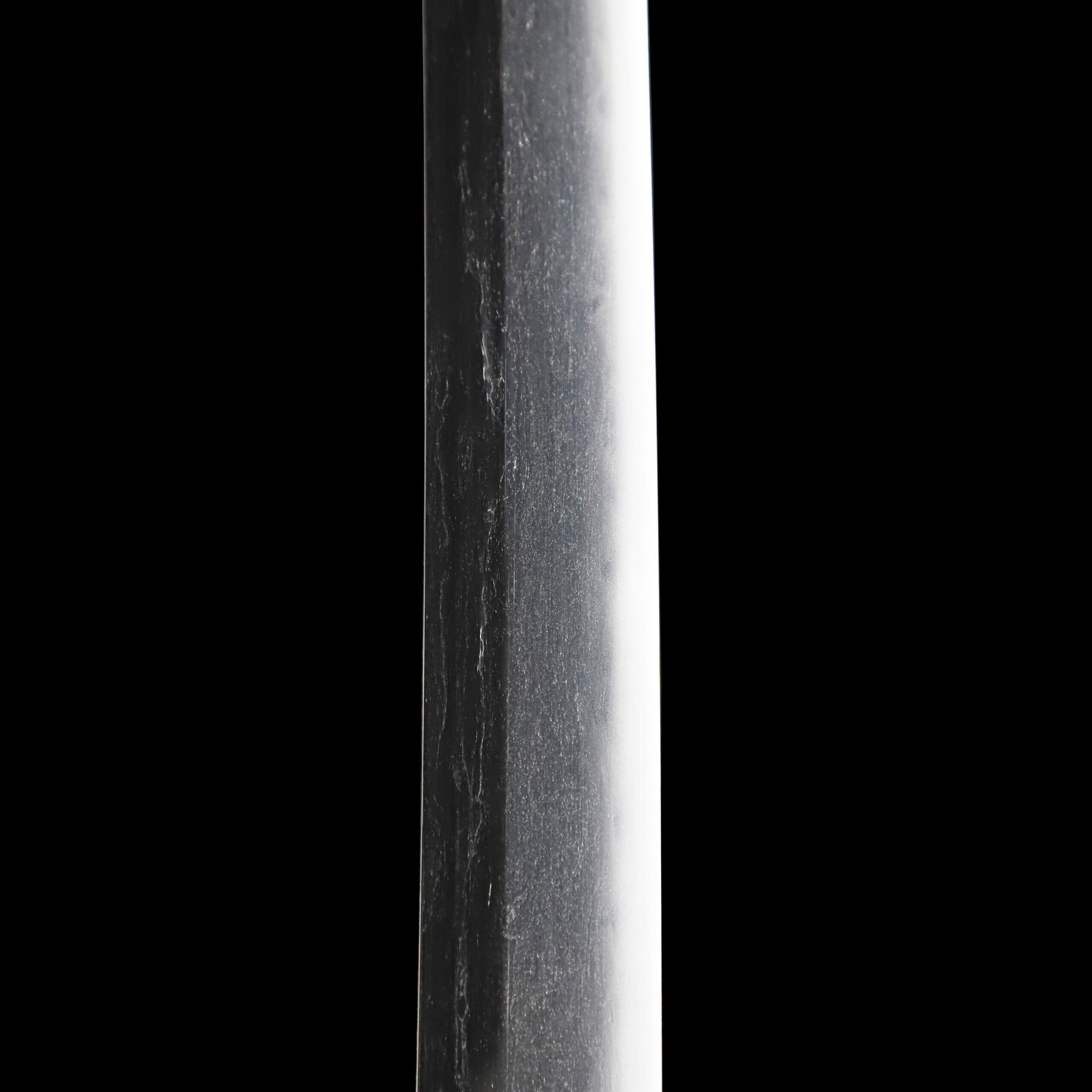
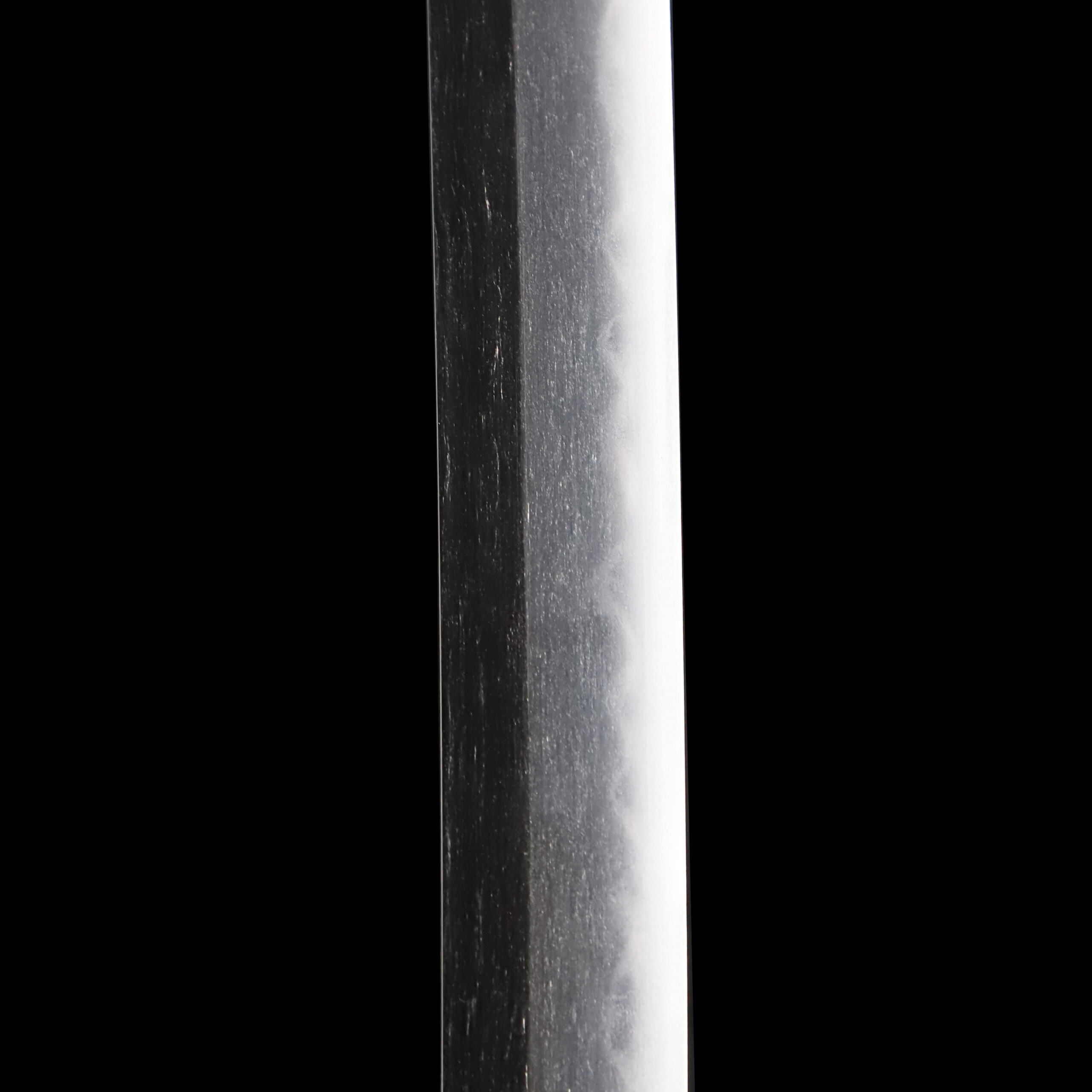
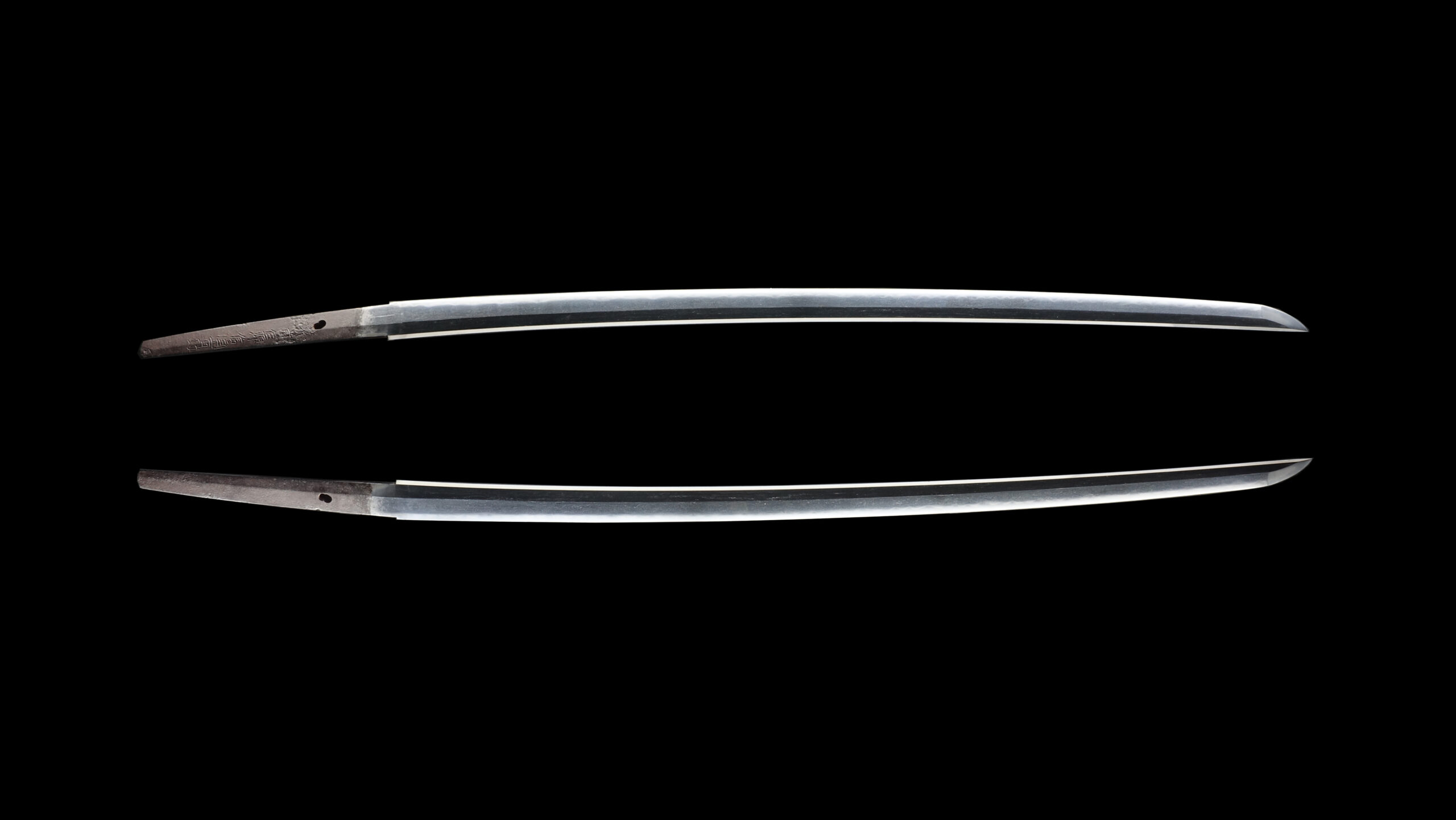
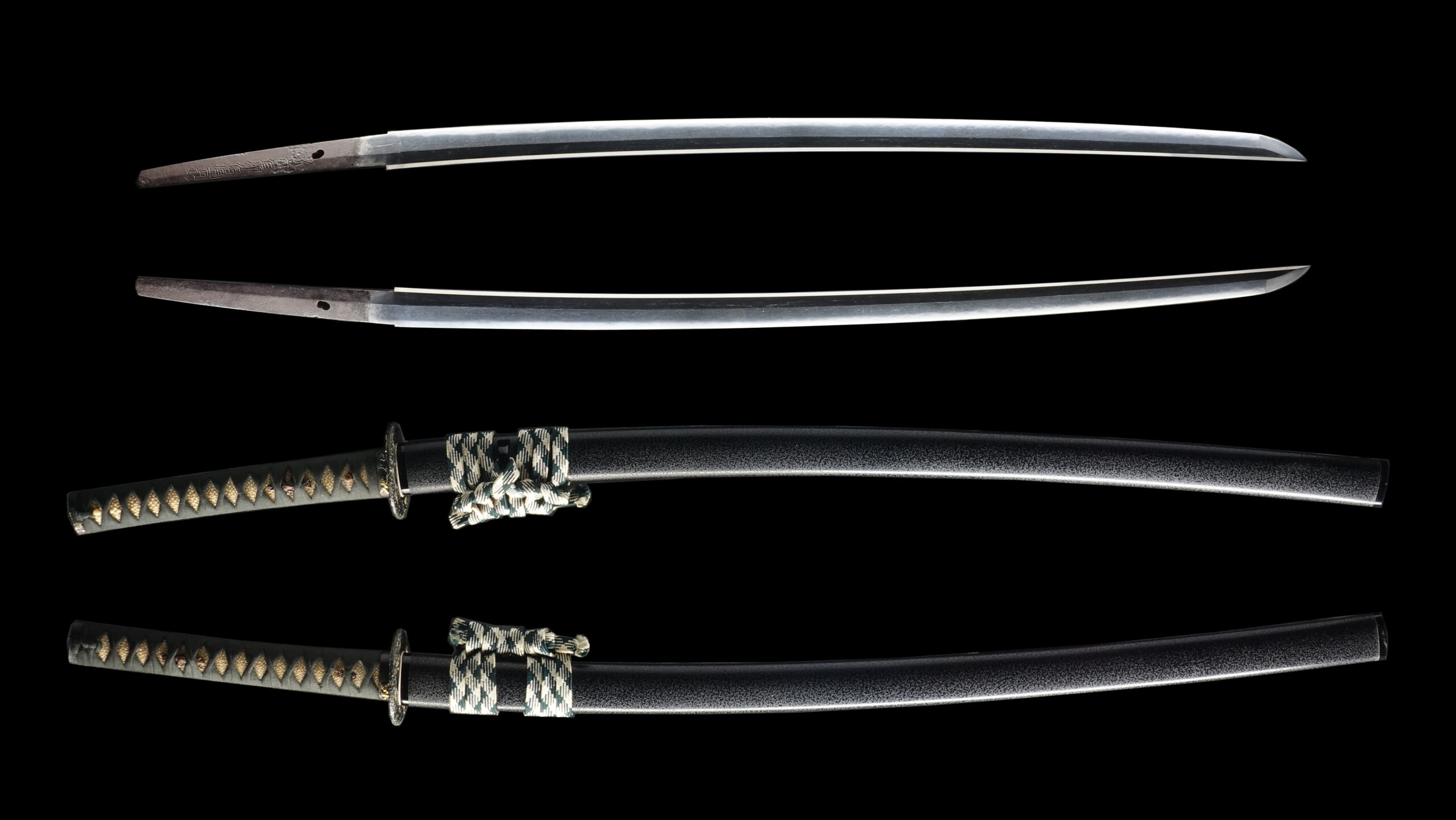
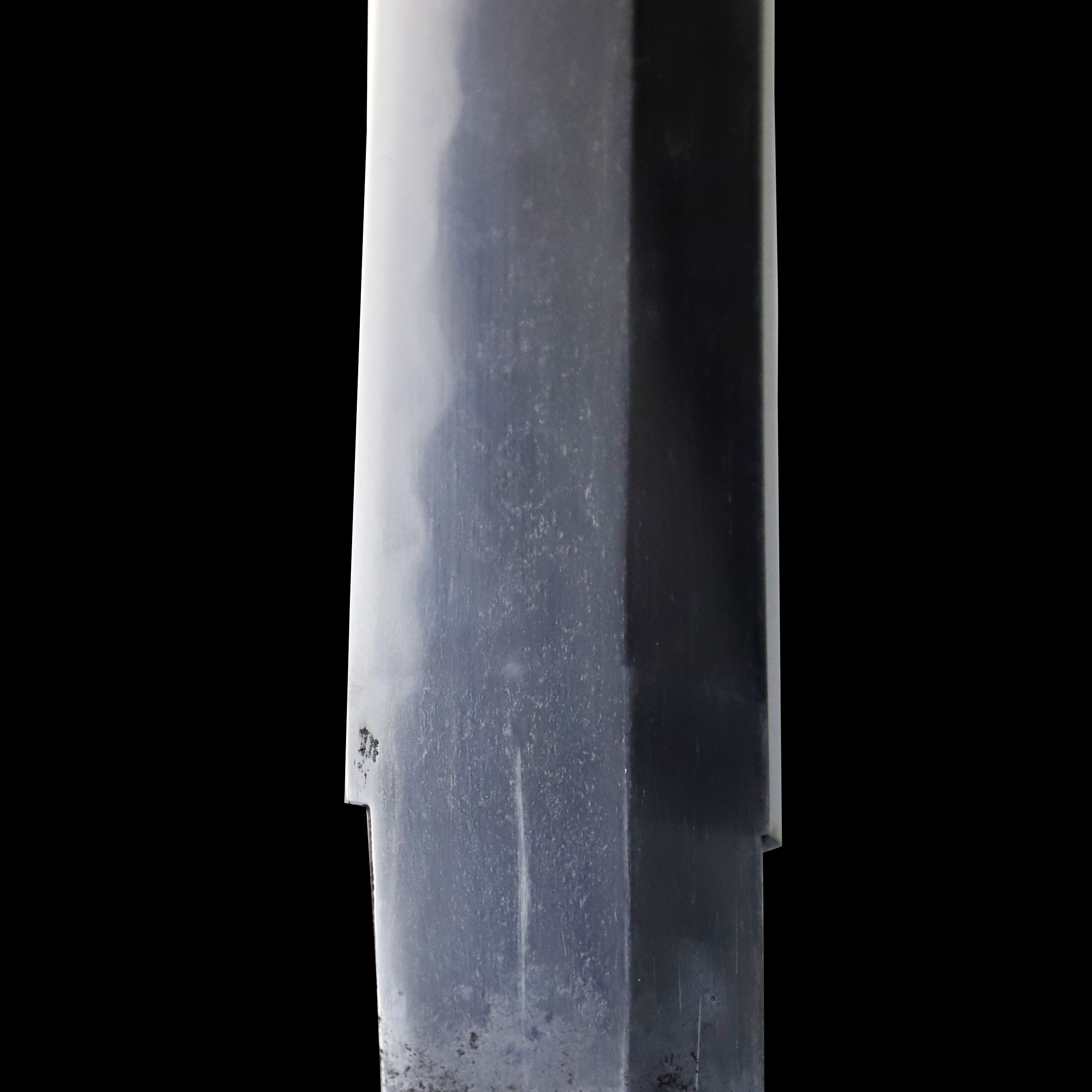
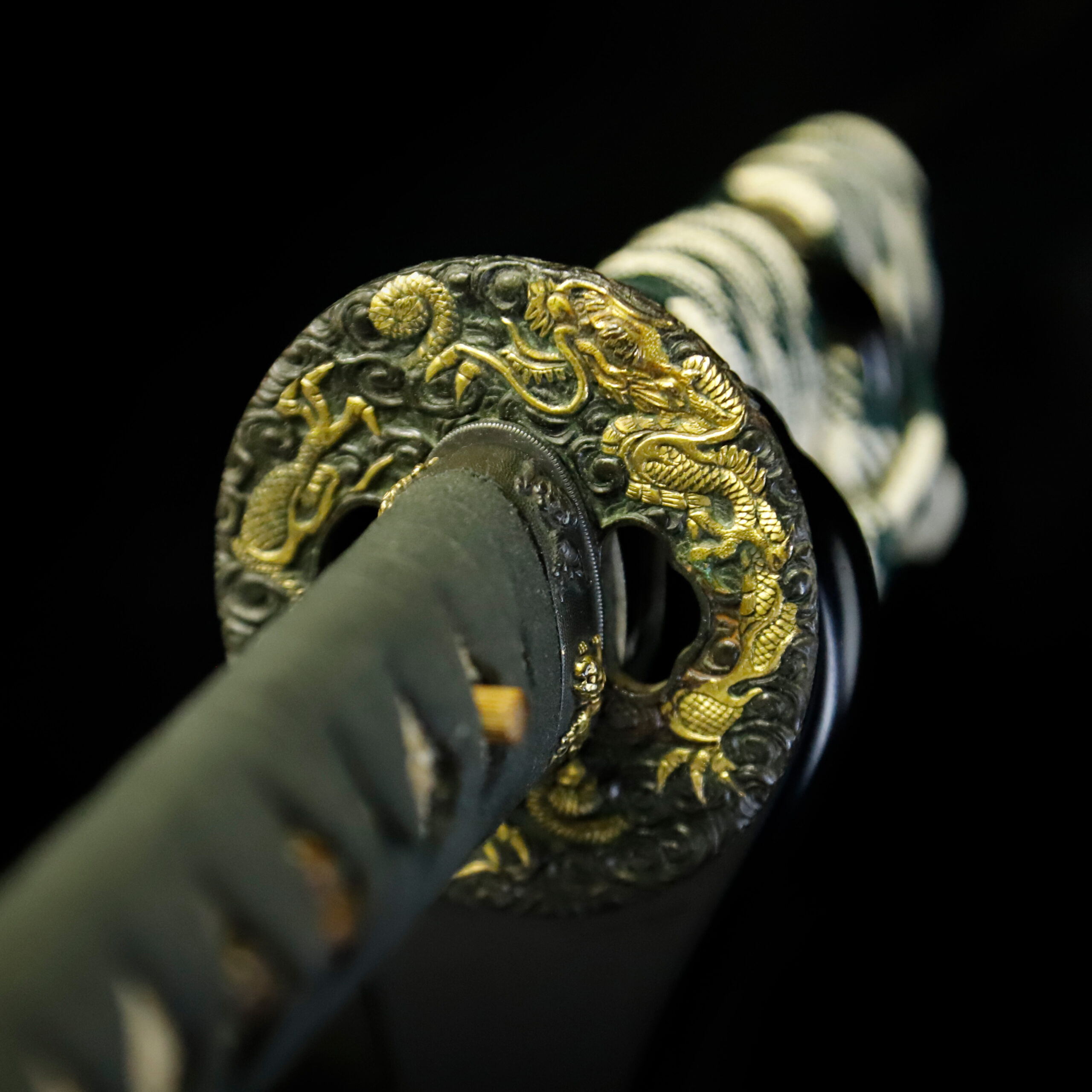
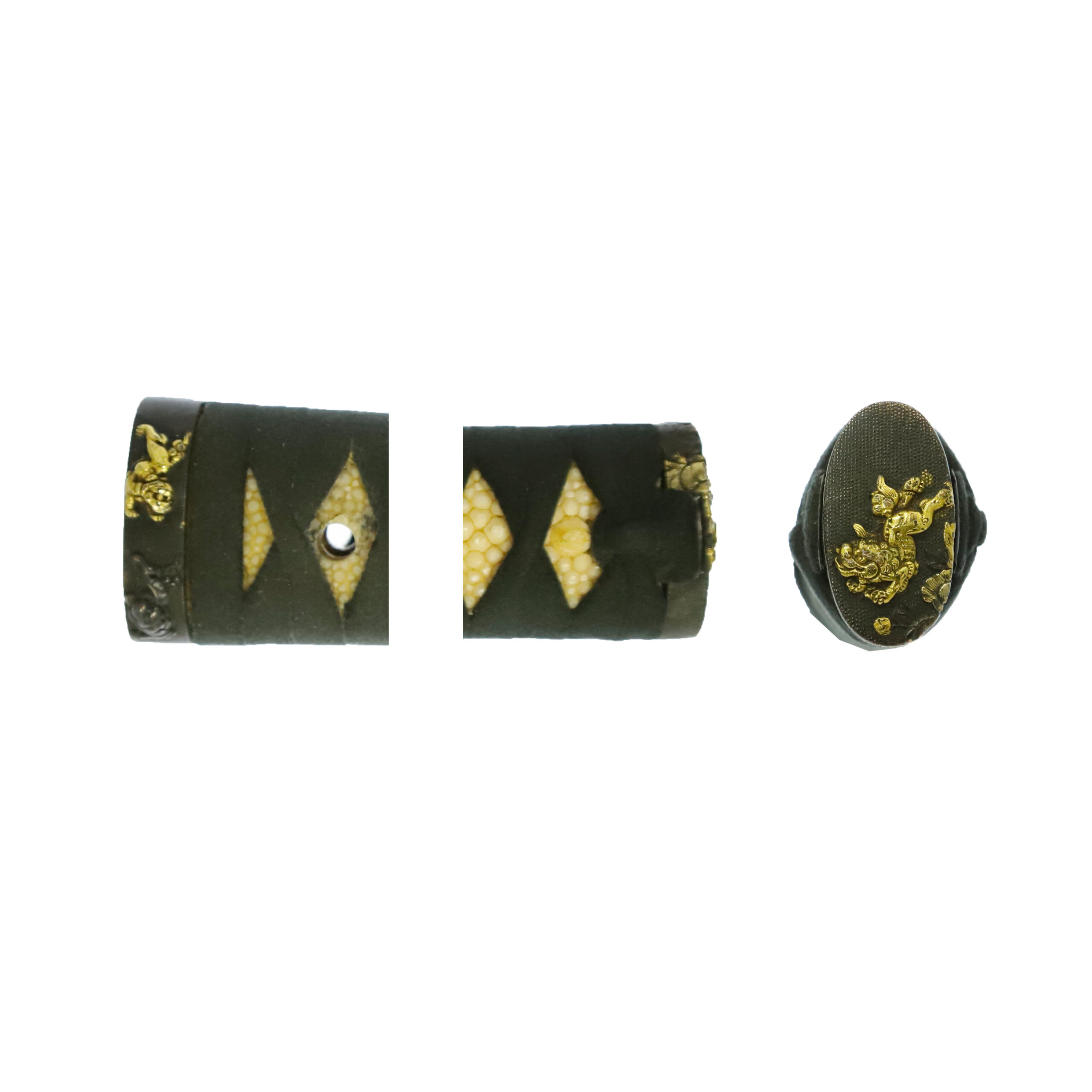
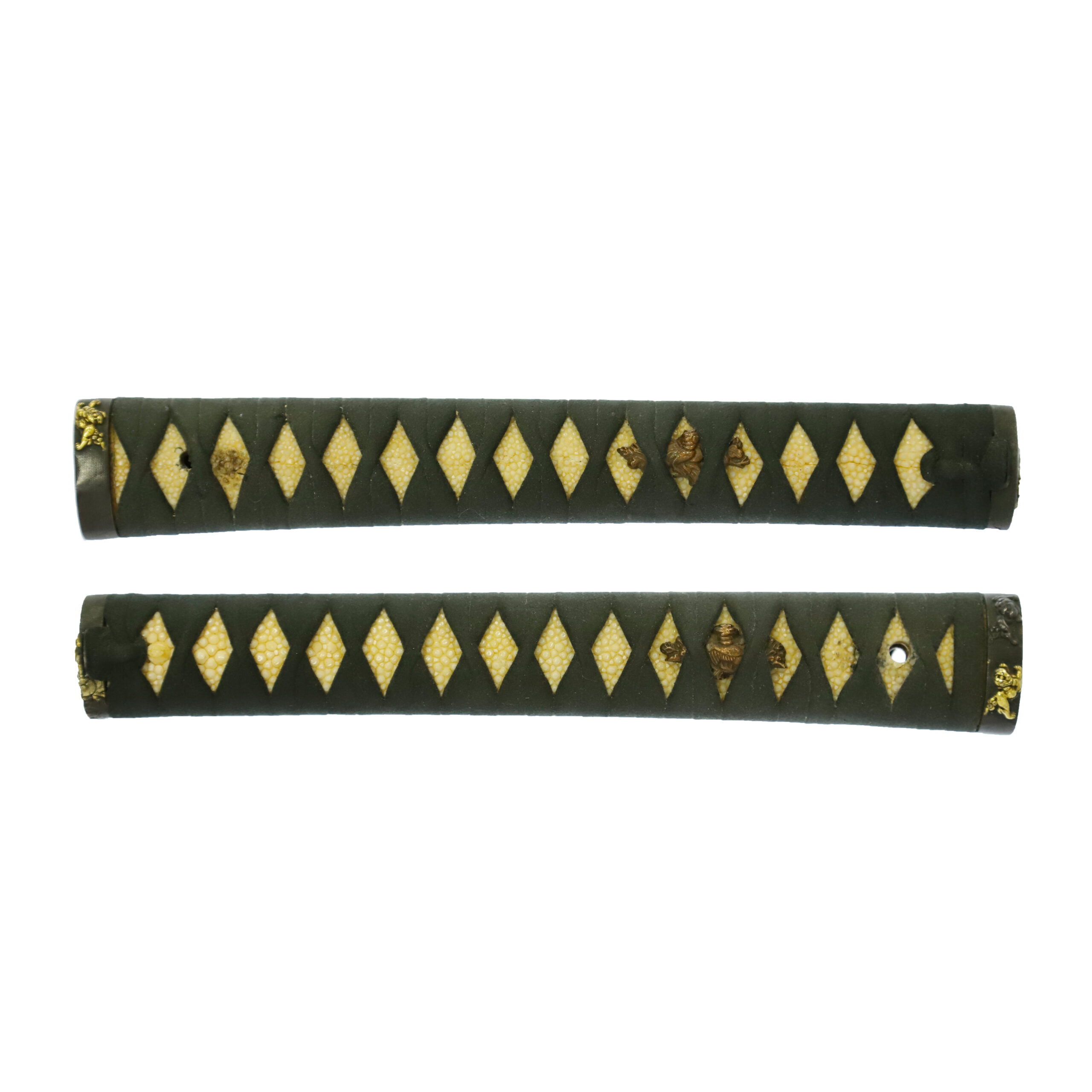
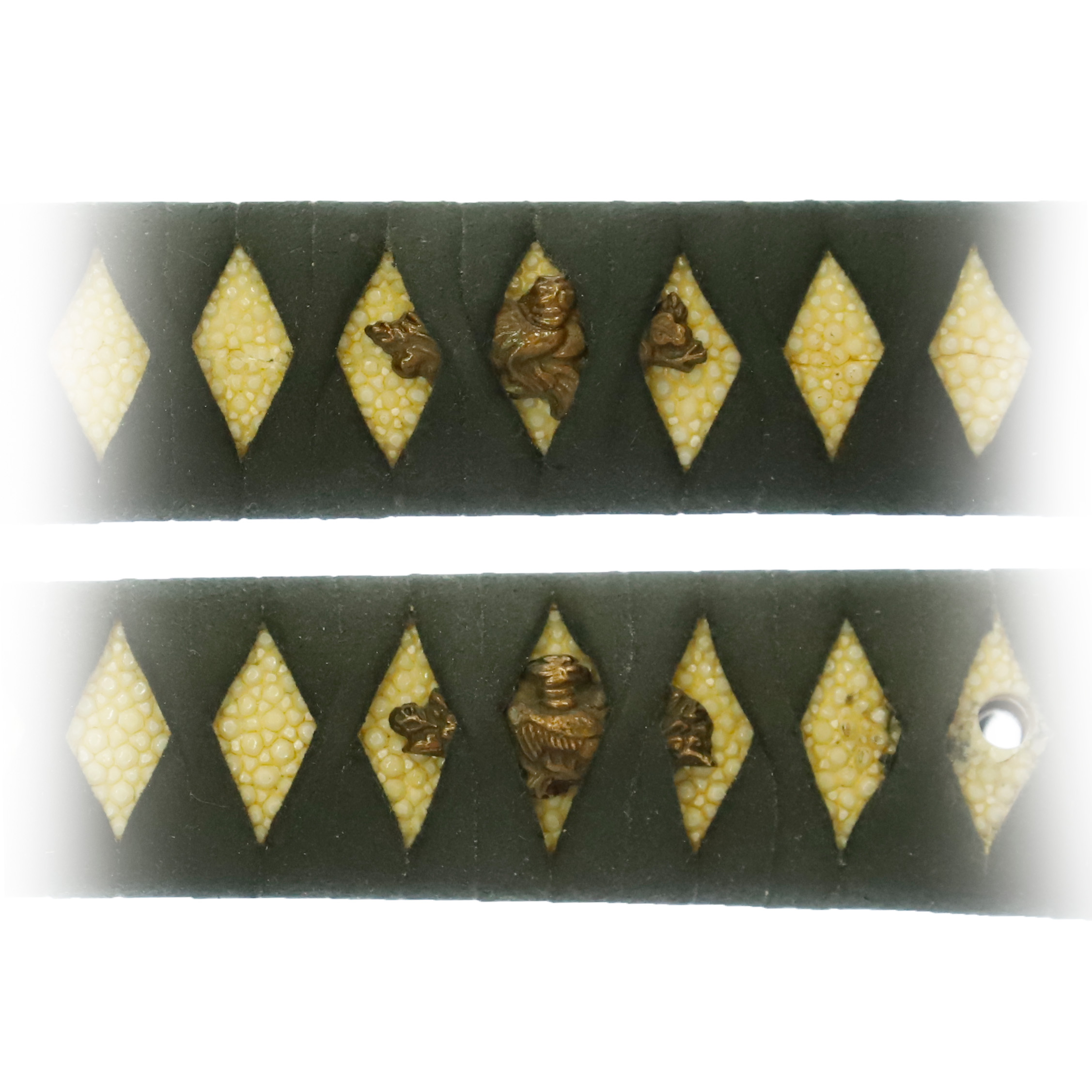
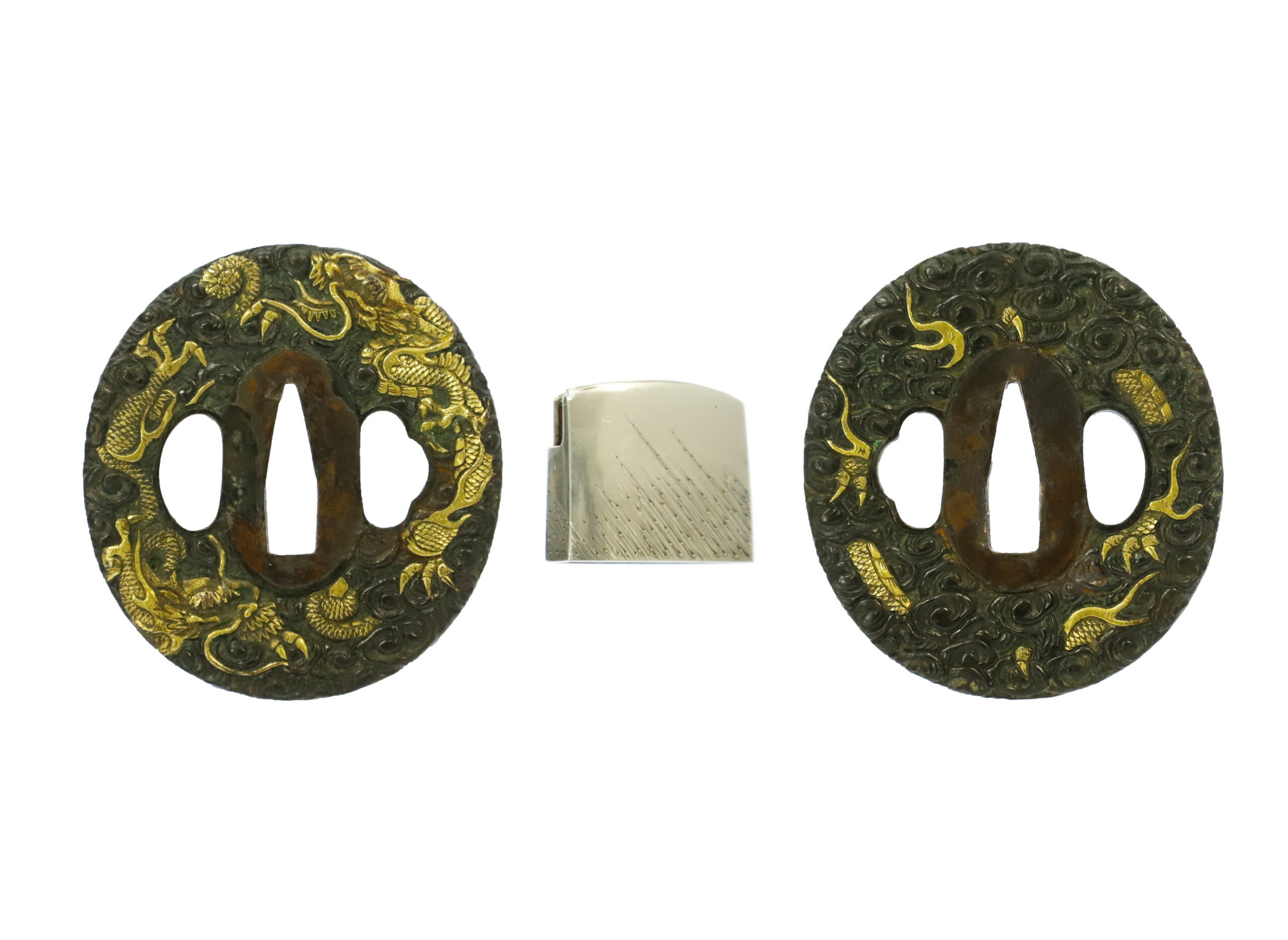
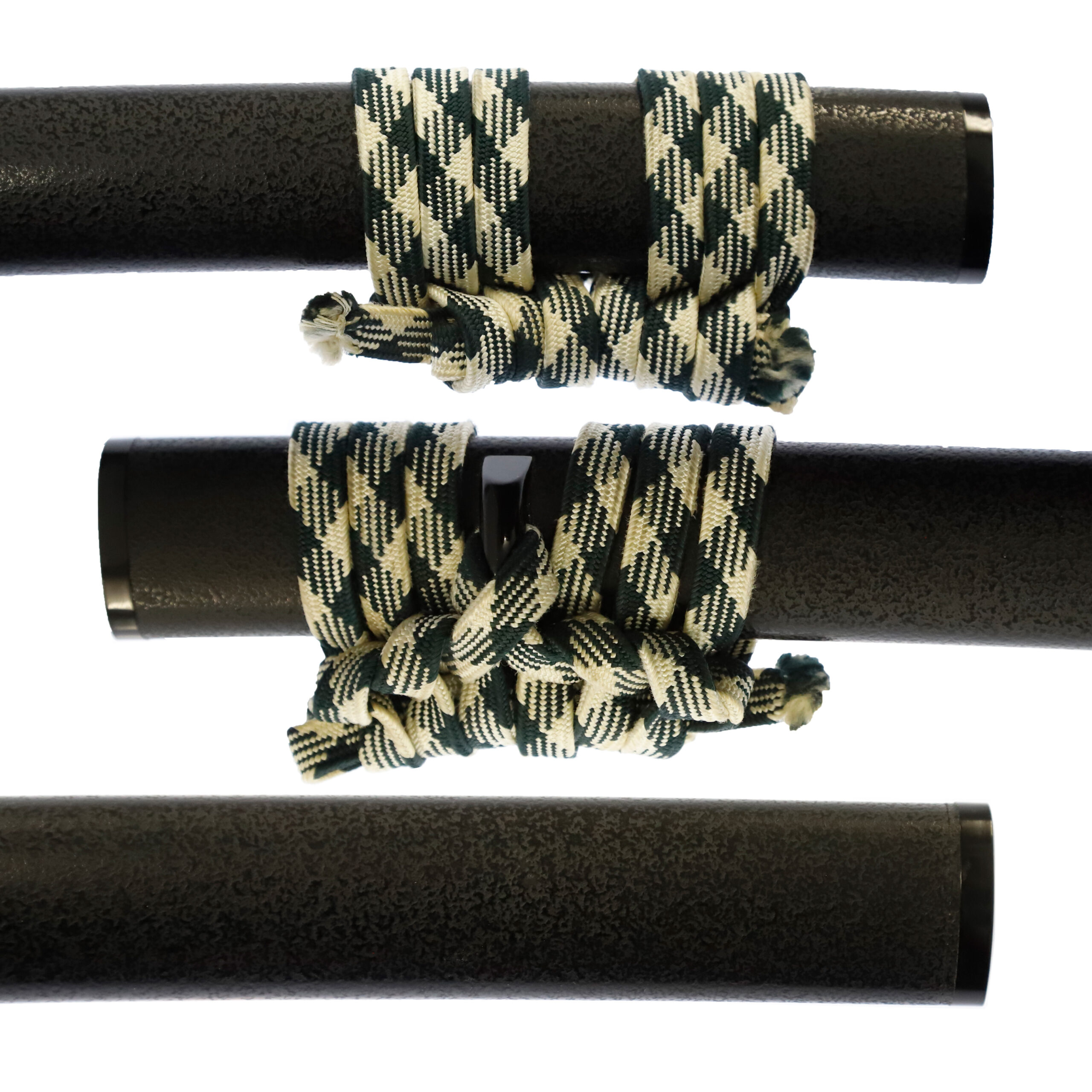
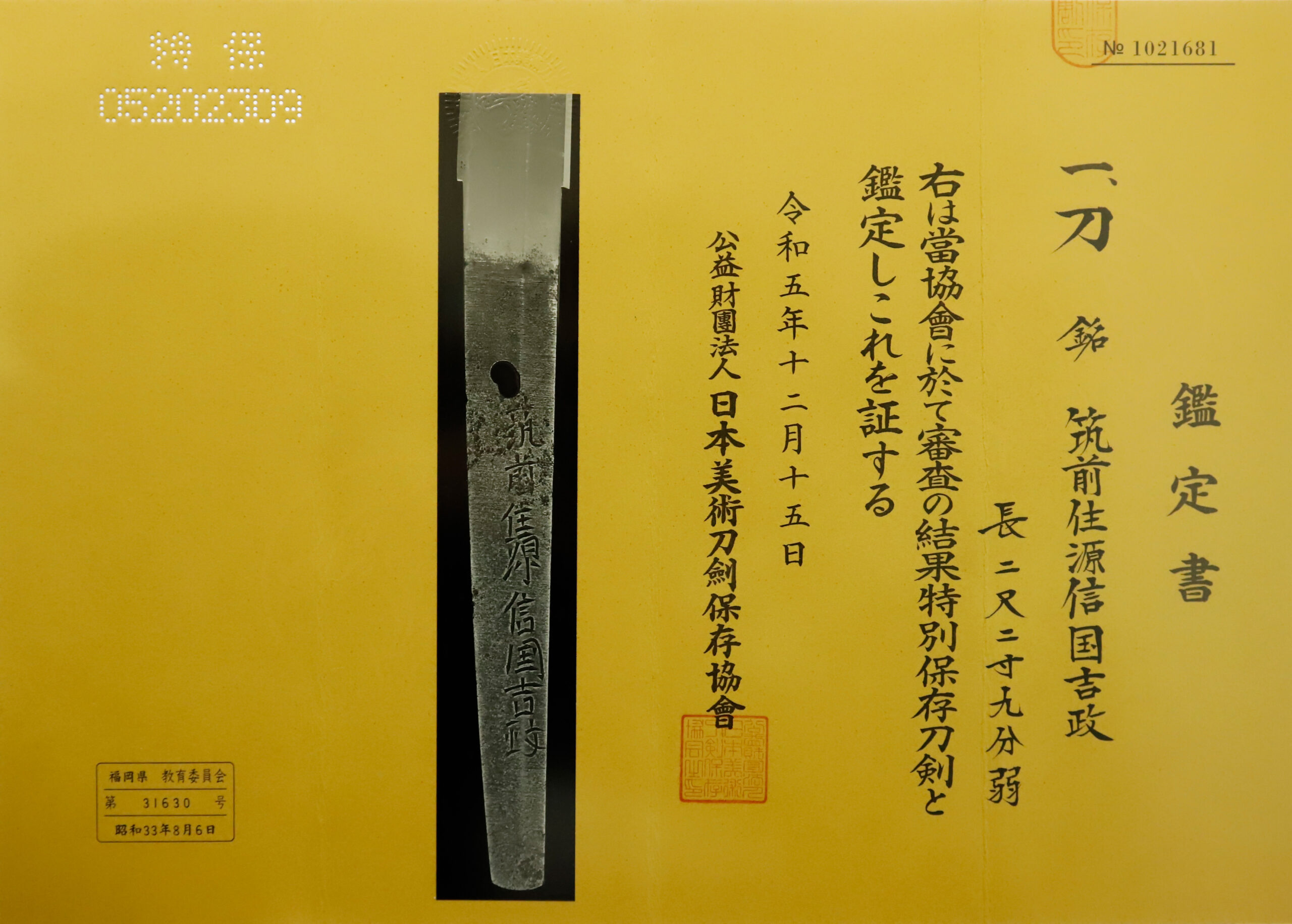
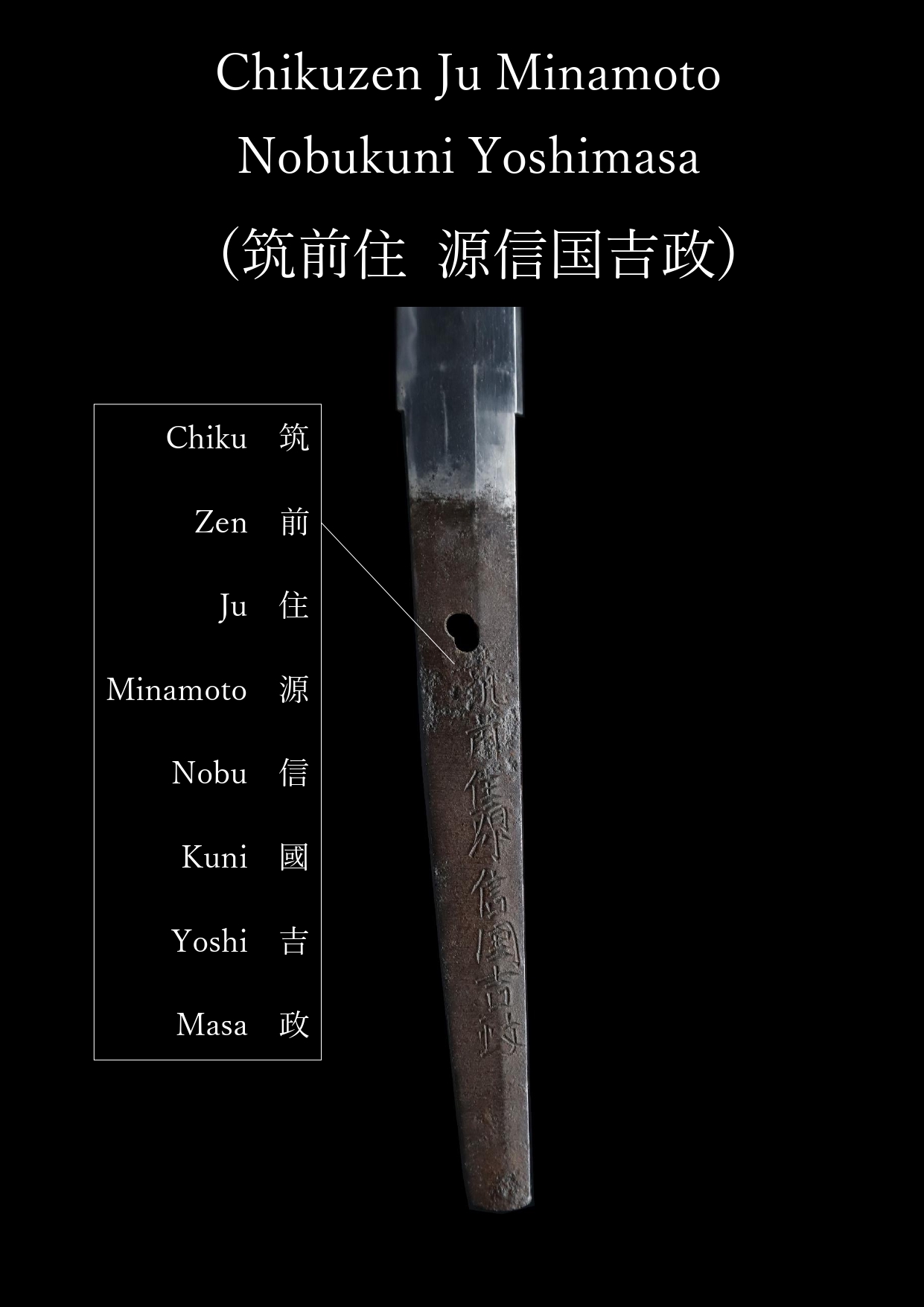
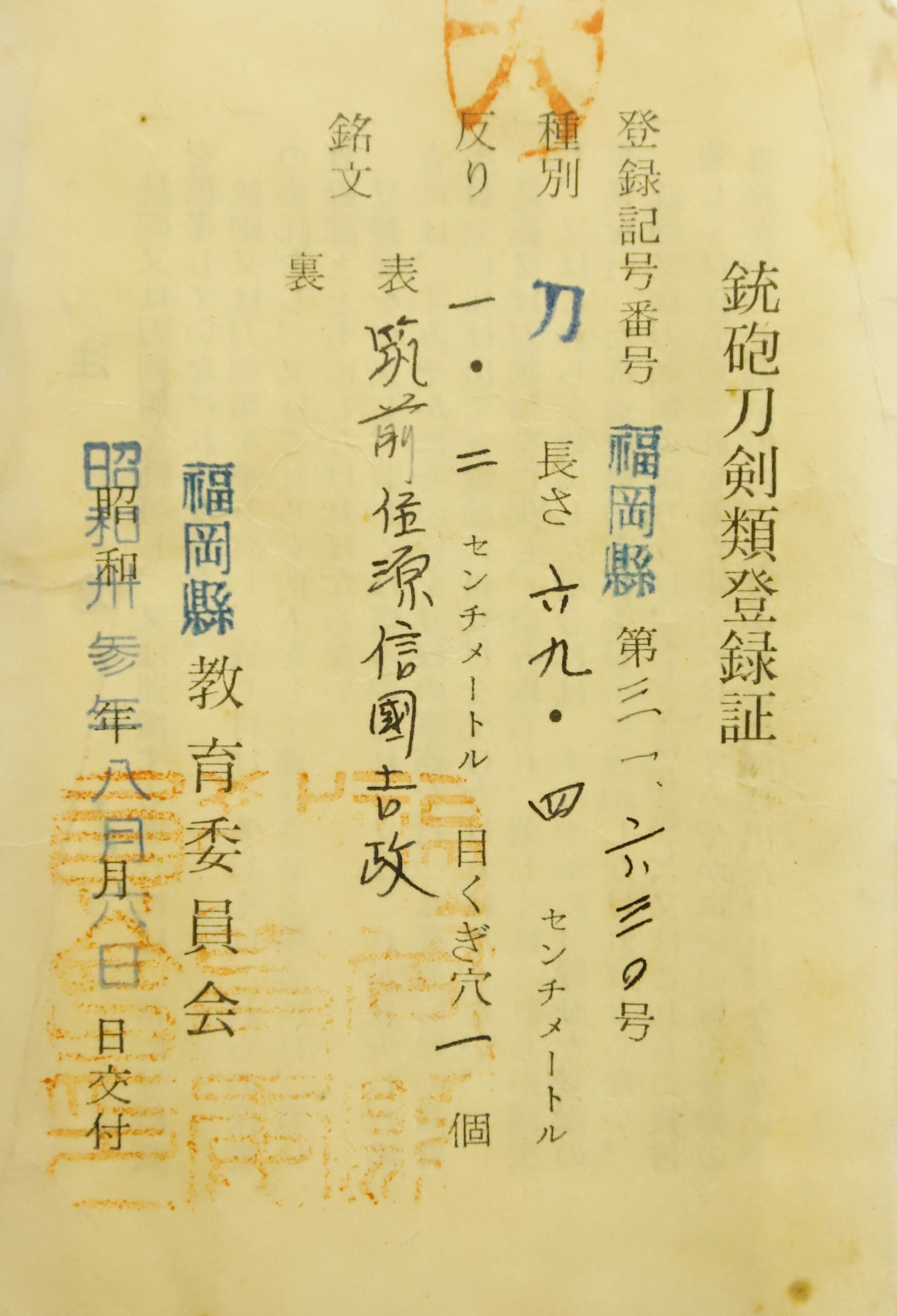
This blade was signed by Chikuzen Jyu Minamoto Nobukuni Yoshimasa (筑前住源信国吉政). Chikuzen, is the province’s name located in Fukuoka prefecture today. Jyu means living. Minamoto Nobukuni is the name of his school, and Yoshimasa is his maker’s name. Those who belonged to Nobukuni School in Chikuzen province were called Tsukushi Nobukuni, one of the most prospered sword forging schools in Kyushu island during the Edo period. The maker’s name Yoshimasa lasted three generations, and we believe it was signed by the second generation. The second-gen Yoshimasa is also known as Nobukuni Heishiro (信国平四郎). He was born as the second son of Nobukuni Yoshisada (信国吉貞) in the fifth year of the Gen-Na era (1618). Yoshisada was the founder of Tsukushi Nobukuni school, and his older brother was the first-gen Yoshimasa. The second-gen Yoshimasa was especially active during the Kanbun-Enpo era (1661-1681: Early Edo Period). There is also a record of him forging a sword in the second year of the Jyokyo era (1685). The Fondation of Nobukuni School The Nobukuni school was initially founded by the first generation Nobukuni in Kyoto. The school stayed there for a few generations. However, the 4th generation Nobukuni SADAMITSU had to evacuate Kyoto city because the battle between the south emperor court and the north emperor court became severe. And as a result, Kyoto city was burnt(in the late 1300s). We called it the Nanbokucho war when the Japanese imperial court was separated into two. Nobukuni SADAMITSU managed to escape and arrive at Usaha(Ohita prefecture)to serve the Ajimu clan. Nobukuni school prospered there from third to 11th generation. However, Toyotomi Hideyoshi, one of the three unifiers of Japan, destroyed the Ajimu clan during the late Azuchi Momoyama period (1582). And the 12th generation Nobukuni YOSHISADA moved to Chikuzen(Fukuoka prefecture), being invited by Kuroda Nagamasa, a famous feudal lord who served Toyotomi Hideyoshi (1602). It is said that the second-gen Yoshimasa also followed his father. Since then, Nobukuni school had been under the auspices of Kuroda clan for generations during the Edo period, and they exclusively forged for this clan. It is appraised as a Tokubetsu Hozon Token(特別保存刀剣) issued by NBTHK(Nihon Bijutsu Touken Hozon Kyokai:日本美術刀剣保存協会). *Please keep in mind that there are a tiny Kitae Kizu on the Shinogiji (the opposite side of the cutting edge). Fuchi-Kashira The theme of this Fuchi Kashira is a classical design called the Botan ni Karajishi (牡丹に唐獅子). It is a combination of Botan (牡丹, peony) and Karajishi (唐獅子). Golden paint is applied to these motifs, and its bright color remains relatively in good condition today. About the Karajishi, the Shishi (獅子) means a lion in Japanese, and the Karajishi is a lion brought from the Continent to Japan in the Toh period (唐, Tang dynasty, 618-907). Karajishis typically have curly hair for their head, neck, body, and tail. In Buddhism, the Karajishi is regarded as a symbol of wisdom, and the Monju Bosatu (文殊菩薩, Manjushri Bodhisattva) rides lions. According to a theory, the Kara-Jishi originates from the Komainu (狛犬, stone guardian dogs that exorcize evil spirits). The flowers that are slightly visible at Karajishi’s feet are peonies. Peony represents happiness, wealth, nobleness, and gorgeousness. This flower pattern has been treated as a kind of good-omen motif; people regarded it as a rich harvest sign. As mentioned above, a peony is called the Botan in Japanese. When we write this flower’s name in Japanese, its second letter means mountain hermit medicine to give us eternal youth. Based on the meaning of this letter, the peony pattern symbolizes eternal youth and longevity. There is a Houwa (法話, Buddhist monks tell the story of Buddhism in an easy-to-understand manner) that treats the Kara-Jishi and this flower. The lion is called the king of the beasts. However, even this invincible animal has only one fear: a bug in the lion’s body. This pest grows in the lion’s hair and eventually breaks the skin and bites the flesh. Nevertheless, it dies if exposed to the night dew of peony. Therefore, the lion rests under peony flowers at night, looking for a haven. This Fuchi Kashira’s design might have been inspired by this story. Tsuba and Habaki The same as the Fuchi Kashira we focused on above, this Tsuba also has a decorative look thanks to the golden coloring on the black metal ground. The motifs engraved on this Tsuba are dragons. You would find the figures of two dragons on its front. Clouds surround the dragons, and their faces and parts of their bodies peek out through the gaps in the clouds. Coupled with the fact that the motifs are carved rather than painted, this composition gives a sense of depth and three-dimensionality. Initially, dragons were imaginary creatures found in ancient foreign traditions and myths. Furthermore, it is regarded as a symbolic beast of auspicious signs. Its body is likened to nine animals: antlers are deer, the head is a camel, eyes are demons, the neck is a snake, the belly is the Mizuchi (蛟, a mythical animal in Japan that looks like a snake and has a horn and four legs), scales are fish, claws are falcons, palms are tigers and ears are cows. A dragon was thought to reign at the top of all animals because of its odd appearance. Based on our experiences, there are lots of dragon-designed sword mountings. It shows that many Samurai warriors favored this dignified beast motif. Regarding the combination of dragons and clouds, clouds bring blessed rain and snow, and their movements significantly affect the day’s weather. Due to its supernatural power, a theory says that gods, spirits, and dragons dwell in the clouds. In Japan, there is a belief that dragons are worshipped as water gods. Since rice cultivation has flourished in this country, people always treat water as an essential resource. We imagine some people wished for a plentiful harvest in this combination. From such a religious aspect, we could infer that dragon designs were familiar to people. Authentication Paper They authenticated the blade on Dec 15th in the 5th year of Reiwa (2023). They appraised it as Tokubetsu Hozon Touken, the blade especially worth preserving for Japanese society.

販売店の記載のまま
山城伝 · 筑前 · 1661-1673頃
藤代 上作 · 刀剣大鑑 上位49%
現在2点販売中
吉政の位置づけを、日本刀全体および伝法・時代・時期ごとに示します。各区分(随一・屈指・有数・著名)は、NBTHK および文化庁による指定に加え、三作や名物帳などの歴史的栄誉を加味したものです。
各項目を選ぶと評価方法が表示されます。
山城伝 · 山城
現在22点販売中
信国派は山城国京都に興った名門で、その流れは南北朝時代に遡る。一派の祖と仰がれる信国は了戒系の京鍛冶で、血脈の上では来の伝統を承けながら、修業の上では相州貞宗の門に入って貞宗三哲の一人に数えられた。来の系譜と相州伝という二つの根がこの一門の作のすべてを導く。銘鑑は祖を建武に置くが、説明書はこれを繰り返し退ける。建武年間の作は残らず、現存最古の延文・貞治の年紀作が貞宗に直結することから、本会は延文・貞治の工をもって初代と見做す。南北朝の末期には永徳・至徳・明徳の代替りの信国が続き、同銘数工があったと見られる。室町初期には左衛門尉・式部丞を冠する応永信国が栄え、これを通常三代と数える。一派は後に豊前へ、さらに筑前へ移り、慶長の頃より明治初年まで福岡藩黒田家の抱え鍛冶として吉貞・吉政・吉次・吉包・重包の代々を出し、新々刀期まで栄えた。 一派に通う語法は、まず地鉄に現れる。鍛えは杢を交えた板目で、刃寄りに流れて柾となりやや肌立ち、地沸を厚くとり地景が頻りに入り、よくつんだ作には淡い沸映りが立つ。刃寄りに流れる鍛えは了戒系の所伝を首肯せしめる証とされ、厚い地沸と頻りの地景は貞宗に学んだ相州伝の痕跡として読まれる。刃文は文様の如何を問わず沸で焼かれ、砂流し・金筋が絶えず働き、匂口は明るい。その作域は二様を基とする。一つは来派の伝統を示した直刃で、中直刃・細直刃に小沸つき、細かにほつれ喰違刃・二重刃ごころを交えて京物の格調を伝える。いま一つは貞宗風ののたれ乱れで、小のたれに互の目・小互の目を交え、足・葉入り、沸厚く明るく、刃縁にほつれ湯走りがかかり、最も多く出会う作域をなす。帽子はのたれ込みまたは乱れ込んで小丸となり掃きかける。御家芸とも言うべき濃密な彫物も貞宗譲りで、梵字・素剣・護摩箸・三鈷剣・倶利迦羅を重ね彫りにし、刀身に八幡大菩薩の神号を切る作もあって、彫物によって一門を見分けうる。代を下ると差異が明瞭となる。南北朝末期の後代は一派に初めて太刀を生み、二様に加えて互の目主調の乱れ刃を新たに見せ、互の目が二つ宛連れたものを腰の低い小のたれで繋ぐ矢筈状の刃を見どころとする。応永信国は左衛門尉が「国」の字のクニ構えの中を左字に作る点を大きな鑑別点とし、直刃と互の目乱れの双方に冴えた沸を宿す。筑前に移った吉包・重包は相州伝の志向と、流れ肌の乱れ映りを伴う一派の丁子乱れとを高い技倆で並べ持ち、重包は名物写しの名手として石堂風に紛う華やかな丁子を、地沸・地景・刃中の沸の顕著さによって石堂と分かった。 鑑定の勘所は明快である。刃寄りに流れる柾がかった肌、厚い地沸と頻りの地景、沸で焼いた直刃と貞宗風ののたれ乱れ、重ね彫りの宗教彫物が一門を束ね、相州の同門とも後世の備前丁子とも分かつ拠りどころとなる。無銘極めも代の弁別も延文三年紀の作との照合によって決せられ、後代は連れ互の目と矢筈刃で、応永信国は逆字の銘で、筑前の工は流れ肌の乱れ映りで読み分けられる。藤代の極めは初代信国を上々作とし、後代から応永信国まで京古刀の上位に列し、筑前の吉包・重包は地方新刀の堅実な工として上作の評を得る。在銘作は祖において短刀・小脇指に限られて稀であり、それゆえ年紀のある後代の太刀・薙刀は何よりの好資料として貴ばれる。伝来は大名家と社寺に厚く、黒田家・浅野家・山内家・佐竹家らの蔵刀に加え、本願寺名物や富士山本宮浅間大社に奉納された式部丞の脇指がある。上位指定の多くは公私の蔵に秘められて市に現れず、在銘の信国が世に出ること自体が稀であって、現れた時は南北朝以来の山城物の蒐集で特筆すべき機会となる。 詳しく見る →
江戸時代
二世紀半の泰平のあいだ、刀は武器である以上に武士の身分の標章であった。江戸の実証と大坂の華やぎのように都市ごとの作風が育ち、時代の末には需要も細っていく。
保存刀剣のうち、出来が一層優れ、保存状態も良好と認められたものです。再刃や、室町・江戸期の多くの無銘作は対象外となり、保存刀剣より高い基準が課されます。
日本美術刀剣保存協会(NBTHK)は、1948年に設立され、文化庁の監督を受ける公益財団法人で、東京・刀剣博物館に本部を置きます。専門の審査員が出品作を直接審査し、美術的・歴史的価値に応じた鑑定書を発行します。NBTHKの鑑定書は、日本刀および刀装具の真正性を示す最も広く認知された基準です。
NBTHK公式サイトReturns/exchanges limited to defects caused by shipping (except willful misconduct or gross negligence by the company); customers must contact within 72 hours of receiving the product.