NihontoWatch MonNihontoWatch
MarketAuctionsEncyclopedia
NihontoWatch Mon

NihontoWatch

MarketAuctions
Encyclopedia
Overview·Historical importance·Designations·Kantei·Dated Works·Provenance·Blade Forms·Signatures·Lineage·School
OverviewHistorical importanceDesignationsKanteiDated WorksProvenanceBlade FormsSignaturesLineageSchool
  1. Schools
  2. Nobukuni
  3. Nobukuni

Nobukuni

信國

Tokujū
Vol. 26, No. 5 · Wakizashi

Nobukuni

信國

44 ranked works

Leading smith
ProvinceYamashiroEraOei (1394–1428)PeriodMuromachiSchoolNobukuniTraditionYamashiro-denGeneration4thFujishiroJo-jo sakuToko Taikan1,000(top 8%)TypeSwordsmithCodeNOB309
1Jūyō Bunkazai
1Jūyō Bijutsuhin
2Gyobutsu
1Tokubetsu Jūyō39Jūyō Tōken

Overview

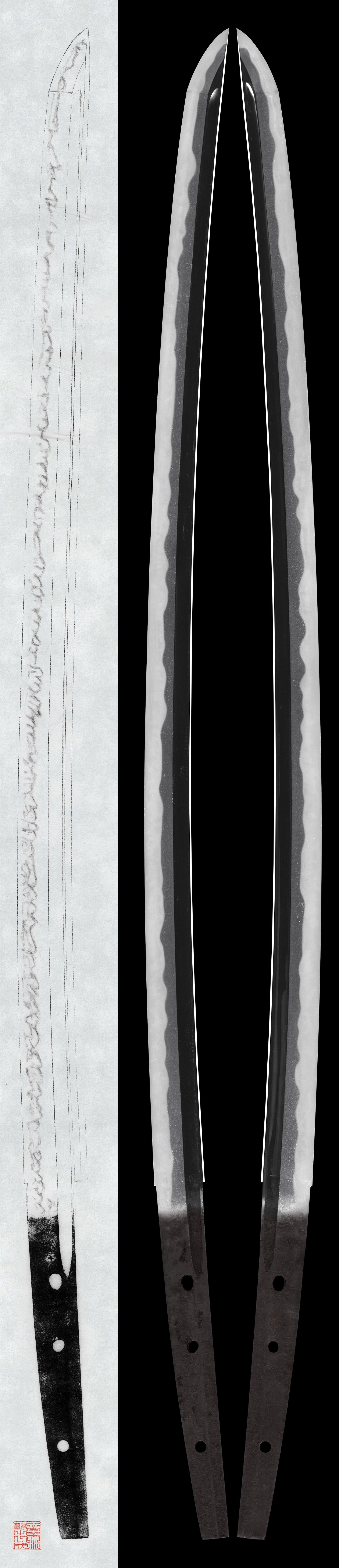
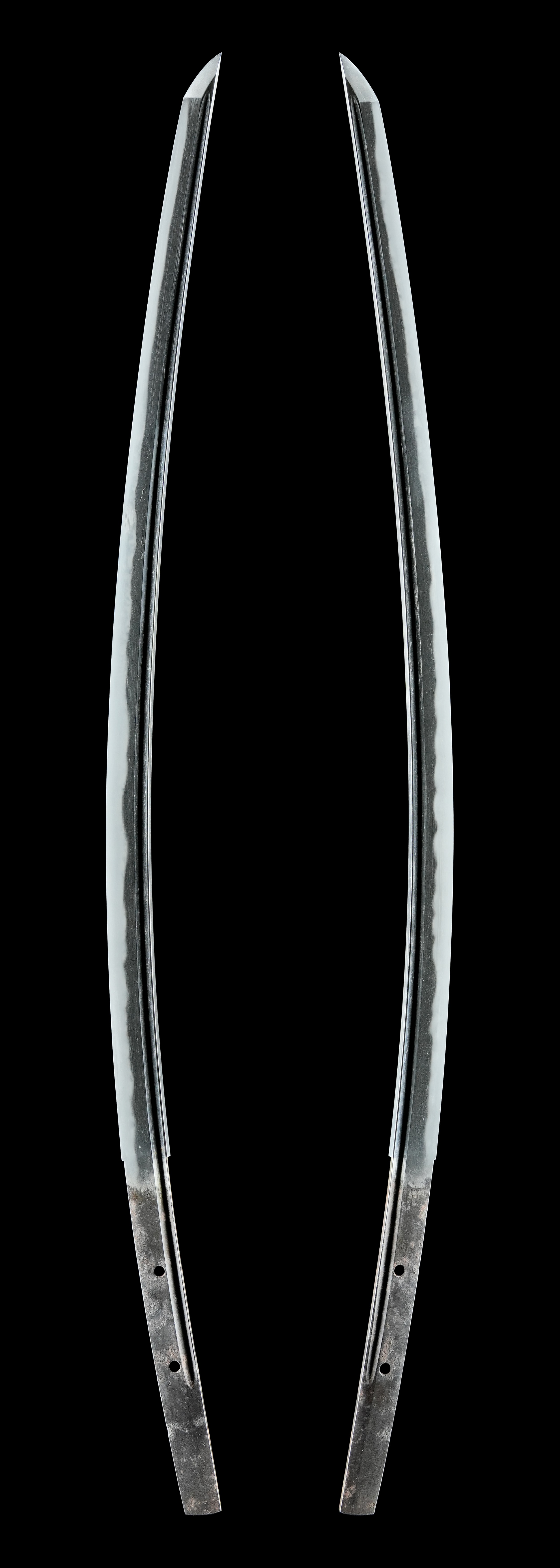
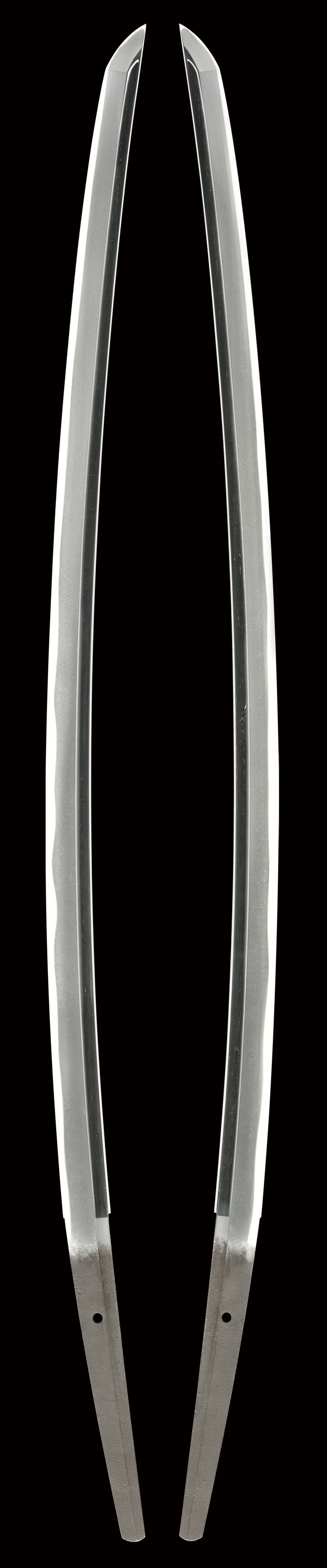
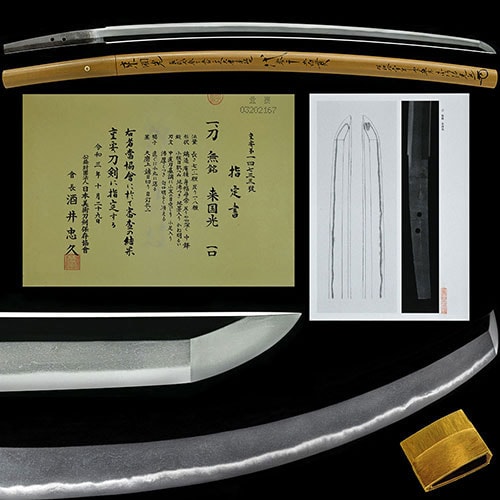
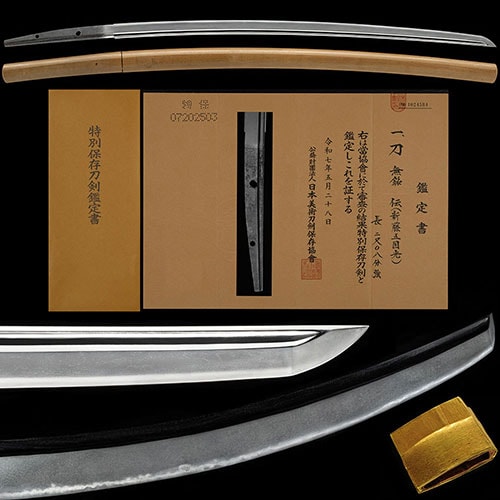
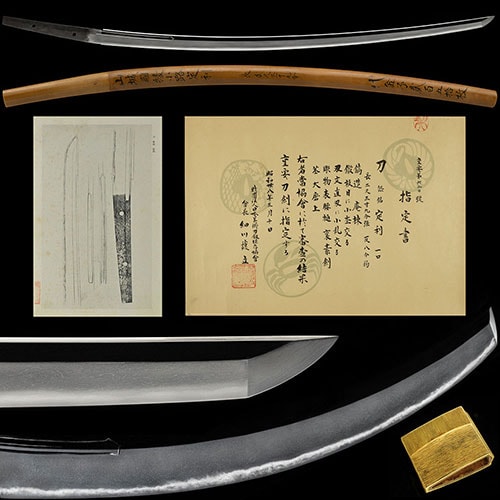
On a dated the eighth month of Ōei 20 (1413), once held in the Ōshimazu family of Satsuma and now ranked , the signature reads Minamoto Saemon-no-jō , and within the character the interior is cut in reverse, the left-form by which this hand is known. This is the Ōei , the early- generation of the distinguished Kyoto house, conventionally counted as the third generation and represented above all by two named smiths, Minamoto Saemon-no-jō and Shikibu-no-jō . Because both inscribed Ōei dates, the published sources record that the pair are admired together as the Ōei . The house descends from Ryōkai, and tradition holds that its first generation studied under Sadamune and is counted among the Sadamune ; the Ōei smiths carry both inheritances at once, the refinement of Kyoto and the of . The published commentary opens its account plainly, that " was a distinguished Kyoto lineage of swordsmiths" which flourished from the period through the .

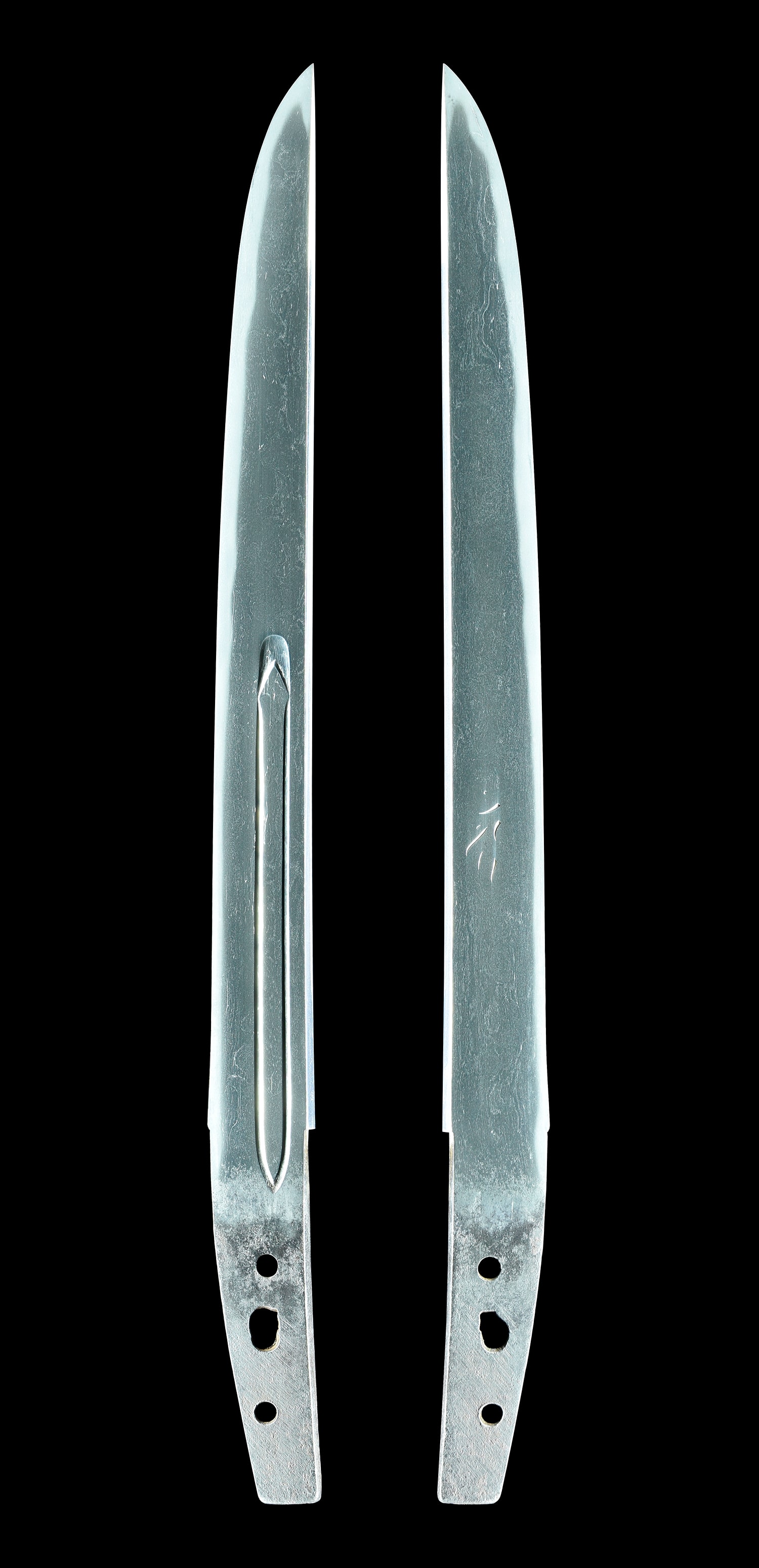
The most consistent feature of the Ōei is not a single temper but the carving, and the published sources name it as such, that both Saemon-no-jō and Shikibu-no-jō are particularly adept at dense and powerful . and flaming , a worked in relief or in openwork within a , and , hata-, lotus pedestals, and sacred invocations such as cut into the groove appear again and again, layered and superimposed, and the commentary repeatedly judges them splendid. The signature is the second tell. Saemon-no-jō is read in part by the reversed interior of the character , a point the published record calls a major matter of connoisseurship, that "within the enclosing element of the character the interior is formed as the character left"; the feature is traced from late , the Shitoku and Meitoku eras, and is common in Ōei. The family name is Minamoto, so the smith often called Genzaemon-no-jō is properly Minamoto Saemon-no-jō.

Beneath both manners lies one . It is an mixed with that flows toward the edge into , standing a little, with thick and frequent ; where the forging tightens it becomes a , and on one a faint and gather near the . Over that the temper divides in two. The first is a that keeps the fundamental Kyoto tradition, narrow to medium, bright in , with and entering, adhering, and fine and running through, the edge showing in places, the straight to a with a touch of . The published sources prize this straight temper as uncommon among of the period, and draw a careful comparison, that "Ōei too favours and frequently tempers , yet seems to show the stronger ".

The second manner is the -laden that carries the Sadamune inheritance forward. Across the line, the published record explains, two principal tempers descend, "a expressing the Kyoto tradition and a inheriting the Sadamune manner"; and it notes that from the late succession into the Ōei generation one can newly observe a further working range, that "a -ba dominated by can now be seen". On these blades the mixes with and pointed , at times an angular and a -like element, and entering, well adhered, and throughout, and here and there and ; the enters and finishes in a or pointed return, at times . Most surviving works are and , slightly extended in proportion, with a few signed and dated the sources call extremely rare and precious, valued for their soundness and for the rarity of a signed .

What sets the Ōei apart is the meeting of these two inheritances in one Kyoto hand. The first generation, the published commentary records, was a pupil of Sadamune whose "workmanship displays a style that approaches that of his master Sadamune"; the Ōei smiths keep the strength in their while holding to the bright Yamashiro and the refined carving of the capital. His bright and lively activity, his standing with toward the edge, and above all his layered devotional distinguish him from the plainer utilitarian grooving of the smiths of his own day. The relationship of the two named smiths is left open: by tradition Saemon-no-jō is the elder and Shikibu-no-jō the younger brother, but the published sources note that read strictly the dated works unsettle the order, so the question is held over for future study.

For the collector the Ōei is a name of substance whose record is firmly held. Fujishiro grades him Jō-jō , and the Tōkō Taikan values him among the higher Kyoto smiths. He has no National Treasures; his record runs instead through two Important Cultural Properties, among them a Shikibu-no-jō dedicated to the shrine and preserved at Fujisan Hongū Sengen Taisha, together with one and the prewar Jūyō Bijutsuhin, and a pair of pieces in the Imperial Collection. His blades are preserved in shrines, museums and long-held collections grounded in their own provenance, the from the Ōshimazu of Satsuma, a Jūyō Bijutsuhin once held by Tokugawa Munetaka, and works recorded at Atsuta Jingū, Jingū, the Tokugawa Art Museum, the Mitsui Memorial Museum, the Sano Art Museum and the Kurokawa Institute of Ancient Cultures. Only a small number of his blades fall in the and tiers, so a signed Ōei comes to market only from time to time, and most that survive are and rather than the rare signed . A privately held example, sound in condition and carrying his dense carving and bright or his -rich , is a rewarding thing for a collector to encounter, and a document of how the Kyoto Sadamune line was carried into the .

Historical importance

Where Nobukuni stands among comparable artisans: across all of nihontō, and within tradition, era, and period. The tiers (Foremost · Leading · Major · Notable) weigh official designations from the NBTHK and Japan's Agency for Cultural Affairs, together with historical honors of lasting repute such as the Sansaku and Meibutsu-chō.

随一
Foremost
屈指
Leading
有数
Major
著名
Notable

Select a lens to see how it's measured.

Designations

Kokuhō—
Jūyō Bunkazai1
Jūyō Bijutsuhin1
Gyobutsu2
Tokubetsu Jūyō1
Jūyō Tōken39

Elite Standing

Kantei

Dated Works

Provenance

Blade Forms

Distribution across 44 ranked works

Signatures

Signature types across 44 ranked works

Currently Available

Lineage

Nobukuni
Students (7)
  1. 1.Nobukuni信國1 for sale33designated
  2. 2.Masanobu正信1 for sale4designated
  3. 3.Nobukuni信國
  4. 4.Nobukuni信國
  5. 5.Nobukuni信國
  6. 6.Masanobu正信
  7. 7.Sadamitsu定光

Nobukuni School

Other artisans of the Nobukuni school

  1. 1.Nobukuni信國1 for sale69designated
  2. 2.Nobukuni信國1 for sale33designated
  3. 3.Yoshikane吉包2 for sale7designated
  4. 4.Masanobu正信1 for sale4designated
  5. 5.Shigekane重包1 for sale4designated
  6. 6.Masakane正包1designated
  7. 7.Nobukuni信國2designated
  8. 8.Nobukuni信國1 for sale2designated
  9. 9.Nobusada信貞2designated
  10. 10.Shigekuni重國1designated
  11. 11.Yoshimasa吉政3 for sale2designated

Nobukuni

Nobukuni(信國) was a Japanese swordsmith of the Nobukuni school in Yamashiro province, active during the Oei (1394-1428) period.

The work follows the Yamashiro-den tradition.

Designated works by Nobukuni include 1 Jūyō Bunkazai (Important Cultural Property), 1 Tokubetsu Jūyō, 39 Jūyō.