江戸は刀の目利きの時代である。本阿弥の鑑定、1719年の享保名物帳、盛んな刀剣書が、戦で抜かれることのなくなった刀を学問の対象へと変えていった。
 NihontoWatchNihontoWatch
The Chikuzen Nobukuni school was founded during the Shintô era by Nobukuni Yoshisada, who traced his lineage back twelve generations to the legendary smiths of Yamashiro and Tsukushi Nobukuni. Succession ultimately passed to Yoshisada’s younger son, the second-generation Yoshimasa – maker of this katana – after his elder brother abandoned the school to study under the Bizen Ichimonji tradition. Born Nobukuni Heishirô in 1622, Yoshimasa worked through the Kanbun era and died in August 1688. Fujishiro ranks him as a jô-saku smith, a designation borne out in every aspect of this blade. The steel is immediately commanding. A densely forged ko-mokume hada resembling the rice-bran texture of konuka-hada – closely associated with the neighbouring Hizen tradition – shimmers with ji-nie and flowing chikei. The hamon is a brilliant ko-chôji midare in fine ko-nie deki, characteristically wide for the school, with kinsuji striking through like lightning, diagonal saka-ashi, and drifting sunagashi. A bo-bi groove runs the length of the blade, terminating above the ha-machi in a rounded maru-dome. The nakago is suriage (shortened), with kiri-yasurime file marks, retaining the full signature confirmed against reference oshigata. Both the sword and koshirae carry NBTHK Tokubetsu Hozon certification. The koshirae is exceptional and carries its own provenance. Trusted sources have confirmed it was inherited through the Owari Tokugawa family, one of the three senior Tokugawa branch families, and the evidence is plain in every fitting: the aoi-mon hollyhock crest of the ruling shogunate appears throughout. The saya is finished in aogai-mijin-nuri lacquer – crushed mother-of-pearl suspended in black lacquer – that erupts into a spectacular iridescent light show from every angle. The polished shakudô tsuba in an interlocked aoi-mon design has been attributed by NTHK-NPO certificate to Umetada Narimasa, who worked in Edo between roughly 1780 and 1820. The fuchi-kashira, signed by Akishige – a student of master Kôno Haruaki, founder of the prestigious Kôno school – displays first-class nanako, gold, and shakudô work. The menuki carry the kiri-mon (paulownia crest) in shakudô. The original torokusho (registration card) survives, numbered just 11,260 – among the very first swords formally registered in Japan in 1951, registered in Tokyo, strongly suggesting it came directly from a prominent former daimyô family.
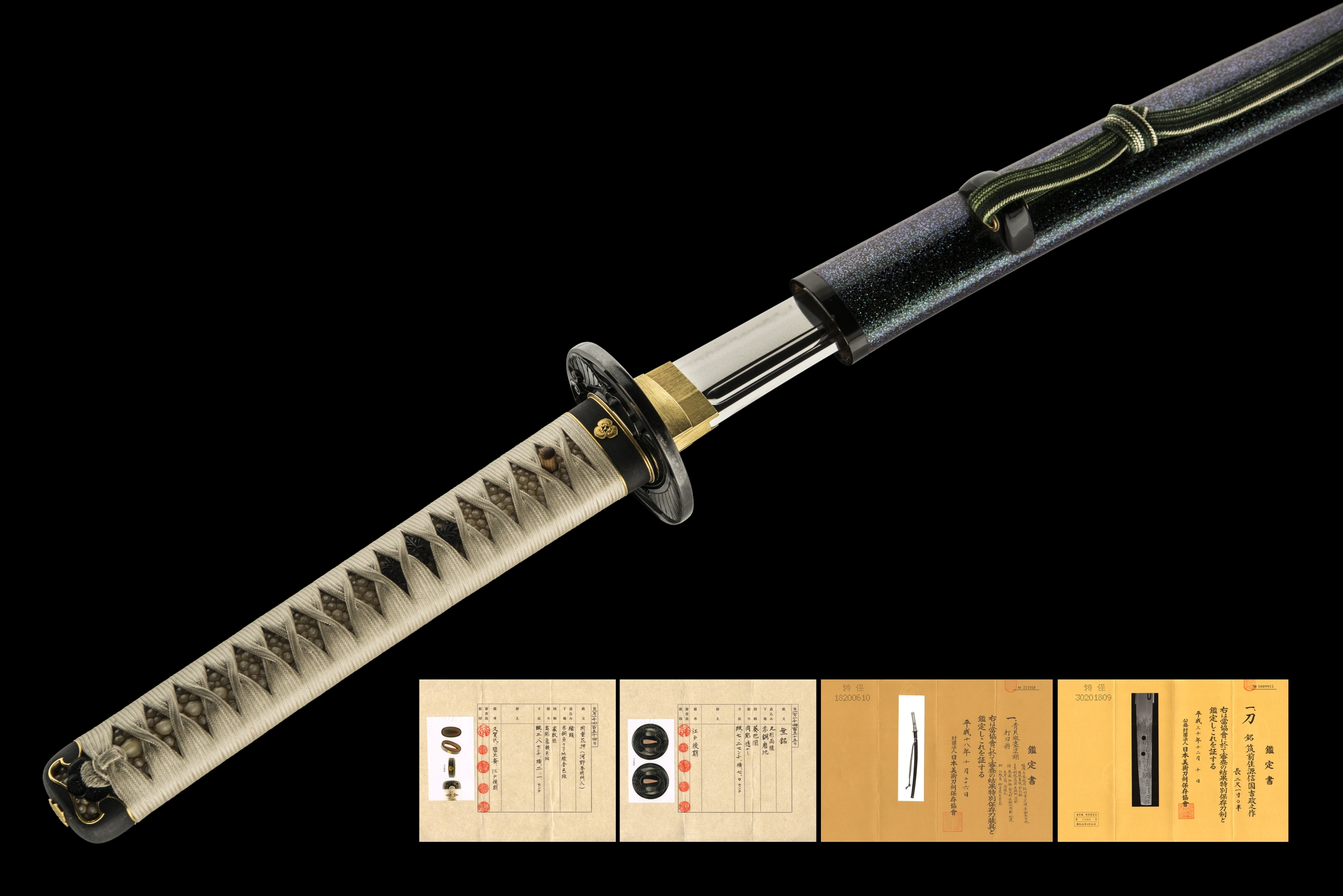
販売店の記載のまま
山城伝 · 筑前 · 1661-1673頃
藤代 上作 · 刀剣大鑑 上位49%
現在2点販売中
吉政の位置づけを、日本刀全体および伝法・時代・時期ごとに示します。各区分(随一・屈指・有数・著名)は、NBTHK および文化庁による指定に加え、三作や名物帳などの歴史的栄誉を加味したものです。
各項目を選ぶと評価方法が表示されます。
山城伝 · 山城
現在22点販売中
信国派は山城国京都に興った名門で、その流れは南北朝時代に遡る。一派の祖と仰がれる信国は了戒系の京鍛冶で、血脈の上では来の伝統を承けながら、修業の上では相州貞宗の門に入って貞宗三哲の一人に数えられた。来の系譜と相州伝という二つの根がこの一門の作のすべてを導く。銘鑑は祖を建武に置くが、説明書はこれを繰り返し退ける。建武年間の作は残らず、現存最古の延文・貞治の年紀作が貞宗に直結することから、本会は延文・貞治の工をもって初代と見做す。南北朝の末期には永徳・至徳・明徳の代替りの信国が続き、同銘数工があったと見られる。室町初期には左衛門尉・式部丞を冠する応永信国が栄え、これを通常三代と数える。一派は後に豊前へ、さらに筑前へ移り、慶長の頃より明治初年まで福岡藩黒田家の抱え鍛冶として吉貞・吉政・吉次・吉包・重包の代々を出し、新々刀期まで栄えた。 一派に通う語法は、まず地鉄に現れる。鍛えは杢を交えた板目で、刃寄りに流れて柾となりやや肌立ち、地沸を厚くとり地景が頻りに入り、よくつんだ作には淡い沸映りが立つ。刃寄りに流れる鍛えは了戒系の所伝を首肯せしめる証とされ、厚い地沸と頻りの地景は貞宗に学んだ相州伝の痕跡として読まれる。刃文は文様の如何を問わず沸で焼かれ、砂流し・金筋が絶えず働き、匂口は明るい。その作域は二様を基とする。一つは来派の伝統を示した直刃で、中直刃・細直刃に小沸つき、細かにほつれ喰違刃・二重刃ごころを交えて京物の格調を伝える。いま一つは貞宗風ののたれ乱れで、小のたれに互の目・小互の目を交え、足・葉入り、沸厚く明るく、刃縁にほつれ湯走りがかかり、最も多く出会う作域をなす。帽子はのたれ込みまたは乱れ込んで小丸となり掃きかける。御家芸とも言うべき濃密な彫物も貞宗譲りで、梵字・素剣・護摩箸・三鈷剣・倶利迦羅を重ね彫りにし、刀身に八幡大菩薩の神号を切る作もあって、彫物によって一門を見分けうる。代を下ると差異が明瞭となる。南北朝末期の後代は一派に初めて太刀を生み、二様に加えて互の目主調の乱れ刃を新たに見せ、互の目が二つ宛連れたものを腰の低い小のたれで繋ぐ矢筈状の刃を見どころとする。応永信国は左衛門尉が「国」の字のクニ構えの中を左字に作る点を大きな鑑別点とし、直刃と互の目乱れの双方に冴えた沸を宿す。筑前に移った吉包・重包は相州伝の志向と、流れ肌の乱れ映りを伴う一派の丁子乱れとを高い技倆で並べ持ち、重包は名物写しの名手として石堂風に紛う華やかな丁子を、地沸・地景・刃中の沸の顕著さによって石堂と分かった。 鑑定の勘所は明快である。刃寄りに流れる柾がかった肌、厚い地沸と頻りの地景、沸で焼いた直刃と貞宗風ののたれ乱れ、重ね彫りの宗教彫物が一門を束ね、相州の同門とも後世の備前丁子とも分かつ拠りどころとなる。無銘極めも代の弁別も延文三年紀の作との照合によって決せられ、後代は連れ互の目と矢筈刃で、応永信国は逆字の銘で、筑前の工は流れ肌の乱れ映りで読み分けられる。藤代の極めは初代信国を上々作とし、後代から応永信国まで京古刀の上位に列し、筑前の吉包・重包は地方新刀の堅実な工として上作の評を得る。在銘作は祖において短刀・小脇指に限られて稀であり、それゆえ年紀のある後代の太刀・薙刀は何よりの好資料として貴ばれる。伝来は大名家と社寺に厚く、黒田家・浅野家・山内家・佐竹家らの蔵刀に加え、本願寺名物や富士山本宮浅間大社に奉納された式部丞の脇指がある。上位指定の多くは公私の蔵に秘められて市に現れず、在銘の信国が世に出ること自体が稀であって、現れた時は南北朝以来の山城物の蒐集で特筆すべき機会となる。 詳しく見る →
江戸時代
江戸は刀の目利きの時代である。本阿弥の鑑定、1719年の享保名物帳、盛んな刀剣書が、戦で抜かれることのなくなった刀を学問の対象へと変えていった。
保存刀剣のうち、出来が一層優れ、保存状態も良好と認められたものです。再刃や、室町・江戸期の多くの無銘作は対象外となり、保存刀剣より高い基準が課されます。
日本美術刀剣保存協会(NBTHK)は、1948年に設立され、文化庁の監督を受ける公益財団法人で、東京・刀剣博物館に本部を置きます。専門の審査員が出品作を直接審査し、美術的・歴史的価値に応じた鑑定書を発行します。NBTHKの鑑定書は、日本刀および刀装具の真正性を示す最も広く認知された基準です。
NBTHK公式サイトAll swords come with a three-day inspection period beginning from the date of delivery. If not satisfied, the sword may be returned within this period for a full refund of the purchase price. Outside of this period, all sales are final. Swords purchased on a layaway payment plan are not eligible for the three-day inspection period.