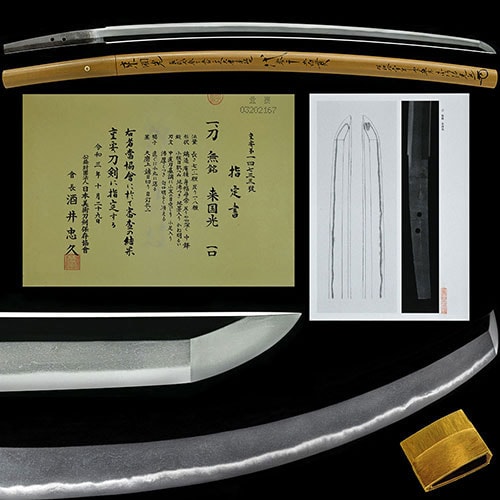
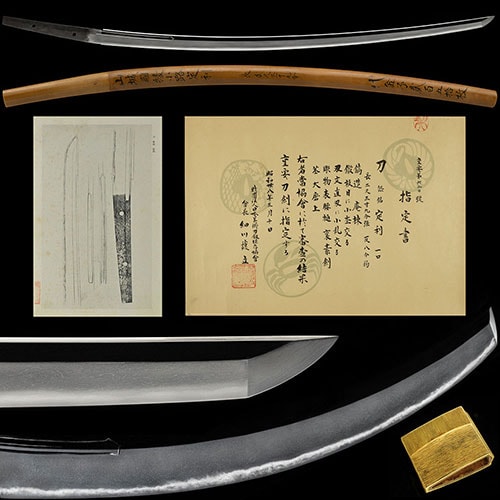
Kuniyuki was, in the words the published sources return to again and again, the de facto founder of the school of Yamashiro, working in the mid period. None of his own blades carries a production date, but the two-character Kunitoshi, transmitted as his son, left a dated Koan 1 (1278), and on that footing the published sources affirm the usual reckoning that places Kuniyuki around the Shogen and Bun'o years. He stands at the head of the line the late- Yamashiro tradition would be built upon, and his signed survive in comparatively large numbers while a single reliable is all that is known, exactly as for that Kunitoshi.
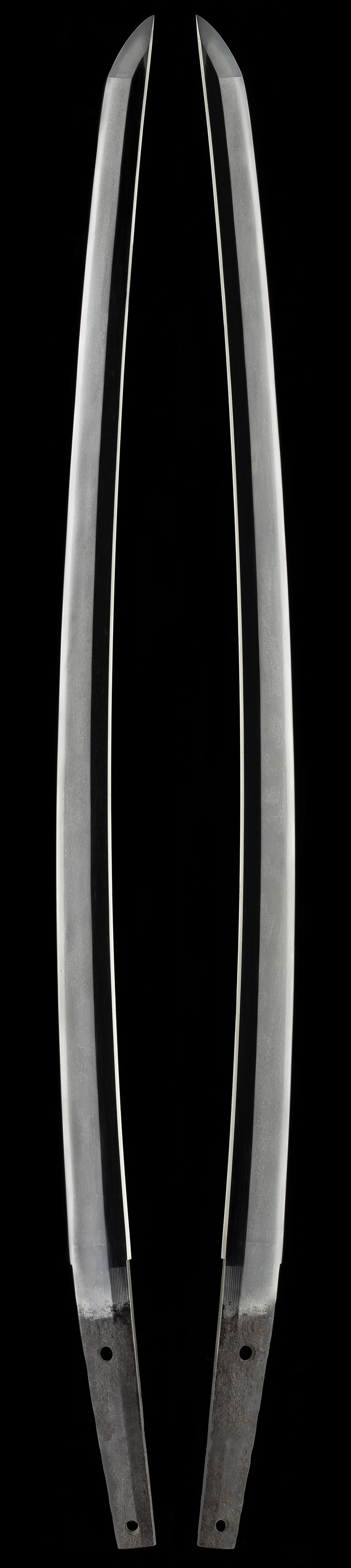
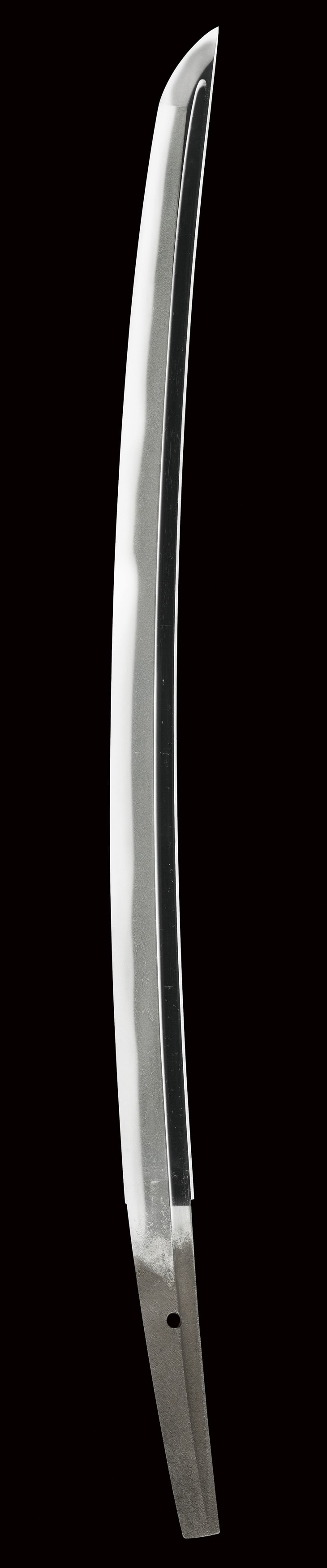
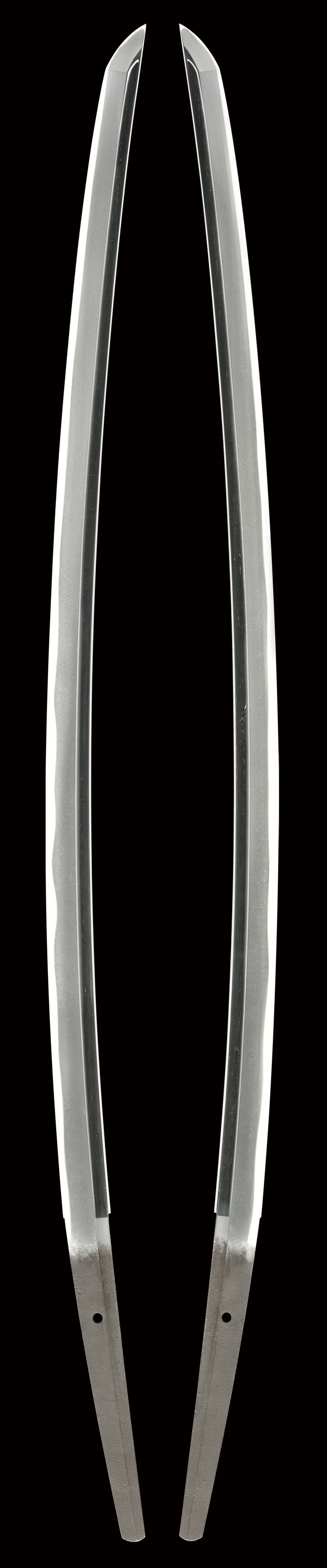
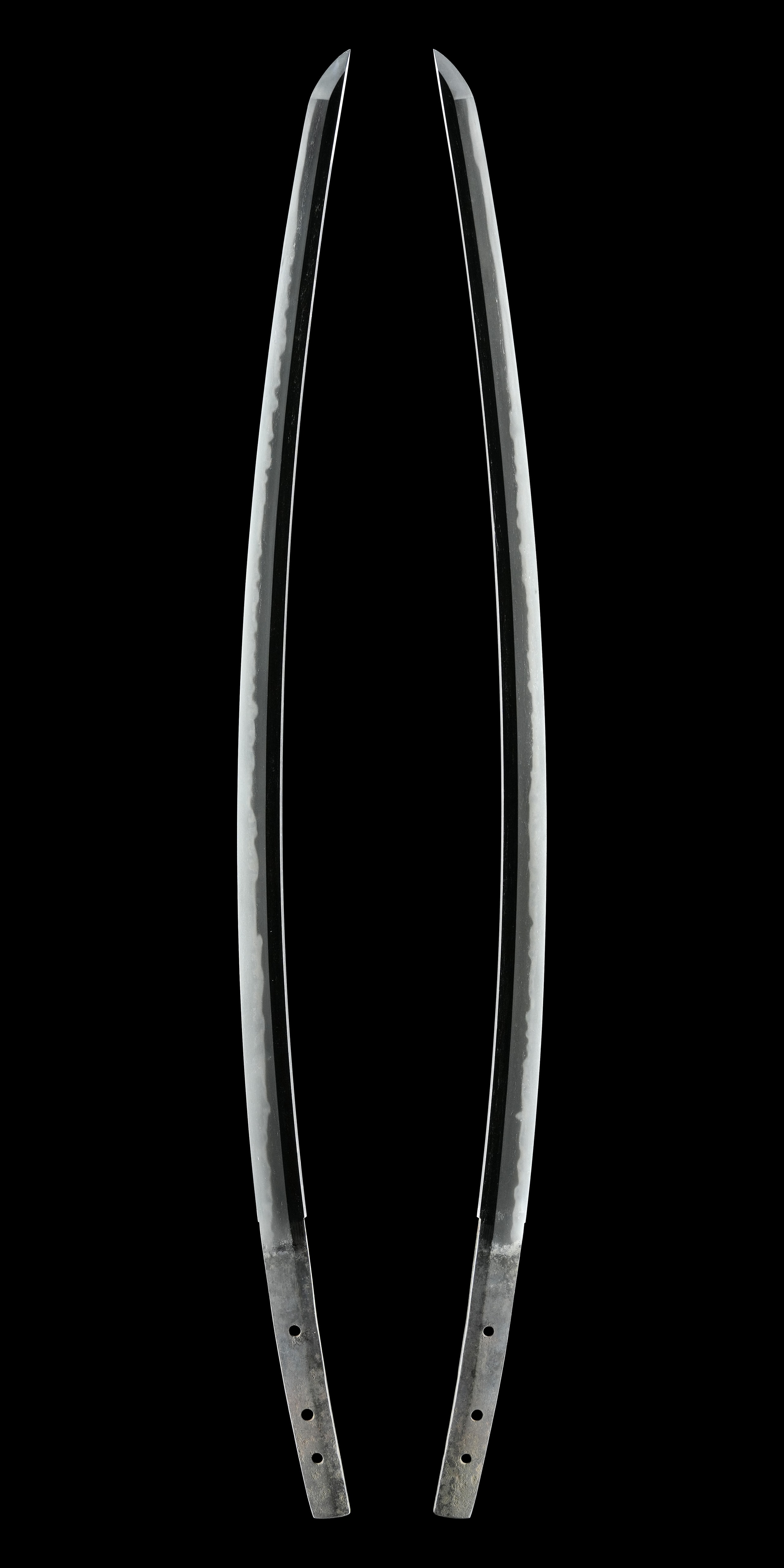
The shape of his is not one thing. The published sources describe a range that runs from slender, orthodox builds to broad, powerfully made blades, with the point typically tied off in an manner. The signed, pieces keep a high, wheel-like curvature and a small point of real grace; the great mass of the surviving work is and unsigned, wide in the body with a thick , and even after shortening it holds a deep and a weighty, dignified bearing that reads at once as mid .
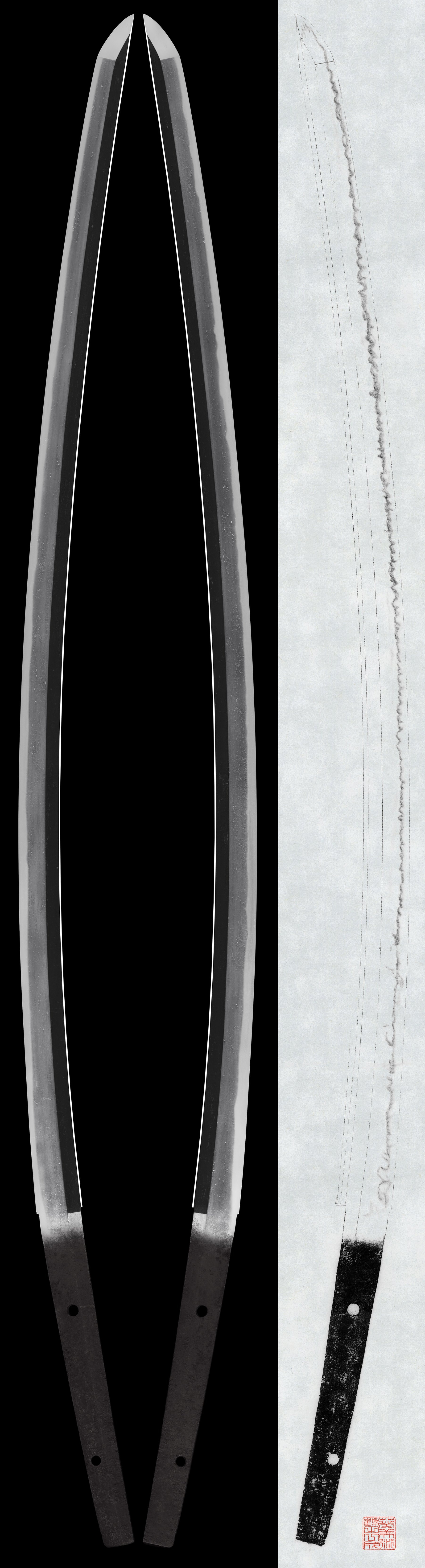
The is the constant. It is a finely forged , at times carrying , and a little , worked until it is dense and refined; over it the lies thickly in minute particles, fine enter, and a rises that in places shades toward a . The steel is strong and clear, and the bright, refined forging that the connoisseur reads as - is the first thing the eye should settle on. This is the calm, lustrous on which everything else is staged.
Over that Kuniyuki tempers a wide, -toned rather than the full of contemporary . Into it he mixes , , small and squared-off elements, so that the temper is complex and changeful without ever becoming a clamorous ; and enter densely, often as the Kyoto-style , the runs deep and bright, attaches thickly, and and move through the body of the . At the crests of the undulations small and sometimes gather into a or gan-mata figure, and may appear above. It is a temper of restraint and activity at once, the activity carried in the rather than in the height of the pattern.
The is where his hand is most easily misjudged. It is not a plain . A is indeed the most frequent turnback, but it is most often drawn out by , the brushed of the point continuing the work of the below; the published sources describe a that vigorously brushes (盛んに掃きかける) and that turns back in a small round with a slightly pointed tendency (先小丸やや尖りごころに返る). In many blades it falls into a with a pointing tip (帽子は小さく乱れ込み、先尖りごころ), at times genuinely pointed, at times burned through in a manner. A reading that names only the small round and the irregular turnback misses the swept tip that is in fact the dominant feature, and for recognition the belongs in the first rank of his traits beside the itself.
For a founder of his rank the named histories are heavy. A signed descended in the Kuroda family of and carries an of Genroku 14 (1701) by Kochu (本阿弥光忠) valuing it at one thousand , with Goto fittings on its mounting; another blade passed through the Shimazu family of Satsuma; signature variants are read against a piece formerly in the Ogasawara collection, and his blades reach into the Tokugawa houses as well. His work numbers a National Treasure and many Important Cultural Properties, and within the published catalogues his and entries together run to roughly a hundred, a count that places him among the very highest of the Yamashiro masters and makes a freely tradeable example a genuine rarity.