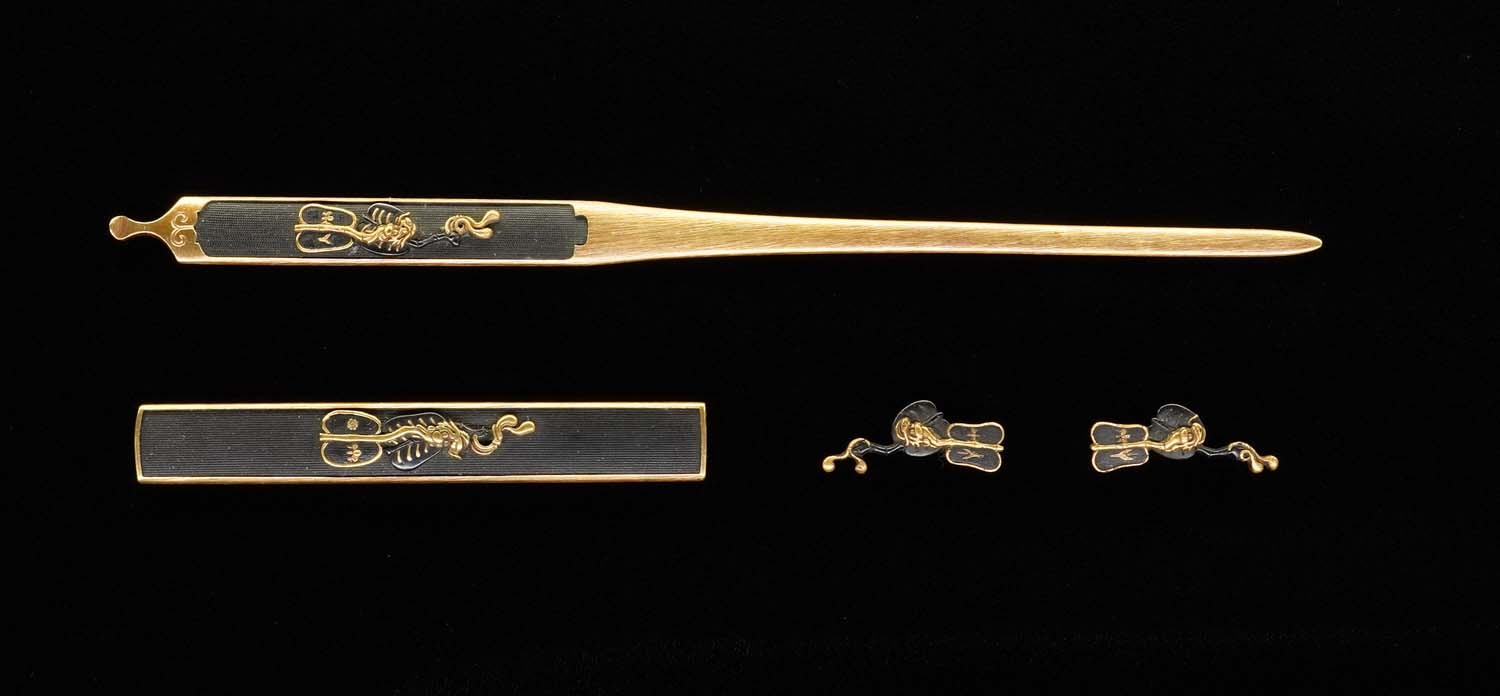
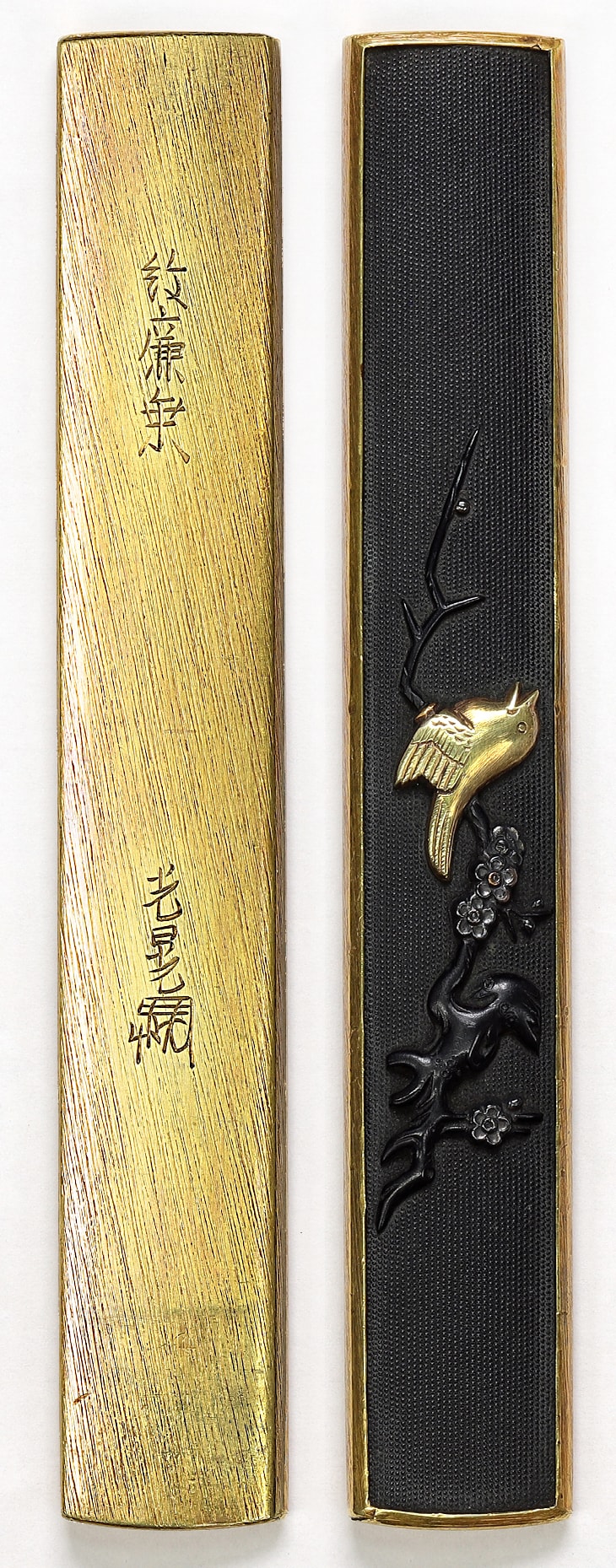
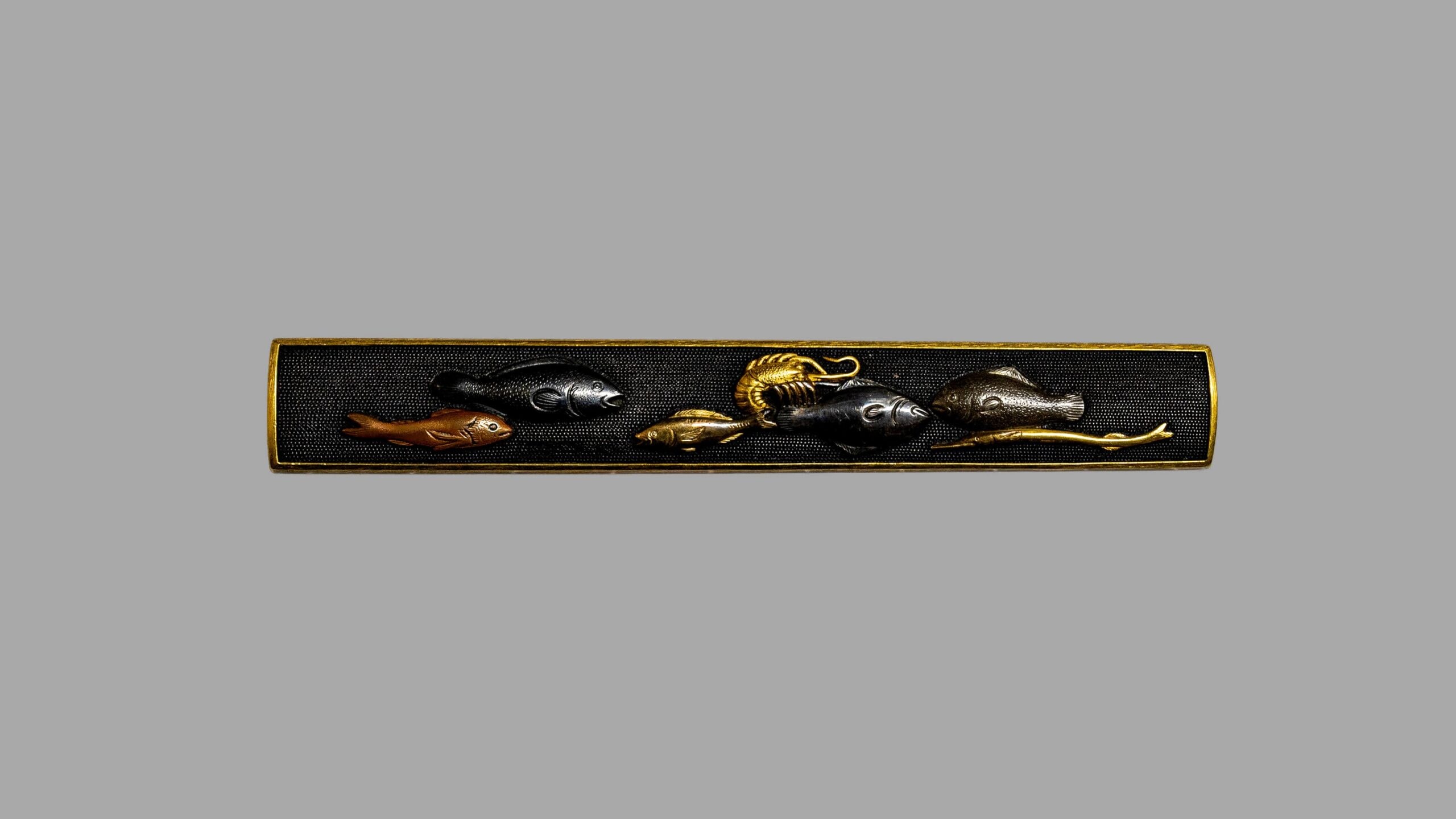
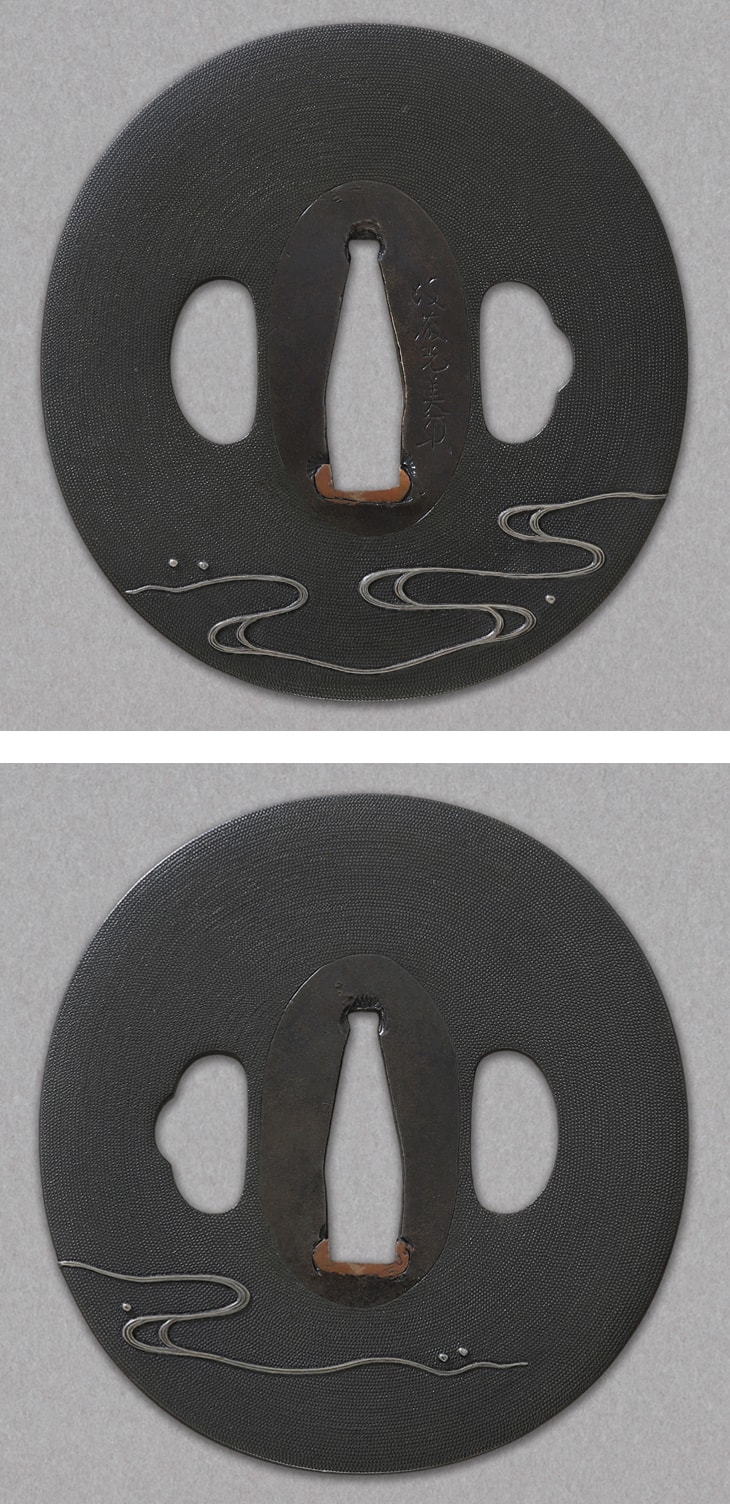
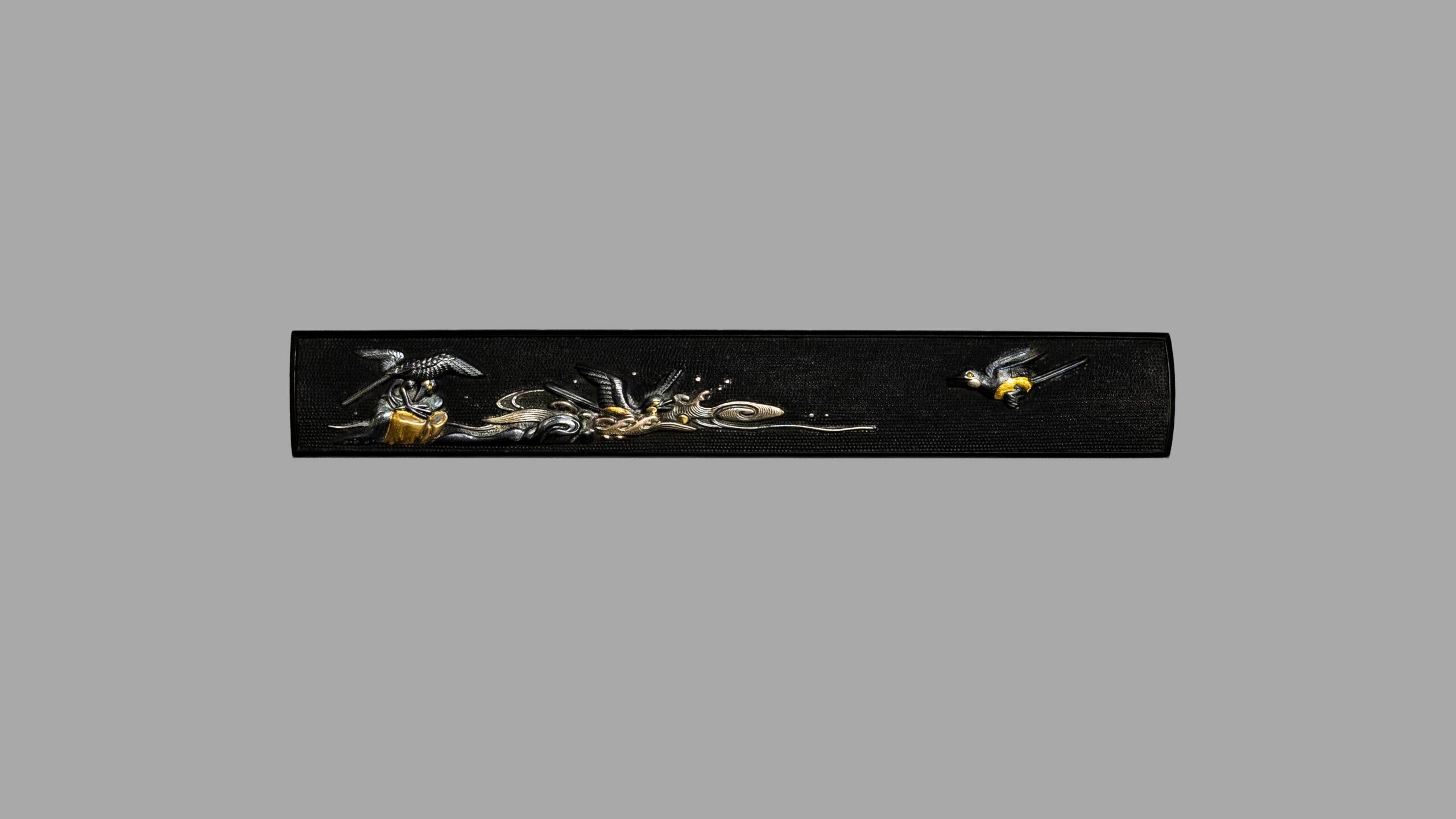
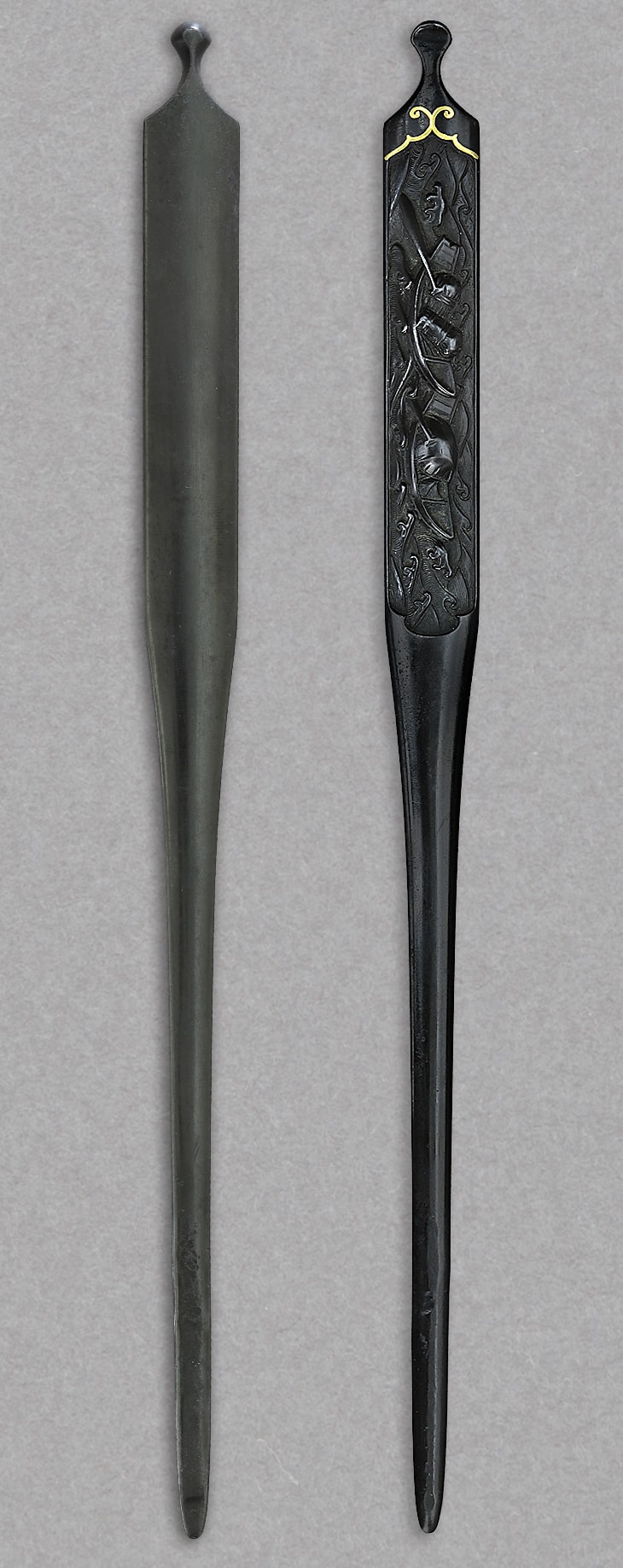
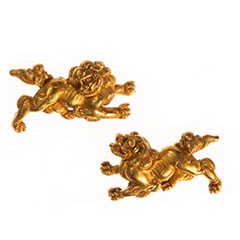
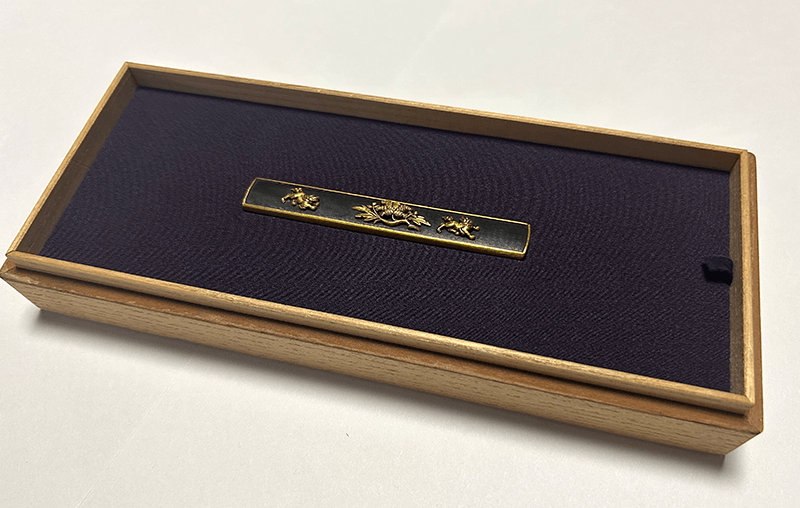
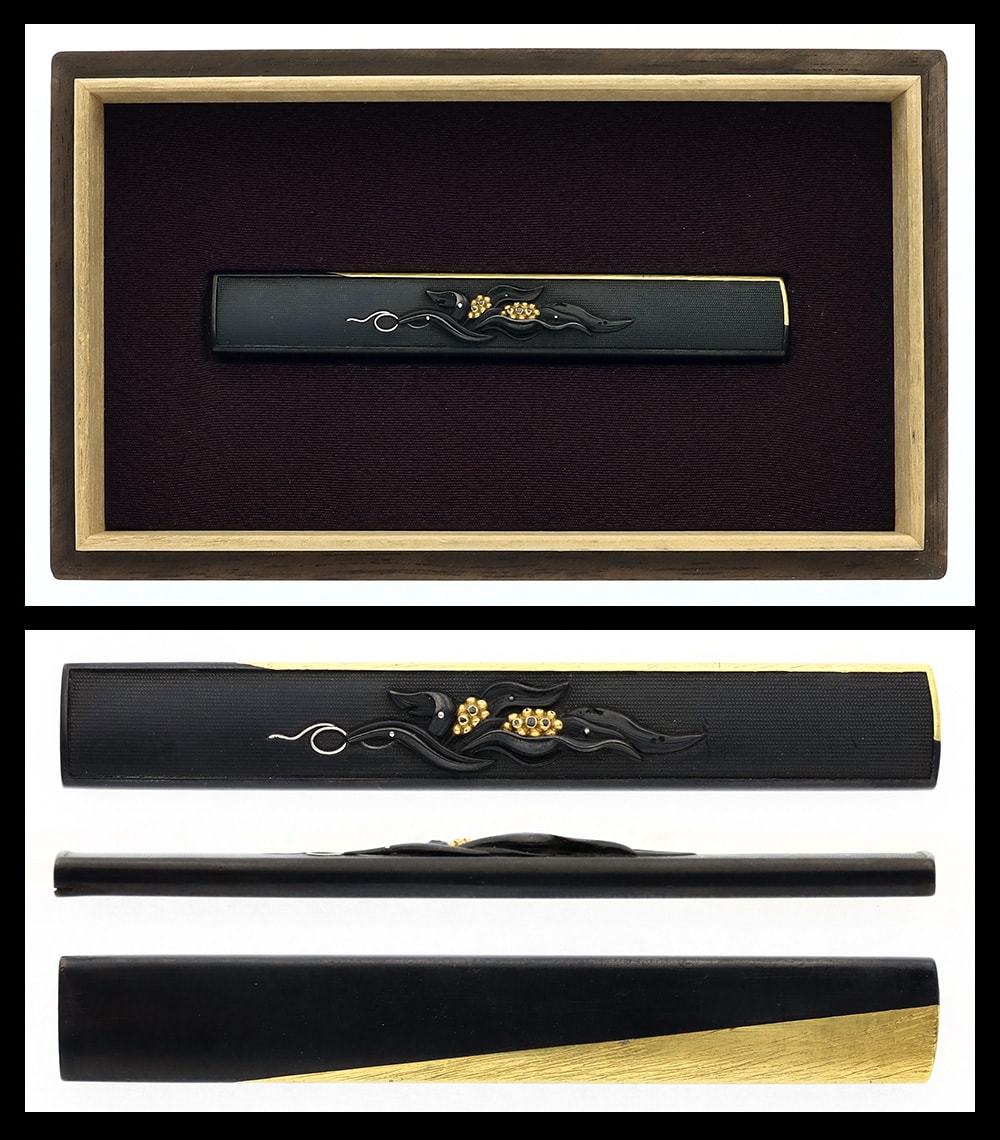
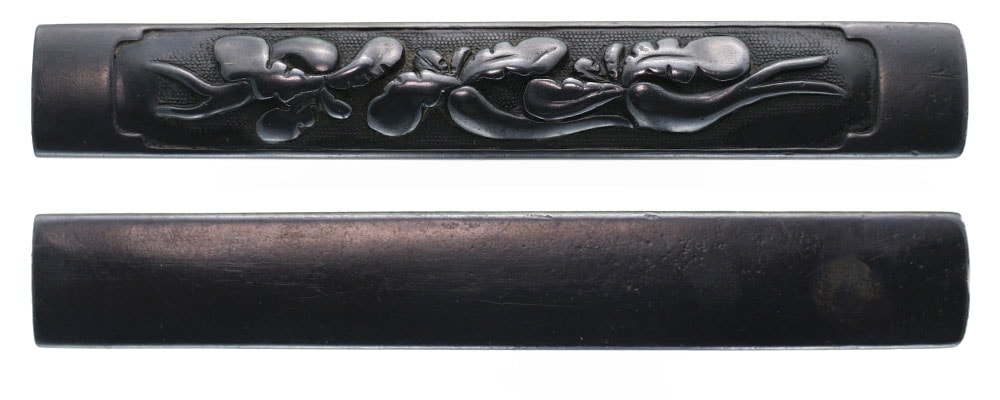
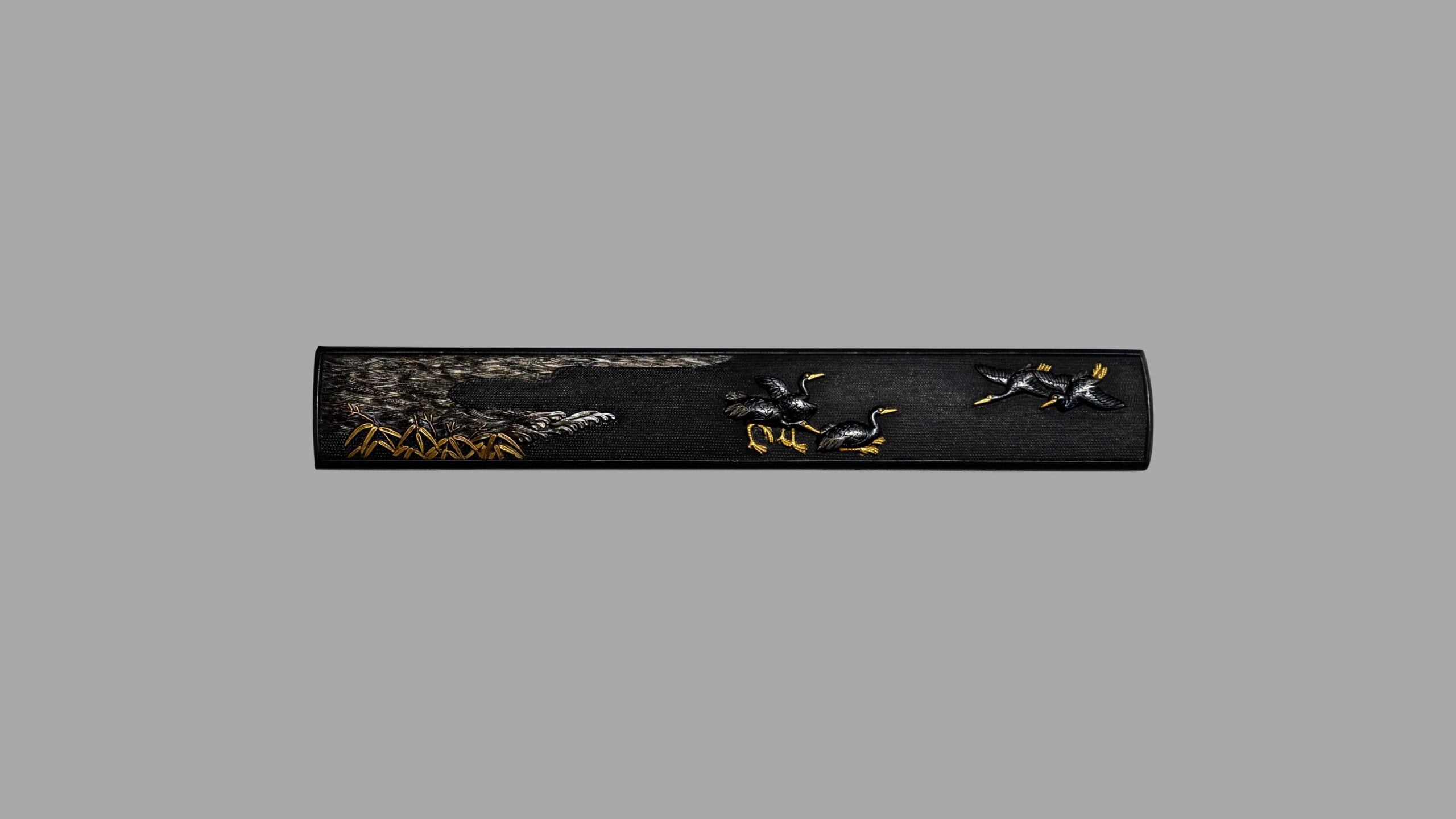
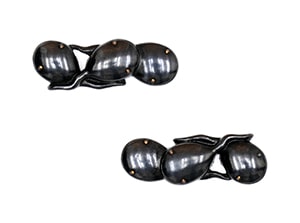
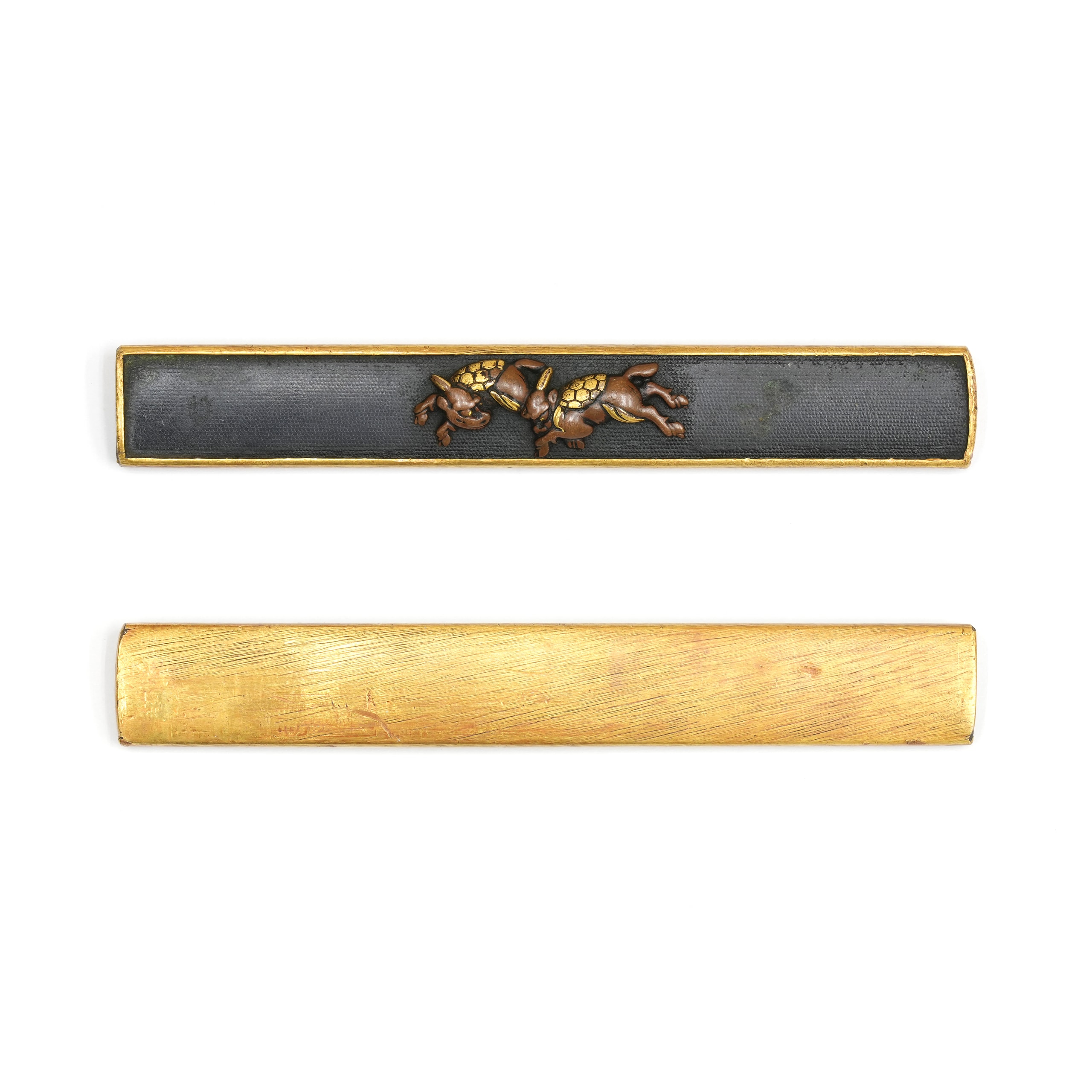
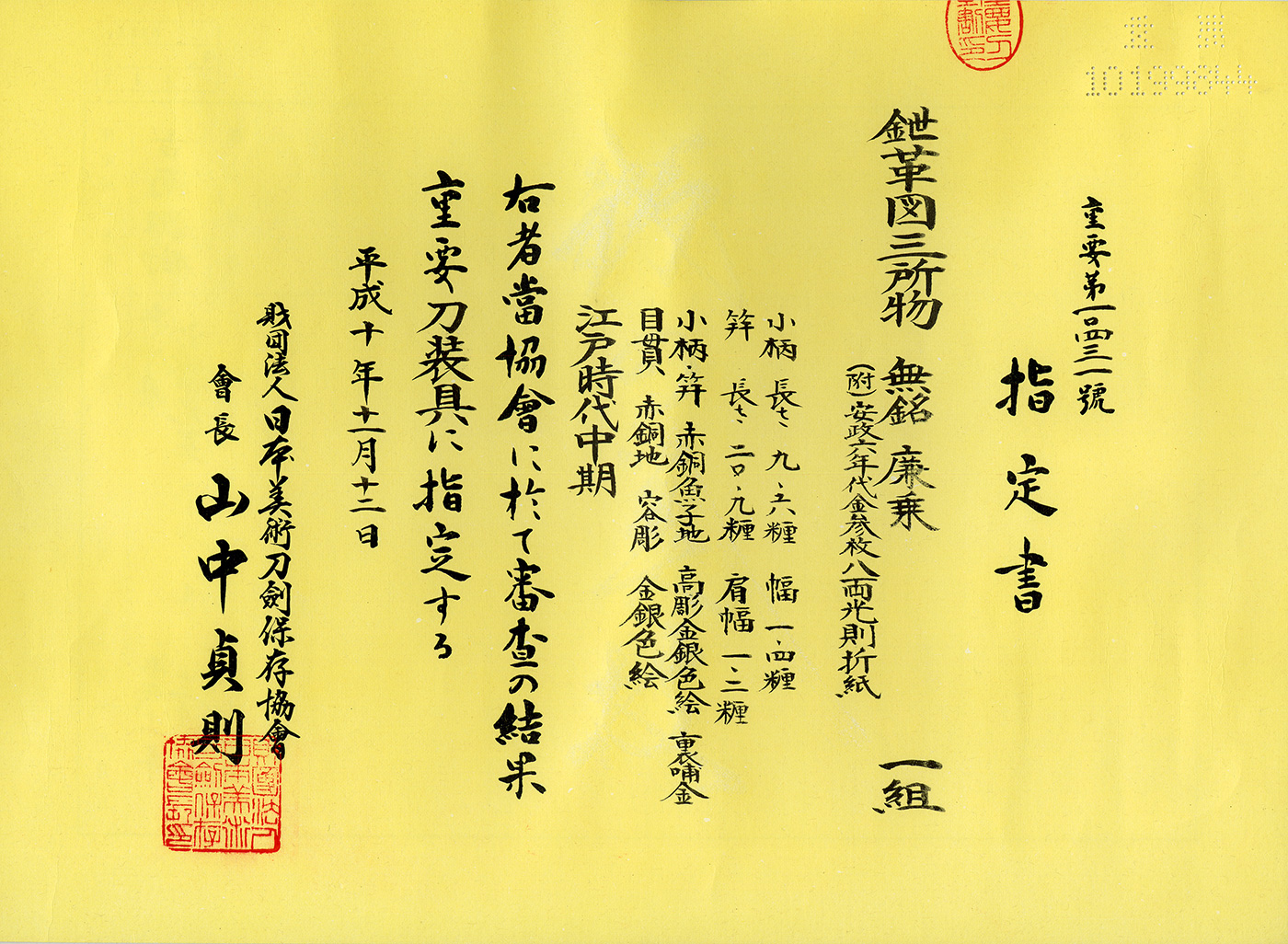
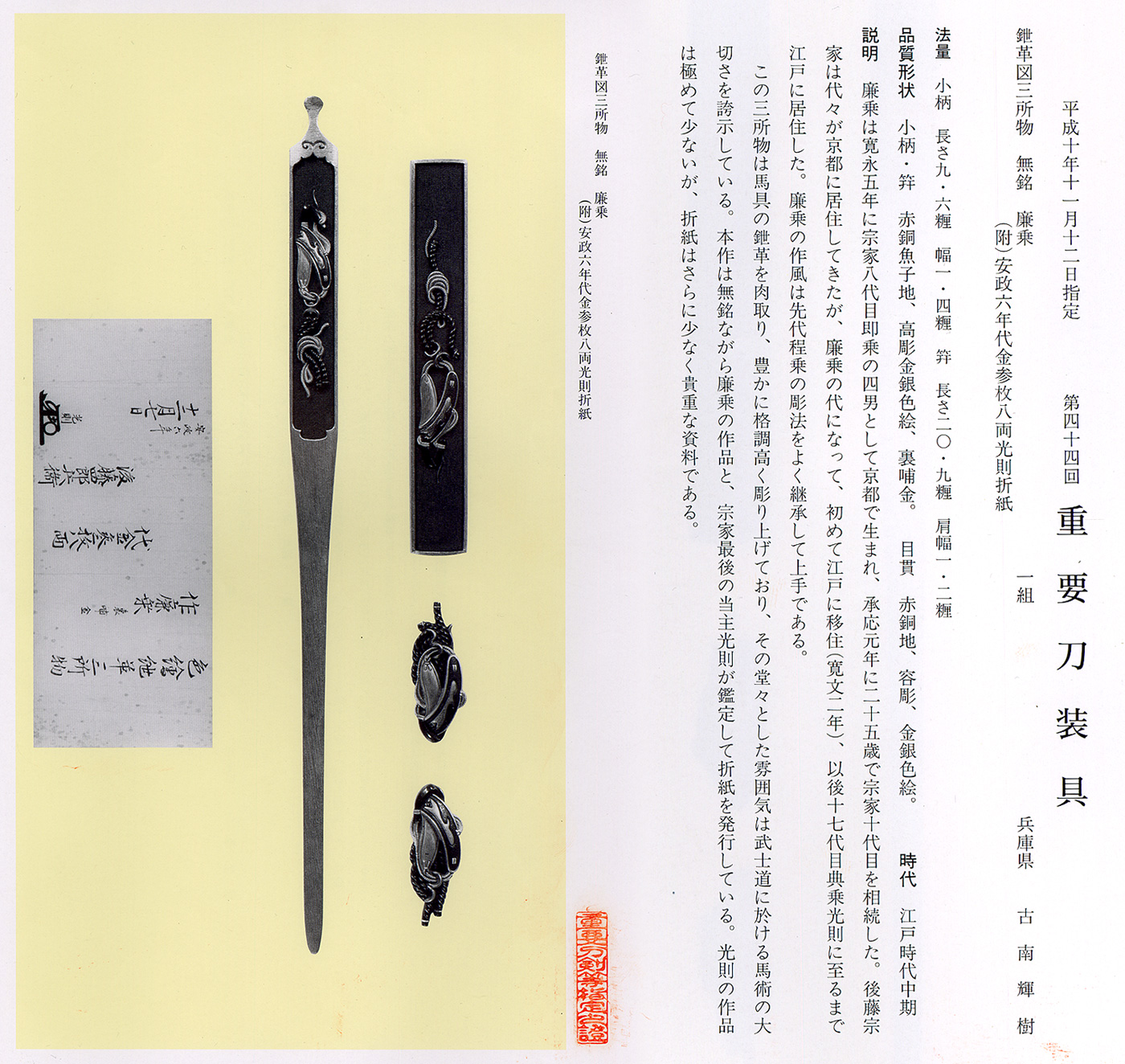
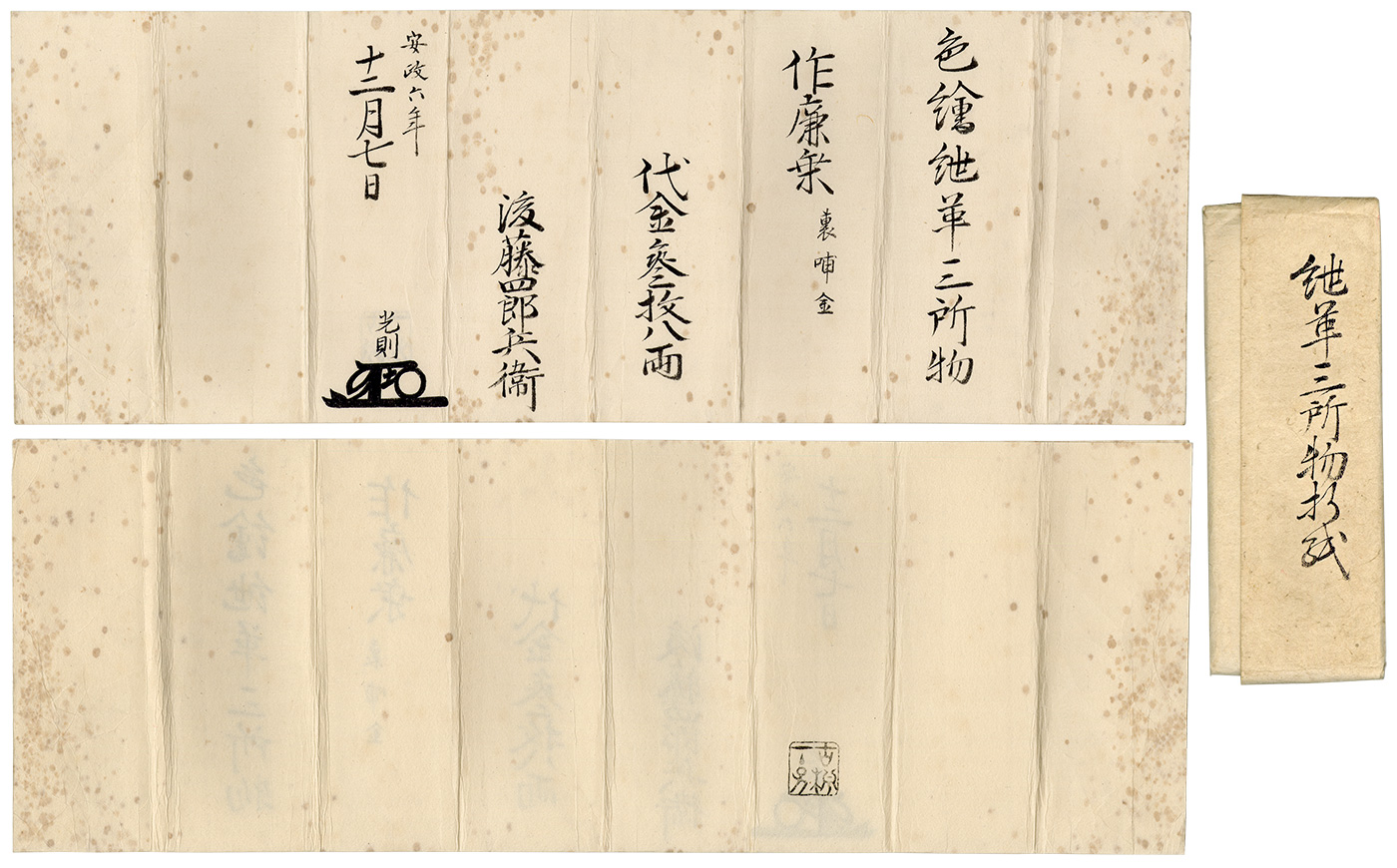
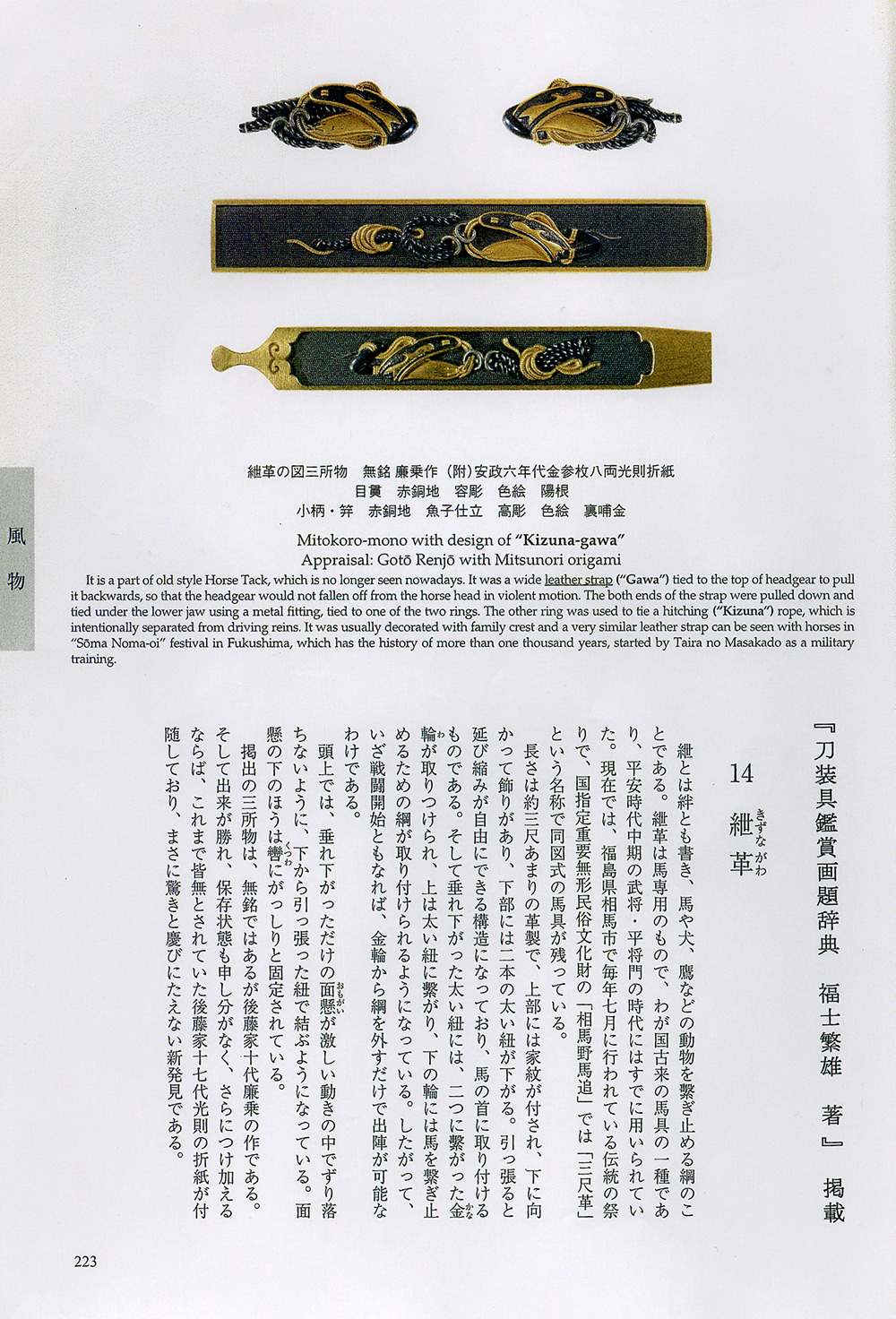
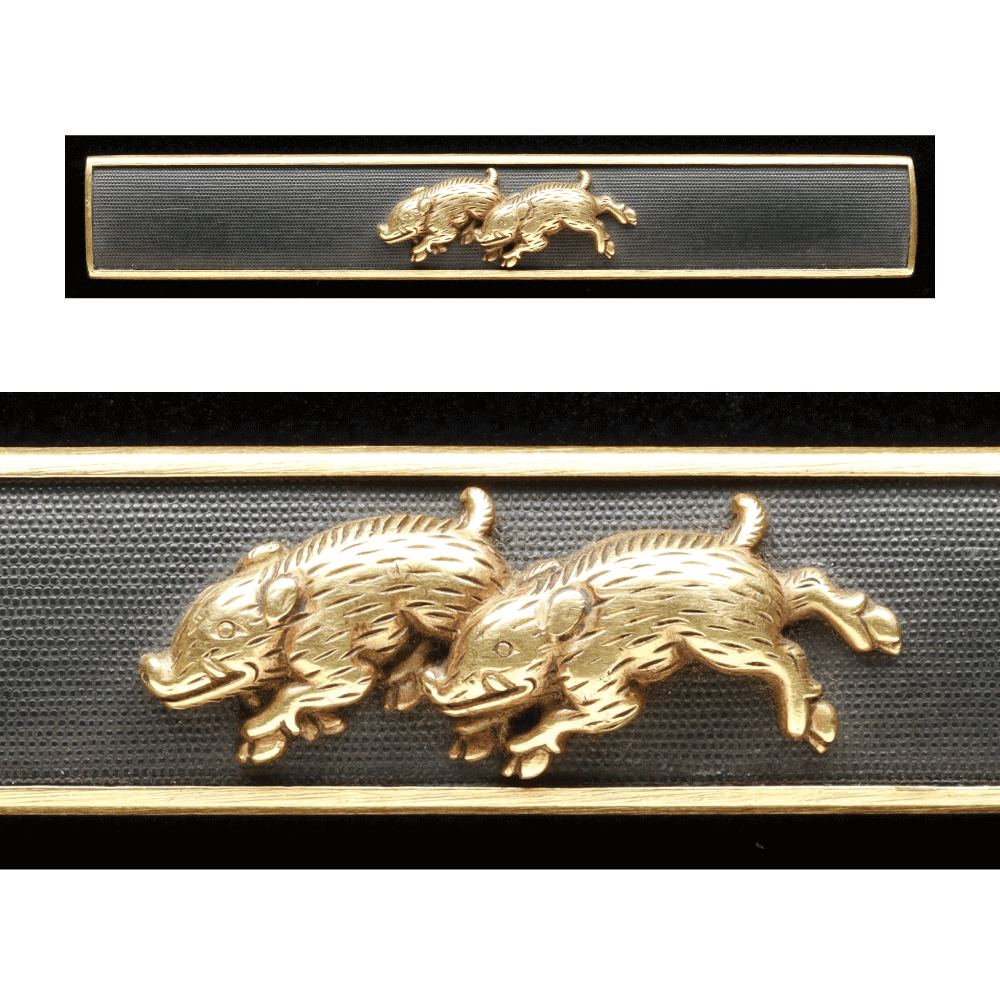
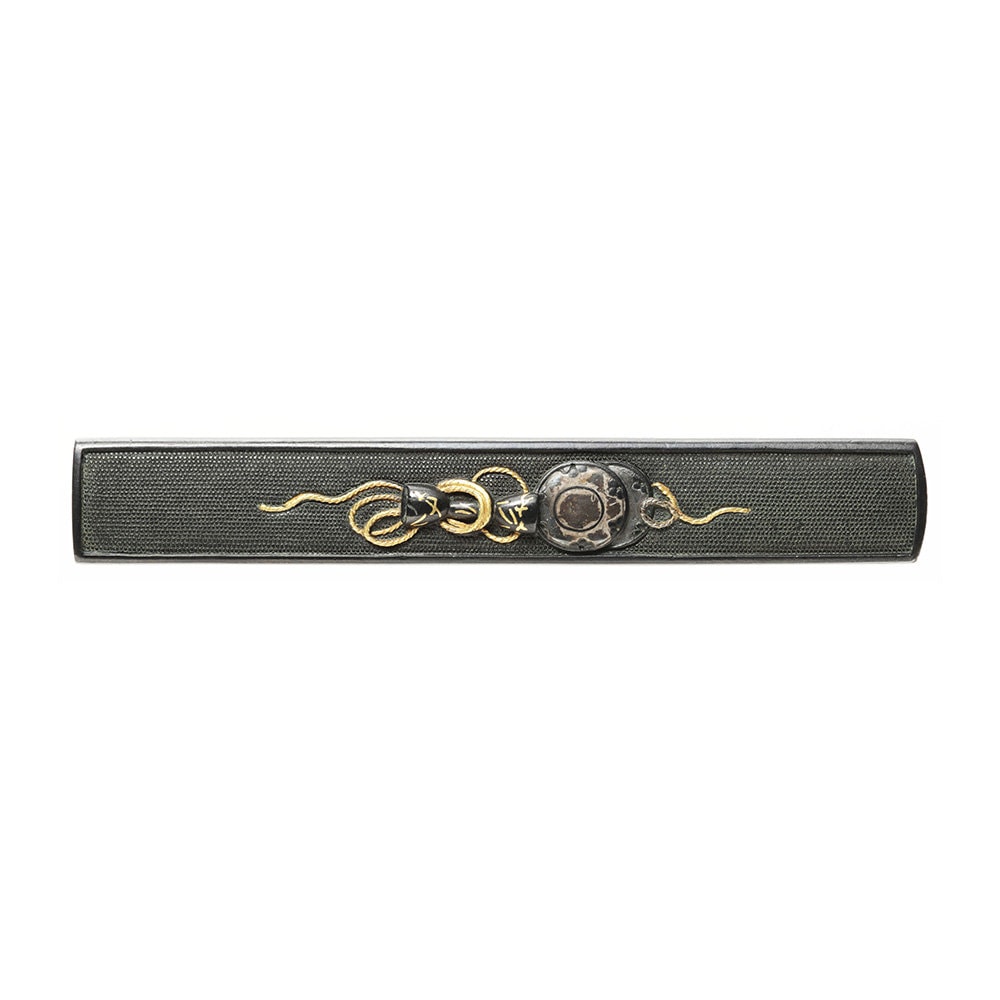
注文番号:F25622 三所物(笄・小柄・目貫):雉子皮図(第44回重要刀装具) 折紙(安政六年 光乗極め、代金三枚八両) 銘:無銘(廉乗) 寸法: 笄:21.0 cm x 12.1 cm 小柄:9.63 cm x 1.44 cm 目貫: 1:3.45 cm x 1.33 cm 2:3.47 cm x 1.32 cm 時代:江戸時代 特徴: 笄・小柄:赤銅魚子地に雉子皮図を高彫し、金銀色絵を施す。 目貫:赤銅地に雉子皮図を容彫、金銀色絵を施す。 説明: 後藤廉乗は寛永5年(1628年)、八代宗乗の四男として京都に生まれました。承応元年(1652年)、25歳で後藤家十代宗家を継承。後藤家は代々京都に居住していましたが、廉乗の代(寛文2年)に江戸へ移住し、以降、十七代典乗光則に至るまで江戸を拠点としました。 廉乗の作風は、先代までの伝統的な様式を忠実に継承しており、その技量は極めて高く評価されています。 本作は、武士の嗜みである馬術において重要な装束である「雉子皮(馬具の力革)」を題材とした三所物です。堂々とした品格のある構図で、武道の本質を象徴するかのような趣深い名品です。 無銘ながら、後藤家最後の当主である十七代光則による「廉乗」との極め折紙が附属しております。光則自体の作品も希少ですが、その折紙は歴史的資料としても極めて価値が高く、現存数は非常に限られています。 桐箱入 葵美術鑑定書 日本美術刀剣保存協会 第44回重要刀装具 後藤光則折紙附属 価格:2,800,000円 注文フォーム 関連商品: 三所物:笄 無銘(廉乗)/小柄・目貫 紋 後藤廉乗光孝(花押)(第49回重要刀装具) 三所物:小柄・笄・目貫(NBTHK 重要刀装具)
廉乗は寛永五年に宗家八代目即乗の四男として京都で生まれ、承応元年に二十五歳で宗家十代目を相続した。後藤宗 家は代々が京都に居住してきたが、廉乗の代になって、初めて江戸に移住(寛文二年)、以後十七代目典乗光則に至るまで 江戸に居住した。 廉乗の作風は先代程乗の彫法をよく継承して上手である。 この三所物は馬具の錐革を肉取り、豊かに格調高く彫り上げており、その堂々とした雰囲気は武士道に於ける馬術の大 切さを誇示している。本作は無銘ながら廉乗の作品と、宗家最後の当主光則が鑑定して折紙を発行している。 光則の作品 は極めて少ないが、折紙はさらに少なく貴重な資料である。
Certificate reading — 無銘(廉乗)
Auction outcome: ended with no bids on 2026-07-02.
 NihontoWatch
後藤廉乗
江戸
無銘
重要 #44 (NBTHK)
廉乗は寛永五年に宗家八代目即乗の四男として京都で生まれ、承応元年に二十五歳で宗家十代目を相続した。後藤宗 家は代々が京都に居住してきたが、廉乗の代になって、初めて江戸に移住(寛文二年)、以後十七代目典乗光則に至るまで 江戸に居住した。 廉乗の作風は先代程乗の彫法をよく継承して上手である。 この三所物は馬具の錐革を肉取り、豊かに格調高く彫り上げており、その堂々とした雰囲気は武士道に於ける馬術の大 切さを誇示している。本作は無銘ながら廉乗の作品と、宗家最後の当主光則が鑑定して折紙を発行している。 光則の作品 は極めて少ないが、折紙はさらに少なく貴重な資料である。
家彫 · 山城 · 1627-1708頃
現在7点販売中
後藤廉乗(ごとうれんじょう)は、後藤家十代目として知られる金工家である。寛永五年(1628年)に八代即乗(そくじょう)の四男として京都に生まれ、幼名を亀市、俗名を源四郎と称した。正保二年(1645年)、十八歳で宗家の名乗りである四郎兵衛を襲名し、名を光侶(みつとも)と改めた。承応元年(1652年)に二十五歳で宗家十代目を相続した。後藤宗家は代々京都に居住してきたが、幕命によって廉乗が寛文二年(1662年)にはじめて江戸へ移住し、以後十七代典乗光則に至るまで江戸に居住している。天和三年(1683年)五十六歳の時、剃髪して廉乗と号し、元禄十年(1697年)に養子の光寿(通乗)へ宗家十一代目を譲って京都に隠居した。
廉乗の作風は、先代程乗(ていじょう)の彫法をよく継承して上手であると評される。家伝の獅子、龍の彫はもとより、人物も得意とし、地金も新たに四分一を用いたり、毛彫の作品も作るなど新味を出している。作域は広く、刀装具の意匠としては、武者絵、故事人物、動物、植物、器物など森羅万象あらゆるものを図柄として取り入れている。特に七夕図は最も高い評価がなされている。作風の特色として、高彫、色絵、魚子地などが挙げられ、金、銀、赤銅などの素材を巧みに用いる。また、大小柄においては「画面いっぱいの波地に巨巌を配し、激しく波立ち渦巻く海を大胆な構図を以て表している」[[c:1]]と評されるように、構図にも工夫が見られる。銘については、光侶銘が多く廉乗銘は少ないとされる。
廉乗の作品は、後藤家の格式を伝える格調高い仕上がりを見せる。その作は「濃やかで、金銀の色絵も的確に施しており、後藤家の高い品格をあらわしている」[[c:2]]と評されるように、技術の高さと品格を兼ね備えている。後藤家作品の鐔は少ないが、大小揃いの鐔となると更に少なくなる。後藤家は代々折紙を発行しており、廉乗の作品にも後代の当主による折紙が付属することがある。これらの折紙は、作品の真偽を保証するだけでなく、当時の鑑定や評価を知る上で貴重な資料となる。
後藤廉乗の位置づけを、日本刀全体および伝統・時代・時期ごとに示します。各位(随一・屈指・有数・著名)は、NBTHK および文化庁による指定に加え、三作や名物帳などの歴史的栄誉を加味したものです。
各項目を選ぶと評価方法が表示されます。
家彫 · 山城
時期区分: 後藤宗家· 1573–1900
現在325点販売中
特別保存刀剣の中から、特に出来が優れ、国認定の重要美術品に準ずると判断された名品です。年に一度の重要刀剣審査で選ばれます。
極めて選別的で、日本に登録された約250万口の刀剣のうち、重要刀剣に達したものは12,307口(約203口に1口)にすぎません。
日本美術刀剣保存協会(NBTHK)は、1948年に設立され、文化庁の監督を受ける公益財団法人で、東京・刀剣博物館に本部を置きます。専門の審査員が出品作を直接審査し、美術的・歴史的価値に応じた鑑定書を発行します。NBTHKの鑑定書は、日本刀および刀装具の真正性を示す最も広く認知された基準です。
NBTHK公式サイト返品をご希望の場合、お客様が受領されてから3日以内にお知らせください。この期間を過ぎますとキャンセルはお受けできかねますので何卒ご了承ください。なお当社へのご返送は、5営業日以内の発送をお願いしております。なおキャンセルは販売した当時の状態がそのまま保持されている事が条件となりますのでお取り扱いには十分ご注意下さい。
注文番号:F25622 三所物(笄・小柄・目貫):雉子皮図(第44回重要刀装具) 折紙(安政六年 光乗極め、代金三枚八両) 銘:無銘(廉乗) 寸法: 笄:21.0 cm x 12.1 cm 小柄:9.63 cm x 1.44 cm 目貫: 1:3.45 cm x 1.33 cm 2:3.47 cm x 1.32 cm 時代:江戸時代 特徴: 笄・小柄:赤銅魚子地に雉子皮図を高彫し、金銀色絵を施す。 目貫:赤銅地に雉子皮図を容彫、金銀色絵を施す。 説明: 後藤廉乗は寛永5年(1628年)、八代宗乗の四男として京都に生まれました。承応元年(1652年)、25歳で後藤家十代宗家を継承。後藤家は代々京都に居住していましたが、廉乗の代(寛文2年)に江戸へ移住し、以降、十七代典乗光則に至るまで江戸を拠点としました。 廉乗の作風は、先代までの伝統的な様式を忠実に継承しており、その技量は極めて高く評価されています。 本作は、武士の嗜みである馬術において重要な装束である「雉子皮(馬具の力革)」を題材とした三所物です。堂々とした品格のある構図で、武道の本質を象徴するかのような趣深い名品です。 無銘ながら、後藤家最後の当主である十七代光則による「廉乗」との極め折紙が附属しております。光則自体の作品も希少ですが、その折紙は歴史的資料としても極めて価値が高く、現存数は非常に限られています。 桐箱入 葵美術鑑定書 日本美術刀剣保存協会 第44回重要刀装具 後藤光則折紙附属 価格:2,800,000円 注文フォーム 関連商品: 三所物:笄 無銘(廉乗)/小柄・目貫 紋 後藤廉乗光孝(花押)(第49回重要刀装具) 三所物:小柄・笄・目貫(NBTHK 重要刀装具)
廉乗は寛永五年に宗家八代目即乗の四男として京都で生まれ、承応元年に二十五歳で宗家十代目を相続した。後藤宗 家は代々が京都に居住してきたが、廉乗の代になって、初めて江戸に移住(寛文二年)、以後十七代目典乗光則に至るまで 江戸に居住した。 廉乗の作風は先代程乗の彫法をよく継承して上手である。 この三所物は馬具の錐革を肉取り、豊かに格調高く彫り上げており、その堂々とした雰囲気は武士道に於ける馬術の大 切さを誇示している。本作は無銘ながら廉乗の作品と、宗家最後の当主光則が鑑定して折紙を発行している。 光則の作品 は極めて少ないが、折紙はさらに少なく貴重な資料である。
Certificate reading — 無銘(廉乗)
Auction outcome: ended with no bids on 2026-07-02.
NihontoWatch後藤廉乗
江戸
無銘
重要 #44 (NBTHK)
廉乗は寛永五年に宗家八代目即乗の四男として京都で生まれ、承応元年に二十五歳で宗家十代目を相続した。後藤宗 家は代々が京都に居住してきたが、廉乗の代になって、初めて江戸に移住(寛文二年)、以後十七代目典乗光則に至るまで 江戸に居住した。 廉乗の作風は先代程乗の彫法をよく継承して上手である。 この三所物は馬具の錐革を肉取り、豊かに格調高く彫り上げており、その堂々とした雰囲気は武士道に於ける馬術の大 切さを誇示している。本作は無銘ながら廉乗の作品と、宗家最後の当主光則が鑑定して折紙を発行している。 光則の作品 は極めて少ないが、折紙はさらに少なく貴重な資料である。
家彫 · 山城 · 1627-1708頃
現在7点販売中
後藤廉乗(ごとうれんじょう)は、後藤家十代目として知られる金工家である。寛永五年(1628年)に八代即乗(そくじょう)の四男として京都に生まれ、幼名を亀市、俗名を源四郎と称した。正保二年(1645年)、十八歳で宗家の名乗りである四郎兵衛を襲名し、名を光侶(みつとも)と改めた。承応元年(1652年)に二十五歳で宗家十代目を相続した。後藤宗家は代々京都に居住してきたが、幕命によって廉乗が寛文二年(1662年)にはじめて江戸へ移住し、以後十七代典乗光則に至るまで江戸に居住している。天和三年(1683年)五十六歳の時、剃髪して廉乗と号し、元禄十年(1697年)に養子の光寿(通乗)へ宗家十一代目を譲って京都に隠居した。
廉乗の作風は、先代程乗(ていじょう)の彫法をよく継承して上手であると評される。家伝の獅子、龍の彫はもとより、人物も得意とし、地金も新たに四分一を用いたり、毛彫の作品も作るなど新味を出している。作域は広く、刀装具の意匠としては、武者絵、故事人物、動物、植物、器物など森羅万象あらゆるものを図柄として取り入れている。特に七夕図は最も高い評価がなされている。作風の特色として、高彫、色絵、魚子地などが挙げられ、金、銀、赤銅などの素材を巧みに用いる。また、大小柄においては「画面いっぱいの波地に巨巌を配し、激しく波立ち渦巻く海を大胆な構図を以て表している」[[c:1]]と評されるように、構図にも工夫が見られる。銘については、光侶銘が多く廉乗銘は少ないとされる。
廉乗の作品は、後藤家の格式を伝える格調高い仕上がりを見せる。その作は「濃やかで、金銀の色絵も的確に施しており、後藤家の高い品格をあらわしている」[[c:2]]と評されるように、技術の高さと品格を兼ね備えている。後藤家作品の鐔は少ないが、大小揃いの鐔となると更に少なくなる。後藤家は代々折紙を発行しており、廉乗の作品にも後代の当主による折紙が付属することがある。これらの折紙は、作品の真偽を保証するだけでなく、当時の鑑定や評価を知る上で貴重な資料となる。
後藤廉乗の位置づけを、日本刀全体および伝統・時代・時期ごとに示します。各位(随一・屈指・有数・著名)は、NBTHK および文化庁による指定に加え、三作や名物帳などの歴史的栄誉を加味したものです。
各項目を選ぶと評価方法が表示されます。
家彫 · 山城
時期区分: 後藤宗家· 1573–1900
現在325点販売中
特別保存刀剣の中から、特に出来が優れ、国認定の重要美術品に準ずると判断された名品です。年に一度の重要刀剣審査で選ばれます。
極めて選別的で、日本に登録された約250万口の刀剣のうち、重要刀剣に達したものは12,307口(約203口に1口)にすぎません。
日本美術刀剣保存協会(NBTHK)は、1948年に設立され、文化庁の監督を受ける公益財団法人で、東京・刀剣博物館に本部を置きます。専門の審査員が出品作を直接審査し、美術的・歴史的価値に応じた鑑定書を発行します。NBTHKの鑑定書は、日本刀および刀装具の真正性を示す最も広く認知された基準です。
NBTHK公式サイト返品をご希望の場合、お客様が受領されてから3日以内にお知らせください。この期間を過ぎますとキャンセルはお受けできかねますので何卒ご了承ください。なお当社へのご返送は、5営業日以内の発送をお願いしております。なおキャンセルは販売した当時の状態がそのまま保持されている事が条件となりますのでお取り扱いには十分ご注意下さい。

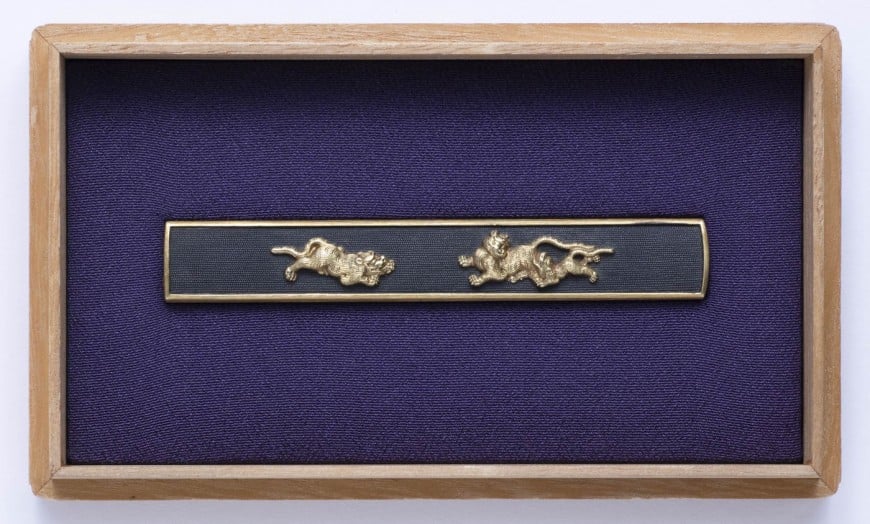
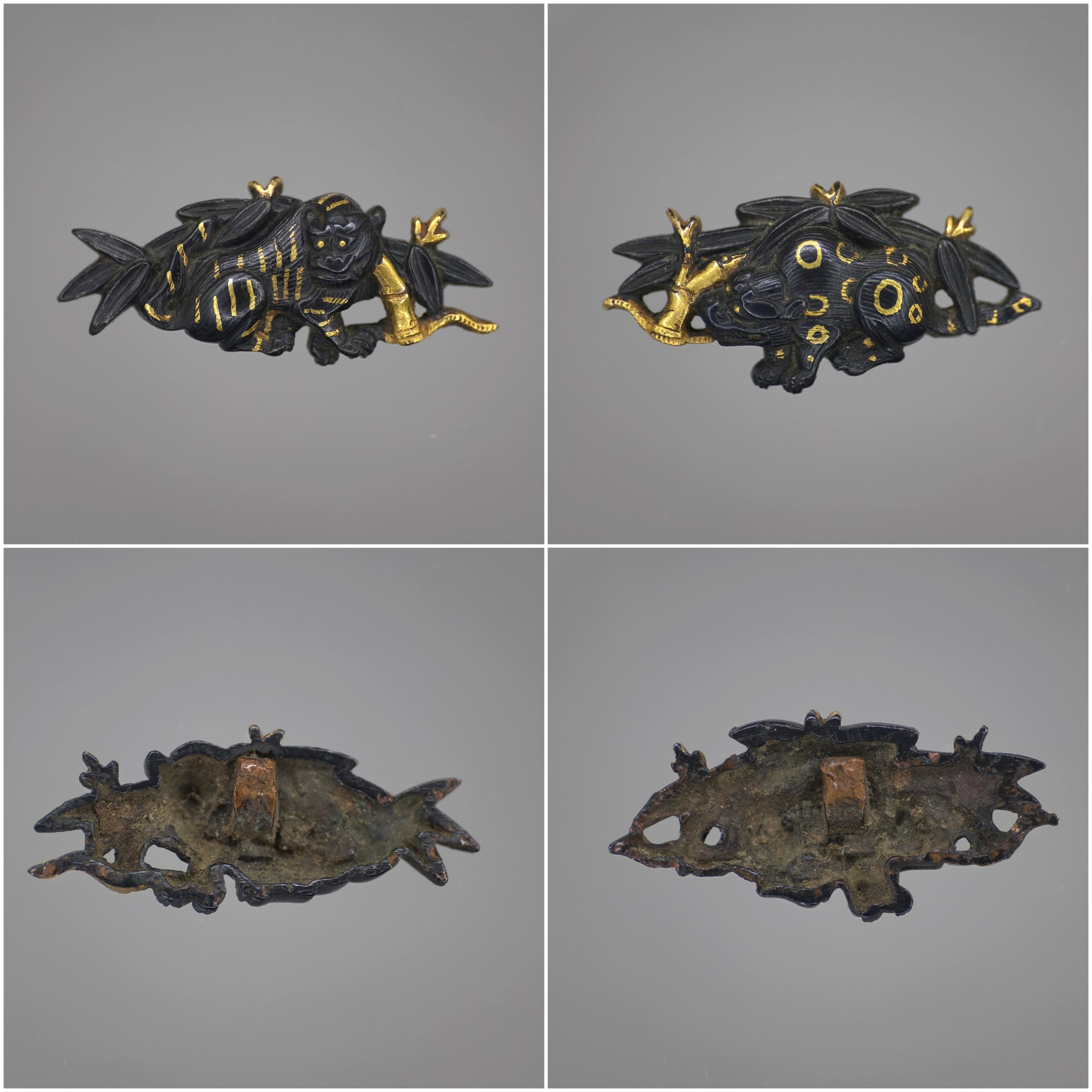
![Kozuka - Tokuho - 作 後藤廉乗 - 虎豹図小柄 銘 後藤光侶(花押) [十代]小柄後藤光呂[十代]](/_next/image?url=https%3A%2F%2Fitbhfhyptogxcjbjfzwx.supabase.co%2Fstorage%2Fv1%2Fobject%2Fpublic%2Flisting-images%2Fchoshuya%2FL189260%2F01.jpg&w=2560&q=90)