戦国の世、一派は第二の主家に仕えた。小田原の後北条氏である。その庇護のもと綱広系は打刀の時代の皆焼を鍛え続け、1590年の落城とともに新刀の時代へ散った。
 NihontoWatchNihontoWatch
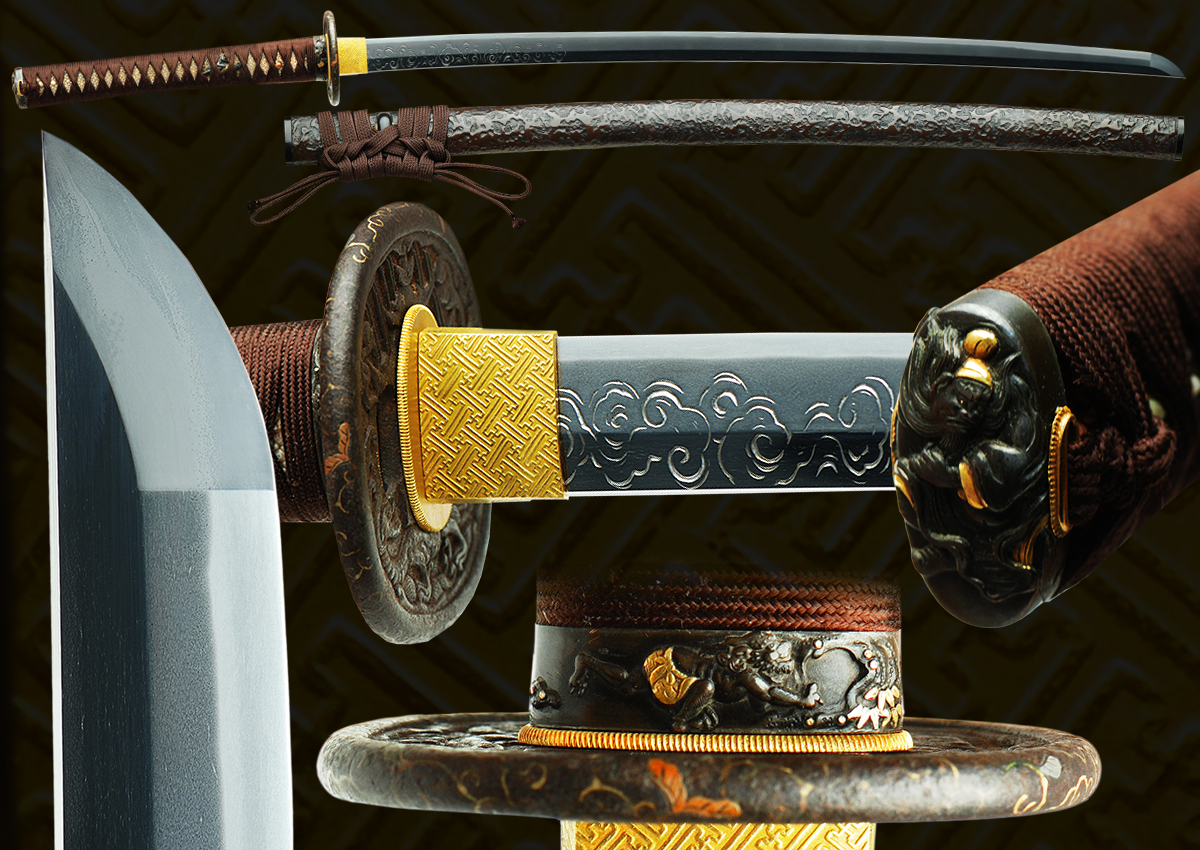
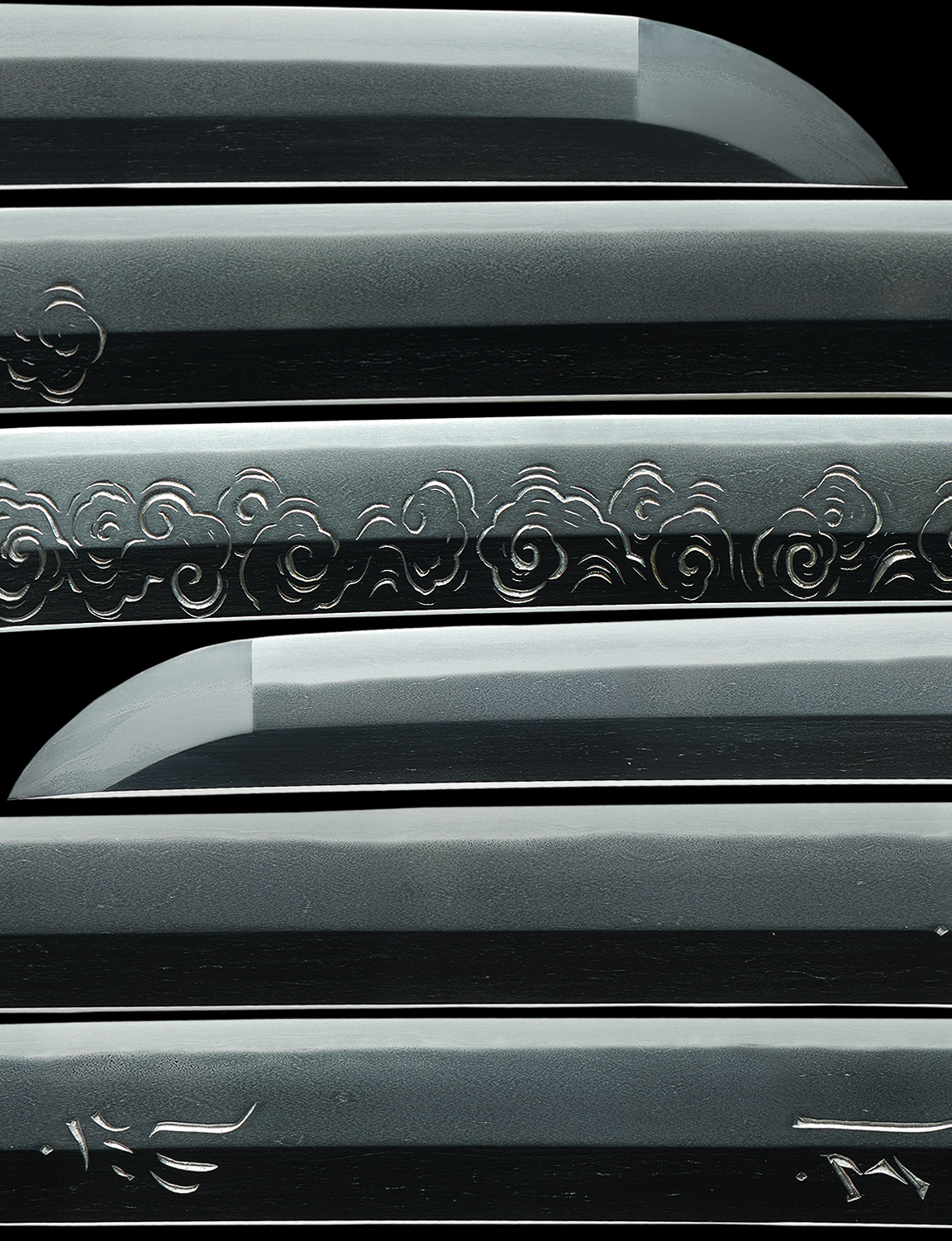
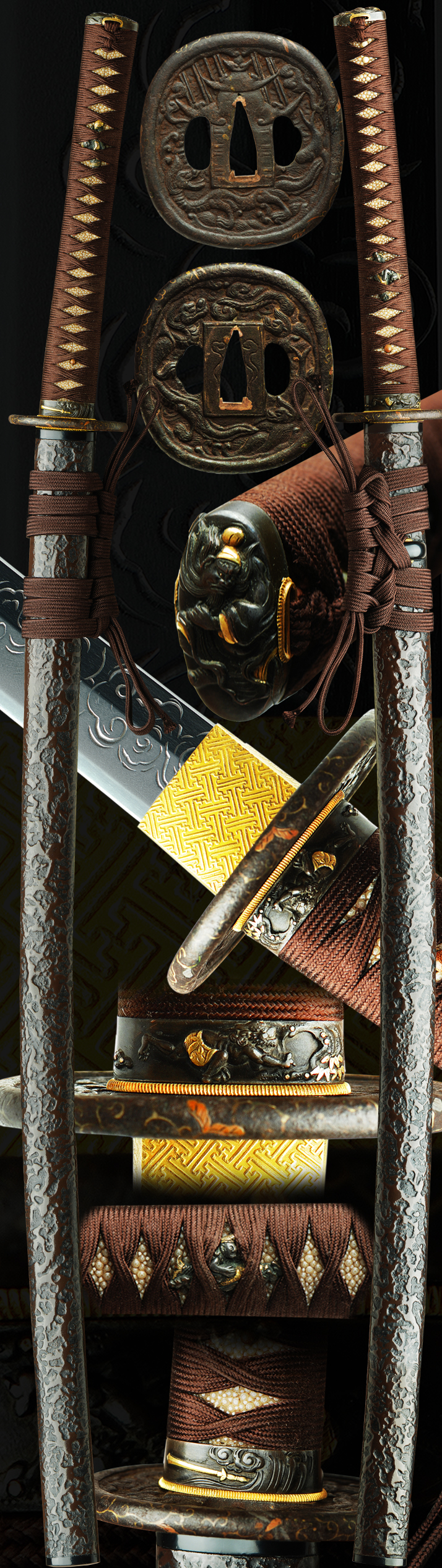
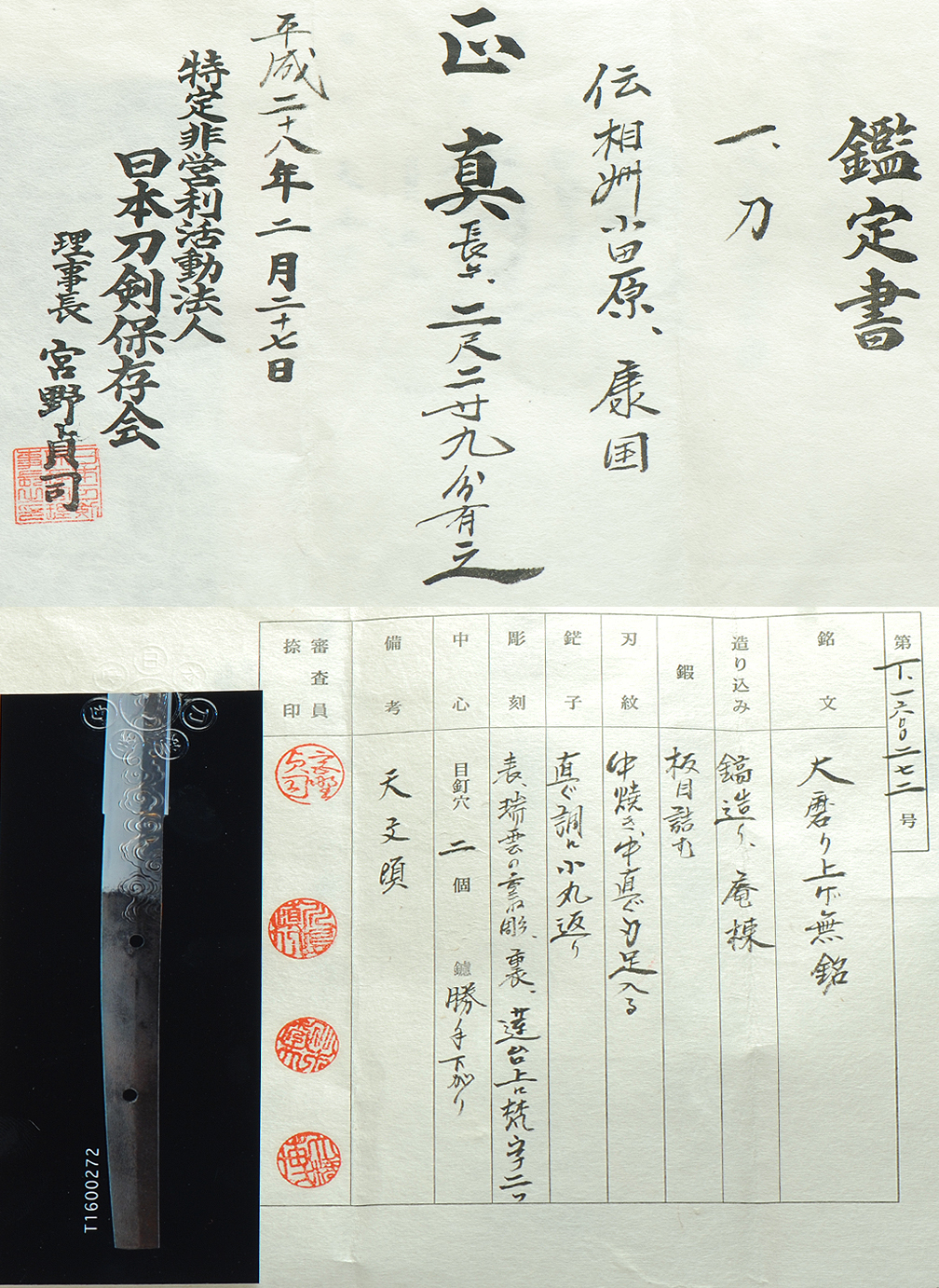
YASUKUNI (康国), 1st gen., Kyōroku (享禄, 1528-1532), Sagami – “Sōshū-jū Yasukuni” (相州住康国), “Yasukuni saku” (康国作), Odawara-Sōshū group, according to tradition a student of Shimada Yoshisuke (義助) and the younger brother of Tsunaie (綱家), Hōjō Ujiyasu (北条氏康, 1515-1571) granted him the character for “yasu” (康), the hamon is a gunome-midare or notare-midare with unobtrusive nie, that means the Sōshū tradition with its emphasis on nie already began to disappear at that time, he was an excellent horimono carver, ō-wazamono, jō-saku This a beautiful later period Koto Katana in the Soshu tradition, this sword is reminiscent of the beautiful work of this era. The blade is a longish mumei piece with a fine hada and a wavy notare-ish sugu-ha hamon. At almost 28” this blade is a wonderful piece with pristine hormono. The hada is a fine Mokume with itame covered in ji-nie which produces an oily slick appearance. There is a longish ko-maru kissaki with hakikake. There is ji-nie all over. The sublime execution of the the ko-itame with mokume reminds one of the twinkling of stars as the ji-nie highlights the intricacies of the workmanship of the steel. The hamon is made up of a conservative wavy sugu-ha base which looks spectacular in this polish which is pristine. A fantastic sword with much to enjoy and appreciate. The koshirae is a beautiful stand out set. These are of a shoki and oni theme with a golden ken. There is a beautifully textured saya of a darkish lacquer mixed with brown in a larger stone like texture mimicking the cloud like horimono. There is also a gold foil key fret style habaki with gold washed Seppa. Yasukuni, a JoSaku smith was a master of horimono as can be seen on this sword. There were 2 generations of Odawara Yasukuni and we believe this to be the 1st. This sword with beautiful horimono of tsurushi-gumo ( hanging cloud ) emulates the great blades from an ealier era. There is beautiful horimono of Rendai and Bonji on one side and ” tsurushi-gumo” on the other. The blade is tremendously healthy and in a spectacular crisp polish. The hamon is a very subtle sugu-ha-midare with many inner workings. There is a well worked fantastic hada of ko- itame with mokume and can be appreciated from across the room and can be viewed in the photos. To Note: Many Horimono found on swords were either put there at a later date or to cover flaws. As can be seen in this blade that it is not the case. The sword is virtually flawless and the horimono was carved as intended by a master carver. As seen these carvings are truly unique works of art and only add to the aesthetics of the blade. These carvings are executed in the utmost manner as to enhance the quality of the sword overall! A number of great Odawara Soshu smiths worked in this tradition. A note on Horimono; The Drifting Cloud, known as Ukigumo (浮雲) in Japanese can be seen ascending the blade. Clouds are Buddhist representations and can be found in many works of art and narrative. In Buddhism, clouds signify the ‘Western Paradise’ beyond earth; and in Shintoism, the spirits of the dead. The koshirae is a spectacular accompaniment to the sword. The fittings of shoki and oni are also in a spectacular pristine condition. The Tsuka-ito and Sageo are brown and the lacquer is finished in a stone texture of brown highlights which perfectly accompanies the horimono of the blade. There is a solid dragon tsuba with highlights of copper and gold on the rim. Cloud like carvings can also be found which all in all appears to be in the Nanban style and there are menuki of fleeting men. The Same has a beautifully aged patina. This sword is on consignment. kantei-sho (鑑定書) – Appraisal katana (刀) Den Sôshû Odawara, Yasukuni (伝相州小田原、康国) shôshin (正真) – Authentic nagasa 2 shaku 2 sun 9 bu kore ari (長さ二尺二寸九分有之) – Blade length ~ 69.4 cm Heisei 28 nen 2 gatsu 27 nichi (平成二十八年二月二十七日) – February 27th 2016 Non Profit Organization (特定非営利活動法人) Nihon Tôken Hozon Kai (日本刀剣保存会) – NTHK Board Chairman (理事長): Miyano Teiji (宮野貞司) No T-1600272 meibun (銘文) – Signature: ô-suriage mumei tsukurikomi (造り込み) – Shape: shinogi-zukuri, iori-mune kitae (鍛) – Forging: dense itame hamon (刃紋) – Hardening: medium wide chû-suguha with ashi bôshi (鋩子) – Hardening in tip: sugu-chô with a ko-maru-kaeri chôkoku (彫刻) – Engravings: on the omote side auspicious clouds, on the ura side a rendai with two bonji above bikô (備考) – Remarks: around Tenbun (天文, 1532-1555) shinsa’in natsu’in (審査員捺印) – Seals of Judges: 4 seals [et_bloom_inline optin_id=”optin_1″]



販売店の記載のまま
相州伝 · 相模
現在21点販売中
末相州は、相模国に興った相州伝が、正宗とその後を継いだ広光・秋広らの南北朝の頂点を過ぎた後、室町期に至ってなお同地に伝えられた一群を指す。その手は鎌倉と小田原の二つの面に分かれ、室町中期には広正の名が南北朝期から数代にわたって連綿と切られて系の中核をなし、室町後期には後北条氏の庇護のもとに小田原へ拠点が移る。説明書は、天文年間に活躍した初代綱広を広正の子孫と伝え、初銘を正広といい、北条氏綱に召されて小田原に住し綱の一字を賜って改銘したと記す。以後、綱広・綱家らが小田原八幡山に代々続いて後北条氏に仕え、相州住の五字銘を低く切る在銘・生ぶの作を遺した。鎌倉に残って正宗以来の地に鍛えた正広のごとき手と、小田原に移って北条のもとに鍛えた一群とが併存し、後者を総称して小田原相州と呼ぶ。説明書はこの一派を、相州伝の掉尾を飾る工として位置づける。 作風は、肌立った板目に杢目・流れ肌を交えた相州の地鉄に、皆焼を本領とする点を共通の語法とする。互の目乱れに丁子・矢筈の刃・尖り刃・小のたれを交え、先へ刃幅を増して焼き、飛焼・湯走り・棟焼を地に及ぼして総体に皆焼となる態で、匂口は締まりごころに小沸よくつき、足・葉入り、砂流しを交える。この皆焼は広光・秋広以来の手と伝えられ、説明書は綱広をその系譜に置きつつ、現存作にあって彼らとは形状を異にすると明記して、襲ぐ名手その人とその手とを区別する。彫物もまた一派を貫く見どころで、真および草の倶利迦羅、梵字、三鈷剣、護摩箸、蓮台、八幡大菩薩や南無妙法蓮華経の陰刻文字を表裏に密に施し、樋中・櫃中の浮彫を得意とする。中でも総宗は彫の巧緻において長く名があり、末相州独特の構図の倶利伽羅を据える。古典相州の頂点と分かつのは、沸の深さと鉄の冴えにおける差であって、小田原の手は締まりごころの匂勝ちの匂口に角がかる互の目を複式・腰開きの態に焼き、地は肌立ちながらも締まる傾きを見せ、姿は短寸に先反りつくものが多い。一派のうちでも振れ幅があり、皮焼の手前の互の目交りの小乱れに控える静かな作から、棟焼まで覆う厚い華やかな皆焼に開く作までを含む。 鑑定の勘どころは、この一群を古典相州の名作から分かつところにある。すなわち、沸の冴えにおいて南北朝の頂点に一歩を譲りつつ、肌立つ板目杢に角がかり複式に傾く互の目乱れと、信仰に基づく緻密な彫物とを併せ持つ点を読む。主要工としては、室町中期に系の中核を定めた広正、相州伝の最末に立って皆焼と矢筈の刃を本領とし知名度も技量も高いとされる初代綱広、これと並び称せられて皆焼と彫物に優れた綱家が挙げられ、彫の巧緻によって一派から分かたれる総宗がこれに続く。鎌倉の面に立つ正広は南北朝以来の系を室町に伝え、皆焼風の乱れと彫物を遺す。なお江戸期の清平は加州兼若の系から稲葉家の抱工として小田原に転じた工で、相州在住の点で一派の名に連なるが、その作風は柾がかる加州物を基盤として別系をなす。伝来は概して大名家や寺社の格別な来歴を伴わず、その品位を支えるのは名高い由緒よりも、説明書が一口ごとに称える彫と鉄の質、そして在銘・生ぶに達した室町相州の稀少にある。在銘年紀の作はことに各代を読み分ける基準作となり、末期相州を学ぶ者にとって、相州伝の室町の様相を一口のうちに収める手がかりとなる。 詳しく見る →
室町時代の相州
戦国の世、一派は第二の主家に仕えた。小田原の後北条氏である。その庇護のもと綱広系は打刀の時代の皆焼を鍛え続け、1590年の落城とともに新刀の時代へ散った。
日本刀剣保存会の中心的な鑑定書で、相応の出来を備えた刀剣に発行されます。在銘作は銘の正真を、無銘作は審査員による刀工・流派の極めを示します。点数を記す詳細な審査表が付されます。
日本刀剣保存会は、日本美術刀剣保存協会(1948年設立)に先立つ1910年に創立された、日本で最も古い刀剣鑑定団体です。長く会を率いた会長の没後、日本刀剣保存会と特定非営利活動法人日本刀剣保存会の二つに分かれ、いずれも審査を続けています。刀剣に対する日本刀剣保存会の鑑定書は、点数と審査員の所見を併記する詳細な審査表が特徴です(刀装具の鑑定書に点数は付されません)。特に無銘作の極めに定評があります。
We offer a 48 hour inspection period for all Antique items shipped within the United States only. If the item is not to your satisfaction, we will gladly refund your money less any shipping and handling fees. All sales are final after the 48 hour inspection period. Please note that all discounted items are a final sale and not returnable.