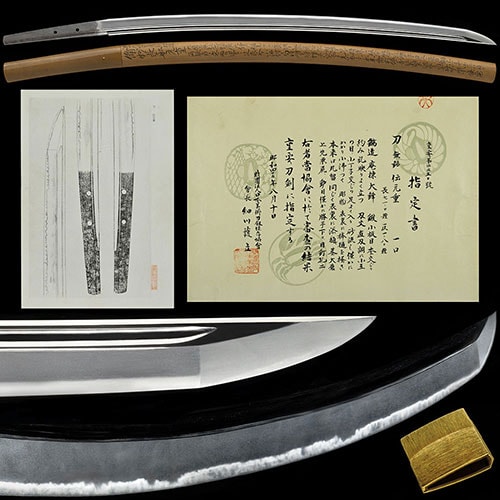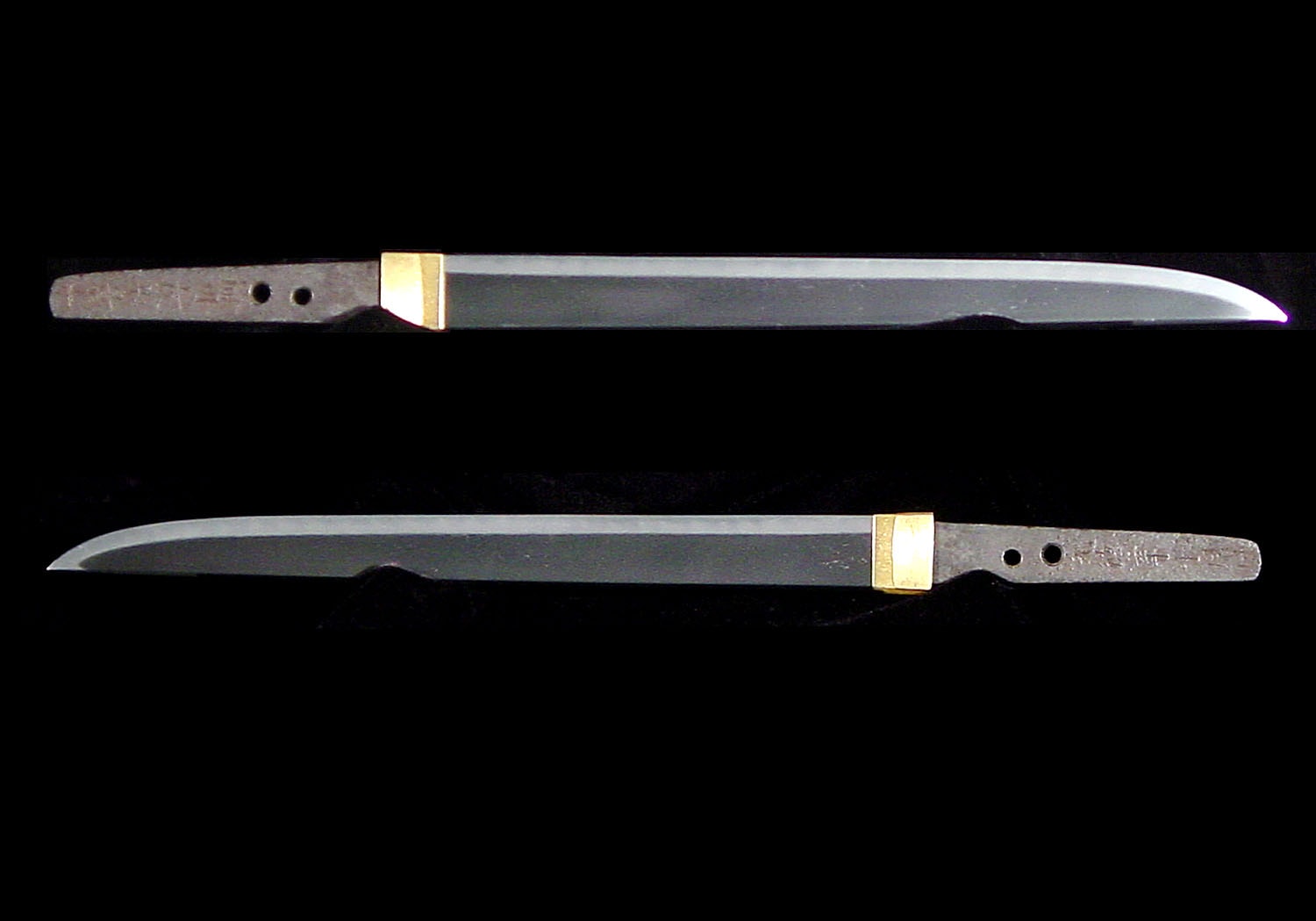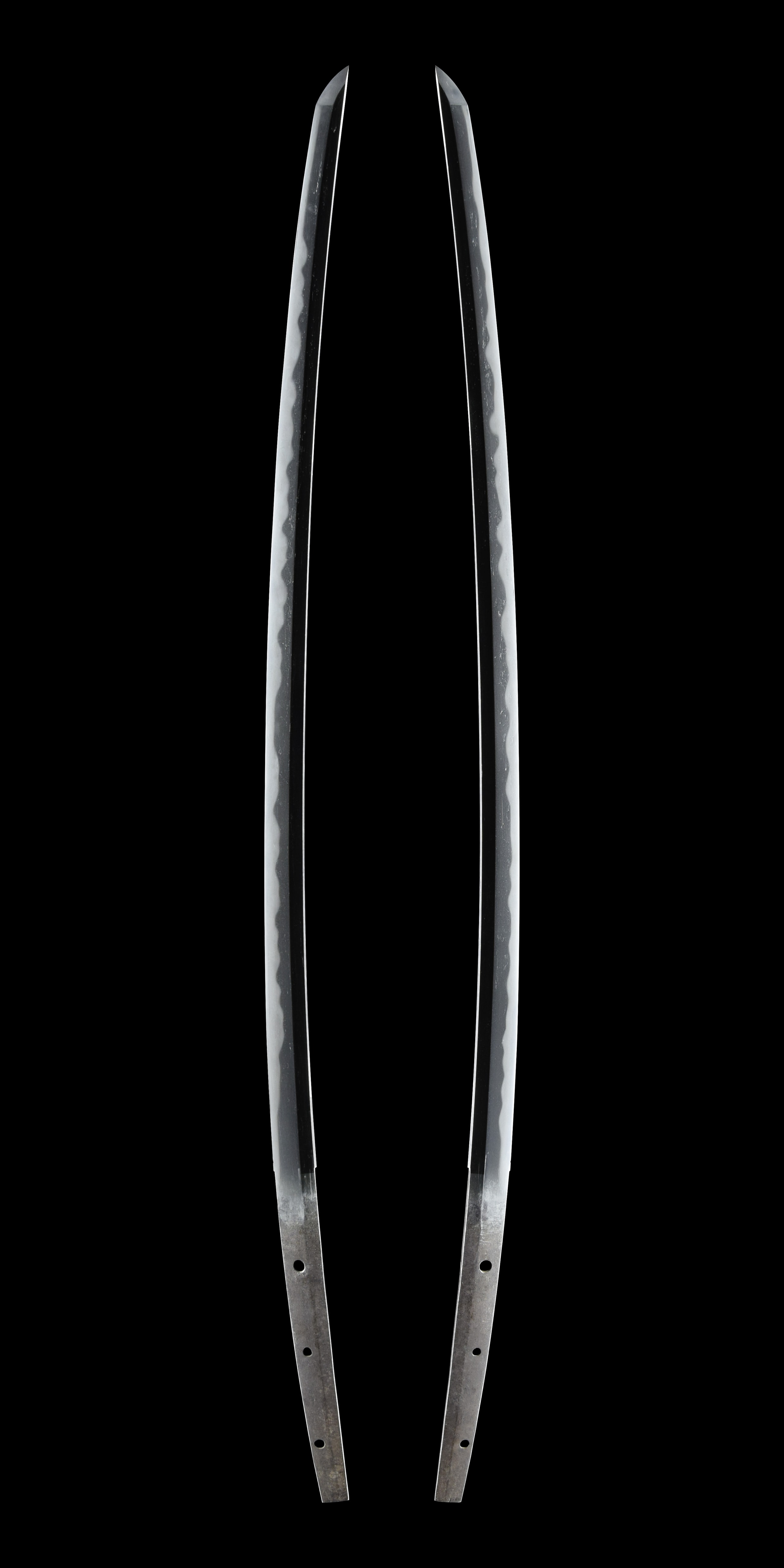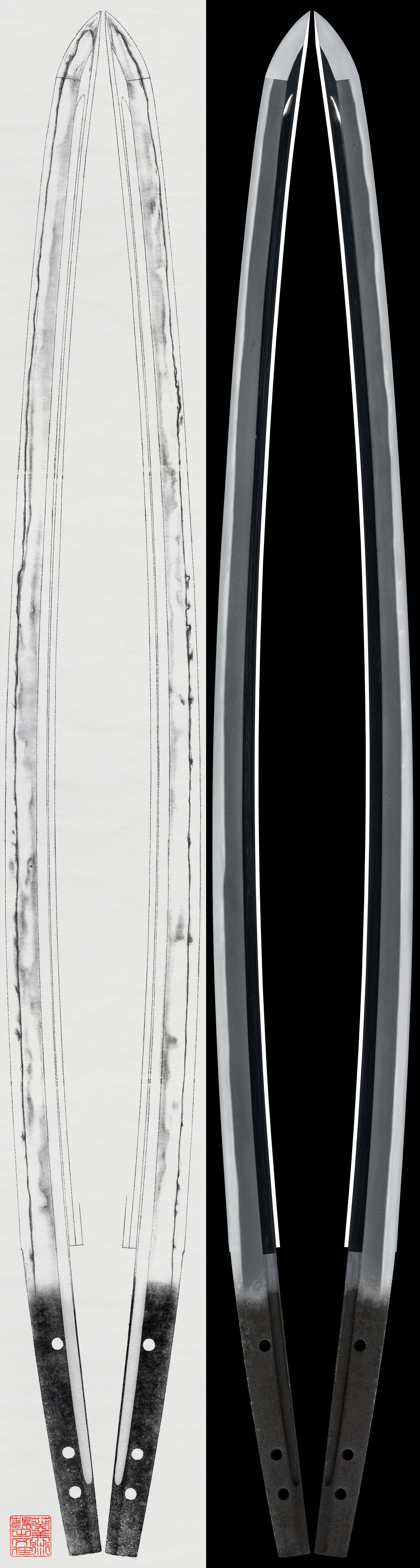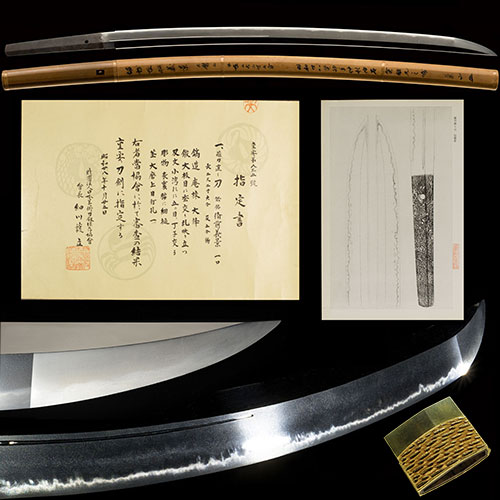

Juyo-Token, 11th Session — Designated October 25, 1963
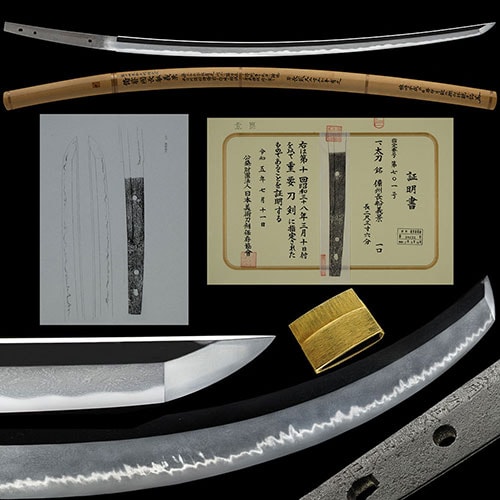
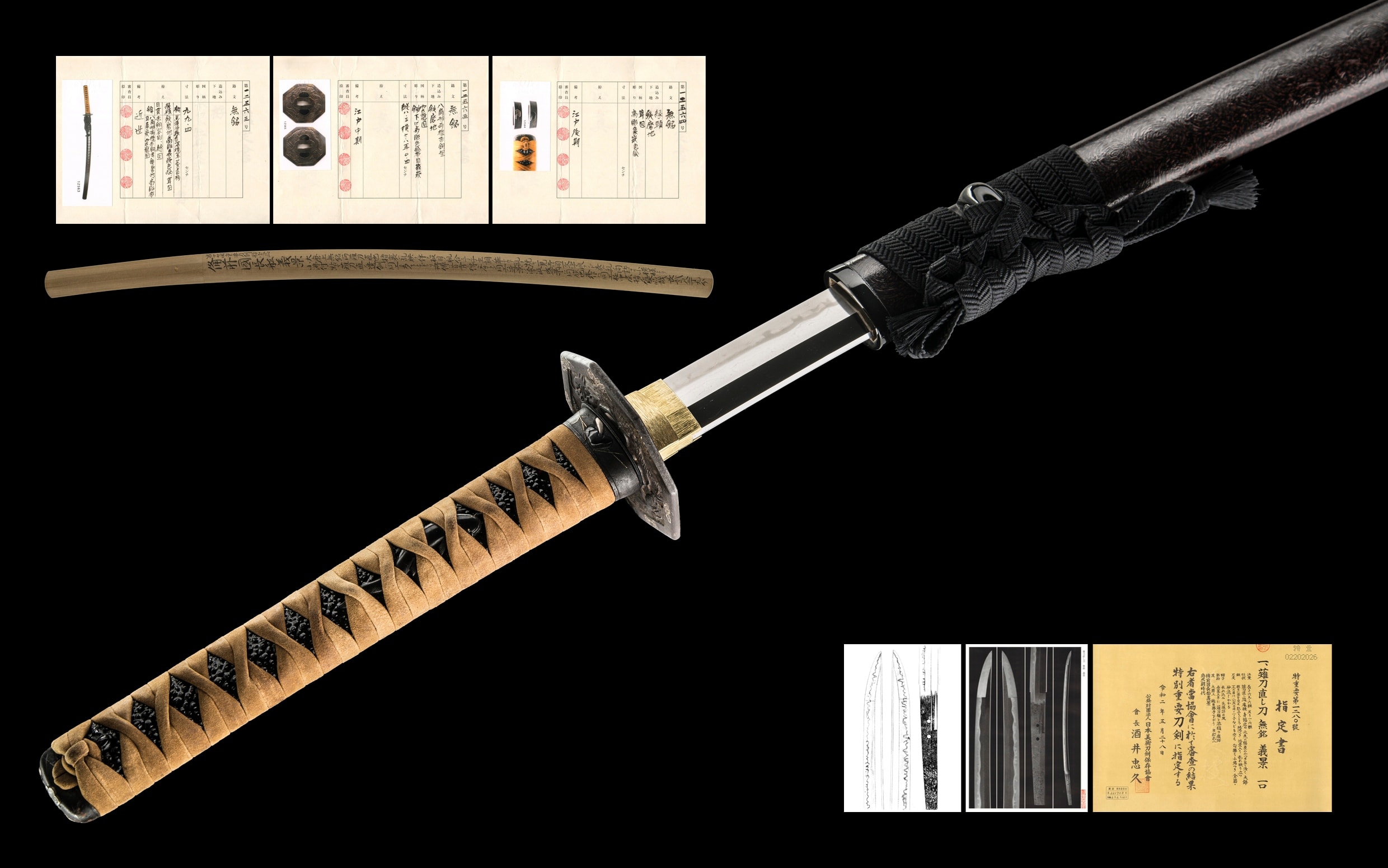
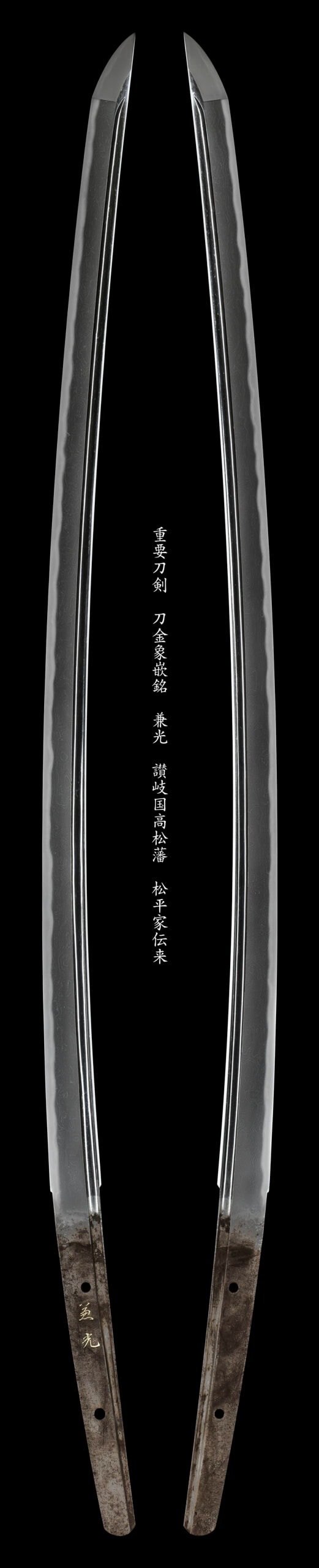
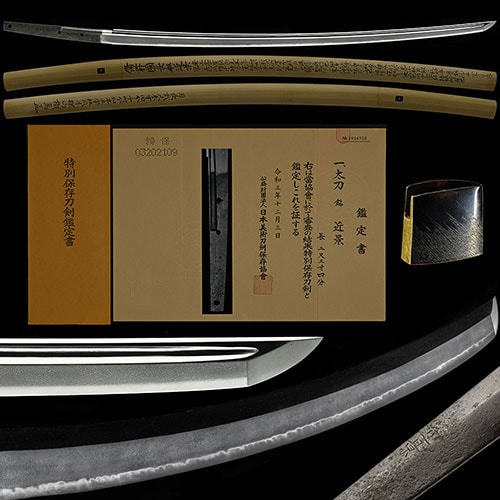
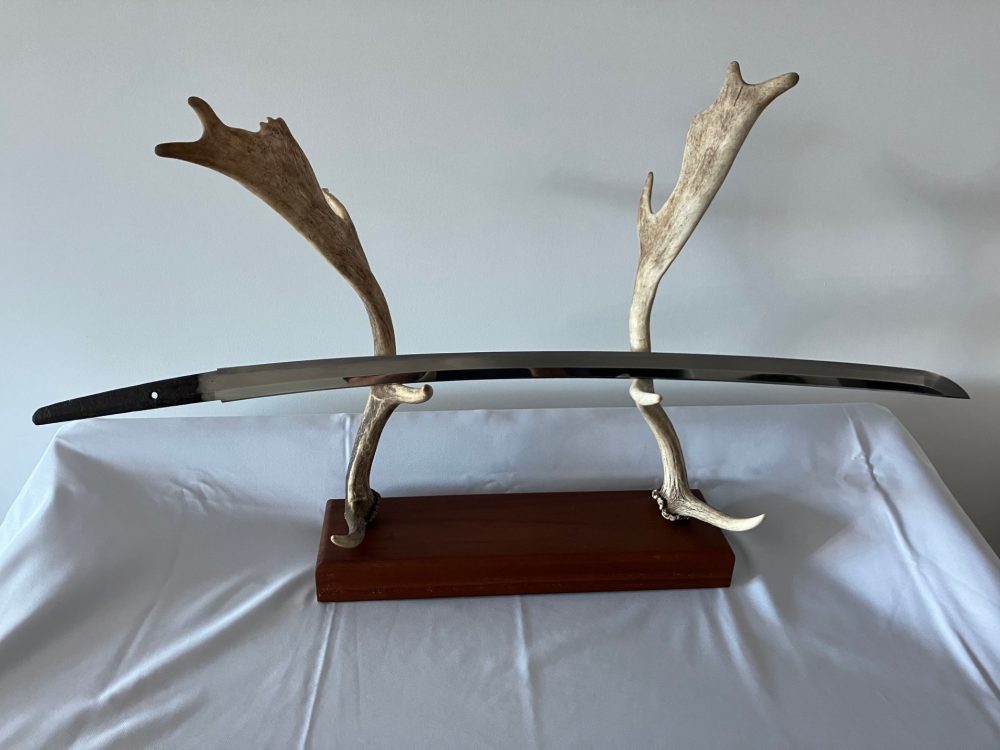
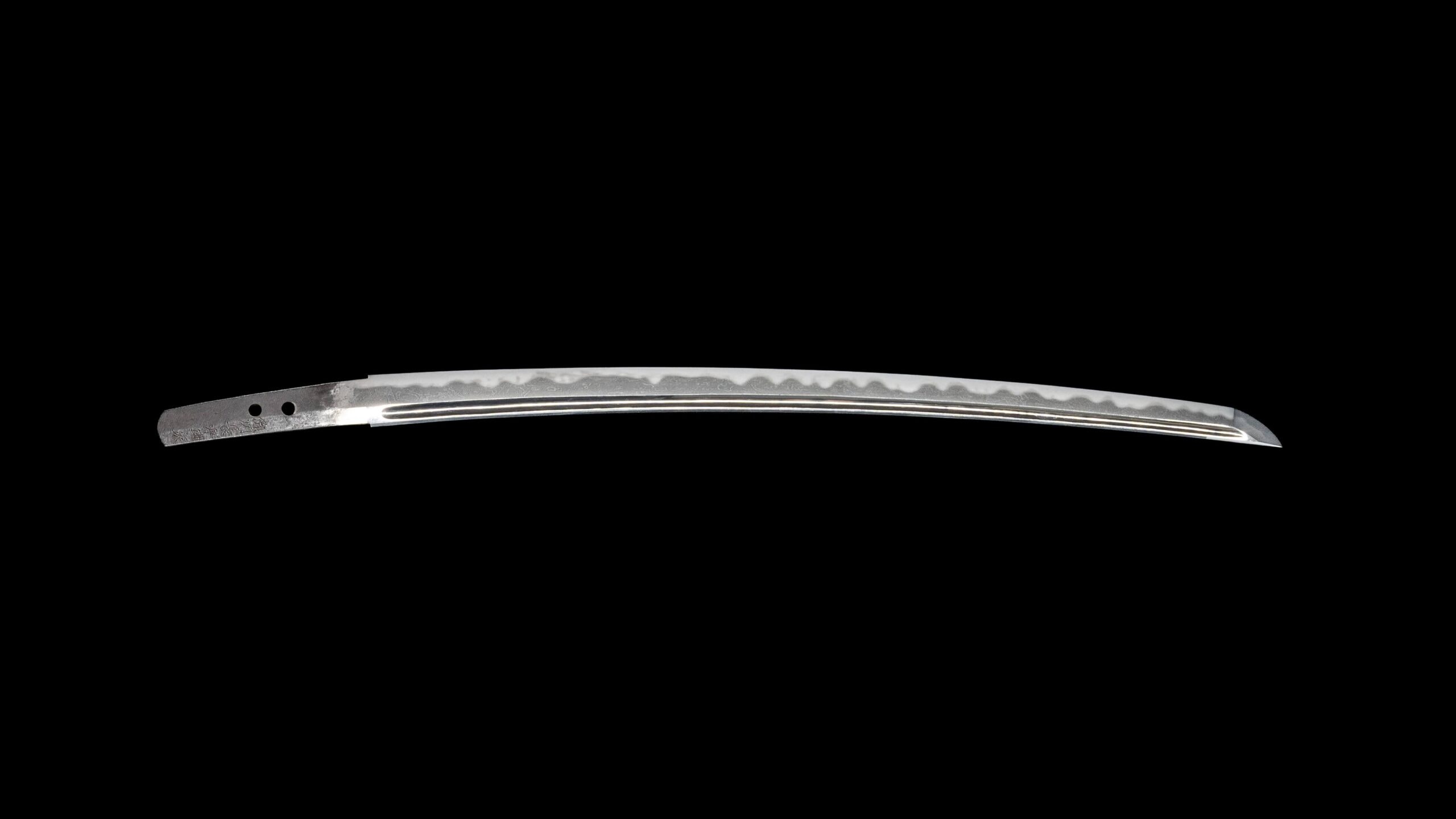
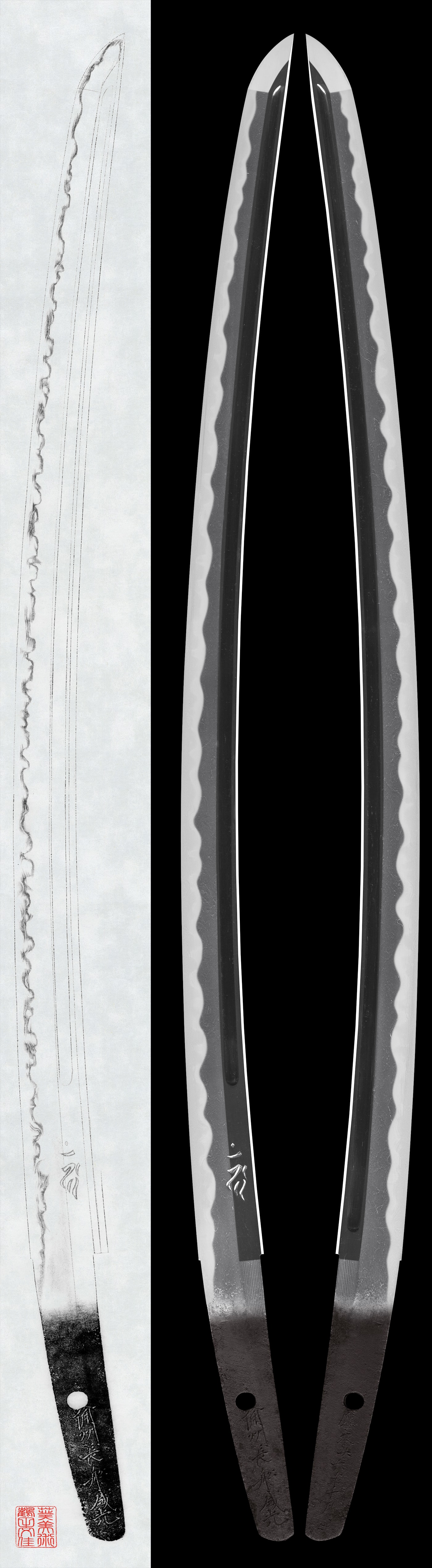
Naginata-naoshi Katana, mumei: den Yoshikage (義景)
Measurements Nagasa 68.5 cm, sori 1.5 cm (slight; “just under 5 bu”), motohaba 4.5 cm, sakihaba 2.7 cm, kissaki-nagasa 7.9 cm, nakago-nagasa 19.7 cm, nakago-sori 0.0 cm
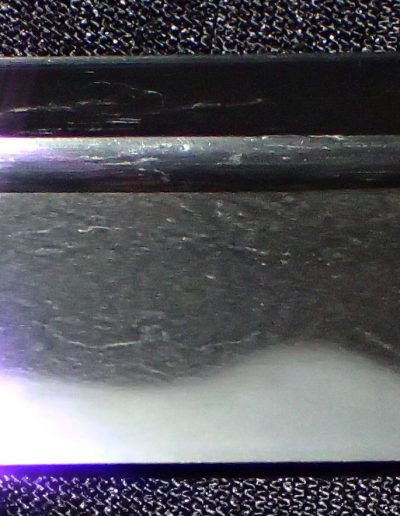
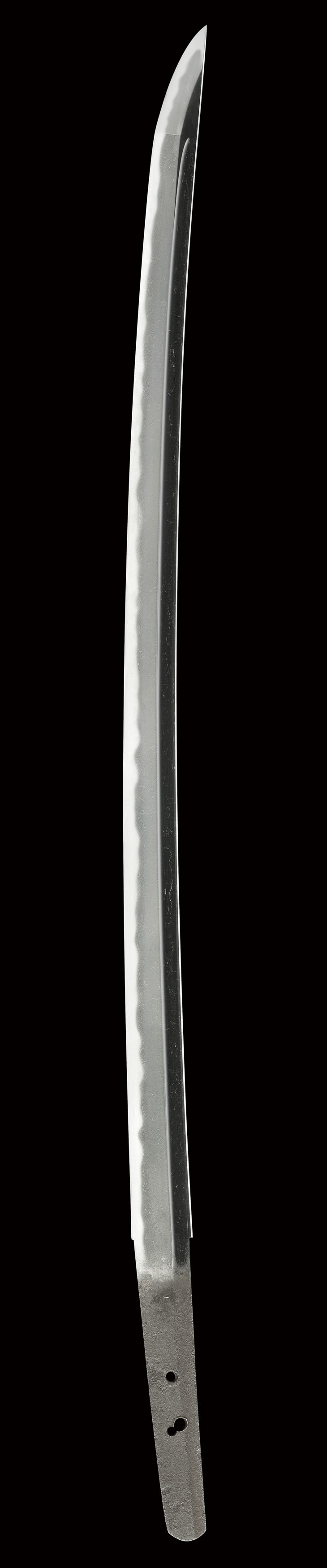
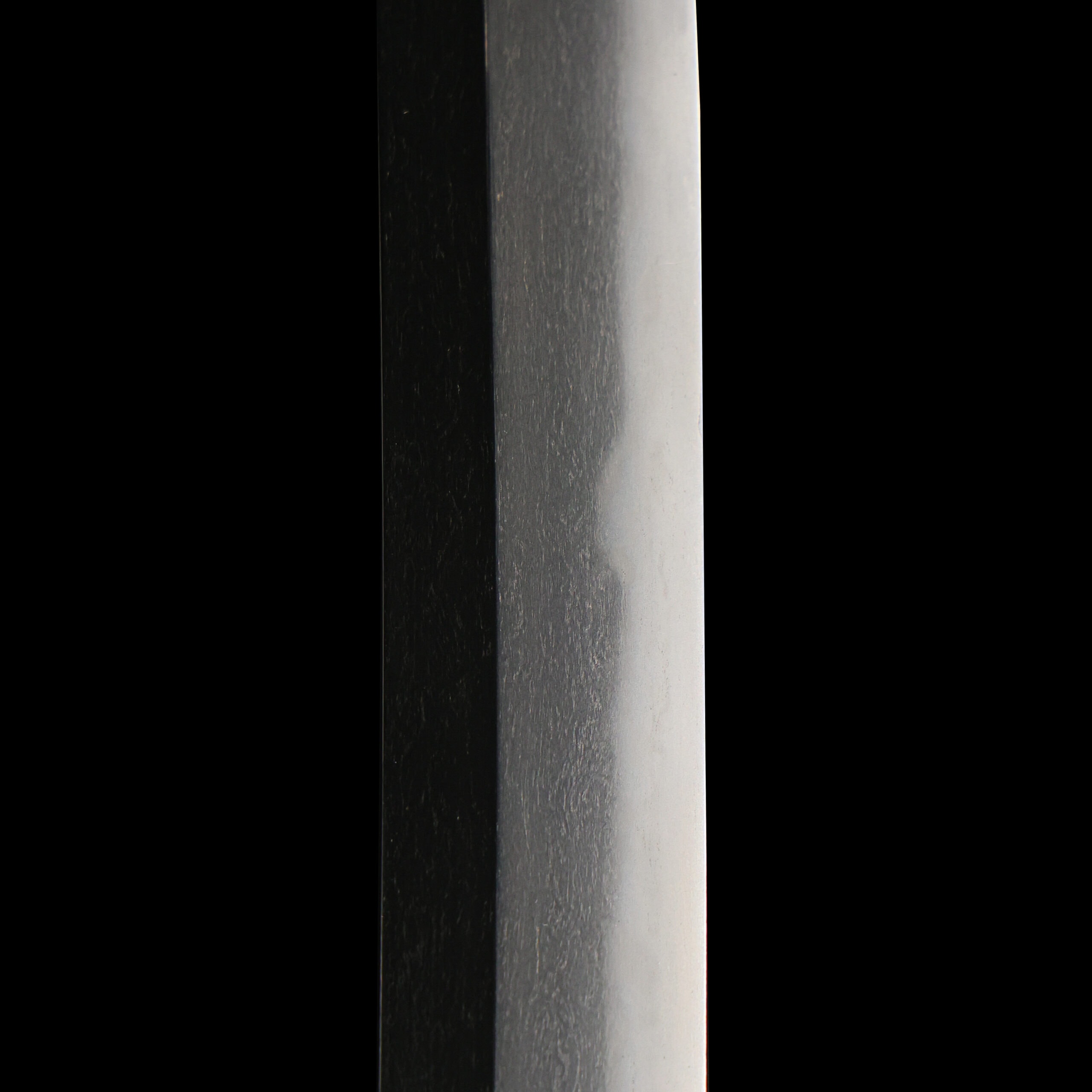
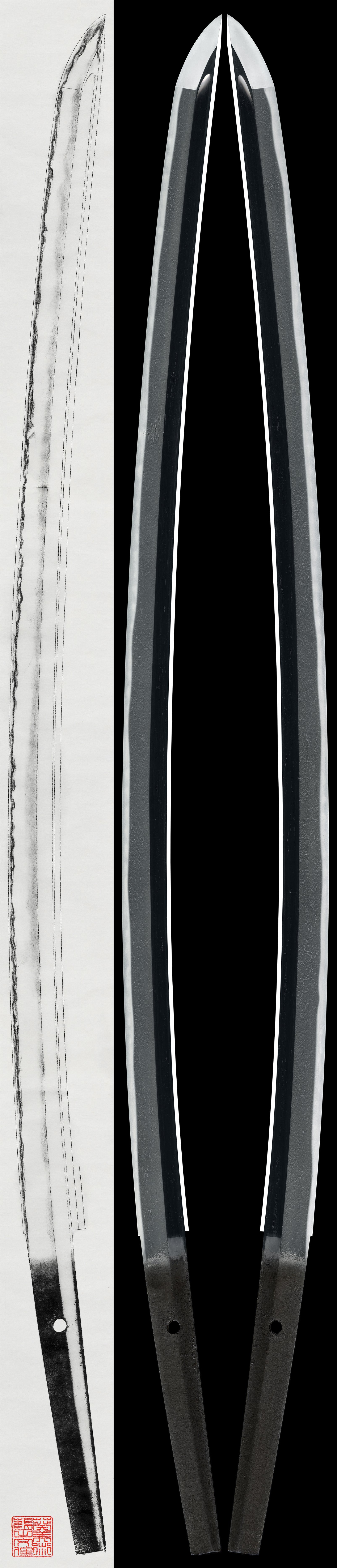
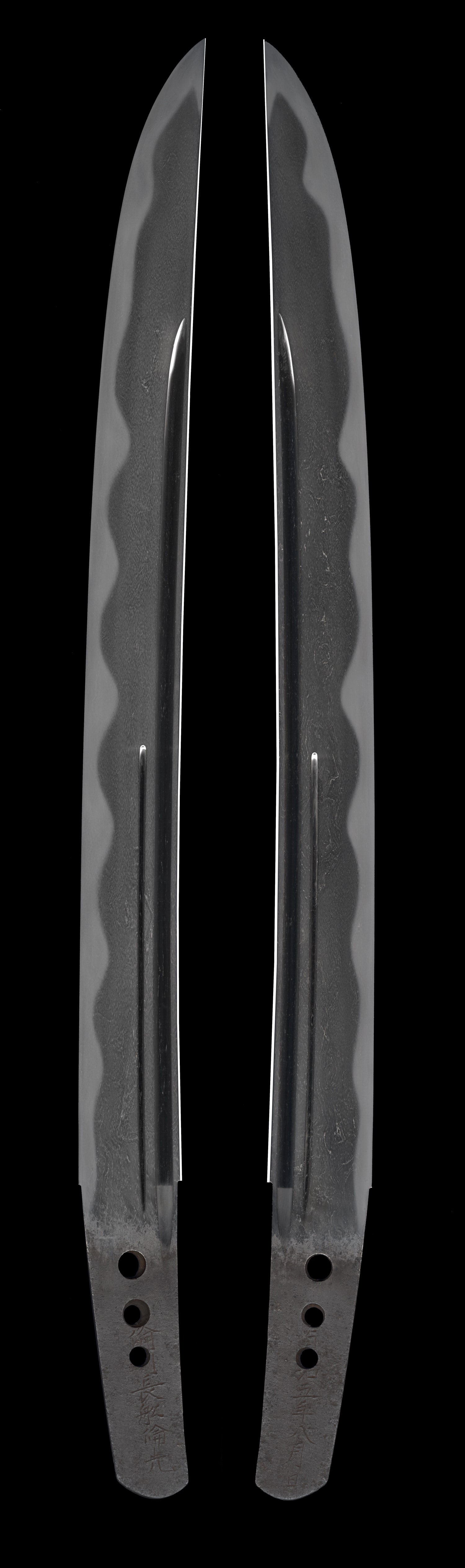
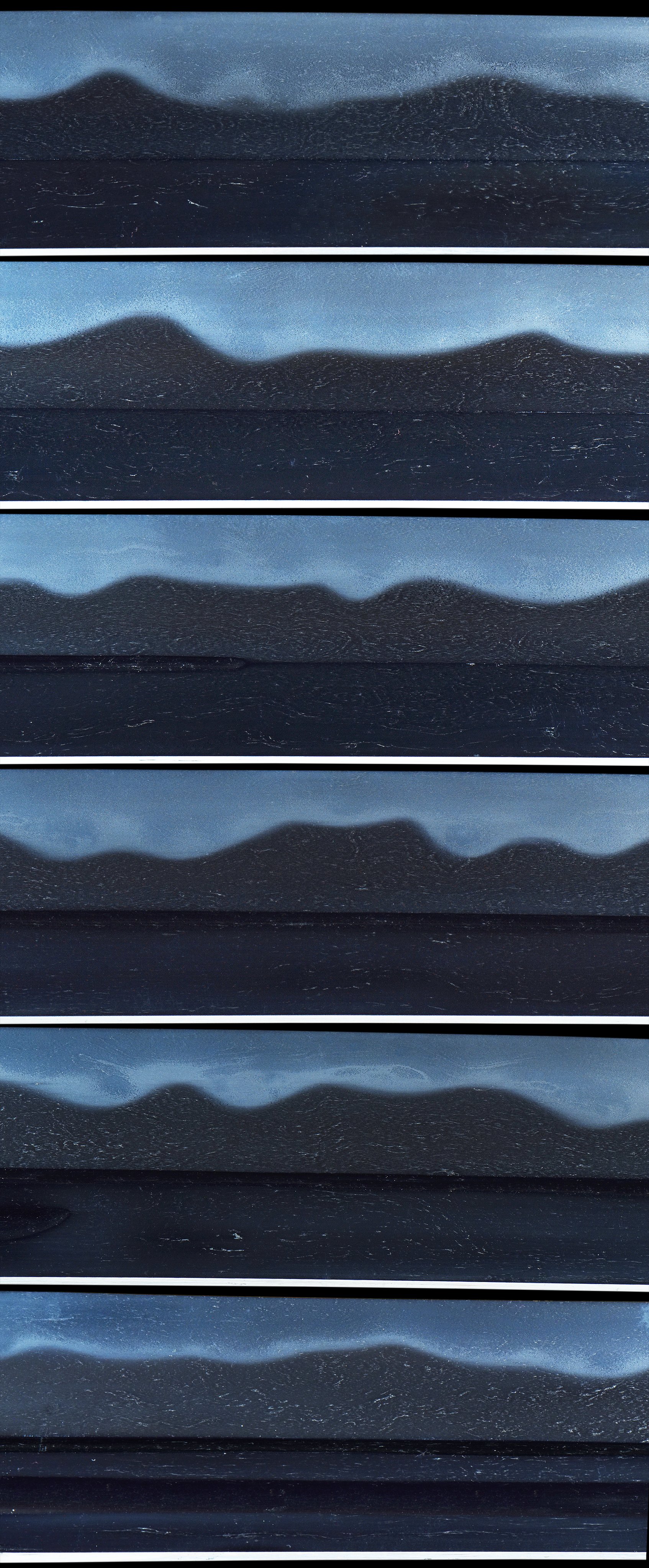
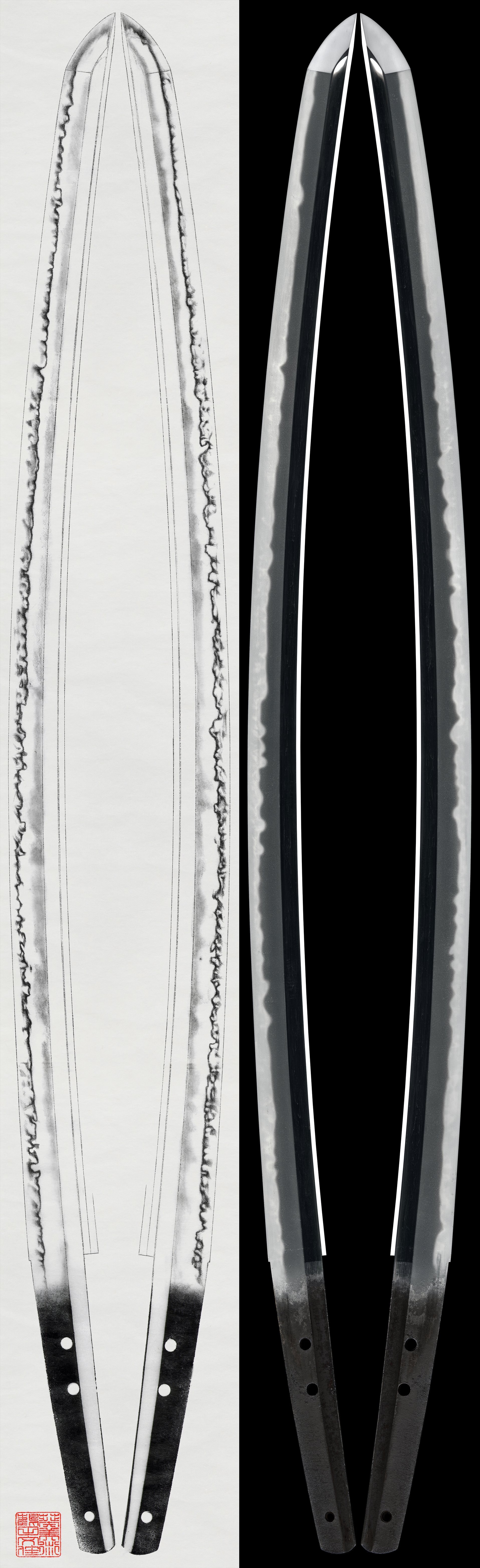
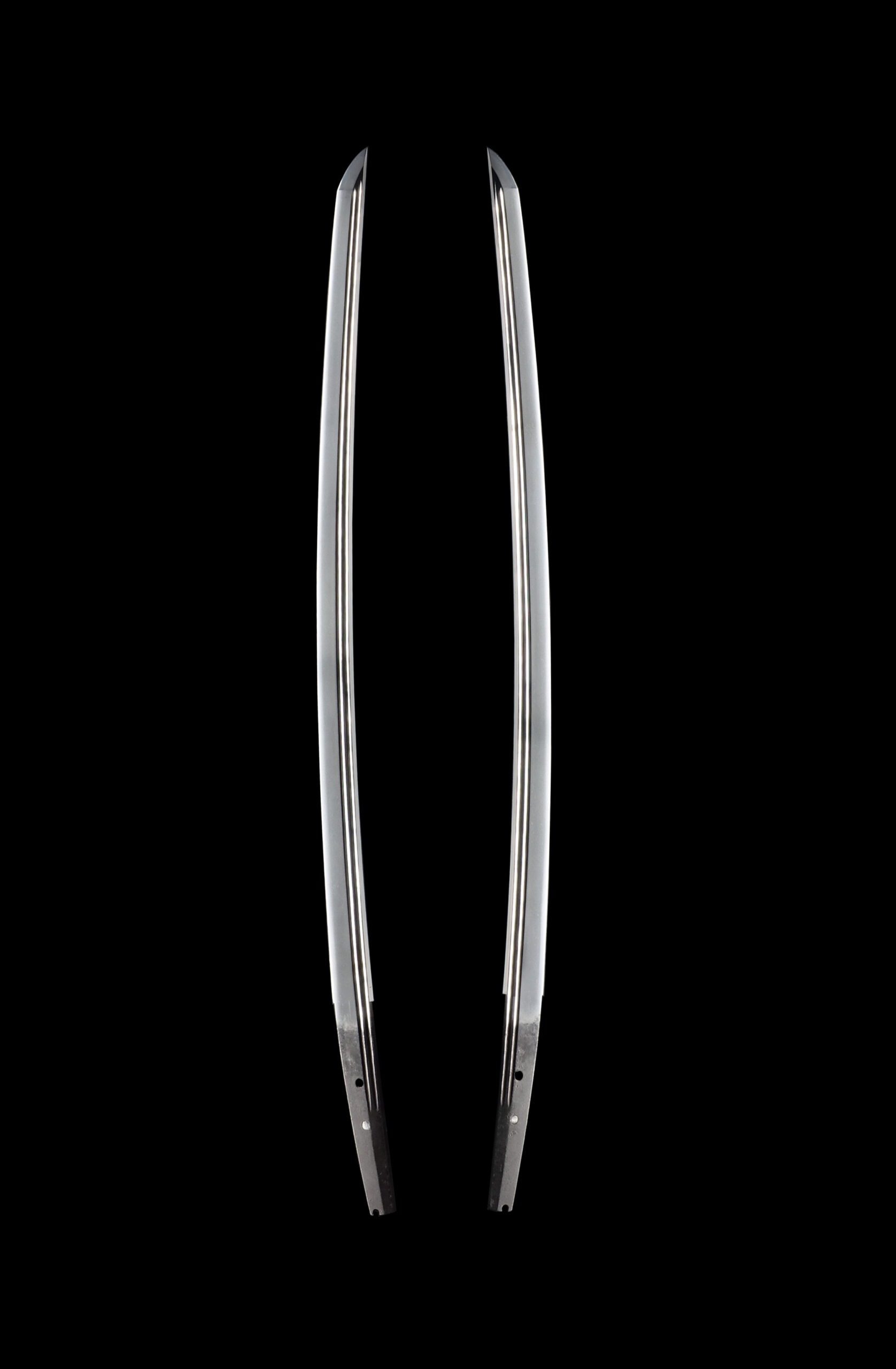
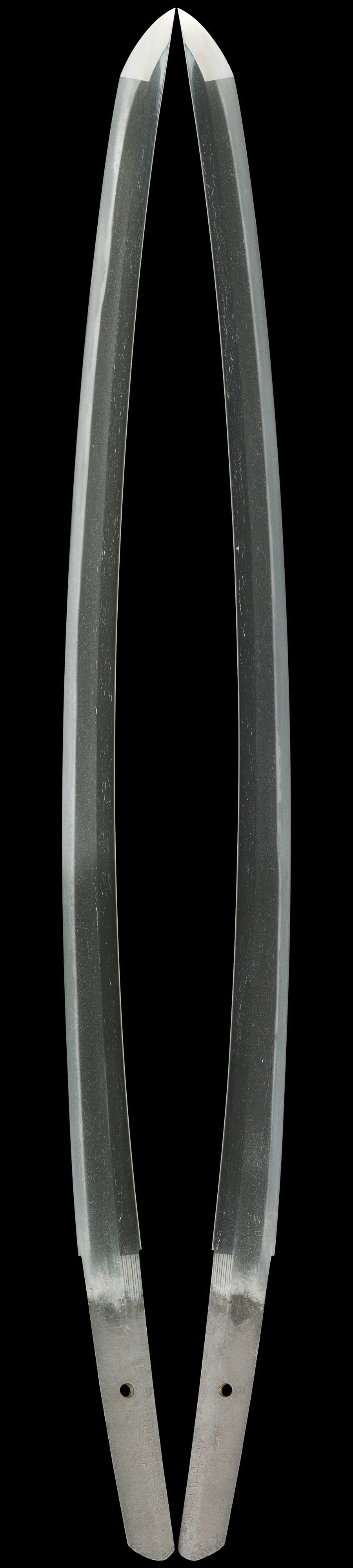
Description Keijo: Shinogi-zukuri, iori-mune; wide mihaba with thin kasane; shallow sori; a naginata-naoshi with a high and broad ō-kissaki. Kitae: Flowing itame-hada mixed with mokume; slightly standing grain; ji-nie; faintly appearing midare-utsuri. Hamon: Small midare mixing gunome and chōji; ko-ashi enter; tobiyaki appear along the habuchi. Boshi: Midare-komi; with a slightly pointed tendency, hakikake; turns back somewhat long. Horimono: One bō-hi at the koshi on both omote and ura. Nakago: Greatly shortened (ō-suriage), kurijiri; katte-sagari yasurime; one mekugi-ana; unsigned.
Artisan Den Yoshikage (義景)
Era Nanbokuchō period
Explanation This is a naginata-naoshi katana. Its wide mihaba, shallow curvature, and the ō-kissaki—lacking swelling in the boshi—constitute a distinctive style of construction characteristic of the Nanbokuchō period.
In the jitetsu and hamon there appears the manner termed “Sōden-Bizen.” However, it differs from the approaches of the Kanemitsu line as well as the Chōgi group, and therefore one can accept the transmitted attribution to Yoshikage.