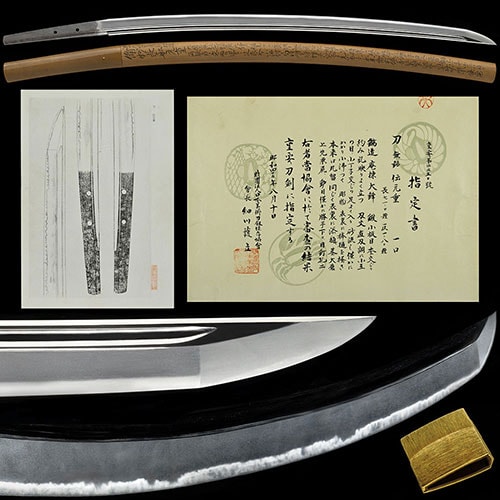
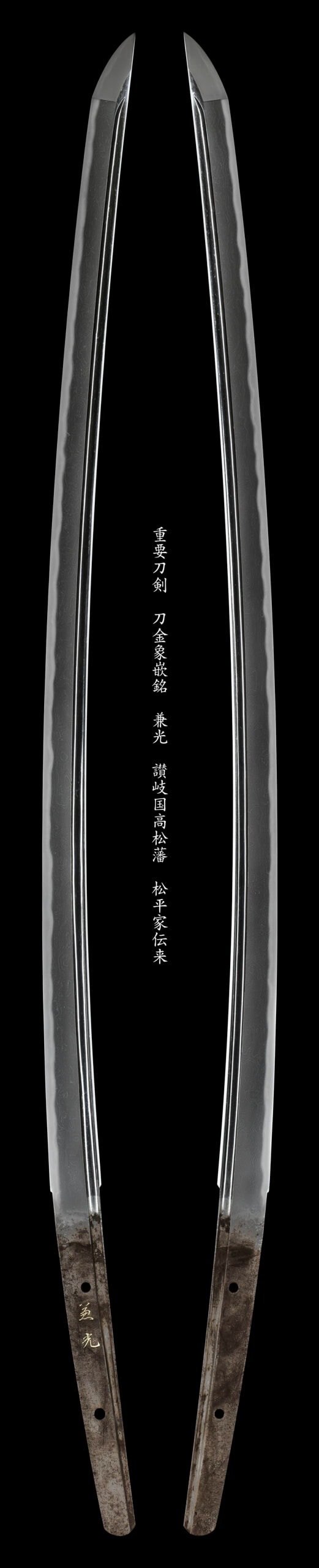
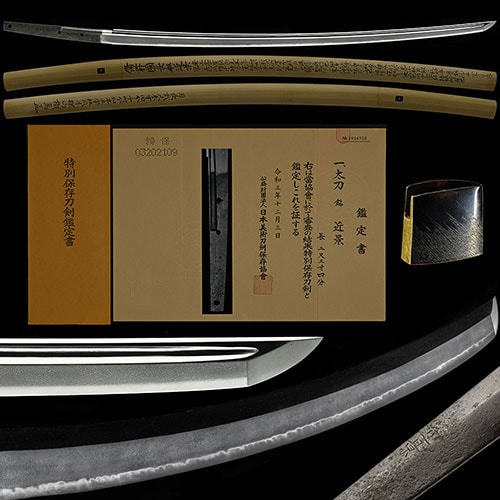
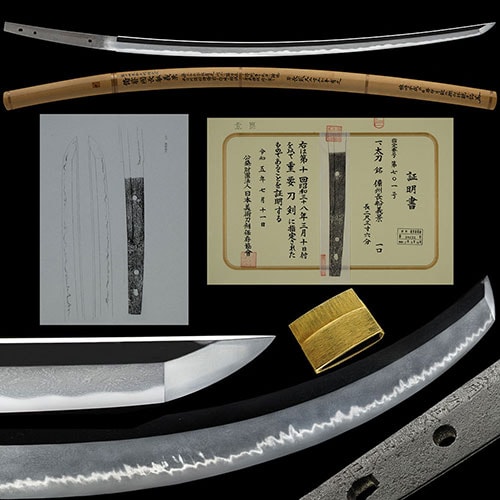
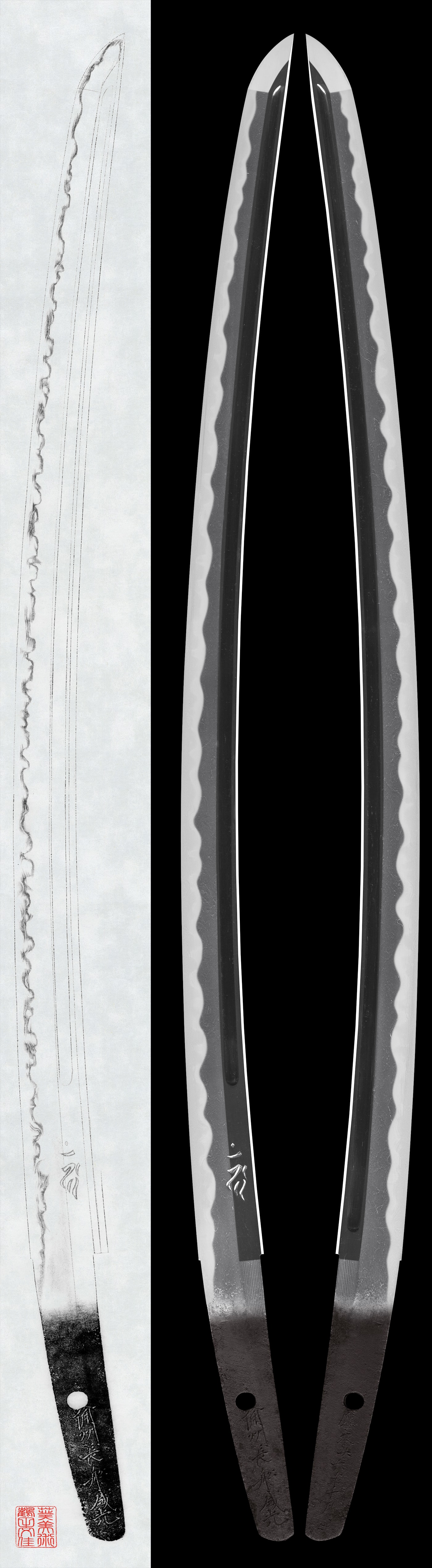
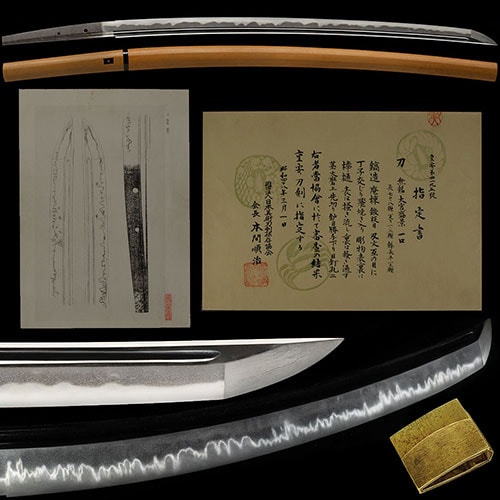
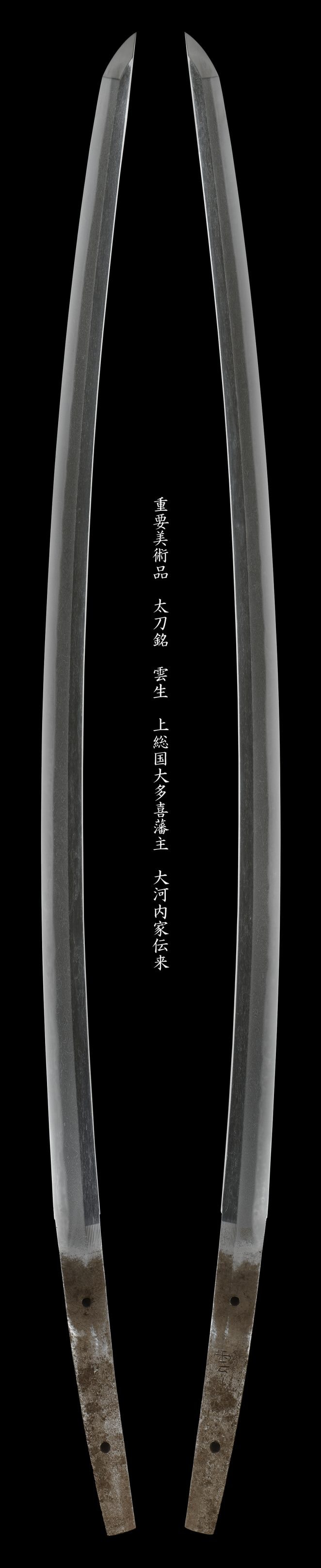
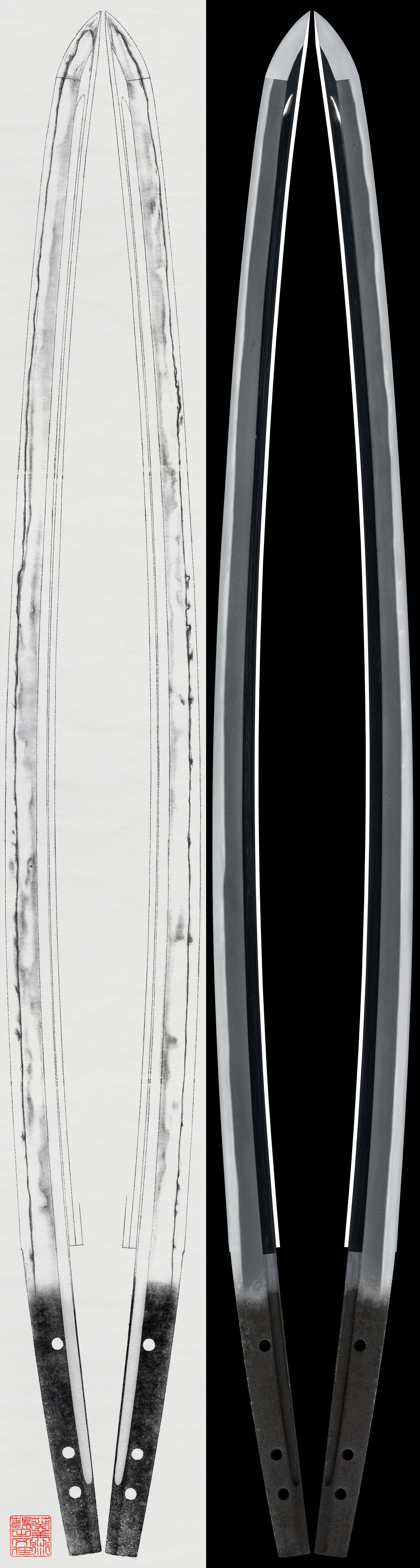
Kanenaga of , written 兼長, is transmitted in the published sources as a pupil of Chōgi, and so as a smith of the Soden- line in which the manner of Masamune was carried into the workshop. The published record is candid about how little signed work survives: extant in- examples are exceedingly few. The standards are a dated Jōji 5 (1366), designated an Important Art Object, and dated Shitoku 4 (1387) and Kakei 2 (1388), the latter two showing stronger and activity richer than the first. From these few dated blades the published sources draw the judgment that anchors the whole attribution: his workmanship approaches that of Chōgi yet pushes the side further still. The reality of the , however, lies elsewhere, since almost everything that survives under his name is a grand attributed to him by workmanship rather than by a signature.
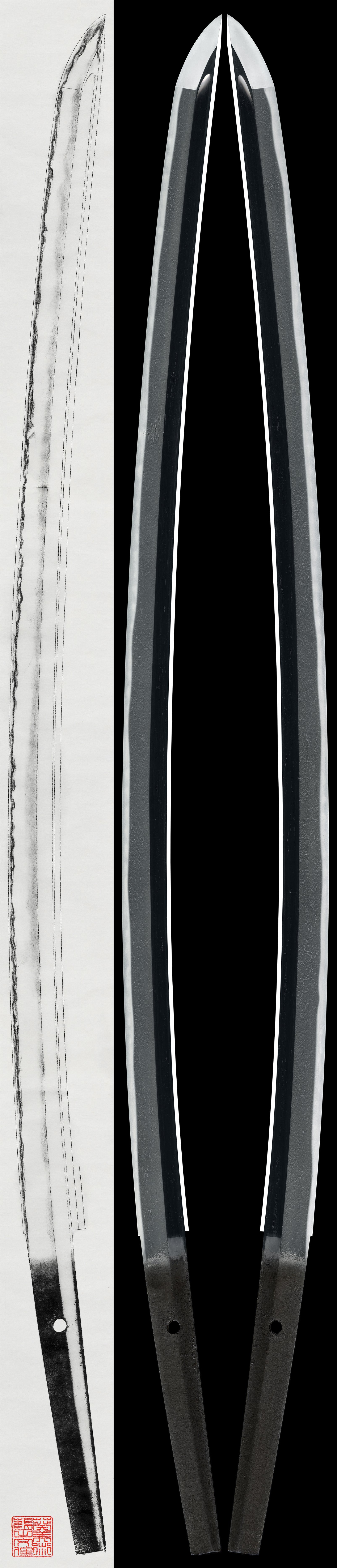
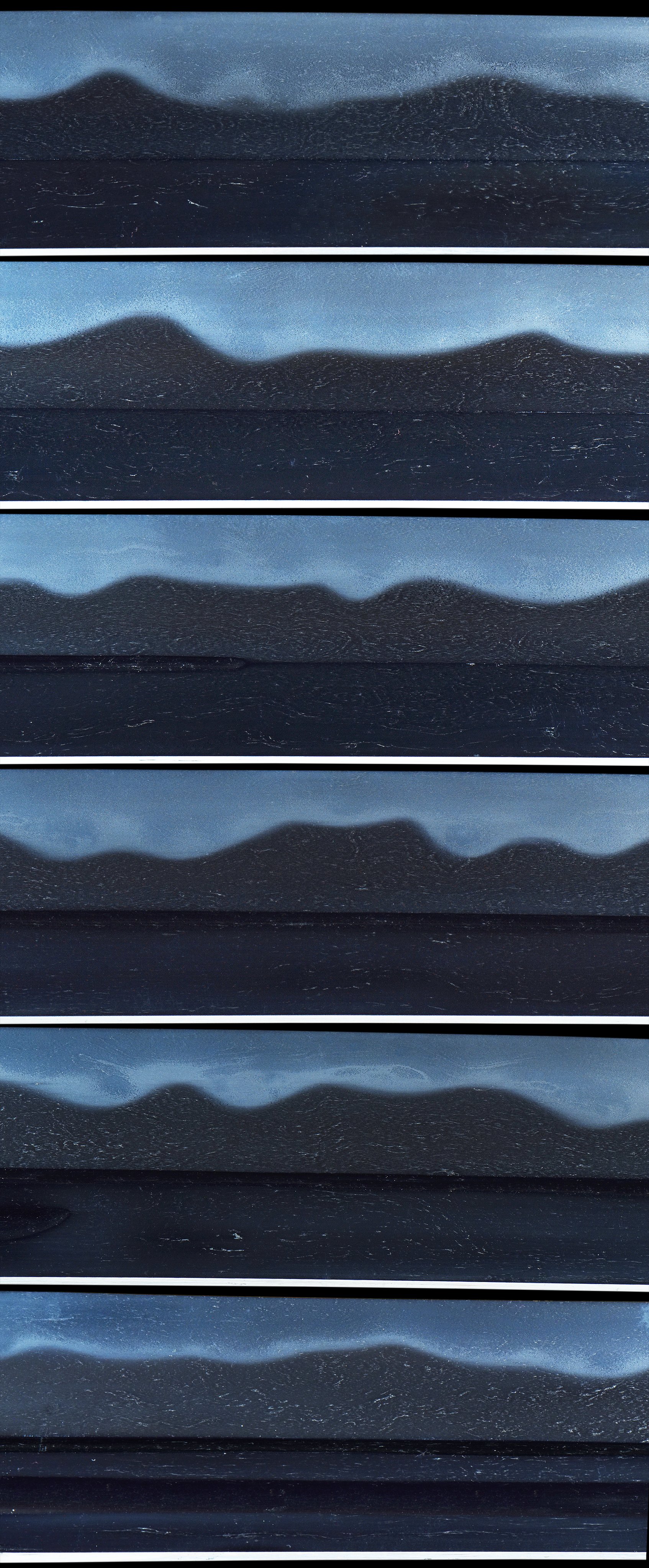
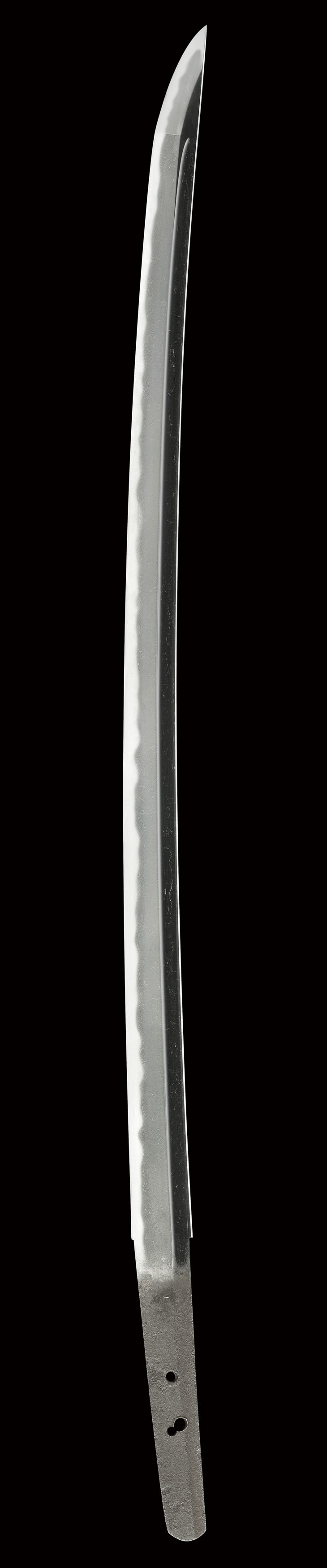
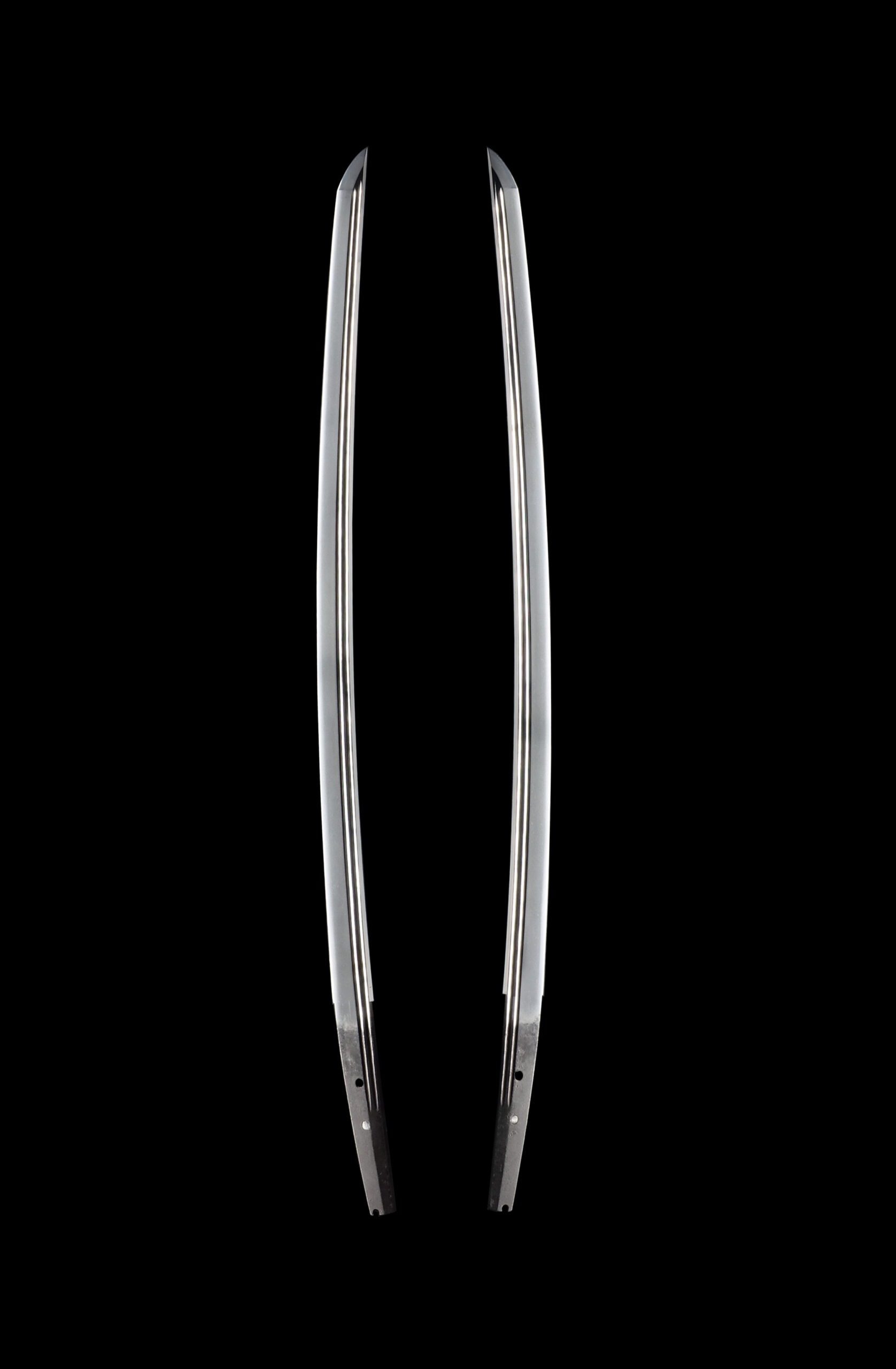
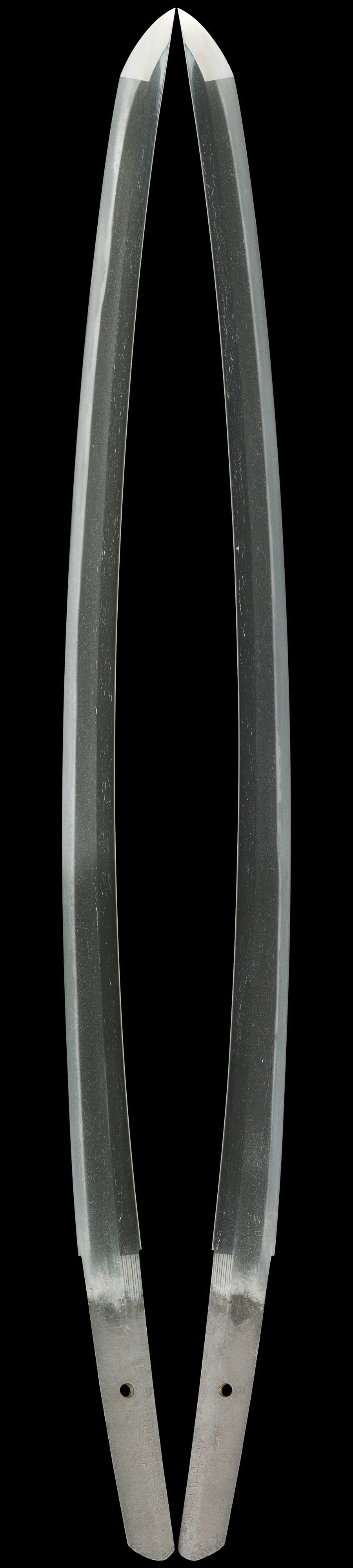
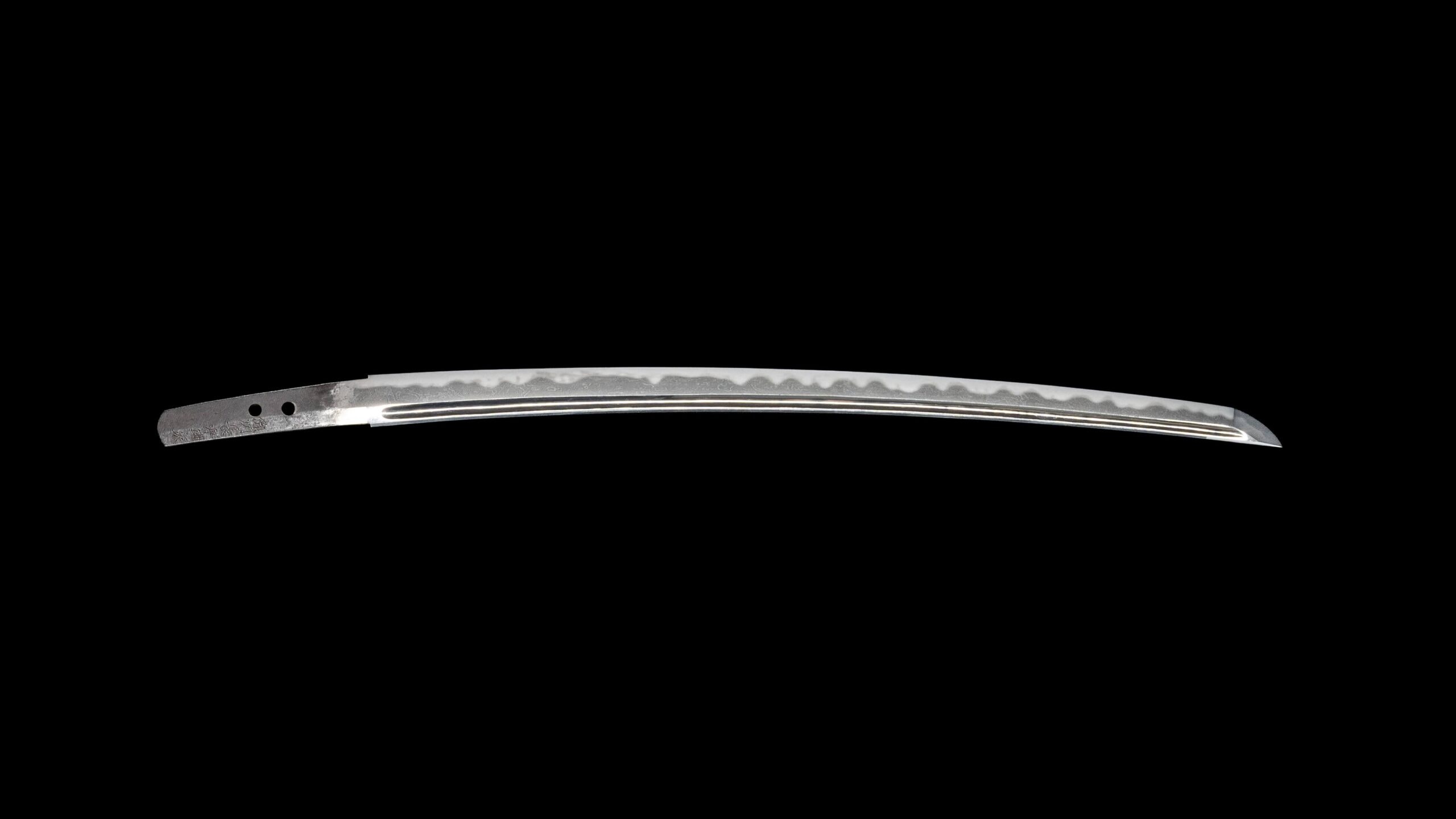
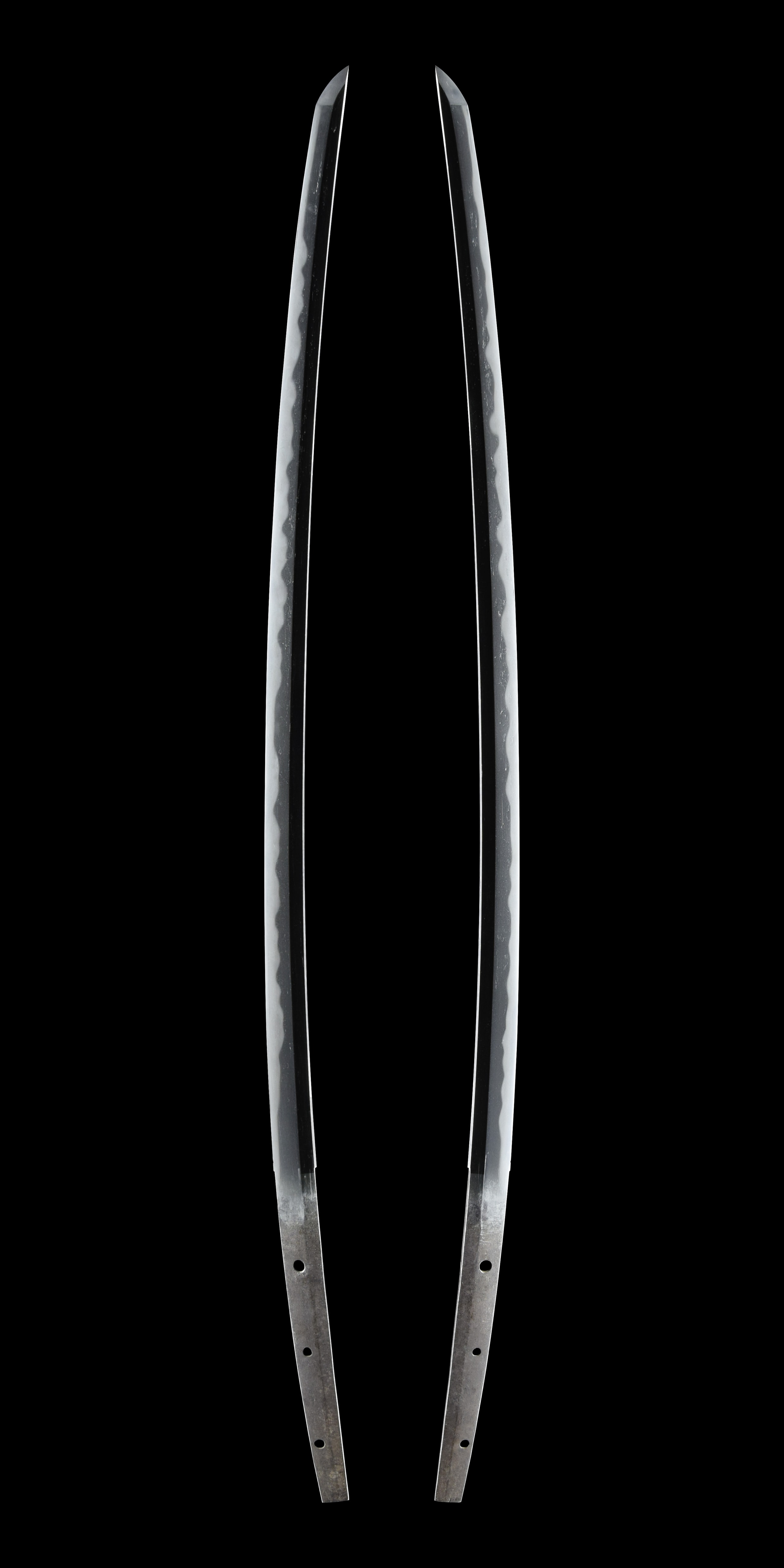
In that majority register the published sources describe a that resembles Chōgi but is, in their words, more strongly -laden, with activity working freely within the temper. The form they record is itself part of the recognition: wide with almost no taper from base to tip, thick , a rather deep , and an or an extended , the bold shape preserved by . The temper they describe is a large-pattern on a or base, mixing and with , angular , pointed elements, and the waist-open shapes that give his work its swing. and enter well, the runs deep and bright, and the clots and in places coarsens, with and running frequently. Small and detached break out above the temper, and the runs , often pointed and sweeping into or a flame-like tip.
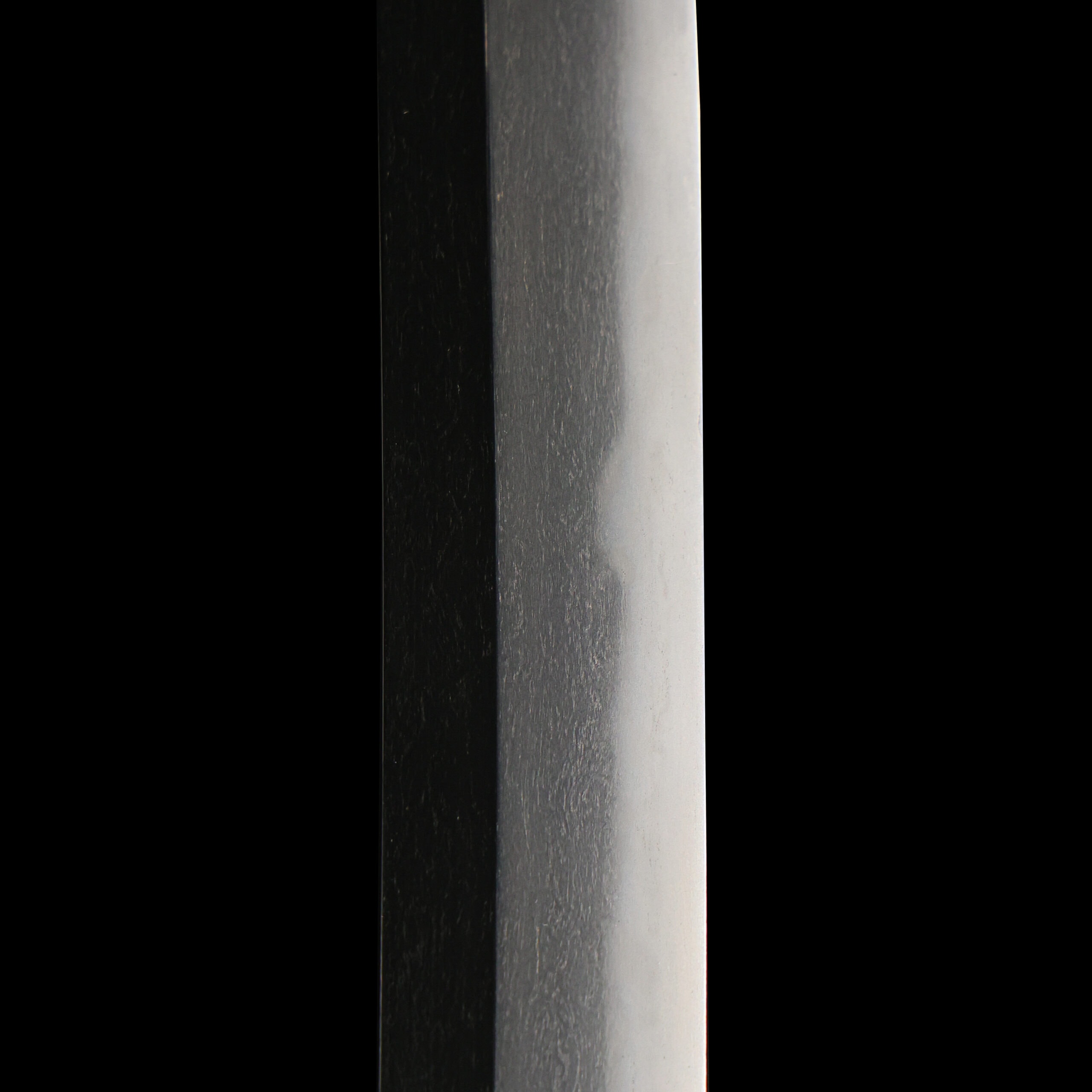
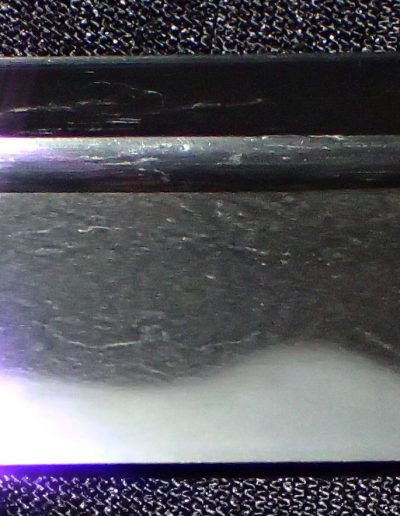
The is the base over which that temper is laid. The published sources describe mixed with and , areas of , and a grain that stands out (); over it fine adheres densely and enter thickly and well. The is present but faint, recorded again and again as a that stands only dimly. That thin reflection is itself a tell: the more the side is pushed, the less the old shows its , and on the most of his blades the reflection recedes almost to nothing. The published commentary reads the surviving as the proof of his province, judging one such , because the reflection appears at all, to be Soden-.
The work therefore divides in two. The rare dated signed pieces are the calibration: the Jōji runs toward a tone, and the Shitoku and Kakei carry the manner so far that the published sources liken them to Norishige, written as blades that at a glance could be confused for him in their emphasized Sōshū-den. The signature style and the chisel-work of these dated pieces confirm, the sources say, that this hand belongs to the Chōgi line. Against that calibration stands the great body of , more flamboyant and bolder in pattern than Chōgi himself. The published record also preserves a dating question, attributed to Honma: the Jōji Kanenaga signature differs from Chōgi's, whereas the later Shitoku, Kakei and Meitoku pieces match the signature style of Chōgi's years, so that the received account ought to be re-examined, and the earlier Jōji Kanenaga may be a separate line while the later Kanenaga is the true Chōgi pupil. The sources present this as an open question of scholarship, not a settled fact.
Within the Chōgi group his place is the most -emphasized extreme. The published commentary repeatedly distinguishes him from Chōgi by degree: where the ordinary attribution to Chōgi runs a step quieter, his is the bolder, larger-patterned, more strongly -laden hand, and one is judged, among the Chōgi group, the work most properly attributed to Kanenaga himself. His waist-open is the most particular of these tells, a swing the orthodox- members of the group do not show; his and are the most profuse, and his detached the most insistent. He stands thereby apart from the more orthodox- Kanemitsu and Motoshige, whose work keeps closer to the line, and beside Chōgi as the pupil who carried the side of Soden- the furthest.
Kanenaga is Jō in Fujishiro's grading, with a Tōkō Taikan valuation of 900. Despite the near-absent signed record, the weight of designation behind his name is substantial: none of his blades carry a national heritage designation, but eleven have reached and seventy-nine more are , ninety in the two top tiers, with several further designated Bijutsuhin. The provenance recorded against his blades carries names of standing, the Sanada Family, the Tōdō Family, Sakai , the Tsuchiya Family of Tsuchiura, the Yamauchi, and the American collector Walter A. Compton. Of recorded whereabouts, two examples are held by institutions, the Sword Museum and Itsukushima Jinja, the rest by private hands. Because almost nothing signed survives and the attributed are themselves uncommon, a Kanenaga reaches the market only rarely; with no blade locked in the highest heritage tiers, the recorded examples sit in the and tiers, most of them held rather than traded, so that an example coming into open hands is a landmark when it does, not a thing to be sought at will.