NihontoWatch MonNihontoWatchBETA
MarketEncyclopedia
NihontoWatch Mon

NihontoWatchBETA

Market
Encyclopedia
Overview·Kantei·Honors·Designations·Provenance·Blade Forms·Signatures·Lineage·School
OverviewKanteiHonorsDesignationsProvenanceBlade FormsSignaturesLineageSchool
  1. Schools
  2. Osafune
  3. Sōden-Bizen
  4. Chogi

Chogi

長義

Tokujū
Vol. 2, No. 18 · Katana

Chogi

長義

109 ranked works

正宗十哲
ProvinceBizenEraKenmu (1334–1338)PeriodNanbokuchōSchoolOsafune>ChogiTraditionBizen-denGeneration1stTeacherSanenagaFujishiroSai-jo saku(Supreme Work)TypeSwordsmithCodeCHO10
5Jūyō Bunkazai
6Jūyō Bijutsuhin
3Gyobutsu
32Tokubetsu Jūyō63Jūyō Tōken

Overview

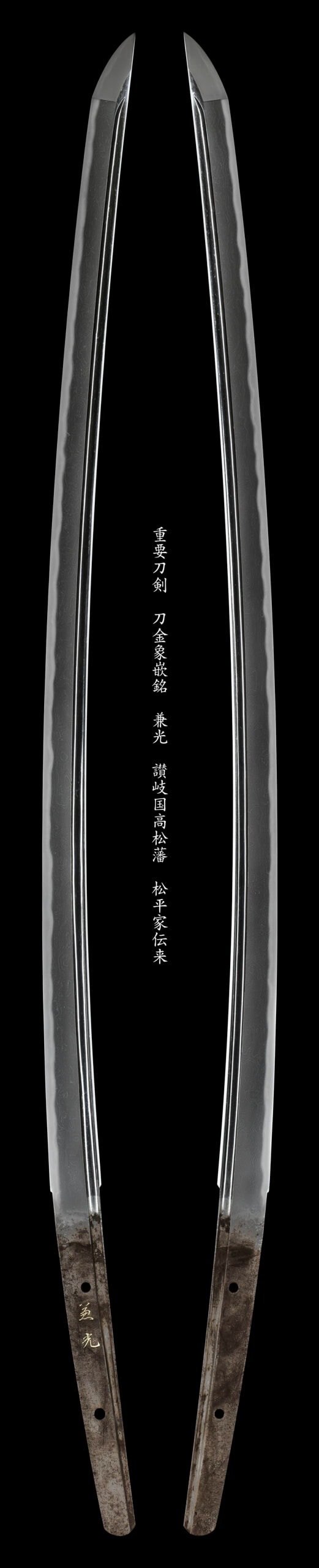
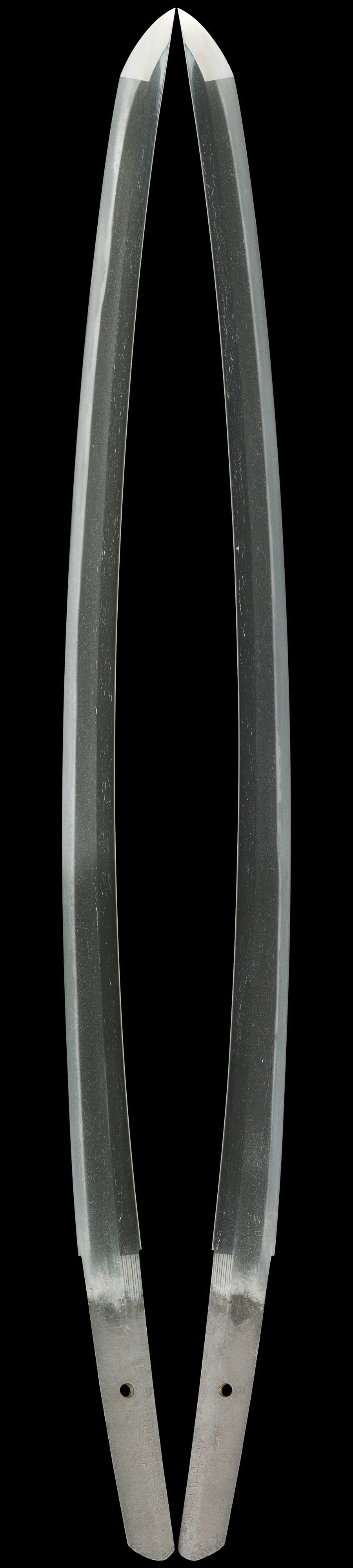
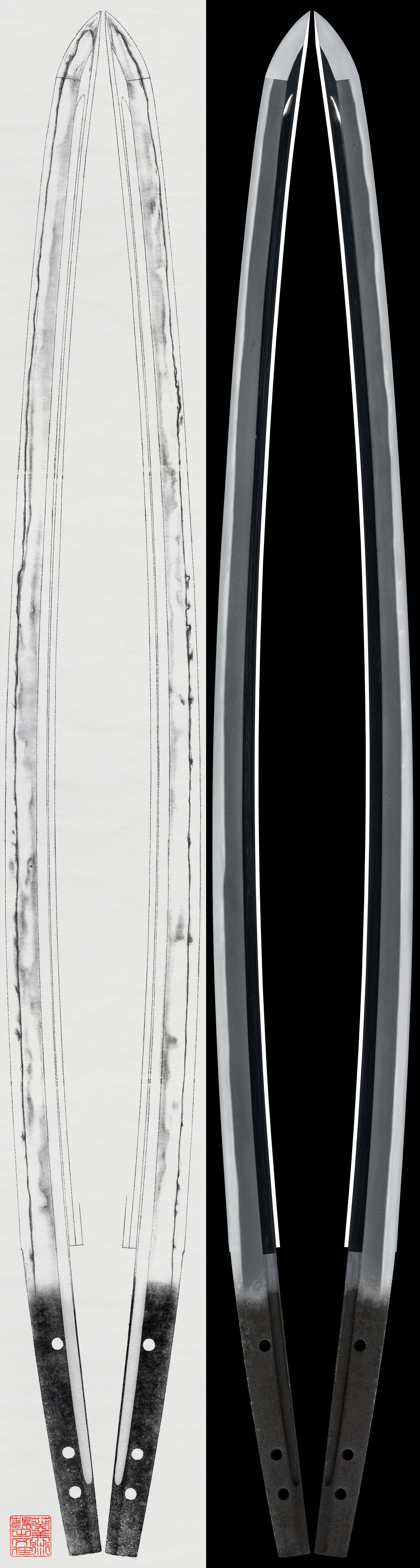
Chogi (長義) was the leading smith of the age, a master whom the published sources name in the breath as Kanemitsu as one who, together with Kanemitsu, displayed outstanding skill among the many smiths of the period grouped under the appellation Soden-. One tradition transmits him as a descendant of the mainline smith Sanenaga, and the dated blades that survive run from the Jowa years through Koryaku, so his career sits squarely in the high decades of Enbun and Joji. The sources draw a clear line between two faces of his work, one in which prevails and one in which the of the and runs strong, and it is the second of these that earned him the phrase repeated again and again across his papers, that of all smiths Chogi is the one whose work departs furthest from .

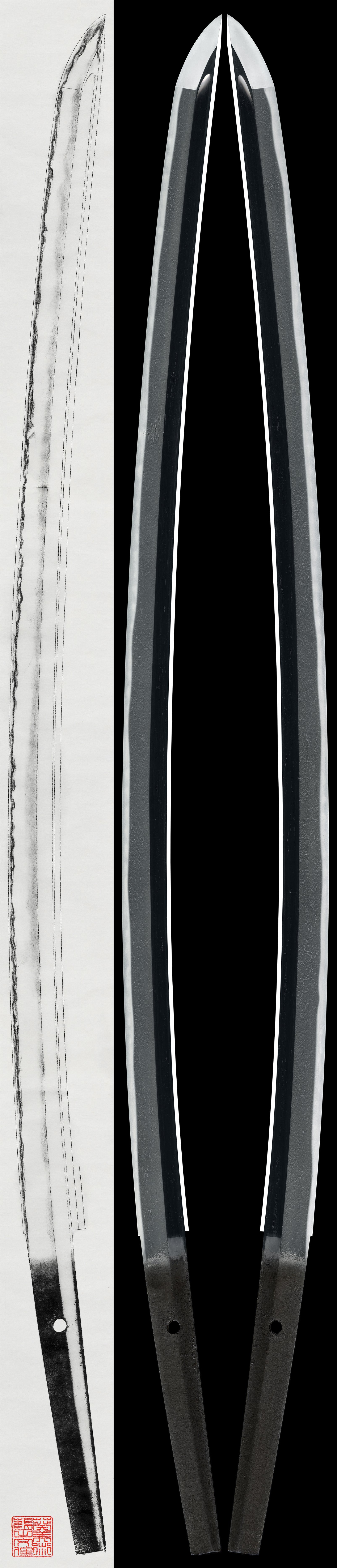
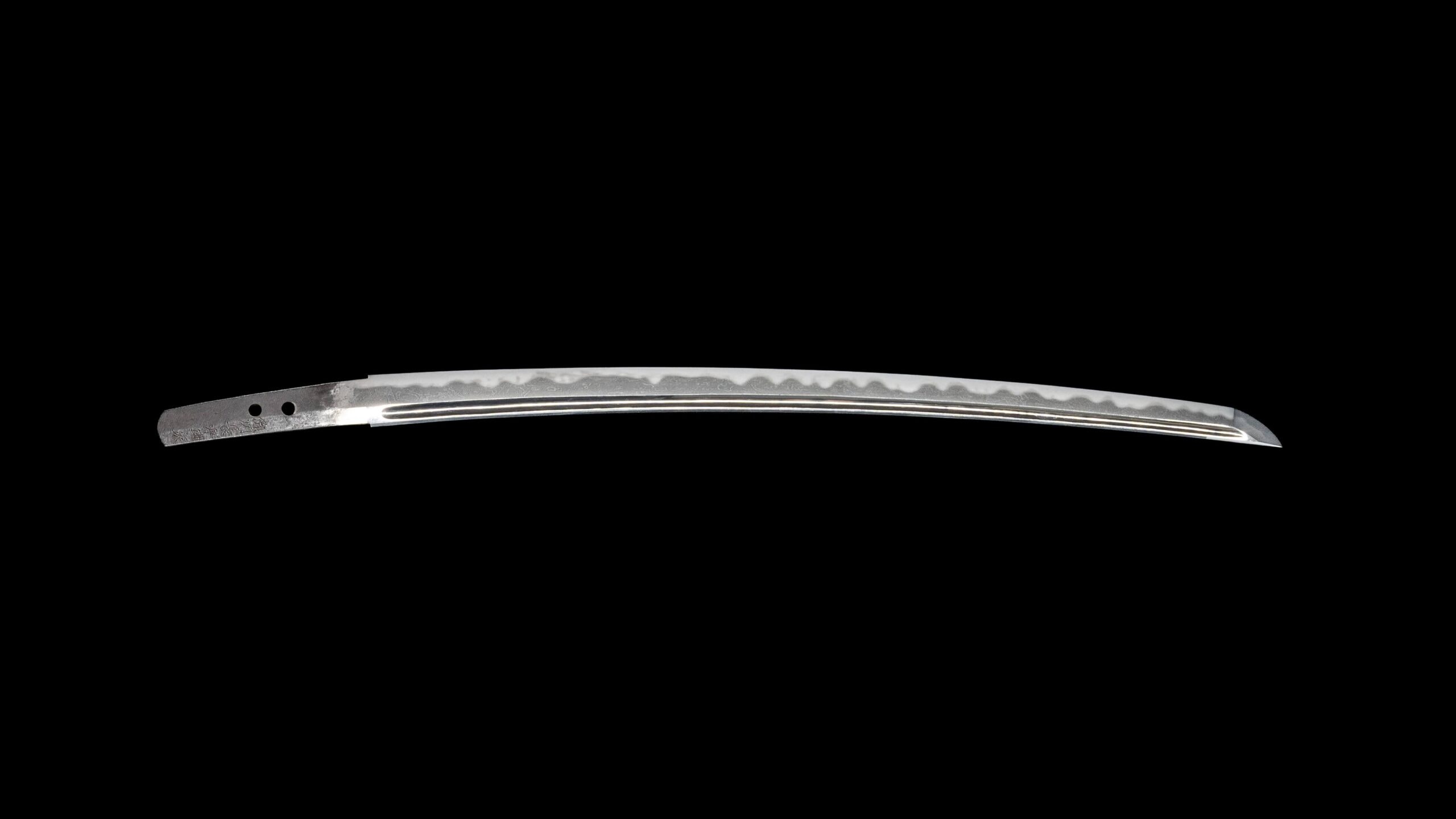
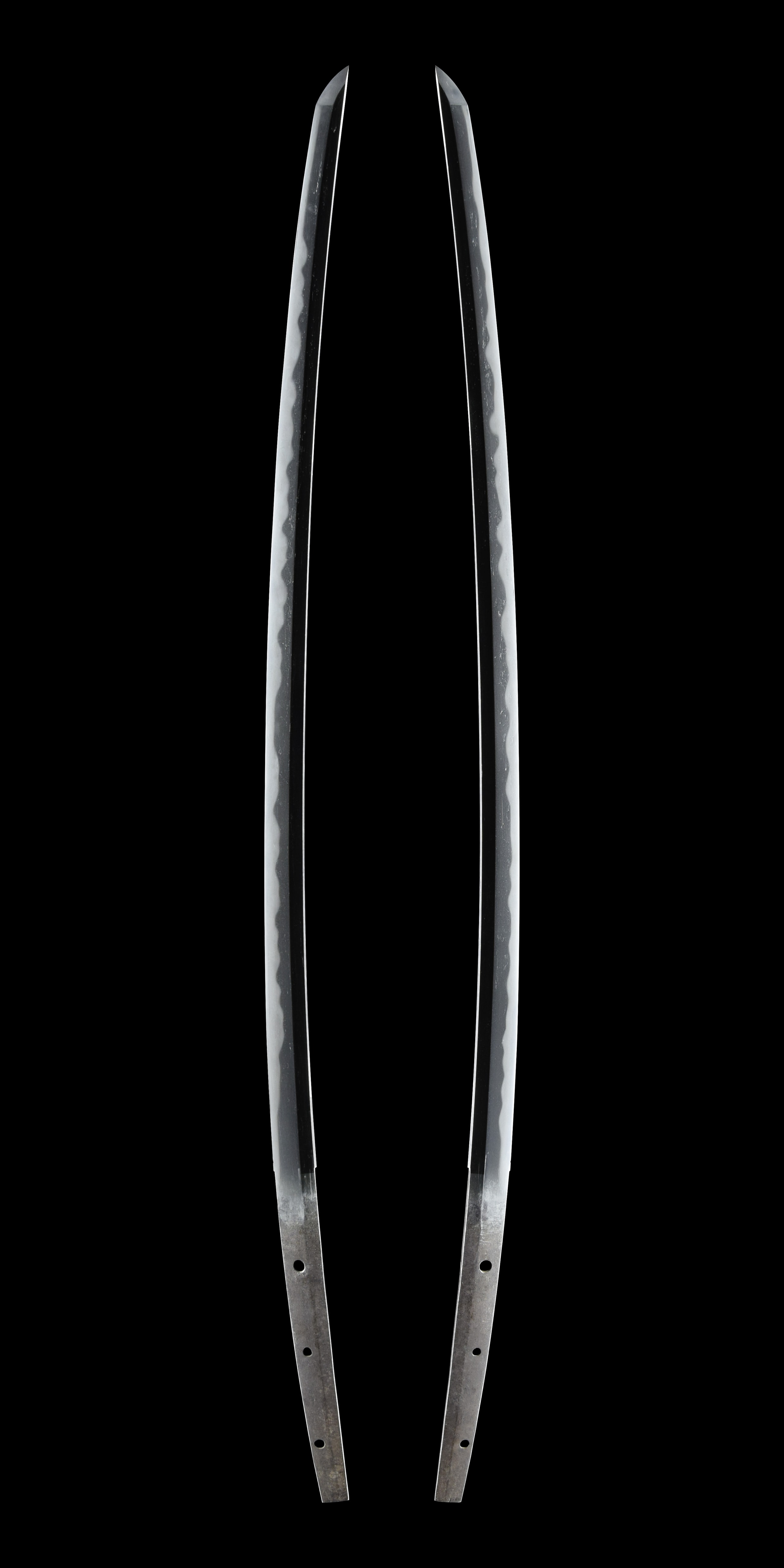
The first thing to look for is not a borrowed resemblance but his own typical hand. Over a base of he tempers a bold, varied in which , , angular and pointed elements crowd together, and at intervals two gunome lean head to head into an ear shape, the that the sources single out as the form to watch for in his work. On the Shotoku the judges write that the -toned mixing ear-shaped is this smith's typical work, and on a signed they describe the whose head splits in two into the ear-shaped . This is the surest Chogi tell, more reliable than any single famous comparison, because it recurs across signed and attributed blades alike and belongs to no other hand in quite this form.

Within the temper the activity is profuse and in feeling. and enter freely, the gathers thick and at times clustered, and run through the , and and drift above it, so that the is now bright, now slightly subdued. The judges note that in his -strong work the manner is emphasized even more than in Kanemitsu, which is precisely why the old saying about the most - of smiths attaches to him. Yet the never loses its footing, and the and mountain-shaped clusters keep the reading anchored in the province.

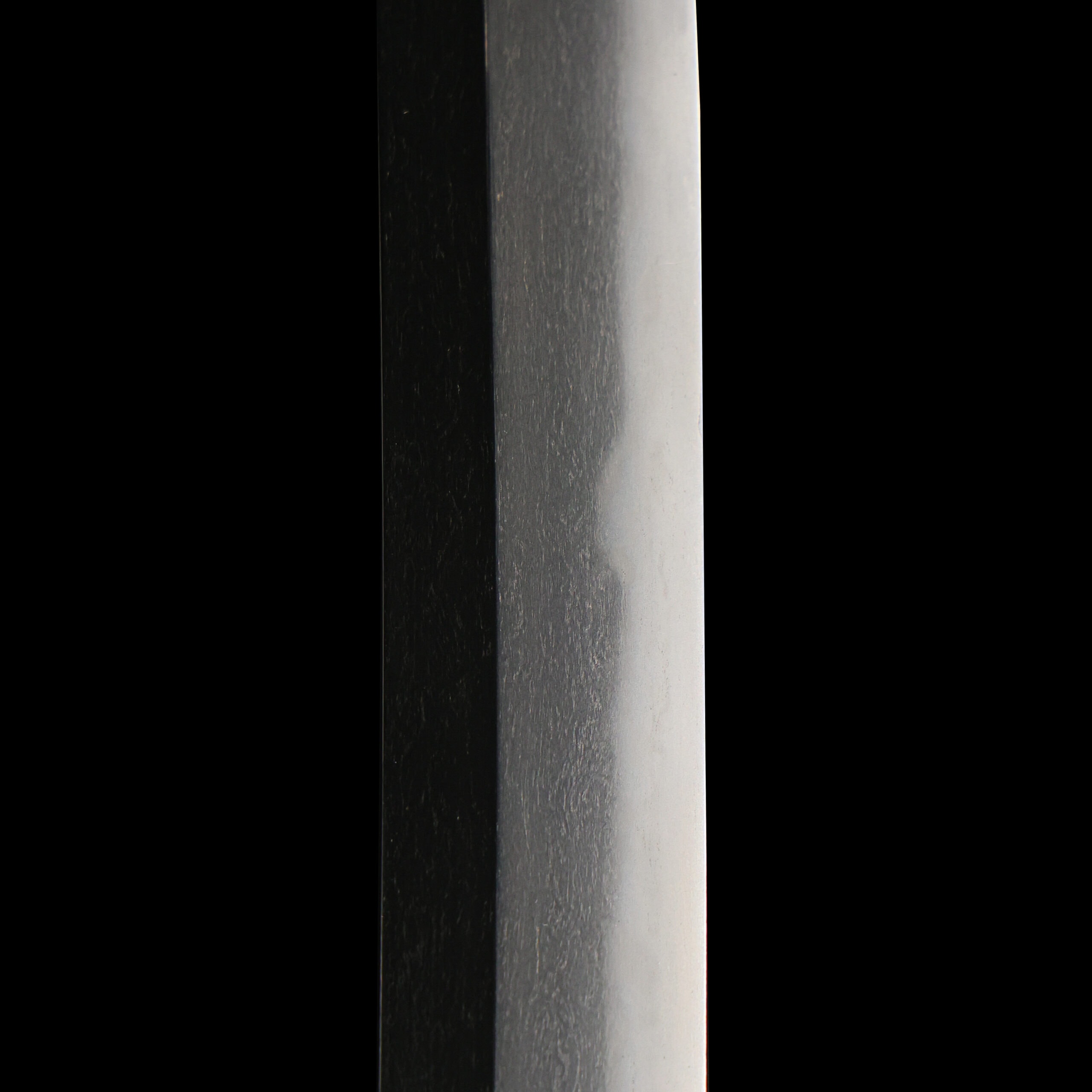
The answers the temper. The stands, often a touch -tatsu, carries thick and abundant well-entering , and beneath the fire a rises, faint on some blades and vivid on others. It is this doubling, worked into a that still throws a , that lets a Chogi be read at sight, and the sources say plainly that his forging lays thick over and mixes in . The follows the disorder of the . It runs , often turning pointed in , with sweeping the tip and at times a thrusting-up before a short turn-back, a strong and restless point that the judges repeatedly single out for its force.

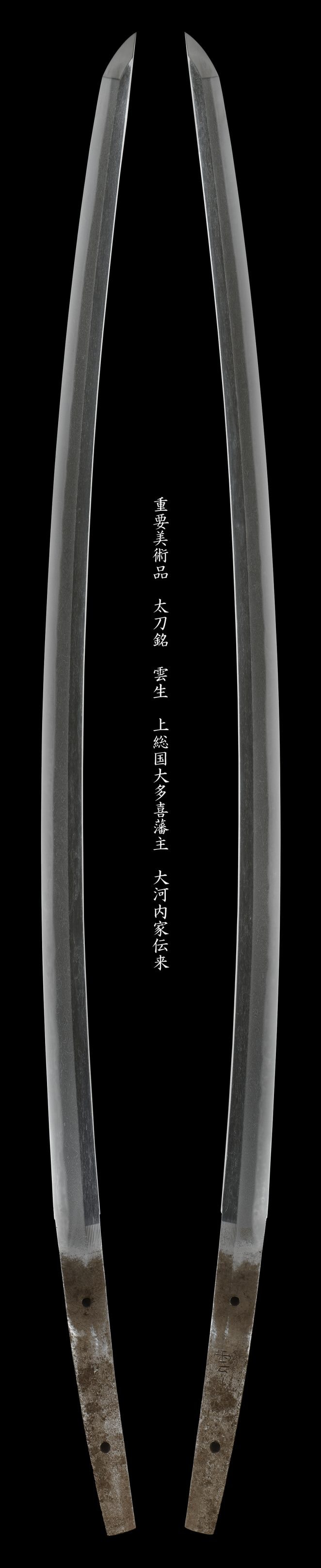
The shape is the grand figure, broad in the with little taper from base to tip, shallow in the and extended into an , imposing and o-buri. Most of his surviving blades are - later shortened, their bearing still vividly of the Enbun and Joji peak, and among the signed work are fine -rich and a dated of . The most celebrated piece is the Yamanbagiri Chogi, an Important Cultural Property and the very blade that Kunihiro famously copied, though that history comes from outside the published sources rather than from the catalog records themselves.

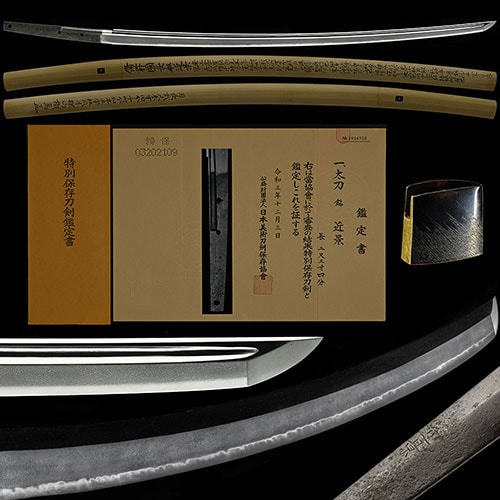
For the collector Chogi is, by the measure of a name this great, comparatively within reach. Fujishiro grades him Sai-jo , and he holds no National Treasure, but five of his blades are Important Cultural Properties and a strong body of his work carries and papers, with thirty-two at the tier. The provenance is illustrious: blades descend through the Mito Tokugawa and Kishu Tokugawa houses, one passed through the Hori family of the Iida domain in Shinano and the collection of Miyoji. Held across public institutions and long-private hands, a Chogi surfaces only occasionally, and is a major acquisition whenever it does.

Kantei

Soden-Bizen founder: bold nie-laden gunome/choji over a vivid-utsuri standing itame

Chogi is the founder of Soden-, a smith who worked the manner, and is counted by tradition among the ten disciples of Masamune. His hand is a bold, large and deep in , with profuse and and a vivid over a standing ; the judges place him close to Norishige.

Diagnostic discriminators

86% of his works

72% of his works

40% of his works

62% of his works

Observation by phase

Soden-Bizen (the typical manner)

A standing with thick , abundant and a vivid carries a bold, large and with , deep in with profuse , and ; the runs , often pointed (), with and a thrusting-up before a turn-back.

Jigane 地鉄
Hamon 刃文
Bōshi 帽子
Scholarship

His bold nie-laden ji and ha are read as close to Norishige; the name spans more than one generation.

Honors

正宗十哲Masamune Juttetsu (Ten Brilliant Students of Masamune)

Traditionally one of the Ten (Sōden-Bizen; chronologically doubtful)

The Ten Brilliant Students of Masamune — an -period construct first attested in the Shōsan (刀剣正纂, 1862), which itself already disclaims the grouping as later conjecture. Several members cannot have been actual students on chronology (Kanemitsu, Chōgi, Kinjū, Naotsuna), and Norishige is now considered a fellow student under Kunimitsu — yet invoke the roster constantly, and it remains core collector vocabulary. Roster variants exist (Sadamune in place of Naotsuna; Kongōbyōe Moritaka swapped in for Kunitsugu or Naotsuna); this honor tags the standard ten.

Designations

Kokuhō—
Jūyō Bunkazai5
Jūyō Bijutsuhin6
Gyobutsu3
Tokubetsu Jūyō32
Jūyō Tōken63

Elite Standing

0.99 across 109 designated works

Top 1% among smiths

Provenance

43 documented provenances across certified works by Chogi

Provenance Standing

25 works held in elite collections across 43 documented provenances

Top 2% among smiths

Raw score: 4.01 / 10

Blade Forms

Distribution across 109 ranked works

Signatures

Signature types across 109 ranked works

Currently Available

Lineage

TeacherSanenaga
Chogi
Students (13)
  1. 1.Kanenaga兼長4 for sale94designated
  2. 2.Yoshikage義景3 for sale67designated
  3. 3.Morikage盛景3 for sale94designated
  4. 4.Nagamori長守1 for sale41designated
  5. 5.Nagayoshi長義
  6. 6.Kanenaga兼永
  7. 7.Nagamori長守
  8. 8.Nagasuke長助
  9. 9.Shigetsuna重綱
  10. 10.Shigetsuna重綱2designated
  11. 11.Shigeyoshi重吉3designated
  12. 12.Tsunehiro恒弘
  13. 13.Yorimitsu頼光1designated

Chogi School

Other artisans of the Chogi school

  1. 1.Kanenaga兼長4 for sale94designated
  2. 2.Yoshikage義景3 for sale67designated
  3. 3.Nagashige長重16designated