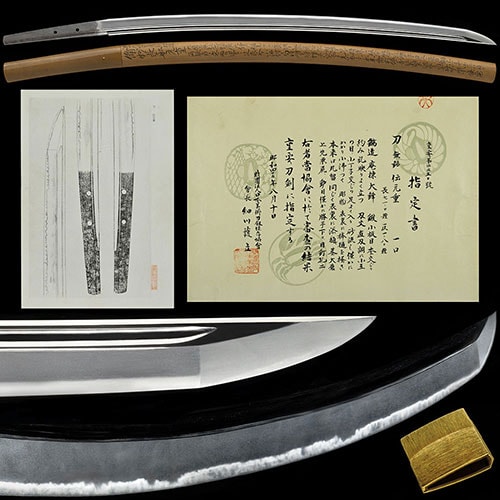
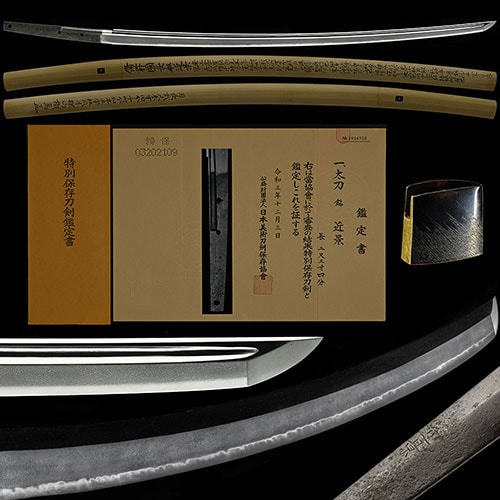
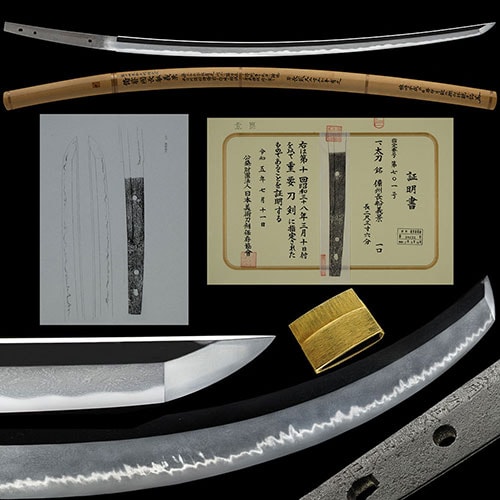
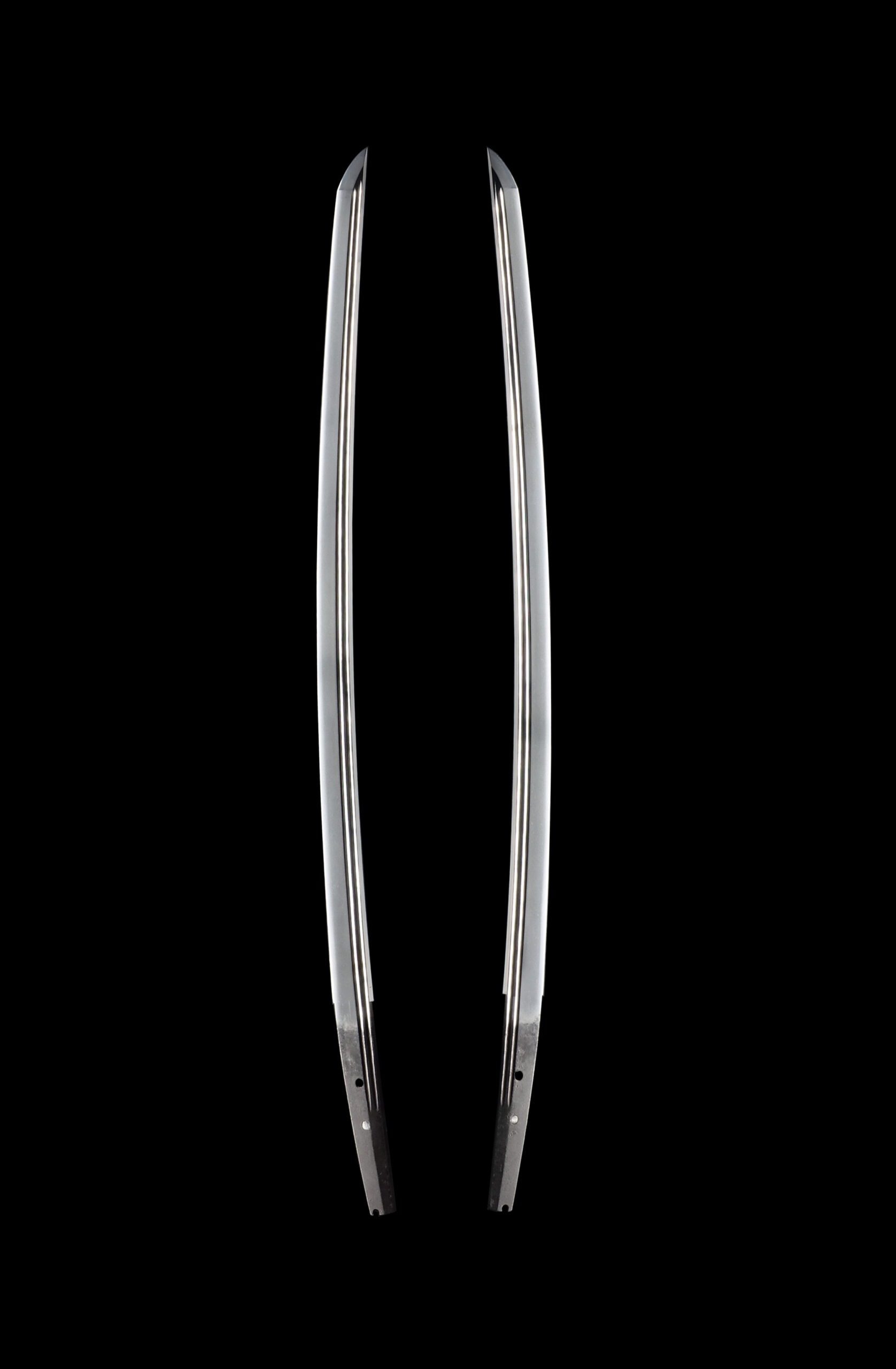
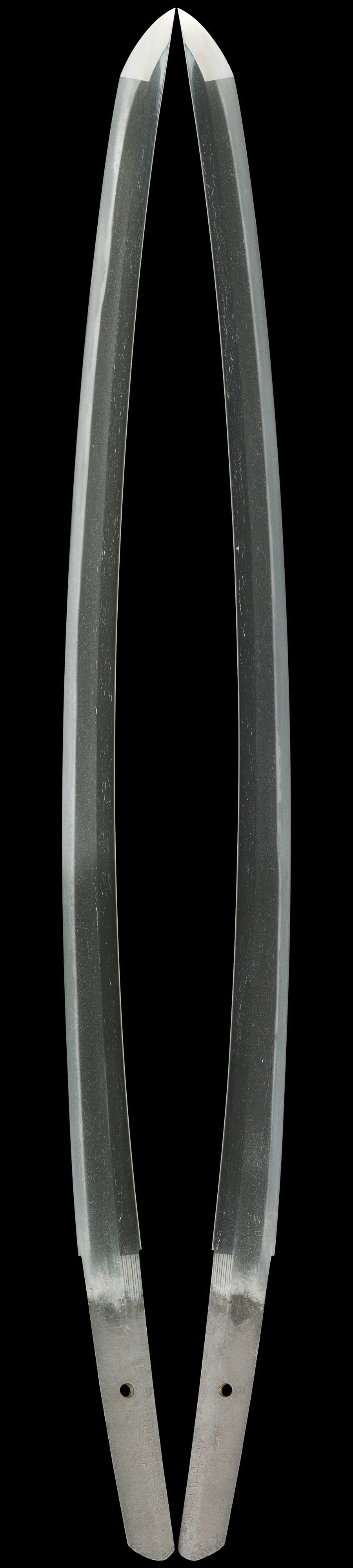
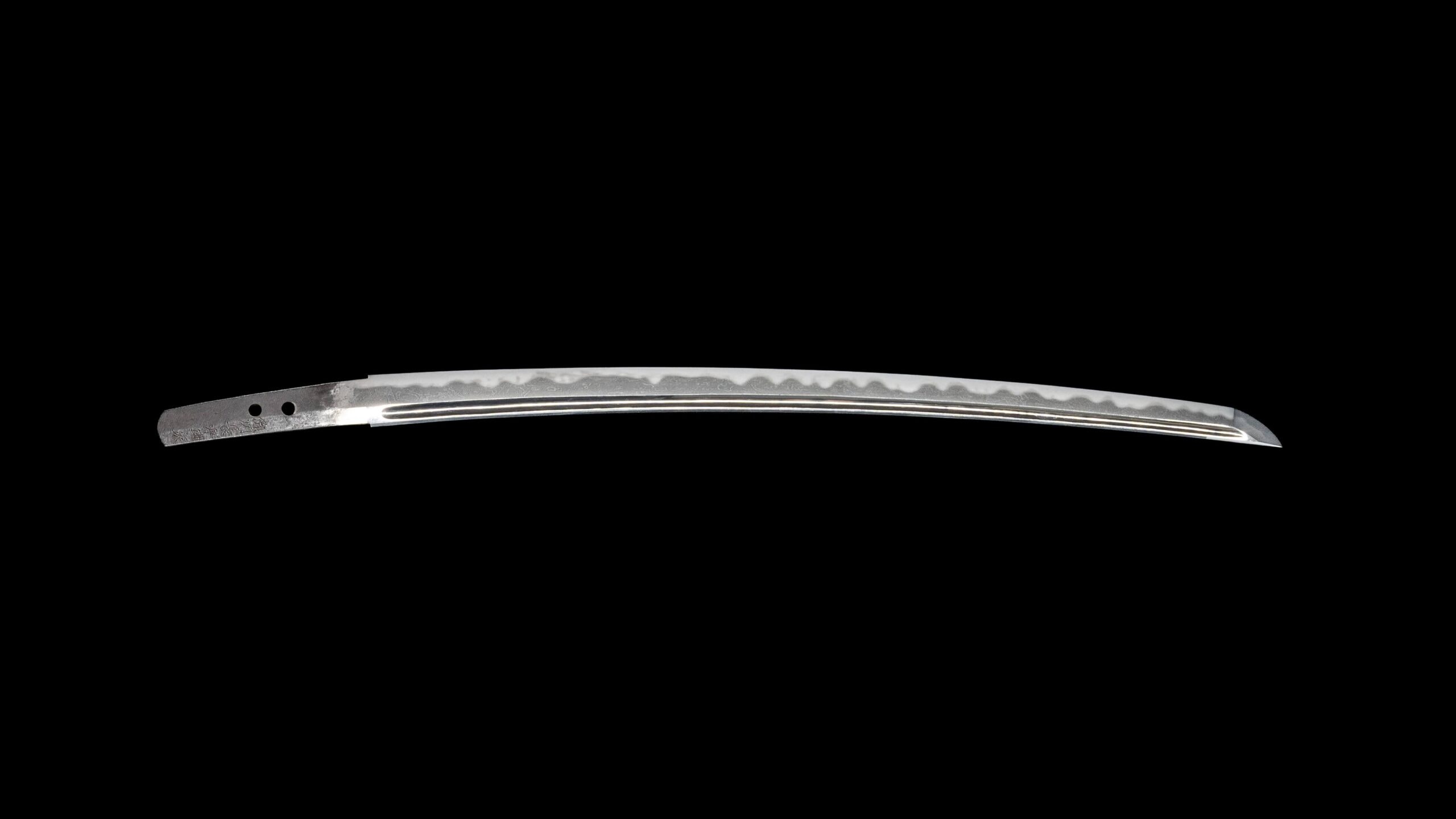
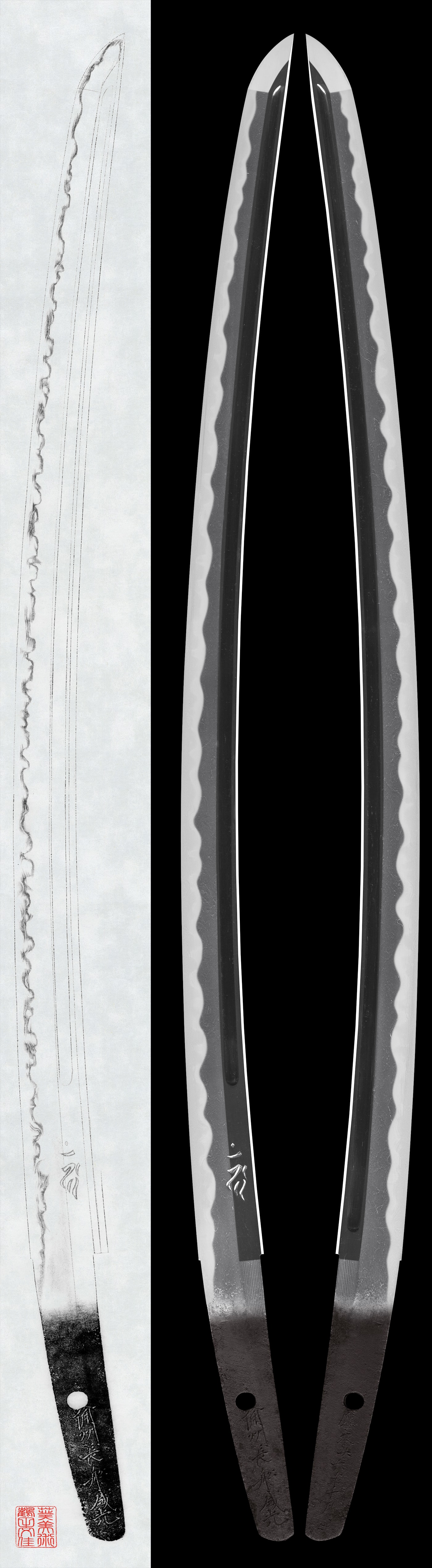
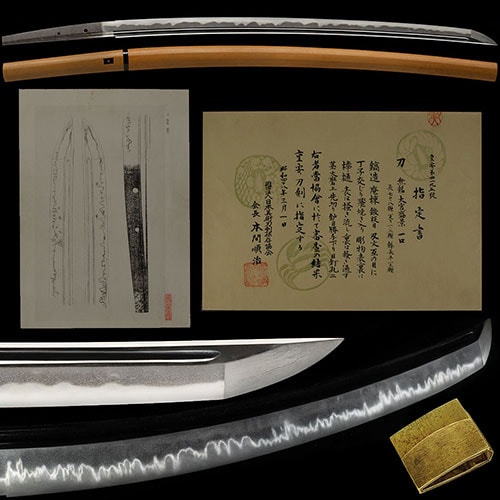
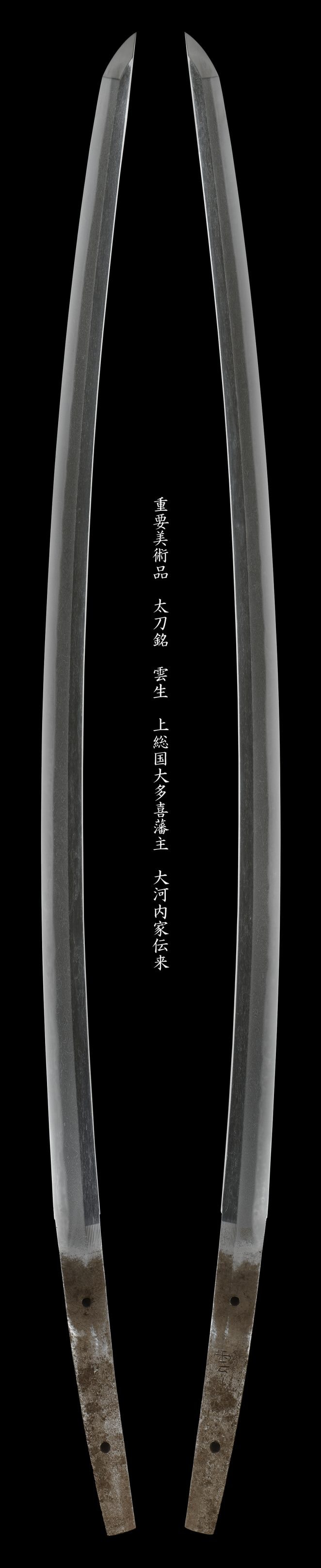
Nagashige worked at in the opening years of the period, in the line that the published sources rank beside Kanemitsu as a 'standard-bearer of Sōden-Bizen', the wing that took up technique. His relationship to Chōgi was long misread, and the correction is one of the firmer facts on record: an older account made him Chōgi's younger brother, but his surviving signed blades carry dates of Kenmu 1 and 2 (1334–1335) and Kōei 1 (1342), while no work of Chōgi can be traced earlier than Shōhei 15, so the prevailing view today makes him Chōgi's elder brother. The dated anchor of that argument is concrete: a signed Bishū -jū Nagashige and dated to the cyclical year kinoe-inu, Kenmu 1, once the sashiryō of Kōtoku, is his National Treasure.
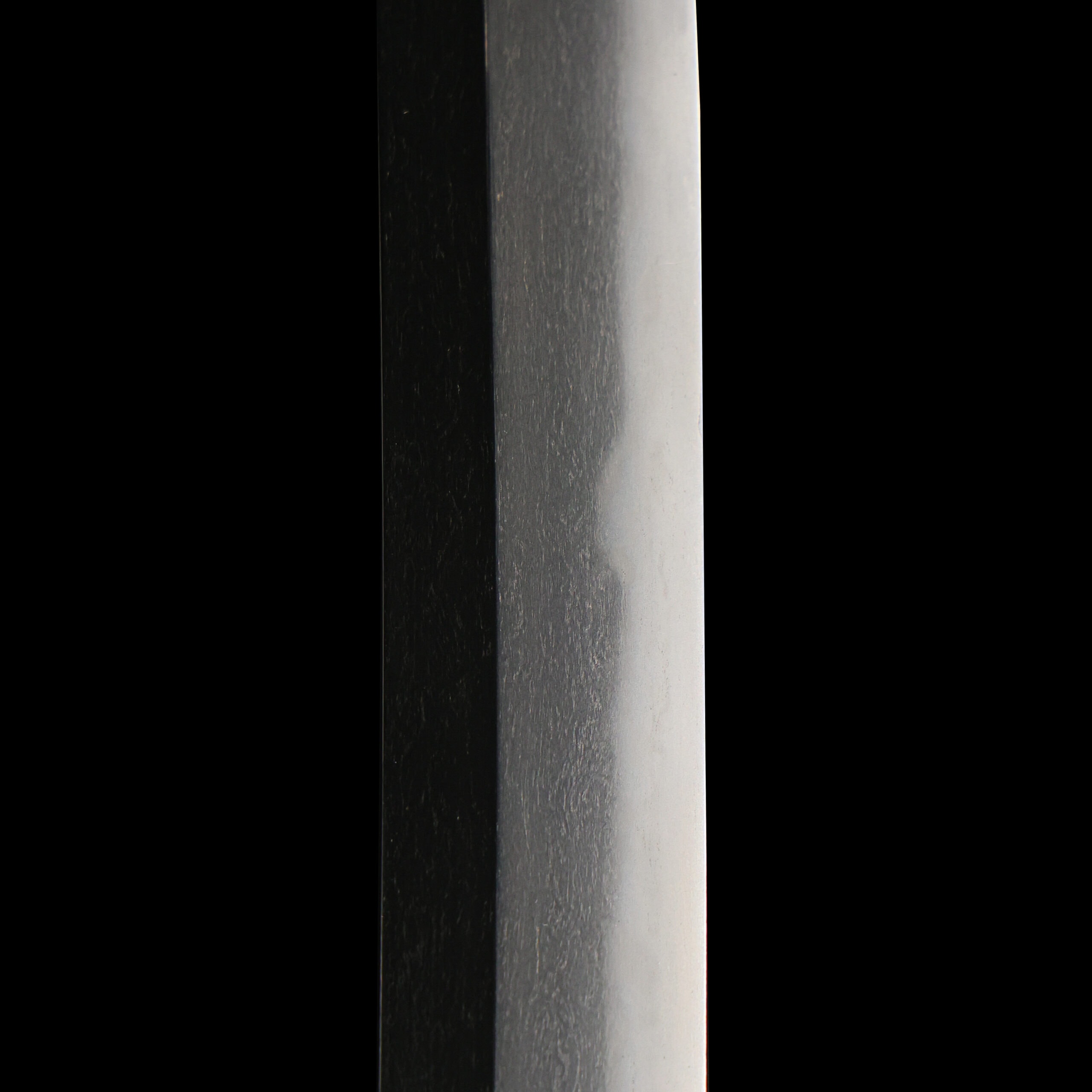
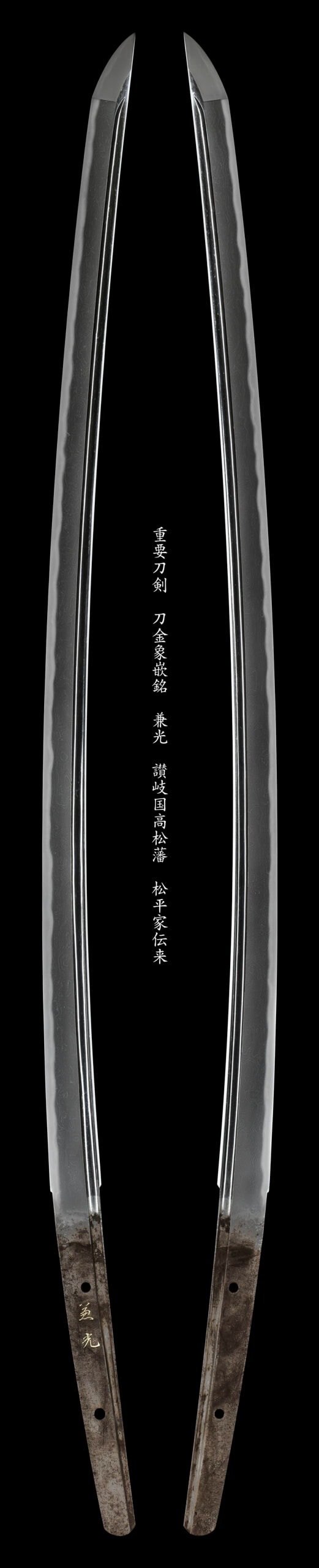
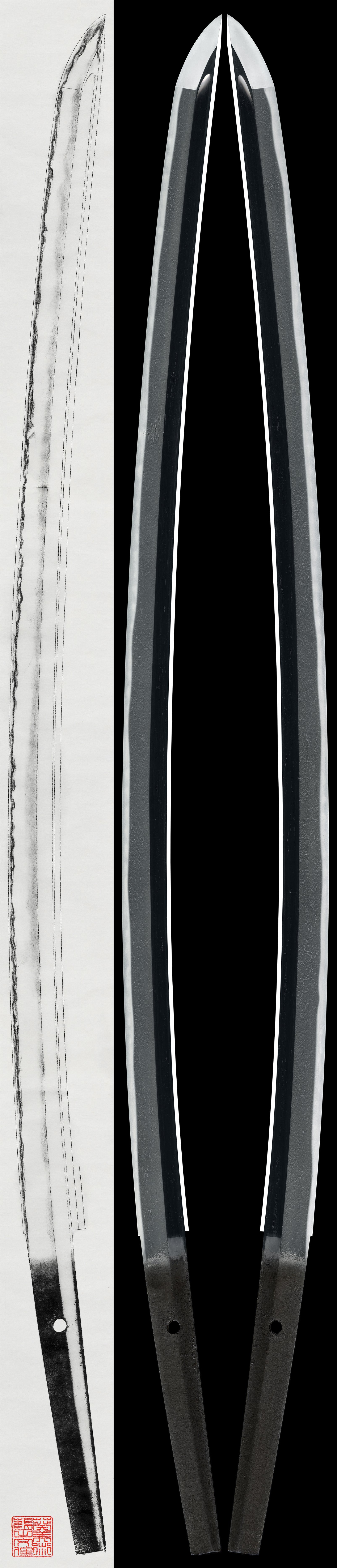
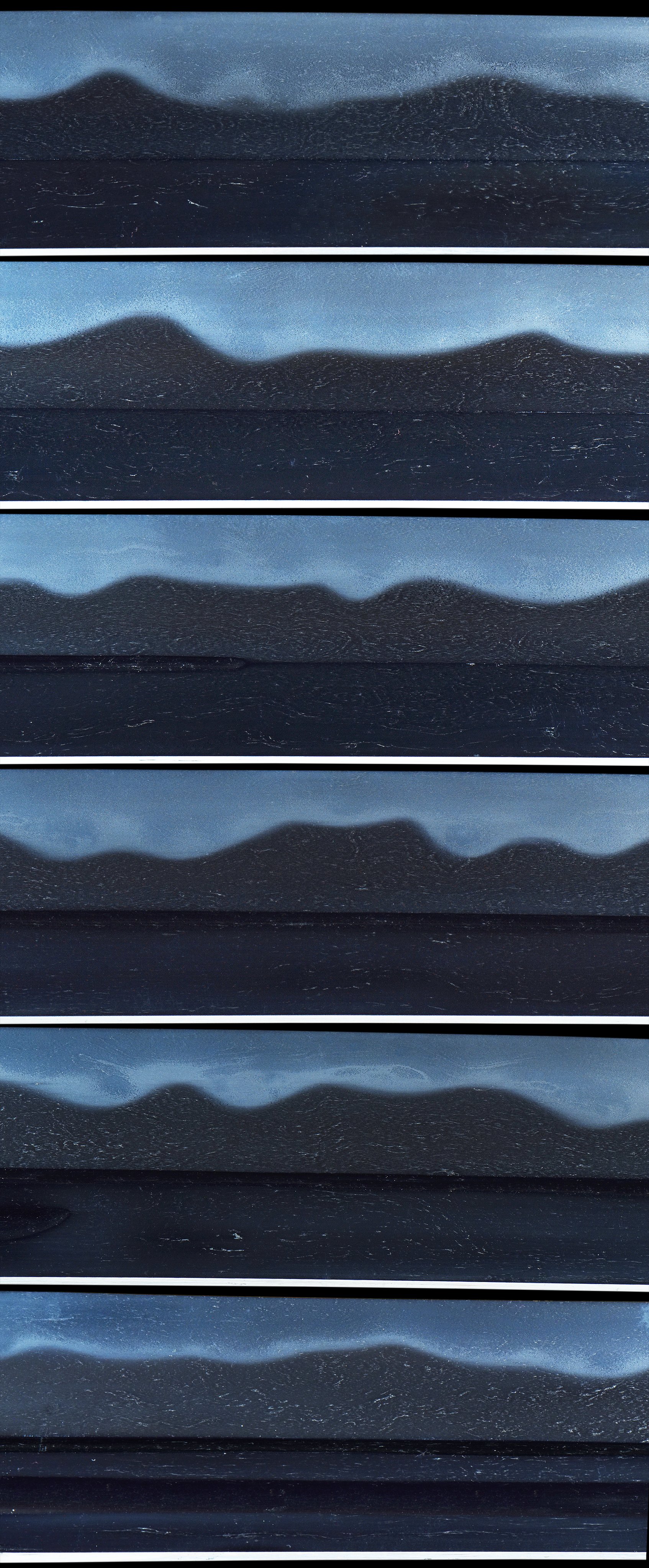
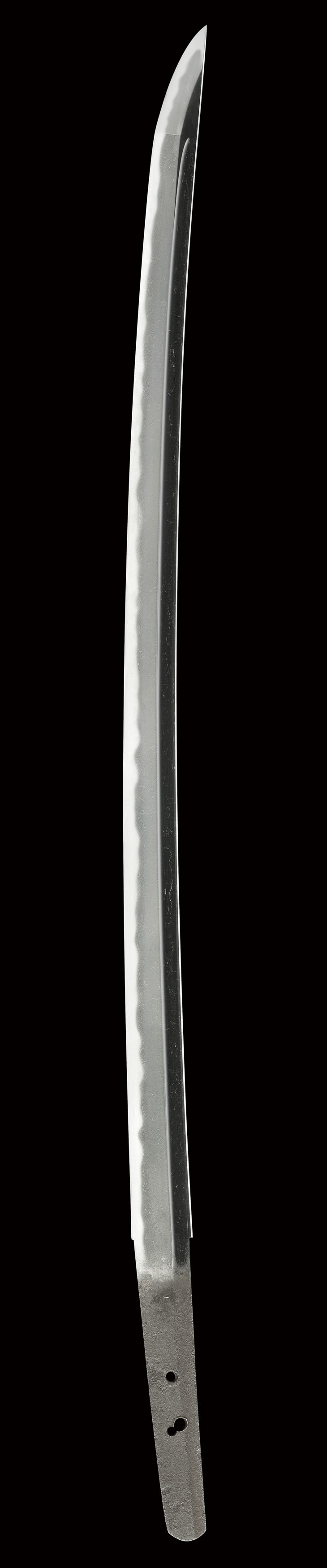
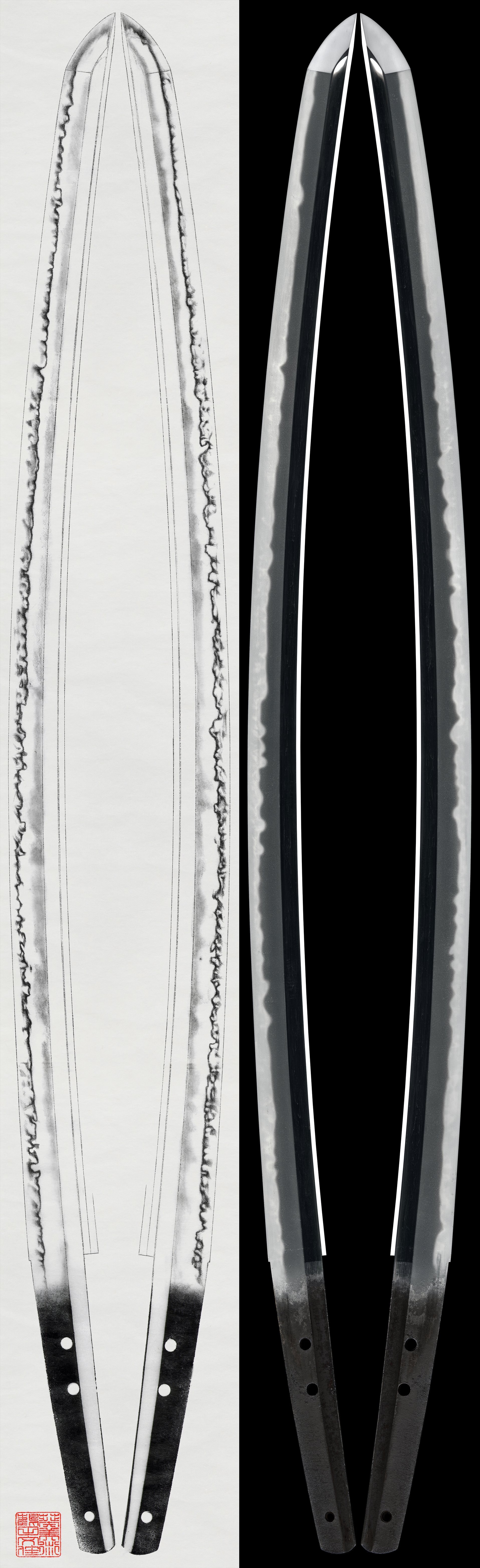
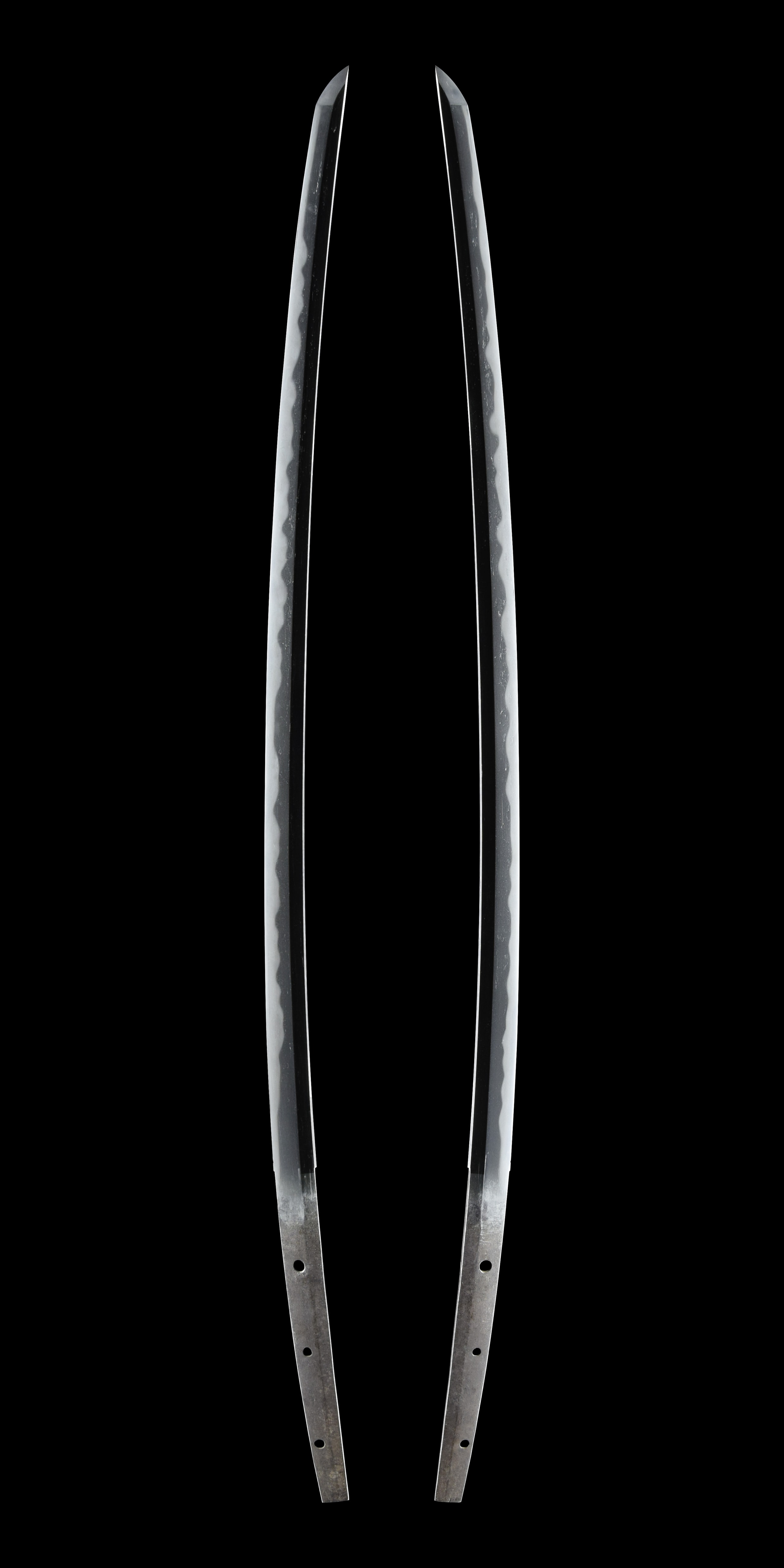
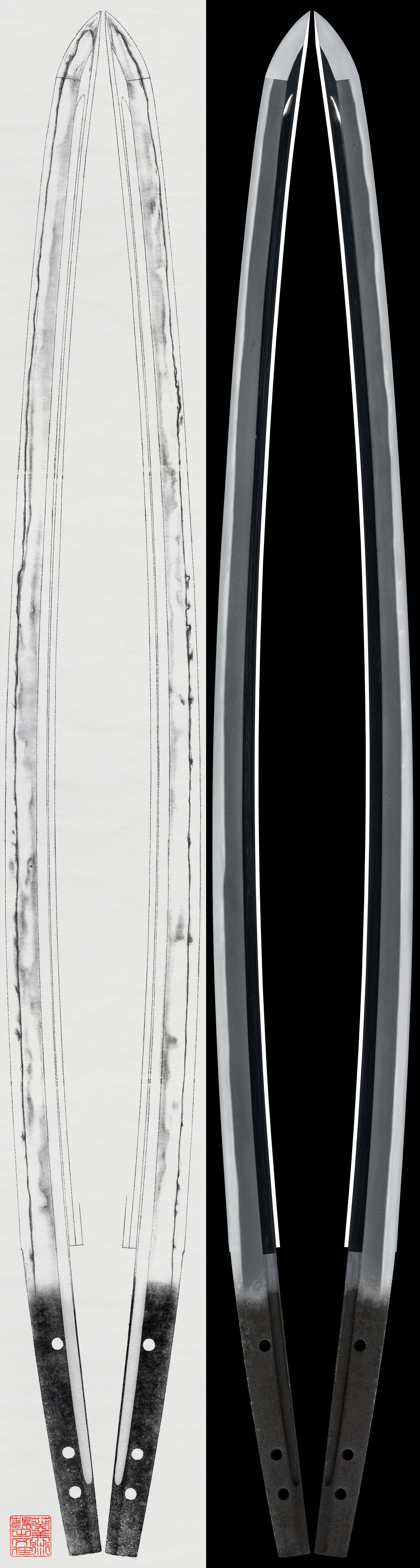
His characteristic hand is the Sōden-Bizen , and it is most fully seen on the broad that make up the bulk of his record. Over a standing mixed with and , the standing a little, he tempers a shallow or base into which enter , and pointed , with abundant and . The is deep and bright, adheres well with passages of rougher , and and run freely, small and scattered along the edge. The runs , rising to a pointed tip with or turning back in a small . The construction is the full build, wide in with little width-taper, thick in , an extended or an , hand-heavy and imposing.
The carries the credential that keeps the work from turning purely . with thick and well-entering appears on every blade, and over it stands a , clear where the forging is with and falling to a faint -like cast on the rest. On the signed register, by contrast, the hand is tighter and calmer. The dated run to a well-packed with fine and only a light , the temper a or -toned line mixed with and , even entering, and present. Devotional carving, set at the , appears on more than one piece.
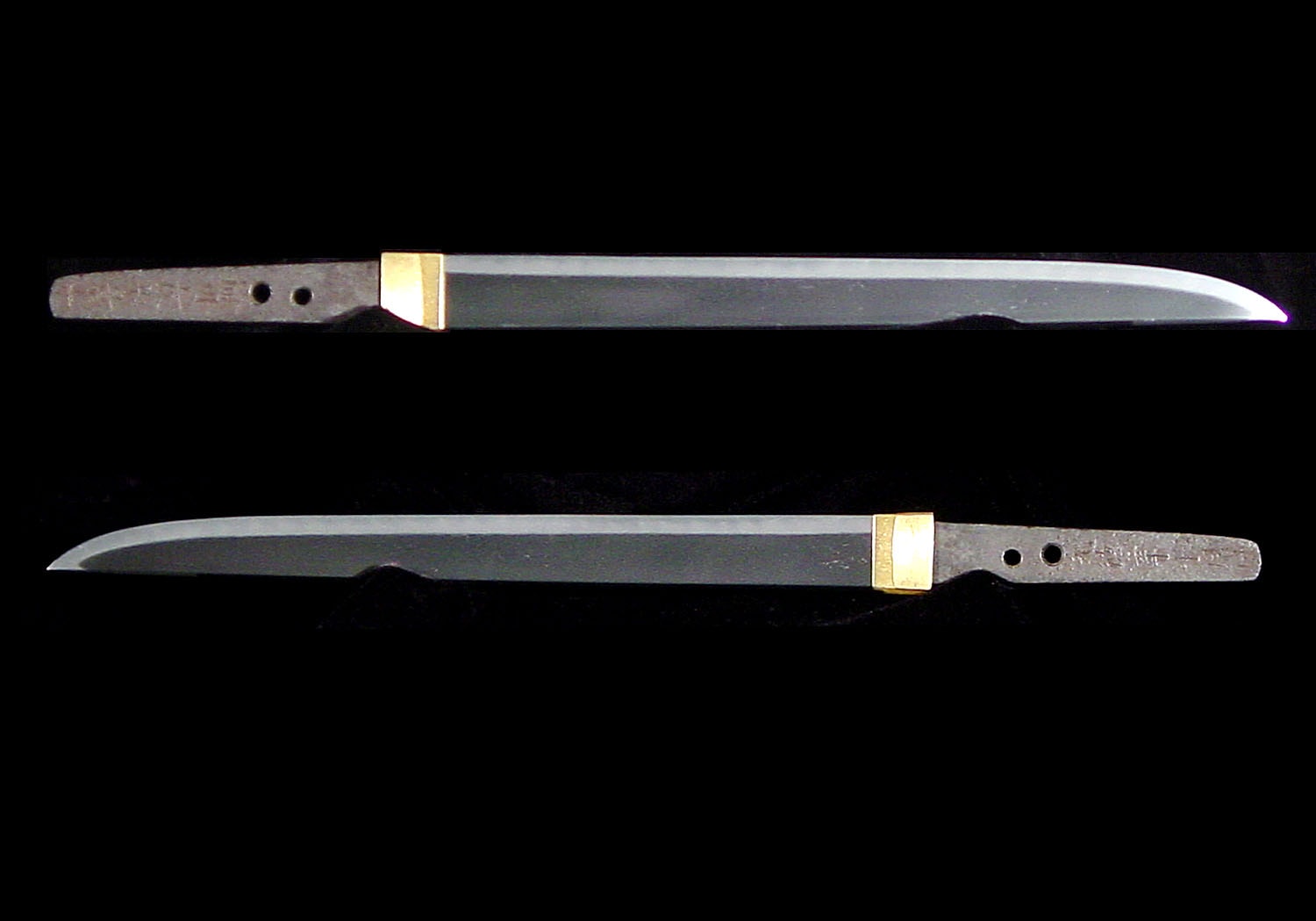
The published sources draw two further registers within his own work. On the signed they read a more emphatic cast than Chōgi himself, noting that 'among the signed survivors the press the manner further than Chōgi'; these are with a standing , a small with growing vigorous toward the tip, frequent and the pointed powerful. One signed stands apart from everything else, its temper centered on mixed with squared , evoking Kanemitsu, his circle and even Motoshige rather than the Chōgi ; the sources call it 'a stylistic range unusual for Nagashige' and value it as documentary material for the breadth of his manner.
What separates Nagashige from Chōgi is named the way in entry after entry, and it is the whole of his . His is of smaller scale and his somewhat lower, yet 'the in both and surpasses Chōgi's'; it is on this single recurring point that a Sōden-Bizen blade is converted into a Nagashige attribution. His distinction is carried by his own traits, the smaller, lower laid over a and more richly charged with , rather than by any feature borrowed from his brother. Traditionally his son Nagamori carries the line forward in a conspicuously -based but somewhat lesser hand.
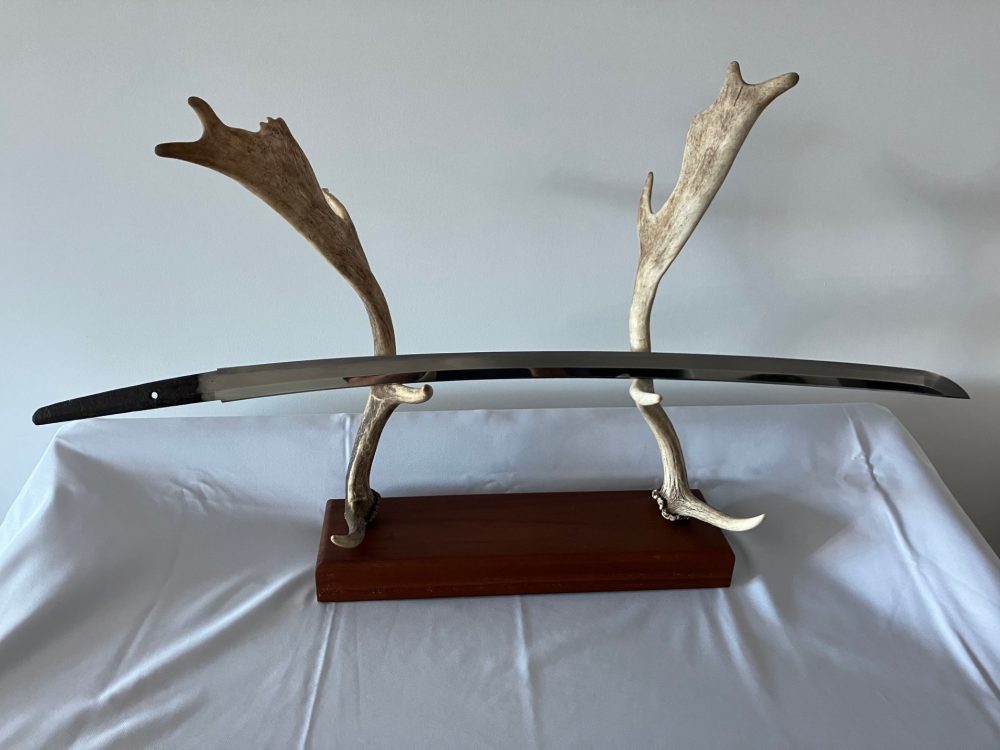
Fujishiro grades him Jō-jō . Signed, Nagashige are extremely rare, and the body of his record runs through the and tiers and the prewar Jūyō Bijutsuhin, above which stands his single National Treasure, the Kenmu 1 held in the family. Several blades carry provenance: a given by Tokugawa Ieyasu to the Naruse house of Inuyama in Owari and long kept there, others through the Maeda of , the Nabeshima of Saga and the Shimazu. With only thirteen blades in the and tiers and almost all of them held rather than traded, a signed Nagashige comes to light only seldom; a privately held example, where the broad Sōden-Bizen shows its smaller over an unusually -laden and , is a notable thing for a collector to encounter, and a document of how absorbed the manner.