戦国の世、一派は第二の主家に仕えた。小田原の後北条氏である。その庇護のもと綱広系は打刀の時代の皆焼を鍛え続け、1590年の落城とともに新刀の時代へ散った。
 NihontoWatchNihontoWatch
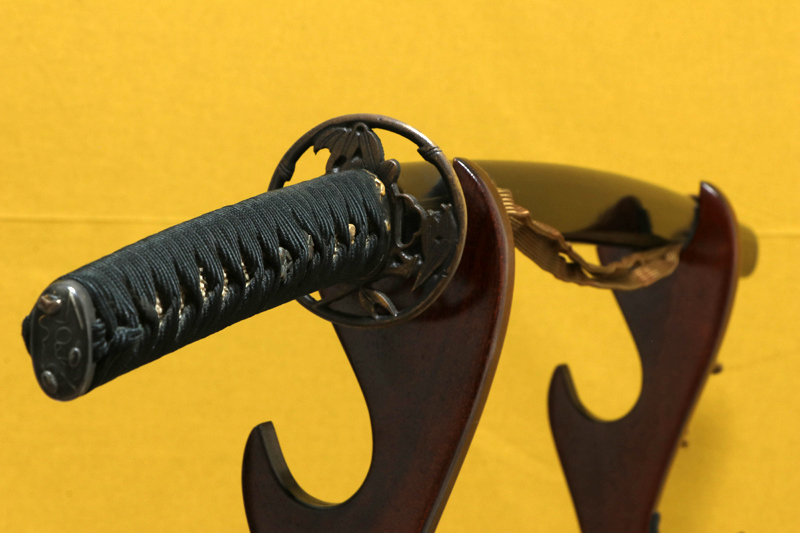
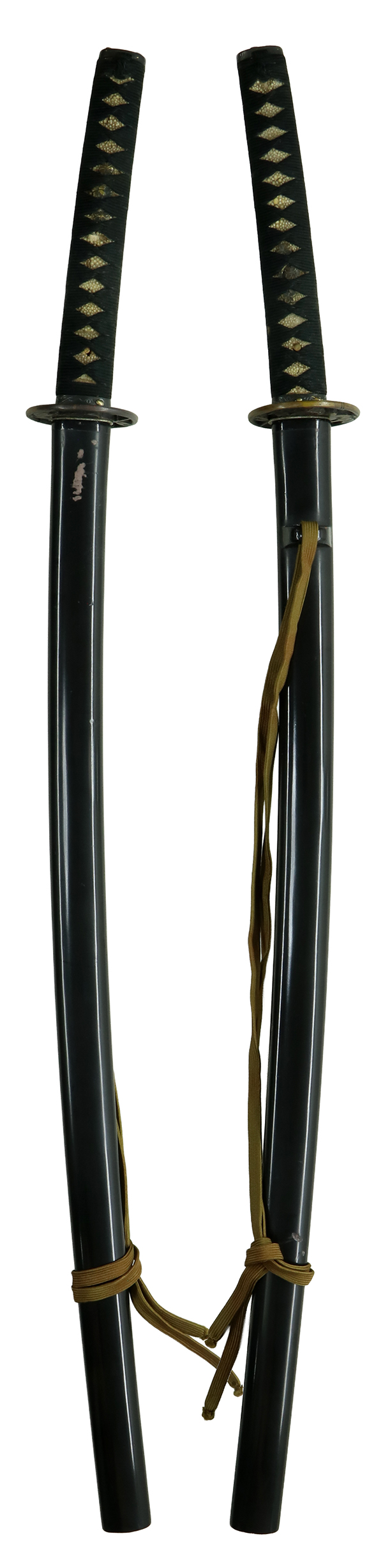
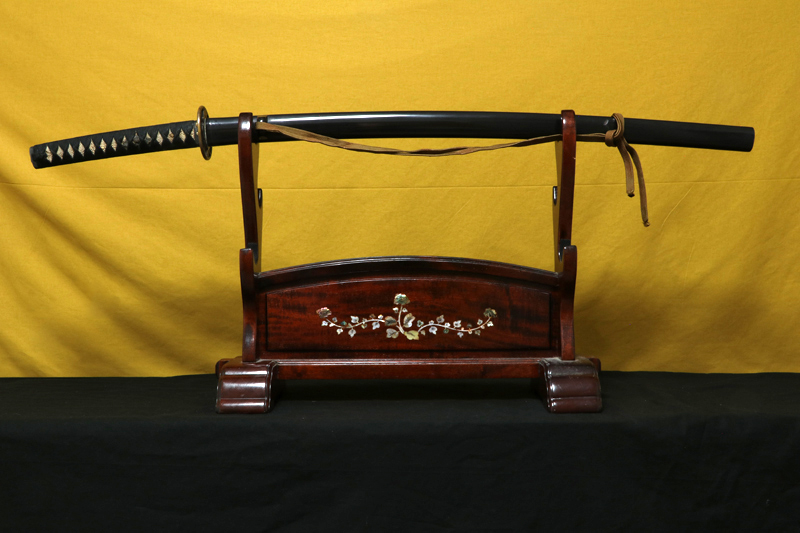
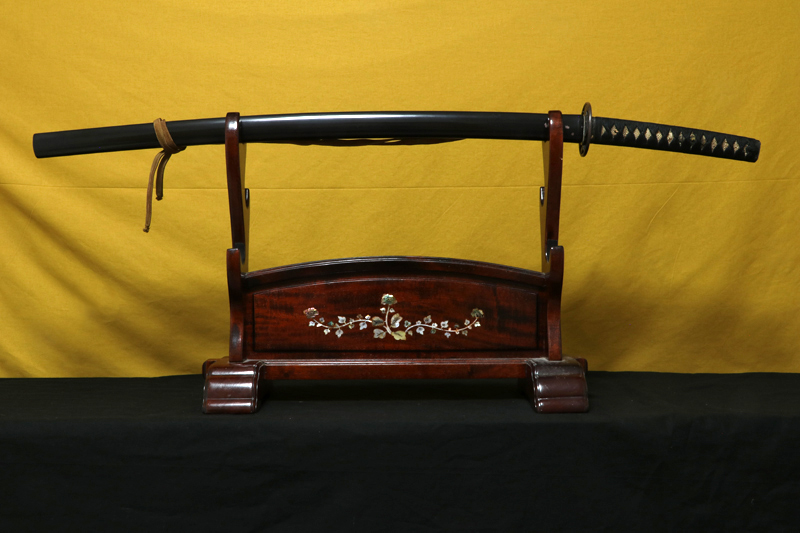
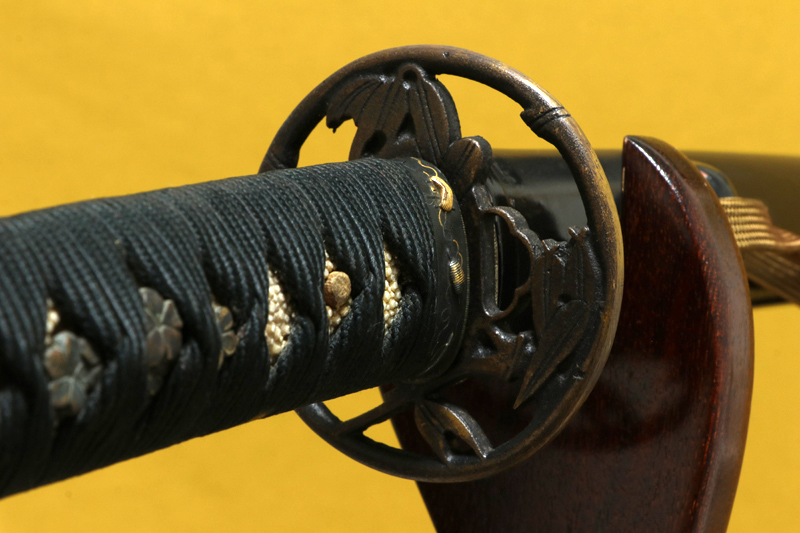
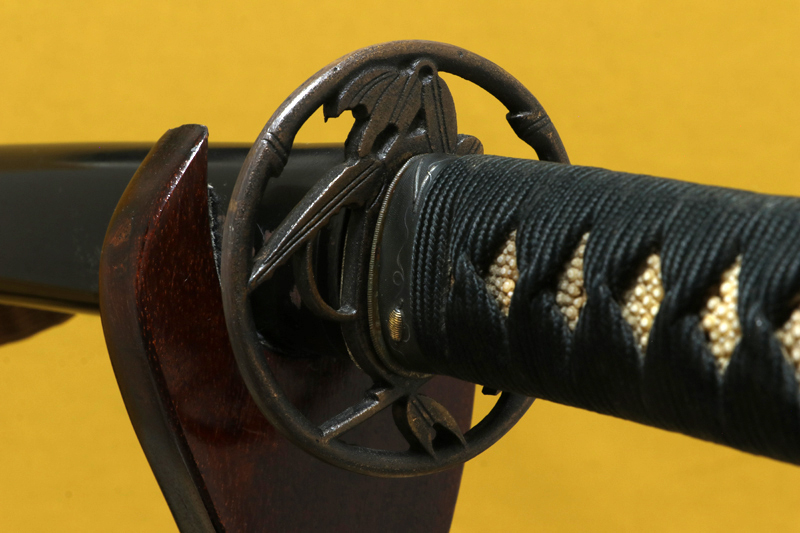
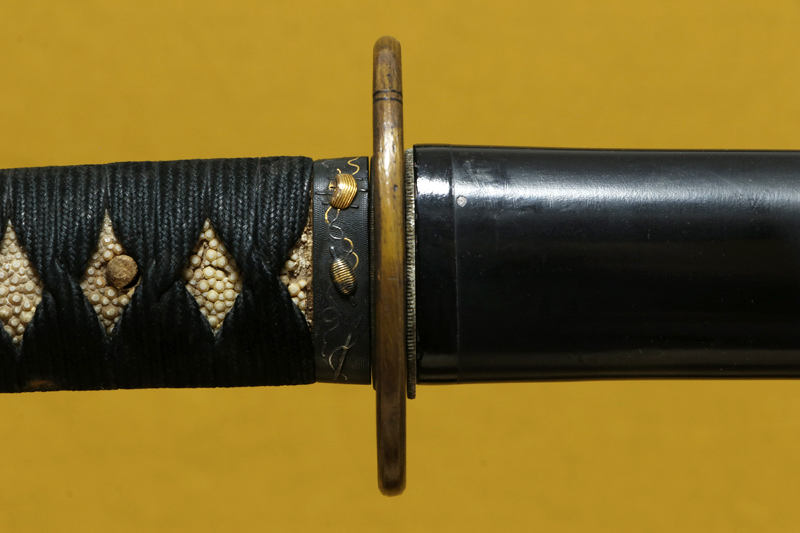
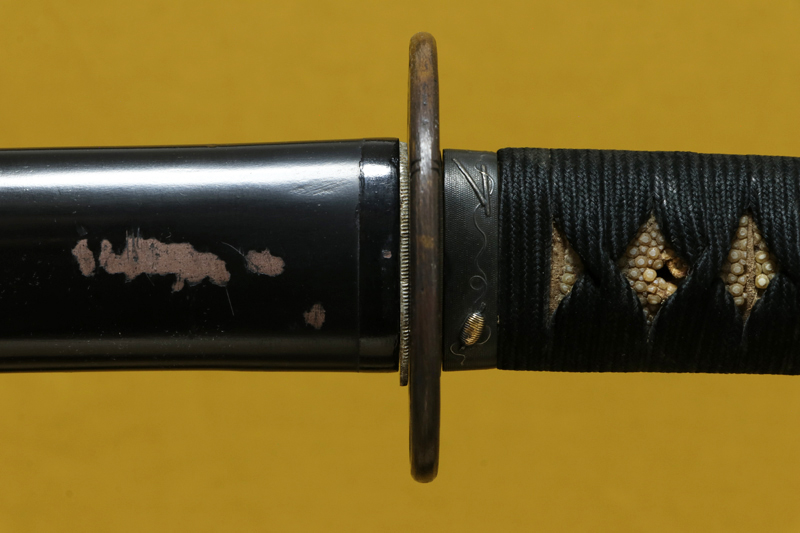
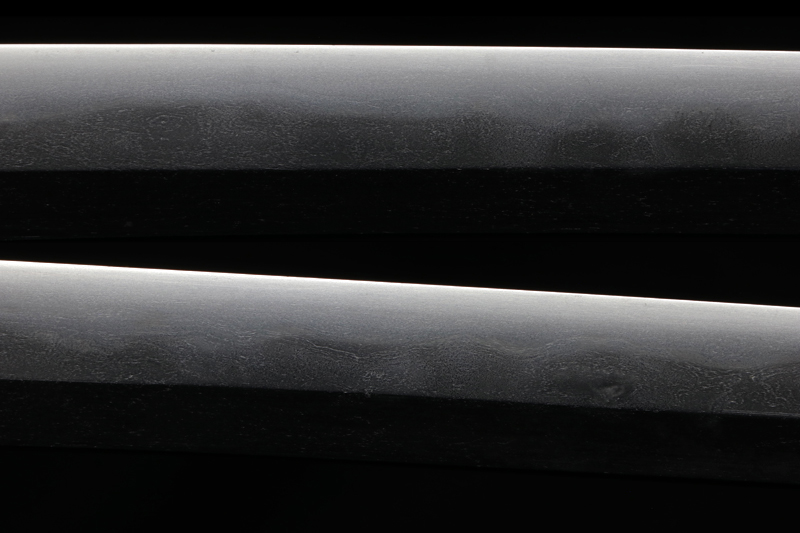
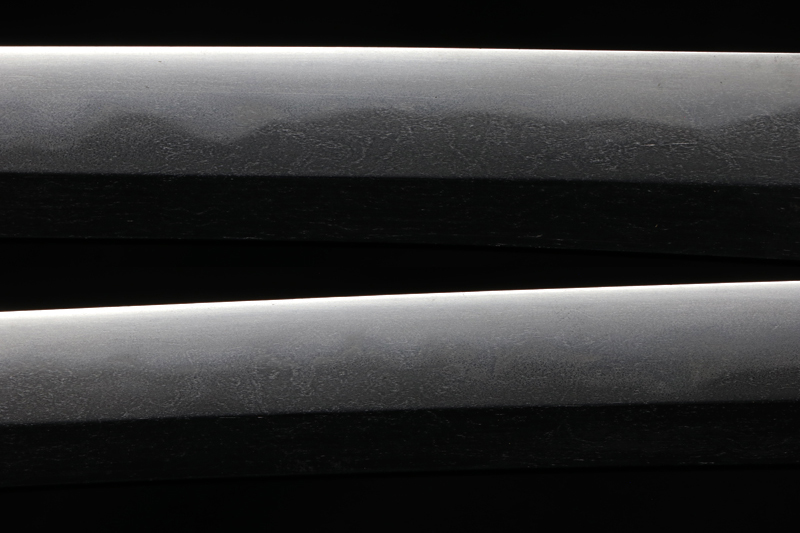
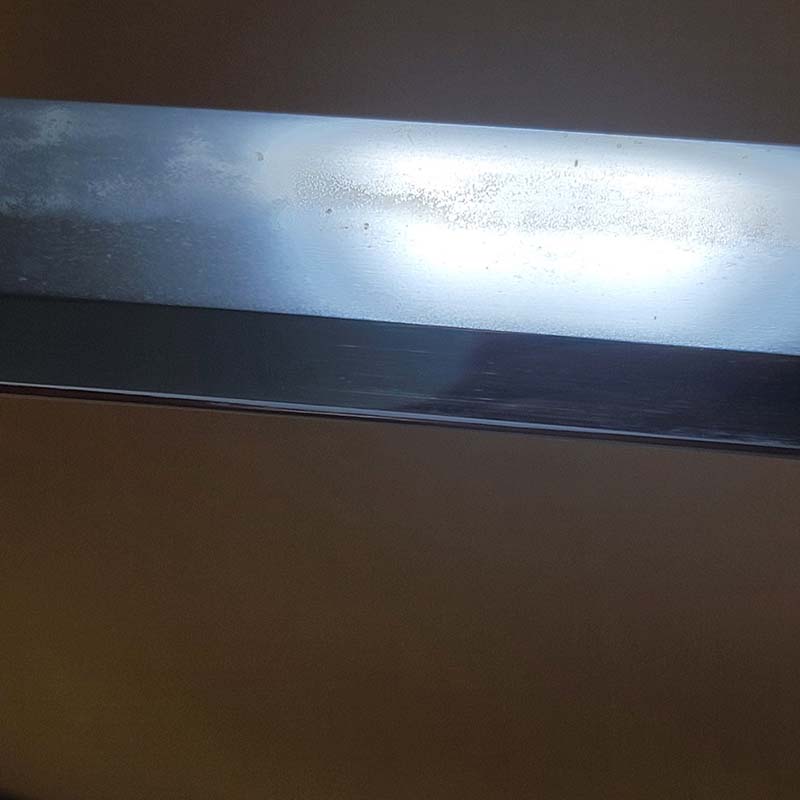
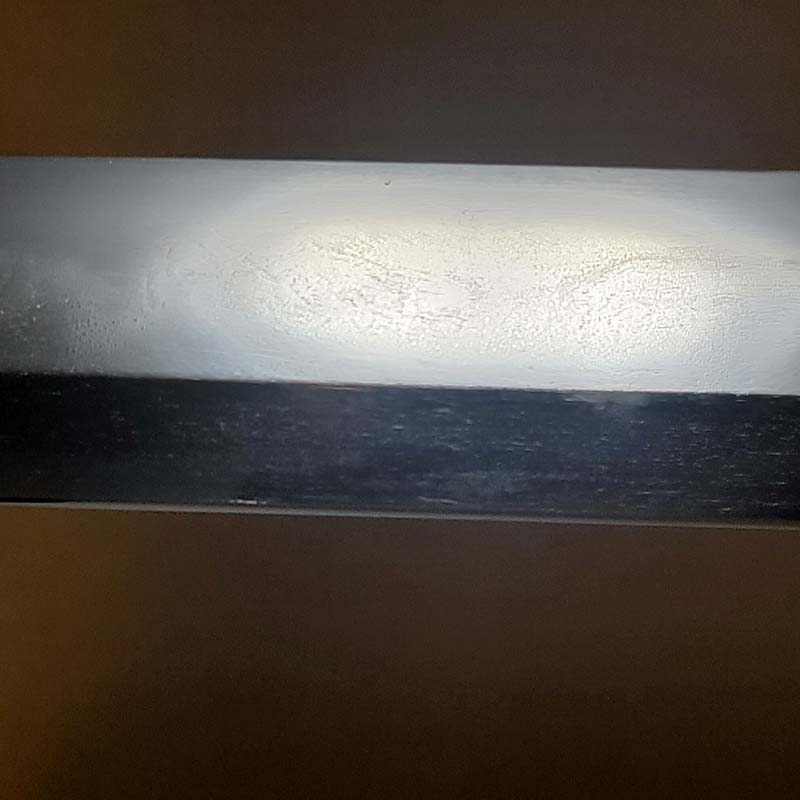
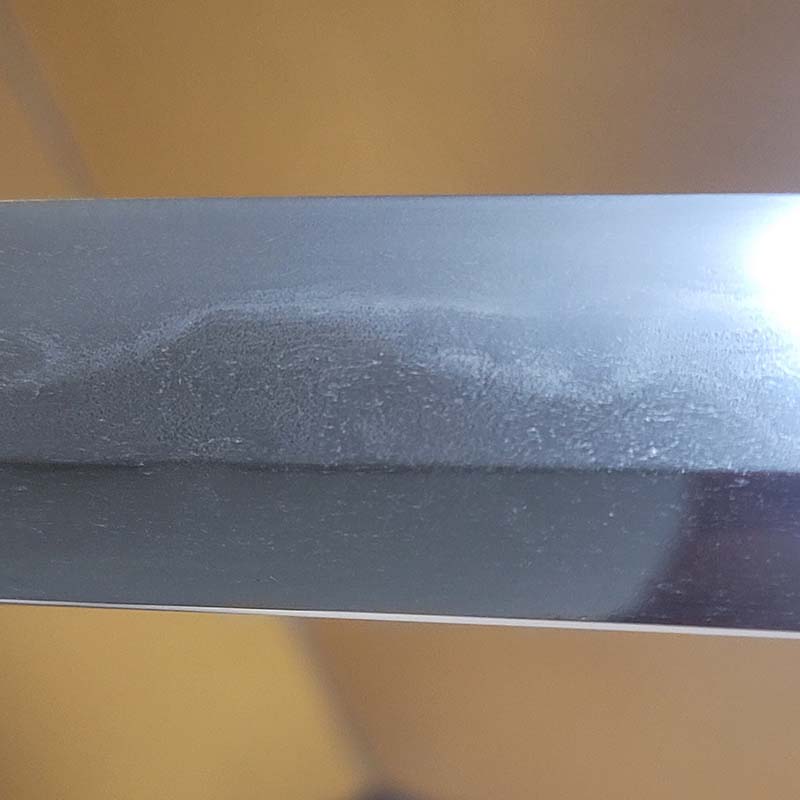
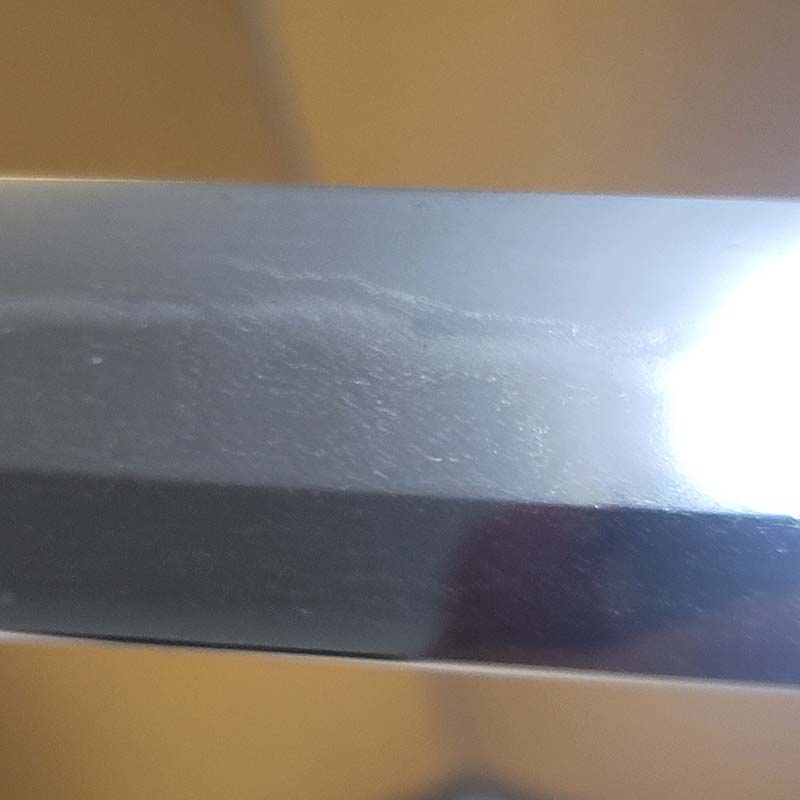
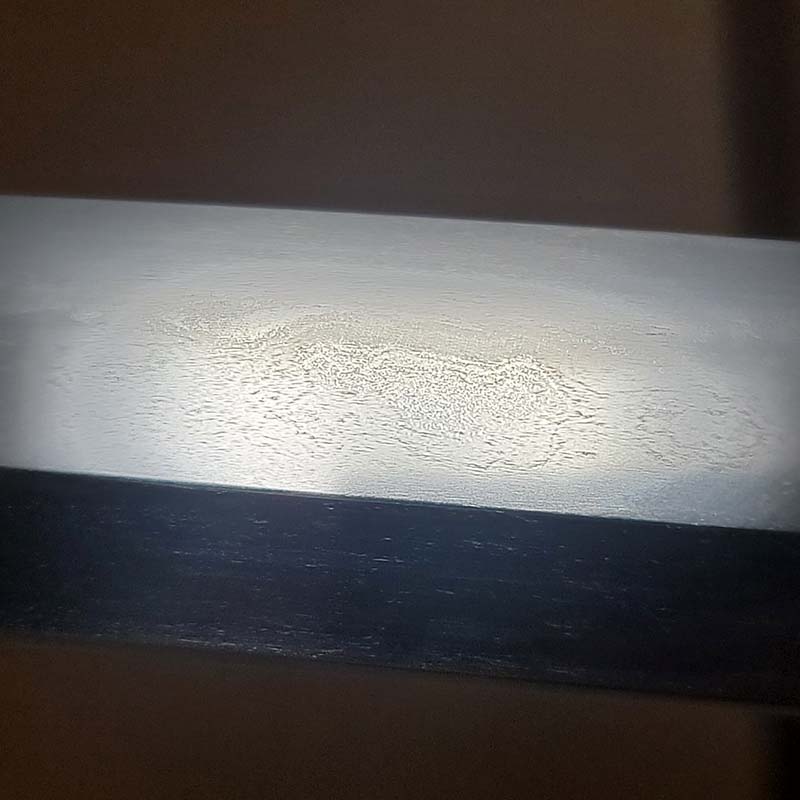
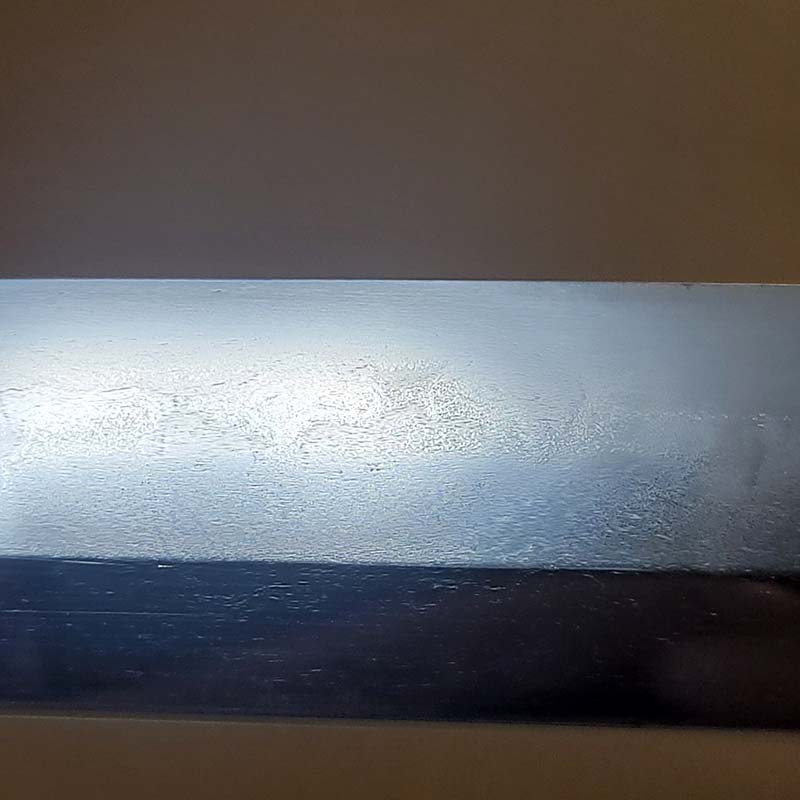
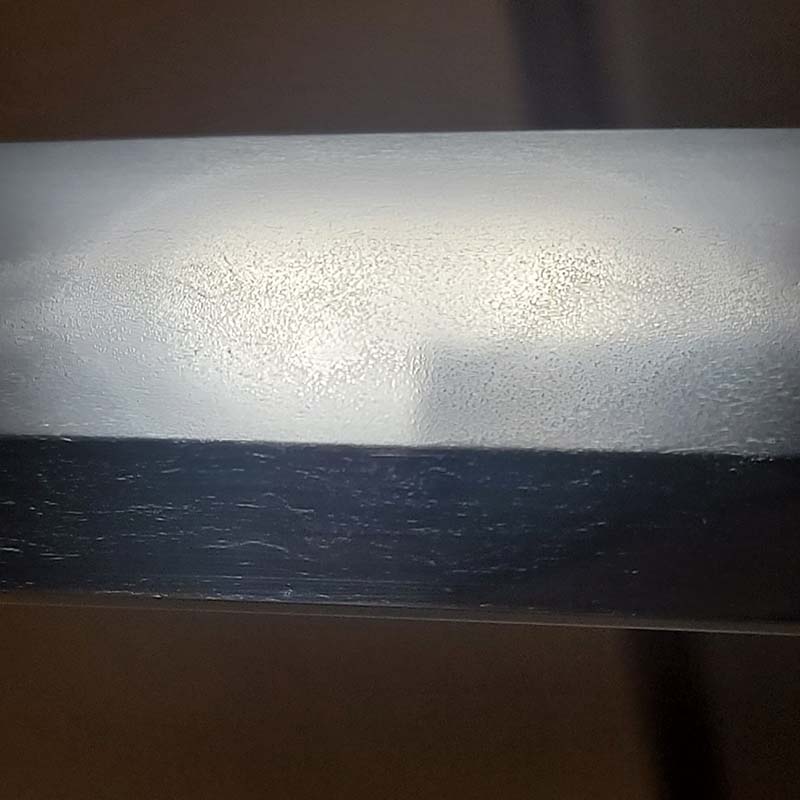
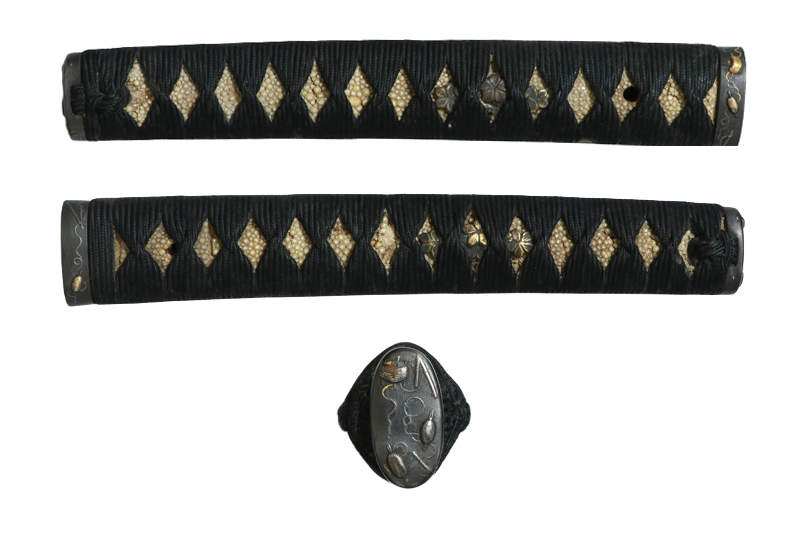
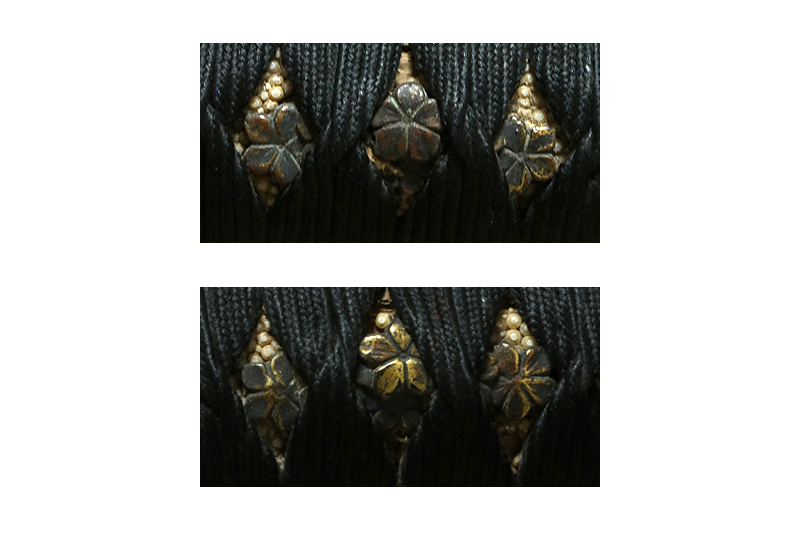
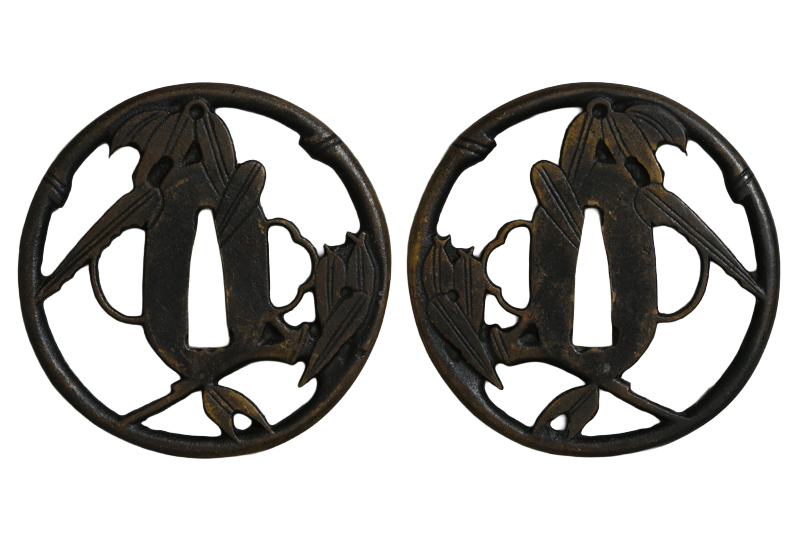
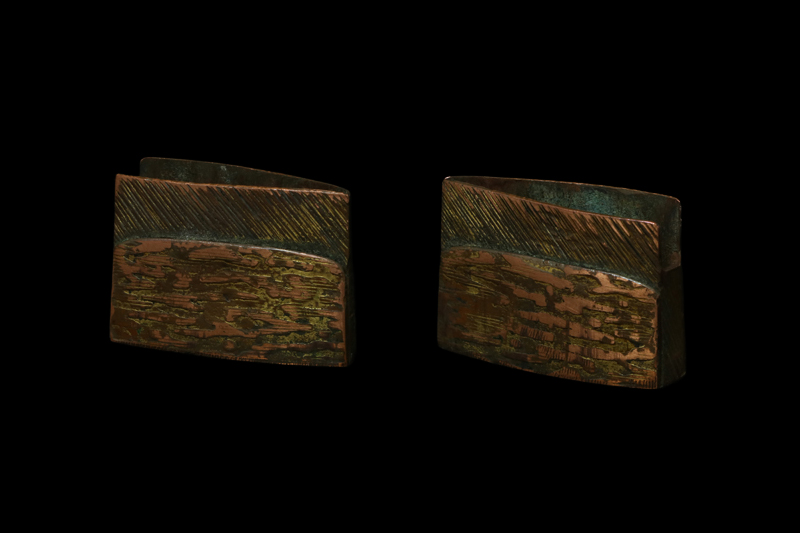
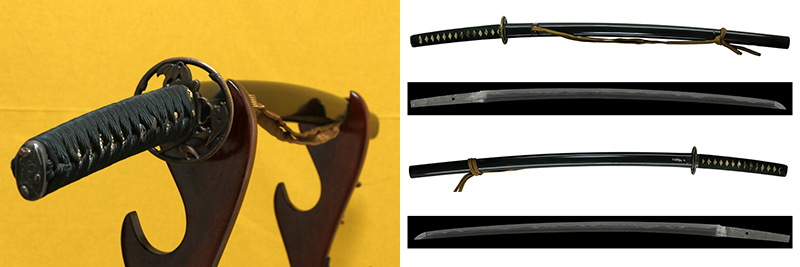
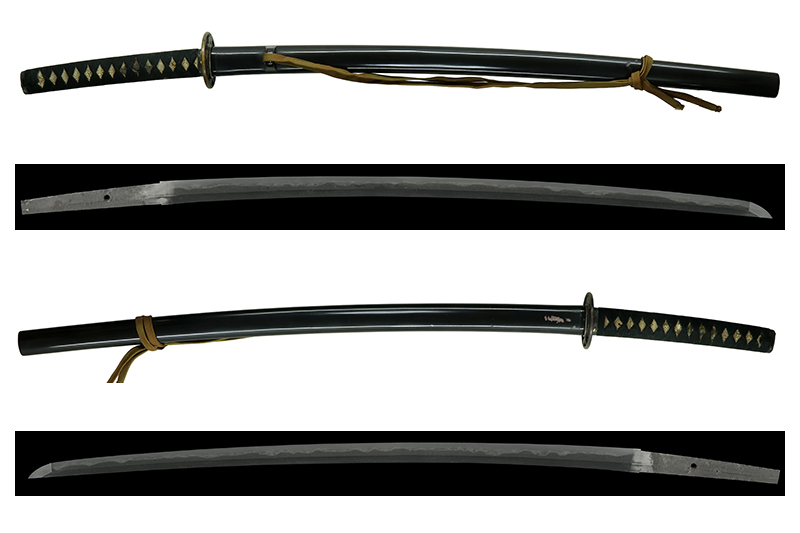
Koto Osuriage Mumei den Sosyu ju Tsunahiro with Koshirae 末相州の大磨上げ無銘の刀で、相州住綱廣の作と思われます。 本作は、大板目肌に杢目が交じり、ところどころ流れごころの肌が現れる地鉄に、焼きが高く、皆焼風の見事な刃文を焼いています。 コンディションは概ね良好です。 拵は、柄にガタつきがあるため、居合で使用するには調整が必要です。 柄の巻替えと鮫皮のリペアを含め、20,000円で承ります。 This is an unsigned katana of the late Sōshū tradition that has been greatly shortened (ō-suriage), and it is thought to be the work of Sōshū-jū Tsunahiro. The blade features a jihada of large itame mixed with mokume, with areas showing a flowing character. The hamon is high-tempered and forms a magnificent hitatsura-style pattern. The overall condition is generally good. As for the koshirae, the tsuka has some looseness, so adjustment will be necessary if it is to be used for iaido. We can undertake the work, including rewrapping the tsuka and repairing the samegawa ray skin, for 20,000 yen. 「刀姿 sword figure」 鎬造り庵棟、身幅やや細く重尋常、鳥居反り中鋒。茎は磨り揚げられ筋違い鑢がかかり、茎尻は一文字に切られる。 Shinogi-zukuri with an iori-mune. The blade has a slightly narrow mihaba, standard kasane, toriizori curvature, and a chū-kissaki. The nakago has been shortened, with sujikai file marks, and the nakago-jiri is cut straight in ichimonji style. 「地鉄 jigane」 地鉄は大板目肌に杢が交り、処々流れる肌があらわれ、地沸つき地景が入る。 The jigane shows a broad itame-hada mixed with mokume, with areas of flowing grain appearing here and there. Ji-nie attaches, and chikei is present. 「刃紋 hamon」 刃紋は沸本位の大乱れ。大互の目に丁子風の刃・矢筈刃・角張る刃などを交じえて変化があり、焼高く複雑に乱れる。処々に足・葉入り、沸強くつき、一部は粗沸が溢れて、金筋・砂流し烈しくかかり、飛焼・棟焼き交え皆焼状になる。 The hamon is a large, vigorously irregular pattern in nie-deki. It is highly varied, mixing large gunome, chōji-style elements, yahazu-ba, and angular formations. The temper rises high and becomes complexly irregular. Here and there, ashi and yō appear. The nie is strong, and in some areas coarse ara-nie overflows. Kinsuji and sunagashi run intensely through the blade, with tobiyaki and muneyaki mixed in, giving the overall impression of a hitatsura-style temper. 「特徴 detailed」 本作は大磨上げ無銘の刀ですが、地鉄・刃文からみて、末相州の太刀を磨上げたものと思われます。 その中でも、これほど華やかな刃文を焼く刀工としては、相州住綱廣が考えられます。 相州住綱廣は、室町時代の相州鎌倉鍛冶のなかでも、沸・地景・金筋を見どころとする相州伝をよく受け継いだ刀工として知られている。南北朝時代の名工である広光・秋広に迫るような優品を残したとされ、その作風には相州伝らしい力強さと華やかさがうかがえる。 山村家文書によれば、初代綱廣は広正の子孫と伝えられている。北条氏綱の招きにより鎌倉から小田原へ移り、「綱」の一字を賜って「綱廣」と改めたという。 通説では、初代は永正頃の刀工とされ、その後、天文頃の二代、天正・文禄・慶長頃の三代へと続いたとされる。さらに新刀期には、寛永頃の四代「山村勘右衛門」、万治・寛文頃の「伊勢大掾綱廣」へと名跡が受け継がれていった。 また一説には、五代の伊勢大掾綱広は長曽祢虎徹の師であったともいわれている。綱廣の名跡はその後も続き、大正時代の十六代にまで及んだ。 本作のコンディションにつきましては、古研ぎのため、薄錆が見られる箇所が少しありますが、あまり気になるものではありません。 また、地に小さな膨れのように見える箇所がありますが、判然とはしません。 しかしながら、この迫力ある地刃は、十分にご堪能いただけます。 拵は、柄にガタつきがあるため居合で使用するには調整が必要です。 柄の巻替えと鮫のリペアを含め、20,000円で承ります。 また、鞘には塗りが剥がれた箇所がありますが、割れはありません。 刀身のバランスが良く、居合に使用するには最適な一振りです。 This sword is an unsigned katana that has been greatly shortened (ō-suriage). Judging from its jihada and hamon, it appears to have originally been a tachi of the late Sōshū tradition that was later shortened. Among the smiths of that group, Sōshū-jū Tsunahiro may be considered a likely attribution, as he was capable of producing such a flamboyant hamon. Sōshū-jū Tsunahiro is known as one of the swordsmiths of the Muromachi-period Sōshū Kamakura tradition who faithfully inherited the Sōshū-den style, noted for its nie, chikei, and kinsuji. He is said to have produced excellent works approaching those of the great Nanbokuchō-period masters Hiromitsu and Akihiro, and his style reveals the strength and brilliance characteristic of the Sōshū tradition. According to the Yamamura family documents, the first-generation Tsunahiro is said to have been a descendant of Hiromasa. At the invitation of Hōjō Ujitsuna, he moved from Kamakura to Odawara, received the character “Tsuna” from Ujitsuna’s name, and changed his smith name to Tsunahiro. According to the commonly accepted view, the first generation was active around the Eishō era. He was followed by the second generation around the Tenbun era, and then by the third generation during the Tenshō, Bunroku, and Keichō eras. In the Shintō period, the lineage continued with the fourth generation, Yamamura Kan’emon, active around the Kan’ei era, and later with Ise Daijō Tsunahiro, active around the Manji and Kanbun eras. According to one theory, the fifth-generation Ise Daijō Tsunahiro is also said to have been the teacher of Nagasone Kotetsu. The Tsunahiro lineage continued thereafter, lasting as far as the sixteenth generation in the Taishō period. Regarding the condition of this sword, as it is in an old polish, there are a few areas where light surface rust can be seen; however, they are not particularly noticeable. There is also an area in the ji that appears to be a small swelling or blister-like flaw, though it is not clearly discernible. Nevertheless, the powerful appearance of the jiha can be fully appreciated. We can undertake the work, including rewrapping the tsuka and repairing the same ray skin, for 20,000 yen. In addition, there are areas on the saya where the lacquer has peeled, but there are no cracks. The blade is well balanced, making it an excellent sword for use in iaido. 「拵 Koshirae」 鎺(habaki) :素銅地金鍍金の二重。 鍔(tsuba) :素銅地竹笹の図。 縁頭 : 赤銅魚子地糸巻の図。 目貫(menuki) :素銅地金鍍金桜の図。 柄(tsuka) :柄巻は正絹黒の諸捻り巻。 鞘(saya) :黒呂 「刀剣の状態 condition of blade」 研:古研ぎのため、薄錆が見られる箇所が少しありますが、あまり気になるものではありません。 傷:小さな膨れのように見える箇所がありますが、判然とはしません。その他は欠点に成るような傷は有りません。


相州伝 · 相模 · 1501-1504頃
相州伝 · 相模
時期区分: 末相州· 1356–1868
現在21点販売中
末相州は、南北朝の広光・秋広の代を承け、室町期に入って相模で営まれた相州伝の継続である。現存遺品に即せば、室町中期を遡るものはなく、室町後期から戦国期にかけてが本区分の中心をなす。その軸となる工が綱広で、銘鑑には初代を建武とする伝もあるが、確かな在銘は天文年紀のものが最も古く、通説はこれを初代として、二代を天正、三代を慶長、四代を寛永、五代を万治頃と伝える。綱広は広正の子孫で、初め名跡を継いだが、後北条家の氏綱に召されて小田原に居を移し、綱の一字を賜って改銘したと伝え、その名跡は新々刀期にまで連なった。鎌倉にはこの綱広らが住し、これと別に小田原には康春・康国・総宗・景総らが在住して、これらを小田原相州と称する。広次もまた相州鎌倉に住して明応・天文の頃に活躍し、室町後期を代表する相州鍛冶の一人に数えられる。後北条氏の庇護のもと、正宗・貞宗を生んだ南北朝の盛時を遠く望みつつ、皆焼の系譜を保持して相州伝を伝えたのが、この区分の刀工たちであった。 作風の核は、広光・秋広が完成させた皆焼を継ぐ点にある。鍛えは板目に杢や流れ肌を交えてやや肌立ち、地沸がつき、地景が入る。刃文はのたれ・互の目に丁子・矢筈風の刃・尖り刃などを交え、飛焼・棟焼を盛んに交えて皆焼となり、沸がよくつき、金筋・砂流しがかかる。綱広は玉状ないし三日月状の飛焼を見せる皆焼を得意とし、広次に至っては焼高く、沸の強い迫力ある皆焼を焼いて、一見すると南北朝の長谷部派を思わせるほどに到る。古典相州の頂点と分かつのは、この皆焼の扱いに見える。正宗・貞宗の代では、のたれ基調の地刃に沸が深く澄んで明るく冴え、地にこぼれた沸が湯走りをなして自在に働いたのに対し、末相州の皆焼は飛焼・棟焼を全面に散らす構成そのものを看どころとして前に押し出す傾きを帯び、地鉄もやや肌立って、鎌倉期の鉄の冴えからは一段隔たる。小田原相州はこの大筋において綱広らと大差ないが、小振りの刀姿があること、濃厚緻密な彫刻を多く備えることに特色があり、殊に総宗の倶利迦羅や八幡大菩薩・梵字の彫は巧緻と評される。 鑑定にあっては、まずやや肌立つ板目に地沸・地景が働き、飛焼・棟焼を交えた皆焼に金筋・砂流しがかかる地刃を相州の継続と読み、次に古典との隔たりを沸の深さと鉄の冴えの差、そして皆焼を誇示的に焼き出す傾きに求めて末相州と分かつ。区分内では、綱広を皆焼と玉状の飛焼に、広次を長谷部風を思わせる強い沸の皆焼に、総宗ら小田原相州を小振りの姿と緻密な彫刻に見分ける。主要工は綱広・広次・総宗で、康春・康国・景総がこれに連なる。伝来の面では、綱広に後北条家の重臣桜井大学の所持銘を有する一口があり、本区分が後北条氏の小田原を地盤として営まれた事実を裏づけている。 詳しく見る →
室町時代の相州
戦国の世、一派は第二の主家に仕えた。小田原の後北条氏である。その庇護のもと綱広系は打刀の時代の皆焼を鍛え続け、1590年の落城とともに新刀の時代へ散った。
ご購入頂いた商品の到着してから3日以内であれば返金もしくは交換対応をいたします。返品時の送料と返金する際の振込手数料はお客様のご負担とさせていただきます。