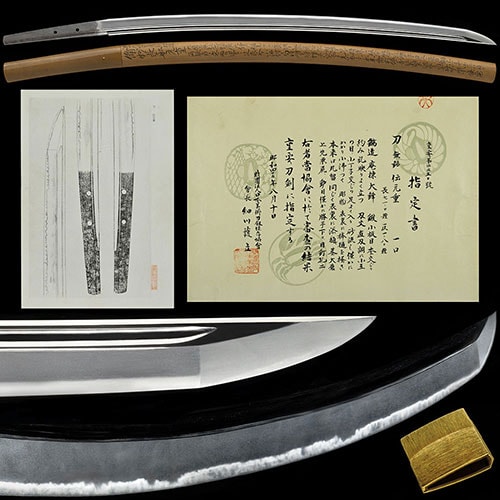
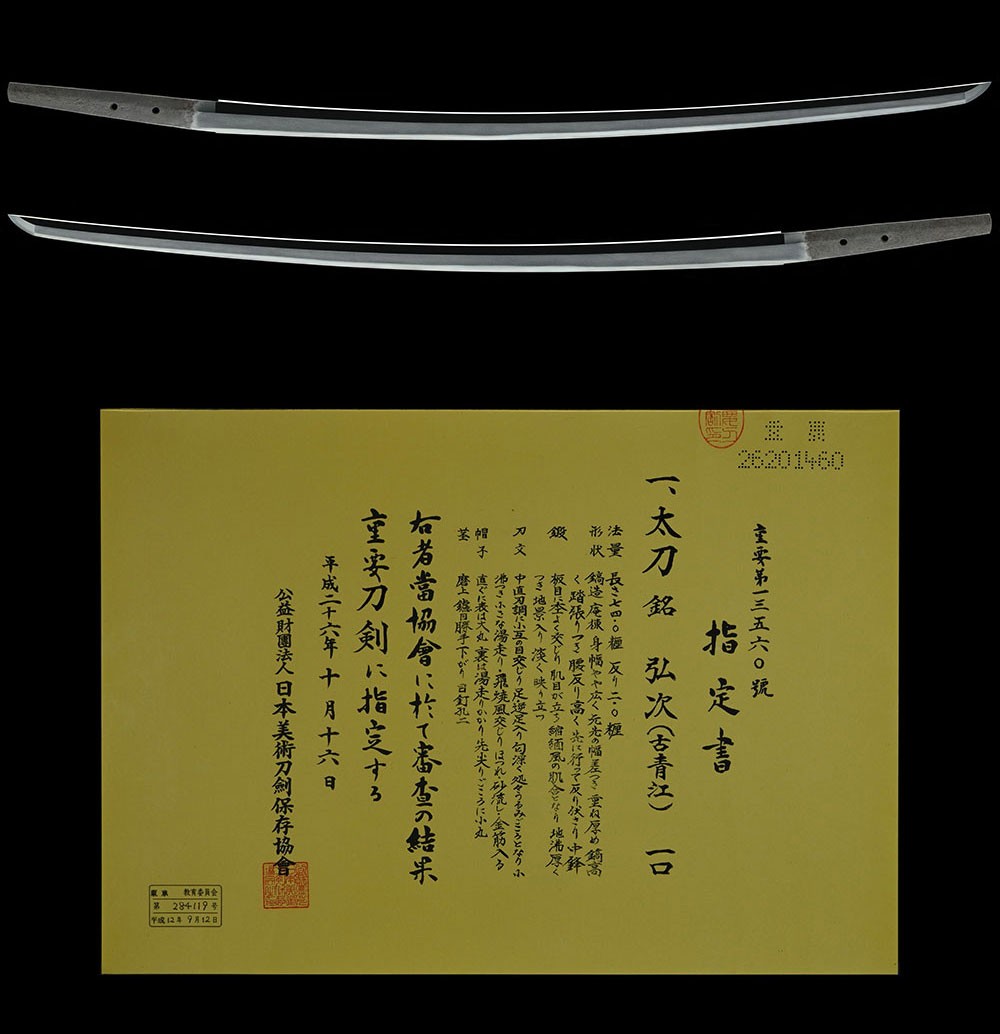
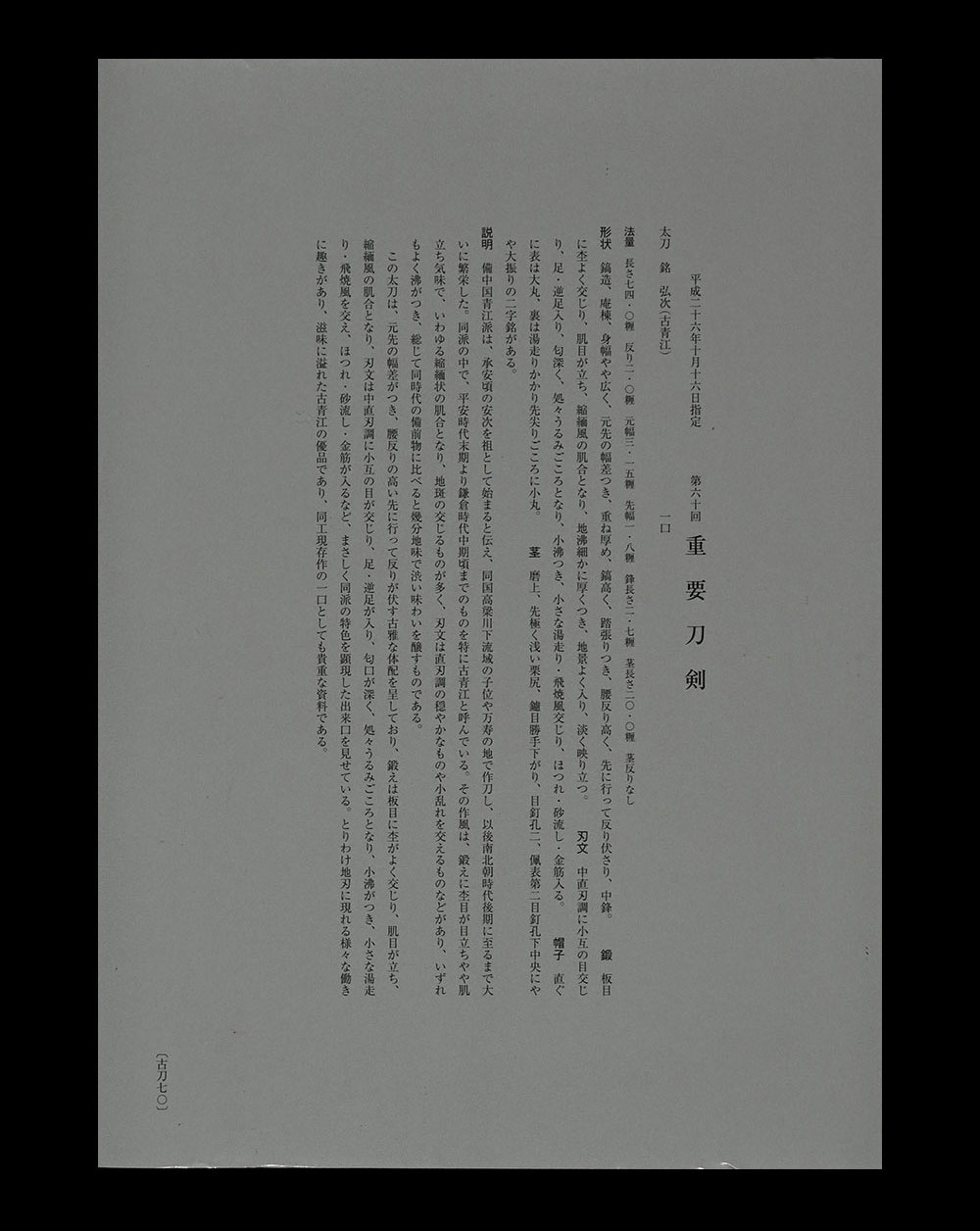

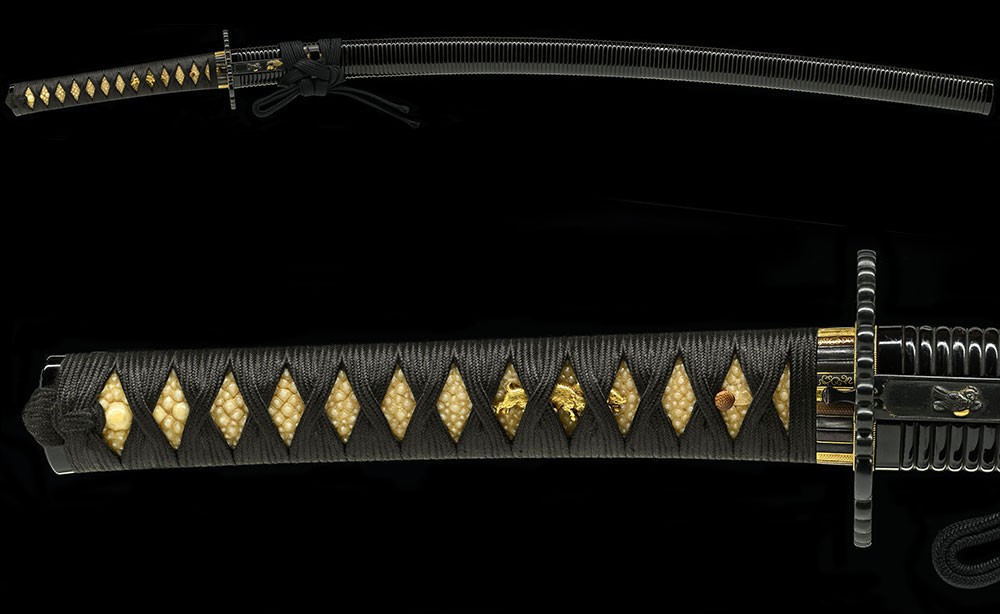
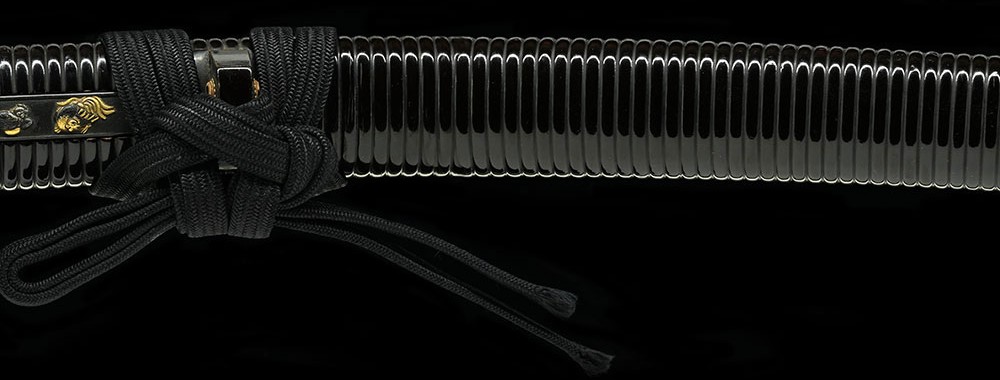
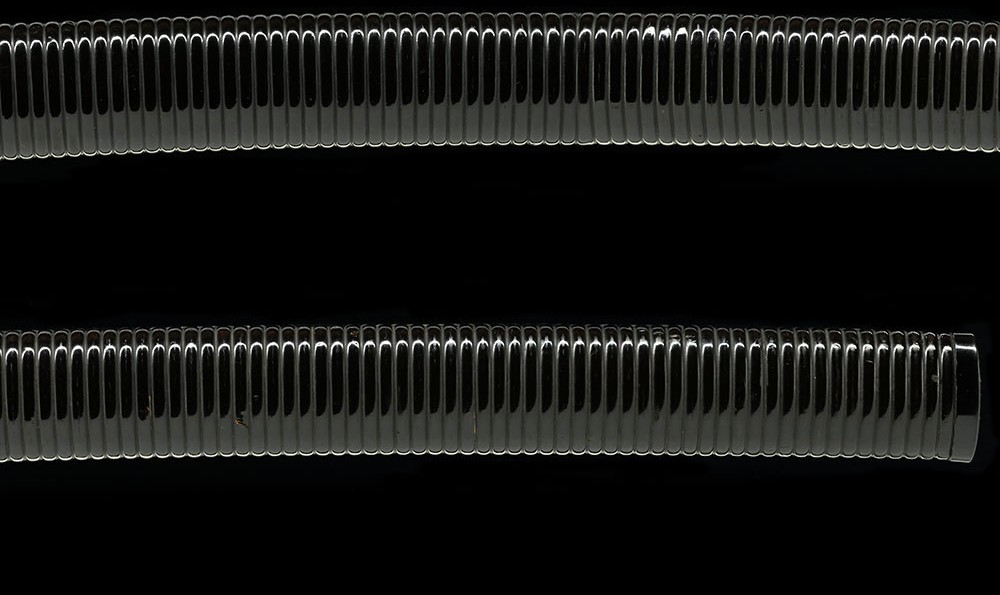
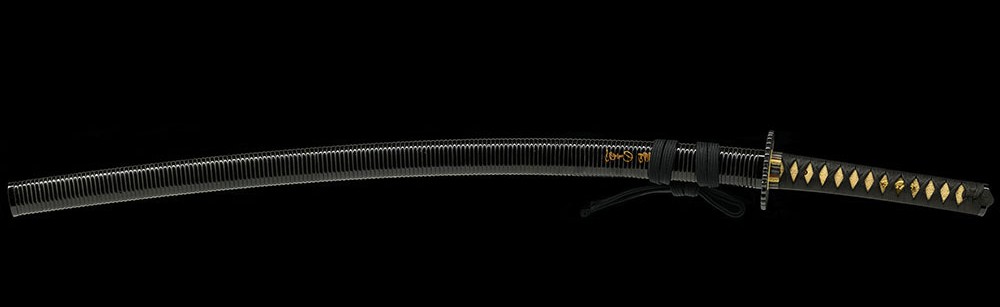
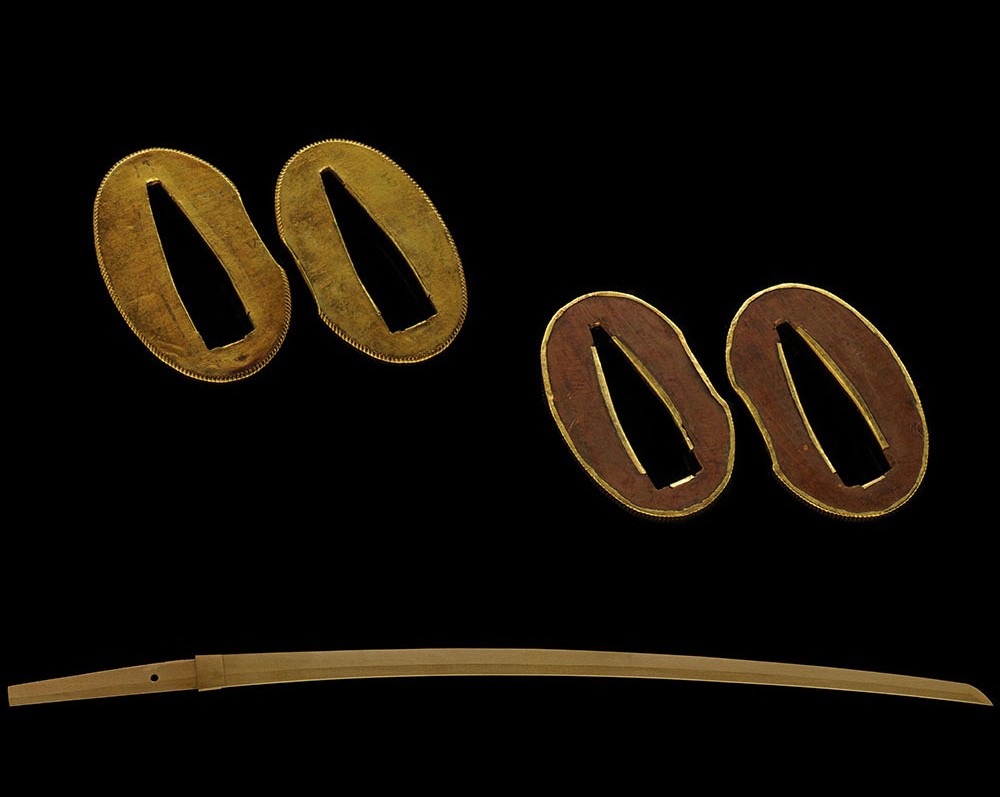
Juyo-Token, 60th Session — Designated October 16, 2014
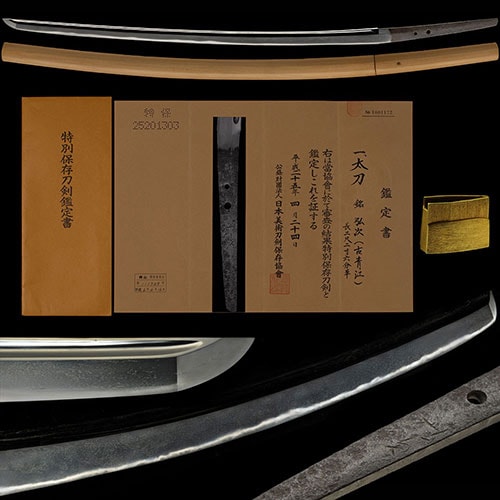
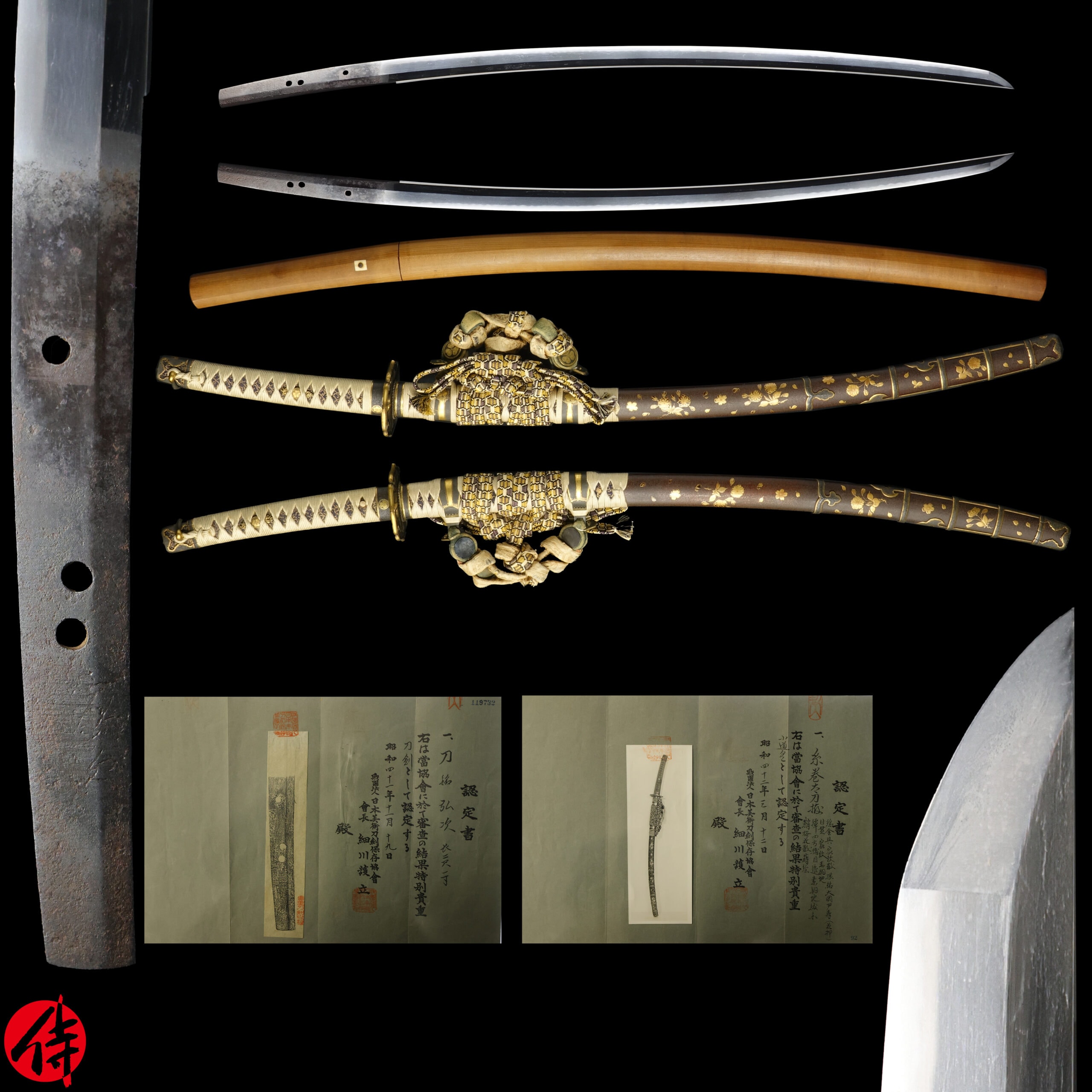
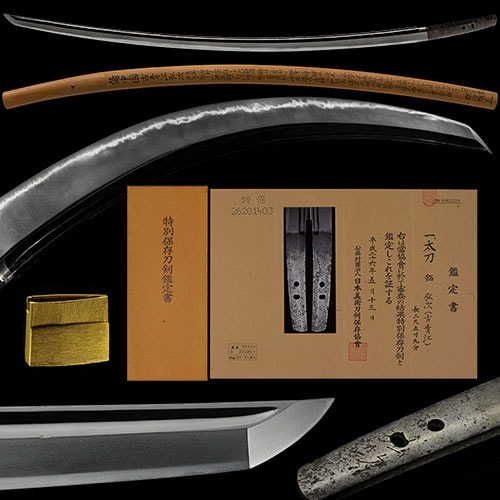
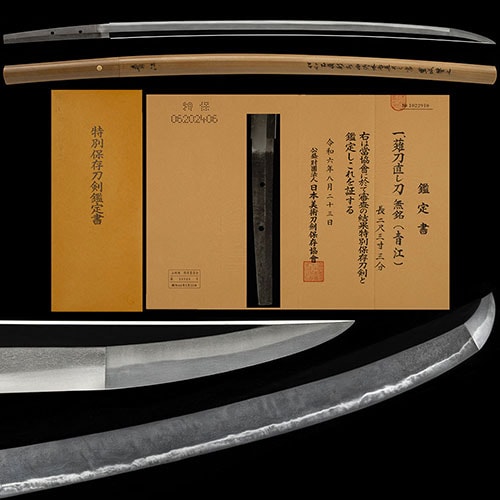
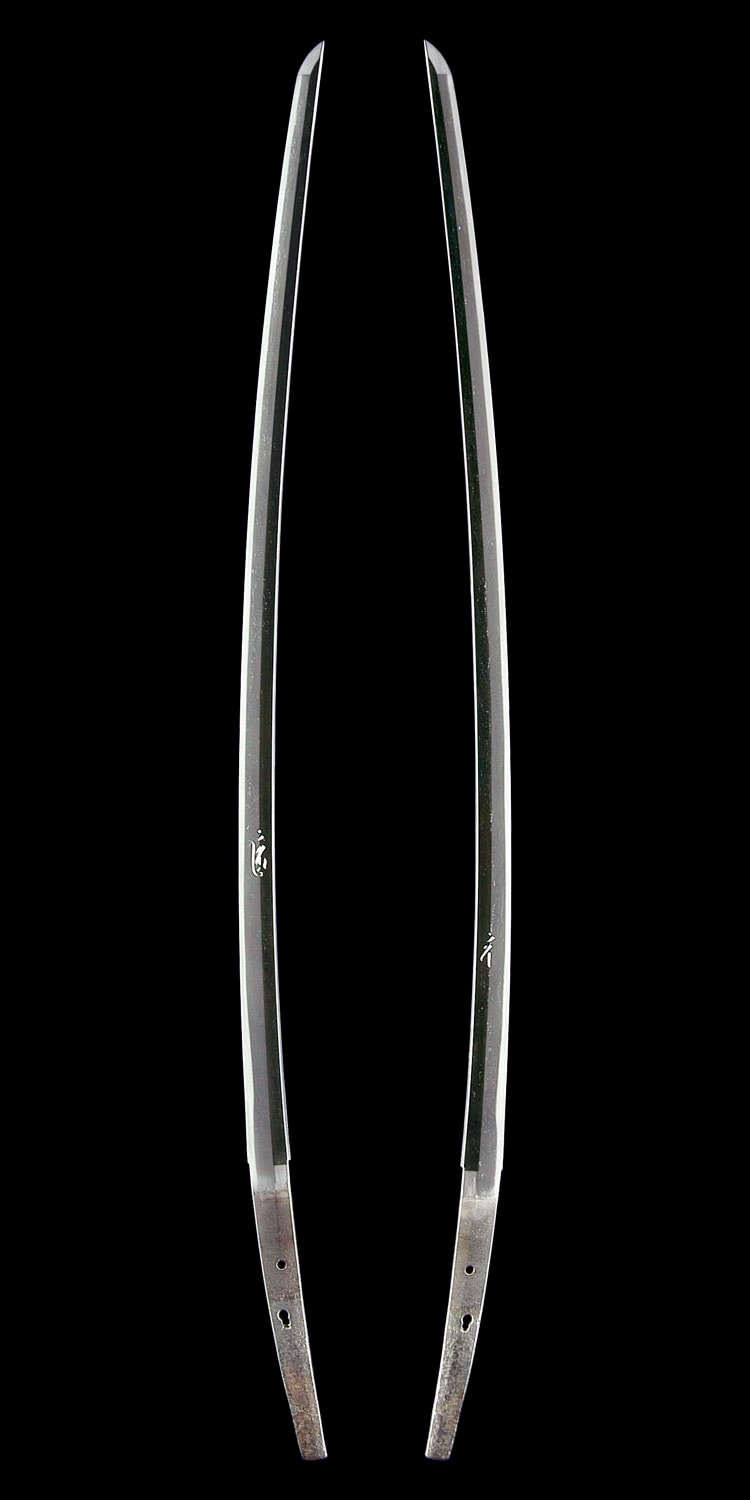
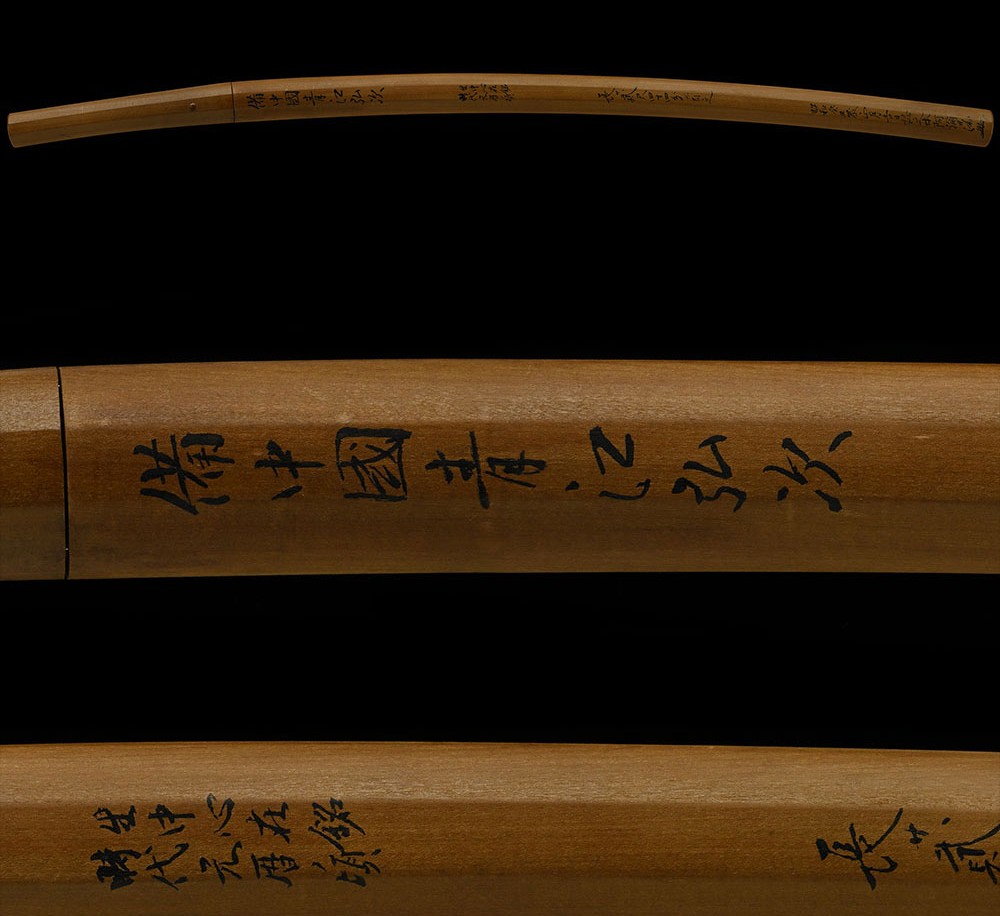
Tachi, mei: Hirotsugu — Ko-Aoe school (弘次)
Measurements Nagasa 74.0 cm, sori 2.0 cm, motohaba 3.1 cm, sakihaba 1.8 cm, kissaki-nagasa 2.7 cm, nakago-nagasa 20.0 cm
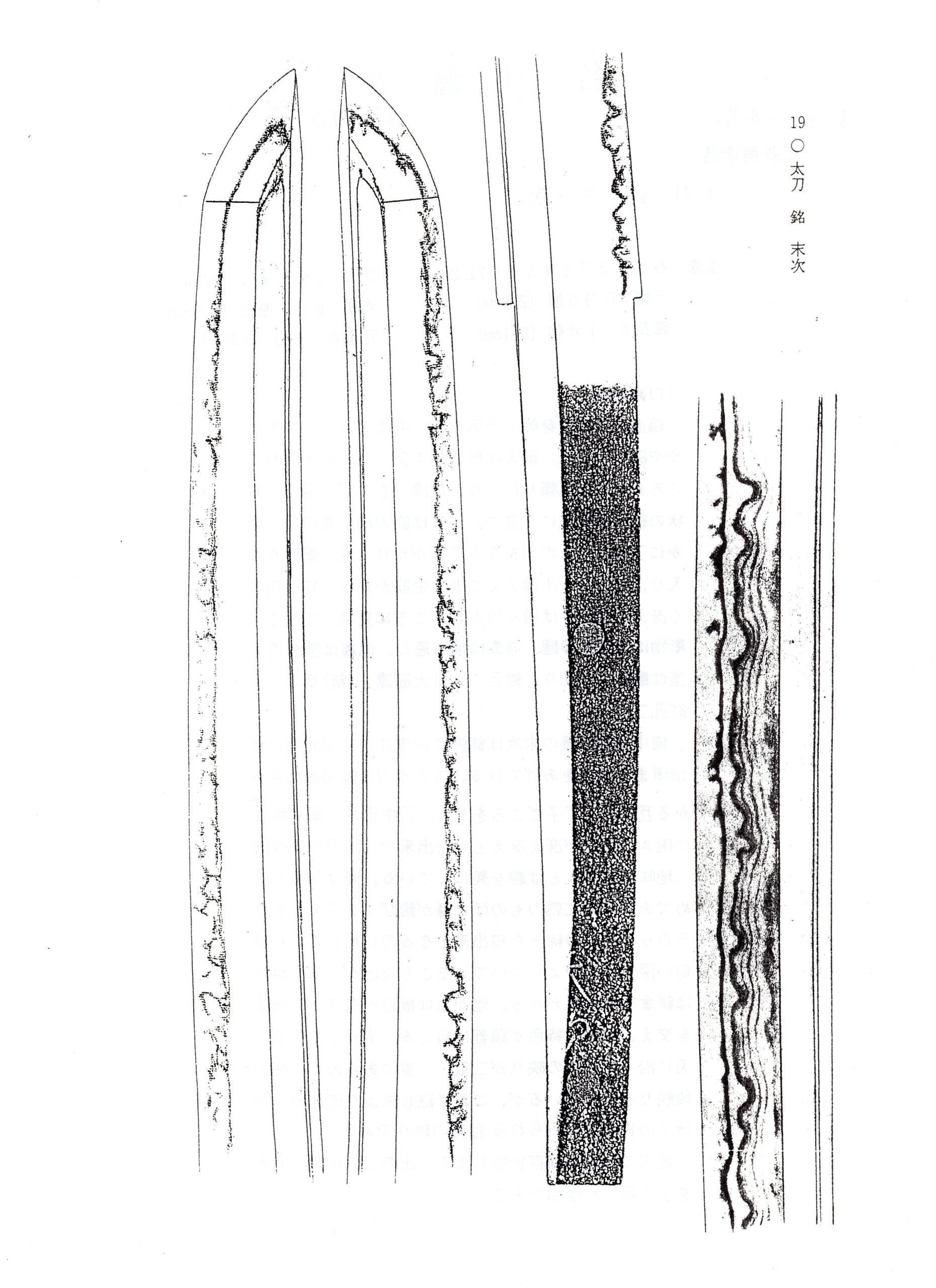
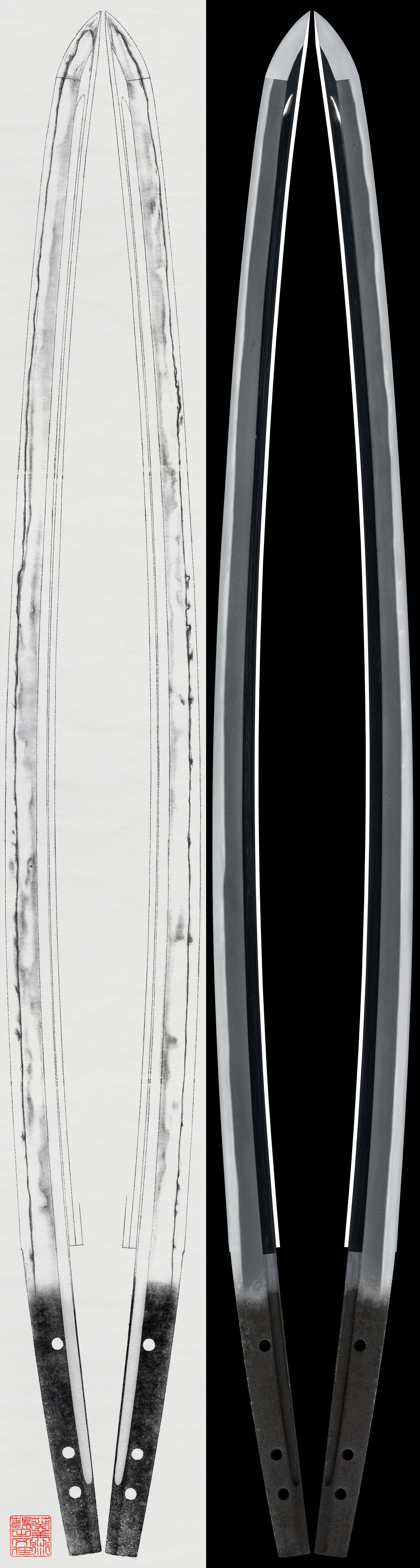
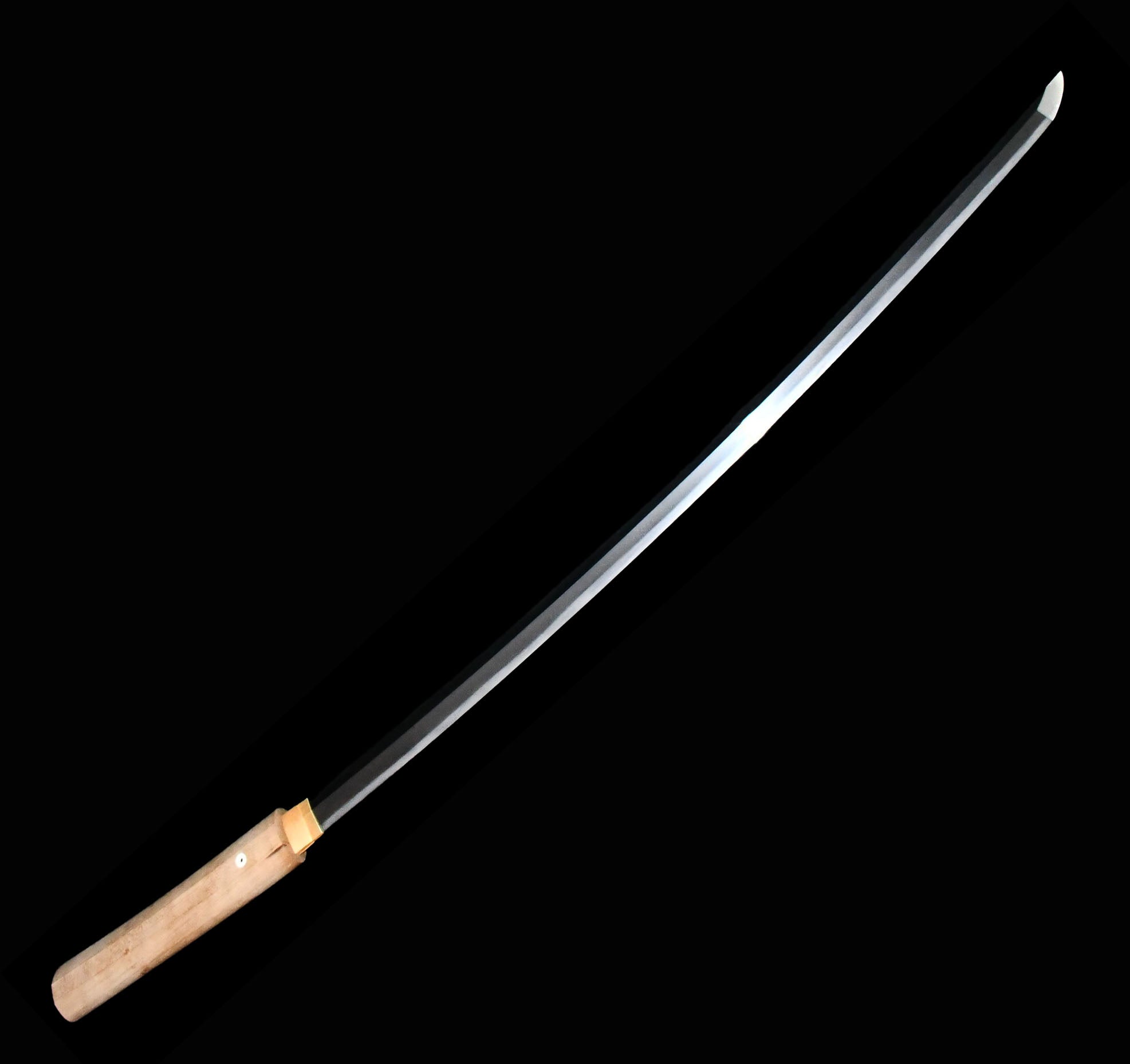
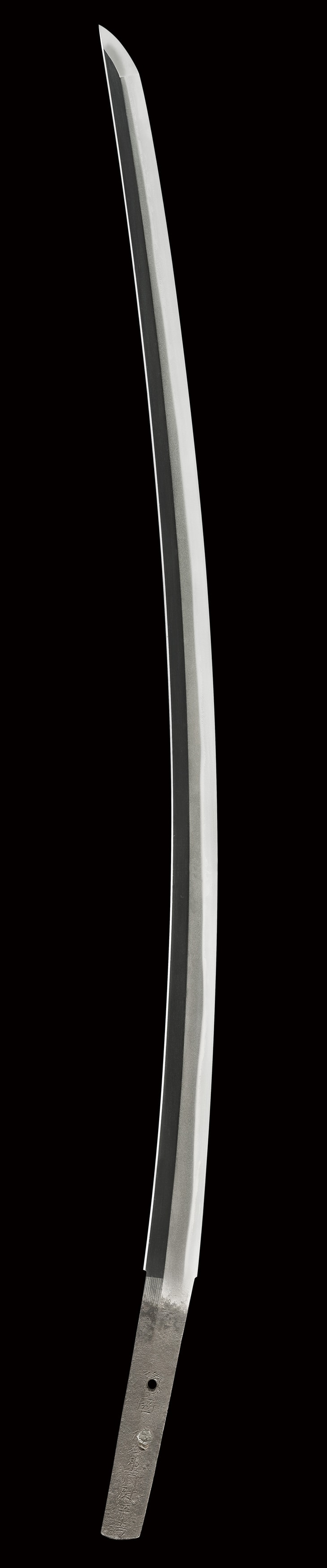
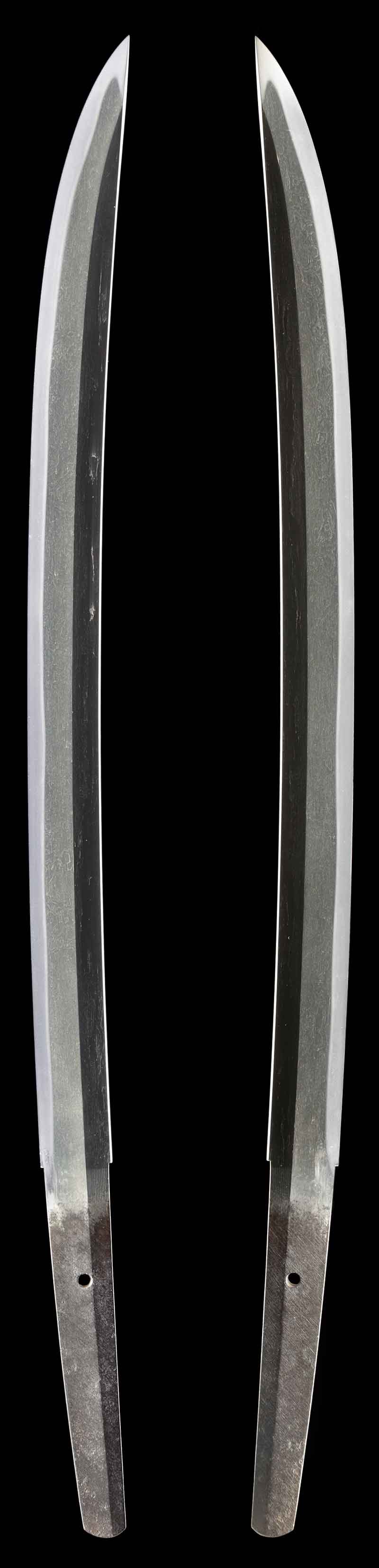
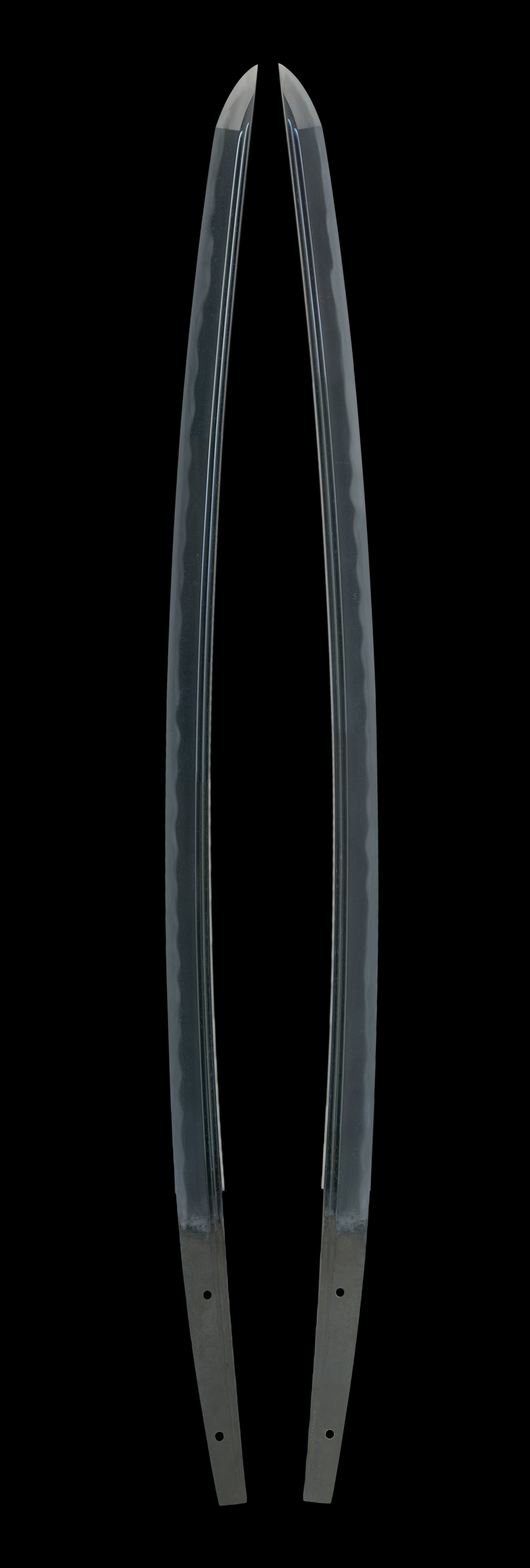
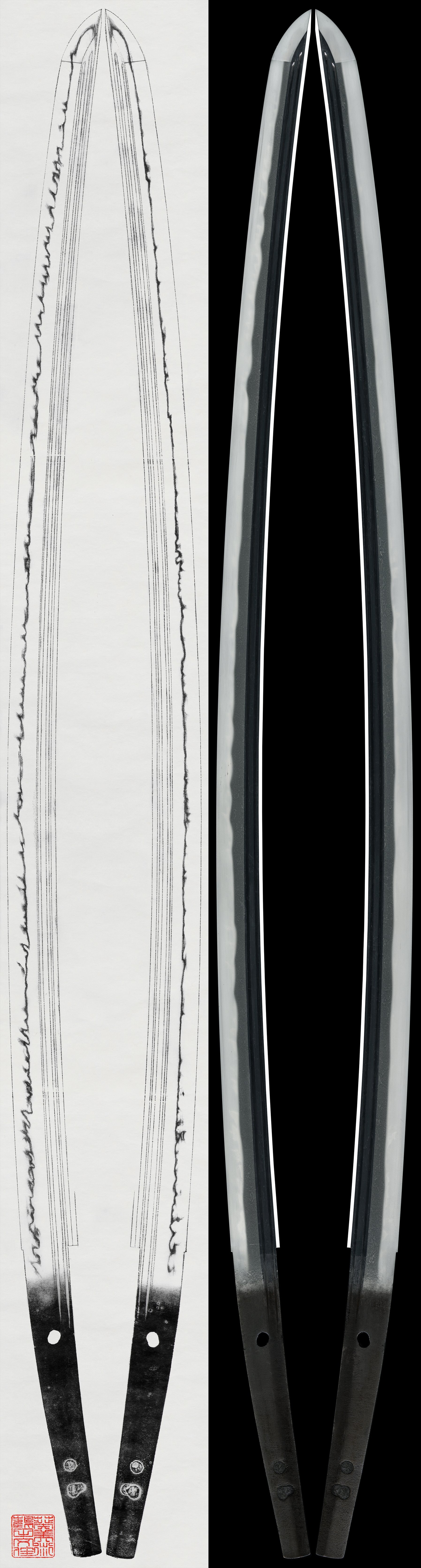
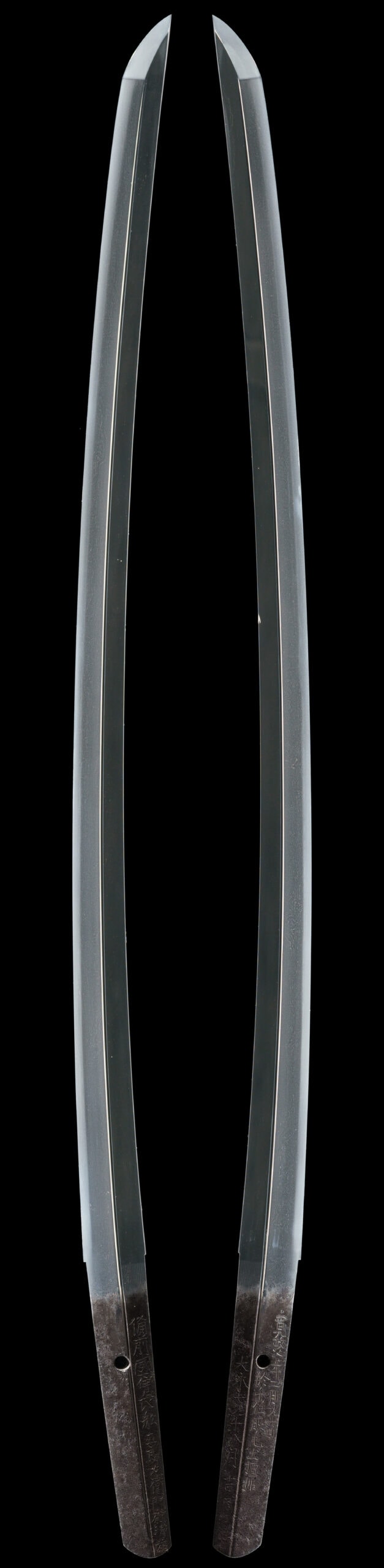
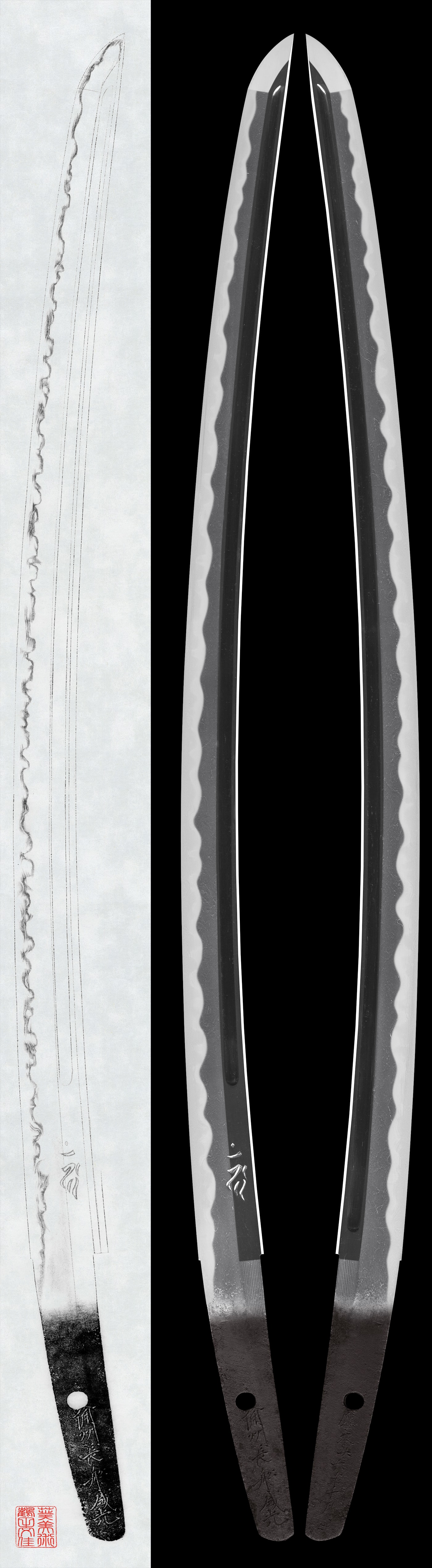
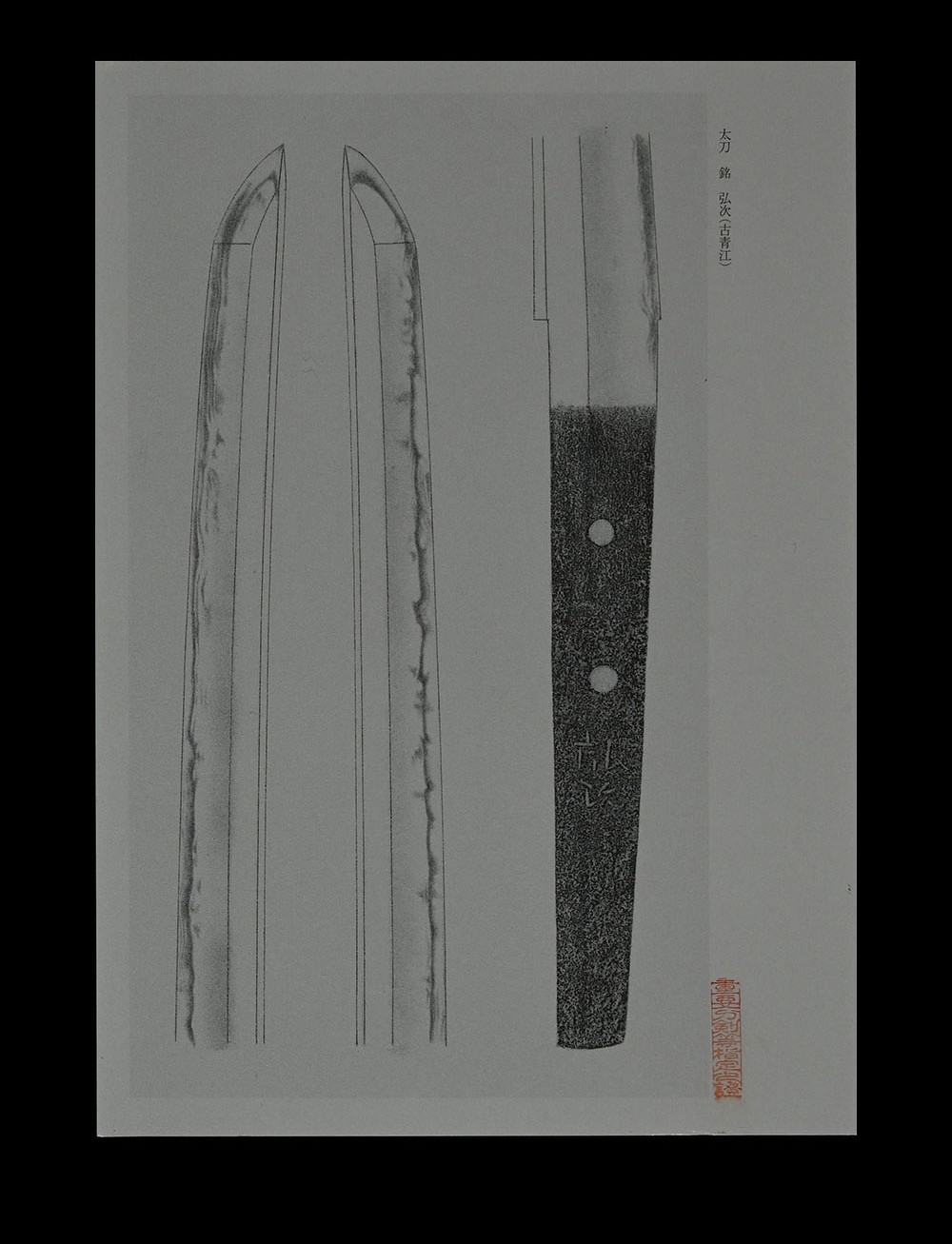
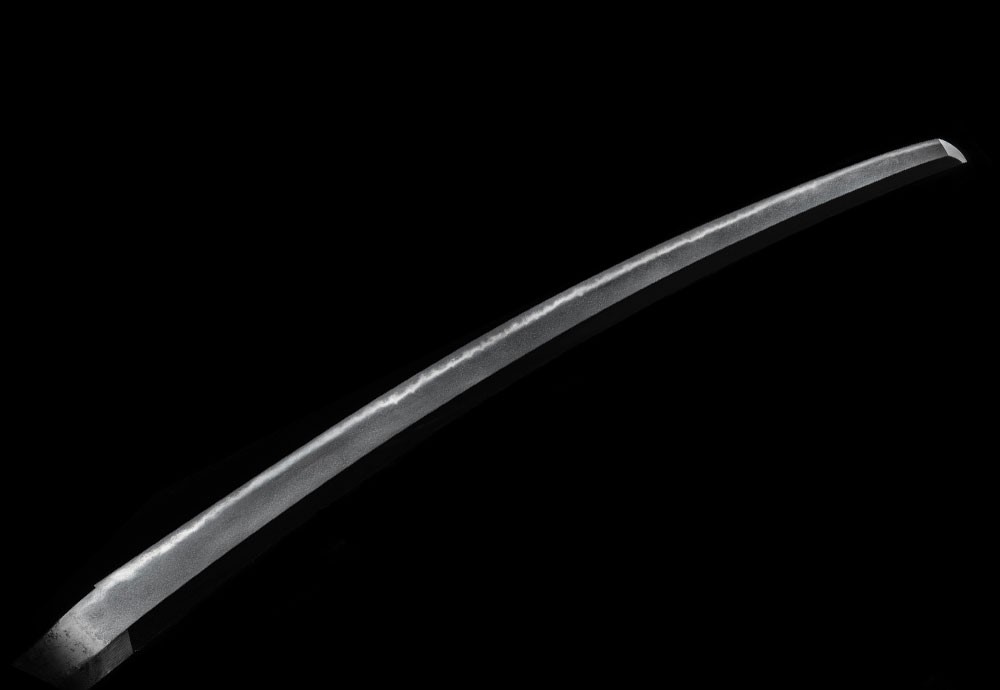
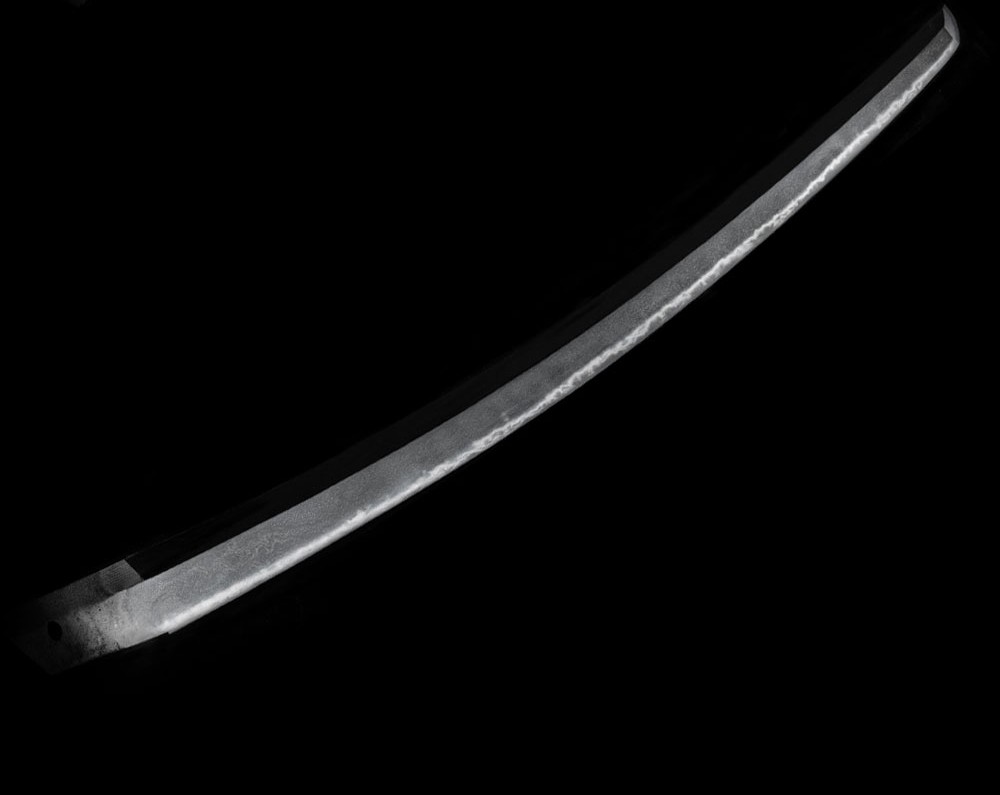
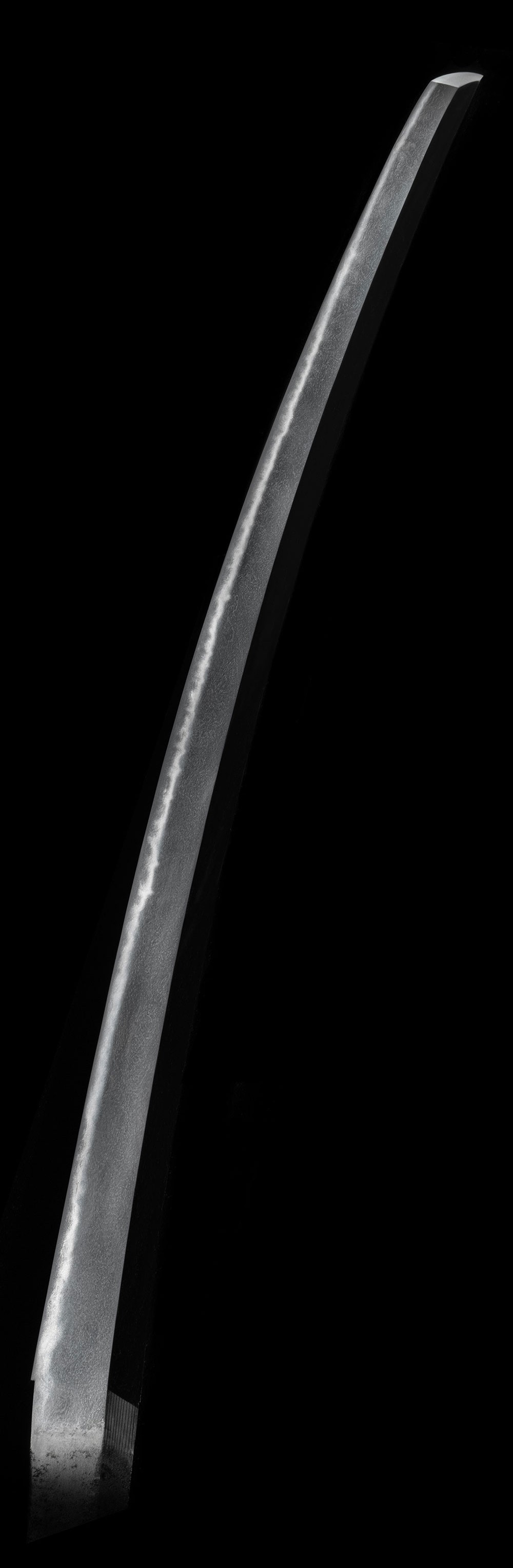
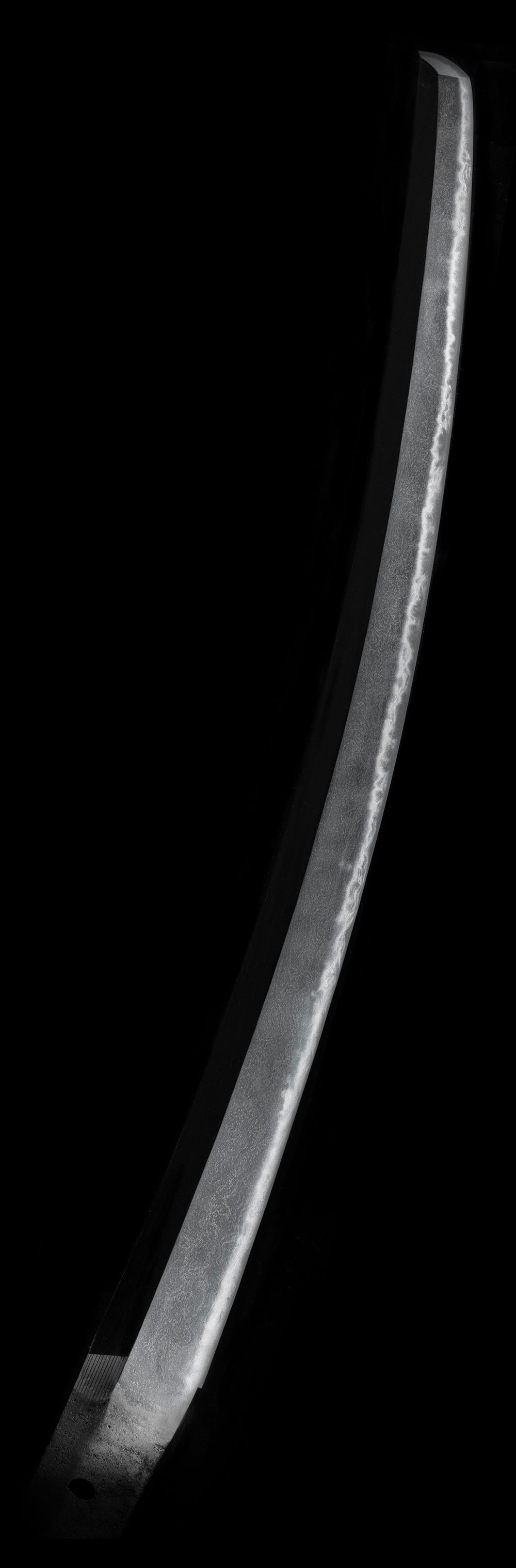
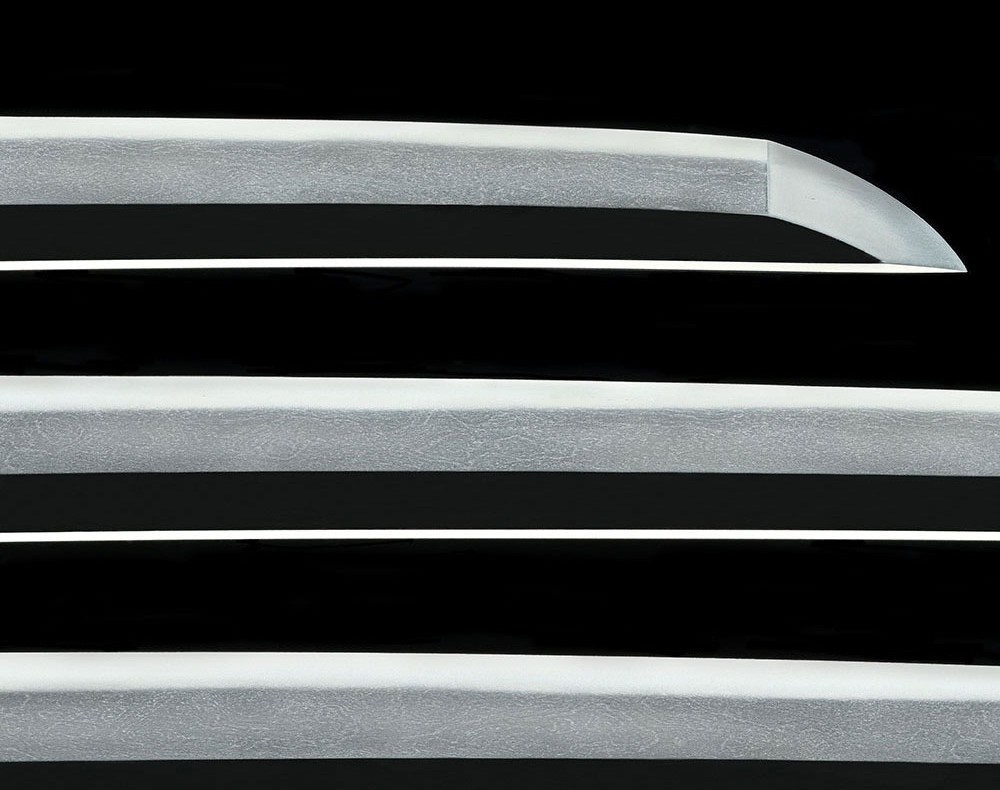
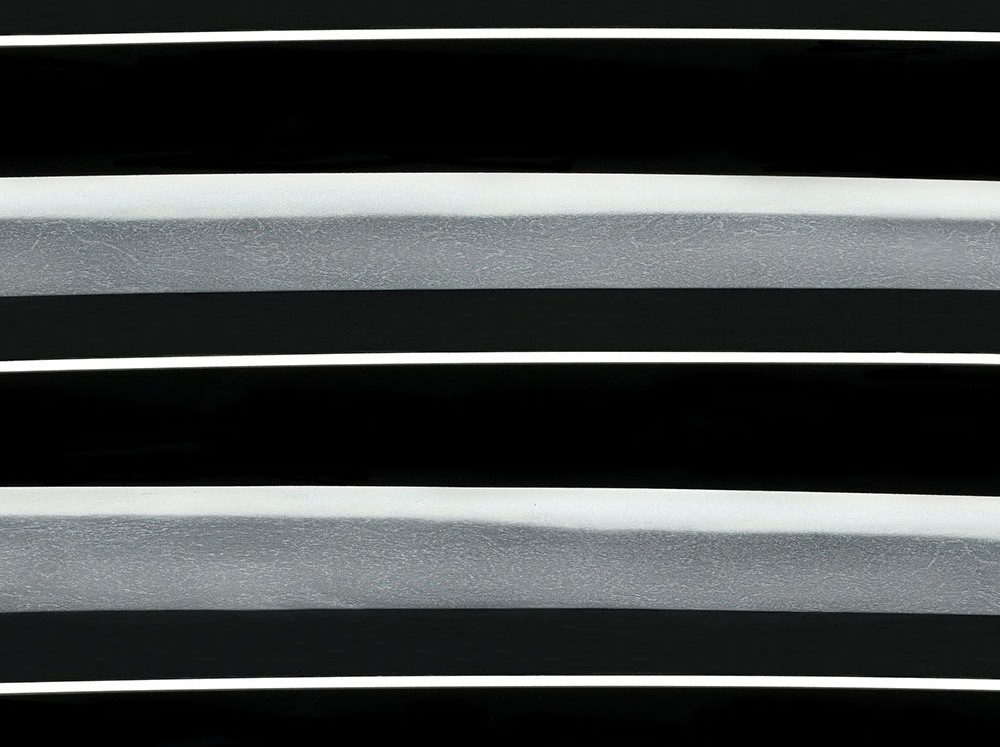
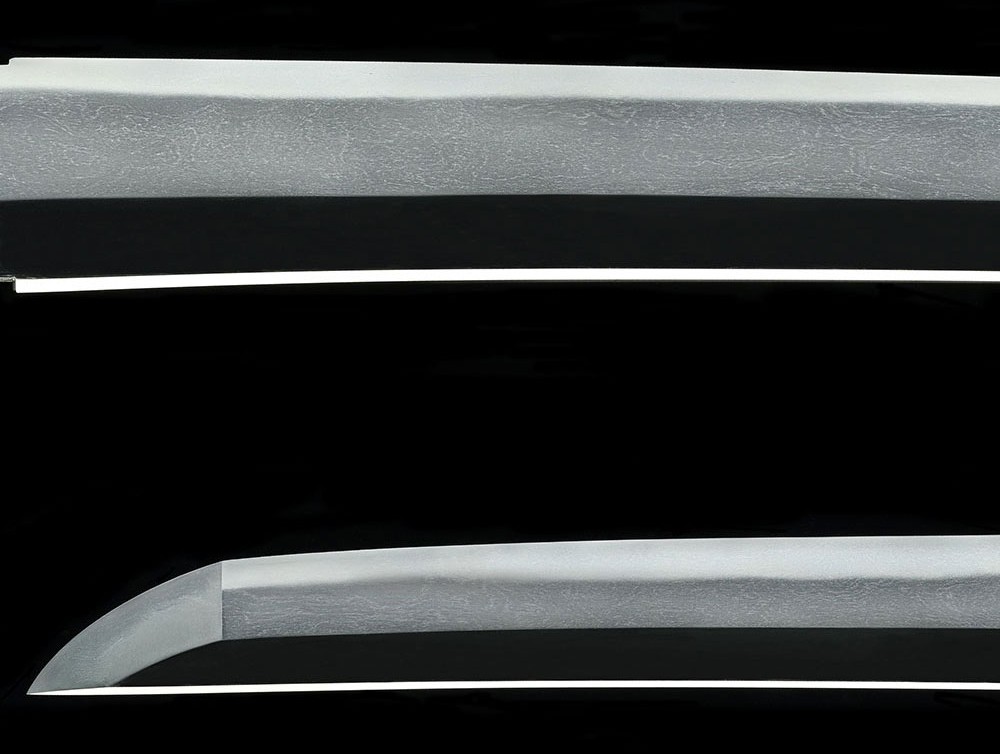
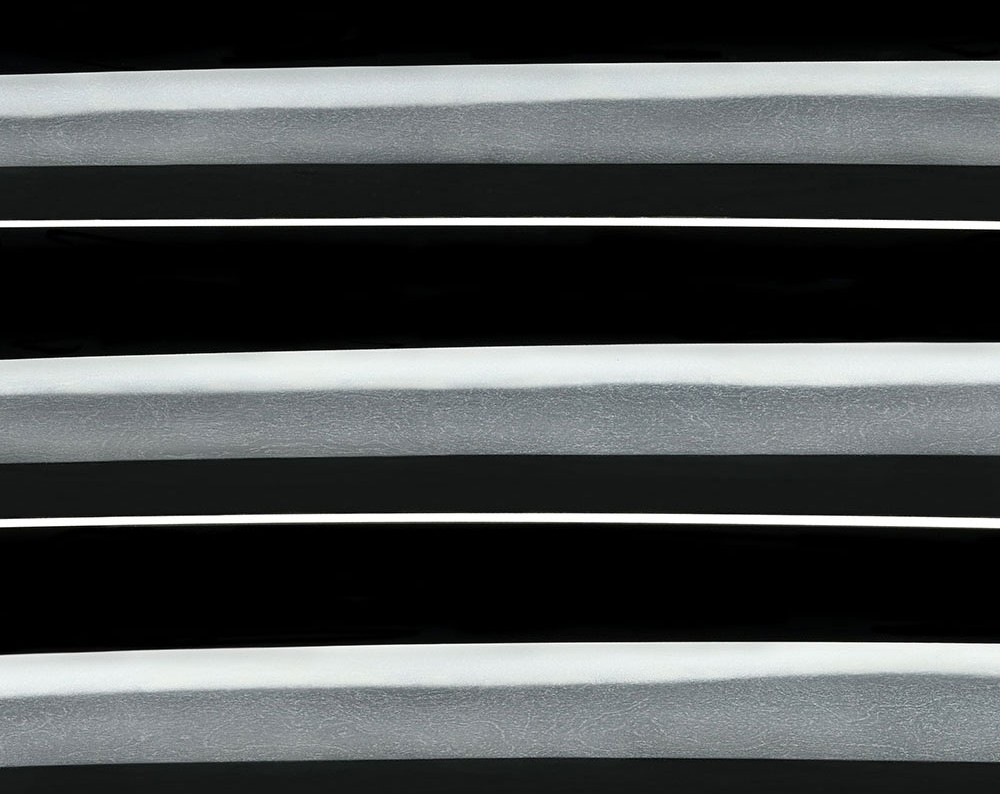
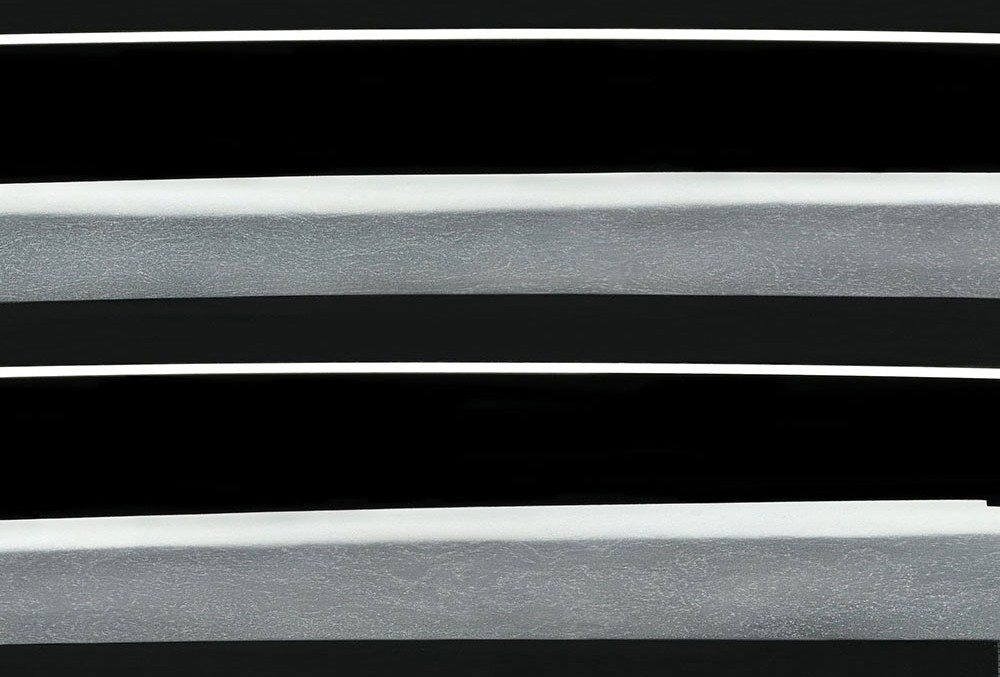
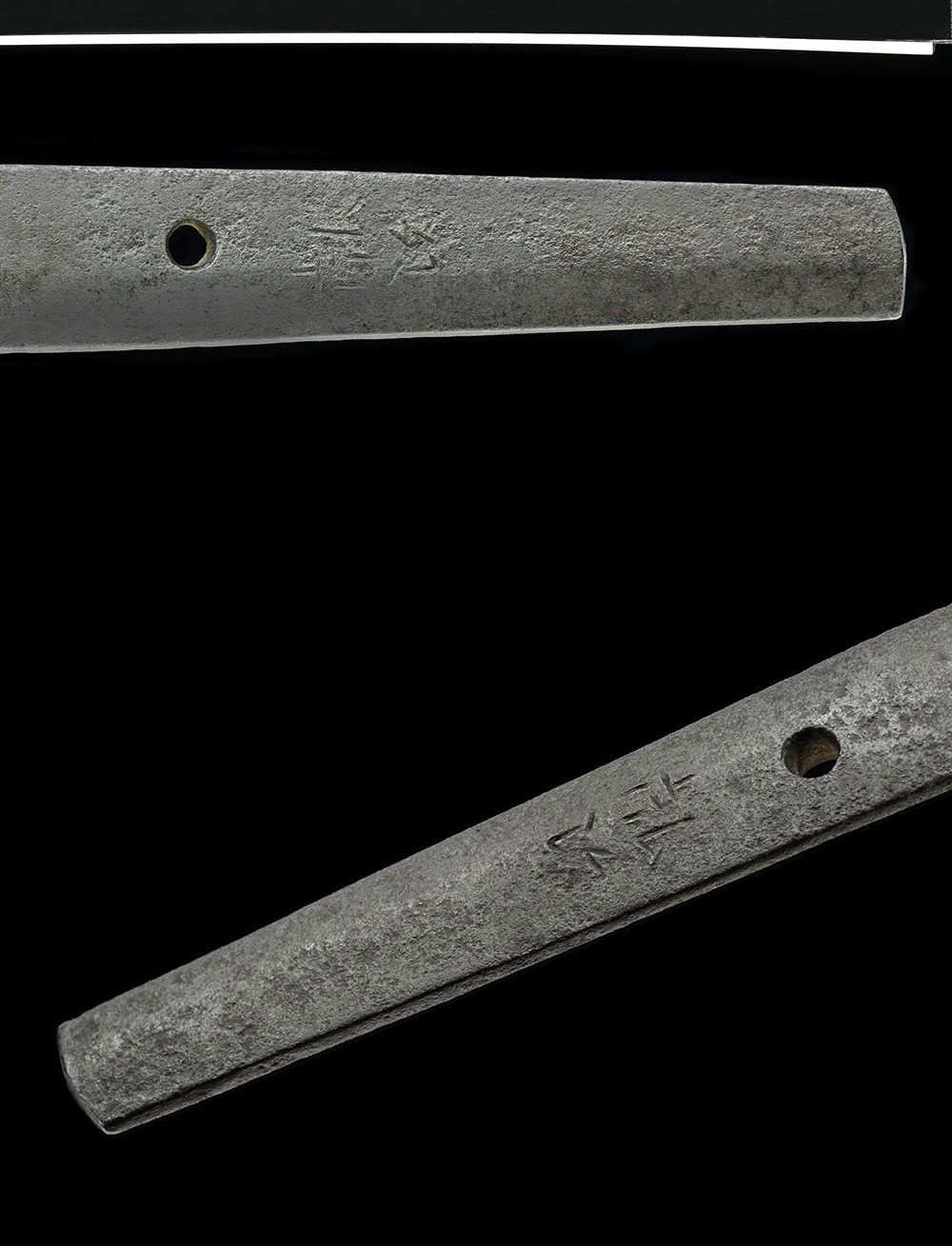
Description Keijo: Shinogi-zukuri with iori-mune; the mihaba is slightly wide, with a clear taper from base to tip; the kasane is rather thick; shinogi is high; funbari remains; there is high koshizori, and the curvature becomes more subdued toward the tip; chū-kissaki. Kitae: Itame-hada well mixed with mokume; the grain stands somewhat, forming a so-called chirimen (crepe-like) texture; fine ji-nie forms densely and thickly; chikei appear well; utsuri emerges faintly. Hamon: A chū-suguha-based temper mixed with ko-gunome; ashi and saka-ashi enter; nioi is deep and in places shows an urumi (moist/soft) tendency; ko-nie adheres; small yubashiri and tobiyaki-like effects are mixed in; with hotsure, sunagashi, and kinsuji. Boshi: Mostly sugu with ko-maru; on the omote it becomes ō-maru; on the ura it shows yubashiri influence and tends slightly toward a pointed feeling, turning back in ko-maru. Horimono: None mentioned. Nakago: Ubu; nakago-jiri is a very shallow kurijiri; yasurime katte-sagari; two mekugi-ana; on the omote, centrally below the second mekugi-ana, there is a somewhat large two-character signature.
Artisan Hirotsugu (Ko-Aoe school)
Era Late Heian to mid-Kamakura period
Explanation The Aoe lineage of Bitchū Province is traditionally said to have begun with Yasutsugu around the Jōan era (1171–1175). Working in the districts of Ko’i and Manju in the lower basin of the Takahashi River, the school prospered greatly and continued to flourish through the later Nanbokuchō period. Within this tradition, works dating from the end of the Heian period through approximately the mid-Kamakura period are especially referred to as Ko-Aoe.
In terms of style, Ko-Aoe workmanship often shows conspicuous mokume within the forging pattern, with a slightly standing grain that produces what is termed a chirimen (crepe-like) texture. Many examples also exhibit jifu (patch-like) effects within the jihada. The hamon may be a calm, suguha-based temper, or may include small undulations; in either case nie tends to appear well. Overall, when compared with Bizen work of the same period, these blades generally convey a somewhat restrained and subdued (jimi and shibui) character.
This tachi shows an archaic (koga) form, with an evident taper from base to tip and high koshizori, while the curvature becomes more subdued toward the point. The forging pattern is itame well mixed with mokume, with slightly standing grain and a chirimen-like texture. The temper is chū-suguha mixed with ko-gunome, featuring ashi and saka-ashi, a deep nioiguchi that in places tends toward urumi, and adhering ko-nie. In addition, small yubashiri and tobiyaki-like effects are intermingled, together with hotsure, sunagashi, and kinsuji. In these respects, the blade distinctly manifests the characteristic features of this group.
In particular, the varied activities appearing in both ji and ha are rich in interest, making this an excellent Ko-Aoe blade marked by deep, savoring qualities. Moreover, as one extant example by this smith, it also constitutes valuable reference material.