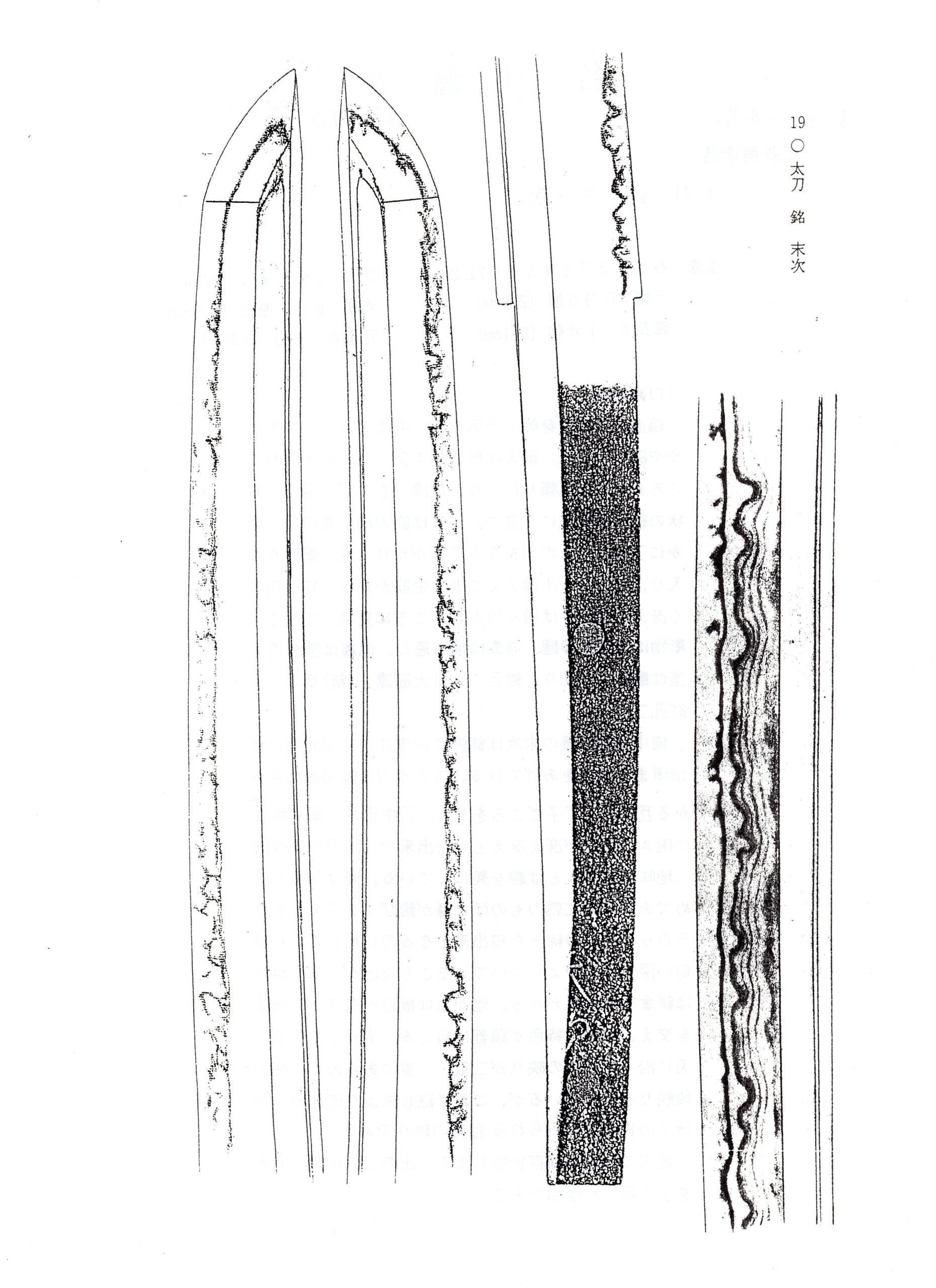
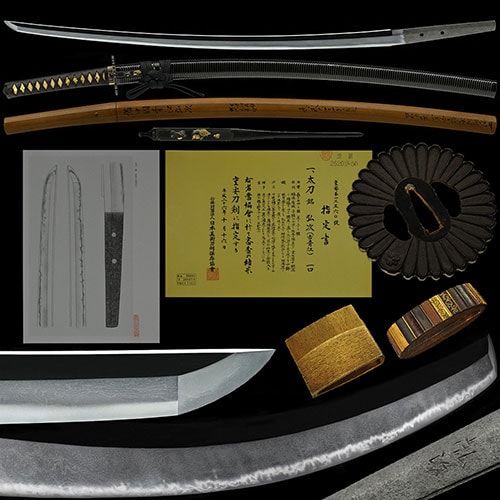
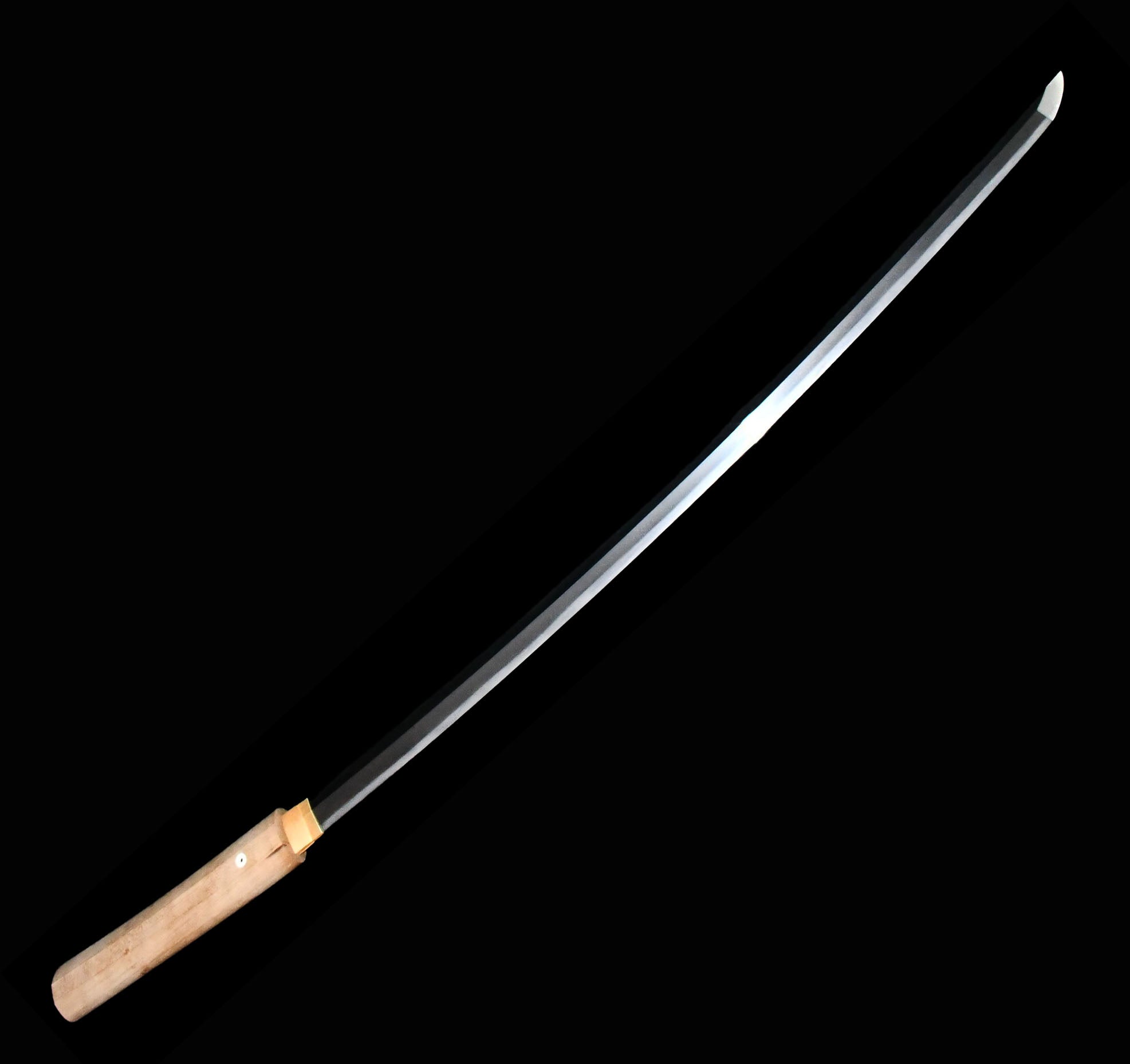
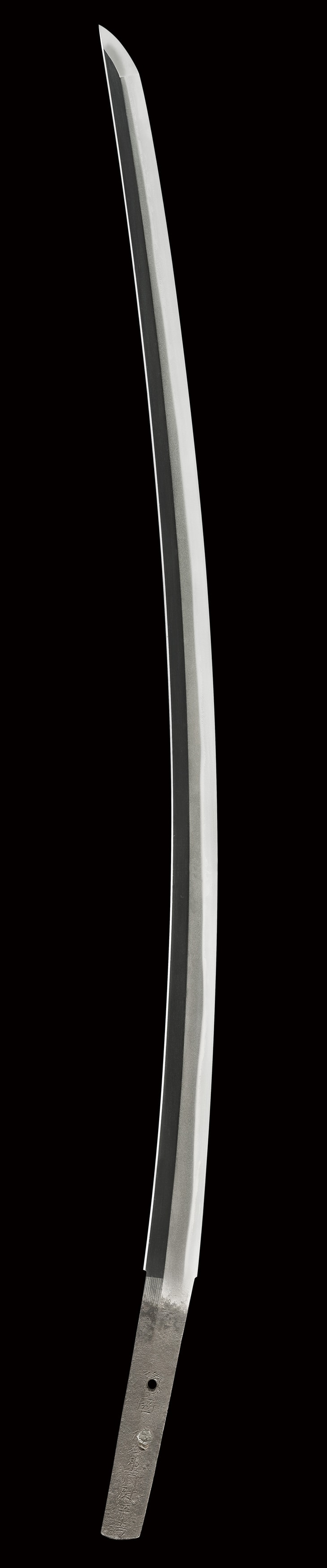
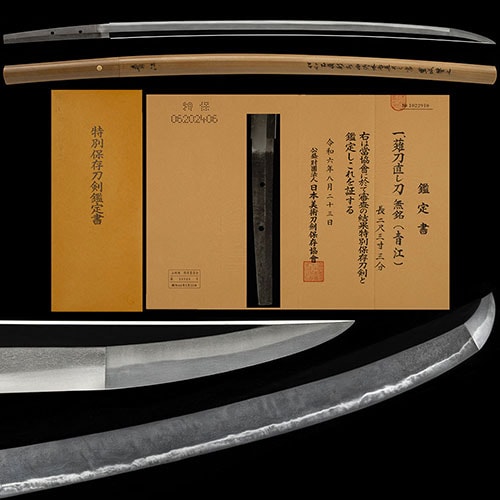
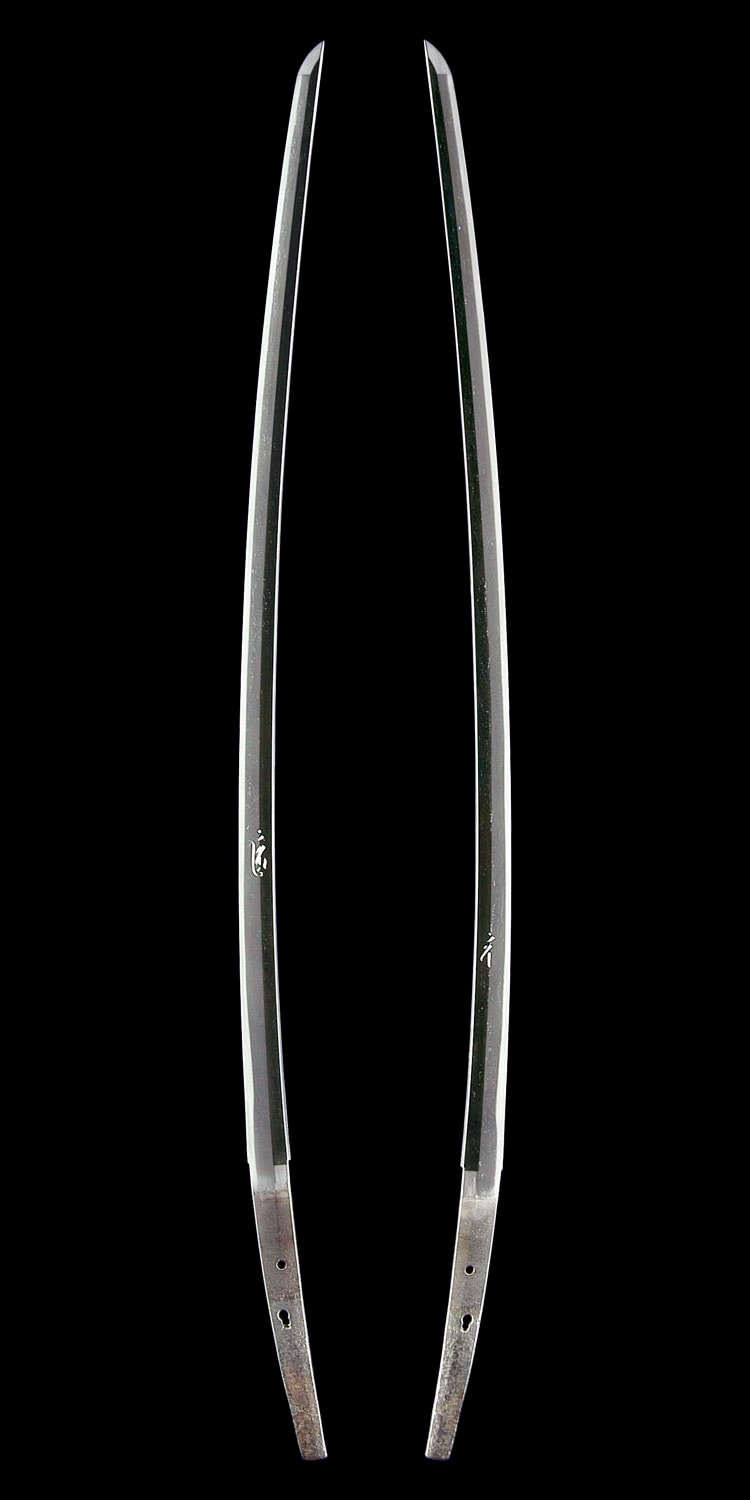
Kanetsugu (包次) is one of the best-known smiths of , the early stratum of the school of Province, which the published sources trace to Yasutsugu around the Joan era (1171-1175). Works no later than roughly the middle of are set apart under the name , and Kanetsugu is counted among its representative hands beside Moritsugu, Tametsugu, Tsugie, Tsugatada, Sadatsugu, Yasutsugu, Tsunetsugu, Toshitsugu, Suketsugu and Shigetsugu, most of whom carry the character 'tsugu' as the common element of their names. The reference works place him in the line descending from Sadatsugu; the older compendia name him a son of Moritsugu or of Sadatsugu. He worked from the end of into the early to middle , before the slanting - idiom that would later define the flamboyant of . Among smiths a comparatively large number of his works survive, so that his is one of the clearest signed records of the school's quiet early manner.
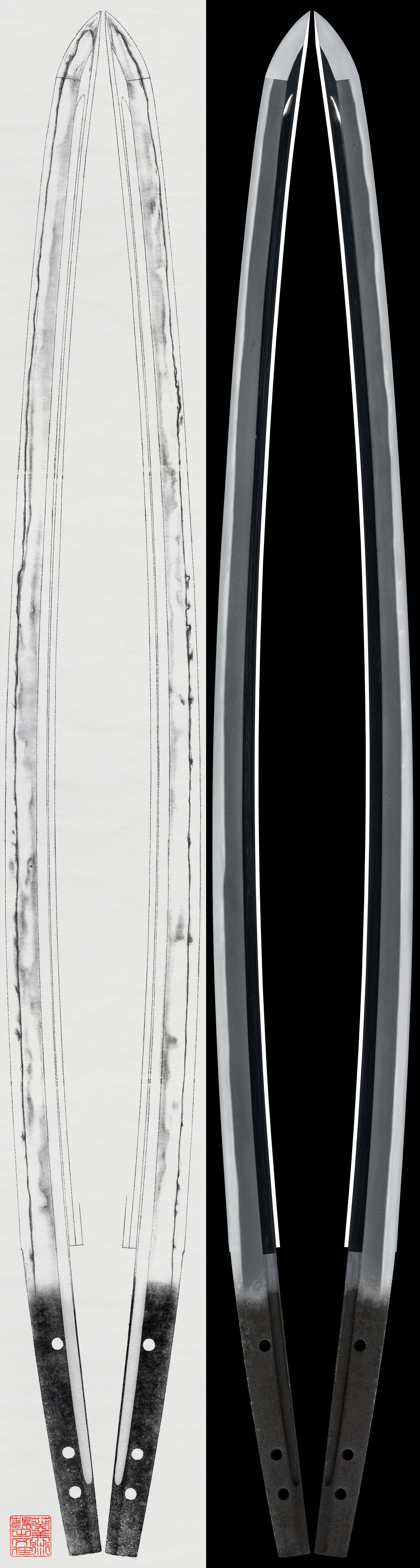
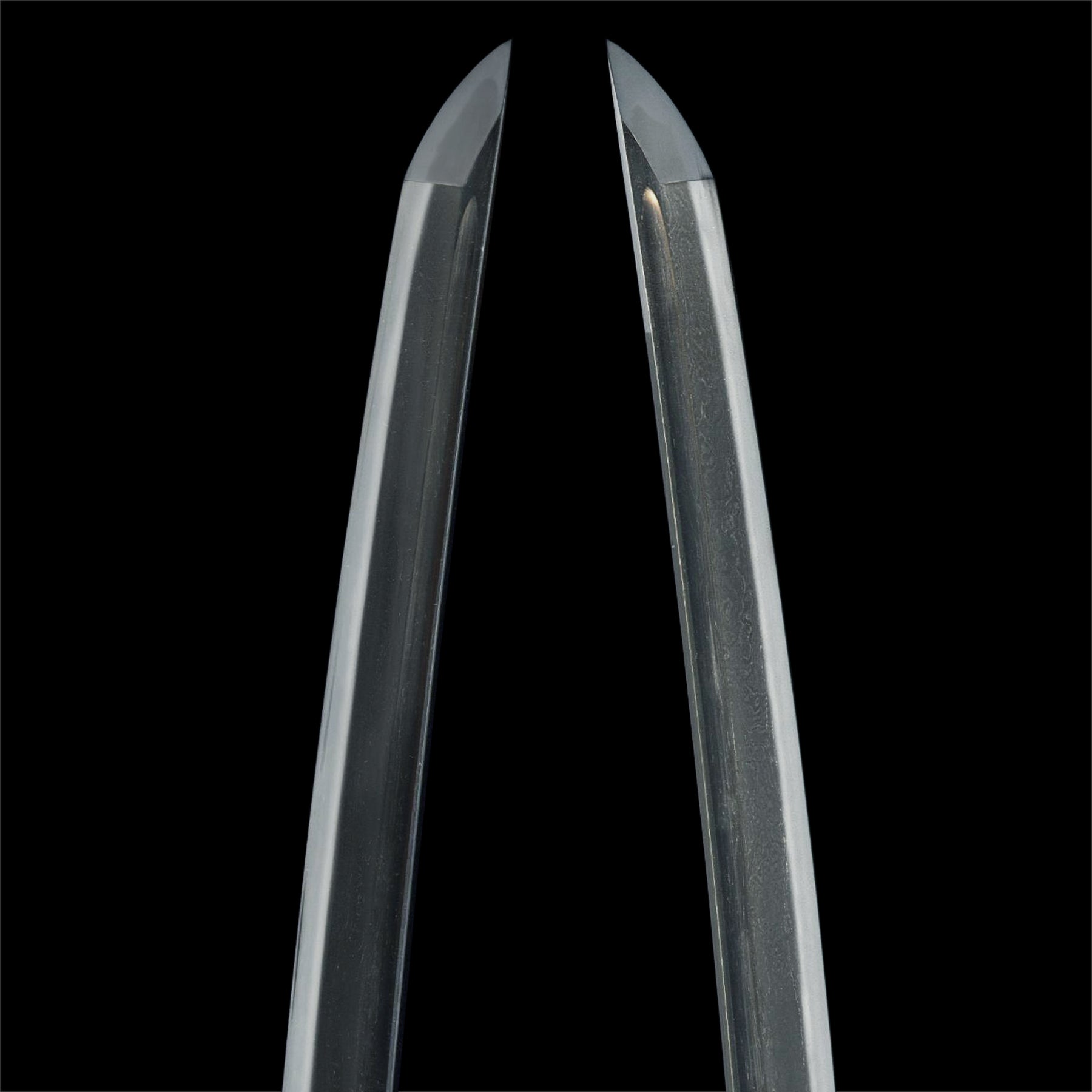
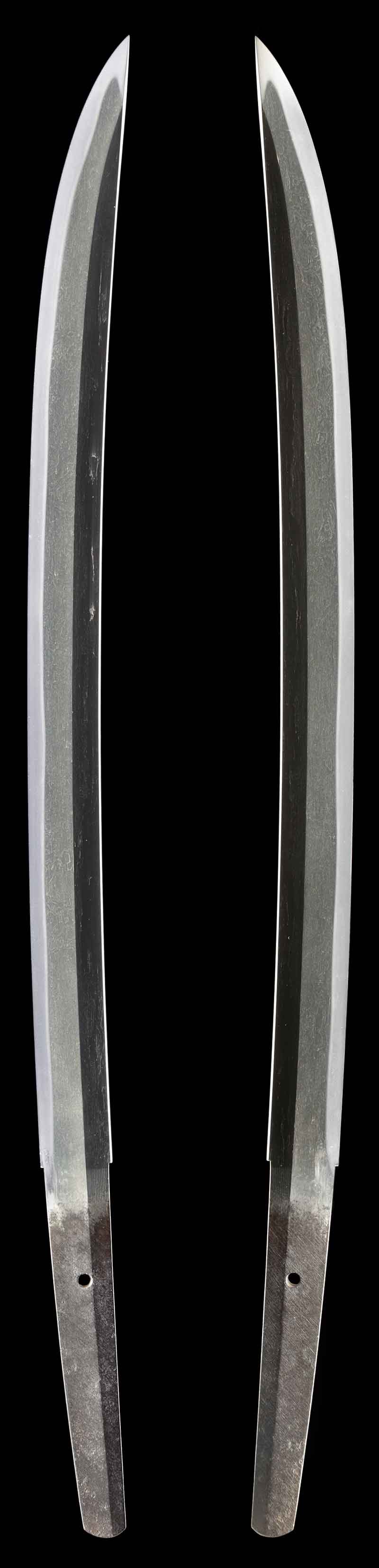
His is the restrained pole of . The temper is a base carrying small undulations and small clove (直刃 with 小乱れ and 小丁子), with well-adhering, -karami within the and (砂流し) interwoven, the straight turning back in (小丸). The published descriptions praise the consistency of his hand above its drama: in his swordmaking there is, they write, almost no unevenness, and many examples are of fine quality. The , deep in curvature, carries small with over a forging mixed with and a tang with bold file marks; in all respects, the notes conclude, it fully manifests the characteristic features of this school and smith, leaving nothing to be desired. On a slender, of archaic and elegant form the runs narrow, tending to (ほつれ), with -like (二重刃) and (金筋) crossing both and .
The is the school's own: mixed with (板目 with 杢), standing somewhat in a fine, granular texture the references call (縮緬肌), with applied and clear patches of (澄肌) in the . The published commentary makes this the school's tell, the prominent and the surface slightly standing, often called crepe-like, with patches of (地斑) mixed in, the tempering ranging from quiet to small irregularity. Against the tradition the judges draw the distinction by feel: compared with contemporary work the overall impression, they write, is somewhat more subdued and astringent in savor. The reflection in the is the quiet -kindred rather than the bright of : on the Owari Tokugawa the stands, mixed with and , with a suggestion of , while on his finest pieces the reflection rises vivid.
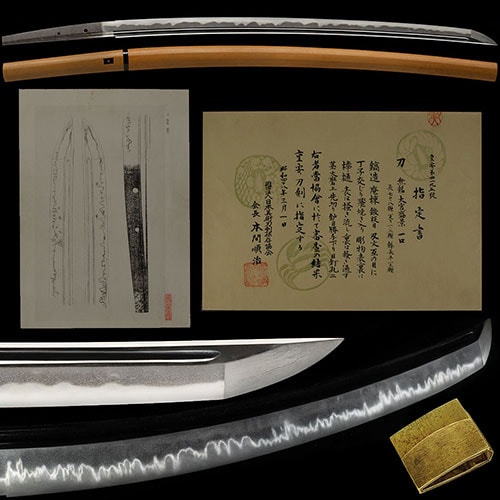
One coherent hand is read across two registers rather than across periods, the default the quiet signed above, a to . On the connoisseur pieces the speaks louder: the of 2003 is forged in with , overall fine yet standing, with dust-fine thickly applied, fine (地景) interwoven, patch-like in places and a vivid reflection (乱れ映り) standing out, its temper a base with a small feeling (小互の目), the (匂口) tight and tending to subdue. The judges single this blade out as more thoroughly refined in its forging than is usual even within the school, and, since it signs on the like the Itsukushima , hold it of high documentary value for the study of the smith. The -attributed shows the register from the other side: clear patchy reflection (地斑映り), a bright , with small (小のたれ). Here the attribution is upheld from the work itself, the published commentary noting that the small in the hardened edge is a trait found in Kanetsugu's signed pieces, so that the tradition of attribution to this smith is entirely appropriate. signatures, the references add, are cut boldly even on as two-character (二字銘) on the in the manner of .
Kanetsugu's place within is defined as much by what he is not as by what he is. He stands at the early, quiet pole of the school, before the slanting - and the later masters of made their signature; that slant is absent from his work, and the calm small on a base is the early register it would later displace. His and are the school shared with the wider line, while his quiet and the consistency of his hand mark him within it. The judges set apart from by feel and by craft, the bold two-character on the and the file marks among the points of difference they name. No individual pupil is recorded. The compendia treat the Kanetsugu name as transmitted from the early through the late period, so the signed spans more than one generation, the surviving signed and gold-inlaid work treated as one transmitted hand rather than split among them.
He is graded Jo-jo by Fujishiro and rated 1,500 in the Toko Taikan. The weight of designation behind his name far exceeds the size of his surviving record: four of his blades are Important Cultural Properties, with one at and three at beneath them, so that the and tiers together hold four. Eight of the surviving blades are signed, none unsigned, an unusually clean record for so early a smith. The traceable holders run to long-held patrimony rather than the market. A signed at Itsukushima Shrine (厳島神社) is an Important Cultural Property, the rare exception in carrying its on the where generally signs on the . Another signed descended in the Owari Tokugawa house, was certified Bijutsuhin in 1939, and is held by the Tokugawa Reimeikai Foundation and the Tokugawa Art Museum. The gold-inlaid survives with two large (切り込み) struck into its edge, by which the published commentary recalls its martial use. For a private collector the Important Cultural Properties are heritage, held in shrine and long-private collections and never to trade; of his and blades a handful are on record, and one comes to open hands only rarely, a landmark of early work when it does.