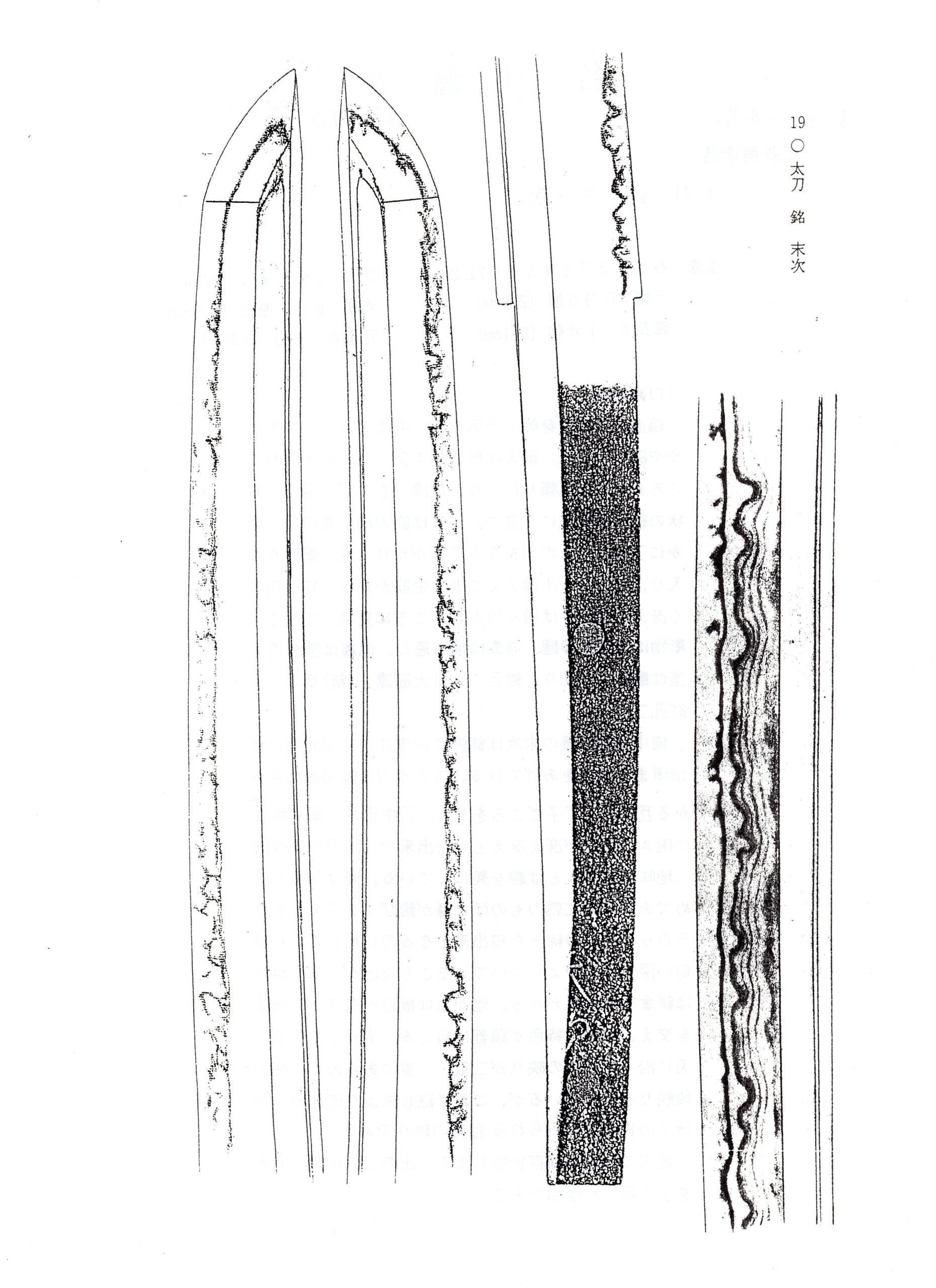
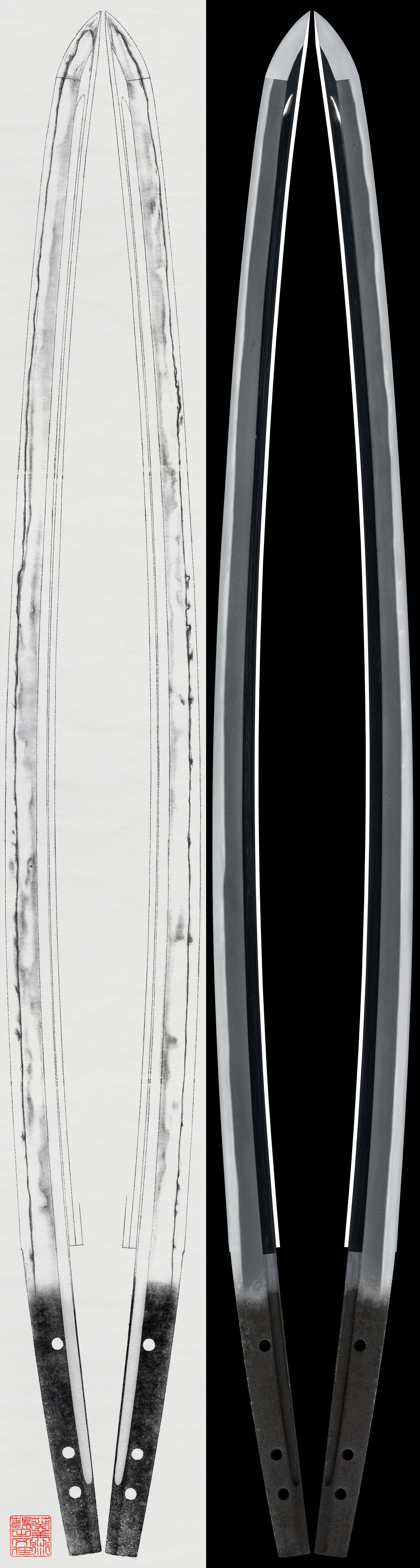
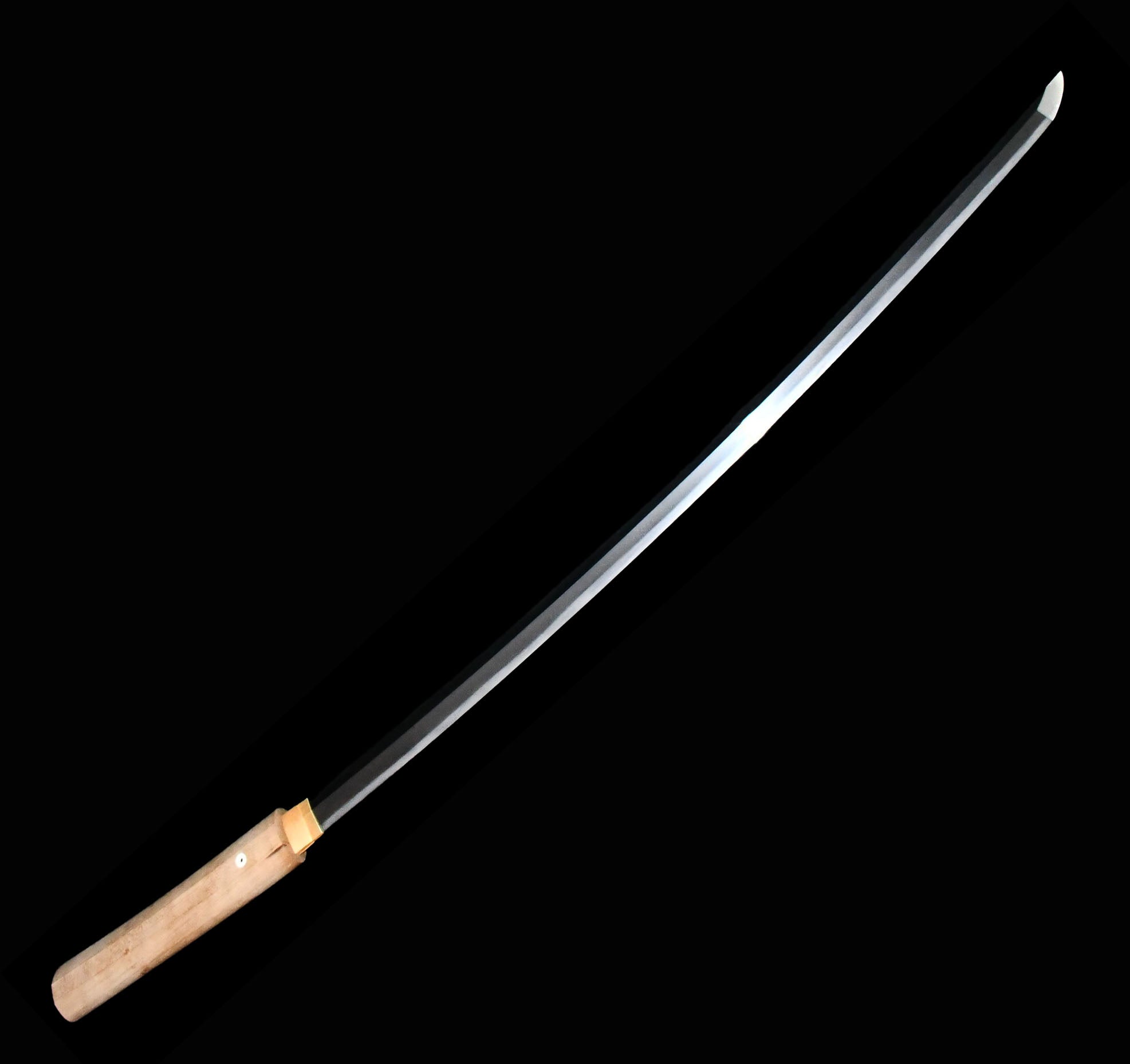
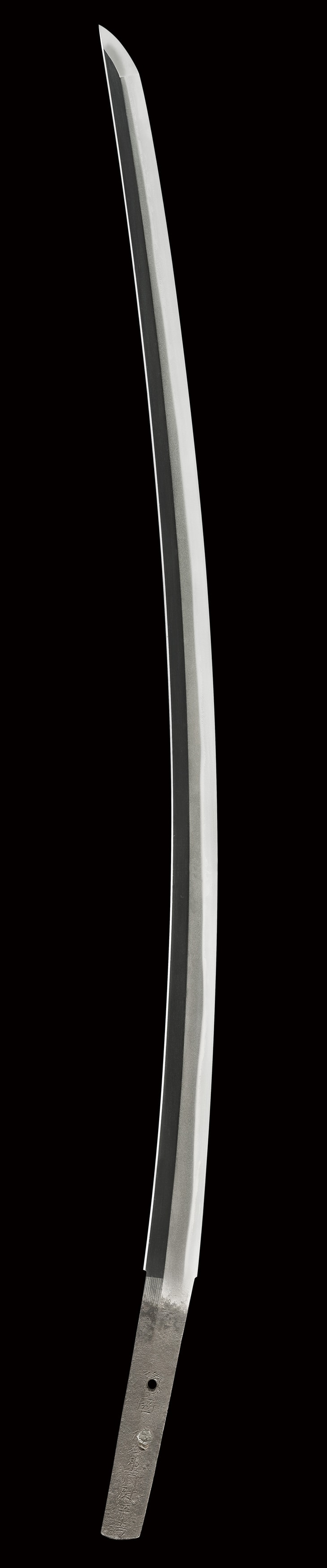
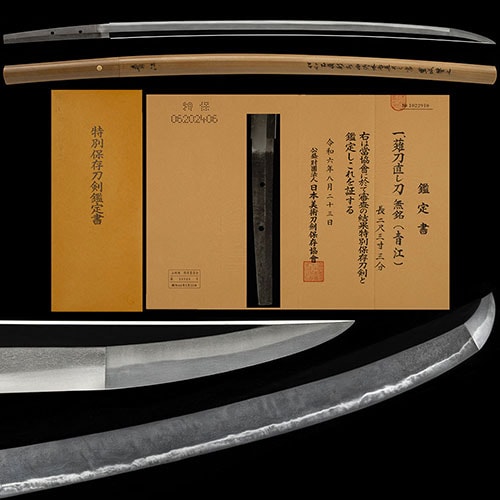
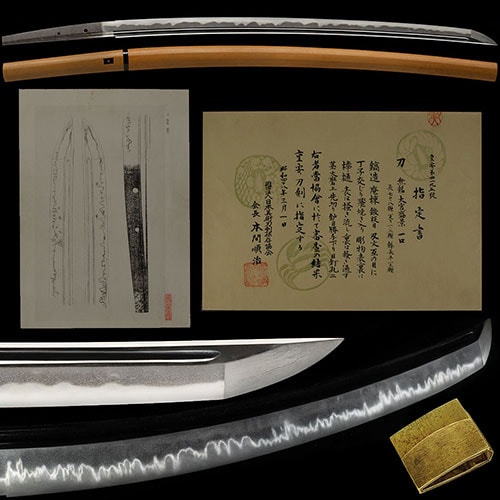
Hirotsugu is a smith of province whose surviving signed work falls across the early to middle period, the span under which the school's earliest and most archaic blades are gathered. The group worked at Ko'i and Manju in the lower Takahashi river basin, and is traditionally founded by Yasutsugu around the Jōan era of the early 1170s. The published sources place Hirotsugu within the as a son of Kunitsugu, his period given as Kōan, the name continuing through several recorded generations from the Genryaku era down to a late appearance in the Bunwa era of the period. Against that documentary placement the workmanship of his surviving reads older: the judges on the 24th-session blade note that although the gives a Kōan date, its two-character signature and archaic manner give it points in common with the early- group. His extant signed work is comparatively scarce, the commentary on the earliest of his noting only that he was an smith whose pieces are few, so his hand is read from a small but consistent body of slender .
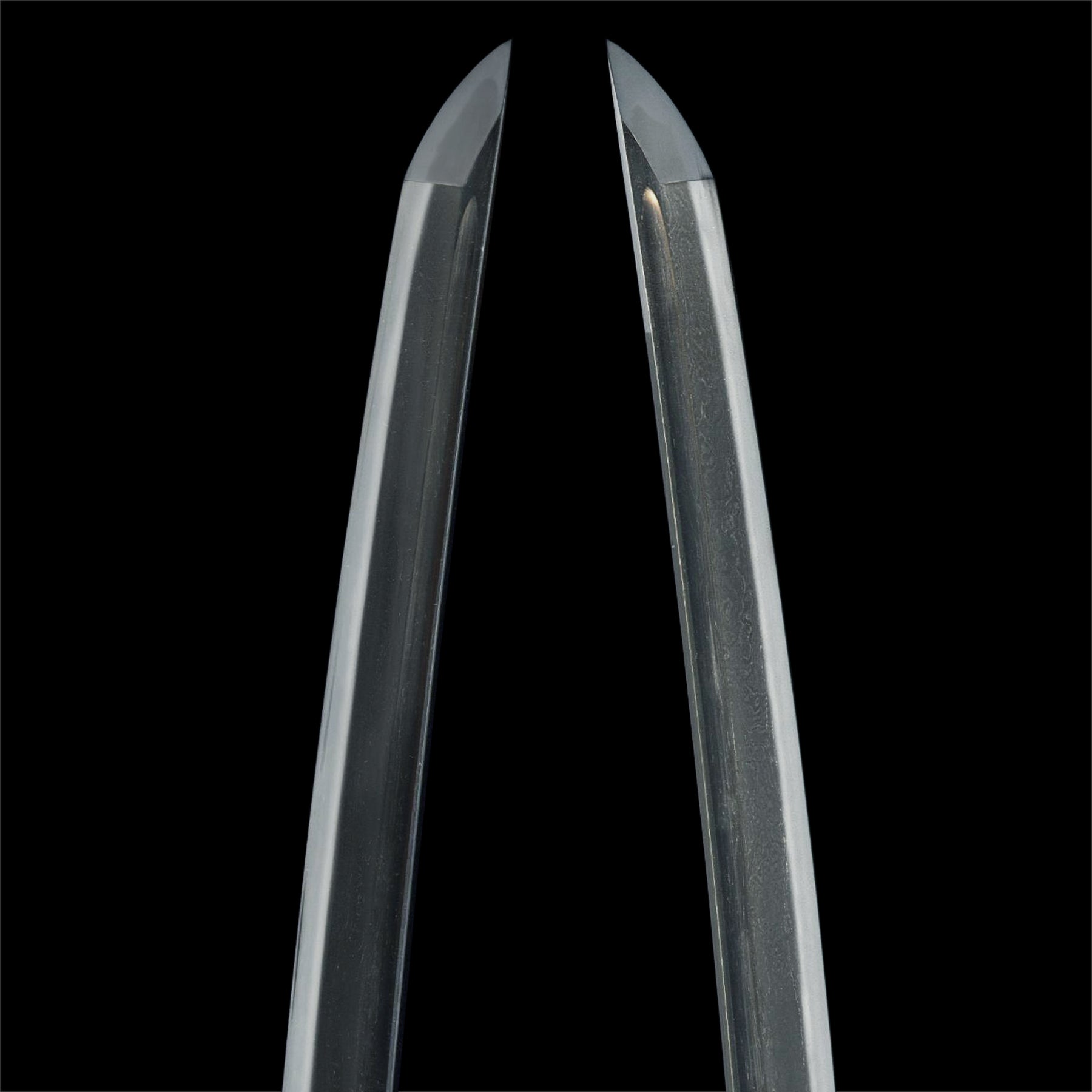
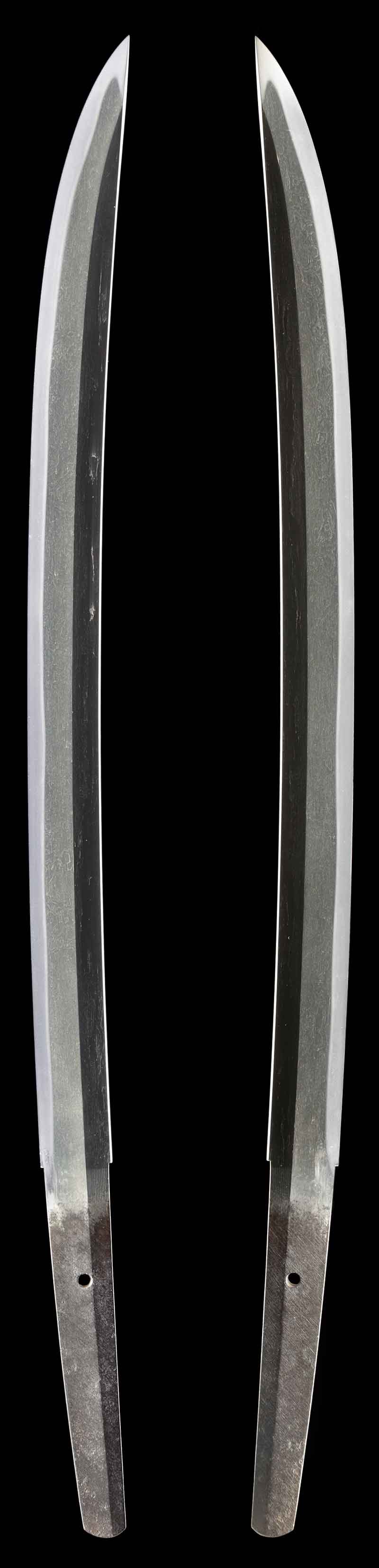
The forging is where his blades are first known, and it is the in its clearest form. Over an thick with the grain stands and gathers into the crepe-like texture the school is named for, what the published sources call the so-called skin. Through that crepe fine attaches thickly and enter, and into it is mixed , the patchy mottling of old -related steel, out of which a faint rises rather than the bright of contemporary work. This is the discriminating mark of his : not a clear reflection read across the , but a speckled, quiet shadow gathered out of the mottling, the variant of the feature. It is a of subdued depth, and the published sources, characterizing the school, say that compared with contemporaneous work it is somewhat plainer and carries a quietly astringent savor.
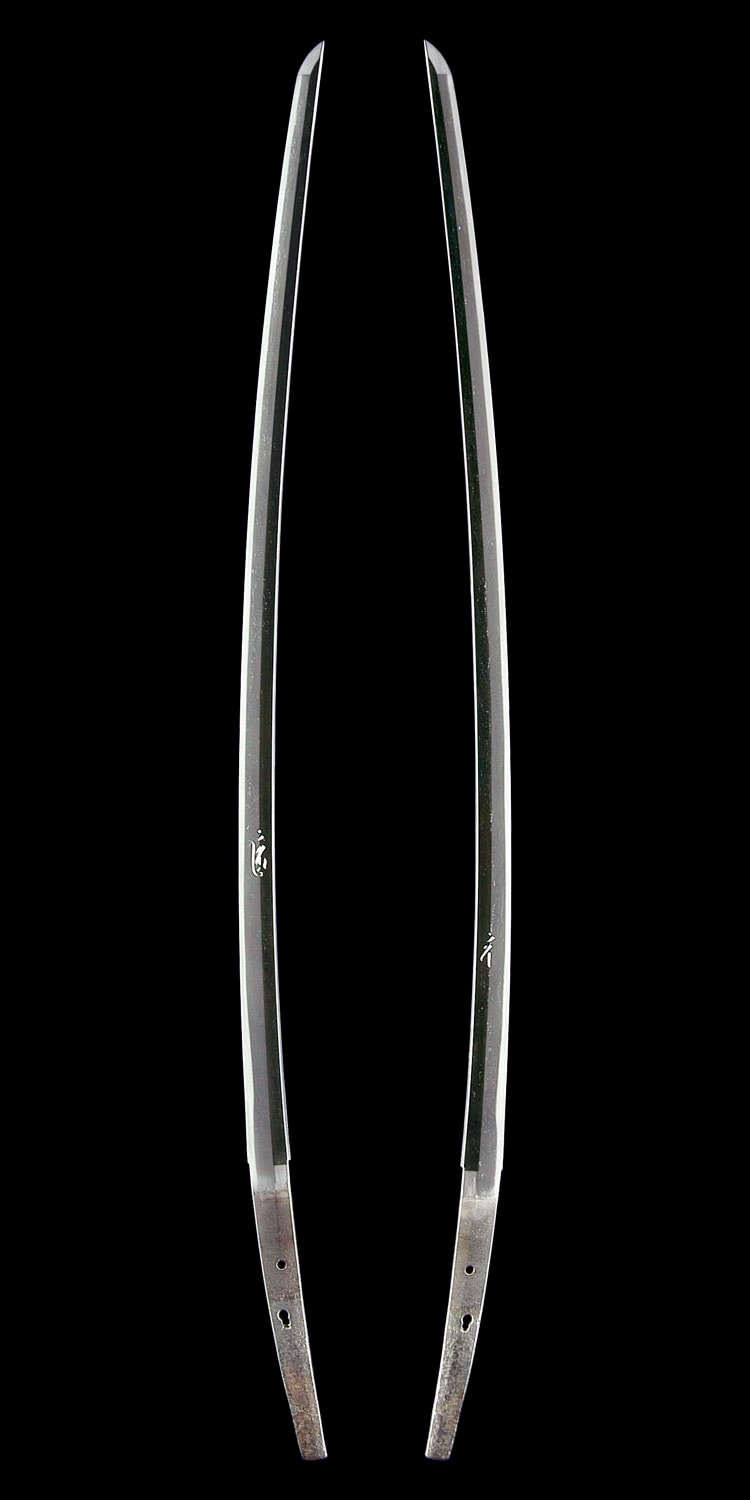
The temper sits over a base broken low into small , with a tendency toward small and, on the more restrained blades, small . and enter frequently, the work carried in , the showing with fine ; the runs deep and in places takes on an softness. On the 60th-session , the richest of his extant , the activity opens further: and together, the reverse-slanting feet that are the hallmark, with , small and -like spots, , and all entering. That , the feet slanting back toward the base, is the clearest point by which his parts from the straight of . The runs straight and turns back small, on most blades and pointed on others, often touched by , and once ending in . The signature is cut in two characters at the tip of the , and four of the five surviving are with one preserved .
Within that single coherent manner the published record draws one telling distinction, concerning the brightness of the . Many works tend to a , a sinking and subdued , part of what the sources mean in calling the school plainer than . Against this the is singled out: whereas the usual blade sinks, this one is instead rather bright, a point the judges expressly draw attention to. The blade is read as expressing the features of the school with particular clarity, a crepe with and a -like reflection, an archaic and well-'d foundation mixed with small and a tendency to small , the fine variation along the conveying an old flavor. The 37th-session shows the other side of his range, carrying , a at the and with run as kaki-nagashi, its two-character signature cut large with a thick chisel, the kind of confident original blade that anchors the reading of the pieces.
Hirotsugu's place is among the early makers whose work the gathers close to old , and his distinction is carried by his own attested traits rather than by the comparison: the crepe with its , the faint , the -bearing worked in . The published commentary on the 14th-session reads the slender, shallow-, small-pointed build together with the small turning to and the base mixed with ko-chōji midare as clearly showing the characteristic features of the school of the period, and finds it an excellent in both and . His archaic, -worked sets him apart from the later smiths, whose saka-chōji and grew more pronounced into the period; he belongs to the quieter, earlier register of the school, the manner the sources repeatedly read as old-fragrant and classically elegant. The 60th-session is judged a work rich in subdued savor whose activities in both and are full of nuance, valued besides as study material for an extant example by his hand.
The weight of designation behind his name is modest in number but high in tier. Of the works on official record, five are designated, reaching the and ranks and one Important Cultural Property; there are no National Treasures. The Important Cultural Property is held at the Akihasan Hongū Akiha Shrine, patrimony in shrine keeping rather than anything that moves, and one further blade is recorded as a Prefectural Cultural Property in private hands. None of his blades carries a recorded lineage of owners, so the connoisseurship rests on the tier record and on the quality the judges read into individual pieces, foremost the , whose original robust construction is described as well retained, a thick and full surviving the shortening into a hamaguri-ba, plainly a careful commission for a warrior house. With his signed few and the foremost held as cultural property, a Hirotsugu in open hands is among the rarer encounters in old work, the and pieces reaching the market only seldom and a signed example a landmark when one does.