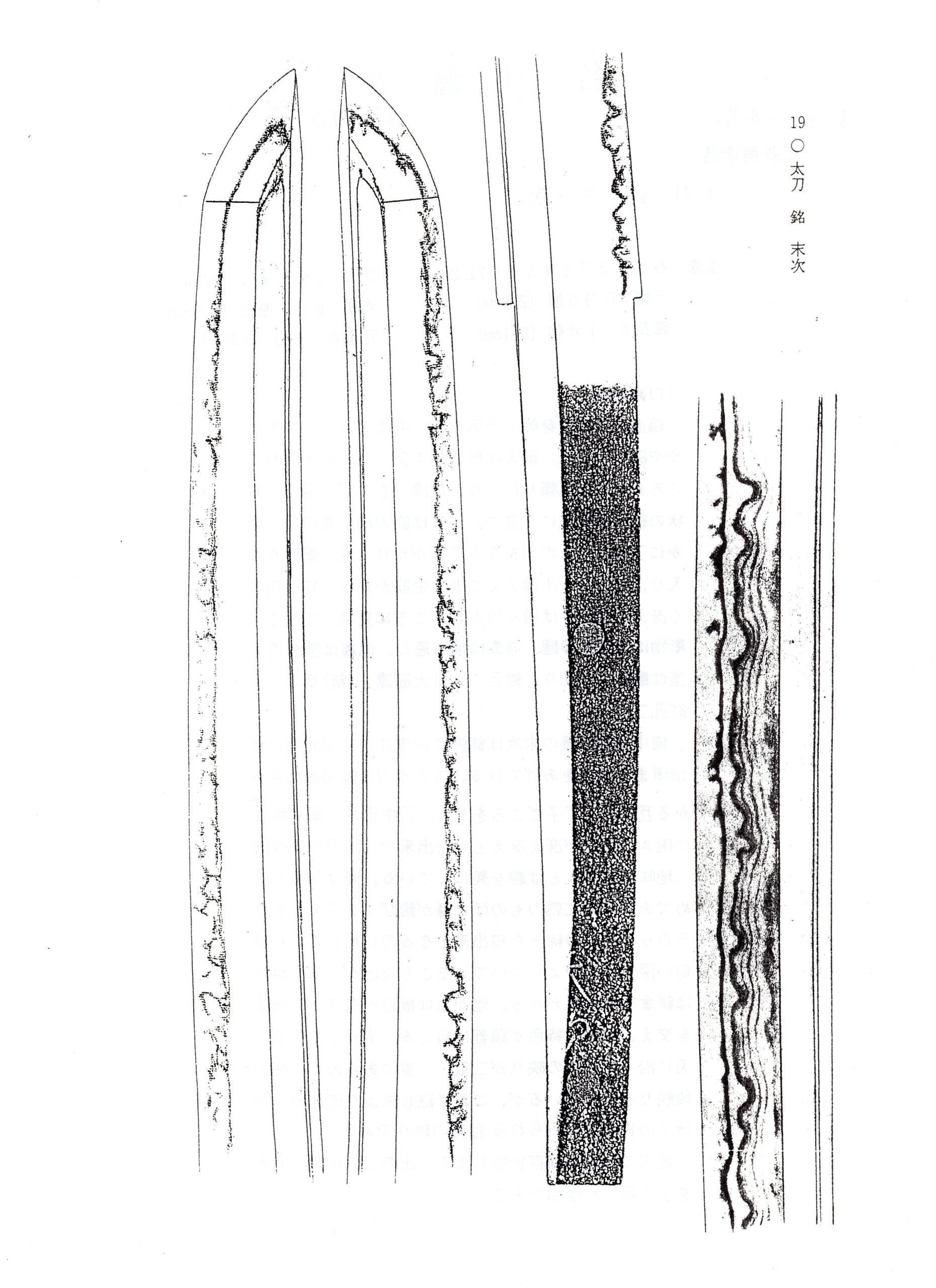
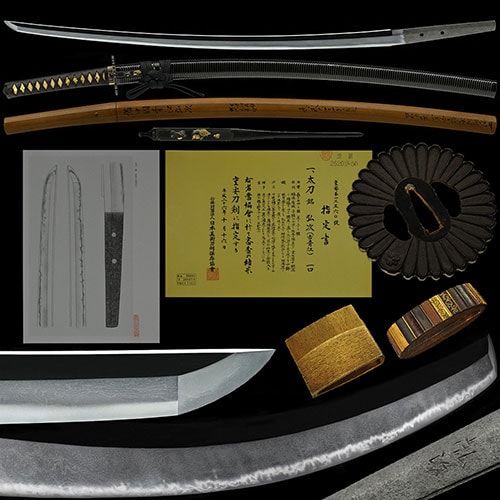
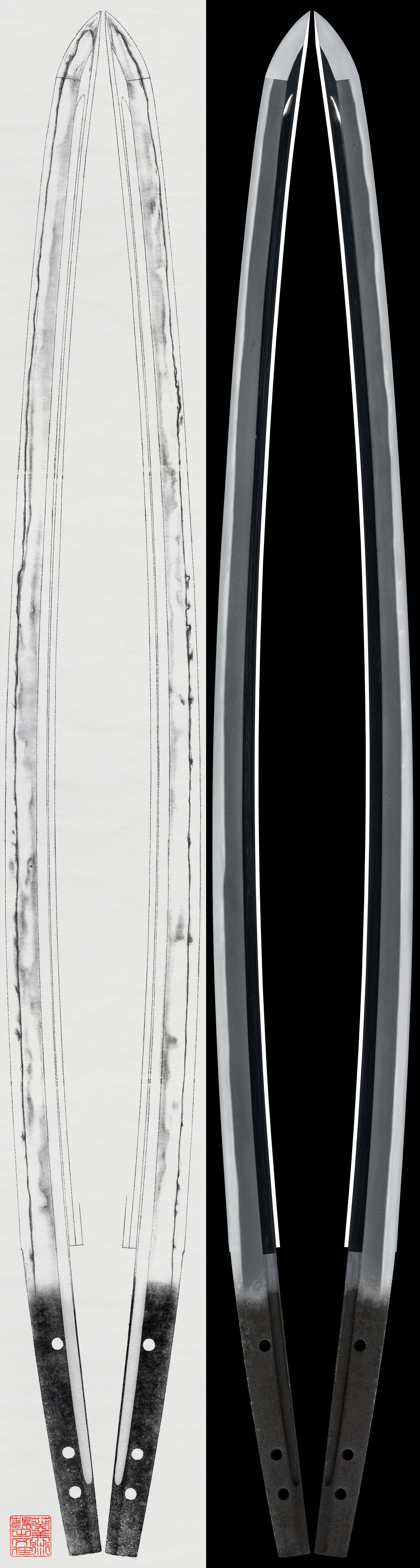
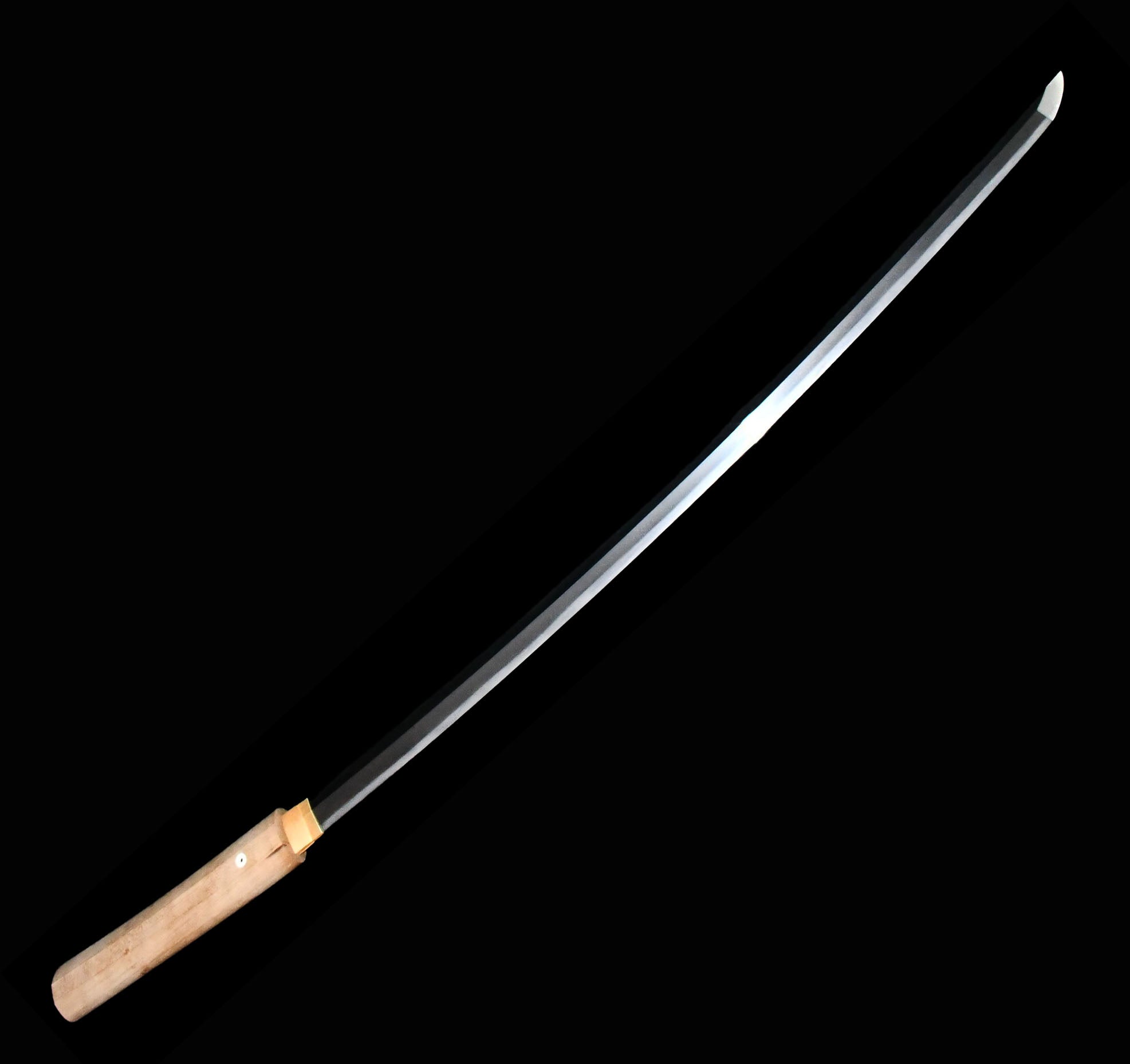
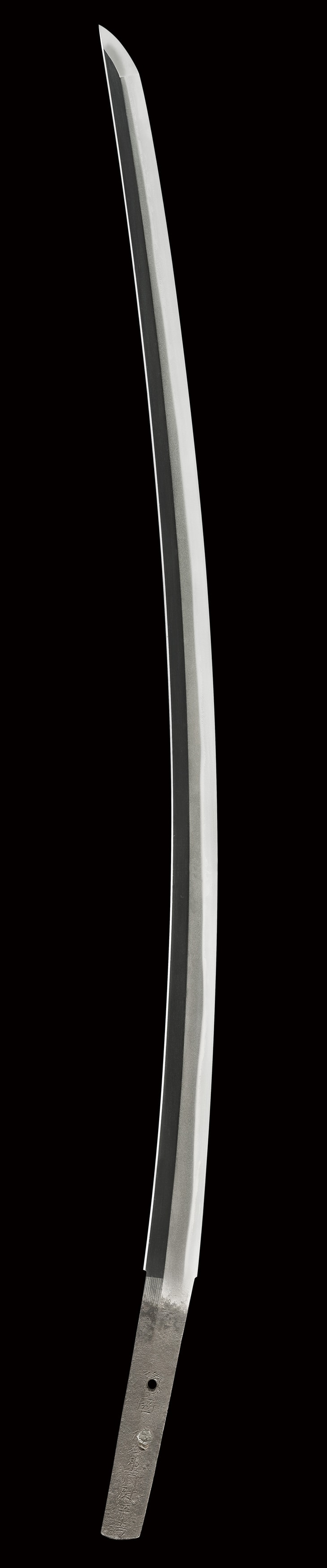
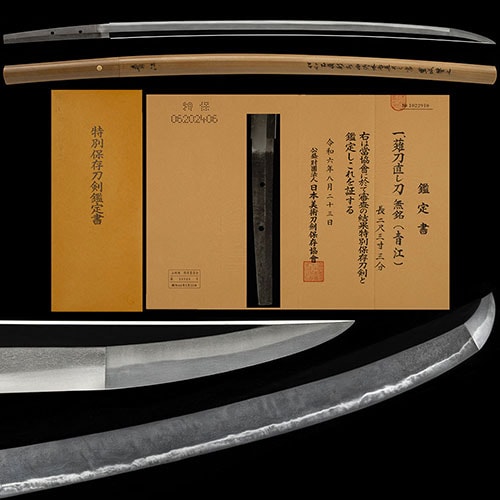
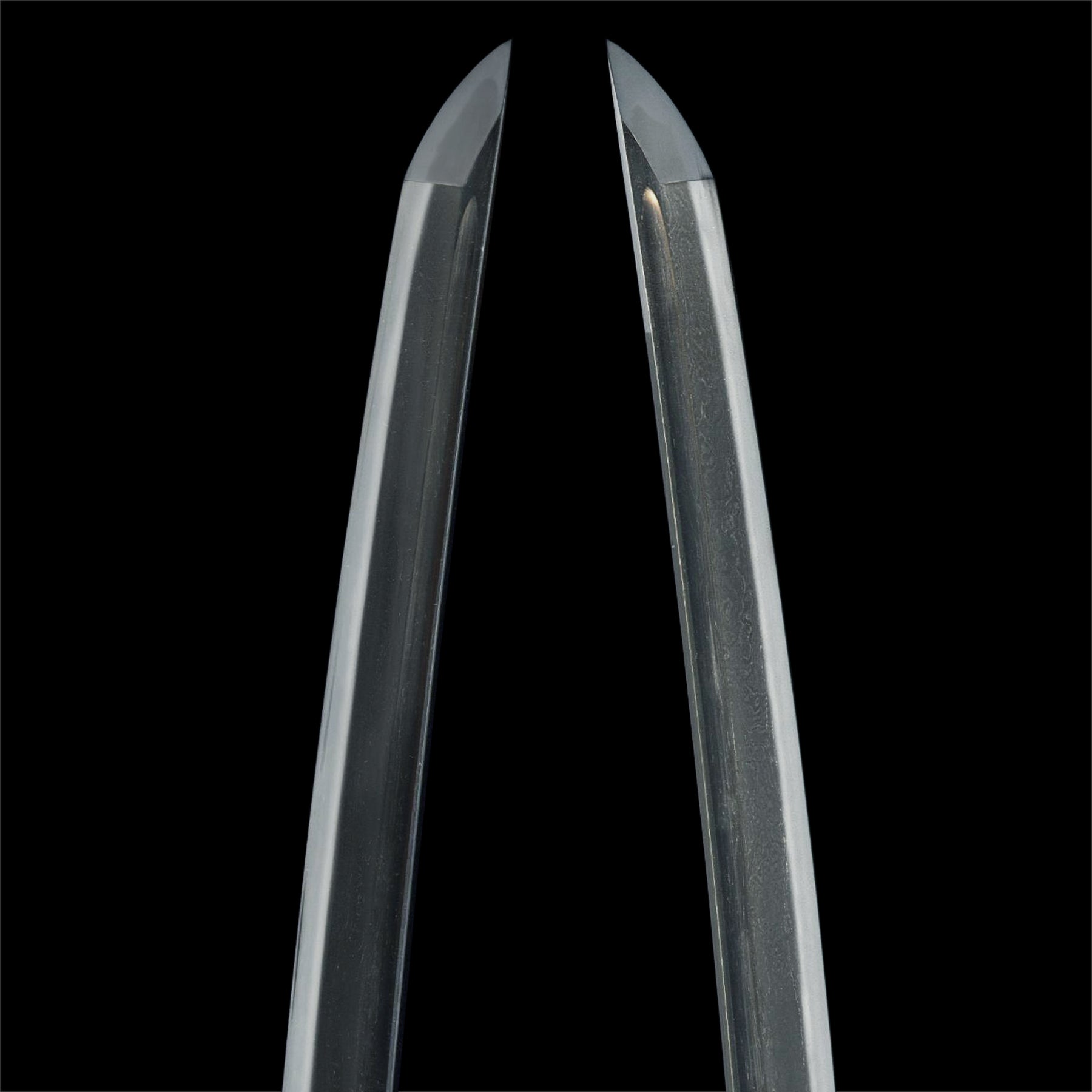
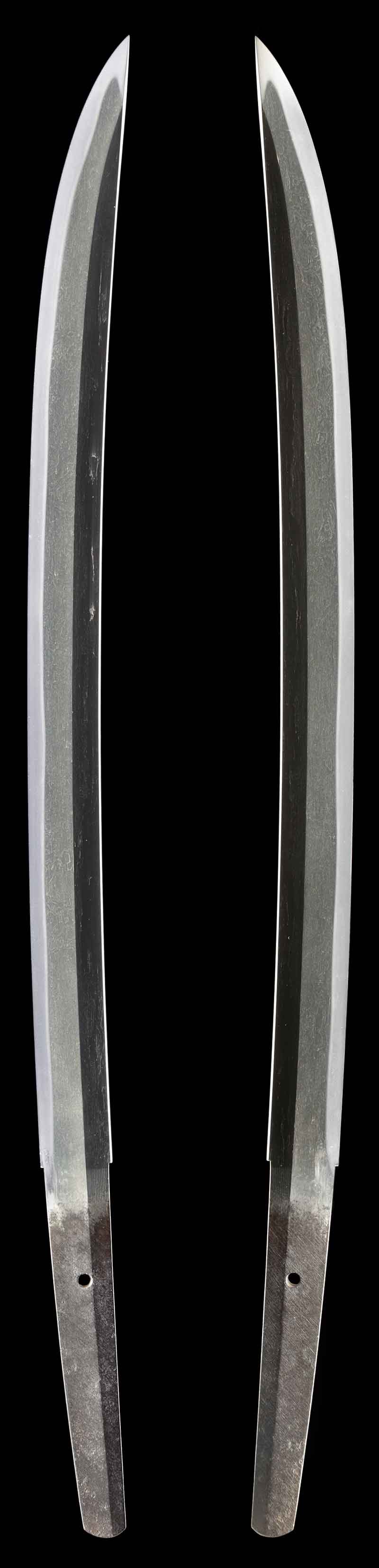
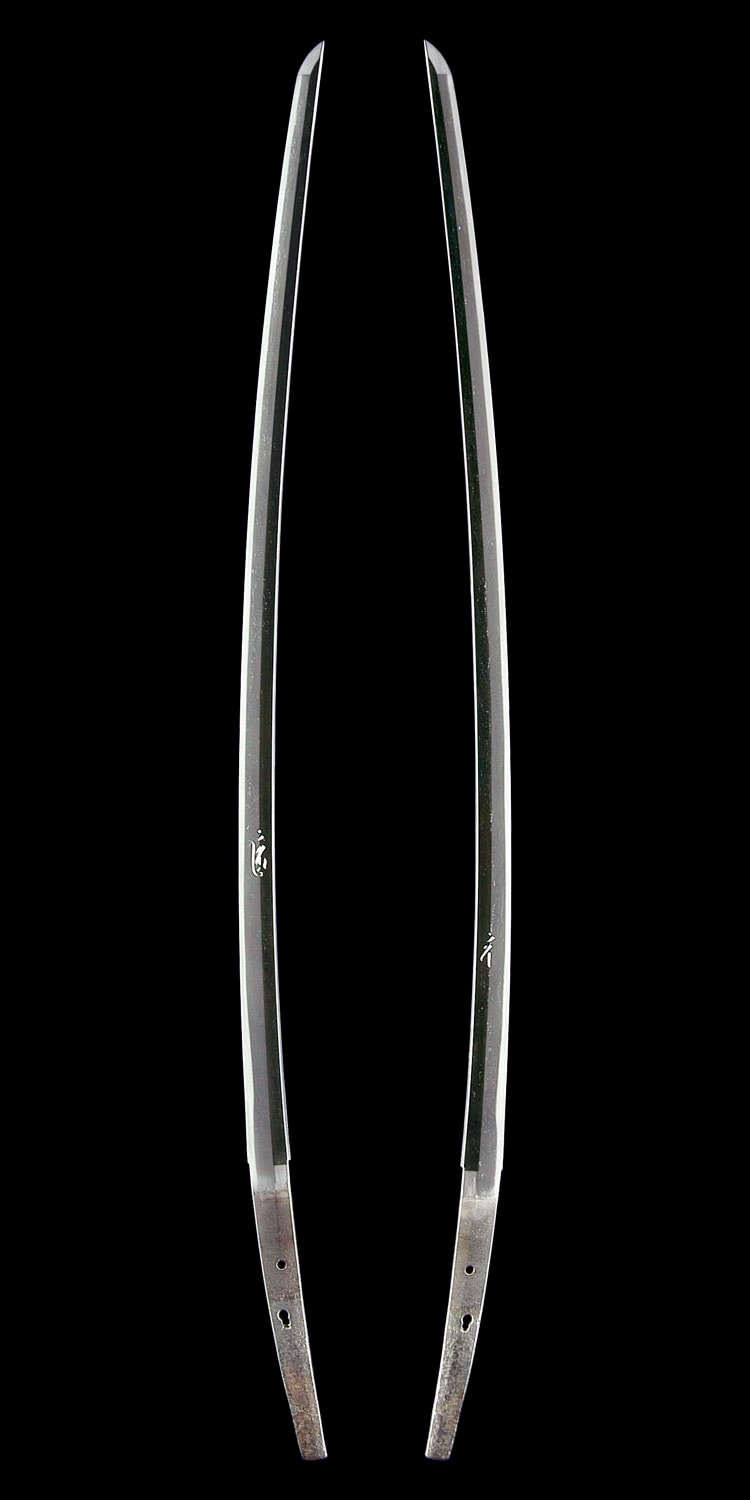
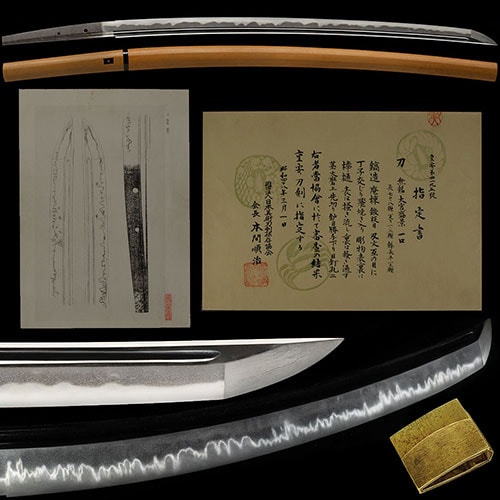
Yasutsugu (康次) of worked in the group in the early period, around the Kenryaku era (about 1211 to 1213), and is transmitted in the records as a son of Moritsugu. He is not the later Yasutsugu, whose name is written with different characters; he belongs instead to the old smiths who forged along the lower Takahashi river in the districts of Ko'i and Manju, the group the published sources count, from the late period to about the middle of , as . Among that group the names him a representative smith, together with Moritsugu, Sadatsugu and Tsunetsugu. His standing rests on two very different kinds of work under one hand. The everyday Yasutsugu is restrained, what the published commentary on his usual manner calls "a small -ba in which the adheres well". The famous Yasutsugu is the broad, flamboyant exception, of which the National Treasure long held in the Shimazu family is the type.
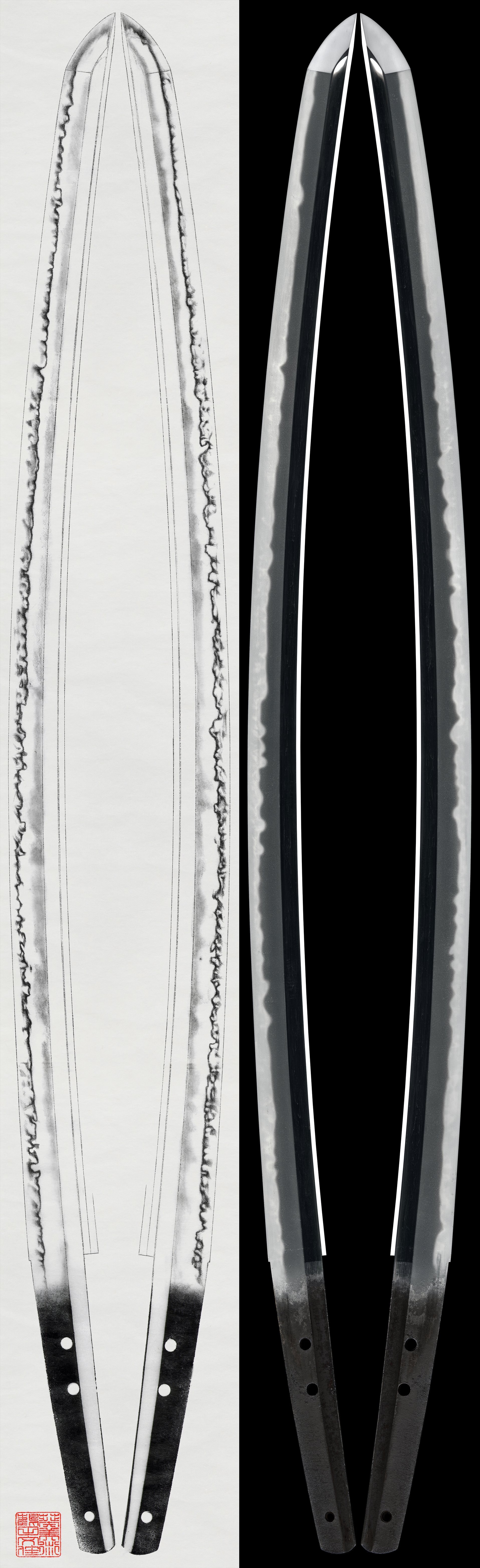
His characteristic hand is the quiet one. Over a of high with strong at the base, he tempers a very shallowly broken by , and a little . The tends subdued and sunk, with fine well attached, and entering frequently and playing here and there. The published sources describe this register as having, even within its plainness, a deep quiet elegance that shows the character, "a deep refinement within the subdued tone, presenting the characteristic flavor". Against the contemporary blades, the commentary adds, the work reads "somewhat more restrained and austere in taste". A distinct sub-manner runs the narrow, a repeatedly overlaid with in a -like effect, with the again well attached.
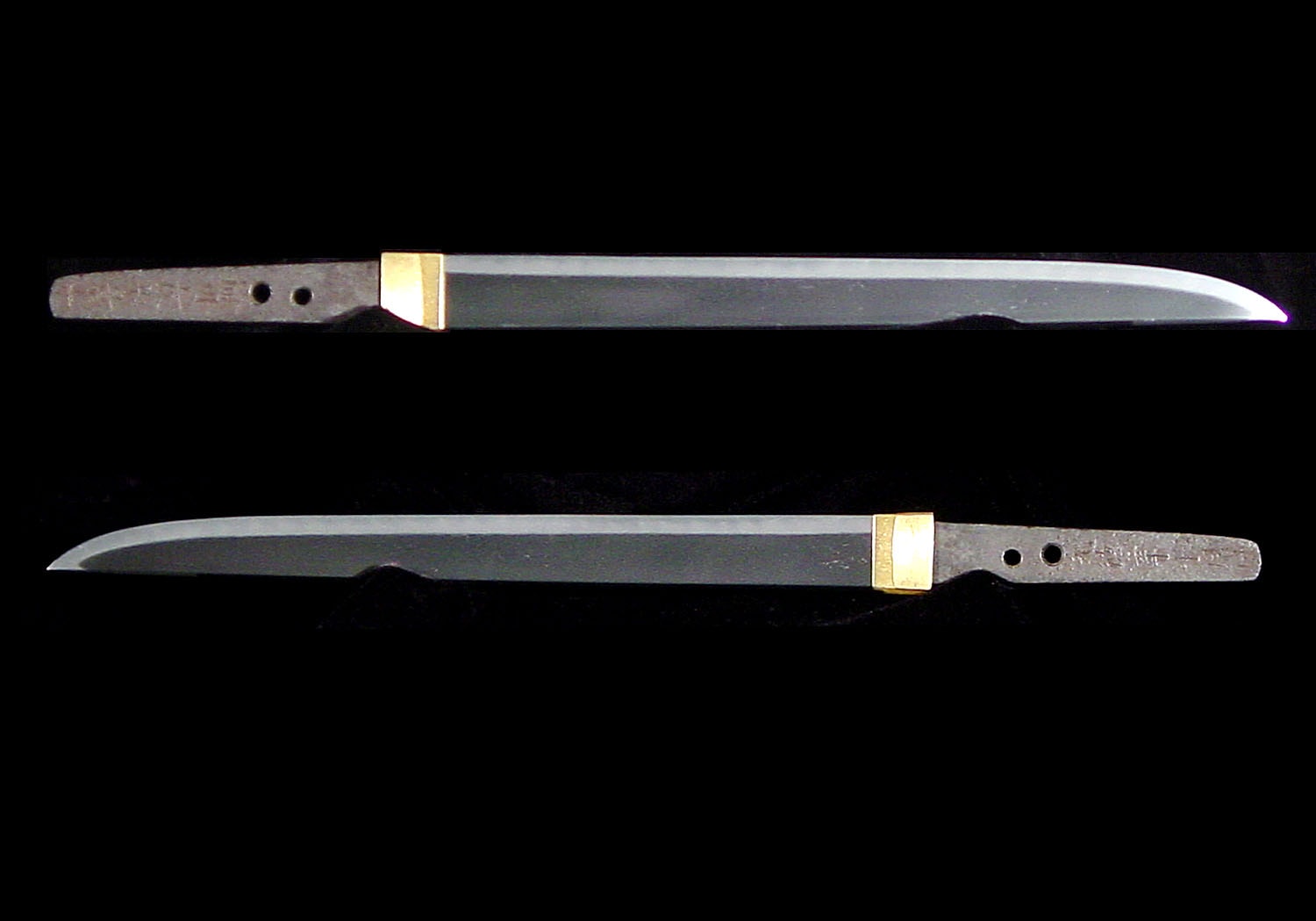
The is read first, for it carries the school. He forges mixed with , the grain standing a little, taking on the crepe-silk that is the , with patchy mixed in and clear appearing, the fine and a faint sometimes rising. On the more worked blades the reflection clarifies into a distinct . The runs or with a return, sometimes almost . The signature is itself a point and a school marker. Yasutsugu cuts a two-character low on the of an filed , below the and set toward the ; the published record notes that placing the signature on the is one of the things that "differs from and the like". The chisel is generally fine. As Honma observed of the school, "for , the chisel of Yasutsugu's signature is not excessively thick", though on at least one shortened the two characters are cut large with a thick chisel at the , on the .
The two registers sit within essentially one manner. The signed pieces are the restrained and , kept on tangs with the two-character ; the published commentary calls an , signed by this smith precious, since most of what survives is shortened. The attributions hang on the second, flamboyant register: a wide worked with , and small , the widening toward the , the full of with and running freely. The published sources are explicit that this is where his name is anchored, that as the Shimazu National Treasure exemplifies, "unusually for work, Yasutsugu can at times be seen producing flamboyant workmanship rich in activity"に代表されるように古青江物としては珍らしく華やかで働きの多い出来), so that a blade carrying that brilliance is reasonably specified to him. One , greatly shortened, is attributed on exactly this reasoning, its broad notare-based temper rich in and reflection. The school itself the published sources place to about the middle of as , after which it turns toward the -based and saka-chōji of its masters; Yasutsugu sits at the early core of that line, read in the generation as Tsunetsugu, Tsugunao, Suketsugu and Kanetsugu.
What distinguishes him within his own group is read off his grounded traits, not by borrowing another smith's. The crepe-silk with its and is the that the published commentary names a principal point of interest of the tradition, and Yasutsugu shows it conspicuously; the subdued, sunk over fine is his calm temper; and the two-character signature in a fine chisel is the placement and hand by which his own blades are told. His masterwork sets the upper bound of the whole group. Of the Shimazu the published sources write that its -ba is "of a workmanship without parallel as , flamboyant", a blade "ranked among the Tenka Go-, the long heirloom of the Shimazu family" alongside the Dōjigiri Yasutsuna and the Ō-Denta. That a single early smith stands at once for the quiet base of the group and for its most celebrated exception is the whole of his standing.
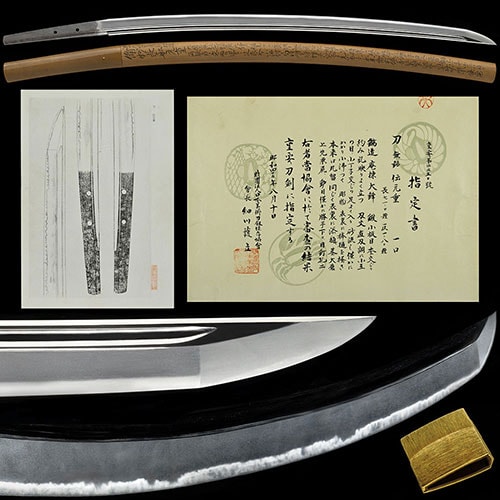
Yasutsugu is Jō in Fujishiro's grading, with a Tōkō Taikan valuation near the top of the old smiths. The weight of designation behind his name is real but narrow: one National Treasure, one Important Cultural Property, one Important Art Object alongside a second of the , one and four , five blades across the and tiers. The provenance recorded against his work is distinguished, seven blades carrying a history through the Shimazu of the National Treasure , the Kuroda of who held the imposing , the Kikkawa and Yamauchi houses, the Imperial Family, and the Ōkura collections, his Important Art Object passing from the Ōkura Shūkokan to the Ōkura Cultural Foundation. Of recorded whereabouts two of his blades are held by public institutions, the Tokyo National Museum and the Ōkura Museum of Art, the rest in long-held private hands. His National Treasure and Important Cultural Property are patrimony, preserved and never traded; the few designated blades in private hands come to market only rarely, and a signed, by him is among the scarcer things an early- collector could encounter.