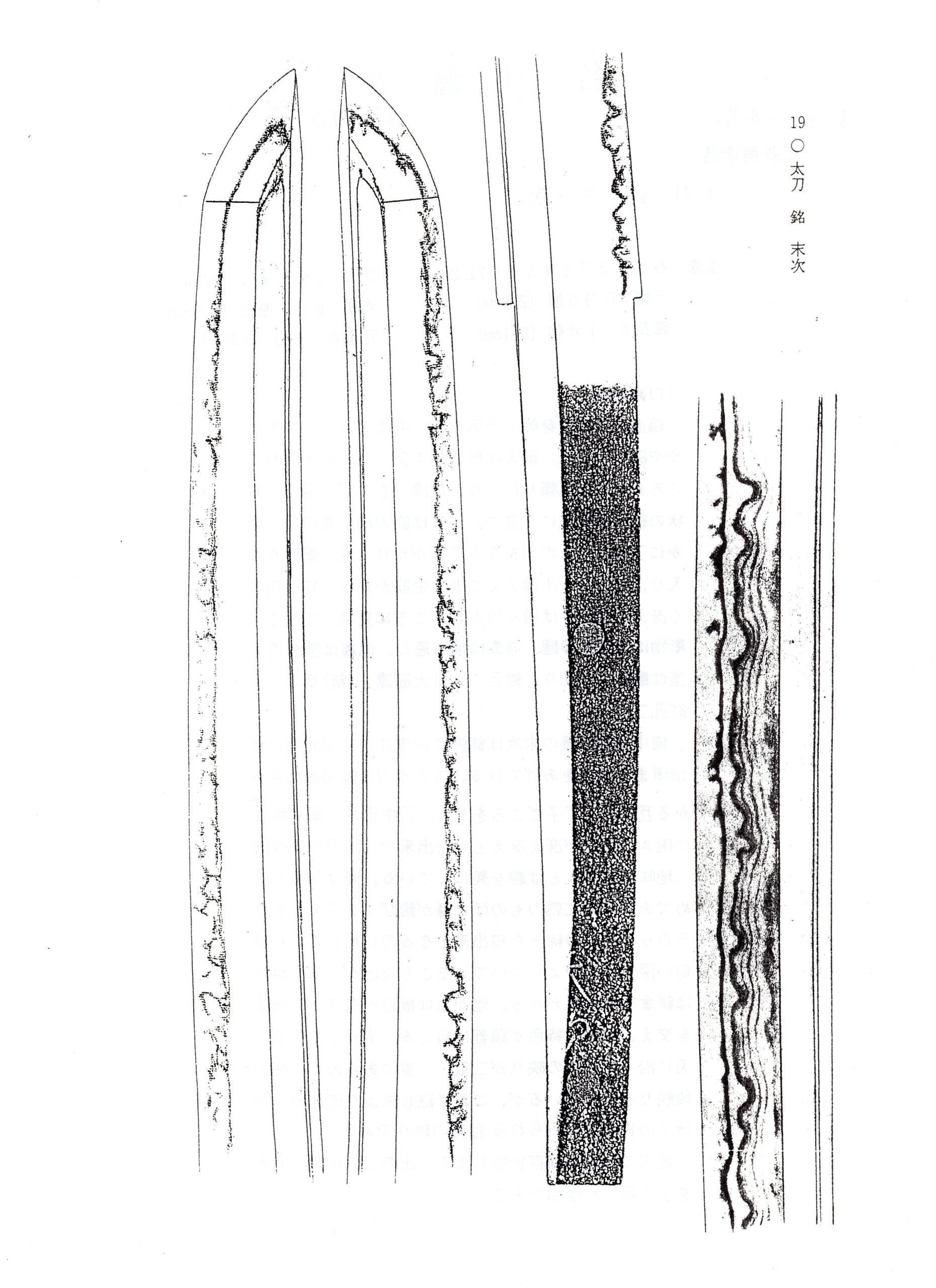
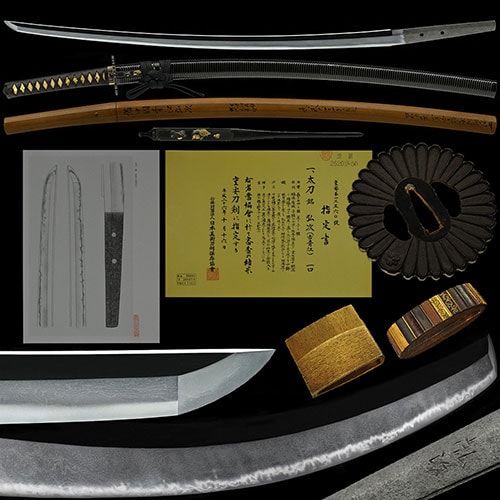
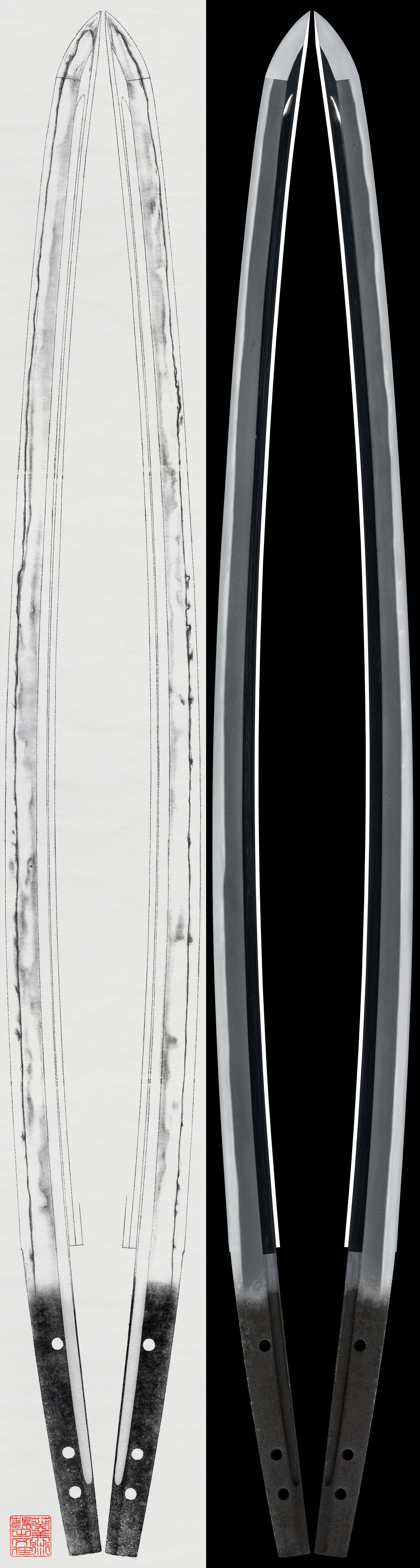
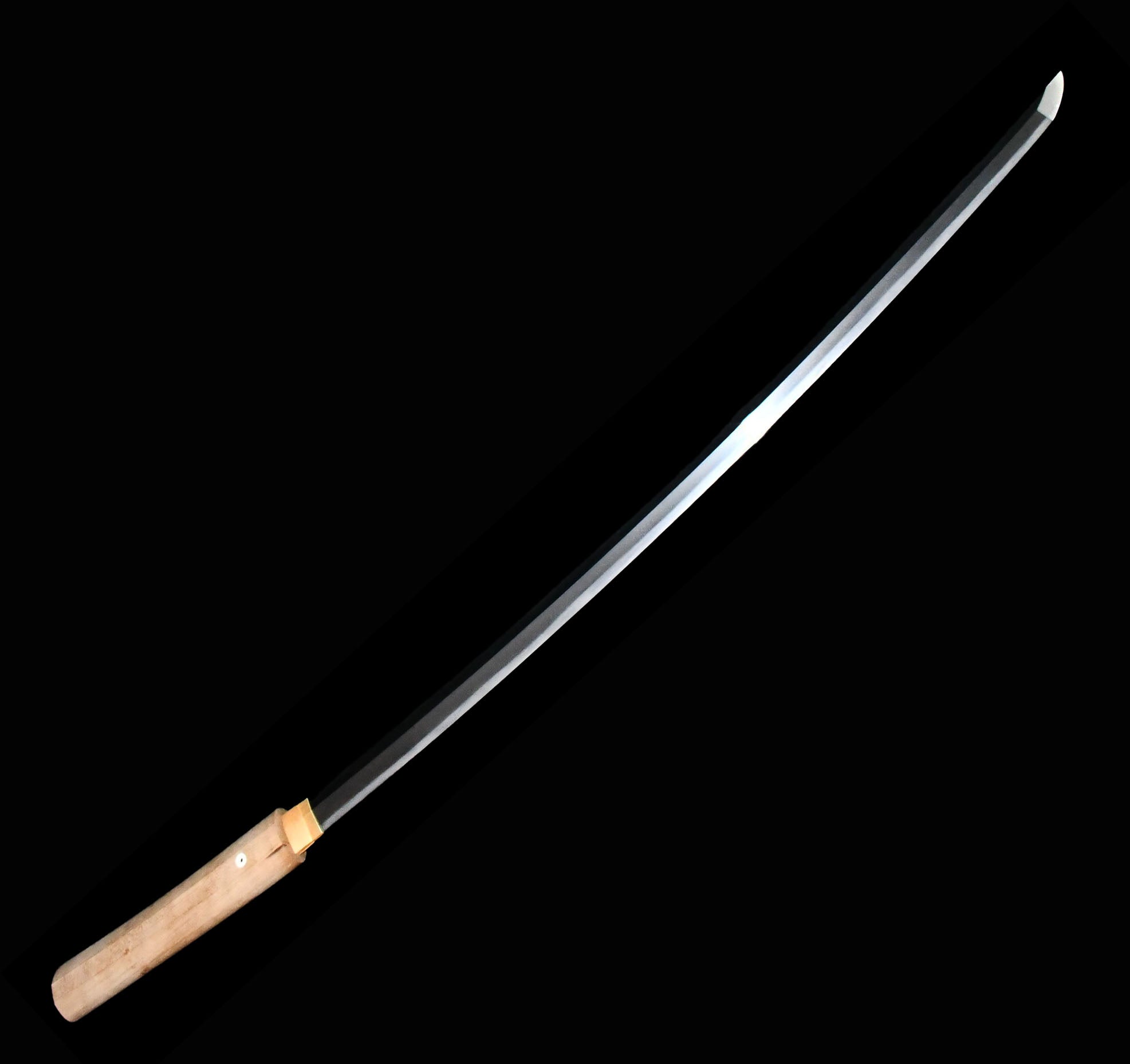
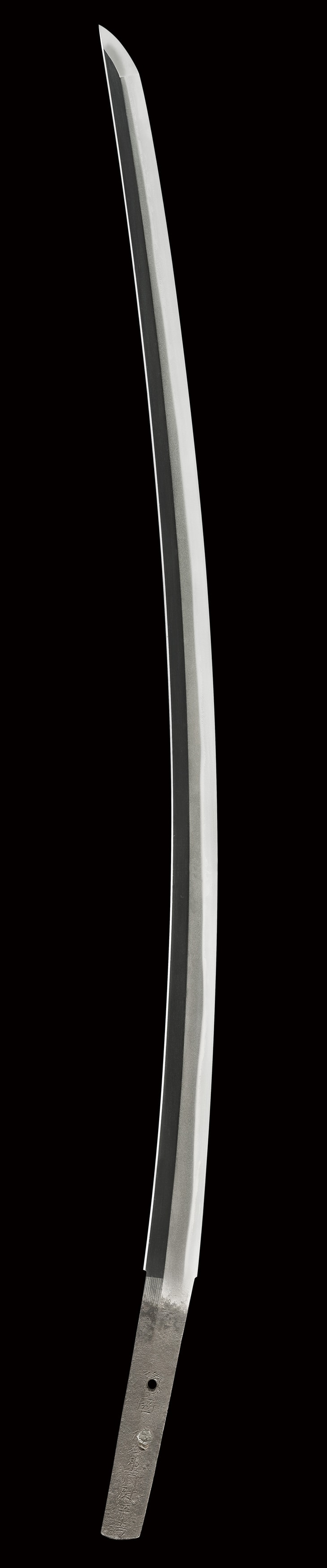
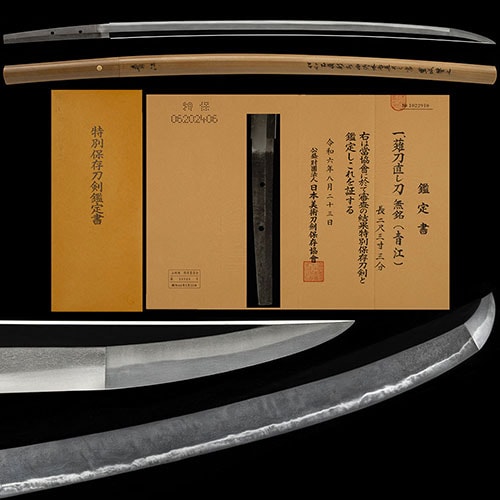
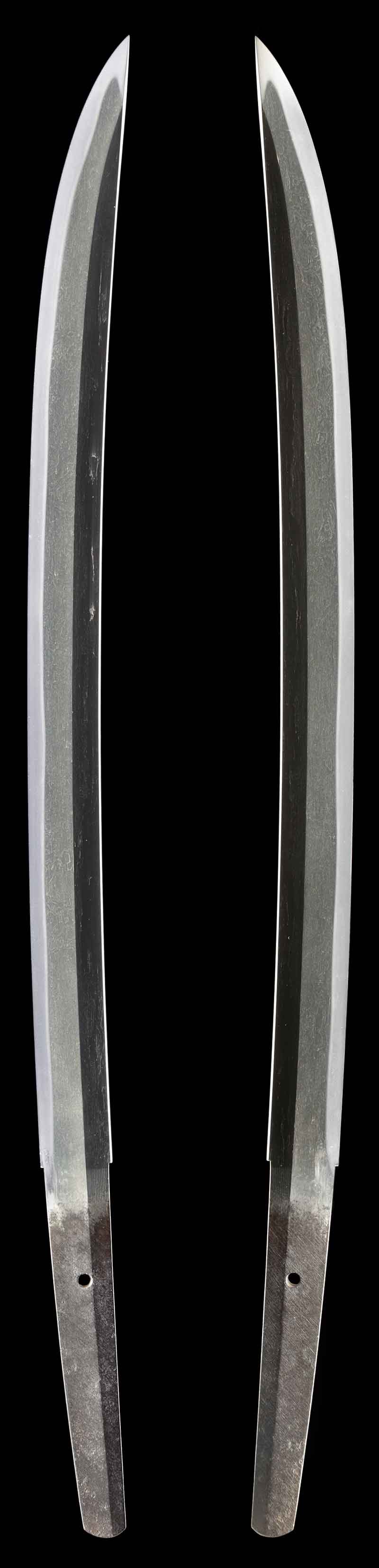
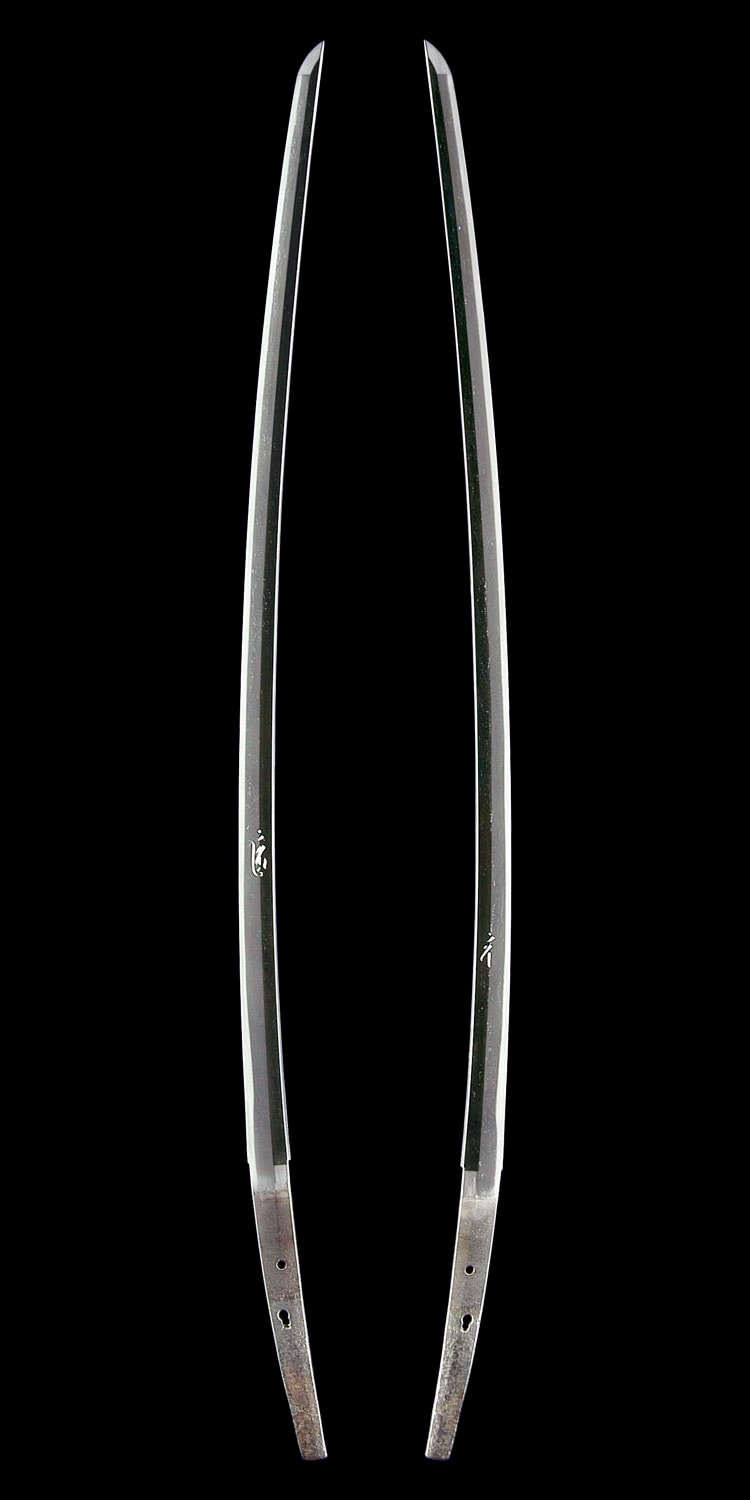
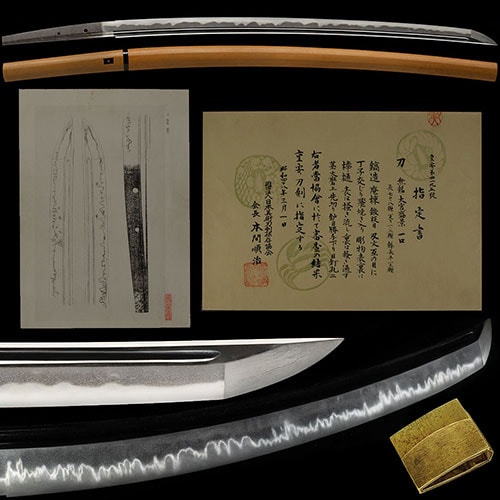
Suketsugu of the school in worked in the early period and is transmitted as the son of Toshitsugu, one of the representative smiths of the group in its old phase. The name then ran through several generations to the end of , a later bearer leaving a Shōwa-era date and the long signature reading -no- Masu-no-Higashi-no-shō Suketsugu . Against that descent, the published sources fix the surviving works of this signature manner as the earliest of the name: by the there were three Suketsugu active in the period, and of the works extant 「現存するものの中では最も時代の古いもの」 is what the judges call this hand. He works the quiet , his slender to standard in build with a high , standing and a or ; a and a survive in his hand, and one is attributed to him.
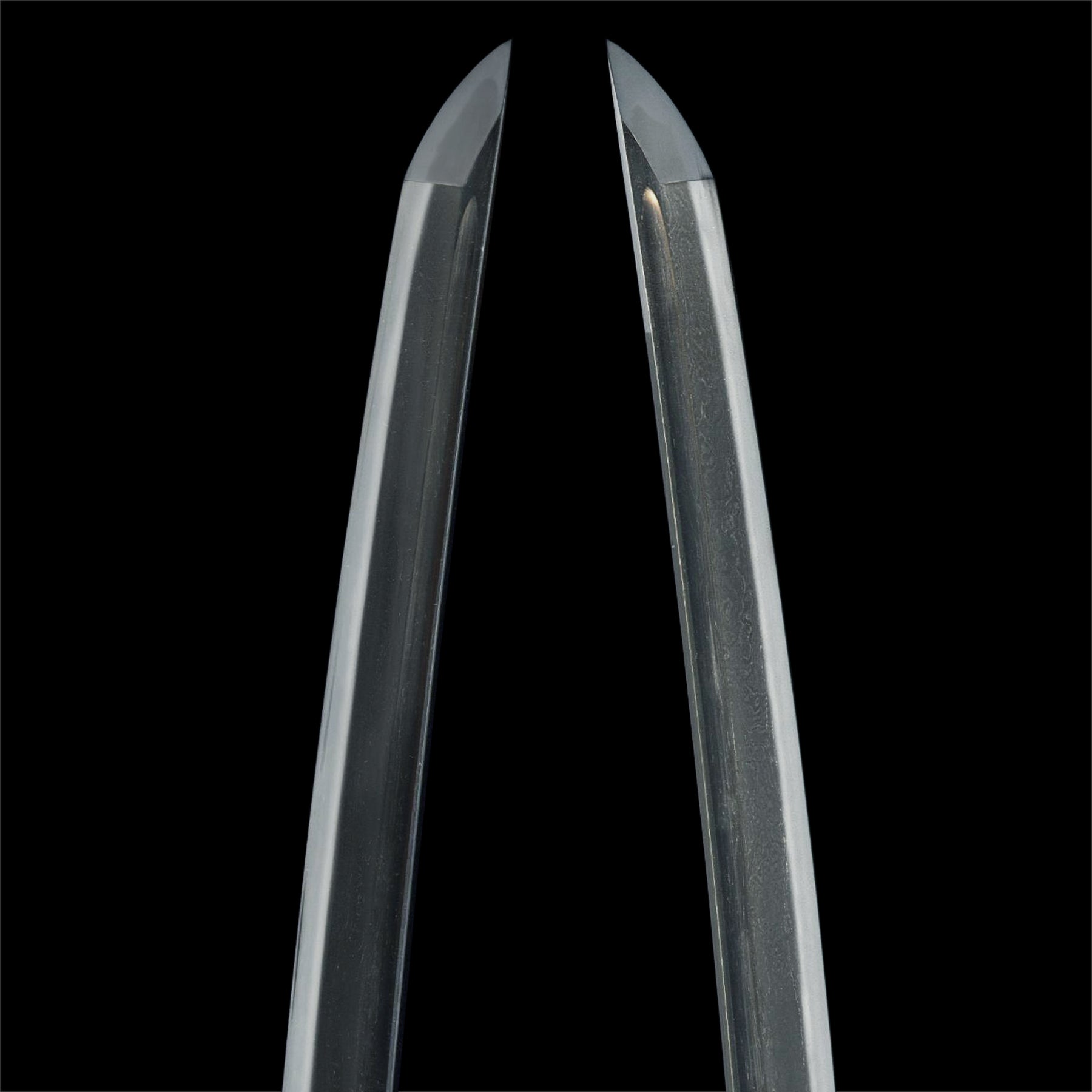
His characteristic hand is a chū- or , very shallowly undulating in , broken by a little with and mixed in. , and enter, adheres well and the draws tight, with fine and playing and or at the edge here and there. The runs straight and turns in a small , at times lightly brushed with or tending faintly to point. The base is the constant of his work, and what distinguishes him within the school is the degree to which that base is interrupted by , a little and mixing with it. The slant, the and -tending elements that mark his fellows, is the muted side of him: where enters at all, it rides quietly on the . His is the calmest and least slanting of the named .
The forging is a mixing , here and there running into and standing a little overall, with attached and fine entering. mixes into it and clear shows, the steel taking on the crepe-silk the school is known for, the color tending slightly dark, and a faint, sometimes dan-like rising. The published sources generalize this base for the whole group and for him in turn: the smiths of this generation worked a forging in which stands out and the tends to rise into 「いわゆる縮緬状の肌合」, with often mixing in, over which they tempered either a calm or a broken by small , the generally well attached, the whole conveying, against the work of the period, a quieter and more subdued flavor. , where present, are run kaki-nagashi or carried through .
The signature is the school's own and the point the judges name. On the , the worn-inward face of the , below the and near the tang tip, he cuts a bold, large two-character with a thick chisel, the strokes deeply struck, paired with the steep filing. The published sources read the date off the cutting: 「助次は同名数代あるが、この銘振のものが古い」, the bolder cursive forms being the earlier, while later hands keep the thick chisel but square the calligraphy toward . Within his work the judges set two registers. The rule is the quiet above, the calm composition that 「同派の典型的且つ代表的な太刀」 displays. Against it stands a single flamboyant outlier: a on which, 「同派の常と相違して焼幅広く」, the temper hardens wide with , and , and entering, the running wet and brushing into a flame. For this manner the judges point to 「国宝に指定されている島津家伝来の康次の太刀」, the Yasutsugu handed down in the Shimazu house and designated a , and call the blade a precious work showing one stylistic mode within .
What the published sources note plainly is that the individuality of the man himself is slight, the manner of the school standing forward more than the hand: even a representative is praised yet marked as 「助次の個性に乏しい憾がある」. The restraint they read as a virtue, calling the work old and elegant, the quiet showing well over a dignified stance, the and healthy and rich in quiet flavor. He sits at the early- core of , named together with Moritsugu, Tametsugu, Tsuguie, Tsugutada, Sadatsugu, Yasutsugu, Kanetsugu, Tsunetsugu and his father Toshitsugu, most of them sharing the character tsugu as the family element. His quiet -broken stands just upstream of the school's later turn toward the -based and slanting of its masters such as Naotsugu and Yoshitsugu. The judges name the school's tang evidence as the proof of the place: that the smiths cut the on the and file in steep is a point of difference from and the like, and on his tang it is kept sharp and plain.
Fujishiro grades him Jō-. The weight of designation behind his name is substantial for so quiet a hand: four of his blades reach the tier and a further nine the , thirteen in the and tiers together, with two more on the prewar Jūyō-Bijutsuhin roll. Almost all are signed ; the surviving in his hand the published sources call 「古青江助次の現存稀な剣の作例は貴重であり、資料的価値も頗る高い」, the school's old steel showing fine near the edge with thickly attached, and giving the and conspicuous activity. The recorded provenance is thin but real. One on the Jūyō-Bijutsuhin roll passed through Sugiyama Shigemaru, who held it with a Moritsugu and mountings before presenting it to Amiya, and was recorded with Ogura Yōkichi of Tokyo; the attribution was recorded with Maeda Toshinari. Current whereabouts are partial: of those on record his blades are held by the Tokugawa Art Museum, the Hayashibara Museum of Art and Itsukushima Jinja, with the rest in private hands. A signed Suketsugu is not wholly beyond reach, since his blades trade within the and tiers; but most designated work is held rather than offered, and an example of the calmest old comes to a private collector only rarely, and with patience.