



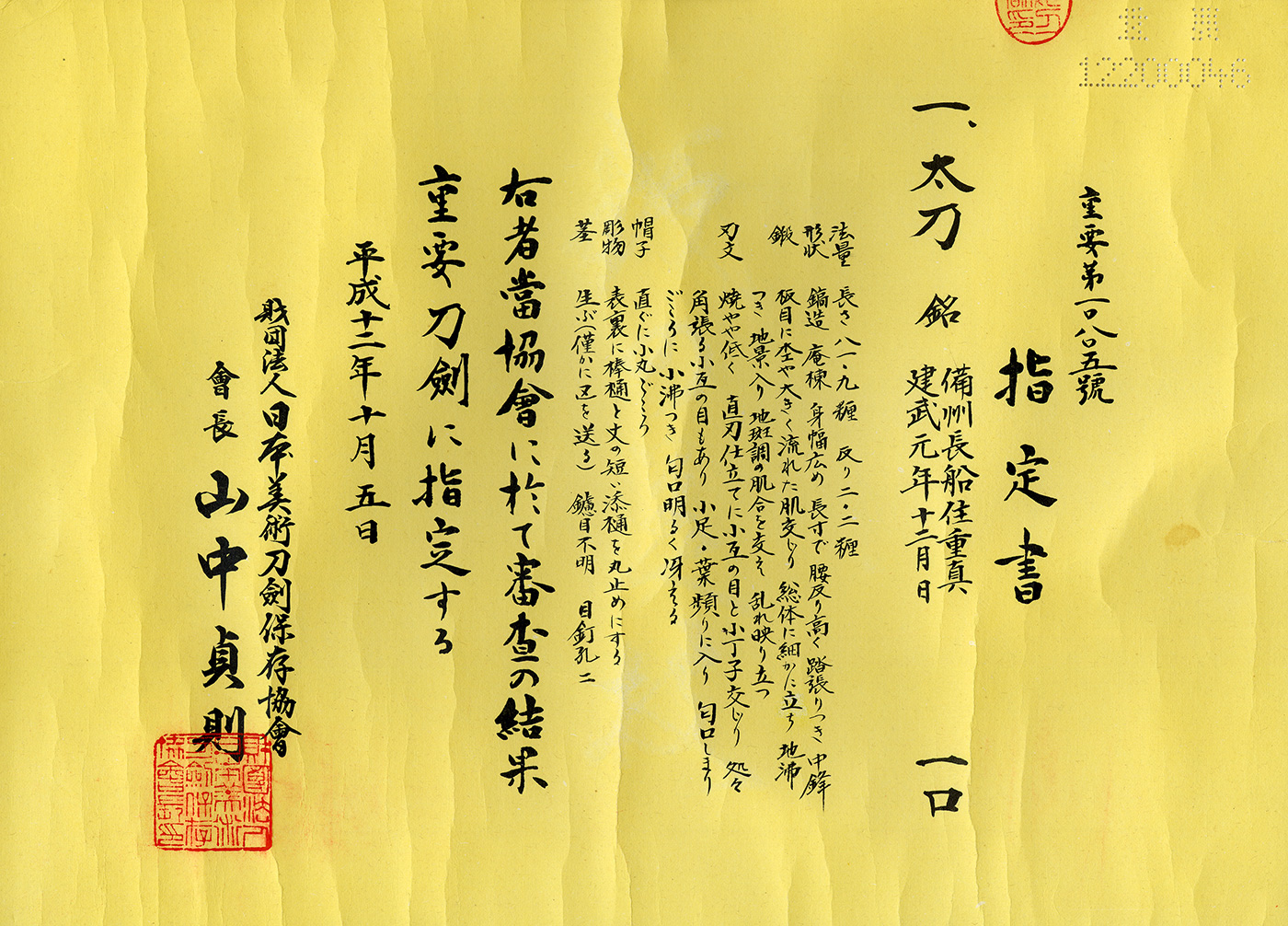
Jūyō-Tōken, 46th Session — Designated October 5, 2000
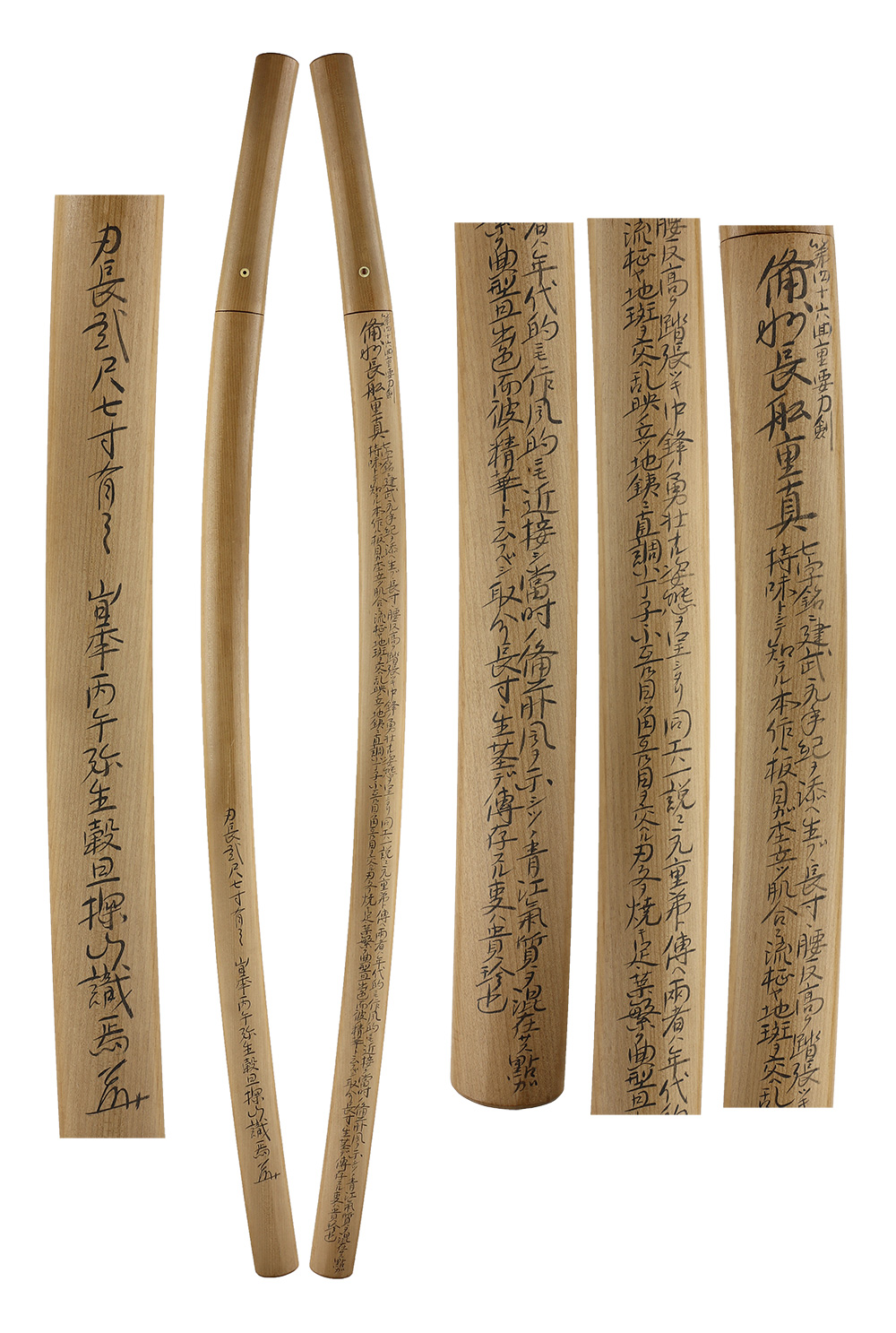
Tachi, mei: Bishū Osafune-jū Shigezane (備州長船住重真)
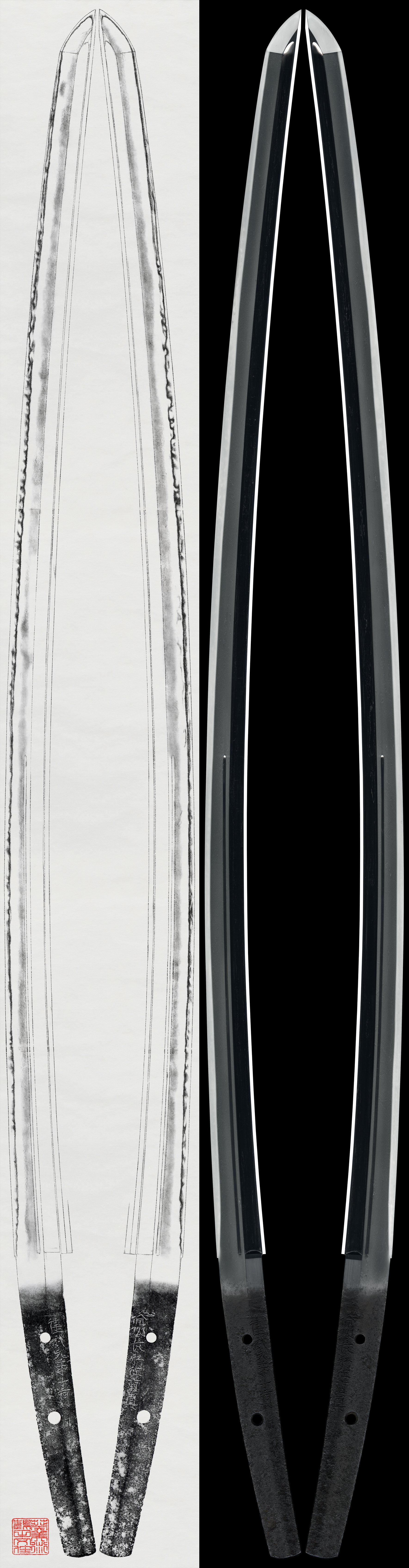
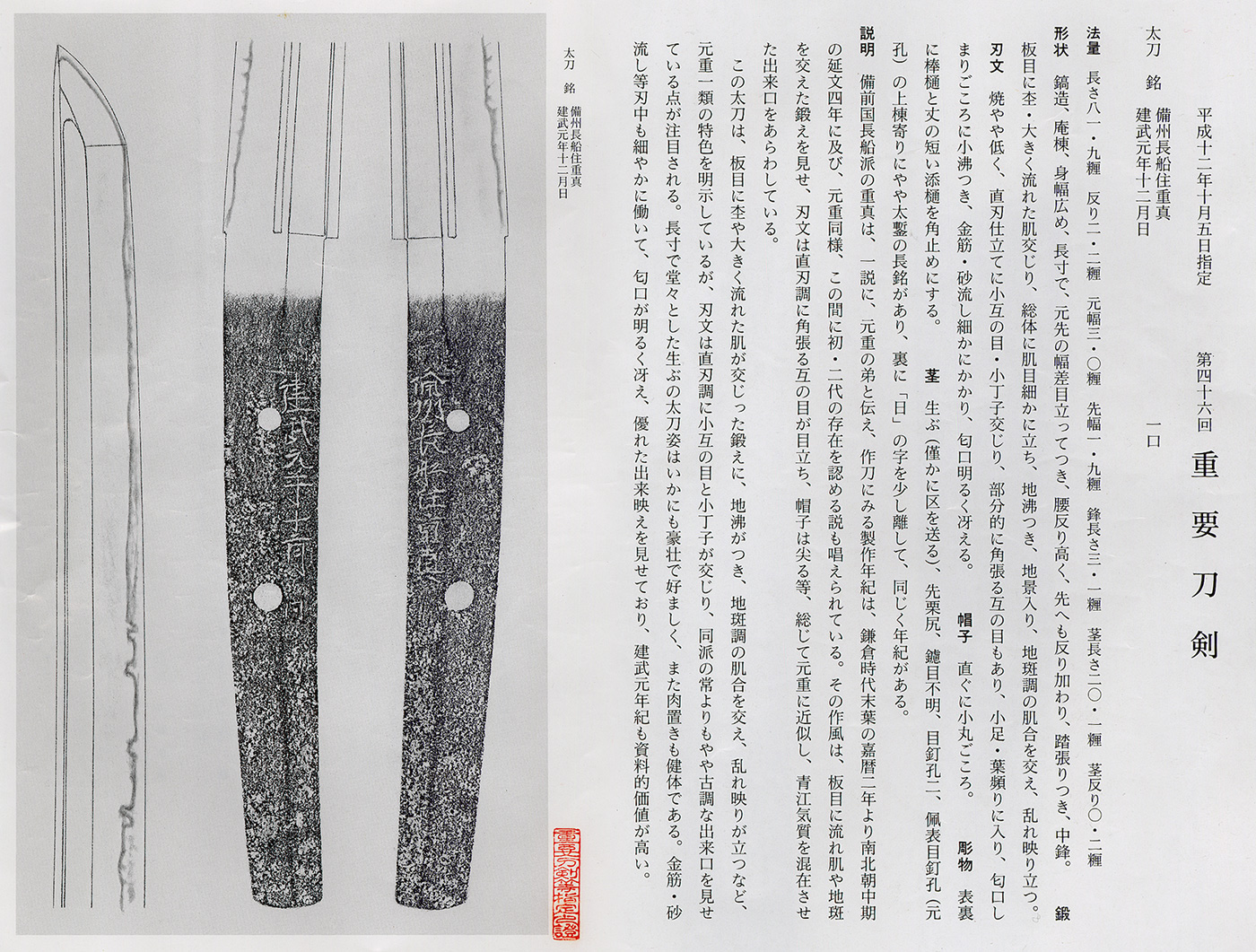
Measurements Nagasa 81.9 cm, sori 2.2 cm, motohaba 3.0 cm, sakihaba 1.9 cm, kissaki-nagasa 3.1 cm, nakago-nagasa 20.1 cm, nakago-sori 0.2 cm
Description Keijō: shinogi-zukuri, iori-mune; somewhat wide mihaba and long nagasa; conspicuous difference between base and tip widths; high koshizori with additional curvature toward the tip; with funbari; chū-kissaki. Kitae: itame-hada mixed with mokume and large, flowing (nagare) grain; overall the hada stands finely; with ji-nie, chikei, and intermingled patches of jifu-like complexion; midare-utsuri appears. Hamon: Tempering set somewhat low; a suguha-based hamon mixed with ko-gunome and ko-chōji, including places with angular gunome; ko-ashi and yō enter frequently; nioiguchi has a slightly shizumi (subdued) tendency with attached ko-nie; fine kinsuji and sunagashi run throughout; the nioiguchi is bright and clear. Bōshi: Straight, with a tendency to ko-maru. Horimono: On both sides, bō-hi with short accompanying grooves (soe-hi), finished in kaku-dome. Nakago: ubu (with the machi very slightly advanced); tip kurijiri; yasurime indistinct; two mekugi-ana. On the ha-omote, above the mekugi-ana (the original hole) and slightly toward the ridge, there is a long signature cut with somewhat thick chisel work; on the reverse, the character 「日」 is set slightly apart, and the date inscription is likewise present.
Artisan Osafune Shigemasa of Bizen (Bishū)
Era Dated Kenmu 1 (1334), 12th month (day unspecified)
Explanation Shigezane of the Osafune group in Bizen Province is, according to one tradition, said to have been the younger brother of Motoshige. The dated works that can be confirmed range from Karyaku 2 (late Kamakura) through Enbun 4 (mid–Nanbokuchō). As with Motoshige, there is also a view that recognizes the existence of a first and second generation within this span.
In terms of style, Shigemasa typically shows a forging pattern of itame with mixed flowing grain and patches of jifu-like complexion. The hamon is characteristically suguha-toned with conspicuous angular gunome; the bōshi may show a pointed tendency. Overall, these features are close to Motoshige, and a discernible Aoe temperament is intermingled, revealing the school’s manner of workmanship.
This tachi displays the hallmark traits of the Motoshige line with particular clarity: an itame forging with mokume and large, flowing grain; ji-nie; intermingled jifu-like areas; and a standing midare-utsuri. At the same time, the hamon—suguha-toned with mixed ko-gunome and ko-chōji—shows a slightly more archaic flavor than is usual within the same group, a point that merits attention.
Its imposing, long, and dignified ubu tachi sugata is unmistakably bold and appealing, and the blade also retains robust niku (flesh). Within the hamon, fine activities such as kinsuji and sunagashi appear in a detailed manner; the nioiguchi is bright and clear, presenting an excellent workmanship overall. Moreover, the Kenmu 1 date carries high documentary value.