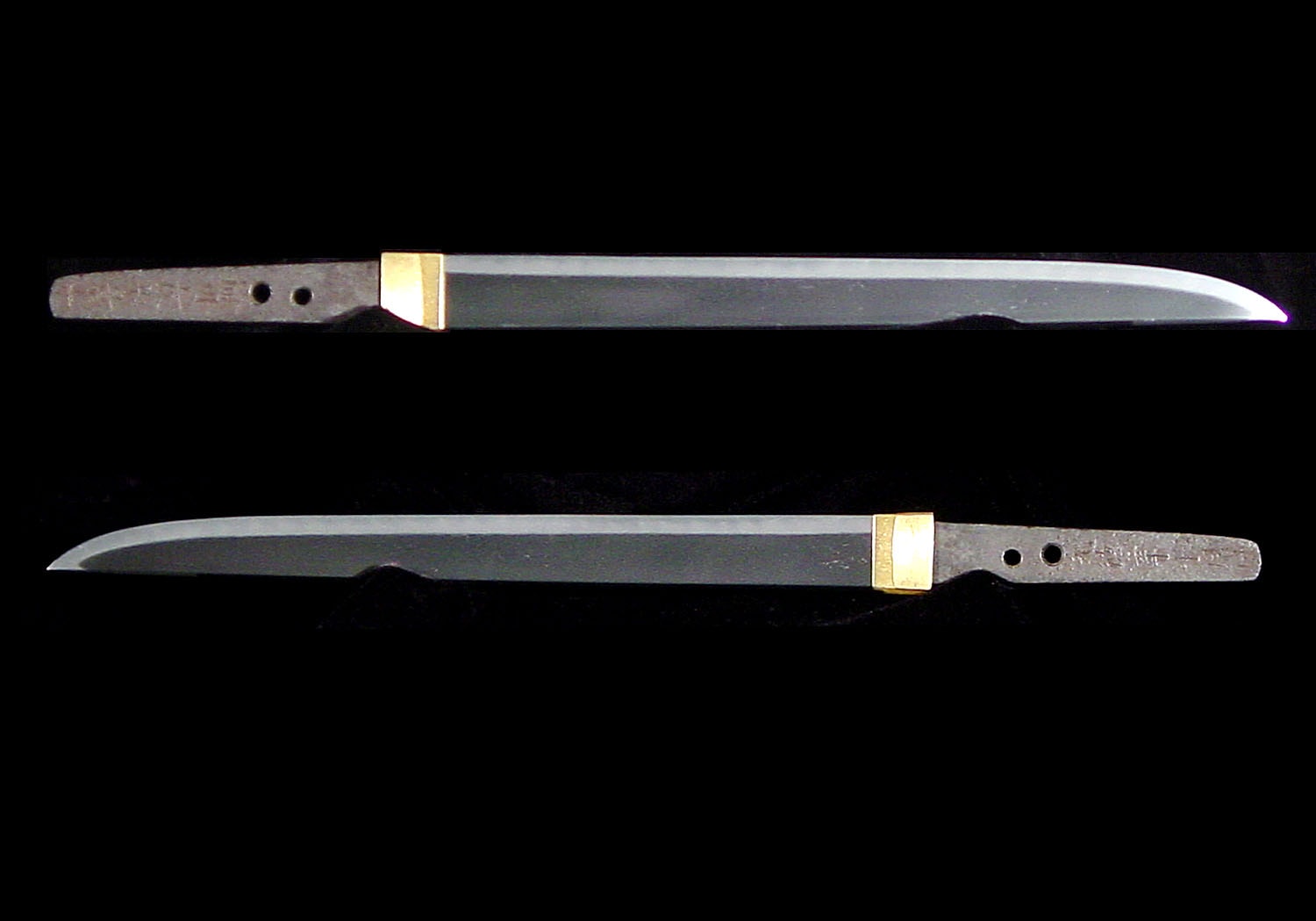
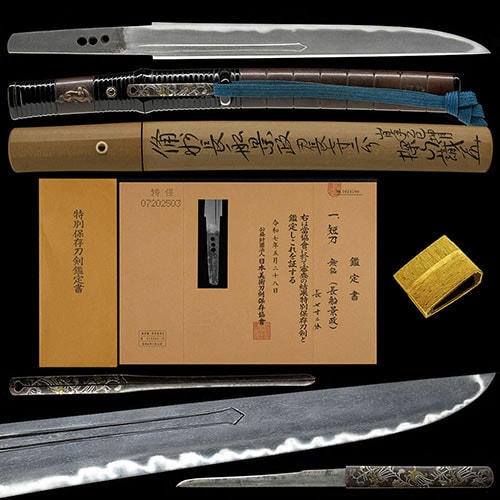
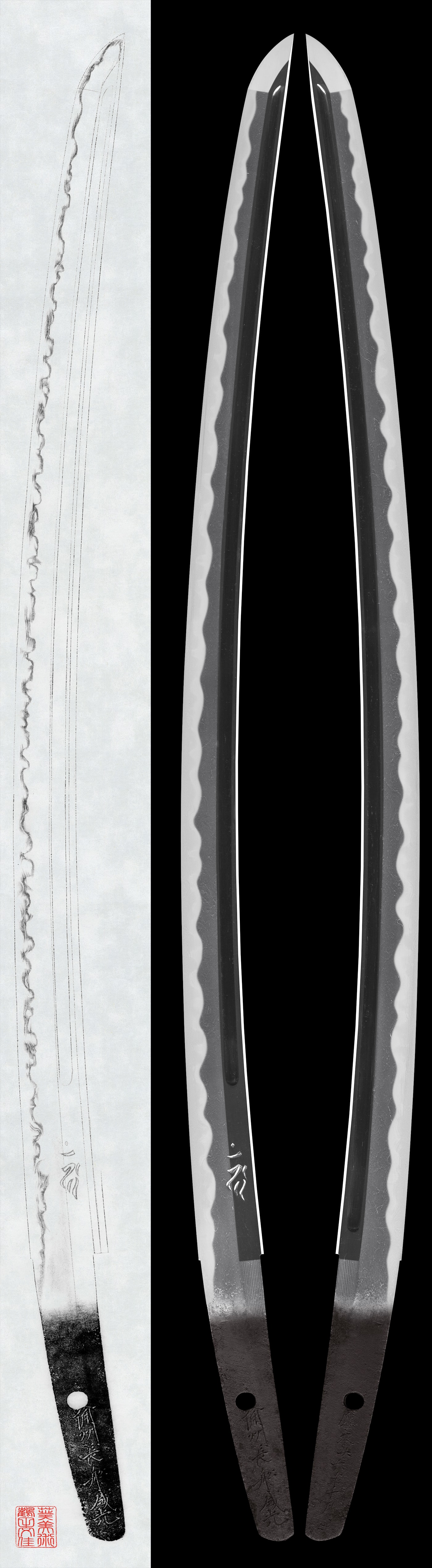
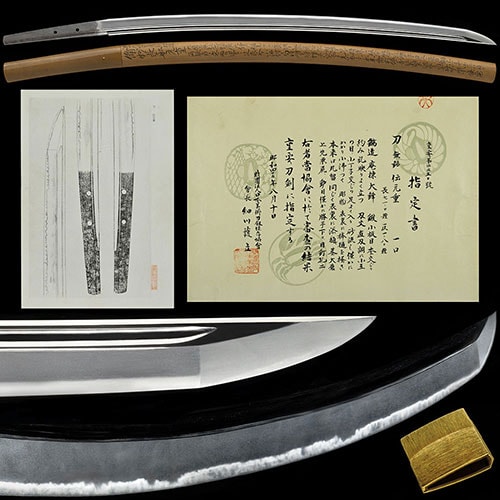
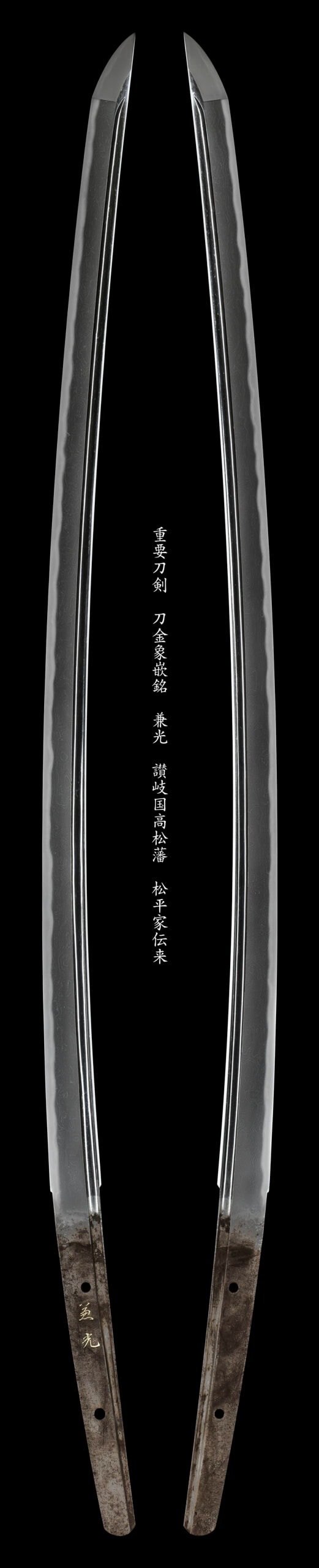
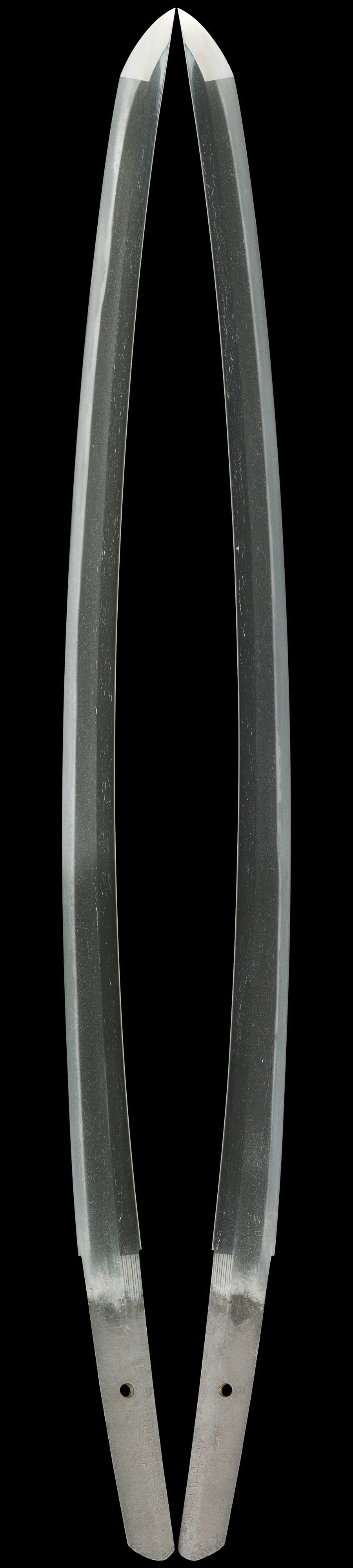
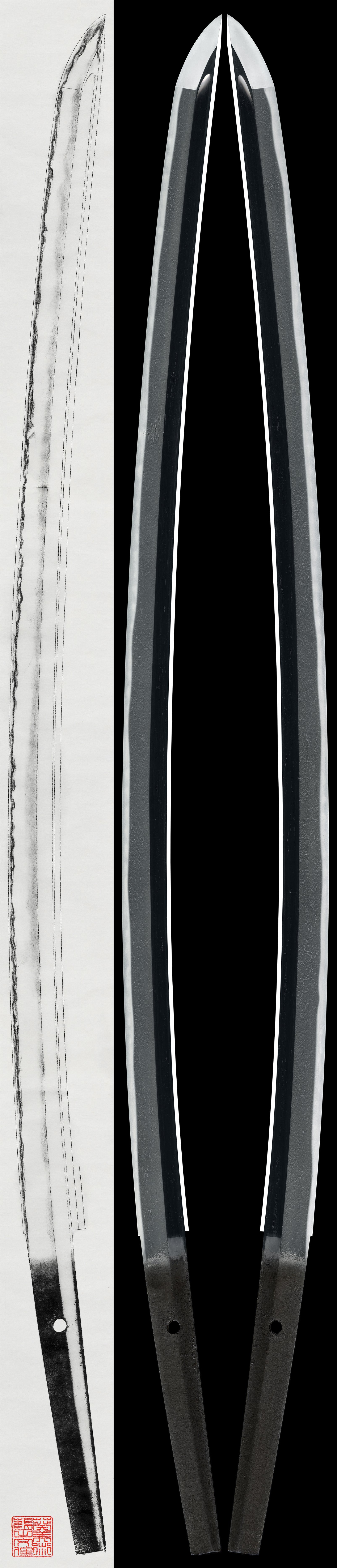
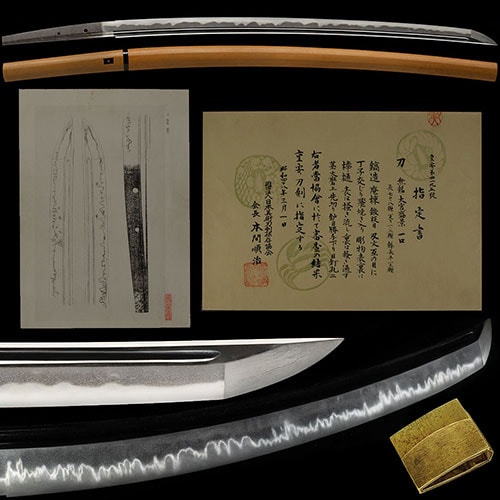
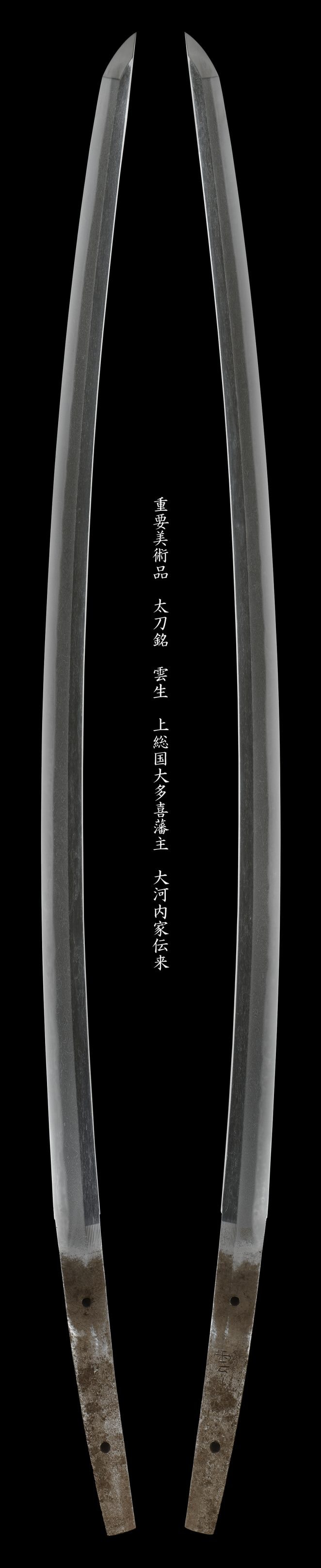
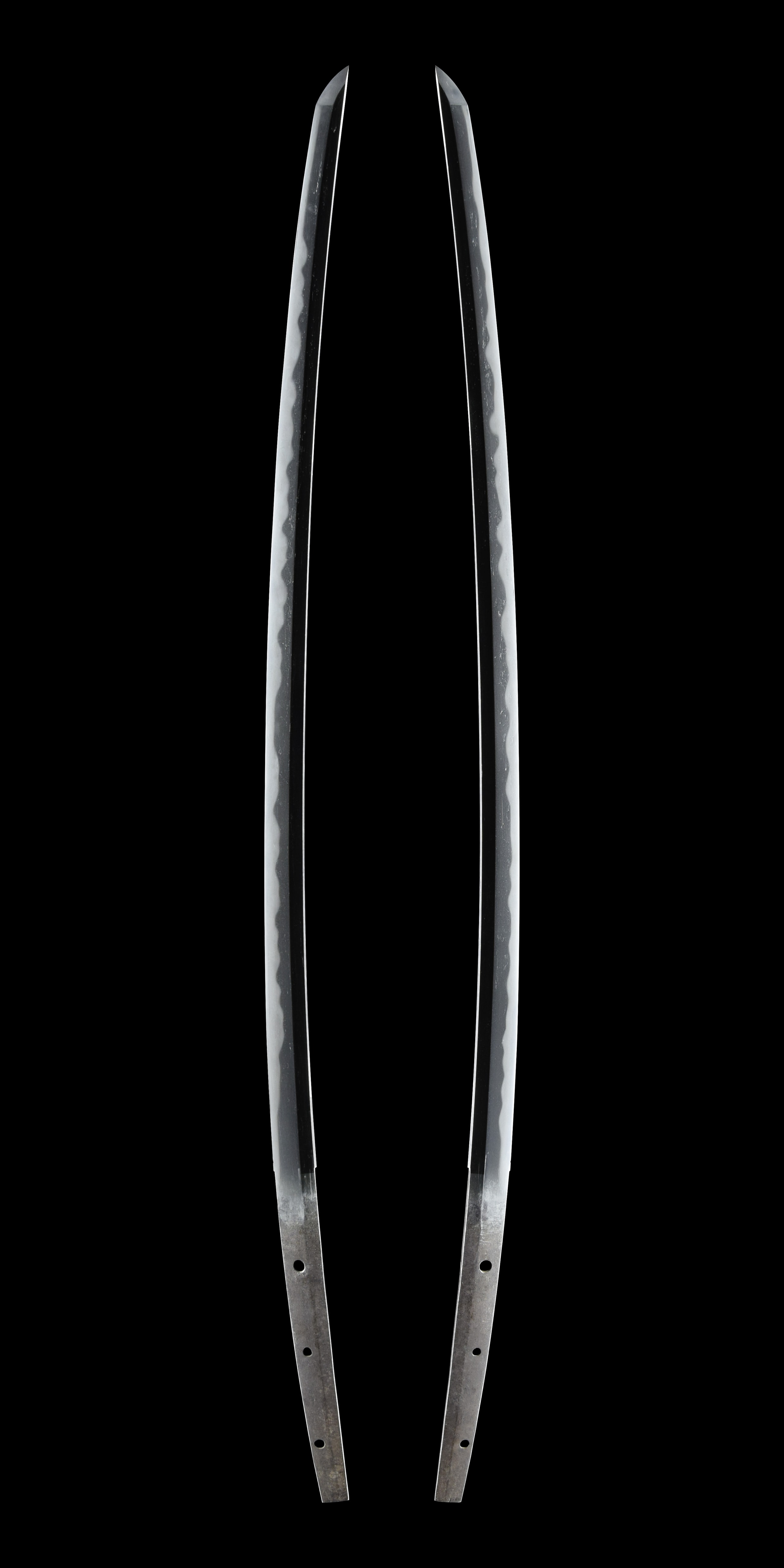
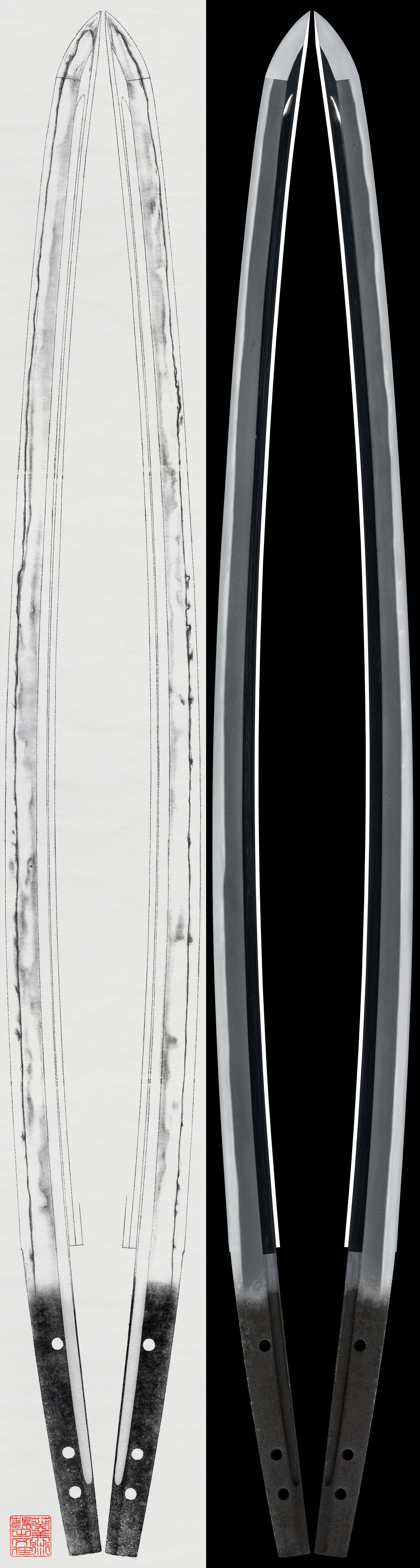
Mitsutada (光忠) worked at in around the middle of the period, and the published sources introduce him with one repeated sentence: he is the de facto founder who built the school, "the largest lineage in the history of Japanese swordmaking". Tradition makes him the son of Chikatada, of whom no work survives, and the Honcho Kajiko derives the line from the Masatsune group settled at . From his school emerged Nagamitsu, Sanenaga, and Kagemitsu, and from old times his blades were treasured as the swords of renowned commanders and valiant warriors.
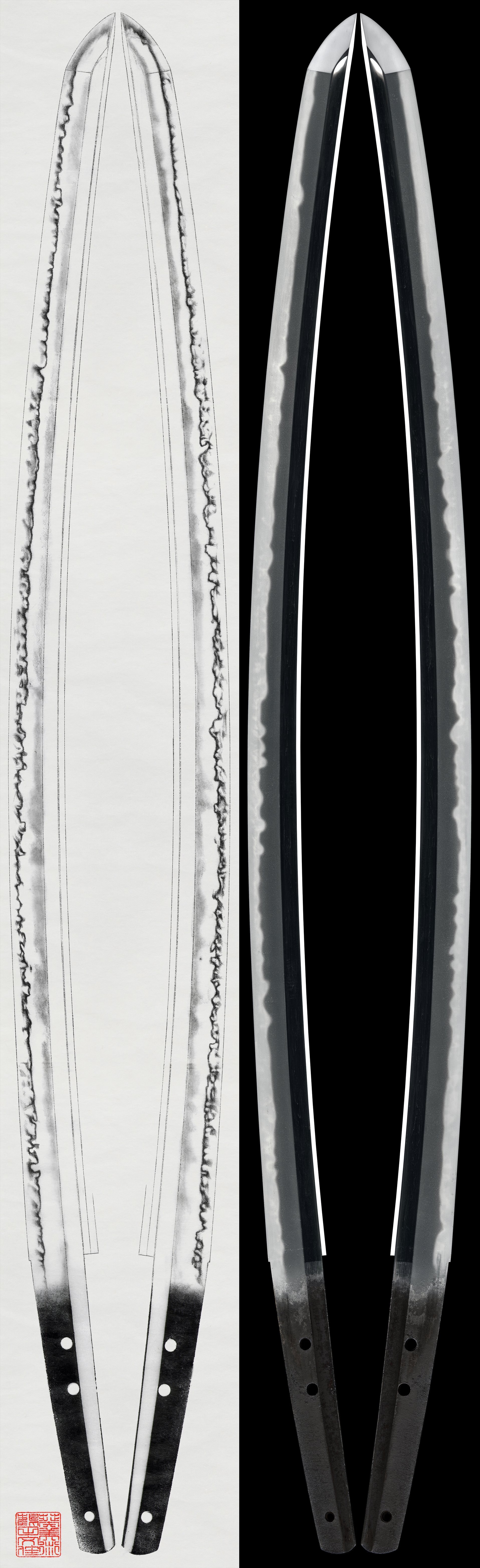
The published record divides his work into two registers. Most of what survives is and unsigned, accepted as his by appraisal: bold, imposing blades whose is well refined and beautiful, with in dust-fine particles, so that, "setting the aside, they can at a glance suggest Kyoto work"; the is most often a "flamboyant led by ". The signed are comparatively ordinary in shape, their of a calmer, "more restrained workmanship". Through both registers runs the - (蛙子丁子), his tadpole-headed hallmark, found in nearly half of his published blades, over eleven times the rate seen in Nagamitsu's work. An older description adds "a particular moisture and luster" that recalls Yamashiro .
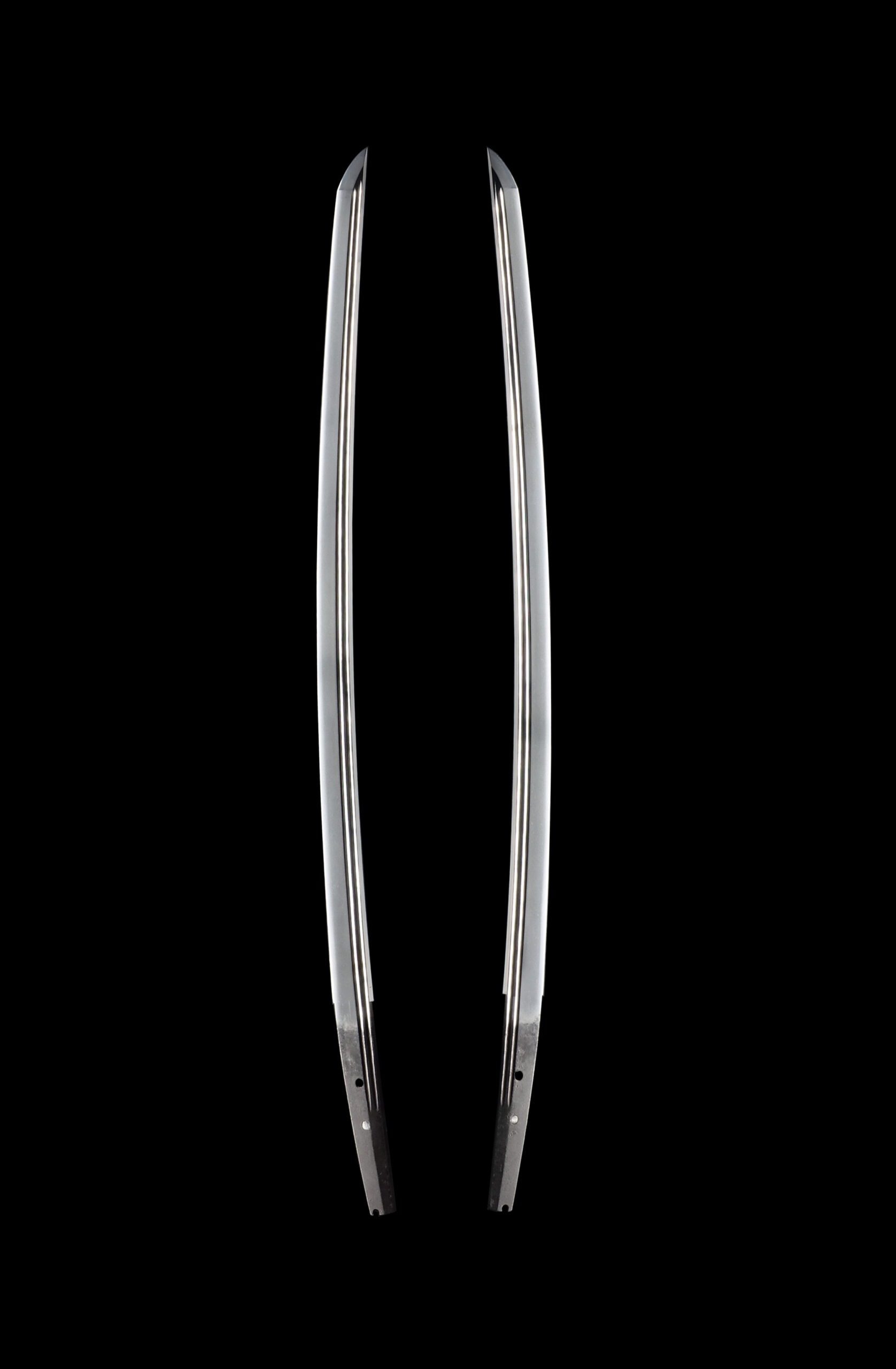
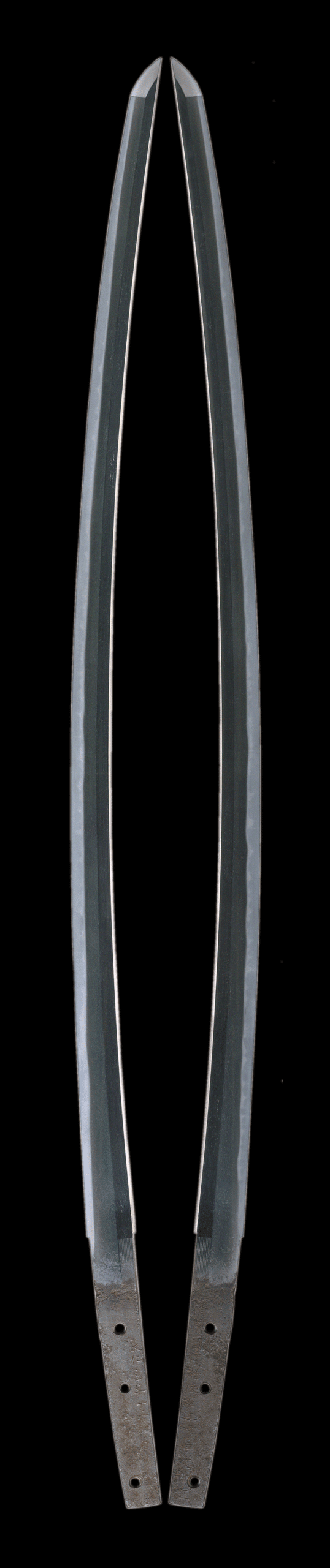
His forging is , usually mixed with , tightening in many blades to a dense ; the grain stands out only here and there. is nearly constant, fine enter, and a rises vividly in two of every three published blades, the reflection that holds even his most Kyoto-like to . The is a mixed with and ; on the grandest unsigned blades it climbs high and breaks into -, , and the form. and enter frequently, the is deep with , and run finely through, and the is bright and clear. The settles into in about half of the record; against it stands the pointed return the sources call characteristic of him, "the that runs in and returns with a point". One unsigned the judged "Mitsutada's crowning achievement", to the Ikoma Mitsutada, a National Treasure.
The record now reads his career in phases. Two-character in a manner, a -laden with and a somewhat subdued , were long catalogued separately as " Mitsutada." A on which both manners coexist, with and at the base, a tone above, its signature in a transitional hand, led the to judge those blades extremely likely to be his earliest works; a rare signed in the vein bears out the Honcho Kajiko from the evidence of the blade itself. At the other end stands a group of signed , -led and comparatively calm, which "at a glance shows a manner that can be tied to his son Nagamitsu"; on one of them the character mitsu is virtually identical to Nagamitsu's, and "the possibility of a proxy signature cut by Nagamitsu" is raised.
Within the school his place is the founder's. Set against Nagamitsu, the published sources judge the activities of his and a step more active and pronounced, and settle attributions between father and son on that point; the - and the pointed carry the weight. A two-character of ordinary form but brilliant served the appraisers as the criterion binding his small-scale signed works and the grand unsigned ones to a single hand, alongside the imperial gomotsu blade signed no Mitsutada. One long unsigned the called "a grand work that seems to presage the flourishing of the school that followed".
He is Sai-jo in Fujishiro's grading, and the Toko Taikan places him fourth on its roll. Three of his blades are National Treasures and fifteen are Important Cultural Properties, a weight of designation that stands third among the roughly twelve thousand swordsmiths on record; beneath those tiers stand ten and eighteen , twenty-eight blades in all, of sixty-one designated works on record, thirty-one signed and twenty-two unsigned. Thirty-four carry recorded provenance, a roll that runs through the men who held the country: Oda Nobunaga, Tokugawa Ieyasu, Kato Kiyomasa, Maeda Toshiie, and Kobayakawa Takakage, with the Imperial Family, the Shimazu, the Owari and Kishu Tokugawa, the Uesugi, and the Satake. To the finest of the unsigned blades attaches a Kochu at one hundred , "exceptionally high for a blade". Thirteen works rest permanently in the National Treasure and Important Cultural Property tiers and will never trade; of recorded whereabouts, his blades are held by the Tokyo National Museum, the Tokugawa Art Museum, the Boston Museum of Fine Arts, Eisei Bunko, and Itsukushima Jinja. The published sources call a signed Mitsutada "exceedingly precious", and even the attributed blades of those tiers come to open hands only rarely; when one does, it is a landmark.