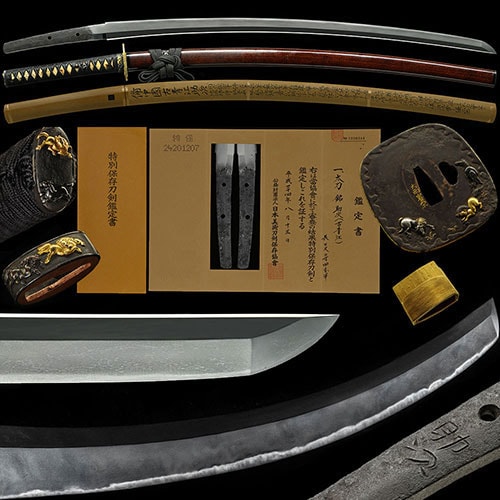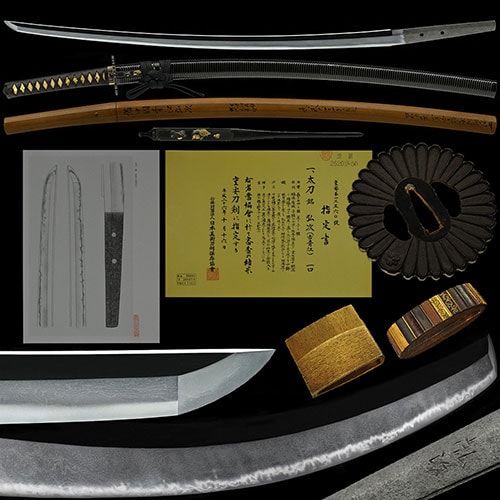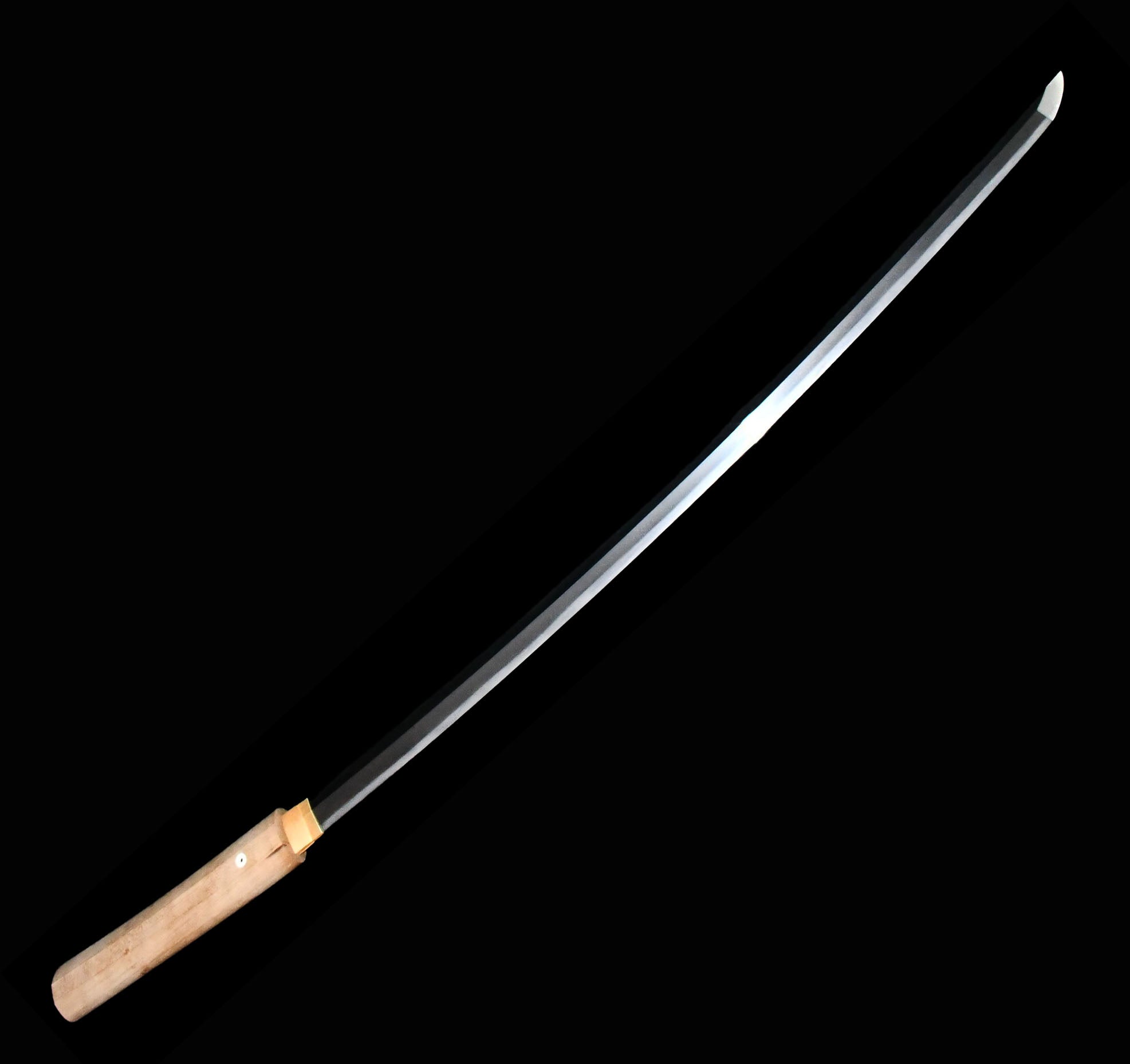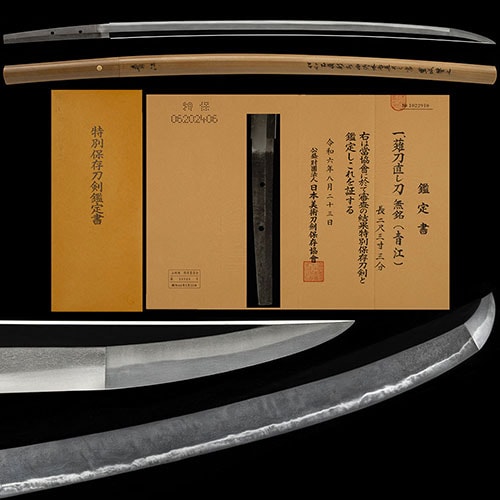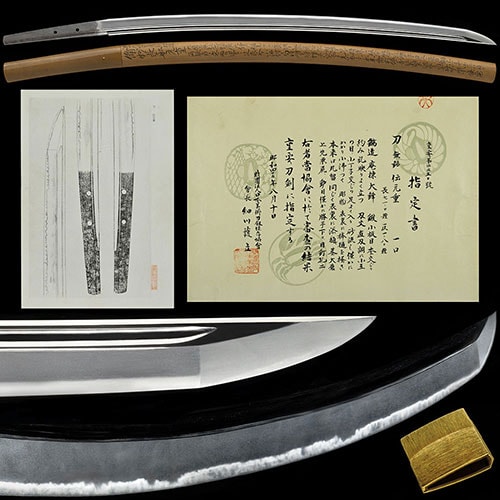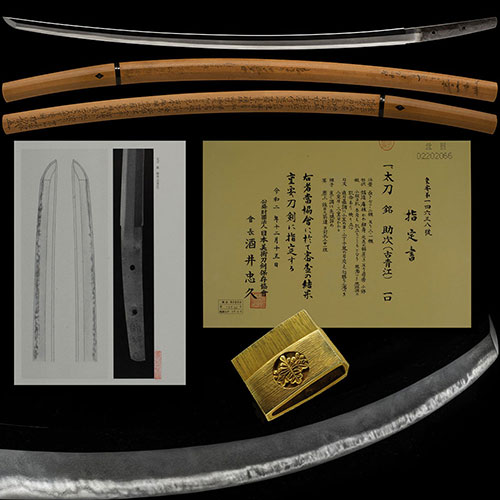

Juyo-Token, 66th Session — Designated December 15, 2020
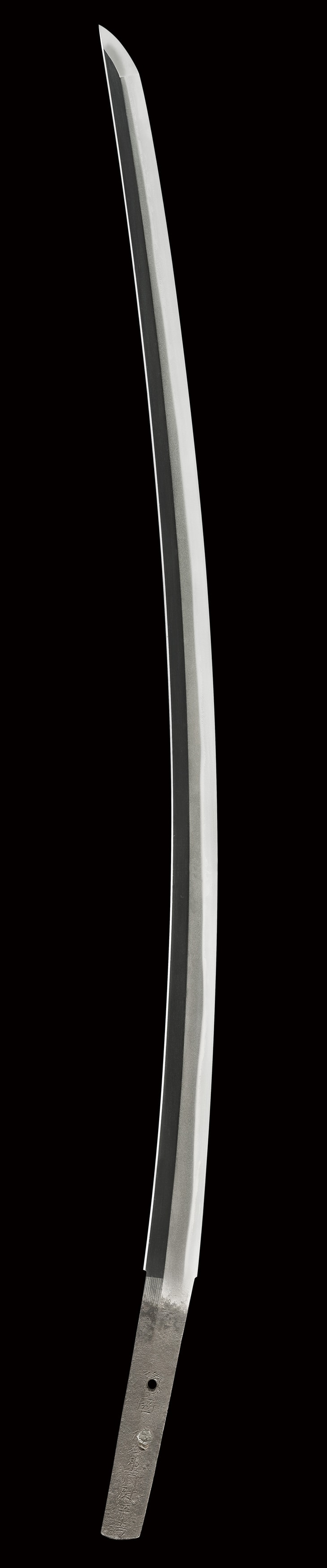
Tachi, mei: Ko-Aoe Suketsugu (助次, 古青江)
Measurements Nagasa 70.2 cm, sori 2.1 cm, motohaba 2.8 cm, sakihaba 1.5 cm, kissaki-nagasa 2.5 cm, nakago-nagasa 16.4 cm, nakago-sori 0.1 cm
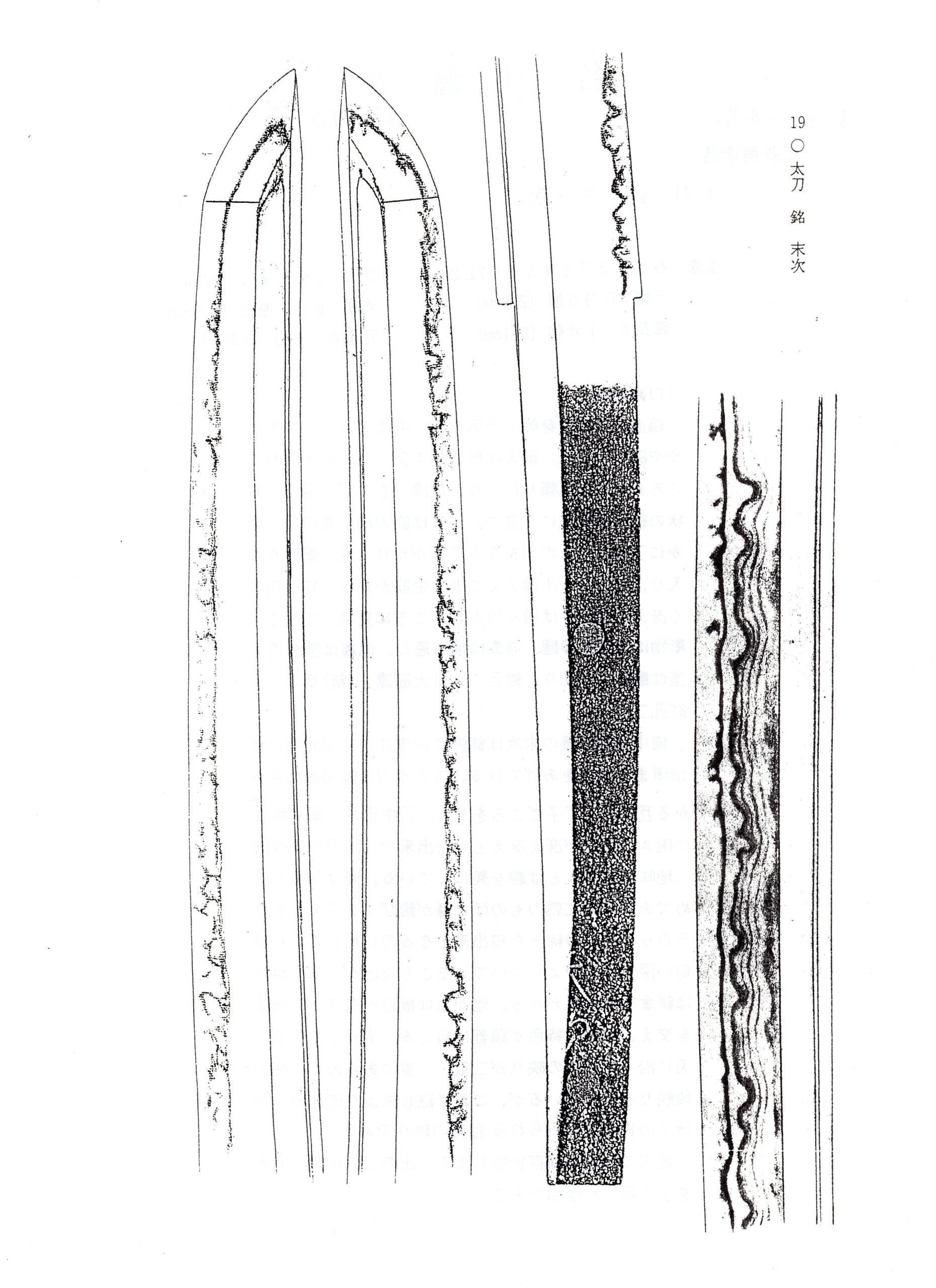
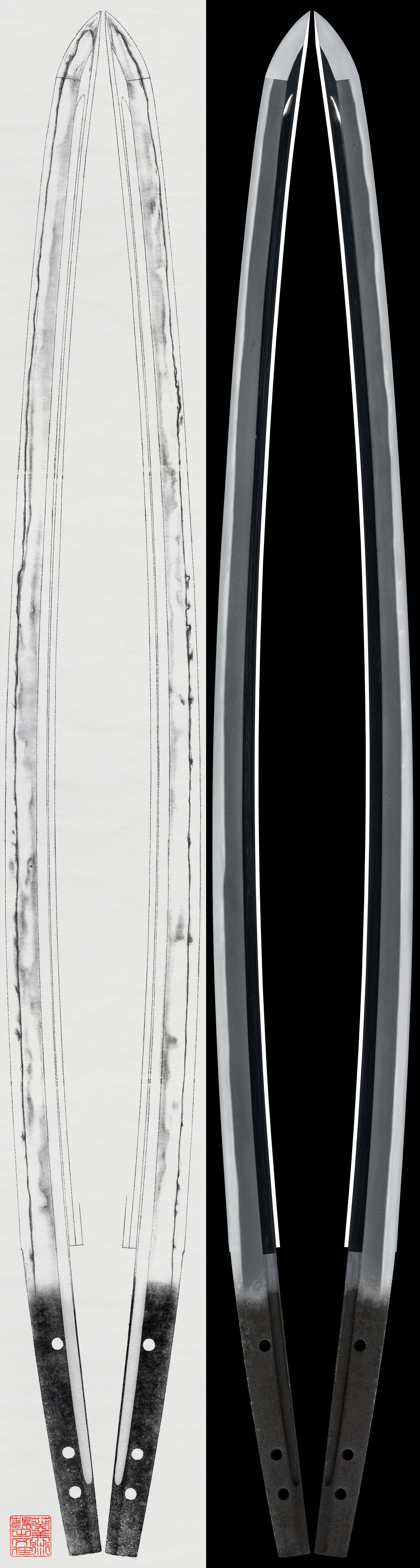
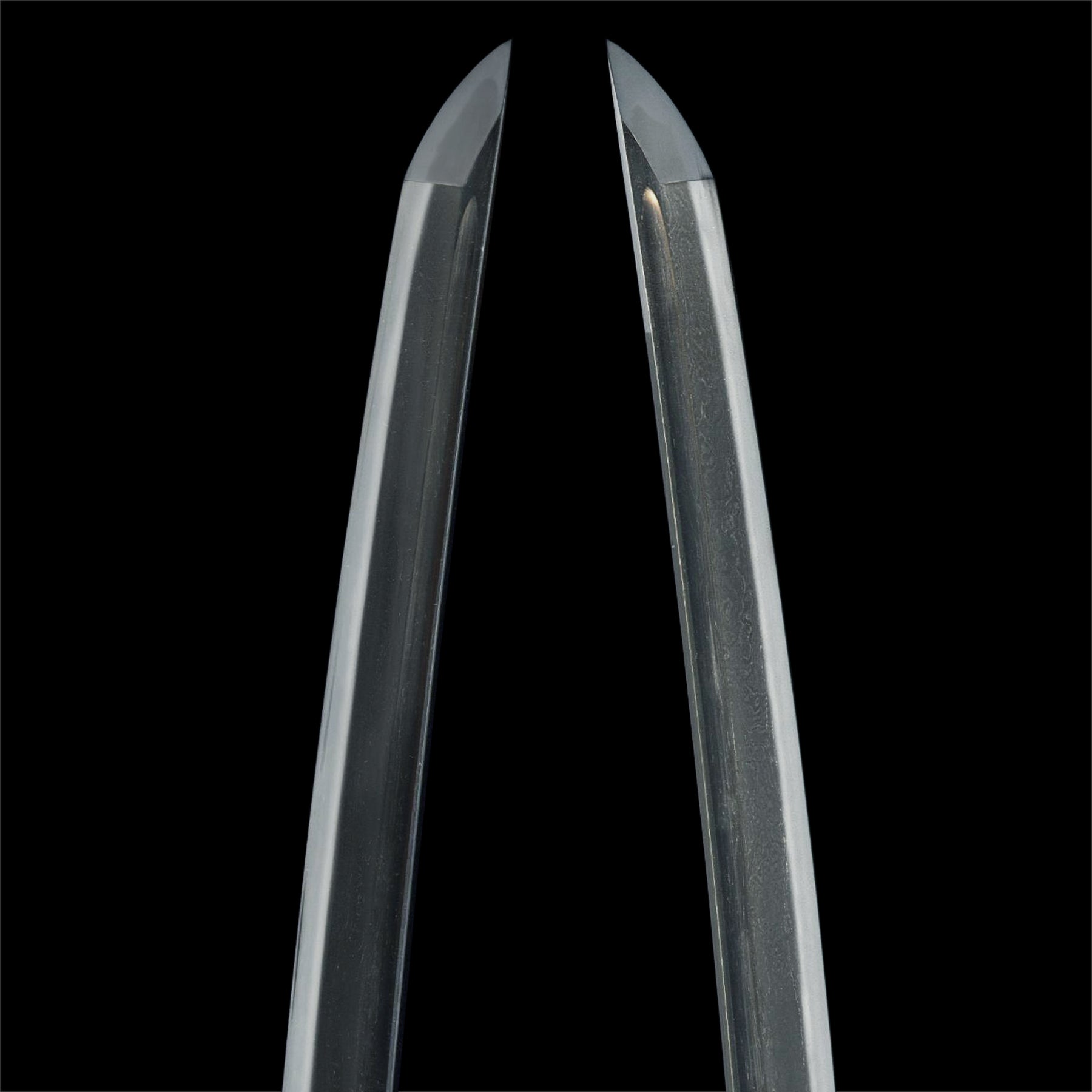
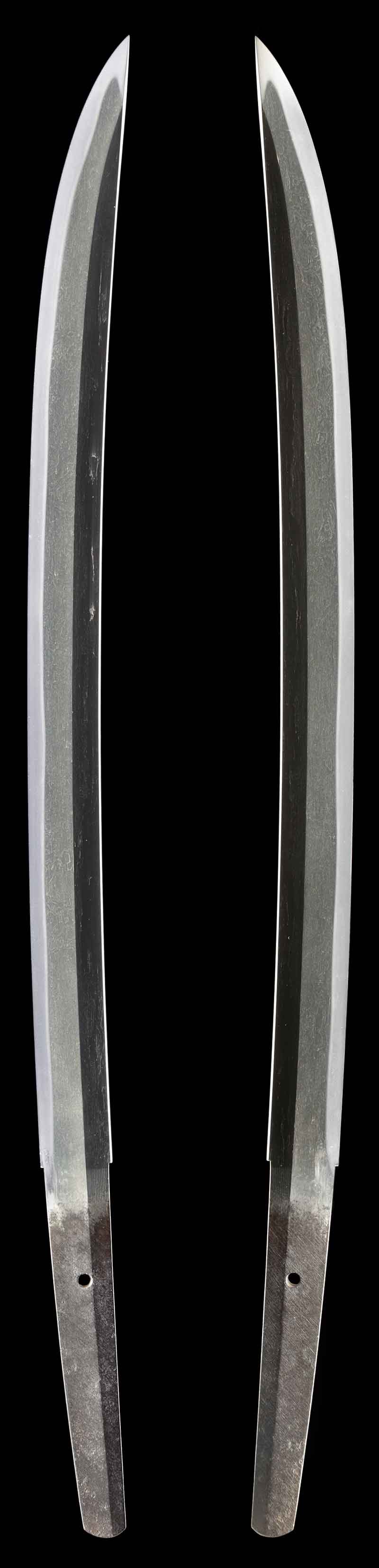
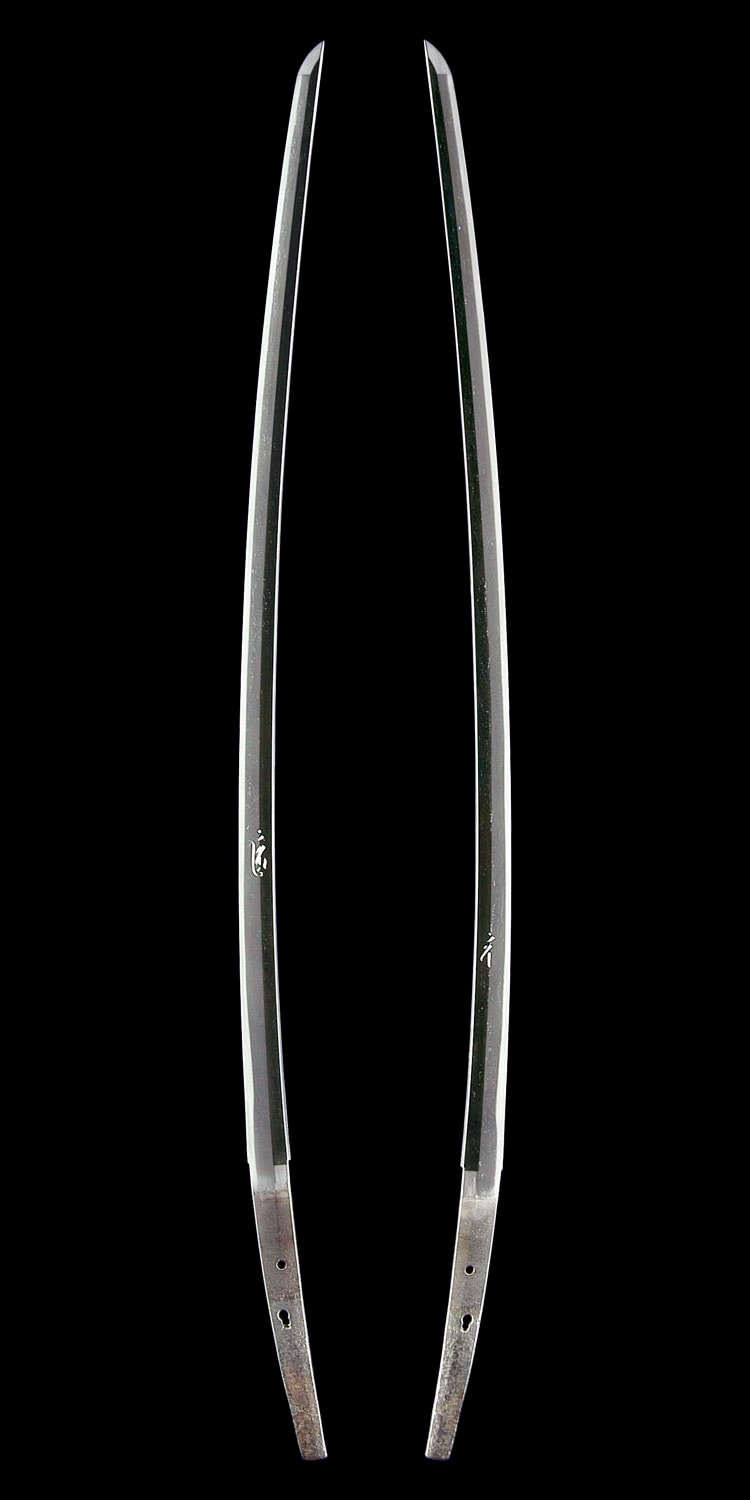
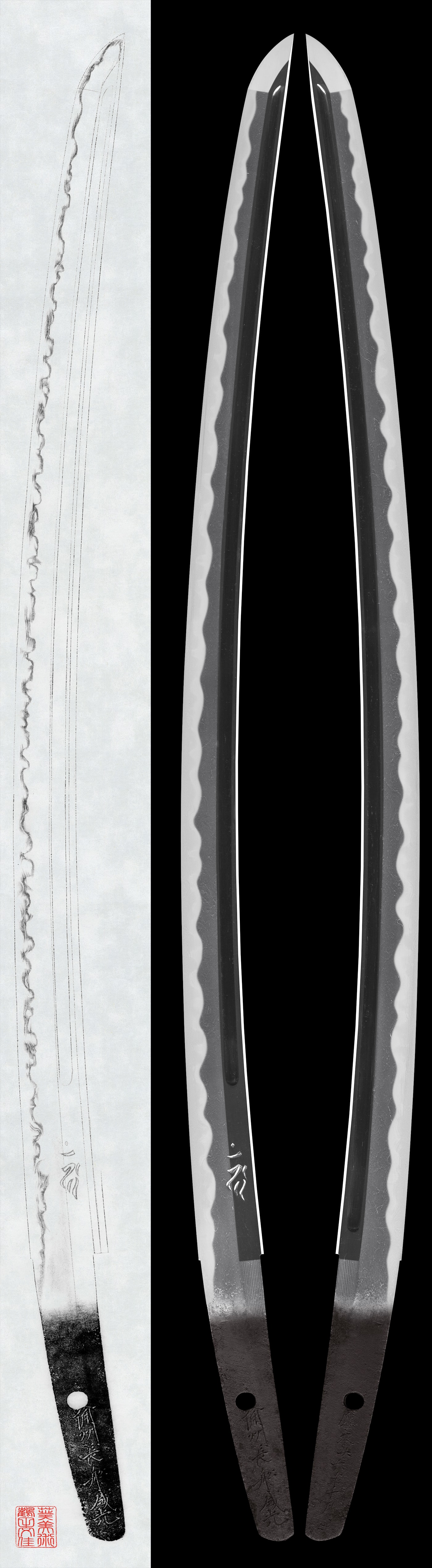
Description Keijo: shinogi-zukuri, iori-mune; somewhat slender, with a clear difference between moto and saki widths; standard curvature; ko-kissaki. Kitae: ko-itame-hada mixed with mokume-hada; overall tending toward standing grain; fine, dense ji-nie adhering thickly; in places shows a mixed jichō texture; the steel color is slightly blackish; a faint utsuri appears. Hamon: based on suguha, with small gunome and ko-chōji-like elements mixed in; with slight notare; with a mixed habuchi; nioi-dominant with ko-nie; sunagashi appears within the tempered area; nijūba and sanjūba-like effects are seen; the nioiguchi is somewhat bright. Boshi: sugu and yakitsume, with slight hakikake. Horimono: None. Nakago: ubu; tip kurijiri; file marks ō-suji; three mekugi-ana, of which the middle is plugged; on the ura, at the center of the tang below the second mekugi-ana, there is a boldly cut two-character signature.
Artisan Ko-Aoe Suketsugu (助次)
Era Mid-Kamakura period
Explanation The Aoe group of Bitchū Province is traditionally said to have begun with Yasutsugu around the Jōan era, and thereafter, down to the late Nanbokuchō period, produced many eminent smiths. Within this group, works that do not descend later than roughly the mid-Kamakura period are especially referred to as Ko-Aoe.
As for the style of Ko-Aoe: in the forging, mokume tends to be conspicuous and the grain often stands slightly, producing what is termed a crepe-like (chirimen) texture; many examples also show mixed jihada irregularities. The tempering includes gentle suguha-toned patterns as well as patterns mixed with small undulations; in general the nie is prominent, and overall—compared with Yamashiro works of the same period—Ko-Aoe conveys a somewhat more subdued, austere taste. Representative Ko-Aoe smiths include Moritsugu, Tametsugu, Tsugie, Tsugutada, Sadatsugu, Yasutsugu, Kanetsugu, Tsunetsugu, Toshitsugu, and this Suketsugu. Many of them share the character “tsugu” (次) as a common element in their names. Moreover, many cut the signature on the ura, and their file marks tend to be ō-suji—points that differ, for example, from Ko-Bizen.
This tachi shows a kitae of ko-itame mixed with mokume, finely standing to present the so-called crepe-like texture; and its hamon is fundamentally suguha with small gunome mixed in. In addition, features such as the original ō-sujikai file marks and the placement of the signature on the ura clearly display Ko-Aoe characteristics throughout. The rather slender sugata is well complemented by the archaic hamon—nioi-dominant with ko-nie—which stands out attractively. The ji and ha possess urumi (a moist, soft luster) and a high sense of dignity, and both ji and ha are kenzen (sound and well-preserved).
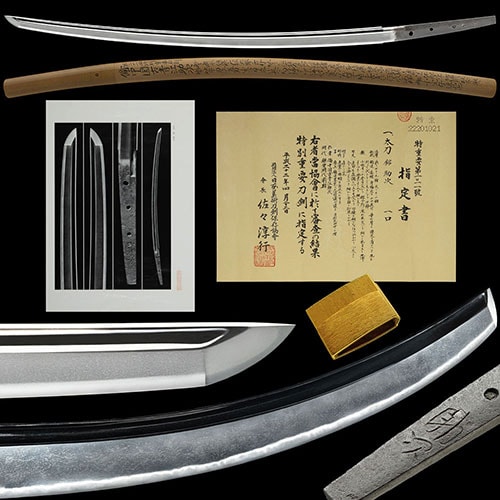
![Tachi - Jūyō - 作 助次 - 古刀 鑑定書内容:財)日本美術刀剣保存協会 重要刀剣[N.B.T.H.K] Juyo Token No.8 銘文:助次(古青江)](/_next/image?url=https%3A%2F%2Fitbhfhyptogxcjbjfzwx.supabase.co%2Fstorage%2Fv1%2Fobject%2Fpublic%2Flisting-images%2Fiida-koendo%2FL500337%2F00.jpg&w=2560&q=90)