NihontoWatch MonNihontoWatch
MarketEncyclopediaKantei
NihontoWatch MonNihontoWatch
Market
Encyclopedia
Kantei
Overview·Historical importance·Designations·Kantei·Provenance·Blade Forms·Signatures·Lineage·School
OverviewHistorical importanceDesignationsKanteiProvenanceBlade FormsSignaturesLineageSchool
  1. Schools
  2. Ichimonji
  3. Fukuoka Ichimonji
  4. Yoshimune

Fukuoka Ichimonji Yoshimune

吉宗

Tokujū
Vol. 16, No. 19 · Tachi

Fukuoka Ichimonji Yoshimune

吉宗

6 ranked works

Major smith
ProvinceBizenEraJokyu (1219–1222)PeriodKamakuraSchoolIchimonji>Fukuoka IchimonjiTraditionBizen-denTeacherMuneieFujishiroJo-jo sakuTypeSwordsmithCodeYOS533
1Jūyō Bunkazai
2Gyobutsu
1Tokubetsu Jūyō2Jūyō Tōken

Overview

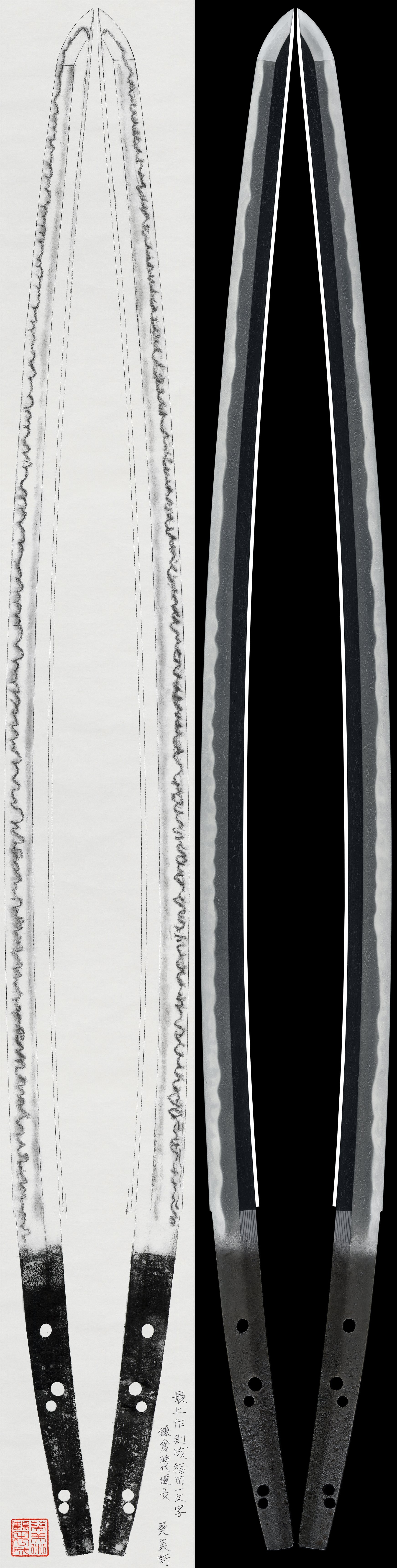
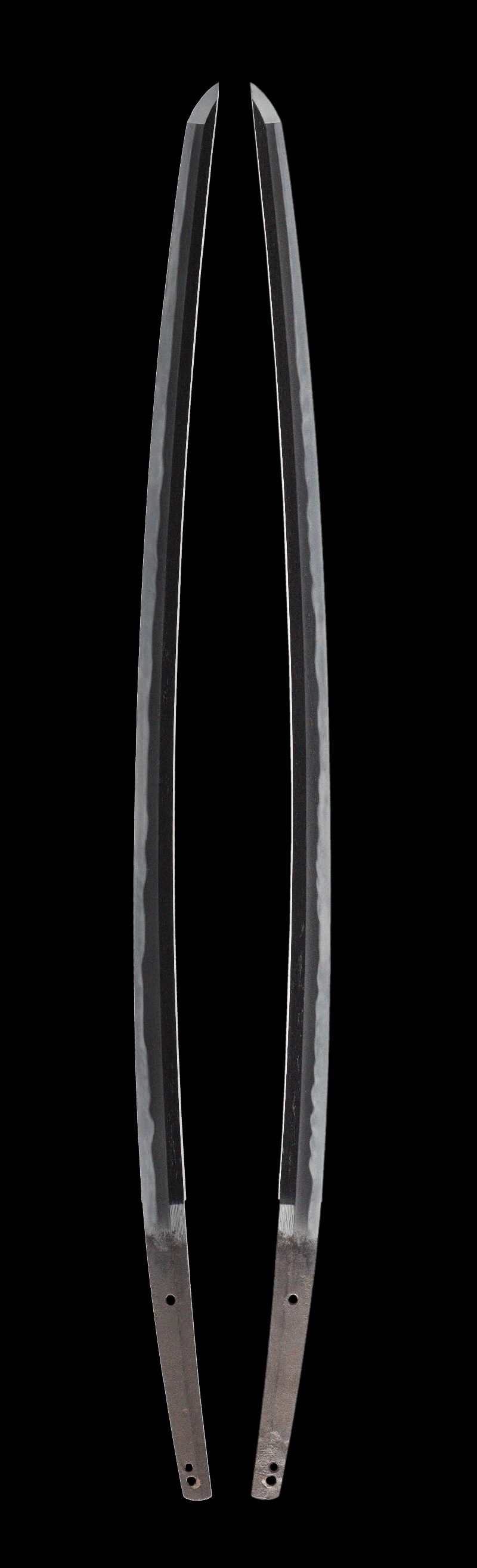
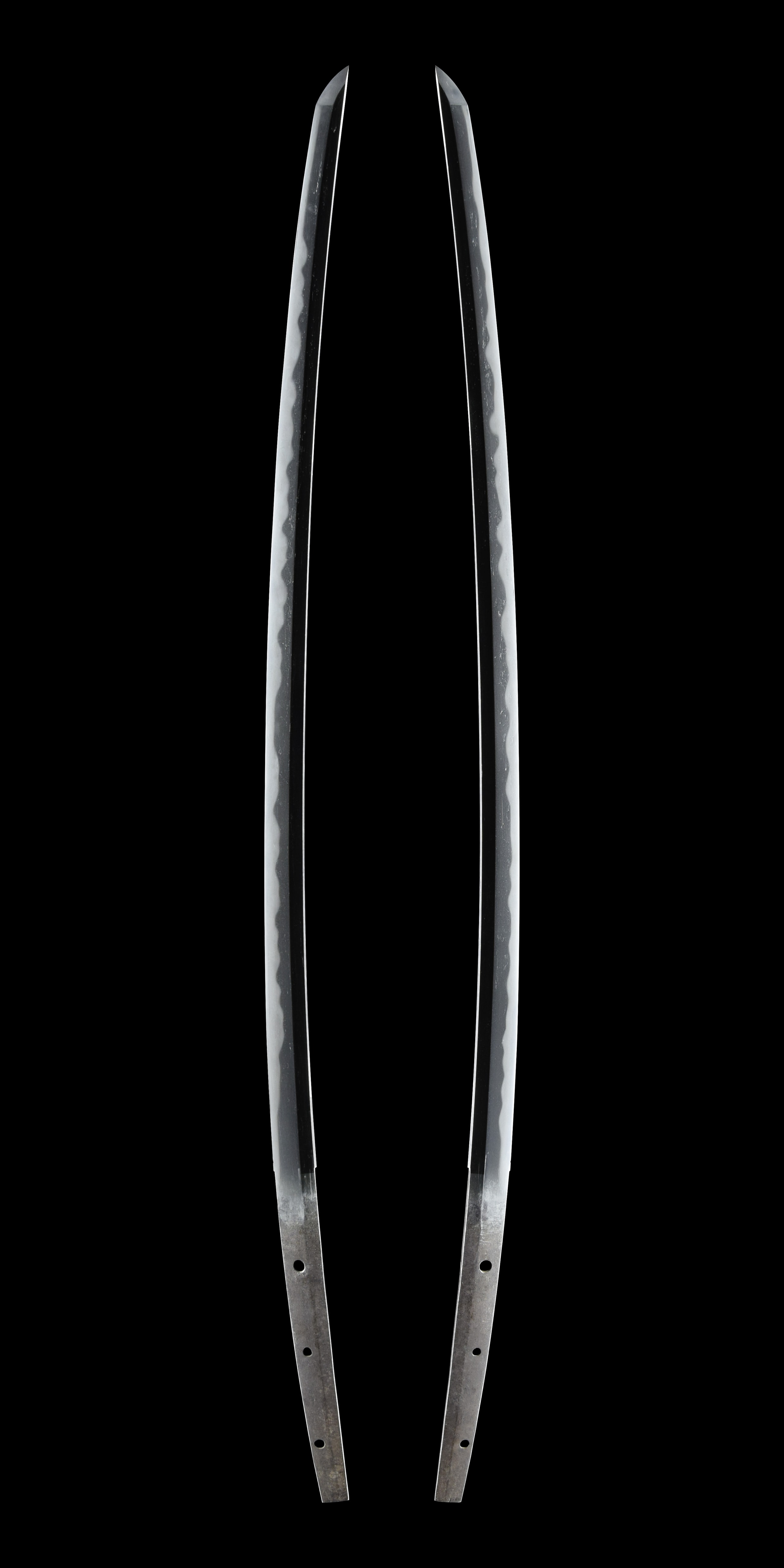
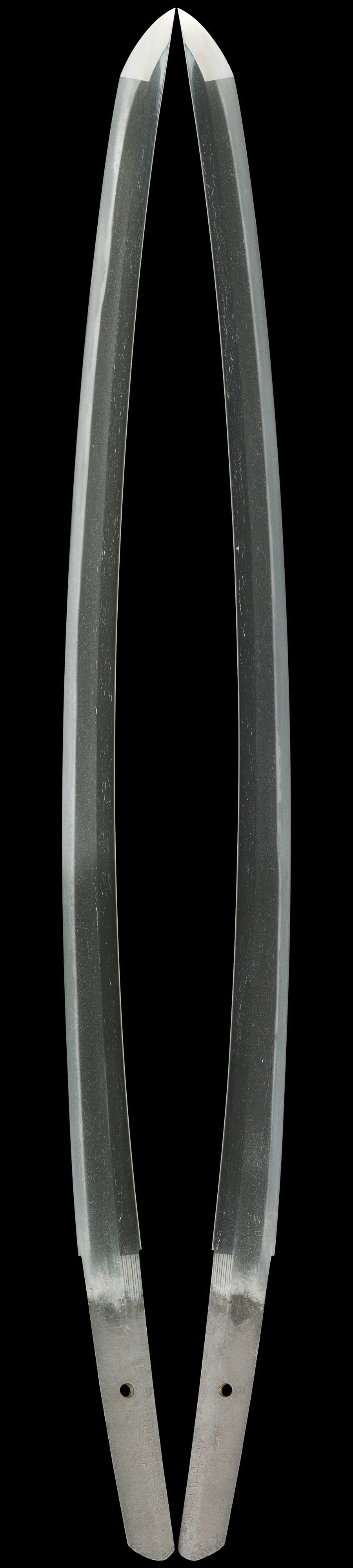
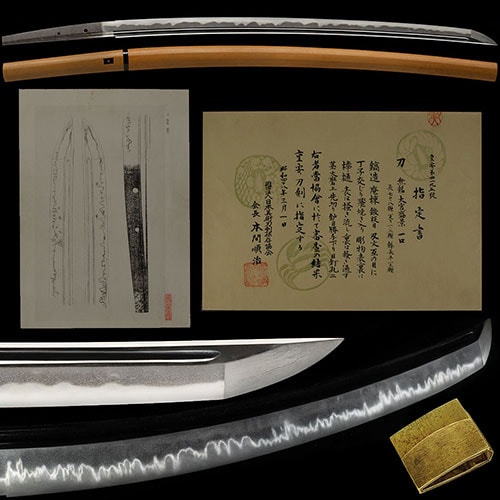
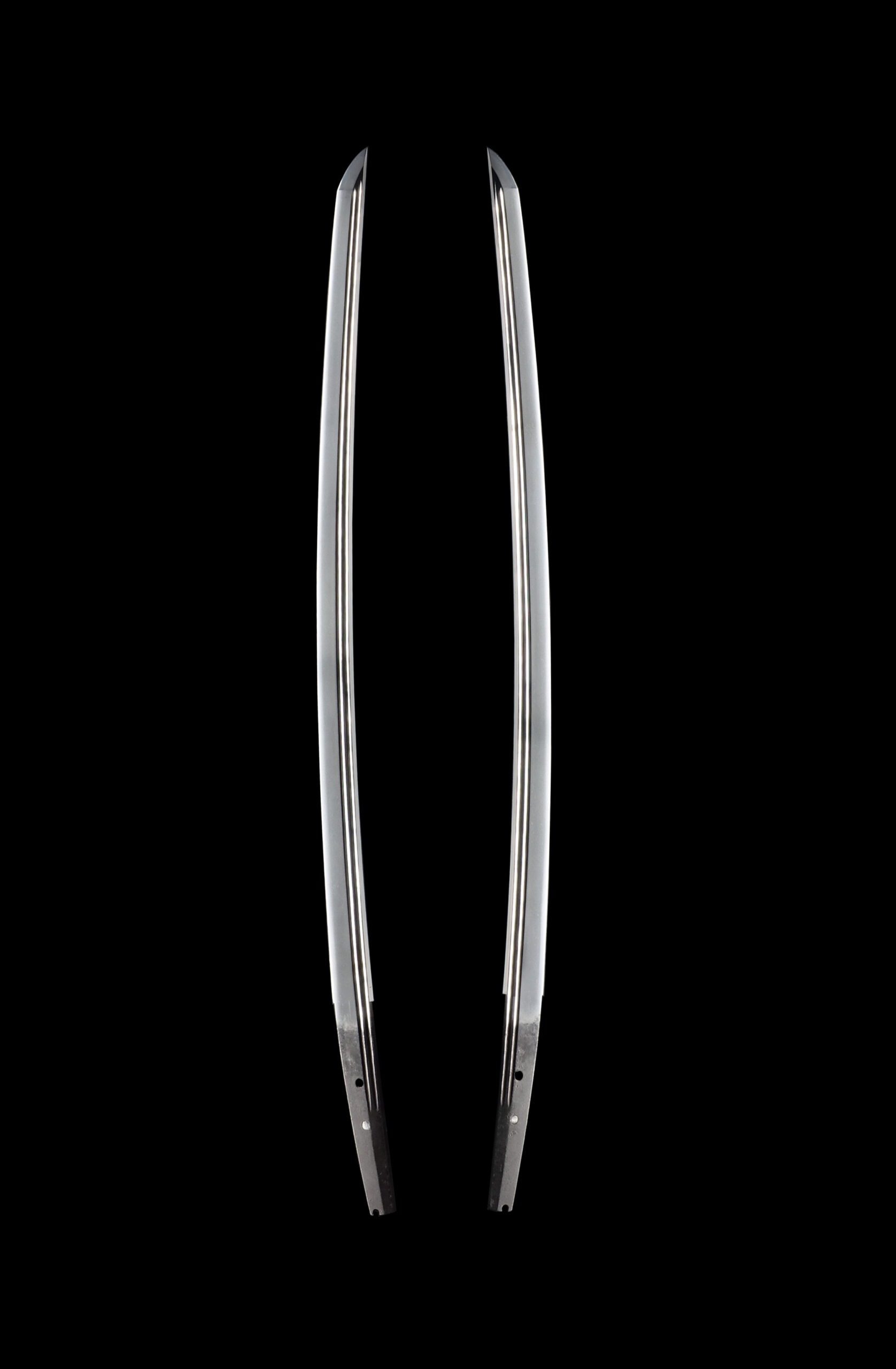
Yoshimune is a Fukuoka smith of mid- whose surviving signed work is so scarce that the published sources treat each designated blade as a record of a hand otherwise known chiefly through one famous piece. The best-known of his works is the preserved at Tsukubasan Jinja, an Important Cultural Property, and the institution names it expressly as such, observing that he "is represented by few extant works, the most famous being the held at Tsukubasan Jinja" (現存する作刀が少なく ... 最も著名なものとして筑波山神社蔵の太刀). The school itself, founded by Norimune, arose in the early period and flowered through the middle of it, and the published sources place this signature with the Fukuoka branch at exactly that peak, when the school reached its most brilliant and dynamic large . The name was carried by more than one smith, which is the central problem of his identity, but the blades judged his own are read consistently as the mature Fukuoka manner brought to full flamboyance.

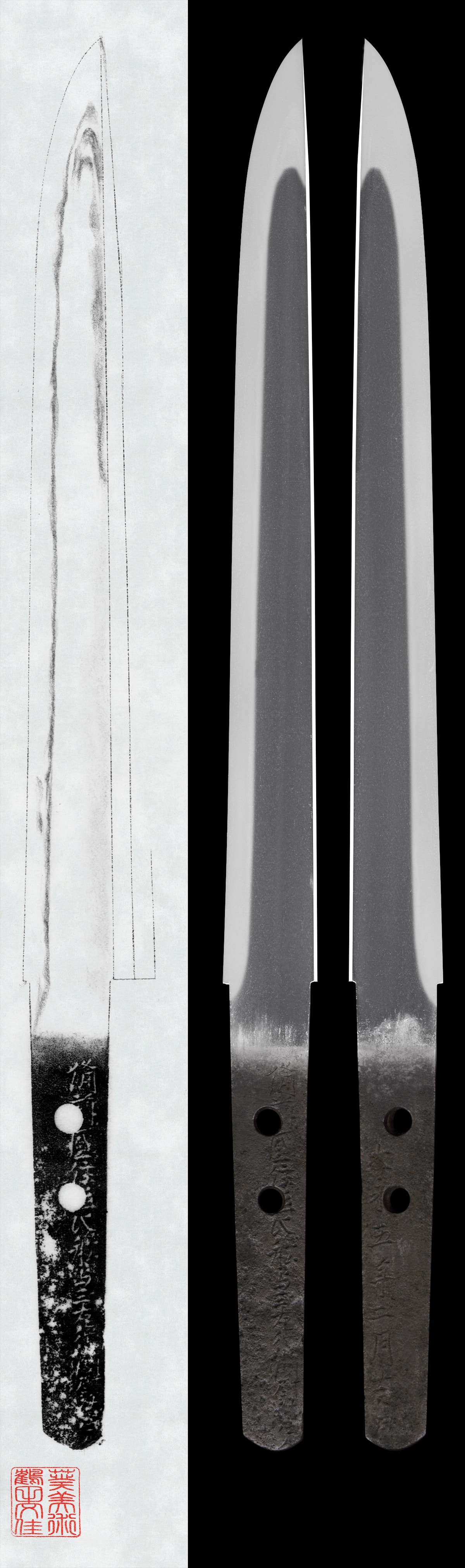
His characteristic hand is a full with no quieter base beneath it. Over an he tempers a clove pattern mixed with small and , and on his finest works it rises into large tassel-headed ō-busa- and sack-shaped fukuro-chōji with pointed -ba mixed in, the undulating with marked height variation. and enter the freely, the runs deep with , and fine and play through it, the bright. The gathers this into the school's defining statement, that at the mid- peak "the magnificently developed style, brilliant and full of dynamism, of large is displayed in splendid fashion". It is this temper, never a -toned hand, that the appraisers use to part his blades from the quieter members of the school.

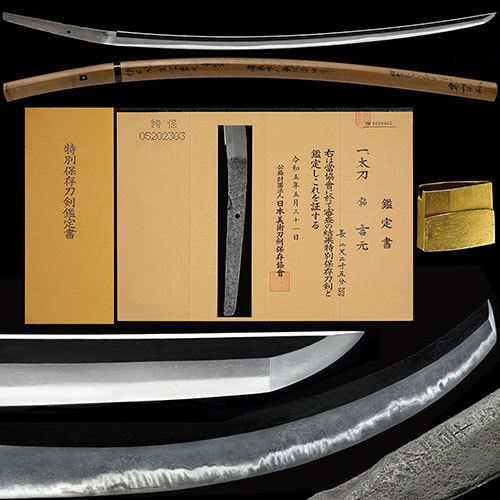
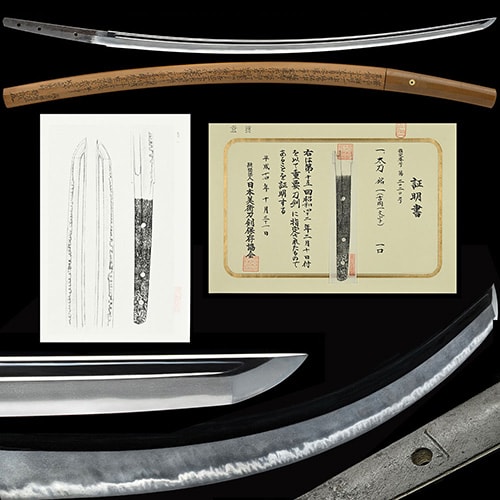
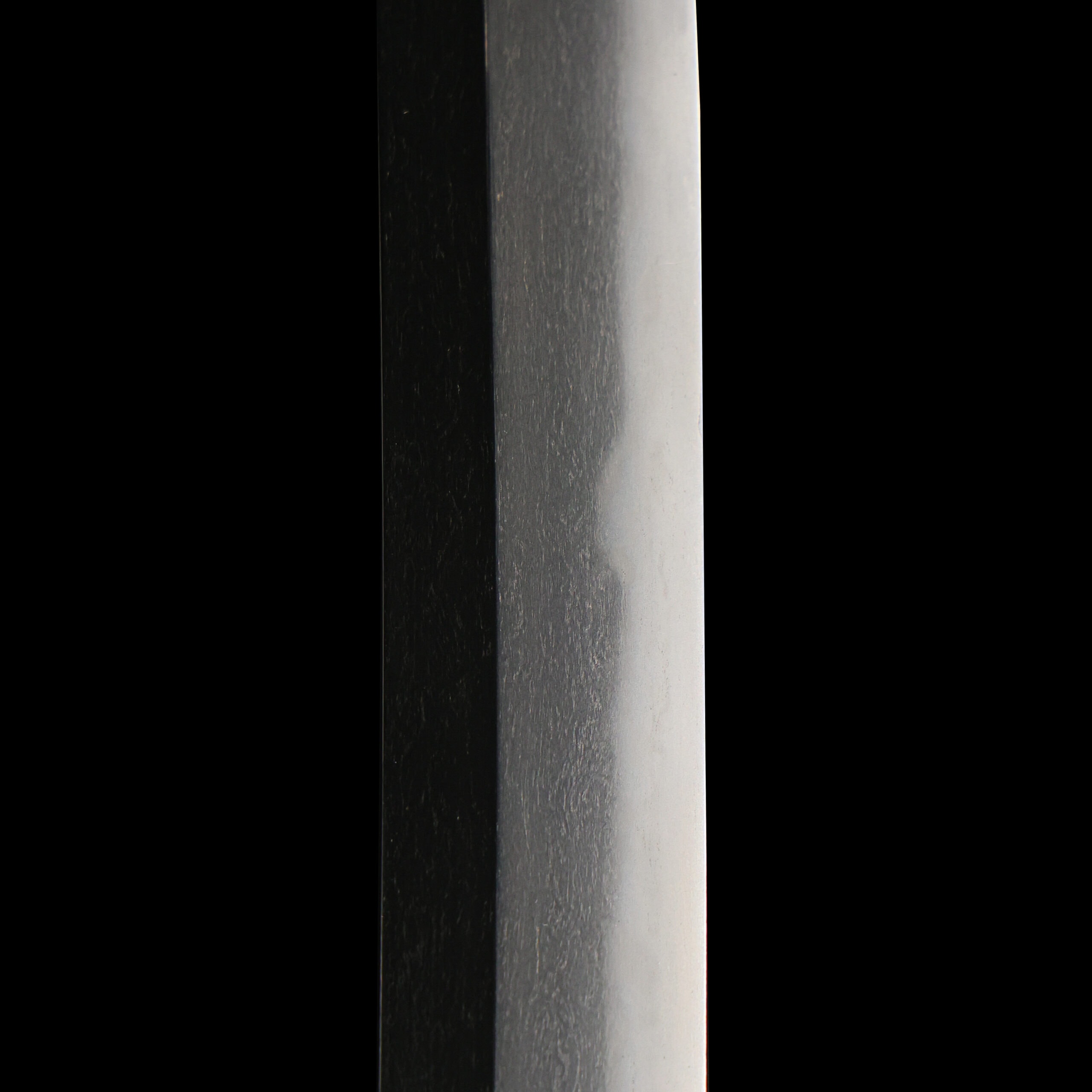
The is the proper steel and the constant that holds across all of his signed work. The forging is an mixed with , tending a little toward standing grain (), with well risen and, on the most tightly forged pieces, fine entering. Over this stands a vivid , the speckled reflection of old steel, which appears on every blade given to him and is as much a part of the recognition as the temper above it. The answers the : most often a small round (), at the point sometimes turning with a pointed tendency or a little , and on the most flamboyant blade running into the point as a . Carving is rare but present, the of 2003 bearing a and a short with accompanying , and below them a cut kaki-nagashi.

The corpus draws a single mature manner pitched at two levels of display rather than a sequence of periods. On his prime works the clove pattern breaks into the large tassel-headed forms, and the shows the large with fukuro-chōji and pointed elements over an with thick and fine ; the published sources judge such a blade to express the workmanship of the Fukuoka school at its height, finding that "the style of the Fukuoka school at its peak is well displayed" in its splendid "flamboyant of mixed with ō-busa-". On other signed the hand runs at a more measured pitch, the mixed with and and the lower, sound in and though calmer in finish. The question of how many generations carried the name is left open: the published record states that registers list smiths of this name in the Jōkyū, Shōgen and Kōan eras and that "the precise division by generation remains a topic for further study".

His standing in the school is fixed by the reasoning that recovers his blades from the crowd of namesakes. Because the name was shared among , Fukuoka , Yoshioka and smiths, the appraisers sort each blade by its own workmanship and the manner of its signature, and they assign this signature to the mid- Fukuoka hand whose individuality showed most clearly in the brilliant large of the period. The judgment is made on the work itself: of the the published sources find that "both and strongly display the distinctive features of the Fukuoka school", the clear in the and the large sharp with height variation. He stands among the brilliant mid- masters of the mature Fukuoka school alongside Yoshifusa and Norikane, his bright and showy ō-busa- setting him with the flamboyant rather than the restrained side of the school, against the deliberately quiet of his schoolmate Yoshimochi.

Fujishiro grades him Jō-jō . The connoisseurship of Yoshimune is governed by scarcity: his signed work is genuinely few, and the designated blades that survive are valued, in the words of the published record, as rare material for understanding the scope of his craftsmanship. A handful of his blades stand in the and tiers, with the Tsukubasan Jinja , an Important Cultural Property, the most famous of all and held as patrimony in the shrine that has long kept it. Where provenance is recorded it runs to institutional rather than private hands, and the published commentary names the Tsukubasan Jinja blade as the reference point against which his other works are read. For the collector this is a smith met rarely. A signed Yoshimune is not held in perpetuity in the way the school's most exalted designations are, and so it is not wholly beyond reach; but with so small a signed corpus, and most of it long settled, an example comes to market only from time to time, and an , signed in sound condition is a landmark when one appears.

Historical importance

Where Yoshimune stands among comparable artisans: across all of nihontō, and within tradition, era, and period. The tiers (Foremost · Leading · Major · Notable) weigh official designations from the NBTHK and Japan's Agency for Cultural Affairs, together with historical honors of lasting repute such as the Sansaku and Meibutsu-chō.

随一
Foremost
屈指
Leading
有数
Major
著名
Notable

Select a lens to see how it's measured.

Designations

Kokuhō—
Jūyō Bunkazai1
Jūyō Bijutsuhin—
Gyobutsu2
Tokubetsu Jūyō1
Jūyō Tōken2

Elite Standing

Kantei

Provenance

Blade Forms

Distribution across 6 ranked works

Signatures

Signature types across 6 ranked works

Currently Available

Lineage

TeacherMuneie
Yoshimune
Student
  1. 1.Iemune家宗

Fukuoka Ichimonji School

Other artisans of the Fukuoka Ichimonji school

  1. 1.Sukezane助眞42designated
  2. 2.Yoshifusa吉房1 for sale45designated
  3. 3.Norimune則宗8designated
  4. 4.Yoshihira吉平17designated
  5. 5.Tamekiyo爲清6designated
  6. 6.Sukekane助包6designated
  7. 7.Norikane則包7designated
  8. 8.Yoshimochi吉用10designated
  9. 9.Tameto爲遠5designated
  10. 10.Naganori長則17designated
  11. 11.Ichi一7designated
  12. 12.Sanetoshi眞利5designated

More from the Fukuoka Ichimonji school

View all →
Tsuruginoya
Jūyō
Katana - Jūyō - by Fukuoka Ichimonji School - Mumei Fukuoka IchimonjiKatana - Jūyō - by Fukuoka Ichimonji School - Mumei Fukuoka Ichimonji

Katana

ByFukuoka Ichimonji School
Ask
Hyozaemon
Tokuho
Tokuho - by Fukuoka Ichimonji Yoshifusa - Naginata Naoshi Wakizashi by Fukuoka Ichimonji Yoshifusa, a Master of IchimonjiTokuho - by Fukuoka Ichimonji Yoshifusa - Naginata Naoshi Wakizashi by Fukuoka Ichimonji Yoshifusa, a Master of Ichimonji

Naginata Naoshi Wakizashi by Fukuoka Ichimonji Yoshifusa, a Master of Ichimonji

ByFukuoka Ichimonji Yoshifusa
Ask
Aoi Art
Jūyō
Tachi - Jūyō - by Fukuoka Ichimonji Norinari - Norinari (Ko-Ichimonji)Tachi - Jūyō - by Fukuoka Ichimonji Norinari - Norinari (Ko-Ichimonji)

Tachi

ByFukuoka Ichimonji Norinari
¥13,500,000
Iida Koendo
Jūyō
Tachi - Jūyō - by Fukuoka Ichimonji Sukeyoshi - Sukeyoshi (Ichimonji)Tachi - Jūyō - by Fukuoka Ichimonji Sukeyoshi - Sukeyoshi (Ichimonji)

Tachi

ByFukuoka Ichimonji Sukeyoshi
¥16,500,000
Eirakudo
Tokuho
Tachi - Tokuho - by Fukuoka Ichimonji Yoshimoto - Yoshimoto - Tokubetsu Hozon TokenTachi - Tokuho - by Fukuoka Ichimonji Yoshimoto - Yoshimoto - Tokubetsu Hozon Token

Tachi

ByFukuoka Ichimonji Yoshimoto
¥8,500,000

More from the Ichimonji school

View all →
Eirakudo
Tokuho
Katana - Tokuho - by Katayama Ichimonji School - Katayama Ichimonji - Tokubetsu Hozon TokenKatana - Tokuho - by Katayama Ichimonji School - Katayama Ichimonji - Tokubetsu Hozon Token

Katana

ByKatayama Ichimonji School
¥4,500,000
Toushin
Katana - by Ichimonji School - Mumei (Hatakeda Mitsumori) (Bizen no kuni Yoshioka Ichimonji Sukemitsu)Katana - by Ichimonji School - Mumei (Hatakeda Mitsumori) (Bizen no kuni Yoshioka Ichimonji Sukemitsu)

Katana

ByIchimonji School
¥1,210,000
Eirakudo
Tokuho
Wakizashi - Tokuho - by Ichimonji School - Fukuoka Ichimonji Wakizashi Tokubetsu Hozon TokenWakizashi - Tokuho - by Ichimonji School - Fukuoka Ichimonji Wakizashi Tokubetsu Hozon Token

Wakizashi

ByIchimonji School
¥3,500,000
Samurai Nippon
Tokuho
Wakizashi - Tokuho - by Iwato Ichimonji School - Iwato Ichimonji (Unsigned)Wakizashi - Tokuho - by Iwato Ichimonji School - Iwato Ichimonji (Unsigned)

Wakizashi

ByIwato Ichimonji School
¥1,200,000
Kanda Toukodo
Jūyō
Katana - Jūyō - by Ichimonji School - Juyo Token (25th Session)Katana - Jūyō - by Ichimonji School - Juyo Token (25th Session)

Katana

ByIchimonji School
Ask
Eirakudo
Tokuho
Katana - Tokuho - by Katayama Ichimonji School - Katayama Ichimonji - Tokubetsu Hozon TokenKatana - Tokuho - by Katayama Ichimonji School - Katayama Ichimonji - Tokubetsu Hozon Token

Katana

ByKatayama Ichimonji School
¥4,000,000
Nihonto Australia
Tokuho
Katana - Tokuho - by Ichimonji School - Iwato-Ichimonji with NBTHK Tokubetsu Hozon CertificateKatana - Tokuho - by Ichimonji School - Iwato-Ichimonji with NBTHK Tokubetsu Hozon Certificate

Katana

ByIchimonji School
Ask
Eirakudo
Jūyō
Tachi - Jūyō - by Yoshioka Ichimonji School - Yoshioka Ichimonji Tachi Juyo TokenTachi - Jūyō - by Yoshioka Ichimonji School - Yoshioka Ichimonji Tachi Juyo Token

Tachi

ByYoshioka Ichimonji School
Ask

More from the Bizen tradition

View all →
Aoi Art
Jūyō Bijutsuhin
Daisho - Jubi - by Osafune Nagamitsu - Dai Sho: Katana (Important Art Object): Mumei (Attributed to Nagamitsu) / Wakizashi: Mumei (Attributed to Sekishu Naotsuna)Daisho - Jubi - by Osafune Nagamitsu - Dai Sho: Katana (Important Art Object): Mumei (Attributed to Nagamitsu) / Wakizashi: Mumei (Attributed to Sekishu Naotsuna)

Daishō

ByOsafune Nagamitsu
Ask
Nihonto.com
Jūyō
Tanto - Jūyō - by Osafune Kagemitsu - Juyo Tanto by Bizen KagemitsuTanto - Jūyō - by Osafune Kagemitsu - Juyo Tanto by Bizen Kagemitsu

Tantō

ByOsafune Kagemitsu
¥89,500
Touken Matsumoto
Hozon
Wakizashi - Hozon - by Sukesada School - Bishu Osafune Sukesada, Eisho Juninen NigatsujitsuWakizashi - Hozon - by Sukesada School - Bishu Osafune Sukesada, Eisho Juninen Nigatsujitsu

Wakizashi

BySukesada School
¥650,000
Eirakudo
Jūyō
Katana - Jūyō - by Motoshige - Motoshige - Juyo TokenKatana - Jūyō - by Motoshige - Motoshige - Juyo Token

Katana

ByMotoshige
¥6,000,000
Samurai Museum
Katana - by Osafune Kanemitsu - Antique Japanese Sword Katana Attributed to Den Osafune Kanemitsu NTHK Yushu Saku Kanteisho CertificateKatana - by Osafune Kanemitsu - Antique Japanese Sword Katana Attributed to Den Osafune Kanemitsu NTHK Yushu Saku Kanteisho Certificate

Katana

ByOsafune Kanemitsu
¥27,856
Eirakudo
Jūyō
Katana - Jūyō - by Omiya Morikage - Ohmiya Morikage - Juyo TokenKatana - Jūyō - by Omiya Morikage - Ohmiya Morikage - Juyo Token

Katana

ByOmiya Morikage
¥4,000,000
Samurai Museum
Tokuho
Wakizashi - Tokuho - by Osafune Kagemitsu - Antique Japanese Sword Wakizashi Attributed to Den Osafune Kagemitsu NBTHK Tokubetsu Hozon CertificateWakizashi - Tokuho - by Osafune Kagemitsu - Antique Japanese Sword Wakizashi Attributed to Den Osafune Kagemitsu NBTHK Tokubetsu Hozon Certificate

Wakizashi

ByOsafune Kagemitsu
¥20,730
Aoi Art
Tokuho
Tanto - Tokuho - by Sukesada - Bizen Kuni Ju Osafune Yozaemon-no-jo Sukesada Dated: A lucky day in the second month of Daiei 5 (1525)Tanto - Tokuho - by Sukesada - Bizen Kuni Ju Osafune Yozaemon-no-jo Sukesada Dated: A lucky day in the second month of Daiei 5 (1525)

Tantō

BySukesada
Starting Bid¥1,850,000

Yoshimune

Yoshimune(吉宗) was a Japanese swordsmith of the Fukuoka Ichimonji school in Bizen province, active during the Jokyu (1219-1222) period.

The work follows the Bizen-den tradition.

Designated works by Yoshimune include 1 Jūyō Bunkazai (Important Cultural Property), 1 Tokubetsu Jūyō, 2 Jūyō.