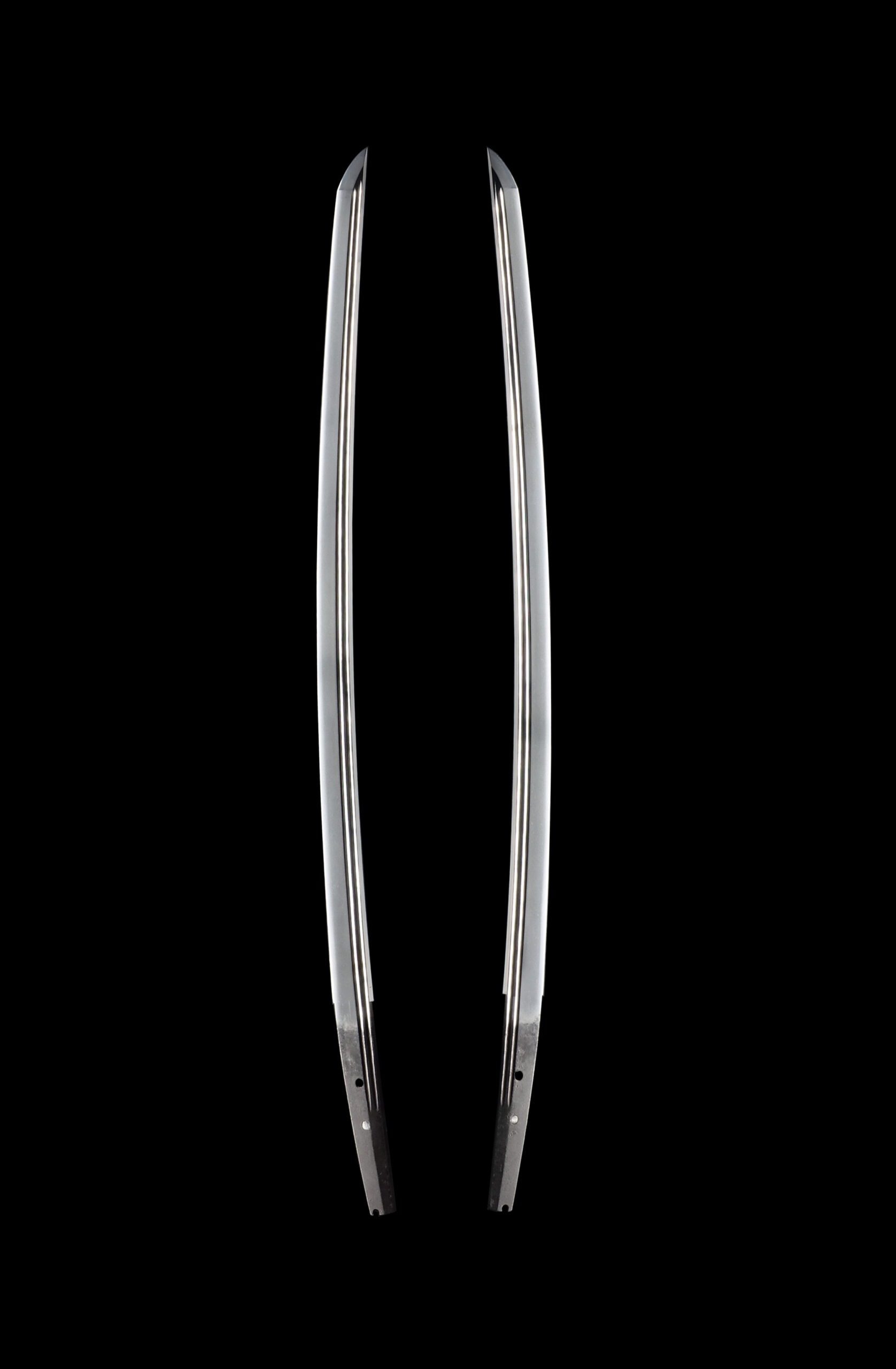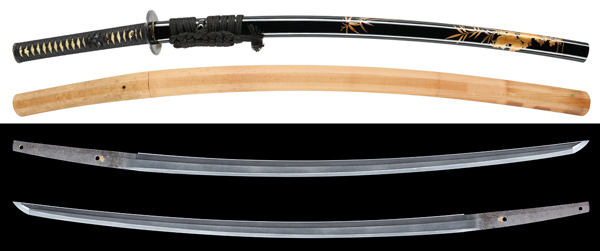

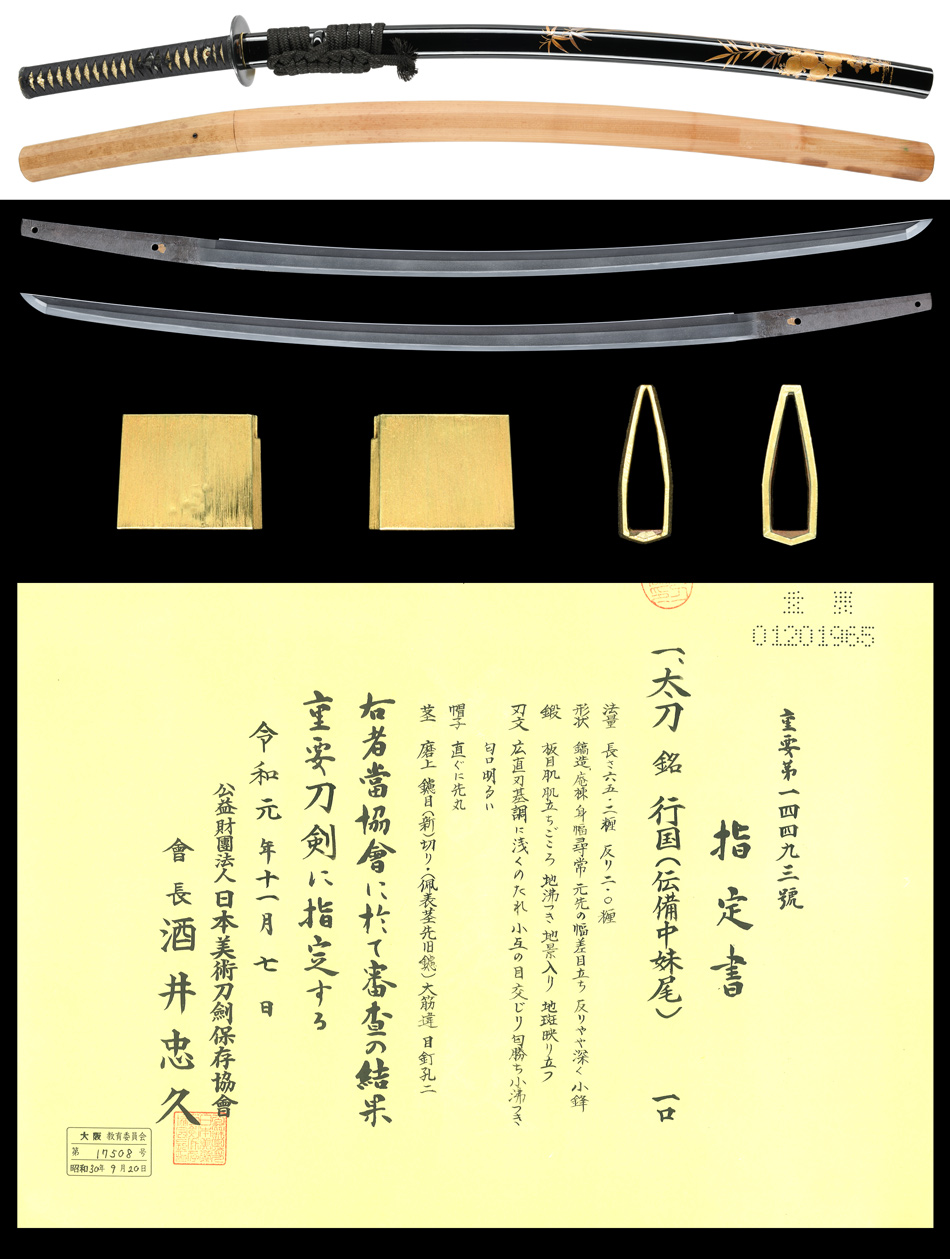
-, 65th Session — Designated November 7, 2019
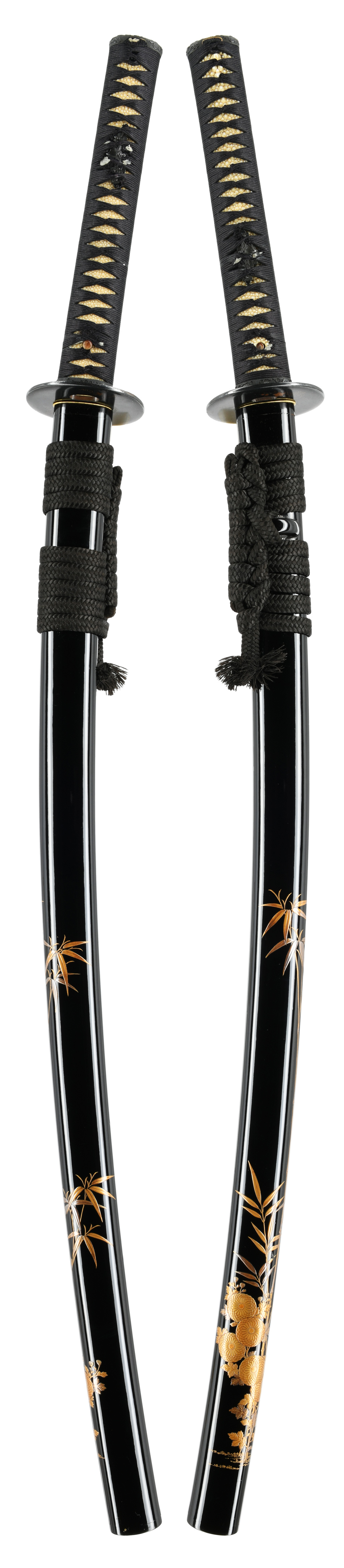
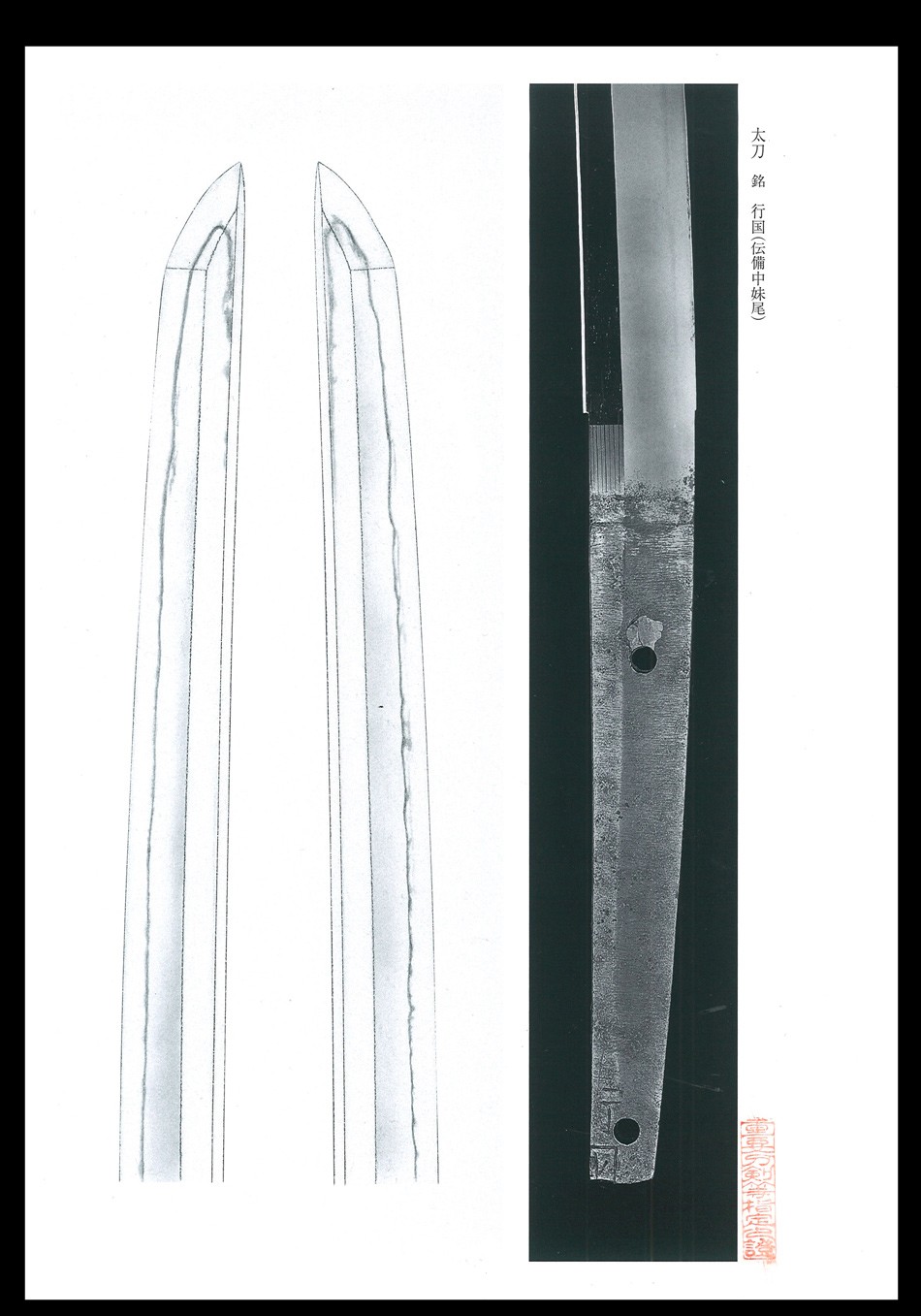
, : Senoo Yukikuni (行国)
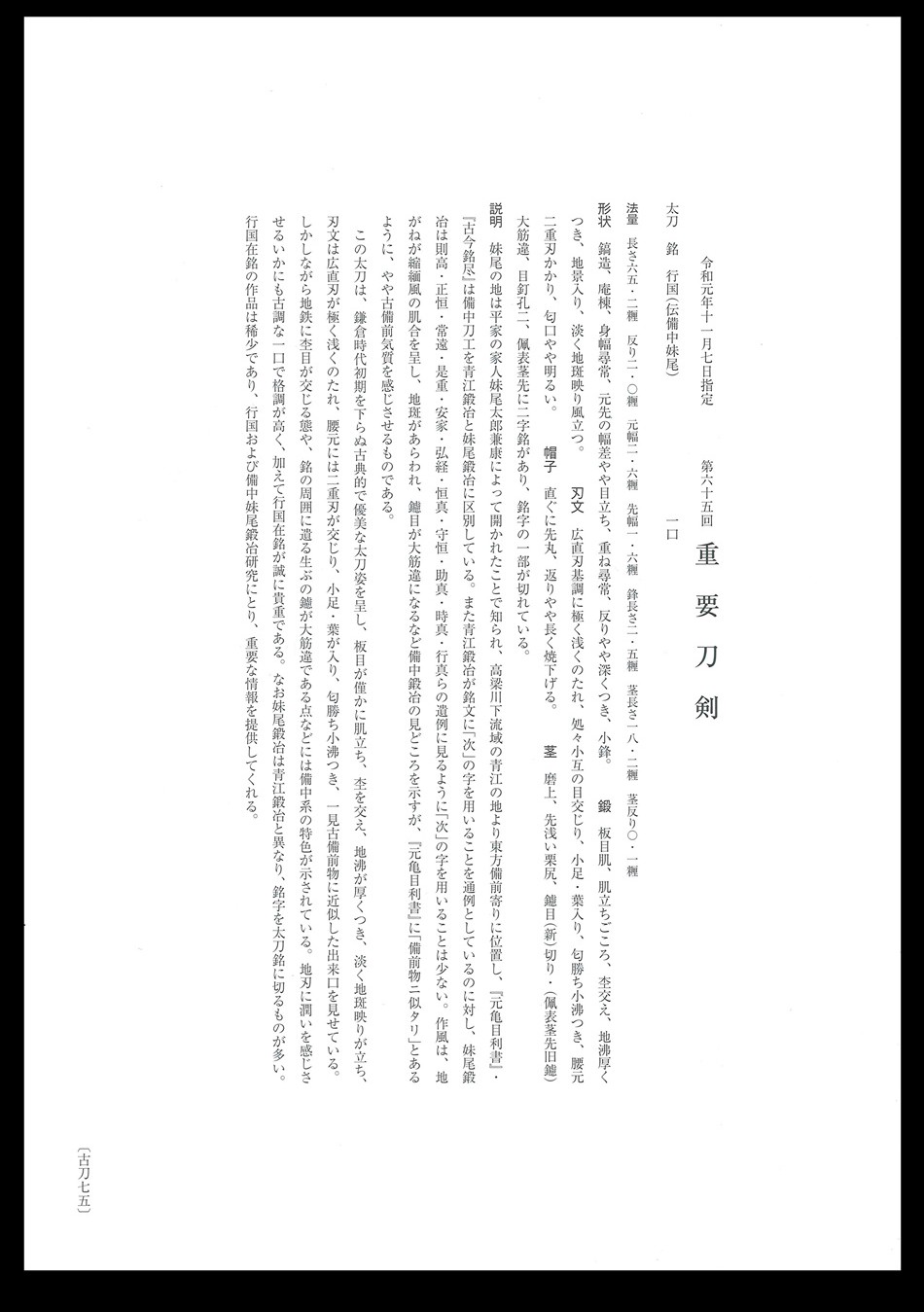
Measurements 65.2 cm, 2.0 cm, 2.6 cm, 1.6 cm, 2.5 cm, 18.2 cm, 0.1 cm
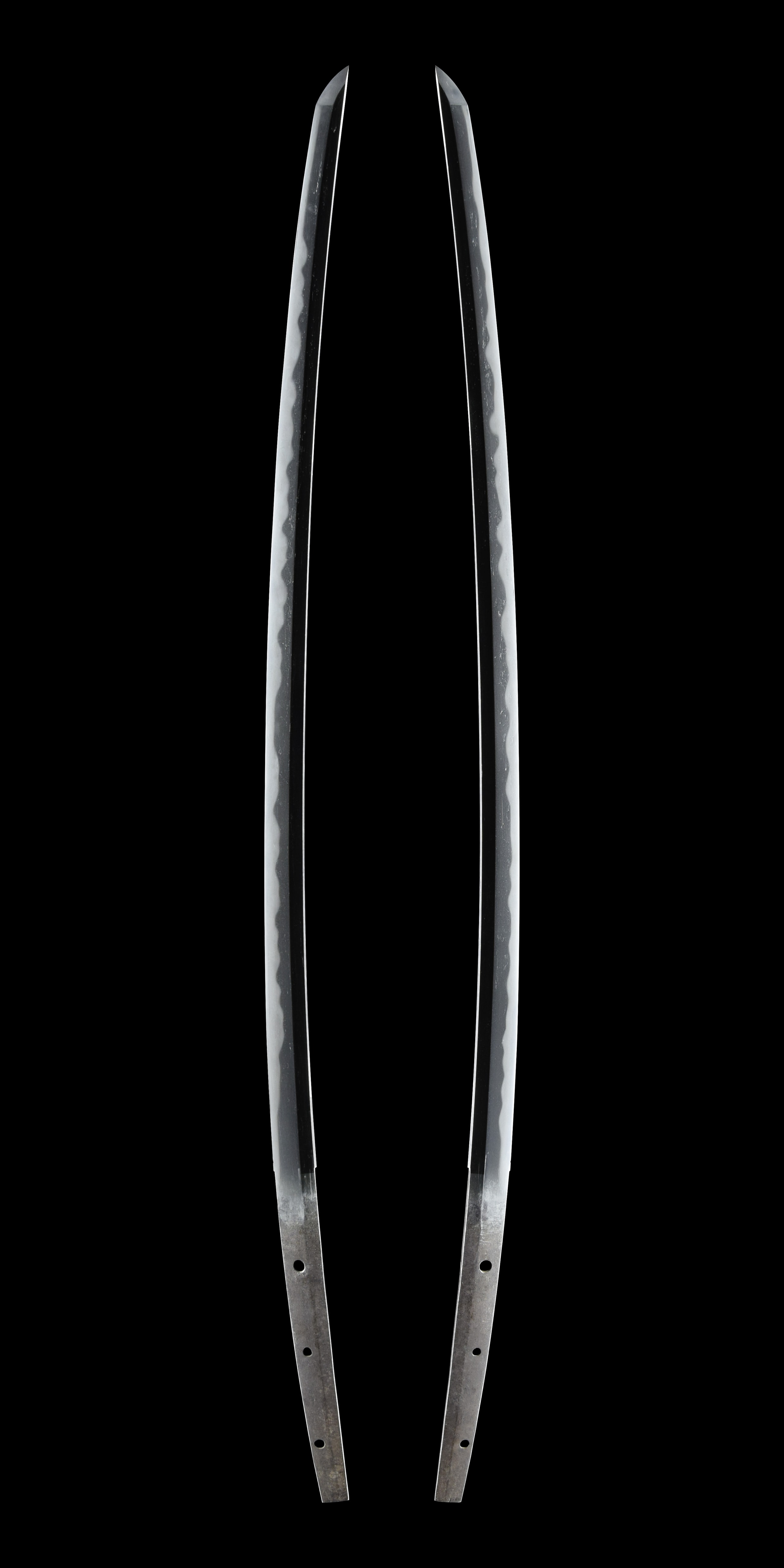
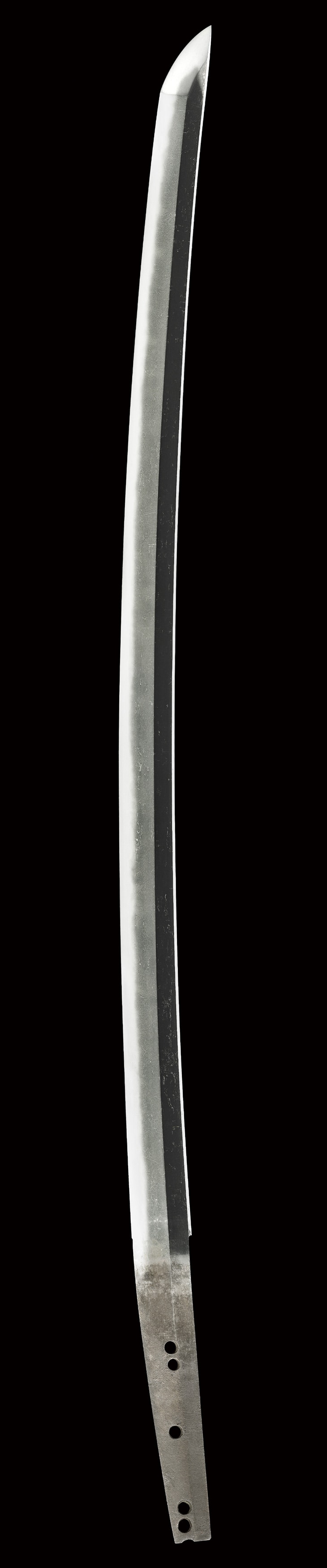
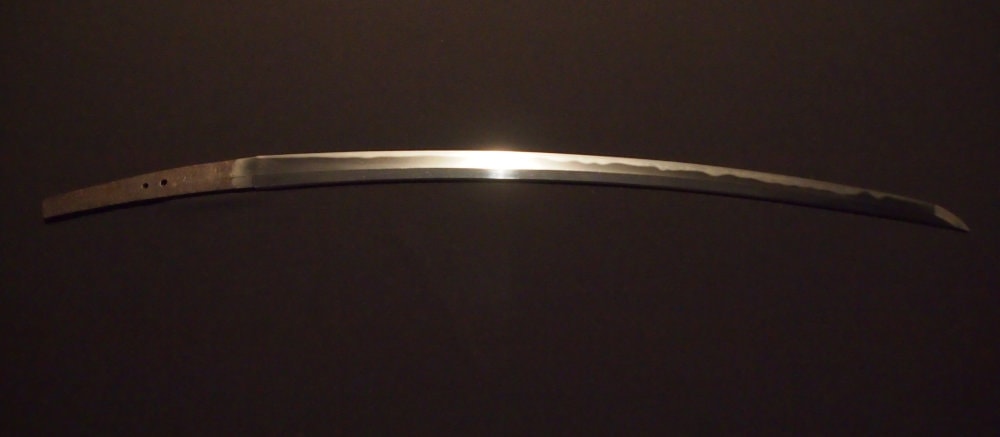
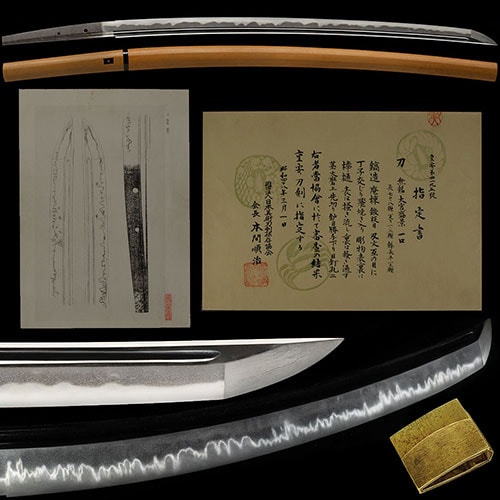
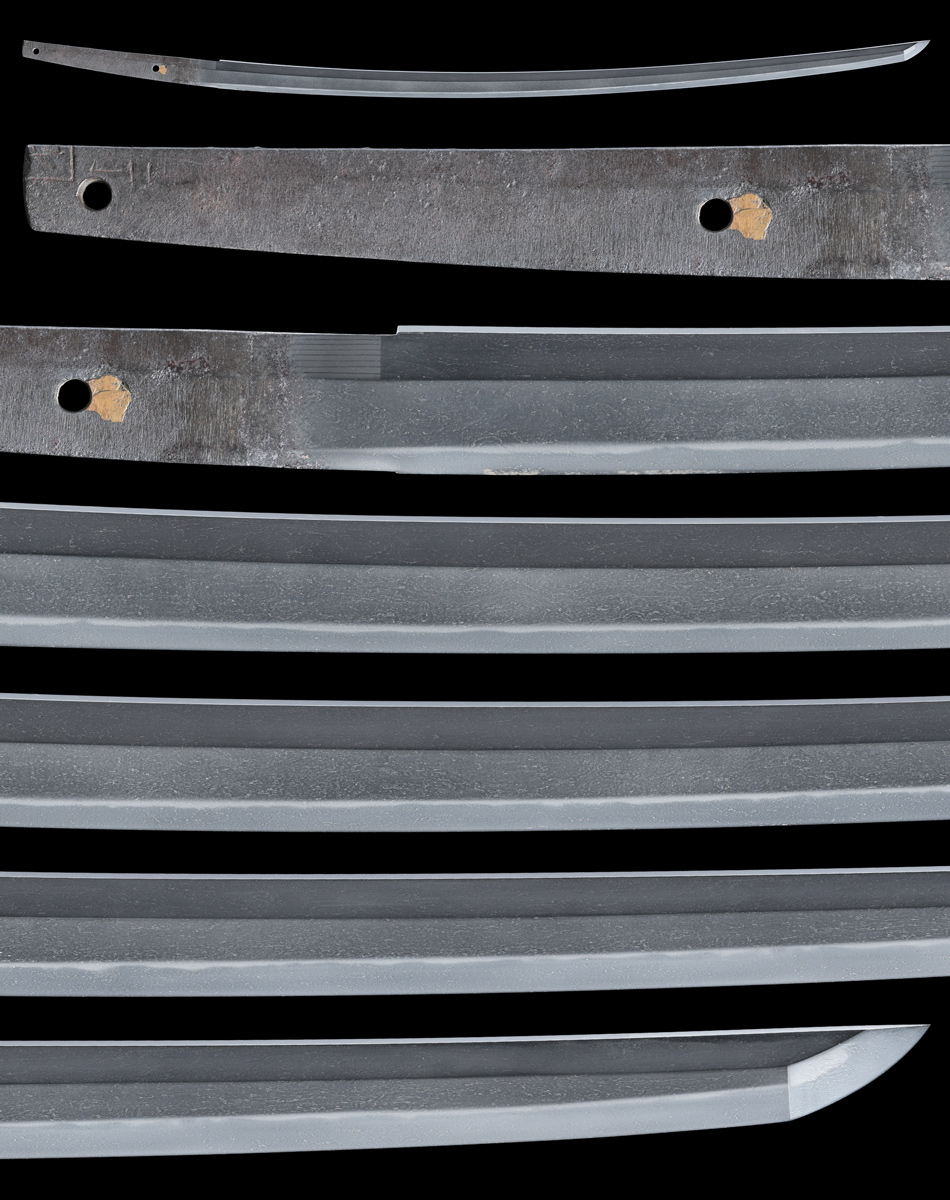
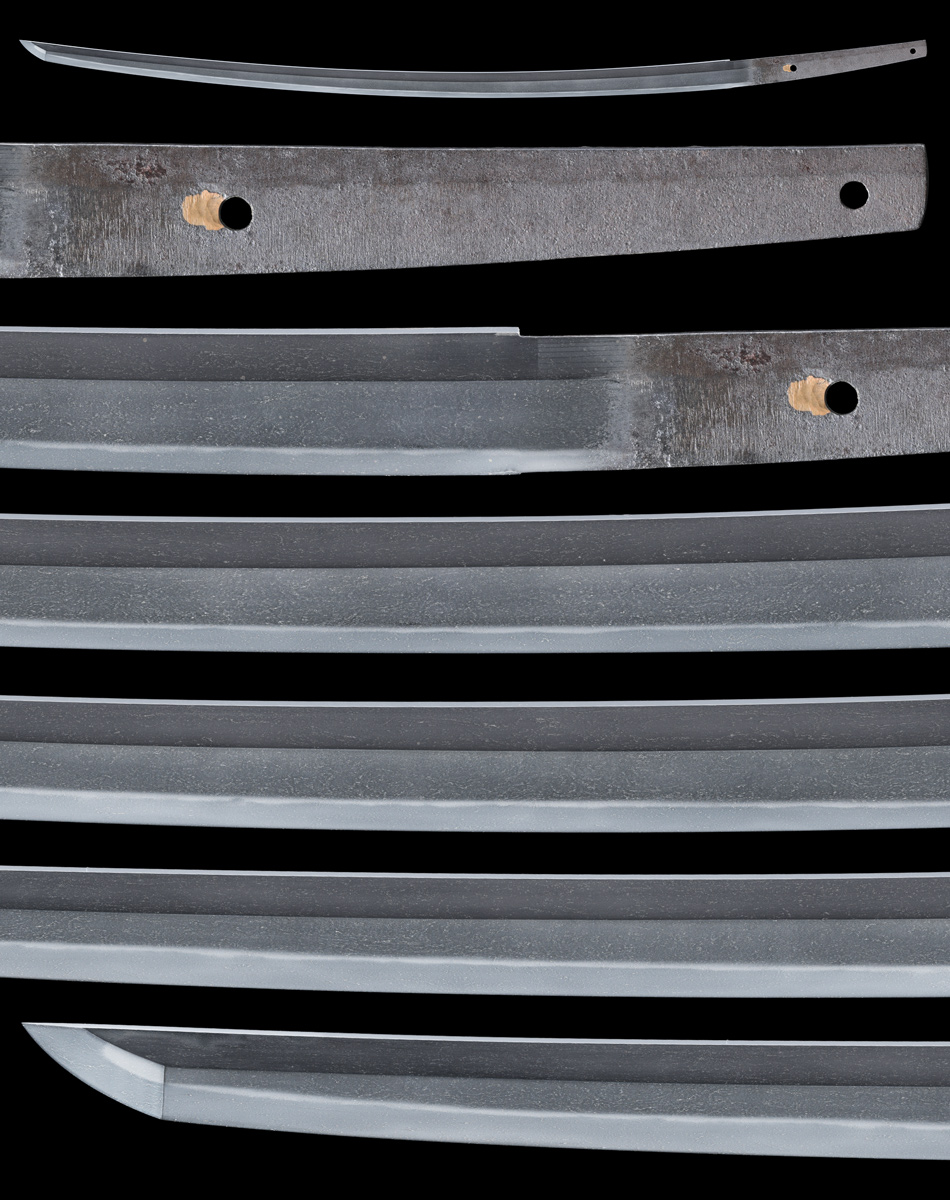
Description Keijō: , ; standard with somewhat noticeable taper from base to tip; standard ; the is slightly deep; . : with a slight tendency, mixed with ; thickly formed with ; faintly appearing -like . : A broad basis with extremely shallow ; here and there mixed with ; containing small and ; prevails with accompanying ; near the a appears; the is somewhat bright. : Straight, turning to a round tip; the is slightly long, with . : None. : Shortened; is a shallow ; file marks are (new) ; at the tip on the the old file marks remain as ; two ; a two-character signature is present at the tip on the , with part of the characters cut away.
Artisan Senoo Yukikuni (行国)
Era Early period
Explanation The Senoo area is known as land developed by Senoo Tarō Kaneyasu, a retainer of the Taira, and is situated eastward—closer to —from the district along the lower basin of the Takahashi River in Bicchū. The Genki Mekikisho and the Kokon Meizukushi distinguish Bicchū swordsmiths into the smiths and the Senoo smiths. In contrast to smiths, who customarily employ the character “tsugu” (次) in their signatures, Senoo smiths seldom use it, as can be seen in surviving examples by Noritaka, Masatsune/ Tsunetō, Koreshige, Yasuie, Hirotsune, Tsunemasa, Moritsune, Sukemasa, Tokimasa, Yukimasa, and others. In workmanship, the often presents a -like texture; appears; and the file marks tend toward —all notable features of Bicchū workmanship. Yet, as the Genki Mekikisho states that such work “resembles pieces,” it also conveys, to some extent, a temperament.
This presents a classical and graceful that does not descend later than the early period. The is with slight , mixed with ; thick adheres; and faint -like stands. The is a broad with extremely shallow ; near the a is intermingled; small and enter; predominates with accompanying ; and overall it shows a manner that at first glance closely resembles work.
Nevertheless, Bicchū-line characteristics are indicated in such points as the manner in which is mixed into the , and the fact that the remaining file marks around the signature are . The and convey a sense of (moist/soft quality), giving an unmistakably archaic flavor and a high degree of dignity. In addition, the presence of an extant signature by Yukikuni is truly precious. Senoo smiths, unlike smiths, often cut their inscriptions as signatures (). Works signed by Yukikuni are rare, and this blade provides important information for research into Yukikuni and into the Bicchū Senoo smiths.
by Nōda Nobuhiro (農田展弘)