NihontoWatch Mon

NihontoWatchBETA

MarketAuctions
Encyclopedia
NihontoWatch Mon

NihontoWatchBETA

MarketAuctions
Encyclopedia

Description

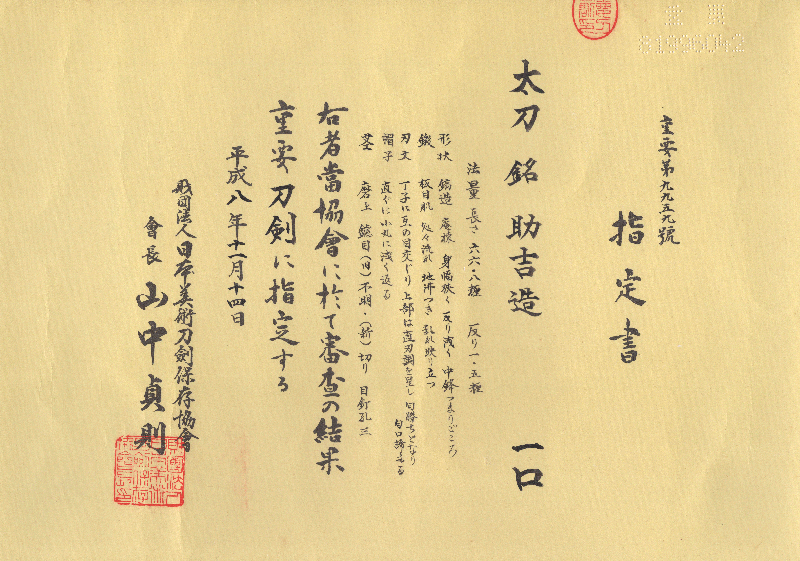
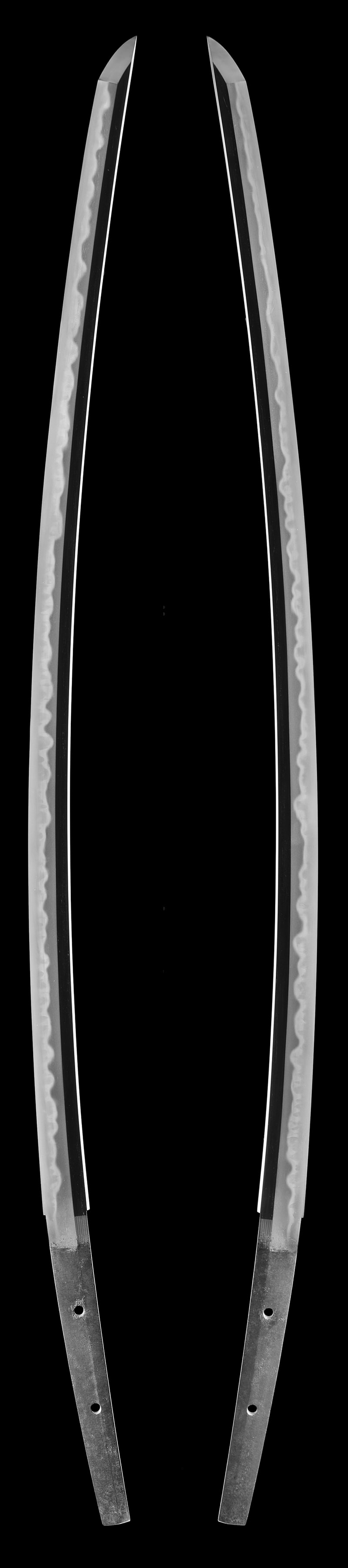
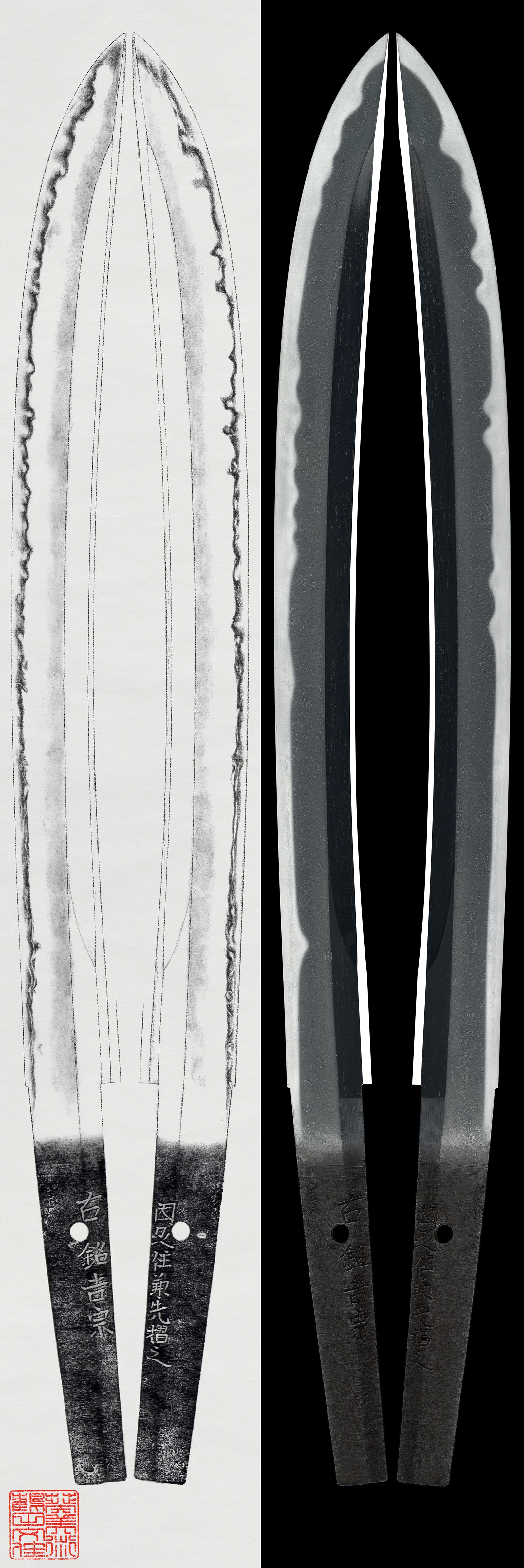
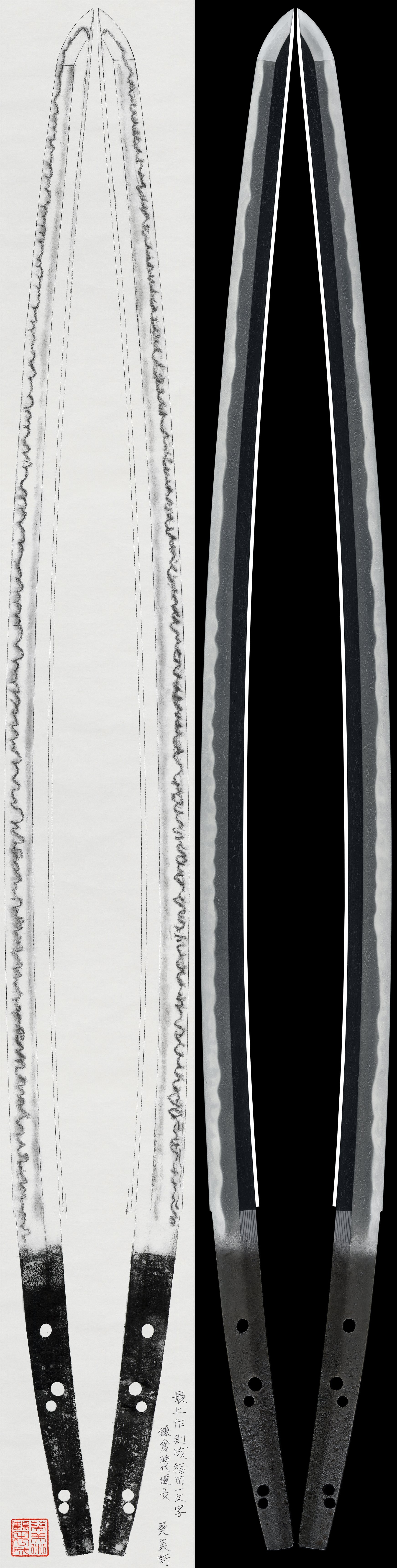
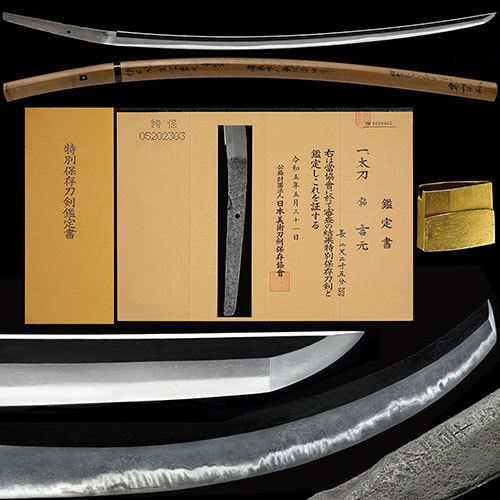
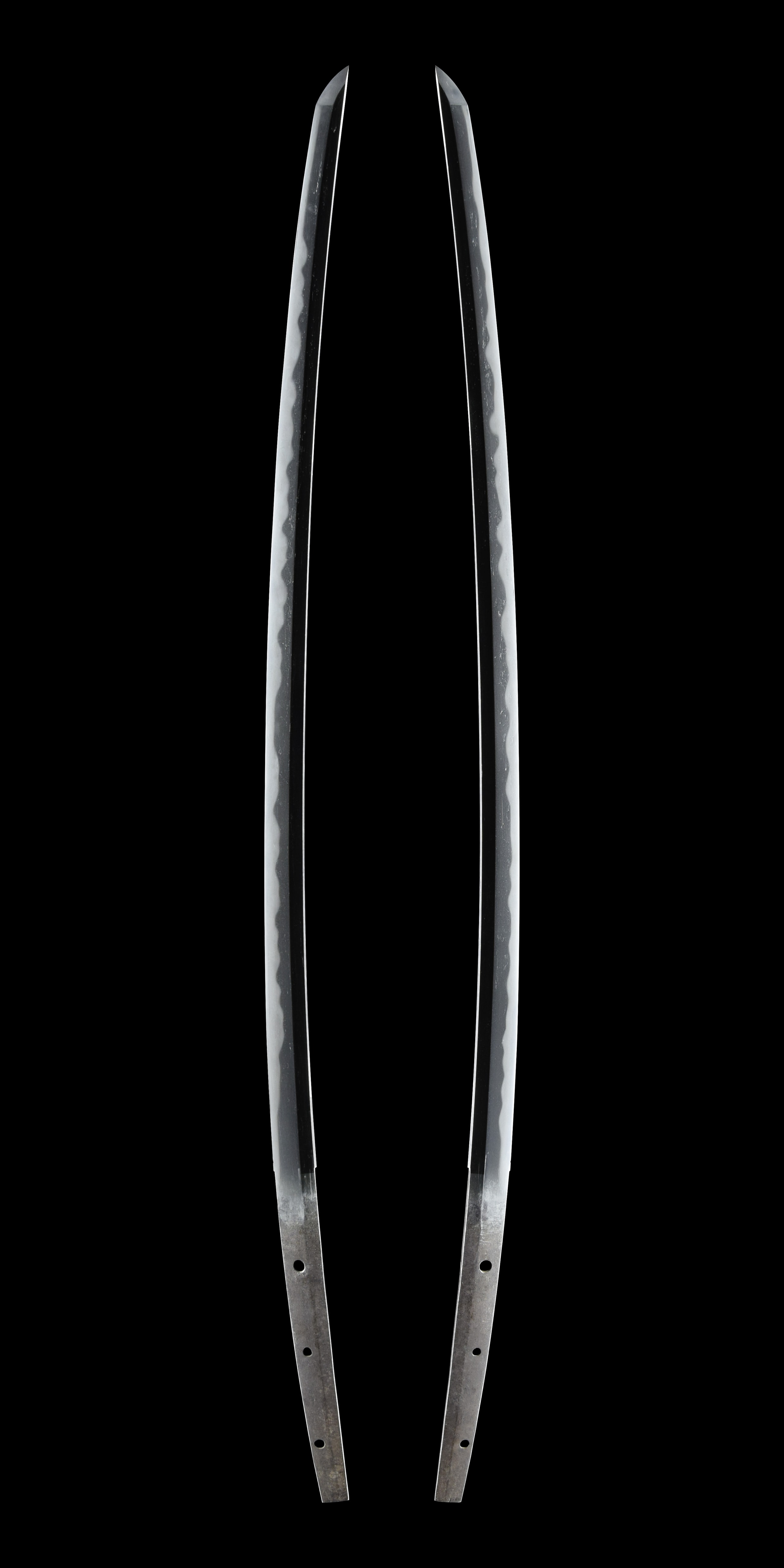
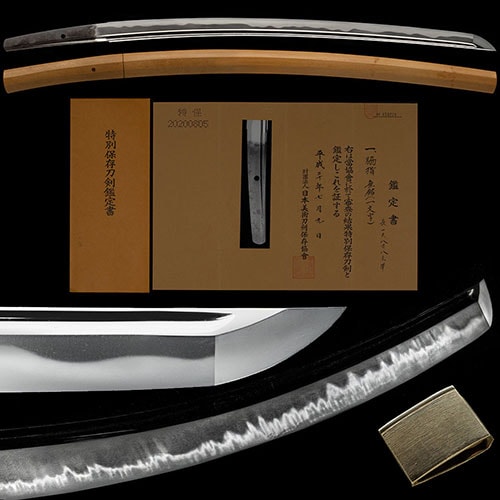
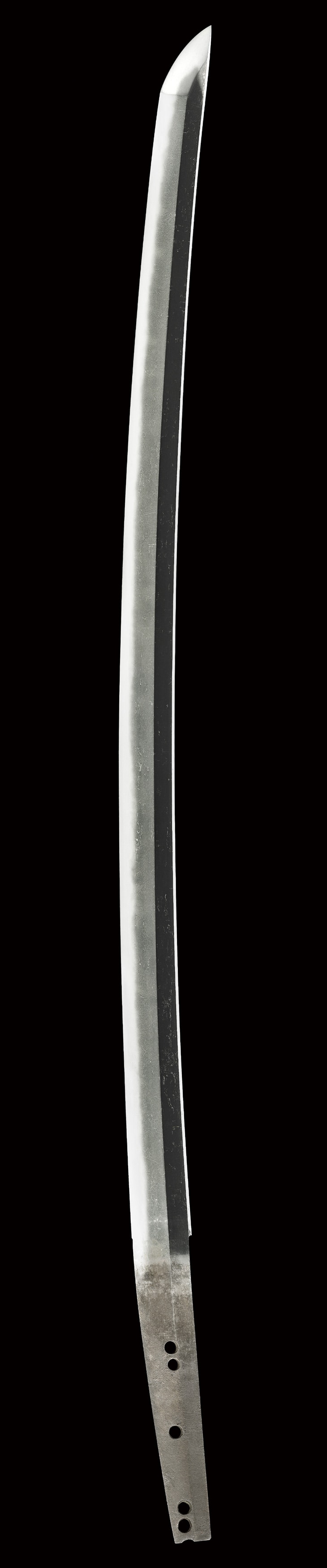
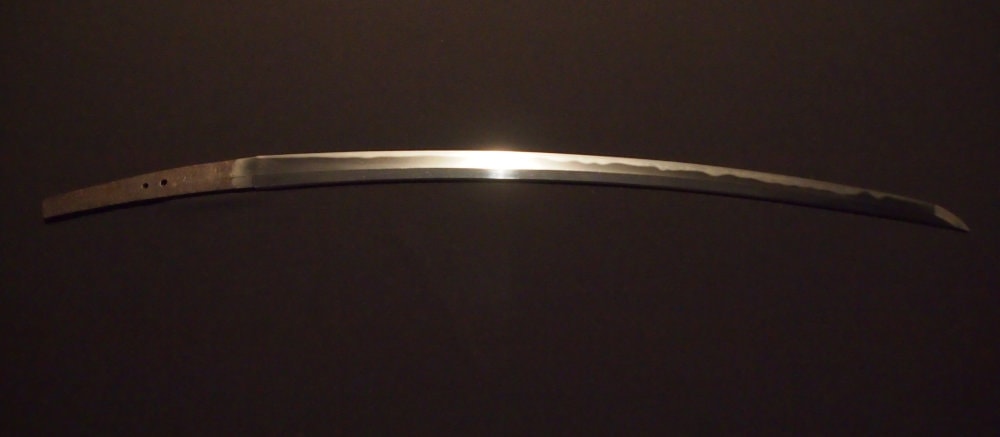
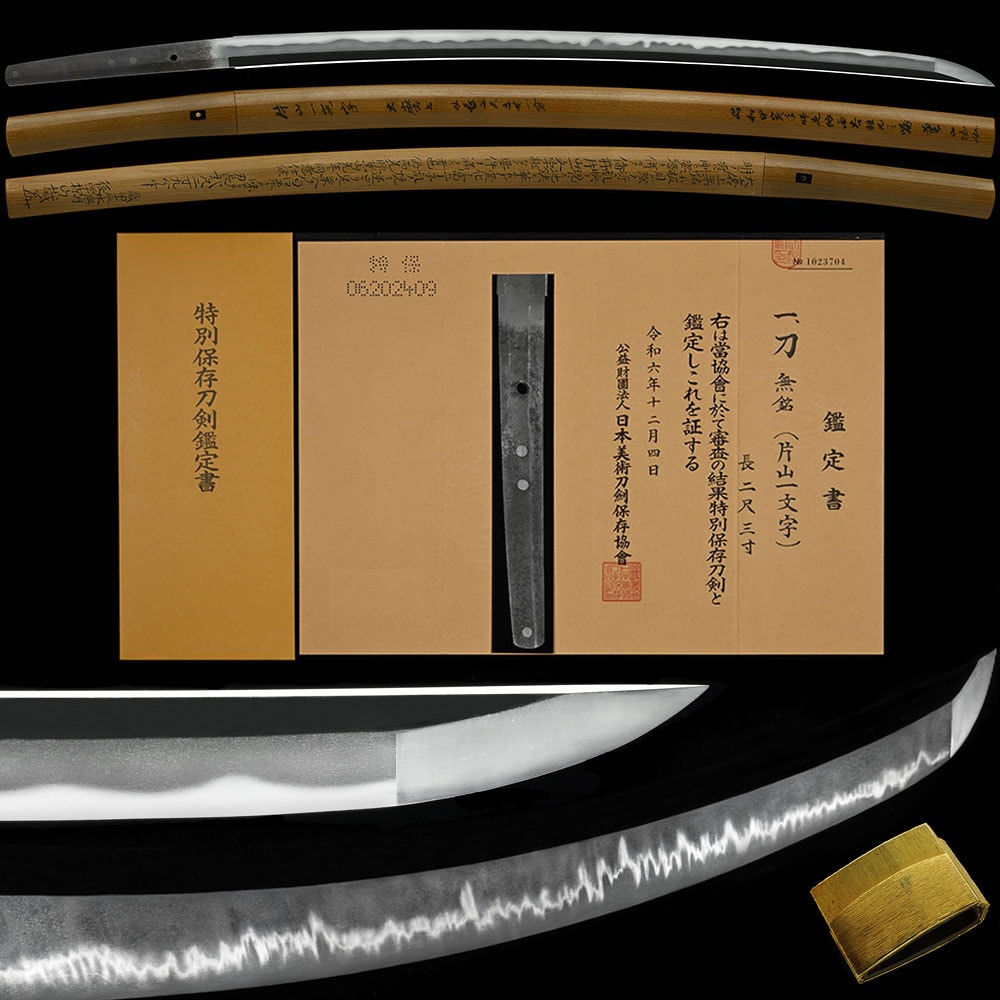
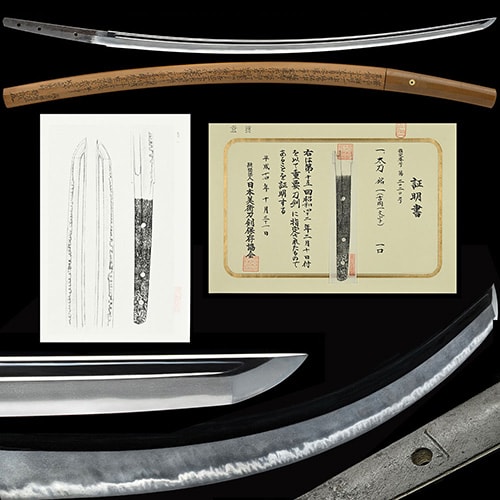
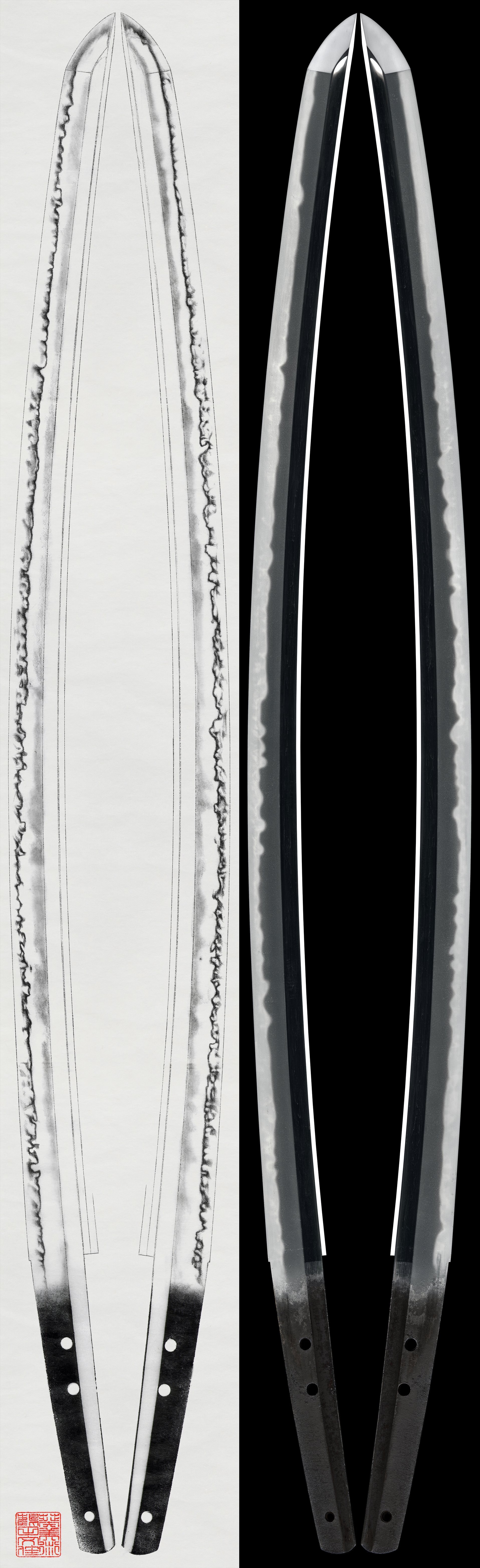
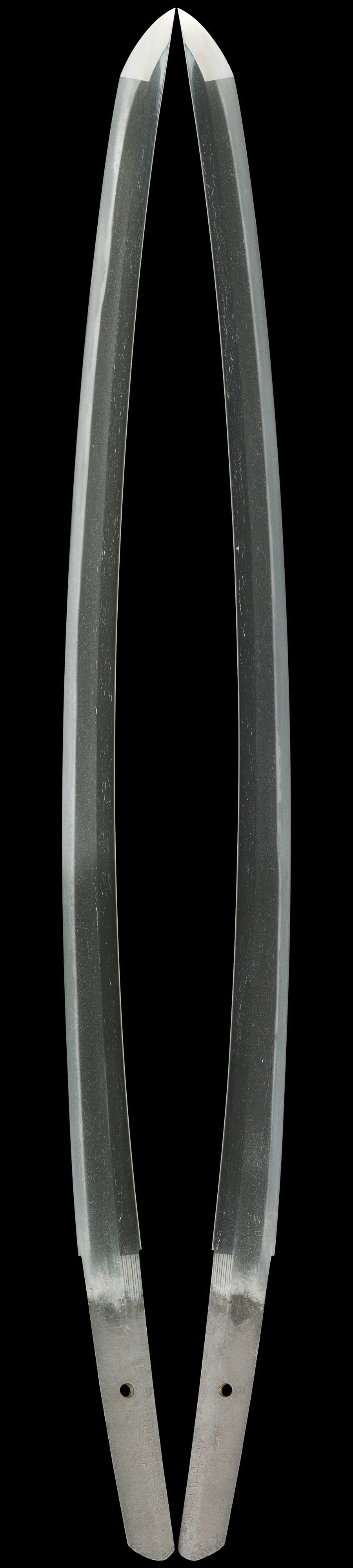
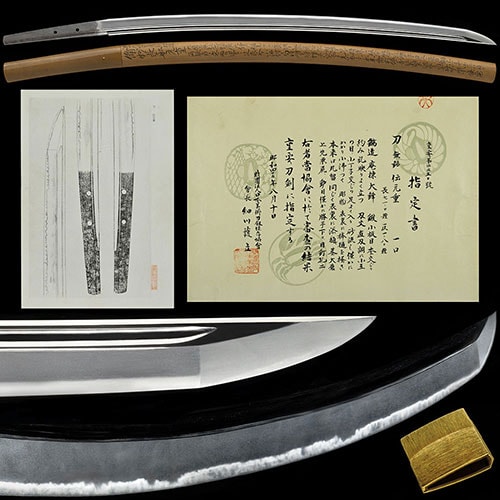
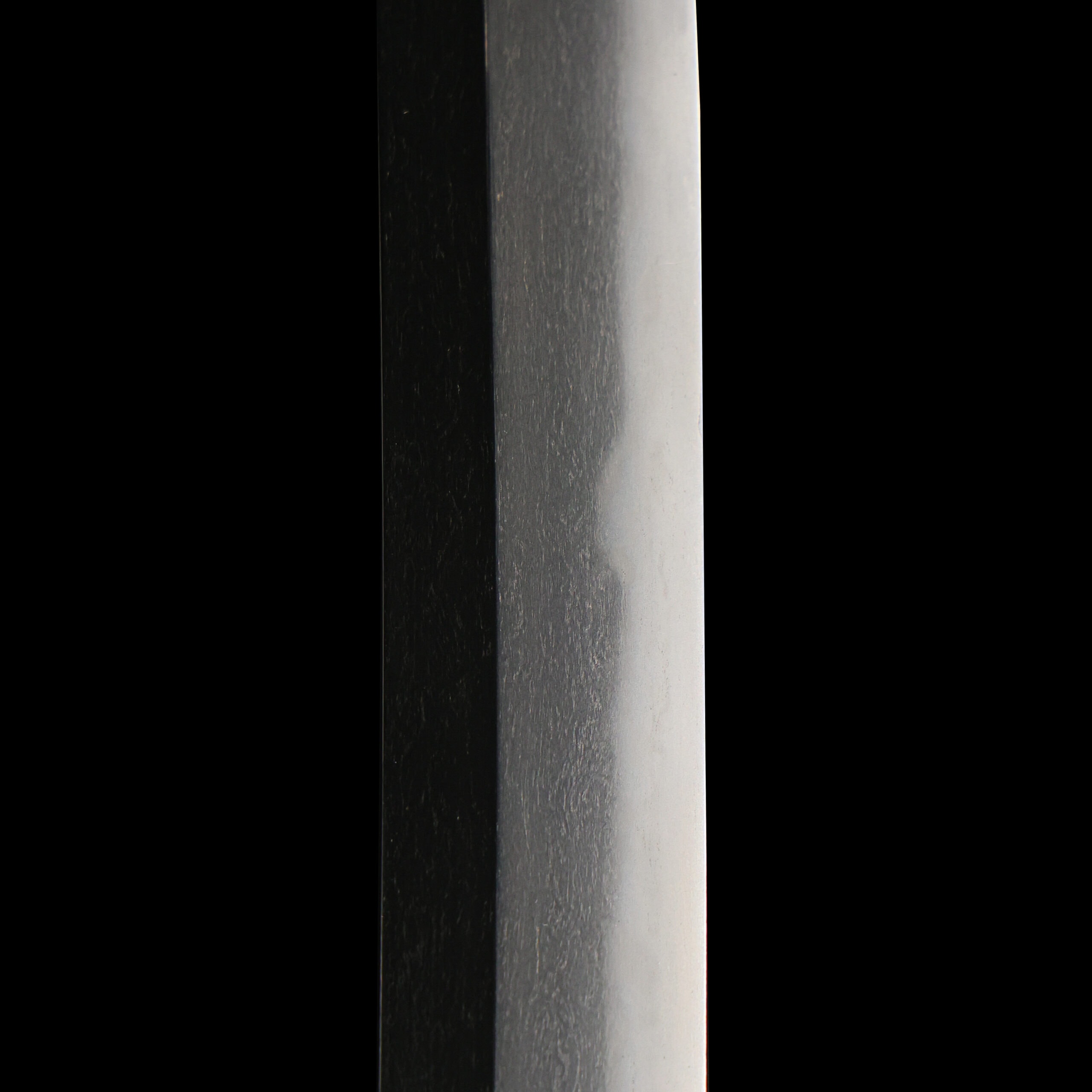
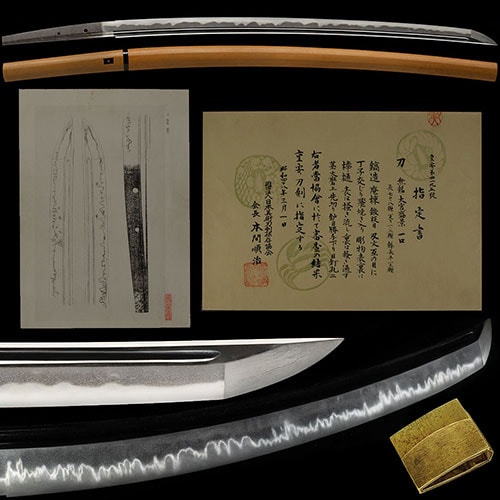
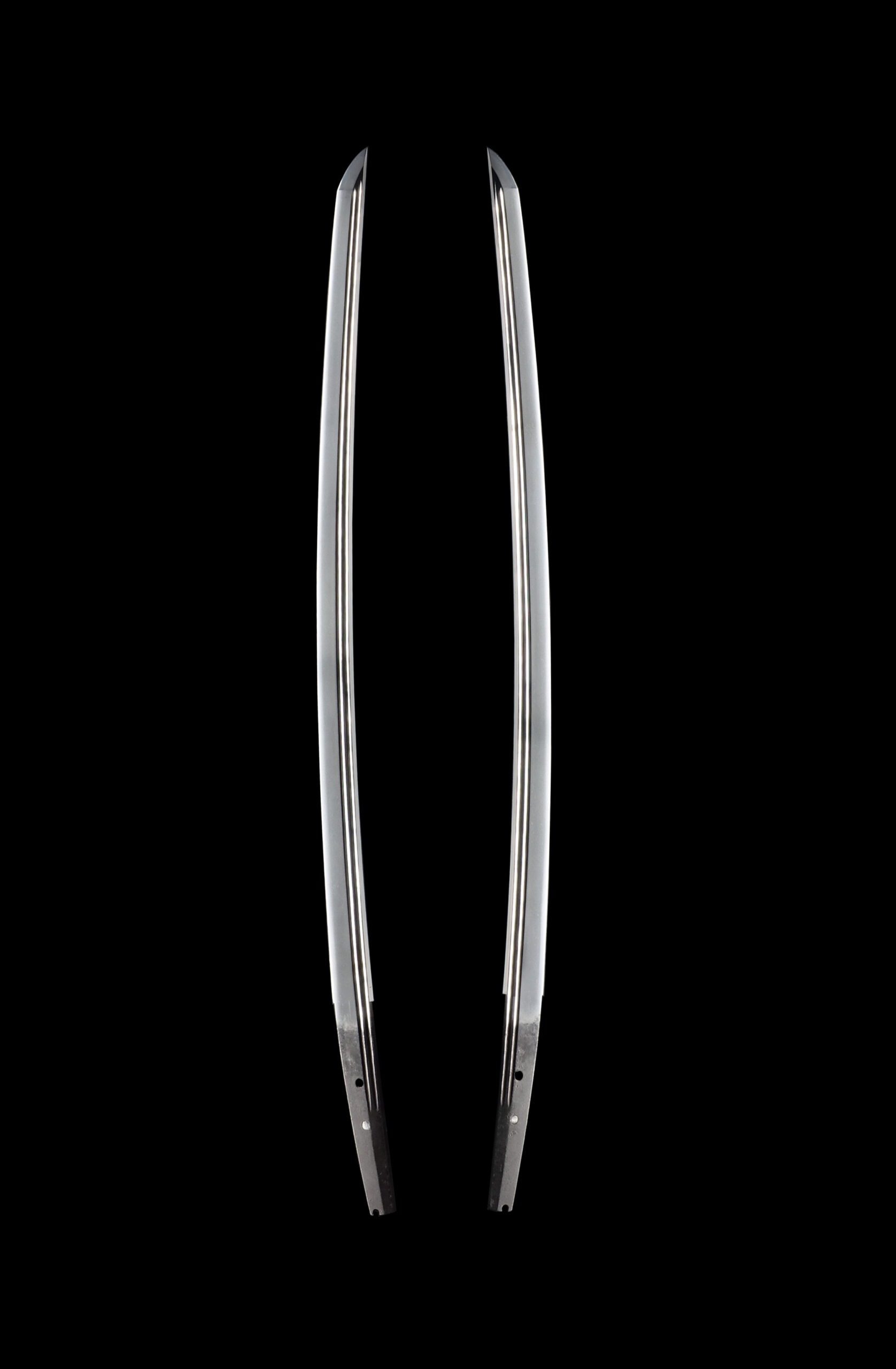
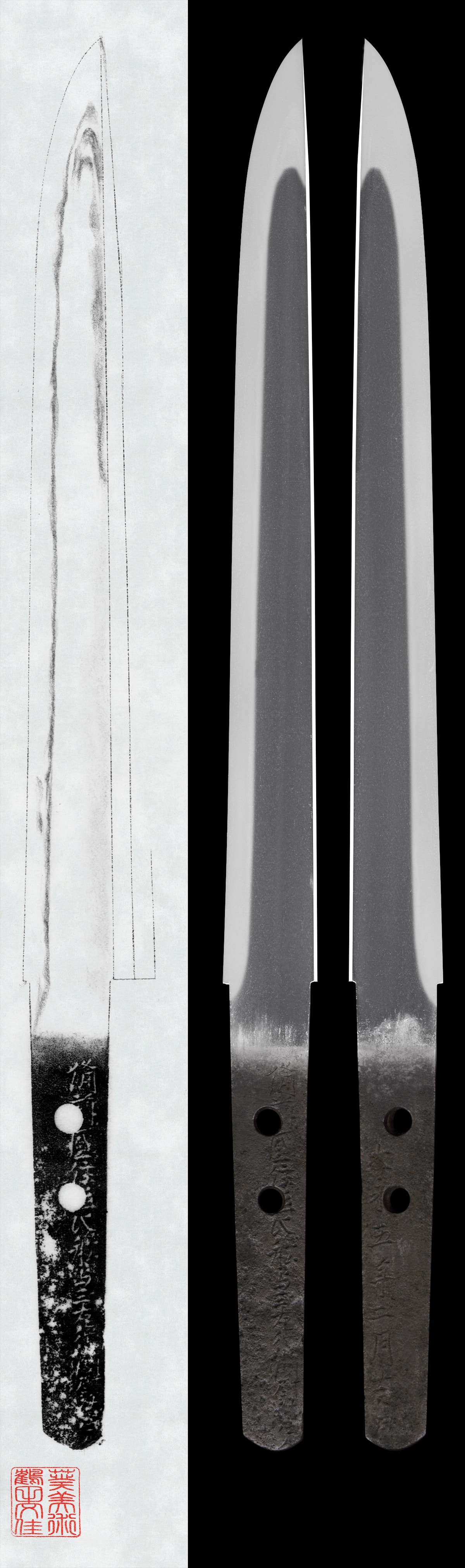
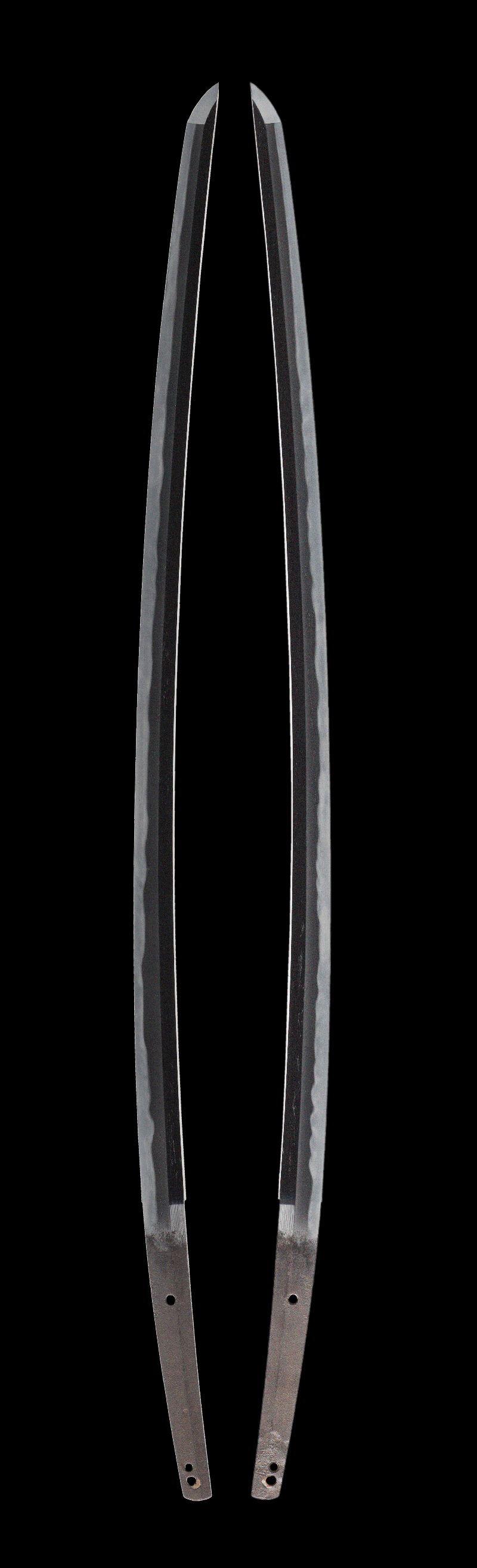
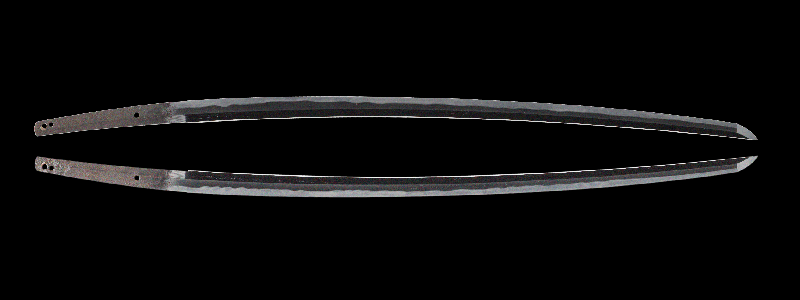
This is a Juyo Token designated work by Sukeyoshi of the Ichimonji school, active in Bizen Province (Okayama Prefecture) during the Kamakura period. Sukeyoshi is positioned as the founder of the Fukuoka Ichimonji or Yoshioka Ichimonji school in the mid-Kamakura period. This rare extant signed work by Sukeyoshi exhibits the typical style of Yoshioka Ichimonji, with a tightly forged ko-itame hada jigane showing utsuri, and a hamon of nioi-deki choji mixed with gunome, partially reversed, and a healthy boshi with ample yakiba.

NBTHK Setsumei

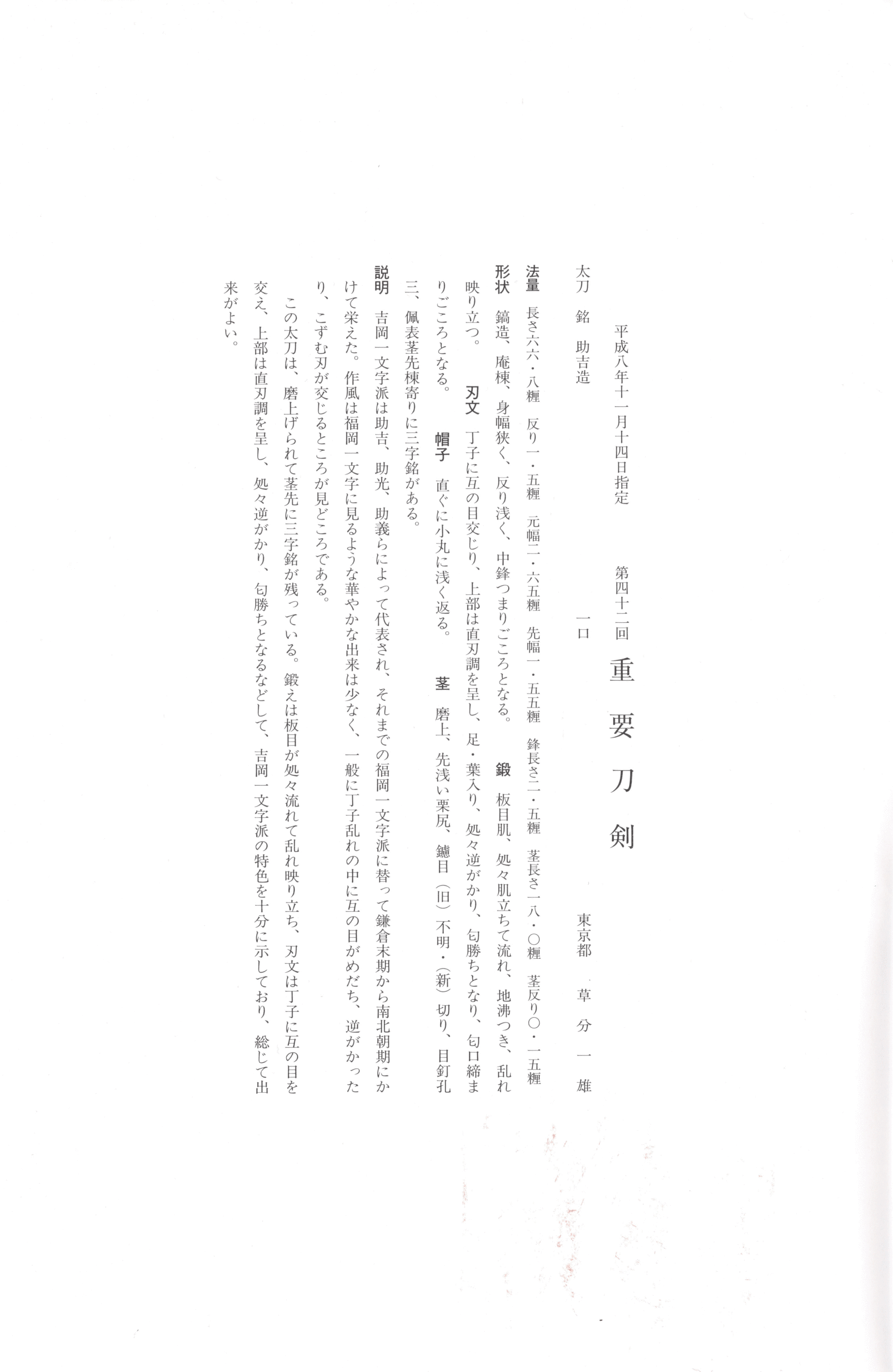
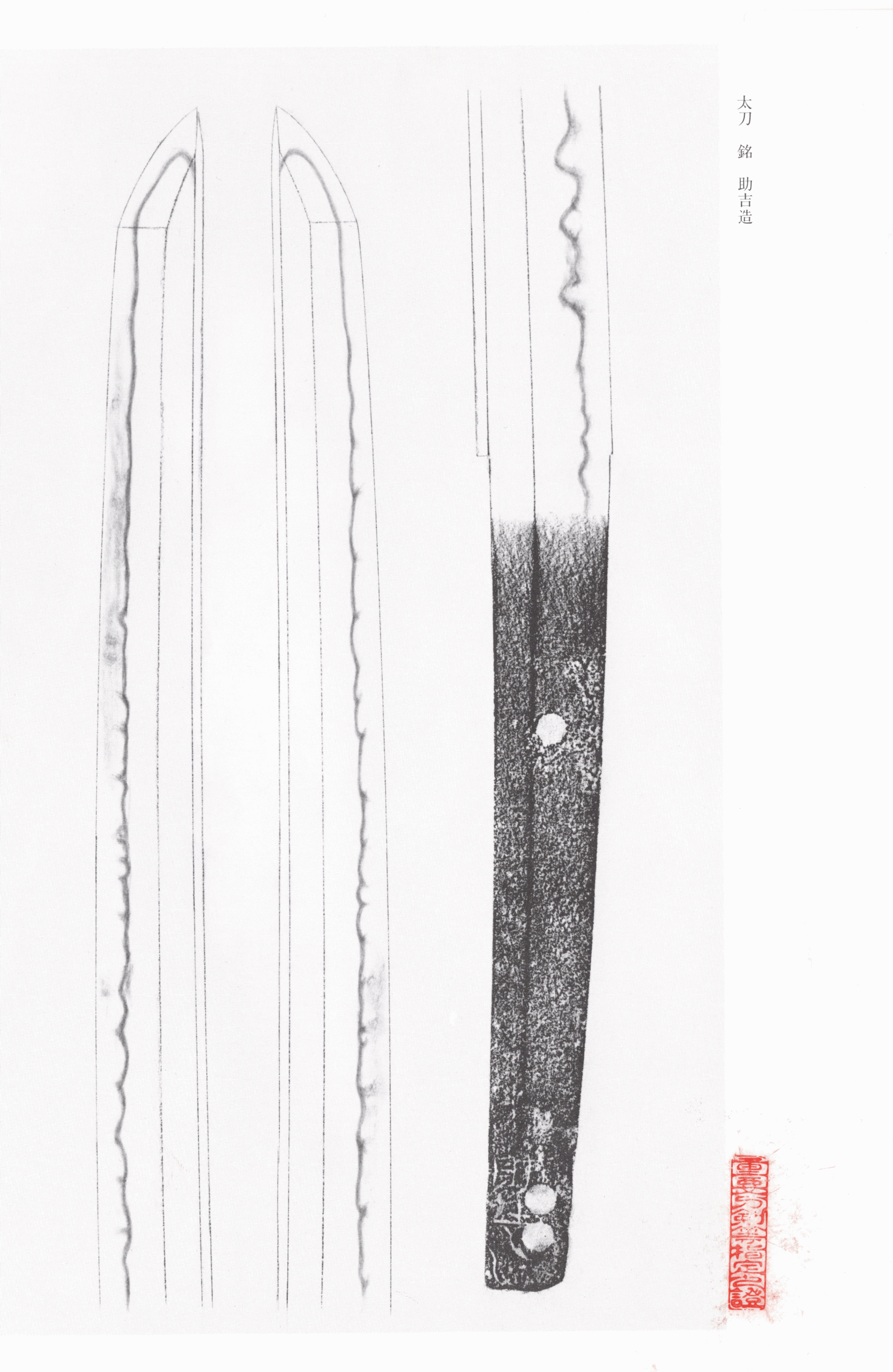
Jūyō-Tōken, 42nd Session — Designated November 14, 1996 Tachi, mei: Sukeyoshi (助吉) Measurements Nagasa 66.8 cm, sori 1.5 cm, motohaba 2.65 cm, sakihaba 1.55 cm, kissaki-nagasa 2.5 cm, nakago-nagasa 18.0 cm, nakago-sori 0.15 cm Description Keijō: shinogi-zukuri, iori-mune; narrow mihaba; shallow sori; chūkissaki with a somewhat compact (tsumari-gokoro) appearance. Kitae: itame-hada; in places the grain stands up and flows (nagare), with ji-nie; midare-utsuri appears. Hamon: chōji mixed with gunome; toward the upper portion it shows a suguha-like tendency; containing ashi and yō; in places showing reverse-slanting elements; becoming nioi-gachi with a somewhat tight nioiguchi. Bōshi: straight, forming ko-maru and turning back shallowly. Horimono: None. Nakago: suriage; tip is a shallow kurijiri; file marks: former (old) unclear, later (new) kiri; three mekugi-ana; on the katana-omote near the nakago-jiri toward the mune there remains a three-character signature. Artisan Sukeyoshi of the Yoshioka Ichimonji group (助吉) Era Late Kamakura period to Nanbokuchō period Explanation The Yoshioka Ichimonji group is represented by smiths such as Sukeyoshi, Sukemitsu, and Sukeyoshi (Sukeyoshi/Sukeyoshi), and it flourished from the late Kamakura into the Nanbokuchō period, replacing the earlier Fukuoka Ichimonji group. Compared with the brilliant and flamboyant workmanship seen in Fukuoka Ichimonji, works of this group more seldom display such a showy character; generally, within a chōji-midare the gunome elements are conspicuous, and points of appreciation include places where the pattern slants in reverse and where a somewhat compact, subdued edge (kozumu ha) is intermingled. This tachi has been shortened (suriage), yet a three-character signature remains at the end of the tang. The forging shows itame that in places runs and becomes irregular, with midare-utsuri standing out; and the temper is chōji mixed with gunome, with the upper portion taking on a suguha-like tendency, and with areas of reverse slanting and an overall nioi-gachi character. In these respects it fully demonstrates the distinctive features of the Yoshioka Ichimonji group, and overall the workmanship is good.

NihontoWatch MonNihontoWatchBETA
MarketAuctionsEncyclopedia
Swords›Bizen-den›Ichimonji›Fukuoka Ichimonji›Sukeyoshi›Tachi: Sukeyoshi (Ichimonji)
tachiJūyō
Fukuoka Ichimonji Sukeyoshi

Tachi: Sukeyoshi (Ichimonji)

mei · Ichimonji · Kamakura · nagasa 66.8cm · sori 1.5cm

¥16,500,000
Visit seller website →
Fukuoka Ichimonji Sukeyoshi — 1 of 5
Fukuoka Ichimonji Sukeyoshi — 2 of 5
Fukuoka Ichimonji Sukeyoshi — 3 of 5
Fukuoka Ichimonji Sukeyoshi — 4 of 5
Fukuoka Ichimonji Sukeyoshi — 5 of 5
1 / 5
1 / 5
Fukuoka Ichimonji Sukeyoshi — 1 of 5Fukuoka Ichimonji Sukeyoshi — 2 of 5Fukuoka Ichimonji Sukeyoshi — 3 of 5Fukuoka Ichimonji Sukeyoshi — 4 of 5Fukuoka Ichimonji Sukeyoshi — 5 of 5
Measurements & details
Smith
Fukuoka Ichimonji Sukeyoshi
Type
Tachi
School
Fukuoka Ichimonji
Period
Around 1275–1278(Kenji)
Province
Bizen
Signature
Signed(50% of this smith's designated works are signed)
Measurements
Nagasa 66.8cmSori 1.5cmMotohaba 2.6cmSakihaba 1.5cmKasane 0.6cm
Description

This is a Juyo Token designated work by Sukeyoshi of the Ichimonji school, active in Bizen Province (Okayama Prefecture) during the Kamakura period. Sukeyoshi is positioned as the founder of the Fukuoka Ichimonji or Yoshioka Ichimonji school in the mid-Kamakura period. This rare extant signed work by Sukeyoshi exhibits the typical style of Yoshioka Ichimonji, with a tightly forged ko-itame hada jigane showing utsuri, and a hamon of nioi-deki choji mixed with gunome, partially reversed, and a healthy boshi with ample yakiba.

NBTHK Zufu Commentary

Juyo #42

AI translation — may contain errors

-, 42nd Session — Designated November 14, 1996

, : Sukeyoshi (助吉)

Measurements 66.8 cm, 1.5 cm, 2.65 cm, 1.55 cm, 2.5 cm, 18.0 cm, 0.15 cm

Description Keijō: , ; narrow ; shallow ; with a somewhat compact () appearance. : ; in places the grain stands up and flows (), with ; appears. : mixed with ; toward the upper portion it shows a -like tendency; containing and ; in places showing reverse-slanting elements; becoming with a somewhat tight . : straight, forming and turning back shallowly. : None. : ; tip is a shallow ; file marks: former (old) unclear, later (new) ; three ; on the near the toward the there remains a three-character signature.

Artisan Sukeyoshi of the Yoshioka group (助吉)

Era Late period to period

Explanation The Yoshioka group is represented by smiths such as Sukeyoshi, Sukemitsu, and Sukeyoshi (Sukeyoshi/Sukeyoshi), and it flourished from the late into the period, replacing the earlier Fukuoka group. Compared with the brilliant and flamboyant workmanship seen in Fukuoka , works of this group more seldom display such a showy character; generally, within a the elements are conspicuous, and points of appreciation include places where the pattern slants in reverse and where a somewhat compact, subdued edge ( ) is intermingled.

This has been shortened (), yet a three-character signature remains at the end of the tang. The forging shows that in places runs and becomes irregular, with standing out; and the temper is mixed with , with the upper portion taking on a -like tendency, and with areas of reverse slanting and an overall character. In these respects it fully demonstrates the distinctive features of the Yoshioka group, and overall the workmanship is good.

About the maker

Sukeyoshi

助吉

Fukuoka Ichimonji (Bizen) · Bizen · around 1275-1278

Fujishiro Jo-jo saku · Tōken Taikan top 5%

1 piece on the market now

›

Sukeyoshi is a Bizen Ichimonji smith of the Kamakura period, working under the single character ichi cut by the school that flourished at Fukuoka, Yoshioka, Katayama and Iwato. The published sources give his lineage from the signature compendia: "according to the meikan, Sukeyoshi was a son of Fukuoka Ichimonji Sukefusa, and by one account the founder of the Yoshioka Ichimonji line." That double placement is the problem of his name. Same-name smiths are recorded in both the Fukuoka and Yoshioka groups, and three signed Jūyō Bijutsuhin tachi catalogued together, though all judged Fukuoka Ichimonji, are said to differ enough in the manner of their signatures that the published sources will not commit them to a single hand. His record therefore reads as two manners drawn by the judges themselves rather than as one even style, and the second character of his identity is settled less by a personal tell than by era and school.

The first manner is the signed two-character tachi, and it reads archaic. The published commentary calls the ji and ha old at a glance and identifies the work as Ko-Ichimonji of the early Kamakura, the generation that comes immediately after Ko-Bizen. Over a well-packed ko-itame, at times an itame closely forged, fine ji-nie gathers and a vivid midare-utsuri stands clearly. The temper here is comparatively calm: a suguha-toned base broken into a small midare, into which ko-chōji and small chōji are mixed in a gunome-deki manner, with ashi and yō working well in ko-nie, sunagashi laid in and kinsuji running through, the bōshi a ko-maru. The two-character signature is cut boldly at the very end of the tang, and the judges call its manner of inscription pleasing. One of these tachi carries the character ue above the name; the published sources note this is to be read "tatematsuru"[[c:1]], with other examples known, signifying that the smith presented the blade to the patron who had commissioned it.

The jigane is the constant across both manners. Itame, tightening at times into a fine ko-itame and elsewhere standing a little open, carries ji-nie and that bright midare-utsuri of old Bizen steel on every example, signed and unsigned alike. On the more refined pieces the forging closes up and the reflection only grows clearer; on the wider attributions the grain stands more, tending toward hada-tatsu, and chikei enters with mokume mixed into the itame. It is the jigane he shares with the whole school, and the surface against which his two tempers are read.

The second manner is the flamboyant one for which Fukuoka Ichimonji is named, seen on the ō-suriage attributions. The published sources describe the mid-Kamakura Fukuoka style as "the most splendid and richly varied large-pattern chōji-midare," and it was on exactly such a temper that the connoisseur Hon'ami Tadaaki rendered his judgment. On a greatly shortened, unsigned wakizashi he cut a gold-inlaid attribution to Sukeyoshi, reasoning from the blade's brilliant large-pattern chōji-midare that the hand was the Fukuoka rather than the Yoshioka Sukeyoshi. That blade shows a chōji-midare mixed with togariba and tobiyaki over an itame with mokume, ashi and yō entering, ko-nie adhering, kinsuji and sunagashi through it, the bōshi a notare-komi tending to ko-maru with hakikake. A wide shortened tachi of the same character has a chū-kissaki leaning to ikubi and a chōji-midare that inclines to saka-gakari. Where the signed work is quiet and old, these are showy and full of variation.

What sets him apart within Bizen is held in that contrast. Against the plainer Ko-Bizen smiths who precede him, his signed tachi is brighter in its midare-utsuri and gathers chōji on the edge where theirs run quieter. Against the full mid-Kamakura flowering of the school at Fukuoka, his archaic signed manner stands a half-generation earlier, the Ko-Ichimonji root from which that flowering grew, even as his attributed work carries the later flamboyant temper forward. The published sources keep the two faces honestly side by side, judging the unsigned blades Fukuoka Ichimonji "from every point" while granting that they "cannot be readily decided to be by the same hand," so that what is fixed about him is the school and the period rather than the individual.

For the collector he is a rare early name. Fujishiro grades him Jō-jō saku, and the Tōkō Taikan values him in the upper-middle range of the old Bizen masters. He has no National Treasures and no Important Cultural Properties; his record runs through the Jūyō rank and the prewar Jūyō Bijutsuhin, the signed early-Kamakura tachi held by the published sources to be sound and of fine quality. His blades carry good provenance: a signed tachi from the Tsugaru house, another recorded in the Sasaki collection, and a great naginata transmitted in the Uesugi family and attributed by tradition to his hand, with a piece now in the Hayashibara Museum of Art among the recorded whereabouts. Only a couple of his works fall in the Jūyō tier, and signed Sukeyoshi survives in just a handful of examples, so one comes to light only seldom. A privately held signed Sukeyoshi is a notable thing for a collector to encounter, and a document of how the Ichimonji passed from its archaic beginnings into its great flowering.

Historical importance

Where Sukeyoshi stands among comparable artisans: across all of nihontō, and within tradition, era, and period. The tiers (Foremost · Leading · Major · Notable) weigh official designations from the NBTHK and Japan's Agency for Cultural Affairs, together with historical honors of lasting repute such as the Sansaku and Meibutsu-chō.

随一
Foremost
屈指
Leading
有数
Major
著名
Notable

Select a lens to see how it's measured.

Designation record
4 designated works
Jūyō Bijutsuhin
2
Jūyō
2
1 work by Sukeyoshi on the market→
Sukeyoshi — full profileFukuoka Ichimonji (Bizen) school
About the school

Fukuoka Ichimonji

福岡一文字

Bizen-den · Bizen

Phase: Fukuoka Ichimonji福岡一文字· 1207–1288

7 pieces on the market now

›

Centered at Fukuoka in Bizen across the middle Kamakura decades, this window is the loud heart of the Ichimonji school, the moment when the ichi-mark workshops pushed their chōji tempering to its showiest extreme. The setsumei repeatedly name the same triad as its representative hands: Norifusa, Sukezane, and Yoshifusa, a grouping cited again and again as the smiths who forged the most flamboyant chōji-midare of the period. Learn more →

71 recorded smiths355 designated works
Leading smiths
SmithEraDesignated
Sukezane助眞1264-127542
Yoshifusa吉房1247-124945
Norimune則宗1184-11858
Yoshihira吉平1243-124717
Tamekiyo爲清1213-12196
Explore the Fukuoka Ichimonji school →
NBTHK Certificate
Jūyō Tōken重要刀剣
Important Sword
›

A blade of top-grade workmanship and condition, formally judged to rank with a nationally recognized Important Art Object (Jūyō Bijutsuhin). Awarded only at the NBTHK’s competitive annual examination.

Of Japan’s roughly 2.5 million registered swords, only 12,307 (about 1 in 203) have ever attained Jūyō.

About the NBTHK›

The NBTHK (Nihon Bijutsu Tōken Hozon Kyōkai, the Society for the Preservation of Japanese Art Swords) is a public-interest incorporated foundation founded in 1948 and supervised by Japan’s Agency for Cultural Affairs (Bunkachō); it is based at the Japanese Sword Museum in Tokyo. Its expert panels physically examine each submitted work (shinsa) and issue a certificate (kanteishō) ranking it by artistic and historical merit. NBTHK papers are the most widely recognized standard of authentication for Japanese swords and fittings.

NBTHK official site→
Seller
I
Iida Koendo
Established 1880 · 146 yrs on the market
🇯🇵Ships from Japan
›
✓Verified dealeriidakoendo.com
Settles in JPY
✓Ships worldwide✓English supportWire transfer
Return policy

Customer-initiated returns accepted within two days of arrival; return shipping paid by customer and fees non-refundable. Returns/refunds unavailable for overseas deliveries.

View all of Iida Koendo’s listings→View this item on the dealer’s site→

More from the Fukuoka Ichimonji school

View all →
Eirakudo
Jūyō
Tachi - Jūyō - by Fukuoka Ichimonji School - Fukuoka Ichimonji - Juyo TokenTachi - Jūyō - by Fukuoka Ichimonji School - Fukuoka Ichimonji - Juyo Token

Tachi

ByFukuoka Ichimonji School
Ask
Tsuruginoya
Jūyō
Katana - Jūyō - by Fukuoka Ichimonji School - Mumei Fukuoka IchimonjiKatana - Jūyō - by Fukuoka Ichimonji School - Mumei Fukuoka Ichimonji

Katana

ByFukuoka Ichimonji School
¥10,000,000
Hyozaemon
Tokuho
Wakizashi - Tokuho - by Fukuoka Ichimonji Yoshifusa - Fukuoka Ichimonji YoshifusaWakizashi - Tokuho - by Fukuoka Ichimonji Yoshifusa - Fukuoka Ichimonji Yoshifusa

Wakizashi

ByFukuoka Ichimonji Yoshifusa
Ask
Aoi Art
Tokuho
Tokuho - by Fukuoka Ichimonji Yoshimune - Unsigned (Ichimonji) with Kiritsuke-mei by KanesakiTokuho - by Fukuoka Ichimonji Yoshimune - Unsigned (Ichimonji) with Kiritsuke-mei by Kanesaki

Unsigned (Ichimonji) with Kiritsuke-mei by Kanesaki

ByFukuoka Ichimonji Yoshimune
¥1,950,000
Aoi Art
Jūyō
Tachi - Jūyō - by Fukuoka Ichimonji Norinari - Norinari (Ko-Ichimonji)Tachi - Jūyō - by Fukuoka Ichimonji Norinari - Norinari (Ko-Ichimonji)

Tachi

ByFukuoka Ichimonji Norinari
¥13,500,000
Eirakudo
Tokuho
Tachi - Tokuho - by Fukuoka Ichimonji Yoshimoto - Yoshimoto - Tokubetsu Hozon TokenTachi - Tokuho - by Fukuoka Ichimonji Yoshimoto - Yoshimoto - Tokubetsu Hozon Token

Tachi

ByFukuoka Ichimonji Yoshimoto
¥8,500,000

More from the Ichimonji school

View all →
Aoi Art
Jūyō
Katana - Jūyō - by Yoshioka Ichimonji Sukemitsu - Ichi Bizen-koku Yoshioka Sakon Sho (Sukemitsu)Katana - Jūyō - by Yoshioka Ichimonji Sukemitsu - Ichi Bizen-koku Yoshioka Sakon Sho (Sukemitsu)

Katana

ByYoshioka Ichimonji Sukemitsu
¥9,500,000
Eirakudo
Tokuho
Katana - Tokuho - by Katayama Ichimonji School - Katayama Ichimonji NorifusaKatana - Tokuho - by Katayama Ichimonji School - Katayama Ichimonji Norifusa

Katana

ByKatayama Ichimonji School
¥4,000,000
Eirakudo
Tokuho
Wakizashi - Tokuho - by Ichimonji School - Fukuoka Ichimonji Wakizashi - Tokubetsu Hozon TokenWakizashi - Tokuho - by Ichimonji School - Fukuoka Ichimonji Wakizashi - Tokubetsu Hozon Token

Wakizashi

ByIchimonji School
¥3,500,000
Wakeidou
Jūyō
Wakizashi - Jūyō - by Yoshioka Ichimonji School - Mumei Yoshioka IchimonjiWakizashi - Jūyō - by Yoshioka Ichimonji School - Mumei Yoshioka Ichimonji

Wakizashi

ByYoshioka Ichimonji School
¥4,500,000
Kanda Toukodo
Jūyō
Katana - Jūyō - by Ichimonji School - Juyo Token (25th Session)Katana - Jūyō - by Ichimonji School - Juyo Token (25th Session)

Katana

ByIchimonji School
Ask
Toushin
Katana - by Ichimonji School - Mumei (Hatakeda Mitsumori) (Bizen no kuni Yoshioka Ichimonji Sukemitsu)Katana - by Ichimonji School - Mumei (Hatakeda Mitsumori) (Bizen no kuni Yoshioka Ichimonji Sukemitsu)

Katana

ByIchimonji School
¥1,210,000
Eirakudo
Jūyō
Tachi - Jūyō - by Yoshioka Ichimonji School - Yoshioka Ichimonji Tachi - Juyo TokenTachi - Jūyō - by Yoshioka Ichimonji School - Yoshioka Ichimonji Tachi - Juyo Token

Tachi

ByYoshioka Ichimonji School
Ask
Aoi Art
Tokuho
Katana - Tokuho - by Ichimonji School - Mumei (Ichimonji) (Consignment Sale)Katana - Tokuho - by Ichimonji School - Mumei (Ichimonji) (Consignment Sale)

Katana

ByIchimonji School
¥4,650,000

More from the Bizen tradition

View all →
Aoi Art
Jūyō Bijutsuhin
Daisho - Jubi - by Osafune Nagamitsu - Dai Sho: Katana (Important Art Object): Mumei (Den Nagamitsu) / Wakizashi: Mumei (Sekishu Naotsuna)Daisho - Jubi - by Osafune Nagamitsu - Dai Sho: Katana (Important Art Object): Mumei (Den Nagamitsu) / Wakizashi: Mumei (Sekishu Naotsuna)

Daishō

ByOsafune Nagamitsu
Ask
Eirakudo
Tokuho
Tachi - Tokuho - by Osafune Sanenaga - Sanenaga Tachi: Tokubetsu Hozon TokenTachi - Tokuho - by Osafune Sanenaga - Sanenaga Tachi: Tokubetsu Hozon Token

Tachi

ByOsafune Sanenaga
¥7,500,000
Iida Koendo
Jūyō
Tachi - Jūyō - by Osafune Shigezane - Bishu Osafune ju Shigezane, Enbun 3rd year, 12th monthTachi - Jūyō - by Osafune Shigezane - Bishu Osafune ju Shigezane, Enbun 3rd year, 12th month

Tachi

ByOsafune Shigezane
¥33,000,000
Aoi Art
Tokuho
Katana - Tokuho - by Osafune Motomitsu - Mumei (Attributed to Osafune Motomitsu)Katana - Tokuho - by Osafune Motomitsu - Mumei (Attributed to Osafune Motomitsu)

Katana

ByOsafune Motomitsu
Starting Bid¥1,200,000
Nihonto.com
Jūyō
Tanto - Jūyō - by Osafune Kagemitsu - Juyo Tanto by Bizen KagemitsuTanto - Jūyō - by Osafune Kagemitsu - Juyo Tanto by Bizen Kagemitsu

Tantō

ByOsafune Kagemitsu
¥89,500
Iida Koendo
Jūyō
Tachi - Jūyō - by Osafune Nagamitsu - Bizenkoku Osafune ju Sakonshogen Nagamitsu tsukuru, Einin Gannen Junigatsu Hi (December 1293)Tachi - Jūyō - by Osafune Nagamitsu - Bizenkoku Osafune ju Sakonshogen Nagamitsu tsukuru, Einin Gannen Junigatsu Hi (December 1293)

Tachi

ByOsafune Nagamitsu
¥55,000,000
Iida Koendo
Jūyō
Tachi - Jūyō - by Osafune Nagamitsu - NagamitsuTachi - Jūyō - by Osafune Nagamitsu - Nagamitsu

Tachi

ByOsafune Nagamitsu
¥33,000,000
Tozando
Hozon
Katana - Hozon - by Sukesada - Bishū Osafune Sukesada - NBTHK Hozon Token Certified, Dated Eiroku 8 (1565)Katana - Hozon - by Sukesada - Bishū Osafune Sukesada - NBTHK Hozon Token Certified, Dated Eiroku 8 (1565)

Katana

BySukesada
¥1,620,000

Swords

  • Katana
  • Wakizashi
  • Tantō
  • Tachi
  • Naginata
  • Yari

Fittings

  • Tsuba
  • Fuchi-Kashira
  • Kozuka
  • Menuki

By Certification

  • Tokujū
  • Jūyō
  • Tokuho
  • Hozon

Resources

  • Dealer Directory
  • Artist Directory
  • Glossary
  • Browse All
Nihontowatch© 2026
TermsPrivacyCookiesAbout

Description

This is a Juyo Token designated work by Sukeyoshi of the Ichimonji school, active in Bizen Province (Okayama Prefecture) during the Kamakura period. Sukeyoshi is positioned as the founder of the Fukuoka Ichimonji or Yoshioka Ichimonji school in the mid-Kamakura period. This rare extant signed work by Sukeyoshi exhibits the typical style of Yoshioka Ichimonji, with a tightly forged ko-itame hada jigane showing utsuri, and a hamon of nioi-deki choji mixed with gunome, partially reversed, and a healthy boshi with ample yakiba.

NBTHK Setsumei

Jūyō-Tōken, 42nd Session — Designated November 14, 1996 Tachi, mei: Sukeyoshi (助吉) Measurements Nagasa 66.8 cm, sori 1.5 cm, motohaba 2.65 cm, sakihaba 1.55 cm, kissaki-nagasa 2.5 cm, nakago-nagasa 18.0 cm, nakago-sori 0.15 cm Description Keijō: shinogi-zukuri, iori-mune; narrow mihaba; shallow sori; chūkissaki with a somewhat compact (tsumari-gokoro) appearance. Kitae: itame-hada; in places the grain stands up and flows (nagare), with ji-nie; midare-utsuri appears. Hamon: chōji mixed with gunome; toward the upper portion it shows a suguha-like tendency; containing ashi and yō; in places showing reverse-slanting elements; becoming nioi-gachi with a somewhat tight nioiguchi. Bōshi: straight, forming ko-maru and turning back shallowly. Horimono: None. Nakago: suriage; tip is a shallow kurijiri; file marks: former (old) unclear, later (new) kiri; three mekugi-ana; on the katana-omote near the nakago-jiri toward the mune there remains a three-character signature. Artisan Sukeyoshi of the Yoshioka Ichimonji group (助吉) Era Late Kamakura period to Nanbokuchō period Explanation The Yoshioka Ichimonji group is represented by smiths such as Sukeyoshi, Sukemitsu, and Sukeyoshi (Sukeyoshi/Sukeyoshi), and it flourished from the late Kamakura into the Nanbokuchō period, replacing the earlier Fukuoka Ichimonji group. Compared with the brilliant and flamboyant workmanship seen in Fukuoka Ichimonji, works of this group more seldom display such a showy character; generally, within a chōji-midare the gunome elements are conspicuous, and points of appreciation include places where the pattern slants in reverse and where a somewhat compact, subdued edge (kozumu ha) is intermingled. This tachi has been shortened (suriage), yet a three-character signature remains at the end of the tang. The forging shows itame that in places runs and becomes irregular, with midare-utsuri standing out; and the temper is chōji mixed with gunome, with the upper portion taking on a suguha-like tendency, and with areas of reverse slanting and an overall nioi-gachi character. In these respects it fully demonstrates the distinctive features of the Yoshioka Ichimonji group, and overall the workmanship is good.

NihontoWatch MonNihontoWatchBETA
MarketAuctionsEncyclopedia
Swords›Bizen-den›Ichimonji›Fukuoka Ichimonji›Sukeyoshi›Tachi: Sukeyoshi (Ichimonji)
tachiJūyō
Fukuoka Ichimonji Sukeyoshi

Tachi: Sukeyoshi (Ichimonji)

mei · Ichimonji · Kamakura · nagasa 66.8cm · sori 1.5cm

¥16,500,000
Visit seller website →
Fukuoka Ichimonji Sukeyoshi — 1 of 5
Fukuoka Ichimonji Sukeyoshi — 2 of 5
Fukuoka Ichimonji Sukeyoshi — 3 of 5
Fukuoka Ichimonji Sukeyoshi — 4 of 5
Fukuoka Ichimonji Sukeyoshi — 5 of 5
1 / 5
1 / 5
Fukuoka Ichimonji Sukeyoshi — 1 of 5Fukuoka Ichimonji Sukeyoshi — 2 of 5Fukuoka Ichimonji Sukeyoshi — 3 of 5Fukuoka Ichimonji Sukeyoshi — 4 of 5Fukuoka Ichimonji Sukeyoshi — 5 of 5
Measurements & details
Smith
Fukuoka Ichimonji Sukeyoshi
Type
Tachi
School
Fukuoka Ichimonji
Period
Around 1275–1278(Kenji)
Province
Bizen
Signature
Signed(50% of this smith's designated works are signed)
Measurements
Nagasa 66.8cmSori 1.5cmMotohaba 2.6cmSakihaba 1.5cmKasane 0.6cm
Description

This is a Juyo Token designated work by Sukeyoshi of the Ichimonji school, active in Bizen Province (Okayama Prefecture) during the Kamakura period. Sukeyoshi is positioned as the founder of the Fukuoka Ichimonji or Yoshioka Ichimonji school in the mid-Kamakura period. This rare extant signed work by Sukeyoshi exhibits the typical style of Yoshioka Ichimonji, with a tightly forged ko-itame hada jigane showing utsuri, and a hamon of nioi-deki choji mixed with gunome, partially reversed, and a healthy boshi with ample yakiba.

NBTHK Zufu Commentary

Juyo #42

AI translation — may contain errors

-, 42nd Session — Designated November 14, 1996

, : Sukeyoshi (助吉)

Measurements 66.8 cm, 1.5 cm, 2.65 cm, 1.55 cm, 2.5 cm, 18.0 cm, 0.15 cm

Description Keijō: , ; narrow ; shallow ; with a somewhat compact () appearance. : ; in places the grain stands up and flows (), with ; appears. : mixed with ; toward the upper portion it shows a -like tendency; containing and ; in places showing reverse-slanting elements; becoming with a somewhat tight . : straight, forming and turning back shallowly. : None. : ; tip is a shallow ; file marks: former (old) unclear, later (new) ; three ; on the near the toward the there remains a three-character signature.

Artisan Sukeyoshi of the Yoshioka group (助吉)

Era Late period to period

Explanation The Yoshioka group is represented by smiths such as Sukeyoshi, Sukemitsu, and Sukeyoshi (Sukeyoshi/Sukeyoshi), and it flourished from the late into the period, replacing the earlier Fukuoka group. Compared with the brilliant and flamboyant workmanship seen in Fukuoka , works of this group more seldom display such a showy character; generally, within a the elements are conspicuous, and points of appreciation include places where the pattern slants in reverse and where a somewhat compact, subdued edge ( ) is intermingled.

This has been shortened (), yet a three-character signature remains at the end of the tang. The forging shows that in places runs and becomes irregular, with standing out; and the temper is mixed with , with the upper portion taking on a -like tendency, and with areas of reverse slanting and an overall character. In these respects it fully demonstrates the distinctive features of the Yoshioka group, and overall the workmanship is good.

About the maker

Sukeyoshi

助吉

Fukuoka Ichimonji (Bizen) · Bizen · around 1275-1278

Fujishiro Jo-jo saku · Tōken Taikan top 5%

1 piece on the market now

›

Sukeyoshi is a Bizen Ichimonji smith of the Kamakura period, working under the single character ichi cut by the school that flourished at Fukuoka, Yoshioka, Katayama and Iwato. The published sources give his lineage from the signature compendia: "according to the meikan, Sukeyoshi was a son of Fukuoka Ichimonji Sukefusa, and by one account the founder of the Yoshioka Ichimonji line." That double placement is the problem of his name. Same-name smiths are recorded in both the Fukuoka and Yoshioka groups, and three signed Jūyō Bijutsuhin tachi catalogued together, though all judged Fukuoka Ichimonji, are said to differ enough in the manner of their signatures that the published sources will not commit them to a single hand. His record therefore reads as two manners drawn by the judges themselves rather than as one even style, and the second character of his identity is settled less by a personal tell than by era and school.

The first manner is the signed two-character tachi, and it reads archaic. The published commentary calls the ji and ha old at a glance and identifies the work as Ko-Ichimonji of the early Kamakura, the generation that comes immediately after Ko-Bizen. Over a well-packed ko-itame, at times an itame closely forged, fine ji-nie gathers and a vivid midare-utsuri stands clearly. The temper here is comparatively calm: a suguha-toned base broken into a small midare, into which ko-chōji and small chōji are mixed in a gunome-deki manner, with ashi and yō working well in ko-nie, sunagashi laid in and kinsuji running through, the bōshi a ko-maru. The two-character signature is cut boldly at the very end of the tang, and the judges call its manner of inscription pleasing. One of these tachi carries the character ue above the name; the published sources note this is to be read "tatematsuru"[[c:1]], with other examples known, signifying that the smith presented the blade to the patron who had commissioned it.

The jigane is the constant across both manners. Itame, tightening at times into a fine ko-itame and elsewhere standing a little open, carries ji-nie and that bright midare-utsuri of old Bizen steel on every example, signed and unsigned alike. On the more refined pieces the forging closes up and the reflection only grows clearer; on the wider attributions the grain stands more, tending toward hada-tatsu, and chikei enters with mokume mixed into the itame. It is the jigane he shares with the whole school, and the surface against which his two tempers are read.

The second manner is the flamboyant one for which Fukuoka Ichimonji is named, seen on the ō-suriage attributions. The published sources describe the mid-Kamakura Fukuoka style as "the most splendid and richly varied large-pattern chōji-midare," and it was on exactly such a temper that the connoisseur Hon'ami Tadaaki rendered his judgment. On a greatly shortened, unsigned wakizashi he cut a gold-inlaid attribution to Sukeyoshi, reasoning from the blade's brilliant large-pattern chōji-midare that the hand was the Fukuoka rather than the Yoshioka Sukeyoshi. That blade shows a chōji-midare mixed with togariba and tobiyaki over an itame with mokume, ashi and yō entering, ko-nie adhering, kinsuji and sunagashi through it, the bōshi a notare-komi tending to ko-maru with hakikake. A wide shortened tachi of the same character has a chū-kissaki leaning to ikubi and a chōji-midare that inclines to saka-gakari. Where the signed work is quiet and old, these are showy and full of variation.

What sets him apart within Bizen is held in that contrast. Against the plainer Ko-Bizen smiths who precede him, his signed tachi is brighter in its midare-utsuri and gathers chōji on the edge where theirs run quieter. Against the full mid-Kamakura flowering of the school at Fukuoka, his archaic signed manner stands a half-generation earlier, the Ko-Ichimonji root from which that flowering grew, even as his attributed work carries the later flamboyant temper forward. The published sources keep the two faces honestly side by side, judging the unsigned blades Fukuoka Ichimonji "from every point" while granting that they "cannot be readily decided to be by the same hand," so that what is fixed about him is the school and the period rather than the individual.

For the collector he is a rare early name. Fujishiro grades him Jō-jō saku, and the Tōkō Taikan values him in the upper-middle range of the old Bizen masters. He has no National Treasures and no Important Cultural Properties; his record runs through the Jūyō rank and the prewar Jūyō Bijutsuhin, the signed early-Kamakura tachi held by the published sources to be sound and of fine quality. His blades carry good provenance: a signed tachi from the Tsugaru house, another recorded in the Sasaki collection, and a great naginata transmitted in the Uesugi family and attributed by tradition to his hand, with a piece now in the Hayashibara Museum of Art among the recorded whereabouts. Only a couple of his works fall in the Jūyō tier, and signed Sukeyoshi survives in just a handful of examples, so one comes to light only seldom. A privately held signed Sukeyoshi is a notable thing for a collector to encounter, and a document of how the Ichimonji passed from its archaic beginnings into its great flowering.
Historical importance

Where Sukeyoshi stands among comparable artisans: across all of nihontō, and within tradition, era, and period. The tiers (Foremost · Leading · Major · Notable) weigh official designations from the NBTHK and Japan's Agency for Cultural Affairs, together with historical honors of lasting repute such as the Sansaku and Meibutsu-chō.

随一
Foremost
屈指
Leading
有数
Major
著名
Notable

Select a lens to see how it's measured.

Designation record
4 designated works
Jūyō Bijutsuhin
2
Jūyō
2
1 work by Sukeyoshi on the market→
Sukeyoshi — full profileFukuoka Ichimonji (Bizen) school
About the school

Fukuoka Ichimonji

福岡一文字

Bizen-den · Bizen

Phase: Fukuoka Ichimonji福岡一文字· 1207–1288

7 pieces on the market now

›

Centered at Fukuoka in Bizen across the middle Kamakura decades, this window is the loud heart of the Ichimonji school, the moment when the ichi-mark workshops pushed their chōji tempering to its showiest extreme. The setsumei repeatedly name the same triad as its representative hands: Norifusa, Sukezane, and Yoshifusa, a grouping cited again and again as the smiths who forged the most flamboyant chōji-midare of the period. Learn more →

71 recorded smiths355 designated works
Leading smiths
SmithEraDesignated
Sukezane助眞1264-127542
Yoshifusa吉房1247-124945
Norimune則宗1184-11858
Yoshihira吉平1243-124717
Tamekiyo爲清1213-12196
Explore the Fukuoka Ichimonji school →
NBTHK Certificate
Jūyō Tōken重要刀剣
Important Sword
›

A blade of top-grade workmanship and condition, formally judged to rank with a nationally recognized Important Art Object (Jūyō Bijutsuhin). Awarded only at the NBTHK’s competitive annual examination.

Of Japan’s roughly 2.5 million registered swords, only 12,307 (about 1 in 203) have ever attained Jūyō.

About the NBTHK›

The NBTHK (Nihon Bijutsu Tōken Hozon Kyōkai, the Society for the Preservation of Japanese Art Swords) is a public-interest incorporated foundation founded in 1948 and supervised by Japan’s Agency for Cultural Affairs (Bunkachō); it is based at the Japanese Sword Museum in Tokyo. Its expert panels physically examine each submitted work (shinsa) and issue a certificate (kanteishō) ranking it by artistic and historical merit. NBTHK papers are the most widely recognized standard of authentication for Japanese swords and fittings.

NBTHK official site→
Seller
I
Iida Koendo
Established 1880 · 146 yrs on the market
🇯🇵Ships from Japan
›
✓Verified dealeriidakoendo.com
Settles in JPY
✓Ships worldwide✓English supportWire transfer
Return policy

Customer-initiated returns accepted within two days of arrival; return shipping paid by customer and fees non-refundable. Returns/refunds unavailable for overseas deliveries.

View all of Iida Koendo’s listings→View this item on the dealer’s site→

More from the Fukuoka Ichimonji school

View all →
Eirakudo
Jūyō
Tachi - Jūyō - by Fukuoka Ichimonji School - Fukuoka Ichimonji - Juyo TokenTachi - Jūyō - by Fukuoka Ichimonji School - Fukuoka Ichimonji - Juyo Token

Tachi

ByFukuoka Ichimonji School
Ask
Tsuruginoya
Jūyō
Katana - Jūyō - by Fukuoka Ichimonji School - Mumei Fukuoka IchimonjiKatana - Jūyō - by Fukuoka Ichimonji School - Mumei Fukuoka Ichimonji

Katana

ByFukuoka Ichimonji School
¥10,000,000
Hyozaemon
Tokuho
Wakizashi - Tokuho - by Fukuoka Ichimonji Yoshifusa - Fukuoka Ichimonji YoshifusaWakizashi - Tokuho - by Fukuoka Ichimonji Yoshifusa - Fukuoka Ichimonji Yoshifusa

Wakizashi

ByFukuoka Ichimonji Yoshifusa
Ask
Aoi Art
Tokuho
Tokuho - by Fukuoka Ichimonji Yoshimune - Unsigned (Ichimonji) with Kiritsuke-mei by KanesakiTokuho - by Fukuoka Ichimonji Yoshimune - Unsigned (Ichimonji) with Kiritsuke-mei by Kanesaki

Unsigned (Ichimonji) with Kiritsuke-mei by Kanesaki

ByFukuoka Ichimonji Yoshimune
¥1,950,000
Aoi Art
Jūyō
Tachi - Jūyō - by Fukuoka Ichimonji Norinari - Norinari (Ko-Ichimonji)Tachi - Jūyō - by Fukuoka Ichimonji Norinari - Norinari (Ko-Ichimonji)

Tachi

ByFukuoka Ichimonji Norinari
¥13,500,000
Eirakudo
Tokuho
Tachi - Tokuho - by Fukuoka Ichimonji Yoshimoto - Yoshimoto - Tokubetsu Hozon TokenTachi - Tokuho - by Fukuoka Ichimonji Yoshimoto - Yoshimoto - Tokubetsu Hozon Token

Tachi

ByFukuoka Ichimonji Yoshimoto
¥8,500,000

More from the Ichimonji school

View all →
Aoi Art
Jūyō
Katana - Jūyō - by Yoshioka Ichimonji Sukemitsu - Ichi Bizen-koku Yoshioka Sakon Sho (Sukemitsu)Katana - Jūyō - by Yoshioka Ichimonji Sukemitsu - Ichi Bizen-koku Yoshioka Sakon Sho (Sukemitsu)

Katana

ByYoshioka Ichimonji Sukemitsu
¥9,500,000
Eirakudo
Tokuho
Katana - Tokuho - by Katayama Ichimonji School - Katayama Ichimonji NorifusaKatana - Tokuho - by Katayama Ichimonji School - Katayama Ichimonji Norifusa

Katana

ByKatayama Ichimonji School
¥4,000,000
Eirakudo
Tokuho
Wakizashi - Tokuho - by Ichimonji School - Fukuoka Ichimonji Wakizashi - Tokubetsu Hozon TokenWakizashi - Tokuho - by Ichimonji School - Fukuoka Ichimonji Wakizashi - Tokubetsu Hozon Token

Wakizashi

ByIchimonji School
¥3,500,000
Wakeidou
Jūyō
Wakizashi - Jūyō - by Yoshioka Ichimonji School - Mumei Yoshioka IchimonjiWakizashi - Jūyō - by Yoshioka Ichimonji School - Mumei Yoshioka Ichimonji

Wakizashi

ByYoshioka Ichimonji School
¥4,500,000
Kanda Toukodo
Jūyō
Katana - Jūyō - by Ichimonji School - Juyo Token (25th Session)Katana - Jūyō - by Ichimonji School - Juyo Token (25th Session)

Katana

ByIchimonji School
Ask
Toushin
Katana - by Ichimonji School - Mumei (Hatakeda Mitsumori) (Bizen no kuni Yoshioka Ichimonji Sukemitsu)Katana - by Ichimonji School - Mumei (Hatakeda Mitsumori) (Bizen no kuni Yoshioka Ichimonji Sukemitsu)

Katana

ByIchimonji School
¥1,210,000
Eirakudo
Jūyō
Tachi - Jūyō - by Yoshioka Ichimonji School - Yoshioka Ichimonji Tachi - Juyo TokenTachi - Jūyō - by Yoshioka Ichimonji School - Yoshioka Ichimonji Tachi - Juyo Token

Tachi

ByYoshioka Ichimonji School
Ask
Aoi Art
Tokuho
Katana - Tokuho - by Ichimonji School - Mumei (Ichimonji) (Consignment Sale)Katana - Tokuho - by Ichimonji School - Mumei (Ichimonji) (Consignment Sale)

Katana

ByIchimonji School
¥4,650,000

More from the Bizen tradition

View all →
Aoi Art
Jūyō Bijutsuhin
Daisho - Jubi - by Osafune Nagamitsu - Dai Sho: Katana (Important Art Object): Mumei (Den Nagamitsu) / Wakizashi: Mumei (Sekishu Naotsuna)Daisho - Jubi - by Osafune Nagamitsu - Dai Sho: Katana (Important Art Object): Mumei (Den Nagamitsu) / Wakizashi: Mumei (Sekishu Naotsuna)

Daishō

ByOsafune Nagamitsu
Ask
Eirakudo
Tokuho
Tachi - Tokuho - by Osafune Sanenaga - Sanenaga Tachi: Tokubetsu Hozon TokenTachi - Tokuho - by Osafune Sanenaga - Sanenaga Tachi: Tokubetsu Hozon Token

Tachi

ByOsafune Sanenaga
¥7,500,000
Iida Koendo
Jūyō
Tachi - Jūyō - by Osafune Shigezane - Bishu Osafune ju Shigezane, Enbun 3rd year, 12th monthTachi - Jūyō - by Osafune Shigezane - Bishu Osafune ju Shigezane, Enbun 3rd year, 12th month

Tachi

ByOsafune Shigezane
¥33,000,000
Aoi Art
Tokuho
Katana - Tokuho - by Osafune Motomitsu - Mumei (Attributed to Osafune Motomitsu)Katana - Tokuho - by Osafune Motomitsu - Mumei (Attributed to Osafune Motomitsu)

Katana

ByOsafune Motomitsu
Starting Bid¥1,200,000
Nihonto.com
Jūyō
Tanto - Jūyō - by Osafune Kagemitsu - Juyo Tanto by Bizen KagemitsuTanto - Jūyō - by Osafune Kagemitsu - Juyo Tanto by Bizen Kagemitsu

Tantō

ByOsafune Kagemitsu
¥89,500
Iida Koendo
Jūyō
Tachi - Jūyō - by Osafune Nagamitsu - Bizenkoku Osafune ju Sakonshogen Nagamitsu tsukuru, Einin Gannen Junigatsu Hi (December 1293)Tachi - Jūyō - by Osafune Nagamitsu - Bizenkoku Osafune ju Sakonshogen Nagamitsu tsukuru, Einin Gannen Junigatsu Hi (December 1293)

Tachi

ByOsafune Nagamitsu
¥55,000,000
Iida Koendo
Jūyō
Tachi - Jūyō - by Osafune Nagamitsu - NagamitsuTachi - Jūyō - by Osafune Nagamitsu - Nagamitsu

Tachi

ByOsafune Nagamitsu
¥33,000,000
Tozando
Hozon
Katana - Hozon - by Sukesada - Bishū Osafune Sukesada - NBTHK Hozon Token Certified, Dated Eiroku 8 (1565)Katana - Hozon - by Sukesada - Bishū Osafune Sukesada - NBTHK Hozon Token Certified, Dated Eiroku 8 (1565)

Katana

BySukesada
¥1,620,000

Swords

  • Katana
  • Wakizashi
  • Tantō
  • Tachi
  • Naginata
  • Yari

Fittings

  • Tsuba
  • Fuchi-Kashira
  • Kozuka
  • Menuki

By Certification

  • Tokujū
  • Jūyō
  • Tokuho
  • Hozon

Resources

  • Dealer Directory
  • Artist Directory
  • Glossary
  • Browse All
Nihontowatch© 2026
TermsPrivacyCookiesAbout
NihontoWatch Mon

NihontoWatchBETA

MarketAuctions
Encyclopedia
NihontoWatch Mon

NihontoWatchBETA

MarketAuctions
Encyclopedia