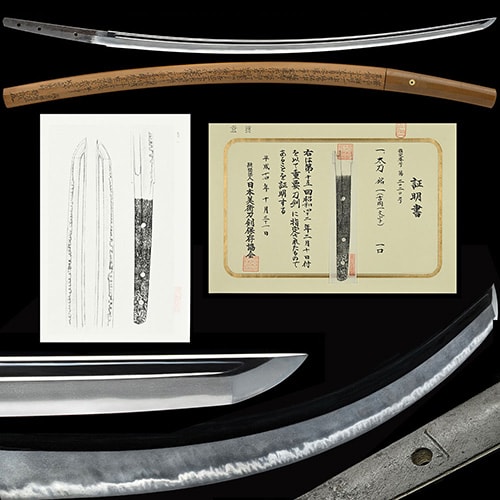
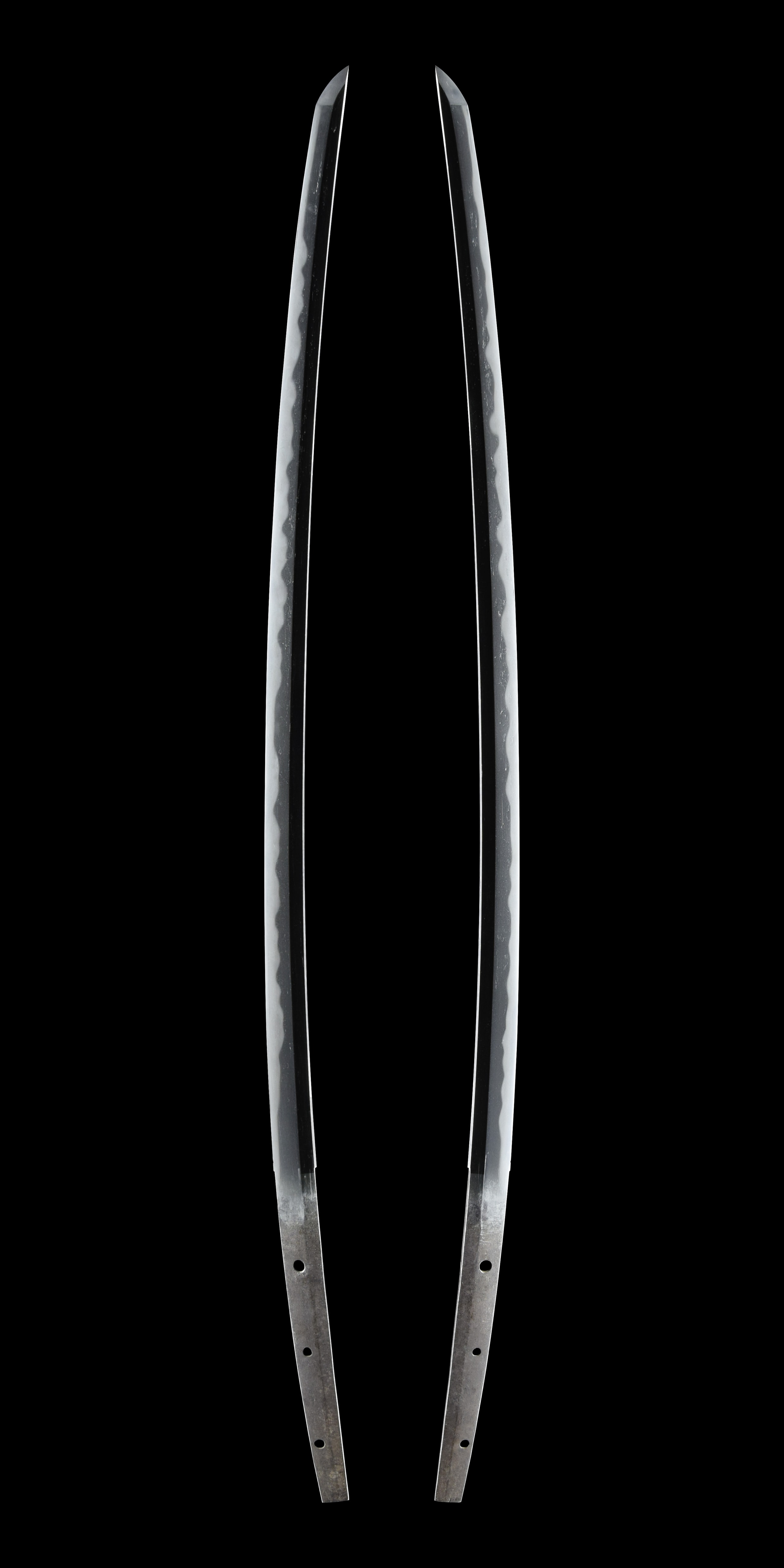
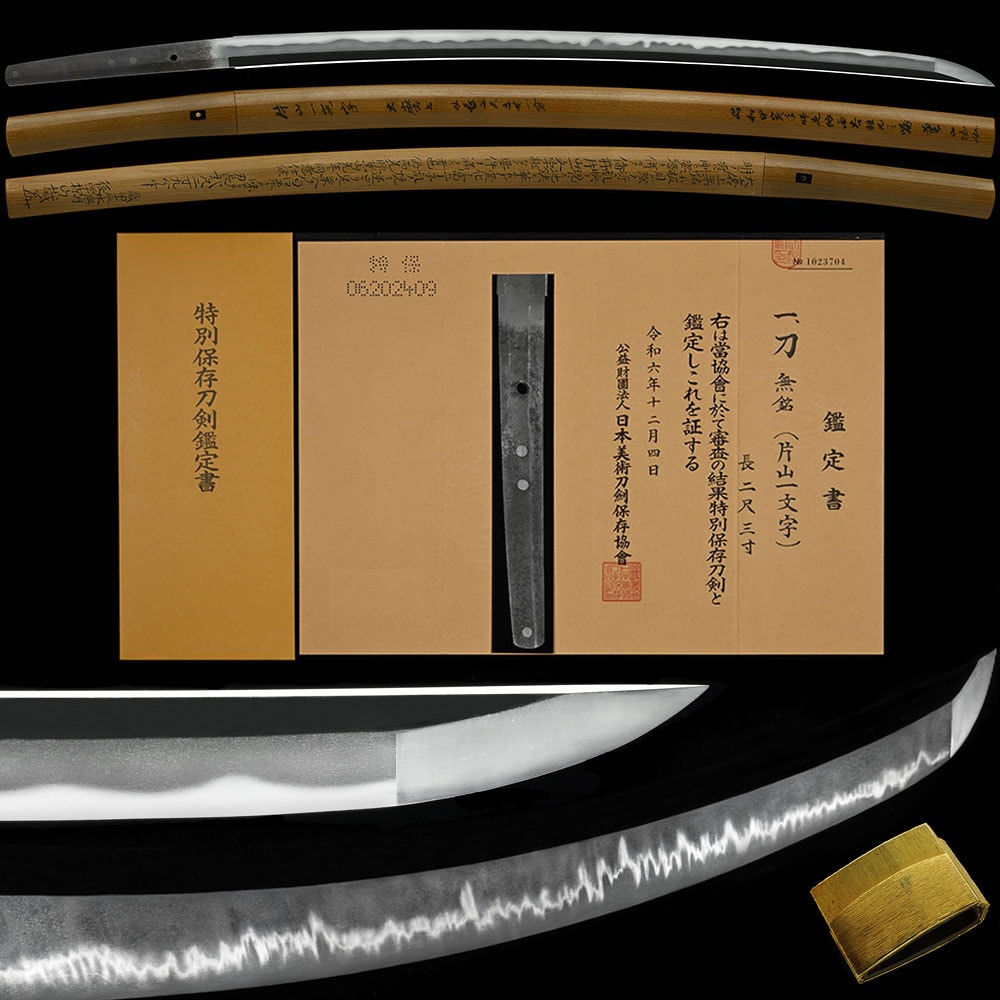
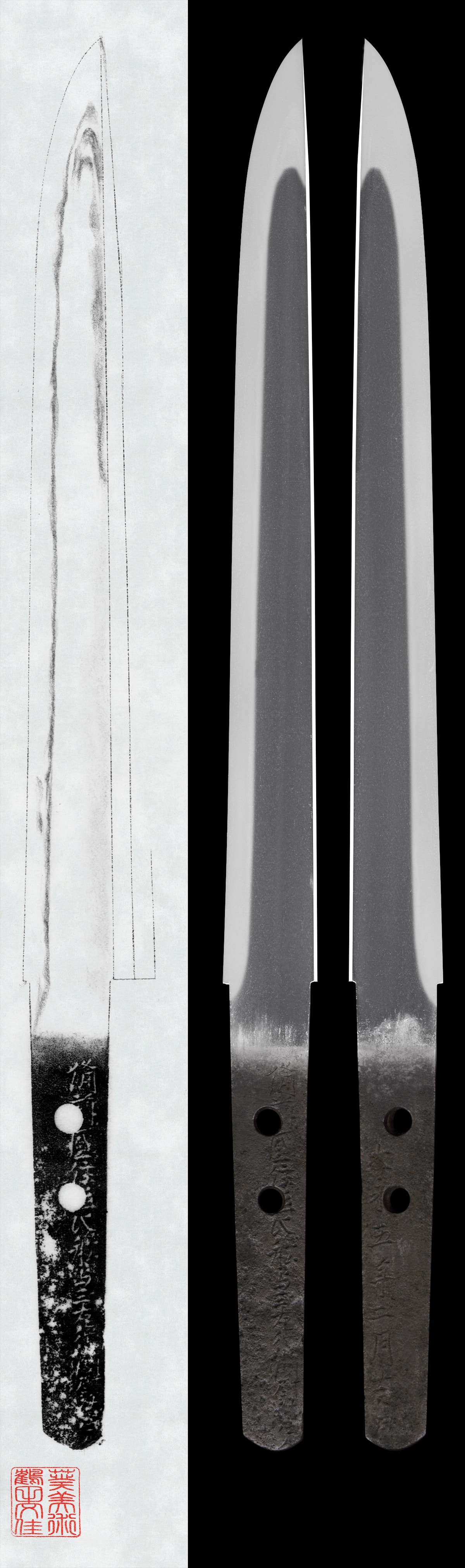
Sukemitsu held the court title Sakon-no-shōgen and signed in full beneath the school's single character : Bizen no Kuni Yoshioka-jū Sakon-no-shōgen Ki-no-Sukemitsu. He is the leading smith of the Yoshioka Ichimonji, the BizenIchimonji branch that, as the published sources put it, prospered from the end of Kamakura into the Nanbokuchō period second only to the Fukuoka Ichimonji. The school takes its name from the character ichi cut at the head of the tang, and its representative hands all share the suke element, Sukemitsu named first among Sukeyoshi, Sukeshige, Suketsugu and Sukeyoshi. His dated works run through Einin, Gen'ō, Genkō, Karyaku and Gentoku, a span of roughly the last Kamakura decades, and several survive with the long signature still legible.
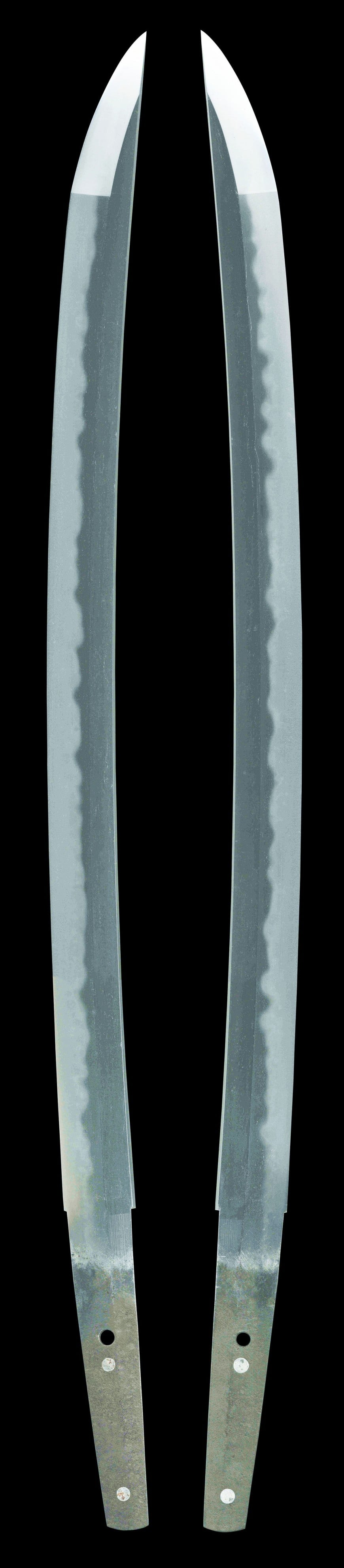
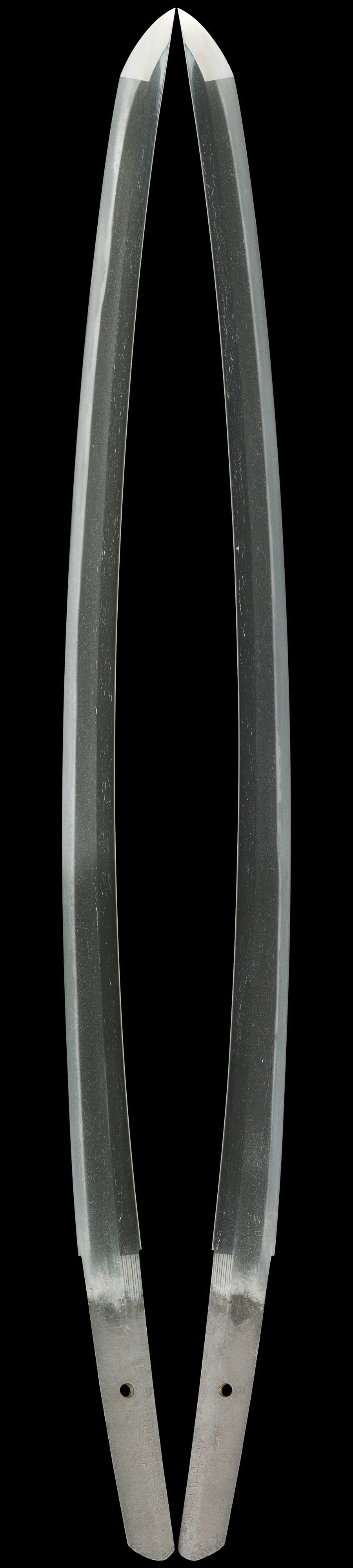
His hand has two faces, and the published sources are careful to keep them apart. The fundamental Yoshioka manner is the calmer, smaller-scale temper. On the long-signed tachi the jigane is an itame mixed with masame in which the utsuri stands, and over it he sets a suguha-toned line into which ko-chōji and ko-gunome are intermingled, nie adhering, the bōshi running straight to a yakitsume finish. The judges read one such blade as displaying the fundamental Yoshioka workmanship, 「吉岡本来の出来を示したもの」1, the suguha-toned edge with its small chōji and gunome the work that, in their words, clearly demonstrates the Yoshioka Ichimonji style. This is the register that distinguishes him from his parent school: not the towering clove-flower of Fukuoka but a quieter, more closely worked line.
The jigane is the constant across his work. A well-forged itame, at times tightening into ko-itame and mixed with mokume, carries ji-nie, frequent chikei on the finest pieces, and a clear midare-utsuri that the published sources note standing out on signed and attributed blades alike. On one tachi the reflection begins low as a straight utsuri along the ha and breaks into a midare-utsuri above, the Yoshioka jigane he shares with the school. The nioiguchi is bright and clear, the temper carried in ashi and yō rather than in great clusters, and a bō-hi is commonly carved through. The published commentary calls one signed tachi sound in both ji and ha and valuable for its inscription, 「地刃共に健全で出来がよく、銘は好資料」2.
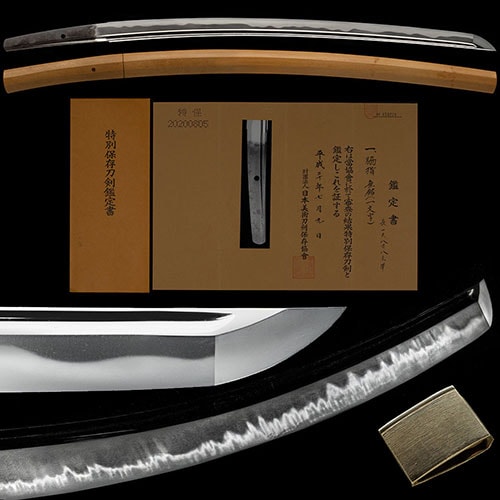
The other and rarer face is the high, flamboyant chōji-midare. The judges record that some of his blades retain comparatively showy features that, at a glance, can be mistaken for the Fukuoka Ichimonji with their large-pattern chōji, 「一見福岡一文字派に紛れるような大模様の丁子」3, even as they hold that his typical work is the more modest line, 「乱れの中に互の目が目立ち、やや小出来となるもの」4, in which gunome stands out within the midare. The kinzōgan-meikatana, shortened and unsigned but gold-inlaid to him by the Honami house, shows this brilliant face: a dense ko-itame with a standing midare-utsuri and a chōji mixed with gunome, the published sources calling its workmanship 「華麗な丁子の出来が頗る見事」5. The den-attributed mumeikatana goes further still, an itame mixed with mokume, very fine and thickly applied ji-nie with abundant chikei, over which the chōji-midare mixes gunome and togariba into a flamboyant pattern with fine tobiyaki, kinsuji and sunagashi, the yakihaba narrowing toward the monouchi.
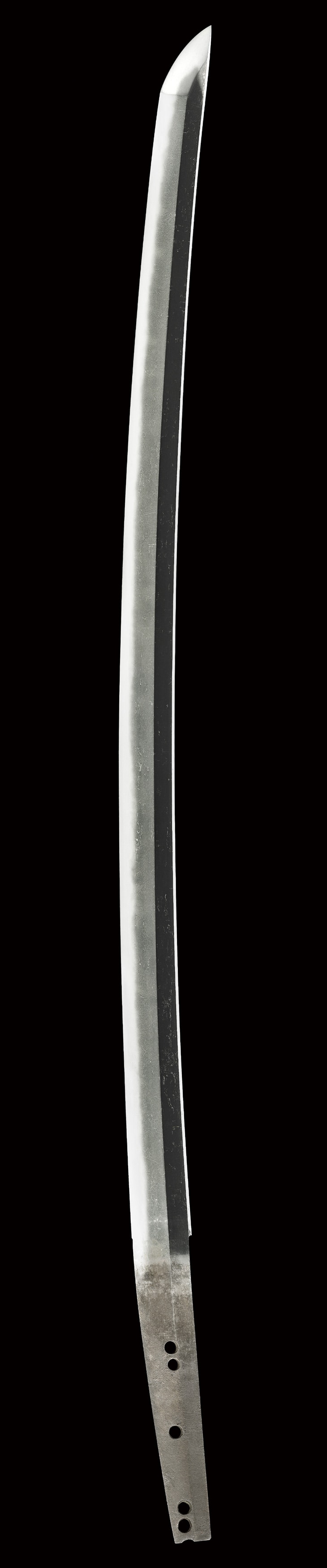
What sets Sukemitsu apart within his own lineage is exactly this division the judges draw, and the way both faces rest on the same Yoshioka jigane. He is held apart from Fukuoka by scale rather than by kind: his bright midare-utsuri and his small, gunome-marked chōji are the Yoshioka norm, and only rarely does he reach back toward the large-pattern manner of the parent house. On the denmumeikatana the published sources weigh the workmanship of ji and ha and judge the old attribution persuasive, appraising the blade a superior work of Yoshioka Ichimonji, 「吉岡一文字の上作」6, the refined and meticulous forging especially noted. His dated and signed tachi anchor that standard for the school, the fixed points against which the mumei attributions are measured.
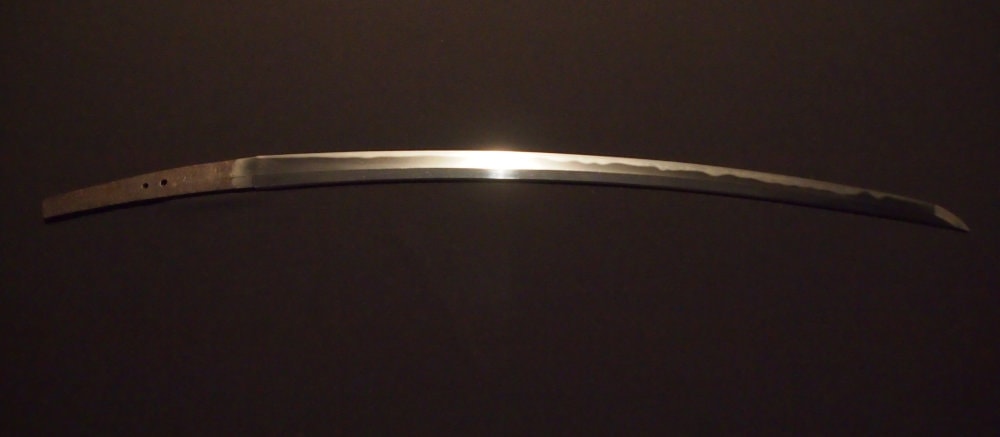
Sukemitsu's record reaches the highest ranks of the designation system. A signed naginata dated Gen'ō 2 (1320), surviving ubu and transmitted through the Maeda house of Kaga, is a National Treasure, and his work is further held among the Important Cultural Properties, including a Genkō-era signed tachi and the kinzōgan-meikatana polished by Honami Kōtoku. Five blades carry the Jūyō rank, among them the brilliant kinzōgan-meikatana with its mid-Edo gold nashiji mounting bearing aoi-mon crests, and several preserve old daimyō provenance, with the Tokugawa Art Museum among the institutions holding his work and names such as Tokugawa Iemitsu, Abe Tadaaki and the Maeda family in the recorded chains. The National Treasure and the Important Cultural Properties are heritage held in trust, not blades a collector encounters; the designated Jūyō pieces are few, and of recorded whereabouts most are long held rather than traded. A signed Yoshioka Ichimonji Sukemitsu coming to light is a landmark when it happens, a document of how the Yoshioka kept the Ichimonji manner alive into the close of the Kamakura age.
Kantei
two registers of one Yoshioka Ichimonji hand: the fundamental Yoshioka-proper temper, a calm suguha-cho with ko-choji and ko-gunome of smaller scale over a midare-utsuri ground, set against the rarer flamboyant choji-midare that recalls Fukuoka Ichimonji, both carrying the school's clear midare-utsuri and a bright nioiguchi
Sukemitsu is the representative smith of the Yoshioka Ichimonji, the BizenIchimonji branch that flourished from the end of Kamakura into the Nanbokucho period, second only to the Fukuoka Ichimonji. He held the court title Sakon-no-shogen, signed Bizen no Kuni Yoshioka-ju Sakon-no-shogen Ki-no-Sukemitsu beneath the school's single character ichi, and his dated works run through Einin, Geno, Genko, Karyaku and Gentoku. His hand has two faces. The Yoshioka-proper manner, which the published sources treat as his fundamental style, is a calmer, smaller-scale temper: a suguha-cho line into which ko-choji and ko-gunome are set over a well-forged itame with a clear midare-utsuri, the workmanship deliberately less showy than Fukuoka. The other face survives more rarely, a high, flamboyant choji-midare that at a glance can be mistaken for Fukuoka Ichimonji, mixing gunome and pointed-ha with tobiyaki, kinsuji and sunagashi over a meticulous itame-mokume thick with ji-nie and chikei. Across both the midare-utsuri stands clear and the nioiguchi is bright. His record reaches the highest ranks: a signed naginata is a National Treasure, three works are Important Cultural Properties, and several signed tachi and attributed katana carry the Juyo rank.
Diagnostic discriminators
乱れ映りmidare-utsuri3
直刃調suguha-cho1
unique vs Fukuoka Ichimonji (large-pattern choji)
丁子乱れchoji-midare1
more rarely he leaves a high, flamboyant choji-midare with gunome and pointed-ha, tobiyaki, kinsuji and sunagashi, the work the published sources say at a glance can be mistaken for Fukuoka Ichimonji
Observation by phase
The fundamental Yoshioka manner (calm, smaller-scale)
What the published sources call Sukemitsu's fundamental Yoshioka style is the calmer, smaller-scale temper, set apart from the showy Fukuoka manner. On the long-signed tachi the ground is an itame mixed with masame in which the utsuri appears, and over it he tempers a suguha-cho line into which ko-choji and ko-gunome are intermingled, nie adhering, the boshi running straight and finishing in a yakitsume. On the Karyaku-dated signed tachi the same temperament reads as a jigane of dense itame with nagare-gokoro and a midare-utsuri standing out, over which the hamon is choji mixed with gunome but restrained, ashi entering, ko-nie adhering, the boshi straight tending to a yakitsume-like finish and a bo-hi carved through. The published sources read this restrained line as the work that clearly demonstrates the characteristic Yoshioka Ichimonji style, with both ji and ha sound and the surviving signature valuable as reference material.
The other and rarer face is the high, flamboyant choji-midare that at a glance can be mistaken for Fukuoka Ichimonji. The kinzogan-meikatana, o-suriage and unsigned but gold-inlaid to Sukemitsu, shows a dense ko-itame with a standing midare-utsuri and a brilliant choji mixed with gunome forming a varied midare-ba, ashi and yo entering, the nioiguchi inclined to be tight with nie in places, the boshi a midare-komi turning in ko-maru, a bo-hi carved through. The den-attributed mumeikatana goes further: an itame mixed with mokume, very fine and thickly applied ji-nie with abundant chikei and a clear midare-utsuri, over which the choji-midare mixes gunome and pointed-ha into a flamboyant pattern, the yakihaba narrowing toward the monouchi, frequent ashi and yo, fine tobiyaki, kinsuji and sunagashi, the nioiguchi tight with ko-nie and bright. The published sources judge it a superior work of Yoshioka Ichimonji, the refined forging especially noted. This register is the one the school's commentary says survives only rarely.
The published sources name Sukemitsu the representative smith of the Yoshioka Ichimonji, with dated works in Einin, Geno, Genko and Karyaku, and draw a careful distinction within his own output: while some of his blades retain comparatively flamboyant features that, at a glance, can be mistaken for the Fukuoka Ichimonji with their large-pattern choji, in general many works are seen of smaller-scale workmanship in which gunome stands out within the midare. They treat the calmer, suguha-toned line as the fundamental Yoshioka manner.2
Historical importance
Where Sukemitsu stands among comparable artisans: across all of nihontō, and within tradition, era, and period. The tiers (Foremost · Leading · Major · Notable) weigh official designations from the NBTHK and Japan's Agency for Cultural Affairs, together with historical honors of lasting repute such as the Sansaku and Meibutsu-chō.
随一
Foremost
屈指
Leading
All nihontō
有数
Major
BizenKotōLate Kamakura
著名
Notable
Select a lens to see how it's measured.
Designations
Kokuhō1
Jūyō Bunkazai2
Jūyō Bijutsuhin—
Gyobutsu—
Tokubetsu Jūyō—
Jūyō Tōken4
Elite Standing
0.13 across 7 designated works
Top 15% among smiths
Provenance
3 documented provenances across certified works by Sukemitsu
Imperial—
▸Shogunal1
▸Premier Daimyō1
Major Daimyō—
Other Daimyō—
Zaibatsu—
Institutions—
▸Named Collectors1
Provenance Standing
2 works held in elite collections across 3 documented provenances