NihontoWatch MonNihontoWatchBETA
MarketEncyclopedia
NihontoWatch Mon

NihontoWatchBETA

Market
Encyclopedia
Overview·Kantei·Designations·Provenance·Blade Forms·Signatures·School
OverviewKanteiDesignationsProvenanceBlade FormsSignaturesSchool
  1. Schools
  2. Ichimonji
  3. Fukuoka Ichimonji
  4. Tamekiyo

Fukuoka Ichimonji Tamekiyo

爲清

Tokujū
Vol. 22, No. 9 · Tachi

Fukuoka Ichimonji Tamekiyo

爲清

5 ranked works

ProvinceBizenEraKenpo (1213–1219)PeriodKamakuraSchoolIchimonji>Fukuoka IchimonjiTraditionBizen-denFujishiroJo-jo sakuToko Taikan1,500(top 5%)TypeSwordsmithCodeTAM46
2Jūyō Bunkazai
2Jūyō Bijutsuhin
1Tokubetsu Jūyō

Overview

Tamekiyo is an early- swordsmith of the Fukuoka school, working in and known today only by his two-character signed . The enters his name in several places, under , Fukuoka , Karakawa and , but the published sources observe that among surviving signed work nothing reads as other than , that 'no extant signed piece is seen except those judged of the school' (現存する有銘作は一文字派と目されるもの以外は未見), so every authenticated Tamekiyo is placed there. His dating is unsettled, given as the Kenpō era of about 1213 to 1219 or the Tenpuku era of about 1233 to 1234, and because the signatures are all two-character with no dated example among them, the published sources leave a firm placement to later study.

In most respects his work does not separate from that of his contemporaries, and the published sources locate his one personal tell in a single feature of the temper: he shows, from time to time, a , a patch of flaring low at the base, and it is there that 'his distinguishing feature is found' (時折腰刃を見せるところに同工の特徴が見いだせる). The flaring base-temper is what the published commentary uses to separate one of the related prewar as rather than , so the carries weight in his attribution out of all proportion to its size.

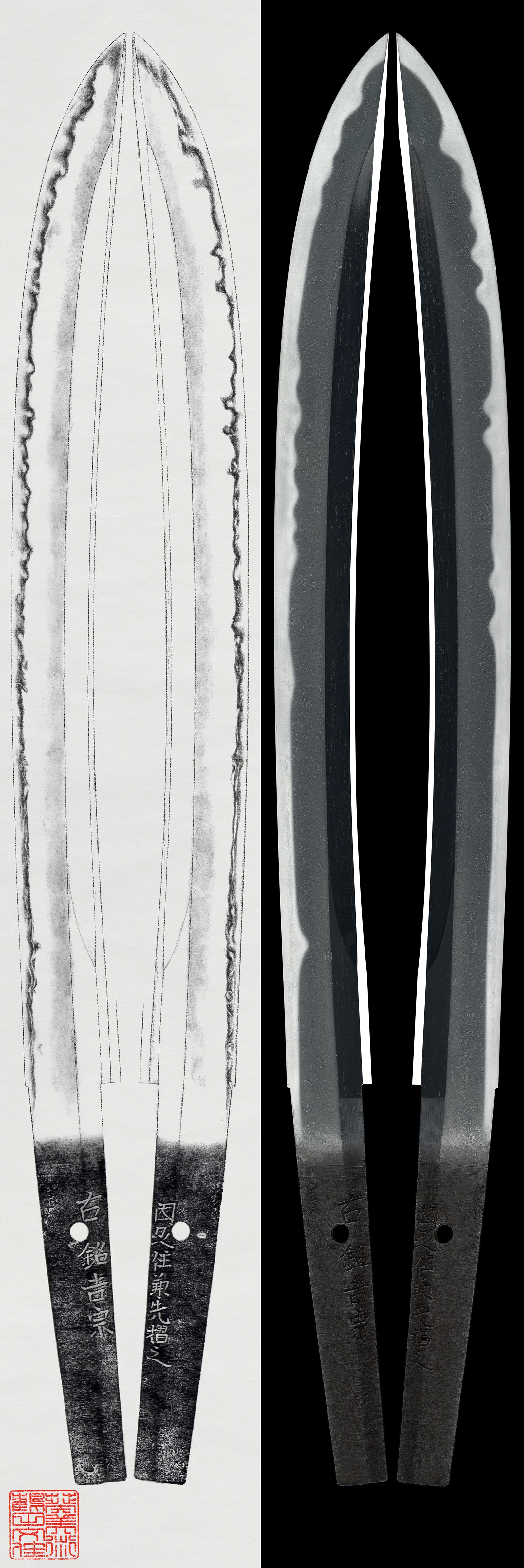
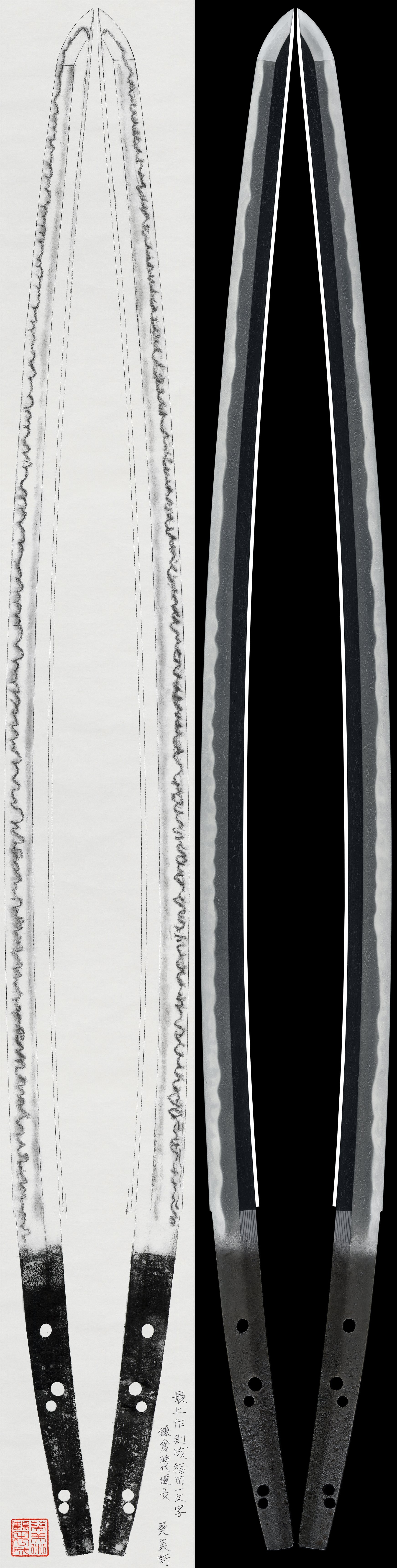
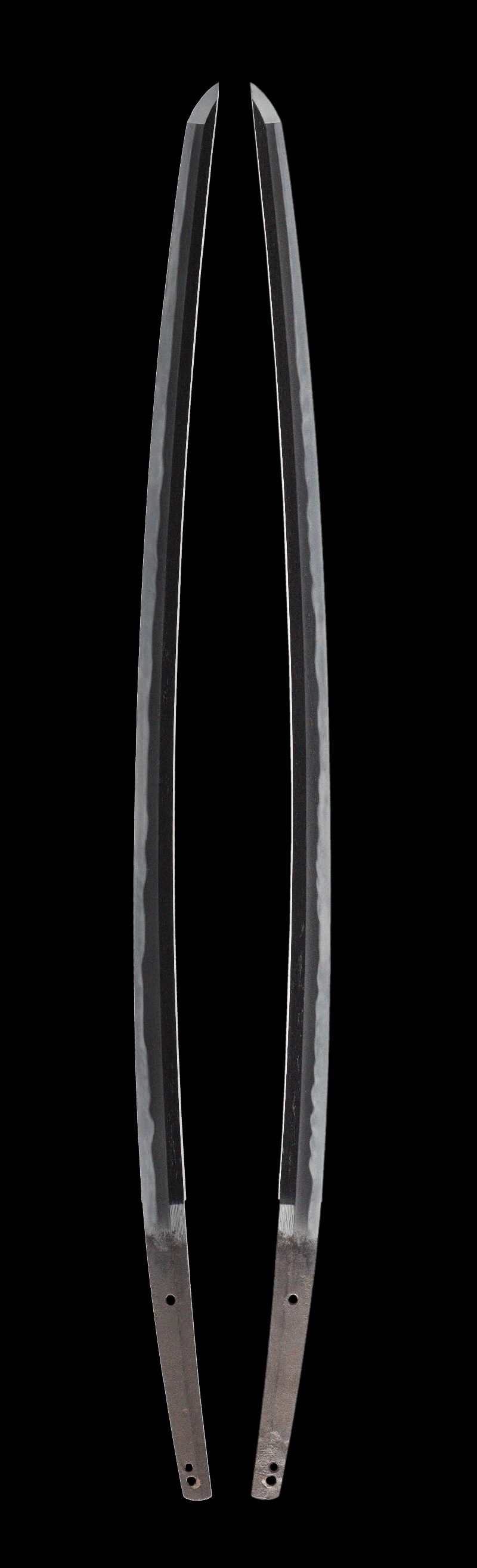
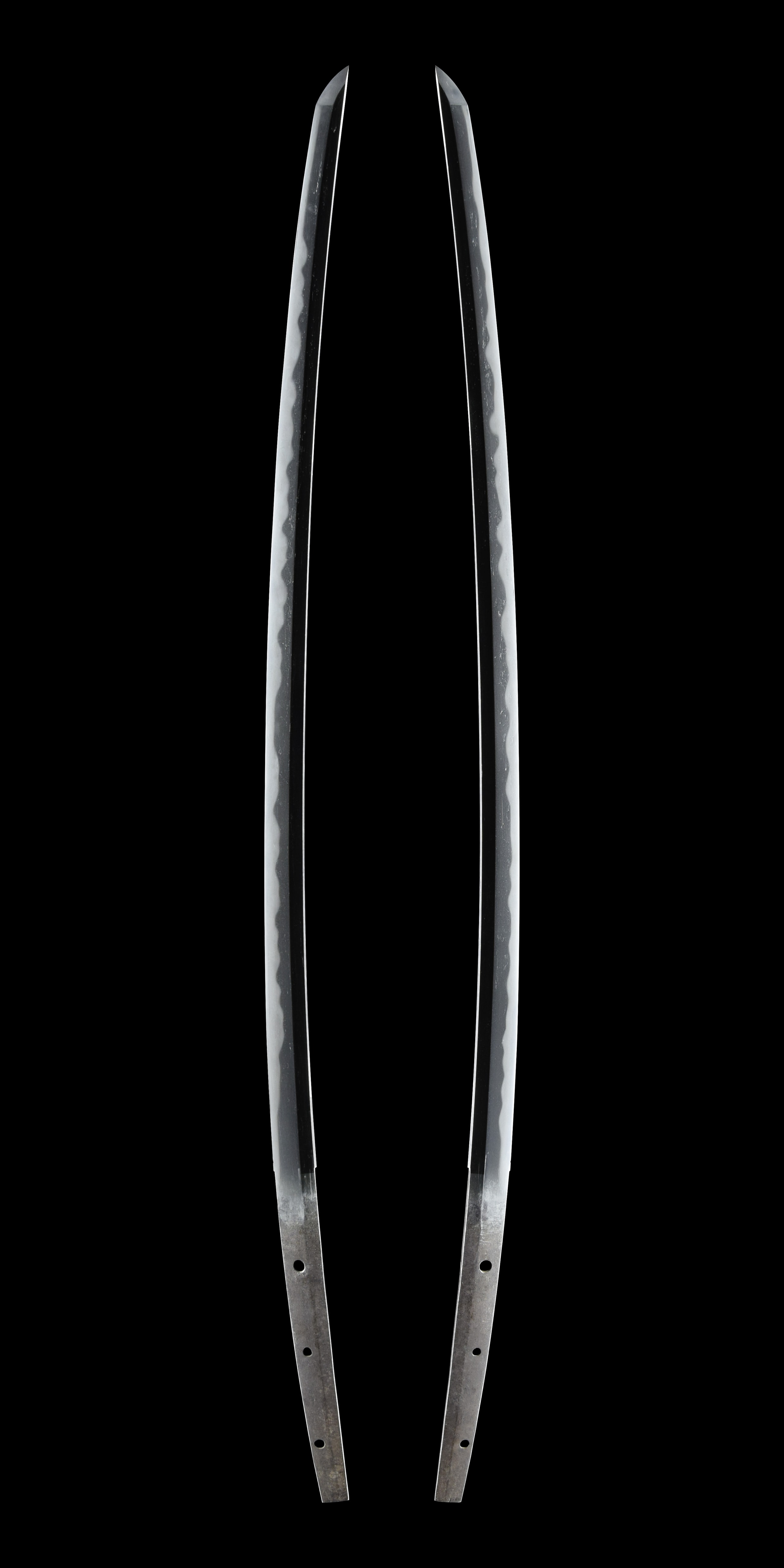
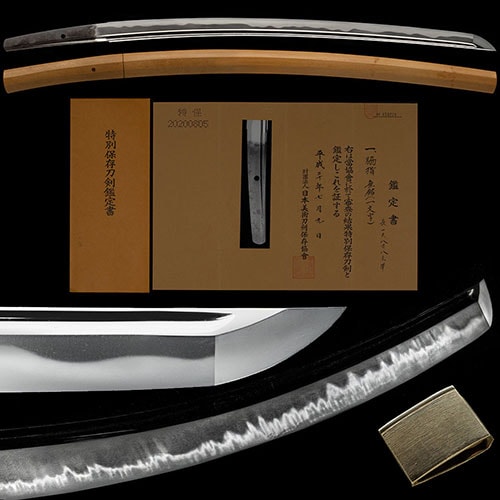
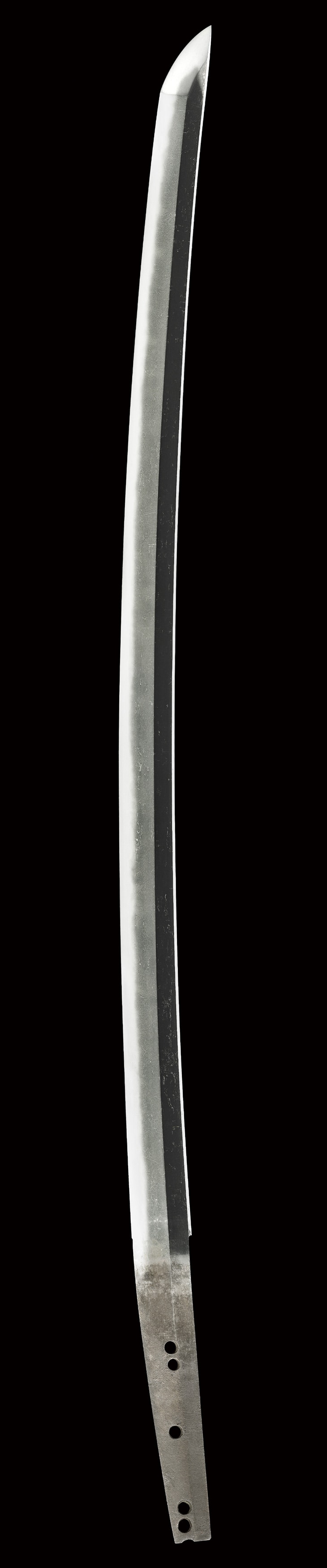
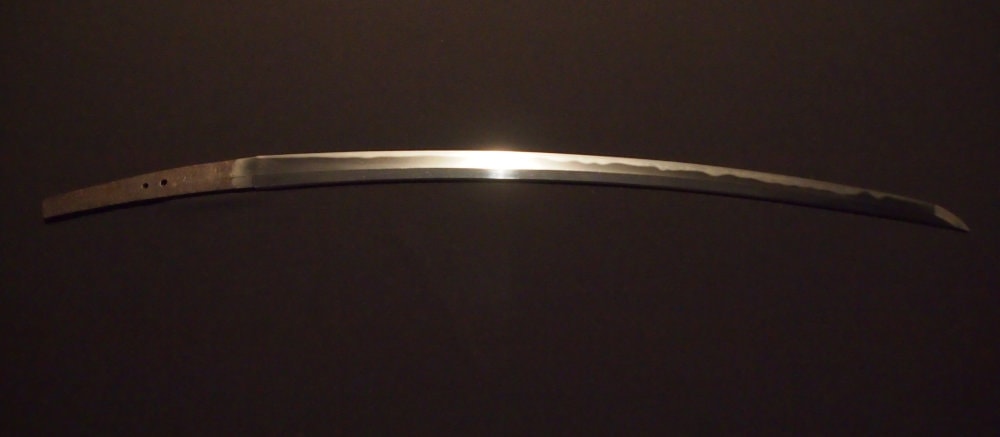
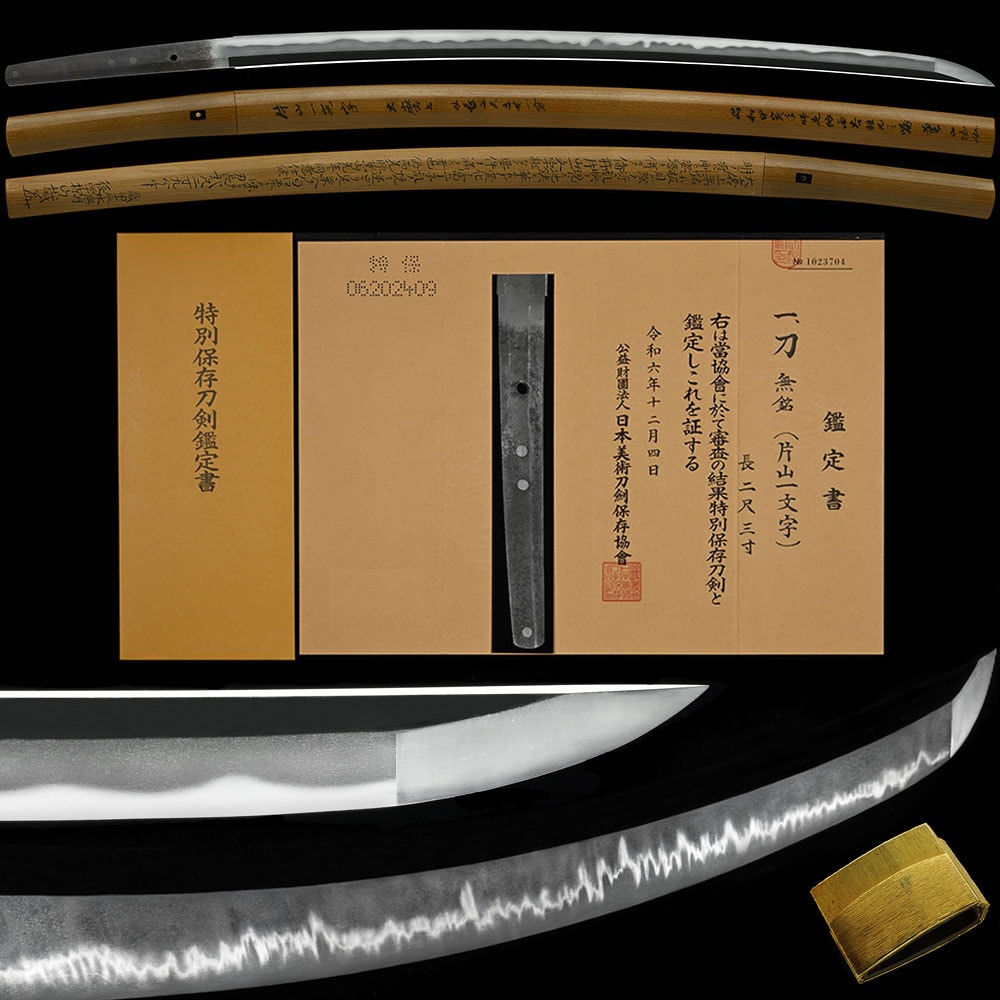
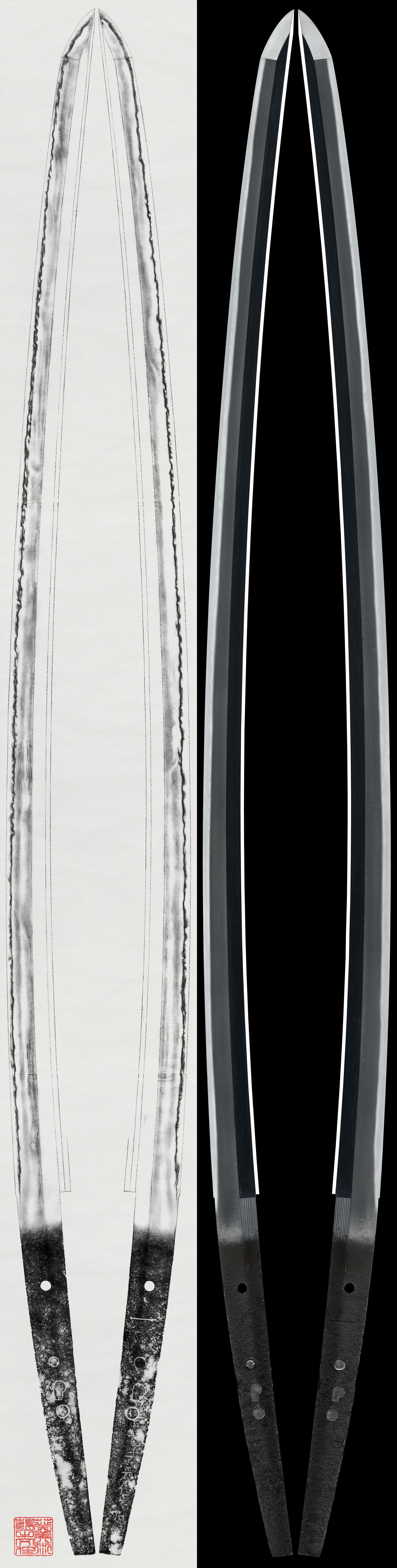
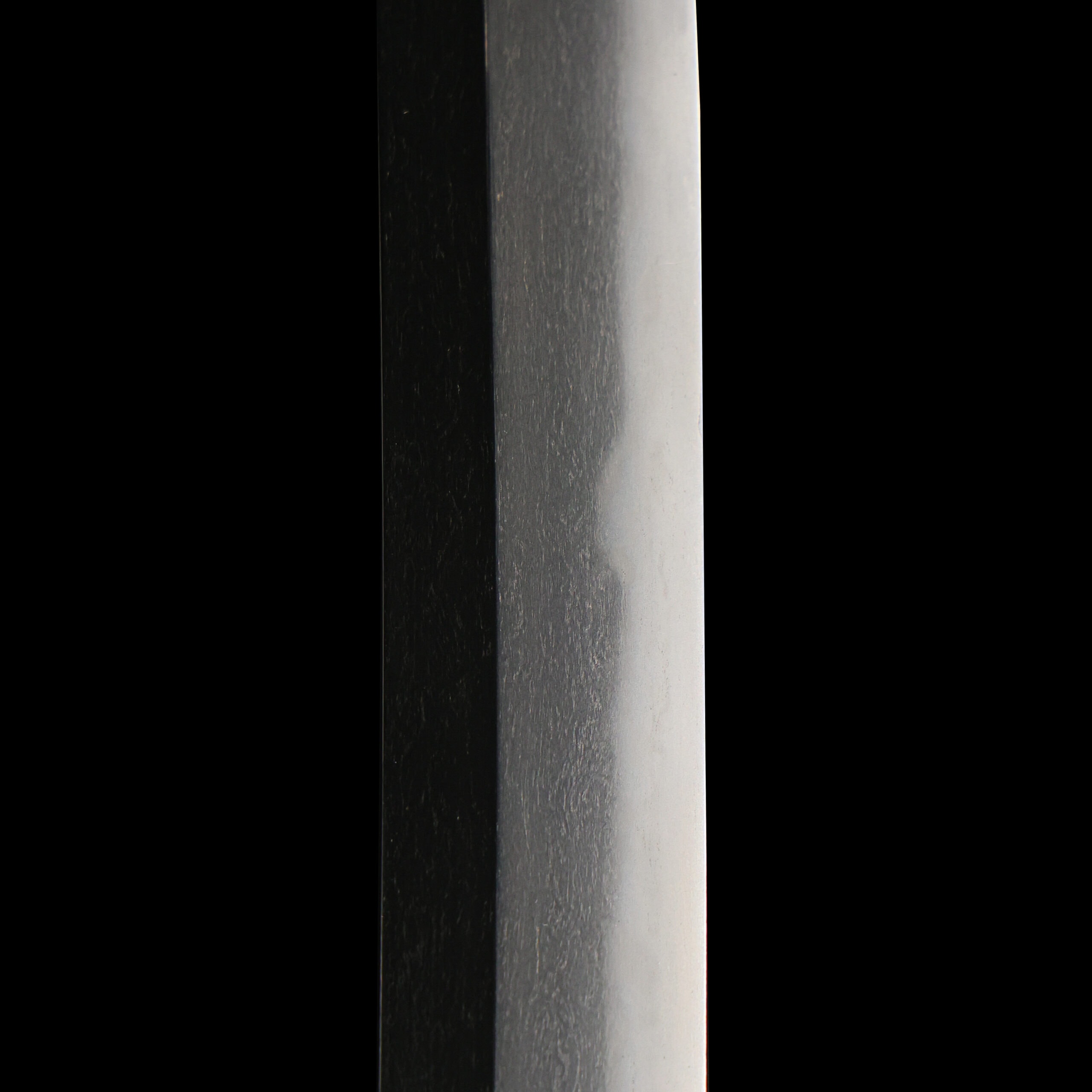
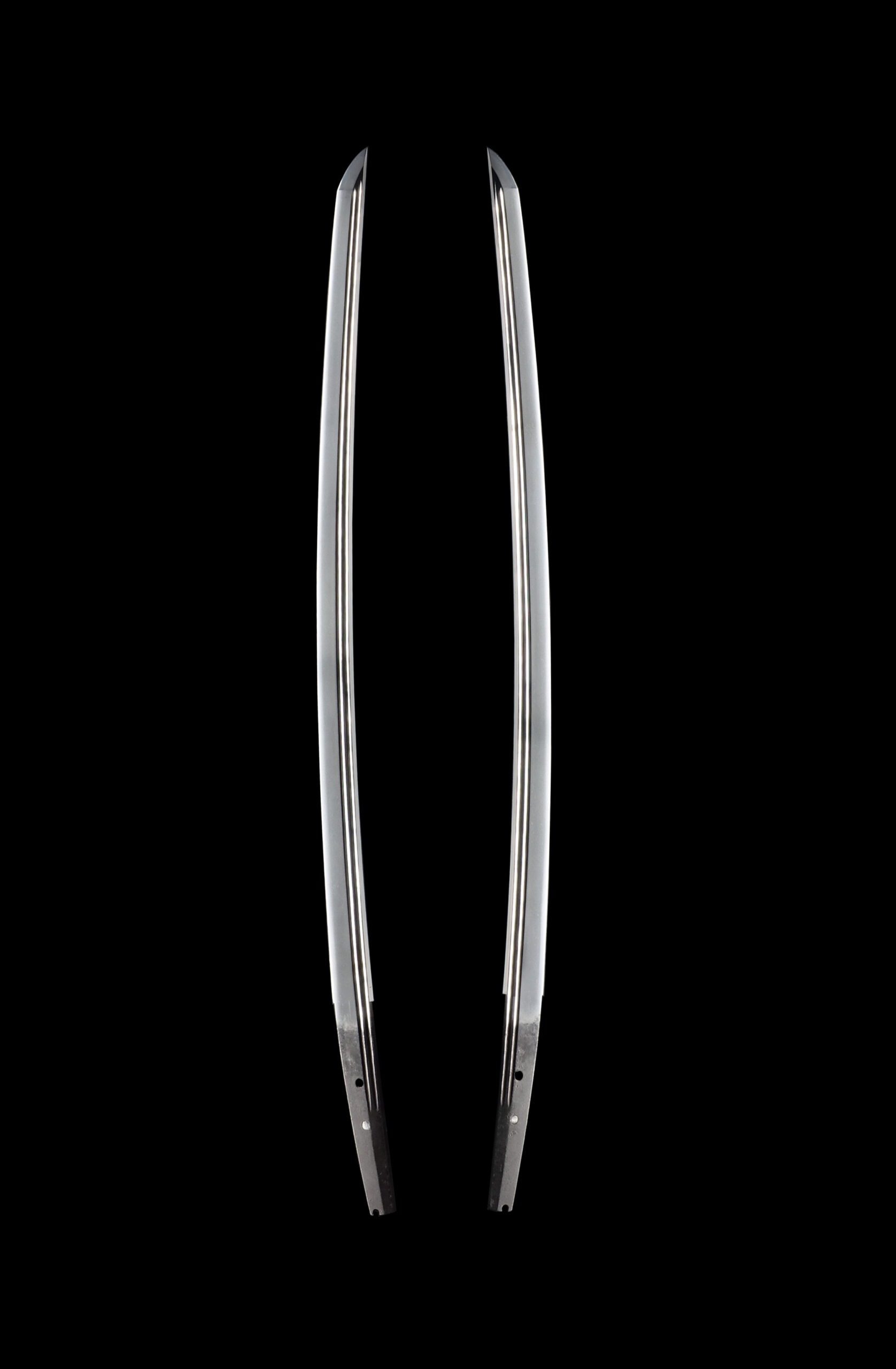
The shape is a strong, wide-bodied with the running high at the waist and carried on toward the point, standing at the base and the short or medium, the dignified bearing of the early . Over a of , well packed on the finest blade and running into a little elsewhere, lie and fine , and a high, vivid gathers in the dark band, toning here and there to a . The temper is built in two registers, the lower half a small-patterned with and pointed , the upper half a with mixed in, and entering well, worked almost wholly in with a little gathered, and and running in places. The goes straight to a on the front and turns back from a small on the reverse, and a , on one blade with a , is carved through.

The degree of flamboyance varies across the small group that survives. The keeps the quieter two-register construction, while the blade is, in the words of the published sources, 'comparatively flamboyant in workmanship among the several of this name' (比較的に華やかな出来である), its lower half a with worked into something showier. Three closely related signed designated Bijutsuhin before the war differ somewhat in make but agree in signature, and the published sources hold that the one whose is most prominent is the of the three, the reading by which the school claims him.

Among the early Fukuoka hands he stands beside Norimune and the manner of the school's first years, before the full-size flamboyant of its mid- prime. The published sources rank his finest signed among the superior work of that early period and tie it by style to the Bijutsuhin Tamekiyo of closely matching construction, judging the best of his blades a piece that 'manifests the high level of this smith's skill' (同工の技量の高さを顕現する).

The Fujishiro appraisers rate him at the jō-jō level, and the record of his survival is slight: a handful of designated works, among them two ranked Important Cultural Property and one , with the prewar Bijutsuhin beside them. Of his recorded whereabouts, blades are held in the Kurokawa Institute of Ancient Cultures and at Atsuta Jingū, and one of the signed descended through the Mizuno house, the of , who 'received it from the shogunal house' (山形藩主水野家が将軍家より拝領したものである). These are designated cultural property and long-held heritage, not blades that come to market; a signed Tamekiyo in private hands is among the rarer things a collector of early could hope to encounter, and one appears, when it does, only with patience.

Kantei

a single recognized manner, the two-character signed tachi: a strong wide-bodied early-Kamakura Ichimonji shape over a tight itame with a dark-band midare-utsuri, tempered ko-choji and gunome low and chu-suguha above, marked off from his schoolmates only by the koshiba the published sources call this smith's distinguishing feature

Tamekiyo is an early- smith known only by his two-character signed : the lists the name across , Fukuoka , Karakawa and , but the published sources note that no surviving signed work reads as anything other than , so every authenticated Tamekiyo is judged to that school. His dating is unsettled, given variously as the Kenpo or Tenpuku eras, and since the signatures are all two-character with no dated example, a firm placement awaits further study. In manner he scarcely departs from his contemporaries, and the published sources locate his one personal tell in the he shows from time to time, a flaring temper low at the base. His are strong and wide with the carried to the point, the ground a tight with , fine and a vivid standing in the dark band, here and there a . The temper runs and low, opening to a base above, and well in, worked almost wholly in with a little , and in places.

Diagnostic discriminators

unique vs Fukuoka Ichimonji baseline (koshiba not a school trait)

unique vs his own lower half (ko-choji-dominant)

Observation by phase

The two-character signed tachi (his only recognized work)

Every authenticated Tamekiyo is a two-character signed made on an . The shape is strong and wide-bodied with the width-taper slight, running high with at the base and added toward the point, the short or a , a dignified early- . The ground is an , packed and unloosened on the finest piece, running and standing in places elsewhere, with , fine and a clear, high concentrated in the dark band, here and there toned to a . Over it the temper is composed low and high in two registers: the lower half -toned mixing , pointed- and slightly squared in a small pattern, the upper half a -base with , on the flatter blades opening to a flamboyant with deep . and enter abundantly, the worked almost wholly in with a little gathered, , and running in places. The , a temper flaring low at the base, recurs across the group and is the one feature the published sources single out as his. The runs straight to a on the , with a small on the . , on one piece with a , is carved through.

Sugata 姿
Jigane 地鉄
Hamon 刃文
Bōshi 帽子
Scholarship

The published sources record that the Tamekiyo name appears in the Meikan under Ko-Bizen, Fukuoka Ichimonji, Karakawa and Osafune, but that no surviving signed work reads as other than Ichimonji, so all authenticated pieces are judged to that school. The dating is given as the Kenpo or Tenpuku eras, yet because the signatures are two-character only with no dated example, a firm placement is left to future study.

On the related Juyo Bijutsuhin tachi the published sources note that their workmanship differs somewhat but that the signatures point to one hand, and that whether the maker is Ko-Bizen or Ichimonji is not easily decided, except that the one with prominent koshiba is judged Ichimonji of the three.

Designations

Kokuhō—
Jūyō Bunkazai2
Jūyō Bijutsuhin2
Gyobutsu—
Tokubetsu Jūyō1
Jūyō Tōken—

Elite Standing

0.38 across 5 designated works

Top 7% among smiths

Provenance

1 documented provenance across certified works by Tamekiyo

Provenance Standing

0 works held in elite collections across 1 documented provenances

Top 52% among smiths

Raw score: 1.97 / 10

Blade Forms

Distribution across 5 ranked works

Signatures

Signature types across 5 ranked works

Currently Available

Fukuoka Ichimonji School

Other artisans of the Fukuoka Ichimonji school

  1. 1.Sukezane助眞44designated
  2. 2.Yoshifusa吉房1 for sale46designated
  3. 3.Norimune則宗8designated
  4. 4.Yoshihira吉平17designated
  5. 5.Sukekane助包6designated
  6. 6.Norikane則包7designated
  7. 7.Yoshimochi吉用10designated
  8. 8.Tameto爲遠5designated
  9. 9.Yoshimune吉宗6designated
  10. 10.Naganori長則17designated
  11. 11.Ichi一7designated
  12. 12.Sanetoshi眞利5designated