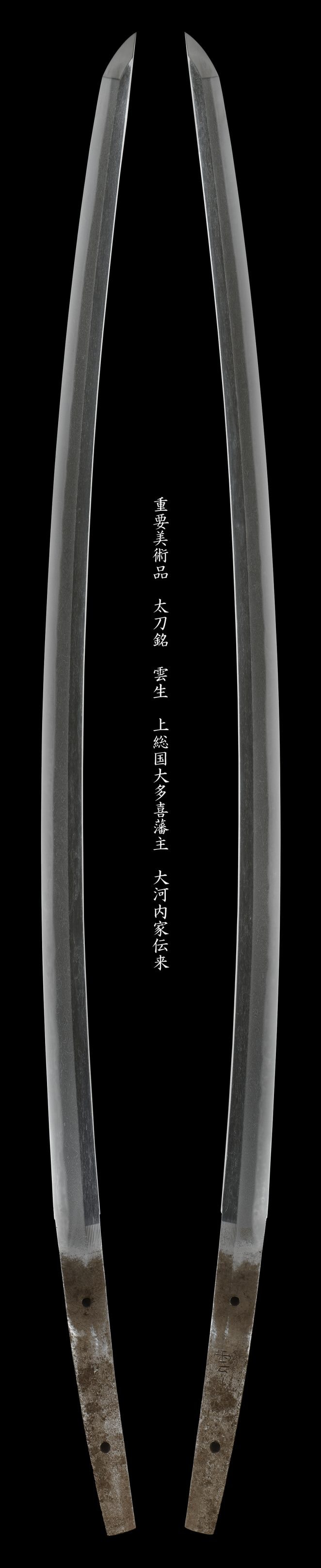
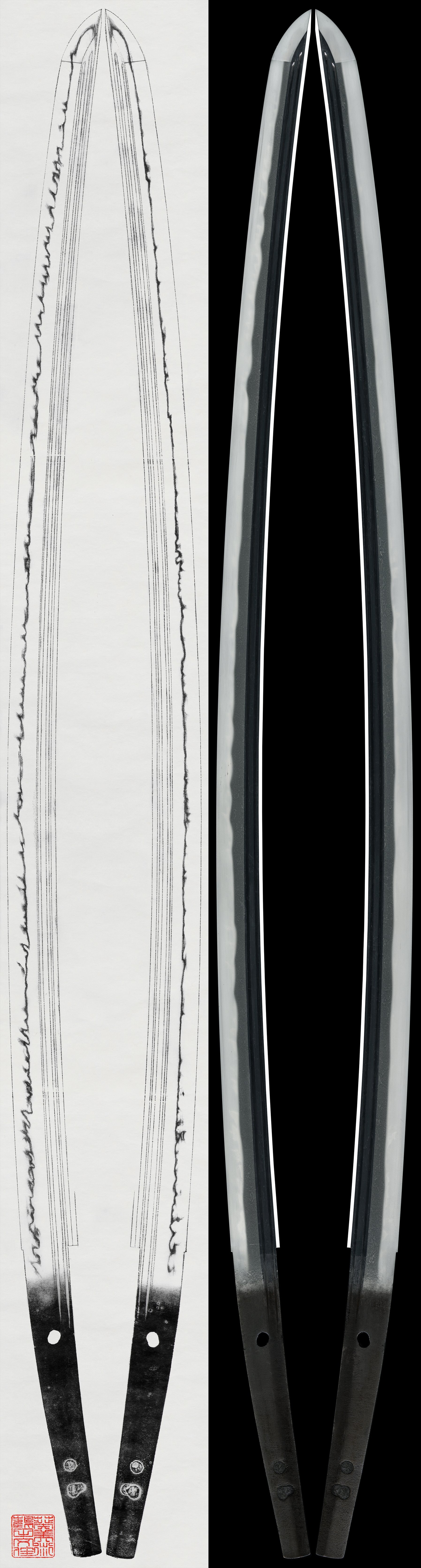
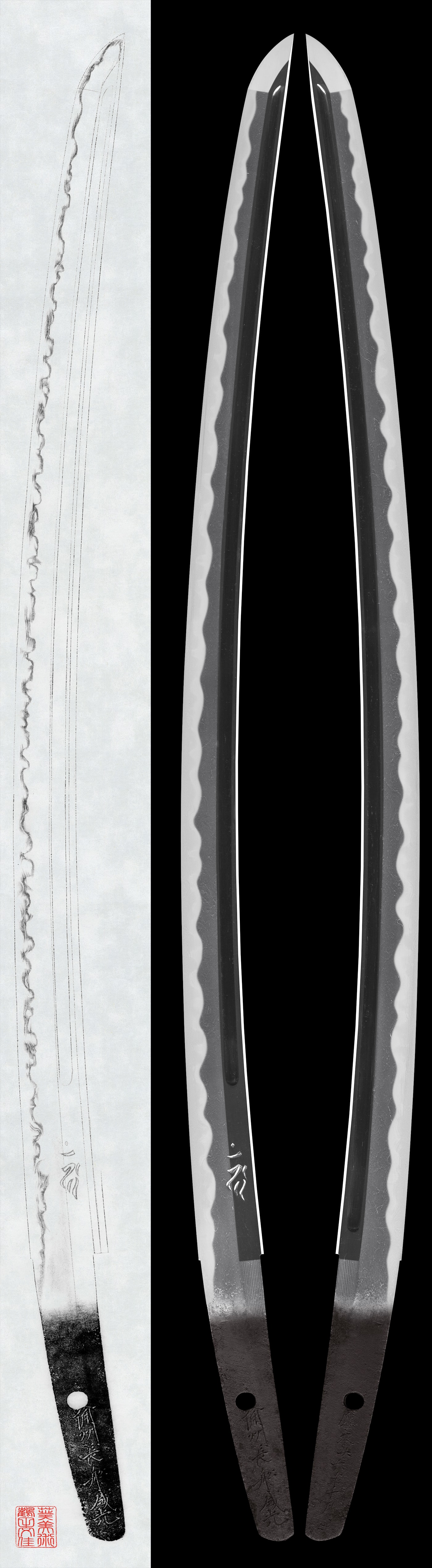
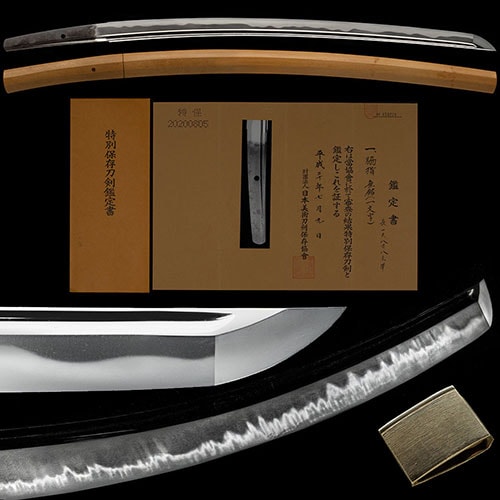
From the end of the period into the first years of , the smiths of Ukan-no-sho in Province, a place name later written Ukai, all set the character , the cloud, at the head of their names, and the published sources know them as the Ukai school or the Unrui. Unji is the chronological anchor of the line. Tradition makes him the son of the first Unsho, and he alone left dated work: blades of the Showa, Bunpo and Kenmu eras survive, among them pieces dated Showa 4 (1315) and Kenmu 2 (1335), and the repeats that "his period of activity is plain". Since no dated blade of Unsho exists, the years of the whole school are fixed through these. Their make stands apart from the mainstream: within the tradition a Yamashiro cast intermingles with no small influence from neighboring , and the published sources call the line "a distinctive presence among works". Fujishiro grades Unji Jo-jo .
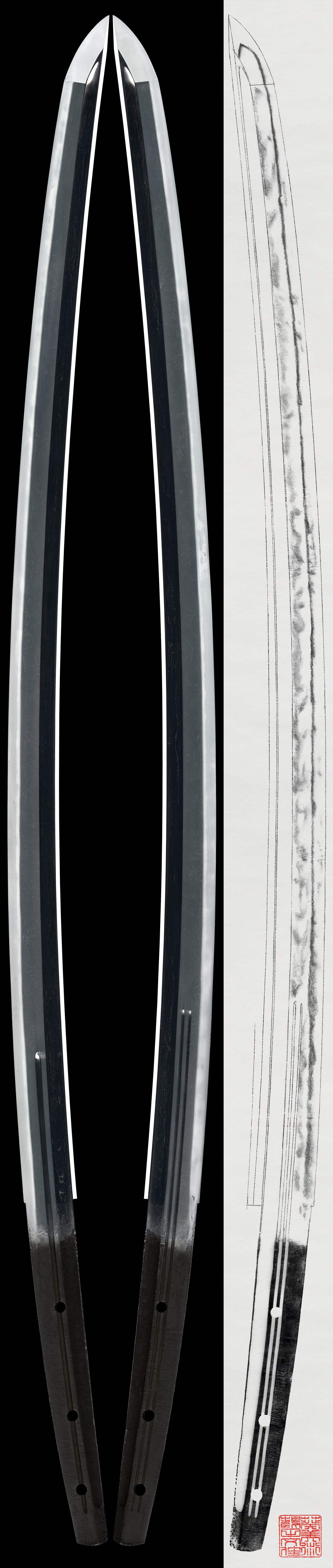
The work leans away from at every point the published record names. His are of standard width, the curvature tending to wa-zori, an even arch the papers read as Kyoto-like, the set somewhat high; pieces keep . Where the mainline of his generation tempers , Unji tempers : a narrow to medium line with , and mingled, the and entering thickly and slanting in reverse in the way. The papers state that kinship outright: "the tight with entering passes to work". The is now tight and -led, now sinking subdued under , and , and work along the edge. One paper gathers the recognition into a single sentence: "the points of this smith are shown in the uniquely dark , the that turns back round, and the ". To these the published sources add the habit of the chisel: the reverse-slanted strokes (逆鏨) emphasized in the are the hand of the whole school, not of Unji alone.
The is mixed with , knit to on the finer blades, in places flowing toward the edge, with thick , fine , and a steel color that tends somewhat blackish. Across it stands a , and characteristically the dark the papers call peculiar to the Unrui mingles in the , and paper after paper describes "a black as if pressed in with a finger". The is old-fashioned and answers to the temper: of one strongly -laden the record observes that "the of and is strong, and for that reason the of the ji hardly stands at all".
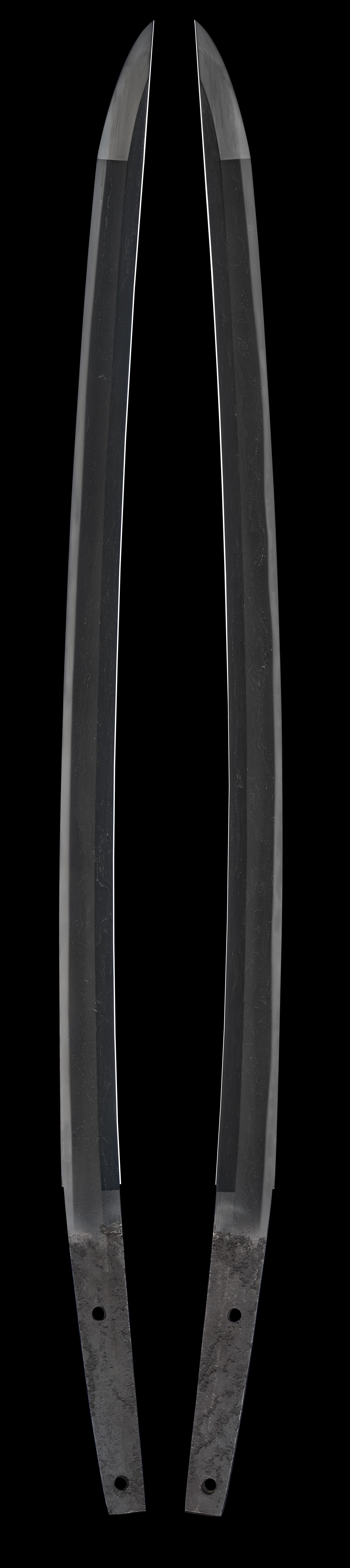
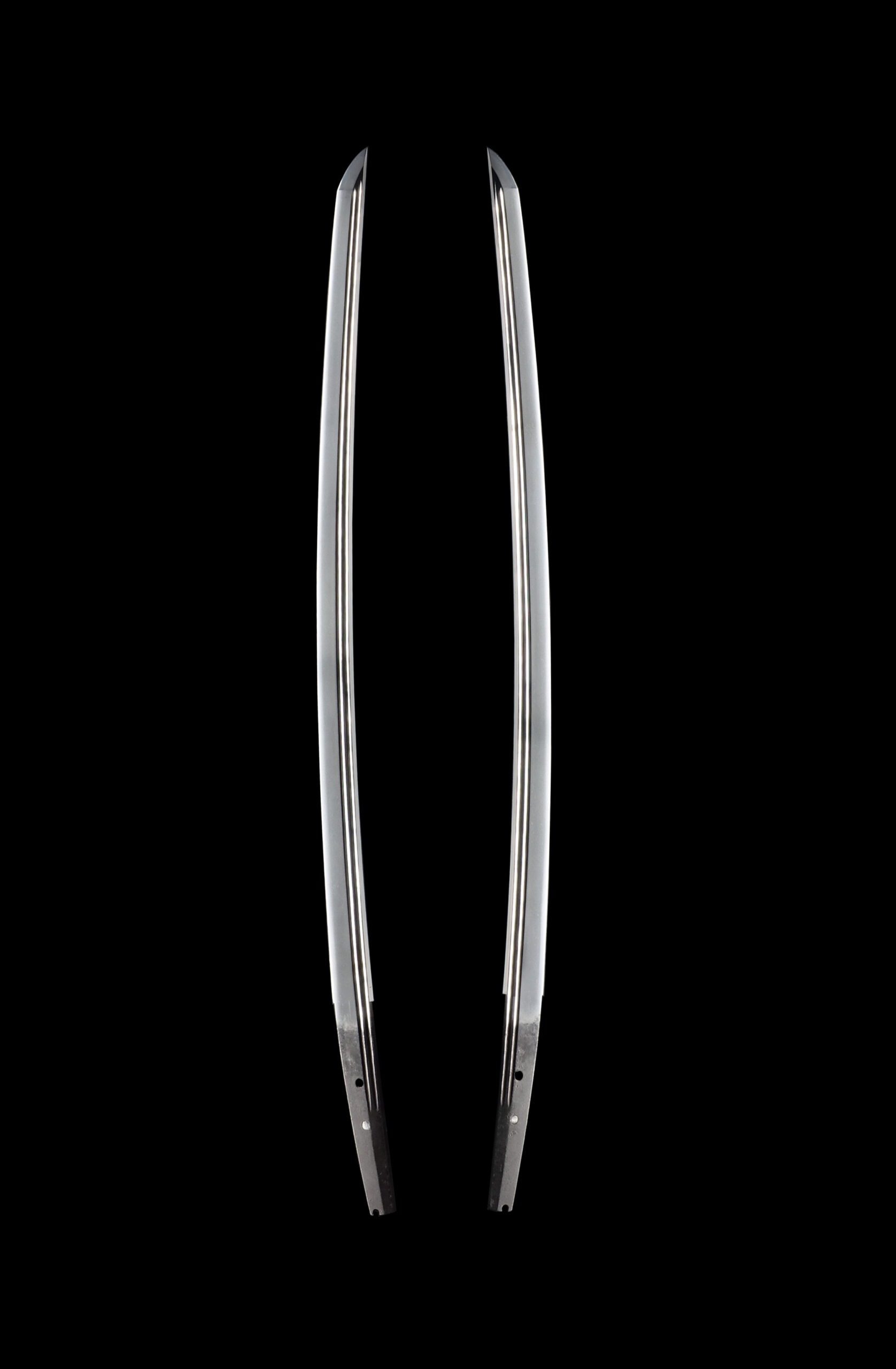
The 's own division of his work is twofold: "broadly the workmanship comes in two manners". In the first the is well knit and the tightens, the make that can be taken for Kyoto work or for ; in the second the stands, a reverse-slanting mingles into the , and the comes on strongly. On either the archaic rises, "though it is the clearer in the former". The -laden manner carries and and a swept , and the paper reads these as a borrowing from a third tradition: "a Yamato flavor is added". A register of form crosses both: nineteen of his hundred and thirty-seven papers are or blades reworked from them, the of the point stoned away in the conversion so that the runs off the end in , the with its companion groove often remaining. From the unsigned works attributed to Unji and Unju (雲重), the papers conclude that "they were also skilled in the production of ". One fully intact signed stands among his ; signed , by contrast, are rare.
The discrimination from his father is drawn by the papers themselves. Judging a , one paper decides: "compared with Unsho of the school, and the like enter the edge and the is felt somewhat stronger", and the attribution falls to Unji. He is the school's hand: the flowing, at times masa-tinged belongs to him rather than to his father, his and run more freely, while the tightened is the more Unsho's. A court legend attaches to both: "Unsho and Unji are said to have gone up to the capital and served Emperor Go-Daigo, and among works theirs is the style closest to Kyoto work" (雲生・雲次は京に出て後醍醐天皇の御用を勤めたと伝え、備前物の中では最も京物に近い作風をみせている); another paper notes that "there is a by Unji with a sixteen-petal chrysanthemum crest on the tang". The attributes simply to Unji and lets the nengo divide the generations: one or two namesakes are recognized into , and Honma writes that "the long-signed Unji I have examined seem in the main to be the first generation, but among the two-character signatures there are those in which the first and second generations are hard to tell apart".
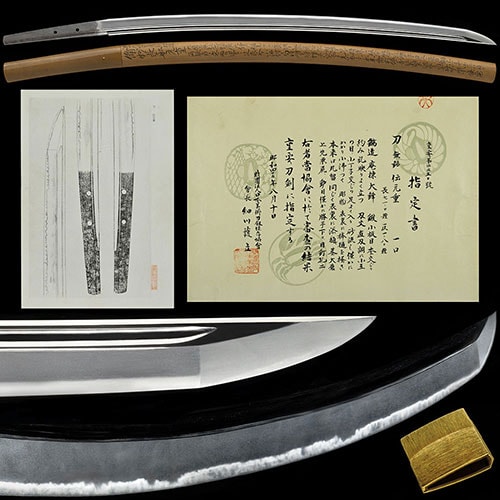
His designated record stands at one hundred and thirty-eight works: seven Important Cultural Properties, six , one hundred and twelve and thirteen Bijutsuhin, with no National Treasure among them. Forty-seven are signed against eighty-eight unsigned, nearly all of them , with either the long signature no ju Unji, at times dated, or the two-character Unji (雲次); the dated Showa 4 is itself an Important Cultural Property. The seven Important Cultural Properties are patrimony and do not trade. Of recorded whereabouts his blades rest at the Kyoto National Museum, Atsuta Jingu, Itsukushima Jinja and the Tokugawa Art Museum; the prewar certifications add the Tokugawa Reimeikai, the Nezu Museum and the Yomei Bunko, holder of the long-signed from Konoe Fumimaro. The provenance roll runs through the Ikeda family of , the Maeda, Akimoto and Mitsui families and the Imperial Family, and one carries on its tang a later possession inscription, an owner's cutting and not a signature, made in Tenbun 3 (1534) for Takeda Mutsu no kami Minamoto no ason Nobutora, of which the record says "the inscription is precious also as a document". With one hundred and eighteen blades in the and tiers, Unji is, among the Unrui, the name a collector is likeliest to meet; even so, designated pieces are held far more often than traded; an example reaches the market only from time to time, most often a or a , a signed rarer still.