NihontoWatch MonNihontoWatchBETA
MarketEncyclopedia
NihontoWatch Mon

NihontoWatchBETA

Market
Encyclopedia
Overview·Kantei·Designations·Provenance·Blade Forms·Signatures·Lineage·School
OverviewKanteiDesignationsProvenanceBlade FormsSignaturesLineageSchool
  1. Schools
  2. Ichimonji
  3. Fukuoka Ichimonji
  4. Sukeyoshi

Fukuoka Ichimonji Sukeyoshi

助吉

Jūyō
Vol. 25, No. 134 · Tachi

Fukuoka Ichimonji Sukeyoshi

助吉

5 ranked works

ProvinceBizenEraKenji (1275–1278)PeriodKamakuraSchoolIchimonji>Fukuoka IchimonjiTraditionBizen-denFujishiroJo-jo sakuToko Taikan1,500(top 5%)TypeSwordsmithCodeSUK637
3Jūyō Bijutsuhin
2Jūyō Tōken

Overview

Sukeyoshi is a smith of the period, working under the single character cut by the school that flourished at Fukuoka, Yoshioka, Katayama and Iwato. The published sources give his lineage from the signature compendia: "according to the , Sukeyoshi was a son of Fukuoka Sukefusa, and by one account the founder of the Yoshioka line." That double placement is the problem of his name. -name smiths are recorded in both the Fukuoka and Yoshioka groups, and three signed Jūyō Bijutsuhin catalogued together, though all judged Fukuoka , are said to differ enough in the manner of their signatures that the published sources will not commit them to a single hand. His record therefore reads as two manners drawn by the judges themselves rather than as one even style, and the second character of his identity is settled less by a personal tell than by era and school.

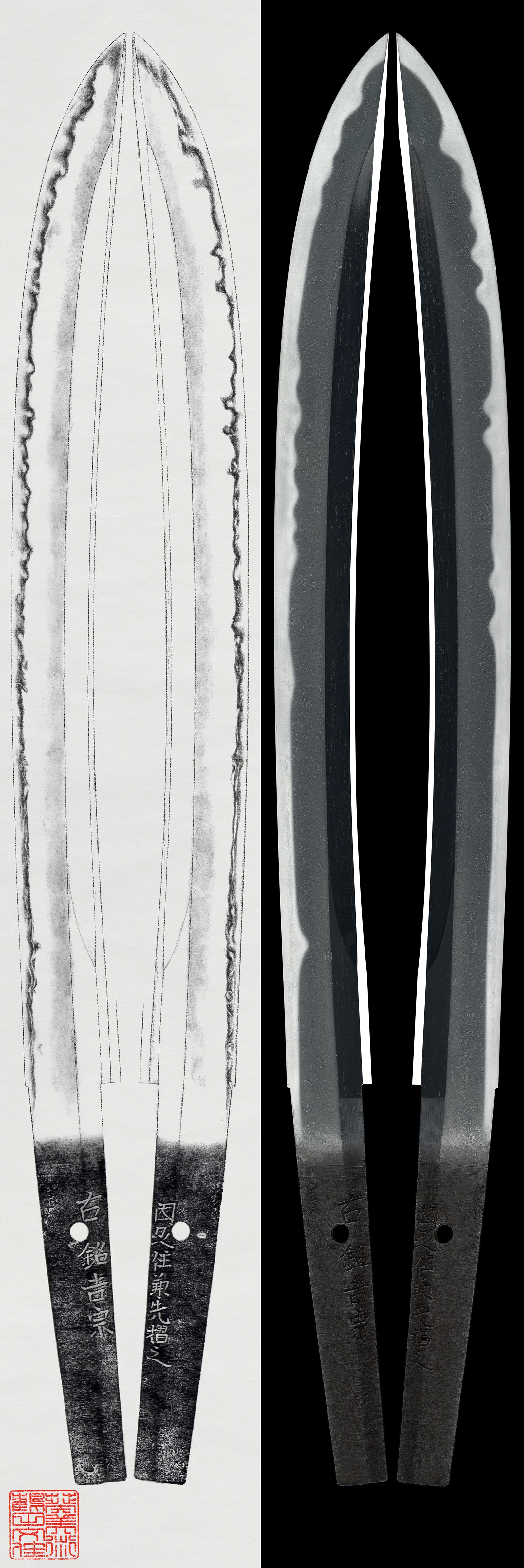
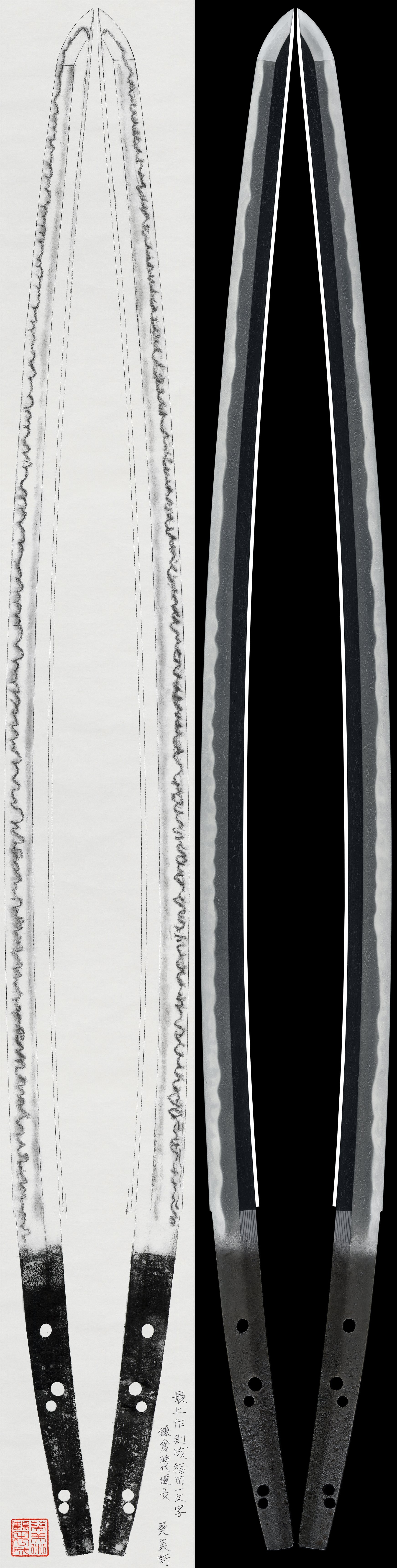
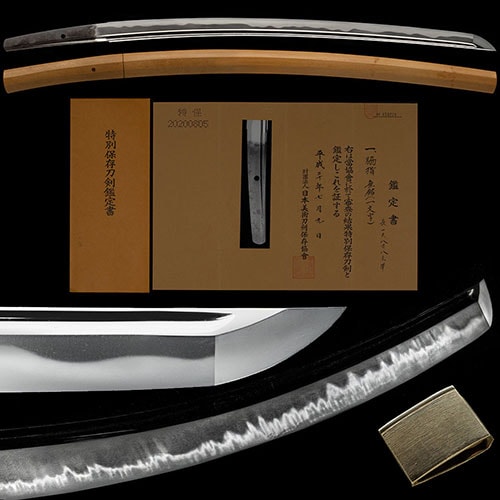
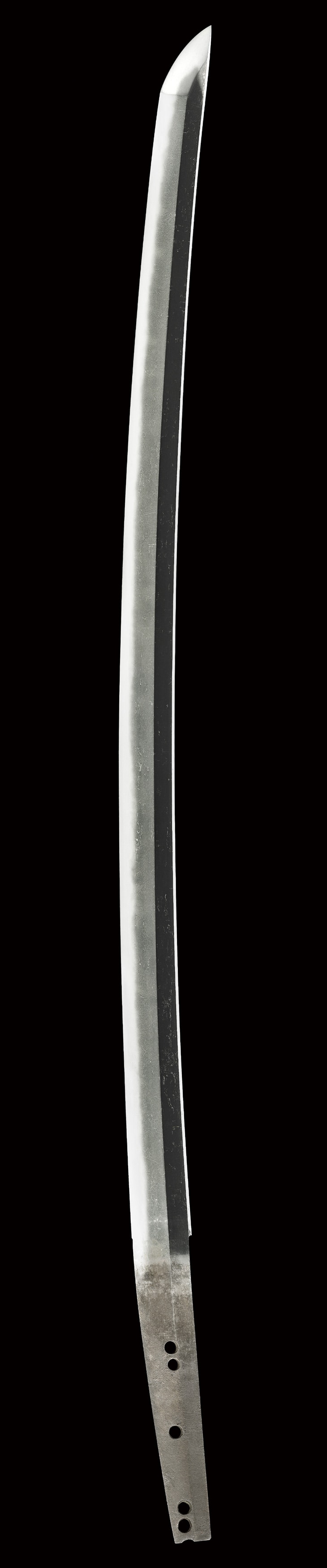
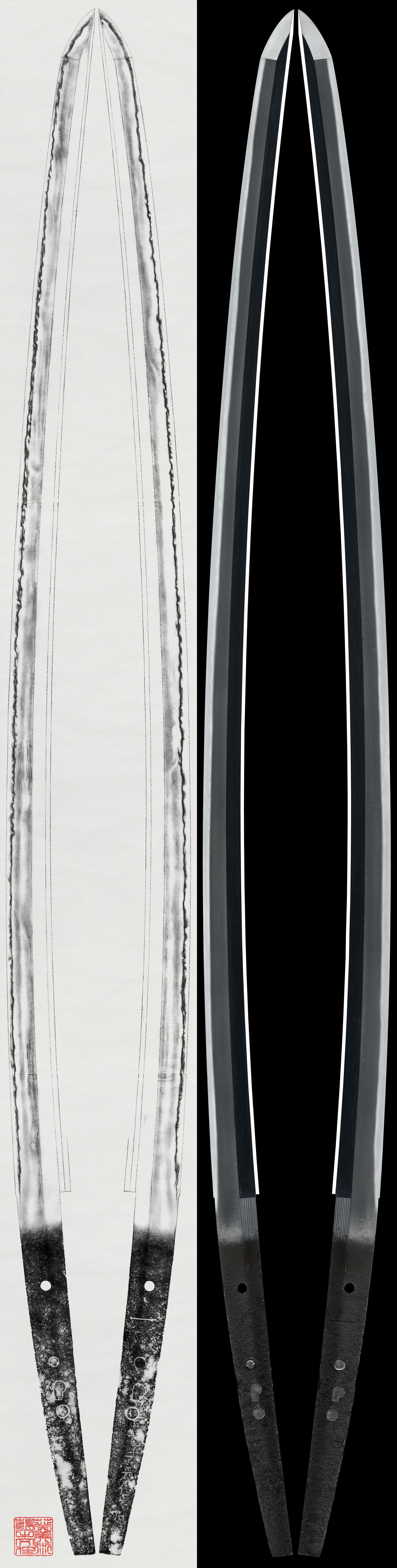
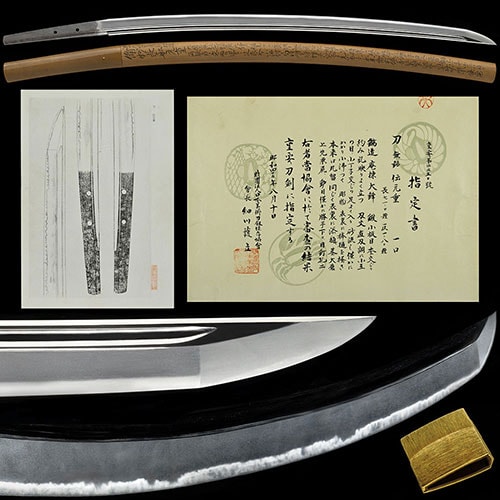
The first manner is the signed two-character , and it reads archaic. The published commentary calls the and old at a glance and identifies the work as Ko- of the early , the generation that comes immediately after . Over a well-packed , at times an closely forged, fine gathers and a vivid stands clearly. The temper here is comparatively calm: a -toned base broken into a small , into which and small are mixed in a - manner, with and working well in , laid in and running through, the a . The two-character signature is cut boldly at the very end of the tang, and the judges call its manner of inscription pleasing. One of these carries the character ue above the name; the published sources note this is to be read "tatematsuru" (たてまつる), with other examples known, signifying that the smith presented the blade to the patron who had commissioned it.

The is the constant across both manners. , tightening at times into a fine and elsewhere standing a little open, carries and that bright of old steel on every example, signed and unsigned alike. On the more refined pieces the forging closes up and the reflection only grows clearer; on the wider attributions the grain stands more, tending toward -tatsu, and enters with mixed into the . It is the he shares with the whole school, and the surface against which his two tempers are read.

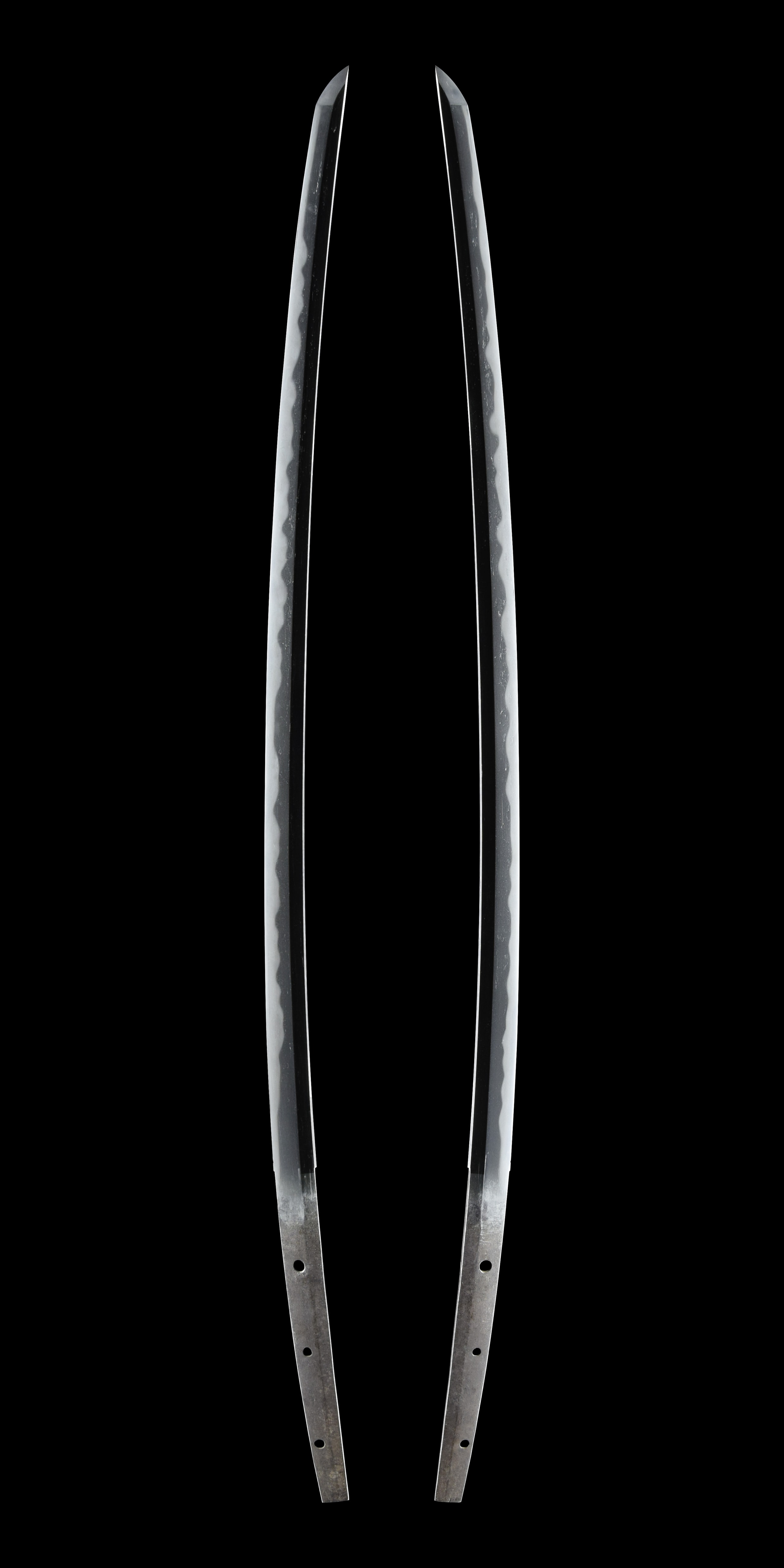
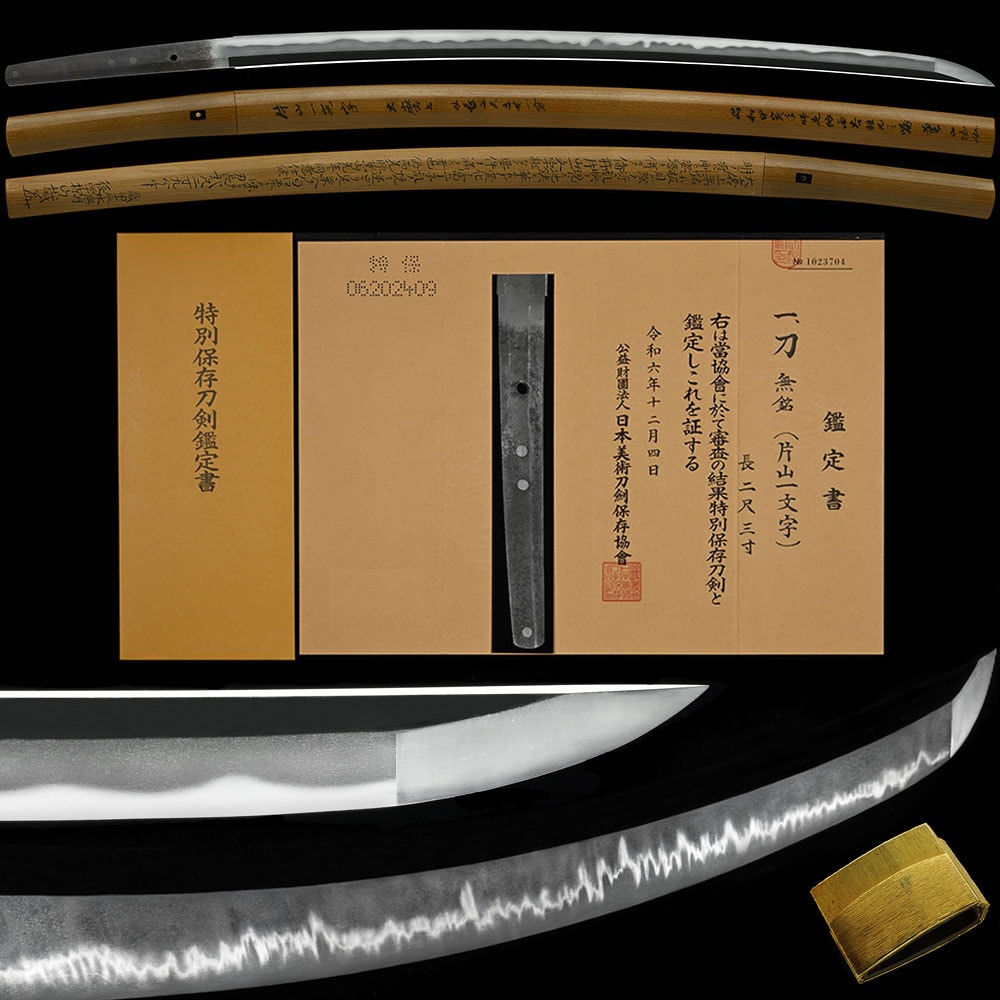
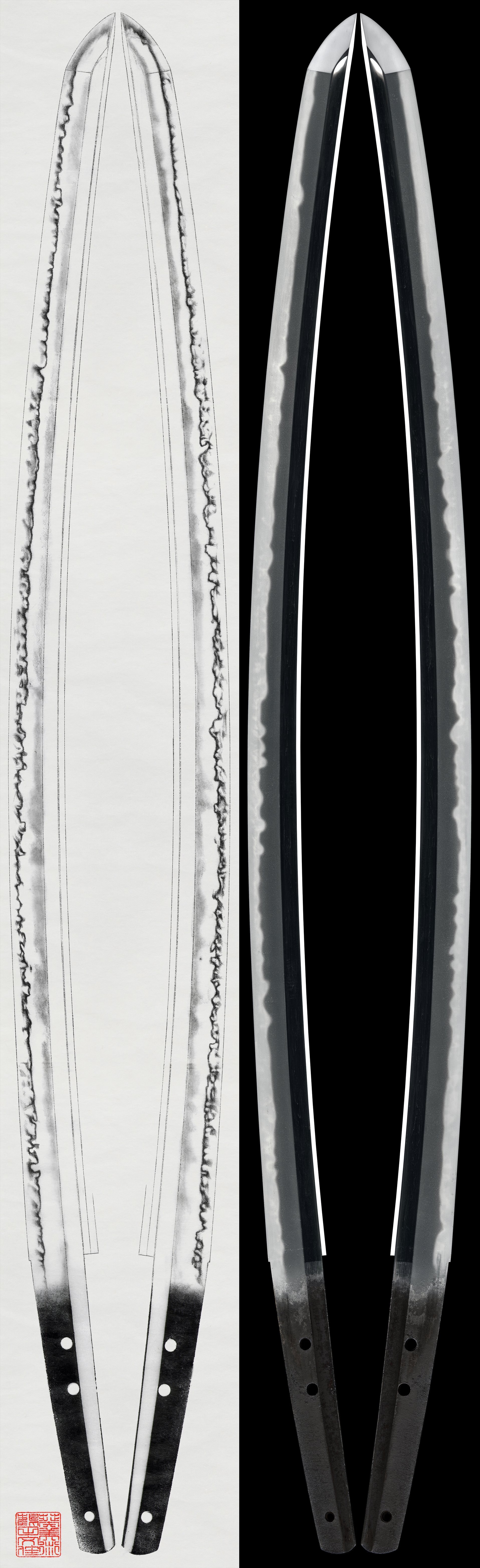
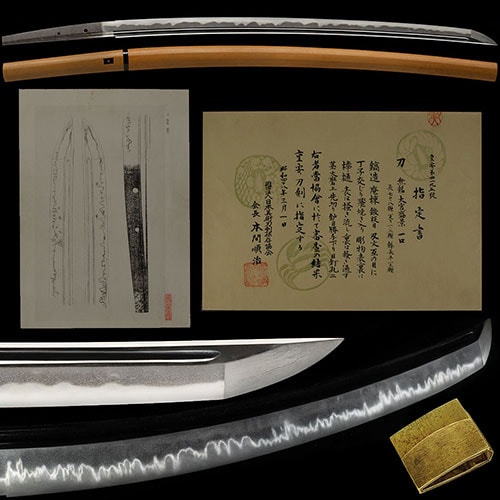
The second manner is the flamboyant one for which Fukuoka is named, seen on the attributions. The published sources describe the mid- Fukuoka style as "the most splendid and richly varied large-pattern ," and it was on exactly such a temper that the connoisseur Tadaaki rendered his judgment. On a greatly shortened, unsigned he cut a gold-inlaid attribution to Sukeyoshi, reasoning from the blade's brilliant large-pattern that the hand was the Fukuoka rather than the Yoshioka Sukeyoshi. That blade shows a mixed with and over an with , and entering, adhering, and through it, the a tending to with . A wide shortened of the character has a leaning to and a that inclines to . Where the signed work is quiet and old, these are showy and full of variation.

What sets him apart within is held in that contrast. Against the plainer smiths who precede him, his signed is brighter in its and gathers on the edge where theirs run quieter. Against the full mid- flowering of the school at Fukuoka, his archaic signed manner stands a half-generation earlier, the Ko- root from which that flowering grew, even as his attributed work carries the later flamboyant temper forward. The published sources keep the two faces honestly side by side, judging the unsigned blades Fukuoka "from every point" while granting that they "cannot be readily decided to be by the hand," so that what is fixed about him is the school and the period rather than the individual.

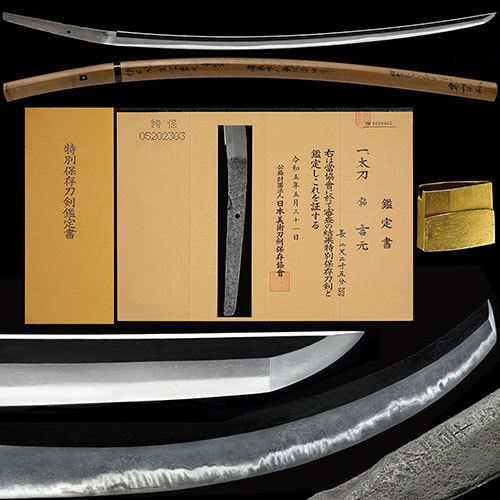
For the collector he is a rare early name. Fujishiro grades him Jō-jō , and the Tōkō Taikan values him in the upper-middle range of the old masters. He has no National Treasures and no Important Cultural Properties; his record runs through the rank and the prewar Jūyō Bijutsuhin, the signed early- held by the published sources to be sound and of fine quality. His blades carry good provenance: a signed from the Tsugaru house, another recorded in the Sasaki collection, and a great transmitted in the Uesugi family and attributed by tradition to his hand, with a piece now in the Hayashibara Museum of Art among the recorded whereabouts. Only a couple of his works fall in the tier, and signed Sukeyoshi survives in just a handful of examples, so one comes to light only seldom. A privately held signed Sukeyoshi is a notable thing for a collector to encounter, and a document of how the passed from its archaic beginnings into its great flowering.

Kantei

one Ichimonji name across two manners the judges draw: the archaic, early-Kamakura signed Ko-Ichimonji tachi with its suguha-toned small midare and ko-choji over a refined ko-itame and vivid midare-utsuri, set against the flamboyant mid-Kamakura Fukuoka choji-midare with togariba and tobiyaki seen on the o-suriage attributions

Sukeyoshi is a smith whose name, like several in the school, sits across more than one identity in the record. The makes him a son of Fukuoka Sukefusa and one account names him the founder of the Yoshioka line, while -name smiths are noted in both the Fukuoka and Yoshioka groups, so the published sources judge his blades to be Fukuoka yet decline to fix every one to a single hand. His record divides into two manners the judges themselves draw. The signed two-character reads archaic, an early- Ko- work coming immediately after : a well-packed with fine and a vivid , over which he sets a -toned base broken into small and , and working well in , with and and a . The other manner is the flamboyant mid- Fukuoka register seen on the attributions: a richly varied with and over an mixed with , the showy large-pattern hand for which Fukuoka is named. One of the signed carries the character ue above the signature, read tatematsuru, marking the blade as one the smith presented to its patron.

Diagnostic discriminators

unique vs his flamboyant Fukuoka attributions (ō-chōji-midare)

unique vs his signed archaic tachi (suguha-toned small midare)

Observation by phase

The signed tachi (archaic Ko-Ichimonji)

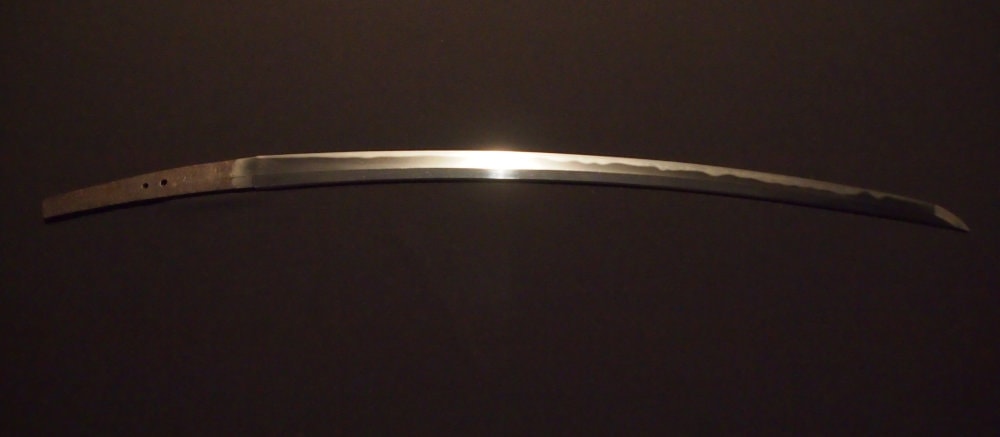
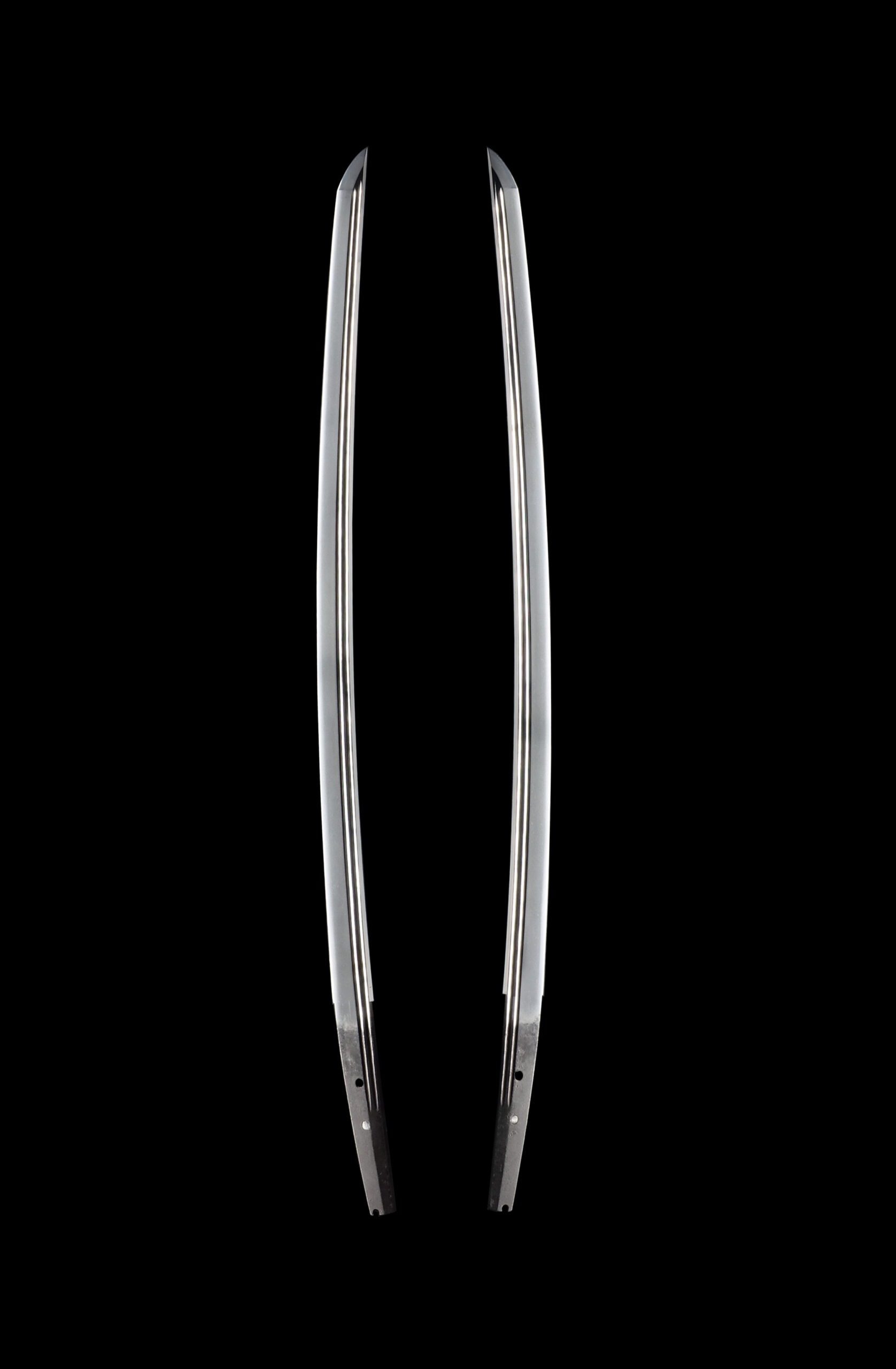
His signed two-character reads archaic. The published sources call the and old in manner at a glance and identify the work as early- Ko- coming immediately after . The shape is with ; though it keeps with and a small , and the body retains and a pleasing form even where the have been moved. The ground is a well-packed , at times an closely forged, with fine adhering and a vivid standing out clearly. Over it the temper is comparatively calm: a -toned base broken into small with small and in a - manner, and entering well with lively , laid in and running through. The is a . The two-character signature is cut boldly at the very base of the tang, and the published sources call its manner of inscription pleasing.

Sugata 姿
Jigane 地鉄
Hamon 刃文
Bōshi 帽子

The o-suriage attributions (flamboyant mid-Kamakura Fukuoka)

The other manner is the showy mid- Fukuoka register, read on the attributions. Here the body is standard in width with a , the ground an mixed with , overall tightly forged, with and and a standing. Over it the temper is a richly varied with mixed in and , and entering, adhering, and running through. The is a tending to with . The published sources name this the most splendid, richly varied large-pattern of the mid- Fukuoka group, and on the gold-inlaid Tadaaki read exactly that brilliant large-pattern temper to attribute it to Sukeyoshi of the Fukuoka . A wide shows the hand with a standing and a tending to , its inclining to .

Sugata 姿
Jigane 地鉄
Hamon 刃文
Bōshi 帽子
Scholarship

The published sources record that the Sukeyoshi name appears among both the Fukuoka and Yoshioka Ichimonji, that the Meikan makes him a son of Fukuoka Ichimonji Sukefusa with one account naming him founder of the Yoshioka line, and that the three Juyo Bijutsuhin tachi, though all thought to be Fukuoka Ichimonji, cannot be quickly decided to be by one hand, with the Item 478 piece in particular reading somewhat more archaic in ji and ha.

The character ue cut above the two-character signature is to be read tatematsuru, with other examples known, signifying that the maker presented the blade to the patron who commissioned it.

Designations

Kokuhō—
Jūyō Bunkazai—
Jūyō Bijutsuhin3
Gyobutsu—
Tokubetsu Jūyō—
Jūyō Tōken2

Elite Standing

0.12 across 5 designated works

Top 16% among smiths

Provenance

3 documented provenances across certified works by Sukeyoshi

Provenance Standing

1 works held in elite collections across 3 documented provenances

Top 54% among smiths

Raw score: 1.95 / 10

Blade Forms

Distribution across 5 ranked works

Signatures

Signature types across 5 ranked works

Currently Available

Lineage

Sukeyoshi
Students (4)
  1. 1.Yoshimochi吉用10designated
  2. 2.Yoshimoto吉元1 for sale5designated
  3. 3.Suketsuna助綱2designated
  4. 4.Yoshimochi吉用1designated

Fukuoka Ichimonji School

Other artisans of the Fukuoka Ichimonji school

  1. 1.Sukezane助眞44designated
  2. 2.Yoshifusa吉房1 for sale46designated
  3. 3.Norimune則宗8designated
  4. 4.Yoshihira吉平17designated
  5. 5.Sukekane助包6designated
  6. 6.Norikane則包7designated
  7. 7.Tamekiyo爲清5designated
  8. 8.Yoshimochi吉用10designated
  9. 9.Tameto爲遠5designated
  10. 10.Yoshimune吉宗6designated
  11. 11.Naganori長則17designated
  12. 12.Ichi一7designated